Author: mxm_india

  • The Anchor: Anil Thakraney’s 4 reasons why Steve Jobs was so special

    The entire world seems to be in collective grief over the death of Steve Jobs. As if people have lost someone close. Does it make sense? When you consider he was just another businessman out to make a lot of money. And there are thousands of very loaded industrialists all over the world. Most of who we don’t care much about. And Jobs, unlike rival Bill Gates, wasn’t even big on charity work. So then why do we all adore him? Even those of us who have never touched an Apple product in our lives. (I certainly haven’t.)


    There are many reasons behind the cult of Jobs. Here’s my little list on what made the man so special. And my reasons actually lie within Apple’s own legendary ‘Think Different’ advert. It’s as if the script was written with Jobs in mind. Businessmen and industry leaders must pay close attention to what it takes to catch consumers’ hearts and minds. From across the world.


    #1 Because he was a rebel: Jobs did not conform to the industry standards, nor did he try to surpass them. Instead, he showed them the finger. He was a true inventor, a visionary, who believed he could do it his way. Self-belief was at the heart of his success. And that’s how a lad working out of a car garage went on to build an international tech empire.


    #2 Because he didn’t just make and market products, he pushed the human race forward with his bold innovations. Product innovations that are not just technologically marvellous, but are slick and aesthetically rich. Consumers don’t just wait for a new Apple product. They queue up for it. They save up for it. They dream about it. Jobs never short-changed his buyers by taking short-cuts. He thought big. He delivered better.


    #3 Because instead of throwing out the ‘square pegs in the round holes’ from his organization, he trained, nurtured and cherished the misfits. He saw the genius in his crazy, offbeat employees. He knew he needed people who thought differently, if his vision for Apple was to come good. Look around you… very, very, very few leaders in the corporate world are capable of such an ideology. That’s why we have just one Steve Jobs.


    #4 Because he genuinely, passionately believed he could change the world. And he did.


    Links: The unforgettable Apple advert.
    [youtube width=”400″ height=”250″]http://www.youtube.com/watch?v=4oAB83Z1ydE&feature=related[/youtube]
    A touching tribute to the tech king.
    [youtube width=”400″ height=”250″]http://www.youtube.com/watch?v=XzWft8ZtTTY[/youtube]

    ***


    PS: Apparently there’s a TV journalist called Mandeep Something inside the Bigg Boss mad house. And she wailed on national television that she hasn’t gone to crap for four days. If a journo is doing stuff like this, can we really blame the other bimbettes on the show for all the nonsense? Anyway, guess now you know why it’s called a crappy show.

  • Copy us? Go ahead, says Reckitt honcho


    By Shruti Pushkarna

    Reckitt Benckiser needs no introduction and neither does the man who has ensured an outstanding record for the company in India.


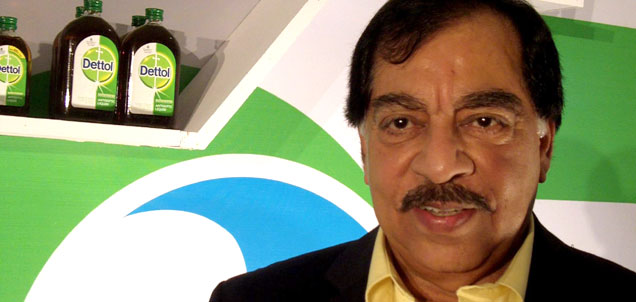
    MxM India caught up with Mr Chander Mohan Sethi, Regional Director – South Asia, Chairman and Managing Director, Reckitt Benckiser (India) in a one-on-one interview, at the release of the latest international Dettol Habit Study by the Global Hygiene Council in association with Reckitt Benckiser, in New Delhi. The study which was carried out in 12 countries including India, found that people who have good manners have better personal hygiene.

    Mr Chander Mohan Sethi has envisioned and assisted Reckitt Benckiser in its entry into various sectors, as well as helped the company establish a strong foothold in the household products and personal care sector.

    Mr Sethi began his career at Reckitt Benckiser India as Branch Manager- Eastern Region in 1984. He was promoted to the position of National Sales Manager in 1987 and in three years, recognizing his huge contribution to the company, he was promoted as Head of Marketing and Sales. He also headed Reckitt Benckiser, Nigeria and West Africa in 1994. Mr Sethi began his career as a management trainee with Glaxo SmithKline Consumer Products Ltd.

    Reckitt Benckiser, a global consumer goods company, headquartered in UK, is a world leader in household, health and personal care. Some of its leading brands include, Dettol, Harpic, Strepsils, Vanish, Veet and Mortein.

    In this candid interaction, Mr Sethi reinforces Dettol’s growing market share and the need for competing brands to think of newer ideas to take on an iconic brand like Dettol.


    Q: What are the key insights of the latest Dettol Habit Study, specific to India?

    First and foremost, the study has been done in 12 countries; more than 14,000 consumers have been contacted. In India, the study has also been done, both in metros, mini metros and in smaller towns. I think two key insights have come. One is that, male and female hygiene habits are the same. And secondly, which is a bit concerning, is that the younger generation unfortunately is not following as good hygiene practices as they should. I think that certainly is a surprise for us.


    Q: As the latest report states, good manners and behaviour are equally important factors as much as the availability of good infrastructure to practice good hygiene. How do you react to that?

    I think it’s a great insight, it’s a great fact of life, that you could have the best infrastructure but if you don’t have the right hygiene habits, it would lead to, you know, infection. So you can have a very clean room, you have a very large home but if you don’t have the right habits, there is going to be a problem of hygiene.


    Q: Is Reckitt Benckiser taking any specific initiatives for hygiene awareness in rural India?

    There is a very fine definition between rural-rural and what I call semi-urban. In very small, 40,000-50,000 population towns, we focus in different regions in terms of going to these towns and doing mother contact programmes, also in school programmes and hospitals. I would like my team to go into areas where they can effectively to do it.


    Q: How does the Global Hygiene Council function?

    The Global Hygiene Council is basically an independent body made up of very eminent doctors and scholars. They do studies on hygiene practices, on what should and what should not be done, after getting insights into consumers’ lives and consumers’ homes, in places of work. These are independent specialists, who get funded by their universities or hospitals where they are attached. But when they come to the Council, which is where we put an education endowment to run this entire body for more than ten countries, they meet a couple of times, and we use their material to be able to propagate good hygiene.


    Q: Dettol ranked as No1 in the Most Trusted Brand survey by Brand Equity in 2002. It slipped down to No2 in 2003. Even though the brand has consistently ranked in the Top 10 Most Trusted Brands, it never regained the No1 mark. How do you react to that?

    The first point is that Dettol is one of the most trusted brands in this country and over decades together. The second point is that there are a lot of new brands that have come, whether it is in the technology sector, cars, information or services etc. So it’s a question of what is the priority in that consumer’s mind at that point of time on his list of things. For us, it’s very important that we read the consumer’s reaction and feedback. But just to give you an idea, Dettol Liquid, in an independent survey by Nielsen, is 85 percent of the market. If you take Dettol Liquid hand wash, again Nielsen says, 53 percent of the market, so I could go on. Now if Dettol were not in one of the most trusted brands then we wouldn’t have 85 percent of the market in liquids, wouldn’t have 53 percent in hand wash. And just to say, Dettol soap for example, the body soap, it used to be No 8 in the soap market, and it is today No 3 in the entire soap market. Certainly in the germicidals, we are today at the top.


    Q: Dettol has positioned itself as the germ fighter brand; how have other players in the market affected this position? In fact, as a study indicates, in 2007 Dettol made an effort to reposition itself to take on Lifebuoy. What do you say to that?

    Lifebuoy tried to position itself like Dettol, I mean they must be running out of ideas that they have to… but you know, I can’t blame them. If you have an iconic brand like Dettol, everybody would want to be like Dettol. So good luck to those guys who want to copy us but the consumer says there is only one Dettol, there is only one brand which they trust in terms of hygiene.

  • Creatures feature on World Animal Day


    By A Correspondent

    If you adore animals and love the planet, tune into Animal Planet to celebrate the World Animal Day on October 4.  Bursting with intriguing facts and enchanting animals, Animal Planet commemorates World Animal Day with a full day programming line-up from 12 noon to 12 midnight, aiming to inspire viewers of all ages.

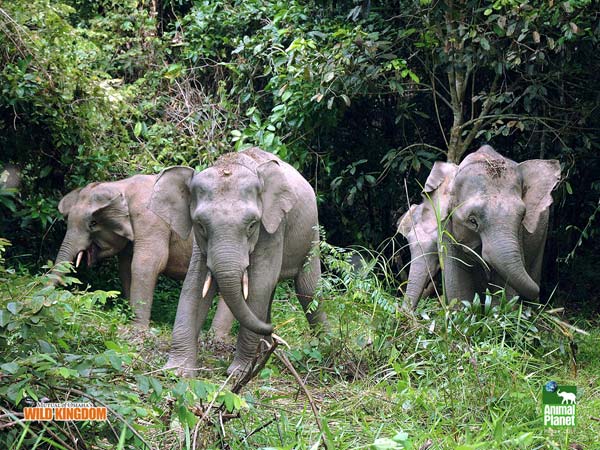
    Kicking off the day to celebrate all things wild and spotlight some of the rarest and greatest creatures on the planet, Animal Planet follows the lives of several unique species like river dolphins in India, hyenas in East Africa, pygmy elephants in the jungles of Borneo, wild wolves in Ethiopia, bat-eared foxes in Namibia and ferocious crocodiles in Africa.

    Discussing the special Animal Planet Marathon on World Animal Day, Mr Rahul Johri, senior vice president and general manager (South Asia), Discovery Networks Asia-Pacific said, “We dedicate this special day of the year to highlight the wonderful animal kingdom and the amazing relationship it enjoys with humans. Over the years, we have witnessed a growing sensitivity and commitment amongst viewers for Animal Planet’s breathtaking and awe-inspiring content. I am most excited to present this year’s 12 hours programming marathon which will do it all – inform, entertain and connect.”

  • Hard Knocks: Sadly, Mr Katju may have a point

    By Anil Thakraney


    The Chairman of the Press Council of India, Justice Markandey Katju, is determined to sort the Indian media out. Some days back I expressed skepticism on whether he’ll succeed in his noble endeavours. Here’s the link to that piece.

    http://www.mxmindia.com/2011/10/hard-knocks-katju%e2%80%99s-unreal-expectations/

    It appears Mr Katju read my post (hehe), and perhaps out of frustration, has lashed out at the Indian media. He’s basically questioning our skills, integrity and competency levels. Naturally, there’s collective outrage in the media frat, and an angry desi media is a dangerous beast, you don’t mess with it. I would be quite surprised if Katju remains for very long in his chair.

    Having said that, and having been sufficiently offended, we need to once again take a hard look and check if what the man says is entirely wrong. Some soul-searching would actually do us good, and perhaps we’ll hire better personnel in the media. So let’s examine Katju’s critique and his three key problems.

    He says the Indian media divides people on religious lines and is anti-people. A sweeping generalization, no doubt. But there IS a section of the media that caters to specific communities and their respective communal biases. A section is even aligned with political parties. And this ideological bias comes to the fore during riots and elections. So what Katju says isn’t entirely wrong.

    He says TV channels focus on cricket and other celebrities. And Katju doesn’t like that very much. Well, that’s true. We do pay too much attention to entertainment and celebs, and I am guilty of that too. And often hard news gets buried somewhere. Yes, we do need to worry about excessive flooze in the media, for sure. But I don’t know how this will ever get sorted out. Because the truth is: Advertisers are more interested in Katrina Kaif’s fashion mantra rather than the survival plans of the family members of that RTI activist who got killed. That’s the sad commercial reality.

    He believes journalists have not studied economics, politics, literature and philosophy. Is he entirely wrong? Switch on the news channels and you’ll notice the general knowledge skills of most anchors and reporters. Yes, it needs a lot of beefing up, we have to admit that. Most journalists are too busy chasing celebs to find time to read Shakespeare, that’s another fact of media life.

    Bottom line: It’s easy to get offended by Shri Katju’s crazy generalizations. And dismiss them as outbursts of an angsty uncle. Still, it will serve us well to pay attention. He isn’t entirely inaccurate.


    ***


    PS: Watch this show as Barkha Dutt interviews a Google chief. You’ll notice what a struggle it is for her to have a meaningful conversation with a new media specialist. It’s not her fault, really. Most of us old-world journos would find it tough going. A glaring example of the schism between the old media and the new media. Also, hope Mr Katju didn’t watch this one. Else he’ll accuse us of being zero on media, apart from literature and philosophy!


    Link: http://www.ndtv.com/video/player/news/in-the-google-of-things/215082

  • Writing, Faber-Castell style

    By Insiyah Rangwala


    Celebrating its 250th anniversary this year, Faber-Castell has reason to rejoice. In the last 15 years it has seen extraordinary growth and an expansion that has taken it from being a ‘German company that exports’ to a globally familiar brand. But for the company which has seen eight generations, it was not all smooth sailing. With the two World Wars and the Depression, it was disowned by several countries and lost a lot. It was bought back and it fought back, though.


    Count Andreas von Faber-Castell Director, Asia-Pacific Region Faber-Castell Group, and his wife Countess Virginia are on a tour all of this year celebrating 250 years of the company and talking about the company’s legacy and heritage. They have already visited Indonesia and Singapore. There was also a massive celebration in Germany in July where they had a multi-vision show and showcased the company in context of its history. This was attended by 5,000 guests among which 120 were Indian but they still hoped for more.

    Count Andreas told MxM India that Faber-Castell is completely decentralized, and in that spirit has set up in the Indian market which is run by Indians for the Indians, as it believes in using local expertise. India was a very obvious expansion especially since it is so well connected to South America.

    He talked about being a family company means that it can challenge any public company. “As a family company we make ideal partners as we care just a little bit more. We have the freedom to make a long-term decision which might pay off only in 100 years.”

    When asked about his view on digital art and how it might hurt the company he said it only complements the firm, and he has no fear. “All sports can be played on video games now; does it replace the real thing? There is a magical feeling to writing.”

    While talking about this expectations from India as a market he stated that for India to become a well saturated market   is still in the future and will probably happen after his time, though he is heavily involved with the process and visits India almost once a month and works closely with the Indian team.

    Faber-Castell has set up its manufacturing units in India itself as it gets into new markets with long-term interests, and it is always better to be present within the country as this makes it more flexible and reliable.

    It wants the Indian customers to have an experience that can be remembered when they use their products. “Any product is completely safe for kids. I can go in and drink a glass of my ink without any worries that I might fall ill.”

    As for the luxury range, this has just been started and the company will set up its own shops in India to build the brand over time, as has been done in other countries. To mark the 250th anniversary, Faber-Castell has introduced Graf von Faber-Castell luxury range and Faber-Castell Design range of Pens.

    When asked what he would personally like Faber-Castell to be known as, the Count replied, “I just want people to smile and say this is nice.”

  • Largest OOH display leaves footprint in Delhi


    By A Correspondent

    BIG Street, the OOH initiative of Reliance Broadcast Network Limited, and Mudra Max have created the largest out-of-home display for Reebok on the façade of the Dhaula Kuan Airport Metro Station.

    Reebok, the leading producer of athletic shoes, apparel, and accessories, introduced a new range of running and training shoes called ‘ReeFlex’. A product of advance research, the shoes feature 76 independent ‘sensors’ on the bottom, planned in a way to adjust to all training surfaces. Throughout the stride of the wearer, these inbuilt sensors work together to promote the natural movement and flexibility. To promote such an innovative product, Reebok India partnered with BIG Street and Mudra Max to create an equally innovative OOH display.

    BIG Street, which holds the advertising rights to the display media in the Delhi Airport Metro Express stations, proposed the branding of the Dhaula Kuan Airport Metro Station’s façade – an enormous glass structure overlooking the busy NH8 stretch. Subsequent to the approval of the concept by Reebok, Mudra Max flawlessly completed the execution, branding the mid portion of the façade, a huge area of about 8,602 sq feet.

    Since the canvas itself was a building, high quality, international standard one-way contra vision from 3M was used, that was unobtrusive to the metro passengers inside the station but left an indelible impact on the motorists and pedestrians on the road.

    The branding has already created a huge buzz, with people reducing the speed of their vehicles to look at the giant display in awe. The impact of the communication has been compounded by the fact that the station is bang opposite a traffic light, ensuring a captive audience for a good two to five minutes.

    Commenting on the campaign, Mr Rabe Iyer, Executive Vice President, RBNL & Business Head BIG Street & BIG Live said, “BIG Street has time and again proved its ability to create eye-catching innovations for its clients. This cutting edge display for Reebok has firmly positioned BIG Street as a ‘thought leader’ in the Out-of-home space.”

    Mr Mandeep Malhotra, President, Mudra Max, OOH, said, “It has always been a pleasure to work on Reebok. The passion and desire to create innovative OOH by the team Reebok gives us the kicks to run around and deliver the best campaign after campaign.”

  • AdAsia: Big Ideas in the Age of Now

    By Akash Raha

    Emerging from the real-timeness of the ‘anytime, anywhere’ economy, the ‘present’ has never been so dominant in the life of business / marketing professionals and consumers. There is a surfeit of ‘so-called’ ideas but there is always a short-supply of the ‘big’ idea that results in creative disruption. Robert Senior, Creative Chairman, Saatchi & Saatchi in the ‘The Pursuit of Big Ideas in the Age of Now’ showcased some of the big ideas that have made a difference and also highlighted the taxonomy of pursuing big ideas.

    The word ‘new’ has lost its significance in today’s world. For the new generation ‘new’ is disposable. New keeps changing every moment and what matters to them is ‘now’. There has been a movement of era of ‘new’ to age of ‘now’. With the change of this era changes the shift from attention to participation, inform to inspire, interruption to interaction, return of investment to return of involvement and local to global.

    It’s a volatile world we live in, and in all spheres – from political to financial. Also, the future is uncertain, complex and ambiguous. In such a scenario, it is very hard to plan for the future, because the future is so dynamic. So the question one asks is, we are uncertain about the future… what do we do next? The creeping in of fear at such a point is inevitable. The creative mind isn’t immune from fear. But the creative mind deals with fear. A creative mind loves problems and loves to solve them. With the problems, also come possibilities of creating newer things, newer ideas, and better ideas. Ideas like these can be the prism of hope. Amazing things can happen when you have ideas and are innovative. The essence is to capture the moment and be creativity.

    Creativity in a way, said Mr Senior, is like science, it’s meant to be experimented with. It has to be tried and tested in order to get to the desired result.

    One of the biggest clichés of the advertising industry, he said, was the concept of ‘Big Idea’. The question one asks is, how big is the idea, and is the idea really that big? There is no such thing as a big or small ideas, it all about having ideas in general and then nurturing them. Anyone can kill an idea, even a moron can. But the essence is to find value in a idea and then make it big. Nurturing a tiny idea into a so-called ‘big idea’ is the key.

    One of the things important in today’s world is speed. The world is moving so fast that by the time you nurture your idea, the time when the idea could be implemented is gone. Hence, speed, agility and being nimble are essential.

    He urged advertisers to believe and trust in the strength of ideas. Ideas that can create a difference, ideas that can make an impact. Talking about the current world scenario, he said it is of the essence that we try and make a difference, however small. It is okay to be a little enraged, a little angry; it is okay to dream and do something crazy. Ideas have a lot to do with emotions, and an upsurge of emotions causes action.

    Talking about the Israel and Palestine issue he gave example of how an idea (a campaign) tried to make a difference in the war-inflicted area. He went on to say that ideas are nice and creating ideas is nice, but the next step is more important. It is important to bring some action to it. It’s good to be enraged and angry with something you feel passionately about. Such anger and resentment often appeals to the heart. “Let’s give some context to the world which is fast losing its plot.” Let our heart work wonders and then we should do something that might not change our world, but do something that our children can be proud of. The speaker brought the power of ideas and connected it with emotions, and touched everyone’s heart.

  • AdAsia: Indra Nooyi’s answer to uncertainty, creative adaptability

    By Akash Raha

    In the current times of volatility managing business and brands is no easy task. Yet, we have the example of PepsiCo which has thrived in the New World Order though thick and thin. The final session of AdAsia captured Ms Indra Nooyi’s perspective Chairman and CEO, PepsiCo who stimulated the delegates with her ideas on how to manage business with de-averaged realities.

    She said that it is indeed a difficult task for CEOs to navigate an enterprise when uncertainty is the only certainty. Especially when we have not seen such volatility that one has not seen in the last few decades, what does one do?  At such a framework, prediction is very difficult, especially when it is about the future. But the question is, hasn’t the future always been as such, as unpredictable as it is right now? But no, I do believe, she said, that there is something unnerving about the uncertainty we feel today. Be it financial sphere or the political sphere, these are the times of immense upheaval and turmoil.

    At such times, it was inevitable that creativity gave way to fear and risk. There are several crises that we have faced in the recent times and from which we need to learn a lot. The first challenge she mentioned was the crisis of leadership. “One of the great tasks of leadership is to prepare when the storm comes.” And it won’t be wrong to say that several leaders of reputed companies failed to avert the tension. Hence, one of the most important things for most companies is to build strong leadership base over a long period of time. Another crisis that we faced in the recent times was the crisis of government failure. Governance of several countries around the globe failed so much so, that it has caused a crisis of expectations. Many of us don’t know or have forgotten what success looks like anymore. Financial, social and political failure all at the same time hasn’t helped the cause of anyone.

    Yet there are several positives that has emerged in recent times, one of them is that of emergence of the women force in the emerging market – more than twice the size of India and China together. There are plenty to reasons to give cause to optimism. The only certainty today is, that the world is uncertain. So the question is, how can we survive and thrive in such situation? Darwin’s theory of evolution still holds good and they key in such a scenario is that to adapt. It’s not the strongest that survive, but the fittest.  As a CEO of PepsiCo, said Ms Nooyi, I have seen so much change since I joined. “All of us have to explicitly realize that we are in a new reality… I don’t think that we can plan in the way we used to plan. Volatility is not a part of our life any more, it is our life.” Hence, when you plan, make volatility an intrinsic part of the plan. “We need to plan the next plan while the ink on our first plan is still drying out”, she added.

    Another important thing is that leaders have to lead for today. It’s important that the leaders and institution give something back to the society and stay relevant. Having a vision for the future is essential. Also, leaders should know about the element of uncertainty beforehand and keep it always as a variable in their scheme of things.

    We see how growth is elusive in many parts of the world. This is not a time for small changes; we need big changes in to big things. There must be seamless and borderless innovation to make something big happen. “Disrupt yourselves deliberately, otherwise competition will disrupt you.  The usual way of working will not work anymore.

    Lastly, it is essential to get new talent in the business and nurture them. Experience of the quality people and leaders we have in our company are invaluable. But also essential is training leaders, creating young leaders. In our company, said Ms Nooyi, we are trying to give the knowledge of East and West, about various ethnicity and cultures to all our budding upcoming leaders. Companies across boards need to rethink the whole process of leadership development.

    Leaders of today have to be super visible to the organization and to the outside world. Interaction with the outside world is absolutely necessary at times such as these. One should be transparent, truthful and open. Because, if the leader does not tell them, someone else will and then there will be speculation and rumours which is absolutely detrimental to the cause of any company. Have an open door policy. It is always a good advice always, but now it is imperative. The answer to uncertainty is simple, it is creative adaptability.

  • AdAsia: Why market to women consumers?

    By Akash Raha

    Does being a man or a woman define shopping habits? Moreover, are Asian women different from women across the globe and hence, are their buying habits different? The session ‘Marketing to Women Consumers in Asia’, discussing these and other points, examined typical traits of the Asian woman consumer. The speakers at this session were Abheek Singhi, BCG India and Yeonhee Kim, BCG Korea.

    The speakers talked about the significant political and financial changes that are happening around the globe, and women are not alienated from these changes. As a matter of fact, significant changes are happening in the behavioural aspects of women in general and women consumers per se. Research by BCG on women consumers, the speakers noted, has highlighted the necessity of marketing to women consumers. Apart from the revolution that we see around the globe, they said, a revolution is happening with women too. With the change of time, the aspirations and wants of women have changed too. According to the study, women are showing their dissatisfaction and are not happy with what they are getting.

    Women around the globe work, and share their household responsibilities with their spouses, but the case is a little different in Asia where they are entrusted with the bulk of the household chores. The chief challenge for women is Asia today therefore is the challenge of time. There is too much demand on time and too much to do. All this compounded by responsibility for the vast majority of household chores. The cultural DNA of Asian women is such that they perform a bulk of the household work far more than in western countries. On a graph, the speakers showed how the happiness and stress level follow a ‘V’ curve for women in Asia where the troughs are quite low.

    Yet, women remain a very important segment in terms of spends per year, albeit ignored by marketers. Women control US$12 trillion of annual discretionary spends which is two-thirds of the total pie. And if women are seriously dissatisfied with what is on offer, it is essential to innovate for them. But relevant significant products are more important to women consumers than mere innovation. Hence the mix should be of innovation and significance (value for money spend). Women consumers are more conscious of the price that they are paying and the value they get for it. Considering the amount of money that exchange hands from this segment, it is but ironical, pointed out the speakers, that marketers aren’t focusing on them enough.

    That said, it would be a fallacy to generalize, and moreover generalize about all Asian women. There is no one Asian woman but multitudes of them. And marketers will have to cater to them separately. A one-size-fits-all strategy will not work. But there are some of the features in Asian women that remain same upon which marketers can look into. The challenge of time is their main constraint. Yet, Asian women are optimistic about their future, community, life, family and country. In Asian countries, women are comparatively more dependent on their spouses (in terms of money) as compared to global figures. Even in Asia, there are so many countries with so many different ethnicities, motivation, per capita income, GDP etc. The one point remains, that women in general have a high quotient of influencing buy. Hence it is important that they are kept in mind while planning a marketing strategy. Moreover, the psyche of woman in each of the Asian countries have to be researched upon to truly understand how, what and when they buy and then these research data can then be leveraged upon.

  • AdAsia wrap-up by Ajay Kakar: Memories from a distant past

    By Ajay Kakar

    Having just attended the AdAsia 2011 in New Delhi, I was reminded of the multi-starrer movies that prevailed through the 1980s. Many top-notch actors and actresses, all together. Many, for the price of one. Wow! These movies caught the fancy of the generation and the very presence of the mega stars assured the movie a great opening.

    AdAsia 2011 has been no different. Post a gap of eight years, the prestigious forum was back in India, with a line up of mega-stars from the world of advertising, media and marketing; Ram Charan, Michael Roth, Harish Manwani, Piyush Pandey, Prasoon Joshi, Sanjay Kapoor, Joseph Tripodi, Bob O’ Leary, Simon Bond, Chris Thomas… Indra Nooyi. The list just went on and on. And for good measure there was song and glamour too… our very own SRK doing a dance number, with Diana Hayden adding to the glamour quotient. With a batting order like this how can one go wrong! So not surprisingly, there were over 1200 registered participants from all across the region.

    But once the initial euphoria of multi starrers settled, the audience became discriminating and demanding. A winning cast was appreciated. Great production values and style was expected. But the demand to have a strong story line became the differentiator between a winning multi starrer and a loser.

    While AdAsia 2011 could be a learning for the Goafest on its speaker line up, it could arguably give a run to Cannes for it’s star speaker quotient. It could also boast of a classy and world-class execution. Be it the event, the infrastructure, the meals or the entertainment.

    But what about the content?

    One heard many in the audience lament ke naya kya suna aur naya kya seekha? Who were the speakers actually targeting? The theme had a slant towards the future – “Uncertainty: the new certainty”. But the audience comprised most of the stalwarts of the industry. Very few of the new generation torch-bearers. And as always, we had some good, some bad and some not-so-good presentations. Some highs like the Contagious and Coke presentations. And some disappointments – a no show by David Droga – due to visa problems.

    The halls were full, with people standing in the aisles. But within the crowd I would have loved to see more clients. And more than just the very few creative people who made it. Surprisingly, not many of the Delhiwallahs from the fraternity made it.

    Now for the rating of this multi-starrer. Net-net, I would give this extravaganza a 5 on 5, as far as the ‘cast’ and style is concerned. And on content, a 3 out of 5. Kudos to the organizing team (the event was supported by all the key industry bodies) for doing India and the industry proud.

    And to end with a confession – the demands of being on the client side….I sneaked out at the end of Day 2 – needed to be back at the workstation in Bombay.


    Ajay Kakar is Chief Marketing Officer – Financial Services, Aditya Birla Group

  • AdAsia: Exec Summary – what a day!

    By Tuhina Anand and Akash Raha


    One of the most engaging sessions of AdAsia 2011 was the start of Day 3 of the congress, with Swami Sukhabodhananda, Founder and Chairman, Prasanna Trust. He spoke on ‘Global ethos: Managing Unpredictability across circumstances of Life and Business. The session turned out to among one of the most engaging one with Swamiji captivating the audience with his wit and mantras on managing life and business. There was a fair dose of spiritualism, but it came with practical solutions that can help an individual perform better, both in personal and professional life. The key message was to look for the solution in the problem itself, as very often one ignores this aspect and gets engrossed and bothered by the problem while overlooking the solution which is right there.

    The much-awaited session on Creative Participation with David Droga and R Balki was cancelled. The next session was on Conscious Capitalism moderated by Santosh Desai, MD and CEO, Future Brands Ltd. Duncan Goose, Founder and MD, Global Ethics Ltd and Anna Bernasek, Journalist and Speaker, addressed the audience. While the theme of the discussion might seem an oxymoron, the session looked into the idea where many capitalists have successfully straddled this and pursued business objectives with a conscience and helped in global sustainability.

    Asian women are different from women across the globe and so are their buying habits. The session ‘Marketing to Women Consumers in Asia’ emphasized the importance of marketing to women, which is often ignored. Women remain a very important segment in terms of spends per year, albeit ignored by marketers. Women control US$12 trillion of annual discretionary spends which is two-thirds of the total pie. And if women are seriously dissatisfied with what is on offer, it is essential to innovate for them. But relevant significant products are more important to women consumers than mere innovation. Hence the mix should be of innovation and significance (value for money spend). Women consumers are more conscious of the price that they are paying and the value they get for it. Considering the amount of money that exchange hands from this segment, it is but ironical, pointed out the speakers, that marketers aren’t focusing on them enough. Moreover, the psyche of women in each of the Asian countries has to be researched to truly understand how, what and when they buy, and these research data can then be leveraged upon.

    The word ‘new’ has lost its significance in today’s world. For the new generation ‘new’ is disposable. New keeps changing every moment and what matters to them is ‘now’. There has been a movement of era of ‘new’ to age of ‘now’. Robert Senior, Creative Chairman, Saatchi & Saatchi in the ‘The Pursuit of Big Ideas in the Age of Now’ showcased some of the big ideas that

    have made a difference and also highlighted the taxonomy of pursuing big ideas. He urged advertisers to believe and trust in the strength of ideas. Ideas that can create a difference, ideas that can make an impact.

    Talking about the current global scenario, he said it is of the essence that we try and make a difference, however small. It is okay to be a little enraged, a little angry; it is okay to dream and do something crazy. Ideas have a lot to do with emotions and an upsurge of emotions causes actions.

    The final session of AdAsia captured the perspective of Indra Nooyi, Chairman and CEO, PepsiCo, who stimulated the delegates with her ideas on how to manage business with de-averaged realities. She said that it is indeed a difficult task for CEOs to navigate an enterprise when uncertainty is the only certainty. The first challenge she mentioned was the crisis of leadership. She repeatedly emphasized on the creation of good leadership who would stand by when the storm comes.

    Quoting Darwins theory of evolution she said that the key in such a scenario is that to adapt. “It’s not the strongest that survive, but the fittest.” She went on to say, “All of us have to explicitly realize that we are in a new reality. I don’t think that we can plan in the way we used to plan. Volatility is not a part of our life any more, it is our life.” Hence, when you plan, make volatility an intrinsic part of the plan.

    “Leaders of today have to be super visible to the organization and to the outside world. Interaction with the outside world is absolutely necessary at times such as these. One should be transparent, truthful and open. The answer to uncertainty is simple, it is creative adaptability,” she concluded.

  • The Anchor: 6 reasons why you can’t do without attending AdAsia 2011

    There have been some angry responses to our anchor of November 2. As it emerged, it did touch some raw nerves. Here’s an angry retort, again anonymous. The writer has replied point by point. The responses are in bold.

    #1 Rs 40,000 for entry. Okay, you could get early bed or bulk entry discounts, but it’s still not small money. Plus travel – flight tickets, local travel and hotel. All of this amounts to around Rs 75,000 if you stay in a budget hotel. Rs 1 lakh if it’s 4-star-upwards.

    So what, dear brother (or sister)? The best things in life don’t come free. Look at the number of meals you get as part of the package. Gyaan sessions, entertainment and an opportunity to meet people and boast to the kids back home that you attended AdAsia. Btw, if it was held in some foreign land, you may have to pay twice. Of course you can bring those two litres of booze. But neighbourhood bootlegger hai na!

    #2 Usual suspects, usual suspects, usual suspects. It’s the same old faces at all our industry events. AdAsia had Harish Manwani of Hindustan Lever on Day 1. But Shah Rukh Khan? Grrrr!

    Manwani is a usual suspect? And Shah Rukh Khan is one of the most popular faces in India and in advertisements also. The fact is that Ad Asia didn’t have the usual suspects lined up. We even saw a swami in the line-up!

    #3 There is a need to draw younger professionals to AdAsia and not 40-plus and 50-year-olds.

    Point. But that’s for organizations to blood young talent. The organisers are doing their bit to organise quality content.

    #4 The same old format of keynotes, speeches and panel discussions is boring. C’mon marketers and advertisers. You guys are creative, why not think of something innovative?

    You should try some of the other industry conclaves and events. Boring panel discussions and speeches of people who plug their own work. Hey pal, you’re a mediaperson yourself, any ideas… pls mail them.

    #5 You network every day with your friends and aspirational friends on Facebook, LinkedIn and Twitter. So conferences like these need to relook the role of these events for connecting with the fraternity. Agreed there’s nothing like meeting people face-to-face, and Facebook friendship is also fine.

    Facebook is fine, but har physical meeting zaroori hoti hai. There’s nothing like meeting in person, exchanging cards and letting the relationship grow.

    #6 Why Delhi? It was good to not do it in Mumbai. How about Bangalore, Pune, Amritsar, Calcutta, Chennai? Wasn’t Calcutta once the capital of the adwallahs?

    Delhi is where there’s loads of action. All the big media guys are there and so are the advertisers. You said it right, Calcutta was once the capital. Unless Didi does some jaadoo-i jugaad out there, not likely that the boys and girls of adland will shift there in a hurry.


    The writer of this piece too is a senior member of the media industry. She/he prefers to stay anonymous as according to her/him why should he/she do it when the writer of the earlier piece didn’t reveal his/her identity. And we (as in MxMIndia) let that happen!