Author: mxm_india

  • Omnicom moves to rule India with Mudra buy


    By Rajiv Banerjee, Amit Bapna & Sonali Krishna


    After a decade of on-and-off parleys, US advertising giant Omnicom has sealed a deal to gain control of the Mudra group, the last of the major homegrown advertising networks left in the country.


    The deal for a 41% stake will fetch Mudra’s majority shareholder and ADAG boss Mr Anil Ambani around Rs 700 crore, making it the biggest deal in the history of Indian advertising, a person involved in the transaction told ET. Omnicom agency DDB Worldwide has held a 10% in Mudra since 1993, and the latest transaction effectively hands control of the firm founded by Mr Anil Ambani some three decades ago to the US-based firm.


    Ambani will continue to own a 49% stake in his personal capacity in the agency, which has revenues of around Rs 200 crore in revenues and Rs 33 crore in net profit. The deal values Mudra at a little over Rs 1,700 crore, around eight-and-a-half times its top line. Omnicom has the option of acquiring another 25% in three years and the entire network in five years, according to the agreement. Reliance ADAG chairman Mr Anil Ambani, add those privy to the details, was offered a board position but opted for a berth on Omnicom’s international advisory committee.


    “I am happy for 1,100 families of Mudra professionals, who will now be part of the global network of Omnicom. It’s been a fulfilling journey for me, having started this agency from the shop floor of Reliance Industries’ textile division in Ahmedabad (in 1983),” Mr Anil Ambani told ET.


    As per the agreement, Omnicom will now control the Mudra group’s four agencies – Mudra India, DDB Mudra, Mudra Max and Ignite Mudra. Along with these, Omnicom also gets access to 26 pan-India offices. Those close to the deal say that Mudra’s focus on diversified advertising services (DAS) was the primary attraction for Omnicom. Along with branding, communication and marketing, Mudra also has an ‘integrated engagement and experiential agency in Mudra Max and perhaps India’s only agency for entrepreneurs in Ignite Mudra.


    Significantly, the Mudra Institute of Communications, Ahmedabad (MICA), a communications management institute, is set to become a global school for Omnicom.


    Omnicom Gets Foothold


    “Over the past few years there have been heightened levels of discussions that finally culminated in this partnership. We now get aligned in with DDB, and then perhaps can look forward to several tie-ups with Omnicom brands or working closely with several Omnicom brands that come to the country,” says Mr Madhukar Kamath, MD & CEO, Mudra Group. Other than DDB, the Omnicom network includes BBDO, TBWA Worldwide, and public relations firms like Brodeur Worldwide and Fleishman-Hillard.


    Omnicom for its part gets a solid foothold in a fast growing market in which it has been distinctly overshadowed by the big boys like WPP, the Interpublic group (IPG) and Publicis. Mudra would rank amongst the top five agencies in India in billings, behind JWT and Ogilvy & Mather, and in a similar league as Draftfcb Ulka and Lowe Lintas (both a part of the IPG network).


    Says Mr Tim Love, vice chairman, & CEO, Omnicom Group APIMA (Asia-Pacific India Middle-East Africa): “The deal is an important confirmation of the importance of Asia and India for Omnicom Group’s long range plans for our clients.” “The partnership gives us unprecedented scale across India,” adds Mr Randall Weisenburger, CFO, Omnicom. That scale may still not be enough to unseat the big boys. As IPG CEO Mr Michael Roth says: “Even after the acquisition of Mudra, IPG is still larger.”


    Mr Ambani started Mudra in 1983 with a capital base of Rs 10 lakh. The story goes that patriarch Dhirubhai gave the younger son Rs 10 lakh to start the agency, which essentially was an in-house division of Reliance back then. Fresh out of Wharton, Ambani converted it into a separate agency with the Reliance-owned Vimal brand being its first and only account. Ambani came close to selling Mudra in 2002 to Sir Martin Sorrel-lheaded WPP, which offered Rs 170 crore back then for a 70% stake. The wait has been worth it.


    Source:The Economic Times

    Copyright © 2011, Bennett, Coleman & Co. Ltd. All Rights Reserved


  • Gouri Dange: Most art reviews leave us feeling weak & witless

    Introducing Naming no Names, an all-new mid-week column by well-known novelist, columnist and counsellor, Gouri Dange.

    Dange is a brilliant writer (disclosure: MxMIndia only publishes brilliant writers!). And exceedingly funny.  But it’s not forced humour. Her simple, middle class-y view of life and everything around it will be evident from her observations of the strange and often pointless stuff we see in the media.

    Without much ado, presenting Gouri Dange. The column: Naming no Names. Every Wednesday, on MxMIndia’s Journalism channel:


    Most art reviews leave us feeling weak and witless


    Why does one read reviews? To get a little glimpse of what to expect when you read, view, or listen to creative effort, right? Works fine with most reviewing. For instance, a music review will clearly tell you that a singer was in peak form and reminded you of his illustrious grandfather in the rendition of his Bhairavi. A book or film review will tell you what works and what doesn’t, at least for the reviewer. A dance performance will be reviewed in terms of the dancer’s grace, rhythm, expression…you get the point.


    It’s the art reviews that stand quite apart, leaving most people completely flummoxed not to mention gobsmacked. Take a look. I swear I am not making any of this up – I couldn’t write like this even if there was a gun held to my head:

    “For this artist of course colour is almost another type of vessel – rather than just a vehicle, it is a protective continuum for a soft and vulnerable molusk-like feel that she besets her canvasses with. The motifs of chaotic profusion resonate against the happenings of frontal development that bring functional ethos to a standstill.”


    Now in this mindblowing welter of words and ideas, it may be nit-picky of me to say this, but molusk is not spelt right. But what’s a little misspelling in the midst of all this gobbledygook? I mean somebody please, please tell me what frontal development is…and what, pray what, is the functional ethos that has been brought to a standstill? And how does one beset the canvas with this so-called molusk-like feel. I mean, did this writer go to the same kind of schools and colleges that we did…or is there some secret institution that teaches you to write gibberish, especially to review art.


    There’s more priceless twaddle:

    “Interestingly known more for her impressionist zeal the paper works in this show reveal that the artist is busy shedding its primary historical role as a representation of the object in favour of the dynamic engagement of physical form in real space. …The whole symbolism unravels in essence as a container for visual but in-depth illumination in thought.”


    When I read bits of this out to an art historian and curator friend of mine, she laughed, and then cried a little at the sorry mess that masquerades as art reviewing. She tells me that all contemporary Indian art reviews in the newspapers and magazines are full of gormless gabble of this kind.


    P G Wodehouse would have had a field day if he read any of these. Remember his favourite piece of inanity: “Across the pale parabola of joy…”?


    Ever the anxious language lover, not understanding what I’m reading used to eat me up. I had then taken to reading these sentences out loud over and over again, hoping to tease the inner meaning out like I do to extract a tick from inside the dog’s ear. All I got was a headache and a bit of a stammer.


    Here’s some more, from another place:

    “The function of colour in her palette is like a mooring of moments, of deeper shades or shifts that create a vortex of lines around the contours of a heady sprinkling of forms to the articulation of a surface and the evocation of more than a fleeting shadow. Full dense volumes in tiny notations oscillate happily with solid forms. The complex tensions between the parts and the whole that animate these spellbound paintings are all around her.”


    Spellbound paintings? Again I quibble, but can we at least have the grammar go right when talking bunkum?


    My question is, who is this stuff written for, in the newspapers? Must be for the aliens amongst us. I can’t see real people read this and call out to their spouse or sister: “Hey we must go see this show, it has cartloads of functional ethos and oscillating notations… come, let’s hurry there now“!


    And the other thing I am just dying to know is whether reviewers who write like this, talk like this too? Meaning writing claptrap is one thing, but actually mouthing it with a straight face, can they do it? You try it – try reading that molusk excerpt out loud to someone in your home, with a straight face. Guaranteed to bring the house down.

    This confirms one theory, that the word vocabulary has an Indian origin. It comes from: voh-kya-boli-rey?

  • Hard Knocks: Radia was not the one to blame

    By Anil Thakraney

    Make no mistake about this: Niira Radia did no wrong. At least, technically she did no wrong. The seductress has announced her retirement from corporate PR, citing health and family reasons, but we all know better. No corporate suit would want to continue to use her organisation’s services post Radiagate.

    But truth be told, Radia only did her job. She may have been involved in murky negotiations, but all she did was ride an already corrupt and rotting political system. Exactly the way many of us bribe our way out of red-taped procedures, not because we are dishonest, but because the straight route is much too painful and time-consuming. So what exactly did Radia do? She aggressively lobbied for her clients, was proactive, cut deals, influenced ministerial berth allotments, won the goodwill of powerful journalists… pretty much all that a solid PR person ought to be doing. Her only guilt was that her methods were hard-edged and her objectives cut-throat, but that’s about it. She was handling mighty corporate accounts, and the demands must have been heavy.

    In short, Radia only pressed those buttons which work in this nation. In that context, terming the scandal ‘Radiagate’ is unfair in itself. Give me a Radia any day over those nice but ineffective PR people who sit back and issue press releases for a fat fee.

    The hard reality is that the actual culprits were the netas, the babus and the journalists who fell for her charms, compromised their positions, and were caught with their hands in the cookie jar. She tempted, they fell like nine pins. It is they who ought to have paid for their follies. And while some politicians are in jail, nothing happened to the journalists. For them, life goes on as if it was a minor career hiccup. The ‘gate’ ought to have been named after one of these worthies.

    Anyway… goodbye, Niira. You spend quality time with your family as the corporate world gets busy hiring expert press-release-issuing chicks.


    ***


    PS: So, Shakti Kapoor got kicked out of the Bigg Boss mad house. What a moron he is! The channel expected him to molest a few ladies (there are 13 in the house) and he ended up behaving like Mahatma Gandhi! Now I can believe the show isn’t scripted.


  • TME to have a strategic alliance with MPG

    By A Correspondent

    TME (the media planning and buying arm of Rediffusion – Y & R and Everest Brand Solutions) and MPG (the flagship brand of Havas Media) have entered into a strategic alliance to provide value added media planning and buying services to clients of Rediffusion – Y & R and Everest Brand Solutions.

    This alliance came into effect from November 1.

    As per a communique, TME and  MPG will leverage their individual strengths to partner and provide greater value to clients and collaborate to tap opportunities for growth in the market. The alliance will enable TME clients to benefit from Havas Media’s extensive network knowledge resources, the integrated buying clout, MPG’s well-regarded proprietary Decision Support Systems and their touch point platform “CONNECT” bringing together a more effective and optimized investment plan. TME will continue to be built as a media independent brand under MPG’s stewardship.

    Statements issued in a press communique:

    D Rajappa, President, Rediffusion – Y & R: “This alliance is a collaborative effort to grow the business and also add enhanced value to existing and prospective clients of RYR”

    Dhunji Wadia, President, Everest Brand Solutions: “This is one of the deepest integrations to date, marking yet another milestone in the Group’s plan for a consolidated media investment management operation. The focus is to bring competitive advantage to our clients and our companies.”

    Anita Nayyar, CEO of Havas Media, South Asia: “This strategic alliance is a synergistic relationship between MPG and TME wherein both brands will co-exist and continue to provide benefits to each other working towards a common goal of delighting clients.”

  • Anil Thakraney’s Debrief: Nice idea

    McDonald’s has launched an icy new dessert called McFlurry. I did try it out the other day and was left quite unimpressed. Would like to discuss that in detail, but since I don’t get paid to do food reviews, let’s cut to the chase.


    The idea is ‘Slow down in life with McFlurry’. The commercial features very busy people taking a leisurely break over a McFlurry. Essentially corporate execs and other rushed souls. I like the idea of taking a quiet break from life, of taking some time off on a hurried day. And a nice, delightful dessert goes well in that situation. The execution is cool, too. A laidback jingle, assorted people cooling off… the commercial does catch the spirit of slowing down. The situations could have been more interesting, but that’s fine. That can be corrected as the idea evolves. So, all in all, a good one.


    However, here’s a request for McDonald’s: They must make it clear that the McFlurry is a ‘take-away’ dessert that people must purchase and scoot. And that’s because youngsters and families often spend hours doing time-pass at McDonald’s over a single Fanta, happily ignoring the long queues outside. And forgetting that McDonald’s is a ‘fast food’ joint. With ‘slow down’ as the message, I fear these guys will hang out over a McFlurry for hours together!


    [youtube width=”400″ height=”250″]http://www.youtube.com/watch?v=r3tK9K6W_po[/youtube]
     Rating: (On a scale of 1 to 5): 3. Good idea. Neat treatment.


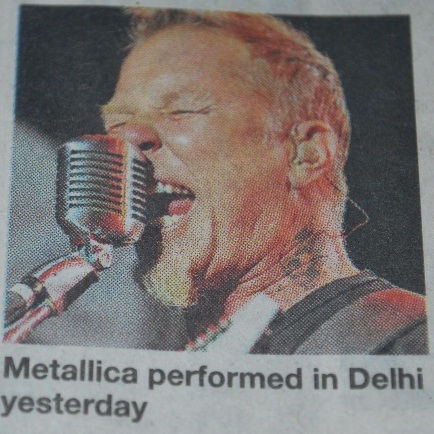
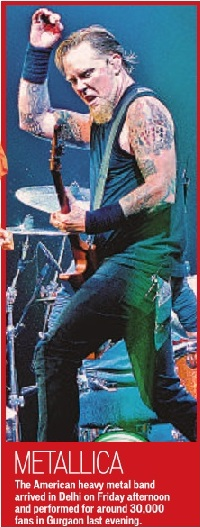
  • Mediaah!: When Delhi Times and HT Cafe reported that Metallica performed

    By Pradyuman Maheshwari

    The Delhi Times clip
    The HT Café photo-story

    It’s not something that’s not happened before. I recall Time magazine doing it in the late 1970s when it reported that an Indian politician had visited China when in fact he had called off the trip last-minute.

    I was alerted on this thanks to a Facebook post by a former colleague, Narendra Kusnur. The city supplements of both the Hindustan Times and Times of India in Delhi reported that the Metallica concert had happened on


    Friday. While the front page of the main paper did make a mention of the chaos at the venue, that of their supplements – which Kusnur believes happened because of an early deadline – was incorrect.

    I am sure this is more than just a severe embarrassment for the editor and management of both publications. It’s not the case of an error in reportage or a typo or even a wrong picture that was printed. And mind you it doesn’t appear to be an inadvertent error.

    Here was a case where the paper’s editors cheated their readers by deliberately printing incorrect information. We got to know about it thanks to a vigilant reader and also because it was a much-hyped event.

    But my worry is what if the editors do such acts habitually, with other events too. Also a cause of concern is that the city supplements of the two leading newspapers in the capital carried a similar error. The Times of India blanked out the news item on the epaper, while HT didn’t do that. So obviously the decay exists not just in one publication.

    I went through the front page of HT City and Delhi Times on Sunday to see if there’s any apology. I didn’t see any in the epaper edition. Times magazine, btw, had apologised for the error.

    This only further accentuates my distress that the reader is being taken for a ride and no one really appears to care.


    The Niira Radia exit. Good riddance or sad to see her go?


    I still remember the days when Vaishnavi was setting up. The Tata group accounts were consolidating under an agency with a name unlike the other PR agencies. In the early days, the folks were working out of makeshift office at the Taj Mahal hotel and the Army and Navy Building in Mumbai.

    But the proof of the pudding is in the eating, and I found it very pleasant interacting with Vaishnavi staffers. For a period when I was with the Dainik Bhaskar group, we had recruited Vaishnavi with an assignment which again was executed very well.

    The PR industry grapevine always had assorted stories about how the Vaishnavi bosswoman Niira Radia had managed to net the entire Tata group account. Needless to say most of it was out of jealousy. Guess they found some merit in getting the entire business group to go to just one agency for PR just as you tend to do for, say, media buying.

    My sense is that this policy doesn’t work. It’s always good to get a few different players, given their strengths in various business areas and have experience professionals available in the locations you want them.

    Two questions: now that she’s gone (well, as of close of business today), what’s the view. How would the world remember Niira Radia? High profile lobbyist or a quality communications professional? Lobbyist yes, but perhaps incorrect to stretch it to her being a wheeler dealer.

    There’s a lot that exists as part of the deliverables under public affairs, and there’s nothing wrong if the influencing has to happen beyond media folk. For instance, if a senior politician from Kerala thinks he or she is not being recognised by the powers that be in Delhi, then there’s nothing wrong in pushing your way around in Delhi.

    And if there’s a journo or bureaucrat who is amenable and can get influenced, it’s surely not the crime of the practitioner.

    That both the Tatas and Reliance groups entrusted their responsibility to Radia speaks volumes for her skills.

    There is a lot on Radia that the various enforcement agencies are busy with. I don’t see anything happening to her. She has enough contacts to get her out of any mess and has enough dirty stuff on people to pull the trigger if anyone gets naughty.

    Question 2: were the Tatas wise by going in for Rediffusion? I would be interested to know what swung it for Arun Nanda. After all, he doesn’t have the best PR brains with him any longer.  Perhaps that’s why tied up with Edelman.

    But then 10 years back when the group went in for Vaishnavi, similar questions were being asked. Radia’s team put up a decent show. The Tatas can obviously spot talent where not many of us can.


    PostScript: Are news media professionals worried about the mutterings of Press Council chief retired Justice Markandey Katju. Read this hilarious account on Legally India. Must-read. More on Katju’s comments on the media next time (which I promise you won’t happen after three weeks!)

  • Shika Mukerjee: Mamata dream sequence ends

    By Shikha Mukerjee

    Like a grand infatuation that is pursuing its natural course towards an inevitable end, the heady, halcyon days of the media’s romance with Mamata Banerjee as the harbinger of “change” or “parivartan” are coming to an end. Sunday, October 30: the mainstream print media is showing distinct signs of doubt about Didi’s capacity to deliver on her promises; her announcement that for the next one month all her attention would be focused on “industry,” her “Diwali-gift” of projects to the people of West Bengal produced sceptical headlines.

    Of the two dozen or so daily newspapers in Kolkata, the story of the Diwali gift or Industrial Revolution was the lead in many, the second or even third lead in some and appeared below the fold in a few rare exceptions. It is not a categorical imperative that Mamata’s initiatives on industrialisation must be the universal lead in every newspaper or even television. The Telegraph said, ‘A Diwali ‘gift’ but not so perfect’. The Times of India said, ‘Industry bonanza hits Singur hurdle’. The Ananda Bazar Patrika said, ‘Mamata takes the field to gain Industry’s confidence.’ Ekdin said, ‘Assurances of Industrial revolution in West Bengal to restore its golden past’. Pratidin said, ‘Now the Industrial Revolution.’ Bartamaan said, ‘Migration in search of jobs to end: Mamata.’

    On television, especially the top five 24X7 Bangla news channels, more widely watched and consequently of greater significance in terms of reflecting popular sentiment, the story was listed a long way after news on crib deaths and the newest Maoist demands. National news channels insistently reported on the growing number of crib deaths and the failure of the political leadership, namely Mamata, to respond to the situation as an emergency.

    A month or two earlier, no market savvy newspaper or television channel would have given a negative spin to any story featuring Mamata as the principal actor. By describing her Diwali gift as old projects repackaged as new, the newspapers are signalling that the romance is nearing its end. Some newspapers even listed which of the 10 projects that Mamata had announced as new initiatives had been sold to the public before. Some said that the list included so many public sector projects that the lack of interest of private investors was obvious. Some even quoted unnamed industrialists and public sector officials on why the list was a made up story of possibilities.

    One strong indication of the romance going stale was a story in The Telegraph on October 21, ‘Mamataisms at the Crossroads’, that analysed and checked off the status of her initiatives on her priority issues during the long, long campaign against the Communist Party of India Marxist’s misrule and arrived at the conclusion that she had made little headway though many starts, even if most were false ones.  The clash between the suave and pedigreed Trinamool Congress finance minister Amit Mitra and the former less socially elite, but no less academically qualified finance minister Asim Dasgupta was a delicious play off in which Dr Dasgupta has certainly scored a bull’s eye. As the story appeared, it was evident that The Telegraph, The Ananda Bazar, Ekdin, The Times of India were all clued in on who would win the fight.

    Assisted by the media, Dasgupta launched a methodical and technically sound demolition job on Mamata’s claims that a mere 6 per cent of the state’s money was available for development. The apparently academic point that Dasgupta made – on how the calculation was wrong – is in effect a lit fuse, politically. The positive play that Dasgupta received is the measure of the decline of Mamata’s magic in the media. The contrast is particularly striking because three months ago, when he made a similar point and was very critical that the new government had not presented a conventional budget, the media found ways of converting the criticism into the peeve of a loser. It dragged in seriously negative evaluations of his tenure as finance minister of the CPM government and quite openly jeered at him.

    It is intriguing that whereas Dasgupta’s earlier salvos did not get any support from the popular band of economists, this broadside had several economists, including one or two known CPM baiters and Trinamool Congress admirers confirming the accuracy of the ex-finance minister’s statement.

    In contrast, the very soft treatment that Mamata has received over crib deaths underscores her star quality.  The “failure” of the health system in tackling a crisis was played up in terms of the numbers of crib deaths at the BC Roy Memorial Hospital for Children. Media went out into the districts to find more instances of failure, in a show of initiative that indicates that the story has regained its own life instead of being a frame within which Mamata and her government are artfully displayed. But the media did not pick on her when she brushed aside questions at a press meet, declaring, “ask the health secretary” and “this is about industry”. Nor did it bay for her blood when she responded “What can I do.”

    The quagmire in which negotiations with the Maoists have been stuck, the declining credibility of the negotiators, the revision of strategy for dealing with the obviously reinvigorated ultra Left has not led to direct criticism of Mamata, but it has produced a shift in treatment. Even though the media has not underlined the abrupt change in Mamata’s stand, from declaring “There are no Maoists-Phaoists in West Bengal” to calling them “supari-killers” and “cowards,” it has turned watchful and cautious about the chief minister’s capacity to handle the problem, classifying it as one of the “Mamataisms.”

    Industry, finances, health, Maoists covers much of what Mamata promised as part of her Parivartan politics. By reserving judgment on the promises that she made – return of land to unwilling farmers of Singur, now mired in a legal battle, ending the Maoist problem, opening the doors to a flood of fresh investments, delivering better governance, extracting more money from the Centre – the media has played fair or even handled her with kid gloves. It has not clamoured for answers at the gradually but noticeably fewer press meets. She has not been cornered or pushed up against a wall.

    In fact the media has been unusually, almost unethically, gentle in its interactions with Mamata Banerjee. It has tolerated, even after she became chief minister, the ferocious regulation of access that she exercises with the media. It has accepted with good grace the fact that there are some newspersons who have 24X7 access to her and that the rest have to depend on these select few for camera footage and reporting. The band of faithful is privy to the best footage at every photo-opportunity; they are welcome in her office and get interviews. The rest have to make do with crumbs cast their way. The absence of protest is, as one journalist said, a measure of her “charisma.”

    Put differently, the news media cannot function without the crumbs because its audience or public remains loyal to the charismatic leader. No media publication or channel can afford to black out the things that Mamata does or says. No media channel can complain on air that it never gets a chance to interview the leader. No media channel can protest if a newsperson from another “house” sits in on an interview when it is finally granted. If after this prolonged discriminatory treatment the media has chosen to suck it up rather than raise a furore then it signals the popularity of Mamata Banerjee and the risk of annoying her. Therefore even when media persons privately complain bitterly about the “humiliation,” “discrimination” and “difficulty,” they have not as yet turned critical or even objectively analytical. The stories that the media does not report vastly outnumber the stories that it does; the discretion is exercised over what the public and positive image of Mamata can bear versus the stories that reveal the negative in terms of faults, whims, bad decisions.

    A year back, the CPM government would have been excoriated if it had spun the funds available for development story in the manner in which Mamata presented her desperate case at the National Development Council meeting in New Delhi. It would have trashed stories about promised bailouts by the Centre, especially Prime Minister Manmohan Singh to the West Bengal government for reasons of political sympathy. It would have gleefully pointed out that the Centre’s failure to deliver on promises was a pointer to the declining clout of the political leadership of West Bengal. In other words, Mamata is getting the best deal that the media has ever offered to any member of the political establishment anywhere; it has suspended disbelief and meekly accepted its assigned role in the Mamata era, as a faithful purveyor of designer messages.


    The writer is a senior journalist.



  • The Anchor: Hoshie Ghaswalla on 10 reasons why B2B media will thrive

    By Hoshie Ghaswalla


    B2B media is the most connected to both its key constituents – be it the reader or the advertiser / sponsor. Its in-depth understanding of the domain it operates in gives it a clear, distinct and sufficient edge over the other media forms. Here are 10 reasons why this media will thrive.


    #1 Domain Engagement – B2B media is deeply engaged within the domain it operates. In fact more often than not B2B media thinks it’s business is the same as that of the domain it caters to. At times, it is dangerously stitched to the domain it works with and people at the media venture often forget that they are in the media industry and need to apply those norms to their working, contrary to those of the domain they operate. There can’t be anything as powerful as this where people passionately believe they are a part of the business they cater to.

    #2 Reader engagement – The understanding of reader requirement is key in this business and good B2B media players regularly carry the reader with them at all stages. Their understanding of the domain comes in from the reader and you often see very involved and long tenured editorial / content committees that aid in the content strategy and delivery for the entire industry they operate across. How much more powerful can it be when the main customer of media has an active say in the creation and shaping of the editorial product on a consistent basis.

    #3 Advertiser engagement – This too is natural. B2B media players work very closely with advertisers as they understand their needs. From selling simple inventory, B2B media has much earlier begun to offer complete 360-degree solutions to advertisers who want to reach out to their customers in a more meaningful manner. In fact qualified lead generation is a new trend that has begun to emerge over the past few quarters in this space. What more can the advertiser ask for when s/he is getting their communication directly in to a relevant audience.

    #4 No wastage – B2B media players do not focus on mass. Their objectives are to be able to connect the advertiser / sponsors to the information consumer. So while other media would have a much larger audience they reach out to, B2B is controlled and the advertiser / sponsor pays for rich visibility. Likewise for the information consumer that gets the information they seek and do not have to go through clutter to find what they are looking for.

    #5 International trends – In the US B2B online marketing spend is projected to grow 40 percent faster than core media in 2012.

    #6 Advertiser Trust – B2B media enjoys the highest trust from the industry amongst other media. Most B2B publishers work to enhance the objectives and standing of the domain / industry they operate in rather than containing themselves to simple media-related objectives such as top-line and bottom-lines. They are a key part of the domain they operate in and very often lead in the cause of betterment of their domains.

    #7 Trust from the reader – Readers too love the B2B media because of its comprehensive understanding of the industry. This is possibly the only form of media they trust before taking significant decisions for their business. In fact this author has had instances over the past few years where readers have come to him and his colleagues and requested them to take large decisions on their behalf.

    #8 Passionate / Committed to cause – Objectives often different from commercial / profitability.

    #9 Medium agnostic – Unlike readers and advertisers of other mediums who need their daily fix of a particular newspaper, or a soap opera or a news capsule, B2B readers are sworn to the brand they have been following and are happy to get their information across any delivery medium. Likewise the advertisers / sponsors too are looking for connects to their customers and not just inventory purchase.

    #10 Content is monetizable – Due to the rich and relevant nature of content, B2B media is able to charge more for its content, contrary to other forms of media. In fact this trend is increasing and it seems highly likely that B2B will gain significant revenue from the main customer, which is the information consumer, thereby bringing down its revenue dependence from the advertiser / sponsor.


    Hoshie Ghaswalla is President – Publishing at CyberMedia India Limited.

  • Advantage Arnab

    By Ranjona Banerji


    One would have expected some more fireworks from the print media over Markandey Katju’s remarks on journalists and how he wants to control the media. Katju has just taken over as chairman of the Press Council of India and seems to have bought into the government line that broadcast journalism especially needs to be contained or curbed.

    Much as there are aspects about TV journalism in India which are annoying – and god knows I’ve been ranting about them in these columns – government control is not the answer. Nor is the answer in the Press Council of India taking exception to whatever he finds “obnoxious”. The hope is that eventually TV journalism in India will grow up and realise that everything doesn’t have to be a drama, that ignorance is not a virtue and that he who shouts the loudest doesn’t necessarily make the most sense.

    Katju, a former Supreme Court judge, is evidently as irritated by TV journalism as most Indians. But bad quality is not the PCI’s concern. It has to look at weak standards and practices rather than a few dimwit journos.

    Why not, for instance, take on managements for their policies like medianet (and its many variations) and private treaties? In today’s world, it is not editors who decide on such unfair and blatantly immoral practices, it is owners and managers.

    As far as the dumbness of journalists is concerned, I would lay the blame squarely on our education system and the fact that media houses hire people who have studied mass communication at the under-graduate level. If hiring policies were changed so that mass communication/media studies was only required as a post-grad diploma or degree, there would be a dramatic improvement in the quality of our journalists. We might also remember that our best journos don’t even any media degrees.

    Katju also seems to think that the media is one homogenous body rather than a diverse collection of rivals. Journalists are not ants looking out for the best interests of the hill. His notion that issues like poverty and development get ignored for Lady Gaga and Formula 1 is all very well but he may not realise that no newspaper or TV channel which concentrates only on serious issues will survive for more than a few months.

    We need to get together closer on issues of press freedom and use our vehicles to make our points rather than leave it to bombastic statements from the Editors Guild, which is about as useful as the Press Council.

    **

    It was interesting however that even an interviewer as aggressive as Karan Thapar seemed to allow Katju to get away with his statements on his show, ‘Devil’s Advocate’ on CNNIBN. Katju held forth and Thapar listened. Very unusual and uncharacteristic.

    **

    Arnab Goswami and Times Now demonstrated on Wednesday night just why he is so adept at pulling the carpet out from under his rivals. He turned to the extradition orders issued against Wikileaks editor Julian Assange and held a fairly intelligent debate on vendetta and the use of Wikileaks. The panellists were Madhu Trehan, Faruukh Dhondy and for some unknown reason Suhel Seth who of course is TV’s go-to person for fireworks and posturing. N Ram joined later and not only did he and Trehan get into an amusing little spat but then Ram and Goswami started and even more amusing mutual admiration society.

    The big winner for Times Now was the discussion on the deaths of two young men in Mumbai almost two weeks ago – Keenan Santos and Rueben Fernandes. Santos and Fernandes and a few friends were out one night when a group of men started to harass and molest the girls in their group. Santos and Fernandes and the other men objected, a fight ensued and Santos and Fernandes were beaten very badly. Santos died that night, Fernandes a few days ago. People apparently stood and watched and calls to the police were of little help.

    The family and friends of the boys on the show demonstrated great courage and dignity and Santos’s father Valerian won many admirers. The rise of crime in Mumbai was deplored by guests Bacchi Karkaria and Roshan Abbas. Goswami expressed outrage at the lack of safety, the problems faced by women and even the use of the term “eve-teasing”, which is admittedly idiotic. He also slammed moral policing.

    By giving national focus to this Mumbai incident, Goswami has certainly stolen a march on his rivals.

    Presumably Katju can fret and fume some more now.


    eom

  • Gouri Dange’s Naming No Names: Cheeni kum!

    “You mean you don’t watch the cookery shows and competitions on TV????!!!” – people ask me, using up their entire quota of question marks and exclamation marks for the month. Well I do, sort of, but here’s my problem with them, and why I can’t watch any fully from beginning to end: First, the Indian food shows. The Indian shows invariably have self-consciously decorated kitchens as the background (the usual backlit shelves, phalanx of shiny knives, matchettes and muddlers, bubblegum pink walls, and suchlike). In front of this kitchen from kitschland is prancing (or trying to look as if) a fattish johnny stuffed into some garish shirt, trying hard to keep up the amusing chit-chat while clanging spoons and vessels together. There’s nothing to endear these chaps to me – not the maniacal chopchopchop of a Yan of yesteryear, or the lithe handsomeness of a Bourdain, or the extravagant booziness of a Floyd. Besides the nameless Indian chaps, there are the brand-name Indian cooks, smiling fixedly into the camera and serving up, what else, jazzed up versions of tandoori chicken. I tend to switch channels when I hear ‘adrak-lasan-pyaaz, pyaar sey bhuniye’. Then there are those non-cooking Indian food shows, in which hung-over-looking beefy chaps (always in khaki shorts) bumptiously muscle into dhabas and thelas and then turn around and wax eloquent into the camera. No fun. On top of it, when some of them snigger about the spelling or the naming of some of the dishes, and make the busy street-vendor stop what he’s doing and look foolish while he unsuspectingly explains what ‘Tandoori Manchurian’ is (stale, overdone joke) to the camera, I want to hurl a plate of instant noodles at them. (But my previous TV took its aakhri saans after going through a long melodramatic deathbed scene, when I threw a dibbi of sindhur at it; so chucking noodles at the new one is a serious no-no. It’s written in the manual.)


    As for the phirangi food shows, here’s my problem: either the person actually has adenoids, or speaks in that breathless way, to indicate shock and awe at the wondrousness of the food that he’s handling (it’s usually a Brit affectation); plus nowadays, with Indian food going places, they’re always going on about some aromatic ‘masalarr’ as they call it, and there’s cumin in everything. Or then it’s that lady who’s been named after the English word for kalonji seed. You know her, with the jaunty tilt of her head and the saucy positioning of other body parts served up for the camera on a plate. Ya, ya, I know guys reading this will say “jealous, jealous”, but honestly she’s a coy bore, and has a cloyingly heavy hand with the cream and butter and chocolate. The only thing I like about the western cookery shows is the big warm kitchens and the lush gardens that lie beyond that. But I get insanely jealous of this and switch channels.


    And then there are the chef championships. Again, my problem is that there’s far too little food and far too much drama. Call it OCD, but when I see contestants crying and wiping their noses in tension and despair, I want to say severely, like my ma used to (during traumatic chappati-making lessons): “Stop snivelling, wash those hands, and only then go near any food, you big cry baby.” On top of it, the Indian version of Masterchef has you go right into the humble homes of the aspirants and you know that they have far too much riding on winning this competition, and it gets all too sentimental and saccharine for my liking. I mean come on…food mixed with tears? Not a winning combo for me. (The least appetizing of all of this of course is the commercial breaks – currently there’s that daft girl going on and on about her phone working even when the lift shuts; how life-defining is that!) Again, there’s also too much non-food paraphernalia – immunity pins and aprons and t-shirts to be won, rather than actual food to be seen on screen. But here too I love the locales where the competitions take you – I mean cooking out in the open in Central Park while people row slowly past on boats or walk briskly by! Just for that I may cry my way into one of these shows, and teach everyone a thing or two about Indian masalarrs. Or I may indulge in that stab of envy and switch channels.


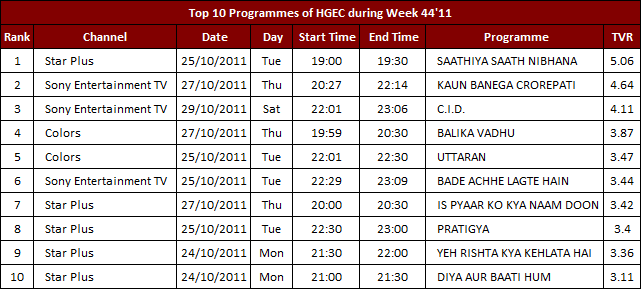
  • TAM data Top 10 programmes on HGEC – Wk 44’11

    Source: TAM Peoplemeter System

    TG: CS 4+ yrs

    Market: Hindi Speaking Market

    Period: Wk 44: Oct 23 to Oct 29, 2011


    About TAM Media Research

    TAM is a joint venture between Nielsen Company & Kantar Media Research. Besides measuring TV Viewership, TAM also monitors Advertising Expenditure of Television, Print & Radio through its division AdEx India. Since 2004, it extended its presence in the PR Measurement & Analysis space for Corporate/Marketing Clients by setting up a separate division Eikona PR Measurement.

    In 2007, the joint venture introduced RAM (Radio Audio Measurement) service to track Radio Listenership for the Indian Radio Broadcast Industry. In year 2009, TAM launched a division, called TAM Sports that specializes in monitoring Sports Sponsorship ROI.

    TAM Media Research’s objective is to fuel media insights that will drive the growth of the Indian Media Industry.

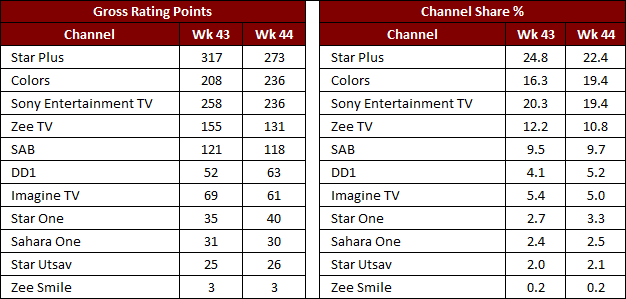
  • GRP & Channel shares of HGECs- Wk 44 2011


    Source: TAM Peoplemeter System

    TG: CS 4+ yrs

    Market: HSM

    Period: Wk 43: Oct 16 to Oct 22, 2011

    Period: Wk 44: Oct 23 to Oct 29, 2011


    About TAM Media Research

    TAM is a joint venture between Nielsen Company & Kantar Media Research. Besides measuring TV Viewership, TAM also monitors Advertising Expenditure of Television, Print & Radio through its division AdEx India. Since 2004, it extended its presence in the PR Measurement & Analysis space for Corporate/Marketing Clients by setting up a separate division Eikona PR Measurement.

    In 2007, the joint venture introduced RAM (Radio Audio Measurement) service to track Radio Listenership for the Indian Radio Broadcast Industry. In year 2009, TAM launched a division, called TAM Sports that specializes in monitoring Sports Sponsorship ROI.

    TAM Media Research’s objective is to fuel media insights that will drive the growth of the Indian Media Industry.