Author: mxm_india

  • So near, but yet so far

    In one of those delightful ironies which make life interesting, Karan Thapar’s The Last Word on CNNIBN featured three newspaper editors to discuss the question of whether the media did enough to get details about Congress president Sonia Gandhi’s illness.

    Here you had four journalists discussing “the media” as if it was some animal in a zoo, with whom they had only spectator contact. N Ram of the Hindu, Kumar Ketkar of Divya Marathi and Chandan Mitra of The Pioneer could not explain to us what their own newspapers had done to inform their readers about Gandhi’s mysterious illness. What is this “the media” they are talking about? The media is them.

    Instead they discussed a colonial hangover, the love or Jawaharlal Nehru, respecting laws of privacy, fear of Sonia Gandhi and a host of reasons for the media’s failure. This would have been okay if the panel was not made up of three working editors of three newspapers.


    **

    The television media’s insistence that J&K chief minister Omar Abdullah answer questions about the custodial death of a National Conference worker lead to a almost-funny situation where anchor extraordinaire, Arnab Goswami of Times Now, was rendered silent by Abdullah’s belligerence. As Goswami demanded answers (for the sake of India), Abdullah asked some pertinent questions about the way investigations are conducted in India, which left Goswami lost for words, looking down and away from the camera.

    Team Anna representative Kiran Bedi was in a similar situation on Times Now later when she could not answer a simple question from Kumar Ketkar: if Team Anna claimed that the whole country was with them why were they so frightened of getting a two-thirds majority vote in Parliament? Bedi had no answers for Ketkar or indeed for Goswami or the analysis put forward by Crest’s political editor Arati Jerath.


    **

    The lack of depth of TV is exposed again and again whenever there are no dramatic events to follow. Print journalists have to come to the rescue every time – whether on TV or in print – to provide perspective and analysis.

    This constant desire for drama and old-fashioned Indian style “jatra” at prime time sadly shows up TV on the slow days.


    **

    Newspapers are luckier of course because the front page presents whatever the editorial team considers to be the bog news of the day. It is a boon to decide what to choose when you don’t have to look for the loudest guests and try and save the nation at every given moment.

    The big problem for newspapers – especially in English – is the same one which irks Infosys mentor Narayana Murthy about the standard of students at IIT: bad English and bad grammar. Chetan Bhagat can perhaps get away with it, but newspapers should not.

    Examples of boo-boos big and small are welcome.

  • Engagement Study holds hope for magazines

    By Akash Raha

    With the World Magazine Congress round the corner, New Delhi is set to host magazine publishers, marketers and advertisers from all over the world.

    However, with news doing the rounds each year that the future of magazine is in doldrums (at least on print and paper), a lot of hopes are likely to be pinned on the Engagement Study conducted by Association of Indian Magazines (AIM), which is to be announced at the congress. The study aims to become a robust currency for advertisers.

    Media planners and buyers whom MxM India spoke to about the study feel that it will herald a change for the better.

    Premjeet Sodhi, President, The Collaborative, Lintas Media Group said, “Yes, the currently available syndicated research studies in India are not adequate to take fully informed decisions about selection of magazines from a media planning perspective. A lot of additional inputs are derived from proprietary research by agencies to be able to make prudent recommendations. Overall, there is a huge scope for enhancement of the syndicated data sources from the perspective of magazines. While, I am not aware of the research design of the Engagement Study, I am sure it will fill a critical void of information for magazines and will be a valued input for media planners and advertisers. I hope that going further the research does not stay at the ‘Category Level’ and does provide information at the ‘Individual Title Level’ else the applicability of the information will always be limited.”

    S Yesudas, Managing Director – Indian sub-continent, Vizeum India said, “Personally I was shocked to see the numbers of some of the magazines when the Registrar of Newspapers of India publicized the print order claim made by magazines on its website, presumably through an oversight, as it was subsequently withdrawn.  Coupled with this is the reality of IRS certifying a consistent southward trend.  There are too many titles fighting for the same share of the audience pie, unlike the newspapers, they themselves are currently feeling the pinch.  While the engagement study might help differentiate one against the other in the same area of operation in terms of affinity, it will not make any substantial changes in the current perceptions and judgments by media planners, from an overall industry perspective. At best it will result in the publication with the highest affinity, scoring over the others compared to the current judgment allocation where the one with the perceived audience retention possibility gets 80 percent and the rest 20 percent. With the engagement study it might become 90/10 or 100 in favor of the one with highest affinity.”

    With digital being the watchword for the future, this year’s theme of the magazine congress is ‘The 360° Opportunity’.

    Dinesh Vyas, Business Head, MEC India said, “If you look at the way the print medium has been faring of late, I wonder how much of a difference the Engagement Study is going to make. The situation has changed drastically over the years and today, digital is taking away massive part of the advertiser’s money. According to me, digital is a very engaging medium, perhaps more than print as a whole. Whether Engagement Study will make a difference or whether clients will buy into a medium which is already losing interest amongst consumers, only time will tell.”

    A few questions arise here: Will the media planners and buyers appropriate the study? Will they be able to trust a survey conducted by the very group on which the study is being conducted? The answers to these questions are close at hand.

    Also Read:

    http://www.mxmindia.com/2011/09/engagement-study-may-solve-magazines%E2%80%99-measurement-blues/

  • Industry expectations from WMC2011

    By Akash Raha

    As the World Magazine Congress gets underway today, the industry awaits lessons which will lessen the woes of magazine publishers in India. The topic of this year’s congress is ‘The 360° Opportunity’ and with the advent of digital, the publishers will be interested in sharing and gaining knowledge on how to monetize the digital space better and leverage the brand on multi-media platforms effectively. MxM India spoke to several members of the media industry to know what they are expecting from the congress and express their views on it.


    Suresh Selvaraj, President, Outlook and Marie Claire.


    “WMC kind of events should provide practical solutions to safeguard the magazine industry in its original avatar – i.e., the print version. Increasingly everyone suggests how digital could change the landscape and why one should invest in it etc. but what about the returns? Show me one website of a popular Indian magazine that makes equal amount of reach or turnover or the potential to do so in the next couple of years. When international magazines make a beeline to enter into India, how many Indian magazines venture into the neighboring countries, at least? Can Indian magazines use WMC to open the doors to the world – especially when we have some very successful titles and talent?”


    Rasina Uberoi, Vice President, Media Transasia Thailand Ltd.


    “At the World Magazine Congress we are looking forward to meet all our global partners. Although we meet them on a regular basis, WMC gives us a platform to meet everyone at the same time. We are looking forward to exchange of thoughts and ideas with our partners. However, my biggest expectation here is how we are going to monetize our digital business. Everybody has been talking about digital business and social media for a long time. And everybody is still toying with the idea. So I am keen to learn from WMC and from other publishers what a successful revenue model in digital is.”


    Anant Nath, Director, Delhi Press and Managing Editor, The Caravan.


    “My expectations from World Magazine Congress are the same as before – To re-establish and re-articulate the cause of magazines and help it stay relevant. Magazines have to grow in the right eco-systems in a multi-media framework, and be relevant for the various digital offshoots. I am eagerly looking forward to exchange of ideas and learning with our international counterparts. Since the congress, for the first time, is being held in India there is going to be a lot of participation from Indian publishers. The publishers will have a lot to learn from their international counterparts, who will share their learning and insights to what the future might hold for Indian publishers.”


    R.Rajmohan, Publisher, Open Media Network Pvt. Ltd.


    “WMC, held every two years, is a very significant conference for magazine publishers across the world. It is an achievement for AIM and Indian magazine publishers that India is the venue for WMC, this time. It also reflects the growing importance of India as a magazine publishing market. FIPP has brought together eminent panelists, making the congress a must-attend for magazine publishers. Opportunities magazine publishing offers in the digital ecosystem is tremendous and the conference will discuss this and far more, which will be a great learning experience. I look forward to meeting fellow publishers from all over the world and to the exchange of ideas and thoughts.”


    Sandeep Khosla, CEO, Infomedia18.


    “Since World Magazine Congress is an international event and several international publishers are coming from around the world, we are looking forward to interacting with them. There is a lot happening internationally and there are some new vehicles which we can possibly tie up and bring to India. Apart from that we are looking forward to understand, as to how publishers co-exist with technology too. We want to understand what various publishers are going to do with ipads and android platforms and how will we co-exist with them… what sort of a revenue model is one looking are looking at to remain relevant. We will be looking forward to understand that in the light of dropping readership, a sort of recession that we are seeing, how do we survive and make profits.”


    Riyad Mathews, Senior Assistant Editor and Chief General Manager, Malayala Manorama, Malayala Manorama


    “Well, it’s not often that you can get all leading publishing houses under one roof. The World Magazine Congress gives us all an opportunity to interact, meet and discuss issues facing the magazine industry and it also gives us business opportunities.”

  • Chalo Dilli!


    By Akash Raha

    Delhi is all set to host two mega international events back to back – The World Magazine Congress and AdAsia. It almost seems like Delhi has become the new hub to host such grand events, perhaps taking over the role from Mumbai, the financial capital of India. Nevertheless, the upcoming month assures to be grand and promising for Delhi, which is bound to receive a lot of attention with several international business honchos from the media and advertising industry attending the two events.

    Speaking about the two events in a recent conversation with MxM India Ashish Bagga, CEO, India Today Group said “The World Magazine Congress is in early October followed by the Adasia; it is a big month and there is a lot of activity around both these conferences. The learning is amazing; the energy levels are very high. We are all very excited and we hope to pull off two very successful broad format events. And we are all looking forward to it.”

    Talking about the two events scheduled to take place in Delhi Prathap Suthan, Chief Creative Officer/Chief Explorer, iYogi, said “Well, the expectations from WMC is not much as it’s an era of digital. The only time a person reads a magazine these days is when travelling in a plane. I do love print but it is no more reasonable these days to subscribe for it or carry it along. When it comes to Adasia, yes, I will be going for it with a couple of my agency people. We are expecting to hear the best of experts on ‘uncertainty is the new certainty’ as in my opinion the world has always been uncertain hence nothing can be regarded as certain, Steve Jobs death was not certain, anything that happens to anyone is never certain.”

    [youtube]http://www.youtube.com/watch?v=T7zC5_yLkbs[/youtube]


    Thereafter, Mr Suthan went on to praise the city of Delhi and said. “As far as having the events in Delhi is concerned, Delhi has a better infrastructure, better airport and better accommodation facility than Mumbai. In addition to this, every industry person makes a weekly Delhi visit. The only thing that Delhi doesn’t have is a sea but that is compensated with the nearness to mountains and desert. Hence Delhi is the perfect place to have such events.”

    In the two events several international deals and business transactions are also likely to happen. And that they are happening in Delhi is only good for the city. In the future too, it shall entice and lend confidence to the media, marketing and advertising fraternity to organize such events in Delhi.

    Talking about the two cities Mr Arvind Sharma, Chairman of India Sub-Continent, Leo Burnett said “Adasia is a major event happening for the advertising fraternity, it will bring a lot of great advertising minds under one roof. I’m hoping it will be a great event and I’m really looking forward to it.   I have been saying this for a very long time that the advertising industry in Delhi is growing double the rate than the Mumbai ad industry growth. Hence, it is the perfect venue for such a big advertising event.”

    But is Delhi’s gain Mumbai’s loss? This, only time will tell… But for the moment, it is time for the industry in Delhi to indulge in fun and frolic, amidst few of the biggest names of our industry as the city hosts World Magazine Congress and Adasia.


    Photograph: Fotocorp

  • Voice for Imagine TV

    By Dhara Salla

    After Colors with Bigg Boss and Sony with Kaun Banega Crorepati, it is the turn of Imagine TV to come up with a big-ticket reality performance show – The Voice. The Voice is an American reality talent show based on the reality singing competition The Voice of Holland, created by Dutch television. MxM India talked to Mr Nikhil Madhok, Senior Director Marketing and Communications, Imagine TV, about the show and what it means for Imagine.


    Q: Imagine already has a great new lineup of content; why did you feel the need for this big-ticket?

    One of the things we are trying to achieve is a good balance with fiction and non-fiction. We are revamping and refreshing the line-up of our show. We got our fiction shows line-up in place and it was the time to start the phase with non-fiction. Imagine TV has done a lot of reality shows like Rakhi ka Swavamyar, Shaadi Teen Crore Ki and Pati, Patni Aur Woh, to name a few, but had never tried a talent show. If you talk about Nach Le, it was a differentiated concept with Saroj Khan teaching the contestants to dance. Therefore, we never had a talent show per se, and The Voice is it.


    Q: Tell us about the show.

    The Voice, which will start in January 2012, actually has a differentiated concept, we are not saying it just for the sake of it. We will have blindfold auditions; the judges will be blindfolded and will select the contestants only on the basis of the voice. The contestants cannot influence the decision of the judges with their looks, crying or an emotional sad story. Beyond this, there will be involvement of the coaches. There will be four teams, with 14 contestants per team and every week the coaches will only select the good and the bad from their team. With The Voice we want to ensure that the final talent will be a superlative talent. The auditions will go to 12 cities – metros and important states where we can pull the maximum talent. It will be positioned in cities where people can easily drive down to the location.


    Q: Why an adoption of the international format, why not original?

    If you see Imagine TV has already experimented a lot with original shows such as Rakhi ka Swayamvar and Shaadi Teen Crore Ki, and we thought that it is the right time to get this show on board. We did not want to experiment at this stage. The Voice has already been a successful show in other countries and its rating has proved it. This format has already been syndicated in 25 countries. It has proven itself in markets and the strength is the format of the concept.


    Q: What is the show’s budget? We hear it is a big number…

    (Laughs) If I tell you the budget then I will have to resign from my job. But I can tell you that we have invested a lot in this show and it is a big ticket in real terms.


    Q: What part of the total budget will be allocated to marketing?

    We are going to do a heavy marketing campaign and about 20 to 25 percent of the total amount of the budget will be dedicated to marketing.


    Q: How will the marketing campaign be distributed, and what is the strategy?

    It will be distributed among different phases. The first phases will be the call for entry, second will be about educating the viewers to know how the show is different and talent matters, third will be the launch campaign. The show will run for 12-14 weeks and we will be marketing throughout the time the show is on air. The campaign is still in progress and we will come out with it once everything is finalized and things fall into place.

  • TopGear marks 6th anniversary

    By Akash Raha

    BBC TopGear celebrates its sixth year in India with a mega 214-page issue. The October anniversary issue has hit the newsstands at a price point of Rs 150. The rising price of fuel has not deterred the hottest cars of the world from descending on Indian shores. Moreover, with the Indian GP around the corner, the sentiment around is all for performance.

    Commenting on the anniversary issue, Mr Tarun Rai, CEO Worldwide Media, said,

    “The last six years have been an exciting ride for TopGear. And this year has been exceptional. We went in for a redesign, added lots of new sections in the magazine but kept the price at Rs 100, even though the others increased their cover prices. We believe with so much action in the car market, including the top end glamour segment and the F1 contributing its bit, the time is just right for TopGear. We are gunning for the number one position.”

    The anniversary issue of the magazine from the Worldwide Media group drives Koenigseggs, Aston Martins, and Jags with an India exclusive drive of one of the most exotic – The Maserati GranTurismo.

    Mr Girish Karkera, Editor, TopGear India said “In the increasingly crowded segment of auto magazines, TopGear has been growing from strength to strength with its hot cars, cool features, great photography and striking design. The magazine, thanks to its unique approach to cars and bikes, has managed to stand out from the rest of its ilk. And while conventional wisdom would suggest that the current environment is that of high fuel prices, high interest rates, and higher cost of living, TopGear, with its unique style of writing and presenting has managed to rise above the mundane and keep the readers engaged with cars… by providing dollops of entertainment, humour and information to maintain itself as an engaging and exciting read; irrespective of the world around it.”


    Mr Debolin Sen, Publisher, TopGear India said “2011 is the year for BBC TopGear in India. The year has seen the magazine perform exceptionally well in a crowded marketplace and we aim to build on the momentum that’s been generated. Together with the magazine redesign in April, the launch of www.topgear.com earlier this year, the magazine’s ready to host the TopGear Awards on November 25 in Mumbai.  With BBC TopGear the excitement and passion never ends. It just gets bigger and better. The sixth Anniversary Special is yet another reflection of the TopGear spirit.”


    Since TopGear is celebrating, the readers reap the benefits with a free DVD worth Rs 599 of XXX-2, an exclusive small car directory along with the TG Lifestyle supplement.

    Since it’s the flavour of the season, readers stand a chance to win Rs 1.5 lakh worth of Indian F1 GP tickets by participating in the TopGear Air-drive to F1 contest. More details are available in the issue and on www.topgear.com/india.

  • History launches with innovations blitz

    By Dhara Salla

    The History Channel launched its India edition on October 9 as part of a joint venture between TV18 and A+E Networks. The launch is a significant milestone in the Indian media space as it marks an alliance between dynamic television media conglomerate TV18 and factual entertainment biggie A&E Networks.

    Mr Raghav Bahl, Founder and Editor, TV18 said on the occasion of the launch, “We have always believed in making a difference in the domain that we work in and we believe that factual entertainment will emerge as one of the mainstays of the Indian television space.”

    Mr Haresh Chawla, Group CEO, Network18 said, “We believe that the Indian market is ripe for alternative formats and that is one of the reasons for us to bring in channels like History into this market. Factual entertainment is emerging as the new preferred choice across the world and the genre has the potential to become mainstream in India as well.”

    Ms Sangeetha Aiyer, General Manager Marketing, History, told MXM India, “By far this is one of the biggest media launches in the year and most definitely the biggest in the factual entertainment genre, in terms of impact, visibility, engagement, etc across traditional and new media.”

    As a channel, History has transformed itself by using very innovative formats that move away from the traditional concept of History being about dates, B&W footage, World War II etc. That DNA of innovation is being replicated everywhere including the marketing campaign. According to media reports, the marketing spend would be between Rs 150-170 million.

    The string of innovations began with the channel announcing its association with Bollywood star Salman Khan to be the face of the channel in an attempt to broad-base the appeal of History and the factual entertainment genre.

    In terms of Outdoor or Out of Home, innovative formats where the content seems to come alive and appear real will give passersby a first-hand taste of what History is all about. Some examples of engaging outdoor innovations are the Ice Road Trucker bridge replicated on a foot overbridge, Sliced where the anchor actually seems to ‘slice’ the hoarding, Swamp People, which has a brilliant life like cut-out of a crocodile/alligator, and Top Shot where smoke actually comes out of a gun which is part of the hoarding.

    On the programming and the content front, History channel has found out that Indian viewers across demographics are interested in experimenting with alternative forms of content, as far as the entertainment quotient is not compromised upon. The channel is being launched with universal themes that use the premise of history.

    Ms Aiyer said, “It will also announce a few big-ticket local productions that match international scale, very shortly.” The major chunk of the content is currently from the History US catalogue, with an appeal to viewer preferences in India. However, the channel is also experimenting with local production possibilities.

    How would this channel differ from the existing ones in this genre? Ms Aiyer said, “Firstly there is no other History channel in the country. History Made Everyday, the channel’s new positioning, encompasses the breadth of content and themes that History brings to Indian audiences. History here is not just about the past, it’s as much about people making History today.”

    AETN and Network 18 have come together as AETN 18 where Network 18 group holds 51 percent share and AETN holds 49 percent.

  • Mid-Day re-launches Meter Down

    By A Correspondent

    Mid-Day has re-launched its Meter Down Campaign in Mumbai to put errant Rickshaw drivers to task. The campaign will be launched as a joint programme with the traffic department and the RTO. This year’s Meter Down campaign aims to take on the uncouth auto drivers to teach them a lesson. The campaign will go on for a period of four weeks and aims to garner support from the citizens across the city. According to Mid-Day, people have anger towards rickshaw drivers mainly for reasons such as tampered meters, refusal to ply and also for their rude behaviour.


    Mid-Day will identify key locations in the city where the authorities concerned will be present to reduce the hassles caused to the citizens. The focus will be on peak timings in the morning and in the evening when most office-goers are affected. The offenders will have strict fines levied on them and serious offences could also lead to cancellation of licences.


    Last year’s Mid-Day Meter Down campaign, which targeted the taxi drivers, received overwhelming support. In a span of just one month, the campaign saw as many as 1,551 taxis being booked for refusing fares across the city. In addition about 317 taxi drivers’ licenses were cancelled. Mid-Day followed up tirelessly with each department to ensure that the errant drivers are booked.


    Speaking on the re-launch of the campaign, Mr Manajit Ghoshal, MD and CEO, Mid Day Infomedia Limited said, “Mid-Day is a local city newspaper and therefore it is our endeavour to cater to issues pertinent to the people of the city. Mid-Day Meter Down campaign is an effort to resolve issues that a Mumbaikar faces on a daily basis. The last season saw great response from the city and we are more than happy to launch this campaign once again as people have again started facing a lot of issues with the rickshaw drivers. The kind of success that the campaign received last year makes us hope that this campaign will make a stronger impact.”

  • SRK does a ‘chhammak chhallo’ as World Mag Conf gets underway in style (Text & Video)


    By Akash Raha (text) and Shruti Pushkarna (Video)


    The 38th FIPP World Magazine Congress began on October 10 in New Delhi with huge fanfare. The first ever India edition of the World Magazine Congress is being attended by over 600 delegates from 50 countries (including India). The biggest names of the media fraternity, from India and internationally, were present on the inaugural day of the WMC which is scheduled to last till October 12.


    The welcome address was given by Mr Aroon Purie, Chairman of FIPP and Chaiman and Editor in Chief, India Today, India along with Mr Chris Lewellyn, President and CEO, UK. Mr Purie said, “It is indeed a matter of pride that India was showcasing the FIPP WMC 2011. The conference is possible because of the hard work of FIPP and AIM members. We welcome you all to, what the advertisement slogans rightly call ‘Incredible India.”


    In his short note Mr Lewellyn said, “There are three reasons why it is going to be a great congress. Firstly, the Indian magazine association has worked very hard to put it together. Secondly, it is for all our sponsors, especially UPM. Lastly, it is for you (the delegates) for whom the congress is going to be successful.” He concluded by saying that “FIPP World Magazine Congress is a place where some of the biggest deals are forged”. He termed the interactions at the WMC the “speed dates” of the business world.


    [youtube]http://www.youtube.com/watch?v=mTxOmOwhVjw[/youtube]

    Thereafter, Bollywood actor Shahrukh Khan said that being on the cover of over 8000 issues of magazine was a privilege, but his tryst with magazines had come much earlier when he was not as famous. “As a child, magazines were the window of my world,” he said, “long before I was on them.” In an enjoyable and witty talk, Mr Khan said it began since the time he saw Samantha Fox on the cover of People magazine when he was still very young. He asserted that even though life is becoming faster with the digital age, “this form of writing is not going away; not in our lifetime.”  He emphasised his faith for magazines and whished magazine publishers from around the world luck, as it was a vital medium. Mr Khan thereafter entertained and enthralled the crowd with this dance performance on ‘Chamak Challo’, the song from his upcoming movie Ra-One.


    Apart from dancing to contemporary Bollywood numbers, dance troupes presented classical Indian dance forms and Bhangra. This was followed by a networking session over dinner.

  • The Anchor: Anil K Sathiraju’s 8 reasons why Birthday Boy Big B is the most bankable TV star

    1. He is looked upto as an icon, an idol, a god-sent, a good Samaritan, a humble human being

    2. He commands respect from a person who is probably 10 years or even 90 years… guess that’s what makes him such a great human being

    3. He is probably the only actor in the country or probably in the world who commands extremely great respect that no other person does – to the extent
    that you actually get goosebump when he says, “Main Amitabh Bachchan bol raha hoon Kaun Banega Crorepati se”

    4. He is ‘the most safest actor’ any channel can bank upon – obviously therefore it translates into people viewing the program that he is hosting

    5. He is a part of so many people’s lives – almost like a senior member of the family – there are millions of people who have grown seeing him, who
    have idolized him, has so much of hero worship, who are probably living because of him

    6. He becomes the character in whatever he does… that’s a great thing about him and I guess that’s why he is Big B

    7. He has a sense of gratitude for people for making him big, for making him what he is today – it is because of the people that he is who he is. He says it so
    genuinely everytime he talks to or listens to someone who says about him

    8. Finally, he becomes a common man with the common man – Needless to say, this part of him is what makes him the Big B

    Anilkumar Sathiraju is Associate VP and Head South, Mudra Max

  • Media tigers roar back at Minister Soni


    By Ritu Midha


    Rewind to Anna Hazare’s Anti-corruption Movement. A senior Congress minister had then reportedly stressed on the need to curtail exaggeration in media reports.  News editors had expressed anger and dismay when MXMIndia spoke to them.

    Read Will Anna Wave Link to Media Curbs? Link to: http://www.mxmindia.com/2011/09/will-anna-wave-lead-to-media-curbs-2/

    However, the Government did not really take any such measures – and all was well until Friday, Ocober 7, 2011. (see MxMIndia disclosure below)

    A proposal for amendment In Policy Guidelines for Uplinking/Downlinking of TV channels has been approved – and among other things this approved proposal  states,

    ‘Renewal of the permissions of TV channels will be considered for a period of 10 years at a time subject to the condition that the channel should not have been found guilty of violating the terms and conditions of permission including violations of the Programme and Advertisement Code on 5 occasions or more.’

    Read the approved proposal here.( http://pib.nic.in/newsite/erelease.aspx?relid=76506)

    Broadcasters are up in arms. Mr Sunil Lulla, CEO & MD, Times Global Broadcasting, told MxMIndia on Sunday: “The new guidelines have come as a shock.  More so, because the self-regulatory guidelines of the News Broadcasters Association (NBA) have been shared with I&B Ministry. One had never thought such guidelines could be brought in.”


    The NBA members too have collectively taken a strong objection to the guidelines.  A statement issued by Ms Annie Joseph, secretary general of the apex association, says: “Firstly there is no such requirement under the existing Uplinking and Downlinking Guidelines for renewal. Secondly, there  certainly cannot be any power vested in the MIB to cancel or “refuse to renew” a broadcaster’s license on their subjective view that a television channel has violated the terms of the Uplinking and Downlinking guidelines or the provisions of the Cable TV Act.”


    It further says, “The NBA urges the Government to urgently review the regressive decision which would be anathema to the constitutional framework of our country. NBA is seeking an urgent appointment with Ms Ambika Soni, Hon’ble Minister for I&B, to explain and clarify the concerns of NBA.”


    And here comes the twist in the tale. An unnamed person from the I&B department expressed surprise at the protest, saying that the government had in fact increased the number of violations from the present three to five.

    However, news broadcasters do not believe that the government has the right to decide on what makes for public interest and what does not. Says  Mr NK Singh, General Secretary, Broadcast Editors’ Association, “How will the government decide what is in public interest. Section 19 of the Indian Panel code, that speaks of Freedom of Expression, does not give the right to the government the right to decide Public Interest. The Government has no right to punish – for that we have the judiciary in the country.  No bureaucrat can decide content code. “


    When asked should the BEA not be happy considering that actions would now be taken after five violations instead of three earlier, Mr Singh states, “Well, did the government say that media has been doing a good job – and so the limit has been extended?  What the government is doing is against the constitution.”


    The guidelines are a reason for concern for existing players:  what about the channels, which already have five or more violations against their names. Is it a cause of concern for them, or would the slate be wiped clean now – and the violations counted effective today. Read the complete list here: http://mib.nic.in/writereaddata/html_en_files/content_reg/OrdersWarningsAdvisories.pdf)


    While news channels are leading offenders, GECs are not far behind. There are also cases of all news channels being pulled for the coverage of the Mumbai terror attack. In the case of GECs, the objections have been both on programming and advertisements.


    Does this mean that news channels will always be subjected to the whims of the government? The Broadcast Editor’s Association is definitely seeing red. Mr Singh states, “Content is jeopardised by the government. Does it mean that self-regulation by broadcasters has no value? ”


    Mr Singh adds: “There would always be a threat – and more so after the fourth notice. It is not practical and none of the broadcast bodies have been consulted.  It is all the more unfortunate because it has come at a time when Indian media is doing its best. BEA strongly criticises the new guideline regarding content – it is against civilian law. The government must desist from such measures.”


    Both the Indian Broadcasting Federation (IBF) and News Broadcasters Asscoation (NBA) have regulatory structures and complaint cells. Channels also carry announcements at frequent intervals inviting viewers to lodge complaints, if any. And then we have the Advertising Standards Council of India (ASCI), the watchdog for advertisements, which has been a reasonably active player for over 25 years. The new guidelines make all of these bodies in a way answerable to the cabinet committee (or Electronic Media Monitoring Centre).


    The NBA statement sums up the concerns of the fraternity:

    “Most importantly, the proposed modification of the Uplinking and Downlinking guidelines is a direct assault on the self regulatory regime put in place by broadcasters, which has been encouraged and recognized by the MIB. Such proposed step is wholly retrograde and places broadcasters at the arbitrary mercy of the MIB; and is therefore a violation of the constitutional right to freedom of speech and expression and will not be countenanced by the NBA.”

    Clearly the government and I&B minister Ms Ambika Soni specifically must address the concerns of broadcasters. The request from the NBA to meet Ms Soni is a move in the right direction.

    Update @ 10am According to reliable sources in the Ministry of Information and Boradcasting, representatives of leading television industry bodies are likely to meet Minister Ms Ambika Soni on today (Tuesday) afternoon.


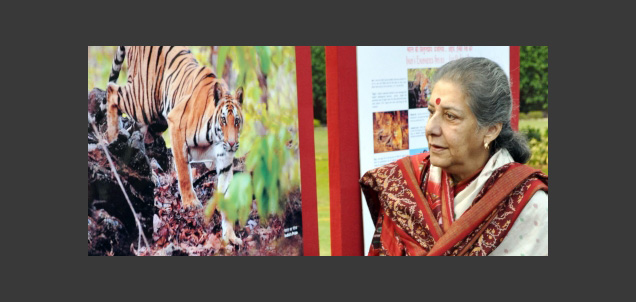
    Photograph: Fotocorp (File photograph of Ms Ambika Soni releasing a DAVP calendar for the year 2011)


    Disclosure: MxMIndia is a firm believer in the freedom of the press and the self-regulatory route to check on content. We will take every effort in guarding this and ensuring that governments do not step in to police the media. However, we also believe that broadcasters must need to re-examine the content they air and help make the self-regulatory process a success.


    Also, read print media reports on the issue:


    The Indian Express: http://www.indianexpress.com/news/cabinet-nod-to-tightening-eligibility-criteria-for-running-tv-channels/857167/

    Mint: http://www.livemint.com/2011/10/10010542/Media-criticism-of-uplinkdown.html?h=B

    Dainik Bhaskar: http://daily.bhaskar.com/article/NAT-TOP-govt-trying-to-control-independent-media-with-new-rules-tv-channels-2489322.html

    The Hindu: http://www.thehindu.com/arts/radio-and-tv/article2521281.ece

    The Times of India 1: http://articles.timesofindia.indiatimes.com/2011-10-08/india/30257931_1_downlinking-tv-channels-current-affairs-channels

    The Times of India 2: http://timesofindia.indiatimes.com/india/Govt-bid-to-gag-TV-outrages-broadcasters-libertarians/articleshow/10283957.cms

  • Time to take the government head on

    Ranjona Banerji

    Much as it was interesting to watch members of Team Anna squirming and dissembling to explain their foray into electoral politics on an anti-Congress campaign or hearing the speculation about whether LK Advani’s yatra is about him trying to become PM again, more attention needs to be paid to the government’s attempts to control the electronic media.
    Much as TV news channels can be annoying, irresponsible, depth-less and sometimes sense-less, they are an integral and important part of the media and have to be protected against government interference. The government would not dare to cancel newspaper registrations for five transgressions of some standards law; there is no reason why TV should be subjected to such harsh and illogical treatment.
    Both the print and broadcast media need to take the government head on. Since so much media dirty linen, soul-searching and hand-wringing is now done in public there is no reason why the public should be left out of this discussion. Do we need the government to control the media and decide on transgressions? Do we need better or more stringent internal control? How far does freedom of expression go (as far, it must be said, as various Indian laws allow)? Why aren’t FM radio channels allowed to carry news broadcasts? Do we want to go back to the days of an exclusive government-controlled broadcast media?  The media may be a pillar of democracy but it is not an organ of the government. It has to be independent and critical.
    It is imperative that these issues be discussed. The Times of India carries an edit on the subject but that is insufficient. There needs to be a larger debate.

    **

    The death of ghazal maestro Jagjit Singh – who had been in a critical state for two weeks – was covered comprehensively by both TV and print. Attempts were made to make the obits objective rather than merely hagiographic, which is amazing when you consider the completely adulatory writings which followed the death of Apple’s Steve Jobs, a man, it appears, who could do no wrong or at least be held accountable.

    **
    The Champions League came and went and almost passed under the radar. This is a new for cricket in India and it is probably down to fan fatigue, overkill and India’s miserable performance in the UK tour. At any rate, it proves that hype can only take you so far and sometimes, somewhere, reality sinks in. And apparently, no one cares.