
In the light of the ongoing controversy of celebrities endorsing brands, a survey conducted by Dr Samir Parikh, Director, Department of Mental Health and Behavioural Sciences, Fortis Healthcare assumes importance. Although the study is conducted only in Mumbai and Navi Mumbai, the findings can be considered to be representative of what India believes. Here then are the findings of the study:
Aim: To study role models among the youth and the influence of their behaviour on youngsters.
Methodology: A representative sample of school students undertook a survey, on role models and their influence on the youth.
Sample: 765 students aged 14-17 years from schools across Mumbai and Navi Mumbai comprised the sample for the study.
|
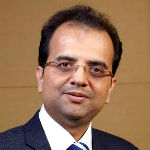
‘A sense of responsibility and careful selection of endorsements would help’ Given the findings of the study, we asked Dr Samir Parikh, Director, Department of Mental Health and Behavioral Sciences, Fortis Healthcare, on how real is the impact of celebrities on young minds
The fact is that the key reasons why celebrities are asked to endorse product as a marketing strategy by consumer products is because their endorsement does have an impact on the consumption/sale – the whole purpose of advertisements is that. So yes, when celebrities endorse a product, it has an impact, more so on the young impressionable minds who tend to follow their role models.
Will it be fair to say, on the basis of what you would’ve gleaned from the study, that pan masala (or mouth freshners) will be consumed more because of the endorsements? Or are these just considered cool and forgotten?
Advertisements, promotions, endorsement by role models surely has some impact, this is not debatable, yes by making sure that there is right information reaching kids, by creating an environment of media literacy for students some of the impact can be reduced.
Your study talks about the influence of sportspersons on young minds. So do you think that an MS Dhoni featuring in the ad of an alcohol brand is potentially harmful?
Sports role models should be careful in endorsing any product that is harmful in any which way, as young children and teens tend to follow the sports personalities. Add on to this, in my opinion. sports personalities should be utilised for more campaigns for students that would help the right message reach them.
Given the influence of celebrities on the youth, would you say the government is doing the right thing by penalising film stars if the products they are endorsing are found to be of dubious nature?
No society can have banning as the only solution, self-censorship, self-responsibility, ownership of self behaviour is what is important, and society needs to support this for all role models, celebrities, parents, teachers, media everyone. But as the same time once a celebrity endorses a product, the fact is that there is an ownership to the message and this message is heard and followed by younger people – I do feel a sense of responsibility and careful selection of endorsements would help.
Does the influencing of young adults a trait across all strata of the population or is it more pronounced in certain specific demographics?
It’s across all.
|
 In the light of the currently controversy around film stars and celebrities endorsing products like pan masala, do you think young adults (and school going children) do get impacted by the endorsers?
Introduction:
Young minds are quite impressionable and often emulate the behaviour of others. A role model is a person whose behavior is imitated by others. Social learning is based on modelling. It is imperative for the youth to learn responses and behaviours from ideal role models.
Family members are often the source of initial learned behaviours for the youth. With the world becoming a global village due to media, the social influences on the youth are also evolving.
Results:
Family: 34% students reported having a family member as their role model, with most students reporting parents (father more than mothers) to be their role model. A few also stated that their elder siblings (brothers more than sisters) were their role models.
Interpretation: Contrary to the popular adult belief, children feel that their parents are their biggest role model. Family is the first point of impact & influences before going out in the society. Even though peer become integral at the time of adolescence; parental influence is paramount.
Sibling rivalry, considered as a common part of growing up, did not deter a few children from mentioning their elder sisters and brothers as role models. Parents can therefore model healthy and adaptive behaviour and strengthen their communication with children to inculcate positive attitudes and behaviours. Parents and families can impact the children of today for a better tomorrow.
[] Sportspersons:
Sports is emphasised upon both in school and media. 25% students reported having a sportsperson as their role model. This is fairly understandable as young people tend to follow sports players, almost in a form of hero-worshipping. MS Dhoni, Virat Kohli and Sania Mirza were mentioned amongst the Indian sportpersons as role model. While Lionel Messi was a clear favorite amongst the international sportspersons.
[] Media Personalities: Role models in the media industry (14%) were spread out rather evenly, with Deepika Padukone, Ranbir Kapoor as most followed.
Interpretation: Sports and media influence us in many different ways. With the media glorifying both these domains as potentially lucrative and glamourous fields, more youngsters are drawn towards it. This may be used in a constructive manner to emphasize on positive learning for adolescents.
These findings have significant implications in that sports players and media celebrities must become involved in important social campaigns in order to create awareness and bring about necessary attitudinal shifts in society.
Sportspersons and Media personalities should be mindful of their public appearance and activitites, as children often ape them without a thought.
[] Political Figures:
4%-When compared to other categories, political figures were perceived as role models by fewer students, at 4%.
Students had followership mainly for historical figures, Mahatma Gandhi and Chandrashekhar Azad being most frequent.
In recent figures, PM Narendra Modi and APJ Abdul Kalam were reported highest.
Interpretation: Reading about historical figures such as Mahatma Gandhi gives children a better understanding of the past. This helps inculcate good habits, importance of struggle and history of our country. Relatively speaking, the political figure of the recite era who most adored was Late APJ Abdul Kalam.
[] Business Leaders:
6% students reported having business leaders like Dirubhai Ambani, Steve Jobs and Bill Gates as role models.
Interpretation: This finding implies that the youth looks up to people who have been accomplished in their entrepreneurial activities, and that children today are aware of the importance of financial success. Success is often associated with these names.
[] Teachers:
Teachers closely followed suit with 17%.
Interpretation: Teachers follow students through each pivotal stage of development. Students and teachers spend nearly six to eight hours a day, five days a week. Therefore, teachers can become influential people in students’ life. Teachers can help young minds grow into responsible minds by imparting some of life’s most important lessons.
Implications:
It’s been proven unequivocally; children learn by watching those around them. Bandura, reputed social psychologist, in his experiments in the 1960s established the importance of observation and modelling when it comes to social learning.
Children still look up to adults to learn how to conduct themselves, a reality that has not yet changed. Such a tendency to learn by observations comes with it’s merits and disadvantages, based on how such learning is cultivated.
Both altruism and truancy are social behaviours that are learned by observing others. It is thus, the collective responsibility of adults – whether it be parents, educators, or the media, to provide children with positive, prosocial role models to foster a youth that is compassionate, empathetic and responsible.