
Tag: ZenithOptimedia

  • RBNL consolidates digital biz with ZO’s Performics

    By A Correspondent


    ZenithOptimedia India has been appointed as the digital partner for the entire digital mandate with Reliance Broadcast Network Limited. ZenithOptimedia’s Performics won the business after a competitive pitch amongst key digital agencies.


    Ashwin Padmanabhan

    Confirming the appointment, Ashwin Padmanabhan, Executive Vice President & Business Head, Reliance Broadcast Network said,“As our brands 92.7 BIG FM, BIG Magic and BIG Magic Ganga continue to expand their digital footprints, it was imperative that we work with a partner who understands our brands and is ahead of the curve in the design and execution of digital and social media communication, Performics fits this bill perfectly for us.”


    “We are really excited to partner with a diverse content producer client like Reliance Broadcast Network Limited. We believe that the Performics global playbook on media technology that drives planning across platform and channel were our key differentiators.” said Tanmay Mohanty, MD, Performics.


  • ZenithOptimedia wins media duties of Jungleegames.com

    By A Correspondent


    ZenithOptimedia has bagged the media duties for Junglee Games in a multi-agency pitch conducted recently. The mandate covers all aspects of the brand’s media planning, advisory and buying across print, TV, Digital and Outdoor.


    Hari Krishnan, Managing Director ZenithOptimedia said, “This is a significant win for ZO with the tech and mobile sector gaining momentum in the overall advertising space. It is indeed a matter of pride for us to be partnering with Junglee Games.”


    Satya Mahapatra, CMO, Junglee Games said, “We are glad to partner with ZenithOptimedia who have demonstrated excellent understanding of the Internet & Mobile audiences. I am sure this will go long-way in the success of our brands.”


    The high-intensity multimedia campaign will break in February 2015.


  • ZenithOptimedia forecasts adspend to grow 12% in 2015, 10.7% in 2014


    The rise of mobile advertising and social media, and the transition to programmatic buying of digital display, will help the global advertising market grow 5%-6% a year over the next three years.


    According to ZenithOptimedia’s new Advertising Expenditure Forecasts, global adspend will grow 4.9% to reach US$545 billion in 2015. The global economy is expected to improve (the IMF predicts 3.8% global GDP growth in 2015, up from 3.3% in 2014), but advertising faces a tough year-on-year comparison after the Winter Olympics, World Cup and US mid-term elections in 2014. Adspend growth will therefore be slightly below 2014’s 5.1%.


    The year 2016 will be a quadrennial year – with the Summer Olympics, US Presidential elections and the UEFA European Football Championship – and ZO expects these events to propel adspend to 5.6% growth that year, before it slips back to 5.2% in 2017 in their absence.


    India Commentary – Insights & Trends

    The new Narendra Modi government seems to have captured the collective consciousness of the country, a ZO communiqué notes. Falling food prices as well as oil prices have contributed to a reduction in the Consumer Price Inflation to a historic low of 5.52% in October. IMF and World Bank have forecast an identical 6.4% growth in 2015, up from 5.6% in 2014. The stockmarket index has crossed 28000, up from 20000 in November 2013.


    “We enter 2015 with a strongly positive consumer and business sentiment, albeit recognising that consistent on-ground delivery and reforms will be needed to keep this sentiment up. Hence, cautious optimism, though with way more optimism than same time last year, is still the right expression,” it adds.


    We expect consumption to continue picking up, with passenger car and utility vehicle sales turning positive, credit card spending on the rise, loans for durables growing. From an ad-expenditure point of view, FMCGs will continue their dominance but given the weak monsoons, some categories might stay flat or have slow growth. High growth is expected from Telecom, e-commerce, Mobile phones, Cars and two wheelers, retail, realty and the BFSI sector. 2015 will also be the year of ICC Cricket World Cup, which will also be a trigger to growth in ad expenditure.


    The new TV measurement system is scheduled to launch in 2015, as is the much-awaited Phase III expansion of FM Radio. Regional media, across Print, TV and all other media continues to drive growth in media consumption. With internet base increasing to 250 million, smartphone ownership expected to reach 200 mn by 2014-end, and the country awaiting the launch of 4G services by telecom operators, online and mobile will continue to see the maximum growth rate. Digital advertising however, has become dearer as the government decided to re-impose service tax this.


    Given these factors ZenithOptimedia expects the AdEx to grow by 12% to Rs 40,307 crore, at an overall level in 2015, as against 10.7% in 2014 (over 2013). This growth will be primarily fuelled by print at 12%, TV at 10% and online and mobile at 25%. Other media are expected to grow between 5 – 10%.


    Transition to mobile plays to the strengths of social

    Mobile is by some distance the main driver of global adspend growth, and we forecast it to account for 51% of all new advertising dollars between 2014 and 2017. We expect mobile advertising to grow by an average of 38% a year between 2014 and 2017, driven by the rapid spread of devices, innovations in ad technology and improvements in user experiences.


    However, mobile’s share of adspend remains well behind its share of media consumption. Mobile will account for 6.2% of all adspend in the US this year, while eMarketer estimates it will occupy 23.3% of media consumption time. This is partly because a lot of conventional display advertising does not work well on mobile. Compared to desktop display, mobile banners take up more screen space, are considered more intrusive, and are more likely to annoy consumers than engage them. Because mobiles don’t accept cookies, retargeting and tracking from the ad to the purchase is usually impossible.


    There’s one area, though, where digital display has proved very successful on mobile, and that’s social media. Facebook and Twitter have rapidly restructured their operations for mobile consumption and advertising, and between them are on track to capture 33% of all mobile adspend in 2014. This is well above their 10% share of all digital adspend. Their ads are designed to blend seamlessly into the content feed – they look native rather than intrusive. They can track all their users’ media consumption within their apps, and can tie that into their desktop activity through their login details. Social media provides a great example of how to adapt to mobile.


    Transition to programmatic has given a sharp boost to traditional display

    Agencies are swiftly adopting programmatic buying, which allows them to target display ads accurately and efficiently. The technology has recently evolved to deliver better premium, brand-building experiences. This has provided a sharp boost to ‘traditional’ digital display, as well as video and social. Growth in traditional display leapt from 14% in 2012 to 18% in 2013, and we estimate it at 26% in 2014, its fastest rate of growth since 2007.


    Around half of all display is bought directly by advertisers, most of them small local companies spending only a few thousand dollars a year. These currently have little access to the programmatic marketplace. Most programmatic technology has been designed for large-scale campaigns, and while a few companies are trying to adapt programmatic buying for small businesses, these attempts are at early stages. As technology evolves to bring the advantages of programmatic buying to small businesses we can expect another boost to traditional display spending.


    Eurozone slowly improving – periphery growing again – held back by the core

    Global adspend growth is being restrained by weakness in Japan and the Eurozone. Japan’s seemingly intractable economic problems limit its ad market to 2% to 3% annual growth, and we don’t expect it to improve over our forecast period. The Eurozone, however, is poised to end 2014 with its first year of growth since 2010, with further improvement likely over the next few years.


    Adspend across the Eurozone fell by 15% between 2007 and 2013. The worst hit markets were at the periphery – Greece, Portugal, Spain and Ireland lost 49% of their adspend over this period – France and Germany held their ground, shrinking by just 3%.


    However, Greece, Portugal, Spain and Ireland all began to make strong recoveries in 2014, and over the next few years we expect them to substantially outperform the Eurozone average, growing at 5.4% a year through to 2017. Their recovery will help Eurozone adspend grow 0.8% in 2014, a substantial improvement on its 2.9% decline in 2013. Meanwhile the core economies of France, Germany and Italy (which together account for about two thirds of the Eurozone economy) are stagnating. We forecast adspend in France to shrink at an average rate of 0.3% a year between 2014 and 2017, while Germany grows by just 1.3% and Italy by 1.5%, below the Eurozone average of 2.0%.


    Falling oil prices exacerbate conflict in Russia and Ukraine

    The Ukraine crisis has disrupted advertising in Eastern Europe. Russia has had trading sanctions imposed on it, and has retaliated with its own. International investors have withdrawn their capital, and the government has imposed restrictions on foreign involvement in the economy. This has coincided with a sharp drop in the price of oil, Russia’s main export. After many years of double-digit adspend growth, Russia’s ad market is forecast to grow just 1.8% this year and 1.1% in 2015, followed by 4.6% growth in 2016 and 9.2% in 2017.


    The crisis has unsurprisingly had a much greater effect in Ukraine, where violence has disrupted distribution chains and frightened away foreign investors, including big advertisers. We expect adspend in Ukraine to fall 49% this year and 10% in 2015, followed by 6% recovery in 2016 and 2017 from a greatly reduced base.


    “Mobile technology is creating new opportunities for brands to build relationships with consumers, while programmatic buying is making brand communication cheaper and more effective. Social media provides a strong example of how to advertise effectively on mobile platforms, and we expect mobile marketing to develop further as other media learn from this example,” said Steve King, ZenithOptimedia’s CEO, Worldwide.


  • ZenithOptimedia wins media mandate for Foodpanda

    By A Correspondent


    ZenithOptimedia has won the media mandate for Foodpanda.in after a selection process that involved a multi-agency pitch. This mandate covers all aspects of the company’s media planning & buying, and will include digital duties as well. Foodpanda.in is an online food ordering platform has launched a new TV ad campaign. The two TVCs, created by Cheil India, highlight the core value proposition of foodpanda, that of ensuring customer delight at every point in the food delivery process. The key message, “If foodpanda likes it, you will love it!” spells out the fact that anything one orders through the portal has already been screened through stringent yardsticks of quality to ensure maximum satisfaction.


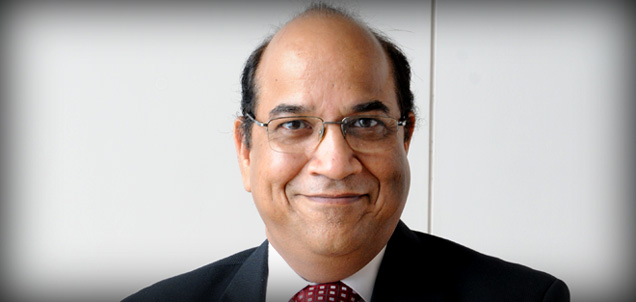
    Hari Krishnan
    Anupriya Acharya

    Commenting on the win Hari Krishnan, MD, ZenithOptimedia said, “We are happy to bring on board a client like Foodpanda and look forward to doing some really exciting work with them.”   Rohit Chadda, MD and Co- Founder of Foodpanda.in added, “We needed a partner who has a deep understanding of consumers and their ever-evolving relationship with media. ZenithOptimedia impressed us with their strategic framework and ability to execute with speed and accuracy.”


    Anupriya Acharya, Group CEO, ZenithOptimedia says, “Over time we have expanded our presence in this sector where the ROI can be tracked 24X7. Also, this further consolidates our relationship with Rocket Internet, beyond Jabong and FabFurnish.”

  • ZO wins media mandate of Indiahomes.com

    By A Correspondent


    ZenithOptimedia has won the entire media mandate for Indiahomes.com after a selection process that involved a multi-agency pitch. This mandate covers all aspects of the company’s media planning & buying, and will include digital duties as well.


    Indiahomes.com is India’s multi-award winning and leading Property Advisory Company.


    Indiahomes.com has also finalised its new positioning, “Aap Ke Saath”, and is in the process of rolling out its multi-media campaign. With the new positioning and partnership with ZenithOptimedia, it is all set to take on the online real-estate category, which has seen increased levels of intensity with several brands becoming active in the media.


    Anupriya Acharya

    Commenting on the business win, Anupriya Acharya, Group CEO, ZenithOptimedia said, “The proposition of professional property advisors fills a crying need and we are excited to be the communication partner of a company that is introducing this big change in the Indian market. It represents a big opportunity. We are looking forward to creating innovative solutions for Indiahomes.com.”


    Himanshu Arora, VP – Marketing, Indiahomes.com added, “We needed a partner who has a deep understanding of consumers and their ever-evolving relationship with media. ZenithOptimedia impressed us with their strategic framework and ability to execute with speed and accuracy.”


  • Key changes in ZenithOptimedia top deck: Exit: Satyajit Sen & Navin Khemka In: Dnyanada Chaudhari & Prasanna Kulkarni

    By A Correspondent


    It’s been doing the rounds for a while, That Satyajit Sen and Navin Khemka are qutting ZenithOptimedia India and now the news has been confirmed by Anupriya Acharya, Group CEO ZenithOptimedia Group. “After putting in eight years with ZenithOptimedia, Satya has decided to embrace a new challenge. We thank him for all his contributions to ZO and wish him all the very best”. She also informed that Khemka, who has also been with the group for eight plus years, has put in his papers. “ZOG thanks him also for his contributions and wishes him well in his next assignment”


    Anupriya Acharya

    Meanwhile, Ms Acharya also announced the appointment of Dnyanada Chaudhari as Managing Partner, ZenithOptimedia India. Dnyanada will be incharge of trading and media management nationally and in this role, she will partner marketing teams to not just look at efficiencies but also leverage strategic alliances across media partners, in line with our Live ROI philosophy.


    Says Ms Acharya: “Dnyanada brings with her the exact expertise needed for this role. Her diverse background across strategy, buying and media management as well as experience with large scale businesses, is especially suited to create and refresh our trading architecture and execution across all media including TV, Print, Radio, Digital, OOH, Experiential and other specialist services.”


    Dnyanada Chaudhari

    Ms Chaudhari joins from today (June 2) and will be based out of ZO’s Gurgaon Office. In her 18 years of work experience, she has gained expertise across diverse functions – strategic planning, buying, media management and has worked both on the agency as well as the client side. In her last role at Madison, she led its Mumbai office as COO and was responsible for driving excellence across units. She has also been at Lodestar and ZO in the past. Her client experience includes three of the most admired companies – ICICI Prudential, Marico and HUL. At HUL, as Head – Media services in India, she was amongst the top 40 media people in the Unilever world and was responsible for maximizing ROI and driving competitive advantage for India’s largest advertiser. Over the next few days and weeks, she will come across to meet you at your convenience.


    Comments Ms Chaudhari: “Am excited to be back and strongly believe in ZenithOptimedia’s Live ROI principle and am very keen on partnering marketing teams to not just look at efficiencies but to also strategically leverage alliances to drive thought leadership and brand ROI”


    Prasanna Kulkarni

    Ms Acharya also confirmed the appointment of Prasanna Kulkarni, as Chief Creative Officer, ZenithOptimedia Group. He will be based out of Mumbai and in-charge of Creative and Content marketing solutions across ZenithOptimedia, Performics, Resultrix and Newcast. Said Ms Anupriya: “We are increasingly finding our clients requiring creative content solutions across not only online but even on integrated campaigns. Prasanna’s role is towards driving competitive edge in our product through superior integration of creative and content solutions. In fact as we move ahead, we will be looking at getting more and more diversified talent on board.


    With over 16 years of experience in advertising, brand strategy, and digital media, Mr Kulkarni’s previous assignment saw him leading a creative team as Executive Creative Director at JWT – digital. Prior to that he was at OgilvyOne Worldwide India as Senior Creative Director – Digital; his experience also includes Rediff.com, Ogilvy Interactive and the E-learning domain. He has worked for clients like IBM, Diageo, Ceat, Cadbury, Vodafone, Vespa, Lenovo, HSBC, Tata Motors, Castrol, Star India, Perfetti Van Melle, Hindustan Unilever Ltd., British Airways, Starbucks, Godrej and won several accolades and awards.


    Says Mr Kulkarni: “Great opportunity to work across the focus groups like performance based marketing, content led communication solutions, and integrated campaigns with ZenithOptimedia and its divisions, extremely glad to be part of such multidisciplinary team at ZOG. I look forward to taking the organization’s creative capabilities to the next level by elevating the bar for innovative content. I am confident we are on our way to making ZenithOptimedia, Performics, Resultrix and Newcast a stimulating place for creatives and patrons alike.”


  • Why machines (& the good old Optimiser) will never get the media planner out of a job

    By Shephali Bhatt


    It’s the year 2020 and the machines have taken over. What we are talking about is a possibility a lot more realistic than paranoiac visions of The Matrix, Terminator or Blade Runner. Optimiser has completely replaced the at-ease-with digits management graduate known as the media planner.


    For the uninitiated, Optimiser is a tool media agencies use to formulate plans that reap their brands maximum reach at the lowest cost. With a young legion of planners admitting that the software sometimes ends up doing 80%- 90% of their work, a machine taking over the entire role of a media planner may not be too far-fetched . But does this qualify as crystal ball gazing or stoking an unnecessary panic?


    Ravi Rao

    Flashback to the late 80s and 90s, where intense print plans were created by plotting 100 publications on Yaxis and data from readership surveys like NRS and IRS on the X-axis. “It would take us more than five hours to manually calculate the reach of a print plan using the least cost solution based on Kwerel’s Formula ,” Ravi Rao, leader – South Asia at Mindshare recounts. Now, the planner feeds in the desired GRPs and the client’s budget.


    And then sits by as the optimiser dishes out a media plan with numbers on reach and frequency, in one-tenth the time Mr Rao and his compatriots would take. It calls to mind Arthur C Clarke’s observation about how any sufficiently advanced technology is indistinguishable from magic. And it’d be true to a large extent.


    But it only ends up giving a planner more room to concentrate on strategising for the brand instead of being saddled with a mechanical chore. It really is just a tool that throws numbers at you when you give it some yourself, remarks Anagha Ingle, a two-year-young media planner on Unilever brands at Fulcrum, Mindshare.


    Mostly, these numbers are used to support the decisions a planner takes, keeping in mind a dozen other factors. For instance, does the brand need to sustain a campaign or wind up with short bursts over a few weeks? Will there be repeated messaging? How heavily will the insertions be placed across channels? Which genre of channels/print titles and in which language? All questions that only a media planner has answers to, not the machine.


    These are just some of the basic questions that every media planner ought to get out of the way before approving or ignoring the plan presented by the holy Optimiser. However strong a backbone it might have, the tool has limitations that continue to give the human planner an advantage . Even if the numbers desired are the same, an Optimiser won’t make complete sense for two different campaigns, meant to target different audiences.


    A large part of the decision making is influenced by the marketing environment, brand requirements and the competitor’s actions. Our poor Optimiser is incapable of factoring all of this in. Deepak Ahuja, vice president at ZenithOptimedia cites an example to strengthen this point: “If I were to launch a brand like Micromax, my objective will be to spread quick awareness of the brand to its target audience. So, I’ll target channels specialising in movies, music and sport.”


    The hiccup is that this tool will never show English movie channels as a viable option because to the machine, the GRP numbers aren’t satisfactory. If only an Optimiser could weigh in on the qualitative aspect of numbers. Similarly, if one was to follow the software’s advice to the tee, no one would’ve invested in spots around reality shows like Kaun Banega Crorepati because of high cost, Shekhar Banerjee, SVP and head, Madison Pinnacle points out. (If you’ve been keeping score, the humans appear to be winning.)


    If it were up to the Optimiser, cricket would never have been advertisers’ favourite sport, given its high incremental cost. Humans, on the other hand, are capable of taking decisions that may not always be efficient but prove effective in meeting a brand’s objective.


    That explains the BMW and Rado ads on English channels in spite of marginal ratings, and the absence of ads for deodorants from religious channels despite high viewership ratings. With TAM and IRS coming in for more than their fair share of critiques, data has been reduced to a mere stick for a blind man, says Karthi Marshan, head – marketing at Kotak Mahindra Group.


    It can’t tell you with certainty what’s coming up. Hence, a client needs his media planner’s gut, instinct and experience, Mr Marshan adds. The human contribution to the media planning role is only going to increase with umpteen media vehicles available for a brand to ride on.


    Anupriya Acharya

    In such a scenario, superior understanding of content would be required to ensure contextual landing of brand in a particular medium, says Anupriya Acharya, group CEO of ZenithOptimedia. Another trick of the trade that one can’t expect an Optimiser to pull off.


    Which is why the likes of Mr Rao and Ms Acharya are hell-bent on hiring more planners, from backgrounds as diverse as engineering and economics. For a tool can only answer the ‘where’ of a media plan. The ‘what’ , ‘why’ and ‘how’ will always require human intervention. Or at least until someone builds a machine that answers these questions better.


    Source:The Economic Times

    Copyright © 2014, Bennett, Coleman & Co. Ltd. All Rights Reserved

    Licensed to republish


  • Viber connects with ZenithOptimedia for media

    By A Correspondent


    ZenithOptimedia India has been appointed as the media planning and buying partner for Viber, the popular mobile and messaging service.  The business was won after a competitive pitch amongst five media agencies in New Delhi.


    Confirming ZenithOptimedia’s appointment, AnubhavNayyar, Country Manager India, Viber Ltd said, “We partnered with Zenithoptimedia Group as we really liked their thinking and strategic approach to our marketing challenges as well as their excellent track record of helping create new age brands like Micromax and OLX.”


    We are really excited to partner with a brand like Viber for their India ambition.The brand and the category gives us an even better opportunity to demonstrate our Live ROI proposition.”said SatyajitSen, CEO, ZenithOptimedia India.


  • Digitization will help broadcast economics: ZenithOptimedia forecast


    By A Correspondent


    This is the season for annual adspend forecasts and global media agency network ZenithOptimedia unveiled its Advertising Expenditure Forecasts predicting a year-on-year growth in ad spends in India of 11.5 per cent in 2014. The growth number for 2013 (over 2012) is 8 percent. The global ad expenditure growth from 3.6% in 2013 to 5.3% in 2014.


    Anupriya Acharya

    Said Anupriya Acharya, Group CEO, India, ZenithOptimedia group: “Our outlook for 2014 is cautious, though we expect the growth to happen mid-year onwards.” According to Ms Acharya, there appears to be an upswing in the mood since the Assembly election results on Sunday. Added Satyajit Sen, CEO, India, ZenithOptimedia: “All policy-making has been in a limbo, but we expect a spurt in the second half with digitization happening in full-swing.”


    According to the agency’s research team, 2013 has “overall been a turbulent year for the media industry”. “In March/April we saw changes to the TAM panel following the second stage of the digitization process (of which more underneath), followed by changes in the TAM data reporting period from a weekly to a monthly format and finally the flip-flopping over the new 10+2 advertising regulations (a cap on advertising minutage set at 10 minutes of advertising and 2 minutes of programme promotion per hour), which was supposed to take effect from Oct 2013 onwards. However, some channels have been slow to comply.”


    “Growth will be driven by inflation measures and pricing actions due to the 10+2 advertising regulations, as the restriction of supply will lead to rising prices,” it notes. “All of which means that advertisers are looking seriously at redistributing budgets to other media. On the whole, quality of content will improve on TV and we expect a consequent ratings boost thanks to 10+2 regulation. The change comes at a cost, however. There was a two-week stand-off between TAM, broadcasters and advertisers when data reporting formats were in flux. During this period, the top seven advertisers pulled their ad spots from all TV channels.”


    The ZenithOptimedia research notes that digitization will help the broadcast sector: “Following the second phase of digitization of distribution in Q1 2013 in 38 cities, the TV broadcast industry has achieved approximately 77% digitization and expects to reach 100% within the next two years.” The report adds that even though viewership ratings have been impacted, in the long term, digitization is expected to improve broadcast economics significantly.


    Internationally, the research has been bullish on adspends in the mobile sector. Mobile is going to take off big time and has already crossed television in terms of number of units, said Ms Acharya. “The internet consumption is going to increasing on the mobile and even though the smartphone number is not very high, it’s rising rapidly.”


    “The increase in mobile phone connections continues to drive growth of mobile internet penetration in India,” notes the study. “Cheaper mobile handsets and affordable mobile data packages are helping increase content downloads, and millions of users are engaged with wireless internet on a daily basis. FM Radio listenership is rising and it is a key feature used by mobile phone brands to sell handsets,” the report adds.


    On activation and BTL, the report says: “Along with changing lifestyles and the emergence of modern trade and malls in India, there has been an increase in consumption of outdoor advertising. Brands are keen to connect with consumers via experience zones and activations to ensure greater recall and amplification of brand values.


    Activation/Events are becoming more and more of a key offering in the radio and print channels. Live Music Events/Festivals have been successful in attracting widespread audience and engaging youth across key cities. Hand in hand with proliferation has come the challenge of fragmentation among audiences. Hence, advertisers are increasing the number of touchpoints to cater to addressable audiences and are selecting media beyond TV, print and radio.”


    Government advertising spend has begun ramping up as a precursor to the 2014 general elections, the report adds even as the final quarter of 2013 has “seen lower levels of investment than usual because of the soft economic environment”


  • Mobile to drive global adspend growth over next 3 yrs: ZO

    By A Correspondent


    Advertising is set to see the strongest sustained period of growth in 10 years with global adspend growth forecast to rise from 3.6% in 2013 to 5.3% in 2014. Growth is then set to increase to 5.8% in 2015 and 2016. The principal engine of this growth will be mobile technology, which is expanding the space for media consumption.


    According to ZenithOptimedia’s new Advertising Expenditure Forecasts, growth in global adspend next year will come from the continued steady improvement in Europe and the three ‘semi-quadrennial’ events: the Winter Olympics, the football World Cup, and the mid-term elections in the US. We forecast that the global advertising market will accelerate to 5.8% in 2015 as a strong broad-based economic growth takes hold, followed by another year of 5.8% growth in 2016. This assumes that the Eurozone’s gradual recovery continues and no new crisis occurs.


    Mobile is expanding overall media consumption

    Mobile is now the main driver of global adspend growth. This the first time in the past 20 years that a new platform is expanding overall media consumption without cannibalising any of the other media platforms. We forecast mobile to contribute 36% of all the extra adspend between 2013 and 2016. Television is the second largest contributor (accounting for 34% of new ad expenditure), followed by desktop internet (25%), which continues to enjoy significant growth alongside that of mobile advertising.


    Despite its sizeable growth, mobile advertising still only accounted for 2.7% of global adspend in 2013. By 2016, however, we expect it to account for 7.7% of adspend, leapfrogging radio, magazines and outdoor to become the world’s fourth-largest medium. We count as mobile all internet ads delivered to smartphones and tablets, whatever their format.


    Rising Markets are growing three times faster than Mature Markets

    The world’s ad markets are growing at two very different paces. Mature Markets are struggling with debt and low innovation, and their populations are ageing, with growing numbers of retirees supported by a shrinking workforce. We forecast these markets to grow at an average of just 3% a year between 2013 and 2016. Meanwhile Rising Markets are improving their education systems, infrastructure, productivity and adoption of technology, and they have a young population with an expanding workforce. We expect them to grow at 9% a year. The Rising Markets currently account for 35% of global adspend, but we expect them to contribute 61% of adspend growth between 2013 and 2016.


    BRIC growth is slowing

    The G7 markets (Canada, France, Germany, Italy, Japan, the UK and the USA) have a median age of 40; they account for 58% of global adspend, but we forecast them to grow at an average annual rate of only 3.6% between 2013 and 2016. The BRICs (Brazil, Russia, India and China) have grown enormously over the last twenty years, and now account for 14% of global adspend, up from 1% in 1993. They are much younger than the G7 (with a median age of 31), and we forecast them to grow at an average of 9.5% a year over the next three years, but this is well down on their average growth of 15.8% in the previous decade.


    “Mobile technology is creating new opportunities for marketers to connect with consumers. Combined with the continued rise of young, dynamic markets, this will spur healthy and sustained growth in global adspend over the next three years,” said Steve King, ZenithOptimedia’s CEO, Worldwide.


    ZenithOptimedia is headed by Anupriya Acharya in India.


  • Advertisers crib as TRPs fall for Satyamev Jayate

    By Ratna Bhushan


    The truth isn’t quite triumphing – not at least in the way some advertisers on Aamir Khan’s hyped debut television reality show Satyamev Jayate thought it would. Television rating points (TRPs) have fallen short of expectations, say at least two marketing heads of associate sponsors, although publicly most advertisers are making the right noises. That, however, hasn’t stopped media buying firms, on behalf of advertisers, from pushing for result and performance-based ad rates on reality shows. They say that TRPs should decide the ad rates of reality shows instead of the channels charging advertisers fixed rates even before the show goes live.


    As per rating agency TAM’s data released by Star on June 13, Satyamev Jayate – which is being aired on Sunday mornings across nine channels of the Star Network (as well as on the state-owned Doordarshan) delivered a national TVR of 3.9. That’s lower than the ratings of blockbuster shows of the past like Kaun Banega Crorepati (Sony Entertainment) and Bigg Boss’ debut show (Colors).


    Navin Khemka, managing partner of media buying firm ZenithOptimedia, which represents consumer goods major Reckitt Benckiser, one of the associate sponsors of Satyamev Jayate said: “All the risk cannot be passed on to the advertiser. With high entry-level costs on reality shows, it is critical that channels take more accountability on the returns on investment.”


    Increasingly, agencies and clients will ask for certain minimum guarantees on programme performance and viewership, he added: “It has to be a win-win for both the brand and the show.”


    While Bharti Airtel coughed up a chunky Rs17-20 crore for the presenting sponsor slot, associate sponsors like Axis Bank, Reckitt Benckiser, Skoda, Coca-Cola and Johnson & Johnson paid Rs6-7 crore each for the 13-week show.


    Star has charged Rs8-10 lakh per 10 seconds for spot rates for Satyamev Jayate while spot rates for KBC were Rs 3.5-4 lakh per 10 seconds.


    According to the marketing head of an associate sponsor who did not wish to be quoted, returns on investment on the show could have been higher. “The way the show was sold to us, we expected higher ratings. It’s disappointing and we hope the ratings increase as the show progresses.”


    However, Bharat Bambawale, global brand director at Bharti Airtel, defended the investment: “To view the success of a show based only on television ratings would limit its overall value. The success of a show has to be looked at collectively and in a holistic way… the content of a show will impact ratings.” On whether broadcasters should rationalise ad rates on reality shows, Bambawale said: “It’s a matter of individual judgement for every sponsor.”


    Basabdutta Chowdhury, CEO of Platinum Media, a division of media buying firm Madison World, which buys media for Bharti Airtel, said: “Advertisers do want accountability and minimum guarantees factored in for reality shows in general, although Satyamev Jayate was not meant to be a mass ratings show.”


    On reality shows, deals are structured in a way that they cannot be re-negotiated through the entire program. This is unlike cricket where broadcasters keep at least some ad inventory – like the semi-finals and finals – open to negotiations based on the ratings.


    Ajit Varghese, MD, South Asia of Maxus, which is owned by the country’s largest media buying house Group M, said: “While there’s no standardised way of looking at a deal, we all are pushing for deals with a minimum guarantee. Of course, the arrangement should factor in an upside too, but overall ad deals should be linked to a programme’s performance.”


    Veteran ad man Santosh Desai is of the view that Satyamev Jayate needs to be evaluated not just by viewership but also for the impact it has. “It’s a difficult show to watch…. Some subjects don’t have a mass audience at all so to be watched week after week by masses will be a challenge.” KBC’s most recent season had opened to a rating of 5.24, and Bigg Boss Season 5 had opened to a TRP of 4.25. The Amitabh Bachchan-hosted KBC had managed ratings of over 4 all through its run.


    A Star India spokesperson says the show has delivered a reach of Rs40 crore over the first five episodes (including repeats). The launch episode delivered a TVR of 4.9 in Hindi-speaking markets and a 4.1 TVR all-India. Subsequently, all episodes have consistently delivered a 4+ rating in HSM and 3.5+ ratings at the all-India level.


    Kevin Vaz, Star India president, ad sales said: “Satyamev has ranked amongst the top few every week on an all-India level.”


    Source: The Economic Times

    Copyright © 2012, Bennett, Coleman & Co. Ltd. All Rights Reserved


  • 10 Days to Go-Goafest! It’s all about celebrating ideas: Arvind Sharma


    As the countdown begins for Goafest 2012, Arvind Sharma, Chairman Goafest 2012 and Chairman, India Sub-continent, Leo Burnett, speaks to MxMIndia’s Tuhina Anand on the festival this year and why it is truly the celebration of creativity at its best.


    What can one expect from Goafest 2012? How will it different from last year?

    The Festival will stay true to its fundamental vision. It is a platform for celebrating creativity and a source of inspiration. Most importantly for the entire fraternity comprising young and not-so-young, Goafest is the preparatory ground for the industry to gauge where and how to go forward. I feel that the core, sometimes, is forgotten in the bid to do something new.


    I mean, we live in a world which is changing rapidly, so having something new is inevitable. If you look at successful festivals around the world 90 per cent remain the same. Similarly, at Goafest, we have defined categories and 95 per cent remain the same in terms of predictability of entering, judging, Awards Governing Council and Goafest Committee. There is consistency in that format and our effort of providing conversations. All this is same as what one had last year.

    Having said that about the predictability factor, let me also add that moving forward is equally important.


    So, what’s new?

    This year we are looking at ways to involve clients in a meaningful way. The fact is that, there would be no advertising if there were no clients. The business of advertising is about partnering with the marketers. We, at Goafest, believe in evolving vision that doesn’t really mean evolving identically, but in evolving together. We look at bringing in more opportunity for conversations and that’s the reason why we have brought clients this time into the seminar.


    There is a slight change in the format. So far, there have been series of international speakers, while some of these presentations have been received well, some weren’t, and there have been questions on the relevance of those to India. Changing that, we have brought in senior Indian clients to raise questions after the presentation. So there will be 30-35 minutes for the speaker followed by 10-15 minutes of Q&A led by a senior Indian client. He or she will be the voice and mind of the audience and bring in the Indian perspective to the entire presentation by agreeing, challenging, bringing contextual light and interpreting the whole presentation.


    We have also brought the Marketing Wizards to Goafest. This is calling the under-30 staff of the marketing community. We have had a good response and we expect overall 70 to 80 major advertisers to participate, which include team of two people representing to some even registering team of 30 people even though we have a limit to numbers.


    Why this whole idea of bringing in Grand Prix to all verticals?

    Grand Prix, traditionally, has been awarded in Print, TV and Integrated. This year, we have expanded the Grand Prix to cover all the 9 verticals. This was not an easy decision and the step was debated. We believe that the time has come for specialists in area to move to the centrestage. I don’t really know if the jury will find works worthy enough for Grand Prix in each of the vertical, but this would help in finding worthy advertising and celebrating it around India and even around the world.


    For a young designer who is always on the periphery of an agency, winning gold is good but winning the GrandPrix might help in moving the same person to leadership position. We hope that the move will catalyze long term fundament change in the way we create advertising.


    We hear this year there are entries from other South Asian countries?

    Yes, we have entries from Sri Lanka and Pakistan and we will have delegates from Sri Lanka and Bangladesh. In South Asia, we have different cultures but there are more similarities than differences within those cultures and we can learn a lot from each other. Unfortunately, the politics of the subcontinent is more difficult. We had planned a road show in various countries but our passports got stuck and this could not happen.


    Can you throw some light on the conclave and the seminar?

    We have put together an enviable list of names and these are speakers who really are worthy of listening. Jean-Yves Naouri, COO Publicis Group spends almost 150 days in flight. He knows what is happening in the business around the world and will share his valuable insight. Tim Love has been involved with theCannesand he played important role in the shaping of the future of Omnicom Group. Jonathon Mildenhall, VP of Global Advertising Strategy and Creative Excellence, CocaCola promises to be stimulating session. Steven King, CEO, ZenithOptimedia will also be on panel. Anuradha Sengupta, who loves throwing challenge, will be part of the session.


    On the seminar speakers, Amir Kassaei, Chief Creative Officer, DDB Worldwide, Rishad Tobaccowala, Chief Strategy and Innovation Officer, VivaKi and Prof John Philip Jones, Emeritus Professor at the Newhouse School of Public Communications,Syracuse University,New Yorkwill be speakers. While the world is talking video as the future, Lucas Watson, Vice President, Global Sales and Industry Marketing, YouTube will tell us how and Simon Wardle, Chief Strategy Officer, Octagon will be worth listening to for all the planners in the industry. Erik Vervroegen, International Creative Director, Publicis Worldwide will give his take on creativity. We will announce one more name in this list soon. From the Indian marketers side who will be part of Q&A, we have Sanjay Behl from Reliance, Kainaz Gazder from P&G, Viral Oza from Nokia, Gayatri Yadav from Star India and Hemant Bakshi from Unilever.


    Awards have been under the scanner, do the controversies surrounding it mar the event in anyway?

    Awards show will have criticism. What is driving us is the celebration of creativity and look at this Fest as a platform to prepare ourselves for the way industry will go forward.


    Why did the Goafest Committee decide the theme – Magic of Ideas?

    Everything that happens at festivals is ideas. While advances in technology and database is important, but what we celebrate is ideas. If we add everything on an excel sheet, we will see that when a brand gets a lot of traction or if it is ignored, it is all to do with ideas. No client launches a product with the intention of not succeeding, so getting it right is important. For a product to be embraced, it has to connect with people and this cannot be reduced to a formula but has to do with the magic of ideas.


    The awards have been leaked in the past, losing some of its credibility, how do you ensure that this doesn’t happen this year?

    We believe that awards will not be leaked. In this, the media as well as the organizers have a role to play. There is a symbiotic relation. We do our best to avoid any such incident. Some information has to be shared with the media beforehand, but there is an embargo on release information and last year journalistic fraternity showed a sense of responsibility. I will add that the media has equally a big stake in the Fest.


    What will you say to the agencies that have decided to stay away from the fest?

    Whether to participate or not is an agency’s decision. We on our part, including the AGC, have been ensuring that our job that includes category, rules, audit and the jury does their job well. Let creative minds debate as for us touch wood, thing are going as per planned.


    If you have to send a formal invite to the industry for the Fest what would you say as to why must the fraternity attend?

    You will get to see the best of work and see the best creative minds judging what they think is worthy of awards. You get to interact with seniors and bright creative minds which many times is impossible in the busy schedules that we lead. Besides you will get to hear exceptional speakers’ line-up.


    Goafest creates the space for debate with peers and youngsters, which includes large group discussions and one-on-one interaction. We are expecting around 2,500 people to attend Goafest this year. Not to forget that Goafest is not heavy-handed like training sessions but good learning place where you also have loads of fun.


    Personally for you, how has it been plugging all the gaps before the festival?

    We have a very big team working across agencies. There is a sense of joy and shared sense of purpose to make Goafest a success. We are in it together and there still is a fair bit of work to be done. However, it’s been an enjoyable experience.

    Click here to view all Goafest 2012 stories