Tag: WPP

  • WPP acquires mobile technology provider NN4M

    By Our Staff


    WPP has announced that Wunderman Thompson has acquired NN4M, a leading mobile commerce partner for global brands. Offering innovative and cutting-edge commerce services for retailers, NN4M provides its clients with connected, experience-driven solutions across mobile and in-store channels.

    Forming part of Wunderman Thompson Commerce, NN4M will strengthen the global ecommerce consultancy’s multichannel offering. As a leader in digital solutions, NN4M builds bespoke commerce applications for brands across multiple touchpoints, including smartphone, tablet, apps and in-store experiences.

    Headquartered in Edinburgh, NN4M employs 50 people across multiple markets and regions. It works with some of the largest and most successful commerce brands, including Selfridges & Co., Nestlé and River Island, to drive loyalty, increase customer engagement and grow revenue. We aren’t sure if it has presence here in India, but we’ll know that soon.


  • Hill+Knowlton gets ex-MxMer Shubhangi Mehta to lead content strategies

    By Our Staff


    Shubhangi Mehta
    Shubhangi Mehta

    We are delighted to record this. Hill+Knowlton Strategies (H+K) has expanded Content + Publishing Strategy to its India operations. And to head up this business, the WPP-owned agency has hired a former MxMIndia team member Shubhangi Mehta as Director of Content + Publishing Strategy.


    Abhishek Gulyani
    Abhishek Gulyani

    Said Abhishek Gulyani, CEO for Hill+Knowlton Strategies India:  “I am very excited to launch our Content + Publishing Strategy specialism in India, furthering our content marketing capabilities across the country. We believe purpose driven communications along with high impact innovative campaigns help brands to standout and build key differentiators. We welcome Shubhangi into the H+K family. Clients increasingly look to H+K for deeper understanding of content trends to help align their communications and business objectives. With Shubhangi’s extensive experience and in-depth knowledge, she will bring fresh thinking, perspective and ideas for our clients across varied sectors. The new Content + Publishing Strategy offering is a part of our overall strategy to provide integrated communications to clients and we will continue expanding the space in the years ahead.”

  • Wavemaker rolls out AI-powered platform Maximize

    By Our Staff


    Wavemaker has completed the global roll-out of a new AI-powered media planning platform, Maximize, that allows planners to create media plans to reach multiple audiences and optimise media investments in just a matter of minutes.

    Said Toby Jenner, Global CEO of Wavemaker: “Maximize addresses one of the industry’s longest standing frustrations – that all media plans look the same. Pre-loaded with strong data sources and packed with AI, Maximize produces media plans at incredible speed and has the brainpower to create market-beating growth plans for our clients. It is already delivering results, producing media plans that are on average 30% more effective for clients and in pitches, helping us reach the ranking of most successful media agency in the COMvergence new business barometer for Q1-Q3 2020.”

    Added Stephan Bruneau, Global Head of Product at Wavemaker: “Creating media plans has become challenging due to the increased number of audience segments that need to be included in a campaign. Some can overlap significantly, with people belonging to multiple audience segments at risk of being ‘over exposed’ to ads and creating an unnecessary waste of money for clients. Maximize uses techniques and technology rarely used in the marketing industry and is effectively the only way to solve the audience fragmentation problem.”

    Said Stephan Pretorius, Global Chief Technology Officer at WPP: “AI has extended its sphere of influence to many aspects of marketing, but until now not in media planning.  Wavemaker’s exciting new AI-powered planning platform Maximize is set to transform the way its teams work and empower its planners to produce the most effective and efficient media plans yet for clients in an increasingly complex and fragmented media landscape.”


  • Geometry hooks up with VMLY&R to set up VMLY&R Commerce

    By A Correspondent


    WPP has announced the launch of VMLY&R Commerce, a new end-to-end ‘Creative Commerce Company’ combining the talent and scale of two thriving global offerings. VMLY&R Commerce will operate as a distinct company within the VMLY&R global network. VMLY&R Commerce will be fully operational from January 1, 2021, and the integration of the agencies’ teams and assets will continue through 2021.


    Notes a communique: “WPP agencies Geometry and VMLY&R will bring together their respective commerce capabilities to provide world-leading expertise and delivery for clients at a time of unprecedented global growth in ecommerce. VMLY&R Commerce will be led by Global Chief Executive Officer Beth Ann Kaminkow, currently Global CEO of Geometry. VMLY&R Commerce will be central to the VMLY&R network’s total brand and customer experience offering. It will help connected brands grow by unifying client strategies around commerce to drive both brand equity and conversion.”


    Said Beth Ann Kaminkow: “Consumer experiences today are centered on commerce, making it increasingly important to our clients’ marketing and media decisions. As the pandemic accelerates new consumer behaviors and expectations, commerce is fast becoming the next channel for the most creative engagements and experiences. With the launch of VMLY&R COMMERCE, we can now offer our clients creative commerce at scale, harnessing data and technology to build brands and sell products across channels.”


    Added Jon Cook, VMLY&R Global CEO: “I’m thrilled to work with Beth Ann on the evolution of our collective commerce offering through VMLY&R Commerce. We have been partnering closely across many clients and it is clear we share a vision and belief in the role commerce plays in a consumer’s journey and creating connected brands. Importantly, we both have a deep passion for leading our businesses with a focus on culture – both internally and with our client partners which is essential in creating a new company built for the future.”


    Said Mark Read, CEO of WPP: “2020 has seen explosive growth in ecommerce as brands adapt to a new reality. This new company will offer outstanding creativity, industry-leading commerce expertise, and sophisticated data and technology skills to help brands grow in an omni-channel world. It also meets clients’ needs for simple, tightly integrated propositions from their marketing services partners.”


  • The Death of Advertising As We Know It

    Image courtesy : Suzy Hazelwood at Pexels.com


    By Prabhakar Mundkur


    Prediction on the death of advertising started at the turn of the millennium.  Perhaps the first stirrings on the death of advertising almost started with the birth of the internet. Pooh-poohed for most of the time, most advertising folk refused to accept the death of their industry and were filled with a strong sense of self-denial.  The way that people consume media has probably dealt the final blow on the advertising industry.

    When I joined advertising in 1977, advertising was considered an art form. And like most art there was an air of gay abandon about it, that went well with its brand of creativity.


    The Big Bang 

    In 1987, WPP which swooped down on poor old J Walter Thompson who was ripe for an acquisition attack. Poor old ‘Commodore’ Thompson might have flipped in his grave. Ogilvy was acquired two years later. David Ogilvy is known to have called Sorrell an ‘odious little shit’ later softened to ‘odious little jerk’ by the media.

    I call this the first Big Bang in the advertising industry. The culture of ad agencies was to start to change forever. They would become so bottom line oriented that all other lines in the agencies including strategy planning and creativity would start to become affected. You can imagine the shock – a math man running a bunch of mad men.  I was at JWT at that time and the first effect I saw was suddenly the exit of the best minds in JWT.

    The second Big Bang was the painful extraction of the media business from the main agency to create stand-up independent media agencies. In 1998, I was in JWT Shanghai at the time, and we were the second JWT office in the world to create an independent media agency and tear it away brutally from the creative agency. The 15% media commission which was beginning to break down any way suddenly became the norm rather than the exception.  The net effect of this Big Bang was that the media plus creative function was being paid much less than ever before. This resulted in less training, lower salaries, less interest from business school graduates to join advertising, less travel, and less talented people finally willing to join advertising.  In a way it was the beginning of the slow downfall of advertising.


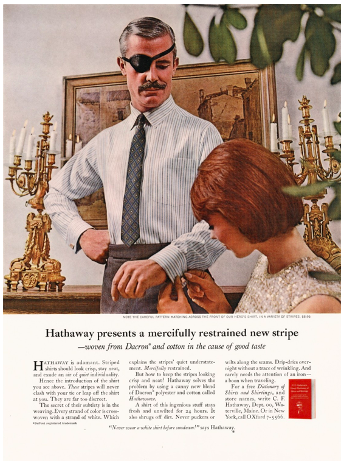
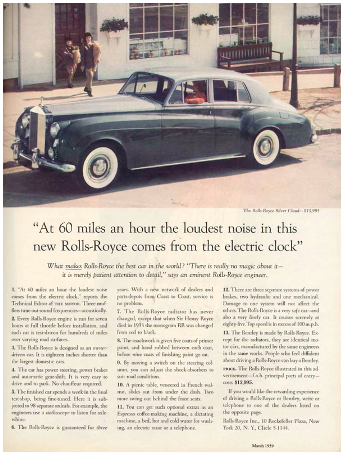
    Famous ads written by Sir David Ogilvy


    Enter the New Millennium

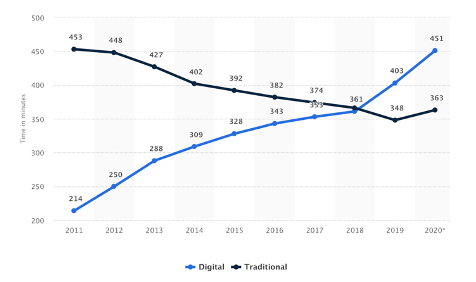
    The new millennium brought with it some profound changes.  The internet was beginning to change the way people live, read, do business, buy, and connect with other people.  In 2004, Mark Zuckerberg launched Facebook.  We learnt a new term called ‘social media’ with its advent. LinkedIn was launched earlier in 2003 and Twitter later in 2006. A host of other social media would completely change the way we live.  So would advertising unfortunately. Because people were spending much less time watching television and reading the newspapers and listening to radio.  In 2019 people spent more time with digital media than with traditional media in the US.


    Time spent per day


    Source: statistica.com


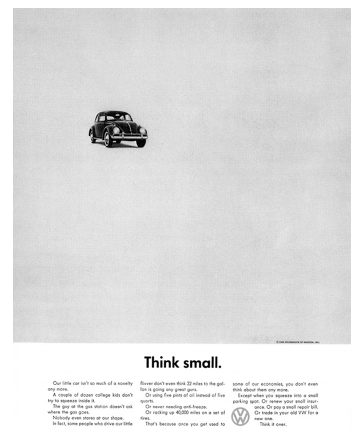
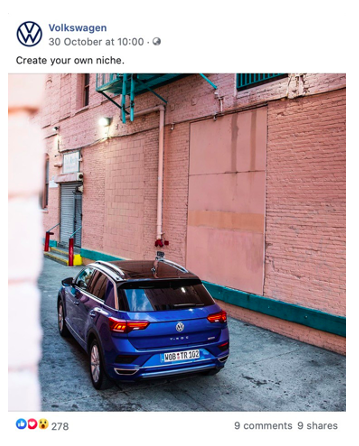
    The world of digital and social media meant new ways of talking to consumers.  This gave rise to new techniques in communicating. It meant that the skill needed to produce the famous Volkswagen Beetle ad by Bill Bernbach that made it a cultural icon that sold millions of cars were no longer needed. One can’t forget of course the degree of difficulty posed to sell an ugly German small car soon after World War II, to Americans used to the luxury of large cars, something the Volkswagen ads achieved admirably.

    1959


    2019


    In fact, the brilliance of the written word employed by master craftsmen like Bill Bernbach and David Ogilvy or the keen visual eye of Helmut Krone was perhaps no longer needed.  In the new millennium creativity had played hide and seek behind a much-abused word called ‘content’. Content was very forgiving of real creativity and happy to make friends with mediocrity.  In contrast to the Think Small ad, the Facebook ad of today for Volkswagen will be judged by the number of likes, comments and shares.  And not purely by how much the ad moves you like the Thing Small ad.  In fact, there seems to be no particular skill this Facebook ad might need either in terms of word or visual craftsmanship.  Suddenly communication had become the domain of data scientists and engineers whose province was machines, algorithms, big data and artificial intelligence. And perhaps creativity was reluctantly but surely taking a back seat.


    How Advertising finally died


    While many predicted the death of advertising no one quite predicted how it would go.


    In the last year, it certainly seems that advertising agencies will get gobbled up by digital agencies in the same group. Grey Advertising is the most recent example which merged with AKQA to form AKQA Group.  Last year similarly JWT merged with Wunderman to form Wunderman Thompson.  And Y&R merged with VML to form VMLY&R. I wonder who is next?


    Suddenly the heritage of a 100 years seems to have gone into the dust. And with the merger goes their history and great creativity of several decades.  When a brand dies, everything it meant to people dies along with it. It is ironic that WPP the group that bought over JWT, Ogilvy, Y & R and Grey is also the company that killed those very iconic advertising agency brands.


    It’s a pity that advertising had to die so suddenly and just get obliterated from the face of this earth.


    Prabhakar Mundkur is a veteran advertising professional and now a prolific commentator. He spent 17 of his 42 years in advertising with the agency once known as J Walter Thompson working with them across three continents. He has also worked with Havas and Hakuhodo. He has been voted Top Voice on LinkedIn, one of the Top Emerging Voices in yourstory.com and has written nearly 400 articles in the last four years. He was once an HMV and Polydor recording artist playing both the guitar and piano and still joins the occasional gig for friends. You will find him on Spotify and Apple Music with his recent compositions. He can be reached via Twitter at @wisecowboy. His views here are personal.


  • Grey to merge with Akqa. WPP creates AKQA Group

    By A Correspondent


    It should’ve been a no-brainer. JWT and Y&R both lost their age-old identities thanks to mergers with other group entities. Communications agencies Burson-Marsteller and Cohn & Wolfe also merged to form BCW. Now WPP has announced that’ AKQA and Grey are uniting to form a new network model, AKQA Group. Grey is the well-known creative-led agency and AKQA is accomplished for its innovationand experience design skills. “With heightened demand for digital transformation and technology-driven capabilities, the combination will create a powerful new proposition for clients as a leading creative solutions company with a worldwide footprint,” notes a communique, adding: “The AKQA Group will have 6,000 people in more than 50 countries and a blue-chip client roster that includes more than half of the Fortune 500’s top 20. It will provide a full range of brand experience capabilities across all communications platforms, strengthening the skills and services of both companies for clients.”


    AKQA founder Ajaz Ahmed and Grey Worldwide CEO Michael Houston will partner to lead the new Group. Ahmed will become Chief Executive Officer and Houston will become Global President and Chief Operating Officer of AKQA Group. The AKQA Group will launch with the AKQA and Grey brands, which will be integrated over time into a single company based on client and market needs. The management team and creative leadership will be announced in the coming weeks, comprising leaders from AKQA and Grey.


    Said Ajaz Ahmed: “Our goal is to expand horizons, combining the curiosity, ambition, imagination and pioneering spirit of a startup with the reach of a global enterprise. This is an unparalleled opportunity for AKQA and Grey to bring our shared assets to life into a modern, creatively-led company, building upon our inspiring and useful work to create value for our clients, people and communities.”


    Added Michael Houston: “This exciting new partnership begins with what consumers expect, clients value, and brands need. Forming a new company that can deliver culture-driving ideas through technology at speed and scale is a potent proposition for our clients, large and small, and will allow us to offer the most powerful creative solutions in the industry.”


    Said Mark Read, CEO of WPP: “Our clients want outstanding creativity, powered by technology expertise and delivered at a global scale. This new company is designed precisely to meet those needs and is another important step forward in building our future-facing offer for clients.”


  • Mirum to provide martech services for L&T Realty

    By A Correspondent


    Mihir Karkare

    L&T Realty from the Larsen & Toubro Group has appointed WPP digital agency Mirum India as the marketing automation services partner.


    L&T Realty is a real estate development company with residential, commercial and retail projects across West, South & North India. Mirum India, a Salesforce Gold Consulting Partner, will be responsible for providing managed services for Salesforce Marketing Cloud, the globally preferred 1:1 digital marketing platform.


    On winning the account, Mihir Karkare, Executive Vice-President, Mirum India, said: “Mirum India is the go-to Salesforce partner for Marketing Cloud Services and has been the pioneer in the marketing automation space with almost a decade of experience. We are excited to win the L&T Realty business and look forward to providing flawless martech services.”


    Mirum is a Salesforce Gold Consulting Partner, with over nine years of association with Salesforce and 100+ Marketing Automation installations across the entire stack of Social Studio, Exact Target and now Datorama & DMP.


  • MxM Live with Ajay Gupte


    By A Correspondent


    Wavemaker India celebrates its third anniversary on Monday, November 9, and we speak with Ajay Gupte, CEO – South Asia, Wavemaker, on the occasion.


    Gupte took charge in January 2020, and we know of the tumultuous times across the world after that. A coincidence of course. The marketing services business was badly hit given the events and advertising spends going south post that.


    But in this period, Wavemaker – part of WPP’s GroupM network – has managed to reinvent itself and forge ahead, says Gupte. There is a beefing up of the top deck. Some noteworthy work. And development of analytical tools that are now adopted within Wavemaker global framework.


    In a freewheeling interview with MxMIndia Founder and Editor-in-Chief Pradyuman Maheshwari, Ajay Gupte speaks on a cross-section of issues around the business, around Wavemaker, his settling back into the country, the job, Gurugram versus Mumbai, the rivalry with sibling Mindshare. And more.


    Watch. Enjoy. Like.


  • Glitch moves from being part of GroupM to VMLY&R

    By A Correspondent


    Leading digital-led creative agency The Glitch has joined forces with global experience agency VMLY&R. Earlier, it was part of GroupM, when it was acquired in February 2018.


    The Glitch and VMLY&R India will continue to operate distinct brands and organisational structures while working together. This will allow clients to experience their combined proposition of marketing talent, capabilities, and experience, while maintaining the simplicity of their current communication cadence with each agency. In a sense a similar message was sent out in Feb 2018: “The Glitch will continue to operate as an independently positioned brand, while taking advantage of GroupM’s larger infrastructure and agency ecosystem.” We don’t know the reasons, but we now have a realignment.


    The integration will see The Glitch become a part of the nearly $1 billion global VMLY&R network, which employs over 7,000 people across 75+ offices across the world. These include three offices in India, based in Mumbai, Delhi and Chennai.


    The Glitch senior leaders, including CEO Pooja Jauhari, Co-Founder & Chief Creative Officer, Rohit Raj, and Co-Founder & Content Chief, Varun Duggirala will now report into Tripti Lochan, Co-CEO of VMLY&R Asia. In addition, the Glitch leadership team along with VMLY&R India CEO Anil Nair, will form an India leadership council to manage strategic decisions for both companies. The council will be headed by Anil Nair.


    Said CVL Srinivas, Country Manager, India, WPP: “WPP’s aim is to provide clients with a simplified and integrated offer to help them grow their businesses holistically. The Glitch over the past 10 years has grown to become a digital and content powerhouse, and when combined with VMLY&R’s capabilities in digital transformation and customer experience, can help clients make an impact in their transformation journeys.”


    On joining the VMLY&R Network, Pooja Jauhari, CEO, The Glitch, added:: “We have flourished alongside WPP in the past 3 years. The founders and I are delighted that we’ve now found a great permanent home for our brand, our company and most importantly, our people. The Glitch is a gender blind, inclusive and progressive high-performance workspace and with this marriage, we’ve found kindred spirits in VMLY&R when it comes to driving the same vision. We’re eager to explore our complementary capability sets for the benefit of our clients’ businesses. With this union, we believe we are in the best position to help our clients be more agile, sharper and ready for whatever the future may bring.”


    Added Anil Nair, CEO, VMLY&R India: “This union spells great news for clients looking at building digital-first brands. In addition to cutting edge solutions such as customer experience (CX), commerce , technology, innovation, AI/ML, data, media innovations and good old culture impacting creativity, we will now be able to add new weaponry to our arsenal, including powerful capabilities in brand experience, new-age content, youth  marketing, connections thinking, brand publishing, and live creativity amongst others. This makes us the most relevant agency group in the market with best possible capabilities to help our clients future-proof their businesses and succeed in the new paradigm.”


  • Peace or Perish!


    [updated with India Today Group quote & Republic TV statement]

    By Pradyuman Maheshwari


    Ask present and past TV audience measurement professionals who or what is pulling down the reputation of their business, the response would be an emphatic: news channels.


    TAM, a joint venture of Nielsen and Kantar (then owned by WPP and now majority owned by Bain), lost its measurement contracts from broadcasters, advertisers and agencies thanks essentially to news channels warring against it. Premier news network NDTV took TAM to court over allegations of faulty data, and this hastened the effort to set up the joint industry owned body Broadcast Audience Research Council (BARC). Eventually TAM sold its measurement business to BARC.


    Like TAM in the past, the BARC team faced turbulent times from the news channels, and in a letter to the BARC chairman Punit Goenka, the News Broadcasters Association (NBA) is said to have expressed its reservations about the BARC leadership of the past.


    There are murmurs that BARC CEO Sunil Lulla too has experienced some angst from news channels.


    The problem is always with ratings. That some of the channels have deep political connections makes matters worse. So every time there is a peeve, news channels flock to the I&B minister for intervention. In the past, matters have also gone to Parliament and there have been committees set up to examine nuances of the business. And if it’s not the law-makers who assert themselves, it’s regulator Telecom Regulatory Authority of India (TRAI) which intervenes.


    Frankly, the government ought not to have role in the business of news television. Except for running its own Doordarshan news channels, its publicity department DAVP which doles out advertising and monitoring objectionable content and addressing the media on issues and make announcements.


    But by running to the government often, channel owners have invited the ministers and bureaucracy to step into a territory which they shouldn’t be treading on.


    For instance, BARC’s weekly viewership data ensures that advertisers and the agencies make wise media buying decisions. It also helps broadcasters and content-makers better their content, sales and marketing act.


    But the ecosystem dominated by broadcasters inflicted on itself the government’s intervention (or interference?) and got BARC to be governed by a set of rules and regulations.


    There’s nothing new with what happened on Thursday. It occurred when TAM was around and it’s taken place under the BARC regime. There has been pilferage of information on the placement of set-top boxes, but the machinery is well-oiled to issue alerts when necessary.


    That’s what happened when Hansa Research, one of BARC’s vendors on engagement with panel homes, alerted the police about a mess up.


    Was Republic named in any written complaint? We don’t know. An FIR shared with MxM has a mention made of the India Today channel. Both Republic and India Today (by way of a report on the site) have presented their points of view.


    What we did find last night was various channels shaming Republic TV and founder, editor-in-chief and managing director Arnab Goswami. Newspaper reports today – owned by media companies which also run news channels as well as a few others – have also named Republic and Goswami prominently. The reference to other channels and India Today has been understated or is missing.


    So when did it all start? The war of words and ratings began even when Goswami was with Times Now. The channel was doing exceedingly well, on the back of the heated debates that it would air.


    But when Goswami quit the Times Network to start Republic, the daggers were pulled out from all directions. All sides are to blame. Times Now had its issues with Goswami for quitting, hiring some ex-staffers and making no bones of the fact that he was taking on his former employer. The others got on to the act the moment Republic shot to #1 in the ratings roster. ‘News without Noise’, became India Today’s credo.


    Various attempts were made to isolate Republic, including the rest of the news channels pulling out their watermarks so as to boycott BARC. On its part, Republic too countered the others – and compared its ratings with that of the others. Nothing wrong with it, except that the comparison was accompanied by much bombast. Surefire formula to rile others.


    But the war took on a new turn when Goswami launched Republic Bharat. While English news channels are influential and earn fair monies, the real bucks is in Hindi news. Aaj Tak, ABP News, Zee News have been raking in the moolah over the years. While Bharat made its presence felt, it didn’t create much of a dent until the Covid-19 pandemic-led lockdown happened and the Arnab Goswami brand of hyper-aggressive, right of centre journalism took over.


    And then came the controversy around actor Sushant Singh Rajput’s death. The line that Republic Bharat took on the controversy ensured it was numero uno. And not just for one week, but for now many weeks.


    Advertisement buying decisions are not taken in a hurry, but buoyed by its success, Republic Bharat has hiked its ad rates.


    On Thursday evening, the Mumbai police commissioner named Republic TV based on what appear to be unverified complaints and allegations. Later, on its primetime bulletin, Republic TV showed scans of the FIR naming India Today. The joint commissioner of police is reported on the India Today website stating that while India Today was named in the FIR, neither the accused nor the witnesses supported the claim. “On the contrary, the accused and witnesses are specifically mentioning the names of Republic TV…”


    The India Today Group issued a statement late on Friday: “There is a malicious campaign on right now by a few vested interests to drag the name of the India Today Group into the TRP scandal that broke out on October 8, 2020,” adding: “We welcome any probe the police may wish to conduct and are fully confident that we will come out unscathed as we have not acted in any inappropriate manner. What we have right now is nothing but malicious, unsubstantiated allegations by a vested party.”


    Republic TV has taken on the Maharashtra government and Police Commssioner Param Bir Singh over the last few months in Sushant Singh Rajput case. Meanwhile, Goswami has threatened to sue Singh.


    So what next on this? The news channels business in India is a divided house. There is the News Broadcasters Association (NBA) which comprises most of the big players operating nationally and there’s News Broadcasters Federation (NBF) which is spearheaded by Goswami and Republic. Recently TV9 pulled out of the NBA with the association lodging a complaint with BARC saying that the network had used unfair means to forge ahead on the ratings roster. The network is now back as its member.


    Singh was quoted on a channel saying that advertisers may also be called for interrogation. So will Amul managing director R S Sodhi have to make the rounds of the commissioner’s office? Perhaps he will be. Will media agency network bosses Prasanth Kumar of GroupM and Shashi Sinha of IPG Mediabrands also be questioned by the cops? If Sodhi is, surely Kumar and Sinha will be called in.


    It suits the government perfectly well to have channels warring each other. But if the police summons advertisers and agency bosses for questioning, there could be trouble. Large, pedigreed advertisers would prefer to stay away from the murky world of news television. Channel owners would do well to smoke the piece pipe.


    If warring countries and corporates can get together, surely Arnab Goswami and Rajdeep Sardesai can.


    Updates:


    Media agency bosses Sam Balsara, Shashi Sinha and Prasanth Kumar have been called to the police station for seeking information. So these may not be summons, but a request from the cops is never for a chat about the weather. There are rumours that names of certain advertisers have also been handed over to the police.


    The Republic Media Network has issued a press release: https://www.republicworld.com/india-news/general-news/full-news-release-from-republic-media-network.html. “The Republic Media Network has approached the Honourable Supreme Court of India. We have served notices of our legal action to the Maharashtra Government as well. While we will follow the law, we are determined to seek a legal remedy against this atrocious witchhunt,” the release says.


    Although Pradyuman Maheshwari is Editor-in-Chief and CEO of MxMIndia, the views here are personal and are not necessarily that of MxMIndia. He can be reached via Twitter at @pmahesh. A version of this has also appeared on The Wire at The ‘TRP Scam’ Could Open the Doors for the Government to Enter the Picture




  • Kurkure & Lay’s kick off festive season campaign with AK & RK

    By A Correspondent


    Ahead of the upcoming festive season, Kurkure, has launched two campaigns. The campaigns promote an initiative with Airtel offering a special digital experience for all its prepaid customers. The TVCs feature Kurkure’s brand ambassador Akshay Kumar and Lay’s brand ambassador Ranbir Kapoor were launched promoting the initiative.


    Said Shashwat Sharma, Chief Marketing Officer, Bharti Airtel said: “At Airtel, we are obsessed about offering our customers the best network experience. We are thrilled to partner with PepsiCo India to help all their customers experience our award winning 4G data services. This also gives us the opportunity to reward our loyal customers with complimentary data and unlock a world of digital experiences on Airtel Thanks when they buy their favourite packet of snack.”


    Added Ritu Nakra, WPP Lead – PepsiCo Foods, India: “In the last few months we have truly understood the value of connecting with our friends and family. Keeping this in mind, the creative team at Wunderman Thompson developed the campaign idea for Lay’s which depicts that the answer to all your questions lies inside a Lay’s pack. Similarly, for Kurkure, the creative thought stemmed from the fact that everyone in the family is having chatpata fun in the kitchen with recipes. The integrated campaign developed by the WPP team at MS, VML and WT, brings this idea alive on this special initiative.”


    Said Dilen Gandhi, Senior Director and Category Head – Foods, PepsiCo India: “The ‘new normal’ has catapulted everyone into a more digital world than ever before. At PepsiCo India, as part of our digital first approach, we follow evolving digital trends and develop matching strategies. Our insights showed us that consumers are enjoying our products and seeking convenience while working and watching content at home. The special initiative with Airtel is therefore is perfect fit that will further compliment in-home experience of consumers. With festive season kicking in, the initiative, truly emphasize the importance of staying connected with friends and family.”


    The integrated campaign was developed by the WPP team at Mindshare, VML and Wunderman Thompson.


  • The Grave Crisis in OOH Continues


    By Indrani Sen


    The EY-FICCI 2019 Media & Entertainment Industry Report estimated that the Indian OOH industry grew by 5% in 2019, taking the industry size to Rs 37.1 billion. The traditional OOH formats, driven by increased advertising opportunities in tier-II and tier-III cities, contributed 54% to the overall revenue. However, according to the report the main driving factor behind the growth is recent development of infrastructure network, including upcoming airports, smart city projects, malls, metros, bus shelters, public utility, coffee shops, etc.
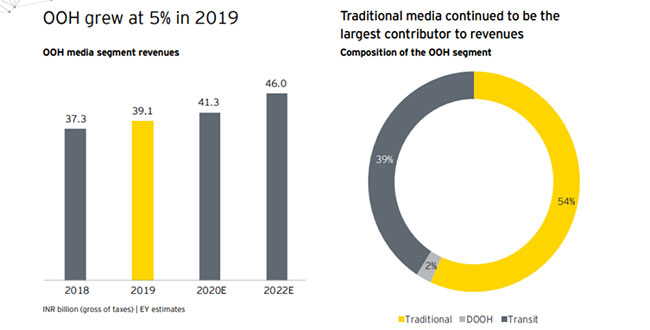
     

    Source: EY-FICCI 2019 M&E Industry Report


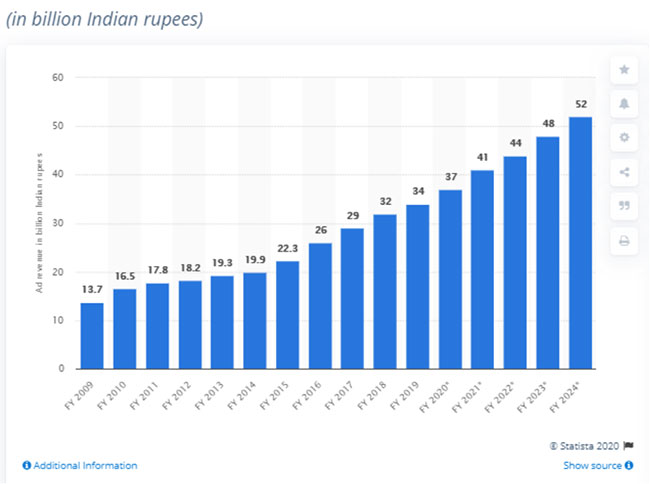
    A couple of years back, www.statistia.com published an estimate of out of home advertsing in India from 2009 to 2024 as shown below. It is interesting to note that overall size of OOH industry estimated In the FICCI EY report is higher than shown in the chart for 2019 (Rs. 34 billion).


    Source: https://www.statista.com/statistics/233491/out-of-home-advertising-revenue-in-india/


    The growth of the OOH industry has been stalled completely as an effect of Covid-19. In the ‘FICCI Frames 2020’ virtual conference, WPP’s CEO Mark Reed remarked that OOH was the most impacted medium due to Covid-19. While we are seeing some signs of revival in digital, TV and print media, the trend has not yet been seen in OOH media under the gradual process of unlocking. While we are still waiting for FICCI EY to release a revised estimate for M&E industry in 2020, the mid-year review of the Pitch Madison Advertising Report 2020 has estimated 35% to 50% de-growth in OOH advertising revenue in 2020.


    At the early stage of lockdown, IOAA also estimated that their annual revenue may see a 50% drop in 2020 and appealed for financial relief to the various state governments who have not yet responded positively. The association also requested the central government to declare the pandemic as natural calamity which is covered under ‘force majeure’ clause of all OOH contracts which also has not received any definite response. In US and couple of other countries, OOH industry registered as small business has received some financial relief, but we have not seen any such relief measures for the OOH industry in India.


    An article published on August 10, 2020 has predicted four key trends for OOH medium in 2020 and beyond (https://www.advendio.com/4-key-ooh-advertising-trends-2020-beyond): 1/ build brand awareness with smart creatives; 2/ adapt value for money messaging approach; 3/ the evolution of touch screen OOH advertisements and 4/ curbside pickup and digital OOH are here to stay. Apart from the first trend, there is hardly any scope seeing of the other trends happening in India. It is high time that our outdoor advertising agencies take stock of their inventories and consider disinvesting in traditional formats and channelize their attention to building up standardised digital OOH formats as per the global trends.