Tag: Vidya Balan

  • Vidya Balan promotes edu message for Nihar

    By A Correspondent


    Nihar Naturals Shanti Amla has launched its latest campaign – Dikho Khoobsurat, Karo Khoobsurat in tandem with its long term commitment to furthering children’s education in the country.


    Nihar Naturals Shanti Amla has undertaken the cause of children’s education at the heart of its existence. Embarking on this mission four years ago to make education accessible to children across India, the brand contributes 5 per cent of its profits towards children’s educational development, thereby becoming an enabler for consumers to make a positive change to the society.


    The TVC created by BBH India showcases Vidya Balan walking through the streets, wherein people are gesturing to ward off the evil eye or traditional Indian habit of ‘Nazar Utarna’. While walking, packs of school children start following her lead. At the end of the TVC, Vidya gives credit to Nihar Shanti Amla for her long, lustrous and beautiful hair, which is garnering her admiration from these people. She adds that not only does the brand help add to her appeal, but also takes on its commitment to educate children, by contributing 5 per cent of its profits towards this cause. The tagline ‘Dikho Khoobsurat, Karo Khoobsurat’ further reiterates the brand purpose of Nihar Shanti Amla of being an ally to progress.


    Speaking about the new campaign, Anuradha Aggarwal, Chief Marketing Officer at Marico Limited says, “It has been four years since Marico started investing in educating underprivileged children through Nihar Naturals Shanti Amla, with a clear objective to bring about a discernible change in the society. The new campaign, ‘Dikho Khoobsurat, Karo Khoobsurat’ captures the essence of our brand purpose of giving you healthy and radiant hair, while focusing on the creation of an environment where children are not compelled to drop out of school for financial reasons.”


    Subhash Kamath, CEO & Managing Partner, BBH India adds “We’ve always seen Nihar as a very progressive brand. And progressive brands don’t just say things, they do things that make a real difference to people’s lives. In that context, Nihar Shanti Amla has been consistently successful by giving it’s consumers a dual benefit i.e. get great looking hair as well as do good for society by promoting children’s education. We’ve stayed on this ‘Look good & do good’ premise for 4 years now and it’s paying rich dividends. I believe this new commercial will help grow the brand from strength to strength”


    Rajesh Mani, Executive Creative Director, BBH India said, “To bring alive the brand’s twin purposes, we used a very slice of life creative device – “nazar utaarna”. In normal sense, the gesture of nazar utaarna is more for an outward personification of beauty but in this case our brand ambassador – Vidya Balan is being appreciated not just for her great hair but also for being a change agent. The visual narrative is symbolic of what the brand does and the earthy lyrics, sung in a child’s voice, adds memorability to the film.”


  • Spice unveils new campaign promoting masala variety

    By A Correspondent


    Catch Salt and Spices has launched a new TVC for its offering ‘Catch Garam Masala’. The communication of new TVC has been developed around the core product attribute of taste, freshness and quality. The new communication tagline- “Khaney pe 100 percent attention, Catch Garam masale se” has been built on the already established positioning of “100% Indian women ka match sirf Catch”.


    Featuring Bollywood icon Vidya Balan, the new TVC illustrates that if you want the family to enjoy ‘Roz Ka Khana’ it should be made with ‘Catch Garam Masala’.  It is a TVC that addresses the day to day concern faced by women when family members are not interested in the routine food as it is not exciting enough. The new Catch TVC is clutter breaking in its category focusing, on ‘how to make everyday food, happening’.


    Commenting on this occasion OP Khanduja, Associate Business Head, DS Spiceco Pvt. Ltd said, “Brand Catch has always served its customers with outstanding quality and range of products that enables them to connect with the brand. The new TVC relates to the day to day scenario of an Indian household and is conceptualized in a way so that a common man is able to relate to it. Catch has recently shifted its ATL strategy from umbrella branding to being product focused. This new TVC for Catch Garam Masala is second in its series after success of Catch Subzi Masala TVC. A series of more products focused Television commercials are in the pipeline.”


    Rahul Jauhari, Group Chief Creative Officer, Everest Brand Solutions said: “Our consistent efforts over the past few years have been to elevate Catch Spices from a being a Spice brand to a partner and solution provider in the housewife’s life. So once again, in this campaign, we picked on a real issue that exists in numerous homes and linked it to the superiority of our spices. ”


    The TVC has been created by Everest Brand Solution Pvt. Ltd., and directed by Pradeep Sarkar of Apocalypso productions Pvt. Ltd., who is known for his films like Parineeta, Mardaani etc. while the still shoot has been done by Dabboo Ratnani.


    The bigger edit of the TVC encapsulates all three situations, whereas, the smaller edits presents individual situations -with husband reading newspaper, a child playing Lego and a young woman working on a laptop. The script is cut across segment and connects well with audience as their own incidence. The smaller edits will be highlighting the quality feature that “khushbu se mahake har ek niwala”.


  • Reviewing the Reviews: Critics divided on Shaadi Ke Side Effects

    By Deepa Gahlot


    Shaadi Ke Side Effects

    Directed by: Saket Chaudhary

    Starring: Farhan Akhtar, Vidya Balan, Vir Das, etc


    About Saket Chaudhary’s Shaadi Ki Side Effects, most critics were divided. They were also disappointed that an idea with potential was frittered in a plot that is so callously misogynistic and most unfair to the woman. Farhan Akhtar’s performance as the reluctant dad was appreciated by most; Vidya Balan seems to have been given a dead-end part with hardly any redeeming features.


    The ratings went from two to three, but mostly hovered at 2.5, and that too because the subject of an urban marriage coming apart by parenthood is relatively novel for Hindi films.


    Shubra Gupta of the Indian Express rued, “Till the half-way mark, Saket Chaudhary hits things right on the mark. Post-interval, the film is all over the place. Sid’s mentor ( Kapoor) takes him down a dodgy path which involves ‘me time’ carved out of a bunch of white lies. Out comes the tired homily : for a happy marriage, a few untruths are necessary. To stay consistent to this very guy thing, Sid is made to experiment with a change of image. The film, which was moseying along with sure-footed lightness, even if it was from an exclusionary male point of view, starts becoming forced.”


    Saibal Chatterjee of NDTV.com commented, “White lies, some harmless subterfuge and an occasional return to the joys of a “carefree single life” are offered as a way out of marital drudgery.  Sure enough, the side effects of that formula are far too many for comfort and they boomerang many times over on Sid. Shaadi Ke Side Effects isn’t exceptionally engaging fare. It is essentially a single idea stretched to the very end of its tether. Yet, the sheer ordinariness of the circumstances that the story hinges on helps the film retain its amusing core.”


    Rediff.com’s Prasanna D. Zore ranted, “Shaadi Ke Side Effects (SKSE), written and directed by Saket Chaudhary, who also helmed Rahul Bose-Mallika Sherawat starrer Pyaar Ke Side Effects, opens on this contrived note and meanders for an over-stretched 145 minutes, full of twists and turns, that one has come to so famously associate with soaps produced by Balaji.  Chaudhary has, at times, over-simplified the complex issues married couples face (sharing of parental responsibilities) and, at times, over-amplified the way these strange creatures (read married couples) react to facts of married-life, like pregnancies.


    Anupama Chopra of Hindustan Times had fun in the first half, “But post-interval, another film begins,” she wrote. “One that is curdled and contrived. New characters are introduced but instead of being organic to the narrative, they seem like an afterthought – tacked on simply to keep a movement going.


    Saket creates flashes of genuine insight into marriage and parenting – toward the end, Trisha finally gets a moment to articulate how overwhelming motherhood can be for a woman – but these get lost in the clumsy, overstretched plot.”


    Rajeev Masand of CNN-IBN had the same opinion. “Unfortunately, the steady stream of laughs from the first half more or less dries up post intermission, when the writers struggle to come up with dramatic plot-points for a film that frankly has no story. Sid’s mid-life crisis – he buys a motorbike, and begins partying with his new “bro” Vir Das – feels far-fetched and contrived, as does a subplot involving a helpful maid (Ila Arun) who subsequently oversteps her boundaries. Even a half-baked attempt at a twist in the film’s final act can be guessed from a mile away.”


    Deepanjana Pal of Firstpost commented, “If you’ve seen Chaudhary’s first film, Pyaar Ke Side Effects, and the trailer to Shaadi…, which shows a cool husband and his nagging wife, then the expectations would be different. It turns out that Shaadi… falls smack in the middle. It has some genuinely quirky moments, but it’s also half-baked, juvenile and completely lacking in insight.”


    Nandini Ramnath of Mint wrote, “Chaudhary’s debut, released in 2006, had endearing characters, several nicely executed gags, a consistently comic tone and empathy for the female lead even though the story played out entirely from a male point of view. Shaadi Ke Side Effects continues with the male POV, has the same exasperated voice-over and similar sense of shock at the responsibilities foisted by marriage on the male gender. The second film has gained gloss and glamorous leads but at the expense of variety and tonal consistency. Early-reel wackiness is jettisoned for heavy-handed sermonizing, Sid’s suffering enters masochistic territory, Trisha begins to look less like a misunderstood mother and more like an uncaring hausfrau.”


    Anuj Kumar of The Hindu quite liked it. “Apart from conjuring up funny moments around seemingly serious issues, Saket’s storytelling keeps you engaged even when you know the obstacles on the way are not entirely novel. The arrival of the child, the presence of a handsome neighbour, the emergence of a marriage guru in the family, we know the basic tropes but still Saket manages to keep us in good humour with witty lines and a couple of foot-tapping party numbers. He has a knack for making you feel complacent and then surprising you with a little twist in the treatment.”


    Sarita Tanwar of DNA was also kind. “Shaadi Ke Side Effects is a romcom that begins with a married couple indulging in some role play on a night out. Right off you know, this is the kind of Hindi film that you haven’t seen before. It deals with the situations - comical and ironical - that follow once Trisha (Vidya Balan) and Sid (Farhan Akhtar) realize they are expecting a baby. The arrival of the tot brings with it challenges that neither anticipated. Sid grapples with how to be a good husband and father while being financially and emotionally supportive. Trisha worries constantly about her baby, her weight gain and giving up a career. It is an unknown territory for both and it throws up new situations and complicates their life to the point they don’t recognize it, or each other. Lies and deceit follow.”


  • Endemol India forays into films

    By A Correspondent


    Following the acquisition of a 49 per cent stake in the company by CA Media, Endemol India is all set to make its foray into the film making business. The company has already acquired rights to remake Vidya Balan starrer Kahaani in Tamil and Telugu. The production is slated to begin in September this year and the company is looking forward to an early January release of the films in 2013.


    Endemol India is currently in talks with a couple of leading South Indian actors for the lead role in the remake of Kahaani. Sujoy Ghosh, who produced the original script, will also step in as the producer for the remakes and will be working with a leading director from the south Indian film industry.


    Elaborating further on this venture, Endemol India CEO, Deepak Dhar said: “After having produced content for some of the biggest format shows in the country, we realized it was time for us to venture into something new. Filmmaking was always on the cards and we are delighted to actually do it. We are already lining up projects for 2013 and are extremely excited about our first project, the remake of Kahaani, which will be in production soon.”


    Endemol India will be producing 3-4 films every year with an equal mix of South and Bollywood scripts. The slate for 2013 will be announced soon and work is on for the 2014 slate.


    While the movie making business is Endemol India’s newest venture; the company will continue to produce content for television shows with Bigg Boss and Fear Factor returning for their sixth season this year.


  • Is ‘Kahaani’ the gamechanger?

    By Anil Thakraney


    I watched Vidya Balan’s ‘Kahaani’ following all the brouhaha in the social media. As am sure many people did. It is also becoming increasingly clear that at least in the urban areas, Twitter and Facebook can, to a large extent, determine the fate of a film. This is the new word of mouth.


    On the subject of the movie itself, while I did yawn a couple of times and found that the climax lacked gravitas, I walked out of the multiplex with a good feeling. Because, at last, here was a Hindi film that had a real hero (and no, that’s not Balan… any actress with reasonably good acting skills could have pulled this off). And that hero is: Story.


    It is certainly refreshing to watch a desi film which doesn’t suffer from the Big Star disease that has infected Bollywood for a couple of decades now. Where movies are made and marketed solely on the basis of huge names like SRK, Salman, Aamir, Bachchan, Hrithik, etc. Where weak and often embarrassing stories are written with these demi-gods in mind. Where the audiences are expected to digest any drivel as long as the charismatic hero is in the frame. In fact, Salman Khan and Shah Rukh Khan have taken this nonsense to a ridiculous level… they not only act themselves in every film, they even gloat about it!


    This does not happen in world cinema, not in any other nation. In Hollywood, big stars like Brad Pitt, George Clooney and Jack Nicholson sink into the roles they enact, they seldom play themselves. This trap which Bollywood has dug for itself has resulted in standards of cinema plummeting to new depths of mediocrity. It has also resulted in film writers being paid poorly and treated like ‘extras’. Bollywood is the only movie industry in the world where producers FIRST sign the male hero and THEN think about the story. This is unheard of anywhere else.


    In that ridiculous scenario, ‘Kahaani’ comes as a breath of fresh air. One really hopes its success at the box office will make movie makers introspect and re-haul the current system. And go back to making the script the hero. Only when this happens will the rest of the world take Bollywood a bit more seriously. And we could dream of winning the elusive Oscar some day.


    [youtube width=”400″ height=”200″]http://www.youtube.com/watch?v=8t1_L7D7ZRg[/youtube]

    Yes, ‘Kahaani’ gives me hope.


    ***


    PS: Here’s a, well, interesting ad from The Singapore Tourism Board. I find the choice of words, ‘Get Lost’, quite offensive. Unless I am missing something out here, and the Aussies, to whom this ad is directed, like being abused. Methinks the advertiser has screwed up on this one.


  • @FF12: Day 3: Industry expects thoughts to lead to pertinent actions

    By A Correspondent


    The last day of FICCI Frames 2012 was an eventful day — insightful sessions, a lot of networking, sharing of ideas, deals being cracked — and amongst all of this, the highlight was the session on Women in Media and Entertainment.


    The day started off with a keynote presentation by Ashok Chawla, Chairman, Competition Commission of India (CCI). He said that the media and entertainment (M&E) industry was one of the fastest growing sectors inIndiawith an expected CAGR of 14-15 per cent. He then proceeded to outline the role of the CCI and its importance: “CCI is an overall market regulator whose objective is to ensure that market forces operate with transparency and fair play. It has been put in place to identify the boundaries of behaviour of the industry.


    Mr Chawla opined that self-regulation was of prime importance to avoid infringement of law or market practices and cautioned industry players that consumers should be given primary importance.


    Taking on the Digital threat

    The next session was on “Sustaining Long-term Newspaper Loyalty” by two biggies — N Ram, former Editor-in-Chief, The Hindu and Girish Agarwal, Director, Dainik Bhaskar Group, who shared their views on the future prospects of the newspaper industry.


    Mr N Ram started off his speech by stating that there was ‘anxiety and gloom’ over the fact that journalism was seeing a meltdown in the mature markets. He outlined two media world phenomenon next, where the less developed countries are witnessing increase in circulation of newspapers unlike the mature market. But he added a word of caution when he said that TV, even in the developing world, is going through a crisis which it has so far covered by showing entertainment as part of news. Inspite of this, Mr Ram was optimistic that the medium term prospects for the media industry are looking good.


    As is been spoken widely about, the key factor for the decline in the newspaper is the increasing popularity of the digital media. Mr Ram called this the Digital Age Paradox and added that in recent times the newspapers have seen an increase in the readership of their online editions but have witnessed a “double squeeze” on their revenue, as they have had to subsidise digital journalism, which in turn is cannibalising their circulation.


    On how to sustain loyal readers, he tipped, “Stick to the basic principles of journalism – they can build a relationship with the readers, which it can rent out to the advertisers. And most important – “newspapering” should not be reduced to consumer marketing of news.”


    Mr Girish Agarwal took the stage next. Contrary to Mr Ram’s belief, he said that Indian newspapers are growing in their circulation and readership. He spoke about the need to engage the ‘consumer’ by asking “How relevant are we (newspapers) to the reader?”


    He opined that a newspaper cannot rest on its past glory but should move ahead by acknowledging and understanding what the consumer wants and giving him what they think he needs. On how to keep pace with changing times, Mr Agarwal said that newspapers should have global vision and hyper local content.


    After the speeches the floor was opened to the audience who questioned Mr Ram and Mr Agarwal about threat perception of the culture of medianet and media houses being bought over by MNCs. Mr Ram denounced paid news as a rogue practice which has been rubbished by the Press Council. Mr Agarwal said that ethically media should report anything that may be perceived as defaming by the parent company but the ground reality is not always so rosy.


    Women to the fore

    A big highlight of Day 3 was a session titled   ‘Women in Media & Entertainment circa 2012: Leading from the front’.

    The panel members of this session were Vidya Balan, Actor; Anurradha Prasad, Managing Director, BAG Films; Jeni Tosi, CEO, Film Victoria; Ekta Kapoor, Creative Director, Balaji Telefilms; Barkha Dutt, Group Managing Editor, NDTV; and Usha Uthup, Singer. The session was moderated by Rajeev Masand, Entertainment Editor, CNN-IBN.


    This session discussed the journey of each of the above eminent women personalities and the challenges they faced during their journey. As the moderator, Rajeev Masand put it: “Traditional media, for long, was dominated by men, but not any longer. It’s become outdated.”


    All the eminent women personalities claimed that despite all their challenges they had an incredible journey and the results have been fruitful.  Ms Tosi observed that there would always be obstacles in a woman’s journey but, at the same she also admitted that at times a little bit of luck and timing also plays a part in one’s success nevertheless, she must also be hard working and committed to succeed.

    According to Ms Dutt, the real heroes are the women who came before them i.e. those who made a mark and their presence felt in the male dominated industry.


    One of the topics discussed at the session was whether ambition for men meant one thing and another for women, and how society reacts to ambitious women. Ms Ekta Kapoor agreed that ambition for men is a virtue, but for women it is seen as something negative. “I never took being a woman as a disadvantage. Today I am successful not in spite of being a woman but, because I am a woman,” she added.


    Ms Prasad said: “Today women have become mature, and so have their families. Women have to juggle multiple roles. Had I thought that since I am a woman, I cannot take on a task, then I would not have been successful. If you are happy with what you are doing, you will be successful in life.”


    Ms Uthup was of the view that what has really changed is the audience. “The field of Arts has been a level playing field for women. You really don’t have gender bias. I believe if we want change to take place, the people need to be awakened. Men and women must work together, but then there are things that women can do and men can’t and there are things men can and women can’t do.”


    Ms Balan said: “The Indian actress today has been humanized; she is getting to play a part in the story. I have never seen my gender as a disadvantage, all I knew was I had to be strong to move ahead in life. There is a wide variety of roles for women today and the fact that there is no model code for women any more is liberating.”


    While all these eminent women had plenty of inspiring stories to share, each of them have had to overcome their own tough challenges, change the societal mindset about women being weak and docile, to climb their way to the top.


    The road is set for 2013


    In a session which ran parallel to the one on Women in M&E, a panel of regional TV experts got together to discuss growth avenues. Moderated by Nachiket Pantvaidya, Executive Vice-President, Star Pravah and with speakers like K Madhavan, Managing Director, Asianet and Sharada Sunder, EVP – Regional Channels, Zee, the session concluded that “Regional was the new National.” One issue which was discussed in the session was how to attract talent and also how does regional broadcast channels attract youth, the single largest segment inIndia.


    A session on GEC regulation discussed dos and don’ts as far as content is concerned, what is permissible and what not. It included Justice AP Shah, Prof Jonathan Askin, Ashok Nambissan of Sony Entertainment Television and Naresh Chahal of IBF.


    The general feedback from delegates was that Frames 2012 had pertinent topics discussed. One hopes that industry put the many ideas and resolutions discussed to action.


  • 11 reasons why I am going to be @ Frames this year

    By Pradyuman Maheshwari


    #1 This is my 11th FICCI Frames. Must say I had lost count of when the event was launched, except when I learnt yesterday that’s it’s the thirteenth edition of the event. If I remember right, I have missed out on just two years. So, couldn’t not make it this year.


    #2 This is the only time I visit the the Marriott property at Powai. The Renaissance is a great hotel and I quite prefer it to other convention hotels like Taj Palace in Delhi or Leela at Gurgaon, but three days of the trek here are enough for the whole year!


    #3 I can’t do without meeting my Frames friends. Yes, I don’t meet them for the rest of the year… these days I chat with some over Facebook or BBM, but nothing like meeting in the lobby at Frames.


    #4 Star-gazing! Thanks to the fact that Yash Chopra is chairperson of the entertainment committee and now with Karan Johar as co-chair, one can’t not find the big stars around. Last year, we had Vidya Balan pre-Dirty Picture. Now, we have Vidya Balan post-Dirty Picture. Ooh, la, la!


    #5 There is some serious discussion on digitization and with the presence of all stakeholders – the I&B secretary and the TRAI chairman, the key broadcasters and the distribution biggies, we couldn’t have had a better platform now that the sunset date in metro is a few weeks away


    #6 I enjoy Uday Shankar’s keynotes. The industry couldn’t have asked for a better champion. Given that his group is also into films in the country and his own background in news and print, there are few who have a more well-rounded view.


    #7 I am also looking forward to the session with all the legal eagles though I am unsure whether the time allotted will be sufficient for a reasonable discussion. Perhaps next year, there should be a day-long discussion with the law-wallahs.


    #8 Even though MxMIndia is a media partner and there’s no denying the fact that Frames is the premier event of India’s M&E sector, I have also been critical of a few of the earlier editions. It would get boring and I have seen no real merit in some of the deliberations. I have found media captains snooze and wish I had taken pictures of them. But I see that there is an attempt to get some new names in.


    #9 I really like Rajiv Makhni of NDTV and I’m going to try and attend all the sessions moderated by him. In fact I wonder he was only called for three of the sessions… why not all?


    #10 Clinch deals, exchange cards and pleasantries and promise to meet. Now that I am in an entrepreneurial mode, all of this assumes much importance.


    #11 And for the 11th reason why I am going to be at FICCI Frames this year: Be happy that you are part of the media and entertainment business. Okay, folks in other industry sectors may not think much of us and crib about our work – our newspapers, magazines, channels, films… whatever – but they can’t do without us.


    The views expressed here are my own, and not necessarily those of MxMIndia.com and my colleagues.

  • Reviewing the Reviews: Kahaani

    Kahaani

    Key Cast: Vidya Balan, Parambrata Chattopadhyay, Nawazuddin Siddiqui

    Directed By: Sujoy Ghosh

    Written By: Sujoy Ghosh, Advaita Kala

    Produced By: Kushal Kantilal Gada, Sujoy Ghosh


    Sometimes miracles are known to happen. Everything happened just right for Sujoy Ghosh’s Kahaani. After the success of The Dirty Picture, Vidya Balan was on a high. A day before the film was to release, she won a national award. This just compounded the high-powered promotion she did for the film, going to the extent of attending every media event with that unflattering ‘pregnant’ tummy – her look in the film.


    Critics and audiences were already favourably disposed towards the film, and though everyone pointed out the loopholes in the script, no critic was curmudgeonly enough to give it less than 3.5 stars.


    Gaurav Malani of Indiatimes.com gave it 4 stars and raved, “Kahaani rightly lives up to its name and reinstates the fact that the core criterion for a decent film is a strong story. And if that story is in competent hands, you don’t need anything else. No big stars, songs, budget or even a customary male lead. For a (pleasant) change, the script is indeed the hero here!”


    Anupama Chopra of Hindustan Times gave it 3.5 and wrote, “Kahaani is a nifty thriller with an enjoyment quotient that is indirectly proportionate to how long you spend thinking about the plot. If you back-track and try to connect all the dots, the implausibility of the story amplifies – there’s even a piecing-together-the-puzzle moment that echoes The Usual Suspects but this riddle isn’t a patch on the intricate web of lies in the Bryan Singer film. However, if you’re willing to think less, there is some fun to be had here.”


    Sukanya Verma writing on rediff.com rated it 4 stars. “The concept behind a jigsaw puzzle is most fascinating. Its three-step model involves drawing an intricate picture laden with buried details and fine clues, cutting it into several unrecognizable segments and assembling a jumble that carries a seemingly simple challenge – to fall in place, to make sense. Suspense thrillers are just the same. But very few films belonging to this genre are able to fit the right piece in the right place. And that’s what makes Sujoy Ghosh’s accomplishment in Kahaani worth all the applause that comes its way.”


    Rajeev Masand of ibnlive gave it 3.5 and wrote, “As is integral to all good stories, Ghosh creates solid characters. There’s the do-gooder rookie cop Rana, played by Parambrata Chatterjee, who’s constantly by Vidya’s side. Their antagonist comes as the surly Intelligence Bureau officer Khan, played by Nawazuddin Siddiqui, who wants the search abandoned. In Kahaani, there is attention to detail served to even bit characters like an impish errand boy in the guesthouse who becomes friends with Vidya, and a sinister contract killer who bumps off his victims after greeting them cordially.”


    Anuj Kumar of The Hindu also gave it 4 stars and offered fulsome praise. “A rare original story from Bollywood that engages both mind and heart, Sujoy Ghosh’s Kahaani lives up to the age-old adage that it’s not about what you say, it’s about how you say. On the surface it is a thriller about a pregnant woman’s search for her missing husband in Kolkata but its core attempts to revitalize a gender which is often clubbed with handicapped and senior citizens in public life. On the surface the four writers (Ghosh, Advaita Kala, Suresh Nair and Nikhil Vyas) plot a puzzle that you desperately want to solve but beneath it is full of moments that humanize a pregnant woman on celluloid.”


    Surprisingly, Shubhra Gupta of the Indian Express gave it a relatively miserly 3. “Kahaani gives us not just a woman on the trail of a missing spouse, but a terrorist plot, data-crunching specialists, contract killers, evil moles, salt-of-the-earth guys. And it keeps us guessing, more or less. Which, for a Bollywood thriller, is quite an achievement, even if the terrorist angle turns out to have faintly ludicrous edges. In the first place, Hindi cinema doesn’t really attempt fast-paced thrillers with quite these ingredients, and when it does, they turn out clunky if not plain terrible. If Kahaani had managed to keep the edge of suspense as sharp in the second half, which falls prey to a few improbable plot contrivances and some gratingly explanatory scenes, it would have been very good indeed. But despite the hiccups, it remains engaging.”


    Another 4 from DNA and Akanksha Naval Shetye, “There are few filmmakers who can handle the genre, and the deft handling of the twists and turns as well as the flashbacks show Sujoy’s hold over it. The film proves that Jhankaar Beats was no flash in the pan and after the trial and error of his previous two films, he can clearly take a bow for this one. Watch it and you won’t be surprised if you see yourself making a trip to watch it again.”


    To top it, audiences have given it thumbs up too. Vidya Balan and Sujoy Ghosh have delivered that rare species – a critically acclaimed box-office hit. The awards will follow too.


  • Reviewing the Reviews: The Dirty Picture


    By Deepa Gahlot


    The Dirty Picture


    Key Cast: Vidya Balan, Naseeruddin Shah, Emraan Hashmi


    Directed By: Milan Luthria


    Written By: Rajat Arora


    Produced By: Ekta Kapoor, Shobha Kapoor


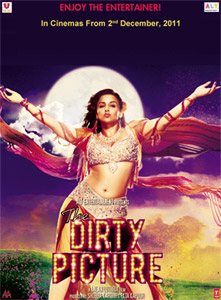
    The promotions of Milan Luthria’s The Dirty Picture were such that nobody had any doubts about its content-for once the audiences get what they expect-an uninhibited Vidya Balan in a sex-on-toast film loosely based on the life of Silk Smitha, who blazed a trail as a voluptuous siren and then, shockingly, committed suicide.


    The film got 2 ½ to 4 star ratings and from all accounts a smashing opening. Which proves once again that sex sells and Ekta Kapoor knows that. If sleaze comes with a big banner attached, it ceases to be ‘dirty’. Everyone is unanimous in praise of Vidya Balan, however, and all awards next year will go to her-she has left the competition far behind.


    Shubhra Gupta of the Indian Express was one of those who was left underwhelmed by the film and gave it 2 ½ stars. “What ‘The Dirty Picture’ does is to place Vidya Balan and her heaving bosom, complete with the dirtier, orgiastic ‘ha-aaa’ sound, so much a fixture of so many oomphy ’80s tracks, at the centre of the narrative. Which is fine, and we are quite taken in by the sight for a while. But then we start looking for something more, and find it, only towards the end, only very fleetingly.”


    Mumbai Mirror’s Karan Anshuman is equally unimpressed: More Dirty Less Picture is the title and a 2 ½ star rating. “It just doesn’t quite come together. What gets plated is an entre overdone on the outside, and not entirely cooked from the inside. Director Milan Luthria falters. He is just in such a tearing hurry to tell us the dizzying story of the rise and fall of Silk and the hot-and-cold behaviour of her fans, detractors, and co-stars – inconsistent one-liner upon one-liner, the flashback in negative image (why?), just the lack of any buildup or lingering – that he doesn’t take a breath for the audience to appreciate and unravel Silk’s mind until much later. Because the film focuses so much on dressed-up cliches of sleaze in tinseltown and Balan’s carefully constructed look, there is precious little else to take in. Fewer incidents focusing to get the viewer involved would work better than too many repetitive ones packed in for the sake of impact.”


    Sukanya Varma of rediff.com gives it 3 stars, but writes, “The Dirty Picture, despite the comprehensive objectivity implied through its title, is not a full-fledged biopic. Instead of painting a layered portrait of Silk, it draws an outline of an unapologetic resident of a flesh-obsessed film industry responsible for her rise and ruin. But Vidya lends her so much transparency, aplomb and sauciness, the outcome is far more awe-inspiring than it deserves to be.”


    Commenting on the actors, the usually acerbic Kunal Guha of yahoo.com, gives it 3 and writes, “Vidya is scrumptious as the imperfect and unrestrained Silk, while Naseer is convincing as a superstar out to play shepherd to every newcomer. Tusshar may have dropped his surname for the credits but that hardly undermines the fact that he’s been cast in his home production, again. Emraan’s character gives itself more importance than you or anyone else does. Luckily, his presence is limited and tolerable.”


    From Chennai, Silk Smitha’s playground, Sudhish Kamath of The Hindu writes, “The makers (Milan Luthria and writer Rajat Arora) seem a little too afraid to get into the darker aspects of the tragic life of a star like Silk and most of the sadness is limited to showing the dark circles under her eyes. Even when her life is spiralling down, the film wants to go away from the tragedy and show you a love song. Clearly, they don’t want to depress you because depressing films don’t do well at the box office. However, The Dirty Picture makes up for lack of depth with spirit and attitude.”


    Rajeev Masand also gives it 3 for Vidya. “What it suffers most from, unfortunately, is lazy writing. With a plot straight out of a Madhur Bhandarkar film, and a screenplay that follows a familiar graph, The Dirty Picture offers a superficial, simplistic view of the seamy, exploitative side of the 80s film business. There is little attempt to treat this material with sensitivity and depth. No sir, this film unfolds as a series of provocative scenes strung together on the strength of their sexually loaded dialogues.”


    Mayank Shekhar also comes up with a reluctant 3. “The film however, even when not mimicking its subject, somewhat retains its ’80s feel: excessive dialoguebaazi, often loaded with double entendres, some loud scenes with actors always in a state of emergency, and the ‘serial kisser’ (Emraan Hashmi) who must land a Sufi song, and a girl’s lips to satisfy his core audiences. Sometimes we remain suspended too much in disbelief. It starts to match the film within the film! This irony is oddly intriguing. It won’t be lost on anyone.”