Tag: Viacom18

  • Viacom18 Appoints HUL’s Sudhanshu Vats as Group CEO

    Sudhanshu Vats

    From the MxM Infodesk


    Viacom18 Media has announced the appointment of Sudhanshu Vats as its Group CEO. Joining in August 2012, Sudhanshu will report to the Viacom18 board and will be responsible for the growth of all Viacom18 brands/businesses, comprising Colors, Comedy Central, MTV, Nick, Sonic, Vh1 and Viacom18 Motion Pictures. The position was left vacant since Mr Haresh Chawla moved on earlier this year.


    Mr Vats is an HUL veteran, having worked with Unilever in India for more than 19 years, in various capacities. He is currently the Vice President – Laundry, South Asia and Global Brand Radiant (Rin in India).


    Announcing the appointment, Raghav Bahl, Founder – Network18 Group, said, “Given Sudhanshu’s rich experience, his ability to lead large businesses and his acute understanding of the Indian diaspora, he is well poised to lead Viacom18 into its next phase of growth.” He further added, “Sudhanshu also brings with him an intense and interesting perspective on the entertainment business and that is sure to add a new dimension to Viacom18.”


    Speaking on the development, Sai Kumar, Group CEO – Network18 and TV18, added, “Viacom18 comprises some of the most dynamic brands in the television and entertainment space that cater to a wide spectrum of audiences. Given Sudhanshu’s vast experience and an extremely successful track record with multi-brand portfolios, we’re confident of him driving each of the Viacom18 brands to its deserved place in the category.”


    Commenting on Mr Vats’ appointment, Bob Bakish, President & CEO – Viacom International Media Networks, said, “With Sudhanshu on board, we’re confident that Viacom18 will continue to redefine the many spaces it operates in.”


    Mr Vats has about 21 years of experience, of which 19 have been with Hindustan Unilever across Sales, Customer Development, Marketing and General Management with P&L responsibility. In his previous assignment as VP Soaps and Detergents, HUL (the largest Business segment in India), Mr Vats aggressively grew the Laundry and HHC categories leading to sustained market share growth. He is equally at ease setting up Businesses from start and launching new Brands. He has worked across different categories (Home & Personal Care and Foods) in FMCG leaving his mark on many popular household brands like Surf Excel, Rin, Vim, Wheel, Lifebuoy, Lux & Lipton. Sudhanshu has also worked with Castrol for about two years, where he headed the Marketing function and was instrumental in the Castrol Master Brand re-launch. Under his stewardship, South Asia was the fastest growing cluster globally in Laundry during 2011.


  • We want to be in the forefront when new media merges with traditional: Anuj Gandhi


    The writing was on the wall the day Anuj Gandhi joined Network 18 in March this year to oversee the group’s distribution and new business development. And the reason for this was the all-new relationship between Network 18-TV 18 and Reliance Industries forged a few months before his joining.


    Other than the providing of the much-needed funds and the consequent stake in one of India’s largest (and more powerful) media conglomerates, Reliance was also looking at making full use of the content produced and owned by the various Network18 and Television18 arms, especially for the Reliance 4G services.


    Also, in the post-digitization era, distribution becomes a key driver in the revenues of a broadcaster, especially for niche channels. And with various mobile devices becoming popular and wireless technology progressing rapidly from 2G to 4G even in India, the monetization potential for multimedia content leapfrogs.


    Enter IndiaCast, a joint venture of TV18 and Viacom18 to create India’s first multi-platform ‘Content Asset Monetization’ entity.


    IndiaCast Group CEO Anuj Gandhi is a veteran in the distribution and the affiliate sales front. An MBA from the SP Jain Insitute of Management, he has worked with Discovery Communications as Director – Affiliate Sales (1997-2002),  as President of SET Discovery (2002-07) and CEO of DEN Networks (2007-2010) and worked as an independent consultant for a little over a year. He has also worked with IndusInd Media in distribution (way back in 1994) and prior to that with Ranbaxy. Clearly, being an early leader in every aspect of the distribution business, Mr Gandhi is well-poised to monetize the wide variety of content that IndiaCast has in its basket.


    Hours after announcing IndiaCast, Anuj Gandhi spoke with MxMIndia, his first and until the time of publishing only detailed interview on the shape of things to come.


    So we see the the birth of a laaarge distribution company…

    IndiaCast is much larger than other traditional distribution companies because it entails monetizing content assets of all the groups – right now TV18 and Viacom18, and post-acquisition of Eenadu, but for all rights. It’s effectively all non ad-sales kind of monetization businesses. It will be online, traditional brick-and-mortar distribution businesses at a global level. So it is pretty huge.


    It’s just the beginning. My sense is that most people will do it because the lines are diffusing between various rights that people use in the market. It has already happened in the international market where a DTH guy blocks Over The Top (OTT) or IPTV rights from you and vice versa. So you will have technologies where OTT rights will sit on a box so the cable guy will come and tell you that I not only want to do cable rights but I also want OTT rights. Thus, with the passage of time, new media will get merged with traditional media and we want to be at the forefront of the revolution which will happen in the next few months/years.


    Any international tie-ups in the offing?

    We already have international updations in the US, UK and Dubai. Colors is being distributed there and going forward, we want to expand our portfolio. We plan to distribute more and more channels internationally. So it’s work-in-progress on that front.


    So what happens to Sun18 now that IndiaCast has been formed?

    Sun18 was an alliance that worked very well and will continue to do well. The deal at Sun18 was that we will distribute Sun and Disney channels in Hindi-Speaking Markets  (HSM) and they will distribute us in the South. So, the only change in the whole alliance is that instead of distributing in the whole of South, they will only do Tamil Nadu now. Otherwise everything stays the same, we still distribute them in the North and also Disney which is part of their network. With this, Sun18 North has kind of folded into IndiaCast.


    Is it a coincidence that IndiaCast happened days before the scheduled digitization in the metros or was it on the cards for a while?

    No it was in the pipeline and we were talking about it for a while now and we knew that we needed to get all our pieces in order.


    Any major challenges you see coming up in the future?

    I think the major challenge would be to get the deal right for digitization. Whether it happens in 25 or 90 days (as digitization in the four metros is likely to get delayed by a few months), this is a chance where the industry needs to correct itself; we all need to work in getting the ARPU situation right in this country. So the challenges are basically at the industry level. Also, on the global front, the challenge is to be able to do more channel launches in international markets and be seen as a serious player. Also, one more challenge will be about how new media unfolds in the country.


    With viewers being able to subscribe to channels a la carte, do you anticipate reach/visibility of channels to take a beating… for instance, what if a person just takes one or two channels a la carte?

    While there will be some percentage of the market that will opt for it because by law you have to offer it. Like when CAS started, everyone talked about a la carte and people taking only one or two channels, but it just doesn’t happen. It doesn’t happen anywhere in the world and it won’t happen inIndiatoo. There may be a few people who would want that but that would be a single-digit percentage for me. So I am not too worried about it. But what will happen is, as they say, the time spent on niche channels will go up with digitization as everybody will be getting the same quality of channels. But if you start picking and chasing packages, some channels will start suffering. Not everybody is going to take all Hindi news channels, for example. So if they are in the same package, then people may pick them but if they are placed differently then it may not be the case. So some impact will happen, but not in the short term.


    We see that IndiaCast will also represent Sun and Disney in HSMs. Any others on the anvil? Since UTV channels are now part of Disney, will they move too?

    Nothing right now, I think we already have too much on our table right now. If something happens tomorrow, we do not know but we are not looking at adding anything new as yet.


    As part of Network 18/Television 18 agreement with the Reliance Industries Ltd’s Independent Media Trust stake, there was also a plan of all Network 18/Television 18 content being syndicated to Reliance 4G? Will it be done via IndiaCast?

    I won’t be able to comment on this but as is known, all content monetization businesses lies with IndiaCast so the same businesses will be done with any 4G networks whether it is from Reliance or any other telco from the business.


    So going back to the earlier discussion, the arrangement with Sun18 stays…

    Yes, we have just changed the definition in terms of the three states in the south. Otherwise it remains where it was. So Sun18 continues to exist and holds up in IndiaCast. It won’t be called Sun18 anymore. There is no shareholding changing – Sun18 North is just folding up into IndiaCast.


    Do you see consolidation gaining prominence as we move ahead?

    I think it will happen for some time. What way and form – will now change as technology is becoming a critical part of our business. The traditional mergers may not happen as much but there has been a lot of M&A happening on the platform side which will also have an impact on broadcasting.


    With digitization happening, do you anticipate the revenue from non-advertising sources will actually be more than what comes from advertising?

    I cannot generalise it and will depend on channel to channel. But will certainly grow; I feel that it could be 50-50 at the network level. So niche channels will benefit more from subscription than ad sales but mass channels will still earn revenues from ad sales.


    So just as it holds true for the sales folk these days, do you see the distribution team also have much say in content in the future?

    I wish my bosses here say that distribution guy must have a say in content (laughs). But it’s not that now. Until now the interaction with the consumer was through various means and the stakeholders were too many in the value chain. Going forward, because it will be a box and be kind of a direct deal – so if I am going to an MSO, he can probably tell me area specific complaints – it will reach back to the content owners much faster and in much clearer terms than what is happening today. That is what is happening in international markets and it will start happening inIndiatoo. But we are a couple of years away from that.


    So we’ll soon have distribution heads becoming CEOs of networks…

    Touche.


  • Vivek Bahl joins Viacom18 as Network Advisor Content, to work on proposed regional foray

    By A Correspondent


    In a move to expand its horizons, Viacom18 has appointed Vivek Bahl as Network Advisor Content. He will be working on the regional channels which the media conglomerate plans to get into. He will also play a strategic role in planning and development of new content.


    Mr Bahl will report to Raj Nayak, CEO – Colors and will have a parallel line of reporting to the Regional Head.


    Announcing his appointment, Raj Nayak, Chief Executive Officer, Colors said: “Vivek comes with great experience in developing content for different genres and his understanding of the television and entertainment industry is quite phenomenal. We believe he will play a significant role in not only in further developing and strengthening the current content on Viacom18’s offerings but also in the expansion of the network’s upcoming regional channels.”


    Mr Bahl has over 25 years of experience in the entertainment industry and a strategic cross-functional perspective. He has worked with leading television networks inIndiaincluding Star TV and Zee TV, where he helped in the development of multiple fiction and non-fiction properties including Antakshari, Banegi Apni Baat, Jassi Jaisi Koi Nahi, Bidaai, Yeh Rishta Kya Kehlaata Hai, Saath Nibhana Saathiya, Saat Phere, Betiyaan, Maayka and Pratigya.


    On his new assignment Vivek Bahl said: “Viacom18 is a network that, through its various channels, reaches to multiple audiences across the country. I am extremely excited about this opportunity to help take the content and the network to the next level. I am looking forward to working with the incredibly talented team at Viacom18 and help escalate the properties to reach out to a larger audience across the country.”


    Prior to joining Viacom18, Mr Bahl was Chief Content Officer forIndiaat Turner International and overlooked the content strategy and development for Turner’s entertainment brands inIndiawhich included Imagine TV, Cartoon Network, Pogo and Warner Brothers.


  • 1000 episodes, and counting!


    By Meghna Sharma


    Avika Gaur

    In 2008, when general entertainment channel Colors, was launched by Viacom18 – a joint venture between Viacom Inc and the Network18 Group, there was much promise of  a new spectrum of emotions and entertainment. While there were high profile reality shows on offer, the one serial that caught everyone’s attention was Balika Vadhu, a story of Anandi, married off in a rich family as a child. The show will complete 1,000 episodes today (May 14), a feat not many shows have accomplished in the Indian television industry.


    Ashwini Yardi

    Balika Vadhu show caught everyone’s attention because of its simple story and real emotions. Anandi captured the hearts of millions, making it the No 1 show at that time slot. Talking about Balika Vadhu, former programming head of the channel, Ashwini Yardi recollects: “It is the only show I said yes to in 30 seconds. Balika Vadhu is a cult show that portrays the journey of a child bride into womanhood. Even when the channel was launched, the show wasn’t promoted or marketed as much as the other shows. So, it has achieved everything on its own.”


    Child marriage isn’t something new, many young girls and boys are forced into it even today and the government and activists have tried to curb this social evil. Through the show, the writer and the channel wanted to convey the side-effects a child marriage can have on one’s life.


    Purnendu Shekhar

    “The realism in the characters and storyline is what made the show connect with its audience. We have never compromised of the plot and concept of the story to gain TRPs. Balika Vadhu is the first show which raised a social issue as its main plot on a primetime. And we wanted to educate people as well as entertain them,” says Purnendu Shekhar, the writer of the show.


    Agreeing with Mr Shekhar, Prashant Bhatt, fiction head, Colors says: “The story is the hero. The concept of the show decides how the look and treatment of the show will progress. So much so that the cast, the sites, the look, the makeup, even the language is completely tied to the concept. Balika Vadhu brought about authenticity, consistency and meaningfulness and that has worked. Today, Anandi, Sumitra, Dadisa, Bhairon and many others are household names solely because of the way the characters have been portrayed; the actors literally live their roles. The dialogues and its delivery has raised the bar completely. In totality, the show is an honest effort from our end to highlight issues to a mass audience and its acceptance is a great high for us.”


    Monaz K Todywalla

    Of the 197 weeks of being on-air, it’s been the No 1 show in the slot for 172 weeks. According to Monaz K Todywalla, general manager, Madison Media, the reason why the show has worked well for so long is: “The simple storyline of Balika Vadhu, in its early days was a refreshing change from the high drama soaps that existed. The show started off a new trend of addressing social problems that exist within the fabric of the country; people empathize with the story of a young girl who was married at a young age – the twists in her life deal with problems that women in India face. More importantly, because Anandi doesn’t play a victim, but fights odds to emerge a winner.”


    Deepak Netram, vice president, Lodestar UM, reasons why Balika Vadhu has been able to cut across masses. “The show was a milestone in the GEC space. It redefined a lot of trends and was a winner for the channel for a long time in many aspects. The show targeted a certain TG and that’s the audience many advertisers want too,” he said.


    OTHERS IN THE 1000+ EPISODES CLUB

    Kyunki Saas Bhi Kabhi Bahu Thi – April 2005
    Kahaani  Ghar Ghar Ki – Aug 2005
    Kasauti Zindagi Ki – May 2006
    Kumkum – April 2007
    Woh Rehne Wali Mehlon Ki – June 2009

    At 1,000 not out, Mr Shekhar shared that it wasn’t easy to keep freshness alive in a daily soap: “When I had written the show for Doordarshan in 1992, the show was supposed to have only 25 episodes. I feel till the time the viewers continue watching and enjoying the show, we’ll continue to write.” For the DD version, the young couple were supposed to grow-up in the fourth episode itself, whereas on Colors the show took a time-leap in the 517th episode.


    Jaahnavi P Paal

    But not everyone believes that the show must be allowed to continue till the ratings become negligible. TV analyst and columnist, Jaahnavi P Paal rues that Indian soap operas tend to lose the plot and drag. I guess the same has happened with Balika Vadhu too. Today, many avid viewers of the show have lost interest in it. Maybe that’s why it has lost its  number 1 spot. I’m a firm believer that a show must end at a proper time instead of being dragged.


    However, there’s no denying the fact that as a serial Balika Vadhu changed the trend with its interesting and unusual concept. Social awareness through primetime benefitted the show as well as the channel.


  • Movies OK will focus on families: Hemal Jhaveri

    By Meghna Sharma


    After the launch of Life OK in December 2011, Star India is planning to launch a new channel on May 6 under the OK banner – Movies OK.


    The channel promises to be different from Star Gold, the movie channel launched by the network in 2000. “There is a difference between the two channels. Movies OK will focus on family audience. This means we are going to showcase movies which a whole family can enjoy together,” said Hemal Jhaveri, general manager, Star Gold, who heads the channel. The channel plans to concentrate on genres like comedy. “There is going to be more comedy and less action on the channel,” he added.


    Apart from content, the other thing which will differentiate the channel from the competitors is the treatment. “The promos are going to be very different and unique from what the other channels do. For instance, we are going to have a Best of Salman Khan Festival called ‘Bhai Ok Please’ where no film footage has been used. So, for the first time, people will see a promo for Salman Khan without him in it. Communication is going to be unique,” explained Mr Jhaveri.


    If that’s not enough, the channel also boasts of having a World TV Premiere every night by the end of this month. Mr Jhaveri said: “The 7 day 7 premiere is something which no other channel has experimented with earlier. I think it’s the first-of-its-kind in the world as well. So, every night at primetime, one will get to see movies like Kahaani, London Paris New York, Jodi Breakers and others. We are planning to build our channel as a unique platform.”


    The channel also hopes to use the learnings from their other channels, especially Star Gold which was revamped last year. So, one can expect shorter breaks.


    The channel has a library of over 1000 movies. “We have been investing in the channel from the past two-three years and will continue to do so in the future as well. Therefore, it’s going to be a unique library. Last year, we acquired the Viacom18 library so that will also add to it,” elaborated Mr Jhaveri.


    The Hindi movie genre enjoys the third largest viewership pie, trailing behind regional channels and Hindi GECs, according to a FICCI-KPMG report on the Indian media and entertainment industry, released in March.


    “There are various Hindi movie channels, but there is always space for one more, if it’s different and has good content,” said Mr Jhaveri. Agreeing with Mr Jhaveri’s sentiments, Ashwini Kamat, general manager, MediaCom added: “People don’t have loyalty towards movie channels. So, if a channel has a good library, then it doesn’t need to worry about others because people will switch to it, if they want to watch a particular film.”


    Janardhan Pandey, associate vice-president, DDB Mudra Max elaborated: “There is enough space on TV to launch a channel but all depends on if one can sustain it at the top slot. A new channel might showcase latest movies, but after some time, many stop investing in a new library and repetition starts. It is then people tend to move away from it. So, it might make an impact in the beginning, but it is difficult to say how a channel will do in the future.”


    However, advertisers aren’t optimistic about it. “One more channel means more segmentation. So, I don’t think it’s going to benefit us,” said Praveen Kulkarni, general manager (marketing), Parle. The categories which spend heavily on Hindi movie channels are services, auto, personal accessories and telecom. “Launch of any new channel means fragmentation and overall inflation for advertisers,” added LK Gupta, CMO, LG.


    The channel has a 360 degree promotional plan for the channel. It will also be promoted during Star’s new show, Satyamev Jayate, which will also be premiered on May 6. Radio and digital platforms will be used too.


  • Two investments done. Many to come!


    By Shruti Pushkarna


    In many ways, the Taj Lands End hotel has been lucky for Rajesh Kamat. The early days as captain of Endemol India and Colors were spent at the hotel in Mumbai. No surprise then that Mr Kamat located his CA Media office at the hotel when he joined it last year as CEO to oversee the Indian investments for The Chernin Group.


    For most in the media fraternity, Mr Kamat’s decision came as shocker since he was cruising as COO of Viacom18 Group and CEO of Colors. He spearheaded the channel to leadership position in a record 9 months – thus breaking the 9-year supremacy of Star Plus in the Indian GEC space. Prior to Viacom18, Mr Kamat was Managing Director of Endemol India, where he set up Endemol’s operations in India. As the news of CA Media’s investments in Endemol India and Only Much Louder had just begun reaching the fraternity on Thursday evening, Mr Kamat took time out to speak with MxMIndia:


    It’s interesting to see the span of investments you’ve made? One in an international production company and another in a not-so- known youth and music company? So what kind of investments can one expect from CA Media India in the future?

    What we are trying to build is a portfolio of assets and each of these will come in with its own uniqueness. You will see us not only invest in different companies but also build different brands in companies. So the first set of announcements are more on the buying side of it, in the second set you’ll probably hear of a build, we’ll actually support an idea and build out a business.


    It’s therefore going to be a diversified media property which has pretty much all kinds of assets under it. Now coming to specifically Only Much Lounder vs. Endemol, Endemol is what I call the content hub and we will go on to make it into a content powerhouse. While it’s a strong television player, we believe there is a fair amount of growth that can be looked in. We can look at inorganic growth in television, we can look at moving from one screen to multiple screens. So, on one hand we have an investment in Endemol which is a traditional content hub, on the other, we are investing in a nascent pocket of music overlapping with youth, I see that as investing in the youth power.


    If there is a company which is talking about college festivals, music festivals and managing talent in a Dewarists kind of show and more importantly in a nascent pocket, if you find a promoter who you can bank on, it can’t get better. I think that’s the unique combination we found in a Vijay from OML in the music and youth space and on the other end, Endemol, the conventional traditional content business. So that’s pretty much what you see in our investments today.


    It’s a year and 26 days since you set up operations. In hindsight, do you think you could’ve announced the ventures sooner?

    No, that’s my biggest learning, having come from a broadcast background, I am used to weekly ratings. In transactions and deals, when you are talking about building relationships, trust in a partner and then investing in a partner, I don’t think things move at that pace, because you have to build the rapport, relationship, then establish the value that you get to the table, then talk about the value that you can unlock in that business proposition and then do the deal. So I think it’s fairly decent in terms of pace. And if you talk to any private equity VC guys, you rarely have two announcements in one go and too within nine months of starting off.


    Also read…
    CA Media to invest in companies, build brands
    That Rajesh Kamat was 1st CEO of Endemol is not a coincidence: Deepak Dhar
    We’re looking at strategic inputs from CA Media, Zodius: Vijay Nair

    How many proposals did you vet?

    I don’t even keep a count (laughs). I would typically say a ratio would be 1 on 10 or 2 on 20… would invest in 1 on 10.


    How come Endemol? There are several homegrown production companies too?

    If you are talking about a company which has the single largest independent producer globally, if you are talking about a catalog of offering, if you are talking about a creative hub which is scalable, it couldn’t get better than Endemol.


    Is it quite a coincidence that you were also the founder-CEO of Endemol India? It obviously means a lot that you have invested in it… you have a great amount of faith in the company

    It’s not. What does happen is that if you’ve had an association with them since inception, then you know the roots of the company. I have enjoyed an equation with them in form of having set that company up, and then, as partners at Colors and now as investor in the company… I am enjoying all of them.


    So will you have a say in Endemol operations?

    In any of our investments, we invest in them because we believe the business model is good and the management is great. So from an operational standpoint we never interfere with what the management is delivering and they are the reason why we are investing. What we get involved is more at the capital, strategy and in terms of an overall direction.  That’s the role we play.


    Since a lot rests on key programming that Endemol does, will you possibly look at who the guests in the Bigg Boss house will be?

    No, no…I think Deepak is more than happy and excited and so is the Colors team deciding who goes inside into the Bigg Boss house. In fact I watched the show but I am not as animated about the show.


    Which are the languages that you see Endemol getting into?

    It’s only fair if you put up that question to Deepak.


    There are investors/VCs who are hands-off, and there are some who are hands-on… what will you be?

    We would like to be strategically involved. In case of an OML, what we do is, we build a plan out with the promoter…if we built a plan out with the promoter, then at every step wherever they need support, we stand by them, that’s our role. So not only do we invest money, we actually invest time and expertise.


    Tell us about the other project that you are investing in… Only Much Louder?

    It’s a youth activator brand, it’s a company which does college festivals, as I said we are investing in youth power, so they are a company which focuses on youth. They use music as a vehicle and we believe it’s a great company to get into because alternate music and music is growing as a pocket, and if you have a captive youth which in India more than 65 percent is less than 35 years of age, then it can’t get better. And we have a great promoter in Vijay.


    How come Only Much Louder and not other higher profile companies?

    As I said, it’s a great pocket, we love the promoter and we believe that with him we can scale new heights.


    Do you see it reaching the heights of, say, a Wizcraft?

    You need to talk to Vijay on that…what I can tell you is, yes we are building the brand. We are making every possible effort to work towards whatever best… there are five verticals they are working on, we would love to work with them on each of the verticals to see whatever maximum potential they reach, why would you want to benchmark on anybody…


    What are your targets for CA for the year?

    We don’t set out with a mission to buy five or four companies, what we do is, we talk to promoters, we identify good companies and invest in different companies. So I don’t think we set out with a target or a mission to acquire or build x numbers. We’ll identify pockets which are growing, we’ll identify businesses which are great, promoters who are good to invest and who we can trust, and the minute we find one, we’ll invest, so no targets.


    MxMIndia is read by a variety of constituents amongst media and marketers. If we were to send a message to people on the kind of projects you are seeking, what can that be?

    If we find businesses which are synergistic, we believe we can add value, and then we go ahead and invest in them. If we believe that we can grow the business, then we get into them. However, if it’s even a business which we believe is a good investment but we cannot add value and we are not strategic in the business, we’ll not go after it.

     

  • Get set for the funny stuff with ‘Comedy Central’


    By A Correspondent


    Viacom18 has announced the launch of its sixth channel, ‘Comedy Central’, a 24×7 channel dedicated to English language comedy content, which will go on air from January 23. The channel is said to have a mix of all genres within comedy ranging from sitcoms to sketch comedy, British comedy, Stand-Up and Gags, among others.


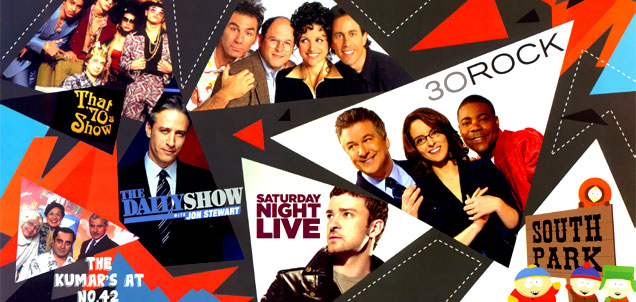
    Comedy Central will air mainly international content with English sub-titles. Some of the popular shows to be aired on the channel are Saturday Night Live, The Office, Seinfeld, The Wonder Years, That 70s Show, The Daily Show with Jon Stewart and SouthPark, to name a few.


    According to Mr Ferzad Palia, Sr. Vice President and General Manager, English Entertainment, Viacom18 Media Pvt. Ltd, although there could be fragmentation in English language channels, the viewership has gone up, so has the time spent viewing English language channels and the reach. He also said that English channels are one of the most under-served genres however there is still a huge scope. “There has been growth in English literacy and in the next four or five years, English language literacy is expected to grow manifold. We also observed that Indians are increasingly able to laugh at themselves, at least a little more than what we used to. There are a number of factors to launch ‘Comedy Central, this are just one of them, thus we feel this is the right time for the launch.”


    He further said: “The format of the channel is the best of comedy. We are picking up the best content from across the world. We have different programmes for different audience in different time-bands. It is a combination of content for the mature audience and for the youth. We have significant and equal doses for both. In addition to these we are premiering about 7 or 8 shows on weekends.”


    ‘Comedy Central’ aims to reach atleast 20 million households across the country at its launch and will be available across analog, digital cable and DTH. While the channel will initially start off with Airtel DTH and Dish TV, it aims to be available across all DTH platforms within the next 60 days. The channel has hired BBH as its Creative Agency while Vizeum is the Media Agency.


    Since 80 per cent of English viewers are said to be from the metros, the content will be largely metro-centric. Even on the distribution front, the channel will be targeting the key metros, namely Hyderabad, Pune, Ahmedabad, Mumbai,Delhi, Bengaluru and Kolkata.


    The business model that ‘Comedy Central’ aims to follow is primarily advertising-led followed by subscription, but besides this, the channel also plans to reach out to the audience through web, mobile and merchandising, among others. The channel plans to create special packages and interaction mechanisms, relevant not just to a particular brand but even the show, for advertisers.


    In a prepared statement, Bob Bakish, President and CEO – Viacom International Media Networks said: “Comedy Central is one of Viacom’s most distinct and successful franchises globally. We feel that the time is now right for Viacom18 to introduce Comedy Central in India, given the growth curve of the Indian television entertainment market.”


    Mr Haresh Chawla, Group CEO-Viacom18 said: “With the launch of Comedy Central, Viacom18 now marks its presence in another under-served genre – English comedy. We are confident of Comedy Central establishing itself as one of the dominant players in the English entertainment space in Indian television.”


    The marketing campaign will be unveiled only after ‘Comedy Central’ has been officially launched. But the channel plans innovations across television, print, outdoor, radio, below-the-line and digital. The marketing plan is also said to involve strategic partnerships with lifestyle touch points like coffee chains, theatres, clubs, gyms, salons, shopping destinations and other hangouts.


    The tagline of ‘Comedy Central’ will be ‘Laugh it Off’. It will target audiences in the age bracket of 15 years and above. Since late 2006, ‘Comedy Central’ has expanded globally with localized channels in Poland, Germany, Netherlands, Italy, Hungary, Sweden, Ireland, United Kingdom, New Zealand, Israel and Spain.


  • Recent deals point to consolidation in media, say experts

    By Ravi Teja Sharma & Meenakshi Verma Ambwani


    Purveyors of news are rarely objects of news themselves, but India’s splintered media landscape has made news in the past two weeks. A flurry of deals or talk of more similar transactions have stirred up the sector in recent days, putting the spotlight on the possible motivations and some crystal ball gazing on what lies ahead.


    Last week saw a little-known chemical and fertiliser company Oswal Green Tech buying a 14.17per cent shareholding in New Delhi Television (NDTV) through two block stock market deals. Media reports said Mukesh Ambani-controlled Reliance was looking at buying into Network18, which runs CNBC India. Before him, younger brother Anil’s firm Reliance Capital increased its shareholding in UTV News, which runs Bloomberg TV, by buying out UTV founder Ronnie Screwvala’s 66 per cent stake.


    Industry executives and experts believe the consolidation trend will pick up momentum in 2012, separating the men from the boys in this highly splintered sector that is being increasingly hobbled by cost pressures and revenue challenges in a slowing economy.


    With more than 700 television channels in India and only few making money, experts believe consolidation in the industry is inevitable.


    “Consolidation has to happen. It is required,” said Mr Haresh Chawla, who recently announced his resignation as group chief executive officer of Network18 and Viacom18 after leading the company for more than a decade.


    One major problem for the industry is that it has been too dependent on advertising revenues, while subscription revenues have been elusive.


    Analysts say some signs of consolidation are already visible, as media companies cobble together bouquets of channels.


    “It is already starting to happen and going forward, media companies will look at building a portfolio of broadcast assets across genres, geographies and languages to create a national setup,” said Mr Jehil Thakkar, head of the media and entertainment practice at KPMG.


    The move towards regional channels, spread across geographies and genres, is triggered by the high growth in advertising revenues in the segment. Growth in advertising revenues in big cities has been around 12-13 per cent even in good times because of an inventory overhang, while regional advertising has been growing at more than 20 per cent for the last few years, say analysts.


    Analysts say this could explain why Network18 may be looking at Eenadu TV. “Network18 does not have any regional channels in its portfolio. This move will give them an entry into the fast growing regional market,” said one analyst. Buying Eenadu TV could give Network18 a bouquet of 11 regional channels.


    What may also be attracting new investors such as the Ambanis and foreign media companies such as Walt Disney is the promise of higher revenues and growth as the full benefits of digitalization kicks in. Collateral benefits of media ownership include access to content sources to power non-media business and potentially even some influence.


    In the case of Reliance Industries, which is setting up a national 4G broadband service, ownership of a media company will give it an edge over competition, with access to exclusive content from a bouquet of channels as well as web properties.


    The Cable Television Network (Regulation) Amendment Act, enacted two weeks ago, could help subscriptions finally become a good source of revenues for media companies, reducing their dependence on advertising. Today, a viewer pays as little as 50 paise to watch an hour of TV. Even this revenue does not reach the channels completely because of under-reporting by local cable operators.


    “This (the digitalisation law) will be a game-changer for the television business if well executed,” said Mr Sunil Lulla, managing director and chief executive officer of Times Television Network, which runs Times Now, ET Now and Movies Now channels.


    Meanwhile, some deals have already happened in the non-news segment, in anticipation of large changes in the sector. In July this year, Walt Disney Co said it is buying out rest of the 49.56 per cent stake in UTV Software Communications that it does not own from public shareholders and other promoters of the company for Rs 2,000 crore.


    “There is clearly a need for sellers to look at strategic investors. For the buyers, in the long term there is value in Indian media,” said Mr Nikhil Vora, managing director and head of research at IDFC Securities.


    India’s entertainment and media industry is estimated to grow at a compounded annual rate of 13 per cent to Rs 1,19,890 crore in 2015 from Rs 64,600 crore in 2010, PwC’s India Entertainment and Media Outlook for 2011 revealed earlier this year.


    The sector’s woes, notably because of high costs and low subscription revenues, coupled with the general weakness in the markets have cast a dark shadow over media stocks. The market value of NDTV stood at Rs 171 crore on December 21, 2011, the day Oswal Green Tech, formerly Oswal Chemicals & Fertiliser, acquired its stake for around Rs 24 crore.


    The company was worth Rs 215.66 crore on January 3, 2012, Rs 552.5 crore at the beginning of 2011 and Rs 3,300 crore at its peak in January 2008. Network18’s market value has dropped from Rs 1,540.7 crore on January 1, 2011, to Rs 535 crore as on January 3, 2012, while that of TV18 has dropped from Rs 2,122.4 crore to Rs 1,220.13 crore in the same period.


    The sector trades at price earnings multiple of 18.3 compared with nearly 19 for the telecom sector or 21.43 for the technology sector.


    While digitalisation will help increase subscription revenues and remove capacity constraints, it will also aid the process of consolidation in the sector by forcing smaller regional channels into the embrace of larger, pan-India players. Smaller regional channels are enjoying better advertising growth today, but after digitalisation they could face problems in getting themselves well placed in the line up of channels and may feel the need to be aligned with larger players either by selling out or through a distribution deal.


    “Larger players with a bouquet of channels will have more bargaining power with cable operators. Smaller channels will find it difficult to get into prime tiers,” said Mr Chawla.


    With valuations low, experts feel now may be the time for consolidation. “The overall multiples for media companies have been low for a while. This is a good time to buy. Broadcasting does present a good opportunity,” said Mr Thakkar.


    Source: The Economic Times

    Copyright © 2012, Bennett, Coleman & Co. Ltd. All Rights Reserved