Tag: Unilever

  • Siddharth Banerjee to head marketing at Vodafone

    By A Correspondent


    Former Unilever Country Manager Marketing in Sri Lanka Siddharth Banerjee has taken charge as head of brand marketing and consumer insights at Vodafone.


    The position was lying vacant after the exit of Ronita Mitra who left the telecom major in July this year.


    His position will also look at activitation and digital media.


    In his 15 years of FMCG / CPG experience, including the last 13-odd years in Unilever, Banerjee  has worked across Country P&L roles and Global / Regional Brand Marketing roles, with rich exposure across Developing and Emerging Markets.


  • Big Nite for the Datawallahs!


    By A Correspondent


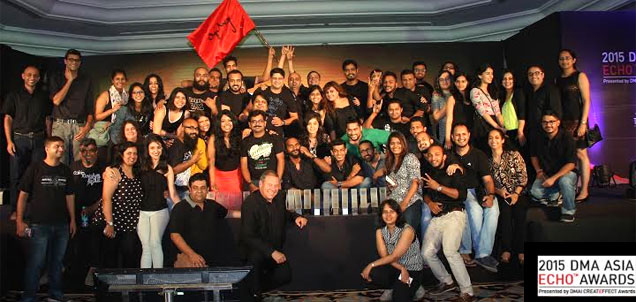
    What’s one awards nite where many of the Big Pros of the A&M-land assembled and, no, it wasn’t the Abby, the Effies, the Emvies or Kyoorius? We’re talking of names like Piyush Pandey, D Shivakumar, Madhukar Kamath, Nagesh Alai, KV Sridhar, Bobby Pawar, Manish Bhatt, Damodar Mall, Tarun Katial and many, many others?  It was the DMA Asia Echo Awards, held last Friday (Aug 6) in Mumbai.


    Fast Facts:

    Entries from 542 participants, 75 agencies, 175 Brands


    Entries from 8 countries – India, Singapore, Hong Kong, Malaysia, Phillipines, China, Japan, Thailand.


    Awards presented:

    4 Overall

    1 Best of Show

    1 Diamond

    142 Metals

    29 Golds

    26 Leaders


    Unilever was adjudged Client of the Year, while OgilvyOne Worldwide was Agency of the Year. Ogilvy & Mather was Network of the Year and WPP the Holding Company of the Year. The Best of Show for Creativity was awarded to Visa India for Visa Sarees and the Diamond for Effectiveness was taken away by OgilvyOne Worldwide Philipines.


    The International Echo Awards are the most prestigious awards in the data-driven marketing and advertising world. This year, DMAi, the Indian association which has been in existence since 1992, was accepted entries from across 17 countries in Asia for both the awards – the 2015 DMA Asia Echo Awards and The DMA International Echo Awards 2015.


    Underscoring the importance of the Echo awards, Rakhshin Patel, Managing Director, Pi Communications & Grand Jury Chairperson, said:  “For an athlete, the Olympics are the ultimate stage. Data-driven marketers share the same feeling about the Echo programme. There is indeed no bigger stage to showcase ideas and work that have yielded measurable, tangible, real results.”


    There were 15 Effectiveness categories and 3 Creative Effectiveness categories each headed by a biggie – Piyush Pandey, D Shivakumar, Madhukar Kamath, Geetu Verma, Nagesh Alai, Jasmin Sohrabji, Anupriya Acharya, Agnello Dias, Pratap Bose, Bobby Pawar, KV Sridhar, Tarun Katial, Manish Bhatt, Nishi Vasudeva, Damodar Mall, Susana Tsui, Anant Rangaswami  and Rajesh Kumar.


    Said Vatsal Asher, CEO & Shelly Singh, COO, DMAi: “We are honoured to be hosting and managing the Asia Echo Awards. Campaigns got judged with the best in the Region. We had a fantastic panel of Jury Presidents and 194 online judges this year. We hope to see an increase the list of Asian winners at the International Echo 2015 awards in the US where all Asian winners will fasttrack to Round 2.”


    As an apex, not for profit DMAi, since 1992, brings about collective action for advancing & protecting responsible Data Driven Marketing and Advertising. The DMAi is run on a day-to-day basis by Vatsal Asher (CEO) and Shelly Singh (COO) and the awards have been championed by Rakshin Patel (Grand Jury Chairperson) and Ajay Chandwani, (Chairman Emeritus).


  • Omnicom appoints Amol Dighe as Head of Investment India

    By A Correspondent


    Omnicom Media Group has announced the appointment of Amol Dighe as Head of Investment, Omnicom Media Group India. The appointment in India follows senior hires for the function in markets like Singapore and Hong Kong.


    Mr Dighe will lead strategic insight and analysis over the OMD and PHD investment portfolio to ensure the best possible client outcomes are secured across all media platforms. In addition he will be involved with special development projects across South East Asia.


    Prior to his new role at Omnicom Media Group, Mr Dighe has a depth of experience working with Unilever in a Regional Buying and Operations role for the Asia Pacific Region, working with Star TV Network to establish their Client Service Strategy and Planning unit and working with Group M India spanning over nine years. Most recently he was in a leadership role in Jakarta with Mindshare Indonesia.


    Jasmin Sohrabji
    Harish Shriyan

    Speaking on Amol’s appointment, Jasmin Sohrabji, CEO Omnicom Media Group India and South East Asia said, “Amol is a terrific addition to the team, bringing invaluable experience to further strengthen our Investment team. Leveraging his experience across the region he will additionally play a key role in special development projects in South East Asia.”


    Welcoming him to Omnicom, Harish Shriyan, COO Omnicom Media Group said, “As we consolidate and gear up for the next level of growth, we are excited have Amol as part of our management team that will enhance our client delivery capabilities in India.”


    Said Mr Dighe: “I am delighted and excited with this opportunity of working with the growing Omnicom Media Group team to add greater value to our client offering and making our business more robust for the future.”


    Commenting on the appointment, Paul Moreton, Chief Investment Officer, Omnicom Media Group APAC, said, “With our business growth, we are privileged to have the ability to attract quality talent. Amol will continue to develop our offering – delivering expertise in an area of increasing sophistication.”


    The appointment is effective immediately.


  • Unilever COO Harish Manwani to retire on Dec 31

    By A Correspondent


    Harish Manwani, currently Chief Operating Officer, Unilever, will retire from Unilever on December 31, 2014, after more than 38 years of service with the FMCG giant. Mr Harish will continue in his capacity as the Non-Executive Chairman of Hindustan Unilever Limited (HUL).


    Mr Manwani joined Hindustan Unilever as a Management Trainee in 1976 and joined the HUL Board of Directors in 1995 as a Director responsible for the Personal Products business. Under his leadership, the Personal Products business grew from a nascent business to one of the key growth engines of the company. Subsequently, he enjoyed success in many roles, covering both categories and markets, and across many parts of the world. This included stints as SVP Global Hair Care & Oral Care; President, Home & Personal Care first of Latin America and later of North America.


    As Chief Operating Officer of Unilever, Mr Manwani’s key achievement has been his leadership of the Global Markets where he established and aligned the market clusters across the world behind a clear agenda, creating a better and more integrated go-to-market organisation. It has also allowed the business to be managed more dynamically, resource allocation to be done more efficiently across markets and best practices to be transferred more seamlessly. This has allowed Unilever to become increasingly more competitive in a tougher business environment.


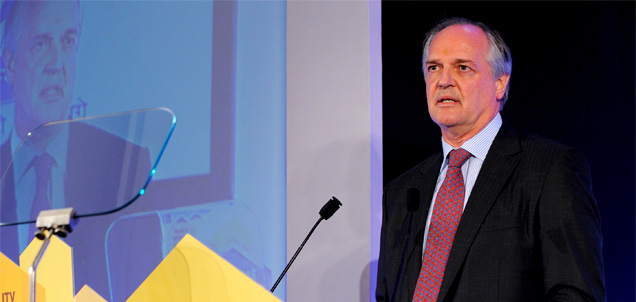
    Paul Polman

    Unilever CEO Paul Polman said, “Harish is an inspirational leader and leaves a remarkable legacy. He has been at my side in helping to drive the turnaround of Unilever, making this once again one of the most admired companies in the world. Over the last three years, especially as Chief Operating Officer, Harish has been instrumental in the transformation of the company. Under his leadership we have seen a step-change in our go-to-market organisation and there has been a relentless focus on flawless execution globally.  He has role-modelled the 4G sustainable growth model – Competitive, Consistent, Profitable and Responsible – which has become such a strong focal point for the Markets.”


    Said Mr Manwani: “I am deeply grateful to all those colleagues who have helped to make the last 38 years at HUL and Unilever so memorable and fulfilling. It has been a privilege to serve such a great company. Today, Unilever is in a strong position with a clear strategy and capabilities to drive long-term responsible growth. This makes it a good time for me to make this personal transition. I look forward to working with Paul and the leadership team over the coming months to ensure a smooth transition and to further build our growth agenda.”


  • Rahul Welde is Jury Prez at Asian Marketing Effectiveness and Strategy Awards

    By A Correspondent


    The Asian Marketing Effectiveness and Strategy Awards has announced the first of its jury presidents as Rahul Welde and James Thompson.


    Mr Welde, Vice President of Media at Unilever, will head the Media Strategy jury. As the person responsible for driving the media and communication agenda through a network of agencies and partners in the region for Unilever, Mr Welde has played a pivotal role in driving digital in the region with key strategic partnerships with global as well as regional players.


    Commenting on his position as jury president, Mr Welde said: “It’s fantastic that the AMES are recognising Media Strategy as its own section in 2014 and I am very much looking forward to being a part of this category in its inaugural year. Media strategy is a crucial part of any marketing campaign and I can’t wait to see the unique, imaginative and innovative ways in which the region has deployed it to achieve quantifiable results”.


    The Media Strategy Jury:

    Rahul Welde, Vice President of Media, Unilever Asia, Africa, Middle East, Turkey and Russia – Jury President

    Amcke Becker, Marketing Excellence Manager, Asia & Middle East, FrieslandCampina

    Bindu Sethi, Chief Strategy Officer, India, JWT

    Catherine Williams, Partner, Strategy, Asia Pacific, Mindshare

    Chun-Yu Shih, General Manager, WebGene Inc.

    Donna Kim, Media Strategy Director, South Korea, Cheil Worldwide

    Guy Hearn, Chief Innovation Officer, Asia Pacific, Omnicom Media Group

    Jerry Blanton, Vice President & Global Marketing Director, Asia & EMEA, Citibank

    Joe Nakamura, CEO, Japan, UM

    Koichi Yamamoto, Senior Planning Director, Japan, Dentsu Inc.

    Lilian Leong, Managing Director, Hong Kong, IPG Mediabrands
    Lizzie Nolan, Asia Pacific Head of MediaCom Beyond Advertising, MediaCom
    Malcolm Hanlon, Chief Operating Officer, Asia Pacific, ZenithOptimedia
    Masashi Ariizumi, Senior Planning Director, Japan, ADK
    Neil Stewart, Global Chief Client Officer, Maxus
    Ranganathan Somanathan, Chief Operating Officer, South East Asia, Starcom MediaVest Group
    Rohan Jha, Senior General Manager of Media & Promotions, Sony Music Entertainment India
    Sean O’Brien, CEO, Asia Pacific, Carat
    Sean Rach, Regional Director, Brand and Corporate Affairs, Prudential Corporation Asia
    Stephanie Bell, Regional Media Director, China, Australia, Japan and Korea, L’Oreal
    Torie Henderson, President, Global Account Management, Asia Pacific, Omnicom Media Group


    Meanwhile, James Thompson, Global Managing Director, Diageo Reserve, will chair the Effectiveness jury. Prior to joining Diageo, Mr Thompson worked for Unilever in London, New York and Brussels. Commenting on his role as president, Mr Thompson said: “I am delighted to have been invited to chair the jury at this year’s AMES. This event has become one of the most prestigious on the region’s awards circuit. It celebrates brilliant joined-up thinking and the effectiveness that great execution of that thinking generates. It is exciting to have an opportunity to review the best of the best work – with a distinguished panel from across the industry.”


    The Effectiveness Jury:

    James Thompson, Diageo, Managing Director Global Reserve – Jury President

    Ashutosh Srivastava, Chairman / CEO, APAC, Russia & Emerging Markets, Mindshare
    Charles Cadell, President, Asia Pacific, McCann Worldgroup
    Cheuk Chiang, CEO, Asia Pacific, Omnicom Media Group
    Chris Thomas, Chairman and CEO of BBDO Asia, Middle East and Africa, Chairman of Proximity Worldwide, BBDO/Proximity ‎
    Christine Xu, VP and CMO, China, McDonald’s,
    David Brain, President & CEO, Asia Pacific, Middle East, Africa, Edelman
    David Mayo, CEO, Bates CHI & Partners Asia
    Dick van Motman, Chairman & CEO Dentsu Aegis Network/Southeast Asia, Dentsu Aegis Network
    Freddy Bharucha, General Manager, Asia Marketing, Procter & Gamble
    Gavin Ashcroft, Chief Strategy Officer, Australia & New Zealand, Carat
    Gerry Boyle, Chairman, Asia Pacific, ZenithOptimedia
    Harpreet Singh Tibb, Director of Marketing, India & South Asia, Kellogg
    Hyoung Do Lee, Planning Director, South Korea, Cheil Worldwide
    Jarek Ziebinski, President, Asia Pacific, Leo Burnett
    Keith Smith, President, International, TBWA Group
    Mark Heap, CEO, Asia Pacific, MediaCom
    Matthew Godfrey, President, Asia, Y&R
    Nirvik Singh, Chairman & CEO, Asia Pacific, Grey Group
    Paul Heath, Chairman & CEO, Ogilvy & Mather Asia Pacific
    Rob Campbell, Regional Head of Planning, Wieden + Kennedy
    Rupen Desai, Regional President, Asia Pacific, Lowe + Partners
    Sarah Reiter, President, Asia Pacific, FutureBrand
    Steve Blakeman, CEO, Asia Pacific, OMD
    Vikram Sakhuja, Global CEO, Maxus Worldwide
    Vishnu Mohan, CEO, Asia Pacific, Havas Media Group
    Wong Mei Wai, Head of Marketing, Vietnam, Asia Pacific Breweries


    Commenting on the appointments, Terry Savage, Chairman of Lions Festivals, said:  “We’re delighted that James and Rahul are joining us as we expand the awards to include strategy alongside effectiveness. They are proven achievers in the industry and it will be fantastic to work with them as we look to award truly ground-breaking work from across the region.”


    A further two new awards categories, Digital Strategy and Data & Analytics, are also being introduced this year and details of the jury presidents and their juries for them will be announced soon.


    Entries into the AMES are being accepted until March 7. Submissions can be made through the website, www.ames.asia, where further details of rules and fees can also be found. The chosen winners of the 2014 AMES will be revealed and honoured on stage at the dedicated Awards Ceremony on May 29 in Singapore.


  • Why Unilever CEO Paul Polman doesn’t like to worry…


    By A  Correspondent


    Paul Polman’s Unilever has announced a profit warning and is battling slowing growth in emerging markets, but the CEO of the world’s biggest consumer goods company says he doesn’t worry about anything. “You can write that Mr Polman doesn’t like to worry about anything and you will be pretty close to the truth,” he told a meeting of select journalists in the Hindustan Unilever house in Mumbai. “If I sleep then at least I come to work with little bit more energy and think about what to do versus the others who worry too much and don’t sleep enough.”


    Mr Polman may not have much to worry about Hindustan Unilever whose second quarter profit and sales growth beat estimates, but a slowdown in emerging markets, combined with uncertainties in Europe and the US, is likely to occupy his attention for quite some time. HUL, the Indian unit of the Anglo-Dutch giant, has trebled its rural network, accelerated sales growth, developed new products and has consistently grown ahead of the consumer market.


    Mr Polman, who took over as CEO in 2009, has combined an unconventional approach with some plain-speaking in an attempt to refurbish the image of multinational giants tarnished by charges of corruption and heavy-handedness in the run-up to the global financial meltdown of 2008.


    He has abolished quarterly results, urged his company to invest for the long term and championed a business model built on sustainability and healthy living. In Mumbai he said that capitalism needs to evolve and that companies can no longer allow forests to be burned down and children to die of hunger. On Thursday, he said “there will always be bumps on the road to development,” adopting a measured stance on the governance crisis which has pitted businessmen and politicians against each other. Mr Polman said that politicians and businessmen are not against each other and that countries such as India and Brazil have similar problems.


    “In two weeks time, we are in Brazil to discuss the same issues with Dilma (Roussef, Brazilian president). My point with them is it is not politicians against business… (there are) so many major issues that this world faces… (it’s about) what we can do together,” Mr Polman said.


    Emerging market countries like Brazil and India have been rattled by a severe crisis of investor confidence after a dramatic slide in the value of their currencies felled stocks during the July-September period after the government fumbled on key reforms. India, along with other emerging market economies, contributes nearly 60% to Unilever revenues.


    India is facing a slump in corporate investment and Polman tried to assuage concerns by saying that the road to development is not always smooth. “We don’t run business on the basis of short-term concerns or financial markets. We run it on the basis of opportunities. Nothing has changed there. As I said to the PM, any road to development has some bumps. It is same in every business. Every quarter is never a straight line,” he added. Unilever, he added, has shown confidence in India by investing ¤2.5 billion to increase its stake to 67.35 from 52.5%. Over the past three years, HUL added about Rs 8,000 crore – bigger than the size of some mid-sized rivals – to its top line.


    However, what may seem like an achievement is also perhaps Mr Polman’s biggest worry. “The only worry is that if we become so big, we could become internally focused versus externally focused and might lose passion about the consumer.” “You have to think about how to make the company more agile, how to think of new opportunities to grow, how to reach more people in the bottom of the pyramid when governments don’t,” he added.


    Polman’s ambition of doubling Unilever’s 2009 size by 2020 by following a business model built on sustainable development has some lessons for India as well.


    “Yes, you create billionaires here, but there is one out of 20 children not making it to the age of five,” said Polman, who once wanted to be a doctor or a priest.


    Harish Manwani, HUL chairman, said that the company should focus relentlessly on costs and in increasing market share. “Business as usual in the long term and business unusual on cost.”


    Messrs Polman and Manwani together have around 70 years of experience in selling consumer products across markets.


    “The growth may have slowed down but people are still buying more premium products. We have multiple portfolios and brands and we must stay at top of the game in both urban and rural and across price-points,” said Mr Manwani.


    While a section of analysts and investors consider stocks of consumer goods companies, including HUL, fairly overvalued given the current slowdown, MR Polman isn’t perturbed. “HUL is a very attractive stock in India and when people have the opportunity to invest in Indian equity, HUL is among the top five choices,” said Polman referring to HUL’s stock price that has almost doubled since 2009 when he became the first-ever chief executive officer from outside Unilever.


    Source:The Economic Times

    Copyright © 2013, Bennett, Coleman & Co. Ltd. All Rights Reserved
    Licensed to republish


  • Light at the end of the VUCA tunnel


    By Fatema Rajkotwala


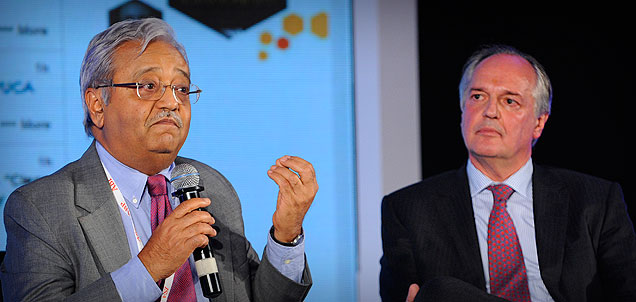
    It’s a VUCA, VUCA world. Indeed. Even as former Procter & Gamble chairman and managing director Bharat Patel may have made light of the acronym with the lyrics of a famed Shakira song, almost all of the 350-odd delegates at the inaugural Indian Society of Advertisers (ISA) Global CEO conference held on Wednesday were in agreement that the prevailing times were indeed VUCA – Volatile, Uncertain, Complex and Ambiguous.


    Unilever’s Global CEO Paul Polman was chief guest at the day-long event which had “Navigating through a VUCA World” as its theme. Mr Polman urged business leaders and marketers present to shift their focus to undeniable international struggles through corporate responsibility. Acknowledging the power of the internet, he stated how the concentration of wealth from few was now passing on as power to many as consumer connectivity has increased and being discovered by the youth.


    R Gopalakrishnan, Executive Director, Tata Sons led the conversation with his illustrative presentation titled “India’s VUCA Moment”. Manu Anand, President, India and South Asia, Mondelez International Managing Director, Cadbury India and Ravi Kant, Vice Chairman, Tata Motors spoke in the pre-lunch session. Later, Marten Pieters, Managing Director and CEO, Vodafone India addressed the gathering, followed by a panel discussion moderated by Sunil Kataria, COO, Sales, Marketing and SAARC, Godrej Consumer Products Limited with stakeholders Sanjay Behl, CEO, Raymond representing advertisers, Kirthiga Reddy, Director, Online Operations and Head, Facebook India from the new media and Ashok Venkatramani, CEO, MCCS from the traditional media side. Before the Polman session, Pawan Munjal, MD & CEO, Hero Motocorp shared his approach and attitude to business in his talk, “Taking Risks in a Volatile World”.


    Meanwhile, Hemant Bakshi, ISA Chairman and Executive Director, Home & Personal Care, HUL, expressed satisfaction with the Global CEO Conference. “We hope to make it an annual affair, and see greater participation in the years to come,” he said. Paulomi Dhawan, Chairperson, Events Committee and Treasurer of the ISA attributed the success to the emphasis on content and the speakers.


    For the record, the ISA was established in 1939 which aims at safeguarding and promoting the interests of organizations involved in Indian advertising, marketing and media industry. Today, the association consists of 160 members of small and large advertisers in the country.


    First half sessions:

    With the population growing steadily, which translates into new consumers and newer markets, while resources are limited, and even though India’s growth rate is slow, it is comparatively better than that of Europe or USA. In an increasingly globalised and boundary-free market, digitization is unleashing forces that are significantly changing the game. In such a setting, a changing market is the new normal and presents huge opportunities for businesses.


    So, is the Indian market and are Indian companies new to a VUCA environment? How real is the Indian downturn or recession with simultaneous stories of companies growing? What adaptive measures need to be taken by businesses in their leadership and business models in the current times? Instead of deploying defensive strategies, how can companies gain a competitive advantage in such a scenario? Hemant Bakshi Executive Director, Home & Personal Care, HUL and Annurag Batra, media entrepreneur and Editor-in-Chief, Exchange4media group threw light on the chosen theme and set the context for the sessions for the day.


    R Gopalakrishnan, Executive Director, Tata Sons argued that VUCA has always been a reality for India and that technological response has kept pace with a constant delta, while it is human adaptiveness that takes time to change. He urged audiences to focus on the implications hereof by developing three insights and observations with the help of examples. “We’ve always been a VUCA country and now our moment has come. That is why Indians are successful entrepreneurs.” In terms of practical implications, he listed out, “We’ve forgotten to look back at nature. We have been programmed to achieve efficiency whereas nature works at effectiveness. We also need to rediscover intuition to make important decisions as a faculty that would be foolish to ignore its role in a VUCA world, as rationality can bring you this far. We need to invest in market and consumer research and face competition with élan.”


    Manu Anand, President, India and South Asia, Mondelez International Managing Director, Cadbury India took the floor next for his talk on “Reigniting Growth in an Economic Slowdown”.  Mr Anand led his speech with the backdrop of how in an economic downturn demand for products decreases, inflation and commodity costs are high which leaves companies two routes – Either buckle down and cut costs or look at this market as an opportunity and ride the wave. Acknowledging that there is no right way and a combination of both can be done, he discussed Mondelez’s growth story during the 2008-2010 slowdown to highlight what techniques worked effectively for the company.


    Finding a balance between where to selectively reduce costs and where to invest for the future; increase brand investments with a focus on master branding and the lead brand propositioning; create innovation pillars by launching new categories through different brand portfolios and focusing on your people, customers and stakeholders – these are some insights listed out by Mr Anand. “There needs to be a greater reliance on intuitive based decision making in a price expectation sensitive market such as India, VUCA times present high opportunities. It would be a mistake to make no change in management models or on the other extreme, to make aggressive investments.” To sum up, during a downturn, management leaders were asked to switch off their auto-pilot business model, keep a check on cash flow, focus on strengthening core business portfolio, increase revenue speeds, and most importantly, exploit and not waste a downturn to emerge stronger and leaner.


    “Leading Business in the New Reality” by Ravi Kant, Vice Chairman, Tata Motors addressed the topic by peering into the past and see how companies have navigated through it. Citing Tata Motors’ example, he stated that the company has moved its business model from hierarchial to cross-functional; from vertically integrated o outsourced; from centralized to poly-centric, from a purely Indian market to one that gets up to three-fourths  of its business from outside the country. “Any change happening in the transitional or contextual environment will have an impact on your business. The new reality is that of high uncertainty with natural disasters no longer being rare events; complexity due to globalization presenting diverse demographics or climate changes; and rapid changes in industries within a span of the last 10 years.”


    As solutions, Mr Kant offered the following advice, “Companies that are quick to self-check, able to experiment and collaborative are the ones that grow profitably in such times. Predictive analysis helps in giving short-term insights and with the help of technology and available data, the power of analytics and anticipation gives time to face situations better. Innovation is key to keep you going, to gain market share or within internal processes. Finally, collaborate because in today’s times, no company can do anything without networking, integrating or information-sharing.”


    Second-half sessions

    Shedding light on the cut-throat industry of telecomm operators, Marten Pieters, Managing Director and CEO, Vodafone India took on a positive approach in his presentation titled, “Not every Consumer has Sealed her Wallet: Finding New Pockets of Growth”. Sharing simple rules that helped Vodafone prosper in the economic slowdown, he pointed out, “As business professionals, we have no other choice but to embrace the change. As a marketer or advertiser, make VUCA a friend, instead of a foe.”


    In the Vodafone context, he shared marketing mantras that worked. His key pointers were – 1. Understanding your customer better – our future customer is already with us. 2. Behaviour change happens more slowly than expected. 3. Business grows by leveraging opportunity not only by solving problems. 4. Acquisition is a must and not optional for brands. 5. Light or infrequent buyers matter. 6. Intensify investments during lean period. “Satisfy consumer needs – customers bend if there is something worth to be picked up. Marketeers tend to get impatient while consumers take time to accept and embrace change. Businesses need to be light on their feet to mine opportunities. During a downturn, brand building can be done while media costs are low. While suggestions for VUCA times may be different for different industries, consumer behavior broadly does not change across categories regardless.”


    A panel discussion on the sensitive issue of “Cut Costs, Not Corners: Smart Marketing for Turbulent Times” moderated By Sunil Kataria, COO, Sales, Marketing and SAARC, Godrej Consumer Products Limited. On the panel were reprentatives of three sides – Sanjay Behl, CEO, Raymond, as the advertiser; Kirthiga Reddy, Director, Online Operations and Head, Facebook India as the new media and Ashok Venkatramni, CEO, MCCS from the traditional media side. The panel gave their views on what is withholding open-hearted collaborations between the media and marketing fraternities and why has this scenario developed. Some interesting suggestions for a VUCA world that emerged from the conversation was of the need for more responsible marketing due to marketing spends being one of the few operational costs that is based on speculation and a plethora of choices. ‘Personalization of messages ‘was pegged as one of the biggest themes leveraged by marketers. CSR moving to BSR, that is, Brand Corporate responsibility was yet another interesting insight by the panelists.


    Sharing the brand’s success story, Pawan Munjal, MD & CEO, Hero Motocorp shared his approach and attitude to business in his talk, “Taking Risks in a Volatile World”. As a pioneer brand in the category that has reached international markets, Mr Munjal shared Hero’s VUCA times. “VUCA is equal to Opportunity. We at Hero, believe in disruption. A clear and steadfast vision will be the anchor that will bring order to chaos and help you make the right decisions in the interest of your stakeholders and consumers with resolve and confidence. It is important to have a mindset of anticipation and embracing change within the organization. Ensuring flexibility is key to diversifying risks. Lastly, courage and unflinching belief will help you through any uncertain times.”


    The Polman Session

    Paul Polman, Global CEO, Unilever shared his eye-opening and inspiring viewpoints on “How Responsible Business Models Can Help in VUCA Times”. Looking beyond short-term ROIs or pricing strategies, Mr Polman took on a human stance at viewing the current global scenario. Citing global realities of lack of food or sanitation for a large part of the planet’s population, or the European slowdown or the political upheaval in Syria – Mr Polman urged business leaders and marketers to shift their focus to undeniable international struggles through corporate responsibility not just as an obligation but as a business idea.


    Acknowledging the power of the internet, he stated how the concentration of wealth from few was now passing on as power to many as consumer connectivity has increased and being discovered by the youth. “If you can get an ingrained political regime out of government in 17 days, you can out a company within nanoseconds. If a political system doesn’t work, trust in businesses also goes down. This is an end of the era of abundance. Transparency can be built only on trust, which will lead to prosperity. This is a unique moment for mankind. As businesses, we have to become solution providers and not just by-standers in the system that helps us grow. It’s time marketers run ahead instead of behind and look at mainstream corporate responsibility. The biggest tool you have as a marketer, is to build your brand to build trust. Give brands a social mission and purpose as a changed business model or become isolated.”


  • ISA to host Global CEO conf with Unilever big boss Paul Polman

    By A Conference


    There are conferences and conferences, but this one could well be the mother of them all. The Indian Society of Advertisers, the apex body of advertisers, is hosting the first ever global CEO conference on ‘Navigating a VUCA World’ on October 30, 2013 at The Leela in Mumbai. The goal of the conference, as per a communiqué, is to sharply dissect the tough times we are facing in the current economic situation, and to find out how organizational processes and practices need to be recast to deliver to this new VUCA (Volatile, Uncertain, Complex and Ambiguous) world.


    Paul Polman

    Paul Polman, Chief Executive Officer of Unilever, will be the keynote speaker at this conference. Other key speakers at the event will include R Gopalakrishnan, Director, Tata Sons; Manu Anand, President – India & South Asia, Cadbury India; Marten Pieters, CEO, Vodafone India; and Ravi Kant, Vice Chairman and Former Managing Director, Tata Motors.


    Said Hemant Bakshi, Chairman, ISA, and Executive Director, Home & Personal Care, Hindustan Unilever, on the intent of the conference: “We truly live in the VUCA world, where things have become more volatile and uncertain. That’s one issue ISA needs to deal with and help companies understand the principles they need to follow in a changing uncertain world.”


    The ISA is organizing the conference in in partnership with exchange4media.


  • Guest Column by Chintamani Rao: No safety in numbers with Crowdsourcing

    By Chintamani Rao


    ‘Unilever to boost reliance on crowdsourcing with eYeka’ – News item


    “[Lowe] have created a very strong creative vehicle that’s extremely well defined and portable. But their work has created a problem for them, because it makes Peperami the obvious candidate for crowdsourcing.” That’s how a Unilever London spokesperson explained it when, two years ago, the company fired the advertising agency on Peperami, in favour of crowdsourcing.


    Some compliment! Can you see the agency head calling in the Peperami team? “Folks, I’ve just returned from lunch with John Client. Peperami is tracking superbly on every parameter. You’ve created one of those rare great brand properties that will stay with the brand for many, many years. Unilever have paid you the ultimate compliment: we’re fired. From now the public will make the ads.


    “Jean, pop the bubbly. I’m proud of you guys. You are our A Team, and here’s an A Team challenge for you. I am assigning you to our biggest Unilever brand: get fired on it within the year. A special Christmas bonus if you make it. Cheers, and more power to your elbow.”


    If the idea itself is strange, the outcome is bizarre. Unilever received 1,185 entries and selected not one but two submissions (Both of which came from laid-off advertising professionals: a copywriter from London and a former creative director from Germany. So much for the crowd.), and announced that they would combine the two ideas to make the new campaign. “We’re certain the two ideas will be a successful campaign,” said the Peperami marketing manager. That, from the company which taught us that every advertisement must be based on a “Single Selling Idea” – the first of the ten Unilever Principles of Great Advertising.


    Whether Unilever’s winning Advertiser of the Year at Cannes that year was because of Peperami or despite it we don’t know.


    Meanwhile, Kraft Foods in Australia crowdsourced the name for the new cheese variant of its iconic bread spread Vegemite, and chose – hold your breath – iSnack 2.0.


    “The name Vegemite iSnack 2.0 was chosen based on its personal call to action, relevance to snacking (I snack, get it?), and clear identification of a new and different Vegemite (2.0, wow!) to the original,” said a Kraft spokesperson. “We believe these three components completely encapsulate the new brand.” Consumers didn’t, apparently. Following a furore, Kraft rather tamely put out a list for people to choose from, and equally tamely changed the name to a blase Vegemite Cheesybite.


    Around the same time Frito-Lay in India sought ideas for new flavours of chips. To the credit of Frito-Lay it must be said that they weren’t chintzy – on the contrary, they generously spent more than they might have had they done conventional market research instead. For four shortlisted flavours they awarded a prize of Rs 5 lakh each – a total of Rs 20 lakh or over US$ 40,000, way more than Unilever London paid to get a new idea for Peperami. The prize for the ultimate winner was Rs 50 lakh (over US$ 100,000) and 1 percent of sales revenue.


    Frito-Lay were truly generous, but in any event, what they did was essentially to solicit consumer opinion on a new product, which might otherwise have been done by conventional market research. But meanwhile other marketers like GE, General Mills, Pepsi, Dell and Starbucks have been seeking everything from product and service ideas to, reportedly, inputs on agency selection and media placement.


    Crowdsourcing shops have come up which will brief the crowd and filter the solutions, as Idea Bounty did for Peperami. That’s awfully interesting. Suppose one day Lowe had told Unilever London, “You’ll be delighted to know we’ve increased the creative strength on your business. We’ve fired your entire creative team. Now, instead of being limited to a handful of people under our roof, we’ll put our briefs on your brands out on the Internet and get ideas from hundreds, if not thousands.” Might they have saved the Peperami account? I don’t know about you, but I can’t see a delighted client congratulating the agency on its farsighted initiative.


    Now Unilever has taken a big step in the direction of crowdsourcing, saying, “A key role for us as marketers is to create magic and to excite people with innovative ideas.” I always thought a key role for marketers and related professionals was to actually develop the ideas that create the magic, but perhaps I’m wrong.


    Proponents of crowdsourcing cite the ‘wisdom of crowds’, propounded by Surowiecki in his book of the same name. “I don’t think people realize how powerful the crowd can be when engaged on working on a good idea,” says one. Perhaps, but this is not the crowd working on a good idea; it is a multitude of individuals independently developing ideas. They’re not building on each other’s thoughts; there’s no cross-fertilization of thinking.


    Diversity, independence and decentralization are three of the four “elements required to form a wise crowd” that Surowiecki lists: “Diversity and independence are important because the best collective decisions are the product of disagreement and contest, not consensus or compromise.” But 1,185 responses to a brief from perhaps as many people working independently of each other do not constitute collective thinking, and are not the product of disagreement and contest.


    Surowiecki’s fourth element is aggregation: in this context, the marketing management of the company deciding – singly, collectively or sequentially – among the shortlisted submissions. So it is finally down to the quality of decision-making. If you decide on iSnack 2.0, it doesn’t matter whether the submissions come from the crowd through a crowdsourcing agency, or from known people through an advertising agency.


    That the advertising agency has designated, informed people and institutional memory is only one of its advantages over a crowd. The other is that if you make bad decisions you can always blame the agency and fire it. You can’t fire a crowd.


    The writer is a Strategic Marketing and Media Consultant


  • Business with a mission for Unilever’s Keith Weed

    By Ravi Balakrishnan


    Keith Weed

    Chances are that even the better travelled among us haven’t put in a stop at Gunga, a village in the Berasia taluka, near Bhopal, Madhya Pradesh. It however figured in the itinerary of Keith Weed, chief marketing officer at Unilever on a recent trip to India. It’s a visit that has left Weed with a new appreciation for the resilience of the Indian consumers and the primacy of mobile phones in their lives.


    He says, “In the village I visited, there were incredibly low income consumers – eight people living on less than a dollar a day. But they had a mobile. As we went to the backroom to look at the stove, they used the mobile as a torch to show me the way. We have always been talking about how TV is mass coverage. But as you know, in rural India there are media dark areas that are not mobile dark.”


    Unilever’s new marketing strategy
     

    Brands For Life is being rolled out across the world. The pilot happened in India before Christmas last year and its subsequently travelled to Brazil and South Africa.


    The strategy stands on three pillars:

    1. Put People First: Looking at people through the lens of their lives, needs and challenges and not just as Weed puts it “a sort of head for a bottle of shampoo.”


    2. Building Brand Love: Making sure Unilever brands are not just about a product but an idea that people can buy into.


    3. Unlock The Magic: Getting the balance right between magic and logic, the art and science of marketing.


    However, a mobile phone doubling up as a torch is more footnote than main event in Weed’s visit. Among the principal reasons is a status check on one of his pet projects, launched with considerable fanfare at the Cannes Lions Festival in 2012. In a meeting a few hours before the launch at Cannes, Weed spoke excitedly of his intention to toss back a glass of water from Mumbai’s Powai lake on stage. The water would of course have been treated by one of Unilever’s Pureit purifiers. While those plans got scuppered, Waterworks, a collaboration between Unilever, non profit organisation PSI and Facebook, generated a fair amount of excitement on launch. It was seen as one of the first attempts by a large multinational to harness the power of social networking for societal good.


    Waterworks is a Facebook timeline application that allows users to make a daily contribution towards communities in dire need of potable water. Their donations will enable PSI’s onground staff, the Waterworkers to educate the most deprived people in rural India about the importance of clean water and distribute Unilever’s Pureit units. The payoff for the people who choose to help? The satisfaction of doing good. And perhaps an equally important motivation in an increasingly narcissistic and self obsessed age – photos of the families they helped will be posted to their Facebook profiles.


    Eight months down the line, Waterworks does not boast the impressive million plus numbers of other ‘brand’ pages on Facebook, with a modest 9,285 likes so far. Asked if this is as per his expectation, Mr Weed explains, “It’s still in beta testing. There are two ends we are working on. The Facebook engagement and making sure we deliver water into the hands of people who need it the most, in a cost effective way.”


    He admits there are lessons to be learned before the project scales up and that even its promotion on Facebook has been kept deliberately low key. With the initial target of 15,000 met, the tweaks are specifically in the area of getting the units to the most needy. A contemplative Mr Weed says, “It was incredibly moving. You see people in rural India, struggling with some of the basic things. It makes me more determined to sort out a scalable model.” However, his visit also fills him with confidence. Of the 600 houses, 220 have Pureit units.


    Mr Weed says, “Watching the Waterworker take a photo of the person who received the unit and uploading it on Facebook and to have that appear on the page of someone in Europe or the US: this is the future of the world. The use of mobile is going to transform our lives and marketing.” The Waterworks project ties in with one of Weed’s obsessions. Unilever has been working to a stated objective of doubling its business while halving its environmental footprint and increasing its social impact. The first of these Weed admits is a fairly basic ambition, one that’s probably shared by any good company. The second has a profound impact on marketing. Mr Weed says, “We could have put together a plan with targets we knew how to achieve. But I don’t think that would transform the business to the degree we are aspiring to.”


    An early success has been sourcing 100% of palm oil sustainably. Significant considering Unilever purchases 3% of the world’s total palm oil. It was a target that the company arrived at eight years ahead of schedule; now the goal has shifted to 100% traceable sustainable palm oil by 2020. Similarly 60% of the tomatoes used by Kissan in India and all the tea bags in Europe are now sourced sustainably. Unilever hopes this will be the case with all tea bags by 2015 and loose tea by 2020. Weed considers these the low hanging fruit and acknowledges there’s lot more to do.


    Given that these goals are likely to outlast the current management team, he is making sure it’s not tied down to “one manager in a seat at one time.” He says, “We have engaged across the breadth of our employee base. It’s virtually unstoppable and has ignited the imagination of our people.” In the first year, the plan was unveiled to 97,000 employees globally. And it’s part of the reason why Unilever is a draw for future recruits. Weed says enthusiastically, “For the generation that’s coming through, our declaration resonates in a different way than it does to anyone in this room. Let’s face it: my generation have stolen from the future of our children financially and environmentally. We now want to build a model where sustainability is not something that happens by chance but is built into the design.”


    Of course a couple of things help Weed meet his objectives. The first being the massive scale of Unilever’s operations and the budgets that power the machine. Even in these recessionary times, its advertising and promotions budget have seen an upswing. Last year it spent 6.5 billion up from 6.1 billion for 2011. The other is that the number of Unilever’s consumers who care about the environment – the company claims to serve 2 billion people a day – is on the rise.


    Individuals often feel overwhelmed and insignificant, considering the sheer scale of problems facing the world. But small actions from many people can make a change. Weed says, “One person drinking sustainably sourced tea makes no difference. But if you talk about a marketer who buys 15% of the world’s tea, we can have a profound impact on the planet. It certainly gets me out of bed in the morning.”


    A less exalted but no less important part of Mr Weed’s job is to ensure the sales and marketing machinery at Unilever hums along smoothly. A commercial for Axe created last year ran unchanged in 100 different markets, the sort of phenomenon that global marketing heads dream of, saving the costs of originating fresh ad content. However, according to Mr Weed, deliberately engineering commercials like that is not a priority: “When it happens, it is fantastic and a very efficient benefit. But a bigger priority is large global brands. 14 of our global brands are already over a billion euros. I will be even happier when we have more!”


    Interestingly enough, one of the pieces of communication he is happiest about is a new campaign for Axe that’s rolling out across the globe – India soon to be included. Built around Axe’s Apollo variant, is a TV commercial and more interesting a contest to put 22 people from across different countries in space. They will be chosen by a reality TV-esque competition that will play out online. “Leave a man, come back a hero,” Mr Weed says, “It’s got tremendous buzz around the world. We actually used Buzz himself to engage people,” referring to Edwin “Buzz” Aldrin, the second man on the moon. The big question is will they take the Geo-Cruiser? You know, the solar-powered flying machine used by the Captain’s Planeteers.


    Source:The Economic Times

    Copyright © 2013, Bennett, Coleman & Co. Ltd. All Rights Reserved


  • Wow! Ogilvy Mumbai is Most Effective Agency Office globally as per Effie Index


    By A Correspondent


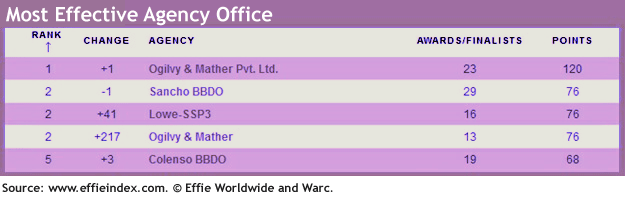
    It’s decidedly one of India’s creative agencies and has also been very widely hailed as doing some exceedingly effective work for its clients. It wasn’t much of a surprise hence that when the global results of the Effie Effectiveness Index were released by Effie Worldwide and Warc yesterday, Ogilvy Mumbai was declared the Most Effective Agency Office globally in 2012


    The index, launched in 2011, recognizes the architects of the most effective marketing communications ideas from around the world.


    Talking about the recognition, Hephzibah Pathak, President, Ogilvy & Mather Mumbai, said: “This is brilliant news. A wonderful reward for the champions in Mumbai office and our great client partners and another testimony to the twin peaks of creativity and effectiveness.” Ogilvy & Mather Mumbai is the only Indian agency office to rank in the top 5 agencies globally.


    Said Kawal Shoor, Head of Planning – Ogilvy Mumbai: “This recognition makes us even more proud of the stuff we do. We’ve always believed that to be truly effective you need to have an outstandingly creative and insightful piece of communication. This is a vindication of the relentlessness of our people, the confidence of our clients, and the sheer width and variety of the office’s skillsets.”


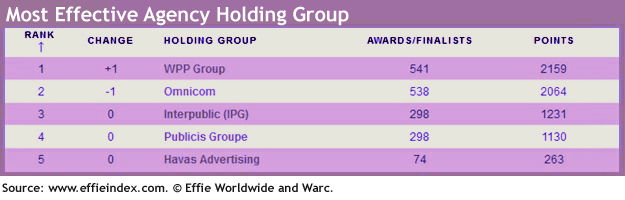
    For the second year in a row, the WPP Group is the Most Effective Advertising holding company while Ogilvy & Mather is the Most Effective Advertising Agency Network.


    Ogilvy Mumbai was also declared the Most Effective Individual Agency office in Asia Pacific in the 2011 Effie Effectiveness Index and ranked number 2 worldwide.


    Meanwhile, Unilever is the most effective advertiser and McDonald’s is the most effective brand, for the second year in a row. McKinney (USA) is the most effective independently held advertising agency.


    O&M Mumbai leads in the global individual office ranking. Sancho BBDO from Bogota, Colombia, which led last year, slipped to number 2 followed by Lowe-SSP3 (also from Bogota) and Ogilvy & Mather (New York). The top 20 also includes agencies from countries as diverse as China, Hong Kong, Australia, Argentina, New Zealand, Egypt, Peru, Ukraine and Israel.


    WPP leads as the most effective holding company to be followed by Omnicom, IPG, Publicis Groupe and Havas Advertising.


    While Unilever is the most effective advertiser, Procter & Gamble has lost its top position since last year and slipped to number 2. Nestle is at number 3 followed by McDonald’s at number 4 and Pepsico at number 5 in the list of top 5 most effective advertisers.


    As for the brand, McDonald’s retains its numero uno position. Surprisingly, a technology company, IBM is the second most effective brand. Coca-Cola is at number 3 followed by Axe at number 4 and Pepsi at number 5.


    The Index was launched in June last year and is led by Effie Worldwide.  It is said that the Effie Effectiveness Index will become the industry standard. The Effie Effectiveness Index identifies and ranks the marketing communications industry’s most effective agencies, advertisers, and brands by analyzing finalist and winner data from Effie Worldwide competitions. It is the world’s most comprehensive ranking of agency and advertiser performance and a valuable resource for anyone interested in marketing effectiveness.


    The 2012 Effie Effectiveness Index is derived from almost 2,000 finalists and winning entries to Effie Award competitions worldwide between June 13, 2011 and June 12, 2012.


    The Index is constructed by converting every Effie award and finalist into points – 12 for a Grand Effie, eight for Gold, six for Silver, four for Bronze and two for a finalist (with contributing agencies receiving half these points). In a change from the inaugural year, if several agencies from the same agency network or holding group worked on a campaign, the network and holding group only receives one set of points for each winning effort.


  • Can Facebook, the marketer’s online best friend ever become its ace salesman?

    By Delshad Irani & Ravi Balakrishnan


    In 2009, Facebook terminated the ‘Whopper Sacrifice’, Burger King’s social experiment cum marketing activation. Created by Crispin Porter Bogusky, the campaign’s premise was the more ties you sever the closer you get to your BK Whopper. The application as it turned out was a whopping success.


    Within a week 200,000 ‘friends’ were virtually burned out of existence from various lists. Facebook couldn’t handle the loss of those hard-earned friendships. Burger King, on the other hand, proved the point it set out to make – Americans sure do love their burgers. That same year, Swedish furniture giant Ikea spent practically nothing to create a campaign to promote its newest store.


    The agency Forsman & Bodenfors created a new Facebook account for the manager at the store in the city of Malmo and posted catalogue pictures of furnished rooms.


    Users could win furniture and other items in the photos if they beat their friends to the punch. All they needed to do was tag the pieces with their names first. Needless to say the prospect of first-to-tag-wins drove Facebookians crazy. The campaign was hassle-free, cheap and effective, just like the Scandinavian furniture it was advertising.


    Fast-forward to a few weeks ago. General Motors, the world’s fourth-largest advertiser and spender of $3.9 billion globally on advertising in 2010, haunted by questions related to effectiveness and ROI, pulled out its pretty penny, all $10 million of it, from Facebook’s paid-ad kitty just days before the social network’s stock went public.


    In addition to that sum, the automaker spends a reported $30 million on content creation for social media. These examples make Baccarat-crystal clear what we know already – you don’t have to pay big to make an impact via social media.


    In India, most marketers love talking about the worth of a campaign by the number of fans, or likes received on the most recent post. But even they are starting to ask a tricky question: what’s the real worth of their campaigns on Facebook? Worth more than a burger, eh?


    The site itself has been trying to tell advertisers that no longer will mere presence and innovative social media campaigns cut it. If they want scale, they’ll have to shell out the hard cash for offerings like “sponsored stories”, not to be confused with “sponsored ads”.


    For instance, products like Reach Generator guarantee that posts by a brand stand to be seen by 75 per cent of its fans every month or an estimated 50 per cent every week. Non users of the tool will have to settle for an average of only 16 per cent of fans viewing posts on a weekly basis. Not everyone’s buying though, believing that compelling content will win any day of the week.


    Anuradha Aggarwal, senior VP, brand communication and insights, Vodafone India said: “Since having high engagement scores is our goal, we focus on creating content on our Facebook page rather than on advertising. We focus on creating posts and apps to enable our 3.2 million fans to create conversations and experiences around the brand.”


    PepsiCo’s approach is to use a combination of both, posts/promotions on brand pages and display advertising. One of the cola maker’s prominent campaigns on the site was ‘Meet Messi in Miami’ where fans had to complete a series of tasks to win a chance to meet The Atomic Flea.


    During the 2011 ICC Cricket World Cup, Pepsi launched an online progamme as part of the ‘Change the Game’ campaign where fans could win a dream trip across the country for all India matches. The latter initiative was listed as one of the 19 best campaigns in the world by Facebook on their success stories blog, the only Indian effort to feature on the page.


    According to Homi Battiwalla, category director – colas, hydration and mango based beverages, PepsiCo India, it is too early to give a conclusive opinion on new advertising properties like sponsored stories and other offers. So the bottom line when it comes to the marketing on the social network is the game hasn’t quite changed. “The primary focus remains on organic content as we believe it results in better consumer connect,” said Mr Battiwalla.


    For automakers like Mahindra & Mahindra, Facebook is good for what it was born to do in the first place. Well, that and to spy on “old acquaintances”. According to Vivek Nayer, senior VP, marketing, automotive division, Mahindra & Mahindra: “Rather than looking at Facebook for advertising reach, we’ve leveraged it for what the platform is inherently good at; building communities. Today at 5 million, we are the largest automotive community on Facebook in India”


    In the case of Unilever, the company moved from almost accidentally stumbling on the power of the site – after noting a lot of action on its first Cornetto Luv Reels page long after the promotion was over – to it being a key pillar to the launch of Fruttare, its new range for the summer. Sapan Sharma, general manager – ice creams, Hindustan Unilever, said: “There’s an advertiser login where you get all the details. In the first 10 days of launch, 1.2 lakh fans signed up and there were 1.2 to 1.5 lakh conversations.”


    Arch-rival P&G is not lagging either. According to a company spokesperson: “In just less than two months, we have over 690,000 fans for our Thank You, Mom campaign. This makes it the largest, most engaged-with Thank You, Mom community globally.” For the launch of Olay’s premium skin care range, Olay Regenerist, a Facebook waiting list was created, with both fashion journalists and consumers signing up for an exclusive trial on the site; in less than three weeks, over 11,400 people had registered.


    But as the eight-year-old Facebook enters a new league as a listed company, it needs to, and rather urgently, scale its revenues to sync with its audience. Minute, often ineffective, right-rail ads aren’t exactly a juicy bone to dangle in front of existing and potential advertisers; thus the introduction of premium ads and better placement.


    According to Siddhart Rao, CEO of digital agency Webchutney, the sweet spot between organic and paid promotion is the one that will yield maximum benefit to brands looking to extract value from social media marketing platforms like Facebook. “One cannot work without the other,” he said.


    S Yesudas, managing director – Indian subcontinent, Vizeum, said: “I do not think all marketers know what to expect from the medium. The hurry to be on to the bandwagon gets them there. The fact that Facebook offers free advertising inventory for brands to test the medium gets overlooked. In my opinion, the medium can be successfully used to build relationships with the consumers.


    Targeting can be done based on profile information, relationship status, interest or based on certain words in profiles or status messages. But the truth is the brand communication will always compete with the updates, videos, etc from friends.”


    Indeed, it’s complicated; the relationship between advertisers and Facebook. Especially when one moves from the fluffy world of engagement to hard sales. Many retailers in the West like JC Penney, Gamestop and Gap pulled the shutters on their stores on Facebook this February.


    Chhaya Balachandran Aiyer – founder – MD, BC Web Wise said: “Ironically Wade

    Gerten, the founder of 8thBridge – the flower store that was responsible for the coinage of the term F-commerce as it was the first to open shop on Facebook for 1,800 Flowers – has admitted that sales never really materialised for their first or other F-outlets, adding that F-commerce deserved an F. Given the fact that F-commerce (Facebook commerce) has failed in the west for retailers, it appears that Facebook would be an engagement vehicle. Peer recommendation and product ratings are not integrated. Should it launch a brand intelligence tool which can be used by consumers – which exposes peer comments and recommendations that can be accessed by the FB community – then the ball game will change.”


    Venkat Mallik – president, Tribal DDB & Rapp India says Facebook’s ability to deliver sales impact has been a bit of a mixed bag: “There need to be more strong case studies demonstrating the sales or brand impact from the use of Facebook led engagement.”


    However while Facebook may not itself be a platform to sell it can impact sales according to some of its satisfied customers. Unilever’s Mr Sharma for instance believes there’s a definite co-relation between high levels of engagement and products sold.


    According to Carlton D’Silva, chief creative officer, Hungama Digital Media, “Opinions of family and friends matter when making purchase decisions decisions and Facebook activity will provide a lot of data to consumers, which can be leveraged in places where they make these decisions, causing a significant, if not direct impact on purchase behaviour.”


    “GM is slashing its advertising budgets by $ 2 billion, of this only $10 million or 0.5 per cent was on Facebook. They have also announced they won’t advertise on Super Bowl, either. Further, what should be noted is that GM has 8 million fans already. I am sure that they are going to continue with the engagement plans for acquired fans. It would be foolish to assume anything beyond, or assume Facebook has failed for GM, it would be just that advertising further is currently not the best bet in its media plan,” said Ms Aiyer


    The users of Facebook both on the agency and the marketer side each have their wishlist ready.


    “The analytics are available at a lag of 7 to 15 days; I’m sure it can come earlier. I’m sure there will be a time when we can talk to people from a specific city or market,” said Mr Sharma


    “They are hugely data rich. If in some way they get to using some of the data millions of people put in their hands on a minute to minute basis, sky will be the limit for them.This will surely come in with resistance from the users, unless they persuade them. They have to walk this path very carefully,” added Mr Yesudas.


    Most brands have a clear agenda from marketing spends on social media platforms like Facebook – greater outreach among target audiences through personalised interaction and engagement, leading to higher impact on conversions and sales.


    “It’s a perfectly reasonable expectation from a social communication platform with 900 million members,” said Mr Rao of Webchutney, “but whether brands invest enough thought, time, resources and action to engage audiences meaningfully is another question.” And one helluva question it is. Because for every whopper of a Scandinavian success story, there are at least a dozen marketing campaigns that have fallen flat on their face. So, ask not what you can do on Facebook but what Facebook can do for you.


    Source: The Economic Times
    Copyright © 2012, Bennett, Coleman & Co. Ltd. All Rights Reserved