Tag: Unilever

  • From D2C to Omnichannel


    With apologies to none at all


    By Vikas Mehta


    Vikas MehtaLast week, Unilever sold off its D2C brand Dollar Shave Club to a private equity firm. This was quite a shocker, something that made me think away from the Cricket World Cup. There had been lot of media hype when Unilever bought the brand six-seven years ago for reportedly a billion dollars. It was a vindication of sort that direct-to-consumer (D2C) brands had arrived and maybe traditional brands were under threat. A lot was being made about the Millennials and Gen Z preferring new D2C brands. And the pandemic gave the D2C brands a bigger boost. Enough entrepreneurs started using social media platforms to peddle their wares directly to the consumers. From clothes to chocolates to baked food to homemade beauty products to accessories to collectibles, D2C was the buzzword.


    And this was not limited to first time entrepreneurs working from home. In fact as a business model, it had started catching on since early last decade. Most of these like Nykaa, Mamaearth, Zivame, Bombay Shaving Company, Chumbak or even Pepper Fry, Lenskart, BoAt, Licious had used the online boom smartly. And some of them have even had successful IPOs. India is estimated to have more than 600 D2C brands with a market size of about $ 65-70bn in 2023. Not numbers to sneeze at. And, this was of course fueled by the fact that around 600 million Indians have access to internet with 185 million online shoppers.


    On the face of it, D2C is a win-win for all. For the entrepreneur who need not get entangled with a distribution system or has to spend big monies on getting his consumers to the store. For the consumer it was hassle-free shopping from home and getting delivery at the doorstep.


    Customisation, no geographic boundaries, choice and the spread of social media lead to a surge in this business model. And then there were ecommerce portals like Amazon, Flipkart and Meesho which were ready to embrace the D2C model. Indeed, Meesho differentiated itself by not only claiming to be doing social marketing but also keeping regular traditional brands at arms length and promoting D2C brands with their no fees model.


    However, the very factors that initially spawned success for D2C have come back to haunt the model and caused a deceleration in its growth. Let’s look at some such factors.


    Value proposition

    D2C brands went into a value proposition overdrive (Read discounts and offers). BoAt was giving same for less. Same features of premium brands like Sony or Sennheiser but at discounted prices. Mamaearth, Nykaa, Bombay Shaving Company were all following this model. Lenskart was about more for same. Buy one and get one free. And then with the help of ecommerce companies these brands made discounts or freebies a habit. So, when there was no discount, the allure of buying D2C lessened. As a result, the pricing structure and strategy of most D2C brands was based on discounting. They had to therefore keep a close watch at their costs and any increase in costs hurt their margins.


    No distribution setup

    This was a big plus for the D2C players. They were not at the mercy of the distributors, wholesalers or retailers and could theoretically serve any customer anywhere on earth. So, when a brand In Bengaluru wanted to send stuff to someone in the metros or mini metros all it had to do was negotiate with logistic companies and ensure speedy and timely deliveries. But as an analyst put it, it was easy to do this in the initial phase and achieve a turnover of maybe Rs 100 crore. But after that one needed to penetrate into smaller towns. And the cost of sending courier to more than 100 towns in India, without any delay meant that each sale was burdened with a distribution cost which was unlike traditional distribution where the wholesaler or distributor send stuff in big bulk quantities thus ensuring low distribution cost per item. The dilemma was clear. Grow and increase your cost per order or hit a growth ceiling. This again was eating into the margins. Just online sales was not good enough.

    Not surprisingly, most of the D2C brands are now into offline selling too. Nykaa, Mamaearth, Lenskart have all either opened their own stores or are trying to be available in regular offline stores. I am told that the Mamaearth IPO prospectus claimed that their offline sales is now 37% of their total turnover in FY ending March 2023. Anyways, D2C was a misnomer as a huge part of their sales, analysts say upto 75-80%, came form ecommerce platforms. Indeed in 2021-22 more than 80% of BoAt sales was through ecommerce platforms Amazon & Flipkart. Which meant that they had not only distribution cost of paying commission to ecommerce platforms but also the logistic cost of each piece shipped, which given the category, was not something to ignore.

    And as I write this, comes the news that Big Basket, the quintessential D2C brand. Quoting from the Times of India “currently its offline business is on a pilot mode with some 25 stores across Hyderabad, Bengaluru and Kolkata. The idea is to experiment with different store formats with different price points and find the right store strategy before launching a broader rollout in the coming quarters.”


    Returns

    A big allure of D2C brands has been the return policy. If the consumer is not happy with the product then it can be returned at no cost. While in personal care this does not come into play, but in categories like apparel and electronics this can again be a margin killer. In apparel the return percentage is supposed to be as high as 30-35%. All this not only adds to the cost but also makes the value proposition difficult to sustain. How long can these brands survive with losses and VC funding?


    Online spends and not traditional advertising

    With D2C brands using online selling platforms they started spending money more on online. So, the objective was to direct traffic to their website or ecommerce platforms. Or use social media influencers. This was not very expensive compared to traditional advertising. But the focus moved away from brand building. With value into play (it was more discounting) the communication was more about discounts, offers and promotions. No effort was made to build an emotional connect or base with the consumers. Value or an influencer was the only emotional connect. This meant that the brands had difficulty in selling without discounts or offers.

    So, when the brands needed to grow and break the ceiling of limited markets and they moved offline, they had no connect with traditional distributors. Traditional brands which had been nurtured and had long term association with distributors, wholesalers and retailers resisted these new upstart D2C brands. Also, since these D2C brands had not done much brand building they did not have sufficient consumer pull. As a result, product turnover, in terms of inventory, at retailers was a laggard to traditional brands which had build bonds with the consumers over a period of time. That did not help matters as the distribution channel was not too keen to stock products whose turnover time was in many cases three-four times than that of traditional brands.

    Many D2C brands have now realised the need to do brand-building. That’s why many of these brands are now doing traditional TV advertising. Again, Mamaearth IPO states that while social media spends have increase three times TV ad expenditure is up by almost ten times. Lenskart is trying to cash on to the cricket fever on TV. And BoAt is also into traditional TV advertising.

    With high inflation and funding becoming a problem most D2C brands have to start showing profitability or the path to profitability. Ironically, this is the time when their costs are going up. Offline distribution, spending on expensive traditional TV advertising while sustaining online presence to build brands are all factors which may hurt the future of D2C brands.

    That’s one reason D2C brand are now talking more omnichannel. That’s their new buzzword. They are now trying to justify being jack of all trades. Their advantage against traditional brands is now their vulnerability.
     

  • Criteo launches Commerce Max DSP into general availability

    By Our Staff


    Criteo, the commerce media company, announced the general availability of its self-service demand-side platform (DSP), Commerce Max, giving brands and agencies a single point of entry to retail media inventory onsite and across premium publishers offsite. Complementing Commerce Max, Criteo is also expanding its retailer monetization solution suite, offering retailers the means to tap previously unattainable demand by paving the way for the integration of marketplace and in-store monetization technologies.


    Retail media has proven extremely successful for retailers looking to grow additional revenue streams and brands and agencies looking to engage consumers actively in a buying mindset. Until now, however, fragmentation across the industry has held retailers, brands and agencies back from reaching their full potential with retail media.


    Said Megan Clarken, CEO at Criteo: “Our focus is enabling all commerce-driven companies to buy and sell audiences engaged in shopping. The process has to be frictionless, and it has to solve for fragmentation,” “With today’s launch, we’re equipping our clients with the right tools to cut through and connect in a more unified retail media ecosystem that ultimately creates more unity across the broader advertising marketplace.”


    Driving Commerce at Scale

    Commerce Max entered market testing in 2022 with leading consumer electronics retailer, Best Buy, and the world’s foremost media investment company, GroupM, as exclusive Alpha partner. Over this period, Commerce Max enrolled 10 retailers including Best Buy, Macy’s and Shipt. Retailers who have completed campaigns have more than doubled conversion rates on average when running both onsite and offsite advertising though the platform.


    Industry praise for Commerce Max

    Added Billy Dyer, Club Team Shopper Marketing Lead at Unilever: “Through Criteo we now have one point of entry to a pivotal retail media network, all within a single platform – Commerce Max – that applies the same KPIs to retail media as those we use for our programmatic buys. Combining onsite and offsite targeting enables us to focus media spend across a broader part of the shopper funnel while finding the most suitable audiences wherever they are.”

    Now in general availability, brands and agencies across the globe can use Commerce Max to access data and inventory across multiple retailers and marketplaces, finding valuable audiences on these sites and extending these audiences offsite. This is underpinned by closed-loop measurement, enabling advertisers to quickly and efficiently determine the effectiveness of campaigns and optimize accordingly.


  • COMvergence launches new biz barometer for FY21

    By Our Staff


    COMvergence, an independent research and data consultancy, which analyses media spend investments and produces benchmark studies on new business performances, released its latest New Business Barometer for the FY 2021 for India.


    The Media Agency Groups were led by GroupM with a total new business value of +$1028M, followed by Publicis Media Group at +$188M new business value and dentsu International with a new business value of +$161M respectively.


    Mindshare from the GroupM umbrella led the media agencies’ ranking by a large margin followed by Wavemaker at the second rank, followed by Starcom, Initiative and Madison Media.


    In 2021, COMvergence assesed an overall of 332 account moves and retentions in India with media spends estimated to be around $2.3BN.  This figure (of around $2.3BN)  represents  about 25% of the Indian media agency billings ($9.2B), whilst the retention rate for India is 43% for 2021.


    Around $922M were from global and multi- country pitches and $1338M were local pitches in 2021.


    Unilever, Coca-Cola, L’Oréal and Meta ( formerly Facebook), PhonePe, CRED, Viacom, Perfetti, Tata Consumer Products, Rohit Surfactants Private Limited (RSPL),Oppo Electric Corp, Ola (Electric) were among some of the  account moves that dominated the Indian market in 2021.


  • Kantar brings AI-based creative testing to digital video adverts

    By Our Staff


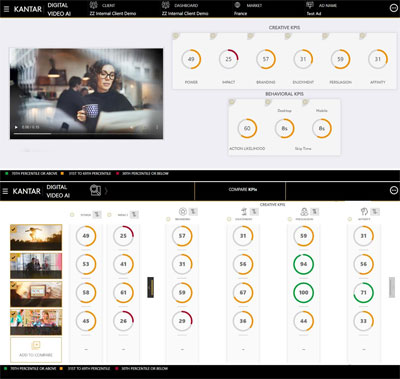
    Kantar, the data-driven analytics and brand solution company, has announced the global launch of Digital Video AI, a fully AI-powered tool that predicts the performance of digital video advertising. Building on the launch of Link AI for TV advertising in 2020, Digital Video AI is a creative measurement tool designed to evaluate online video ads against the behavioural and creative metrics that drive sales and build long-term brand equity.


     

    Unilever partnered with Kantar through the development of Digital Video AI and has tested hundreds of ads on the platform to improve their performance against their effectiveness and ROI goals.


    Said Neha Sharma, Global Brand Engagement Lead, Unilever:  “At Unilever we consider ourselves to be pioneers in pre-testing in the creative development process. Digital Video AI enabled us make quick decisions, pick from our best creatives, test video edits and even measure competitor campaigns with speed and at scale.”


    Added Dinesh Gopinath, Global Head of Product for Kantar’s Analytics practice. “Our research* shows that 49% of advertisers plan to increase the use of AI solutions to evaluate creative. Our goal is to transform the creative process, leveraging AI and other advanced technologies to maximise effectiveness.  We appreciate Unilever’s longstanding strategic partnership and participation in this innovation journey. Worth almost half a trillion dollars this year, digital ads will account for more than 60% of total ad spend**. Digital Video AI is a great new way to make smarter and faster decisions to optimise digital video’s contribution to marketing and business goals.”


  • Wunderman Thompson gets Anushka and Virat & Lux

    By Our Staff


    Unilever brand Lux has roped in power couple Anushka Sharma and Virat Kohli for its latest film, as part of its ‘Chand Sa Roshan Chehra’ campaign series. Conceptualised by Wunderman Thompson South Asia, the campaign continues to build on the proposition of ‘skin glow’, from a modern and socially relevant standpoint.


    Said Sagar Mahabaleshwarkar, Chief Creative Officer, Contract India: “The idea here was to bring the magic back to the brand by giving a sneak into celebrities lives. The constant effort is to make the story real to the celeb’s life and bring out the chemistry between a man and a woman. The story is simple where the man is mesmerised by her glow which is possible because of Lux soap.”


    Added Severine Vauleon, Global Vice President, Lux: “The challenge given to the team was to relaunch Lux and communicate the benefit of moonlit glow by giving the brand a fresh perspective which is modern and culturally relevant. Whilst there was a brand story to be told, we wanted to narrate it in an engaging manner. And to do so for audiences across regions, nothing better than leveraging popular culture with multiple language songs which depict ‘moonlit glow’ that’s compared a woman’s beauty to the moon.”


    Said Kishore Tadepalli,  Managing Partner and Senior VP, Wunderman Thompson, Mumbai: “This film is part of the campaign conceptualized by Wunderman Thompson South Asia, where the agency explored the thought of creating a locally tailored campaign for multiple regions within the country with multilingual songs, that brought alive the brand’s proposition of comparing a woman’s beauty to the moon, an oft used metaphor in Indian cinema.”


  • Rethinking Brand for the Rise of Digital Commerce


    By Our Staff


    WARC, the global marketing intelligence company, has released a white paper titled ‘Rethinking Brand for the Rise of Digital Commerce’ reframing brand-building in the pandemic times. The white paper features analysis by former strategist and researcher James Hurman, who sets out why marketers will need to plan brand and performance together to generate maximum impact, as well as interviews with leading CMOs, plus new research by Adgile, Amplified Intelligence, Analytic Partners, the Ehrenberg-Bass Institute, Facebook, Flywheel Digital, Wavemaker and more.


    Key takeaways highlighted in Rethinking Brand for the Rise of Digital Commerce are:

    1. Rethinking ‘brand-building’ as ‘future demand’

    Marketers are having to increase investment in performance techniques as their sales shift online – known as ‘digital rent’. A balance between brand and performance is still required, but new language may be needed to reframe ‘brand’ in a way that appeals outside the marketing department, and makes sense at a time when platforms are becoming ‘full funnel’.

    James Hurman, Founding Partner, Previously Unavailable, and contributor to the report, lays out an alternative way of thinking about brand and performance that helps bring the two closer together as complementary techniques. He advises: “We need to be creating future demand at the same time as we’re capturing existing demand. When these two things happen concurrently, growth is sustainable, and sustained.”


    2. Strong brands still have an advantage in digital purchase environments

    Brand-building remains important in the digital economy, as demonstrated by the growing investment in brand advertising by FAANG companies (Facebook, Amazon, Apple, Netflix, Alphabet’s Google), which now account for 4% of the total global adspend, per WARC Data.

    Companies selling through digital platforms need a strong presence close to the point of sale.  But those that have taken a cohesive approach to building and communicating their brands still retain an advantage from search through to purchase decisions. This advantage is driven by four factors: fame, mental availability, recognition, and perceptions of value.

    Conny Braams, Chief Digital & Marketing Officer, Unilever, comments: “Strong brands do well in e-commerce. The convergence of media, entertainment and commerce offers many exciting opportunities for brands to grow… Brands need to provide unmissable services, content and experiences.”


    3. Ending the brand-building ‘silo’

    It has also become clear that a siloed approach to brand-building and performance is counter-productive. The two are clearly different approaches and different mindsets. They might involve different teams. But they need co-ordination to maximise their effectiveness. The need to resolve this will become more acute as digital commerce platforms offer ‘full-funnel’ formats.

    Changes in the media market make this need more acute, as digital commerce platforms make a pitch for ‘full-funnel’ ad investment across the purchase journey.

    It will finally be time to drop the distinction between ‘digital’ and ‘traditional’ media, and consider combinations of channels that are right for a brand, its audience and its objectives.

    New measurement models like attention will gain traction as marketers look for the best opportunities across different channel types and ad formats.


    Said David Tiltman, VP Content, WARC: “We need to rethink brand-building and channel assumptions. The events of 2020 saw deep cuts to investment in marketing, and brand-building in general. If we hold that a strong brand is key to the long-term health of businesses, marketers now face a profound risk to their reputation as drivers of growth. With this white paper we bring together the latest evidence to help marketers continue to understand the role of brand in the accelerated digital commerce landscape, and to counter some of the assumptions in the market.”

  • Cross-media measurement, finally?!


    By A Correspondent


    The World Federaation of Advertisers has facilitated a programme to expedite the implementation of a new wave of cross-media measurement solution. This is being coordinated by global brands and leading national advertiser associations (which includes the Indian Society of Advertisers, and with involvement from partners from across the ecosystem.

    According to a report on the WFA website, the proposal was developed in partnership with digital platforms, including Facebook and Google, and will now be tested by the UK and US, with ISBA and the ANA respectively leading local efforts.

    The business case for improved cross media measurement is clear:

    :: Separate measurement systems preclude an understanding of true Reach and Frequency. This means there are considerable amounts of impressions bought which are driving diminishing or even negative value to advertisers. There is scope to prevent the wastage of billions of dollarsthrough better measurement which, in turn, improves ROI;

    :: Equally, an improved consumer experiencecan be delivered through avoiding the excessive ad frequencies which some have been exposed to. This is critical to avoid an apathetic (or outright hostile), reception towards advertising from our audiences;

    :: Lastly, improved measurement enables the sell-side to better value their inventoryto attract ad spending;


    Notes a communique: “The barriers to delivering better solutions worldwide are more political and commercial than technological. Our approach to break the deadlock has been to start with the advertiser. We believe that most progress can be made, and consensus arrived at, when the industry aligns around advertiser needs, as documented in the Industry Framework, Establishing Principles For A New Approach To Cross-Media Measurement.” Adding: “This has involved cross-industry consultation with advertisers, agencies, broadcasters, measurement companies and platforms. The goal has been to create a catalyst for local development of new solutions.”

    Adds the report on the WFA website:

    Alongside the Framework, the WFA is also publishing a real-world Technical Proposal for a cross-media measurement solution, which meets the principles outlined in the Framework, including on transparency, neutrality and auditing.

    This has been developed in partnership with digital platforms and shared and discussed extensively with the industry. It utilises a panel and census approach (via publisher logs) to give advertisers far greater understanding of the Reach and Frequency of their campaigns across TV and digital media (including both video and other formats).

    The Proposal leverages a Virtual ID (VID) and differential privacy methods to preserve privacy while preventing double-counting of impressions across media. In delivering improved cross-media frequency control, consumers will also benefit by not being unintentionally targeted by the same ad across different media channels, potentially addressing one of the key motivators behind ad blocking.

    Critically, the Proposal acknowledges that measurement is a local business and requires considerable local governance alongside the need for some global (or ‘common’) components to drive consistency and scale. Any aspects of the proposal that require bespoke technology will be open sourced.

    It has been tested via an international open comment and peer review exercise earlier this summer, organised by the WFA and involving several hundreds of the industry’s most prominent measurement professionals. This has allowed the wider industry to fully scrutinise, challenge and change the Proposal.

    The baton has been passed on to national advertiser associations, and ISBA’s cross-media measurement group, ‘Origin’, and the ANA will now independently explore how the components in the Proposal can be adapted to suit local stakeholder needs, ahead of implementation in their respective markets. Validation efforts will place particular care and focus on how TV data will be integrated with digital data within the Proposal. Both initiatives will focus on ensuring the priorities of advertisers are met while also taking an approach that reflects the needs of broadcasters as well as the changing digital media landscape.

    Several other markets and organisations are also looking closely at the components in the Proposal, with a view to possible implementation on the back of the US and UK work.

    This announcement reflects nearly 18 months’ work, which was prompted by the WFA’s Global Media Board, comprising 14 key advertisers and associations. Measurement is a key priority for advertisers and the WFA is committed to providing an ongoing platform to share learnings and to develop the ideas and concepts outlined in both the Industry Framework and the Technical Proposal.

    This approach has been supported by the whole WFA membership but the initiative has been steered by several prominent advertisers and advertiser associations, including ACA (Canada), ANA (US), ISBA (UK), Union des Marques (FR), OWM (DE), Deutsche Telekom, Mars, Mastercard, Nestlé, PepsiCo, Procter & Gamble, The Coca-Cola Company, Unilever and others. The Media Rating Council (MRC) has also been involved in this work throughout.

    “Advertisers have long struggled with poor quality data that doesn’t allow them to properly assess how best to invest their ad budgets across multiple platforms and media. This body of work provides a blueprint to build a cross-media measurement solution that responds to advertiser needs. The WFA is proud to have facilitated this work in partnership with key markets, platforms and broadcasters and looks forward to seeing it widely implemented across geographies,” said Stephan Loerke, CEO of the WFA.

    “Cross-media measurement is viewed as the ‘holy grail’ for marketers – as it optimizes marketing decision making for driving business and brand growth. ANA has championed measurement development that is viewed through the lens of the marketer for several years. This collaboration with WFA, ISBA and other partners has been galvanizing as it provides the foundation to build local solutions to this highly complex issue. The ANA has been proud to participate in this global venture,” said Bob Liodice, President and CEO of ANA.

    “For some time ISBA’s members have made the development of independent, accountable cross-media measurement our highest priority. The articulation of a clear advertiser-driven ‘North Star’ and a strong framework of global principles are significant milestones. We look forward to working in partnership to validate the proposed technical approach and to developing a UK solution that leverages the global blueprint,” said Phil Smith, Director General of ISBA.

    “Procter & Gamble has been a proponent of media audience research since the earliest days of broadcast media and is proud to be at the forefront of this breakthrough initiative in partnership with digital platforms, television broadcasters and other major advertisers. We need complete, open, transparent and future-proofed cross media measurement to enable consumers to have a better viewing experience with less annoying repetition, advertisers to be confident that their media budgets are being invested effectively and efficiently, and media companies to be rewarded for delivering high levels of reach and engagement. This is mission-critical, the time is now, we know it won’t be easy, but there has never been a stronger plan, and we need everybody to join in to make it happen.” said Kanishka Das, Senior Director, Global Media Analytics & Insights at Procter & Gamble.

    “Since early 2019 Unilever has championed cross-media measurement, with the aim of delivering greater transparency as part of our Responsibility Framework. The business case is clear, broadcasters and platforms alike can better value their inventory to attract ad spending, while delivering stronger outcomes for advertisers and driving greater effectiveness of spend. But cross-media measurement potentially has a more profound impact than this for our consumers. By driving transparency across all platforms to better understand levels of engagement holistically, it enables improved ad relevance and reduces excessive frequency, ultimately providing a better consumer experience. This programme, from its guiding principles led by Unilever’s Responsibility Framework to the technical blueprint produced by the WFA, ISBA, ANA and a diverse collection of advertisers, is a critical step towards providing more accountable, transparent and accurate media measurement for all parties,” said Sarah Mansfield, VP Global Media, Unilever.

    “The process of developing cross-media measurement solutions has been a long journey.  The development of a solution is complex and requires careful planning. There are many challenges that we face; many of these are not technical but instead breaking down barriers that have been established by decades of legacy ways of working. To solve this, we need to think and collaborate across boundaries. We have worked hard to establish a solid start with this Framework and Technical Proposal, and we believe this provides a solid starting point.  In each geography, a lot of work needs to be done to bring it to life in each country. Marketers steadfastly believe that developing this solution is a critical element in the ability to improve the consumer experience and help the industry operate more productively.  We urge our partners in the industry to understand this goal, the benefits of this initiative, and work collaboratively to drive success of this program and all our businesses,” said Ben Jankowski, Senior Vice President, Media, Mastercard.

    “Cross-media measurement is a global topic that needs to be answered locally, as every region has different starting positions and demands. I rate it as a great success by the WFA to develop a technical proposal that has the potential to be adopted around the globe and enrich independent local measurement eco-systems,” said Norman Wagner, Head of Group Media, Deutsche Telekom.


  • The Unfairness of It All


    By Prabhakar Mundkur


    When Hindustan Unilever announced its decision to rename its moneyspinner $500 million brand Fair & Lovely to Glow & Lovely, it was a classic case of doing too little too late.
     

    To imagine that the decision was perhaps based on the greatest upheaval of racist stereotyping of our time with the excruciating George Floyd pinned to the ground doesn’t say much for Hindustan Unilever’s decision. There is nothing to congratulate them about.  There can be no appeasement of public emotion. There can only be guilt and shame.


    Activists through the decades have objected to Unilever’s fairness cream but it needed a revolt as ugly as George Floyd’s death, for the great marketer to make this small move.  Not since Rosa Parks was denied a seat on a bus in Montgomery has the world been so affected by the colour bias of the human race.


    But how good is the new name Glow & Lovely? Decades of skin care research has shown that ‘Glow’ is a major benefit in for the skin care regimen. Just like ‘Shine’ is. a major benefit for hair. So, taking a benefit from research and planting it in a brand name is perhaps not the most creative way of configuring brand names. But then Unilever has not been particularly known for its creativity. That lesser brands like Emami had already pre-empted this thinking by naming their brands Glow & Handsome is a bit of a shame. After all, one expects leaders to show the way. Not follow in the footsteps of their smaller competitor in the FMCG business.


    But is Glow and Lovely a good name?


     There is a reason why Glow and Lovely doesn’t sound right given the vagaries of the English Language. The reason why it doesn’t roll of the tongue as easily as Fair and Lovely has to do with the English language. Both Fair and Lovely are adjectives. Glow on the other hand is either a verb or a noun depending on how you use it. Glowing & Beautiful would have sounded better in English. Because Glowing is an adjective. But it then lengthens the brand name. And Unilever might have decided they would stay close to the current syntax. Anyway to the large majority of Indians it would hardly matter. It’s just another name for Fair & Lovely. Fair and Glow are both four-letter words. But how the name changes the advertising need to be seen. Will the new ads have dark and glowing faces to make amends with the brand’s past? That is anybody’s guess.


    How Darkie changed its name


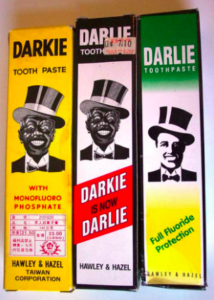
    It may interest people to know that the exact opposite of Fair & Lovely existed as a toothpaste in Asia many decades ago. A toothpaste called Darkie. Produced by Hawley and Hazel, the brand was very popular in Asia. The pack showed a smiling black performer. The brand was then acquired by Colgate Palmolive which faced a lot of racist flak on the brand. In 1989, Colgate Palmolive decided to change the brand name to Darlie.

     

    “It’s just plain wrong,” Reuben Mark, chairman and chief executive of Colgate-Palmolive, said about the toothpaste’s name and logotype. “It’s just offensive. The morally right thing dictated that we must change. What we have to do is find a way to change that is least damaging to the economic interests of our partners.”


    Seems like a shame that another global company had thought about this so deeply more than 30 years ago. So Unilever in many way is 30 years too late.


     What will posterity say about Fair & Lovely?


     But what this would mean for the generations to come is anybody’s guess.  Will Generation Alpha which may use the brand a few years from now warm up to the brand given its history? (Generation Alpha is the demographic cohort succeeding Generation Z. Researchers and popular media use the early 2010s as the starting birth years and the mid-2020s as the ending birth years.)


    How will these young people see our racist past? One piece of research showed that Generation Z are as racist as their millennial parents. But will this continue on to Generation Alpha? Technology is likely to change a lot of mindsets in the future. And that may change the fortune of the brand called Glow & Lovely.


    Prabhakar Mundkur is an advertising veteran, a lateral thinker, storyteller and musician. He has spent several years in advertising – in India and elsewhere in the world – including at JWT China where he headed the Unilever business, amongst other functions. In fact he worked on Unilever brands for a good 17 years… though never on F&S ;-). A prolific writer now, he was LinkedIn’s #1 Top Voice for 2016 and YourStory’s 100 Emerging Voices 2018. He writes frequently on MxMIndia.

  • Zirca appoints Sidharth Gowda as Strategic Head

    By A Correspondent


    Siddharth Gowda

    Zirca Digital Solutions has  announced the appointment of Sidharth Gowda as Strategy Head – Content and Brand Solutions. He was until reently Director – Media Strategy and Innovation with Carat, New York. Gowda has also worked with Ogilvy in New York and Mumbai, supervising the Glaxo Smith Kline and Unilever accounts respectively, notes a communique. Gowda will report to Vikas Dadoo, ‎Vice President – Content and Brand Solutions at Zirca Digital Solutions.


    Said Dadoo on the appointment: “Zirca has grown exponentially since its inception in India and to go further, we require seasoned professionals on board. We are focused on building capabilities to plan & amplify content which strategically fits  in brand’s marketing plans . Gowda brings with him a wealth of insights and I’m confident will help us create even more stories for brands that want to be seen globally.”


  • Brands and their Future


    By A Correspondent


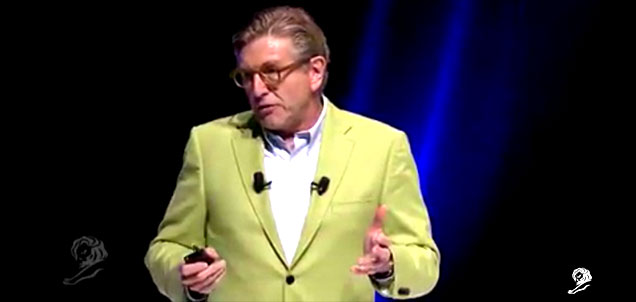
    The question about future of brands has been doing the rounds for quite some time. Keith Weed, CMO of Unilever, tried to explore the future of brands in a world where information and experience eclipse ownership as the key to growth at Cannes Lion 2016.


    “Brands! Love them or hate them, they are an integral part of our lives,” was Weed’s opening statement for the session ‘The Future of Brands’ hosted by Unilever. But what exactly is the future of brands in this dynamic, complex and ever changing world? Weed tried to answer this question in his a little over 30 minutes session.


    “I believe the future of brands is best represented by i to the power n,” continued Weed but was quick to add that it is not going to be a math lesson. This equation, in the context of brands, signifies what is going on in this technology driven world. So, i equals individuals, influencers and impacts. He explained each of them one by one.


    Said Weed, “With technological advancement, now, we can market to individuals. We have gone from mass marketing to massive customisation.” So, marketing is about engaging individuals. “From Unilever’s perspective, we want to build a relationship with a billion brands- a billion people around the world,” he continued.


    Weed emphasised that as much as we have to do work globally, we must engage people locally as well. The combination of the two, according to Weed, is ‘magic’ done by technology. He gave an example of the Axe ad which showed the changing modern man. It was a good example of connecting with individuals. Weed urged brands to use data about individuals to connect with them.


    Influencers do play an important role in building a brand. In this part, Weed explained the changing face of influencers. The re-launch of the ice cream Magnum double was used as an example to explore the role of influencers. Kendell Jenner was used as an influencer to promote and magnify the brand. Twitter as a tool for influence was also lauded by Weed. “We need to think about influencers more as we build a brand,” he said


    While explaining impact he looked at it from three different points- campaigning brands, challenging stereotypes and what consumers want. “In some ways they say campaigning brands is the right thing to do but I think we should campaign brands which make good economic sense,” said Weed. Unilever’s climate change video was showed as an example to prove this.  Addressing the audience about challenging stereotypes, Weed focused on how women are portrayed. According to a research done by his organisation, 80% women do not identify with most of the ads. “We can create better advertising, if we create progressive advertising,” he said. Weed said, “We found 54% of people would buy a product if they find it socially and environmentally sustainable,” while speaking about consumer needs. Focusing on consumers wants is extremely important for brands.


    The fact that brands can take their products to endless number of people with the help of technology is quite commendable. “With all that is going on in technology, consumers have been ahead of marketers,” said Weed. So, using these ‘i’s multiple ways and times, brands can be successful and that is the future of brands, Weed concluded.


    Meanwhile, on the awards circuit, there were no golds added to the kitty.  In Media Lions, Rediffusion Y&R bagged a silver for Dipper Condoms and a bronze went to PHD for Hindustan Unilever’s Wheel detergent. BBDO India picked another metal – albeit a bronzed one – in Cyber Lions for its Ariel “ShareTheLoad campaign.


  • Rahul Welde promoted to Global VP, Digital Transformation

    By A Correspondent


    Rahul Welde

    Rahul Welde, Vice Presdient – Media at Unilever in Asia, Africa, Middle East, Turkey and Russia has been elevated to Global VP, Digital Transformation. This has been reported by Marketing-Interactive He will be based in London and lead a variety of digital initiatives for Unilever, the website report.


    Welde has been with Unilever since 1991 and is active in various industry associations included being Chairman of the Mobile Marketing Association Asia and Regional VP for the World Federation of Advertisers (WFA).

  • IndIAA brings all stakeholders together to collect awards


    By A Correspondent


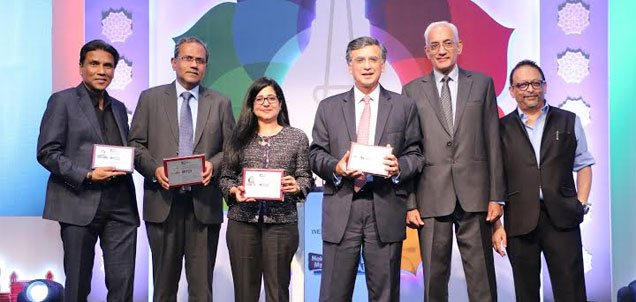
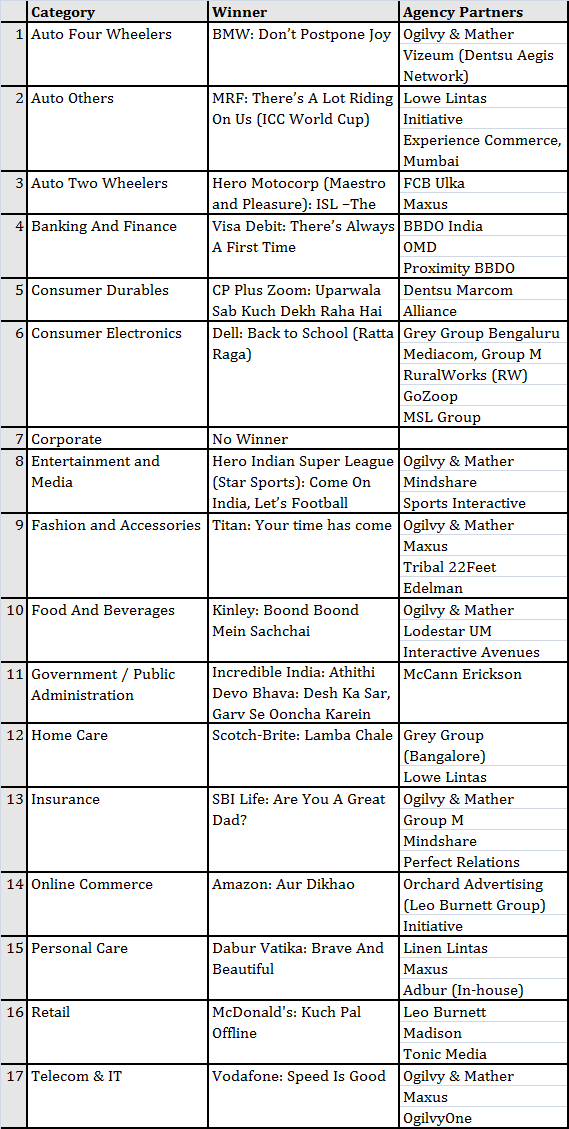
    The first edition of IndIAA Awards happened on Tuesday, October 13 evening with leading advertising, media and marketing professionals in attendance. Of the 500 entries received for 17 categories, the final shortlist had 76 nominees with 16 winners.  The IndIAA Awards were received by the Advertisers along with all the co-creators of the campaign, across Creative and Media Agencies and also included other agency partners from Digital, Events, PR, Activation etc.


    Also present were Jury Chairman Harish Manwani, COO Unilever and Non-Executive Chairman, Hindustan Unilever and Jury members – Bhaskar Bhat (Titan), Sangeeta Pendurkar (Kellogg’s India), B. Sriram (State Bank of India), and Sanjeeb Chaudhuri (Standard Chartered Bank).


    Said Srinivasan Swamy, President, IAA India Chapter “We attempted IndIAA awards as an experiment; we wanted to create a different way of awarding creativity. At the IAA Conversations preceding the awards, Dr. Subhash Chandra and Shankkar Aiyar, as expected, brought fresh perspective and deep insights around News Neutrality through the engaging session.”


    Pradeep Guha, Chairman, IndIAA Awards Committee said, “The IndIAA Award format ensured that ‘ads for awards only’ didn’t come through and this itself was the differentiator.”


    Earlier in the day, Dr Subhash Chandra, Chairman, Essel Group and Zee spoke to Shankkar Aiyar, author and journalist, on News Neutrality. The conversation ranged from the basic concept of neutrality; the solution to compulsion of revenue versus competition; regulation of news gathering and vagueness of media ownership in India. Dr. Chandra also mentioned a new technological engine being put into place in Zee, which will track stories right from filing, so that there is control over biases.


    Dr Bhaskar Das, Chairman, IAA Conversations said, “Going against the grain, if need be, to deep dive into the most relevant industry topics has been the objective of IAA Conversations. The topic on News Neutrality follows the same trend.”


    Winners of the first IndIAA Awards:

    Â