Tag: Tarun Katial

  • BIG plans for regional media: Tarun Katial


    For once, what you are reading is a truly BIG story. Literally, metaphorically and every way you would like to. A lot has been written about the way his empire that has been expanding its tentacles. It’s been a 360-degree approach to media and entertainment with events and activations getting a fair deal of attention as the radio stations and TV channels.


    In fact, there is every reason for the CEO to be delighted with the success of his television channels, network of radio stations and slew of other allied entities. Together, both the BIG networks have been churning out good numbers for RBNL encouraging it to spread its activities across regions in India. Having launched BIG Spark Punjabi and BIG Magic, the emphasis of the network is on tapping the potential from regional settings and that is where they have centred their attention around currently. The next 12-18 months will see the network exploit opportunities in the regional space through both, organic and inorganic route.


    Tarun Katial, CEO, Reliance Broadcast Network Ltd met with Pradyuman Maheshwari, Johnson Napier & Meghna Sharma of MxMIndia, and walked them through the road traversed by BIG thus far. While the discussion on the regional foray was the mainstay of the discussion, he also spoke about the launch of BIG RTL Thrill (to be a Male, Action channel in Hindi), on grappling with measurement issues for niche channels and why he is hopeful of radio pulling it off big time post the onset of Phase III in India. Excerpts from the interview:


    How has RBNL’s growth story been in 2011-12?

    [youtube width=”400″ height=”225″]http://www.youtube.com/watch?v=6PnkBC-d4tQ[/youtube]

    It has been a mixed year for us. I wouldn’t say it was great but there have been some good things that have happened. In an environment like this, you’ve got to make the most of what you can do. To begin with, there were some good things that happened in our radio business. One, we were able to get some advantages out of the Phase 3 regulations. With the policies being announced, we have been able to put together some amount of capital expenditure and operational expenditure rationalisation with that and been able to build a more robust network with that. So, over a period of time, we have been able to build content hubs to build some amount of excellence in the quality of work that was getting done across the country.


    Tell us more about the synergies of the radio and TV businesses…

    Yes, what has been good for the radio business is that over a period of time we have been able to build more and more 360 degree value using both the radio and television platforms together. It’s actually been equally good for radio and television that we got the regional television business. We’ve been able to draw some serious amount of synergies both in terms of marketing & promotion and content and in terms of the value that we have been able to deliver to clients in the region.


    We’ve been able to do some path-breaking work like in UP, MP, Bihar and Punjab we’ve been able to build radio and television content ideas that have done exceedingly well in terms of numbers, revenues and advertiser impact. Also, they go beyond the classic IP that we were creating over a period of time, which comprise numerous regional events, concerts etc to picking up regional insights and building shows and content ideas around it. For example, we created a show in Punjab called the BIG Boli Star which was a huge success and was the number one show on Punjabi Entertainment Television for many weeks. It was an idea that actually played out on radio three months ahead of even television. In Punjab, we have also created the first daily radio and television show live together, where we do the top 20 show from radio live on television.


    Are your synergies inclined more towards regional channels and lesser towards the English channels in your network?

    Yes, the synergies are far more with the regional space. So radio and television have been working exceedingly well together for us. We believe that regional audiences and advertisers like this bundle exceedingly well – any idea that gets created from a point of view that it cannot get amplified but can take a form and shape of a show or content in itself on both the platforms. We created another good platform for kids and mothers in UP, MP and Bihar called ‘Bal Kalakaar’, which we just wrapped up and have just started another series called ‘BIG Memsaab’  in MP, Bihar and Jharkhand. So with these ideas, a lot of these classic FMCG clients who do not have engagement platforms and do not have a 360 degree amplified property are getting exceedingly excited about them. It also helps us to build our brand, build a local connect and build 360 degree engagement for the BIG FM, BIG Magic or BIG Spark Punjabi brands in the region.


    You currently have an all-India footprint with BIG FM and with BIG Magic, Spark Punjabi etc in the North. What about the regions where you do not have a presence?

    For the other regions we end up working with the leading regional broadcaster of that region like Star Vijay in the South or ETV in Bengal, Maharashtra, Kannada…


    Will you be looking at launching regional channels under BIG CBS network?

    I cannot comment any thing on that for now. India is not one India today; it is a mini-continent. I was reading this article recently which highlighted how brands are picking flavours or building variants for regions specifically. The same is true for media platforms too. It is just the start of how regional television is developing; we’ve had some standard ones in the South and even in the Hindi speaking belt, we have seen how Marathi and Bengali have done exceedingly well. We have our eyes firmly set on the Punjab and Hindi heartland space. I think there will be opportunities over the next 12-18 months that we would want to exploit…


    Organic or inorganic?

    Both… we have a firm belief in the regional space. We have seen that very clearly with our radio venture where advertisers now want to boost their noise levels in certain regions but even more so there are consumers who have huge parochial pride who look for local connect and do so very differently with national and regional entertainment mediums.


    You tweaked your offering on Spark Punjabi…

    It started out as a completely international content channel dubbed in Punjabi. We had always planned to do more regional content around it. But as we developed, we have seen that the off take of the local content is also as good. So while the international content is doing well we have supplemented it with very good local content. So there have been shows from Punjab in Pakistan which have worked very well here because of the language and cultural similarities. So there have been some changes that we have added on to the channel.


    Even Spark which was earlier into general entertainment is now more music.

    We do show a lot of youth shows on it but because it is primarily international shows so there is less that you can do on it; there is more music that we play out with it. We are now doing America’s Got Talent that will be simulcast on spark at the end of July. We have done some music shows like the one where we partnered with ArtistAloud called Thank God It’s Rock on Friday, then there is another one called International Music Favourites, then we have just done a show around Justin Beiber…So the essential insight in youth but we have also realised that with youth the biggest insight is music. That’s because their attention spans are very low and they look for snacking/aspirational content. Some of the heavy series content have been restricted to BIG CBS Prime and BIG CBS Love and is slightly focussed towards older audiences.


    And what about Love (the channel)…

    It’s pretty much the same and is performing well. You must have seen our work around Diva Destination – I think it is first of the block. We’ve done an output deal with Fremantle which will give us access to the latest season of America’s Got Talent and a few other shows which you’ll hear about soon.


    Would you be looking at getting more Indian content on these channels?

    We do a fair bit of it… we probably do more than a few others. We run a show called I Love Style, we are planning to do the next season of India’s Sexiest Bachelor and India’s Next Top Model…in conjunction with that we plan to do India’s Next Top Model Expo which is a platform for women and luxury brands to come together based on an international format. It is also a platform where casting calls happen for the show. So essentially these channels will stay international, but we’ve cherry-picked some upper SEC luxury ideas on to the channels.


    What are your plans for BIG RTL Thrill?

    We’ve been doing some good content acquisitions which I believe we have a good winning library. Hopefully, you should see the channel taking off by the end of this quarter. The content will be primarily Hindi but it will have international content as well. It will be a Male Action channel in Hindi.


    And how has the advertiser network grown in BIG CBS stable over last year?

    Our network is unique as it is not a classic one like the Hindi GEC or movies platform. We have built it around the luxurious brands and have unique brands like Kimaya that does a show with us and we believe that because of the kind of content and positioning we build these channels around it gives us an advantage. There is no woman-centric upper-end channel in the country. I believe Love has that unique positioning and that’s why these luxurious brands end up partnering with the channel.


    So is advertiser-funded programming the way to go for you?

    It’s not advertiser-funded but advertiser context programming. It’s not funded by anybody but by us but is contextually relevant to a luxury brand. That is the way to go for us as we believe that outside of the English magazines luxury brands have very little room or platform to advertise on without too much wastage. Television works far better than any other platform to be able to give you that audio-visual appeal.


    And has that worked for Spark too?

    On Spark we have seen a lot of youth off-take like Vodafone 3G, Airtel 3G, Justin Beibers etc. So telcos are the big clients today. When you look at our regional channels, you have the classic FMCG clients who advertise with us in significant volumes. We’ve been able to build 360 degree properties for clients like Reckitt Benckiser, which is known to be a tough advertiser in the marketplace – they did a whole property for us for Big Memsaab in UP, Bihar, Jharkhand etc with Harpic as well as Dettol; HUL has been with us for a long time and so is Tata salt, Godrej, P&G, SC Johnson, Nestle, etc.


    Do you see this move receiving impetus with the onset of digitisation?

    I think the English channels will tend to benefit very well both in terms of availability and subscription revenue. Channels like these are key to any platforms channels list because if they want to draw in ARPUs and if they want significant premium on the English side of the business they need to have enough such channels on the platform. We believe this is really the time for channels such as these to be in the marketplace.


    One of the peeves facing English magazines is that readership studies do not reflect the kind of profile of the audience very well. Do you feel this also applies to niche channels like the ones you have?

    If you look at how TAM does its sampling on the digital base they have an issue on how they do their sampling on the digital base. And when you cut SEC A it is essential to cut digital because if you are hoping for somebody to buy an outfit from Kimaya or high-end luxury items you are safely assuming that he or she has a STB or a DTH box at home. If you start to sample audiences like that you end up getting very small sample sizes and the data pretty much reflects nothing. So obviously there is an issue with the way sampling is done and boosters are put in that profile of audiences. Over a period of time, TAM has been assuring us that they will boost the sample size and change their sampling mechanism but that hasn’t happened yet.


    They are said to be increasing the sample size by 650 meters soon…

    But I do not know how that will help the SEC A profile. Because suppose if I am a sample house and have a DTH connection at my place and I subscribe to a certain pack on it like Platinum, Silver or Gold…now the first thing there is whether my sampling matching the universe of the number of people who are on the Silver pack. So if Dish TV has 100 subscribers and if 60 of them are on the Silver pack then does TAM reflect that 60 or does it reflect nothing? Because as you measure in a digital pay environment it becomes very difficult to sample basis the universe sampling of the DTH box or the STB. What happens in the UK or the US is that measurement does not extend to channels outside of the ones which are on the base line.


    That’s because in a sampling mechanism you will never be able to cover the entire luxury or specialised channels viewers…

    We’ve been engaging with TAM and discussing how these surveys are ought to be done. There is no point getting into a rating platform that does not actually represent the base level on any of these digital platforms. So if I have seven different DTH platforms and seven MSOs and they have different pacts and different universal samples take different pacts, so how does that reflect into the TAM measurement sample? If you get picked up as a sample home, how do you become a sample home? Nobody knows the universe to pick a sample, right? So what gets picked on the sample is most common between all platforms, which is the base channels.


    Guess that’s the way to go for niche channels such as yours?

    In fact you could refer to the survey that is done by BARB in the UK you’ll get a sense of what the others are doing.


    BARC has taken from the BARB model, though it’s taking too much time

    It ought to have been done a while ago. We have far too many diverse interests now.


    There is this whole issue of carriage fees that is obviously expected to take a dramatic turn post digitalization. What are your thoughts on the issue?

    I think it already has changed to some extent. People understand that content that is required by any MSO who has to fill 500 channels is not easy. Are all 500 channels willing to pay that much carriage fee? They need to understand if they want to compete with DTH, they should be able to offer better or at least similar service, if they want to retain customers. And if they are able to communicate that promise effectively then you have to have content on your side.


    You had made your foray in the SAARC region with Sri Lanka this year. How has that been doing?

    Our big focus in the international market is through Big Magic which is to take it across Indian audiences. It is still in its early stages but its strength has been the content. And because of the regional programming has allowed the network to connect with audiences. We have already launched in Canada and we plan to take that to the US, UK and Australia as well. So it gives us a fairly good footprint across the globe. Sri Lanka has our CBS channels, but Hindi channels are going everywhere.


    How is the arrangement with CBS going?

    Good. It’s a JV. They contribute a lot in terms of content, programming. We have four new shows coming up this year including Sherlock Holmes from the US for which we are very excited. It’s the first on Indian television.


    And in terms of films, are you looking at acquisitions?

    We do a fair amount of that but it’s mostly on weekends because it is a series channel and we don’t want to mix and confuse the viewer. Our focus is on America’s Got Talent, American Idol and X Factor which will keep us ahead as it’s going to be relayed live from the US. One side you’ll have Simon Cowell on X Factor, another side JLO on Idol etc…


    So what’s the next big thing from RBNL?

    I think on the radio side, we are very excited about the phase III. We want to go to the deepest part of the country and it will be a big play. We also want sports on the radio. We’ll want to buy ICC’s rights on cricket for radio – live commentary. And we are also very excited about this play between regional TV and radio. The combo has been a really good one for us.


    What are your plans on the regional channels front? Are we going to see more of them in the next year or so?

    There is no given timeline to it. We will now focus on consolidating the two we have. And when RT Thrill is launched it’s going to be 3+3 English channels. Six is a lot. We want to get through that before we decide to launch more.


    Is South an area you are looking at?

    I don’t think so because even are radio stations don’t extend too much to that area. Our strength lies in the HSM belt. Except for Karnataka, we are not very big down south.


    You have various divisions beyond radio and TV channels…

    We did a lot of work on Big Live so we do a lot of live events – about 50-60 of live event formats in the country. Today as per sheer value and volume, we are the biggest IP owners in the country but we don’t speak about it too much. And we are slowly and steadily building over these platforms. We have gone beyond building classic entertainment formats to engagement platforms so we are doing more and more things that matter to the consumer.


    And awards too?

    Yes, we do about 50 awards or more than that across regions. We have also started doing some interesting thing like Big Disha, which is about providing career counselling to tier 3 and 4 college kids. And P&G is actually working with us on it. We do something called Mele Ka Big Star where do big melas and do a kind of talent hunt which eventually comes on to TV and radio. We also do another one which is called Big Aasman which is grooming platform which we created for tier 2 and semi-urban women who plan to move to the metros. We do a lot of this but we don’t talk about it too much. They do well for the brand, for the advertiser and for the consumer.


    Since advertisers also get the benefit of radio, does that cannabalise on the revenue of the radio station or is it all factored in?

    It’s all factored in; they chip the revenue. We don’t put the money of live event or on radio but it’s really more of the 360 degree market share strategy. It ends up delivering more value to the advertiser, which helps us in building a stronger relationship.


    Any big IP events coming up?

    We already have 3-4 of them. We have the BIG Star Entertainment awards that happens at the end of the year on Star; we just finished the BIG Young Achievers awards which will appear on Star Plus next month… Then there is BIG Star IMA awards, Television awards…


    Fair number of tie-ups with Star?

    Yes, three of them are on Star. But we also work a lot with regional guys.


    What about Digital? What is your presence there?

    We do a lot of digital stuff too. We deploy content on as many devices as we can. We also work very closely with BigFlix. We have launched the BigFlix services in addition to Big Magic service in North America. We are doing a dual-play.


    Finally, in terms of revenue ratios, how is the organisation doing?

    I think it’s 70 per cent radio and 30 per cent television, but we want to get into 50:50 ratio. It will take about 18 months from now to get to that ratio.


    With Big Magic Marathi and Bengali channels coming up?

    You can ask me this as many times as you want to… (laughs) But it’s too early to talk.

     

  • TAM to cross 10,000 Peoplemeter mark soon

    By Meghna Sharma


    In a country like India with numerous channels on air and where television watching is an obsession, it is vital for broadcasters and advertisers to know how well the channels and the various programmes on them fare. TAM, a joint venture between AC Nielson Research Services (Nielsen Company) & Kantar Market Research, was mandated by the broadcast and advertising industry to do exactly that. Over the last decade-and-a-half, TAM has been optimizing coverage of the growing TV audience across the country by increasing breadth (expanding to cover larger number of new markets) and depth (enable deeper level of analysis in existing data markets).


    By the year end, the TAM Media Research plans to increase its sample size by nearly 2000 households. The present expansion is in alignment with the above thought process and is an attempt to bring insights on audience engagement with TV Content. “The current Indian broadcast landscape is dotted with some very different and complex influencing factors like the need to dive deep into untapped semi-urban/rural markets and the upcoming mandate of digitization,” says LV Krishnan, CEO, TAM Media Research.


    He adds, “With digitization, we are already seeing increase in not only the channels entering the distribution pipe but also audiences trailing more content across newer genre of channels. As the long tail of unique content channels explode in 100% digital markets (Phase I being the Metros), TAM will be enhancing the sample size in these digital markets (Metros) to throw more light into audience consumption of these unique content channels. This enhancement will benefit micro targeting of viewer groups for not only broadcasters with their content but also advertisers interested in specific audience groups for their brand communication.”


    Keeping this in mind, TAM will be taking a few steps. The first initiative being taken is to increase the panel size in Mumbai, Delhi, Kolkata, Chennai, Bengaluru and Hyderabad totalling 650 homes. This will increase the SEC AB sample size in these metros by around 60%. All additional 650 homes will be recruited among C&S SEC AB homes.


    But that’s not all. As part of the initiative, TAM will expand in the less than class I India markets too. In the annual January 2012 establish report, the fastest growth for digital TV platform continued to be from less than Class I towns (with population of less than one lakh) and semi-rural markets in the Hindi belt markets. “This affirmed our hunch of the need to beef up representation in the semi-rural markets. Since 2009, we have been covering Maharashtra in the ‘Less than Class I’ geographic stratum. To this stratum, we are now adding seven more states: Gujarat, Madhya Pradesh, Punjab, Haryana, Himachal Pradesh, Rajasthan and UP. These will be reported as individual states except for Punjab, Haryana, Himachal Pradesh which will, as usual, be reported together as PHCHP,” adds Mr Krishnan. The increasing the sampling across these five new markets will be 1110.


    With this expansion, TAM will practically complete covering the entire urban stratum for the Hindi Speaking Market group. This also means that TAM will now cross the 10,000 Peoplemeter deployment mark and will be add 63 more towns to the existing base number of (162) sample towns with this expansion. Now, it will cover 225 towns.


    However, there are some who feel that an increase of a sample size of 2000 is not enough. “From the current sample size of around 8000, an increase of around 2000 more does brings up the number, but considering the size of the country it’s not an ideal number to know the ‘correct’ pulse of the viewers,” feels Anamika Mehta, COO, Lodestar UM.


    Agreeing with her, Tarun Katial, CEO, Reliance Broadcast Network Ltd., adds, “With the current sample size, it is very difficult to map the evolving choice of consumers. And right now TAM does not represent the digitalized packages. Therefore, until and unless it is done universally it won’t be able to ‘help’ like it should be. I would want TAM to look at their international counterparts to learn from them how they tackle the issues.”


    Even Sunil Lulla, MD and CEO at Times Television Network believes it’s high time that TAM woke up and smelled the coffee. “We are delighted that finally the industry pressure has worked. Many broadcasters, including us, have been telling TAM about various issues which affect our rating process. So, we hope that this increase in sample size, though small but relevant, will benefit and mark a beginning of improvement and swift growth of the system.”


    There are many who feel that the move by the TV audience measuring firm should be welcomed and shouldn’t be criticized. “We should understand what a tedious process it is. And over the years, TAM has been working to help the industry. TAM has been working with the over 8000 sample size for years now, so we should give them credit for increasing it. This move will not only increase the household numbers but also increase the cities which will make the sample more robust,” points out Anilkumar Sathiraju, Mudra Max Media, Head – South. As proposed, TAM has started preparing to implement both the initiatives in the full swing. Both the data cuts are targeted to be made available starting January 2013.


    Mr Sathiraju adds, “However, there is no denying the fact that over 10,000 sample size for a country with over one billion population isn’t correct. And I hope and wish that this will lead to a quicker growth in the next level of the phase. It is a challenge and hopefully won’t take years.”


    Mr Krishnan is of the view that the measures initiated will benefit broadcast. “Over the last three years, in our annual baseline (Establishment) study we conduct and release in Week 1 of January, we are witnessing a tremendous growth of Cable & Satellite TV and Digital TV platform penetration. This growth is fuelled by the growing aspiration to engage in multiple Content – Entertainment & Information, that these platforms are providing on a simple TV screen. In the Jan 2012 report, the fastest growth for Digital TV platform has come from less than Class I towns (with population of less than 100,000) and Semi Rural markets in the Hindi belt markets. Once access and engagement with multiple content happens, it is pertinent to measure the behaviour to help broadcasters, in particular, the regional language broadcasters for aligning content to these audiences. It also satisfies advertisers and nedia agencies needs as their need to target brand communications to consumers in these markets become a reality. Also, these new markets from TAM will give you a closer picture to the Rural India’s TV consumption habits in the Hindi heartland.”


    Meanwhile, with the imminent digitization in the four Metros, Mr Krishnan explains that in a market in Mumbai and  Delhi, with already 25% of the TAM panel and market digitized, his team and he are seeing new patterns of viewing settling in. “More viewers are glued to genres of their choice and landing straight on their favourite stations. Time spent with TV and within specific genres are increasing too. This will mean that there is enough scope for more channels to either get launched within the existing genres or new genres with Unique Content will launched soon in the new 100% digital era (given that creating access to the Content will be easy!). Tier packages will get formed and purchased by the potential viewers, thus sub-segmenting the audiences into more fractions! To capture these new behaviour trends, TAM is increasing the metro samples by almost 60% and in markets like Mumbai and Delhi, TAM is almost doubling the sample!! This will help broadcasters and bdvertisers to not only understand audience content consumption patterns but also target their programming and brand communications very well.”


    So what next? The preparation to implement both the initiatives is in “full swing”. Both data cuts will be made available starting January 2013.Also, with an eye to aid the understanding of the digitization progress, TAM has initiated The TAM DASES (DAS Estimation Study) : A study focused on the Phase 1 markets (as notified by the I&B Ministry for DAS implementation). Wait for it!


  • Reliance Broadcast & RTL name JV channel ‘Thrill’

    By A Correspondent


    BIG RTL, the television joint venture between Reliance Broadcast Network and RTL Group, has named its soon-to-be-launched action channel Thrill.  The thematic action channel, positioned as the first action entertainment channel, is the result of a detailed audience mapping and insight mining among Indian audiences to determine entertainment need gaps. The joint venture channel will address this need gap and serve the very best of international content from across the globe, dubbed in Hindi. The channel is slated to launch by the end of the Q1FY12-13.


    With several options to choose from, the internal team set out to test names with the potential core target group: male audiences across metropolitan and non-metropolitan areas in the Hindi-speaking markets. With focus groups spread across the country and moderators mapping feedback closely, Thrill emerged as the hands-down winner for the name for the channel. The name is easily comprehensible across all social strata and encapsulates the core values of the channel – ‘daring’, ‘action-packed’, ‘electrifying’, ‘sporty’, ‘challenging’ and ‘adventurous’.


    The core viewers of the channel would be Thrill-seeking males in the age group of 15-44 years, who are action and adventure lovers.


    As part of the plan to offer a diverse programming mix, the channel has signed strategic deals with various leading international content providers for successful global formats and series across a variety of genres: action reality, action thrillers, fighting and wrestling championships, shocking, never seen before films, extreme sports, late night entertainment and a robust library of hit Hollywood action movies, all dubbed in Hindi.


    Speaking on the occasion, Mr. Tarun Katial, CEO, Reliance Broadcast Network Ltd. said, “We are excited to offer India its first action entertainment channel, Thrill which will showcase world-class international content, dubbed in Hindi. The channel fills a need gap that exist in the entertainment landscape and we are confident that our proposition, backed by consumer insights, will resonate excellently with viewers and marketers alike.”


    BIG RTL has already teamed up with Reliance Digital TV, India’s leading direct-to-home service provider, to distribute Thrill, giving the channel access to 30 lakh digital television homes across India and the channel is in the process of closing deals with other operators. This partnership marks the beginning of the quest to extend BIG RTL’s top-of-the-line content to maximum audiences across the country. Thrill will be distributed as part of a 7 Channel robust bouquet of Reliance Broadcast which includes BIG CBS Prime, BIG CBS Love, BIG CBS Spark, BIG CBS Spark Punjabi, BIG MAGIC and UTV Bloomberg.


    The present joint venture marks RTL Group’s entry into the burgeoning Asian television market and is Reliance Broadcast Network’s second international joint venture, following on the heels of its successful joint venture with CBS Studios International.


    Reliance Broadcast Network Limited is a multi-media entertainment conglomerate with play across radio, television, intellectual properties and out of home. It is part of the Reliance Group and specializes in creating and executing integrated media solutions for brands. It houses the following verticals: 92.7 BIG FM, BIG CBS- a joint venture with CBS Studios International which has launched four channels, BIG CBS Prime, BIG CBS Love, BIG CBS Spark and Spark Punjabi. Added to this robust bouquet, the Company also distributes Bloomberg UTV, India’s premier business news channel.


  • Simmi Karna appointed as Business Head for BIG Productions

    By A Correspondent


    Reliance Broadcast Network Ltd. (RBNL) has announced a key appointment with Simmi Karna coming on board as the Business Head for BIG Productions, its television content production arm.


    As part of her new portfolio, Ms Karna will be responsible for creation and marketing of shows designed for regional and Hindi GECs. She will also be responsible for the P&L of BIG Productions and will report to the CEO of Reliance Broadcast Network, Mr. Tarun Katial.


    A molecular biologist by education, Ms Karna was drawn to the television industry as she began researching and writing for television in 1997. Over the last 15 years, she has worked across leading brands in the television industry ranging from Zee, Channel V and IMG, as a writer and creative director across genres of fiction, non-fiction, sports, fashion, among others. Her last assignment, prior to joining BIG Productions, was with Balaji Tele Films as the Chief Revenue Officer.


    Commenting on her appointment, Mr Katial, CEO, Reliance Broadcast Network Ltd, said: “Simmi’s vast experience across a variety of genres with her erudite stamp on programming makes her an asset to the organization. Her ability to ideate and conceptualize on the basis of audience preferences, while ensuring in line with clients’ briefs is her strength which will work excellently when coupled with her people management skills to lead the business into its next level of growth.”


    On her appointment at BIG Productions, Ms Karna said: “I look forward to working with the young and dynamic team at BIG Productions. The television industry is geared for exploratory programs and these are really exciting times for TV inIndia. RBNL has some great properties for television and I look forward to a challenging and exciting career in television production.”


    Reliance Broadcast Network Limited is a multi-media entertainment conglomerate with play across radio, television, intellectual properties and out of home. It is part of the Reliance Group and specializes in creating and executing integrated media solutions for brands.

  • Counting on digital to be M&E’s trailblazer


    @FF12: Day 1: Digital attracts ‘desirable’ status
    on Day1
    @FF12: Day 2: Seamless blending with traditional mediums – a big want!
    @FF12: Day 3: Industry expects thoughts to lead to pertinent actions
    @FF12: Takeaways: Digitization rules the roost @FICCI Frames 2012

    By A Correspondent


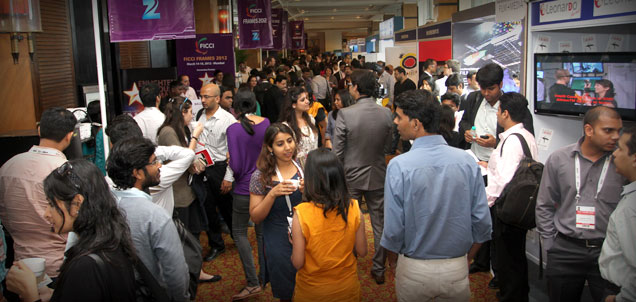
    Those familiar with the going-ons at FICCI Frames would testify how an infatuation gets displayed by delegates at the event each year so as to summarise the mood of the convention even before it broadly takes off across the three days that it is entitled to. But probably, the setting was a bit different this time around when the delegates – joined in unison by the media – were running ballroom to ballroom trying to ingest giveaways that were being thrown up abundantly across several sessions. May be, it was a year where each day had something new to offer to the delegates that kept them at tenterhooks throughout the 3-day event. And going by the loud decibels that were being emanated across every nook and corner of the venue, it was evidently clear that there was some motivating factor that was driving the gathering to go on an overdrive spree.


    The organisers of FICCI Frames 2012 have every right to take credit for coming up with a theme around a medium that attracted the attention of one and all. Having kept it on the sidelines till last year, digital was finally given its due at the convention as experts, authorities and enthusiastic youngsters came face to face to deliberate and come up with outcomes that would redefine the way the consumers consume the medium. From television to print to films and even radio, digitisation and the benefits and effects it would cast on these sectors were discussed in length at the venue. In fact Star India CEO Uday Shankar in his keynote address didn’t hesitate in thanking the FICCI committee for putting across a theme that would go on to redefine the way the industry functions in the future.


    What was apparently clear through the various sessions at the convention is that with the nearing of date for total digitisation across key metros by June 30 2012, and then across the country by 2014, broadcasters had to relook their distribution and content provision models so as to keep the consumer at the heart of every shift that will transpire in the future. Emphasising on the current digitisation scenario in the country, Mr Shankar said, “Most of the discussions that I have participated in are still around whether digitization will happen and if it indeed were to go through, how chaotic it would be. But all these are meaningless discussions triggered by a bunch of retrograde interests who are living in denial.” According to Mr Shankar, digitisation of distribution is a big reality and the 40-45 million homes that have bought DTH boxes at some point or the other are a conclusive evidence of that.


    Shooting back at critics who had doubted whether the makeover to digital would ever be a reality, Mr Shankar said, “To the critics and the cynics who are still wondering whether digitization would happen, my answer is: Look around, it is already happening and the rest of it is bound to happen because even in this country it would be difficult to undo such a momentous shift. To those who wonder how chaotic it would be, my response is that there would be some chaos, but chaos is not necessarily bad if the alternative is status quo or regression. When a transition at such a scale is happening that affects the illegitimate but strong vested interest in certain pockets, then there is an incentive to put up with chaos in the interest of the larger social objectives.”


    A broader outlook was provided by a few panellists who said that digitization will come in as a relief for broadcasters who will be benefitted from additional subscription revenue, relaxation on paying heavy carriage fees, and of course providing viewers with a superior content experience – MSOs and cable operators have to quickly respond to the digitization mandate by investing in set-top boxes – the cost that is only possible to recover after four years.


    Sounding off the challenges that digitisation would present for the broadcast sector, Tarun Katial, CEO of Reliance Broadcast Network Ltd said that, “For television, it will be a combination of content as well as marketing. The old model which was a combination of carriage and product, as it stands today, won’t work. The business plan which currently has a very high rate of carriage will obviously see the content taking precedence.” And as for content, it will be niche content that will call the shots for broadcasters as according to experts at the convention, niche isn’t niche any more as all niche channels put together command a share that is equivalent to the share of Hindi GECs and the mass channels, so to say.


    Perhaps the many advantages that digitisation will have on several mediums was rounded off by Vikram Sakhuja, CEO, South Asia, Group M who said, “The inherent power that digital brings along with it is interactivity and its ability to link multiple devices. Also the ability to enhance real-time consumption of content; linked to that is the entire thing about going mobile.” On the roadmap for the industry, Mr Sakhuja said, “I think integrated media is the best way forward. Today when people think of multimedia planning, they do a separate TV plan, print plan, radio plan, internet plan and so on. I believe that if you actually look at media agnostically and at common metrics of each cost per thousand impressions, these are the ways in which you can construct a media agnostic plan. What it does is, it suddenly gets more money into digital, and when more money can come into digital, that’s when focus is going to come in.”


    While digitisation was the mainstay of every discussion, the all-important issue of regulation too was taken up by panellists who chose to have the government respond to the many queries surrounding the topic. Uday K Varma, I&B Secretary, said that “if people at large seem to be happy with self regulation, I think the government would have no problem in legitimizing them. But I think the self regulation mechanism which has been set up by both the news broadcasters and the entertainment broadcasters, they’ll have to really prove it, not to the government but to the people at large.” He was joined in his cause by Prithviraj Chavan, Chief Minister ofMaharashtrawho said that the challenge would be to adopt the regulatory framework to new technology and ensure that over regulation doesn’t kill a good thing. The Chief Minister emphasised on the need for regulation and suggested that instead of the state regulating the media, the medium should look at regulating itself.


    The other important announcements that came up at the venue included the soon-to-be-passed Copyright Amendment Bill, the roll-out of the imminent phase 3 radio policy that would steer the growth of the medium and increased government aid for the film & entertainment sector.


    New ventures @ FICCI


    BARC takes wings

    In between the many promises and hopes that were being doled out at the sessions came the news of the Indian Broadcasting Foundation (IBF), the Indian Society of Advertisers (ISA) and Advertising Agencies Association of India (AAAI) announcing the official formation of a nationwide audience research joint body — Broadcast Audience Research Council (BARC).

    While IBF will have 60 per cent stake in BARC, ISA and AAAI will each hold 20 per cent stake. The Board of the council will have 10 members, six members from the IBF and two members each from the ISA and AAAI.


    Discovery Kids to flag off ops in April

    Another important announcement was made by President & CEO of Discovery Networks International, Mark Hollinger who announced the launch of its new network for children inIndia, ‘Discovery Kids’. Mr Hollinger said, “Launching in April, the network will initially be available in three languages – Hindi, English and Tamil. The channel will offer children a fun and entertaining way to satisfy their natural curiosity with stimulating and imaginative programming,” he said. The company plans to roll out the channel inPhilippinesandIndonesialater this year.


    Ten Golf tees off

    Taj Television India Pvt Ltd announced the launch of Ten Golf, a dedicated 24-hour golf channel. Ten Golf is the fifth channel from Taj Television India Pvt Ltd and began transmission on March 15, 2012. The dedicated golf channel will showcase a mix of live, non-live and feature programming. The channel will also broadcast live, high quality Golf action from around the world.

    Ten Golf has acquired rights for European Tour and Asian Tour till 2016, and has also entered into partnership with PGTI for three years to telecast the Indian Tour. Further, Ten Golf will be telecasting 400 hrs of golf programming in association with NBC.


  • @FF12: Digitisation will allow broadcaster to make money off ground: Tarun Katial

    Video and Text by Shruti Pushkarna


    Tarun Katial, the CEO of the Reliance Broadcast Network Ltd, spoke to MxM about how the businesses will have to rework their monetising strategies in the wake of digitisation


    On reworking the business model for digital era

    [youtube width=”400″ height=”250″]http://www.youtube.com/watch?v=r_uR54g7cbI[/youtube]

    For television, it will be a combination of content as well as marketing. The old model which was a combination of carriage and product, as it stands today won’t work. The business plan which currently has a very high rate of carriage will obviously see the content taking precedence.


    On Digitization bringing in transparency

    By transparency, I mean, it will allow the broadcaster to know the number of households it’s getting into, getting paid for and which value tier plan it is present on. It’s not like analog, where you give Rs150 and you have 500 channels available. The broadcaster will be allowed revenue share, he will be allowed to make money off the ground.


  • Reliance Broadcast Network to distribute Bloomberg UTV

    By A Correspondent


    Reliance Broadcast Network Ltd. on Monday announced the coming on board of Bloomberg UTV, India’s premier business news channel, as part of its distribution portfolio. This move further strengthens the well-crafted television strategy of RBNL which includes the 3 BIG CBS Channels – BIG CBS Prime, Love and Spark, and the regional Channels BIG MAGIC and Spark Punjabi. Add to this, the channel which is scheduled to launch through the JV with Germany’s RTL Group, and Reliance Broadcast Network will boast of an unmatchable seven channel bouquet.


    The partnership points at excellent synergies between the businesses and will allow for seamless integration of Bloomberg UTV into the existing bouquet. While Reliance Broadcast will benefit from having a premier news channel empowered by the global authority in business news – Bloomberg. Bloomberg UTV gains through becoming part of a commanding bouquet of channels backed with an excellent brand lineage. This consolidation establishes a bouquet to be reckoned with and one that will meet requirements of both audiences and marketers alike.


    With digitization in the anvil, reduced bandwidth issues and a boost in demand for premium quality content, the channel portfolio stands to have an edge in the market. The reach and varied profile of consumers and customers brings with it opportunities for bundling and cross selling, ensuring the bouquet is able to garner optimal subscription rates.


    With each channel having its distinct audience base, the entire bouquet will cover a wide spectrum of the Indian cable and satellite television viewing audiences. With its ability to offer advertisers the opportunity to reach out to audiences ranging from 4 year olds to 25+ year olds, from heartland India to the key metros, it ensures an unparalleled marketing platform.


    The 7 Channel mix now offers the following:

    1. BIG CBS Prime, a male skewed premium entertainment Channel (male 15+, SECA,7 metros)

    2. BIG CBS Love, the first ever international women’s entertainment channel (female 15+, SECA,5 metros)

    3. BIG CBS Spark, the first ever International youth Channel (4-24, SECA,7 metros)

    4. BIG MAGIC, a variety entertainment Channel for the Hindi heartland (CS 4+ MP,UP, Bihar)

    5. Spark Punjabi, the country’s first International Punjabi Channel (CS 4+, Punjab, 1mn+)

    6. BIG RTL Channel in the action space

    7. Bloomberg UTV, India’s premiere Business news channel (male 25+, SEC A, 7 metros)


    With a prolific mix of channels cutting across genres ranging premium English, credible news and well-tailored regional channels, the bouquet of Reliance Broadcast Network stands to make a significant impact in the market.


    Speaking on the occasion Tarun Katial, CEO, Reliance Broadcast Network said: “With the addition of Bloomberg UTV to the RBNL network, we now present one of the strongest television portfolios in the country. This consolidation of the network delivery platform allows us to enable marketers with a single consolidated outreach platform, while offering audiences the best possible television content.”


  • BIG CBS goes balle-balle with Spark Punjabi

    By A Correspondent


    The BIG CBS, a Reliance Broadcast Network and CBS Studios International complement JV, on Tuesday announced the launch of its fourth channel, Spark Punjabi, marking its foray in regional television.


    The BIG CBS has already launched three channels – BIG CBS Prime, BIG CBS Love and BIG CBS Spark. The JV is the number one English entertainment network in the country.


    Spark Punjabi, a category creator, is positioned as the first international Punjabi channel. It will be launched on January 14. Targeting the 15+ audience, the channel will feature the best of CBS content, dubbed in Punjabi, giving local audiences immediate access to world class entertainment.


    The channel will be available across Punjab, Haryana,Chandigarhand Himachal Pradesh (PHCHP) region. The channel will be distributed on digital and analog platforms, with an extensive reach of over 6mn+ C&S households in the region.


    Spark Punjabi will air the latest seasons of international shows such as jerry Springer, Hawaii Five-O,America’s Next Top Model, Masked Warriors – an international wrestling format, amongst others, dubbed in Punjabi. The channel will also feature a judicious mix of Punjabi music, international dubbed movies and local programming in Punjabi.


    The PHCHP is one of the richest regions and boasts of a strong base of affluent consumers. With 78 per cent TV penetration and 88 per cent C&S penetration, coupled with limited local language entertainment options, the market offers a good business opportunity. The Rs1,200 crore advertising pie also creates an exciting opportunity for this platform.


    With Reliance Broadcast Network Ltd’s (RBNL) existing leading radio brand 92.7 BIG FM, reaching 22 cities in the region and its OOH arm, BIG Street’s 3000+ ambient media options across the markets, Spark Punjabi will offer marketers an integrated media opportunity like none other in the region.


    The channel will be supported by an integrated marketing plan leveraging multi-media. Added to this will be the media muscle of the entire Reliance Group.


    Tarun Katial, CEO, Reliance Broadcast Network Ltd. said: “India’s booming regional television industry with limited regional entertainment options is an opportunity that we are leveraging. With our robust radio network in place, Spark Punjabi will allow a more integrated offering to marketers, while presenting audiences with the best television entertainment.”


    Armando Nuñez, President, CBS Studios International said: “The move into the regional market perfectly complements our existing bouquet of channels in India, utilizing existing programming resources customized to the Punjabi market and backed by Reliance’s great media assets in the region.”


  • TV-wallahs eager for digital wave


    By Rishi Vora


    The television distribution scene in India has for many years seen the dominance of cable wallahs. Digitization only started in a big way when DTH players pumped in huge sums (there was no ordinance then) and succeeded in building a critical base of subscribers in the country. As a result cable operators were seen as laggards. Sample this: there are about 40-45 million DTH homes out of the total viewing population of more than 225 million households, so DTH has grown despite competition from cable and is likely to increase the subscriber base substantially with the recently passed ordinance by the government.


    As for the cable operators and MSOs, they are left with no option but to invest in infrastructure. Den Networks is investing Rs 1,000 crore and expects to get 2.5 million subscribers in the phase one. Hathway will invest Rs 500 crore and they are also bullish about increasing the subscriber base. Analysts feel that now is the perfect time for MSOs to increase their share in the business.


    So, while it seems all good for the industry, the fact is that digitization is something that was always talked about, and is now a work in progress as far as complete digitization is concerned. The government has, in a recent development, pushed the sunset day for four metros from March 2012 to June 2012. The date for cities with a population more than 1 million is March 31, 2013.


    For broadcasters, this is a big relief from the carriage fees, which in the past have resulted in loss of revenues. The four metros is a big market with 20 million households; and digital homes eating into cable and analogue… But, digitization, for broadcasters, also means that the consumer will now have a choice of what channel to pay and watch. That in experts’ minds is a challenge many broadcasters will have to face – to keep their viewers’ interest levels high and for the long run.


    Subhash Chandra, Chairman, Zee opines, “Digitization will only help the television industry further grow. The government’s decision on clearing the ordinance is a very positive move. It will give a boost to the cable and satellite industry and help create a more sustainable business model for the television industry.”


    On the growth of DTH players in the county, he said, “DTH is leading the adoption of digital technology. There are about 39 million gross DTH subscribers in the country. Now they have a great opportunity to consolidate their businesses.”


    However Dinyar Contractor, Editor-in-Chief of Satellite and Cable TV Magazine, has a contrary view to the whole scene. He feels that there is still some time for digitization to happen pan-India (2014) as the ordinance states. And that broadcaster are wary of going digital, or are wanting to delay the process of digitization of TV in India, as the profits are not much, plus there is the risk of losing eyeballs, as there will always be viewers who are not open to the idea of paying and viewing, as against the concept of free-to-air channels.


    Tarun Katial, CEO, Reliance Broadcast Network Limited, feels, “Digitization will bring-in fair reporting of subscriber base, which will lead to standard pricing and subsequently eradication of local monopoly. It will help companies increase subscription revenues and reduce down carriage fees for broadcasters in a phased manner.


    Ajay Chacko, President, A + E Networks | TV 18 JV, says that the move will bring in more accountability in the business. And apart from additional subscription revenues, he believes that digitization offers a whole new benchmark for broadcasters, and a platform which is more measurable than cable and analog.


    Neo Sports COO Prasana Krishnan welcomes the ordinance. “This is the much needed change in the industry. What it will do to the industry? I think it will revolutionize the broadcast landscape in India.”


    If the ordinance were not passed, Mr Katial is of the opinion that the current capacity constraints in analog cable would have stifled the growth of new channels and introduction of technologically advanced content. “The carriage costs paid by broadcasters which currently remain high in view of the limited bandwidth of analog cable would decrease post digitization. This would allow broadcasters to make higher investments in programming and marketing, thus improving the customer experience,” he explains.


    Another advantage the industry will see over the years in the fast adoption of HD television and 3D, which will open new revenue streams. As far as television distribution industry is concerned, the ordinance will lead to more transparency and greater accountability. It means opportunity for all stakeholders – broadcasters, distribution platforms including cable companies, MSOs and DTH.

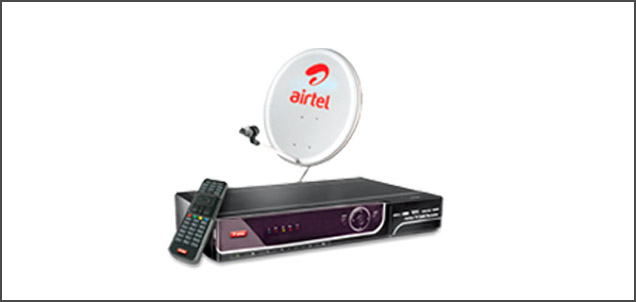
    Photograph: Airtel Digital TV HD Recorder from airtel.in