Tag: Taproot

  • TAPROOT! | What would make an entrepreneur sell?

    By Ananya Saha


    Some create to sell. Some create to keep. Why would an entrepreneur who has created, built up and nurtured a company, wish to sell it? And given that the reasons are good, what then is a good time for this sell-out?


    PV Sahad, Editor of VCCircle, a news website dedicated to covering private equity, venture capital investments and M&A in India, said, “The right time to sell a business depends entirely on the objective of the management or the entrepreneur.”


    Mr Sahad added, “Usually, the companies are sold off when the markets are high or if there are suitable buyers for the company. The suitable buyers knock on the doors when the company is at the peak performance stage. This is when a buyer looks at the company and makes a good offer.”


    Prof Kavil Ramachandran of ISB Hyderabad opined, “There are various reasons why a company sells out. One, when the entrepreneur gets excited by something more challenging and wishes to move away from something he has established and toiled over. The entrepreneur and/or management might wish to sell out when the Return on Investment (ROI) and Return on Time and Investment (ROTI) for the effort put in seem good in terms of the valuation.”


    One more reason could be that the management of the company feels that the pressures of growing the company further are beyond their current means, and the entrepreneur starts to feel that someone else might be able to do a better job, added Prof Ramachandran.


    Mahendra Swarup

    Mahendra Swarup, President, Indian Venture Capital and Private Equity Association (IVCA), said that the reason to sell out depends vastly on the outlook of the entrepreneur. “If one’s company is heavily invested or has raised money through IPO, then the compulsion to exit the business is much more.” According to him little or less equity rights with the entrepreneur is also one reason when the companies prefer to sell out.


    The companies usually try and scale up their business with the money that an investor (for a stake sale) brings in, or it the entrepreneur wishes to exit the business altogether.


    Mr Swarup added that a good time to sell company is also dependent on the entrepreneur. “They can sell when the company is doing well, or is actually not doing well. But usually, companies are sold when the entrepreneur has an alternative scheme of things that can be a new investment horizon or venture.”


    Sanjeev Bhikchandani

    Sanjeev Bhikchandani, founder and executive vice-chairman of Naukri.com, said, “There are no general answers to when is a good time to sell a company. The motive to sell depends solely on the goals and objectives of the entrepreneur. If they wish to make a quick buck, they might scale up and sell. If they wish to create a huge company, they might not. The time is decided by the motive of the entrepreneur.”


  • TAPROOT! | Anil Thakraney:Talent & values rewarded

    By Anil Thakraney


    Ordinarily, I would envy Aggie and Paddy. They have landed up with mind-numbing sums in their savings bank accounts following the acquisition by Dentsu. In fact, I don’t even want to hear the numbers… that would make me feel like a very small man. Am certain this must be the feeling inside every single creative director’s heart in the Indian ad world, even if they don’t admit to it. And most importantly, Taproot has pulled off this financial coup within just three years of starting out. This is beyond dreams coming true.


    However, instead of feeling jealous, I actually feel very happy for them. I have never met Paddy, but Aggie I have, on more than one occasion, and I can tell you I am yet to meet a more simple, down-to-earth creative director. He is the kind of bloke who you want should win. His success will inspire a whole generation of advertising people, and not just a few eager hot shops.


    It’s a win-win marriage. Dentsu, which is not a name one usually associates with sparkling creative work, has bought itself a nice creative powerhouse. They must be elated. Taproot gets the scale, the logistics and the bucks they need, so they must be obviously thrilled. And for sure the Dentsu suits will leave Aggie and Paddy alone to do their own thingy. Only a silly parent would meddle with a brilliant child. So all is well, as they say.


    The only area of concern is this: What happens when Aggie and Paddy decide to offload their shares and retire to a beach house? There must definitely be a lock-in period of at least five years, I suppose. But what happens after that? Will Taproot be the same agency minus the two Big Brains? This is the only thing Dentsu must keep a sharp eye on. Remember, Taproot is a baby agency, it has no legacy. And if Aggie and Paddy don’t create their clones in the agency, if they don’t cultivate talent that is equally bright and hungry for success, five years down the line this acquisition may not look as rosy to Dentsu.


    For now, dear Aggie, bring out the bubbly. And please hire a bubbly secretary for yourself. No need to figure out airline tickets on your own anymore. You can afford her now.


    ***


    [youtube width=”400″ height=”220″]http://www.youtube.com/watch?v=mpWmowUtn5M[/youtube]

    PS: This is the last TVC directed by Tony Scott, the ace Hollywood movie director who recently killed himself. Incidentally, Scott directed many commercials in his career. Nothing special about this one, it’s typical soft drink trash. Only, it’s difficult to imagine suicide was on Scott’s mind while he was working on such lively stuff. Complex and unpredictable is the human mind.


  • The Complete Story: Win-win for Dentsu,Taproot; big loss for WPP (from yesterday)


    By Pradyuman Maheshwari


    So is it bigger win for Dentsu or Aggie and Paddy? Both parties, one would say. It’s not that Dentsu has no creative talent, but the Taproot India of Agnello Dias and Santosh Padhi has by far been the biggest creative story of Indian advertising in the last three years.


    An Ogilvy, Lowe or McCann may be thriving and a Mudra has won some great awards but nothing to beat Taproot, a CxO with an international network told MxMIndia on receiving MxM’s BBM alert at 6.30 am today.


    Agnello Dias

    The news of the announcement was made to the staff on Monday and key clients have also been informed. The nitty gritty of the deal was completed last week and the announcement by Denstu was made on Tuesday morning 10am local time in Japan.


    Although some estimates (and an Economic Times report that MxM carried as part of its syndicate arrangement) say that the deal is valued at Rs 140 crore (with Rs 60 paid immediately and Rs 80 crore in earn-outs), MxMIndia learns that this amount is exaggerated.


    No surprises here
    By Tuhina Anand 

    Taproot India in many ways has rewritten the fate of independents in India. In fact, Taproot would be an excellent example of a successful brand created in such a short span of time. The credit for this goes to its co-founders Agnello Dias and Santosh Padhi who have never looked back since launching the agency in January 2009.Like any new set-up Taproot would have had its ups and downs but the message that came out to the world from the agency was clear that the work they produced were superlative and consistent. The agency has done some memorable work like Airtel’s Har Ek friend zaroori hota hai or Pepsi’s ‘change the game’ which catapulted them in the big league and bigger brands which hitherto were prerogative of bigger agencies.Taproot continued its association with the TOI Group which had managed to win India’s first grand prix at Cannes Lions led by Mr Dias when he was with JWT. At Taproot too this association with TOI got them recognition at international platform like Cannes. It was also recognized as Cannes Lions top 20 independent agencies in the world. So it seems like a simple success mantra where the duo let their work do the talking and in return created a substantial equity for their agency.


    That Taproot decided to sell its stake doesn’t really come as a surprise as the talk was doing rounds that the founders were looking for partners. In their pursuit to get partners what probably helped was that Taproot had proved its mettle in a short span and there were prospects already willing to get a share in the agency. Then their choice of partner-Dentsu Inc- might come as a surprise initially as one would have expected an international hot shop to enter India via Taproot but if one stops to think the association seems perfectly aligned. Dentsu Inc has acquired 51 per cent stake of Taproot India.


    Taproot gets the scale and bandwidth of Dentsu besides the moolah. In fact, the deal is just at the right time for Dentsu Inc when the Japanese major has taken full control from Sandeep Goyal and is trying to get its arithmetic right in India starting with a managerial change where Rohit Ohri, ex-JWT was roped in as the Executive Chairman forDentsu India Group and later Divya Gupta to head its media busienss.


    For the latter, which is not really known for its creative prowess, Taproot is just the right fit as that’s the field where the agency scores highly.


    The fact that Ohri and Dias have worked together at JWT also makes them familiar with each Other’s working style.


    On the association, Rohit Ohri, Executive Chairman, Dentsu India Group, said, “Taproot has, very quickly, become one of the most respected communication agencies in India. In fact, Aggie and Paddy are globally recognized and celebrated creative talents. We are delighted that they have chosen to partner with Dentsu. This alliance will give a significant fillip to our growth plans for India. Our collective vision is not to be the biggest but to be the best in the industry.”


    On how this acquisition impacts Taproot, Mr Ohri added, “Taproot’s everyday operations and management will remain unchanged. We will ensure that Taproot’s independent spirit and fiercely creative culture stays intact. It will just have a lot more firepower added through integrated communication execution capability and an all-India network.”


    Agnello Dias, Co-Founder and Chief Creative Officer, Taproot India said, “While we are doing alright on the creative front, we felt that we needed to add a bit more logistical and service capabilities across markets. With Dentsu as our partner we feel we can scale up several areas of our operations very quickly without losing what has been working for us so far.”


    Santosh Padhi, Co-Founder and Chief Creative Officer, Taproot India added, “Most importantly, we are assured that this alliance will be mutually beneficial to Taproot India and also to each one of its employees going forward, without changing our creative offering or the nature of the relationships we share with all our clients.”


    Taproot India brings to Dentsu 33 full-time employees and a roster of clients that includes PepsiCo, Airtel, The Times of India, Polycab, Marico, Karbonn Mobiles,Myntra.com, Mumbai Mirror, Nirma, DSP BlackRock Mutual Fund, UTV Bindass, and UTV Stars among others.


    A wholly owned subsidiary of Dentsu Inc., Tokyo, the Dentsu India Group comprises three standalone full-service advertising agencies-Dentsu Communications, DentsuMarcom and Dentsu Creative Impact-as well as Dentsu Media and Dentsu Digital.


    However, in this entire celebration one question that really comes up is that for an independent who has bigger ambitions, the only way out is to become a part of a bigger network. In earlier MxM India’s conversation with industry players, some of the successful independents like Raj Kurup of Creative Land Asia and Manish Bhatt have voiced their opinion to remain solo. Mr Bhatt had explained to being open to partnerships but not a sellout. Mr Kurup had clearly stated, “I have started CLA with the prime motive of building it up, selling it definitely not in the plan.” (See: Stay solo or scale up with a biggie? http://www.mxmindia.com/2012/07/ stay-solo-or-scale-up-with-a-biggie/)


    With Taproot’s decision to go with Dentsu, the question of staying solo or scaling up with a biggie becomes much more relevant for the independents.


    The company is not valued above Rs 100 crore, and the amount paid to Messrs Agnello Dias and Santosh Padhi (both of who own equal stake) would be in the region of Rs 40 and 50 crore, we learn.


    Santosh Padhi

    There is an element of earn-out, but this depends entirely on the performance of the agency. So it could Rs 80, 180 or even 40 crore, is how one Dentsu insider told us after the announcement was made.


    Big loss for WPP

    There were many suitors for Taproot. While Publicis and Omnicom (via TBWA) were out of the race early, the choice was between Dentsu and WPP. In fact, MxMIndia learns that it was a decision that had to be taken by Messrs Dias and Padhi.


    WPP sources told MxMIndia that they were taken by surprise that the deal had been inked, as they were still hopeful that Taproot would pick them.


    So why was Dentsu chosen and not WPP, which has a huger presence in India and internationally. Ironically it’s WPP’s ‘bigness’ that’s perhaps one of the biggest reasons. While Dentsu has various arms, it is essentially one company in India, whereas WPP has various separate entities in Ogilvy, JWT, Group M and its new digital, BTL, etc interests.


    What Taproot realised in its journey is summed by Aggie’s statement in a Dentsu release: “While we are doing alright on the creative front, we felt that we needed to add a bit more logistical and service capabilities across markets. With Dentsu as our partner we feel we can scale up several areas of our operations very quickly without losing what has been working for us so far.” And this scale could be provided by Dentsu and not WPP was the thinking. The comfort factor with Dentsu was also greater, given the opportunities to grow.


    The likelihood of Taproot growing in the Dentsu fold is greater than it is with WPP.  There are big agencies like Ogilvy and JWT with WPP and folks like Piyush Pandey, Bobby Pawar etc who would always be centrestage and may try and pull rank given their seniority in the business. Not so with Dentsu, where even though there is talent within the India set-up, Taproot will have a star presence.


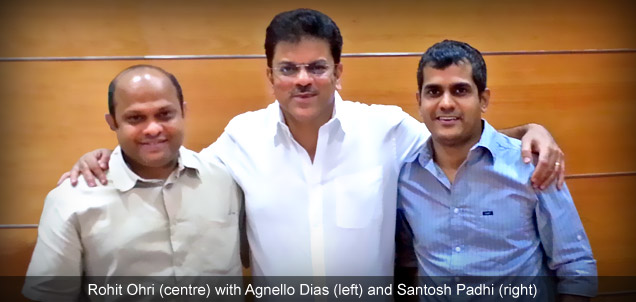
    Rohit Ohri

    Victory for Ohri, Future within Dentsu

    That the acquisition happened is a big feather in the cap for Mr Rohit Ohri, Denstu India’s executive chairman. It is Mr Ohri who is said to have initiated the discussion and gave the comfort factor to the Taproot co-founders.


    Some industry folk may remember there was a minor skirmish between Mr Ohri and Mr Dias when Taproot was awarded a Pepsi campaign and Mr Ohri was still at JWT heading Delhi operations, but all of that is history. In fact one of the main factors that Aggie and Paddy have inked the deal is the relationship with Mr Ohri.


    It may be noted that the stake sale deal has been signed with Dentsu Inc and not Dentsu India, and the reporting is to the Board of Dentsu headquartered in Japan. The other advantage this offers is that the fortunes of Dentsu India and the vagaries of its business will not impact Taproot. So, clearly while Mr Ohri is Dentsu’s face in India, Taproot will not report to him.


    What if?

    There is a three- to five-year lock-in period for most such deals, and the arrangement with Messrs Dias and Padhi is said to be of five years. However, there are various possibilities in the future as Dentsu grows in the scale post the Aegis acquisition and India becomes a bigger play for all advertising networks. The Dentsu insider we spoke to also said one shouldn’t be surprised if either Mr Dias or Mr Padhi or both could be given bigger roles in India or internationally.


    Since the deal helps both Taproot (scale, international network) and Dentsu (grow in India, creative powerhouse in its fold) the chances of a break-up are remote in the short and medium run, but even if there is, there will be no financial implication to monies paid out.


    Meanwhile…

    The papers are signed, the money may well be in the bank. There are no governmental clearances needed. People who do know Aggie and Paddy, as they are known in the industry, are aware that they have an easy, simple lifestyle. So don’t expect a cruise to the Bahamas or Hawaii or some such. The dosh will be well-invested. For the moment, it is getting used to being called Aggie San and Paddy San.


  • Dentsu acquires 51% stake in Taproot, Management (&creative) controls stay with Agnello Dias and Santosh Padhi

    By Ravi Balakrishnan


    Japanese advertising behemoth Dentsu has acquired a 51% stake in Taproot, arguably the most creative among the Indian independent advertising agencies.


    Taproot's Agnello Dias (left) and Santosh Padhi (right) with Rohit Ohri of Dentsu (centre)

    With several of the most popular recent campaigns like ‘Har Ek Friend Zaroori Hota Hai’ and ‘Joh Tera Hai Woh Mera Hai’ for Airtel and ‘Change the Game’ for Pepsi under its belt, the five year old agency has seen a meteoric rise. It’s also won critical acclaim; the most recent being a Gold Lion at Cannes along with Ramesh Deo Productions for the ‘I Am Mumbai’ film for Mumbai Mirror, a newspaper from the Times Group, which also publishes The Economic Time


    The managements at both Dentsu and Taproot declined to discuss the financial aspects of the arrangement. Industry observers estimate the initial upfront payout at Rs 60 crore with another Rs 80 crore expected in future earn-outs


    In a global deal in July, Dentsu had paid $4.9 billion for British media buying group Aegis, valuing the company at 12 times its earnings before interest, taxes, depreciation & amortisation.


    The Economic Times had reported in June that Dentsu among other agency groups was speaking to Taproot about a possible acquisition. Says Rohit Ohri, executive chairman, Dentsu India group, who has previously worked with one of Taproot’s founders Agnello Dias at JWT: “They (Taproot’s co-founders & chief creative officers, Dias and Santosh Padhi) could have chosen anyone. What convinced them about Dentsu is that we are very entrepreneurial and evolving; and more willing to look at out of the box ways of working.”


    Adds Dias: “We felt it was the right thing to do. Of all the conversations we had, we felt most comfortable with the equation we were sharing with Dentsu. Another reason cited is Dentsu’s global strengths in the digital medium and that it is currently the leading network in Asia.


    Taproot will retain its identity and won’t be rebranded. Although Dentsu is a majority owner, management control of the agency continues to rest with Dias and Padhi. Dias says, “In terms of changes, there’s nothing in the pipeline. I think even Dentsu is saying ‘why should we upset a system that’s doing so well’?”


    What the arrangement brings Taproot is integrated communication, superior execution abilities and a national network. As far as Dentsu is concerned, Taproot, says Ohri, “is really the creative firepower we needed in the group.” However, the firepower is not likely to be immediately applied to any of Dentsu’s current client relationships.


    Both partners believe that Taproot will step in only when needed “on a case by case basis” according to Padhi. Interestingly enough, two of Taproot’s most productive client relationships have been with Airtel and Pepsi, brands that Ohri worked on in a previous stint at JWT. Ohri regards this as “a great bonus”, but he cites the talent of the two principals at Taproot and the chemistry with senior management at Dentsu as the main reasons for the merger.


    Among a spate of recently launched creative-led independent agencies which include Creativeland Asia and Scarecrow Communications, Taproot has arguably been the most successful with several marquee campaigns to its name for Airtel, Pepsi and The Times Group.


    The agency was founded in 2008 when Dias (then national creative director at JWT) decided to join forces with former colleague Santosh Padhi (executive creative director at Leo Burnett at the time). The 33 person strong agency has been particularly successful in wresting business from Dias’ former employer JWT, landing prestigious assignments from Pepsi and Airtel.


    Source:The Economic Times

    Copyright © 2012, Bennett, Coleman & Co. Ltd. All Rights Reserved

  • Karbonn Mobiles mandates Taproot for its creatives

    By A Correspondent


    Karbonn Mobiles, the leading mobile brand in Indian telecommunication eco-sphere, has announced the appointment of Taproot as its creative partner. Going forward, Taproot will focus on Karbonn Mobiles’ 360 degree creative and marketing communication.


    On having Taproot on board, Shashin Devsare, Executive Director, Karbonn Mobiles said: “We are happy to have Taproot as our creative partner. They will be responsible for providing 360 degree creative inputs on TV, Print, Digital and retail merchandising. After successfully creating a wider brand awareness and deeper penetration in domestic and international markets, our next step is to focus on solidifying the brand imagery of Karbonn Mobiles across markets. Taproot came across as the best choice, considering the innovative approach and understanding of the brief. Taproot has a track record for building iconic brand communication strategies for the best domestic and global brands. We are confident that our association with Taproot will help us engage better with our consumers. ”


    Karbonn Mobiles has now selected Taproot to build up strong brand imagery in Indian and global markets. The communication focus will be on smart product portfolio, and building up a distinctive niche for the smartphone and tablets segmentation in the Indian mobile market.


    Santosh Padhi, Co-founder & Chief Creative Officer, Taproot India said that the average age of Taproot India is about 24 years old and that perfectly fits the need of the solid, aggressive and youthful Indian brand called Karbonn Mobiles: “All the three parties – Karbonn, Taproot and our TG – are very young by nature and I feel that’s what will work in this relationship.”


    Karbonn Mobiles has also recently introduced its nuevo brand extension christened ‘Karbonn Smart’ under whose umbrella the new range of technologically advanced products from the stable will be marketed. Intended to become a one-stop-shop for all the technologically advanced needs of the highly enlightened Indian mobile consumer, the ‘Karbonn Smart’ eco-system will make them privy to all the technical and mechanized developments in the Indian mobile ecology.


    Manan Mehta, Managing Partner, TaprootIndia said: “There was no formal pitch involved in the whole process. We presented our credentials and shared our view on the brand’s way forward and decided to join hands. Karbonn Mobiles has demonstrated sturdy performance during the FY11-12 amidst intense competition. This is a proof of them being a true Indian brand and our inspiration to partner them.”


  • Can Brand Mumbai be revamped?


    By Rahul Sachitanand

     

    Rahul da Cunha

    The raid by the social service branch of the Mumbai police dominated dinner chatter at Cafe Zoe, a hip restaurant in Lower Parel a few days ago. Affluent diners whispered about the people who were stuck in the restaurant on the day of the raid, how rudely the police behaved and even made bad jokes about what to do if they should turn up again mid-meal.


    All this was a bit much for Rahul Da Cunha, ad man and theatre person who was having dinner at the joint recently. “Mumbai’s brand has taken a bad beating,” he complained.


    “The spirit and hustle that defined the city is ebbing away.” Over-reaching law enforcement tangling repeatedly with the city’s commercial capital is hardly the sole factor battering its brand. Living in a city of 15 million people – give or take a couple of million hapless immigrants – has become increasingly impossible.


    Narinder Nayar, chairman, of NGO Bombay First, has worked with four chief ministers and five chief secretaries, and a raft of other politicians and bureaucrats to try to rejuvenate India’s commercial capital, but has rarely seen his forum’s ideas get beyond the stage of conceptualisation. “Everyone is receptive to ideas and suggestions,” said Mr Nayar in his office in the commercial district of Nariman Point. “There are lots of ideas but the thought behind them is poor and their execution tardy.”


    He points to the Bandra-Worli Sea Link, initially planned as a Rs400 crore proposal to connect the suburb of Bandra to Haji Ali towards the southern tip of the city. While the sea link up to Worli in central Mumbai helps decongest some of this north-south traffic, commuters will have to slog through jams for some time more, since the second leg of this sea link has been scrapped.


    “Mumbai has 15 different agencies responsible for its upkeep …some are based in the city and some like the railways in Delhi and they rarely talk to each other,” said Mr Nayar. The city’s infrastructure as a result has struggled to keep pace – no new railway lines have been added to the existing network in over four decades and monorail and metro plans are behind schedule.


    Mumbai’s perception only takes a further beating when you look at other factors that influence a city’s brand image. For example, it has few open spaces and gardens for its inhabitants to relax in, antiquated laws, exorbitant rentals for matchbox housing and once a year during the monsoons they prepare for the worst as clogged insufficient drains usually bring India’s capital of commerce to a standstill.


    “We are a city living with 19th century infrastructure and 21st century population,” said Mr Nayar. While the administrators of Mumbai may seek to position it as a global business nerve centre, the likes of Shanghai, Dubai, Hong Kong and Singapore have stolen a giant march on it.


    Sanjay Nayar, who returned to India a decade ago – after stints in the US and Europe – to run Citibank’s India unit and then moved to private equity giant KKR, is incensed at the state of affairs.


    “As a city to live in, Mumbai’s reputation has crumbled,” he said. “There is little governance and the city is in total neglect.” Hobbled by two different parties controlling Mumbai and the state administration, few sweeping civic reforms have been possible and the patience of corporates is beginning to wear thin. “There is a lack of direction and conviction with the people running this city and that’s adversely affecting its perception,” he added.


    Some corporates have even begun to work out of Singapore and Hong Kong, even though they live in India, he claims. It is these over-the-top solutions that are hurting Mumbai’s reputation and its brand on the global stage the most.


    Luis Miranda, a veteran investor who lived in south Mumbai before moving to the tony suburb of Bandra, said overall the city’s no longer the same.


    “There is a sense of lawlessness in this city and a breakdown in civic sense everywhere,” he said. The result is that characteristics that defined Mumbai – like lifestyle and diversity have vanished. For instance, the city was always one that welcomed outsiders and despite the odds, gave them a fair opportunity to start from scratch.


    “This is no longer the can-do city where you can get your job done and then relax without being worried that you’ll be thrown in jail,” said Rahul Akerkar, managing director and director, cuisine of de-Gustibus, a hospitality business which runs the popular Indigo chain of fine-dining restaurants.


    Jacques Challes spent four years in India as managing director of cosmetics and personal care giant L’Oreal’s country operations and has seen the city evolve in that time. While he lived a cushy life in south Mumbai, he began to increasingly look forward to heading out on an Enfield motorbike to take in the Indian countryside.


    “I was happy as an expat, although I could understand the desperation of my Indian friends with a city that is evolving so slowly and maybe in the wrong direction,” said Mr Challes who returned to France in May this year to take up a bigger role at L’Oreal. For a multinational, the opportunity for growth in India may outweigh valid concerns pertaining to quality of life. “As long as there is growth and potential in India, people will live with these conditions,” Mr Challes admitted.

     

    Agnello Dias

    Agnello Dias, co-founder of Taproot, says the city may be paying a price for its commercial success. “Mumbai’s economic rise has resulted in its spirit being taken away,” said the long-time resident who has seen the character of the city transform over the past decade or so to a point where people have little ownership of it and therefore, take little interest in its upkeep.


    “Mumbai has become a cash cow for the country,” he added. “Bombay has been broken up into many Mumbais.” Mumbai is doubtless a struggling brand, and ad folk have a few suggestions on how to renew its jaded brand.

     

    Josy Paul

    According to Josy Paul, chairman & chief creative officer of BBDO, Mumbai should focus on its people, arts, culture and heritage. “Mumbai is a melting pot of talent,” he said. “People can make cities great.”


    Mr Paul also says that as part of a re-branding exercise, the city’s administrators can use existing natural resources to brighten brand Mumbai. At the end of the day, Mr Paul says, Mumbai is like the world’s largest piece of blotting paper, willing to absorb an astonishing amount of people. “The key to fixing Mumbai’s brand is building a sense of belonging among everyone who call the city home.”


    Source: The Economic Times

    Copyright © 2012, Bennett, Coleman & Co. Ltd. All Rights Reserved

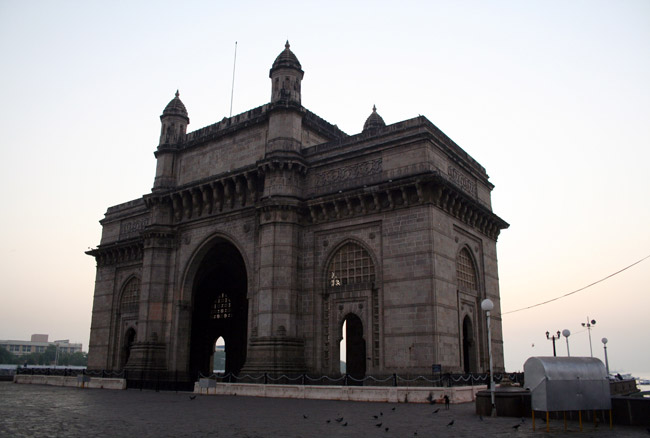
    Photograph of Gate way of India: Fotocorp

     

  • Never make a film to win at Cannes, because then you’ll never do: Abhinay Deo

    By Meghna Sharma


    The final day at Cannes Lion 2012 turned out excellent for Taproot’s campaign for Mumbai Mirror – I am Mumbai. The advertisement was shortlisted in Film and Film Craft categories and went on to bag India ‘s first ever Gold in the Film Craft category.


    The campaign was entered in the Film Craft category by Mumbai-based Ramesh Deo Productions. The film was directed by Abhinay Deo whose work has been shortlisted at Cannes Lion before too. MxMIndia spoke to the winning director to know what it takes to make an award-winning campaign.


    It is India’s first ever win in the category, were you expecting a Gold?

    Honestly speaking I wasn’t. It’s my job to make a good film and keep entering them at such prestigious award functions. The rest depends purely on the quality of the work!


    What goes into directing an award-winning film?

    There is no thumb rule for it. All I can say is that one has to be honest to the craft. Never make a film to win an award be it cannes or any other, because then you surely won’t. (Laughs)


    The cast had never faced the camera before, so was it difficult to film it?

    When you have a cast which has never faced the camera before, it can either be extremely difficult or easy. It all depends on how you break the ice with them because they are bound to have apprehensions and fears about the whole thing. Sometimes such a cast can do wonders and have a film which even a seasoned actor couldn’t have been able to do better. I was sure that I wasn’t going to film the campaign with trained actors or celebrities.


    What was the thought process behind shooting the ad in black & white?

    Over the years, the city has lost its character. Today, everything is muddled-up; so, to show consistency, we decided to shoot it in black & white. Also, it was a polarised concept and I believe colour would have softened it. It was meant to be a hard-hitting one and B&W helped us achieve that.


    How important is an idea to direct for a concept like ‘I am Mumbai’?

    Both are important for a concept to work. The idea won’t work without good direction and vice-versa.  Without each other, it will just flop.


    How involved was Taproot in the ad?

    It was Aggi’s idea all along. Only after the idea was conceptualised, did I take over. And while shooting, it was my baby alone. It is great that Aggi and I know, and are able to understand, each other well, which helped both of us. We were able to execute each other’s ideas and thoughts well.


    Some of the reports that are coming out on Cannes Lions attribute the agency for the award. Do you think in advertising, perception-wise, it’s the agency which gets all the credit and not the film company and director?

    The campaign won the award for Film Craft category, so I think the award should be attributed to the craft.


    As a director, do you have any preferred agencies you work with?

    I have worked with most of them and have loved the experience. And I would continue to work with all of them. There are no preferences when it comes to work!


    Meanwhile, how’s the work on ’24’ going? When do we see the first season? Since TV is said to take so much of one’s time, does it allow you time for ad films?

    The series is in the scripting phase and, hopefully, will soon move to the execution stage. And when the shooting begins, I will give it all the time needed. In the past too, when I was making my two feature films, I didn’t make any advertisements. So, if needed I won’t be taking up advertisements till the series is over. Dedication and honesty towards work are important for me.


    Photograph of Abhinay Deo: Fotocorp


  • 5 more shortlists give India some hope for an average finish


    By A Correspondent


    The current metals tally (wins) for India stands at 12 but the contingent is still trying its best to up the ante and get the number to a respectable position. With six more shortlists being announced from India on day 5, it looks like India would have to settle for its 2010 score of 17 metals, or less. But luckily, it would not be as bad as 2007 where it managed only 12 metals against its name.


    The big news for the day came from Taproot India as its works received three shortlists against its name with the best being an Integrated shortlist for ‘A day in the Life of India.’ There is high probability that the entry will strike a metal this year.


    In the Film Craft Lions category, India received two shortlists including BBH India’s entry for its client Google Chrome under the category of Art Direction. The second entry to be nominated was Ramesh Deo Productions’s entry for its client The Times of India titled ‘I am Mumbai’. The entry has been nominated under the category of Direction.


    Making its first appearance, the Branded Content & Entertainment Lions was the other category to have announced its shortlists. The category had received a total of 18 entries from India. Of the lot, just a single entry by Bacardi India for its work around ‘The Dewarists’ has been shortlisted. A total of 800 entries from 52 countries have been submitted into the Branded Content & Entertainment Lions category in its launch year.


    In the Film Lions category, of the 56 entries that were sent from India – last year it was 61 – only one entry has been shortlisted. Taproot’s ‘I am Mumbai’ campaign for Bennett, Coleman & Co is the only Indian entry that has found favour with the judges so far. A total of 257 entries have made it to the final shortlist of the Film Lions category this year out of the 3,475 entries that were sent.


  • Taproot entry sole shortlist in Film Lions

    By A Correspondent


    India lost a great opportunity to upgrade itself in the points tally when it found just a single nomination in the Film Lions. Of the 56 entries that were sent from India – last year it was 61 – only one entry has been shortlisted. Taproot’s ‘I am Mumbai’ campaign for Bennett, Coleman & Co is the only Indian entry that has found favour with the judges so far. This is strange given India’s past performance in this category, where it went on to win 2 metals in 2011 and 1 in 2010. Its best finish has been 3 metals in 2007.


    A total of 257 entries have made it to the final shortlist of the Film Lions category this year out of the 3,475 entries that were sent. The countries that have sent maximum entries include USA that have sent 966 entries, UK that has sent 329, Brazil that has sent 174 entries, Canada that has sent 172 entries and France that has sent 159 entries.


    Representing India at the Jury is Priti Kapur, Executive Creative Director, JWT Delhi.

    The Film trophies will be presented on June 23 in the Grand Auditorium, Palais des Festivals.


  • Global ad biggies like Omnicom, Publicis & Dentsu in hectic parleys to buy Taproot

    By Neha Dewan & Ravi Balakrishnan


    In 2011, when Taproot snatched two big-ticket assignments, PepsiCo and Airtel – both JWT clients – the joke was that JWTstood for Just Went to Taproot.


    Now JWT may just have to be shuffled around to become TJW – or Taproot Just Went – now that a clutch of global ad networks are in hectic parleys with the founders of the five-year-old independent Indian agency. Those in the fray, said a person familiar with the negotiations, include the Omnicom group, Publicis and Dentsu.


    Agnello Dias, chairman and co-founder, Taproot India, said: “There are three or four groups talking to us and Dentsu is one of them. It doesn’t have any head start and we are no closer to signing a dotted line (with Dentsu than with any other network).”


    A Dentsu spokesperson was unavailable for comment. Nakul Chopra, CEO, Publicis South Asia, said: “We don’t comment on acquisitions of any nature.”


    Taproot’s co-founders Dias and Santosh Padhi are clearly testing the market and checking out valuations, said an agency insider. But this may not tantamount to an immediate sale.


    “The global groups are speaking not just to Taproot but also to other independent agencies like Creativeland Asia. We are open to talking to anybody but at the end of the day it may not be Dentsu, Omnicom or anybody. We would just like to get an idea of how much we are worth and valued at,” is how the insider who requested anonymity put it.


    The agency, which had a slow beginning in 2007, eventually moved on to big clients. Campaigns such as ‘Har Ek Friend Zaroori Hota Hai’ (HFZ) and ‘Change the Game’ for Pepsi got popular acclaim as well as industry  accolades with HFZ winning seven medals at Goafest this year.


    At Goafest, considered the premier local ad festival in India, Taproot was runner-up to Ogilvy India, clinching 34 metals and beating top agencies such as Leo Burnett, DDB Mudra, Grey and JWT. Besides this, the agency had won the Grand Effie award last year for the ‘Change the Game’ campaign.


    In its fifth year, the agency runs a tight ship with 35 people on board. A senior official at a leading ad agency says that Taproot has had to turn down a lot of projects in the past year.


    “Funding via a sale of equity will help them increase their capabilities,” he said. For now though, a more interesting game is afoot with Dias and Padhi playing their cards very close to their chest.


    Source: The Economic Times
    Copyright © 2012, Bennett, Coleman & Co. Ltd. All Rights Reserved


  • The Anchor: Manish Bhatt on 5 myths people have about an independent agency

    Manish Bhatt

    By Manish Bhatt,Founder Director,Scarecrow Communications Ltd.


    Myth 1: Independent agencies are the land of scamsters

    Just like the world thought India is a land of snake charmers and elephants… We think every man in Jaisalmer wears a turban and has royal mustaches and a parting beard… People who haven’t visited the South of France always think that every beach of French Rivierais a nudist beach… People think independent agencies are the breeding grounds and shelters for scamsters. Dear Scamsters, beware… The creative department of Independent agencies are not governed by Global Creative Council in Chicago. Neither by those aspirant NCDs who want to score high in Cannes by indulging in some scams, so that he or she can attend the next global creative council meeting in the exotic destinations like Sao Paulo, Santa Clara or Jamaica.


    Myth 2: Independent agencies are cheap

    The Network Agency with presence in 24 countries and 100 offices across the world can charge premium. But thinking that Indian independent agencies with presence in 2 cities are cheap to hire – if this is true, then buying clothes from Big Bazaar (with around 1,000 stores across cities) should be more expensive than clothes sold at Versace or Armani with 2 city presence.


    Myth 3: Independent agencies are small creative hot shops

    If size would have always been proportional to the potential of things, then microprocessor chips would have never got invented. In 2 years’ time, Scarecrow has 2 offices, 50 people, a separate Design division, an Art Gallery, more than 25 brands across 4 cities, will you call us a creative boutique or a full service agency?


    Myth 4: Independent agencies can never attract MNC brands

    When an Indian can buyout global brands such as Jaguar and Land Rover, why can’t an Indian independent agency attract global brands? Look at Pepsi working with Taproot, Audi with Creativeland Asia and we at Scarecrow working with MNC Brands like Nestle, Eristoff (Bacardi), Viacom, Danone, Anchor Panasonic and Barclays.


    Myth 5: Independent agencies can never attract great talent

    People with good taste always prefer to stay in an isolated cottage, a countryside vs  a multi-storied apartment in the hustle bustle of the city. That’s why we have one of the best design minds of the country like Kapil Tammal in our Mumbai office and Andy at Delhi office – the man behind ‘Mein aur meri Maggi’ campaign.


    Manish Bhatt is Founder Director, Scarecrow Communications Ltd.


  • Anil Thakraney: Unbundling of creative

    By Anil Thakraney


    In my interview with Taproot’s Agnello Dias for MxMIndia, the creative director made a stunning forecast for the future. He feels the typical ad agency will only consist of thinkers and strategizers. And that all creative work will have to be outsourced. This will mean specialized press ad shops, film script shops, digital design shops, and so on. And what he says makes a lot of sense. Here’s why.


    In the good old days, advertisers would use only press and TV as the key media, and the rest would consist of ‘supplementary’ stuff. And this resulted in ad agencies hiring copywriters and art directors. Writers would write storyboards and press ad copy, and the art directors would design the ads and other packaging material. So that was fine.


    However, in the last decade, the media has boomed big-time, and now clients look for special effort for a multitude of media platforms. Digital work, for instance, is being outsourced. Because agency’s creative personnel don’t get this space. As time goes by, and as technology unleashes more platforms, there will be serious pressure on ad agencies to find the right talent. And the agency shall not be in a position to hire all the staffers on its payroll; it would go bankrupt in months. The digital outsourcing will have a backlash on the traditional agency. It will mean that one day ALL work will have to be done by outsiders. In fact, radio, an old medium, has been crying out for specialists for decades. With the unbundling, we would see specialized radio script shops, and the quality of the creative work will dramatically improve.


    And most importantly, it will allow creative people to focus on their core competencies. It serves little purpose for a JJ Arts School grad to be breaking his head over internet videos. Likewise for fine English prose writers battling with Hindi television ad scripts. Specialization makes enormous sense.


    Yep, I hope Aggie is a good crystal ball gazer, and that what he predicts will come true. Personally speaking, I am all ready for the future. I have decided to start a specialized scam ads shop. Which to me sounds like a really lucrative business. 🙂


    * * *


    PS: A horrifying window display. Shocking is too mild a word. But it makes a strong case for stopping cruelty against animals. And hats off to the woman who volunteered for this campaign.


    Link: http://www.dailymail.co.uk/news/article-2134555/Lush-animal-testing-protest- Woman-subjected-experiments-horrified-shoppers.html?ICO=most_read_module