Tag: Taproot

  • Life after Agnello Dias for Taproot


    By Our Staff


    His exit has been rumoured for a while now. But denied, declined and even rubbished. We were told that he has moved to a larger group-level role, as creative chairman of the Dentsu group in India.


    Which wasn’t untrue. But it was the beginning of a long road to the end of a relationship with Dentsu. Dias, better known as Aggi or Aggie, will continue with the agency until the end of this month (June 2021).


    And after that? Well, he will be a consultant on a few brands, one of which is Airtel. And what else? Nothing for the moment that has been announced.


    But first the news: Taproot Dentsu has announced key leadership changes as it gears up to get future-ready. Ayesha Ghosh, who had been heading the Mumbai office, has now been appointed as Chief Executive Officer (CEO). She will be responsible for both Mumbai and Gurugram offices. Ghosh has been with Taproot Dentsu since December 2015.


    Partnering her closely will be Shashank Lanjekar. He has been elevated to the role of Chief Strategy Officer (CSO) and will now be in charge of strategic planning for both the Taproot Dentsu offices in Mumbai and Gurugram. Thus far, he had been heading planning for the Mumbai office, ever since he joined in 2017. His ability to go deep and yet have an intuitive touch has helped give birth to some memorable campaigns.


    Pearl Vas, who has been with the agency since 2018, takes on more independent responsibilities in Mumbai. She will now be promoted to Senior Vice President (SVP), Strategic Planning.


    Meanwhile, under the overall creative leadership of Santosh ‘Paddy’ Padhi, Co-Founder and Chief Creative Officer (CCO) – Taproot Dentsu, the creative team for the Mumbai office has been expanded and divided into four units, each to be headed by a senior creative person. Neeraj Kanitkar, with an experience of 14 years (nine of those in Taproot Dentsu), is the creative lead for Facebook for which he has won the agency awards at Spikes and AdFest. He has also worked on significant brands like WhatsApp, Myntra, American Tourister and FirstPost.  He will be promoted to Executive Creative Director (ECD). Yogesh Rijhwani has been with the agency for close to five years with a total experience of 13 years. He has been handling Aquaguard and Set Wet. He has also worked on Star Sports, Airtel, Parle-G among others. He too will be promoted to ECD.


    The other two senior creative leads will be Abhishek Deshwal and Purva Ummat. Abhinav Kaushik, who was Executive Vice President (EVP) on the Honda business among other brands, has been promoted to Head – Taproot Dentsu, Gurgaon while Titus Upputuru remains very ably in charge of creative for the Gurugram office. The other news is that veteran agencyperson Umesh Shrikhande retired as CEO in March this year.


    Santosh Padhi or Paddy will continue as Co-Founder and CCO and will have a more hands-on role in both Mumbai and Delhi offices. According to our sources, Taproot Dentsu will, for all practical purposes, be led by him.


    Dias began his advertising career in 1989 and after working with agencies like Dart, Interpub, Lowe and Leo Burnett, he joined JWT in 2005 where rose to become the Chief Creative Officer. Soon JWT India was ranked India’s No. 1 creative agency in the Campaign Brief rankings for Asia. Then he made history by winning India’s first-ever Grand Prix at Cannes and the first-ever Titanium-Integrated Lion, with JWT India not only being the network’s top performer but also returning the best ever performance by an Indian advertising agency at the festival.


    His name features in almost every award catalogue – from our homegrown Abby and Kyoorius to Cannes Lions, D&AD, One Show, Clio, AdFest, London International Advertising Awards, etc. The list is loooong.


    Taproot, which was then not acquired by Dentsu, was ranked among the world’s Top 20 independent agencies besides being crowned Asia-Pacific Agency of the Year. In 2013 Taproot India also became the Asia-Pacific Agency of the Year at Spikes Asia.


    Nine years back, Dias was ranked amongst the World’s 100 most Creative People by Fast Company magazine in the US. So what about Life after Aggie for Taproot. Well, it is, like as one friend of the agency said, the roots have been extracted. While Paddy stays on, we all know what Aggie brought into the system. It was not just creation. It was intensity, conviction and much passion.”


    In an industry dominated by some of the big agencies like Ogilvy, Lowe Lintas, McCann and some others, Aggie brought in some amazing energy into his advertising. Whether it was the advertising for Airtel or for The Times of India and Mumbai Mirror, he produced some really memorable work. The kind that hasn’t been seen for a while in Indian advertising, Taproot included.


    There are many who say that Aggie needn’t work given the monies he earned after selling Taproot to Densu (with Paddy), but, as some of his friends tell us, that’s unfair. “Knowing Aggie, he’s going to not stop working and dreaming up new ideas for advertisers.” There were rumours of his looking at some feature film projects, but that we are told have faded away. “There was just this much he could’ve done at Taproot after selling out to Dentsu. He will reinvent himself and come up with something as refreshing as before,” the friend added.


    Meanwhile, for Taproot Dentsu, while Agnello Dias will continue to be around consulting for a few of its prized accounts which are possibly with the agency thanks to him, it will be interesting to see the kind of business it generates and retains in the immediate future. What we do know that co-founder Santosh ‘Paddy’ Padhi is fairly aggressive in his approach and will try his bestest to ensure the news doesn’t impact the agency’s fortunes.


    Clearly the next few months should see some activity for both Taproot and Agnello Dias.

  • Taproot gets Free Press Journal to change its masthead again on World Food Day

    By A Correspondent


    In August, on National Sports Day, the Free Press Journal changes its masthead to Free Sports Journal. And today (October 16), it is calling itself the “Free Food” Journal.

     

    Said Abhishek Karnani, Director, Free Press Journal: “This is one of the most pressing issues that India is facing. A number of NGOs and organisations, including government bodies, have been working on finding solutions to this issue for the last 4-5 years. We want to do our bit to contribute and to raise awareness about the issue. By changing our masthead to reflect it, we are reflecting upon and dedicating two full pages to amplify this it. We will be taking this idea forward through the year, shining the spotlight on multiple issues – like access to education, healthcare, safety, etc., on relevant national and international days. The idea was brought to us by Taproot Dentsu, one of India’s leading advertising agencies.”


    Added Santosh Padhi, Chief Creative Officer and Co-Founder, Santosh Padhi (Paddy): “I’m glad that we have the platform to give this issue the importance it deserves. And I’m even happier to say that we have managed to get quite a few NGOs to partner with us and accept donations, who are also just a phone call away in case you want to donate leftovers from a party, wedding or gathering. So, we have a strong call to action well integrated.”


  • Taproot turns FPJ turns into Free Sports Journal on National Sports Day

    By A Correspondent


    Ninety-year-old newspaper Free Press Journal is sporting a new masthead today. On the occasion of National Sports Day, Taproot Dentsu changed the masthead of the paper to “highlight the issue of free and easy access to sport”


    Abhishek Karnani

    Said Abhishek Karnani, Director, Free Press Journal: “Print has the potential to be an innovative and exciting medium. We, as a publication, are always on the lookout for bold, progressive, cutting-edge innovations and ideas that prove that statement to be true. And that allows us to stay relevant to our new-age audience. The Free Press Journal has constantly addressed social issues, through its fair and fearless reportage. But this idea allowed us to go beyond, to champion change. By changing our masthead to reflect the issue, we are reflecting upon and dedicating two full pages to amplify it. We will be taking this idea forward through the year, shining the spotlight on multiple issues – like access to education, healthcare, safety, etc., on relevant national and international days.” The idea was brought to the paper by Taproot Dentsu, informs Karnani.


    Santosh Padhi

    Added Santosh Padhi (Paddy), Chief Creative Officer and Co-Founder, Santosh Padhi: “A simple yet brave idea is what we had. One that was born out of the name of the newspaper itself – Free Press. We live in an era where less is more. I’m delighted that this new-age approach was liked the minute it was presented. And even more delighted that this won’t be a one-off – we’ll be running this campaign through the year, highlighting national issues on relevant days.”


  • Taproot tops Spikes Asia


    By A Correspondent


    There was much disappointment when the Adidas Odds campaign did win big at the 2017 Cannes Lions. We expected it to, just as we were certain the Bajaj V would also earn back rich laurels.


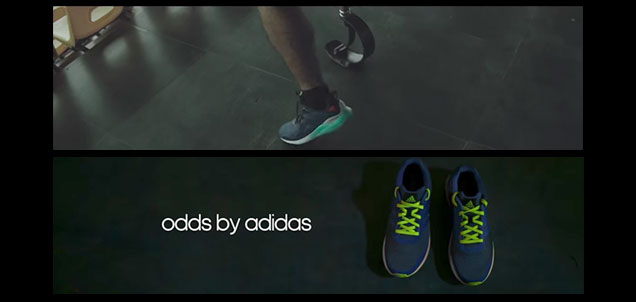
    But then these things happens at all jury-led events and for Taproot, accolades (and metals) at D&AD, OneShow, Adfest or Cannes on the international arena have meant some satisfaction. And now the Adidas Odds campaign has bagged the biggest award at Spikes Asia – the Integrated Grand Prix. Taproot Dentsu has also named as the Indian Agency of the Year Award on the back of 10 metals.


    Says Santosh Padhi, Co-founder and Chief Creative Officer with a smile: “Though I was bit disappointed with Cannes results, as I felt it was under rewarded with just three lions at Cannes, but this has made up for that,” adding: “Spikes Asia is one of the reputed Advertising Award Shows of Asia, We are happy to got two of the greatest honors at Spikes Asia this year in form of a “Integrated grand Prix” and “India Agency Of The Year” awards.


    And his comments on topping the country at Spikes? “This is not the first time we have fetched this title of Agency Of The Year on global forum… Last year at Clio we were the India Agency of the Year.  In 2012 we were Adfest Agency of the year, at many occasions at various awards shows we have topped the table for India nothing gives us more high than to represent the nation at such international forums”


    The other Grand Prix bagged by an Indian Agency was in the ‘Good’ category. And it was presented to McCann for “The Immunity Charm” for the Ministry Of Public Health, Afghanistan


    Meanwhile, the 2017 edition of Spikes Asia closed with the Spikes Asia Awards last weekend where members of the creative industry from across Asia-Pacific gathered to celebrate and honour the best work from the region.


    This year, Spikes received 4,301 entries from 23 countries. In addition to the 20 award categories announced at the Spikes Asia Awards, the ceremony also announced the recipients of: Media Agency of the Year, Independent Agency of the Year, Network of the Year, Asia-Pacific Agency of the Year Award the Spikes Palm Award, the Grand Prix for Good and the Country Agency of the Year Award a new award that celebrates agency performance at a national level.


    Said Terry Savage, Co-Chairman of Spikes Asia on how this year’s crop of winning work was a shining example of how the Asia-Pacific region was embracing new creative trends: “There’s been a growing movement of brands and their creative partners producing a new kind of work that goes beyond advertising. The ideas being recognised at Spikes this year show brands breaking out of traditional channels, impacting culture and delivering business results.”


    This year’s winners were:

    Creative Effectiveness
    2 Spikes from 19 entries were awarded including 1 Creative Effectiveness Spike
    The Creative Effectiveness Grand Prix went to Colenso BBDO, Auckland, New Zealand for their campaign ‘Brewtroleum’ for DB Breweries/Heineken

    Design
    39 Spikes from 350 entries were awarded including 3 Gold Spikes, 14 Silver Spikes and 21 Bronze Spikes.
    CJ WORX, Bangkok, Thailand won the Design Grand Prix for ‘The Unusual Football Field Project’, AP Thailand

    Digital
    44 Spikes from 407 entries were awarded including 4 Gold Spikes, 17 Silver Spikes and 22 Bronze Spikes.
    Clemenger BBDO Melbourne, Australia, won its first Grand Prix for ‘Meet Graham’ for the Transport Accident Commission Victoria

    Digital Craft
    17 Spikes from 131 entries were awarded including 2 Gold Spikes, 5 Silver Spikes and 9 Bronze Spikes.
    The Grand Prix was awarded to R/GA Sydney, Australia for its campaign ‘Through the Dark’ for Google

    Direct
    37 Spikes from 291 entries were awarded including 2 Gold Spikes, 14 Silver Spikes and 20 Bronze Spikes.
    Clemenger BBDO Melbourne, Australia won its second Grand Prix for ‘Meet Graham’ for the Transport Accident Commission Victoria

    Entertainment
    13 Spikes from 126 entries were awarded including 2 Gold Spikes, 4 Silver Spikes and 6 Bronze Spikes.
    The Grand Prix was awarded to Hakuhodo Inc., Tokyo, Japan for their campaign ‘Gravity Cat’ for Sony Interactive Entertainment Inc.

    Film
    37 Spikes from 379 entries were awarded 6 Gold Spikes, 12 Silver Spikes and 18 Bronze Spikes.
    Colenso BBDO, Auckland, New Zealand won the Grand Prix for their campaign “Hard Man to Impress”, “Scared” and “Treehouse” for Pedigree

    Film Craft
    43 Spikes from 441 entries were awarded including 6 Gold Spikes, 14 Silver Spikes and 23 Bronze Spikes.
    There was no Grand Prix awarded

    Healthcare
    25 Spikes from 188 entries were awarded including 4 Gold Spikes, 6 Silver Spikes and 14 Bronze Spikes
    Clemenger BBDO Melbourne, Australia won its third Grand Prix of the evening for ‘Meet Graham’ for the Transport Accident Commission Victoria

    Innovation
    3 Spikes from 32 entries were awarded including 2 Innovation Spikes. The Grand Prix was presented to Dentsu Inc., Tokyo, Japan for ‘Smile Lock Outlet’ for Toyota

    Integrated
    6 Spikes from 43 entries were awarded including 1 Gold Spike, 2 Silver Spikes and 2 Bronze Spikes.
    The Grand Prix was presented to Taproot Dentsu, Mumbai, India for ‘Adidas Odds’ for Adidas

    Media
    37 Spikes from 333 entries were awarded including 7 Gold Spikes, 14 Silver Spikes and 15 Bronze Spikes.
    McCann Melbourne, Australia won the Grand Prix for ‘Made Possible by Melbourne’ for the University Of Melbourne

    Mobile
    20 Spikes from 173 entries were awarded including 3 Gold Spikes, 5 Silver Spikes and 11 Bronze Spikes
    The Grand Prix was awarded to MediaMonks, Amsterdam / Google Asia Pacific, Singapore / Lenovo, Singapore / Marina Bay Sands, Singapore / WWF Singapore, The Netherlands for ‘Arts Science Museum: Into the Wild’ for Google, Lenovo and WWF

    Music
    7 Spikes from 56 entries were awarded including 1 Gold Spike, 2 Silver Spikes and 3 Bronze Spikes.
    Host Sydney, Australia won the Grand Prix for ‘Summer Wonderland’ for Air New Zealand

    Outdoor
    28 Spikes from 293 entries were awarded including 4 Gold Spikes, 13 Silver Spikes and 10 Bronze Spikes.
    CJ WORX, Bangkok, Thailand won its second Grand Prix of the evening for ‘The Unusual Football Field Project’, AP (Thailand)

    PR
    26 Spikes from 264 entries were awarded including 4 Gold Spikes, 8 Silver Spikes and 13 Bronze Spikes.
    The Grand Prix was awarded to Clemenger BBDO Melbourne, Australia for ‘Meet Graham’ for the Transport Accident Commission Victoria

    Print & Outdoor Craft
    17 Spikes from 177 entries were awarded including 3 Gold Spikes, 6 Silver Spikes and 7 Bronze Spikes.
    Ogilvy & Mather Japan, Tokyo, Japan won the Grand Prix for its campaign ‘Flounder Fish’, ‘Octopus’, ‘Lotus Root’, ‘Mackerel’, ‘Onion’, ‘Mushroom’ and ‘Okra’ for Sagawa Shoyu Inc.

    Print & Publishing
    10 Spikes from 148 entries were awarded including 3 Gold Spikes, 4 Silver Spikes and 2 Bronze Spikes.
    Ogilvy, Bangkok, Thailand, were awarded the Grand Prix for ‘Build the Future 1’ for Dksh (Thailand) Ltd.

    Promo & Activation
    26 Spikes from 346 entries were awarded including 4 Gold Spikes, 6 Silver Spikes and 15 Bronze Spikes.
    The Grand Prix was awarded to CJ WORX, Bangkok, Thailand for ‘The Unusual Football Field Project’ for AP Thailand

    Radio
    12 Spikes from 104 entries were awarded including 1 Gold Spike, 4 Silver Spikes and 6 Bronze Spikes.
    Bashful, Sydney / Kind Agency, Sydney, Australia were awarded the Grand Prix for ‘Smartwig’ for The Star Sydney


    The Grand Prix for Good was presented to McCann India, Mumbai / McCann Health, Mumbai, India for “The Immunity Charm”, Ministry Of Public Health, Afghanistan

    Younghee Lee, Chief Marketing Officer of Samsung Electronics and Head of Global Marketing for Samsung’s Mobile Business accepted the Spikes Asia Advertiser of the Year Award.

    Network of the Year was presented to BBDO with Dentsu coming second and Ogilvy & Mather in third place.

    Dentsu Inc., Tokyo, Japan received the Asia-Pacific Agency of the Year, Clemenger BBDO Melbourne, Australia took second place with Colenso BBDO, Auckland, New Zealand in third.

    The Independent Agency of the Year was awarded to CJ WORX, Bangkok, Thailand, Fred & Farid Shanghai, China came second and Enjin, Tokyo, Japan came third.

    Media Agency of the Year was awarded to PHD, Auckland, New Zealand, OMD Singapore, Singapore was second with Dentsu X, Makati, The Philippines in third place.

    Tohokushinsha Film Corporation, Japan received the Spikes Palm, Revolver/Will O’Rourke, Australia came second and Joinery, USA in third.

    The Country Agency of the Year, a new award for 2017 saw the agencies below receive the honour of the most awarded agency in their respective countries.

    Japan: Dentsu Inc., Tokyo
    Australia: Clemenger BBDO, Melbourne
    Singapore: Ogilvy & Mather, Singapore
    China: Fred & Farid Shanghai
    India: Taproot Dentsu, Mumbai
    Thailand: CJ WORX, Bangkok
    The Philippines: Dentsu Jayme Syfu, Makati City
    South Korea: Cheil Worldwide, Seoul
    Hong Kong: Cheil Worldwide, Hong Kong
    Malaysia: Isobar, Kuala Lumpur
    Indonesia: Hakuhodo Indonesia, Jakarta
    New Zealand: Colenso BBDO, Auckland

  • Taproot announces senior level appointments

    By A Correspondent


    Ayesha Ghosh

    Taproot has appointed two senior resources into its fold. Ayesha Ghosh joins Taproot as the General Manager while Ninad Umargekar has joined Taproot as the Head of Strategic Planning.


    Having studied Economics and Advertising in Delhi, Ayesha spent most of her working years in Mumbai. In her previous assignment, she was heading the Mumbai office of Contract where she spent 14 good years. At Contract Ayesha was involved with the integrated communication planning on brands like Shoppers Stop, Asian Paints, Cadbury and Star Plus among others. She also worked closely with the Design, Digital and Core Consulting divisions of Contract. A voracious reader and foodie, Ayesha is also a fitness enthusiast.


    Ninad Umargekar

    After studying Mathematics and doing an MBA, Ninad worked with IMRB in quantitative research followed by six years at Lowe. At Lowe he started with channel planning and then moved to brand planning working on a wide variety of brands like Lifebuoy, Hit, BookmyShow, Finolex among many others.


    Agnello Dias

    Commenting on Ninad’s appointment, Agnello Dias said: “Strategic planning is a key discipline that we are focusing on and Ninad’s arrival helps us take a significant step forward in that respect. He has a sharp mind and the ability to be precise with people observations. A trait we respect and admire as that is what has seen us produce some really powerful work in the past.”


    Umesh Srikhande, CEO, Taproot said, “At Taproot, the endeavour is keep adding value to the brands entrusted to us. Strengthening our relationships, growing our talented people, adding sharpness to our counsel and overall adding more depth to everything we do. And that is where hiring senior talent like Ayesha Ghosh becomes important. Her high levels of maturity, cross category experience, her strong people-team skills and her bias for good ideas will mean a happy and meaningful addition to our bandwidth.”


  • BBDO India, Taproot get shortlisted in Film Lions on Day 5 at #CannesLions2015

    By Shephali Bhatt


    Only two days for the Cannes Lions festival to come to a close and still no sight of Indian admen, barring a few, anywhere close to the seminar halls. One would conclude the only Indians who are here to attend sessions are the Young Lions. Except we heard one of them say ‘Young Lions’ is just another way of getting an entry to the fest.


    Nothing is sacred anymore, we guess. But guess who arrived without notice right in the middle of the day to collect a Grand Prix Lion — BBDO India’s chairman and creative chief Josy Paul and chief executive Ajai Jhala.


    “We told Chris (Thomas) there’s no need to courier our Lions, the courier boys are here now,” he said. It’d seem that Paul got off the right side of the plane in the morning because BBDO India’s video for iCONGO titled ‘The World Wants More of A Good Thing’ got a shortlist in Film Lions.


    Also shortlisted is Taproot Dentsu’s film for Mumbai Mirror. The BBDO entry is particularly ironic though, considering its premise is to question the fake entries that win at global festivals such as Cannes.


    The video is addressed to Terry Savage, chairman of Cannes Lions, in fact. On hearing the news, Jeroninio Almeida, founder of iCONGO said: “I am sure very soon people in award ceremonies will also get conscientious about tracking the veracity of social campaigns created by advertising agencies. The process for change has begun and I am sure we will see impact on a bigger scale very soon. Though it’s ironic I am glad that people who had put in their efforts to help us raise this issue are getting their due recognition.”


    Source:The Economic Times

    Copyright © 2015, Bennett, Coleman & Co. Ltd. All Rights Reserved

    Licensed to republish


  • Upclose with Rohit Ohri, Dentsu India


    By Pradyuman Maheshwari


    After 21 years at JWT, Rohit Ohri moved to head Dentsu India in mid-2011. A scuba diving and golf enthusiast, Mr Ohri completed three years at Dentsu in August this year. From an all-Japanese client set, today over 70 percent of his clients are homegrown.


    With Taproot and WebChutney in the fold, Mr Ohri is now looking at more acquisitions – Public Relations consultancies, Activation companies and even regional agencies. Excerpts from a freewheeling conversation with Rohit Ohri:


    Over two decades at JWT – 21, to be precise and now three years at Dentsu. How was the transition and the journey been thus far?

    Three years have been enormous in terms of learning. For 21 years in JWT, I learnt at a particular tempo and pace. Being the largest advertising agency in India, there are systems and processes which kind of work on their own and you don’t really need to do much around them. When I joined Dentsu, the entire organisation had to be built. From IT to HR to the talent and client management systems, all that had to be put into place. While the previous management did a pretty good job in terms of launching Dentsu in India and getting clients, the fundaments were pretty weak. One of the big things we needed to do was to put these in place. It wasn’t just a quick-fix to get the organisation back on track, it was really about transformation. In the three years, we’ve grown significantly. In 2013-14 we’re the fastest growing Dentsu branded agency in any country anywhere in the world.


    When you joined, it was a depleted set of accounts…

    After the previous management and the top bosses moved out, there wasn’t any Indian leadership. There was an exodus of Indian clients and a lot of the Japanese clients weren’t really happy with the instability in the agency. There were challenges on every count. All the Dentsu-branded agencies were in the red. When I joined, I didn’t realise how big the mess was, but I knew it needed much fixing. Eight-nine months is a huge time for an agency to lose a lot of its momentum and its business.


    The fact that you have to build afresh must have also been an opportunity for you to set up an all-new organisation.

    Yes, we built the whole agency again ground-up; I dipped into my years of experience at JWT, into what was the University of Advertising, and I was fortunate enough to pick out the things that would work and leave things that wouldn’t.


    As you look back, would you say joining Dentsu was the right decision?

    The amazing thing is when the news broke on my joining Dentsu, many people called and said: ‘Are you nuts?!’


    Some of us in the media also thought the same.

    (laughs) They said I must be crazy. If I waited little longer, I’d be the head of JWT! Why quit? Today, the same people say this was an inspired move!


    21 years at JWT is not a short time. Clearly, the path to ahead was known to you. If it wouldn’t be JWT directly, a Contract, etc?

    Yes, but it wasn’t defined. It would’ve been a zig-zag road and gone up there eventually, but I don’t think we had great clarity behind that at that particular time.


    Many people have left JWT in their prime. Wonder why.

    It’s different strokes for different people. I felt whenever I needed growth, JWT was able to provide me the space. When I was in Kolkata from just being an account executive to heading all of account management, I said I needed another opportunity and I was moved to Delhi to head of Pepsi. That was a fantastic time. I absolutely loved the seven years I spent as head of Pepsi, we did some of the finest work Pepsi has ever done in this market. That was hugely satisfying! Then I headed the Delhi office which was another huge challenge and hugely exciting. We grew rapidly and Delhi became the largest office of any agency in India and one of the most profitable offices of JWT worldwide. It was very strong and when I quit, we were at the peak. To me, it’s very important in life to time your exits and entries.


    But at the fag end of your JWT stint, there were some dampners like a bit of Pepsi and Airtel going to Taproot, right?

    Not really. When you look at the time when I’d left, it was a Rs 112 crore revenue for JWT Delhi office only, larger than many agencies put together! That time it was the fourth largest advertising agency in India as an independent office. We were growing very rapidly. To my mind, one of the big reasons to move out was not the slowing down of JWT, but it was about the opportunity.


    Did they try to hold you back?

    Yes, of course. There were other options to go abroad and at that time I wasn’t so keen on moving out of India.


    You had some fantastic clients you were virtually married to at JWT. Didn’t you think of bringing them to Dentsu?

    Not at all. While I had relationships with many clients, to my mind the most important thing was that I didn’t want to run before we could walk. The agency had to be built first to a particular strength and capability before you could take on a big client. You can get a client but you can lose a client even faster. In all fairness, Dentsu at that time had pretty big clients. Toyota, Maruti Suzuki, Honda, Panasonic, Hitachi, Canon, we haven’t lost any. When I joined we just had the Japanese clients.


    So you consolidated and then the Taproot acquisition.

    Aggie (Agnello Dias) and I worked together in JWT and while I was in JWT, he started Taproot and we lost one project in Pepsi and a bit of the Airtel business to him. We were on two sides of the fence in many ways. There was fierce competition. It’s amazing to think that in one lifetime, there was this great partnership when we were together and then we were on opposite sides of the fence.


    The perception was that Dentsu is a Japanese agency only for Japanese clients and the creative ideology is completely middle-of-the-road! To change all of that you needed a flaming torch. That would be an agency like Taproot and quite honestly, Dentsu had not even heard of TapRoot. The Japanese took my word and we agreed this was a great idea. At that time, I think, Aggie was already talking to some holding companies and pretty close to signing on the LOI. Everyone said the Japanese will take so long! But if they have an agreement in the plan and they believe your strategy is correct, the implementation is absolutely fast! Within 10 days they had an offer on Aggie’s table saying this is what we’re looking at.


    It was a huge high for you, a personal victory of sorts. Would you say that has been your biggest high in the last 3 years?

    Yes, the Taproot acquisition was a huge high. Suddenly the industry perception about what Dentsu wanted to do in India actually changed. Fundamentally, apart from the fact that we’ve done well on a business front, changing perceptions is the hardest part in the business.


    Taproot has been reasonably independent in the Dentsu fold. Any plans to change the name.

    You’ll see some changes going forward. It’ll become a Dentsu company, the Taproot brand will stay.


    A Dentsu in the prefix or suffix?

    We’re working on the nomenclature. Taproot has a very unique culture and we didn’t want to destroy that. You’ve got something for a specific value. There were different stages in the post-merger process. In the first stage, we kept it completely separate. In this stage, we started working together. We have a Creative Council and all creative guys work with them on certain group creative initiatives. Part 2 is we’ve started pitching for clients together. Because we’re working together, we use Taproot’s creative ability and you use Dentsu’s integrated thinking.


    This has been working very successfully over the last two years. I’ll give you an example. We’ve got NourishCo, a Tata and Pepsi joint venture. We handle all their businesses together. We have AkzoNobel here, ITC in Bangalore and we did the Congress business together. It’s a win-win situation for both.


    What about your existing creative agencies?

    We have four creative agencies: Taproot, Dentsu Communications, Dentsu Creative Impact and Dentsu Marcom. It’s not such a huge number because Dentsu Communications is roughly the same size as Taproot. If you look at just Dentsu brands, they’ve also grown on their own. In the South, we won TVS, we have MRF in Chennai, HT here and then we have Max, the agency has won a large number of clients on it’s own. The big thing has been Honda. We’ve seen enormous growth in Honda Motorcycles. Dentsu Creative Impact and Dentsu Marcom are doing very well. All of them are growing. To achieve 65 per cent growth, every single piece of that business has to deliver. All the engines have been firing. The idea is that the acquisition adds to the overall Dentsu strategy which is interconnected. The entire group benefits then, from that relationship.


    How about Dentsu Media?

    Ever since Divya Gupta has come on, we’ve made fair progress, a lot of it has been a challenge for us. This year has been spectacular for Dentsu Media. They’ve done really well.


    How’s the WebChutney acquisition doing?

    When I look at my overall strategy, I see that four or five years down the line, there won’t be separate digital and creative agencies. There will be one agency. Keeping creative excellence in mind, I was looking for a digital agency that also excelled in creative work. That’s been my greatest satisfaction to see the quality of work that WebChutney has done…


    Is that also going to be integrated in the system like Taproot?

    A lot of it is already happening. One of the big initiatives we’re doing for next year is that the creative agency and the digital agency will sit collocated, so WebChutney move in with the Dentsu brand agency.


    And one keeps hearing about more acquisitions coming up, are they the route that you looking at?

    I don’t think acquisitions is the strategy that we are following but we are looking at full-service integrated offering for clients. Here, we have a creative agency with a media agency and a digital agency coming together and creating a whole set of services, so there are very clearly some holes still left to be filled.


    Like?

    Like PR and Activation.


    PR and Activation, and anything else?

    And, of course, digital is one space we are continuously looking at.


    Any more creative agencies?

    Well, we are not closed to that, that’s all I can tell you right now.


    You are already have a large presence in Delhi, Mumbai and Bangalore. Why another creative agency?

    May be for geographic expansion. We were not there in Kolkata.


    Is there any business there?

    There is a fair amount of business in Kolkata, Ahmedabad and Hyderabad. JWT’s Mindset acquisition in Hyderabad has been quite a successful acquisition for them. So the opportunities exist…


    Lastly, a few months back, there were rumours that you were quitting.

    Yeah, I heard those rumours myself, but I did clarify very quickly. There is no truth in them, but people keep talking. The interesting thing is that when I speak to my colleagues outside India, they are absolutely amazed that people in advertising agencies in India get so much of media coverage.


  • Taproot to get Dentsu identity. Exec Chairman Rohit Ohri eyes PR, Activation & regional creative shops

    By A Correspondent


    Rohit Ohri

    In August 2012, Japanese advertising major Dentsu acquired Taproot, the boutique creative agency set up by Agnello Dias and Santosh Padhi. Ever since Aggie and Paddy (as the Taproot co-founders  are called in the industry) have integrated into the Dentsu India system.


    They head the Creative Council that the network has set up in India and now jointly do business like the Congress campaign or for NourishCo, the Tata-Pepsi jv.


    Now, the Mumbai-based creative agency which has produced some awardwinning advertising since it was set up in early 2009 is all set to sport the Dentsu identity.

    When asked whether it would mean that a Dentsu will be prefixed or suffixed to the name, Mr Rohit Ohri, Executive Chairman, Dentsu India said in an interview to ‘dna of brands’ and MxMIndia: We’re working on the nomenclature. Taproot has a very unique culture and we didn’t want to destroy that.”

    Meanwhile, Mr Ohri also said in the interview that “there are very clearly some holes still left to be filled”. These “holes” are reference to PR and Activation agency, he said. In addition, the appetite for digital shops continues even after the WebChutney acquisition.


    And that’s not more. Citing the success of JWT’s success with Hyderabad’s Mindset, Mr Ohri has his eyes and ears open for regional biggies.


    See ‘dna of brands’ at: http://epaper.dnaindia.com/epapermain.aspx?pgNo=13&edcode=820009&eddate=2014-12-01


    Don’t miss the Rohit Ohri interview on MxMIndia tomorrow


  • Baddies turn scared in Taproot’s new film for Mumbai Mirror

    By A Correspondent


    After having made waves and won some critical acclaim (and many awards), Mumbai Mirror has unveiled an all-new television commercial. (Link: http://youtu.be/2iTWJiEeCuI)


    So what’s the insight behind this campaign, we asked Rahul Kansal, Executive President, Bennett, Coleman and Company Limited. “Criminals and corrupt people have got away with impunity in India for way too long,” he said, adding: “The average citizen is impatient to bring an end to this impunity. We decided to show these bad elements in  society being finally brought to book, thanks to the fearless exposes done by Mumbai Mirror.”


    Fundamentally, this film is actually saying the same thing as the first film, said Mr Kansal. “However, its totally inverted the prism through which the story is being told. The last time around, we showed it from the point of view of the citizen, who had been hurt by the system and was fighting back. Now we are showing it from the point of the ‘baddies’, who are running scared.”


    Taproot was the creative agency for the film and the brief from BCCL to the agency was clear: “To continue to portray Mumbai Mirror as a fearless voice of the common citizen of Mumbai.”


    Client: BCCL:  Rahul Kansal, Sandeep Singh Arora, Amiteshwar Kukreja, Pooja Bala and Sana Arora

    Agency: Taproot: Umesh Shrikhande, Santosh Padhi/Agnello Dias – Chief Creative Officers

    Production House: Ramesh Deo Production (RDP)

    Writer: Agnello Dias

    Director: Abhinay Deo

    Music: Ram Sampath

    Producer: Apurba Sengupta

    Cinematographer: Kartik Vijay


  • Airtel unveils ‘The Smartphone Network’ ad campaign

    Bharti Airtel has launched its ‘The Smartphone Network’ (TSN) advertising campaign.


    The new campaign by Airtel rides on the surge in adoption of data services led by increasing penetration of smartphones across India. “Data is clearly driving the next phase of telecom revolution across the globe. In recognition of this phenomenon, we at Airtel have made significant technology and network investments to ensure we deliver the best data experience for smartphone users in India. ‘The Smartphone Network’ campaign by Airtel drives this very message in a manner that is intrinsic with our brand positioning”, said Mohit Beotra, Chief Brand Officer – Bharti Airtel (India).


    In line with brand Airtel’s larger positioning around enabling relationships – the campaign’s television commercial (TVC) is a thematic film with a contemporary take on the role that smartphones and data networks are playing in bringing millions of data savvy Indians closer to one another. “From ‘Express Yourself’ to ‘Har Friend Zaroori Hai, Yaar‘ – enabling magical relationships have always been at the very core of Airtel’s brand values. Our all new campaign strengthens Airtel’s legacy of identifying fresh and relevant insights around relationships – and is a contemporary take on this very theme”, added Beotra. Supporting the main TVC, a set of short commercials emphasizing the strengths of the Airtel data network (across parameters like faster video streaming, longer battery life etc.) will also be aired.


    Designed and developed by Taproot, the TVC will run on all national TV channels, and also have a strong presence in the digital world. The campaign will be supported by a strong presence on static media, including outdoor and retail.


  • More khushi when there’s gham


    By Shobhana Nair


    Advertising and marketing have always been in a happy state in India. It’s an emotion that combines joy and delight of consumers, thereby creating a happy environment for consumption.


    Lloyd Mathias

    Before going for a macho refrain, soft drink Thums Up had embraced its tagline of ‘Happy days are here again’ nearly four decades back. In fact as one brand manager told us, it’s an evergreen emotion and always works magic for a brand. “Happiness is a very positive emotion with most brands wanting to build messages around it as it is a primary emotion,” says Lloyd Mathias, director Green Bean Ventures who was head of marketing at Tata Docomo, Motorala and Pepsico India.


    Indeed it is. From Thums Up to Domino’s Pizza with Khushiyon ki Home Delivery and from Khushiyon ki Planning at Max Life Insurance to Khushiyon ki Chaabi for Tata Nano and Khushiyon ka Khazana wali Maggi for Maggi, it’s khushi-ness all over. In fact the same line – Khushiyon ki Diwali – was used in the ads of brands Airtel and Asus.


    The recent Coca-Cola campaign with Deepika Padukone and Farhan Akhtar talks about the little moments of happiness. The entire sequence of missing the bus, chasing it and boarding it. “It makes a lot of sense to be associated with a positive emotion. Products like beverages and food are consumed by people in a positive frame of mind,” reasons Mr Mathias. “Another commercial by Nestle about a family adopting a girl child and how the boy makes up with her over food is a good campaign. There’s a lot of joy in the food category.”


    K V Sridhar

    Khushi, when there’s Gham: Although happiness is an emotion that has been used by marketers for decades, in times of a slowdown and a liquidity crunch, it’s often the possible solution to keep buyers happy. Says K V ‘Pops’ Sridhar, Chief Creative Officer India subcontinent, Leo Burnett: “When society is depressed, it needs something which is optimistic or makes people happy. Unemployment, corruption, politicians, etc add to this state. Therefore, brands are showing optimism and presenting a picture that not everything is going wrong. Today, it has become important for big brands to not talk about the values their brands have, but the values that the brands will bring.”


    Santosh Padhi

    According to Santosh Padhi, Chief Creative Officer & Co-Founder, Taproot, happiness is an emotion that’s employed by most brands. “If I want to sell something, I would rather do it in a positive way. In general, brands talk positive unless it is a category like insurance where you need to make your point in a negative way where it gets hammered and more understood. Otherwise, life is all about positivity. Happiness is one part of it; humour is another. And then there is hope and simply being positive.”


    Happiness is of course not a phenomenon that works only in India. It’s a global sentiment. Adds Mr Padhi: “In China, Pepsi released a big campaign on Happiness. There’s a man who’s offering happiness to people who are in need like education, shelter, umbrella, spectacles. Pepsi is running it for the past 20 years in China. So when Coke came a few years back with ‘Open Happiness’ as part of a global mandate, Pepsi China didn’t stop. In a huge market like China, two competitors are ‘doing’ happiness.”


    The Coca-Cola brand launched the campaign internationally in 2009 – around the time of the slowdown – and the ongoing  Deepika-Akhtar commercial is a part of the five-year-old activity.


    Bobby Pawar

    Over-used concept: Says Bobby Pawar, Director and Chief Creative Officer, South Asia, Publicis Worldwide: “I think in tough times, brands want to hold out people to heart. Happiness has a gravitational point for that. But it is such a broad concept unless you try to find true meaning in it. ”


    Mr Pawar believes not all advertisers are doing it right. “Happiness as a term is getting over-used. Coke has nailed it internationally. They do create happiness with their world machines,. Only Coke has got it right. Rest of them are like whatever.”


    Anand Halve, brand consultant and a veteran ad professional and Co-Founder, Chlorophyll adds on to Pawar’s sentiment:  “Not only happiness, all emotions are being over-used. Brands have started to use this term that aapki zindagi badal jaayegi. Just look at the number of brands that use the word ‘life’. Brands should aim to do beyond just the functional thing. You have to be careful about not going overboard and sounding incredible.


    “Coke is doing really well through Coke Studio. Music makes people happy and that to me is genuine happiness. Just hanging a line at the end of an ad doesn’t mean anything… agar mujhe khush karna hai toh, take me out for dinner…don’t just send a voucher,” says Mr Halve.


    But Mr Mathias believes, happiness is here to stay. “It can never go out of style. It is a very basic emotion and in a typical day one has a lot of happy moments. It is very logical for brands to show people in a happy frame of mind especially categories like beverages or food which are driven by this. It is an important emotion to build your brand on.”


  • It’s Dentsu, Taproot & JWT for Congress


    By Pritha Mitra Dasgupta


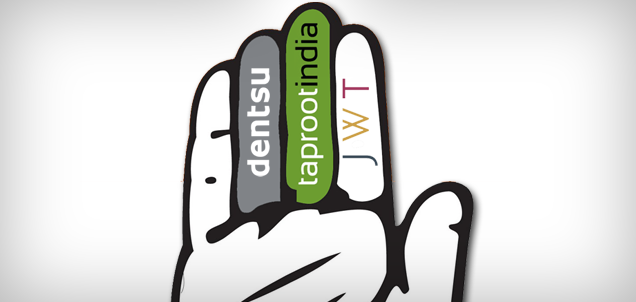
    The Congress party has opted for many of the same people who were behind its advertising campaign for the 2009 elections, picking Dentsu and Taproot to join JWT as the agencies that will handle the Rs 500 crore contract.


    The party made its choice last week, said more than five people aware of the decision. They didn’t want to be named. It was reported earlier that JWT had been chosen by the party to run its ad campaign.


    While the three agencies have been barred from speaking to the media by the party, the people familiar said Dentsu and its unit Taproot will handle the above-the-line (ATL) communications or those with a mass focus. Dentsu picked up a 51% stake in Taproot last year and both agencies made a joint pitch. JWT will handle the activation or on-ground events for Congress.


    The party is expected to spend nearly Rs 400 crore on ATL messaging that includes television, print, radio, outdoor and digital and around Rs 100 crore for the on-ground activities.


    The party will be looking to the ad agencies to burnish an image that’s been battered by corruption scandals and criticism over inaction on policy changes for much of its term. Experts said the Congress party will be looking to the food security legislation, the Right to Information Act, the direct transfer of benefits initiative and others as its main campaign planks for the election, besides indirect, subtle attacks on the opposition party over its secular credentials.


    “Rahul Gandhi wants to use ’empowering the common man’ as the primary theme of the election campaign and most likely it will drop the ‘aam aadmi’ tagline this time. The party is now exploring which will be the most effective medium to build this campaign,” said one of the people cited above.


    An email to Sanjeev Bhargava, managing partner and head of JWT Delhi, wasn’t answered. Agnello Dias, chairman and co- founder of Taproot India, and Rohit Ohri, executive chairman of Dentsu India Group, declined to comment. The Dentsu-Taproot team presented its media plan to Digvijay Singh and Jairam Ramesh last week, according to one of the people cited above.


    “Since Rahul Gandhi has been travelling extensively, they could not show the media plan to him. Gandhi is back this week and will go through the media plan following which the agencies will start working on the campaign,” this person said. Work will begin shortly on the nuts and bolts of the advertising campaign.


    “The agencies will appoint the production agency, song writers and so on, who will work on the campaign in November,” said the person cited above. “The ad campaigns will break in a phase-wise manner from January 2014.”


    The Congress party didn’t give a brief to start with but would provide feedback once it began whittling down the contending agencies, said a senior industry official on the condition of anonymity. “During the pitch process there were no briefs given to the agencies,” this person said. “There were nine rounds of presentations. Following every round, once the agencies were shortlisted, they were re-briefed by the party.”


    Both Messrs Gandhi and Singh played key roles in the special committee that oversaw the process, a party official said.


    “It was Rahul Gandhi who took the final decision to go ahead with Dentsu India and Taproot,” said this person.


    The choice of the agencies means that most of the people who worked on the 2009 campaign will also be working on this one. For instance, Messrs Dias and Ohri used to be with JWT, one of the agencies that handled the advertising campaign for the Congress party last time around. Also handling the Congress account in the 2009 election was Percept/H and Crayon.


    At JWT, the campaign was led by Mr Ohri, who was then senior vice president and managing partner of JWT’s Delhi branch along with Jitender Dabas, vice president and strategic planning director. While Dabas is now at McCann Worldgroup, Mr Ohri moved to Dentsu India and took with him the team that worked on the Congress campaign.


    This includes Soumitra Karnik, Suprotim Dey, Rajendra Singh and Chirantan Chandran. Mr Dias was with JWT until 2008 as chief creative officer but left soon after the election campaign started appearing.


    For the last election, JWT created a three-month campaign for Congress backed by the tagline “Aam aadmi ke badhte kadam”. The campaign took place in three phases with some 250 films and radio spots in 22 languages. Special films were also made to reach out first-time voters with the slogan “Yuva Bharat ke badhte kadam”, leveraging Rahul Gandhi’s leadership and the late Rajiv Gandhi’s contribution to the country’s development.


    They have a tough task ahead of them, given the current image of the party and the popularity of the BJP’s Narendra Modi.


    Source:The Economic Times

    Copyright © 2013, Bennett, Coleman & Co. Ltd. All Rights Reserved

    Licensed to republish