
Tag: Tanishq

  • Tanishq unveils new campaign to celebrate equality in marriage

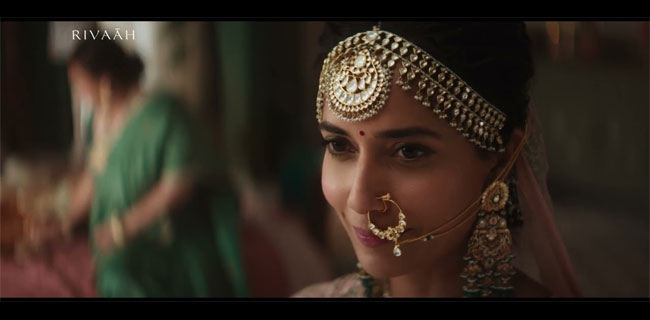
    Rivaah by Tanishq has launched a campaign that celebrates the modern bride who charts her own narrative.

    Conceptualised by Lowe Lintas, the campaign highlights the bride’s progressive mindset and beliefs, and how they hold true for her wedding as well. Notes a communique: “Marking a new milestone, Tanishq is launching its first-ever 3-minute-long multilingual film on Television, representing India’s diversity and adding to the brand’s legacy of compelling and expansive storytelling. This multi-starrer film features actors from various regions, further emphasising Tanishq’s deep connection and resonance with diverse audiences from across states in India.”

  • Can Indian Brands Go Global?

    Can Indian Brands Go Global?

    Ashoke AgarrwalCan India become an economic superpower without some of its homegrown brands going global, whether in the B2C or B2B space?

    Probably not.

    The Germans reconstructed a shattered war economy and became an economic giant, building global B2B and B2C brands like Siemens, BASF, Mercedes and BMW. The Japanese did with mid-market, high-volume brands like Sony and Toyota and the Koreans with value brands like Samsung and Hyundai.

    A brand is a multi-dimensional complex entity.

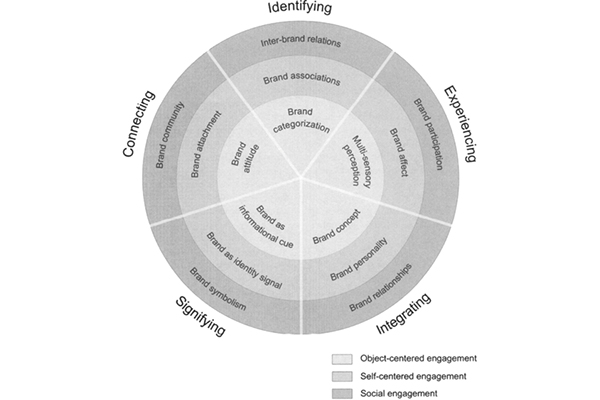
    Bernd Schmitt of Columbia Business School posited a model delineating a brand into fifteen dimensions.

    Figure 1: Consumer Psychology Model of Brands

    For a brand to succeed in India and establish itself globally, it must build on all 15 dimensions of its markets.

    However, one dimension is critical for a brand to become global.

    It is ‘Brand symbolism’ under the ‘Signifying’ triad.

    Schmitt writes, “Brands must be used to signify not only individual selves; they may also represent a group, a society, or a culture. As cultural symbols, they can stand for nations (McDonald’s), generations (the Gap), and cultural values (Marlboro, Harley-Davidson). As exemplary symbols worthy of admiration and respect, they can assume the role of cultural icons and assume mythic qualities.”

    In writing about Brand Symbolism, Schmitt refers to D.B. Holt’s 2004 book, “How brands become icons: The principles of cultural branding”.

    In his book, Holt explains how brands become icons by creating “identity myths” that connect with culture and help people make sense of their lives. He argues that iconic brands cannot be built using conventional branding strategies focusing on benefits, brand personalities, and emotional relationships.

    Iconic brands do not target specific consumer segments or psychographic types. They do not mimic pop culture but instead lead it. They speak with a rebel’s voice. They don’t try to mirror their customer’s thoughts and emotions. They speak into a cultural conversation in a relevant way and take on meaning beyond their categories.

    The global brands of the US, Germany, Japan, and Korea became global icons because they took a slice of their country’s cultural identity and gave it global resonance.

    Indian brands that aspire to global success must do the same. They must capture India’s soul and make it relevant to people’s lives worldwide.

    India has done it before with Yoga. Yoga is an iconic practice across the world that captures Indian asceticism and gives it relevance to the day-to-day lives of people.

    I have worked, in their foundational years, on two Indian brands that have lately begun to enter global markets – Amul and Tanishq.

    Both brands have the DNA to become global successes.

    Amul, a food brand focused on dairy products, can build on the Indian cultural concept of Satvik. Satvik is a powerful cultural concept that elevates dispassion and purity as the keystones to blissful happiness. This will find global resonance in the world looking to embrace “less is more” to combat environmental degradation and an epidemic of greed. Specifically in the area of food, there is growing disgust with cruelty to livestock to overstuffed, overdosed, and over-mechanised meat farms, leading to a counter-culture movement towards vegetarianism.

    Tanishq, as a jewelry brand, can build itself on the Indian cultural concept of ‘Shringar’. Shringar is one of the Navarasa – nine emotions, moods, or feelings that govern life. Shringara, in Sanskrit, means love, romance, decoration, beauty, attractiveness, and an aesthetic sense. Shringar can give rise to all kinds of love, be it romantic love, love between siblings, parental love, holy love, or even love towards a pet.

    Tanishq can build itself as the Shringar that creates, and nurtures love in an increasingly stressed and alienated world.

    I know that both brands–Amul and Tanishq–are currently in a conventional brand-building stage, focused on the 14 other dimensions of the Schmitt model. However, it might be helpful for them to chart their course to becoming global icons starting today. In that journey, they must identify a cultural strand that underlines their Indian identity while resonating with universal concerns and values.

    Other categories offer India the opportunity to build brands with the potential to become global icons. I’m fortunate to be working with one such brand. It operates in the fabric space–a natural fabric unique to India and resonant with the very Indian value of non-violence–Ahimsa–while being equally strong on Shringar. Someday, over the next few years, I hope to share the global success story with this very Indian brand.

  • Tanishq unveils latest TVC

    By Our Staff


    Tanishq, jewellery retail brand, unveiled their latest campaign TVC “Heera Ho Tum” this month, celebrating the spirit of Indian women. Directed by Harshwardhan Kulkarni and conceptualized by Lowe Lintas, the central theme, ‘Every Woman A Diamond,’ portrays the idea that every woman’s life journey deserves the brilliance and elegance that diamonds embody.


    Ranjani Krishnaswamy – General Manager, Marketing, Tanishq, said: “Every woman a diamond’ is a celebration of ‘her’ life. At a very visceral level, diamonds symbolise the life of a woman. Her understated view of her journey, her seemingly ordinary lens to her extraordinary life, of how far she has come and who she has become today. The story telling pictures a typical lens that women give to their lives, they go through many wins in life, many achievements, many life defining moments but still looking for reasons to celebrate themselves. Our attempt was to seed a thought of how her life in itself is a celebration that doesn’t need a justification. And a Tanishq diamond is such a befitting encapsulation of that celebration.”


  • And Tanishq does it again…


    By Sanjeev Kotnala


    Sanjeev KotnalaTanishq does it again. And the brand is appreciated for remaining true to its tradition of seeking change and making progressive statements, despite the last time getting trolled for trying to tinker with tradition and rituals.

    Frankly, what is there to appreciate. It is one of the safest advertisements on change. Earlier, Tanishq touched on more sensitive issues and took down the ads, and by now, the brand has realised that intent does not count in a troll-controlled ad.


    SIMPLE SAFE TANISHQ AD 

    The recent Tanishq Rivaah ad is simple. The bride tells her mom she will come home first to have her favourite Bhindi and then go to her in-law’s home in the same town. In the South Indian language edition of the Tanishq Rivaah advertisement, the bride’s favourite dish is changed to a regional favourite for that relatability.

    This change of dish with absolutely bas lip sync is seen and appreciated as an effort to regionalise, and it makes me laugh.


    CONSISTENCY MAKING ITS MARK

    Commentators on social media find the Rivaah ad brilliant. The brand continues to operate in the wedding space and plays it safe – really safe this time.

    Audiences by now expect Tanishq to pick uncomfortable societal truths and make a progressive point! Yes, the society that the brand finds comment-worthy is only Hindu.


    SOCIETAL TRUTH ONLY IN HINDU MARRIAGES AND RELIGION?

    The ad could have used any religion. Parsi, Muslim, Sikh or Christian as the base and would have made equal sense.

    Maybe in the case of Christian marriage, the ornamental display of Tanishq Rivaah’s designs would have been a problem. Parsi marriage may not have made sense for their limited population. Sikh weddings would have given equal opportunity for jewellery display. But a Muslim marriage with bridal jewellery would have been the most apt. However, that would have been playing with fire.

    Naturally, Tanishq Rivaah, like other brands, found uncomfortable societal truths in the easiest and largest segment- Hindu. These repeated instances make a Hindu like me question if the Hindu religion is a deep mine of regressive rituals, traditions, norms, experiences and expectations.


    NOTHING WRONG WITH RIVAAH AD.

    Interestingly, there is nothing wrong with the Tanishq Rivaah advertisement this time. Three is nothing to troll about.

    Tanishq Rivaah makes it simple. It says: ‘The wedding day is the day of celebrating choices, from choosing the partner to selecting how life should be. When you think of all the choices made so far, you feel a sense of pride and also gratitude. Gratitude to your mom for always understanding and supporting those choices. As this bride makes another choice, she knows her mother will embrace it joyfully’.

    The bride tells her mother she will come home first and have her favourite dish.

    It is a statement of choice with enough ambiguity about what the bride wants and where she will go when she comes to town. She is depicted as an independent, ambitious working woman, making the attitude and the decision understandable and digestible to the masses. It also makes the trolls hold their social media post.

    Though many Hindus, in the name of tradition and norms, would want to see the bride first come to her husband’s home and then one of the evenings or someday go to her mother’s place for the love of Bhindi, they would not find many issues with the advertisement.


    Net-Net

    I have nothing against change or empowerment or equality, or inclusiveness. These are all progressive thoughts that must be promoted and discussed.

    My grouse is against brands repeatedly targeting Hindu religious traditions, rituals or norms to make the point.

    It seems brands know and understands the risk of tinkering and pointing out anything with other religions’ traditions, rituals and norms. However, the brands take liberty and do not have the same sensitivity while reflecting on the Hindu religion.

    The advertising industry and the brands do not appreciate the advantage of a secular nation. The culturally divergent country without the ‘One country, One law’ approach provides a vast canvas of rituals, traditions, norms and expectations across multiple religions and regions. However, the Hindu religion is the one that is always commented upon, be it festivals or marriage or inheritance or woman empowerment.

    I am still waiting for some courageous brand to take on the minority religion and reflect on some not-so-progressive traditions and practices. There must be some.


    Sanjeev Kotnala is a senior business and marketing strategist and educator. He writes on MxMIndia on Wednesdays. His views here are personal.


  • These are a few of my favourite creatives…


    By Sanjeev Kotnala


    Sanjeev KotnalaVermajee, my mentor, asked if I had seen some good work in advertising and communication recently and why they didn’t make it to my blog and article. I realised that the audience might be feeling the same way, despite my appreciating the work I liked. It was time for me to list some creative hits of recent times. No, this is not a universal sample, as many good works could have escaped my attention, but I liked and enjoyed these few. And for a change, I killed my urge to title it: Good, Bad and Ugly.

    Apart from my TV viewing, newspaper reading and regular digital interaction, my exposure to creative work is thanks to @Beastoftraal on Twitter, Gokul Krishnamurthy column ‘Work that speaks’, Economic Times updates and Campaign. If I missed some work that should have been a part of this- do let me know.


    Hyatt: We put the ‘you’ in your wedding.

    How one wishes that things could be so smooth in a marriage. HYATT promises (or over promises) that special smooth destination wedding because they care for the details and go out of their way to make that special day memorable for you. Hyatt puts the ‘You’ in the wedding!

    It is different that the party would be more comfortable with a large team of wedding planners at such weddings than the hotel staff. The trust factor with hotels in events is still not high, which may be the reason for the communication.

    The instances framed in the communication are relatable and interestingly done. One hopes the brand lives up to the promise because the day is special for the stakeholders, and a bad experience would kill it. The campaign did remind me of the ‘I TAKE CAHRGE’, a successful internal campaign developed by Lintas for Oberoi hotels in the early nineties.


    Falling in Love: Home Centre

    I was misled entirely when I watched the Home Centre ad for the first time. Then I watched it, again and again to appreciate how the whole story. How the mind was purposefully diverted, and I enjoyed the little diversions.

    I find the ad again long; however, it holds the interest, and maybe the subject demands that the story is told ever so gently. Watch it and see how it traps you. The communication may take time to be appreciated, but such work impact remains longer.


    Make My Trip: Hotel Refund

    I like Make My Trip’s ads more than their product and services.

    Now, that is courageous of the brand. In the last few years, one has seen so many complaints about hotel and travel bookings with MMT that one has personally shifted loyalties. Maybe the brand must have realised the issue and appreciated the traveller’s desire for this freedom resulting in this communication. Hopefully, MMT is ready with better service. The cancellation charges on hotels and airlines are really frustrating for any traveller. This is not the first time MMT is talking in this language. One remembers their  MMT pe book kiya and Zero cancellation charge communication.

    This ad series reiterates the advantage of consistently using the same brand ambassador – Alia and Ranveer. Both perform admirably in different situations and characters. And then I do love multiple creative campaigns with synergy.


    The Times of India: Ad Flipbook

    It is not a new idea, but it is well executed. A similar idea was executed in early 2012 by the Dainik Bhaskar Group. The format of the physical book restricted the reach.

    The Times of India digital flip book avatar demonstrates to the clients and agencies the possibilities in innovative shapes and sizes with Times of India.

    The underlying thought ‘because one size does not fit all’ is so true that brands are blind to it. However, a digital version gives a higher reach, but the real feel is missed. Hope the teams have a whole set of sample prints to share with the agencies and clients.

    To succeed, rate and offer renationalisation is needed, which the masters in space marketing- Times of India does the best.


    Ashok Leyland: 75 years

    “Koi Manzil Door Nahin” is the new campaign part of the 75th-year celebration of Ashok Leyland. It continues with the life impact stories- the transformation the commercial vehicle promises in the customers’ lives. It is reassuring under ‘Koi Manzil Door Nahin’, which means no dream or destination is too far. The brand promises to be with the customers in this journey. Hopefully, this ad is a minor part of a more extensive detailed programme.


    Tanishq: Dream

    I love it for the simplicity and the twist at the end of this UGADI new year ad. And the question that I raised at the end is very pertinent. I am also happy that Tansihq, for a change, did not find some fault and suggested changes in Hindu rituals and traditions. It is nice to see the brand and take the route of reflecting on the positives.

    Tanishq had a lovely ad on women’s day titled superwoman; it presented the other side of her being a human too. Not something new or surprising, but the presentation is quite nice. Though I still find it to be too long.


    Skore: Can’t miss to change the game

    The SKORE  ad I first saw with WPL telecast, is so simple and so apt with the proposition of Change the game. Just watch it. The brand Skore has been doing some good work. Interesting is also the work of Love-Depot by TTK the manufacturer and marketer of Skore Nothing.


    Net-net

    Some good creative work is happening in the industry, but one rarely finds something superlative or excellent. I have in past written about the campaign,  Samsonite- Tested like samsonite  and Cadbury- Kisi Aur Ki Khushi.  Another addition to list is Dhan– for nothing but sheer clear TG definition and focus.

    It is good to see a decrease in brands taking potshots at Hindu traditions and rituals. This time, one found only the Holi ad by Bharat Matrimony as offtrack and completely exceeding the brand arena. Yes, a small section of rowdies gives the festival a bad name- but then the same message could be shared in a different tonality rather than colouring the whole Hindu society and festival in it.


  • Tanishq launches digital film to celebrate Ugadi collection

    By Our Staff


    Tanishq Jewellers, brand from the house of Tata, has launched a digital film to commemorate the Ugadi festival on 22 March. Tanishq’s first-ever digital film for Andhra Pradesh & Telangana is a celebration of brand’s Ugadi collection ‘Vardhini’. It is conceptualised by Tanishq and Mind Your Language Creative Services.


    Speaking on the launch of the film and the collection, Ranjani Krishnaswamy, General Manager – Marketing, Tanishq, Titan Company Limited said:“Today, women are yearning to carve an identity for themselves and are creators of their own narrative. The film is a tribute to the women who prosper and thrive in all their might and the Vardhini collection is truly a celebration of her extraordinary beauty and beliefs that make her stand apart.”


    Deepan Ramachandran, Creative Director- Mind Your Language!, added: “Tanishq, like the protagonist Swati in our Ugadi film, has always stood out with their progressive and new thoughts. Their brief to us was to straddle the conventional celebration of Ugadi with the new-age thinking of today’s woman. That’s when we asked ourselves – Why shouldn’t today’s woman dream differently? We found the answer in the story of Swati.”


  • CaratLane Jewellery launches new campaign

    By Our Staff


    CaratLane Jewellery – A Tanishq Partnership has launched their latest campaign #SolidAsASolitaire to talk about celebrating life’s milestones and achievements, with a Solitaire.


    Talking about the campaign, Jennifer Pandya, VP Marketing of CaratLane said: “We have understood from many customer stories and interactions that our Solitaires play a big role in helping customers mark their milestones and significant moments. #SolidAsASolitaire is conceived from numerous such stories that we want to celebrate. The beauty of the Solitaire is what makes it perfect for such important milestones, where nothing else is good enough. Through this campaign, we aim to showcase CaratLane as a primary destination for Solitaires for everyone who wants to mark their milestones forever.”


  • Are Hindu rituals the favourite hunting ground of brands?


    By Sanjeev Kotnala


    Sanjeev KotnalaIt is festival time, and every brand is trying to make a difference. Some work with the functional advantage to create a preference and charge a premium. Many brands adapt to the new purpose-led communication to influence customers. And a few rare breeds of brands, in the name of change, question rituals and their understanding and relevance in today’s world. Invariably the questions are targeted at the majority – Hindu. To an unbiased observer, the need and scope for reconsideration and rethinking of customs, traditions and rituals that exist only for the Hindus and other predominantly minority religions are perfect. There is nothing to change or question.


    Recently, SC rejected a plea to ban firecrackers. It said you are an opportunity and are coming right before the festival and should have come early, asking why and what they were waiting for. And this is right. Festivals are for the celebration of tradition, culture and rituals; raising issues and objections and suggesting new ways to the concerned community is absolutely hitting below the belt. I do not appreciate any brand – service, or organisation raising issues with the traditions of any community. There are positive and negative ways to do things, and brands should consider what is better.


    Why just Hindu?

    Most likely, it is a result of four simple things.

    Every brand wants to connect with the largest possible base of customers. Hindus form the largest chunk of the population and hence the natural choice for the creative and brand team to deep dive into it whenever they have a brief about change or community.

    Second, the Hindus have repeatedly demonstrated their incapability of taking any such attack on their culture, ritual, religion, or mythology to its logical end. They just raise their voices in protest on social media, suggesting boycotting the brand, and that is where they stop.

    The Hindus are victims of their own brand imagery of being secular and tolerant. Sanatan Dharma, in existence from time immaterial, pushes for adapting and inclusiveness. It has survived repeated attacks through time and is expected to continue doing so.

    It is old with a rich tradition of oral continuity and learning. As a result, the people of today readily believe that many truths have become fictionalized or exaggerated through time. And everything is anecdotal mythology lacking historical evidence. And hence the revered gods and goddesses and their messengers are mere characters in a story, which makes them an easy pick for suggestions and remoulding as per the brand’s liking.


    Science v/s Belief?

    So, from time-to-time, brands stretch the boundaries taking potshots at Hindus. Not all such instances are bad or wrong, they are progressive, and the new generation would agree with the brand thinking. However, there is only one option against the regular onslaught by brands challenging Hindu religious practices and thinking – defend everything questioned. Don’t not critically re-examine them as an isolated case. The fear remains that if one did not object to any of these instances, it would open the floodgates of questioning. Hence, at every opportunity, the challenge must be defended.

    Unfortunately, Hindus get trapped and forget that the defence cannot be based on scientific reasoning. It should be based on belief. Belief kills every doubt and reason for questions. Belief is the tactic and the tool that the minority uses so effectively, making the argument short.

    At times, a regular counter-argument is raised by the so-called secular forces. Is the Hindu religion so weak that advertisements can threaten it? Well, the direct answer is NO. However, if the attempt is continuous and on multiple fronts, there is bound to be an increase in doubts and levels of questioning.


    Blame the Brand and the Creative Team

    It is futile for Hindus to question the actors and the celebrities enacting the stories of change in brand communication. It is a deep strategic initiative of the brand after considering possibilities and potential reactions. They are in the business and think through their strategy. And, If they cannot do this simple thing, some consultants and advisors can help them with the possible reaction with analysis like SMEAR.

    So, whatever brand communication is finally in the public domain, it is approved. It is the brand thinking; this is how the brand sees Sanatan dharma. Maybe the followers should forget what the religious leaders, facilitators and guardians tell them. The brand knows better how Hindu practices must be shaped to remain relevant in today’s world.

    This reminds me of a simple, strong line from the recent movie Goodbye, and the brands should think about it. Everything that you don’t understand is not wrong. Brands having differential self-regulation beyond the guidelines and legality is highly desirable.


    Every brand communication could not be wrong?

    The problem is simple: the majority and the minority cannot allow any brand to question religious practices. There is no room for error or negotiation. Hence, every communication should be evaluated in isolation. The brands often suggest a little rethinking and point-of-view without questioning the basics. They use elaborate storytelling to create a situation – while suggesting a change. Not everything is bad, but no single body can define what is good and bad, what is acceptable and what is a cause for concern. Everyone has to take their own call.


    AU Bank – Badlav Hum Se

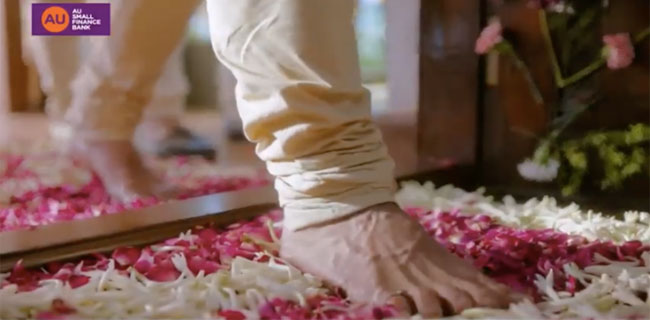
    The AU Bank advertisement is a case in point. It presents the flip side of the coin. Here the groom is coming to the bride’s home as a ‘Ghar Jawai’ for some reason, like the wheelchair-bound bride’s father. Usually, the bride stepping into the groom’s home would walk through the plate with Alta leaving her foot marks and kick a pot of rice. However, here it is playfully suggested that as it is the groom who is coming to the house, he should take the first step. What’s wrong with it? And if we allow our insecurities to raise such flippant questions, we will kill the art of storytelling. How come we understand that the breed of new authors in mythology space create contemporary fiction and not question the beliefs. Still, we forget when it comes to advertising.


    BharatMatrimony #BeChoosy

    This is a different case by Bharat Matrimony , a provocative thought. Breaking of Karva Chauth fast. No married woman will think breaking the fast is for her husband’s long life. This is a celebration of the thought. It is collective working towards what is good for the family and adapting to the situation. This is the celebration of culture with a strong positive statement- if I can fast for your life, I can also break my fast for you. This also shows that a negative portrayal is not the only way to question tradition or culture.

    In the past, the Stayfree communication – touch the pickle was the right suggestion with new solutions. And every year, we find new brands getting caught in this trap of questioning- where the celebration would be a far better option. Earlier brands like Tanishq and Manyavar did face the Hindu music.


    Net-Net

    The change will happen- it is a natural process. Questions will be raised- and they will be full of agenda. Suggestions will be made even by the least interested and knowledgeable in trying to hasten the process. However, suppose the brands think through the initiatives and stop poking fun only at Hindus. In that case, life could be much more straightforward. Conversely, Hindus may be better off by not questioning every brand communication that even remotely suggests a different perspective. However, personally, I think and reiterate that these brands under their purpose and change have no right to raise finger on the rituals and traditions of any community. And if they start raising issues with traditions of other communities, it does not solve the purpose or address es the issue. Such changes have to come from the communities and start at a group level. Brands taking on position and using mass media is not the way. The time is over and the brands may encounter harsh reality and retaliation in the place it matters- the market place.


    Sanjeev Kotnala is a senior marketing and business strategist. And an educator. He writes on MxMIndia every Wednesday. His views here are personal


  • Mia Jewellery by Tanishq launches campaign for festive season

    By Our Staff


    Mia, the jewellery brand from Tanishq, has launched a new campaign for the festive season. Mia’s festive film, ‘This is Me’, is conceptualised by Famous Innovations.


    Notes a communique: “The brand symbolises the modern Indian woman achiever, who is fiercely independent, liberated, is confident about her choices, a go-getter and whose aura lights up everyone’s lives. Mia by Tanishq believes that expressing oneself is a journey and it deserves to be celebrated and with every piece of fine jewellery Mia Woman buys, wears or gifts, she celebrates being herself. Mia woman has a unique sense of style, which is not just powerful but is also a true reflection of their indomitable spirit.  Mia stands for living freely as your true self, celebrating those who already do, and inspiring millions more.”


  • Tanishq celebrates leader in every mum

    By Our Staff


    Tanishq, the jewellery retail brand, has launched its latest digital film ‘The Interview’ ahead of Mother’s Day. Conceptualised by Tanishq and Dentsu Webchutney, the two-minute slice of life film attempts to break stereotypes around maternity break and showcases an apt description of Life’s Boot Camp through the eyes of a new mother.


    Speaking on the launch of the film, Ranjani Krishnaswamy, General Manager – Marketing, Tanishq, Titan Company Limited said: “The woman of today is seeking to express herself with honesty and authenticity to confidently celebrate her realities. She’s thriving in her vulnerability while rising in her power to change her world. The brand believes these powerful stories build positive momentum in cultivating a world of equality and adding to her self-growth. This film is an ode to women who challenge set narratives and inspire many others to follow the change”


    Speaking on the film, Binaifer Dulani, Founding Member and Creative at Talented said: “Studies reveal that it will take at least 136 years to close the global gender pay gap, and one of the biggest factors for this is the lack of representation of women in senior leadership. We need more workplaces to see beyond the dominant culture and create equity for women so that they can make their comeback. There is no parallel to the thought differentiation and unique life experiences mothers bring to the table, yet they are constantly on the back foot when they want to make a comeback after a maternity break. Through this campaign, we want to inspire organisations to take affirmative action towards retaining and hiring mothers, and we want to inspire mothers to claim their maternity breaks as what it is – a boot camp in life and leadership”


  • Lowe Lintas creates new TVC for Tanishq

    By Our Staff


    Tanishq, the ewellery brand from the Tata group, has rolled out its latest campaign – ‘Heera Ho Tum’. The 45-second TVC conceptualised by Tanishq and Lowe Lintas, highlights the intrinsic relationship between a woman and diamonds.


    Speaking about the campaign, Ranjani Krishnaswamy, GM, Marketing, Tanishq, Titan Company Ltd., said: “#EveryWomanADiamond’ is a celebration of the extraordinary in a woman’s life. Quintessentially women give themselves very little credit for the real transformational journey they go through in their lives – navigating work, home, motherhood, relationships, dreams & aspirations, the world of expectations, choices & decisions that come with all of these. A moment of pause, a lens of the extraordinary, a tone of self-realisation, & a note of self-appreciation is what this campaign is visioned to convey.”


    Added Sagar Kapoor, Chief Creative Officer, Lowe Lintas: ”Women today experience great satisfaction from pushing themselves to excel; be it in the workplace, as entrepreneurs, or even as homemakers. In the process, they set a very high bar, and are often oblivious to their own achievements. Our latest campaign, ‘Heera Ho Tum: Every Woman A Diamond’, aims to shine a spotlight on these everyday heroes. While they may feel that they need to do something extraordinary to deserve a diamond, the truth is that all women are diamonds themselves: tough, beautiful and precious.”


  • Ventes Avenues crafts campaign for Tanishq

    By Our Staff


    Ventes Avenues, a mobile adtech company, and Picsart, a digital creation platform, rolled out a campaign for Tanishq for its new Utsaah Collection. It featured a 5-day Tanishq Challenge for participants to use various backgrounds and a Tanishq necklace to make creative edits.


    Picsart created two Replays, a simple series of edits a user can apply to an image in just a few clicks, showcasing the Tanishq Utsaah Collection with various Jewellery as objects that the user can avail in their creatives and adjust however they deem fit. The Replays were pinned on top of the Picsart homepage to garner maximum engagement. As a result, Replays garnered 25.84 Mn views in seven days, marking the whole campaign a huge success!


    Said Tanasha Amlani, Deputy Brand Manager at Tanishq: “We wanted to encourage our loved community to adorn the Utsaah collection in real-time and be the authentic face of celebration and cheer. This collaboration lead to people adding their own charm to the intricately crafted pieces and elevated the Utsaah this festive season”


    Added Ravish Jain, Country Head, India at Picsart: “Our community loves interacting with brands in this unique way, and Tanishq’s new collection fits beautifully into the images they created. This is a great way for a brand to get their product in front of our large audience in the format they are used to: creativity!”


    Said Fauzan Rahim, Co-Founder, Ventes Avenues: “It has been a delight to collaborate with Tanishq for their Utsaah campaign. When we were first briefed on the Tanishq Utsaah festive Campaign, we fathomed Picsart – A Digital Creation platform that was tailor-made for the Utsaah Campaign. Given, festivities were around the corner and people were very active on Social Media apps to share their pictures and stories, Picsart is where they first ended up adding creativity and enhancing their pictures making it the aptest platform to generate user engagement for Tanishq Utsaah Campaign. We would like to thank Tanishq for taking this leap of faith and trusting us and our recommendation to successfully run their campaign.”