Tag: Subhash Chandra

  • What next as Zee takes on Invesco-OFI?


    By Our Staff


    So will we see a real-life Mahabharata war here? Right now it appears to be that, but in true TV soap style, guess it’s necessary to have some flexing of muscles before Zee founder and chairman emeritus Subhash Chandra pulls out all his trump cards, as he almost always does.


    On Friday afternoon, in filings to the stock exchanges, Zee has clearly declined the holding of an EGM, with details in an annexure. The letter addressed to Invesco and OFI concludes:


    “At its meeting held on October 1, 2021, the Board considered the Requisition Notice. Earlier, the Board obtained written legal advice from the Company’s counsel as well as independent legal advice from eminent former judges of the Supreme Court and senior corporate lawyers. After considering the unanimous advice received about the legal validity of the Requisition Notice, the Board deliberated, and unanimously concluded that the Requisition Notice is not valid, as it suffers from multiples legal infirmities which are summarized in the Annexure to this communication…. Accordingly, in the best interests of the Company as a whole, including all its shareholders and stakeholders, we express our inability to convene the EGM on the lines requisitioned by you.”


    Here’s a link to filing: https://www.bseindia.com/xml-data/corpfiling/AttachLive/4b679cc6-bceb-4b78-a730-8acddc9eeb01.pdf


    And this what a statement noted:


    This has reference to the requisition notice received by the Board of Zee Entertainment Enterprises Ltd., from Invesco Developing Markets Funds and OFI Global China Fund, LLC. The Board, comprising of experienced professionals deliberated and discussed various legal and statutory implications of the requisition notice.

    The Board sought the opinions of independent counsel, legal experts including senior retired Supreme Court judges and evaluated the matter in a fair and transparent manner. In its meeting held on 1st October 2021, the Board has arrived at a conclusion that the requisition is invalid and illegal; and has accordingly conveyed its inability to convene the Extraordinary General Meeting to Invesco Developing Markets Funds and OFI Global China Fund, LLC.

    The Board has arrived at this decision by referring to various non-compliances under multiple laws, including the Securities and Exchange Board of India Guidelines, Ministry of Information and Broadcasting Guidelines and key clauses under the Companies Act & Competition Act, and after taking into account the interests of all the shareholders and stakeholders of the Company.

    The Company cannot comment on any future actions since the matter is sub judice.


    From what we gather, there have been a fair number of attempts made to convince various quarters about how Zee is being wronged. It’s not that the Invesco-OFI aren’t reaching out to the media, but Friday’s development is sure to see lawyer fees as a significant component in the account books of the Zee as well as of Invesco-OFI.


    While we had The Times of India front-paging a report on the National Company Law Tribunal diktat on the EGM, there was this interview of RPG Enterprises chairman in The Economic Times that batted for Chandra and Punit Goenka and even spoke of an unnecessary shareholder activism.


    According to our sources, the Zee founder is making every attempt to ensure that the company he so painstaking created and nurtured doesn’t get out of his hands. The final approval for the Zee-Sony merger would require an ‘aye’ of 75 per cent of ZEEL’s shareholders many of who could work on the guidance of the government.


    Meanwhile, we can be sure that the Invesco-OFI camp is not going to sit quiet. First, there is an NCLT hearing coming up on October 4.


    Wait for it.


    Dear Editor: we think, we need to seriously consider employing a journalist well-versed in company law on our rolls. What say?

  • Can Punit Goenka survive the coup?


    By Our Staff


    Primetime, 9pm, is the beginning of the top-rated shows across all general entertainment channels. It’s the same on Star Plus, Sony, Colors as well as Zee TV. But on Monday, September 13, at Zee, there was a fair amount brewing off-air as well.


    Two directors – Ashok Kurien and Manish Chokhani – resigned from the Board. Or so the stock exchanges were intimated. Now, Kurien has been founder Subhash Chandra’s friend, and confidante from even before he set up Zee. Journalists like this correspondent took Zee and Chandra (he would suffix Goyal or Goel in his early days) seriously in the early 1990s thanks to Kurien, then one of the posterboys of Indian advertising.


    Chandra started out as a rice trader, and anyone who has been exposed to agricultural trading will tell you that one needs to be very sharp to be able to navigate the vagaries of the business. Media may be dramatically different, but in the days when Chandra was entering the scene, there were many situations to contend with.


    One was Rupert Murdoch who wasn’t obviously being kind to Zee which had emerged ahead of his Star network. Chandra wasn’t one to let Murdoch have it easy. But come 2000 and Kaun Banega Crorepati happened as did an assortment of saas-bahu sagas, and Zee lost its numero uno status amongst Hindi general entertainment channels.


    In the early 2000s, Zee – which was also a darling of the stockmarkets – saw some trouble with government regulators about the ways the company holdings were structured. Chandra steadily got out of the tangles, and started rebuilding the Empire.


    In the meantime, he grew the rest of the network. Investments in regional and news channels, distribution, films and overseas fare ensured that the empire had derisked itself from only flagship Zee TV being the cash cow.


    In the early 2000s, Chandra’s sons Punit and Amit got active with the various ventures and eventually headed critical components of the media empire.


    It was all hunky dory until many incorrect investments led to the company notching up heavy debts. This resulted in the family being pushed to having a minority holding in the all-important Zee Entertainment. Media and distribution were part of other companies. In early August 2021 though, Chandra wrote an open letter stating that he had 91.2 per cent of his debt with 43 lenders. Also, the balance dues will be settled soon.


    Cut to last week, when Bengaluru-based proxy advisory firm, Institutional Investor Advisory Services India (IiAS), raised some red flags on corporate governance issues at Zee Entertainment.


    This led Zee Entertainment to file a letter it received from its key investors to the stockmarkets.


    The letter started with this: We, Invesco Developing Markets Fund (formerly Invesco Oppenheimer Developing Markets Fund) and OFI Global China Fund llC are shareholders of Zee Entertainment Enterprises Limited and hold, as on the date of this letter, 7,43,18,476 equity shares and 9,73,50,000 equity shares, respectively representing an aggregate of 17.88% of the paid-up share capital of the Company that carries the right of voting.


    Invesco and OFI asked for the removal of Punit Goenka, Manish Chokhani and Ashok Kurien as directors, and the appointment of six independent directors.


    So will Goenka exit as CEO is the question that’s being asked by everyone. The annual general meeting is scheduled for today, September 14, at 4.30pm. The extraordinary general meeting that the investors have asked for in their mail dated, Saturday, September 11, has not been scheduled so far.


    There have been views that Invesco and OFI couldn’t have acted in the way they did without a clear study of the situation.


    However, according to industry sources, what turn this entire episode takes will depend a fair bit on how some quarters in the government react. The Subhash Chandra family has 3.99 per cent equity, and other than the 17.88 held by the Invesco and OFI, there are investors like LIC and other financial institutions which could follow the central government’s advisory.


    Clearly this is a soap opera that’s going to see some twists and turns for sure.

  • Republic announces global expansion, Arnab Goswami to be back on air wef June 21

    By Our Staff [updated]


    Republic Media Network made some growth announcements on Wednesday, with expansion plans across the digital and broadcast space for audiences in India and abroad.


    Simultaneously, going live with its game-changer #RepublicIsTheNews brand campaign, the network announced a 600% digital growth and increase in traffic. Meanwhile, like Zee group chairman Subhash Chandra did with WION a few years, Republic Managing Director and Editor-in-Chief Arnab Goswami has announced R. Global. Over 120 journalists have been engaged for the effort.


    Meanwhile, it has been announced that Goswami who has been off-air from early April is scheduled to be back at primetime from Monday, June 21, at 9pm.


    Dear Viewers, #Arnab has really missed you. Let the countdown to #Arnab LIVE at 9pm on Monday begin! He can’t wait to be back being with you. #ArnabIsBack pic.twitter.com/lMG9TnPkI3

    — Republic (@republic) June 18, 2021


  • Brand Lessons from Clay & Grass!


    By Avik Chattopadhyay


    Avik ChattopadhyayThe French Open 2021 tennis championships just got over and the Euro 2020 football championships are currently on. Over the last three weeks, events have happened that bear implications for the world of brands and brand management.
     

    To me, the French Open winners were Novak S. Djokovic [quite obviously] and Naomi Z Osaka. While both are huge brands by themselves, this piece is about the way brands associated with them have performed over the two weeks at Roland Garros, for the world to see.


    “Novak ‘S.’ Djokovic?”, you would ask. Yes. The ‘S’ stands for ‘silent’. The man silently went about winning his 19th Gland Slam title, silencing a lot of his critics. If one followed him through this year’s tournament it was easy to observe his evolved behaviour on court and off it. Gone were the ebullient celebrations after each match, especially in the semis and the finals. There was an occasional roar, but that was it. He was smiling at his own mistakes. He was calm as a monk at the breaks. One expected that all the pent-up internal pressure would see an exit valve sometime, but no. And then he gave his racquet to a little supporter on the sidelines after winning, saying that was the best way to express gratitude to his “cute little coach”.


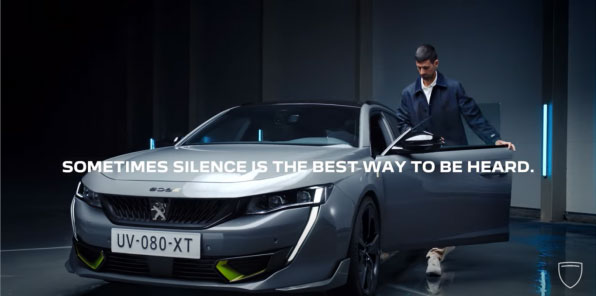
    Djokovic sports two brands apart from apparel sponsor Lacoste. One is a technology firm called UKG. The other is Peugeot. His association with the French car brand has been for more than six years now but this year, the brand, in a new avatar, took a really bold step to create a piece of communication with their brand ambassador released for Roland Garros. Announcing the launch of the Peugeot 508 SW plug-in-hybrid, it is a terrific demonstration of when the sponsor’s and ambassador’s DNAs totally are in sync.


    And the words at the end, captured here in the screengrab say it all. The commercial can be viewed at https://youtu.be/ugNSGoISTmg


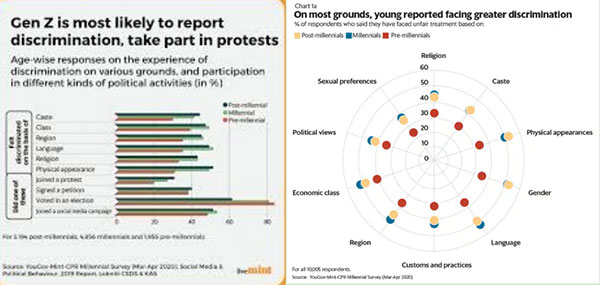
    Coming to Naomi Z. Osaka. Yes, the ‘Z’ stands for Gen-Z. It does take immense guts and candour to withdraw from a tournament of this stature because she could not agree with the rule of appearing at post-match press meets which made her uncomfortable. [Djokovic was one of the few who openly supported her stand.] Why not appear at a press meet when one gets more exposure, one would ask? But Osaka belongs to a generation that most of us managing brands are still coming to terms with. I went across and asked two of my friends for some insights to understand Gen-Z better. One, Subhash Chandra, a market research analyst shared lots of short clippings about the ‘post-millennials’ as they are also called. The other, Nirmal Dayani, shared the same sentiments of his Gen-Z son on this issue.


    [Source – YouGov-Mint-CPR Millennial Survey, March-April 2020]


    In the older times, the sponsors would have taken serious offence to such a sudden move by their brand ambassador, and one might have even decided to pull out of the contract due to an obvious breach of the same. Not in the case of Osaka. Nike, ANA, and Nissin all stayed steadfast behind her as if endorsing her decision. Also, that way they continue to connect with the Gen-Z whom Osaka represents, for their own business interests.


    Cut to the Euro 2020 being played across the continent right now.


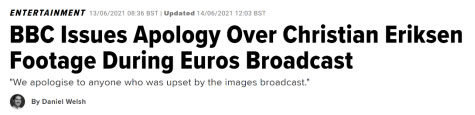
    On June 12, during a game against Finland, Christian Eriksen of Denmark had a serious medical emergency. While his teammates shielded him while CPR was being given and the stadium was in stunned silence, the television cameras were showing close-ups of the attempts to revive him and of his shocked wife being comforted by teammates Schmeichel and Klaer. After some time the cameras pulled back and stayed there. There was huge backlash on the broadcasters for getting too close to the medical activity and sharing personal moments. The BBC formally apologised the very next day.


    This is a clear indicator on the maturity with which brands need to handle totally unexpected situations. It is easy to get carried away and behave in a manner that may bring in immediate social media chatter but eventually lead to social media outrage. A clear pointer to the media brands across the world, more so in India, who tend to sensationalise events for personal gains, at the cost of social propriety!


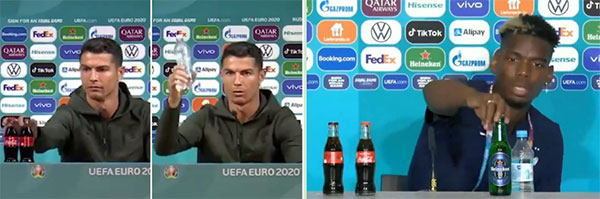
    A few days later, at their respective post-match press meets, Cristiano Ronaldo removed a couple of Coca-Cola bottles from the table while Paul Pogba removed a Heineken bottle. There were news items of how Coke lost $4.00 billion in the stock market due to that action. We are yet to know how much Heineken lost, but then Pogba is not as big a star as CR7 is!


    This is again a strong message going out to brands to be empathetic to people’s sensitivities. While one may question the very logic of having a fizzy drink sponsoring an event about fitness, the onus lies on the brand[s] to show respect. CR7 is known to espouse the cause of health food so it would be downright silly to position those Coke bottles in front of him. Pogba is a Muslim so would never like to have an alcohol brand with him. The logos of the sponsors are anyway on the backdrops, so why this urge to do the overkill with product placement? In todays times, these do not have the desired positive impact. In fact, if they boomerang, then they garner more social media space!


    Anyway, the Russians are leading the Finns by a goal while Turkey and Wales are warming up for their game which is a must-win for both. So, I better rush back to my place in front of the screen. Cheers!


  • Dr Bhaskar Das: Every Strategy has an Expiry Date


    By A Correspondent


     In early 2005, when it was clear to the big bosses at the Old Lady of Boribunder that Hindustan Times and DNA were set to launch in Mumbai, there was much concern about the future of the Empire. While HT may still be this North India superpower, the paper had turned stylish and had some great writers and people at the helm.


    The bigger worry was DNA, short for Daily News & Analysis. It was being set up in a jv of the Dainik Bhaskar group and Zee. Bhaskar had essayed huge success in Gujarat with Divya Bhaskar and the Zee TV group chairman Subhash Chandra is a tough fighter and was keen on extending his domination to print. Plus there was Pradeep Guha, the former Times of India bossman who knew it all. And had a point to prove. When Guha moved to Zee, there was much talk of his trust lieutenant and second-in-command Dr Bhaskar Das also moving with him. But his bosses – Samir and Vineet Jain – held him back.


    Das suggested the flanking strategy to the Jains, and get the newbies battle it out with Mirror first. The gambit worked, and Mirror in Mumbai was a profitable venture in three-odd years. The circulation was large thanks to the fact it went free with The Times of India. The going was good, business-wise and editorially, though it had achieved its purpose.


    The Agarwals sold their stake in DNA to Chandra at Zee, and the paper finally folded up a year-odd back. HT could weather the onslaught, but it was a never a close #2 in Mumbai amongst broadsheets. Mid-Day, which was once #2 in Mumbai, suffered through the fight among the big ones.


    Post the announcement of The Times of India group on Saturday to close Mumbai Mirror as a daily, we asked Dr Bhaskar Das (BD) a few questions as part of the Das ka Dum series. We couldn’t help not asking him many questions on the development as part of the questions for the week. He was after all the boss of the project. We then thought it would be good to carry the entire Q&A together, and add a couple of more questions.


    Even if state this ourselves, we think it makes for a great interview, and he’s been reasonably candid. There’s a wee bit written between the lines, but then that’s BD for you. Enjoy.


    If the Print Media were to look at itself in the Mirror, what would it see? A self that’s Deflated, Defeated and Dead?


    None of them, according to me. Naysayers or doomsday predictors might agree with your observation. I am not oblivious to the emotional aspect of the reflection in the mirror. But in business, as in life, recalibration of the forward journey is a constant imperative. Learnings happen when one cleans up the mirror first before cleaning one’s face only. A deep introspection followed by a resilient approach would engender a realisation that death is the beginning of life and life is the beginning of death. Accordingly, new roadmap would emerge.


    Your sentiments on the closure of Mumbai Mirror, the daily, since you headed the team and started it all. In fact I am told you thought of the idea…


    What sentiments? � The company started a project. I was an incidental steward. When one is (in this case me) lovingly detached, launch or closure is part of a continuum, as in life. The pragmatism of business and its strategy compels an organisation to take a decision which might have to be revoked in future when the landscape changes. For business process continuity and for conservation of finite resources, an organisation has to choose an alternative from amongst multiple choices in an altered landscape.  After all, any  strategy is ultimately  a cascade of choices. Hence emotion has no legitimate space in such a decision-making. An engrossed passion helps a rational decision get wings. For the concerned daily, the dominant sentiment at that relevant time was perhaps like that. Hence an individual sentiment doesn’t matter.


    Does the closure of the Mumbai Mirror as a daily augur sad times for the newspaper industry. After all this is an offering from the #1 newspaper group in the country/ continent/ world, and operates in Mumbai, one of the most important advertising markets on land?


    As if this is the first time a publication has been shut. Every strategy has an expiry date. The publication had served a strategic purpose perhaps at that relevant time. Changing times need new strategy to navigate the operating environment. So I can presume the group has enough in its arsenal to leverage in the most important advertising market of India. From the outside it might look as a dystopian development. But it can be a precursor to a ‘manthan’ too. Who knows? As an incorrigible optimist , I think so.


    Our heart goes out to the employees engaged by newspapers, esp those who aren’t shared resources. With jobs not easily available what would you recommend to people who are set to be displaced?


    I can empathise with this question. I really have no answer to this. Sometimes silence is important to respect emotions. I can only pray for their well-being. The employees created a fantastic brand. They will do well anywhere. I am convinced.


    There are sentiments that BCCL should have absorbed the losses and grow the brand. Your thoughts.


    Theoretically, everything is possible. But how do I simulate a probabilistic answer without having any access to the compulsions that led to this decision? The only point that I can make is that the print sector itself is under dual threat  of format obsolescence and Covid-led tepid business headwind, and hence, even a supposedly deep-pocketed organisation  may not have the luxury of  taking  decisions that are unrelated to the basic tenets of commercial viability.


    As an academic in marketing, would you say that the existence or longevity of a product or service that’s set up essentially to combat competition is always in suspect?


    Not necessarily. INS Vikrant was also useful once upon a time. Then it got replaced by a more state-of-the-art aircraft carrier. Besides, strategic imperatives change. A market-facing organisation has to continuously readjust its gear depending on the terrain change and organisational priorities. Hence any deterministic prediction on this matter is as reliable as any decision that is predicated dominantly on convenient sampling.


    Do your responses really reflect your true emotions? Or are you just being politically correct?


    Political and correctness are oxymoronish terms, to my mind. I am neither political nor  claiming to be correct in my answers. May be my answers are not fitting into an expected paradigm of response. Then you should first decide if you want a rational answer or an emotional one. I am sure you would prefer the former.

  • Das ka Dum with Dr Bhaskar Das: In the service of which boss did your soul feel the bestest – the Jains, Subhash Chandra/ Punit Goenka, Girish Agarwal & now Arnab Goswami?

    Bhaskar Das

    We’ve got Dr Bhaskar Das to do what he’s super at: share his gyaan in his inimitable manner. Presenting The Wizard of Words with Das ka Dum. Week 3, Day 4.

     If you want to access the archives, please go to the Das Ka Dum tab on the website’s top navigation bar..


    Q. You have worked with various media mavens in the last decade. Samir and Vineet Jain, Subhash Chandra and Punit Goenka, Girish Agarwal and now Arnab Goswami. Since you are a spiritual person, please tell us: In the service of which boss did your soul feel the bestest?


    A. Any soul is impervious to external triggers. Besides, there is no duality between two interacting souls. I saw them in me and I was in them. At a cognitive level, all the referred names in your question have enriched me and whatever I am today is due to the cumulative enlightenment they have ushered on me.

    I can imagine the answer won’t satiate your vibrant mind. I can assure you that real correctness is apolitical. My answers come from the core of my heart. They are socio-politico agnostic.

  • Who will be ‘extraordinary together’ with Zee?


    By A Correspondent


    In October 2017, the Zee group unveiled its new corporate identity. Extraordinary Together was to be the new credo.


    While making the announcement on Zee’s new corporate brand ideology last year, Punit Goenka, MD & CEO, ZEEL had said: “Our Chairman, Dr. Subhash Chandra’s vision and pioneering efforts caused a revolution in the country 25 years ago. Over time, Zee has evolved from a television broadcaster into a media and entertainment conglomerate with businesses spanning across the spectrum, from broadcasting to music, movies, digital, live entertainment and theatre, providing an extraordinary range of entertainment to audiences around the world. Our new brand ideology – ‘Extraordinary Together’ is rooted in the philosophy that from collaboration comes strength to deliver the extraordinary. In a global company like ours with interests across diverse verticals and businesses, we believe that our ability to win lies in us being able to effectively come together and harness this strength to be extraordinary in the market.”


    Chairman Subhash Chandra is known to be a man in a hurry to achieve his goals. And realising that the content-led broadcast play could be a cul de sac, if not merged with technology, he and his family took this significant decision that has indeed sent the market aflutter – not just M&E and M&A but Corporate India as well.


    So as the world was just done with Diwali, Subhash Chandra and family along with its advisors met in Mumbai over the Diwali weekend to undertake a strategic review of its businesses in view of the changing global media landscape. The strategic review underscored the importance of technological advancements such as AI, lOT, 3D printing AR, VR and many more. It was observed that these developments will impact virtually all businesses across sectors and business practices will be driven by technological innovation.


    The review showed that the family needs to accelerate efforts to stay ahead of fast changing trends. The review noted that with the current 1.3 billion viewers and close to 50 million digital viewers growing at a fast pace, ZEEL is well placed to benefit from current market trends due to its strong brand & bouquet of domestic & international channels. Adding to that strength, Zee5 will further enable the company to leverage the benefits of changing video consumption trends, contributing significantly over the coming years.


    Speaking on where the business stands today, Jawahar Goel said, “Punit and Amit have made the right sustainable investments for the future and the business is growing ahead on all fronts in a focused and disciplined way.”


    A communique issued notes: “On its own, ZEEL would remain a leader in both linear and digital distribution. It has the consumer insights and knowhow to produce and deliver content for the South Asian diaspora globally. The management depth the Company has built over last two decades distributing content globally in 12 foreign languages puts the Company in a unique position. It has strong revenue streams including advertising and subscription – domestic and international. However, there is recognition that a right global strategic partner will help in transforming ZEEL further, and maximise long term value. It will transform it into a global media-tech player with a unique offering of content to the main stream audiences in 170-plus countries putting it into A KING POSITION globally. It has been decided to undertake a strategic review of Essel’s shareholding in ZEEL with a view to maximise value for the business. The proposed transaction to divest upto 50% of Essel’s holding to such a partner, is expected to address the Essel Group’s capital allocation priorities and will allow ZEEL shareholders to capture the full value of India’s largest entertainment broadcaster with an ever strengthening bouquet Essel has decided to appoint Goldman Sachs Securities (India) Ltd. as their investment banker and US and Europe-based LionTree as an international strategic advisor for this exercise. Essel expects the outcome of the strategic review to be concluded by March/April 2019. We hope that this transaction will meet the objectives of the Essel Group as well as the minority shareholders of ZEEL. India remains a priority market for Subhash Chandra and the Essel Group and the family believes that India is at the cusp of significant growth. The family will continue to invest in growth opportunities in India. Regardless of the outcome of this exercise, Essel is committed to create significant long term value in ZEEL and shall keep on contributing in every possible way going forward.”


    The Zee management has had a Call with analysts and Goenka has also had detailed conversations with the business media on this latest gambit. Market analysts and observers MxMIndia  spoke have all been taken by surprise by the move. “Subhash Chandra is known to be master strategist and a maverick, but the decision to shed equity in the most profitable broadcast business in the country is a surprise,” said one analyst who has been tracking the company for over a decade. “However, Chandraji has foresight. Global trends are clear indicators that a content-only play has no long-term future. It has to be a marriage between content and technology. Even internationally, that’s where the wind is blowing.”


    The question though the analyst we spoke with as well as others is whether the new suitor will be willing to play a junior role in Zee. “Anyone investing serious dosh will want to play a centrestage role in how the business is going to be conducted. In media, just a few seats on the Board aren’t enough.”


    While Goenka said in an interview with CNBC TV18, that he’s happy to exit entirely and start life anew, that’s possibly not the route that global players are looking at. “They realise that only the Subhash Chandra family can run such a lean, mean and successful enterprise. They will want them to continue to drive the business at least in the short run. While technology requires the money, content requires an acumen that Zee has in plenty,” said one more analyst, again speaking on anonymity.


    Extraordinary Together is indeed an appropriate credo for the state of things to come.


  • Subhash Chandra Foundation launches incubator for social ventures

    By A Correspondent


    The Subhash Chandra Foundation, the philanthropic initiative of Rajya Sabha MP and Zee and Essel group Chairman, Subhash Chandra, has launched ‘SACH Impact’ Incubator – a programme to support early-stage social ventures.


    SACH Impact, a first-of-its kind initiative to identify and mentor fledgling social entrepreneurs from various parts of India, has been created, launched and will be run in partnership with LetsEndorse, a collaborative ecosystem of social change-makers and enablers.


    Commenting on the launch, Chandra said: “Most entrepreneurs work to earn big but few ideate for the betterment of society. Subhash Chandra Foundation is inviting social entrepreneurs, the change-makers, for SACH Impact Incubator, who want to impact the lives of people to make world a better place.”


    The selected teams will be mentored by Chandra himself and Punit Goenka, MD and CEO, Zee Entertainment and Amit Goenka, CEO – International Broadcast Business, Zee Entertainment, and senior management of Essel Group. For details and application info: http://bit.ly/SACHImpact.


  • BMA felicitates Subhash Chandra & AM Naik

    By A Correspondent


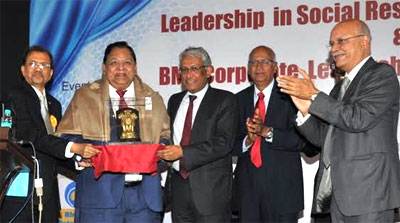
    The Bombay Management Association felicitated eminent management champions including A. M. Naik, Group Chairman, Larsen & Toubro and Subhash Chandra, Chairman, Essel Group and Member of Parliament.
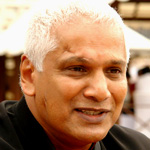
     

    The BMA awards, selected by a panel of eminent juries after detailed studies, are conferred in seven categories – Entrepreneur of the Year, Management Woman Achiever of the Year, Management Man of the Year, Entrepreneur of the Decade, Lifetime Achievement Award, Start-up Man of the year and Jury Special Mention of the Year.


    The awardees for 2016-17 were selected by a panel of eminent juries comprising S. Ramadorai, former Vice Chairman, TCS (Chairman of the Jury), Shailesh Haribhakti, Chairman & MD, Haribhakti Group and P. R. Ramesh, Chairman, Deloitte Haskins & Sells LLP. The jury conducted a detailed study of the P&L (profit and loss statement) and balance sheet of the companies helmed by the awardees, the governance quality and its contribution to the society, community and environment.


    Ravi Venkatesan, Chairman, Bank of Baroda, Former MD, Microsoft India presided over the awards function as a Chief Guest. Shailesh Haribhakti, Chairman & MD, Haribhakti Group and P. R. Ramesh, Chairman, Deloitte Haskins & Sells LLP were the Guests of honour. Dr Karuna Jain, Director, NITIE announced the Academia awards for Best Management Institute in four categories, Best Management Faculty and Best Management Student.


    The recipients of the 39th BMA Awards for the year 2016-17 are as follows:


    Entrepreneur of the Decade Subhash Chandra
    Member of Parliament, Rajya Sabha
    Lifetime Achievement A.M. Naik
    Group Chairman, Larsen & Toubro Limited
    Management Man of the Year Bhaskar Bhat
    MD & CEO, Titan Company Limited.
    Management Woman Achiever of the Year Usha Ananthasubramanian
    MD & CEO, Allahabad Bank
    Entrepreneur of the Year Dr Anand Deshpande
    Founder, Chairman & MD, Persistent Systems Limited
    Start-Up Man of the Year Shashikanth Suryanarayanan
    Founder & Chairman, Sedemac Mechatronics
    Jury Special Mention Sabyasachi Mukherjee
    Director General & Secretary-Board of Trustees, Chhatrapati Shivaji Maharaj Vastu Sangrahalaya


  • Wion spreads its wings to the Middle East

    By A Correspondent


    Zee Media’s English news channel World Is One News (Wion) has been launched on Etisalat in the United Arab Emirates and Qatar. Viewers in those countries can also watch the channel on Du and Ooredoo. Wion’sMiddle East debut comes on the heels of its launch in seven African countries: Nigeria, Kenya, Zambia, Zimbabwe, Ghana, Botswana and Rwanda. From February to April, Wionwill be spreading its outreach to other South Asian countries like Bangladesh, Sri Lanka and Myanmar, notes a communique.


    Said Zee Chairman Subhash Chandra on the launch: “After a successful start in India, Wionis gearing up to bring world-class journalism to the people of UAE and Qatar who have long been waiting for a global network from India.”


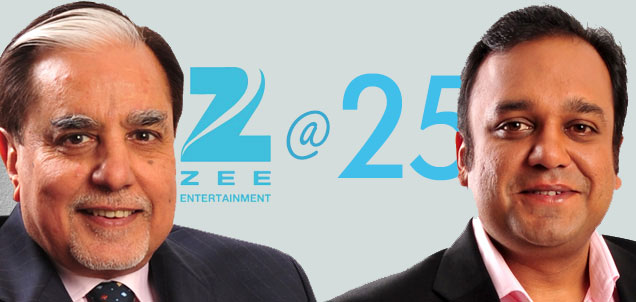
  • Zee@25 | Ashok Kurien: Zee changed the Indian consumer forever

    Ashok Kurien

    It was a dream that was waiting to become one big reality. When the rest of India was hooked on to the goings-on of the Gulf War in 1991 through relay from international news channels, a bunch of visionaries were contemplating launching a private channel that would do something similar in India. Thus was sown the seed of India’s first and private Hindi channel, Zee.


    When we spoke with him in October 2012 on the occasion of Zee’s 20th anniversary, Ashok Kurien, the man who ran Ambience Advertising which handled the ad business of Essel Group, recountedto Johnson Napier how a chance conversation took shape to create one of India’s earliest and most successful Hindi channels. Mr Kurien continues to be on the Board of Directors of Zee Entertainment.


    Do you recall how you reacted when Mr Subhash Chandra first came to you with the idea of launching Zee? From what we hear, it’s after your reassurance and active support that he got into it.)

    January 1991: Subhash, my client at Esselworld, and I were watching the Gulf War ‘Live’ on CNN. It was our early exposure to satellite TV in India.

    “Why can’t we do this here in India?” the conversation went.

    “What do you know about TV?” asked Subhash.

    “More than anyone else,” I replied, having spent many years on the ad agency side: Concepts and Pilot programmes, Sponsored programmes and FCT during the Doordarshan days…

    “Write me a business plan,” said Subhash.

    I did… and the rest is history.

    Of course, Subhash was way ahead of me, with advice and plans from some ex-Doordarshan people.

    The first 5 or 6 years, working hands-on to help Subhash build India’s first private TV station, was the most exciting chapter of my life.

    Zee changed the Indian entertainment scenario, and along with it changed the Indian consumer forever.


    Zee obviously had the advantage of being the first mover in the Hindi space, and later there were many others who entered the scene. What according to you is the reason Zee has been such a success story?

    Zee moved fast, was always the first, and stayed far ahead of everyone for over the first decade.Zee understood the emotions and tastes of the Indian consumer. It took a long time for the competition to figure it out… mainly by hiring Zee TV’s people.


    Other than being a director on the Board, are you active in advising the Zee management presently?

    No advice to Zee at all….. unless I am asked to.I have played a role in helping Dish TV grow to leadership over its first 3 or 4 years, and now helping to take the Zee group into new media with India.com.


    If there was one thing that Zee could have possibly have done differently in these 20 years, what would it be?

    Zee should have launched a Tamil/South channel 15 years ago. But it was my error of judgement and ill advice that prevented that. My one, big, unforgettable mistake!


    Zee, it’s said, mirrors Mr Subhash Chandra’s personality: dynamic, aggressive, a maverick, often restless, cost-conscious, risk-taker and a visionary. He’s been a friend for many years, would these descriptors be appropriate (for him and Zee). And how much would you attribute the success of Zee to Mr Chandra and in recent years, his family?

    Subhash’s personality is all this and more. He is fearless and will walk where angels fear to treadBut as a friend I have seen the warm, but very private, human side of him too. He has great inner strength, and this too is inbuilt in Zee’s DNA.

    Zee’s success was driven almost 100 percent by Subhash for many years, and only in the last decade or so did the professionals who joined Zee start contributing majorly.

    Punit has reinvented the ‘creative magic’ that Zee started with 20 years ago.

    But today, it’s certainly TEAM ZEE!!


    Original Story at:

    http://www.mxmindia.com/2012/10/jaldi-5-with-ashok-kurien-zee-changed-the-indian-consumer-forever/

  • 25 and a huge force to reckon with!


    Zee TV completes 25 years of existence on October 2, 2017. Since we are closed that day, we bring you the first in a week-long series on the channel starting today. The last in the series will appear on Friday, October 6


    By Pradyuman Maheshwari


    Phew! Twenty-five years of Zee Television. Just five years back, one celebrated the twentieth anniv with much fanfare. I remember the days when Zee TV was being launched in 2002. Tension was building up around Babri Masjid which culminated in what happened in Ayodhya in December 1992.


    I would edit a computer magazine then – Business Computer for the Indian Express group’s Sterling Newspapers. I would also review television for film trade weekly Screen and moonlight for a few publications.Star Plus wasn’t for the masses then – though shows like The Bold and The Beautiful and Santa Barbara were very popular with the urban set. One would watch the BBC World Service to find out what actually happened at Ayodhya in 1992, and many of us would be nuts about the graphics on MTV and knew each veejay by name.


    The Zee Story


    Timeline of mostly the entertainment part of the Zee Television story


    1992

    > Launches Zee TV

    > Initial Public Offering of Zee Telefilms Limited

    1994

    > EL TV launched

    1995

    > Commences Siticable operations Joint Venture with News Corp

    > Launches Zee News and Zee Cinema.

    > Zee TV goes global – launches Zee TV, UK

    1996

    > Starts first cable channel in India – Siti Channel.

    > Launches Zee TV, Africa.

    1997

    > Launches Zee Music (originally called Music Asia).

    1998

    > Launches Zee TV in the US.

    > Institutes ‘Zee Cine Awards’.

    1999

    > Acquires News Corp’s 50% stake in joint ventures of their television broadcasting business tie-up.

    > Launches regional channels.

    > Launches Zee News

    2000

    > Launches Internet over Cable services – first cable company in India to do so.

    > Enters into content distribution joint ventures with MGM and Viacom.> Launches pay bouquet of channels in the Asian region.

    2001

    > Introduces Zee TV and Zee News as pay television offerings.

    >‘Gadar – Ek Prem Katha’ became highest grossing box office movie (it released on the same day as Aamir Khan’s Lagaan)

    2002

    > Acquires controlling stakes in ETC Networks Limited and Padmalaya Telefilms Limited.

    2003

    > Launches 5 new channels for the DTH market viz. Action cinema, Classic cinema, MX, Premier cinema and Smile TV.

    > Enters into a distribution tie-up with Rajshri Pictures for theatrical distribution of films in India.

    > Launches ‘Trendz’ – A premium fashion and style channel, targeted at the fashion conscious Indian consumer.

    > Launches Zee Business

    2005

    > JV with Dainik Bhaskar group to set up DNA, DNA launched

    2006

    > De-merger of Zee Telefilms Limited.

    > Failed attempt to acquire news agency UNI

    2007

    > Zee Entertainment Enterprises Limited (ZEE) gets listed as an independent company.

    > Zee Next launched

    2008

    > Zee Next shuts down

    2010

    > Launches Zee Khana Khazana – India’s first 24-hour food channel

    > Launches Zee Salaam – India’s first Urdu infotainment satellite television channel> Acquires stake in Ten Sports.

    > Launches Ten Cricket – a dedicated 24-hour Cricket Channel.> Launches Ten Action+ – sports channel showcasing the best football action from around the world.

    > Launches India.com – Joint Venture between Zee Entertainment Enterprises Ltd. and Mail.com

    2011

    > ZEE’s distribution arm, Zee-Turner Ltd, enters into a 50:50 JV with Star Den Media Services Pvt. Ltd. to form MediaPro Enterprise India Pvt. Ltd.

    > Announces share buyback

    2012

    > Launches Ditto TV – India’s first and only OTT (Over-The-Top TV) Distribution Platform

    > Launches Ten Golf – India’s first and exclusive 24 hour Golf channel

    > Launches 24-hour Bengali movie channel

    > Announces launch of a kids’ channel

    >Launches Zee Alwan – Dedicated 24 Hour Arabic Channel

    2013

    > Launches &Pictures and Zee Anmol

    2014

    > Launches &pictures HD and Zindagi – a premium Hindi GEC channel

    2015

    > Launches Zee Theatre – India’s first M&E company to foray into theatre production

    > Launches Zee Magic – the first French GEC offering Indian content to mainstream French audiences in Francophone Africa

    > Acquires Sarthak TV – the #1 GEC in Odiya language

    > Launches Hindi GEC &tv and &tv HD

    > Launches Zee Hiburan – A GEC localised for Indonesia

    > Launches Zee World – a GEC for mainstream audiences in Africa

    2016

    > Announces acquisition of the GECs from Reliance Broadcast Network Ltd

    > Launches Zee Marathi HD, Zee Bangla HD and Zee Talkies HD

    > Launches Zee Mundo – its Spanish-language Bollywood movie channel for the US Hispanic & LATAM markets

    > Launches Zee Cinemalu – its Telugu movie channel

    > Launches Zee Anmol Cinema – its FTA Hindi Movie channel

    > Launches Zee Yuva – the first regional youthful channel targeted at Marathi audiences

    > Launches Zee.One – a Bollywood movie channel for Germany

    > Launches Zee Sine – a Bollywood movie channel for the Philippines

    > Launches OZEE – a new digital platform

    > Launches ZEAL for Unity – a peace initiative

    2017

    > Launch of Z5 Weyyak for the Arabic audience

    > Launches Zee Mundo in Mexico and Ecuador

    > Shuts down Zindagi on June 30, moves it to OTT

    > Announces entry into Poland with Zee.One

    > Enters Mali with the launch of Zee Magic and Zee Cinema

    > Completes first phase of Two-Phase Divestment of Ten Sports Network to Sony Pictures

    > Launches its first radio station 106.2 big fm in the UAE

    > Launches two new channels, Zee Bollymovies, a 24-hour dedicated Bollywood movie channel and Zee Bollynova, a customised GEC, in Africa

    > Completes acquisition of RBNL channels Big Magic and Big Ganga. Also, 49% equity in Big FM


    Source: Zee Corporate Communications, Zee website, MxM Newsdesk


    Zee arrived and not many took it very seriously initially. All we knew was that a Subhash Chandra Goel was behind the venture. Yup, the same man who had set up the Esselworld amusement park on the outskirts of Mumbai, was once a rice trader and had made a success of Essel Packaging. But for someone like me in the Mumbai media, it was the association of Ashok Kurien, then poster boy of Indian advertising, that led me to believe that there was merit in the venture.


    A friend at Mid-Day asked me to write about this weirdly-named ‘Z’ TV. For a while, we would call it Z, thinking that just as our Maths professor at college would pronounce ‘z’ as ‘zee’, the announcers called the channel Zee. I am fuzzy about it, but I think my story on Zee in Mid-Day appeared soon after Rajdeep Sardesai’s did in the Times of India.


    I remember reasoning with my friend that Zee had a future because Kurien couldn’t get it wrong, and it’s for this reason I insisted we also interview Subhash Chandra on the occasion. I don’t think we carried the interview.


    Zee moved on from strength to strength. UTV, which had done programmes like The Mathemagic Show on Doordarshan, came up with a variety of gameshows… Saanp Seedi, for one.


    Doordarshan launched a Bollywood music countdown show in Superhit Muqabla (produced by Harish Thawani’s Nimbus), but the satellite channel came up with its own popular countdown show (Philips Top 10).


    There was a period when Doordarshan’s primary and Metro channels gave Zee serious competition, but with time, couldn’t match Chandra’s longterm vision of the space.


    Zee experimented a fair bit – a news bulletin in colloquial Hindi peppered with a lot of English words, a weekend show on the stockmarket, a telefilm by Mahesh Bhatt, and finally a second channel called EL TV. I would work with Mid-Day then and very actively tracked Zee’s various forays.


    Zee’s top team saw various captains as business and programming heads: – Karuna Samtani, Nitin Keni, Digvijay Singh, Kamlesh Pandey, Meenakshi Menon, Anil Dharker for a bit, Chandraprakash Dwivedi… the list could go on. Sandeep Goyal too was CEO and announced a makeover, but he exited soon, to be followed by Apurva Purohit. Pradeep Guha occupied the CEO’s chair, but he left after a few years. Nitin Vaidya, who had helmed the regional channels for a while, took charge of the flagship Zee TV, but he too moved on leaving one with the belief that while the Zee top job may be coveted, it was too hot to handle for professionals. In fact when MxMIndia tried speaking to some of the former captains around the time of the 20th anniv, many refused to be quoted saying that since it was too long ago for them to remember much.


    Yet, privately they acknowledge that even though Subhash Chandra is a maverick, he’s a huge force to reckon with in Indian media. He is aggressive, dynamic, cost-conscious and a big risk-taker.


    Last year (in 2016), Subhash Chandra released his autobiography ‘The Z Factor: My Journey as the Wrong Man at the Right Time’. It’s a must-read for anyone to get under the skin of one of the world’s most dynamic media leader.


    Very few others in the media have seen the ups and downs that he has probably seen. After being a darling of the stockmarkets and the Indian viewing public, Zee’s stock fell – in every possible way. In the early 2000s, the Economic Times would have a story virtually every other dialing quoting some regulatory irregularity.


    But Subhash Chandra, minus the Goel that he dropped in the late 1980s, wasn’t going to be down for too long.


    In 2005, after hiring Pradeep Guha from The Times of India group, he stitched up a joint venture with the Dainik Bhaskar group to launch a newspaper called DNA. PG, as Guha is popularly called, and the Bhaskar group’s Agarwals ensured that the paper had a high profile launch. That the Times of India improved its offering several times over, launched Mumbai Mirror and Hindustan Times too kicked off a Mumbai edition may have been dampeners, but DNA didn’t take too long to establish itself.


    I was fortunate to be part of the DNA editorial team for a bit, though often felt the strains of a newspaper with too many people at the helm – owners and top management.


    Much after I had left DNA and the Bhaskar group, I learnt that Subhash Chandra had assumed charge of DNA. There were several exits around that time, and one feared there would be instability after that. But that didn’t happen, although the editor changed and the paper dropped the editorial page. The DNA has continued to see many changes, many CEOs and many editors.


    Flagship channel Zee has seen its ups and downs. From a clear #1 in the 1990s to losing its leadership first to Sony and later for a long, long time to Star Plus, Zee has come back and attained strength in the GEC space.


    Post Kaun Banega Crorepati in 2000, Zee was hit badly. It produced a dud in Sawaal Dus Crore Ka to combat KBC.  All those who backed the network had fallen in love with the new Star. Not for too long, as Subhash Chandra’s team picked up the pieces and steadily started inching up. And then Colors happened in 2008, pushing Zee down again. However, soon after his channel had turned #1 the then Colors CEO Rajesh Kamat told me that more than Star Plus, his team and he were watching Zee very closely. Its fictions and reality shows had promise.


    Which it did. Cut to 2017, although there’s been a see-saw in the Hindi GEC space and Star Plus and Colors have dominated the ratings roster, but over the last few months Zee has got back to the top slot. Post the release of ratings for rural audiences, Zee Anmol has also been doing rather well. It’s indeed happy days for Zee as it celebrates its 25th anniversary on October 2.


    Credit for this goes to Chandra’s son and Managing Director and CEO Punit Goenka who has led the network very effectively.  Zee Media Corporation Ltd, the company managing the news channels, has There are various genres Zee is in, but its channels aren’t much to talk about. Zee News has a new CEO, but it will need to do loads to turn #1. Ditto with the various other channels – Zee Music, Zee Smile, Zee Studio. Zee Cafe has tried to create a bang with more recent seasons of popular shows, but the niche channels require some attention from Goenka (See interview). Chandra’s second son – Amit Goenka – manages the international business which again has been growing very rapidly.


    His leadership team has an interesting mix… Other than Punit and Amit Goenka, there are: Bharat Kedia (CFO), M. Lakshminarayanan (Company Secretary & Compliance), Praveer Priyadarshi (Chief People Officer), Punit Misra (CEO, Broadcast), Rajneesh Mittal (CTO) and Sunil Buch (Zee Live & Talent, Head – Corporate Brand & Communications)


    Goenka’s leadership has also brought with it much camaraderie with Star India and its CEO Uday Shankar, and this is one reason why there has been little infighting amongst the various entertainment broadcast major.


    Until a few years back, Zee lacked buzz-creating content. But no longer. DID has been putting up a blockbuster performance every year. Sa Re Ga Ma Pa continues to rock ratings. Zee didn’t come up with anything like Satyamev Jayate, but it chose not to be a me-too.


    At times like these when celebration is in the air, it’s not uncommon to gloss over a company’s various failures. But rather than blips, I would look at these as the network’s strength to have in Subhash Chandra a promoter who has been willing to take risks.


    Although I wouldn’t report on media in 2000-01, I am told the proposals for Kaun Banega Crorepati and some of the top-rated Balaji soaps were rejected by Zee.


    Chandra started EL TV (no marks for guess where that name came from) at a time when he thought he could replicate the flagship’s success with a second GEC. That didn’t happen, and EL metamorphosed to Zee India TV and later Zee News. Yet another attempt to look at the younger, urban set with Zee Next in late 2007 survived for less than a year. Zee’s radio foray was still-born and attempts to publish TV and film magazines didn’t work.


    Zee had much failure in bidding for cricket rights, including the World Cup. Despite his bid being the highest, Chandra lost out which many agreed was unfair to the media baron. In 2007, buoyed with India winning the T20 World Cup and the success of the 20-over format, and anguished with the ways of the Board of Control for Cricket in India (BCCI), Zee set up the Indian Cricket League. While the ICL took off, it never gained ground as key cricketers of the day were not allowed to participate for the tournament was dubbed ‘unofficial’. Chandra gave up after a protracted fight with the BCCI as the ICL became meaningless post the success of the Indian Premier League (IPL). Zee has now permanently exited the sports arena, but, then, as any Zee-watcher will tell you, you never know with Subhash Chandra. Chandra is now a Rajya Sabha Member of Parliament, with his allegiance to the ruling Bharatiya Janata Party (BJP), but with very close friends in other political dispensations.


    Twenty-five years on, how would I rate Zee’s performance? A 9 or 10 on 10 for the spirit of enterprise and growing the industry.  Too many leadership changes may have not given the company stability, but as Chandra once told me, the only reason why he’s had to move CEOs out is because of non-performance. And he shouldn’t be faulted for that. The ousted CEOs naturally have another story, but as mentioned earlier, almost everyone who has been associated with the network plus his business rivals and peers recognise Subhash Chandra and Zee’s tremendous contribution to Indian broadcasting.

    Three cheers to that!


    Adapted from an article by me published on MxMIndia in October 2012