Tag: Snapdeal

  • Himanshu Chakrawarti is CEO, Snapdeal Marketplace

    By Our Staff


    The AceVector Group which operates several platforms in the e-commerce space, including Snapdeal, has elevated Himanshu Chakrawarti as the Chief Executive Officer (CEO) of the Snapdeal marketplace business.


    Commenting on Himanshu’s elevation Kunal Bahl and Rohit Bansal, co-founders of Snapdeal and AceVector Group said: “Himanshu has played an integral role in steering Snapdeal’s marketplace business over the last year. His success in building brands and expertise in retail operations clubbed with an in-depth understanding of the value retail segment has helped us build a comprehensive toolkit to serve India’s mega cohort of value-savvy users. We are confident that under his leadership, Snapdeal’s marketplace business will continue to grow and excel on its chosen path of focused and profitable growth.


  • Snapdeal launches Korean inspired beauty brand Miyuki

    By Our Staff


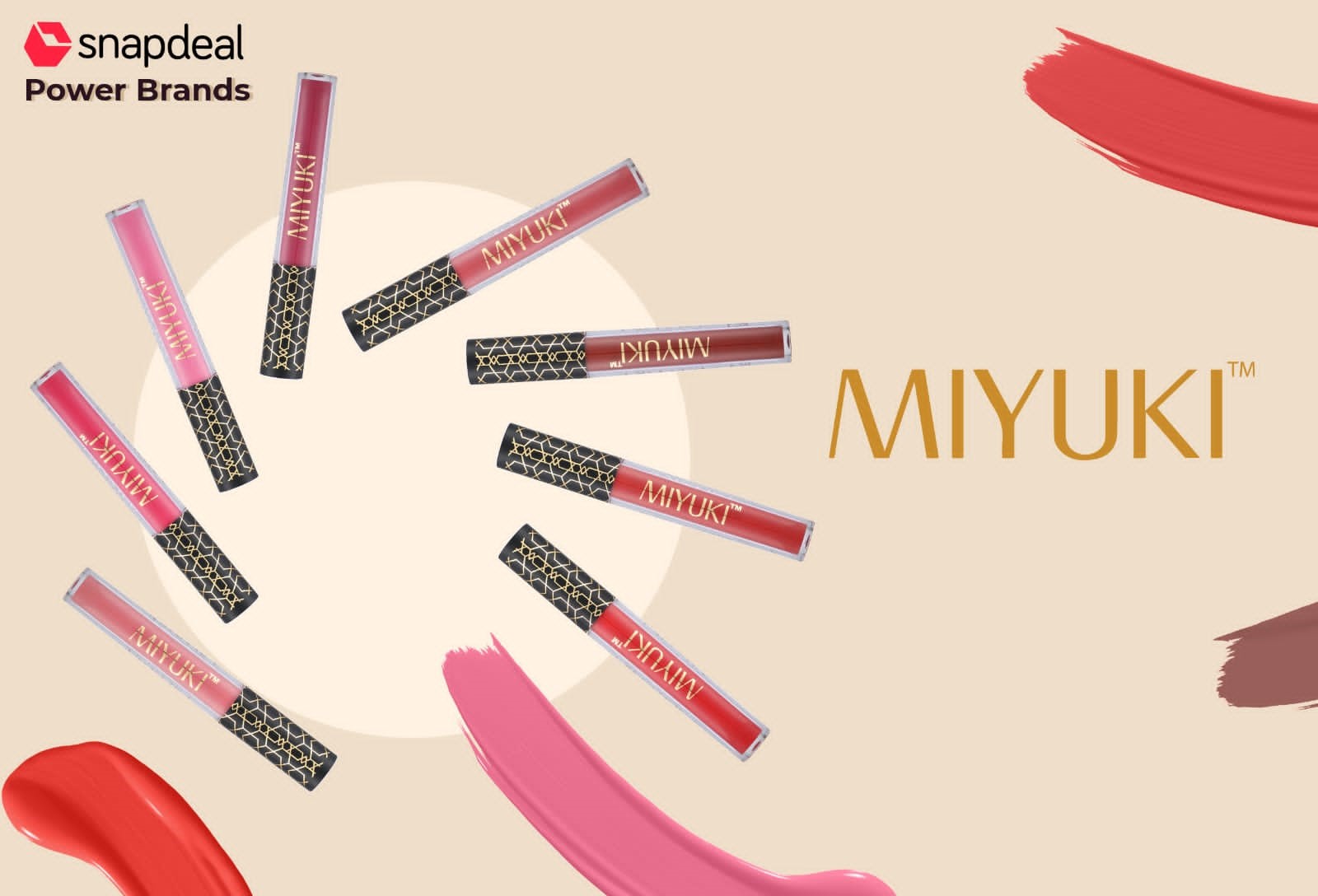
    Snapdeal, the online shopping store, has launched beauty brand, Miyuki on its platform. Introduced under the Power Brands program, Miyuki offers a Korean beauty inspired makeup range.


    Said Saurabh Bansal, Chief Merchandising Officer, Snapdeal Limited: “Customers have high awareness about the latest trends in beauty and personal care products.  Value-conscious consumers look for products that are trendy, good-quality and also are priced as per their spending comfort. The Miyuki range of products by Snapdeal sellers serves this requirement of premium-quality, trendy and innovative products that are priced right.”


  • Snapdeal launches campaign with Mohit Raina

    By Our Staff


    Snapdeal, the e-commerce company, has launched a new campaign starring television (and web series actor) Mohit Raina as part of its ‘Toofani Sale’ consumer campaign in this festive period.


    Commenting on the campaign, Soumyadip Chatterjee, Brand Marketing Director, Snapdeal said: “We see the partnership with Mohit as a way to reach and build trust with the Indian heartland audiences, and deliver credibility of our efficacy and brand promise. He is a self-made movie star with humble beginnings and gets huge respect and love from Indian TV and movies viewers, due to his larger-than-life roles in shows like Mahadev and blockbuster films like Uri.”


    Snapdeal, it may be recalled, once had Aamir Khan endorsing its service, which was later snapped as the actor had got into a controversy.


  • In a world full of influencers, are celeb-endorsements worth it?


    By Bhuvi Gupta


    Bhuvi GuptaIt was 2015, Diwali had just passed and Snapdeal was one of the three big e-commerce players in India with Bollywood icon Aamir Khan as its brand ambassador. A personal comment by Khan at the Ramnath Goenka Awards event launched the first boycott trend online for Khan-endorsed Snapdeal, whose Play Store ratings plummeted, orders got returned. Despite the official statement released disassociating itself from both the brand ambassador and his views, the damage had been done. Aamir Khan was soon fired from his role as brand ambassador.


    Khan has since learnt his lesson and kept his personal opinions to himself, a dictum closely followed by the other two Khans as well (controversy’s favourite child, Saif Ali Khan not included!). But it was definitely the first time I thought about the wastefulness of celebrity endorsements, a point of view that has only since strengthened.


    Why do brands turn to celebrities?


    The simplest reason for using celebrity endorsers is for the awareness they help generate.  For most mass market brands in crowded marketplaces and high advertising budgets, a celebrity endorser is an easy and sureshot way of getting recall. The Duff& Phelps Celebrity Brand Valuation report which came out last week, showcases the same – despite the decrease in advertising budgets, the brand valuation of the Top 20 celebrities has remained more or less consistent at USD 1 billion. To get the most bang for your buck, a brand is only limited to signing these top 20 celebrities who are neither cheap nor easily available.


    Going any farther down the totem pole, especially when budgets have to be devoted to ensure a purchase decision is made is just not worth it.


    Consumers are also well aware that celebrities do not have any brand loyalty and are not really endorsing the product. This is evident when celebs routinely jump to competitor brands and claim innocence when the brand is found not to meet safety standards.


    Circling back to my initial thought, in 2021, brands no longer need to be dependent on celebrities to drive awareness. A much better option is effective influencer marketing.


    Why Influencer Marketing?


    The biggest differential that influencer marketing has with respect to celebrity-focused advertising is that (the right) influencers are believable, trustworthy and authentic.  An influencer post will typically have much higher quality with longer captions and explanations, and engagement by them in the comments section.


    Hence, when an influencer creates content recommending a product it doesn’t feel like an advertisement but like a close friend sharing a secret about something he or she liked. Hence, a brand endorsement from them really means something and can drive sales conversions.


    Secondly, most influencers have a specific niche and loyal audiences.  Therefore, even though their audience is a lot narrower, it is more focused than a typical celebrity’s audience.


    Thirdly, the influencer marketing industry in India has matured. Influencers are no longer hired purely on the basis of their follower count but also include parameters like average engagement rates and their demographic profile. Hence choosing influencers whether to target a specific geography or a specific interest is easier.


    Fourthly, influencer marketing is accessible. Unlike celebrity endorsements which can only be afforded by brands with deep pockets, a successful influencer campaign can cost as low as a few lakh, if one chooses to use nano-influencers (follower counts of less than 20,000) in their campaign.


    Fifthly, with the influencer marketing industry maturing, Advertising Standards Council of India (ASCI), announced plans to roll out new norms for social media influencers to promote products on the Internet. (Link – https://www.news18.com/news/tech/guidelines-for-influencers-are-incoming-a-few-folks-and-brands-must-be-very-worried-2350469.html) While the guidelines are awaited, once in place, either celebrity endorsement campaigns will reduce drastically or become a lot more cost-effective.


    In conclusion, testimonials and endorsements have been a mainstay in marketing for many years. Influencers combine the best of the word-of-mouth recommendation with the reach of a celebrity to help brands cover the distance between awareness to action in the marketing life cycle. With the influencer industry maturing, brands must move budgets from celebrities to influencers to get the most bang for their buck.

  • Industry Reax to Budget 2020-21


    A cross-section of the industry reacts to Nirmala Sitharaman’s maiden Budget 


    Girish Menon, Partner and Head, Media and Entertainment, KPMG in India

    Although there was no direct reference to the media and entertainment sector in Budget 2020, the focus on improving India’s digital connectivity bodes well for the sector. The Honourable Finance Minister’s announcement that an amount of INR 6,000 crores will be spent on BharatNet initiatives will see more citizens connected to the proposed pan-India FTTH network. Media and entertainment is increasingly becoming a digital medium and an enhancement of the underlying digital communications infrastructure will support more immersive experiences. Finally, the focus on building a vibrant start-up ecosystem with measures to improve access to funding and IP protection will help India emerge as a global hub for technological innovation.


    Rakesh Jariwala, Partner – International Tax Services, EY India

    Removal of exemption on sale, distribution and exhibition of cinematograph film will subject theatrical revenues to domestic withholding tax considerations and could pose working capital considerations for already funding constrained film industry. Amendment of source taxation rule to include advertising income relating to customer based in India while global consensus is being formed on digital taxation rules may result in short term pain for the foreign businesses which do not have access to a tax treaty. Reduction of withholding tax rate on technical services to 2% will provide relief on potential rate related disputes on production services. Reduction in import duty of news print should help the ailing print businesses. 


    Ashish Bhasin, CEO, APAC and Chairman, India – Dentsu Aegis Network:

    I think this is a good budget in some ways because it has attempted to put money in the hands of the middle class through rationalisation of tax rates as well as has concentrated on looking after the agricultural sector, including introduction of best practises like storage for producers and other measures. However, I do feel that the expectations from the budget were much more and it does feel like a bit of a missed opportunity.


    While it is good to see that the dividend distribution tax has been abolished, I expected more on the rationalisation of direct taxes, particularly the cess introduced over and above the tax rates.


    It is good to see efforts being made to encourage new-age skill development as well as helping the start-ups and what’s particularly interesting is the proposal to set up data centre farms all over the country. This will prepare India for the economy of tomorrow. It is also good to see attempts at simplification of taxation through digitisation but the proof of the pudding will lie in seeing its implementation on ground.


    It would be fair to say that at best it is a mixed budget and while there are some encouraging decisions, enough does not seem to have been done for the situation the economy is in.


    Karan Darda, Executive Director, Lokmat Media Group:

    We welcome the proposed reduction in custom duty on import of newsprint and light-weight coated paper. In recent years, newspaper industry has been facing many headwinds and the environment has overall been very challenging. 10% customs duty was introduced last year and that added to the burden. The reduction in customs duty would ease the burden and help the industry in this critical juncture. 


    Anand Bhadkamkar, CEO, Dentsu Aegis Network (DAN) India:

    The budget has provided relief to middle class with lower tax rates which is a welcome move, as it will provide more liquidity. On direct taxes, the abolition of DDT and introduction of a tax dispute resolution scheme is a welcome step alongside tax reliefs for startups.


    The budget is focusing on easing and simplification of compliance, with changes in corporate laws as well as in GST and direct taxes. However, I was expecting further simplification of cess and surcharges beyond tax rates across slabs.


    The proposals for development of road infrastructure, setting up data centre parks and skill development initiatives are welcome steps in addition to allocations for social welfare schemes.


    However, the expectations from the budget were high on the background of current economic slowdown, and as such seems to be short on matching those expectations, with no specific industry sector focused sops to provide stimulus. While the budget shows focus on long term growth and social development, overall in the current scenario it looks like a mixed budget, falling a bit short of market expectations of more corrective measures.


    Gautam Sinha, CEO – Times Internet:

    Budget 2020 is a promising step towards establishing India’s future as an enduring digital economy. The increased focus on improving data connectivity under Bharat Net, steps to boost the smartphone manufacturing industry and the Rs 8,000Cr allocation for the National Mission on Quantum Computing & Technology will help build better digital infrastructure to support this sector’s rapid growth. Finally, deferring tax on ESOPs for startups is also a major move that will help promising startups attract and retain talent that would fuel our burgeoning digital ecosystem.


    Redickaa Subrammanian, Co-founder and CEO, Resulticks:

    Digital disruption has transformed India’s business landscape and the announcement for building more data centre parks will further aid in laying a strong foundation for a digitally connected country. INR 8000 crore allotment for developing quantum technology is impressive, and this in tandem with the grassroots level skilling initiatives, make for a strong technology ecosystem. Engineering students will also gain real-world experience through the new internship programs, creating a digitally skilled talent pool equipped to work in a digital economy.


    As a fast-growing AI and ML based technology start-up, we welcome setting up of the investment clearance cell. The proposed revisions in the income tax structure should lead to increased consumer demand and provide an overall impetus for economic growth in India. The announcement made in Budget 2020 showcases the government’s support for India’s technological advancement and we are excited about the entrepreneurial spirit it promotes.”


    Prashan Agarwal, CEO – Gaana:

    We appreciate the efforts of the government to boost the digital ecosystem in the country. The increased focus on improving connectivity under the Bharat Net scheme and the emphasis on Artificial Intelligence will allow OTT players to offer bespoke and personalised solutions to consumers. Additionally, the impetus to the smartphone manufacturing industry will make internet consumption accessible to a wider section of Indian society that will expand the scope of revenues for OTT players. The allocation of Rs 8000 crore for setting up the National Mission on Quantum Computing and Technology will also boost the development of the industry by making resources cost-effective.


    Mitesh Shah, Head of Finance, BookMyShow: 

    At the onset, we would like to laud Government for growth driven budget. We welcome the progressive policies aimed at encouraging rural demand, changes in personal taxes spurring consumption and impetus to infrastructure development, measures aimed at bolstering growth and reverse slowdown. Additionally, taxation related on ESOPs as perquisite and removal of DDT are significant moves. However, the benefits of taxation relief on ESOP should be expanded to companies at various stage of growth.


    Compliance on e-commerce has been increased by mandating them to deduct TDS @1% on all goods and services sold on e-commerce platforms. This would be in addition to TCS under GST and this amendment might further increase the cost of compliance for e-Commerce companies. Government’s vision to build data centre parks, allocation towards quantum computing and its focus on using artificial intelligence in statistical and other government departments will take India’s growth story to the next level.


    Increase in compliance on e-commerce by mandating deduction of TDS @1% on all goods and services sold on e-commerce platforms. This would be in addition to TCS under GST and this amendment might further increase the cost of compliance for E-Commerce companies. Government’s vision and focus on investing in new age technologies to build data centre parks, allocation towards quantum computing and its focus on using artificial intelligence in statistical and other government departments will certainly give an impetus to ‘Digital India’.


    Kunal Bahl, CEO & Co-founder, Snapdeal:

    Thankful to the Hon’ble FM for accepting the start-up sector’s request for ESOP taxation reforms. Also, the higher time & turnover limits for carry forward of losses for start-ups will enable them to optimize growth decisions in formative years.


    Overall, Budget 2020 is a thoughtful weaving together of specific proposals to tackle varied issues. Measures to improve access to finance for MSMEs and reduced taxation for the middle-income segment are welcome steps. Boosting physical infrastructure, expanding digital connectivity and growing use of technology in government functioning are important building blocks for the long-term growth of the Indian economy.
     

  • Snapdeal unveils festive ad campaign

    By A Correspondent


    Snapdeal has launched a festive season brand campaign that showcases the diversity and depth of products available on its platform. The campaign comprises multiple short films each highlighting the undiscovered stars of online shopping – products for everyday living at great prices.


    According to a Snapdeal spokesperson: “E-commerce in India is now beyond just brands and discounts. It is about accessing products that add value and help upgrade the daily lives of the users in multiple, small yet meaningful ways. The purpose of the “Snap-Diwali” campaign is to showcase the vast selection of unique and functional products that are available online.”


    According to Mohit Dhar Jayal, co-founder of Motherland Joint Ventures, which is Snapdeal’s strategic advisor on various aspects of customer experience: “Snapdeal is in a category of its own. It offers customers a kaleidoscopic, non-stop mix of shopping and entertainment – all wrapped up in fun, accessible user experience, and super-affordable pricing. And there’s a pipeline full of exciting innovations on the way from the Snapdeal lab!”


    The films have been made by Italy-based illo.tv, a design studio which has worked on iconic projects for brands like Airbnb, UEFA, Snapchat, Bloomberg and various other innovative international startups. Added Ilenia Notarangelo, Creative Director, illo: “Snapdeal was one of the most fun and challenging projects in terms of production for our studio, this year. We tried to come up with some quirky, not stereotypical 15 second plots that could match the different and unusual products that Snapdeal offers. From a stylistic point of view, we tried to match our visually synthetic set design approach with the Indian Diwali mood. I think that the result is a pretty refreshing mix, with a little reference to the Memphis style.”


  • Snapdeal promotes fashion offering in string of new TVCs

    By A Correspondent


    Taking another step forward in expanding its fashion vertical, Snapdeal has launched five interesting commercials on how fashion has the power to unbox something exquisite in an individual irrespective of the age, gender and lifestyle.


    Each of the five commercials focus on a distinct segment and life stage, from working men to a newlywed bride to a bunch of college girls lays emphasis on the transformative power of fashion in a person’s life. The commercials focus on characters who use fashion in pivotal moments of their life to transform and unbox undiscovered sides of themselves.


    Each commercial in the seriesre-emphasises Snapdeal’s focus on building its fashion vertical. Talking about the advertisements, KanikaKalra, Vice President-Marketing, Snapdeal and FreeCharge stated: “Fashion as a category is growing exponentially at Snapdeal. We are constantly diversifying our fashion assortment to match the taste and preferences of the dynamic set of fashion consumers. Fashion is uniquely the most personal yet the most public signal when you transition life stages, relationships or mindsets. Taking forward the brand narrative on Unbox Zindagi- these films explore moments where fashion is instrumental to defining a new phase of life.”


    Created by McCann WorldGroup, the advertisements will be aired on television and will be cross promoted via Snapdeal’sYoutube channel, social media platforms and website.


  • Jaisurya Das: Careers at stake as startup financials fail

    By Jaisurya Das


    Yet another robust member of the famed startup ecosystem in this country just announced an 87 per cent cut in its workforce. Almost overnight the HR department handed out pink slips with 90 days’ severance pay.


    In 12 calendar months starting January 2016, over 11,000 employees of the startup ecosystem have been rendered jobless. Check the headlines: Snapdeal decides to get lean, Flipkart’s valuation takes yet another downsizing…


    Are we seeing yet another dotcom bubble on its way to extinction or is this much-touted ecosystem just losing focus?


    It’s interesting how a lot of young entrepreneur startups behave the moment they get their first round of funding. It’s almost magical, the old Accents are replaced with spanking Audis and Mercedez cars, cursory exploratory trips move from Indian cities to NYC and other exotic locations.


    No, I don’t envy them one bit despite their in-the-face display of opulence.My heart goes out to the investors and VCs who saw merit in a fancily packaged presentation and let their flood gates swing open.


    Great ideas and slick packaging isn’t a sign of maturity any longer. I wish a lot of these young companies had the ‘sphericals’ to weather the market. Unfortunately, they did not as a majority of them are built on the promise of community building beyond what is humanly possible.


    For long, valuation was the game and then came the dotcom crash and the ground realities brought people back to brick and mortar. And now, it’s come full circle again with exponential expansion and million in sales numbers bandied around as success.Enter the downsizing era now and every conceivable “successful startup” is busy crunching numbers to figure its relative staying power. What is the perfect business model then? And why do VCs believe in them? Maybe its time to examine the very fabric of business in today’s environment.


    As a keen marketwatcher, I can say with vehemence that a lot of the companies that are currently figuring the way ahead have majorly flawed business plans and projections. Unreasonable may be too kind a word for the sheer creativity used in their Excel-powered forecasts.


    All fine for the men at the helm for they have probably encased out but what happens to the thousands who are unleashed into the market in search of new employment? Is it time for regulation to avoid such bloodbaths? I seriously think a lot of this needs a closer look before a few more companies shut shop or downsize to dwarfed numbers.


    Several crores of rupees are borrowed and spent on higher education and all this seems comes crashing down when the fancy employment is pulled under their legs overnight.

    1. At the risk of sounding myopic, today I seek answers to these questions of every startup that’s touted “a success story’.
    2. How well do you know the audience of today? Do you know how irrationally their neural networks work?
    3. With such price-points, where do you ever see breakeven from a sustainable business point of view?
    4. You’re keeping the consumer happy, your brand is all over town but when will you deliver to your VC?
    5. How important is your personal gain in this enterprise? Shouldn’t this be linked only to profits and not revenue much like taxation ? Or are you a significant cost that the VCs need to fund despite horrid bottom lines?
    6. What is a successful business finally? Shareholder value? Consumer benefit? Employee Satisfaction? Or Principal Shareholder Wealth?


    To be honest, I haven’t got answers for these questions from all the discussions I have had with eminently successful startups that I have met.


    Yes, most are armed with fancy cars, internationally designed workspaces and an amazing work culture that comes pre-loaded with a generous wad of pink slips to meet that eventuality, but do they possess the craft and grit to sustain?


    Right at this moment while I write this, I hear of another telecom major Le-Eco firing 85% of its staff in India and two of its senior most resources have exited with immediate effect.


    Maybe it’s time they wake up and smell the coffee.


  • Snapdeal ready with big-budget marketing plan for the festive season

    By A Correspondent


    In the run up to Diwali, Snapdeal announced that it will be spending more than Rs 200 Crores on a 360 degree marketing campaign over the next 60 days.


    The new campaign will be launched next month on TV, YouTube, print, digital and social media and will also be seen outdoors on billboards and external installations. It is designed to drive traffic and increase consumer awareness about the exciting festive season offers that will be hosted by brand partners and lakhs of sellers on Snapdeal.


    Kanika Kalra, Vice President Marketing at Snapdeal said, “We are very excited about our new marketing campaign because it will create immense consumer connect and will also help consumers pick and choose the best products and offers for them. Diwali is the most relevant shopping season in India and we have decided to leverage this opportunity to strengthen our distinct position in consumers’ mind. It is not just advertising, but our whole ecosystem is gearing for the season. Our platform and logistics are geared to handle huge surges as India gets into the festive spirit, while our sellers are readying their stocks to offer the best assortment and choices to our consumers”.


    Key members of Snapdeal leadership team spent over a week travelling the across country meeting both users and prospective users in cities like Mumbai, Delhi, Kolkata, Chennai, Guwahati, Bhopal, Rajkot, Nagpur, Madurai to truly understand what really matters to them. The campaign is based on insights drawn from these meetings.


    The marketing investments, while timed with the festive season, are also part of a longer term effort to create a distinctive positioning for Snapdeal. With more than 50 million products and services on its platform, Snapdeal is fast expanding its offerings to serve most of the daily consumption needs for millions of users in metros, cities and towns across India.


  • Snapdeal banks on #FathersCanBeMothersToo communication on Father’s Day

    By A Correspondent


    Snapdeal has released a unique campaign on eve of Father’s Day where it sought to break gender stereotypes. Through its campaign, it aims to change the universal diaper changing sign which mostly depicts a mother changing diapers to include fathers as well. Titled #FathersCanBeMothersToo, the campaign celebrates the changing role of fathers in society and applauds fathers who take pride in hands on approach to parenting.

     

    The campaign caught attention of parents and educators on social media for challenging traditional general roles. #FathersCanBeMothersToo trended on Twitter for more than 7 hours across India, becoming the most popular trend several times during the day. Additionally, #FathersCanBeMothersToo led to more than 6800 conversations and 23 million+ impressions on Twitter. Snapdeal also partnered with several malls and the Hyderabad airport for changing signage on their baby diaper changing stations.


    Talking about the inspiration behind the campaign, Kanika Kalra, Vice President- Marketing, Snapdeal said, “The world is changing around us. It is for the brands who belong to a new world to debunk gender stereotypes in the new age. On the occasion of Father’s Day, we decided to update this age old sign to acknowledge the changing face of fatherhood. It immediately struck a chord and we received many heart-warming messages. We hope that people adopt the new sign and question practices like this, which have been taken for granted all these years.”


    In the spirit of change begins at home, Snapdeal had kicked off the campaign by inviting all its employees who are fathers to bring their children to office on Friday for fun activities. To adopt the new signage, people can download the new diaper changing station sign from the Snapdeal website which is free for use at businesses, workplaces, public spaces like airports etc.


  • Amazon, Flipkart & Snapdeal have highest brand equity amongst e-comm sellers, notes new Nielsen study


    By A Correspondent


    Amazon, Flipkart and Snapdeal have the highest brand equity amongst e-tailing websites. The three e-comm majors ranked first, second and third amongst sellers as per Nielsen’s newly launched E-commerce Sellers study Q1 2016 (Jan-March2016). Familiarity, which had come up as the top driver for building equity in the category, is demonstrated by top-of-mind recall. The top three players among the first brand spontaneously recalled were Amazon (25%), Flipkart (21%) and Snapdeal (20%). In terms of overall awareness, Amazon (86%), Flipkart (82%), and Snapdeal (75%) were leading among the others. Intent to sell on the e-tailer is also an important parameter to demonstrate familiarity where the leading brands were Flipkart (58%) and Amazon (55%).


    “This study outlines the need gaps in the eco system, and opens avenues for E-commerce platforms  to support sellers.  E-tailers can play a big role in helping sellers develop their category and build businesses – thus also becoming a preferred brand for sellers,”  said Dolly Jha, executive director, Nielsen India.


    The findings from the study indicate that 39 per cent online sellers explore two or more e-commerce website as an option to sell products on and grow their business.


    The Nielsen study launched aims to understand the inclination and experience of selling products on e-tailing platforms. The study also gauges the brand equity of e-commerce websites amongst connected online sellers, and of those who intend to sell their products online in the next few months. The first wave of the study was conducted in 16 markets with a population of more than one million, and a sample size of over 1100 respondents.


    “With the e-commerce industry growing in double digits, there is surge in demand by customers, and an evolving online seller category that is fuelling supply on portals. To ensure the equilibrium of demand and supply, it is essential for e-commerce portals to focus on developing an inviting platform for online sellers in India. Sellers are also increasingly discerning when it comes to reaching their customer and meeting business needs,” said Jha, adding: ”Considering the juncture at which the category is, it is now very critical for e-tailers to understand push and pull factors that make sellers pick one website over the other. The study will also help understand the impact of marketing activities.”


    A high level of familiarity along with indepth  knowledge of an E-commerce website is the most important factor that drives brand equity, notes a Nielsen communiqué. Other key factors that impact brand equity are certain perception of the e-tailers: “They help the sellers stay relevant and ahead of competition” , “Provide new market opportunity”  and “Help minimise costs to reach out to more customers” .   At a micro level, other important attributes include potential of reaching out to customers from the same locality , ensuring publicity for the shop, and those websites used by peers and competition. Helping sellers save on in-store and inventory management, as well as a platform that would be most profitable to sell products on are critical when looking for new opportunities and markets. The ability of reaching out to a pan-India customer base, savings on logistics and requiring minimal investment are other considerations sellers look for while choosing e-tailers.


  • Snapdeal appoints Kanika Kalra as VP-Marketing

    By A Correspondent


    Snapdeal announced the appointment of Kanika Kalra as Vice President – Marketing. A seasoned global marketing professional with a career spanning over 12 years, Kanika joins Snapdeal after several triumphant stints at Hindustan Unilever limited, Pepsico and GlaxoSmithKline Consumer Healthcare Limited.


    At Snapdeal, Kanika will be focused on making the business more customer-centric and ensuring creativity and impact in all communication.


    Welcoming Kanika, Rohit Bansal, Co-Founder, Snapdeal said, “We are thrilled to welcome Kanika. She comes with a vast and distinguished experience in brand marketing. As we look at defining more innovative solutions for our customers, I am sure she will add tremendous value and further fuel our growth”.


    Speaking about her appointment, Kanika Kalra said, “As ecommerce continues to revolutionize the Indian economy, I am confident that Snapdeal is poised to play an even bigger and more impactful role in the coming years. I am excited to be a part of Snapdeal’s journey and to shepherd the company’s growth as the country’s most preferred retail brand.”


    During her eight year stint as the Global Brand Director for Hindustan Unilever Limited, she spearheaded key innovations in the skincare category. Prior to that she was a part of the brand marketing teams at Pepsico and Glaxo Smith Kline Consumer Healthcare Limited.


    Kanika holds a Post Graduate degree in Marketing from IIM, Lucknow and a Bachelor’s degree in Mathematics from Delhi University.