Tag: Shoppers Stop

  • Shoppers Stop launches ‘Sale Superheroes’ campaign

    By A Correspondent [updated]


    Leading fashion retailer Shoppers Stop has introduced the ‘Sale Superheroes’ campaign, a unique narrative to promote their End of Season Sale. The campaign aims to encourage customers to leverage their talent and skills for finding good shopping deals and maximise their shopping experience during the end of season sale by the brand.


    The digital film has been directed by Vishesh Verma, produced by Anomaly Production Pvt. Ltd. and conceptualised by Contract Advertising. The campaign theme features different types of consumers who have the instinct to spot the perfect deals. It places importance on smart buyers who can use their skill to find the perfect shopping deals, identify the right destination to find latest fashion during sale and gain maximum benefit out of sales by brands.


  • Shoppers Stop launches ‘Denim to Work’ campaign

    By A Correspondent


    Leading retailer Shoppers Stop has introduced the ‘Denim to Work’ campaign, aninitiative encouraging working professionals to include denims in their work wear wardrobes.


    Said Govind Shrikhande, Customer Care Associate & Managing Director, Shoppers Stop: “With growing awareness and an increasing affinity towards denims across age groups, we believe there is a huge untapped market for denim segment in the apparel industry. Organised retail sector, young population, online penetration of denims, growing popularity of engineered/ distressed denim, varied fabric washes and changing classification of consumer’s wardrobe are some of the key growth drivers which will further fuel the growth of this segment. Shoppers Stop aims to tap into this market growth and leverage its large offering in the denim category through the ‘Denim to Work’ campaign which has been rolled out across multimedia platforms with print, radio, outdoor and a digital film.”


    The digital film for the ‘Denim to Work’ campaign has been produced and directed by Mirum and the ad creatives have been created by Shoppers Stop’s ad agency Contract Advertising.


  • Shoppers Stop echoes intent to bring romance back to retail

    By A Correspondent


    Leading fashion retailer Shoppers Stop released a new TV commercial that celebrates the joy of shopping and echoes the company’s strong intent to ‘Bring the romance back to retail’.


    Conceptualised by Contract Advertising and directed by Shirsha Guha Thakurta, the 60-seconder captures the joy that comes from shopping with one’s family, friends and loved ones and the strengthening of bonds that ensues. The TVC opens with two friends who enter a Shoppers Stop store and immediately set their sights on the very same dress. However, one of them steps back and lets the other friend pick the dress – thereby cementing their closeness.


    Said Govind Shrikhande, Customer Care Associate & Managing Director, Shoppers Stop: “We have been in the business of fashion and creating delightful shopping experiences for the last 25 years. However, the recent changing dynamics of retail has led the industry to shift focus to a transactional mindset that is mired in deep discounting. Our aim is to bring the romance back to retail and bring the focus back to the joy of the shopping experience.“


    Added Vineet Mahajan, Head of Art – India, Contract Advertising: “Shoppers Stop was the first modern shopping store that I have the earliest memory of. And we wanted this campaign to be about all that is great about this iconic brand. And in this era of on-the-go screen-based shopping, we wanted to remind everyone about what makes this experience so unique… the joy of shopping together!”


  • Retail employees felicitated by TRRAIN felicitates winners across categories

    By A Correspondent


    Trust for Retailers and Retail Associates of India (TRRAIN), a brainchild of B S Nagesh, former MD, Shopper’s Stop, organized the sixth edition of its flagship TRRAIN Retail Awards 2017 in Mumbai and awarded employees working across retail sector for their exceptional customer service initiatives across categories like Food, Specialty Stores, Department and Malls and QSR.


    Specially-abled retail associates were also recogniSed for demonstrating excellence in their jobs as Special Category Winners. A newly instituted HR Initiative category saw massive participation in which HR personnel were recognized for changing their policies to provide better work place environment to associates at the shop floor.


    Harsh Mariwala, Chairman, Marico felicitated the winners in a glittering evening along with TRRAIN founder B S Nageshand CEO AmeeshaPrabhu.


    A highlight of the TRRAIN Retail Awards this year included a discussion that had Mariwala with Nagesh on leadership, service and excellence. A book titled ‘I Just Did It’, a compilation of stories of retail associates who demonstrated outstanding customer service on the retail floor, was also released.


    Said Nagesh: “When we started at 2011, it looked like a monumental task to draw attention of retailers towards the actual engine of growth of their business – the people at the entry level. Six years later, it fills all of us at TRRAIN, with pride about how much we have achieved. TRRAIN Retail Employees Day has become a national event and many international retailers from UAE and Turkey have also joined us in this initiative.” He adds, “We will continue to work with the retailers across the country to continue improving lives of millions of people working in this sector and also jointly find ways to generate more employment as we truly believe that retail as a sector can drive jobs in our economy.”


    Added Prabhu: “TRRAIN Retails Awards are all dedicated to retail associates who perhaps have the most challenging job. Thus it is important to recognise their efforts as they are a brand’s face to consumers and if customers are coming back to your stores to shop again and again, it is because of the retail associates at the store level.” She adds, “We are proud to see our TRRAIN family growing with more retailers coming into the fold and urging us to work with them to provide better environment to their employees and make them happy at work.”


  • Shoppers haven’t stopped shopping at brick-and-mortar outlets


    By Writankar Mukherjee & Sagar Malviya


    Leading brick-and-mortar retailers are seeing double-digit surge in their same-store sales this Diwali season despite top online rivals’ big discount sales last month, signalling a sharp reversal from last year’s trend when physical stores reported subdued demand as ecommerce players wooed away consumers.


    Top retailers such as Future Group, Arvind Brands, Shoppers Stop, Vijay Sales, Puma and Max report buoyant demand over the past two weeks. Future Group founder and CEO Kishore Biyani said the country’s largest retailer is set to grow its business 25-30% this Diwali over last as sentiments look positive. “Ecommerce is still a minuscule of the entire market, except a few categories like mobile phones, so there is not any impact on business,” he said.


    Some other retailers attributed the rise in demand to fresh merchandise, fewer discounted merchandise of big brands on online portals, and early onset of winter chill in some parts of the country.


    “It (online) had a novelty factor that helped last time,” said J Suresh, chief executive at Arvind Lifestyle Brands, which sells brands such as Gap, US Polo, Wrangler and Calvin Klein. “With fewer discounts by ecommerce and new season merchandise offered by physical retailers, we are seeing same-store sales growth of 8-15%,” he said. A year ago, ecommerce giants Flipkart, Amazon and Snapdeal had pursued an aggressive discounting policy during the festive season to gain market share and traffic. This impacted demand in physical stores, even prompting traditional retailers to approach the government over what they said was predatory pricing.


    This season, while the ecommerce players got good response to their big sale events, their discounts were mostly limited to select brands such as online exclusive ones, old merchandise and their own labels as they looked to protect margins.


    This also signals that ecommerce players and brick-andmortar retailers can coexist in the market, without necessarily harming each other. Historically, Diwali is considered a no-discount period for physical retailers as brands try to cash in on the positive festive season sentiment and fresh merchandise. Physical retailers have not changed this strategy this year despite reporting low same-store sales growth of 5-8% in the last two quarters and their online rivals advancing their sale period.


    Govind Shrikhande, managing director at the country’s largest department store chain Shoppers Stop, said the “huge gap” between end of season sales in August and Diwali has also helped the surge in demand. “There was a pentup demand which is reflecting in a higher double-digit growth since last month after a dull September,” he said. “We aren’t seeing a huge surge in footfalls which indicates higher billing size or better conversion at stores,” Shrikhande added.


    A survey by global research firm Ipsos suggested that nearly 81% consumers would buy from offline stores during festive season and not from online companies even as they were holding up purchases in anticipation of discounts.

    The festive season peaks between Durga Puja and Diwali with Karva Chauth and Bhai Dhuj coming in between. The period — which is also when the salaried get their bonuses — traditionally marks an upsurge in consumer spending, accounting for at least a third of sales for big brands. “Money is never an issue for consumers during Diwali,” said Nilesh Gupta, MD at electronics retail chain Vijay Sales. “Our sense is either there is a revival in consumer sentiment or they are hopeful that things could get positive soon at the macro level.” Vijay Sales, he said, is seeing a growth of over 20% this season, its highest in the last three years.

    Industry insiders said big marketers such as LG, Apple and Panasonic started their festive promotions much earlier than usual this year to ensure the offline trade is not hit hard by online discounts. K Krishna Pawan, executive director at cellphone retail chains BigC Mobiles and Lot Mobile, said sales in their 225-odd stores have not been impacted by online discount sales because there was hardly any online deals on mainline smartphone brands and current models.

    Puma India managing director Abhishek Ganguly said the sports shoes and activity wear brand has so far grown samestore growth by 13% this Diwali season over last, with sales in East India during Durga Puja growing 25%, with winter apparel driving growth.

    Meanwhile, ecommerce majors have started consolidating their business, having significantly increased the number of vendors and product categories on their platforms and with more and more people taking to online shopping through mobile apps, which has helped expand the overall market.

    Max Retail executive director Vasanth Kumar said consumers’ wallet size may be getting thinner due to some shopping online, but it is getting compensated by newer customers and a positive sentiment all around. Max has grown same-store sales by 15% over the last festive season and its average billing value has increased 10% over last Diwali. Industry estimates suggest that ecommerce companies will spend Rs 2,000 crore this year on marketing and offering discounts to consumers during the festive season.


    Source:The Economic Times

    Copyright © 2015, Bennett, Coleman & Co. Ltd. All Rights Reserved

    Licensed to republish


  • Femina flaunts partnership with Shoppers Stop

    By A Correspondent


    Pardon the forced use of the word flaunt. But the occasion demanded it. Shoppers Stop and Bennett, Coleman & Co. Ltd. (BCCL) announced a strategic partnership to extend Femina, one of BCCL’s flagship brands, into the consumer products space. As part of this unique ‘co-create and co-own’ partnership, BCCL will license ‘Femina Flaunt’ to Shoppers Stop, to design, develop, and retail the brand, exclusively across Shoppers Stop stores, in the core fashion categories – apparel, footwear, accessories and bags. Flaunt is the retail identity developed by BCCL for Femina.


    Vineet Jain

    Commenting on the partnership, Vineet Jain, Managing Director – BCCL, said, “This is in line with our brand extension strategy to partner with the best-in-class players to unlock immense hidden value in many of our marquee brands. As a group, we’ve always been ahead on the innovation curve, and this partnership is another such example.”

    Govind Shrikhande, Customer Care Associate & Managing Director, Shoppers Stop Ltd. added “In line with our brand philosophy of ‘Start Something New’, we have embarked on a new partnership with the BCCL group to launch ‘Femina Flaunt’ in our stores.  The premium positioning of this brand fits seamlessly into our diverse portfolio of premium brands. We are positive that ‘Femina Flaunt’ will be a huge success with our discerning customers.”

    The ‘Femina Flaunt’ range will be retailed exclusively through 300-400 sq feet of dedicated shop-in-shop space, within Shoppers Stop stores. The range will be launched in the Fall-Winter season this year, and will be available across 20 Shoppers Stop stores to begin with, and going upto 50 stores by year-3.


    ‘Femina Flaunt’ range is being developed for the premium space, targeting today’s urban, independent, progressive and discerning woman, who is 25-35 yrs old, working and residing in the top 25 cities.


  • Whose Loyalty is it anyway?


    By G Seetharaman


    It could well have been just yesterday when you walked into your friendly neighbourhood kirana store and muttered to the shopkeeper the by-now-familiar line: “Kuch toh discount dijiye, main toh har baar idhar hi aata hoon.” The guy behind the counter perhaps wouldn’t be amused – particularly if he’s never seen you before – but he isn’t likely to show his irritation; instead he may well decide to reward you for your apparent loyalty by shaving a few rupees off your bill.


    Consumers love a bargain – and marketers love to show that they’re giving one. There’s a fair bit of role-playing with the shopper trying hard to show her loyalty and the marketer trying even harder to reward it. Those efforts manifest themselves in wallets swelling with loyalty cards of retailers, airlines and hotels. But are the points that consumers stockpile in the hope of encashing them one fine day juicy enough carrots to keep them coming back for more? Perhaps not.


    C Prabhakar, a Chennai-based company secretary, does not set much store by points-based loyalty programmes. “Rather than waiting for a really long time to earn enough points to redeem them for something I like, it makes more sense to just go ahead and buy it,” he says. Two years back, Mr Prabhakar became a member of the loyalty programme of the Landmark group, which has retail chains like Lifestyle and Home Centre. “Just because I have the loyalty card does not mean I’m going to go there again and again. If I happen to go there, I will use the card, that’s it,” he adds.


    Customers like Mr Prabhakar are a marketer’s nightmare and defy what companies are trying to achieve through loyalty programmes. Siddharth S Singh, associate professor of marketing at the Indian School of Business (ISB) who has researched loyalty management in the US and India, is not surprised. “Companies here have tried to imitate the West. Sometimes loyalty management firms that devise programmes for companies are not experts. They are just IT vendors,” he says.


    Not Very Loyal

    While some retailers in India handle their own loyalty programmes, most of them hire loyalty management companies to do it for them. The loyalty programme market in India is pegged at about Rs 5,000 crore; retail accounts for two-thirds of that, and travel and financial services for 10% each. The rest comes from other sectors including hospitality and also channel loyalty initiatives.


    Loyalty marketing research firm Colloquy estimates the number of loyalty programme members in India to be over 35 million. The points earned in a loyalty programme can be redeemed for discounts or other rewards like movie tickets, accessories and consumer durables. MS Ashok, chief operating officer of Accentiv India, a loyalty management company, says cost is a huge factor in the very limited nature of loyalty programmes.


    “Companies are not able to move their marketing budgets from ATL [above the line] to BTL [below the line]. Loyalty programmes should be a big part of any company’s marketing budget,” he notes. While advertising falls under ATL activities, loyalty programmes are under BTL.


    Bijaei Jayaraj, founder and chief executive of Accentiv’s peer Loylty Rewardz, says even globally loyalty programmes are not very evolved. “Loyalty programmes are much more than points. There are some associated things which companies do not do very well, like suggesting purchases based on a customer’s transaction history,” he notes.


    Loylty Rewardz runs programmes for banks like Punjab National Bank, Bank of India and the State Bank group. Vijay Bobba, managing director and CEO, Payback India, says a good points-based loyalty programme should see a redemption of at least 50% of the points: “There are very few such loyalty programmes here and no programme crosses 70%.”


    Not all brands need a loyalty programme. Those that are either truly aspirational or those that anyways provide total value for money for sure don’t. Mr Bobba gives the examples of Apple (aspirational) and Walmart (value-for money) that can afford to not have a loyalty programme.


    “Apple provides the most premium customer experience and has a huge following. Walmart sells at the lowest price possible.” For others who fall between these two ends of the positioning spectrum, loyalty cards are a great way to identify customers, adds Mr Bobba. Payback India runs a unified loyalty programme for several brands including Future Group, ICICI Bank and travel portal MakeMyTrip.


    Know Your Customer

    Srikanth Chunduri, co-founder of Emart Solutions India, which devises loyalty programmes for companies, says the problem lies in not understanding customers. “It took the guy at the coffee shop I visit regularly six visits to know me. My kirana store owner knows me better. He doesn’t give me discounts for being a loyal customer but gives me convenience of free home delivery,” he observes.


    Vinay Bhatia, vice-president, marketing and loyalty, Shoppers Stop, believes a piece of plastic does not create loyalty: “Points are just the transactional part of the programme. You have to go significantly beyond points.”


    He also says it is better to charge customers for a loyalty card than to dole out freebies. “When a customer pays, he takes interest and asks so many questions about the rewards. That’s what we want,” he adds.


    Shoppers Stop charges Rs 300 for a ‘First Citizen’ card. First Citizen along with Jet Airways’ ‘Jet Privilege’ is among the best known loyalty programmes in the country.


    Over 70% of Shoppers Stop’s revenues come from its 2.8 million First Citizen customers. Marketing professional Tanaz Makujina concurs with Mr Bhatia on the benefits of retailers charging customers for loyalty cards. A First Citizen member, she used to redeem her points but now does not visit Shoppers Stop because she does not like their collection. “I’m not brand-loyal when it comes to retail stores. As I’m not one of those people who will go to a particular shop just to earn points, I won’t pay for a loyalty card again,” says Ms Makujina who owns eight loyalty cards.


    Talking of the points she earns on her ICICI Bank debit card, she says that since she has to visit the Payback site to find out what her points will get her, she does not bother. According to a 2011 Cross-Cultural Loyalty Study by Colloquy, only 42% of shoppers surveyed in India belonged to a loyalty programme compared to 74% of Americans surveyed. Companies, expectedly, say points-based loyalty programmes are effective. “I don’t think there is disenchantment with the points system among customers. It works when you give significant value to your customers,” says Anil Ramachandran, who heads the credit cards business at IndusInd Bank.


    Devendra Chawla, president of Future Group’s Food Bazaar, says the group’s Payback programme has 1.1 million members. “One loyalty card across formats and different merchant establishments certainly works better for customers as they get points on almost every item they buy, and more points get accumulated,” he adds. Parag Rao, business head, card payment products, HDFC Bank, claims the bank’s credit cardholders have displayed the “highest rewards redemption behaviour in the industry”.


    HDFC Bank is the largest credit card issuer in the country, accounting for a third of the total outstanding cards. Kaushal Satam, head, Jet Privilege, says the relationship between accrual and redemption of points is a symbiotic one: “The ability to redeem points is as important as the opportunities to earn those and success in one area determines success in the other.”


    Points are Not Everything

    While marketers emphasise the need for points, they have also realised they have to think beyond points to get their customers to stick with them. Shoppers Stop, for instance, decided to expand its Durga Puja offers outside West Bengal last year and mined its First Citizen database for Bengalis in New Delhi, Mumbai and Bangalore and notified them about the offers.


    “We saw an incremental turnover of Rs 1 crore,” says Mr Bhatia. Apparel brand Louis Philippe also offers sweeteners beyond points to its “Upper Crest” members. “Events like theatre, golf tournament invites and red carpet invites to stores for wine and cheese evenings with Louis Philippe designers and marketing teams have been very well received by members,” says Jacob John, brand head, Louis Philippe India.


    Manisha Lath Gupta, chief marketing officer, Axis Bank, says points are a currency which should be used intelligently. She adds: “There should be different incentives for different customers. For instance, I could give people who have never swiped their debit card bonus points to get them to use their cards.” Axis Bank recently revamped its loyalty programme to make it a pan-bank loyalty programme which means customers can earn points not just on debit and credit cards but also on their savings accounts, internet and mobile banking. “Earlier, redemption of points was in lower single digits but now it is has gone up to 16-17%,” she says.


    Mr Chunduri of Emart Solutions feels companies should think of innovative ways to reward customers. “An online bookstore could send out invites to a book reading,” he says. Companies in India do not know how to leverage their database, according to ISB’s Singh. “That’s what Tesco and BestBuy have done. They focus on their most valuable customers,” he notes.


    Tesco and BestBuy are American and British multinational retailers respectively. Their loyalty programmes, along with that of Amazon’s, are considered among the best. With increasing options for customers for almost every product and service, retaining them is no walk in the park for companies. But such a scenario also provides them with an opportunity to make their loyalty programme stand out from their peers’. Only a handful have done that so far.


    Source:The Economic Times

    Copyright © 2013, Bennett, Coleman & Co. Ltd. All Rights Reserved

    Licensed to republish
     

  • Lifestyle retail chains post weak same-store sales in January-March quarter

    By Sarah Jacob & Sagar Malviya


    Sluggish demand has led lifestyle retail chains to post weak same-store sales in January-March 2012 and lower growth estimates for this fiscal.


    Driven by new stores, most retailers clocked 20-30 per cent sales growth in January-March. But same-store sales, or sales from stores that were operational last year, grew in single digits. Same-store sales are an important indicator of consumer demand and the health of the retail industry. Retailers don’t expect things to improve this fiscal as demand is subdued.


    The downturn began after Diwali, and the increase in the prices of essential commodities, lower salary increments, adverse macro-economic conditions and government inaction dented consumer confidence.


    “We would have targeted double-digit like-to-like growth if the year looked better,” said Govind Shrikhande, MD of department store Shoppers Stop.


    Shoppers Stop’s revenues grew 27 per cent to Rs 621.35 crore in the January-March quarter, but same-store sales grew 10 per cent. Volume growth contributed just 1 per cent to the increase in same-store sales while price hikes made up the rest. “Prices have risen and imports are getting costlier. These developments start impacting consumer demand after a point,” said Mr Shrikhande.


    Rival Lifestyle International, which operates stores under the Lifestyle and Max brands, said it clocked sales of over Rs2,500 crore last fiscal and has targeted revenues of Rs4,500 crore by 2013-14.


    “The second half of last year was not good and it’s apparent in our bottom line,” said Lifestyle International MD Kabir Lumba. He refused to divulge figures as the company is unlisted. “Given the current market conditions, we have lowered our growth estimates by around 10 per cent,” Mr Lumba added.


    Pantaloon Retail posted an increase of 7.6 Pantaloon Retail in sales for the three-month period ended March 2012, but same-store sales rose just 3.6 per cent – the lowest in 13 quarters. Retailers say demand is subdued in the first two months of the current fiscal as well. “The overall sentiment has been poor and it is reflecting even in May,” said J Suresh, CEO of Arvind Lifestyle Brands and Retail. The 10 per cent excise duty on branded garments last fiscal has impacted Arvind’s value format Megamart, which posted a growth of 11 per cent in same-store sales during the quarter against an 18 per cent increase in the year-ago period. However, its lifestyle brands business – which includes Arrow, US Polo and Flying Machine brands – grew 27 per cent in the fourth quarter in terms of same-store sales.”


    Same-store sales have slowed down despite retail chains extending end-of-season discounts and advancing them by up to three weeks to liquidate inventory. “This helped them post higher sales on a sequential basis. However, margins of most retailers took a hit,” said Sangeeta Tripathi, a senior analyst with Sharekhan. Margins were further squeezed by higher interest rates, fuel and real estate costs.


    The slowdown in like-to-like sales has forced retailers to explore new strategies to drive sales. Shoppers Stop, for instance, is focusing on store events as well as new loyalty card schemes and has recently lowered prices of private label brands by 5 per cent.


    Experts say stores can boost sales by improving shelf displays and promoting private labels. “Significant work can be done to make the product on the shelf more compelling for the buyer, both in terms of merchandising and placement. Retailers can also differentiate by looking at their private labels, not just as additional margins but as brands that fill a gap,” said Devangshu Dutta, chief executive of retail consultancy Third Eyesight.


    Source: The Economic Times
    Copyright © 2012, Bennett, Coleman & Co. Ltd. All Rights Reserved

  • Big retailers offer discounts as growth slows

    By Dipti Jain


    Just like an unusual April in Delhi when temperatures remained below 40 degress, retailers are dishing out discounts and special offers to attract buyers in early summer. From Future Group’s Big Bazaar to Lifestyle and Marks & Spencer, almost all retailers are courting buyers through special offers as growth remained muted in March and April. With the overall economy looking weak, customers are tightening their purse strings amid low increments.


    Big Bazaar just concluded its first-ever public holiday sales, while Marks & Spencer is offering 30 per cent discount to liquidate stocks. Ditto for FMCG major Godrej that has announced offers for its furniture brand. Woodland says it has intensified its promotional activities, Lifestyle Retail is offering discounts and freebies and Shoppers Stop is offering higher rewards.


    Although retailers are choosing not to talk at the moment, numbers point to slower offtake. For instance, Shoppers Stop, which reported an 87 per cent decline in fourth quarter net profit, has seen a 3 per cent rise in transaction size, despite the average selling price going up 9 per cent. Even conversion rate is down 5 per cent despite footfalls rising 29 per cent during the fourth quarter.


    Spencer’s Retail says its same store sales growth has moderated from 12-13 per cent during 2011 to around 8 per cent during January-March 2012. Same store sales is a measure used to gauge how sales have been in stores that were operational in the previous year.


    While brands are aiming to revive buying sentiments, for some the offers are intended to make up for the backlog from the last season. A store manager at a Pantaloon Retail outlet in Delhi said while it had increased prices by 12 per cent last year, in some cases the company has been forced to slash prices by around 20 per cent to boost sales.


    “Buyers are waiting for the sale period to make purchases as things have become more expensive. We have to offer some incentives to retain customers even though our profit margins have reduced,” said the Pantaloon store manager.


    “It has become more challenging for a retailer to keep his customers engaged. Buyers are now more demanding and are always looking for offers and discounts,” said Harkirat Singh, MD, Woodland.


    Godrej Interio associate VP Subodh Mehta said offers tend to get customers to purchase. With sales growth around 25 per cent, compared to the 30 per cent target, the company is not just offering discounts of up to 20 per cent on furniture but is jacking up ad spend by close to 20 per cent. Godrejs’ same store sales grew 15 per cent (3 per cent below target).


    “Buying sentiments will remain choppy due to the uncertain economic scenario. Customers need to get back disposable income to start spending again,” said Ankur Bisen, associate director (retail) at Technopak.


    Source: The Economic Times

    Copyright © 2012, Bennett, Coleman & Co. Ltd. All Rights Reserved


  • Digital is the way to go, but…


    By Robin Thomas


    Consumers in India are evolving rapidly from print and radio to television and now digital. Just when you thought that digital was all about display advertising, bulk SMS, search, email advertising and online classifieds, in came the social media, video advertising, smart phones, tablets, apps, mobile advertising and so on.


    According to industry estimates there are 120 million internet users in India today, of which almost 30 per cent are from small towns. While India’s broadband internet penetration is still low, it is believed that the next phase of growth in internet will come from mobile users which are estimated to be over 800 million.


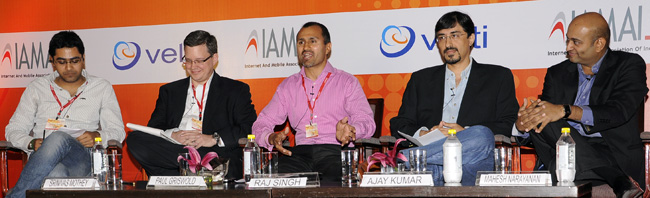
    As more and more youngsters gain access to various digital platforms, there is a greater need for marketers to not only engage the young consumers, but they must also be able to give them a unique experience across the digital platforms. The IAMAI (Internet And Mobile Association of India), which held its 8th Marketing Conclave, 2012 – ‘Digital Marketing 3.0’ on April 13 in Mumbai, extensively discussed the role of social media, video advertising and mobile advertising in the near future.


    Using Social Media:

    Today most companies have multiple social networking sites – Facebook, Twiter, LinkedIn and others. There are separate teams handling social media marketing for the company, but, are brands listening to their consumers? Do they interact and respond to queries and complaints? Do marketers understand the social media and know how to monetize it? Or are brands simply satisfied with the number of ‘Likes’ and views they generate on their social networking sites?


    Karthik Nagarajan, National Director, Social and Insights, Group M was of the view that unless one is not ready and mature enough as an organisation for the medium, the organization must stay away from social media.


    According to Usha Sangwan, Executive Director, LIC India, what brands lack today is the courage to be transparent, they don’t respond to negative feedback and fail to turn the customer as an advocate of their product. “Brands must not see social media as a mere marketing tool and limit to generating numbers alone, but social media must be used mainly for connecting with the TG and co-creating the product. Brands must try and understand their TG and become a part of their customer’s day to day life.”


    Virginia Sharma, Chief Marketing Officer, IBM India hit the nail on the head by stating that brands must have the ability to admit their mistake and apologise to the customer. She admitted that while there is a certain amount of fear among brands to apologise for a mistake committed because it may lead to negative public opinion, but felt it is always better to apologise and rectify the mistake which could lead customers to becoming an advocate of the brand.


    Vinay Bhatia, Customer Care Associate and Vice President Marketing and Loyalty, Shoppers Stop added that it a company’s reputation is harmed only when it fails to act responsibly to a complaint made, and not when it apologises for a mistake and tries to rectify it. “The problem with the companies today is that they make policies as if the consumer is a criminal. Accepting a feedback and acting upon it will not harm the brand but, if one chooses to remain silent about a complaint, that’s the worst one can do to his brand.”


    Leveraging Mobile Advertising:

    Besides the social media, mobile advertising is another challenge faced by marketers who have more or less failed to leverage the small screen. Sadly, mobile advertising is largely limited to only SMSes. Marketers are said to often mistake mobile as an extension of broadband internet and as a result they fail to give their consumers a unique experience on mobile.


    Speaking from a marketer’s point of view, Ajay Kakar, CMO, Financial Services, Aditya Birla Group stated that although the potential for mobile advertising is high, there is still a section of people who have not seen the mobile as an opportunity. He added that mobile industry must follow the ‘Jo dikhta hain, wahi bikhta hain’ policy and evangalise the benefits of mobile advertising. “Content is very important, don’t tells me about your brand, but tell me what’s in it for me? Give me the case study of successful mobile advertising. What I want to know is how much money mobile advertising is making for my brand and for my business? What you must do is to stop saying ‘buy me, buy me’ but, instead tell me ‘why me, why me’?”


    With the introduction of 3G and now 4G services, mobile internet is expected to be faster and with high quality content, better mobile applications, much better video and much more. In addition to these, smart phones and tablets are also said to play important roles in the growth of mobile internet in India.


    Mahesh Narayanan, Country Head-Mobile, GoogleIndiasaid that there is not only lack of understanding about mobile advertising, but also lack of discussion about mobile as a medium in board room meetings. “The consumer shift is already happening from traditional media to mobile; however, great amount of content for mobile is yet to be created. People are looking for your brand on their mobile phones but, ironically brands are absent on mobile.”


    While mobile subscribers will continue to grow and more people will access internet through their mobile phones, the challenge lies in monetizing the medium and to find newer ways to reach out to consumers besides SMS advertising.


    Paul Griswold, Director Product Management, Mobile Marketing, Velti was of the view that mobile is not treated as an integrated part of marketing strategy, but is seen as an extension to online. “There has been a failure to take the advantage of the one on one interactivity mobile offers and just sending SMS is definitely not the way.”


    The participants outlined not only the problems but also possible solutions. According to Srinivas Mothey, Head Mobile Marketing and Advertising, One97, the first step is to educate advertisers and agencies about the benefits of mobile advertising. Although every advertiser may have a different view about the medium, nevertheless they need to be encouraged to invest in mobile. “We are also encouraging advertisers to create mobile assets and not just mobile apps. We are beginning to see the positive results but, in order to see more results, it may take some more, but the first step needs to be taken.”


    Video Marketing:

    Video advertising/ marketing is not a new phenomenon for marketers. Traditionally, marketers are said to be comfortable with video and we have been seeing that on television, and will probably see the same, and in a much bigger way, online and on mobile in the near future.


    According to Debadutta Upadhyaya, Vice President, Vdopia Media, there has been over 50 per cent growth in video consumption in the last one year alone, the fourth largest globally. “Unlike other countries,Indiahas made the leap from web to email to social media and now video. There is still a long way to go on the creative aspect because the primary advertising medium of a creative agency has always been television, so creativity in video advertising is bound to take some time.”


    As India’s broadband penetration and mobile internet accessibility increases, it would be just a matter of time when video marketing would explode inIndia. Besides online, with 3G and 4G services, video consumption on mobile should be an altogether different experience for users and marketers.


    But Shubhranshu Singh, Marketing Director-IndiaandSouth Asia, Visa cautioned: “There is a difference between video on web and video on mobile, and the difference between the two is galloping ahead in terms of content. Perhaps the youngest audience in our country today will watch television online for the first time which could be an opportunity or a threat if we are not ready for it.”


    Digital marketing in itself has become 360 degree for marketers. It has gone beyond display and banner advertising, to becoming more interactive and innovative to reach out to consumers. Digital marketing, as the industry players pointed out, is in a transition phase from web, to email and now brands are trying to reach out to their customers through social media, mobile and video.


    Marketers must stop considering mobile internet as an extension to online and, therefore, give mobile users unique experience of mobile advertising. Social media must not be seen as a mere marketing but, a medium to interact with their consumers, know their behavior and be a part of their day to day life.


    Brands must be receptive to both positive and negative feedback of customers, admit to their mistakes, apologise to the customer and rectify the fault. Digital marketing will undoubtedly grow but, marketers must first be evangalised not only about the benefits of the medium but, also ways and means to leverage it.

    Imaging: Rafiq