Tag: Shashi Sinha

  • ‘Is Anyone Listening?’ @ Media Review 2015


    By A Correspondent


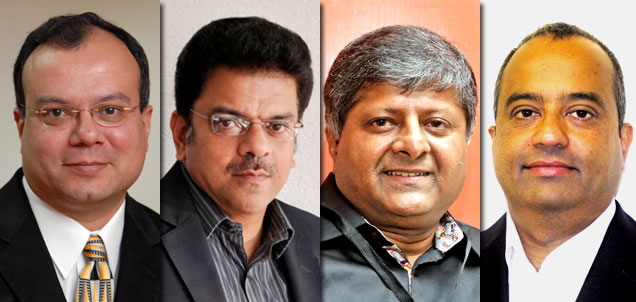
    On a day that threatened to be washed out thanks to a heavy downpour, the Advertising Club hosted its annual event, Media Review 2015, on Tuesday in Mumbai. The speakers included Shashi Sinha, Chief Executive Officer, IPG Mediabrands India, Meenakshi Menon, Founder and Chairperson, Spatial Access; Pradeep Dwivedi, Chief Corporate Sales & Marketing Officer, Dainik Bhaskar Group, and Punitha Arumugam, Head of Agency Business (India & SEA) at Google.


    Each speaker spoke on the topic ‘Is Anyone Listening? How Did Ad and Media Industry Combat The Challenge Of Continuous Partial Attention of Audiences.’


    “The ad model cannot continue to behave like an ostrich,” Meenakshi Menon said stressing that clients want to see the model changed. Most agencies today have launched a digital unit, but have no idea what to do with it, she added. “Companies live quarter to quarter, clients are restless and CMOs want to change the set up,” Menon said.


    Pradeep Dwivedi painted a colourful portrait of the print medium in India. The challenge is of how to get your attention back, he said talking about how we ought to rediscover print. It is not true that print isn’t emotional he said, print can be just as emotional as TV he pointed out highlighting a few print ad campaigns that were much talked about. “Print continues to evolve, and it takes up social issues as well more than any other medium,” Dwivedi said. Marketers need to get out of this metrocentricity, step out of the metros and figure out what people want, he said.


    Shashi Sinha, dwelled on the topic of managing media in a continuous partial attention world. He quoted Lord Kelvin, ‘If you cannot measure it, you cannot control it’, he said stressing on the importance of having a reliable measurement system in place. The core reason for the well-being of the industry is measurement, he pointed out. “Programmatic is the buzzword these days and we ought to link digital, TV and print measurement,” he said.


    “Big egos have little ears,” Punitha Arumugam said talking about the importance of paying attention to the consumers. “We have to listen to the consumer in this moment, now, not tomorrow,” she said. Arumugam cited examples of advertisements that have paid attention to the needs of the consumer no just on a product level but beyond. She spoke about Dabur’s ‘Brave and Beautiful’ ad campaign as well as Dove’s ‘Be Beautiful’ campaign. She also discussed the thought behind the Horlicks’ ad that set out to prove that Horlicks mixes in milk before you can skip the ad.


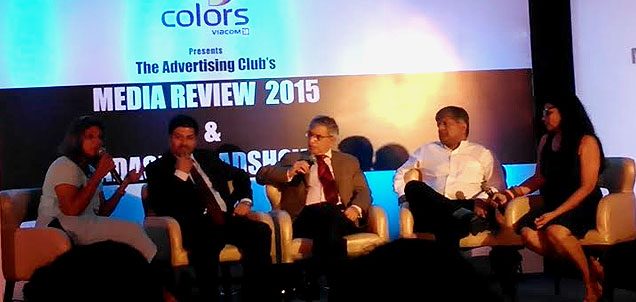
    Sam Balsara, Founder and Chairman, Madison World led the panel discussion with the four speakers next. The panellists discussed the changes taking place with the dawn of the new media and whether this changes the traditional values in this space. “The pivot is no longer the medium, but the consumer. The industry this needs to change pivot,” Menon emphasised.


    Very soon, agencies are going to be independent data providers, Arumugam said. “Tomorrow there’ll be data available in plenty; it’s about how you use the data.”


    The evening also witnessed a presentation on AdAsia 2015, Taipei to be held from November 22 to 25, 2015.


  • Sam Balsara to moderate panel at Media Review

    By A Correspondent


    The AdAsia Road Show and Media Review will be held on Tuesday, 21st July, 2015 at 6 pm at the Imperial Hall, 8th Floor, Palladium Hotel, Lower Parel, Mumbai.


    The Advertising Club has lined up four industry stalwarts Shashi Sinha, Meenakshi Menon, PunithaArumugam& Pradeep Dwivedi to present the Media Review.  Each speaker will present for 20 minutes. The title of the talk is “Is Anyone Listening?:  How Did Ad and Media Industry Combat The Challenge Of Continuous Partial Attention of Audiences.”


    Post their individual presentations there will be a panel discussion with the four luminaries to be moderated by Madison’s Sam Balsara.


    Besides the Media Review, a delegation from Taipei is flown in to present the AdAsia Roadshow and the Advertising Club will also handover the travel package, they have lined up with “Kesari” as Travel Partner for the convention and an exciting destination as an Add-on-trip.


  • Dark Clouds for IPL Sponsors?


    By Pritha Mitra Dasgupta & Ratna Bhushan


    The proposed suspension of Indian Premier League teams Chennai Super Kings and Rajasthan Royals following a betting scandal evoked mixed opinions about how the cricket tournament would be affected, although it is unlikely to financially hurt title sponsor PepsiCo or team sponsors such as Aircel and UltraTech.


    In all probability, the Board of Control for Cricket in India will have to compensate sponsors financially for any loss of opportunity to market their brands, two people who deal with such negotiations said.


    “Both teams have star players such as MS Dhoni and Shane Watson who are brands in their own right and the teams have been performing well. If BCCI chooses to go ahead without the two teams next year, then it will have to decide on how the sponsors would be compensated,” a source said.


    The sponsors of CSK and Rajasthan Royals won’t take any hit, said Melroy D’Souza, chief operating officer at Professional Management Group, the sports marketing unit of Madison.


    Media planners said suspension of two of the eight teams may be a problem for Sony, official broadcaster of the T20 cricket league. “Sony Max will not be able to match the ad sales revenue it raked in the previous IPL season because the number of matches will reduce,” a top media planner said.


    “There will be a lot of challenges for the next edition of IPL,” said Santosh Desai, MD & CEO of Futurebrands India. “The immediate issue will be adjusting the format and one would imagine that the brand value will take a knock. And advertisers will be wary at least for the next season of IPL.”


    According to Ashish Bhasin, chairman & CEO South Asia, Dentsu Aegis Network, “Both CSK and RR are very big teams and their suspension will impact the tournament in a big way. But I am sure BCCI will find ways to reorient the tournament.”


    Bhasin added that the tournament is unviable with six teams and “financially it will be very difficult to sustain. If the number of matches get lesser there will be less advertising time. So we need to see how BCCI restructures IPL.”


    Shashi Sinha, CEO, IPG Media brands, said that IPL is bigger than the teams and “people watch it more for its entertainment value than competitive cricket. So in my opinion, advertiser interest will remain.”


    Vodafone, one of the three official IPL partners and one of the biggest advertisers, declined to comment.


    PepsiCo India said it expects the issues surrounding IPL to be adequately and swiftly addressed. “The faith of cricket fans is important and needs to be restored in the interest of the game. With reference the ban on the two teams, we will discuss it with Board of Control for Cricket in India and are hopeful they will be able to find a solution, which is in the best interest of all stakeholders,” a PepsiCo spokesperson said.


    Mobile wallet company, Paytm, which came on board as an IPL sponsor in 2015, will “wait and watch before signing another deal with IPL.” Shankar Nath, senior vice president at Paytm, said, “We are stunned by the news. But the good news is there is still a lot of time before the next season and maybe it will prove to be resilient.”


    “IPL has emerged as a robust and endearing sporting event property, which has only grown stronger with record TV viewership and instadium attendance. We believe that the strengthened governance structure and enhanced image of the IPL will further build the popularity of the league and benefit all its stakeholders, including sponsors,” said Anindya Datta, chief marketing officer at Yes Bank, one of the official partners of the event.


    Aircel, the oldest and biggest team sponsor of CSK, went into a huddle over the question of disassociating with a team found to have links with a betting scandal.


    “The verdict has just been announced and we are reviewing our position in the matter,” Aircel said in a statement to CSK.


    A leading media agency is of the opinion that both CSK and RR will play in the next season of IPL, probably under new owners, and therefore the tournament format will remain unaffected.


    However, the agency said a number of big advertisers may not associate with IPL because the property is marred with the betting scandal and the matter is sub judice. No one would want to come under the scanner of the new government.


    The agency said cricket as a property in India has become very expensive and a number of beverage and FMCG brands might use this as an excuse to get out of IPL.


    Source:The Economic Times

    Copyright © 2015, Bennett, Coleman & Co. Ltd. All Rights Reserved

    Licensed to republish
     

  • The Advertising Club to host Media Review 2015 in Mumbai

    By A Correspondent


    The Advertising Club will be organizing its popular annual event, Media Review on Tuesday, 21stJuly, 2015 at 6pm at the Imperial Hall, 8th Floor, Palladium Hotel, Lower Parel, Mumbai.


    The speakers who have agreed to make a presentation and later be a part of the panel discussion are Shashi Sinha, Meenakshi Menon, Punitha Arumugam and Pradeep Dwivedi. The title of the talk is “Is anyone listening? : How did the Ad and Media industry combat the challenge of continuous partial attention of audiences.”


    The evening will also witness a presentation on AdAsia 2015, Taipei to be held from Sunday, 22ndNovember, 2015 to Wednesday, 25th November, 2015 at the Marriott Hotel, Taipei by a delegation that will be flown in from Taipei.


    The Presenting Sponsor for the event is Colors and is powered by Dainik Bhaskar.


  • Bloomberg TV lines up innovative content for 2015

    By A Correspondent


    Bloomberg TV India started the year with comprehensive show line-ups for the Union Budget 2015 which showcased the best-in-class insights, analyses, reports, debates and interviews appealing to a large spectrum of audience. The Pre-Budget programming started early January, by capturing the perspectives of leading Indian corporate leaders from across the sectors, policy experts, farmers, social sector representatives and economists on their expectations from Budget 2015.


    With a two-month run-up to Budget 2015, the channel broadcasted innovative large scale programs like Ideas for Transforming India where the country’s top experts discussed ideas for India’s growth while focusing on issues like Infrastructure, Integrated Energy Policy, Connecting India, Housing, Agriculture, etc. While on Invest in India, a first-of-its-kind initiative where Indian policy makers connected with global investors and decision makers to take note of what do global investors want. The Budget 2015 programming comprised of a comprehensive & exhaustive list of market gurus, corporate leaders and policy makers; influencers who move markets and impact business. The channel also implemented the most innovative and viewer friendly interface for the Budget day.


    Living by the defining principles~ First, Factual, Fastest, Final and Future; some of the high-impact news which was delivered by the channel in the recent past are questioning the Spice Jet deal opacity, India’s deal of 36 Rafale Jets with France, Decoding the Rolta stock crash, Interview of Mr. Manohar Parikkar as Defence minister, where he spoke about blacklisting arms suppliers & Make in India in defence sector, the cabinet’s decision to give a nod to the land ordinance, Finance Minister’s  announcement of  1% additional  levy in GST for 2 years,  amongst others.


    Alok Nair

    Commenting on the exciting line-up for 2015, Alok Nair, Executive Vice President and Business Head, Bloomberg TV India, said, “We have consistently sought to bring content of value to our viewers and this is what has reinforced our position in the business news broadcasting market. Our Union Budget coverage was a reflection of our proficiency and experience. Key influencers not only follow us on social media but value our perspective with the PMO re-tweeting us. Following our signature style, this year we have designed programming with sharper and innovative content. To strengthen our content delivery, we have launched a host of new shows and segments targeted at corporate India and market viewers like Street Smart has new segments – Trading Day and Dealing Room which capture the essential insights and early morning market trends when trading begins; Lunch Money, a mid-day wrap that highlights the big stories from the markets along with Deal Street – a segment thattalks about the world of Venture Capitalists, Private Equity, Funding, Acquisitions and everything in the world of Finance ; Market Movers, gives the sharpest and insightful analysis on the biggest stock the market is talking about; The World of Midcaps, gives a detailed insight on all the mid-cap and small-cap stocks of the day and an advertising and marketing show,From Logo to Impact, the inaugural episode of which featured legends like Shashi Sinha – Chairman, BARC India Technical Committee & CEO, IPG Mediabrands India and Partho Dasgupta – CEO, BARC India talking about BARC and how it is poised to redefine the ratings game.The mood is upbeat and going forward we plan to launch more than 20 new shows this year.”


  • IPG Mediabrands to launch online travel fest in India

    By Pritha Dasgupta


    Media agency conglomerate Interpublic Group (IPG) Mediabrands India has joined hands with the travel industry to launch a festival to boost online holiday bookings in the country. The Great Indian Travel Festival, the first such event in India, will start on April 18 and end on April 26. GITF will offer deals and discounts on travel and stay packages for more than 50 holiday destinations within and outside India.


    “Indian consumers will find great value and deals to enjoy their summer holidays. We expect to reach over 3 million users over the course of the nine-day festival,” said Shashi Sinha, CEO of IPG Mediabrands.


    The participants include Google, travel websites Cleartrip, MakeMyTrip, Goibibo, Yatra and Via, and carriers Jet Airways, Indigo, British Airways and Spice-Jet. Tour companies Cox & Kings and Thomas Cook and startups such as Oyo Rooms and Doorstepforex have committed their participation. “While the industry has seen a major uptake in online hotel bookings, there is significant headroom for growth, and initiatives like these can contribute immensely in promoting the sector and contribute to domestic tourism,” said Vikas Agnihotri, industry director, Google India.


    IPG is building and designing the GITF website in-house and will host the participants on the site. Both Google and IPG are selling sponsorships and the proceeds will be spent on marketing the event and promoting the sponsors on the site.


    Source:The Economic Times

    Copyright © 2015, Bennett, Coleman & Co. Ltd. All Rights Reserved

    Licensed to republish

     

  • GroupM maxes Media Abby as Lodestar UM wins 3 Golds

    All smiles: CVL Srinivas and Shashi Sinha at the Media Abby on Day 1 of Goafest 2015. Picture by Shailesh Mule/Fotocorp


    By A Correspondent


    “It’s all in the family,” said CVL Srinivas, CEO South Asia, GroupM on his network of media service agencies in India winning 28 metals at the Media Abby last evening. Held as part of the ongoing three-day Goafest, behind held in Goa, the Media Abby is conducted by the Advertising Club for excellence in use of media. Goafest is jointly organised by the Advertising Agencies Association of India and the Ad Club.


    According to Pratap Bose, President of the Ad Club and also Chairman of the Media Jury, as many as 70 leading professionals constituted the judging process which was held over four days. There were 674 entries as against the 619 of last year from 53 agencies. “This year we attracted the best possible response in the Media category over the years,” added Nakul Chopra, Chairman of the Goafest Organising Committee. There were a total of 74 metals awarded – 12 Golds, 23 Silvers and 39 Bronzes.


    “The quality of entries was more or less similar to that of last year with nothing really very outstanding and hence there was no Grand Prix awarded,” explained Bose.


    Commenting on the overall trends in the entries, Bose said that with the pressure on margins and the bottomline, getting creative in media is possibly taking a backseat.


    Meanwhile, Shashi Sinha, CEO, IPG Mediabrands India is happy to see his network of agencies winning 14 metals. The maximum number of golds won by an agency this year  – three – was from his network’s Lodestar UM. “It speaks for the splendid work put up by our teams from across all our offices,” Sinha said.


    The Advertising Club does not award a title of Media Agency of the Year at the Media Abby and also does not rank agencies in any specific order of metals.


    Along with the Media Abby, the Publisher Abby category of the Creative Abby was awarded on Day 1 of the Goafest.  There were 62 entries in all from across 10 publishers and 17 metals were awarded. There were four Golds, six Silvers and seven Bronze metals. Bose admitted that the awareness for the Publisher Abby needs to be raised to generate more entries from across the print media.


    Result


  • The Most Annoying Buzzwords of 2014


    We asked the industry’s finest for buzzwords they grew heartily sick off in 2014. Big Data and Viral were the big losers. Read on for the rest:


    Shashi Sinha, CEO, IPG Mediabrands

    1. Talent

    2. Compensation

    3. Digital

    4. Television measurement and

    5. Analytics were annoying as the more people spoke, the less they did anything about these things.


    For 2015, for starters, I have high hopes from the new TV measurement which Barc will put out, media agencies getting into content production, collaboration between all constituents of the ad ecosystem, budgets which will hopefully be at landmark levels and the World Cup which we should win again.


    HALL OF SHAME 

    Viral – Most of the time it is just an ad that runs way too long. Get some scissors, people


    Big Data – The ultimate Brahma Astra for the advertising charlatan


    The only viral I know of is the one that requires the intervention of a doctor

    Perhaps the most, abused & misused terminology in the year. Runs the danger of being called ‘Pig Data’.

    It’s just analytics. People have been doing this ever since humankind stepped on this planet.


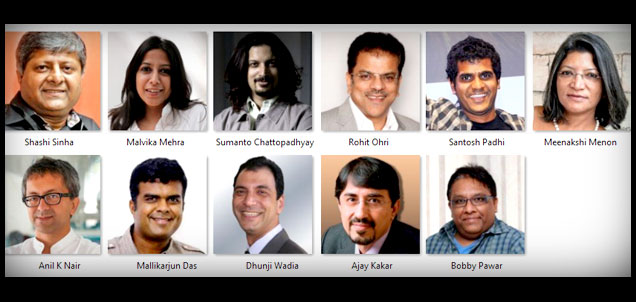
    Malvika Mehra, National Creative Director and Executive Vice President, Grey

    The 5 most oft used words in 2014 were 1. Guys 2. Let’s 3. Make 4. A 5. Viral.


    Also ‘Take your time (4-5 minutes is great), but please don’t take my money. No budgets this year. And while you are at it, make it so stunning that it is ‘organic’ (unpaid distribution)’. Ji Sirji. ‘But ultimately make me a TVC. And I want a ‘BIG, LAUNCHY’ feel for our product in 30 seconds or less. Chal, paanch second aur le lo’. Ji sirji.


    The Pitch Bitch: ‘Of course we love you guys! We are just opening it up to 10 other agencies to inject some freshness into the brand (and test how much lower will they drop their price vis a vis yours for the same or more amount of work)’. Par Sirji?


    Femvertising: From soap brands, to makers of shampoos, sanitary towels, watches to home appliances and mobile network providers, everybody suddenly wanted to ’empower the woman’. I get the noble intent, but wish the brands would really ‘walk the talk’. Else it’s just a ‘token’ gesture. And consumers see through that inauthenticity.


    Interactive Pre-rolls: With stern warnings of ‘If you skip this ad, I will have to kill not only Jack and Jill and Mary and her little lamb, but also Old MacDonald along with all the cute animals on his farm’.


    Research: Gut instinct is officially dead. It got replaced by the R word. Heard about ‘No guts. No glory’? Not lately.


    Sumanto Chattopadhyay, Executive Creative Director, South Asia, Ogilvy & Mather

    Native Advertising: I imagine people wearing grass skirts and clapper boards singing jingles.


    Vlog: At times we Bengalis mix up our Vs and Bs. That’s what I thought this was all about!


    Content: As in, ads vs. content, content marketing. Like ‘traditional’ advertising has no content? I’m content to pass on this one.


    Social: Yeah, why not? Let’s party. And get paid for it! That’s what I say.


    Seamless: Every element has to seamlessly work with everything else. Imagine if our clothes were like that too! Now that would be some fashion trend.


    Santosh Padhi, Co-founder and Chief Creative Officer, Taproot India

    Pitch: If you do not respect yourself nobody will.


    Research: Like sex determination, it should be banned


    Low Budget: Instead of 300 insertions can we do 280 and improve the quality of the creative?


    Urgent: Premature babies forcefully welcomed will always run a risk


    Celebrity: They are the super highly paid creative directors, why do you need one more creative agency?


    Rohit Ohri, Executive Chairman, Dentsu India and CEO, Dentsu Asia Pacific (South)

    Integrated: Integration is the process, co-creation is the magic.


    360: 360 degree campaigns are consumer conversations in bursts, 365 is everyday relevance.


    Alignment: Alignment is passionless, belief runs deep.


    Structure: Structure constrains, open source liberates.


    Procurement: Vegetables are procured, ideas are partnered.


    Meenakshi Menon, Chairman, Spatial Access

    Big Data: That has to be on the top of my list. It’s just analytics. People have been doing this ever since humankind stepped on this planet.


    Twitterati: Everybody has become an instant expert on Twitter. I’d replace the term with ‘scum.’


    ISIS: ‘Isis’ is supposed to be the goddess worshipped as ideal mother and wife. Our vocabulary keeps evolving, sometimes not in the right direction. I’d call the group as a distortion than assigning them the name of a goddess.


    Homechef: Where mothers cooking for their families had some dignity to it, now we have a whole new concept of women cooking for complete strangers that they invite at home. The food is charged, of course. It’s just a little pretentious a term. Just call them plain old cook, maybe?


    Climate Change: It only gets talked about. Never acted upon. Perhaps replace it with – learn to breathe under water? Or ‘Grow gills?’


    Anil Nair, CEO and Managing Partner, L&K Saatchi & Saatchi

    Integration: The term liberally used when you don’t have a clue of what to do with your brand. It’s been institutionalised now. We will have Chief Integration Officers everywhere in no time. Put an end to this painful word. Replace it with ‘We need to have an idea,’ Sirjee.


    Social Listening: It’s something that our good old researchers have been doing for ages. It’s nothing more than trend analytics, only instead of taking a dictaphone out to record voices, you’re recording them off Facebook and Twitter. Just call it ‘consumer understanding’ and do not make an unnecessary tool out of it, please?


    Viral: The only viral I know of is the one that requires the intervention of a doctor and loads of medicine to go away. I don’t care where this term came from, it needs to disappear. It’s an epidemic that needs an antidote.


    SEO, SEM: Why are we making a mountain out of a molehill? Can we not get caught up in the process and its terminology and revert to a simple non-jargonised world?


    Big Data: For God’s sake, the database just got bigger. But it always existed. The most successful political campaign of this year was based on pure emotional advertising and not big data. Let’s stop jargonising information. Call it what it is (read: information).


    Mallikarjun Das, CEO, Starcom MediaVest Group (India)

    Big Data: A phrase bandied too easily and too much, especially by those who pay scant regard to rationality. The ultimate Brahma Astra for the advertising charlatan.


    Programmatics: A term used in context with media buying, especially on digital, when what they are doing is just using the optimiser.


    Fragmentation: The only problem with using the said buzzword is that it’s often used in a wrong way to strike some sort of terror in a client.


    Storytelling: Need I say more?


    360 degree: This term is like that sugarcane that’s passed through the machine 300 times. There’s no juice left in it and yet it’s being rolled one last time.


    Dhunji Wadia, President, Rediffusion Y&R

    Big Data: Perhaps the most, used, abused and misused terminology of the year. It runs the danger of being called ‘Pig Data’. There are questions regarding the implications of the approach and also the way it is currently done. It needs to look at data holistically – Total Information.


    Digital Evangelists: Don’t need them as you cannot preach to the converted.


    The ‘Selfie’ Contest/Promotion: Replace it with better imagination.


    E-commerce ‘Discount for the Day’: That runs for years together.


    Free App Download: With more and more retailers and brands reaching for e- and m-commerce, there is an explosion of apps to be downloaded. Begs the question, ‘Why would anyone pay to download such an app?’


    Ajay Kakar, CMO, Aditya Birla Group – Financial Services

    “Isse viral kar do!”: Which is what every client says. It’s content, not viral, please.


    “Facebook has 50 million visitors!”: So what? VT station has more people visiting, does that mean we put all our ads there?


    New media: Let’s just say ‘customer’ as opposed to new, old, traditional, or any other kind of media. Creative awards: Awards should be for creatives that work.


    Pitches: Here a pitch, there a pitch, everywhere clients flirting. Serial pitching must end. Let’s call them ‘Brand Custodians’ and not pitchers, shall we? Clients and agencies must stop playing the blame game. If one is the crutch to your success there’s no way one should let go.


    Bobby Pawar, Director and Chief Creative Officer, Publicis Worldwide

    Viral: For the love of likes, it’s just a video until lots of people see and share it. Most of the time it is just an ad that runs way too long. Get some scissors, people.


    ATL/BTL: It implies a caste system of ideas. The good ones go above, the so-called ‘hard working’ ones slide under. It shouldn’t matter where the idea lives, it must be good enough to move your audience. People don’t care, therefore you must.


    But: This is phaasi ka phanda for ideas. It is crueler that a blunt ‘no’. Why? Because it is preceded by some waffling words that give hope to the creative, then ‘but’ shows up and yanks the handle.


    Deadline: Nothing induces a creative butt-clenching moment like this word. Yes sir, three bags full sir, our work is time bound, but does it have to sound so, erm, deadly?


    Purchase: It’s the leading cause of hair-loss among agency CEOs.


    Source:The Economic Times

    Copyright © 2015, Bennett, Coleman & Co. Ltd. All Rights Reserved

    Licensed to republish


  • Shashi Sinha, CVL Srinivas, Pratap Bose & Rohit Ohri present Outlook for 2015


    Interviews by Shruti Pushkarna


    2015 is acid test year for our industry:

    Pratap Bose, President, The Advertising Club

    I don’t want to sound pessimistic but honestly I have spoken to a lot of people in the industry. It’s a view that everyone’s taking which is the whole thing of being very cautious. There is optimism but there’s cautious optimism. And therefore I think, 2015 is really the acid test year, both for the BJP as well as for our business. The promise is large, the delivery is yet to happen. The strain on the government to actually do something concrete, pivotal around strategy, around implementing, to make things happen is huge. People say it will happen, give us time… I understand that. So there’s a lot of optimism that things might happen but unfortunately we haven’t seen the fruits of that yet. I don’t want to sound like a pessimist but I think we have to take the wait and watch approach. Even if you see the Congress men talk about Narendra Modi right now, they are saying that we’ve heard a lot, he’s made the right impression, the mood is right, but we need to see real time action. To summarise what I said, 2015 is the acid test year for our industry. There’s a lot of hope but I’m still pessimistic about it because it needs to transpire into concrete decisions that grow the economy and move the economy forward. That’s not been seen yet. I tread very carefully.


    Digital is finally kind-of becoming a strong reality:

    Rohit Ohri, ‎Executive Chairman, Dentsu India & CEO, Dentsu Asia Pacific (South)

    I think 2015 will be a promising year for everybody because I think a lot of the work that the new government has started, should show some results. And we are hoping that the positive sentiment will carry through to 2015 and 2016 as well. The other thing is, from the entire advertising and media industry I think digital is finally kind-of becoming a strong reality. It’s no longer just good to do, I think brands are realising that it’s an interesting part of their plans. And I think we are going to see a big change in the next two years in how brands actually communicate online. And what we have seen in 2014 was this big thing about brands creating content, which they did in a mini movie kind of format releasing online. I think that’s something we’ll see a lot more of going forward in 2015. All in all, from a creative perspective, and from a media spends perspective, I think the industry is looking up.


    Government has great plans but they have to push it through:

    Shashi Sinha, CEO, IPG Mediabrands

    I’m hoping and praying that the next year is good. I am hoping that Budget works out well for the government, whatever they decide, they implement because to me, that’s important. This government has great plans but they have to push it through. As we speak, currently GST is held up… so if they pull off a great Budget, life will be good. To me that’s vital. And not because it’s will be a great Budget but that will show their ability to push through and resolve things. But if they still get caught up in this religious thing that is happening, then there’s trouble. So we hope the government succeeds.


    In terms of adspend growth, it’ll be pretty much similar to this year:

    CVL Srinivas, CEO South Asia, GroupM

    We see 2015 to be a good year. On an overall basis, I think in terms of adspend growth, it’ll be pretty much similar to this year. But one must remember that this was an election year so we had a bit of a bump up to growth because of elections. Next year, despite it not being an election year, we see the growth rates to be more or less similar. We see digital growing upwards to 35 per cent like it has been over the past two or three years. We also think television is going to continue its strong growth in healthy double digits and so will the regional print dailies. So, all in all, it looks like an interesting year. We have the ICC World Cup coming up next year so that will lead to spends at some level.


  • Digital awaits breakthrough: Shashi Sinha


    Twenty-fourteen will be remembered for long because of two things, the general elections and the upsurge we saw in e-commerce. But if you were to remove these, I don’t think adspends have gone up dramatically. There is a lot of noise about ‘achche din’ but we haven’t seen any real change on the ground. In our business, the FMCG sector is the true indicator of performance and these companies are not reporting a big turnaround. I know it takes time after a new government settles in, but the fact is it hasn’t happened so far. The trends in e-commerce indicate that the upsurge will continue through the next year but if FMCG revenues don’t improve and they don’t start spending, then we could be in trouble.


    Digital has been a big talking point of the year but I think we are far away from a big breakthrough. It will grow at a particular pace. So consumers may adapt to it but advertising will take some more time. I have always believed that collective consumption of media is in our DNA, and purchase decisions still happen collectively in India as opposed to the western world where decisions are mostly individualistic. This difference is because of our culture. Our society is very outwardly-directed, unlike the US, which is an inwardly-directed society. When it comes to consumption and spends, societies and culture matter a lot. For instance, television viewing in our country is still perceived as a family thing. So while personalisation has happened with devices, the family still remains in our DNA. In fact the whole Hindu ethos is made up of the family and the principle of collectivity. And that’s not going to go away. Devices will help you, they are mere enablers. But our ethos, psychology and culture are not going to change.


    There has been a tremendous increase in numbers as far as the internet penetration and users go, and I believe India is the second biggest user of Facebook today. But have you ever wondered why is India such a big Facebook user country? That is because Facebook stands for a collective consciousness and it is the same as our ethos. As a country, the penetration of Facebook is higher because Facebook is an example of connected-ness. That culture is not going to change in a hurry. It will happen, with a lot of internalisation, but it will take time. At this point of time, it will all be collective.


    As for the talk of 2014 being the year of digital innovation, I think we haven’t scratched the surface yet. I think we have a long way to go for us to say that this is the year of digital innovation in India. India is a very strong content country, one of the few countries in the world where original content is done. In my mind, while creativity will stay, digital is just a format. A lot of people are experimenting with content but the truth remains that digital spends are still at 8 or 9 per cent of the overall spends.


    Digital is also a mindset. In our mindset, the transition to digital has happened, it may not reflect in terms of numbers and volumes. But as far as mindsets go, at least we are talking digital. It’s probably the fashionable thing to do or even the right thing to do but I’m not sure whether the numbers justify. Television and print are still very big in this country.


    Today, to get into digital, you have to make investments in people, for the right kind of talent, which is expensive. It’s a huge investment. We are making the investments and hoping that the returns will come.


    As for the next year, the situation on the ground is not good but there is collective hope.


    The forthcoming ICC Cricket World Cup will bring some hope of being a trigger to growth in ad spends. It’s all about activity around events. Cricket is a big sport in India and World Cup come once in four years. I see some advantages, it may not be as dramatic as last time because it was in India then but still, the World Cup is big enough.


    Reports indicate that the global economy is expected to improve and therefore global adspends will improve. Hope is what drives the economy, hope is what drives the stockmarket, hope is what drives sentiment, this is the hope for India and why should I go against that hope. But we have to be slightly cautious. We are hoping that with the new government and with their will to improve things, things should improve. It all depends on the budget. If the government can push through the budget, they can do a lot of stuff otherwise there is trouble.


    What I see as a challenge for myself is to ensure that our clients do well. I am not sure that it’ll be dramatic. But I feel if we can consolidate in the next year in spite of what everyone is saying, that’ll be a big achievement. If we can sustain, if we can just do what we have done in 2014, it should be alright.


    Shashi Sinha spoke to Shruti Pushkarna on the sidelines of The Advertising Club’s Media Review 2014 held last Thursday (Dec 18) in Gurgaon. A version of this appeared in the December 22 issue of ‘dna of brands’


  • Embracing the New Consumer


    By Shruti Pushkarna


    The Advertising Club’s popular annual event, Media Review 2014 was held at the DLF City Club, Gurgaon on Thursday (Dec 18) evening. In its 60th year, the Advertising Club decided to tweak the format of the media review in its latest edition. Unlike the previous editions, there were three eminent speakers speaking on varied topics. CVL Srinivas, CEO South Asia, GroupM spoke on ‘Redefining the role of media agencies in a borderless world’. HT Media CEO, Rajiv Verma also spoke on similar lines, differing only in restricting his topic to redefining the role of ‘print’ media. The third speaker, Shashi Sinha, CEO, IPG Mediabrands spoke on, ‘Separate and Together: The future is about being specialist and holistic’.


    There was a lot of talk of redefining and reinventing the roles of media agencies in the new digital era and what to expect of the future trends but Mr Sinha, summed it up in a most appropriate way when he said, “We have to manage our present in order to reinvent our future”. He emphasised on the need to tell stories in a way that they evolve and reinvent the future automatically.


    As in any other forum that takes place today, there was talk of integration, the need to align different cultures and different mediums to effectively send out a message. There was also anxiety expressed on whether older mediums like Print will hold value in the growing digital world. But the concluding remarks hit the notes of optimism that rode on the back of realigning and in assimilation of various models present today, to arrive at that ‘magic model’ of communication.


    Redefining the role of media agencies in a borderless world

    CVL Srinivas, CEO South Asia, GroupM opened his session speaking about the evolution of the media agency and trying to define a ‘borderless world’.


    He compared the evolution of man with the evolution of media agency, which he said was presently in its fifth stage. The first stage of media evolution, according to Mr Srinivas, happened in the mid 1990s when media buying shops were being set up in India. The next stage came when media planning business moved out of the creative agencies. After which most media agencies started to diversify, setting up allied businesses, beit outdoor or digital, in order toprovide what they called, 360-degree solutions.


    He said, “We started off as a little chimp who is standing right in the back, as being the backroom office and I was one of the chimps when I’d joined the industry in the early 90s, following the client servicing guys wherever they went, hoping to get my five minutes to present my 80-odd slides. From then to now, it’s been quite a journey. But where we are today is at a very interesting stage. Whatever changes have happened in the last four to five years have forced media agencies to take on an entirely new avatar.”


    Trying to define a borderless world, Mr Srinivas cited the example of a Facebook map which stands for a connected world. Since the world we live in has all the customers connected and well informed, there is an urgent need for brands to not just stay relevant but also remain meaningful. Mr Srinivas said he sees an opportunity for agencies in this newly connected world, He said, “Today it’s not enough to be a trusted adviser of clients. Agencies can move up the value chain by moving from advising clients to leading clients.”


    In the digital era, added Mr Srinivas, a lot of disruption is taking place because of exceedingly available data and technology. He also mentioned some disruptive trends that agencies can take advantage of by designing content strategies around them. One of them was multi-screen viewing, which as a study by Milward Brown on ‘ad reaction in India’ states, is a growing trend in the Indian market. More and more Indian consumers are involved in multi-screen viewing. Milward Brown notes that by 2020, it’s estimated that about 50 to 60% of mobile owning population of India will have smartphones. Mr Srinivas added, “If you put that alongside with the kind of decreasing involvement in TV viewership, the whole ball game completely changes.”


    Another disrupter is e-commerce or m-commerce as some would like to call it. Mr Srinivas observed that because now consumers are using a digital gadget to close the loop, agencies have an opportunity to interact with the consumer up to the last mile.


    Brands are also getting into publishing and that is turning out to be a disrupter too. They are standing for functional benefits. The more content a brand can keep sending out, the more they can interact with the consumers. “Brands realize that it’s important to become a franchise of content because then a consumer interacts with the brand in so many more ways”, said Mr Srinivas.


    Talking of new trends in audience planning, CVL Srinivas said, “We have to move from contextual planning to audience planning with the help of data and the digital. Manual processes will give way to automated processes. We also need to build different communities within the organization.”


    CVL Srinivas concluded his session by once again emphasising the importance of reinventing and redefining the role of media agencies and the need to take advantage of every new point where you can touch the consumer directly.


    Redefining the role of print media in a borderless world

    HT Media CEO Rajiv Verma started his session on a similar note as Mr Srinivas. He also started by talking oh the history of media and how it has shaped up through the centuries. He divided it into three eras, Pre Media, Mass Media and Infinite media. He confessed that all this talk of the ‘cool digital world’ has had him worried about the future of print but since the infinite media we live in is younger than our kids, he still had some hope. He said, “Infinite media is younger than our kids so it’s not even a blink of an eye in the entire chronologue of media evolution. Therefore it’s just the beginning.  And there’s scope for all mediums to coexist.”


    He talked about how reporting has changed over the years and yet the essence remains the same, finding out accurate information and putting it out there. “From one half-hour news bulletin in a day to the days of embedded journalism that began with the Iraq war to today’s day and age where the model of reporting has shifted from ‘one to many’ to ‘many to many’, we have come a long way,” he said.


    In a borderless world, media is no longer acting as a filter. It has become more ubiquitous.  He reiterated Mr Srinivas’ point of massive amount of disruption that is taking place today, which presents huge opportunities for business.


    But Mr Verma wasn’t all that optimistic as Mr Srinivas as he stated that the digital has its own problems. He said, “In the age of digital reporting, before the truth gets known, the virality takes over. The lines between blogs, tweets, photos are blurring; becoming a mish mash of data and information. The war for ad $s is leading more to noise rather than to news. And the pressure of ad $s is leading to trivialization of news.”


    He emphasized on the unique characteristics of print media, like, the written word is still the most trusted word. He said print can go beyond straight facts, presenting a range of views and building a sense of community among its readers.


    He concluded on an optimistic note stating that print will coexist along with other media given its unique characteristics. He said, “While all these disruptive forces are at play, the real question that comes to mind is that print media will have to go back to basics in figuring out its comparative advantages, what is exactly is the audience it’s trying to serve and try to go more hyper local in serving that audience because that’s the only unique characteristic of print media which differentiates it from others.”


    Separate and Together: The future is about being specialist and holistic

    The last session saw Shashi Sinha, CEO, IPG Mediabrands, reiterating the points made in the previous two sessions, adding a few new ones.


    Shashi Sinha, CEO, IPG Mediabrands, started the session with the word ‘Integration’. He talked of his own career where he started off with advertising and what integration meant in those days, and then talked of the need to integrate not just ideas and processes, but to integrate, mindsets, culture and philosophies, in order to remain relevant.


    He also emphasized on the need to embrace the new consumer. He said: “Consumer wants to be the protagonist, he/she wants to be at the center of communication. He/she doesn’t want to be bored with information. Just tell them how it impacts them and how can they participate.So there’s a need for consumers to be constantly engaged and constantly touched.”


    He added that what’s important in today’s ever-changing media environment is the need to tell a powerful story. He said, “The success of any model depends on the story and its storyteller. You have to play it together to tell a story. We have to manage the present and as we manage the present, the stories will evolve for us to reinvent the future. And keep your stories simple.”


    He concluded by saying that while we live in an increasingly specialist world, without integration we will not be able to remain relevant to the new age consumer. He said, “In this specialist world, where you have Starbucks, Café Coffee Day and Barista, I still have my coffee from the baker.”


  • Mediaah!: Why Goafest hasn’t lost the plot and deserves one more chance

    By Pradyuman Maheshwari


    I write this more in response to Anant Rangaswami’s article on Firstbiz and his Facebook posts. What I like about Anant’s writing is his definite views on issues, many of which I agree with.


    But on Goafest, he’s been unduly harsh. His point on Facebook: Goafest has lost the plot. It’s press release offered a programme with just time slots and no mention of speakers and topics.


    I received the communique too, and chose to not carry a report on it because it didn’t say anything at all. It was an advance intimation of the programme, but could have been held back for a few days with some names.


    I also agree with Anant that Goafest in the summer is a nightmare (my descriptor, not his). Since I sweat a lot, I can say that it’s terrible even in the aircon. So, even though the event is indoors, the walk or buggy ride to your rooms could see you drenched in sweat. Your eyes could be burning all day and even the world’s best coolants wouldn’t work.


    Last year’s Goafest could best be described as forgettable. It had loads of negatives. The Creative Abby was a disaster (albeit for a fault that wasn’t of the organising committee). First a controversy about the Ford Figo scam ads saw the exits of some high profile staff at JWT and Ford, then the Tata Chemicals scam ads that were eventually pulled out of the competition and later the controversy around scam ads and plagiarism.


    Somewhere along this was the decision by Ogilvy to not participate in the Abby. Ogilvy had huge misgivings about the awards, and Ad Club prez Shashi Sinha tried his damnedest to get them back. But Messrs Piyush Pandey & Co didn’t budge.


    When Pratap Bose took charge as Ad Club president last year, he resolved to ensure a buy-in from all towards the Creative Abby. That doesn’t seem to have happened thus far.


    To add to the confusion, the AAAI delayed the Goafest announcement and later found the elections as reason to postpone the dates. Then came the news that Nakul Chopra had opted out of the Goafest chair position.


    Finally Srinivasan K Swamy, better known in the frat as Sundar, took charge. I’ve interacted with Sundar a fair deal in the recent past, especially as head of the International Advertising Association India Chapter of which he is the head. I believe if there’s one person from the AAAI who can pull it off, it’s him. The IAA is supremely active thanks to Sundar’s leadership. I find him exceedingly keen on doing things and he knows the art of getting things done.


    I am not sure how Goafest 2014 will be. I have heard people say that some regular sponsors have declined to be associated this year. But Sundar is confident of a turnaround and I think he ought to be given a chance.


    Yes, I do think Rajesh Kejriwal’s Kyoorius Awards with the coveted D&AD partnership, has stolen the thunder from the Abby, but there’s space for multiple awards. We’ve seen how other disciplines – radio, digital, outdoor and PR, for instance – have multiple awards and they are all doing well. So ditto with creative.


    I have heard some angry comments amongst industry elders about Anant’s Firstbiz piece and I was told that some pressure may be exerted on Network18 via the media agencies asking him to refrain from writing nasties against Goafest. I hope that doesn’t happen, that wouldn’t be right.


    Sadly, Anant’s views are echoed by many in the industry. Before Sundar’s name was announced, even I wasn’t sure whether there was any point in conducting this year’s edition.


    Sundar & Co have an uphill task ahead of them. But I think they need to be given a chance.


    The industry deserves a good, celebratory Goafest. The format, the timing and the awards are a problem. Perhaps the organising committee and AAAI need some younger blood taking the lead on Goafest. Perhaps it may be a good idea to get a professional body to conduct the show – Kyoorius, e4m, Campaign/Haymarket… whosoever.


    I know what I am going to do: have MxM support Goafest until before the event happens. The coverage of the conference (and the awards and the fun element) will then take over. And on that, we’ll be brutally honest about how it is.