Tag: Shailesh Kapoor

  • PrimeTime Debates: Hate Story 2022


    By Shailesh Kapoor


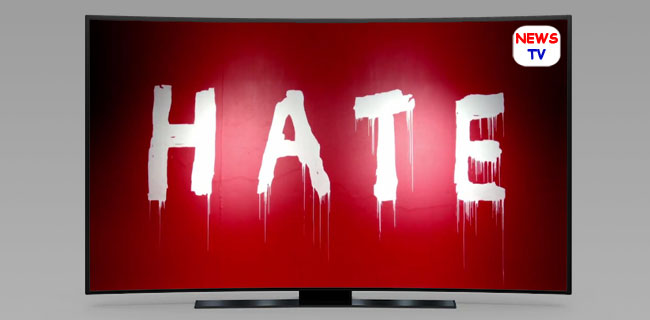
    Shailesh KapoorIt had to happen someday. The vitriolic nature of prime-time debates on Indian TV channels has been there for everyone to see over the last decade. It was only a matter of time that this daily dose of toxicity snowballed into something serious and threatening. A comment by BJP spokesperson Nupur Sharma on one such debate has resulted in a major diplomatic crisis. In turn, it has resulted in BJP putting down some guidelines regarding the code of conduct for their spokespersons on TV channels. I’m afraid, it’s a case of too little, too late. The damage may have already been done.


    Nupur Sharma is not one of a kind. It could have been anyone else instead of her. Spewing venom on prime-time debates has been par for the course. It’s a format and style that was first championed by Arnab Goswami, whose own debates have degenerated with every passing year. Other channels followed suit, and on any given weekday, we now have more than 30 prime-time debates competing on decibel levels as well as on absurdity.


    How did we reach this nadir? A part of the answer lies in the mad rush for TV ratings. In a multi-channel scenario, where you are looking for a share of eyeballs in times of low attention spans, outshouting the next channel on the remote is a temptation that’s hard to resist. I don’t have much of an issue with the noise and the outshouting per se. Even if you believe such content is lowbrow, it is still harmless. You can simply switch channels, or watch news online or on social media.


    But over the last four years, the discourse has started peddling hate, which, unlike noise, is dangerous. The transition from distasteful but harmless noise to hateful and divisive communal witch-hunts started in the build-up to the 2019 general elections, and continued to get worse in the pandemic years. And here we are, in 2022, in a diplomatic tangle, because a hate-spewing spokesperson went too far one day.


    Will anyone learn anything from this at all? Will our politicians, who are generally over-enthusiastic in supporting censorship of entertainment content, self-censor their own people? Will news channel bosses have some tough talks with their offending anchors? Much as we wish the answers to these two questions is ‘yes’, the compulsions of electoral politics, coupled with the subservient nature of Indian media, especially television news, makes that ‘yes’ wishful, almost like a fantastical idea that can no longer exist. Not watching TV news is no longer a solution either. That’s like the ostrich-in-the-sand argument. The social ramifications won’t go away if a handful of people stop watching.


    The only community who can action a change are the advertisers. Brand safety has been a growing topic of conversation worldwide, and there cannot be a better time for some of the biggest spenders on television news to introspect if their message is being seen in the right context and environment. If the money dries up, TV channels will have no other option but to fix their domestic problems. While the Central Government does so too, in a crisis of its own making, one could argue.

     

  • And the eyes have it…


    By Shailesh Kapoor


    Shailesh KapoorIn major research reports, amid all the crucial, perspective-changing insights, occasionally comes a finding that makes you chuckle at the silliness of it. This column is about one such finding.


    In our recently-released report on the Indian OTT audience, there’s a section where we quantify the various reasons because of which medium and light AVOD streamers (i.e., those not watching content on any paid platform) do not spend more time watching online videos. This ranking effectively helps OTT platforms understand why Indian AVOD audience have not engaged with digital videos enough to make them consider paying for subscriptions.


    Using qualitative research, we identified 11 reasons, and the report ranks them based a large sample quantitative study. The reason right at the top of the list is “can damage eyes”. A staggering 78% medium and light AVOD audience in India believe watching online videos (largely on their smartphones) damages their eyes, and hence, consumption time must be controlled. This reason is 18 percentage points higher in the list than all other reasons, including some compelling ones related to pricing of paid content, cost of mobile data, reservations about sexual and abusive content, etc.


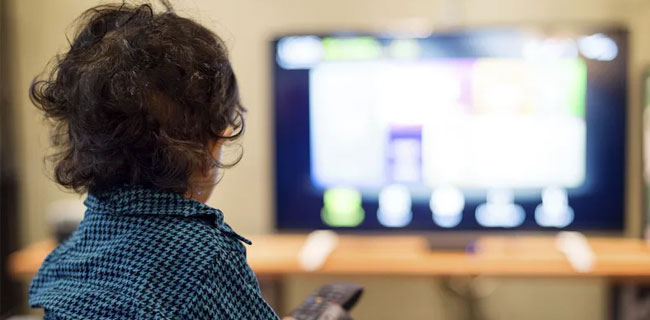
    If you have grown up in an average Indian household like me, I’m sure you have been fed this bogey at some point of time in your early years. “Can damage eyes” has been the go-to explanation for Indian parents, to dissuade their kids from watching more television in the 1990s and the 2000s, and then from using the smartphone excessively, for the last decade or so. “You will have to wear glasses all your life”, for example, is a common scary consequence mentioned.


    As a heavy TV watcher, I had to hear this every other day, and it didn’t help that I already had glasses prescribed from a very early age to begin with. I believed in the reason for many years. Only in my 20s, I discovered that the consequence I was repeatedly reminded of was only a grand old myth.


    A simple internet search on “Does watching TV damage your eyes” or “Does using smartphone damage your eyes” will give you some easy answers. Excessive usage of devices can cause eye strain, but it does not “damage” eyes, or any other part of our physiology, in any way. I’m not endorsing excessive device usage, as there are indirect health consequences that one needs to keep an eye on, pun intended. But the “can damage eyes” reason is simply untrue.


    It’s fascinating, then, that such a myth is the top reason for a section of audience, leading to them controlling their consumption of digital video content. The belief that this is true is so deep-seated that you cannot say that parents lie to their kids when they use this argument. They actually believe in it!


    As puerile as this finding is, it tells us a thing or two about the Indian audience. We may have progressed rapidly in the digital space, but there are some uniquely Indian challenges that the Indian market continues to pose. It seems this myth existed in the Western markets too for a while, but has become a marginal one over time. But in India, this is a consumption barrier that has direct business impact, on both unpaid (AVOD) and paid (SVOD) streaming businesses.


    I almost wish one of the leading players did a tongue-in-cheek campaign to bust this myth. But busting myths created over decades is not easy.


  • Genre by Genre… Tumbling of the Telly


    By Shailesh Kapoor


    Shailesh KapoorWhere is linear television headed, one is often asked these days. Television remains the biggest traditional media by far. While print has suffered irrevocable damage during the pandemic, television has managed to hold on much better. TV’s ability to bring families together every night as a ritual has meant that it continues to stay relevant in an evolving India that’s embracing technology faster than ever before.


    But that’s only half the story. While television, at an overall level, has managed to hold its place under the sun, not all television genres have managed this equally. One after the other, television genres have fallen by the wayside over the last few years. The New Tariff Order (NTO) sounded the death knell for English entertainment channels, where streaming offers far superior content, in both variety and quality. Music channels have struggled, with the rise of digital options, ranging from YouTube to music streaming apps. The infotainment genre is no longer what it used to be, having borne the combined brunt of NTO and the streaming surge.


    These are ‘niche’ genres, one could argue. But the more ‘mass’ genres have not done too well either. Movie channels have lost ratings. The Hindi Movies category is clocking almost 50% lower ratings when compared to the pre-NTO period. Kids channels have not grown. IPL’s TV ratings are down by more than 20% this year, with more sports viewership shifting to digital with each passing year.


    That leaves us with News and GEC. The former is a strange beast. The category operated without ratings for more than a year, and managed to stay afloat, but with content that’s highly questionable when seen through the lens of responsible journalism. The ratings are back, and news channels continue to be notorious, propping up communal stories while ignoring the more purposeful ones, like those related to economic matters. Watching TV news is a habit for older (30+) men in India. But this habit is no longer perceived as an ‘intellectual’ one.


    That leaves us with mass general entertainment, the only TV category that has remained unaffected, at least relative to others, by NTO and streaming. Despite no real content innovation, GECs continue to serve the lowest common denominator well, and the bigger channels have managed to hold on to their viewership levels, with drops in the range of 20-30%. In the rural market, free-to-air GECs have prospered over the last few years, running largely on content handed down by the pay channels in the network.


    Hence, slowly but surely, a category is losing its layers. Genre by genre, the pieces have been broken, and television is no longer the throbbing, multi-genre medium it once was proud to be. While the rise of digital entertainment has been an evident factor, excessive interference by an over-enthusiastic regulatory body has been a significant factor too.


    Where does Indian television go from here? It’s difficult to say. The grand institution called the Indian family will ensure it stays relevant. But not necessarily in a form that we would have liked it to take in a progressive India.


  • Dubbed & Delivered: K.G.F, Doctor Strange & more


    By Shailesh Kapoor


    Shailesh KapoorThe success of K.G.F: Chapter 2 has emerged as the big entertainment headline of 2022 so far. The film has gone on to do exceptional box-office in multiple markets, including overseas. In the Hindi language, the film is now the second biggest domestic grosser of all time, after Bahubali 2: The Conclusion.


    Both K.G.F: Chapter 2 and Bahubali 2 are films from southern parts of India, made originally in Kannada and Telugu respectively. RRR, another Telugu film, is also a big grosser of this year. By the time 2022 ends, we may have seen a few more of their ilk.


    Doctor Strange: In The Multiverse Of Madness released last week to opening collections in India that no Hindi film has been able to achieve since the pandemic started. A large share of the film’s collection has come from the language-dubbed versions, i.e., Hindi, Tamil and Telugu.


    Can one call this the breaking of the ‘language barrier’? Technically, that will be an inaccurate description, because the language of consumption is the local language of comfort, not the language in which the content has been originally been produced.


    In our yet-unreleased report titled ‘The Ormax OTT Audience Profiling Report: 2022’, a typical paid streaming audience (SVOD) is watching content in 2.3 languages. But if you include the languages in which dubbed or subtitled versions are being watched, this number doubles to 4.6. The equivalent numbers are 1.8 and 2.3 for AVOD audiences. The big difference is the D-word: Dubbing.


    Dubbed content has been around in India for two decades now, with Hindi movie channels thriving on Hindi-dubbed versions of South Indian action films. These films found a core audience (typically men in the smaller towns and the lower socio-economic strata) over time, and the ratings from this core group fueled more acquisition and programming of such content over the years. Licensing fees of South Indian dubs have seen upward revision to the degree of 10X, perhaps even more, over the last 15 years.


    But South dubs on Hindi movie channels were treated with a touch of condescension by the cosmopolitan audience, which includes the media fraternity, ranging from advertisers to Hindi-language content creators. “Set Max” (as Sony Max is popularly called) entered the pop culture for its love for such films, along with its love for Sooryavansham, a Hindi film that has its origins in the South of India too. There were ratings, but a perception of legitimacy, if one can call it that, was missing.


    Things started to change around 2015, for two parallel, unrelated reasons. The first reason was the Bahubali franchise. The first Bahubali film that year raised the bar on South Indian dubbed content overnight, and by several notches. Around the same time, the Marvel Cinematic Universe had started building a loyal teenage and youth fanbase in India, leading to dramatic growth in Hollywood box office in India, which has multiplied by a factor of 3 from 2014 to 2019.


    The next big boost came during the pandemic, when streaming consumption skyrocketed, and a large section of audience started sampling content (both films and series) in non-native languages, via dubbing or subtitling options. This included not just Indian languages and English, but also other foreign languages like Korean, Spanish, German, etc. The Spanish series Money Heist was the most-watched Netflix content in India in 2021, ahead of all Indian series and films. Money Heist was available to watch in English, Hindi, Tamil & Telugu in the India market.


    Dubbing has unlocked a world of content that was hitherto inaccessible to the wider Indian audience. The possibility that the next big content wave may come from an unexpected part of India, or the world, is now a real one.


    It doesn’t make the task of content creators any easier. The Hindi film industry has been facing an identity crisis of sorts, as it sees Hollywood and South Indian films outperform, while big-ticket Hindi films struggle to find audience in their native markets, let alone down South in the dubbed versions.


    But the audience is not complaining. And that’s why, you can expect a lot more action on this front in the coming times.


  • Looking consumer, talking trade


    By Shailesh Kapoor


    Shailesh KapoorWe are four months into 2022, and the year has not been short of action on the Indian M&E front. The month of April itself has been full of big announcements, of new companies being formed, of big companies getting new owners, and of new collaborations on the creative front. It’s also been a month where a film that has delivered some astonishing box office numbers, i.e., K.G.F: Chapter 2. Bollywood is facing an identity crisis, of its own making, as cinema from the South of India makes heavy inroads into the Hindi market. Some streaming platforms are finding it hard to grow subscribers in a post-pandemic scenario, but others continue to scale up their offering. News television ratings are back. All this while the IPL goes on, and we begin to build up to the suspense around the renewal of IPL’s broadcast rights.


    Can you spot a pattern in these key events? They are all trade developments. They are B2B events or announcements that the average consumer, who’s not invested in a media business, has no interest in. An IPL fan will watch IPL wherever it is available. Streamers will choose their content and subscriptions according to their taste. The viewing of news does not depend on whether it is being measured or not. The box office of a film does not make it any less or more likeable for someone who chooses to watch it. Most audience of television and streaming content do not care about who the owners or shareholders of the channel or the platform they are watching are.


    The B2C narrative has been marginalised. This has been a growing trend over the last few years. Why should this happen, I often wonder. In the older days too, there was always enough action on the B2B front. But the general narrative was always about content and marketing. There will be articles and interviews around shows, films, ad campaigns, the works. You would want to know more about a series you follow, or about the making of a movie that you loved. But these topics are not easy to find even on social media, forget the mainstream. Everyone wants to talk trade. Box office, ratings and subscriber bases have seeped into B2C terminology.


    My hypothesis is that this is an outcome of a paid media economy created over the years. The Times of India introduced its ‘advertorial’ service Medianet more two decades ago. Since then, the term ‘Medianet’ has become a generic for all paid plug-ins across publications, including those online, and those not owned by BCCL. For some curious reason, a large share of such ‘advertorials’ comes from M&E companies, who possibly see paid PR as a good way to reach their target audience. For some reason, such communication tends to be business-centric at times, talking box-office and viewership, to lure audience to watch a particular show or film.


    Over two decades of doing this, the lines have blurred. B2B PR is the new B2C PR. The consumer did not care initially, but now, it’s so mainstream that they have learnt to embrace it all… with the jargon and the half knowledge.


    I miss the old days, when you could read a meandering, long-form piece on a film you had liked. Today, one looks for blogs and vlogs that still try and keep that culture intact, with little or no funding backing them. But it’s never the same as reading or watching on linear television.


  • Ormax Media & Film Companion announce 2nd edition of ‘O Womaniya!’

    By Our Staff


    Media consulting firm Ormax Media and entertainment platform Film Companion announced the launch of the second edition of their initiative on female representation in the Indian entertainment industry, titled O Womaniya! Releasing in June this year, other than the films released in the previous year,  the 2022 edition will also cover the streaming category extensively, analysing major digital-series and direct-to-OTT films, along with theatrical films, released in 2021, across Hindi, Tamil, Telugu, Kannada and Malayalam entertainment industries. Additionally, the current edition will also analyse female representation in the boardrooms of the top media and entertainment companies in India, and how the industry can work towards creating a nurturing environment that helps women grow into leadership roles.


    Speaking about the second edition of the report, Anupama Chopra, Founder & Editor, Film Companion, said: “I believe that cinema can shape the world. Which is why inclusivity and diversity is paramount.   O Womaniya! is our attempt to push the needle to move faster. We hope that data will trigger conversation, which will trigger change. We are happy to collaborate with industry bodies like the Producers Guild of India and Active Telugu Film Producers Guild, and streaming services like Amazon Prime Video, an important part of India’s rapidly evolving creative ecosystem, to take this conversation forward meaningfully. With multiple industry players joining hands with us for the second edition of O Womaniya! we believe we are moving the needle, slowly but significantly on this important subject.”


    Said Shailesh Kapoor, Founder & CEO, Ormax Media: “With every edition, we want to expand the ambition of this report, such as covering digital series this time. But the section of the 2022 report that I’m keenly looking forward to is on the representation of women in the senior management of Indian entertainment companies. These are the decision-makers who have the ability to shape the industry’s future, and hence, the analysis must start from the top.”


    To enable a deeper socio-cultural analysis of the findings, the O Womaniya! initiative has associated with leading gender expert, Sunitha Rangaswami, Independent Consultant – Gender and Women’s Economic Empowerment.


  • On the field and off it: The big IPL year


    By Shailesh Kapoor


    Shailesh KapoorThe biggest sporting event in India is currently underway. With each passing year, IPL seems to only grow in stature and brand value. This time, there are two new franchises, and the spectators are back in the stands too, albeit with a cap of 25 per cent. More franchises mean more matches and more talent on display, all of which eventually leads to higher monetization and valuation of brand IPL.


    But the eyes this year are not just on the ongoing IPL but also on what’s to follow on the IPL front over the next few weeks. IPL broadcast rights are up for renewal, and we are set to see a fierce battle in the auctions scheduled for mid-year.


    IPL is a crown jewel for Disney (Star), not just in India, but even worldwide. Hotstar, on the back of IPL, contributes more than 30 per cent to Disney+’s global subscriber base. Needless to say, Star India will stretch itself beyond its limits to retain both television and streaming rights.


    But there’s the newly-merged entity that goes by the working title Zee-Sony, which is a serious contender. Sony has been down the IPL road before, being the first ones to put their money on it, when the league was only an experiment, not a proven success story. With the combined might of two big networks, Star India’s competition is tougher than it was five years ago.


    Add Reliance (Viacom) to the mix, and we have a three-way tussle for IPL rights on the cards. BCCI’s decision to not go for combined bids this year makes things even more interesting, because it puts streaming platforms like Amazon Prime Video into the reckoning, along with Google and Facebook.


    No amount of speculation can prepare us what may eventually happen when the e-auction commences on June 12 this year. But whatever the outcome is, it will shape the landscape of the Indian media industry for the next few years, even the next decade.


    The television industry is India has been struggling for relevance, despite being the medium with the highest reach, and by some margin too. IPL (and cricket in general) is one of the few things that keeps television relevant to the times, as far as media planning and buying goes. Digital viewership may have gone up, but television remains the dominant medium of sports consumption. The entire television industry, and the advertisers’ group (brands and media agencies), will be keenly awaiting the outcome.


    Till then, there’s some real cricket on the grounds to keep us busy. For another seven weeks, the cricketing action will continue to enthrall millions across the nation. It will also act as a reminder for the potential bidders everyday, on how big the opportunity in front of them is.


  • The Façade of Being #1


    Shailesh KapoorBy Shailesh Kapoor


    Last week, news channel ratings were released after a long hiatus. What followed was bizarre, to say the least. Within a few hours, multiple channels had staked their claim for the no. 1 position. Between Hindi and English news genres itself, I read mailers and trade stories from at least seven channels claiming to be #1.


    The communication was not restricted to the trade. Channels went on air with their claims. You may have already seen Arnab Goswami’s self-congratulatory video from the day, in which he takes digs at competition while he finishes his 10,000 steps for the day, addressing Living Media as “Tak waalon” repeatedly.


    That video is funny at one level, but sad at another. The return of news ratings should have been an industry moment. A positive step towards better times ahead, where advertisers can make more informed choices. Instead, it was reduced to a game of one-upmanship. Other channels were not as shrill as Goswami. But the ideas were similar, nonetheless.


    This is all perception play, of course. None of the channels were technically “lying”. They were just looking at TG cuts that suited them. You can play with gender, age, NCCS and markets, and there are at least 120+ possible ‘reasonable’ combinations to choose from. In English News, where the reach is limited, it is quite possible that almost every channel will find itself being ranked #1 in at least one of these combinations.


    I often wonder how these trade campaigns make any sense. Surely, the advertisers know better by now. They have access to the same data. The senior planners are seasoned enough to see through this trickery of numbers. And yet, the mailers, the stories and the on-air coverage only gets more visible each year. It’s perhaps a case of channels doing this just to build the morale of the editorial and the sales teams. It’s that Arnab-type brouhaha that they may be going for, inside their respective offices, even when the cameras are not recording.


    This time, so many trade publications carried press releases on news ratings as they were. In an emailer from one of the websites, there were three stories, next to each other, from three different channels, all claiming to be #1. I have a theory that if you send some incomprehensible gobbledygook in the form of a press release, some of our trade websites will still carry it.


    The onus, in this case, should lie with BARC India. I find their advisories on usage of ratings data for sales and marketing to be loose and non-committal. BARC India could, and perhaps rightly, argue that which TG a channel selects is not their business. But in a genre that has come out of a ratings blackout that went on for a year and a half, BARC India can surely play a more active role in maintaining sanity.


    Because, by now, we should know that our news channels couldn’t care less about sanity.


    Shailesh Kapoor is Founder and CEO, Ormax Media. He writes on MxMIndia every Friday. His views here are personal


    Editor’s Note: As a policy, MxMIndia has not published any news around the rankings of any news channels since the day of release on March 17, 2022. We will wait for data release for at least four weeks before doing that. However, we do carry advertising mailers and banner ads of news channels. While we appreciate that as a responsible media platform, we are liable for ALL content we serve, all entities advertising with us are governed by the laws of the land and the advertising is subject to scrutiny by the Advertising Standards Council of India and the respective trade bodies. In the specific case of television ratings, the industry-owned body BARC also has a clear policy on how the data can be used in promotional communication.


  • Unpredictable Politics, Predictable Media


    By Shailesh Kapoor


    Shailesh KapoorElection months (there are many of them in India) are money-spinners for the news business. Besides political advertising, which has been on the rise because of BJP’s aggressive marketing plans over the last decade, elections also generate advertiser interest, because of their ability to generate higher viewership and engagement.


    But there’s a hint of predictability seeping into India’s elections coverage of late. The ‘issues’ and the controversies raised during the campaign period don’t offer anything new. It’s the same old rhetoric around caste, religion and personal attacks on opposing leaders. On the counting day, if there’s a cliff-hanger state that goes down to the wire, like Madhya Pradesh and Gujarat a few years ago, you get extended on-air interest from the viewer. Otherwise, it can be all over by 10am, as was the case yesterday for UP and Punjab, among others.


    The younger viewer, in the 18-30 years age group, does not find much of this interesting. Consumption of elections coverage is driven by a segment of audience that’s both politically-informed and politically-engaged. These are men above the age of 35 years. And this cohort is only getting older with time, because younger people are not making a transition from being merely politically-informed to also being politically-engaged.


    This is ironic, given that India in the midst of a highly-charged political environment over the last decade, with a leader (Narendra Modi) who enjoys a certain cult following. That’s, perhaps, where the issue lies. Our politics may have become too single-person centric over this decade for it to have shades and layers that interest the youth at large. There are regional leaders, like Mamata Banerjee or Arvind Kejriwal, who bring some freshness. But that’s only an odd state every two-three years. The vacuum in the rest of the polity is making the discourse predictable at large.


    If we examine this from the media perspective, our news channels have not been able to cash in on the politically-charged vibe. By now, an equivalent of Presidential debates in the US should have been a reality in India. If not at a national level, then at least at a state level. But news channels are satisfied with a debates format Arnab Goswami started about 15 years ago. Many popular anchors and journalists will spend their entire career doing shows in just this one format.


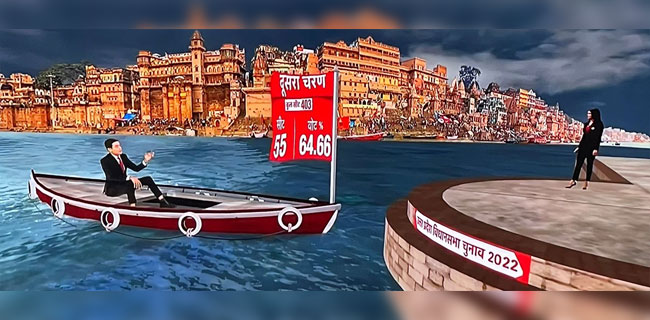
    Instead of playing a role in creating political engagement, news channels have focused on frills, like animation and graphics. They are trying to make elections entertaining. While that offsets general election fatigue that the core political audience cohort may face, it does nothing to the youth, who have better forms of entertainment at their disposal.


    The larger question a news channel should be asking is: Am I losing a generation of audience altogether? If yes, where will my viewership come from in the next five-ten years? This question may not be news specific. Even movie channels will face this concern once streaming becomes a little more mainstream that it currently is. It’s a larger linear TV concern: the medium is getting ‘older’, and there will come a tipping point, perhaps a decade from now, when it may no longer be the first ‘family-viewing’ option, because a majority of family members are disengaged with the medium.


    But that’s some time away, and there are a few elections lined up over the next 2-3 years, leading upto the big one in 2024. Can our news channels innovate beyond the predictable tropes while covering them?


  • Gehraiyaan indeed: GEC Perception in a Deep Hole


    By Shailesh Kapoor


    Shailesh KapoorEarlier this month, the Deepika Padukone starrer Gehraiyaan released on Amazon Prime Video. Over the last two weeks, the film has been incessantly analysed, intellectualised and dissected by the critics and the audience alike. It’s a subject of social media posts, memes, op-eds, the works. The film has found such attention largely because of the stardom of its female lead. The same film with a lesser star would have only got as much notice as any of the more than 100 Hindi films that have released direct-to-OTT in India since early 2021.


    At an estimated audience (Ormax tracking) of 6.5 million on its first weekend in India, Gehraiyaan is by far the biggest Hindi film on Amazon Prime Video. In its first 10 days, the film has been watched (at least 30 minutes) by 13.6 million people in India alone. It may only amount to about 1% of India’s population, but it is a sizeable number from a streaming (paid) perspective.


    But here’s the thing: this number is less than the number of people who watch any of the Top 10 Hindi GEC shows everyday. Yet, there is no interest and conversation around the fiction content on Indian television anymore. There are fan clubs on social media alright, but outside of that, the general media chatter on GEC fiction is close to nothing.


    While Bollywood was always a media favourite because of the larger-than-life stardom it offers, there’s no such evident lure in the streaming category. Yet, even mid-range streaming shows, with no saleable faces, are being critiqued and discussed like mainstream content. But new GEC launches enjoy no such privileges. When did you last see a fiction GEC show trending on a social media platform?


    Conversations around the imminent demise of linear television continue. While these conversations borrow principles from the West, and have little grounding in India’s social reality, not getting any press at all is a genuine concern Indian television must deal with today. GECs still rely heavily on advertising revenues, and even as TV continues to deliver big viewership numbers, media trading conversations are shifting to digital with every passing quarter. TV channels cannot afford to be out of the news altogether. Even in the industry trade websites, much of TV conversations over the last couple of years have been about NTO and news ratings. Most such stories don’t have a positive ring to them.


    So, Indian television is not suffering from a viewership problem (at least not so far), but it definitely has a huge perception problem to deal with. Flaunting viewership numbers can help them circumvent this problem, but only till a certain point. It’s only human nature that brand managers and media planners like to associate with content and media they consume themselves, or see others around them consuming and talking about. The consumption had stopped many years ago, and now, even the conversation is dying.


    Can mass television come out of this hole? Or it must surrender to the ways of the digital age? The next few years will give us the answer.


  • Shark Tank India: No Fishy Business


    By Shailesh Kapoor


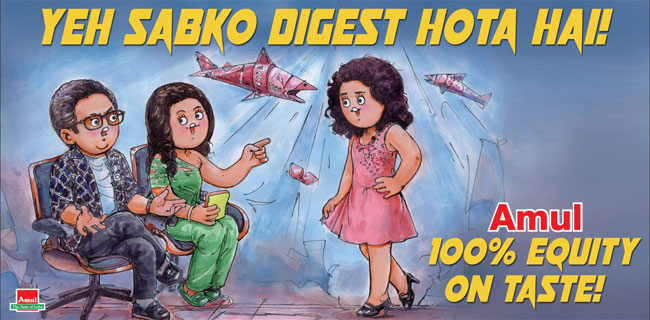
    Shailesh KapoorLast week saw the end of a seven-week first season of Sony’s new show Shark Tank India. The show, a worthy adaptation of the successful international format that goes by the same name, managed to get the social media buzzing. Through memes, reviews and other ancillary content, Shark Tank India has become a favourite among digital content creators in India. The Sony LIV app even has a separate Shark Tank tab, which is tell-tale sign that the show has been a digital success.


    The television performance, however, has been less-than-flattering. In a tough weekday 9pm slot, the show didn’t find much traction in the mass television audience, touching only the 0.5% rating mark in urban Hindi-speaking markets. One hopes that the show’s economics are good enough for a next season, and a few more. Because Shark Tank India is arguably the best new show that may have come up in the Hindi non-fiction space in a while.


    The Hindi non-fiction market is almost entirely driven by franchise shows, some of which are in their double-digited seasons now. While they make for comfort viewing and enjoy a loyal fan base, they certainly do not provide freshness. Before Shark Tank, Color’s live singing reality show Rising Star (first season in 2017) was the last successful new non-fiction format to be introduced in India. That show has not returned post-pandemic.


    But Rising Star was also a talent show, a genre that now has so many shows that it’s difficult to keep track. There are at least half a dozen Hindi shows with Dance or Dancer in their names. Then there are the singing shows, and the those on talent in general, like the recently-launched India’s Got Talent and Hunarbaaz. Many talent shows rate fairly well, and have good reasons to be on TV. But they do not raise the bar. They are the safe, low-risk options, even at their high costs. Even on streaming, the non-fiction experimentation has been stilted. Most attempts have been in the comedy talent space.


    I have to say I was a bit surprised when I first heard that Shark Tank will get a Hindi GEC adaptation. To use the show’s terminology, the TAM (Total Addressable Market) is only a small fraction of the Hindi GEC audience universe in urban India, given how little the weightage of the metro cities is in the mix. And how much can you ‘mass-ify’ the Shark Tank format anyway, when its essence is rooted in the idea that it caters to a niche? But then, you add the streaming factor to the mix, and the decision to do the show begins to make more sense.


    But for the dull Rannvijay interludes, designed only to cater to monetisation demands, the show makes for engaging viewing. The sharks have their individual and distinctive personalities, and the unmistakable Delhi vibe in some of them provides the entertainment quotient without taking away from the purposeful idea of the show. The pitches ranged from banal to interesting to inspiring, and will only get better with subsequent seasons.


    Corporate India has been poorly represented in our entertainment. Except some online shows, mostly produced by TVF, authentic portrayal of the corporate world in mainstream media has been conspicuous by its absence. And on the rare occasion when it’s done, it’s generally been broadstroked and lame (“I have an important presentation today”).


    I’m not entirely sure if Shark Tank India can fuel the entrepreneurial culture in India in the short run. But it can build awareness in that direction, over a few seasons. But what the show has done already, in just one season, is to push the envelope in the stagnating Hindi non-fiction space on Hindi television and streaming categories. And that’s no mean achievement.

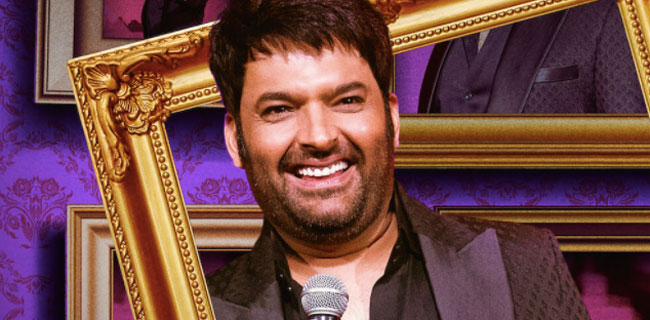
  • Kapil Sharma: Definitely Not Done Yet


    By Shailesh Kapoor


    Shailesh KapoorKapil Sharma is arguably (or perhaps inarguably) the biggest television celebrity in India over the last decade. His astonishing rise to fame in 2013, with Comedy Nights With Kapil, was followed by a spate of controversies, where the star comedian lost his mojo, in a manner of speaking. I wrote about it in 2016 (The Loss of Innocence) and 2018 (The Fault in our Star) in this column.


    Since then, Sharma’s show has made a comeback on Sony. But the going has been tough, especially because of the pandemic. With an irregular pattern of film releases, the celebrity line-up on the show has been less than ideal, with more ‘filler episodes’ than desirable. The show took a long-ish break in 2020. Since its return in early 2021, the ratings have settled around the 1.5-2.0 mark, which, by no yardstick, is a runaway success for weekend non-fiction property.


    I watched Sharma’s Netflix special, interestingly titled I’m Not Done Yet, in this context. What can a 50-minute special achieve for a comedian (besides a wider global reach, perhaps?) than a long-running mass TV show hasn’t already managed to, I wondered.


    The first few minutes had me sighing. The jokes didn’t seem to be landing, with only an occasional one worth a chuckle. Maybe he’s trying too hard for this one, and it’s going to be a colossal disappointment… That was my mind racing ahead of the content.


    But soon, it dawned upon me that this is not a usual stand-up special. This is a biopic-ish confessional of sorts, almost like a no-holds-barred interview, except that there is no interviewer. Chapter by chapter, Sharma bared his life, finding humour in his own imperfections. It was difficult to say which incidents are real and which are exaggerated, or even entirely made up. But the candor shone though, bright and clear.


    I also realised why he needed a streaming platform for this. Drinking has been a huge ‘factor’ in Sharma’s life, and that’s a topic off limits on mass television. In this special, he went on a rampage, dishing out jokes around his drinking habit, not always funny but generally insightful, as if they had been bottled up inside him for the last few years, waiting to find the right destination.


    The political jokes, including some very subtle jibes at the current Prime Minister, and an emphatic endorsement of his predecessor, were a delight, if only because they were attempted in the first place. In times when channels and streamers want to stay away from all things political, Sharma must be lauded for having the courage to go down that route, and then be smart enough to make it so subtle it won’t ignite any controversy at all. Well played!


    He also spoke about his family, especially his relationship with his father, even dedicating a sappy but surprisingly effective song to him, as the closing act of the special.


    It may not be the best content through its length, but the Kapil Sharma special on Netflix stands out. It a rare comedy special where the comedian’s stardom is the central subject, and it is (rightly) assumed that he is famous and admired enough for content that focuses on him, as a celebrity and a common person, to be engaging. I say “a common person” because that continues to be Sharma’s public connect with the GEC masses, despite him having amassed wealth and fame that is anything but commonplace.


    I wish he spent a couple of minutes on the Sunil Grover chapter of his life too. Their pairing remains the crowning jewel of Sharma’s long and successful TV stint. And we don’t know if they will come together ever again. Maybe Sharma is keeping that material aside for his second special.


    We can’t call this a ‘comeback’, because his TV show continues to be on air. But Kapil Sharma has found a new voice on Netflix. A voice that we want to hear more from.