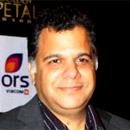
Tag: Shailesh Kapoor

  • Shailesh Kapoor: Welcome Back, KBC!

    By Shailesh Kapoor


    After a few weeks of writing analytical pieces, which often used hard data to make some key points, I feel the need to indulge myself this week, and write a more ‘fanboy’ type of piece. And for good reason too. A new season of Kaun Banega Crorepati (KBC) opened to a rousing audience reception last weekend. Like four of the previous five seasons, host Amitabh Bachchan enthralled us with his charisma and elegance. Coupled with grace. And humour. And style. And warmth. And for me, nostalgia as well.


    It all started in 2000. When KBC first went on-air on Star Plus, Amitabh Bachchan was in the middle of a professional low. His last few films – Lal Baadshah, Sooryavansham (subsequently a huge television success), Hindustan Ki Kasam and Kohram – had not set the box-office on fire. And his business venture had crashlanded even before take off.


    One didn’t know what to make of KBC then. Quiz shows have never been mass entertainment in India, either before 2000 or even now. The channel airing the show had no Hindi audience base anyway. Prize money seemed the only big hook to get eyeballs in.


    But exceptional (not just good) content has the ability to permeate layers of audiences by crossing the most impermeable boundaries. My Bengaluru neighbourhood, where I stayed that time, would watch Kannada television at primetime everyday. As I would walk up three floors to my apartment every night, dialogues in the alien language would greet me from behind the closed doors. But only till July 3, 2000.


    Within a week of KBC’s launch, the “greeting” had changed. It was the KBC signature tune, or the deep baritone voice of Mr. Bachchan. I remember stopping once in amazement, on the second floor, listening to the signature music from a TV set playing in a staunch Kannada household, and wondering: This has permeated and how! (Today, I would look down upon this methodology of ‘research with sample size of one’, but that’s another point altogether)


    The ‘Umeed Se Dugna’ campaign for KBC 2 was sheer brilliance, and arguably the best ever KBC launch campaign till date. It’s a pity that the season had to be aborted prematurely because of the host’s health. There were also some signs of fatigue beginning to develop with the format, and the industry was beginning to wonder if KBC’s success was short-lived after all.


    When Shah Rukh Khan took over as the host for the third season, he was stepping into shoes that were BIG, in more ways than one. A lesson was well learnt in Season 3: You can’t make KBC more entertaining than Bachchan’s KBC. No one can. No one should even try.


    When Sony decided to bring KBC back in 2010, there were murmurs in the industry on how the channel was flogging a dead horse (referring to the format, and not its ever-so-alive host). To the channel’s credit, they managed the unique combination of keeping the core of the franchise intact, while making enough changes to infuse an element of freshness in the format. KBC 4 worked. Far better than what Sony would have settled for.


    For me, however, KBC 5 was the real turnaround season. It was the only season of KBC that had started with less than a year’s gap vis-à-vis the previous season. There wasn’t much to talk about. All the talking points had been exhausted in KBC 4. Leading upto the launch, the buzz scores were lower and that KBC 5 will match the success of KBC 4 was extremely iffy.


    But making the content emotional and (literally) pan-India was a masterstroke. It gave a new texture that the audience of the franchise had never seen before. The journey from a quiz show to an entertainment show was now truly complete. KBC 5 was a huge success. It also gave us the Rs. 5 crore winner in one Sushil Kumar from Motihari in Bihar. Today, he makes more money by participating in other reality shows.


    It may be early to identify the ace KBC 6 has up its sleeve. My sense is that this seems like the most “fun” season of KBC so far. It has humour and banter woven in, better than ever before. The host is in absolutely top form, almost as if he was born to do this. Of course, I dare not believe that, because his film work in the seventies is worth several lifetimes.


    The success of KBC cannot be measured through a mere rating number. Several shows may attract similar audience volumes, but KBC’s long-standing legacy makes it stand apart. It is the family unifier, the knowledge giver, the entertainment machine, the de-stresser, all rolled into one.


    An earnest request to all broadcasters: The day Amitabh Bachchan decides to hang his boots, let’s hang the boots on KBC too. Let the legacy remain untarnished, preserved for posterity.


    Of course, I hope (and am sure) that that day is still many years and many seasons away.


    Shailesh Kapoor is founder and CEO of media & entertainment research and consulting firm Ormax Media. He spent nine years in the television industry before turning entrepreneur. He can be reached at his Twitter handle @shaileshkapoor



  • By Invitation: Peter Mukerjea, Jaisurya Das, Sundeep Nagpal, Deepa Gahlot, Paritosh Joshi, Shailesh Kapoor & Sorbojeet Chatterjee

    Our galaxy of weekly and other regular columnists and contributors to write and/or reminisce:


    Peter Mukerjea: Where have the last 12 months gone?

    With MxM, I was happy that it was a real honest-to-God startup. The honesty with which I was approached was quite endearing but it is what I really liked and was moved by.

    http://www.mxmindia.com/?p=30684


    Jaisurya Das: Way to go…

    ‘Dear MxM’ – our little column has connected with students, professionals and media aspirants week after week.

    http://www.mxmindia.com/?p=30675


    Sundeep Nagpal: Striking that delicate balance

    The composure with which MxM has gone about its business in the last one year has only been a reminder that in the ultimate analysis, the aspect that matters most in any race is how it’s run!

    http://www.mxmindia.com/?p=30693


    Deepa Gahlot: Critiquing the critics

    Reviewing The Reviews gave me a chance to examine a cross-section of critical responses to a film and see if there was any consensus.

    http://www.mxmindia.com/?p=30672


    Paritosh Joshi: From the far side

    The start-up has revealed the opportunity that lay at the ‘x’ roads of ‘m’edia and ‘m’arketing. ‘Obvious’, did I hear someone say? Great ideas always are, in retrospect.

    http://www.mxmindia.com/?p=30677


    Shailesh Kapoor: An interesting, satisfying challenge

    There are many things to write about, but with most broadcasters as clients, one needs to strike a fine balance. With time, I may upset a few people. But stating facts the way they are should remain paramount.

    http://www.mxmindia.com/?p=30688


    Sorbojeet Chatterjee: Emerging super successful

    I sincerely hope this weekly quiz is doing its bit of spreading some useful media ‘gyaan’ (and increasing the page views of Google!).

    http://www.mxmindia.com/?p=30682


  • Shailesh Kapoor: An interesting, satisfying challenge

    By Shailesh Kapoor


    Writing a weekly column on television should be easy. Now that’s what I thought when I agreed to contribute to MxMIndia recently. Writing is always fun, especially when your thoughts appear on what I find the most stimulating media website in India. Yet, every Wednesday, I stare at the ceiling, wondering what the topic for this week’s column should be. There’s a reason for that. The idea behind ‘TV Trail’ has been to write about ideas and concepts that are usually not the focus of media attention. That poses an interesting challenge. But also satisfying is the feedback that comes in over the next few days.


    There are many things to write about, but with most broadcasters as clients, one needs to strike a fine balance. With time, I may upset a few people. But stating facts the way they are should remain paramount.

    TV Trail is only five weeks old, but I enjoyed writing the recent piece on food television the most. There are many things to write about, but with most broadcasters as clients, one needs to strike a fine balance. With time, I may upset a few people. But stating facts the way they are should remain paramount.


    MxMIndia deserves to be congratulated whole-heartedly on a landmark first year. Many best wishes for the year ahead. And then many more. I look forward to a long association with the MxMIndia team.


    Shailesh Kapoor is Founder and CEO of leading media and film research firm Ormax Media. His column ‘TV Trail’ appears every Thursday


  • Shailesh Kapoor: India’s Unwritten Food Story

    By Shailesh Kapoor


    Some eat to live, some live to eat. But everyone loves food. A good meal at the end of a long, hard day can make it all seem worth it. From wedding banquets to celebrations to business deals, food is always around to make its presence felt. Except on Indian television!


    A few years ago, ahead of the launch of his channel, leading chef Sanjeev Kapoor had mentioned to us on why he thought a food channel should be in the top 5 channels in India, if not better. He quoted several examples from across the world, of food shows and channels that have surpassed the best of the drama series and reality shows to become the most popular shows in their countries.


    Recently, I read this on the Wiki page of MasterChef Australia: The finale of the first season of the show surpassed the previous high for a non-sporting event in Australia since 2001, beating Australian Idol’s 2004 finale. It is currently the fourth highest rated program in Australia ever. It was also the most watched TV show in Australia in 2009.


    Food television has made its mark at the global stage, especially when the content has lived up to the standards set by mainstream television. In India, though, food television remains peripheral, almost inconsequential. Food channels and food shows are one of the several genres that fall into a huge bucket called “niche television”. They only get audience big enough to barely keep them going. Not too many of us will notice if they stopped being there on television altogether from tomorrow morning.


    We have a fairly strongly food culture as a nation. Our food has managed to make its mark around the world (often in versions that Indians will abhor and disown). Indian food has the variety, the spunk and the uniqueness that makes it stand out. Why, then, does it not work on our own television?


    Some argue that our broadcasters haven’t given the genre a fair chance yet. Star Plus came out with two seasons of MasterChef India. They met with moderate success. The second season was eminently watchable and got good audience response. But when you compare its performance to mainstream non-fiction like Dance India Dance, it begins to look “niche” anyway. A third season has not been announced yet. After all, there may not be much room for “niche” content on the prime time of the leading GEC of the country.


    In my opinion, there are three complexities that make food television a daunting programming genre in India. The first one is our cultural diversity itself. While our rich food heritage should be a positive, it creates a divide as well. You can’t get an average Indian to appreciate food beyond what he or she enjoys eating. Try selling the idea of good Gujarati food to a Punjabi, and you are almost certain to run into a cultural wall. We may be food-loving, but we are not a food-appreciating nation.


    This lack of appreciation creates a challenge for food programmers. How do you create content that pleases a Maharashtrian, a Tamilian, a Punjabi and a Bengali equally? There is no lowest common denominator to address here. The segments are mutually exclusive!


    The second challenge comes in the form of the aversion to non-vegetarian food in our mass audiences. A large (estimated 40%+) section of India’s population is vegetarian. Even KFC has started an oxymoronic vegetarian menu in this country. Non-vegetarian food is a taboo for many, and hence, a television show that captures any form of meat being cooked or shown (like in the food travel shows a la The Foodie) loses half its audience base instantly. The research response to such shows can often be: “Usmein non-veg dikhaate hain, yeh hamare culture mein nahin hai.”


    Having programming purely on vegetarian food is not a solution either. For one, the top chefs don’t like the idea. It defeats the entire purpose of showcasing variety and spreading food awareness. Also, the sizeable non-vegetarian population wants to see chicken and lamb being cooked to perfection on screen. No compromises there either. Yet another case of two mutually-exclusive, hard-to-please audience segments.


    But the third reason is the most interesting one. It is rooted in the socio-cultural reality of our country. A reality that dictates that women in our country spend a large amount of their daily time in the kitchen, preparing three meals and the in-between courses for their families, all alone, without any real help. Remember, we are talking of kitchens that are essentially devoid of equipment that saves manual work or time. It’s a grind, literally.


    As a result, most Indian women begin to dislike (“hate” may be too strong a word) cooking very early in their lives. They take great pride in their food, because a well-cooked dish at the in-laws is a triumphant moment. But that’s a triumph that’s more to do with the delicate nature of the saas-bahu relationship, and less to do with food.


    After exhausting herself in an unfriendly kitchen, the woman doesn’t want to see a glamourised kitchen with fancy ingredients on the TV screen. That’s a world she will never inhabit. A world she is not even remotely familiar with. A world she envies to the extent that she looks down upon it.


    Now, how will this change? Social-cultural reality does not change. It only evolves, bit by bit, at its own pace. The challenge for broadcasters in India is to adapt their food content to the realities of the Indian woman. The chefs in plush five-stars may do well with a visit to an average middle-class family kitchen in Kolhapur or Kanpur. That’s the reality of food in India. That has to be the starting point of truly mass food television in this country. It can be glamourised and made aspirational, but only to the point of not being irrelevant.


    Food can never be a “niche” genre on television. Anywhere. It is more central to our lives than almost everything else besides relationships. Any country whose television treats food as “niche” has an opportunity waiting to be tapped, however challenging the opportunity may be.


    Some food for thought there?


    Shailesh Kapoor is founder and CEO of media & entertainment research and consulting firm Ormax Media. He spent nine years in the television industry before turning entrepreneur. He can be reached at his Twitter handle @shaileshkapoor


  • Shailesh Kapoor | The all-important C-Word

    By Shailesh Kapoor


    There’s never a dull moment in the broadcasting industry. Fortunes fluctuate every Wednesday morning, when text messages and e-mails with weekly ratings do the rounds of senior management across channels. A large part of the organization’s resource during the day is then spent on analysing, slicing and dicing every possible data point to understand how the week-that-was performed. Often, tactical programming decisions (now we even have a word for it – stunting) are taken to improve the prospects of the half-week that remains, and the new week that’s about to start on Sunday.


    Some such tactical steps may work. They may give a boost to the ratings next Wednesday, or the one that follows thereafter. Being an ardent supporter of (good) quantitative research, I have never looked down upon the over-analysis syndrome that some channels tend to exhibit. However, it does make me ask myself – To what effect?


    Are you making a fundamental change? Is anything “really” changing? Three weeks later, it will be back to square one anyway. And then, you will start all over again. More tactical data crunching, more stunting, more mathematics. The more you try, the more you realize the futility of it.


    In this maddening age of weekly ratings, there is a word that is hugely under-rated. A word that hardly gets spoken of, let alone understood. A word that is way more important than (what-have-now-become) clichés like differentiator, positioning and strategy. It’s the C-word. C for ‘Consistency’.


    Consistency, in this context, is about doing most things right all the time. Every single time, not just sometimes. Every single time, not just when the pressure of ratings has piled up. Every single time, not just when you can feel the heat.


    Our television industry inherently operates on the premise that with creative products, you can’t do things right all the time. It is popular belief that if you launch eight new shows in a year, four or five of them are bound to fail. Or that if you introduce four new anchors, only one may actually make an impact on the audience. And the most important one: If you make ten promos, only two or three of them will do their job.


    In most other industries, success rates of this nature will be frowned upon. In television, the concept of failure rate has been slowly institutionalized. Now, I don’t claim to have any magic formula. No one does. But between 25% success rate and 100% success rate, there is still a yawning gap of 75%. Being consciously aware of that, all the time, is what consistency is all about.


    Why is consistency important? Because the consumer rewards consistency more than he or she rewards an isolated success story. Would a housewife rather than a channel that has six good programmes, or watch a channel that has one excellent programme and five poor ones? Would you like to watch a music channel that airs good music all the time, or one that airs a few awesome songs interspersed between many not-so-awesome ones?


    Lack of consistency manifests itself in various ways in our television business. Some examples that one gets to experience very regularly:


    1. The programme was doing very well, so the content head put it in auto-mode, handing it over to a junior executive, taking his own eyes off it in the process. The story begins to drag and the audiences begin to drop out. By the time the ratings paint the real picture of consumer dissatisfaction, it can be upto eight weeks. The damage is done. The programme has now officially entered panic mode. From being a winner that could have been nurtured by ‘consistently’ focusing on consumer satisfaction, the programme is now a problem child no one knows what to make of.

    2. The channel had about 3-4 back-to-back successes. So new formats and slots are opened up in the name of experimentation. Nothing wrong with that, as long as experimentation is not confused with a carte blanche to go wrong. ‘Experimental content’ is launched without consumer validation. In the process of doing it, the 3-4 successes have started losing attention. Back to point 1.

    3. The channel has decided it will run at least two promos per break. Enough analysis has gone into validating the importance of this promo time. Gradual build in viewership can also be seen as a result. Then comes the festive season, and the promo time is cut to less than 30%, to accommodate excess inventory. Once Diwali is over, we will go back to two promos per break, it is said. But in effect, you also go back to day zero, when you put that policy in place.


    I will excuse you for finding my tone cynical. But I have found that it is much easier to communicate a complex, non-linear mathematical model, or a layered and nuanced consumer thought, than the incredibly simple idea of consistency. Of course, there is enough intelligence in the system to process this simple idea. What may be lacking is the realization that consistency can win you far more success than isolated acts of brilliance can.


    Malcolm Gladwell’s ‘The 10,000 hours rule’ says that in order for an individual to master any complex skill, he or she must put in 10,000 hours of practice. That’s about four years of hectic work. In television, that’s way too much time to wait for. But can you give something you believe in at least 13 weeks, and do it well? Really, really well?


    I often dream of entering a television client’s office on a Wednesday morning, when everything is calm enough for it to be a Tuesday. Nobody is panicking. There’s a plan being executed over a year. The plan has been debated, tested and firmed up with inputs across stakeholders. A plan that the leadership believes in enough to back it whole-heartedly. A plan that has a sense of assured confidence, almost cockiness, around it. A plan that is Wednesday-proof.


    Possible for this dream to come true? But then, we won’t be Indians, right?


    Shailesh Kapoor is founder and CEO of media & entertainment research and consulting firm Ormax Media. He spent nine years in the television industry before turning entrepreneur. He can be reached at his Twitter handle @shaileshkapoor


  • Shailesh Kapoor: Myth-or-logical?!

    By Shailesh Kapoor


    We hear it all the time. That India is getting younger. That we should think of the 13-24 years segment as “screenagers”, not as teenagers or youth. That Facebook is bigger than Star Plus, Zee TV, Sony or Colors for them today. That they would rather watch edgy fiction content on Channel V than (what some believe are) afternoon soaps masquerading as prime time entertainment on television.


    Our marketers are obsessed with the young generation. Arguably, they have their reasons. “Consumption” is being increasingly fuelled by the youth, making them the low-hanging fruit for several product categories.


    But when it comes to television, there’s another story we need to know. A story that’s in sharp contrast to the oft-stereotyped tale of the screen-agnostic, gadget-happy youth. It’s the story of religious and mythological programmes continuing to succeed like never before. A story that may appear to be counter-intuitive to the young Indian theory, but is actually firmly grounded in the reality of our fascinating country.


    Over the last two weeks, the newest GEC on the block, Life OK, has scaled new heights, riding on the popularity of its flagship show Devon Ke Dev Mahadev. The recent ‘shaadi’ track, where Mahadev and Parvati get married, has been a runaway success. Mahadev now features in the top 7 Hindi GEC characters on popularity in our monthly research ‘Characters India Loves’, ahead of iconic characters like Akshara and Archana.


    Last Sunday, Zee TV launched the third television adaptation of Ramayan, with a simulcast on Doordarshan. The second adaptation provided a creditable launch pad to NDTV Imagine in January 2008. Sceptics argued that it worked because it came 20 years after the original Doordarshan version. However, that theory has been disproved with the encouraging response to the Zee TV show.


    To their credit, both Mahadev and Ramayan are well-produced programmes that manage to engage and entertain. But that’s not enough to explain their wide acceptance, especially in the wake of the young India theory. But there’s another reason indeed.


    We conducted a nation-wide study recently to understand the profile of the ‘remote controller’ in single TV households in India. The results were anything but ‘young’. In weekday prime time, the median age of the ‘remote controller’ is… hold your breath… 35 years, with almost 70 percent of them being women. So, from 7-11pm on Monday to Friday, when a large amount of advertiser money is being spent, a 35-year old housewife is the bull’s eye answer to “who decides what plays on TV”.


    On weekends, the median age gets a bit younger, but is still 25 years, with a near-equal male-female ratio. Technically, even this audience is outside the stereotypical definition of “youth”. After all, a large section of urban Indian audience (70%+) is already married at the age of 25.


    Can you see the chicken-and-egg question here? Do “youth” prefer Facebook and co. to television because they have no control over the remote, or do they lack control over the remote because they have voluntarily given it up? Complex as the explanation may be for this medium, I can safely say that the former is more accurate than the latter. In the way our family viewing patterns have emerged over the last two decades, the all-important remote control has acquired an ownership configuration completely divergent from what the young India theory should suggest. And these viewing patterns are unlikely to change in a hurry, till the multi-TV phenomenon begins to become a significant factor in India.


    That brings me back to mythology. It’s content made for the 35+ females segment. These are mothers whose kids are on the verge of entering their teenage. Reinforcement of religion, culture and values is of paramount importance, to both her own self and for her child. NDTV Imagine promoted Ramayan as “Ek Achhi Aadat”. Zee TV is promoting it as “Jeevan Ka Aadhaar”. Both messages aptly reflect the mindset of a 35+ woman who is battling generation gap and upbringing issues around her children. She loves to watch the “mythos”, and also hopes that her child watches along. Sometimes willingly, sometimes grudgingly.


    When Ekta Kapoor tried to push the envelope with Mahabharat, the audience rejected her idea of glamorizing sacred material instantly. But give it to them within their values framework, and there’s nothing more potent than good mythology on the small screen.


    So, for all the talk of being a young country, the pre-liberalization generation still decides what gets watched on TV. But then, we have always been a dichotomous country. One where Rakhi Sawant and Mahadev can get married with equal fanfare and razzmatazz.


    Shailesh Kapoor is founder and CEO of media & entertainment research and consulting firm Ormax Media. He spent nine years in the television industry before turning entrepreneur. He can be reached at his Twitter handle @shaileshkapoor


  • Shailesh Kapoor: Film Stars on TV – Free For All

    By Shailesh Kapoor


    The entertainment industry comes alive every time a big budget film releases. It’s one such week. Everyone in the industry is talking about Ek Tha Tiger. Everyone has a view on it. Not just on its content but on its box office prospects too. The “everyone” also includes the television fraternity. Ek Tha Tiger’s fate at the box-office may not concern most of them directly, but it’s a favourite topic of discussion anyway, with a certain ‘coolness’ tag attached to it.


    I have always wondered why television has this keen professional interest in Bollywood, but not vice versa. Last year, when I mentioned Balika Vadhu as a recommended promotional platform to a top Bollywood star who wanted to target female audiences for his upcoming film, I may as well have spoken Greek. He hadn’t even heard of Balika Vadhu. I had to subtly tell him that it gets more audience every single day, than the lifetime audience of the biggest Hindi film put together.


    The historical argument may be obvious. Because films came before television, they continue to feature higher up in the pecking order. Also understandably, Bollywood has a larger-than-life aura around it, creating aspiration for TV stars. But very few TV executives aspire to work in film studios. Yet many wear their fascination for films on their sleeve.


    Things begin to become interesting (not in the positive way) when this fascination begins to influence business decisions. The most common example of this is the appearance of film stars in reality shows (and now even serials). These unpaid appearances are seen as a win-win situation for both sides. You get to promote your film, while our programme benefits from your star power.


    But here’s the catch. The situation may not be win-win in equal measure. We have conclusive quantitative data to prove that reality show appearances impact the box-office prospects of unreleased films significantly. The Monday-after buzz of a big film always show a sizeable jump, especially if the reality shows are in the top league, a la Dance India Dance. This jump is even more significant when the integration is executed well, than just being reduced to the stars making an appearance that adds little to the content.


    Hence, it should make a lot of sense if producers obsess about which reality shows their stars should appear in, and in which week. Some recent conversations with film studios are in the ballpark: “Let’s see what the tracking looks like on Monday, I have got Indian Idol and Jhalak on the weekend.”


    But is the reverse true? Does the viewership of a reality show (or a serial) witness a sizeable jump when a star appears in an otherwise regular episode of the program? Both quantitative and qualitative data suggest that the answer may be in the negative. Such integrations are no longer novel for the TV viewer, and hence, their ability to influence ratings is becoming increasingly limited.


    Then why should a producer, who pays upto Rs 3 million for a print ad, not pay a rupee for getting a wider, more contextual (audio-video and entertainment) medium to meet the same objectives better? Because TV has never asked for it! Because the pecking order is twisted enough for old-school film producers and stars to still believe that they, and not the channel, are the ones extending a favour by making an “appearance”.


    Bollywood has always being savvy when it comes to dealing with television. They track ratings and come up with the most tangential arguments to hike satellite prices year after year, pricing their films far more than what a “fair market price” should be. When the top stars are signed for reality shows as hosts or jury, their fees constitute a major portion of the reality show budget, often unreasonably so. Yet, when it comes to using the medium for their film’s promotion, they know how to get it done free.


    Someone needs to bell the proverbial cat here. If you can charge a brand millions to put its logo on a reality show, why should a producer, who gets to showcase his promo and his film “in-programme” for almost an hour, not pay? Make them pay, and if they don’t, let them skip reality shows as a medium of promotion. Sooner than later, they will get used to the idea. As they must!


    As our TV industry matures, we need to reflect upon our film star obsession. In MasterChef Australia, there are no film stars. In the second season of the Indian version, we didn’t miss Akshay Kumar. In fact, he arguably spoilt the finale of an otherwise well-executed season. We need to see more such case studies. Dance India Dance is indeed a brilliant one, with three unknown judges becoming popular celebrities today, on the back of the show. But we need more than these rare one-offs.


    There are an estimated 400 million people in India who have never been to a theatre, but watch primetime GEC content across various languages every night. Like our film star didn’t know what Balika Vadhu is, majority of these 400 million don’t know who Ranbir Kapoor is. So, if he appears on Balika Vadhu to promote his next film, he will be David and she will be Goliath. Not the other way round!


    Shailesh Kapoor is founder and CEO of media & entertainment research and consulting firm Ormax Media. He spent nine years in the television industry before turning entrepreneur. He can be reached at his Twitter handle @shaileshkapoor


  • New weekly column by Shailesh Kapoor: Primetime Fiction – Reasons for Seasons?

    By Shailesh Kapoor


    Of all my client interactions, I enjoy the ones with foreign clients (often from head offices of their Indian companies) the most. There’s a specific reason for it. The amazement and the child-like inquisitiveness with which they react to research based on mass Indian audiences is so gratifying. Our primetime fiction content is beyond the realms of their comprehension, let alone appreciation. I was once asked: “So are you telling me that every single show that comes on weekdays primetime in India is a family drama?” My attempt to explain that ‘family drama’ is an overarching box with about 7-8 genres within it lasted only a few seconds.


    However, one of the more relevant and genuinely thought-provoking questions I’ve been asked by broadcasters from outside India is: “Why don’t you have seasons in fiction shows in India? Why does everything go on and on and on?”


    We know the stereotypical responses to this, don’t we? Three most common answers will be:


    1. Indian audiences don’t know the concept of seasons. It is a foreign thing.

    2. Only one out of four fiction shows actually succeeds, so why give it a season’s break and run the risk of not getting the audiences back.

    3. It’s a drastic idea and we are not in a position to experiment right now.


    All these responses are based on a natural tendency to exercise risk aversion. But neither the (ex) television executive nor the researcher in me approves of any of these answers. In fact, I have a robust argument here to prove why a seasonal approach to daily fiction will be a runaway success in India.


    Primetime fiction in India is based on the premise of the audience, particularly women, being addicted (and I choose the word carefully) to watching the life of certain ordinary, people-like-us characters unfold in a dramatic, extraordinary manner. All the enduring success stories in the last 12 years have come from this central thought, which our foreign friends simplistically and erroneously classify as “family drama”.


    Then why do serials begin to lose audiences? It is popular knowledge that shelf life of serials today is significantly lesser than what is was before 2008. Most successful serials peak within one year, and are well past their prime by the end of their second year. Very few like Balika Vadhu manage to complete four years of a successful run, not withstanding the hiccups on the way. Is addiction so ephemeral?


    Serials lose audiences because there is an equally powerful force that counters ‘addiction’. I call it ‘extension’. If you have had the privilege (no other word describes the experience) of attending qualitative research on serials with housewives as the target audience, you will be familiar with two phrases: “Pehle achha tha, aajkal chewing (pronounced ‘chingum’) ki tarah kheench rahe hain” and “Story ko round-round ghuma rahe hain.”


    Almost every serial becomes a victim of this ‘extension’ once it completes about 100 episodes. It becomes the proverbial chewing gum, or the vicious circle in which it has trapped itself. Only to come out momentarily before being trapped again.


    Even before 2008, serials had extension issues. But at that time, options were far and few. The number of GECs were lesser, the number of TV channels even more so. The consumer was not spoilt for choices. She accepted extension as a part of her TV life. Today, she is exercising her choice and actively rejecting extension. Because she has another serial in the same slot, waiting with a sizeable dose of addiction that is currently free of extension.


    We all know why extension happens. Daily serial production, with 260 episodes a year, is a breathless, never-ending assembly line. There is no time to take a break, because there are no episodes in the bank. Anecdotes of content being recorded on the evening of the telecast are so common; no one bats an eyelid when you narrate them, except the foreign friends of course.


    It is humanly impossible to ideate at this fervent pace round the year. Even the smartest, most creative brains will operate at sub-optimal levels when consistently pushed against ridiculous timelines. And when that happens, extension, often unknowingly, is their best friend.


    My estimate is that about 70% of an executive producer’s time (both at the production house as well as the channel) is spent on operational running of his/ her programmes. Only 30% is spent on ideation and creativity, which incidentally form the bedrock of the job profile.


    Now imagine a scenario where a top-rated show comes in seasons – One season a year of about 4-6 months. But the team on the show works round the year to make this happen. Instantly, the extension issues will be solved. There will be scripts in the kitty and episodes in the bank. There will be time to breathe, to ideate and to execute with full strength. There will be no need to stretch the chewing gum or go on a merry-go-round trip.


    What about addiction? For me, that’s the best part of it. Seasonal breaks can fuel addiction like nothing else can. Internationally, this has been proven beyond doubt. Common-sensically, if you take away what she is addicted to, she will yearn for it even more. And when she gets it back, she will see it with fresh eyes, with even more excitement than before. As long as the addiction center (read lead character) is unchanged, this will always work.


    What’s the flipside? Only one. A seasonal approach requires a higher investment to make it deliver to its full potential, because you need to commit to a team on the show for the entire year, amortized over only about 100-130 episodes, instead of 260. But compare this incremental cost to the investment that’s sunk in a serial that fails, and you know that this is a non-issue.


    Is someone likely to try this anytime soon? I will not bet on it for 2013 at least. Our GECs are more cautious and less experimental today, than they were a few years ago. The seasons idea may be too bold to buy into currently, given the musical chairs battle for the top four spots that they are currently engaged in.


    But at some stage, the future should be more seasonal. Hopefully.


    Shailesh Kapoor is founder and CEO of media & entertainment research and consulting firm Ormax Media. He spent nine years in the television industry before turning entrepreneur. He can be reached at his Twitter handle @shaileshkapoor


  • Week 3 Announcement: Starting Aug 8: New channel on Content & Column by Shailesh Kapoor

    It’s Week 3 of our announcement on Fridays.

     

    And the first of these is on an all-new channel on our site – on Television Content. Since we launched last year, we’ve felt the need for one and have also received several requests to carry programming-related information and stories . However, since we concentrate more on the business of media, we have not been able to do justice to several stories on television content. It’s unfortunate because while distribution and marketing dynamics are critical, it’s content that finally drives viewership and the moolah. Also, we already have channels exclusively for journalism and radio on MxMIndia…


    So, starting next Thursday (Wednesday, August 8), look forward to our channel on TV Content.


    We are also proud to announce that Shailesh Kapoor, co-founder and CEO, Ormax Media will write a column on television starting on Aug 8.  Watch out for it!


    Meanwhile, given the controversy that is raging on television measurement, we’ve decided to put off our MxM Mondays discussion on why everyone loves to damn TAM. Instead, we will focus on an issue that concerns us all: What ails Media Education.  We will speak to a cross-section of people in the industry. If you would like to share your views, please email us at editor@mxmindia.com with the ‘MxM Mondays #2’ in the subject line.


  • MTunes HD launches ‘MTunes Trending20’

    By A Correspondent


    MTunes HD – the HD Bollywood music channel has announced the launch of a countdown show called ‘MTunes Trending20’, presented by Bharti Airtel. This is in keeping with the channel’s premise of delivering “music like never seen before”.


    Historically, countdown charts have been based on record sales. However, given the fact that music consumption is spread across multiple platforms these days, MTunes Trending20 brings to its viewers a comprehensive analysis of audience preferences across 5 platforms. The final chart will be compiled by leading media research firm Ormax Media.


    The five platforms will be Radio popularity compiled by Radio City, Digital downloads provided by Hungama, YouTube views & Heartbeats (weekly music research) by Ormax Media and audience preferences as recorded by MTunes HD. A normalized measurement formula based on TV Ratings Data, Radio Aircheck, SMS requests, downloads/usage tracking across mobile service providers and views count on popular internet video sites will be collated to generate the weekly chart.


    Presented by Bharti Airtel, the weekly show – scheduled to launch from August 04 every Saturday – will play the top 20 songs of the week. Through the week the top songs on MTunes Trending20 will also be highlighted on the daily play list.


    Speaking on the occasion, Saravanan P, CEO of MTunes HD said: “MTunes Trending20 is a reaffirmation of our promise to deliver ‘Music Like Never Seen Before’ and strengthens a long line-up of path-breaking formats like Kal Ka Superhits, Handmade and MBox already on the channel. We have pioneered the industry by launching the World’s first HD Bollywood Music Channel and are committed to consistently drive growth for our stakeholders. This show will deliver the gold standard of Bollywood music rankings to the industry and is among several initiatives in the pipeline that will make the MTunes HD viewers feel the music!” The channel is reportedly pricing the property at a premium and is confident of changing the game for the genre with its unique concept and distinct proposition.


    Shailesh Kapoor, CEO-Ormax Media added: “Today, music is consumed across media – television, radio, internet, mobile phones and other digital devices. MTunes Trending20 is a unique property that captures the combined effect of all these media.”


  • Fourtifying media & brands with research


    By Meghna Sharma


    In today’s world where there are plenty of brands for consumers to choose from, an in-depth knowledge about the target audience is as much as a necessity as breathing for any brand to become successful. Research now plays an increasingly important role in a brand’s lifeline.


    Entertainment industry today is growing at a fast pace and with number of options available to the TG, the brands need to know what will make the TG choose them over others.


    Ormax Media, a media & entertainment research and consulting firm, entered the industry four years ago (July 28, 2008) with a motto of helping brands understand and retain not only their target groups, but also help them grow in their respective fields.


    Clients Speak
    Raj Nayak, CEO, Colors

    Raj Nayak

    Ormax Media has opted for a very focused media research approach, which was a definite need gap for the industry, especially TV. Ormax has managed to capitalise on this opportunity with their innovative and robust tools specifically designed to cater to these needs. At Colors we have always had a research-oriented approach towards content development. In that context, we have been working with Ormax Media since the very beginning (interestingly both Colors and Ormax Media came into existence around the same time!).


    It has been a fruitful association so far, and I would believe this to be true for both the parties. While working on some really interesting projects together, there has been a lot of learning that has enabled us to know our viewers even better. An effective promo creative measurement tool, which builds in the crazy timelines of the creative getting ready and it hitting on-air, is something which I feel is still a need gap at this point of time. Keeping in line with their record for building research tools which have catered to the needs of the industry, this is one area where we see tremendous potential for Ormax.

    ____________________________________


    Chandramohan Puppala, business head, Saam TV

    Earlier, most of the companies used to rely on gut feelings or follow TAM to get an idea about what their audience wants. However, one couldn’t predict the change in trends or know their TG’s mindsets. It was a big challenge for channels, especially regional channels, to know their viewers. It was an even bigger challenge for regional channels, where Hindi was also the majority language. For instance, in Maharashtra, Hindi is also spoken by people. Also, in smaller markets, no matter how the sampling is done, choices differ from region to region. Hence, when research entered the entertainment industry, it helped channels to have a direct connect with the audience and guided them on how they can change their course to gain the most.


    Ormax Media adapts very quickly to what the clients’ want and provide a customized research which enhances their role among their TG.

    ____________________________________


    Ashit Kukian, COO and president, Radio City

    Ashit Kukian

    For any industry today, research is an important element. However, it is important for an organization to be very clear about what they want as an end result. The brief we gave to Ormax and their own learnings have made it a win-win situation for both. The inputs we get from research are visible in the results. So, as the industry gets more mature, there is going to be a robust growth in the field of research as well.

    ____________________________________


    Jai Lala, principal partner, Mindshare

    Jai Lala

    Since there is no syndicated data available, there can be a lot of fangs to it, especially in the television industry. Take sports broadcasting for instance, there are a lot of ground partners, so it is a complicated process. Hence, research helps us to understand the market and how to maximize from an event. Last year, for IPL we had done a joint research with Ormax Media and it was quite fruitful for us.

    ____________________________________


    Atul Phadnis, founder and CEO, What’s On India

    Atul Phadnis

    Ormax Media is spearheaded by people like Shailesh Kapoor who have practical knowledge about channels. So, it gives the organization an uncanny ability to know what the key questions are which need to be answered. This helps them to not only know what a channel wants, but also how the research must be conducted. Also, the organization offers customized and structural services which have helped the industry grow.


    As the firm celebrates its four years of existence, MxMIndia spoke to the founders to get an insight on how research has evolved over the years and how the journey has been for Ormax Media so far…


    Vispy Doctor

    “Till a few years ago, the phrase ‘consumer knowledge’, which is our prime derivable, wasn’t a common phenomenon. When we went to media clients in the entertainment space, for many of them research was a new thought.  So, we had to explain how it could help them create better products which will help them grow,” recalled Vispy Doctor, founder and managing director, Ormax Media.


    Over four years, Ormax Media has worked with 76 leading media and entertainment brands as business partners. In the first year, it focused on television, and GECs in particular. In the second year, the focus was expanded to other television genres as well as radio. In the third year, Bollywood became the priority. And now, at the end of the fourth year, the organization is set to offer unique and relevant offerings.


    Shailesh Kapoor

    Elaborating on Ormax’s four years, Shailesh Kapoor, CEO said: “The first four years of Ormax Media have been very eventful and successful. We have received great support from the media & entertainment industry, especially in our endeavour to create unique research products and approach entertainment research in ways that are unconventional and challenging, but also result oriented.”


    Growth matters

    The entertainment industry has its pros and cons and one of the biggest ‘cons’ of the industry is that it comes with a fairly low success rate – as low as 15 per cent. Therefore, the organization hopes to help the industry increase its success rate, even if by a small percentage.


    “Since we have been able to explain it to our clients, they have appreciated and accepted the concept of research. Hence, our growth has been fairly steep, and I can say that we are growing at a fairly high rate of 75-80 per cent, as we add more and more partners in our kitty,” said Mr Doctor.


    According to Mr Kapoor, the television industry has its cyclical changes, but is in a fairly stable state, vis-a-vis what it would have been 5-6 years ago. However, he does add that the definition of “stable” in television is very different from that in packaged goods and other sectors.


    As for the film industry, it is in an evolution stage, much like what the TV industry was in the late 90s and early 2000s. And one can see exciting times ahead for Bollywood, especially in research, where it has seen growing acceptance year-on-year.


    As far as Radio is concerned, it hinges a lot on the Phase 3 licenses. “Media & entertainment is a growing business, and research will continue to become more and more important as the market matures. We are all set for the challenges ahead,” Mr Kapoor added.


    Procedure: Easy or difficult?

    The organization offers a number of research products for various sectors of the entertainment industry. The list includes broadcast television networks, radio networks, film studios, newspapers, media agencies, DTH service providers, digital entertainment companies and production houses.


    So, when asked how difficult or easy the research procedure is for each variant, Mr Kapoor explained: “The larger GECs are the easier ones, as they are far more professional and they understand the value of research. Whereas in the more touchy-feely areas like films and creative companies, it becomes a little difficult as it is more about sentiments. However, it is difficult to rate them as it might be easier to work for a GEC, it might be more interesting for a film.”


    He added: “As a good service company, it becomes our job to orient ourselves to the client’s needs, but without compromising on the research rigor and correctness. That’s the balance that may be easy or tough. But it’s a part of our job.”


    A correct sample size plays is essential for any research to become successful and come out with results which will benefit the researcher. So how does the organization choose its sample?


    “For every client, the TG might different so we have to be careful about what attributes are they looking for in a sample size. For example, for a serial, it might be cultural overtones. So, how that serial is perceived in a city like Mumbai will be very different from how it is perceived in a small town like Indore. And if we are able to find this difference and collate preferences, it will help the channels,” explained Mr Doctor.


    Expansion plans

    The organization’s focus is to consolidate through new clients and repeat business. It now has 21 products for various sectors and plans to entirely focus on these products and getting them to become bigger and better in their own right. Also, it plans to target media agencies and advertisers through products like Celebritix, which was launched on July 25.


    “I’m often told that whichever channel you go to, Ormax gets mentioned in conversations consistently. We have a young team which made this happen. Four years ago, I would have bargained for much lesser. But again, this is only the start, and we know that we can achieve a lot more than what we have so far…” said Mr Kapoor.


  • Ormax to help brands pick right face with Celebritix

    By A Correspondent


    How many times you have watched an advertisement and wondered ‘how is this celeb relevant for the brand?’ And if you are from other side, ‘which celeb will suit my brand?’


    Now you can stop worrying and wondering, Ormax Media has come up with a new product, Celebritix – a celebrity evaluation software – which will make it all simple.


    The celebrity evaluation software allows brands to evaluate and select the best celebrities for endorsements and film tie-ups, based on the fit between the brand and the celebrity.


    According to the study done by the organisation, almost 16 per cent of the television advertisements feature celebrities. “It is important to know who the ‘right’ celebrity for a brand is and what he/she can do for it. A correct candidate not only helps to differentiate the brand but also builds visibility and drives sales,” said Shailesh Kapoor, CEO, Ormax Media while launching Celebritix.


    The software is targeted for mainly advertisers, media planners and celebrities firms to help them which attribute of a celeb suits a brand/product the most. As per the research done by Ormax, there are 20 most common attributes which can help in the process of finding the right face for a brand. Some of the attributes in the Celebritix list are vivacious, adventurous, bold, righteous and youthful.


    The software will allow the users to create a brand profile by assigning weights to different attributes that best describe the desired personality of the brand. Based on the brand profile, the software will recommend celebrities that best fit the brand, using a proprietary metric called the OCX (Ormax Celebritix) Score.


    The OCX Score can also be used for selection of films for associations, based on the fit between the star cast and the brand. Additionally, subscribers will have access to two other modules – Stars India Loves (SIL) and Box Office Forecast – that will allow them to take informed decisions on film tie-ups.


    SIL is Ormax Media’s monthly star popularity research product running since November 2010. In Box Office Forecast, the users will get an indicative estimate of the likely opening day performance of the film at the domestic box office, based on campaign tracking, category trends and normative data. The forecast will be available up to 12 months before the release of the film.


    Celebritix currently features a total of 36 celebrities from Bollywood and cricket. Every quarter, up to 10 new celebrities will be added to the tracking, based on market trends, box office and cricket performance. The research covers 4,000 respondents every quarter, across 20 attributes, in the target group of 18-44 yrs., SEC ABC, across Mumbai, Delhi, Bangalore, Ahmedabad and Lucknow.