Tag: Shailesh Kapoor

  • Thackeray funeral & Kasab execution lead to news viewership spike: Ormax study

    By A Correspondent


    All leading news channels benefited from big news events in the week of Nov 18-24, according to Ormax Media’s syndicated research Ormax TV Track. The week saw Bal Thackeray’s funeral on Sunday, Kasab’s execution on Wednesday and start of the winter session of the Parliament from Thursday, besides other regular news events.


    Ormax TV Track records viewership of television channels based on day-after recall (DAR). The weekly research covers 1,400 respondents every week, across 17 cities.


    Based on the results, the news category showed 34% increase in its viewership, vis-a-vis the previous week (Nov 11-17). Category leader Aaj Tak showed an increase in its average daily reach from 17% to 23%, while ABP News jumped from 13% to 17% average daily reach.


    Shailesh Kapoor

    Commenting on the results, Shailesh Kapoor, CEO, Ormax Media, said: “Last week was an unusually busy week for news channels. An increase in recall is indicative of both a higher volume of audience, as well as higher engagement levels with the content. Movie channels were affected the most as a result, while GECs and other niche categories seemed unaffected.”


  • Shailesh Kapoor: Researching The Research Department

    By Shailesh Kapoor


    The organization chart in our television industry has been through its share of evolution. When satellite television first came to India, it was all about “programming” and “ad sales”. All other departments were more like support functions, enabling creation and selling of content. As time progressed, some other functions came into prominence, viz. marketing, distribution and research.


    The research function has grown significantly in its importance over the last decade. As the viewership data got more complex, with more market coverage and more frequent reporting, the need to analyze it with more complexity also surfaced. Hence, from one or two executives handling all the viewership analysis needs of a channel to three or four, was a natural progression.


    But the key trigger that boosted the research department was the growth in competition. More competition meant more chances of failure. In most companies, across sectors and countries, research is often a reactive response to failure, either post-failure or (the smarter version) pre-failure. When there were only about 20 channels on television, chances of failure were minimal. You could “succeed” to some extent at least, purely because you were being beamed. As the number of channels increased, this ceased to be the case. Programme and channel failure rates increased. And the research department came into prominence for prognosis and diagnosis.


    Having interacted with the research departments across at least 40 different channels over the last four years, one knows that there is no defined “research executive type”. Every research executive thinks differently from each other, with no real pattern at large. Put the same material in the hands of research heads in five competition channels and you will see five different stories unfold altogether. This is a reverse problem to the sales department, where most executives across the industry think alike. At most times, too alike for their own good.


    Here are two facets about the research department that I find interesting to share. In a follow-up post in December, I’ll share some more.


    Researcher v/s Research Executive

    There is a difference between a researcher (someone like Ormax Media) and a research executive. It’s the same difference as that between a line producer and an executive producer on a film. The skill sets are different, as is the job description. Good research executives realize this. They would never burden a researcher with questions like: “How will you find these respondents”, “I have often seen that people say one thing but mean another, so how do we handle that”, “I think this question can be phrased differently”, etc.


    The point is this: If you didn’t trust the researcher, you shouldn’t be working together in the first place. But if you do, leave their job to them. Channels have not done themselves a great favor by hiring people from the research industry. A researcher becomes a research executive, but is never trained to handle the change in his role. He continues to behave like the backroom researcher in the research agency he came from, while in fact, he should be focusing on getting his key take-outs to the boardroom.


    Some of our best and most stimulating work at Ormax has happened when we have been given the mandate to do it the way we feel is right. Often, such carte blanche comes only from senior management, who are more interest in results than the process. At junior levels, there is an apparent need to justify a job, and hence, an intervention into the process is a natural outcome. Having said that, there are a handful of executives at middle and junior level who are result-focused than process-focused, and I have great respect for these people. I hope and believe that they will grow to become powerful people in the media business in the years to come.


    Quantitative v/s Qualitative Research


    The understanding of quantitative and qualitative research is different across research executives. Invariably, most have higher comfort levels with one over the other. This is not surprising, given that this disposition has been researched in the first place to be personality-linked. But when an executive is put in an unfamiliar situation, it’s like a fish out of water.


    At times, the only right way to get an answer to a business question is a statistically robust quantitative research design. But some research executives are “born and brought up” on focus group discussions. They would rather take qualitative feedback of eight groups of respondents as a decisive go or no-go decision on a new programme being tested, than test it with 400 respondents in a way that throws up a statistically valid result for the go or no-go question, as well as a viewership forecast.


    The reverse happens less often, where executives insist on quantitative research when the right technique should be more qualitative (e.g. content development). That’s because qualitative research is generally better “understood” than quantitative research. But to anyone who asks “how many people in the group discussion said this” or “this was said by only one person, so it should not be in the presentation”, I have only one advice – read the marketing research textbook again.


    In our work, there is great satisfaction in being told: “We have a business question. But you are the experts. You decide what’s the best way to answer our question.” I hope to hear more of this in the times to come.


    PS: I’ve clearly not finished yet. So watch out for Part 2 in December!


    Shailesh Kapoor is founder and CEO of media & entertainment research and consulting firm Ormax Media. He spent nine years in the television industry before turning entrepreneur. He can be reached at his Twitter handle @shaileshkapoor
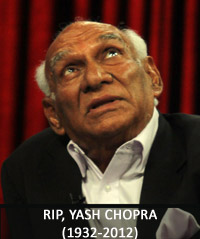


  • Shailesh Kapoor | Kids & Television: No Child’s Play

    By Shailesh Kapoor


    It’s Children’s Day, and if I were looking for an excuse to postpone this piece on ‘kids and television’ yet again, this is certainly not the day for it. So here goes!


    In its 20-odd years, our television has come a long way. An aspect of this progression that has always fascinated me is how our industry has handled kids. This topic has two distinct layers to it – kids as audience and kids as talent.


    The first one (kids as audience) is where a lot of action has taken place over the last 10 years. The kids’ channels genre has found its feet over time, and while it remains undersold historically, things have been looking up. Indian (homegrown) animation has taken off well, and it is sure to give additional impetus to the genre.


    However, it’s fairly well-known that a large proportion of kids viewing (and here, I speak of only voluntary viewing, not the passive viewing captured by the meters) comes from programmes and channels that don’t target kids as their primary audience. CID and Taarak Mehta are two such examples. Kids also spend a lot of time watching movies on television, and there are specific titles that are quite popular amongst them.


    Barring a handful of exceptions over years, it will be safe to say that unlike animation, the live action content space for kids in India remains under-explored. The big culprit is cinema, of course. We just haven’t made enough mainstream films for kids over the last two decades. There have been a few very good films featuring kids, especially Taare Zameen Par. But clearly, ‘featuring kids’ and ‘targeting kids’ are two different things altogether.


    Besides Krrish, Ra.One and the very recent Delhi Safari, all other film content targeted at kids has been grossly sub-standard, almost to the point of being apologetic. No wonder then that kids have taken to more “adult” cinema, such as Welcome, 3 Idiots and even Rowdy Rathore.


    The live action deficit is evident in primary content on television as well. In Doordarshan days, there were several shows targeted at this audience, such as Vikram Aur Betaal (fantasy), Kachchi Dhoop (drama) and Indradhanush (science fiction). Of course, thrillers (e g Karamchand and Byomkesh Bakshi) had a loyal kids following even then.


    But over years, live action entertainment for kids has given way to more mainstream teenage television. At the age of 10-11, Roadies and D3 become real options for them. By virtue of addressing a wider and more consumption-led audience segment, these shows can get higher production budgets.


    In the 80s, the Children’s Film Society of India or the state (via Doordarshan) would fund kids content. Today, market dynamics decide what gets made. But in the bargain, the kid is losing out on live action content targeted at him/ her. There’s a correction required somewhere. And initially, the onus may liemore with the GECs than with kids’ channels. SAB has made early strides, with Baal Veer and Jeanie Aur Juju. More shall follow soon, one hopes!


    It’s on the talent side that the industry’s learning curve has been a lot uneven. No logical argument can convince me on how children working 5-7 days a week round the year, even for the most handsome pay cheque and with their parents’ approval, does not amount to child labour. It’s not a once-in-a-blue-moon shoot. It’s not a weekend hobby that pays. If it’s a daily job, it should not be justified just because you become famous on TV. In fact, the ill-effects of fame further strengthen the argument against kids being a part of daily shows.


    Two years ago, Amole Gupte proudly shared with us his approach towards shooting with kids for his film Stanley Ka Dabba. They would shoot only on the weekends, and it would be like a workshop, where kids would be made to feel at ease with the entire process. Surely, we can emulate Gupte’s vision, at least in spirit, if not literally, for television.


    An area where we have made good progress is in handling kids on reality shows. Full marks to Dance India Dance for driving this change over the last three years. Till then, making kids cry on screen, and reprimanding them for a bad performance, was a norm in many reality shows. It makes for good drama, was the word going round. Today, that’s history. There is growing sensitization that kids talent on reality shows needs to be respected, because having made it to the stage itself makes them special. Thank you DID (and more recently, Junior Masterchef) for showing the way.


    I always worry that our television will become a 15+ phenomenon in these commercial times. With kids spending less time with books than even before, television can make a telling difference in their formative years. We need to give them the programming they deserve. And if there’s enough collective will to do that, surely there’s enough money in this country to figure the commerce out?


    Shailesh Kapoor is founder and CEO of media & entertainment research and consulting firm Ormax Media. He spent nine years in the television industry before turning entrepreneur. He can be reached at his Twitter handle @shaileshkapoor


  • Shailesh Kapoor: State of our News Channels: Trite tributes to film legends

    By Shailesh Kapoor


    2011 and 2012 have been years of bereavement for Bollywood. In a short span of time, we have lost four legends, who will remain immortalized by their glorious work. Shammi Kapoor, Dev Anand, Rajesh Khanna and Yash Chopra collectively defined more than an era in the film industry. Pick any memorable film from the 1960s and early 1970s and there’s more than a fair chance that one of these stalwarts was associated with it. Yash Chopra’s career, of course, extends way beyond the 70s, with his swansong releasing this coming Tuesday.


    As an ardent fan of cinema in general and these legends in particular, I have been deeply saddened and disillusioned by how the media, especially of the electronic variety, has handled the news of their death. I vividly remember the media coverage of Raj Kapoor’s death in 1988, when we operated in a single channel scenario. Doordarshan literally made you live the tragedy. There was grief and somberness in the coverage, laced with oodles of grace and maturity. Importantly, the coverage went on over almost a week, with news slowly giving way to analysis and then to retrospective tributes.


    Things have really changed in the last 20 years. I understand the news channel obsession with ‘breaking news’ and ‘exclusives’ to an extent (and that’s another topic altogether). But to see the demise of a film legend being reduced to breaking news and exclusives is beyond comprehension.


    The truth is: News coverage of famous entertainment celebrities passing away has become a ‘byte fest’.The formula is to get other famous people, most of whom have not even achieved half as much as the one who passed away, to speak about the legend. Filters like articulation and relevant credentials don’t seem to matter. It’s clearly a carpet-bombing approach, where you try and contact as many talking heads as possible, and settle for the ones who agree to come on camera and give you a byte.


    I can understand listening to Amitabh Bachchan, Shashi Kapoor, Shah Rukh Khan or Sridevi speak about Yash Chopra on such an occasion. But why an audience would like to see a byte from Tanuja or Sanjay Dutt is beyond my comprehension. On occasions such as these, film authors and historians should take the forefront. But for a news channel, they don’t make for good face value.


    You can choose to get the wrong people on camera, but you can at least ask them the right questions. Basic research on the background of the person who passed away, and his association with the talking head, is conspicuous by its absence. It’s almost as if the imdb/ wiki filmography has been printed and some notes have been scribbled on it. And what’s with asking: “How do you feel about his death?” Is that even a question!


    Even the choice of footage leaves me flummoxed. Certain channels kept playing Dilwale Dulhania Le Jayenge songs in their Yash Chopra coverage. For a man who has directed 22 films, most of which have been classics or blockbusters or both, why would you choose a film he didn’t even direct! Because you don’t even know who directed it, or you use it knowingly because it is popular footage? And what can I say about calling Rajesh Khanna ‘Babu Moshai’, except: Have you ever watched Anand, dude?


    The ‘programme’ names often border on being ludicrous. A channel covered Rajesh Khanna’s death live, under a program called ‘Oopar Aaka, Neeche Kaka’. Looking for alliterations and puns in tragedy is not exactly the most sensitive thing to do, but if you choose to do it, choose words that at least make some sense. The commentary is frantic, almost as if it’s a race against time. After-death is anything but that, both literally and metaphorically.


    I have been questioning in my mind about why such mediocrity exists consistently. Why are almost 20 news channels not able to put up even one decent programme between them on such an occasion? Why does the best ‘coverage’ on such occasions come from channels like Sony Mix airing the best songs of the legend, than from a news channel? And what use is the archival footage gathered over years, if you don’t have the right minds to interpret it intelligently?


    Part of the answer lies in laziness. Journalism, even by the admission of several senior journalists, has become lazy. Of late, Internet has made it even lazier, where you can pick up a tweet or some wiki information, and just put it out in the media. It’s the easy way out. And it’s apparently enough.


    The second part of the answer lies in the quality of talent available in the newsroom itself. Whenever there has been a political tragedy, I have found our coverage fairly acceptable. That’s because most senior and seasoned TV journalists come from a political journalism lineage. In films, the sensible names like Rajeev Masand or Anupama Chopra are limited to a weekly show and an odd interview. In Hindi, even that’s a luxury.


    Try and question a news channel executive on their banal coverage of any of these deaths and the oft-repeated excuse comes into play: This is what the viewer wants.


    No sir! The viewer wants more, if only you cared to ask him.


    Shailesh Kapoor is founder and CEO of media & entertainment research and consulting firm Ormax Media. He spent nine years in the television industry before turning entrepreneur. He can be reached at his Twitter handle @shaileshkapoor


  • Shailesh Kapoor | Channel Brand: The Digitization Reality

    By Shailesh Kapoor


    D-Day has arrived. By the time you read this, analogue cable would have ceased to exist in three of the four metros, at least legally. The first phase of digitization is finally a reality amidst much speculation over the last few months and, now, chaos. It’s public knowledge now that large audience sections in the metros have still not moved to a digital cable or a DTH connection. If you ask me, there’s absolutely nothing surprising about this at all. After all, this is India. And we do things at the last minute all the time, don’t we? Then why should it be any different when it comes to changing one’s cable connection?


    If the government can enforce end of analogue television, the balance households will go digital in a jiffy. There is no such thing as ‘a life without television’, certainly not in urban India. So connectivity is not going to be a major challenge at an industry level. But digitization is sure to throw some new challenges into the arena.


    To begin with, the first challenge is right in the midst of all of us. It’s called ‘Nobody Knows Nothing’. There is uncertainty on multiple counts. There are no ratings available for the last three weeks. There are different reports and estimates floating around on the actual status of digitization. But in all this, the real question is getting muted: What will really change when the flux period is behind us and connectivity and ratings are not issues any more?


    The most substantive change will be a marketing change. With digitization, the consumer’s ability and acumen to choose channels he wants to pay for will progressively increase. With this change, the focus will shift from programme brands to channel brands.


    In nearly 25 years of satellite television in India, broadcaster campaigns have been primarily focused on building viewership towards specific properties, typically new fiction or non-fiction series, film premieres, events and specials. As a rough estimate, more than 85 percent of the marketing budgets of channels are spent on promoting programme brands, while channel brands get less than 15 percent of the spends.


    It’s popularly believed that GECs are watched for shows and not for the channel per se. But that’s not entirely true. In a recent large-sample segmentation research conducted by us, more than 35 percent viewership on GECs stemmed from channel loyalty, than programme loyalty. Importantly, this 35 percent makes the crucial difference in a closely fought battle. For example, Star Plus fiction launches typically tend to open at higher ratings than most other GEC fiction launches because the channel’s loyal base gives it the edge for every such launch.


    For non-GECs, like movie, news, music, youth and infotainment, upto 70-80 percent viewership is a result of brand loyalty. Live cricket is perhaps the only content type that is entirely driven by programme preference, with minimal brand interplay.


    Yet, we see channels spending millions in creating programme sampling. The oft-repeated argument is that to create brand loyalty, one needs to create programme viewership. To me, this has been the television marketer’s excuse for being lazy and not thinking like a true champion of his brand. And the excuse may have overstayed its welcome by a few years now.


    In the digitized environment, the arguments in favour of such lopsided programme brand focus will get even weaker. When the consumer has a realistic choice on deciding specific channels to pay for, a bigger brand story will have to be sold. Less than five channels can boast of a programme strong enough to become their brand story today. For others, the brand story will have to come from somewhere else.


    So, once the dust settles and the red herring of no ratings is out of our lives, the real digitization-related change should begin. A change that will make the marketing departments at channels more powerful than ever before. But also a lot more accountable than today!


    Shailesh Kapoor is founder and CEO of media & entertainment research and consulting firm Ormax Media. He spent nine years in the television industry before turning entrepreneur. He can be reached at his Twitter handle @shaileshkapoor

  • Shailesh Kapoor | Bigg Host: Salman Sets New Standards

    By Shailesh Kapoor


    He has been the most popular film star in the country for three years now. Salman Khan’s power and charisma has been evident both at the box-office and in the media. Many stars have been critics-proof, but Salman is perhaps the first star to achieve the ultimate pinnacle of stardom: Today, he is content-proof too!


    But there’s another component to true, unqualified stardom – television success. With the sixth season of Bigg Boss, Salman has achieved that too. As Sanjiv Sharma, chairman of reputed production house Optimystix, summarized aptly in a tweet earlier this week: “A TV host achieves excellence when it seems like he has created the format. That’s what Salman Khan is achieving with Bigg Boss 6.”


    Bigg Boss didn’t have an “anchor” in the real sense of the word over the first few seasons. It only had hosts who played musical chairs every year. It started with Arshad Warsi, moved on to Shilpa Shetty and Pooja Bedi, then to the Big B, before Salman stepped in for the fourth season. The fifth season, however, saw Salman making only a guest appearance in four episodes, being largely unavailable because of the overseas schedules of Ek Tha Tiger. Sanjay Dutt stepped in, and didn’t do too badly, given the Herculean task of filling Salman Khan’s shoes.


    But finally, the anchor has arrived. Salman Khan has a full season to himself this year, where he’s hosting not one but two episodes every week. These episodes have been even named after him – Jumme Ki Raat Salman Ke Saath & Super Saturday With Salman.


    But unlike several other celebrated TV hosts, Salman’s real contribution to Bigg Boss goes way beyond his name. Evidently, he has immersed himself in the show, almost unconditionally. Now that’s something one would expect more from the hard-working variety of stars, such as Amitabh Bachchan or Aamir Khan. One expects Salman to arrive on the sets and just go with the flow, without much preparation or rehearsals.


    In all probability, he arrives on the sets and goes with the flow anyway. Barring a crucial difference. It is very clear that he actually watches the show during the week. And that he has a take on what he watches. He takes positions on issues. And these positions are his personal positions, not of the channel or the format.


    So he can pull up the commoner in the house (Kashif) even denying him the right to be a Salman Khan fan, because Kashif’s behaviour in the house didn’t qualify him for it. He can initiate an awkward conversation around a separated couple, and yet make it come across as casual and comfortable. He can applaud Sidhu for being the face of the new Bigg Boss that Salman wants to create – a cleaner, family-friendly version.


    But the real victory lies in doing all of this with immense fun and entertainment. The two hours every week (Fri-Sat) are packed with so much ‘masti’ and humour, you will be willing to play a theatre’s ticket price for it. Almost the entire content in these episodes comes across as unscripted and improvised. From giving nicknames to the inmates, to mimicking them, to even asking the most interesting questions, he does it all. Not to mention the sheer effortlessness of the way he handles co-stars who come on the Saturday show to promote their forthcoming films.


    Bigg Boss is no KBC or DID. It doesn’t carry the burden of inspiring its viewers and making a change in their lives. It is designed for pure entertainment, of the voyeuristic and glamorized variety. It is a show that begs not to be taken seriously. And Salman Khan seems understood this better than anyone else.


    When I see cricket experts analyzing statistics at the end of T20 matches (like the Champions League), I often wonder if they are at the wrong match. If the T20 viewer is interested in slam-bang action, why bother him with wagon wheels, strike rates and dot ball percentages? The fit between the image of the show and the hosting style is the key. Shahrukh Khan struggled with it in KBC 3, where he tried to make a purposeful show frivolous. Amitabh Bachchan struggled with it in Bigg Boss 3, where he tried to make a fun show purposeful.


    I know it is almost blasphemous to compare any host in India to what Amitabh Bachchan has achieved on KBC. And I wrote about it in this column very recently too. But if Salman Khan were to make himself available for another season or two of Bigg Boss, he may just achieve the same. There I said it!


    Shailesh Kapoor is founder and CEO of media & entertainment research and consulting firm Ormax Media. He spent nine years in the television industry before turning entrepreneur. He can be reached at his Twitter handle @shaileshkapoor


  • Shailesh Kapoor: Deewaar was his best!

    Everyone calls him the King of Romance, but Yash Chopra has directed some of the most powerful and hard-hitting dramas in Hindi cinema’s history, especially Deewaar and Trishul. But his understanding of on-screen romance was leagues ahead of everyone else, making him stand out as a great director of romantic films. In the last 15 years, the romantic films in Hindi cinema have become more yuppie and synthetic. The soul that Yash Chopra brought to romance has faded away.


    It’s almost certain that Jab Tak Hai Jaan will be the last of the classical romances we will ever get to see. He is the only director who has routinely had film festivals on television in his name. His company Yash Raj Films has also preserved his film library well, ensuring that his films are allowed only limited runs on television, and they are not telecast every other day, like many other films.
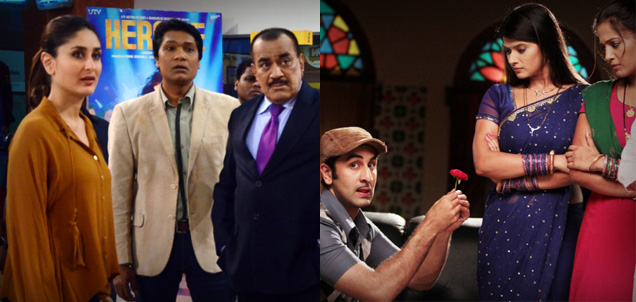


     

    I have been a huge Yash Chopra fan from a very early age. I grew up with Chandni, Lamhe and Darr. And I have always felt Deewaar is the best film Bollywood has given us. I hope Jab Tak Hai Jaan turns out to be the perfect swan song this true legend deserves.


  • Shailesh Kapoor: Zee TV: 20 Years and a Piece of History

    By Shailesh Kapoor


    Earlier this month, India’s first homegrown satellite television channel, Zee TV, completed 20 years of being on air. In 1992, when the channel started with about three hours of prime time programming, we couldn’t have imagined how pioneering this initiative would turn out to be.


    It can be a very interesting exercise to make your list of the top 50 landmark programs on Indian television. Programmes that have shaped our television content over years. Zee TV dominates my list with 14 programmes, second only after Doordarshan with 15. So here’s my list of Zee TV shows that will find an indelible place in our television history:


    1. Saanp Seedi (1992): The first game show ever on Indian television was based on a popular board game, but executed with a style that was flamboyant, almost brazen, in Doordarshan times. I have often wondered why our desi game shows have never managed such energy levels again. I’m sure Saanp Seedi’s host, Mohan Kapur, wonders the same too!


    2. Tara (1993): The definitive urban Indian woman’s show, Tara, would ironically be too modern for today’s television. But back then, it was on-the-edge entertainment; a programme in which a woman (Sheena played by Amita Nangia) actually sipped beer on-screen.


    3. Banegi Apni Baat (1993): Banegi Apni Baat was a progressive, urban take on teenagers and youth, aided by some of the best acting you will hope to see in an Indian serial. The starcast boasted of Irrfan, Surekha Sikri, Shefali Chhaya, Anita Kanwal, Divya Seth, Achint Kaur, Sandhya Mridul and R Madhavan. Phew!


    4. Zee Horror Show (1993): The visual of Archana Puran Singh’s severed head, on a plate on the dinner table, has been imprinted on my mind forever. Zee Horror Show had a somewhat cheesy feel to it, but it was a pioneering step in the mainstream horror genre, after some Doordarshan experiments like Qile Ka Rahasya.


    5. Aap Ki Adalat (1993): Aap Ki Adalat was Rajat Sharma’s first brush with television. When Rajat moved on and Zee replaced him with Manoj Raghuvanshi, the show predictably lost its audience. But Adalat gave us a TV format that has subsequently been exploited in several variants. Arguably, it also gave us India TV.


    6. Khana Khazana (1993): Recipe shows are on-air by the dozen today. We even have two full-fledged food channels. But when Zee signed on Sanjeev Kapoor for Khana Khazana, it was uncharted territory for both. I will always remember Khana Khazana as the first successful marriage of the kitchen and the television in India.


    7. Antakshari (1994): It is hard to recall Antakshari as anything else except Close Up Antakshari, though the series had Sansui and Titan as subsequent sponsors. It is even more difficult to think of this show without its impeccable host Annu Kapoor. Like Saanp Seedi, Antakshari was another example of how Zee brought simple but deep-rooted Indian concepts to television.


    8. Hum Paanch (1995): Much before Ekta Kapoor became synonymous with daily drama series, she produced Hum Paanch, a cult comedy about a mad family and their escapades. The supremely talented Ashok Saraf headed its ensemble cast. And Hum Paanch also gave us Vidya Balan!


    9. Sa Re Ga Ma Pa (1995): Singing talent has never had a more fertile nurturing ground than this landmark show, which has given us many singing stars, none less than Shreya Ghoshal. Another season has just taken off, and the Sa Re Ga Ma Pa legacy continues.


    10. Amanat (1997): In many ways, Amanat set the template for the biggest success mantra of Indian television – joint family dramas. Amanat was only a weekly, like most pre-KBC shows. But this tale of a father (Sudhir Pandey) and his seven daughters remained the centerpiece of our prime time television for almost five years.


    11. India’s Most Wanted (1999): I was never a fan of Suhaib Ilyasi’s guttural voice. But IMW, like many other new ideas in the 1990s, had a charming, camp feeling to it. You watched it because it was not well produced. Or maybe, it was meant to come across like that. Today, news channels have pale variants by the dozen, and even Ilyasi attempted one a few years back.


    12. Saat Phere (2005): Saat Phere was the social show that existed before socials oversaturated our serials market. The story of Saloni, who has to face tribulations because of her dark skin, eventually morphed into a meaningless one. But while it was at its peak, Saat Phere redefined new-age television in times of multiple marriages, plastic surgeries and resurrections.


    13. Dance India Dance (2009): Easily the biggest reality show franchise in India in the last five years, Zee TV took the industry by storm when it converted a seemingly low-budget, experimental show into a runaway hit. Several myths around reality show jury were broken, as three unknown choreographers became household names within weeks. If the recent Li’l Masters season is anything to go by, DID is ready to enthrall us for many more seasons.


    14. Pavitra Rishta (2009): Pavitra Rishta is, in many ways, the love saga that Indian satellite television never had in its first 15 years. With its afternoon soap texture, the series has managed to survive several story leaps and casting changes, and continues to have a fairly strong run. And its original hero (Sushant Rajput) is set to make his film debut this January.


    Hasratein, Astitva, Jeena Isi Ka Naam Hai and Philips/ Colgate Top 10 narrowly missed my list. There’s also a fair chance that I may have missed out something else truly landmark, given the plethora of content on the channel over the last 20 years.


    Kudos to Zee TV. Hope they have many more aces up their sleeve!


    Shailesh Kapoor is founder and CEO of media & entertainment research and consulting firm Ormax Media. He spent nine years in the television industry before turning entrepreneur. He can be reached at his Twitter handle @shaileshkapoor


  • Shailesh Kapoor: Is Appointment Viewing a myth?

    By Shailesh Kapoor


    It’s a much-used and much-abused term in the television business. Appointment Viewership. Indeed, appointment viewing is the Holy Grail for the television business. It’s the acid test of a good programme or channel – Does it have the ability to get eyeballs by appointment? In simple terms, does it have the ability to make its audiences incorporate the program (or channel) into their daily or weekly schedule, in a way that it becomes a fixture for them?


    Appointment, as a dictionary word, suggests the same: ‘A meeting set for a particular time and place.’ How complex can it get, after all?


    Yet, the degree to which the concept of ‘appointment’ viewership is misunderstood in the television industry can be baffling. I discovered it about three years ago when a research revealed that a programme on a niche channel had very high appointment viewership. The client (who happened to be competition to the said programme) argued how that was possible, given the 0.7-rating of the program. I gave them an example of a 2.5-rating programme on a leading GEC that was being watched almost entirely in breaks and without any semblance of appointment viewing. How the debate went thereon is another story altogether.


    But that’s the lack of understanding I speak of. Appointment viewership is associated with high ratings, while lack of appointment is associated spontaneously with low ratings. Many media experts believe that our myopic view of the ratings system leads our television business into operating in the short-term. And this is yet another symptom of the same.


    As we have dived deep into the appointment-viewing concept over the last two years, many discoveries have happened over time. Only about a dozen Hindi GEC programme have a significant (20%+) base of appointment viewers. Others are watched for various reasons, none of which have any direct connection to the concept of ‘appointment’. Reasons such as:


    • My mother watches it, so I watch it too.
    • It’s the most watchable of all the programs on TV at that time, so I end up watching it.
    • I finish the chores and am free before dinner time, so I watch this program. (The ‘timing suits me’ reason)
    • It’s a good ‘time pass’ programme to watch.


    The ratings system doesn’t distinguish such types of viewing from appointment viewing. Back in 2010, a top-rated programme on a GEC was in an extremely vulnerable position. Research after research, viewers would trash it, saying that they are hating how the programme has moved from being a classic to a bore. The signals were clear. The viewing behaviour had moved from appointment to casual to cold & passive. But there was no strong competition to take the audience away. And hence, the ratings maintained themselves by and large, helped by sporadic high points in the story.


    The channel remained in denial on the programme for almost six months, questioning research design instead. And then, a competition channel launched a worthy show, and the much-touted show sank to less than one-third of its rating within three months, only to die an impending death over the next six months.


    But there are other examples too, where shows or channels run on a small but dedicated viewer base for months, even years. Music channels have certain time bands that manage this, by creating content affinity by showcasing music that a particular segment (e.g. retro music fans) may want to watch. News channels too rely on marquee anchors to create an appointment viewer base. Far and few in between they may be, but such properties serve their channels and advertisers very well over time.


    The confusing element in appointment viewing comes from lack of clarity in measurement. Appointment viewing should be defined as the percentage of a programme’s viewership that comes from its core, appointment-viewing base. Because this is the viewership that’s safe, secure and future-proof. The rest is all transient, or simply a matter of chance. Instead, it is often argued that a bigger audience size implies more appointment viewership.


    Only about 20 channels in India have even one programme that has a 20%+ appointment viewing base. Others are all creatures of destiny, at the mercy of the viewer, and at the mercy of events in the viewer’s life that the channel has absolutely no control over.


    I have maintained for a while that executive producers should be measured on appointment viewing proportions, and not rating points. It will be fairer on them, and on the business. But for that, we need to shed some of our obsession with the weekly ratings.


    Easier said than done?


    Shailesh Kapoor is founder and CEO of media & entertainment research and consulting firm Ormax Media. He spent nine years in the television industry before turning entrepreneur. He can be reached at his Twitter handle @shaileshkapoor


  • Shailesh Kapoor: Enter ‘short-form’ T20-style entertainment

    By Shailesh Kapoor


    India played Afghanistan last Wednesday in the T20 World Cup. It wasn’t billed as a high-profile game. There was little hype surrounding a game that was merely a formality, before we play the biggies. It was a weekday match, and wasn’t a very high scoring game either. Yet, the viewership of the India-Afghanistan game was at the level of the Top 10 programmes on television. If that’s some indication, we know what’s likely to come for the Super 8 matches vs. Australia, Pakistan and South Africa. They should easily be the top programmes of the week. The India-Pak game may even end up being the highest rated programme of 2012 on Indian television.


    There has been much talk about cricket fatigue over the last few years. So much so that the talk about cricket fatigue has fatigued itself out by now. Most such talk, however, tends to be shallow, starting and ending with the million-dollar question: Is there too much cricket?


    Of course there is too much cricket. You don’t need to look at ratings for that. A look at the ICC future tours and programmes calendar for the Indian team will give you the answer. But to assume that too much cricket translates into cricket fatigue is simplistic, even erroneous.


    The real change that has happened over the last five years is not that the volume of cricket has increased, but that a new format has been introduced in the mix – T20. As a result, Test cricket and ODIs stand exposed in terms of their entertainment value. T20 has made them seem like yawn-fests. Why?


    In India, core sports audiences belong to the 13-30 years age group. A large part of this segment is consumption-led, distracted, hard-to-please and perpetually wanting to move on with things.


    With this changing mindset comes the concept of ‘short-form entertainment’. Everything has to be shorter than it was before, to please this audience. Films that are longer than two hours begin to drag, unless they are extremely well made. Serials that continue more than two years are frowned upon. Channels that have long ad breaks are dismissed as being fuddy-duddy. Interstitials and gags that stretch beyond a minute acquire overtones of being indulgent and boring.


    There is so much to do and so little time. Most of this “so much to do” may be ‘trivial’ stuff, like social networking, but try telling a 20-year-old that. What! You called social networking trivial?


    Short-form entertainment is soon going to play an even bigger role in our television viewing landscape. It is not about 10 seconds or three hours. It is about: What can be achieved in a certain time, should take only that much time.


    1. If a promo can communicate a message in 15 seconds, why cut a 30 second spot?

    2. If a movie can tell its story well in 100 minutes, why take 130 minutes to do the same?

    3. Why do I have to watch the entire news if all I want are the headlines?

    4. You can give me engaging break content, like trivia and gags, but remember, it is break content and I didn’t come to your channel to watch a break. So keep it as short as possible.

    5. Why do I have to watch the entire Test match when all I want to see are the boundaries and the wickets?

    6. I’m not going to watch eight hours of cricket when I am now aware of a three-hour version that’s more entertaining.


    Get on with it, is what television professionals are being constantly told by the viewers. Today, this may be a sub-30-years mindset. But in the family context, it can be extremely infectious. We see it happening all the time with GEC serials. The dragging perceptions for serials first come from the daughter, and about 3-4 months later, viral their way to the mother or the mother-in-law.


    Increasingly, short-form entertainment will be the key to television success, across genres. It’s a dynamic and evolving concept, and the broadcasters who can keep pace with the consumer mindset on it, with bear a distinct advantage over others. This is true across genres, but even more so for sports.


    When India plays Pakistan in the semi finals of the 50-over Cricket World Cup, even a 24-hour game can classify as ‘short-form entertainment’. But most ODI cricket is not India-Pak in big events. It is cricket lacking any real sense of purpose or competition. That’s when watching Sehwag (now Kohli) bat is more exciting than the result of the match itself. That’s the short form that works.


    As a teenager, Mike Tyson’s boxing bouts used to interest me a lot. I wondered how so much sponsor money could be put on something that lasts merely 30-seconds. Today, I know the answer of course. It’s not about the time; it’s only about entertainment, entertainment, entertainment.


    Shailesh Kapoor is founder and CEO of media & entertainment research and consulting firm Ormax Media. He spent nine years in the television industry before turning entrepreneur. He can be reached at his Twitter handle @shaileshkapoor


  • Do pre-release star appearances work?


    By Meghna Sharma


    What is common between Kareena Kapoor and Bipasha Basu? The answer is: CID. Yes, both the actors were rescued by none other than our very own team of ACP Pradyuman and his agents.


    Today, seeing actors on television is not a surprise. Most of them can be seen on the small screen as hosts or judges on reality shows. However, in the recent past one has seen them play a character or themselves in fictional shows where the plot of an episode is scripted around them. And the two actors are the latest to join the bandwagon of various other actors who have made a “special appearance” on the small screen to promote their upcoming film.


    Dinesh Rathore

    According to Dinesh Rathore, COO, Madison Media Omega, the difference between the big screen and the small screen faded away in the last decade as superstars entered the medium. “Actors making an appearance on television is a win-win situation for both. Television has vast reach so actors get to promote their films, and a channel can save money if the actor appears on their shows to promote his/her film.”


    He’s not alone, even broadcasters which are competing with each other to get the stars to their channel before others do also feel the same. Vivek Bahl, Chief Creative Director, Sony Entertainment Television says, “Big fiction shows with a dedicated & measurable viewer base is a great platform for an actor to promote his / her upcoming film with the show. And, for the show itself, one can always create buzz and sampling with the

    Vivek Bahl

    anticipation of a star appearance.”


    On the same note, Ajay Bhalwankar, ZEEL’s Content Head (Hindi GECs) feels that fiction shows are the staple diet of any General Entertainment Channel and the presence of a Bollywood celebrity is woven into the existing storyline of the fiction show, hence increasing the chances of a better recall. “As a medium TV cannot be ignored by marketers.”


    Prashaant Bhatt

    “Be it with a Jhalak Dikhhala Jaa or Madhubala, the audience for each show is varied and this is what works in favour of the movie that is promoted on the show,” explains Prashaant Bhatt, Weekday Programming Head of Colors, who believes that the trend is only going to move forward. “It is vital for any promotional activity to be present on all the mediums that helps them connect with the viewer. So, in the future, the trend could possibly be digital with the introduction of various apps etc, anywhere the audience/moviegoer is.”


    Shailesh Kapoor

    However, Shailesh Kapoor, CEO of Ormax Media feels that film star presence on fiction shows helps the films more than the channels. But the channels can use the stars in the promos and create buzz around it. It can give a viewership spike only if the star does something really interesting in the show. “In a recent study conducted by us, television emerged as the driver of both reach and appeal for film campaigns, way ahead of print and outdoor. I believe that channels should start charging film producers for such integrations, the way they charge advertisers.”


    Priti Murthy

    If both stars and broadcasters are winners here, Priti Murthy, National Director – Insights at Maxus India adds that viewers too don’t have much to lose out on. “I think even viewers win here as they get to see new faces or a new plot in their regular shows. Also, stars appearing on shows is a global phenomenon; in the west, stars appear on shows like Saturday Night Live.”


    It appears no one has anything to lose here!


  • Shailesh Kapoor: In A Family-Friendly Pack

    By Shailesh Kapoor


    Bigg Boss will soon be back on the telly, for a sixth time. But this time, the programme that has courted controversy year-on-year, will be seen in new, “family-friendly” version. At 9 pm, in the heart of the prime time, Colors promises a programme that will get rid of the abuses, the affairs, the pole dances, the works. A whole new Bigg Boss indeed.


    There is scepticism about whether this new avatar will work for Bigg Boss. Only time will tell us. But there is enough evidence over the last five seasons to say that the franchise had hit a glass ceiling on viewership. Every possible trick in the trade was tried, some of them being nothing short of masterstrokes. But the programme could never compete with the top serials running in prime time. It got irregular and non-GEC viewers interested, while most core GEC viewers largely stayed away.


    Bigg Boss always gets media attention. News channels and newspapers love the property for the material it gives them. But the buzz doesn’t convert very well into eyeballs for the show. This week, an A-rated, “bold” film (Heroine) is set for a huge opening at the box office. But television content that’s even remotely bold loses out on a viewer base, especially in the lower socio-economic classes. Why?


    A part of the answer is obvious. Theatre viewing is primarily a friends-based activity, while television viewing is primarily a family-based activity. An 18-year-old would enjoy Heroine immensely in the theatre, but will quickly change the channel when the movie’s U/A-rated promo appears on the television set. That’s the element of ‘sanskaar’ still playing a role in the life of the Indian youth. How they behave at home is very different from how they behave outside it, once the family filters are switched off.


    But does that explain everything? What about the thousands of homes where such cultural filters don’t apply? Like your home or my home? In bigger cities like Mumbai, Delhi, Bangalore and Pune, there are many posh neighbourhoods that have “progressed” to more liberal (read Western) lifestyle and attitudes. This segment includes several professionals, entrepreneurs and opinion leaders, from across industries.


    In a country of over 100 million satellite television households, this “progressive” segment doesn’t add up to much. Even if they did, it’s unlikely that they would allow their house to be metered for viewership measurement. You will be able to feel the pulse of this audience on elite media options like Twitter, or even the more mass facebook, but it will never reflect in the mainstream audience ratings.


    Back in the 90s, when satellite television was still nascent, this audience ruled the roost. They were early adopters of a cable connection. Their taste reflected in the programming that succeeded in those times. Tara, for example, was a landmark show that was appreciated for its path-breaking portrayal of women. Somewhere in the late 90s, the ilk of Tara-like shows was overtaken by the Amanat ilk. Because the median market had moved from Mumbai to Indore. The median SEC had moved from A2 to B.


    Today, the median market is probably a Gwalior or an Allahabad. And the median SEC is C. And as satellite television (or rather its measurement) penetrates further, the medians will continue to shift even more. The large problem with this method of measurement is that it doesn’t take into account the purchasing power. A rich South Mumbai household is given the same weightage as a poor household in small-town Satna in Madhya Pradesh. Yes, the media agencies can filter data on markets and SEC, but popular perception is not based on such filters. It’s always the “4+ HSM” rating that is reported, be it in the trade media or in the mass media. The verdict is passed with equal importance being given to the two households above, not withstanding that one spends more than 500 times the other on brands that advertise on television.


    In any case, no data cuts are available by mindset or attitudes, leading to the entire planning process being based on stereotyping target audience into age, gender, SEC and market brackets.


    I have always felt that Bigg Boss has actually been a much bigger success than what its ratings have reflected. It gets the eyeballs of premium and progressive audiences. But our current measurement system is not suited to monetizing these eyeballs in an equitable manner.


    Our films have progressed over the last two decades. With our television, though, the progression has been very specific to a mass audience base residing in mini-metros and small towns. The big town audiences will be right in feeling left out. In cinema, they are put on a pedestal because they pay five times more than the small-town cine goer. But in television, nobody cares about them.


    Till we find a fair way of evaluating eyeballs that have the purchasing power, the ‘sanskaari’ family theme will dominate our mainstream television landscape. And we will be a poorer television nation for that reason.


    Shailesh Kapoor is founder and CEO of media & entertainment research and consulting firm Ormax Media. He spent nine years in the television industry before turning entrepreneur. He can be reached at his Twitter handle @shaileshkapoor