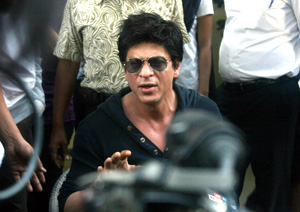
Tag: Santosh Desai

  • Dark Clouds for IPL Sponsors?


    By Pritha Mitra Dasgupta & Ratna Bhushan


    The proposed suspension of Indian Premier League teams Chennai Super Kings and Rajasthan Royals following a betting scandal evoked mixed opinions about how the cricket tournament would be affected, although it is unlikely to financially hurt title sponsor PepsiCo or team sponsors such as Aircel and UltraTech.


    In all probability, the Board of Control for Cricket in India will have to compensate sponsors financially for any loss of opportunity to market their brands, two people who deal with such negotiations said.


    “Both teams have star players such as MS Dhoni and Shane Watson who are brands in their own right and the teams have been performing well. If BCCI chooses to go ahead without the two teams next year, then it will have to decide on how the sponsors would be compensated,” a source said.


    The sponsors of CSK and Rajasthan Royals won’t take any hit, said Melroy D’Souza, chief operating officer at Professional Management Group, the sports marketing unit of Madison.


    Media planners said suspension of two of the eight teams may be a problem for Sony, official broadcaster of the T20 cricket league. “Sony Max will not be able to match the ad sales revenue it raked in the previous IPL season because the number of matches will reduce,” a top media planner said.


    “There will be a lot of challenges for the next edition of IPL,” said Santosh Desai, MD & CEO of Futurebrands India. “The immediate issue will be adjusting the format and one would imagine that the brand value will take a knock. And advertisers will be wary at least for the next season of IPL.”


    According to Ashish Bhasin, chairman & CEO South Asia, Dentsu Aegis Network, “Both CSK and RR are very big teams and their suspension will impact the tournament in a big way. But I am sure BCCI will find ways to reorient the tournament.”


    Bhasin added that the tournament is unviable with six teams and “financially it will be very difficult to sustain. If the number of matches get lesser there will be less advertising time. So we need to see how BCCI restructures IPL.”


    Shashi Sinha, CEO, IPG Media brands, said that IPL is bigger than the teams and “people watch it more for its entertainment value than competitive cricket. So in my opinion, advertiser interest will remain.”


    Vodafone, one of the three official IPL partners and one of the biggest advertisers, declined to comment.


    PepsiCo India said it expects the issues surrounding IPL to be adequately and swiftly addressed. “The faith of cricket fans is important and needs to be restored in the interest of the game. With reference the ban on the two teams, we will discuss it with Board of Control for Cricket in India and are hopeful they will be able to find a solution, which is in the best interest of all stakeholders,” a PepsiCo spokesperson said.


    Mobile wallet company, Paytm, which came on board as an IPL sponsor in 2015, will “wait and watch before signing another deal with IPL.” Shankar Nath, senior vice president at Paytm, said, “We are stunned by the news. But the good news is there is still a lot of time before the next season and maybe it will prove to be resilient.”


    “IPL has emerged as a robust and endearing sporting event property, which has only grown stronger with record TV viewership and instadium attendance. We believe that the strengthened governance structure and enhanced image of the IPL will further build the popularity of the league and benefit all its stakeholders, including sponsors,” said Anindya Datta, chief marketing officer at Yes Bank, one of the official partners of the event.


    Aircel, the oldest and biggest team sponsor of CSK, went into a huddle over the question of disassociating with a team found to have links with a betting scandal.


    “The verdict has just been announced and we are reviewing our position in the matter,” Aircel said in a statement to CSK.


    A leading media agency is of the opinion that both CSK and RR will play in the next season of IPL, probably under new owners, and therefore the tournament format will remain unaffected.


    However, the agency said a number of big advertisers may not associate with IPL because the property is marred with the betting scandal and the matter is sub judice. No one would want to come under the scanner of the new government.


    The agency said cricket as a property in India has become very expensive and a number of beverage and FMCG brands might use this as an excuse to get out of IPL.


    Source:The Economic Times

    Copyright © 2015, Bennett, Coleman & Co. Ltd. All Rights Reserved

    Licensed to republish
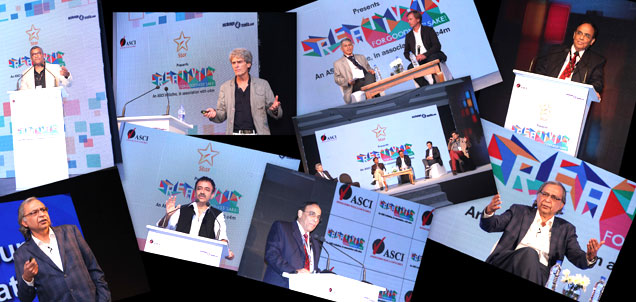
     

  • Saddi Dilli scores over Aamchi Mumbai for launch of global brands

    By Rasul Bailay & Ravi Teja Sharma


    Delhi seems to have become the favoured location for brand launches. Arvind Lifestyle Brands, which sells Calvin Klein, US Polo and Nautica products in India, generates 20% more revenue from its stores in prominent malls in the Delhi region than elsewhere. Which is why Gap, now on the Arvind roster, will have its high-profile start in Delhi. As will rival H&M (Hennes & Mauritz).


    US food chains such as Burger King, Johnny Rockets and Wendy’s have also made Delhi their first port of call. Consumers in Delhi and its surrounding areas have higher spending power, according to retailers and analysts.


    The region also has some of the largest and most successful malls in India, catering to the region and neighbouring cities of Chandigarh, Ludhiana, among others.


    The National Capital Region (NCR) has 15 successful malls compared with 10 in Mumbai, according to property advisory firm JLL India. NCR has around 100 operational shopping centres, it said.


    “The availability of quality space in premium locations in the NCR is more,” said Pankaj Renjhen, MD for retail services at consultancy firm JLL India. “Brands usually want to launch from a top market. That market in Mumbai is south Mumbai, which only has one good mall. In comparison, south Delhi has five good, performing malls.” The Select Citywalk, Ambience and DLF Promenade malls are popular with foreign food and fashion retailers.


    “Delhi records higher productivity for any fashion store and Delhi is all season, where you not only sell summer apparel but also winter clothing,” said J Suresh, CEO of Arvind Brands. “Also,, Delhi today is by far No. 1 in terms of fashion adaptation.” Suresh said the Delhi opening for Gap was a function of the company being able to secure space in Select Citywalk.


    According to marketing and social commentator Santosh Desai, Delhi has taken over from Bengaluru as the preferred launch pad for some foreign brands. “In terms of size, the Bengaluru market is shallower than Delhi,” Desai said. “For any new entrant Delhi provides a sizeable opportunity.”


    Jaspal Singh Sabharwal, a partner in Everstone Capital that brought Burger King to India, said that starting in New Delhi or Mumbai is “usually reflex driven rather than judging the city on its merits.” Sabharwal said, “The consumption and strategic potential of both the cities is almost equal but Delhi does score over Mumbai in terms of better quality-price-availability equation of real estate options and a much larger presence/in and out flow of migratory population.”


    Source:The Economic Times

    Copyright © 2015, Bennett, Coleman & Co. Ltd. All Rights Reserved

    Licensed to republish


  • Soon Consumers will be Regulators…


    By Labonita Ghosh


    A few years ago, global consumer goods giant Unilever found itself in a sticky situation. A new advertisement for its margarine Flora, had sparked a huge row. The ad showed a bullet going straight for a human heart made of china. The bullet, fashioned by the words “Uhh dad, I’m gay”, was followed by Flora’s tagline, “You need a strong heart today”. Amid largescale protests against the clearly homophobic nature of the ad, Unilever first distanced itself from the campaign, saying it had been produced by an agency in South Africa and had not been approved by the company. Then, as the protests refused to die down, the company pulled the campaign altogether. “The ad seemed to indicate that finding out your son was homosexual, was like taking a bullet to the heart. It was a very uncomfortable situation for us,” said Marc Mathieu, global SVP marketing for Unilever, who was in Mumbai last week, speaking at an event organised by the Advertising Standards Council of India (ASCI), on responsible advertising.


    ASCI has been pushing for self-regulation in the advertising world to ensure ethical and responsible handling of campaigns, and also for punitive measures against companies and agencies that put out misleading ads. Earlier in the week, the Department of Consumer Affairs announced it had set up a website called GAMA (Grievances Against Misleading Advertisements) and was partnering with ASCI to take action on the complaints filed online and penalise offenders. The prevalent idea, however, is that there may be no need for action if the industry decides for itself to toe the line.


    One oft-repeated grouse by the industry is that too many guidelines curb creativity. “The assumption often is that rules are a barrier to creativity,” said Shantanu Khosla. Managing director, P&G India at the event. “But we should not think of regulation as a constraint. It comes from the same source as my fundamental consumer insight, ie society. The people we serve, write the rules, and no one else.” Indeed, it is from these rules, added Khosla, that companies can also build leverage and trust for their brands with consumers.


    In fact, sometimes thinking out of the box can lead to some great advertising, felt John Hegarty, founder of BBH. He cited the example of how, since the socio-cultural conditions of various markets differ, there are some regulations that – literally — come with the territory. And trying to find (legitimate) ways around this, can often lead to innovative solutions. Like a hair care commercial that was prepared for the Malaysian market. “How do you advertise for women’s hair care product in a country where women wear headscarves and are not allowed to leave their head exposed?” Hegarty said. “The agency found a way around it.” The ad focuses on a comb instead, first with strands of hair on it, and later without, to show how the product could stop hair fall.


    Unilever’s Mathieu felt that understanding people is what unites the marketing and advertising agencies. “Insights into certain human truths are the most important thing,” he said. “So companies need to ask themselves what is the human truth that I can use for my campaign that will resonate with people?” Making campaigns more people-centric and creating more purposeful brands, will automatically yield ads that are less offensive and more acceptable to consumers.


    Experts, however, feel consumers themselves are the best regulators. “Self-regulation is our job, yours and mine, and not ASCI’s,” said Paritosh Joshi, head of media and communications consultancy unit Provocateur Advisory. “The more everyone believes they are a part of this, the more they will believe that enforcing truthfulness and honesty is a collective responsibility. Self-regulation is not about curtailing creativity, but about establishing a framework of rules that one might have for, say, golf or cricket or boxing. If you’re not allowed to punch below the belt, you’re not allowed to punch below the belt. There are good reasons for this, and we should all be aware of them.” When that awareness comes, there may not be a need for a watchdog at all.


    Sanjeeb Chaudhuri, CMO and global head of brand at Standard Chartered agreed. “Increasingly, the response of the consumer, will be driven by the consumer,” he says. “This consumer’s choice will, in turn, drive the choices that advertisers and agencies will have to make. They will find that they can’t go against the grain [of the consumer].”


    Santosh Desai, MD and CEO of Future Brands, saw things a tad differently. “I think the issue of self-regulation will only become more contentious till such time that business can see itself as an intrinsic part of society,” he said. “Considerations [about regulation] should not stem from things like the consumer becoming more empowered and taking to Twitter to complain. These will always be half-solutions. It will happen only when corporations begin to believe that they don’t have immunity from society.” Indeed, it should be impossible to separate the consumer from the business. “The business of business is people,” said Bobby Pawar, director and chief creative officer at Publicis Worldwide. “Just as products have consumer benefits, companies should too. They must also benefit society in some way. The thing to keep in mind is that if you are a person with a conscience, you should also try to develop one for your brand, and stay true to it at all times.” A tough ask, perhaps, but certainly doable.


  • SIMC hosts Brand Communication Conclave in Pune

    By A Correspondent


    Some of the best minds in the field of branding came together to discuss and present key issues, trends and solutions pertaining to the industry at the Brand Communication Conclave hosted by Symbiosis Institute of Media and Communication (PG), Pune recently. Addressing an audience comprising students and academia, the speakers deliberated upon current topics of interest within the domain of advertising and branding through several keynote addresses and panel discussions.

    The event kicked off with Santosh Desai, MD & CEO of Futurebrands India Ltd., reviewing the nuances of the advertising industry and how it functions today. “If advertising has to become successful commercially, it has to build assets,” he said, adding: “The fact that it has chosen to be a service provider and that it can leverage on content creation is a big opportunity.” On a mission to decode whether pitching original ideas is a protected and secure affair, the panel of eminent speakers such as Partha Sinha, Director, South Asia, Publicis, Harshad Lad, Head of Creative Operations, Creativeland Asia and Ajay Jhala, CEO, BBDO debated extensively in the discussion that was moderated by Pradyuman Maheshwari, Editor-in-Chief and CEO, MxMIndia. “Just worry about the ideas you have. The pitch is net practice. Take the idea and give it your own expression,” Ajay Jhala said.

    Sourabh Mishra, Director and Chief Strategy Officer, Bates CHI & Partners India, Rajan Narayan, CEO, Quadrant Communication, Sujit Janardhanan, Vice President, Global Marketing and Corporate Communications and Avik Chattopadhyay, Co-creator, Expereal comprised the second panel for the day, expounding on the future of branding as we know it. The discussion highlighted how the brand is the meaning it creates in the human mind and how it stands as a promise of an experience to the consumer. The consumer of today has a very clear idea of whether he or she will respect or shun a brand. Emphasising this fact, Sujit Janardhanan said: “The brand belongs to the end user. Brands are about data, content and technology. You have to develop content that the user needs, and at various levels in order to engage and personalize.”

    In the age of multiple pool of services, the third panel discussion of the Brand Communication Conclave explored the pros and cons of “The fragmentation of the agency structure.” The panel comprised esteemed stalwarts from across the media industry, such as Rishabha Nayyar, Vice President- Strategic Planning, Lowe Lintas + Partners, Narayan Devanathan, Executive Vice President, National Planning Director, Dentsu India Group and Soumitra Patnekar ,Strategic Planning Director at Grey Group.

    Rishabha Nayyar set the ball rolling by observing that integration primarily meets the need of the clients who prefer integrated agencies for a good outcome. Narayan Devanathan added, “Business is all about turning utility into entertainment. We (agency/media houses/corporations) continue to see ourselves as service providers rather than focusing on ideas.”

    This year, in a bid to facilitate practical learning and industry-student interactions, Symbiosis Institute of Media and Communication (SIMC) conducted a mentorship programme that was the final highlight of the Conclave. The programme had pre-shortlisted student teams interact and build their ideas, with help from designated mentors from the industry. These teams presented their work at the event, showcasing their ideas and creativity on the theme ‘The Great Indian Dream’.


  • Retirement not to affect popularity, Brand Mahendra Singh Dhoni is not over, say experts

    By Pritha Mitra Dasgupta, Ratna Bhushan & Ravi Teja Sharma


    Indian cricket captain Mahendra Singh Dhoni on Tuesday announced his retirement from Test cricket bang in the middle of the Australia tour, catching many by surprise and fuelling speculation whether this is the beginning of the end of brand Dhoni.


    “It’s clearly a succession plan in the making, so it will definitely impact the brand value of Dhoni in the short term,” says Indranil Das Blah, chief operating officer of sports management company, Kwan.


    But he was quick to attach a caveat. “If India wins the World Cup next year, Dhoni will be bigger than ever. If not, we will begin to see the end of brand Dhoni, as we are certain that others like Kohli will rise.”


    Santosh Desai, CEO of Future Brands, termed the Indian captain’s decision as the “evening of his career and his brand endorsements”, but certainly not the end. “Is this step one of his game plans?” asks Madhukar Kamath, group CEO and MD of Mudra. “It was becoming evident that Dhoni will pull out of Tests and from other formats after the World Cup. Hence brand Dhoni will not get affected till after the WC.”


    Nandini Dias, chief executive officer of Lodestar Media, says that Dhoni has been the most successful captain for India and is currently the costliest sports endorser. “But sports icons quickly lose sheen when they stop playing. Since Dhoni will continue to play in the other two forms of cricket, which are more popular than Test cricket, it will not affect his endorsement or popularity yet.”


    Dhoni has been one of the top brands in India over the past few years, endorsing close to 20 brands such as Pepsi, Reebok, Aircel, Gulf Oil, Star Sports, Reebok Amrapali Developers and many more. He reportedly charges between Rs 10 and Rs 12 crore for a brand, which is way more than the next best Virat Kohli who charges around Rs 6-7 crore for a brand. Dhoni is also known to have done a few revenue share deals.


    Anupam Vasudev, chief marketing officer at Aircel, says their brand endorsement deal with Dhoni ended in October-November 2014 and they are still talking to him on renewing it. A PepsiCo India spokesperson said the company will continue its association with Dhoni. “We wish him all the best for his continuing leadership in the T20 and one-day formats.”


    Dhoni’s decision to focus on the shorter versions of the game will extend the longevity of his brand, says Abraham Koshy, professor of marketing at IIM-A. The dilemma for advertisers in India is that there are only two big names left in cricket at the moment – Dhoni and Kohli. There was a time – and not too long ago – when marketers were spoilt for choice with Sachin Tendulkar, Sourav Ganguly, Rahul Dravid, Anil Kumble, Virender Sehwag, and even Harbhajan Singh, Gautam Gambhir and Yuvraj Singh to pick from.


    Source:The Economic Times

    Copyright © 2014, Bennett, Coleman & Co. Ltd. All Rights Reserved

    Licensed to republish

     

  • Boxing champ Mary Kom is Vodafone’s global brand ambassador

    By John Sarkar


    Beginning next year, Indian boxing champ Mary Kom will become the global brand ambassador for British multinational telecom company Vodafone.


    The London Olympic bronze medallist from Manipur has not only knocked out other Asian contenders for the role, but she has also dealt a severe body blow to the widespread Indian prejudice that fails to look beyond cricket for multi-crore celebrity-endorsements.


    According to people familiar with the development, the diminutive Kom, a five-time World Boxing champion and mother of two, has been shortlisted from a group of at least 25 other Asian athletes for Vodafone’s new social media-led brand engagement strategy ‘Vodafone Firsts’ that will be activated across up to 30 countries. When asked about the details of the relationship, a Vodafone spokeswoman from London refused to comment. “We will share more information closer to the launch,” she said.


    In what may come across as a strange turn of fate, Vodafone will activate its first ‘First’ services in London early next year, the city where Kom won her first Olympic medal. “At the launch, Vodafone will help create the world’s first multi-sensory fireworks display, in partnership with the mayor of London and food scientists Bompas & Parr,” the telecom giant said in a statement. “Meanwhile, a free Vodafone augmented reality smartphone app will enable millions more to join in the experience, wherever they are.”


    According to Vodafone Group brand director Barbara Haase, the ‘Firsts’ concept is simple. “We know that our technology can enable and inspire people to do something amazing for the first time, from making their first call to sharing their first video. Firsts is designed to reflect that sense of empowerment by using our technology and connectivity to enable a diverse range of people to achieve their remarkable ambitions.”


    “Vodafone has made a good choice. Many people, even those who don’t follow boxing, will identify with the Mary Kom story,” says Santosh Desai, brand expert and CEO & MD of Futurebrands India. “In a sport with no money, she has shown a lot of grit. Despite being a mother of two and coming from a so-called backward part of the country, she has shown class at the highest level.”


    Source:The Economic Times

    Copyright © 2013, Bennett, Coleman & Co. Ltd. All Rights Reserved

    Licensed to republish

     

  • The Making of Brand ‘Namo’

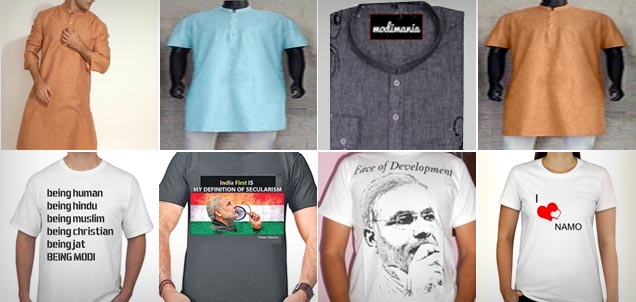
    Kurtas and t-shirts like these on Modimania.com are among the many products riding the Narendra Modi popularity wave


    By Rasul Bailay


    An Ahmedabad-based company has filed to trademark Namo, the acronym by which Gujarat chief minister and BJP prime ministerial candidate Narendra Modi is becoming widely known around the country.


    Take India Beyond Merchandising has filed dozens of applications on various versions of the name in Hindi and English. These include Namo, Namo Lekh, Namo and a sketch of a lion with the tagline – The Lion of India, Namo Mantra – Taking India Beyond and Namo Mantra – The Turning Point.


    The applications have been filed in various trademark classes including beer mugs, paper towels, lunch boxes, bed linen, dairy products, soft drinks, potato chips and others.


    Ketan Amichand Vora, one of the two promoters of Take India Beyond Merchandising, said the company has filed for the trademarks in order to leverage brand Namo.


    In the coming months, the company plans to launch Namo-branded merchandise, toys, colour paints for children, etc, he said.


    People close to Modi have been planning to start Namo-branded stores nationwide to sell various products including the distinctive kurtas that Modi wears, books, candles, incense sticks and various products as part of the effort to drum up support for the candidate in national elections next year.


    One person close to the Namo retail push said the group behind Take India Beyond is the same as that’s associated with the retail venture. They said the retail rollout was on hold as Delhi, Rajasthan, Chattisgarh and Madhya Pradesh were in the process of holding state elections. With these having got over, the plan will now proceed, they said. The venture is in talks with malls in cities including Delhi and Ahmedabad for taking on retail space, they said.


    The applications were filed in September and most of them are currently being processed at the trademark office.


    However, some applications may be contested by others who have already filed to trademark the name under various categories before the Namo brand became famous in the last year or so.


    For example, Gun Sagar Jain has been using the Namo brand since 2000 and has also registered it for the distribution and wholesale retailing of hosiery garments. Namo India Developments applied in September 2012 to trademark the name under building construction, repair and installation services. That application has been challenged, according to the website of India’s Controller General of Patents, Designs and Trademarks.


    Take India Beyond Merchandising is the latest in a string of companies trying to capitalise on the aura of the BJP leader. In the recent past, sari merchants in Surat to hosiery makers in Ludhiana have introduced Namo-branded products hoping to make a quick buck. Market watchers estimate the overall product and merchandising market growing around the BJP leader to be around .’400-500 crore. That’s why Modi’s followers are preparing for a nationwide retail push to sell their own Namobranded products including apparel and general merchandise.


    This initiative comes with two aims – to build on the buzz around Modi and to fuel it further by creating lifestyle products that add to the appeal of the leader. Political analysts say it’s part of the Modi’s well-oiled PR machinery to strengthen his base in the run-up to the general elections next year.


    Santosh Desai

    Some marketing experts are skeptical about a retail campaign bearing fruit. “Namo is a brand no doubt but using the brand to make t-shirts and soaps is another matter altogether,” said Santosh Desai, CEO of Future Brands.


    Source:The Economic Times

    Copyright © 2013, Bennett, Coleman & Co. Ltd. All Rights Reserved

    Licensed to republish

     

  • MxM Monday: Paid news – yes or no?


    By Ananya Saha


    Mediaah! Are disclaimers enough to pass off paid content?

    Readers expect the content in the newspaper to be published based on the decision of the editor, and not an advertiser paying for it, writes Pradyuman Maheshwari. Read more…


    Paid content such as Medianet has gained much ground. Despite flak from different quarters, it appears that buyers are still willing to pay for space that resembled news and features. And readers may never know the difference. More media houses have begun indulging in paid content, but surely that does not make it right?


    We ask industry folks to weigh in with their views.


    Arun Anant, CEO, The Hindu Group of Publications


    People may not know that some newspapers carry paid-for articles, and some people do not care either. That does not make it right. If an article is paid for by an advertiser, it should be made clear that there is an interested party that has paid for it.


    Ranjona Banerji in ‘Freaking News’
     

    :: Medianet mars an otherwise trendsetting paper

    :: Not too late for TOI to correct practices


    Santosh Desai, MD, Future Brands

    Globally, it has become a phenomenon where sponsors pay for news. There needs to exist a clear difference between journalism and an act of promotion. If not kept separate, the line of demarcation will blur between the two. However, what is more dangerous is that when news is influenced by a transaction. Many do not care about Page 3, so if you have paid for it, it does not matter. The issue arises about hard news, when you do not know who has paid for it. MediaNet in itself not a wrong thing as long as you are announcing it who is paying for it. For instance, if you are reporting about a policy being announced and you do know which political party or a corporate house has paid for it. What is a much bigger issue is the corporate ownership of the media houses. There has to be a divide between news and advertisement: and how do you tell it? How do you divide ownership and journalism: and do you – that is more serious threat than MediaNet, in my opinion. The bigger point is about trusting the ‘news’.


    Bharat Kapadia, Chairman, Whatuwant Solutions, and Founder at ideas@bharatkapadia.com

    Using Medianet is completely unethical – whether readers do not seem to notice it or whether they do not care. There are two parts to it: the publisher and the readers. The publisher has been doing it for a much longer time than visible, especially at the time of elections. The readers, unless told, would not know which news is being paid and which is not. When, it all began, Bombay Times used to mention with a small symbol that it is paid news. Now even that is gone. People buy or consume news media trusting for a fair perspective. Now, if this perspective can be influenced, it is definitely not fair.


    Anamika Mehta, COO, Lodestar UM

    My personal point of view is, for a newspaper or any other medium, there are different and more questions about paid content. It happens globally in various forms but of course, it is not a good practice. A lot of brands and advertisers have jumped on this wagon, yes, but as a responsible media one should know where to draw the line. If one considers Page 3, where you can pay to get featured, it is all for entertainment. So one does not seem to mind. The moment it starts entering news or motivate political, business or economic sentiment, then it is a problem.


    One can see that business pages also carry small snippets or news that might sway the reader into investing in a particular stock, or to create impact. Some of the brands do MediaNet for promotion. However, a line needs to be drawn. The reader should not be misled, and motivated information should be kept under check.


  • Advertisers crib as TRPs fall for Satyamev Jayate

    By Ratna Bhushan


    The truth isn’t quite triumphing – not at least in the way some advertisers on Aamir Khan’s hyped debut television reality show Satyamev Jayate thought it would. Television rating points (TRPs) have fallen short of expectations, say at least two marketing heads of associate sponsors, although publicly most advertisers are making the right noises. That, however, hasn’t stopped media buying firms, on behalf of advertisers, from pushing for result and performance-based ad rates on reality shows. They say that TRPs should decide the ad rates of reality shows instead of the channels charging advertisers fixed rates even before the show goes live.


    As per rating agency TAM’s data released by Star on June 13, Satyamev Jayate – which is being aired on Sunday mornings across nine channels of the Star Network (as well as on the state-owned Doordarshan) delivered a national TVR of 3.9. That’s lower than the ratings of blockbuster shows of the past like Kaun Banega Crorepati (Sony Entertainment) and Bigg Boss’ debut show (Colors).


    Navin Khemka, managing partner of media buying firm ZenithOptimedia, which represents consumer goods major Reckitt Benckiser, one of the associate sponsors of Satyamev Jayate said: “All the risk cannot be passed on to the advertiser. With high entry-level costs on reality shows, it is critical that channels take more accountability on the returns on investment.”


    Increasingly, agencies and clients will ask for certain minimum guarantees on programme performance and viewership, he added: “It has to be a win-win for both the brand and the show.”


    While Bharti Airtel coughed up a chunky Rs17-20 crore for the presenting sponsor slot, associate sponsors like Axis Bank, Reckitt Benckiser, Skoda, Coca-Cola and Johnson & Johnson paid Rs6-7 crore each for the 13-week show.


    Star has charged Rs8-10 lakh per 10 seconds for spot rates for Satyamev Jayate while spot rates for KBC were Rs 3.5-4 lakh per 10 seconds.


    According to the marketing head of an associate sponsor who did not wish to be quoted, returns on investment on the show could have been higher. “The way the show was sold to us, we expected higher ratings. It’s disappointing and we hope the ratings increase as the show progresses.”


    However, Bharat Bambawale, global brand director at Bharti Airtel, defended the investment: “To view the success of a show based only on television ratings would limit its overall value. The success of a show has to be looked at collectively and in a holistic way… the content of a show will impact ratings.” On whether broadcasters should rationalise ad rates on reality shows, Bambawale said: “It’s a matter of individual judgement for every sponsor.”


    Basabdutta Chowdhury, CEO of Platinum Media, a division of media buying firm Madison World, which buys media for Bharti Airtel, said: “Advertisers do want accountability and minimum guarantees factored in for reality shows in general, although Satyamev Jayate was not meant to be a mass ratings show.”


    On reality shows, deals are structured in a way that they cannot be re-negotiated through the entire program. This is unlike cricket where broadcasters keep at least some ad inventory – like the semi-finals and finals – open to negotiations based on the ratings.


    Ajit Varghese, MD, South Asia of Maxus, which is owned by the country’s largest media buying house Group M, said: “While there’s no standardised way of looking at a deal, we all are pushing for deals with a minimum guarantee. Of course, the arrangement should factor in an upside too, but overall ad deals should be linked to a programme’s performance.”


    Veteran ad man Santosh Desai is of the view that Satyamev Jayate needs to be evaluated not just by viewership but also for the impact it has. “It’s a difficult show to watch…. Some subjects don’t have a mass audience at all so to be watched week after week by masses will be a challenge.” KBC’s most recent season had opened to a rating of 5.24, and Bigg Boss Season 5 had opened to a TRP of 4.25. The Amitabh Bachchan-hosted KBC had managed ratings of over 4 all through its run.


    A Star India spokesperson says the show has delivered a reach of Rs40 crore over the first five episodes (including repeats). The launch episode delivered a TVR of 4.9 in Hindi-speaking markets and a 4.1 TVR all-India. Subsequently, all episodes have consistently delivered a 4+ rating in HSM and 3.5+ ratings at the all-India level.


    Kevin Vaz, Star India president, ad sales said: “Satyamev has ranked amongst the top few every week on an all-India level.”


    Source: The Economic Times

    Copyright © 2012, Bennett, Coleman & Co. Ltd. All Rights Reserved


  • Is Brand SRK losing sheen due to controversies?

    By Samidha Sharma


    He was, arguably, the biggest Bollywood superstar not long ago but with a few unsuccessful releases, a night club brawl and now a scuffle with officials at a Mumbai cricket stadium to his credit, Shah Rukh Khan’s brand is losing sheen.


    In the last couple of years the actor has not signed any big brand endorsement deals, although his portfolio still boasts of more than a dozen brands. People in the endorsement industry say that SRK’s image has suffered in the last couple of years not only due to the controversies that have surrounded him but also because he is an ageing celebrity.


    “Controversy does not make for good brand endorsers and any marketer will keep away from a celebrity like that. Besides the controversies that have courted him recently, what is a bigger concern is that he is ageing and that does not bode well for multiple brands in India that want a youth connect,” said Manish Porwal, MD, Alchemist, a talent management agency.


    Cola major PepsiCo, for which SRK was a brand ambassador for a long period, dropped him in 2009. In a move that was veering towards the youth, the cola major got on board Ranbir Kapoor. Later, telecom major Airtel did not renew its contract with SRK, although, they have not officially announced their disassociation with him.


    LOST IN TRANSITION?

    Endorsements: Tag Heuer, Hyundai, Belmonte, V-jon, Navratna, Dabur sona chandi, Lux Cozi, Linc pens


    SRK’s endorsement rates haven’t come down though as he charges around Rs 1.5 crore per day. But it’s 50 per cent less than what Aamir Khan commands.

    Today, his roster of more than a dozen of brand endorsements include Belmonte, V-jon, Navratna, Dabur sona chandi, Lux Cozi, Linc pens, besides a few marquee names such as Tag Heuer and Hyundai. SRK’s endorsement rates haven’t come down though as he charges around Rs1.5 crore per day.


    However, it’s 50 per cent less than what his contemporary Aamir Khan commands, but the latter has largely been off the endorsement market of late, say industry people.


    “What you are seeing is something that a lot of stars have gone through. It’s a transitional phase which all celebrities go through; while some bow out gracefully, some do not. It is an inevitable shift of power and it has not been a smooth ride for him,” said Santosh Desai, CEO at Future Brands.


    However, some of the brands that he endorses are sticking with him. DTH player Dish TV, which has him as a brand ambassador for over five years, says these incidents have had no rub-off as far as his brand appeal among masses goes. “There is no dent that has been made on Brand SRK, we will continue to have our association with him,” said Salil Kapoor, COO, Dish TV.


    Source:The Economic Times

    Copyright © 2012, Bennett, Coleman & Co. Ltd. All Rights Reserved


  • Brands focus on toon channels as viewership changes

    By Ameya Chumbhale


    If you thought Cartoon Network, Pogo, Disney, and Hungama TV were kids’ channels, look who’s watching them – nearly a fifth of those watching these channels are between 25 and 44 years. And nearly four out of ten viewers of these channels are more than 14 years.


    Most children, on the other hand, either prefer or are forced to watch what adults are watching on general entertainment channels – soppy serials or reality shows. According to TV viewership data shared by TAM Media Research, only 15 per cent of all children viewing TV, watch kids’ channels. The rest – 85 per cent — watch general entertainment channels (GEC).


    Needless to say, this has become a big opportunity for advertisers, especially those who try and reach out to parents through their children. “Parents are increasingly looking at children as representatives of the new world and latest technology. Consequently, children between 10-14 have a considerable say while buying a car or a gadget,” said Santosh Desai, chief executive officer at Futurebrands.


    In fact, for Turner International India, which runs Cartoon Network and Pogo, nearly 35-40 per cent of their advertisers last year came from what would seem like “non-traditional categories such as auto, consumer electronics, finance and telecom,” said Monica Tata, general manager for entertainment networks at Turner in India.


    Chairman and chief creative officer at ad agency BBDO India Josy Paul, while explaining the rationale behind these channels attracting non-traditonal categories of ads, says that brands don’t want to miss out on any opportunity of talking to the mother who is the anchor of the house. Traditionally, one would expect kids’ channels to air ads by ice creams, chocolates, F&B, and toy companies.


    Insurance major Aviva India is a case in point. Aviva spent 5 per cent of its advertising budget on kids genre in 2011 and had run the ‘Aviva Young Scholar Hunt’ contest between July and October 2011 on Pogo. The impact was telling. “Of all the insurance plans sold by Aviva, the share of child plans went up from 2-3 per cent in 2010 to 11-12 per cent in 2011,” said Gaurav Rajput, director of marketing at Aviva India.


    Sony tablet computers and Hewlett-Packard printers too are advertising across all kids channels these days. In fact HP, which launched its printer campaign across kids channels two weeks ago, is something they have done after several years.


    “My target group for the campaign is parents of school-going children, so the kids channels were a natural fit,” said Ayesha Durante, country manager for marketing HP India. For Anuradha Aggrawal, senior VP for consumer insights at Vodafone India, whose team spends a lot of time researching the dual viewership (kids and adults), says it helps in choosing their icons — the pug and the ZooZoos, which connect with children, actually help to build an early brand association with these young consumers.


    Mr Desai cautions that this could be a long-term strategy which only sectors like telecom can afford as they have “cash to burn”. He further added that in a one-TV system, everybody has his/her time slot to watch TV. Therefore, if a child is watching a kids channel, the parent has no option but to watch it.


    For the genre, this means big business. The Disney channel has more than doubled its ad revenues last year while Hungama TV’s revenues rose by 35 per cent, said Vijay Subramaniam, business head at Disney Kids Network India which runs the Disney channel, Disney XD and Hungama TV in India. Disney enjoying highest share of viewership at 22 per cent among kids aged between 4-14, according to TAM.


    Subramaniam says that the return on investment is not proportional to the viewership as kids genre corners just over 1.6 per cent of total revenue of the television industry against the over 6 per cent share of viewership.


    According to the 2011 FICCI-KPMG report, the TV industry is projected to grow to 33,700 crore by 2015 from the current 14,400 crore (2010) at a CAGR of 17 per cent. And the kids genre gets the maximum in terms of viewership after GECs and movie channels, which lead currently.


    Source: The Economic Times

    Copyright © 2012, Bennett, Coleman & Co. Ltd. All Rights Reserved