Tag: Santosh Desai

  • IAA to host gender sensitisation summit

    By Our Staff


    The International Advertising Association (IAA), India chapter is hosting a summit on Gender Sensitisation In Media on July 29 in Mumbai. The theme is Gender Portrayal across the creative spectrum from a 30-second TVC to a three-hour film.


    Said Megha Tata, President IAA India: “IAA has always brought forward initiatives that are meaningful and Gender sensitive, on and off screen and has also been the one who has always taken the lead on this issue in the industry. We felt that it is time for all of us to come together and be the voice of change. We want to address the dialogue of gender discrimination across the media spectrum and hope we will collectively bring much needed change in the system.”


    Added Nina Elavia Jaipuria, Chairperson, IAA Women Empowerment Committee & Head – Hindi and Kids TV Network, Viacom18 Media Pvt. Ltd: “Over the last decade, women have broken stereotypes in this industry both behind the scenes and on the screen. It’s time we tell more of those stories and break biases. Through this change summit, the IAA brings prominent industry voices to communicate, converge and be the Voices Of Change that we need to empower the narrative.”


    The summit shall see leading industry bodies such as ASCI, UNICEF, Tata Institute Of Social Sciences, Unstereotype Alliance and Akshara Centre as partners. Prominent voices like Poonam Mahajan, Vidya Balan, Deepika Warrier, Monika Shergill, Anupama Chopra, Santosh Desai, Nandita Das, Ranveer Brar, Tista Sen, Anuradha Sengupta and others will be in attendance.


  • So, what’s the view on Depiction of Women in Advertising


    By A Correspondent


    The Advertising Standards Council of India (ASCI) and Futurebrands, have unveiled the GenderNext study to study the representation of women in advertising. GenderNext, notes a communique, covers patterns of portrayals across multiple categories, such as personal care, fashion, beauty, home and hearth, gadgets and wheels, money and education. The study also touches upon how advertising portrays women versus how they see themselves and want to be seen.


    According to Lipika Kumaran, the lead author of GenderNext, the study reveals that while there are some positive moves, mainstream advertising still heavily borrows from an inventory of overused, and sometimes harmful stereotypical tropes. A detailed study of over six hundred advertisements revealed several problematic tropes- such as sensualising the act of eating by women, showing women as spenders in financial advertising, women running around the house while others lounge around, male gaze acceptance in beauty ads,, showing women as lower down in tech-hierarchy in gadget ads, male celebrities challenging and instructing women,among others. A detailed list of such depictions across categories are captured in Annexure A.


    Women interviewed across different life stages and town classes pointed out that it is not them but others in their sphere who lag behind them, and they are the ones in need of empowerment. They feel that advertising can be their ally in this journey. The study found that for young unmarried women, common stereotypes used in advertising such as women joyfully undertaking the drudgery of work was not aspirational at all. Typical women’s day ads that show women emerge victorious after significant struggle were not considered particularly empowering. Women are tired of ads showing young women being bestowed with freedoms only after putting up a fight.


    The study proposes a category agnostic framework “The SEA (Self-esteemed – Empowered – Allied) Framework” that aims to guide stakeholders in imagining as well as evaluating portrayals of women in their advertising by building empathy and aiding evaluation


    The study also proposes a 3S screener for scripts/storyboards, casting, styling to identify stereotype red flags. The screener looks at aspects of a) Subordination b) Service and c) Standardisation (. More details of the SEA framework and 3S screener can be found in Annexure B


    Said Subhash Kamath, Chairman, ASCI: “GenderNext acts as a guide for stakeholders – brand owners, marketers, advertising professionals – to aid the creation of more progressive depictions of women in advertising. The deep insights on women, and what they feel about advertising is a fantastic input into advertising creation, and we hope that brands and advertisers will be motivated by the findings to depict women in more progressive ways. We also intend to set up a task force to evaluate advertising guidelines on harmful stereotypes”


    Added Santosh Desai, MD, Futurebrands Consulting: “As an influential form of popular culture, advertising has historically been a significant source for the propagation of gender stereotypes. While things are changing, what this study, initiated by ASCI and carried out by Futurebrands uncovers, is that gender continues to be represented in a skewed and discriminatory manner. Some obvious ways of stereotypes are less visible, but there are many other ways, both subtle and not-so- subtle, in which gender portrayals continue to be skewed. The GenderNext study has identified some common patterns of discrimination and has also created a framework that enables marketers to identify and eliminate such undesirable representations.”


    The report, said Manisha Kapoor, Secretary-General, ASCI: “ is only the first of the many initiatives ASCI will put together in this space. This is a continuing conversation.”


    For the study, the primary research involved ad clinics with 160 respondents and 20 focus group discussions across 10 centres, in addition to tapping into Futurebrand’s proprietary study Bharat Darshan. More than 300 people were spoken to via social media. All stakeholders such as national and regional advertisers, agency and creative heads. Gender domain experts, policy makers and advocacy groups were consulted as part of the study enquiry.


  • ASCI partners with Futurebrands to launch GenderNext study


    By Our Staff

    The Advertising Standards Council of India (ASCI), in association with Futurebrands, is launching the first ever gender depiction study in Indian advertising. GenderNext aims to provide actionable insights that can shape the gender narratives in advertising positively. The study is the first of several initiatives ASCI will undertake in 2021 as part of a year-long focus on gender.

    The GenderNext study, notes a communique,  has attracted much interest amongst advertisers, who are backing it with their own insights as well as funding. The landmark study has received support from the likes of Nobel Hygiene, ITC-Vivel, Kellogg, Colgate, Diageo, Eureka Forbes and Mondelez, and ASCI hopes more of its members will become a part of it.

    The report, to release in September 2021, is expected to help in understanding the depictions of women in advertising. It uses several starting points of inquiry. To begin with, there will be a semiotics and cultural decode of Indian advertising over time, across categories and regions. In addition, advertisers, creative voices, policymakers, gender experts will be met for their inputs. Ad clinics will be conducted across 10 centres with consumers for their views and feedback on gender depiction in advertising. The study will draw an understanding of the larger cultural shifts in India through Bharat Darshan, a proprietary study done by Futurebrands over a decade, and across more than 200 towns. GenderNext is a first-of-its-kind study and expected to be of significant value to advertisers and creative agencies, as well as academia, policymakers and advocacy bodies.

    Subhash Kamath

    Said Subhash Kamath, Chairman, ASCI: “As a self-regulatory body, ASCI wants advertisers to embrace more responsible advertising. The idea is to not just limit ourselves to being a complaints management body but also to help advertisers navigate through complex issues and contribute to the creation of positive advertising. ASCI will support brands and advertisers to “get it right” in various ways, and this is one such initiative”.

    Manisha Kapoor
    Manisha Kapoor

    Added Manisha Kapoor, Secretary General of ASCI:  “The portrayal of women in advertising has been the subject of much debate. The gender narrative has been evolving and changing but it is not a simple, linear change. GenderNext will help advertisers navigate these narratives, which can sometimes even be seemingly in conflict with each other. The idea is to provoke conversations, and generate actionable insights that advertisers can tap into for progressive, culturally relevant and aspirational gender portrayals. Besides GenderNext, we will also be partnering with like-minded organisations with similar objectives to make a difference to the gender narrative.”

    Santosh Desai
    Santosh Desai

    Said Santosh Desai, MD & CEO, Futurebrands: “We are excited to be part of a study that will track the changing gender narrative in advertising and help advertisers with insights to craft their strategies better. The study – a synthesis of primary consumer feedback, opinions of a wide range of stakeholders and commentators, and a wider reading of cultural changes – will build on the extensive cultural tracking work Futurebrands has been engaged in over the past decade.”

    Added Kartik Johari, VP – Marketing and Commerce, Nobel Hygiene, the principal sponsor of the study: “As a company where our brands resolutely speak the consumer truth, through this unique partnership with ASCI, we are keen to understand how popular culture has, and will continue to shape, our perception of gender. We hope this research forms not only a map of their minds, but a casting net on the minds that will shape tomorrow.”

  • Tresa Paul takes charge of DY Works as Alpana Parida moves on

    By A Correspondent


    Design Thinking firm DY Works has announced the appointment of Tresa Paul as its new CEO and Managing Director. She takes charge from Alpana Parida who has moved out to pursue entrepreneurial opportunities. Paul was until recently Head of Products & Marketing (APAC) for Bonzai Digital, the Singapore-based programmatic creative technology platform and Senior Vice President at Ogilvy India right before.


    Said Santosh Desai, CEO and Managing Director – FutureBrands, which owns a majority stake in the company: “For the past 10 years, DY has done memorable work in brand design and packaging rooted in deep cultural insights with the best brands in India. This next phase is about leveraging the current position and ensuring DY moves into its next chapter of growth and impact. I  couldn’t be more delighted to welcome Tresa to lead DY into its next journey.”


    Added Paul: “ I am excited to take charge of DY Works. DY’s approach of design thinking, cultural insights and semiotics in futureproofing brands is well known. Our added focus will be on design and its impact on systems and communities as a whole while we continue to do what we do best. I look forward to designing this new journey with Team DY.”


  • Ad Club’s announces interactive digital debate series titled ‘Vice & Versa’

    By A Correspondent


    The Advertising Club has announced a digital debate series titled Vice & Versa. Moderated by Agnello Dias, Creative Chairman – Dentsu Aegis Network & Founder, Taproot Dentsu, the debate will see industry veterans Santosh Desai, CEO, Future Brands and Josy Paul, Chairman and Chief Creative Officer, BBDO India. The first debate in the series will be held on Saturday, June 20, 2020 at 6.15 pm. The live streaming will be done on Zoom, Youtube and Facebook.


    The theme of the firset debate is Brand Purpose – Responsible Or Opportunistic. Speaking about the debate series, Partho Dasgupta, President, The Advertising Club said: “These are unprecedented times requiring all brands and organizations to adapt and reinvent their media and brand strategies.  The digital debate series has been curated to provide insights and guidance on how to empower brands to thrive in the new normal. We are sure that Agnello along with Josy and Santosh will make this an interesting session full of breakthrough ideas and insights.”


  • Second edition of ‘Star Flow’ to be held in New Delhi

    By A Correspondent


    We aren’t invited for it, but the line-up looks interesting and has been very heavily promoted by The Times of India group publications. The second edition of Flow – The Change Festival is scheduled to be held on February 19 and 20 in Gurgaon.


    Sanjeev Bhargava

    Said Sanjeev Bhargava, Director – The Times of India, TIMS and Mirror Brands and Co-Curator of Flow: “Flow – The Change Festival is a unique initiative that brings cutting edge marketing theories, practices, trends and technologies to marketing leaders and practitioners alike. The speakers and panellists have been carefully curated to deliver the highest value for the time the marketing fraternity chooses to spend at this festival. Last year, this event was extremely successful going by the feedback of the delegates. We hope to make this edition even bigger and better.”


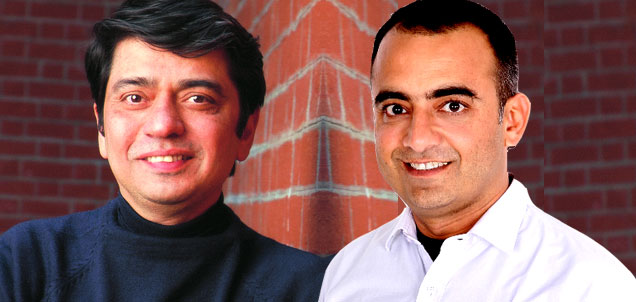
    Santosh Desai

    Added Santosh Desai, MD and CEO FutureBrands India and also Co-Curator of the event: “The overall intent of The Flow Festival is to make sense of all the change that we see around us with both depth and freshness. In its second year Flow is focusing on bringing to the Indian marketing community perspectives that challenge long-held conventional beliefs. New concepts, provocative ideas, deep-dives into emerging themes- these are what the marketing practitioner can hope to hear at this year’s event.”


  • Third edition of Amul’s India released

    By A Correspondent


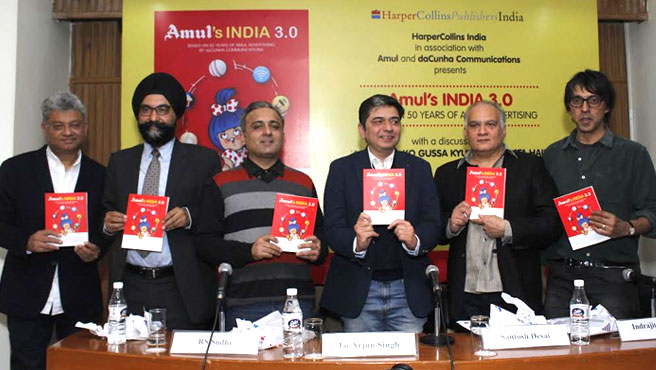
    With celebrity contributing writers including the likes of Amitabh Bachchan, Shashi Tharoor, Jug Suraiya, Indrajit Hazra, Jai Arjun Singh, Santosh Desai, Naresh Fernandes, Agnello Dias, Arnab Goswami and Karan Johar and of course the topical Amul adverts, Amul’s India 3.0 tracks the Amul ads that reflect on the highs and lows that Indians experience through the eyes Amul moppet. Covering topical grounds and popular incidents from the contemporary context, Amul’s India 3.0 is a revised and updated edition which speaks for the curious instance of when a butter brand becomes the barometer of a nation.


    During the engaging panel discussion preceding the launch, there were many insights and observations shared about the iconic Amul Girl and her relevance in contemporary times, her larger role in the society, and her continuing resonance among other aspects. Amul India Managing Director RS Sodhi said that while they don’t have big advertising budgets, the creativity of the campaign has carried it through for so long, and when he is travelling and interacting with people, he often realises that it’s not the butter that people recognise the brand for, immediately, but the Amul girl campaign. Brand specialist and author Santosh Desai added on that as a mascot, the Amul girl, belongs to all who have grown up with her around, and is the spokesperson of the times. Adman, Rahul daCunha wondered about whether the Amul Girl needs to change, journalist Indrajit Hazra reflected that she needn’t as everything around her is changing while, in film writer Jai Arjun Singh’s words,  the Amul girl is like the anchoring figure that provides the much needed familiarity, to make sense through the information overload of our times.


    The 232-page paperback has been published by HarperCollins India   and comes with an MRP of Rs 299.


  • Nothing wrong with cashing in on nostalgia!


    By Anuka Roy


    According to Oxford Dictionary, nostalgia means a sentimental longing or wistful affection for a period in the past.  This same longing for the past is being used by marketers to promote their products. Be it the #BacktoSchool campaign of Pepsi, which brought back our high school memories or the series of Maggi commercials that are on television today, or the Paper Boat ads, they strike an emotional chord with the consumers.


    Taking a cue from the latest trend, the India Chapter of International Advertising Association (IAA) hosted IAA Conversations with Neeraj Kakkar, CEO, Hector Beverages and Santosh Desai, MD and CEO, Future Brands on ‘Marketing of Nostalgia’. Kakkar’s company produces Paper Boat, with traditional Indian flavours,  which have become quite popular since its launch. The brand is also known for the nostalgic ads they feature to promote their products. From sharing chilli guava after school to a mother secretly keeping aside a bowl of aamras for the daughter, Paper Boat has experimented with everything people feel nostalgic about.


    So, is it marketing cashing on nostalgia? “Marketing connects with human motivations of various kinds and it talks to people about what they need. Nostalgia is a very important part of our lives. It has nothing to do with marketing. The idea of nostalgia is intrinsic to life. And marketing connects with anything that is intrinsic to life. So, ‘Marketing of Nostalgia’ is not in any way exploitative. It is perfectly legit able to connect it with nostalgia” said Desai. Paper Boat has been successful in pulling off nostalgia and marketing. Speaking on how they thought of this combination, Kakkar said, “All these recipes go back thousands of years. They are handed over from one generation to another. These are what we used to consume and these have disappearing because they are not available in packaged form. We are trying to preserve those cultural and traditional recipes in the newer age form. In our case we are trying to communicate authenticity by showing those pure innocent memories”


    This is not the first time that brands are trying to make people reminisce their past, Internet Explorer launched their digital campaign ‘You grew up. So did we.” They took the consumers on a time travel trip to the 80s and 90s era. This proves that nostalgia as a key element has worked for marketers. “Whenever it is real, it works for a brand. In the case of Maggi for instance, what it presents is a memory that most people would share and nod, and say yes I was there too. That kind of nostalgia has way because it’s grounded in reality” said Desai. “It’s not necessary that nostalgia is a formula that would work in each and every case. I mean it must have some enabling conditions in which it can work. Authenticity, is one important element for nostalgia to work”


    In most of these cases, it is seen nostalgia in the form of childhood has been major aspect to market the products. So, why not explore the other aspects of nostalgia? “When we were thinking about these drinks, I had a memory of a drink called kaanji. It was made for me as a child that drink has disappeared now. That drink is now a memory for me. Childhood is a state when we do not understand relationships, law, and gravity; there is so much of innocence in you. We are trying to communicate that same innocence and memories with this product” Kakkar replied. However, Desai had a relatively different point of view. He said, “This thing that nostalgia must necessarily be rooted in childhood is not true. Nostalgia is actually a return to an idealized and often imaginary state of innocence. So, I don’t think it is necessarily true. Nostalgia is almost always an idealized state of longing. It may refer to childhood, which is universal. But it could refer to other states too”


    Whether incorporating nostalgia in marketing helps generating revenue for these companies or not is a different question but it sure does take consumers down memory lane, which in every once in a while is a good path to be in.


    The discussion was moderated by MxMIndia editor-in-chief and Consulting Editor, BrandStand (Zee Business) and dna of brands (dna). Earlier, Srinivasan K Swamy, President of the IAA India Chapter, welcomed the invited audience.


  • So what went wrong with Free Basics?


    By Pritha Mitra Dasgupta


    MUMBAI: Facebook didn’t get the tone of its extensive Free Basics campaign right, said brand consultants and advertising veterans.


    The social media company failed to gain enough public support, win over the government or convince the Telecom Regulatory Authority of India (Trai), which ruled against discriminatory pricing for data services on Monday, effectively shutting down the initiative.


    “It’s fair to say it was a mishandled campaign for a company that’s trying to launch a new initiative,” said Futurebrands India CEO Santosh Desai. “It was a naked show of muscle power.


    Also, the campaign didn’t fit with their alleged intention at all.” The campaign was accused of seeking to manipulate opinion, with Trai publicly expressing displeasure over a Facebook survey that purported to show widespread public support for Free Basics.


    It may have been a better idea to show that Facebook was working in collaboration with the government’s objectives instead, the experts said. The campaign was too “in-your face,” said brand expert Harish Bijoor. “Bureaucrats’ political masters are a voter-sensitive audience,” he said.


    The Narendra Modi government has been at pains to distance itself from allegations of crony capitalism, he pointed out. It was surprising that Facebook seemed to get this wrong.


    Industry sources say Facebook had earmarked upwards of Rs 150 crore for the Free Basics campaign. By November last year, the company had spent around Rs 25-30 crore on print, digital and outdoor campaigns, according to media agency sources, including ads in this paper.


    It may have spent about Rs 50 crore on the Free Basics advertising campaign until this week, they said. “I think the campaign missed a trick or two,” said Sam Balsara, chairman of Madison World.


    “While the campaign or its aggressive nature cannot be the only reason behind Trai’s decision, I think Indians didn’t relate to it so well.” MG Parameswaran, former executive director of FCB Ulka, said Facebook should have employed more subtle methods.


    “They should have reached out to influential bloggers and used social media more effectively to explain what it actually meant,” he said. Some experts pointed to the manner in which overseas companies such as Uber and Nestle have sought to deal with difficult situations in India.


    The taxi aggregator has had to deal with the fallout of a passenger being raped in an Uber cab and hostile scrutiny of the way in which it does business.


    Uber hasn’t embarked on advertising campaigns to build its business in India as it has overseas. It has instead tried other strategies, including social media messaging.


    After being banned briefly, Nestle’s Maggi noodles returned with an advertising campaign created by Prasoon Joshi of McCann India aimed at winning both the trust of consumers and the government. And Joshi’s take on the Facebook campaign? “It will be unfair to blame an ad campaign for what the democracy or the government decides,” he said.


    Source:The Economic Times

    Copyright © 2016, Bennett, Coleman & Co. Ltd. All Rights Reserved

    Licensed to republish


  • ‘This is the best time for innovations’


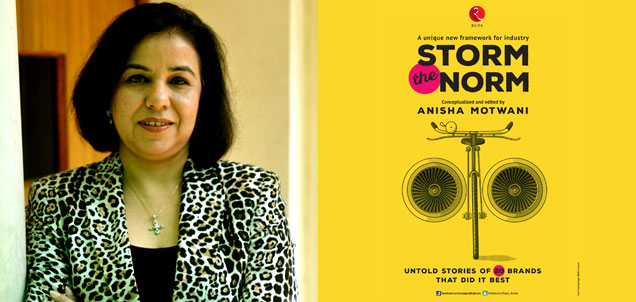
    Drawing from her rich experience with brands in India, marketing consultant Anisha Motwani has written and edited a book of 20 stories of brands that have been successes in more ways than one.  With a foreword by insight specialist Santosh Desai and an afterword by innovation specialist Ranjan Malik, Anisha Motwani speaks to Pradyuman Maheshwari as ‘Storm the Norm’ makes its way to leading bookstores and e-commerce sites. Read on…


    Your book cover says that it carries the ‘untold stories of 20 brands that did it best’. Many of these stories, or case studies, are known in the industry; some even discussed in B-schools. So how are these ‘untold’ stories?

    These are known brands [but with] partially-known stories and some completely untold details. The brief to the business owners — and my subsequent interactions with them — led to certain revelations that you won’t find in whatever has been shared till now. The stories are as much about strategic manoeuvres as they are about human endeavour: Stories about ordinary people pursuing extraordinary dreams and achieving them. It has details of not just what they did, but also why and how.


    We have 20 stories in the book… any brands that you would’ve liked to look at, but weren’t able to?

    These 20 stories are the final set that went into publishing. I did also want to look at brands like BookMyShow, Himalaya and Maggi.


    Having studied the 20 brands and various more while shortlisting these, would you say there’s anything common to all of them and their success stories?

    After having written these stories, Ranjan Malik and I decided to take a perspective-building step back and noticed something really interesting. There was a pattern in the way these brands had gone about ‘storming the norms’ of their respective industries.  So if there’s one truth that these success stories prove beyond doubt, it is that industry ‘storms’ aren’t purely accidental. They can be made to happen by design and, perhaps, at will. There is a method to the magic.


    While researching the success stories, we discovered a factor that economists have known for long but businesses don’t: The issue of Total Surplus. One big secret behind most business successes is the stormer’s ability to spot the invisible, sub-optimal in the industry, and conceive a breakthrough that unlocks new total surplus.


    Tell us more about the ‘unique new framework for the industry’ that your book promises…

    Most organisations just go from one project to the next, or are too busy celebrating their success to pause and look at what lead to that success. We’ve did just that, across 20 brands. And hindsight offers some amazing insights. We’ve tried to decode the method in retrospect, and to help organisations apply it by design in their most high-challenge projects. We have outlined a five-stage methodology called the Storm the Norm Framework.


    Clearly innovation and thinking out-of-the-box is something everyone wants to do, but is it easier said than done?

    This is the best time for innovation. We will see more innovations in the next decade than we did in the last century. And there are two reasons for it.


    First, we have hindsight so we now know what has helped organisations succeed with innovation in the past. Thanks to these learnings, the strike rate of innovation in the future will be much better than it has ever been in the past. Our reason for developing the Storm the Norm Framework was just that, to develop a methodology after studying different kinds of organisations: legacy, challenger and entrepreneur


    Second, every sector has evolved well and has developed amazing technologies. There is enough cross-industry inspiration available. Today you simply have to imagine a fantastic scenario, and someone somewhere has already cracked the solutions needed to realise it. You often only need to create creative combinations. Organisations often don’t look beyond their own industries. Our aim with this book is to trigger cross-industry learnings and inspiration.


    Do you think global giants find it tougher to be nimble and adapt to the times because they have to follow a certain way of doing things compared to homegrown players who are less rigid?

    Both kinds of organisations have their own strengths and their own ways of succeeding with innovation. Constraints aren’t always bad; they force you to unlock new value within the defined boundaries. We have included both kinds of organisations in the book. Every organisation must find its own unique way. That’s why this book – to get a more nuanced understanding of what stormers do differently, and initiate your own storm the norm strategy.


    If you had to identify one brand (from among the 20) that has achieved more than the others, which one would that be?

    Each brand in the book has had its unique context and unique challenges. Each one of them has been amazing in its own way. They achieved the extraordinary and ended up surprising, not just the world but their own selves too. I can’t pick just one.


    This interview first appeared in dna of brands on January 18, 2016


    The Story of Success


    Extracts from ‘Storm the Norm’, a new book that recounts the ‘untold’ stories of 20 leading brands


    By Anisha Motwani


    A diverse assortment of stories that give insight into what kind of levers can be used to create a winner brand. Take for example chocolate maker and market leader, Cadbury. Everyone has savoured the taste of Cadbury Dairy Milk, and nearly every marketer worth his/her salt would be aware of the brand’s successful integration into the traditional-sweet-eating habit of Indians. But what strategies and actions went into achieving this? The Cadbury story documents how it all began with a big shift in thinking about business and growth. It is a lesson at many levels: a lesson on how a large and potent target audience can slowly become a roadblock for future business; a reminder that the path to growth need not always be through growing market share; a story of how it is possible for a foreign brand to become part of the cultural fabric without localizing the product too much. Equally the story showcases the magic that ensued when the brand adapted itself and created new codes that fitted more seamlessly with category and culture.


    Let’s change gears to a challenger brand now. When you think of great products, bathing soap is hardly the first thing that comes to mind. However, that is exactly what the Indian Tobacco Company (ITC) aimed to do, when it decided to penetrate the category with Fiama Di Wills. A really late entrant into one of the oldest categories in the country, the brand was clear that its foremost intent was to challenge the typical soap and create a sensational new product–one that was differentiated not merely by form, colour or fragrance, but also a concoction of ingredients and technology that Indians had never witnessed before. The Fiama di Wills story illustrates how some companies are clear that first it is critical to create a hero product. The bells and whistles and propositions and campaigns can come much later. In its endeavour to deliver a new, unmatched experience to consumers, there were so many stumbling blocks that the Fiama team had to face, so many occasions when it could have given up and created a me-too product and just used the ITC muscle to push sales. But it didn’t. It persisted every time it was tested, to ultimately emerge with a winner.


    Moving to another league of brands altogether–the young entrepreneurial businesses. While there are plenty of such success stories in India today, I have selected a few that have made a mark in more ways than one. These are businesses whose success is not simply measured in terms of business valuation or the fact that they are media darlings, but those whose start-to-date journeys hold vital lessons in doing business for everyone. For instance, Make My Trip. This is an extraordinary story of pursuing the dream of forever changing the way Indians researched, planned and booked their travel. From the days where vacation planning was a tedious project and life without travel agents and long ticketing queues unthinkable, to now, when online travel planning and purchasing is common practice, this brand has had a pioneering role in shaping the change. By riding emerging trends, taking sensible decisions when a large bulk of the market was not ready for their dream and fostering deep relationships with allied partners, Deep Kalra and his team strategised their way to success. Like a great movie, the journey had several twists and turns and a few occasions when the founder was tempted to sell or shut shop but chose to keep faith instead. What adds to the excitement is that the Make My Trip story is packed with not one or two but so many innovations across product offerings, service standards, technology, marketing and operations that one is constantly looking out for what next they did differently!


    Such remarkable lessons continue across other entrepreneurial brands as well. What these kinds of brands do best is to open up refreshing ways of thinking and going about their business, so they naturally offer many valuable lessons along the way. Like PVR, where Ajay Bijli turned the whole expectation from cinema theatre upside down. Until the 1990s, cinema theatres were mostly just a destination, and movies were the real deal. The theatre itself was just a venue for stories to unfold. But he changed all that. Not only did he introduce the country to the multiplex, he created a new era in movie watching, where choice, comfort, luxury and entertainment all came together to take the movie-goer’s experience to a new high.


    There are several more examples of such category transformation. Radio Mirchi, for instance, is a story of a turnaround of the radio medium itself; of how a boring medium from which expectations had remained unchanged for decades, turned cool and irreverent; and how entertainment found a new source. It is also a great lesson on how you can win many fans by experimenting all the way through.


    Many of you may not know this, but Raymond’s ‘The Complete Man’ broke the conventions of fashion advertising in its time. Then there is Honda two wheelers–a fabulous story of storming the norm in scooters and making Activa a resounding success, and then of how it carried with it its winning strategies post its joint venture with Hero coming to an end. On a completely different note is the story of Sprite, a brand built on communication, on strongly marrying youth insights with product truth, of turning an absolutely niche lime category into a mass brand.


    Similarly, there are Ford Ecosport, Axis Bank, Kissan, MTR Foods, Saffola, Real Juices, Sensodyne, Tata Tea and Mahindra XUV500. Each of their growth stories provides insights into creating a storm in their respective categories and achieving outstanding results. Some successes are based on distribution, some on product, some on communication, while others are based on core business models. There are stories of reinvention, of strategies on market expansion, and some even of using weaker siblings in the brand portfolio to fortify overall business. 


    Published with the permission of the Author/Editor

    Storm the Norm: Untold Stories of 20 Brands that Did it Best

    Written and Edited By Anisha Motwani

    Hardcover, 320 pages

    Published by Rupa Publications India


  • Brand consultant Santosh Desai picks up one-third stake in DY Works

    By A Correspondent


    Eminent brand consultant Santosh Desai, has picked up stake in brand strategy and design firm DY Works. Desai picked up the remaining stake from the erstwhile promoter of DY Works, Sanjeev Malhotra of Alia Group. In 2009, Future Brands helmed by Desai picked up the majority stake in DY Works.


    Alpana Parida

    Speaking on the occasion, Alpana Parida, President, DY Works, said, “We’ll be looking for future synergies between the work Future Brands is doing and design work DY Works does. Given Santosh’s in-depth knowledge and wide experience, we are confident of building synergies through culture-based design and rural-focused brand amplification strategies. We’ll be working together on some projects. We’ll be focusing much more and building design for India in product innovation and creating brands which are more India-specific.”


    Santosh Desai

    Commenting on the development, Santosh Desai, said, “The synergy between strategy and design is relevant. DY Works encodes solutions through design, thereby creating designs that impact market shares and brand valuation, Additionally, an approach embedded in culture is common to us as well. For brands to succeed in India – we need an understanding of the Indian cultural context, of dimly lit kirana stores and changes in consumer mindsets.”


    DY Works has grown almost 3-fold in the last six years and has Corporate, Consumer and SME practices with offices in Mumbai, Delhi and Bengaluru. The firm also focuses on the rural market and is currently undertaking an extensive rural research to understand the emerging consumer – new behaviors and beliefs in over 150 villages firsthand.


    While Alpana will continue as President; Desai will continue as an advisor with the company.


  • Can the new Nestle CEO restore confidence in Maggi?


    By Kala Vijayraghavan & Ratna Bhushan


    More than allegedly selling Maggi with excessive lead content or mislabelling packs, perhaps Nestle India’s biggest transgression in the run-up to the noodles hitting the fan in early June may well have been the inadequate communication with government and regulators. Small wonder, then, Suresh Narayanan, the 55-year-old Indian managing director at Nestle India, who’s been brought in to douse the fire, talks about “stepping up engagement with the government.” This, of course, will be in addition to taking “all necessary steps to engage with the consumer,” and the “first task” of getting “Nestle as an organisation to regain its self-confidence.”


    Narayanan’s predecessor, Etienne Benet who took over in October 2013, replaced another expat, Antonio Helio Waszyk. To be sure, Nestle India has almost always had expat CEOs since it began operations in the country over a century ago; and Narayanan is the first Indian in that role, although he has come in from an overseas Nestle outpost (the Philippines).


    Having an Indian at the helm is doubtless good for perception, credibility and communication, with regulators, consumers and even employees, reckon human resource experts. Says R Suresh, founder of RGF Executive Search: “Some European companies tend to have a mindset that expats should be at the helm of the company. But for Nestle India, which wants to get Maggi up and going, an Indian as CEO is a great decision.” D Shivakumar, chairman of PepsiCo, feels two strengths of Narayanan will come to fore at Nestle India. “He excels at customer management and boosting the morale of those who work with him.”


    The new CEO, though, will be the first one to remind you that he does not have “a magic wand,” and the journey back to normalcy promises to be a long, winding one. Nestle posted its first loss in over three decades for the April-June 2015 quarter (of Rs 64.4 crore compared to a net profit Rs 288 crore in the corresponding quarter a year ago), thanks to the disruption in the instant noodles business. Consider what Maggi is up against: the 30-year-old brand with over 75 per cent market share has disappeared from shelves, virtually overnight. The national food regulator has banned sale of Maggi noodles nationally citing excessive lead levels, more than the permissible quantity of 2.5 parts per million; mislabelling on packs which declared ‘no added MSG (monosodium glutamate, a controversial flavour enhancer); and for selling Maggi oats masala noodles without product approval. Nestle has insisted that neither its noodles nor pasta contain added MSG, adding that many packaged foods contain hydrolysed groundnut protein, onion powder and wheat flour, all of which contain glutamate. The matter is in the courts.


    For its part, the top brass at Nestle stresses that Narayanan has not been airdropped just because of his nationality, although being Indian has its advantages. Says Wang Ling Martello, executive vice president, Nestle SA, head of Zone Asia, Oceania and Africa: “Suresh is Indian, knows the market here, can hit the ground running. But when I scanned the world, I did not look for nationality. I looked for the skillsets… We don’t pick people depending on nationalities,” she says.


    A former CEO at a multinational consumer goods company points out that an Indian in the hot seat is also good for PR – a front Nestle hasn’t emerged smelling of roses not just in India but globally too. In 2010, for instance, the Swiss MNC found itself at the receiving end of flak from environment group Greenpeace – and consequently on social media – which accused it of not heeding a cry to stop buying palm oil from an Indonesian company that was allegedly consciously destroying Indonesian forests. Nestle was duly slammed on social media for its apparent arrogance.


    When the Maggi crisis broke in June, fingers were similarly pointed at Nestle India for living in denial, not communicating with consumers and a poor attempt at countering the criticisms on social media. The former CEO at the MNC says Nestle culturally has had condescending attitude towards the marketplace. “This is a world where leadership and brands have to be humble —to admit that, yes, we made mistakes, we will rectify them, and move on”.


    “It is a tough one to resolve. Nestle allowed too much delay and let doubts creep into consumers’ minds, who have moved on to rearrange life around new habits. The company failed to present a different story. It will not be easy for Suresh even as an Indian to fix the damage,” says Santosh Desai, MD & CEO, Futurebrands, a brand management and marketing consulting firm.


    Rajeev Bakshi, a former CEO at PepsiCo India, reckons that more than winning over the consumer, Narayanan’s biggest challenge is to win over the government. “This is not an attack from third party, unlike when Pepsi was attacked by an NGO.” In 2010, the Centre for Science and Environment had alleged that leading food brands including PepsiCo’s Lays, McDonald’s, KFC and, yes, Maggi, were guilty of “large scale misbranding and misinformation.” But today the government is the protagonist. “Nestle can’t afford to take an adversarial role here. They have to align and collaborate with the government,” says Bakshi, now managing director of wholesaler Metro Cash & Carry India.


    Fifty-five-year-old Narayanan, who began his career with Hindustan Unilever, doubtless has his toughest mandate yet. “Deep down in my gut, the words that come to me are, we shall overcome… we (employees, colleagues, associates) can rebuild brick by brick, together.”


    They’ll need plenty of help from government and consumer.


    Source:The Economic Times

    Copyright © 2015, Bennett, Coleman & Co. Ltd. All Rights Reserved

    Licensed to republish