
Tag: Sanjeev Kotnala

  • Quite unlike an ad…


    By Sanjeev Kotnala


    When you don’t see the advertisement, you see a story unfolding before you.

    Thank you, Whatsapp. Otherwise, I would have missed seeing this beautiful, touching piece of communication from Hyundai 20-year celebration in India. It ’s served on WhatsApp with a cleverly planted introduction that remains unchanged through lazy forwarders. ‘Almost every advertisement depends upon half-nude females to propagate the sale of products but just this one… It’s a class in itself. Hats off to Hyundai- what a fine advtt.”.

    I agree the Hyundai ad is brilliant, and there are no half-clad females.

    Jokes apart.

    Hyundai’s 20-year celebration ‘Brilliant Moments with Hyundai’ idea is not new. Many brands have tried finding emotionally charged life stories. However, most have failed to get the right insights and stories or mucked it up in the presentation.

    Hyundai ‘Army with Santro’ is a perfect example when the advertisement does not seem like one. It is an engrossing story. It is slightly exaggerated and dramatised, but that is acceptable.

    The second film  ‘The deal with Accent’ is not as engrossing as ‘Army with Santro’. Something is missing. It seems stretched and somewhat unnatural. For me, it failed to touch me emotionally.

    I hope the brand team and Innocean does justice to the selection of REAL life stories. The long format story telling is an art in itself. Remember once you commit to a format or a series, it becomes that tough to surpass the expectation. Some succeed and some fail. I am waiting to watch many more powerful stories brought to screen in future.

    The Hyundai 20-year celebration communication is working with all car owners. There are instances and episodes of life getting refreshed in the memory box.

    I never had a Hyundai car, and I don’t think Hyundai is interested to hear my story. However, that does not matter. While writing this, I remembered my first car Maruti Zen, which was a hand down office perk, my first and second Ikon, my Innova, my Mahindra SUV and now the Honda BRV. They were a part of my life.

    …………………………………………………………….

    THE REUNION

    While talking of advertisements that do not seem like an advertisement, I must talk of Google Reunion series.

    Father-Son reunion by Google is not a new DVC, but it has a special place in my heart. My father passed away in September 1992. As with most of us, I too am full of memories. I will be lying if I said, I remember him every moment of my life. However, there are moments when his absence is felt very strongly. In those moments I miss him a lot.

    No, my father never wanted to be a Bollywood hero. However, I know he would have been the happiest person with whatever I have achieved in life. In turn, my happiness too would have been amplified. I grew up in Jabalpur, and my mother lives there alone. She is rooted in the city. It seems, there is nothing that can make her move to Mumbai.

    Today, if my father was alive, he would have been with us in Mumbai, even if my mother decided to remain in Jabalpur. That would have been a tricky situation and impossibility.

    This Google Search DVC hits me on a very emotional level.

    The whole search experience is smartly woven into the script.

    Knowing it is a Google ad, you still engage in a different mindset.

    It is more content than an advertisement.

    The best advertising is one that does not feel like advertising.

    This Google DVC (2016) and its previous avatar Indo-Pakistan Reunion (2013) were referred as one of the best product service integration. And I would tend to agree with it.

    It’s the simplicity of the complicated situation that grips you as an audience. The highly charged emotions demand your attention.

    In Indo-Pak reunion was about friends separated during partition living with a hope of meeting once before they die. Similarly, Father-son reunion DVC is an emotional cocktail. There is retirement, recalibrated aspirations and parent’s fixation with the small town. There is this uniquely friendly but unexplained relationship grownups have with their parents.

    Search is not glorified here. It remains a conduit. The audience, empathise with search being a facilitator and not a magic wand. The Google search does not remain just a transactional service.

    However, when the brand tried stretching the story, weaving in functional knots in a charged emotional tale, the equation changed. It missed the sensitive touch. The magic was lost. It is no surprise that the audience remembers Indo-Pak or Friends reunion but forgets fennel, Cricket or Anarkali from the same series.
  • Sanjeev Kotnala: How many more songs will Malishka have to make for Mumbai?

    By Sanjeev Kotnala


    It is no surprise that Malishka has done it again for Aamchi Mumbai

    Last time she did the song ‘Mumbai Tula BMC War Bharosa Nahi ka’  (Don’t you believe in BMC). We appreciated her song more than the efforts.

    This time she has done a song on post rains Mumbai. ‘Zingaat- Aata Mumbai Atakli, Aamchi Satkli’. (Mumbai has stopped, and my mind has gone crazy).

    In the song, she asks ‘Kitney Gaane Banaye Haa’? (How many songs should we make?).

    I think the question is both to the administration and the citizen of Aamchi Mumbai.

    What have we done to support her initiative? Zilch.

    We shared her song, watched it on YouTube, marked our likes and sent a few thousand tweets.

    That’s all we did. And, it counts for nothing.

    I moved to this city in 2004 and saw the big rains of 2005. I was horrified and surprised that Mumbai woke up to another working day. We saluted the spirit of Mumbai and life was back to Square One.

    It happened again and again.

    Have we accepted it as our fate?

    The disciplined highly optimistic tormented citizen of Mumbai, live through the annual ritual of havoc creating rains. Wrong. The showers do not produce the chaos.

    The people responsible for managing our lives do. The people we elect polarised with caste, language and religion politics.

    How come the city has found no solution to this problem through the decades?

    Trust me: it will happen again in 2019 and 2020 and 2021 and so on.

    For things to change if the admiration sleeps the citizen have to wake up.

    The bridge falls, and we bear it all.

    The car goes into a ditch, and we joke about it worrying NASA.

    Potholes lead to accidents. People lose their loved ones.

    When we leave home, we don’t know if we will be back.

    You could be the next one sucked in an open manhole that does not worry us.

    The wall falls, and all we do is talk about corruption.

    The roof caves in and we share pictures of the tragedy.

    It’s not that we are not concerned.

    Along with one of the richest civic body busy investing money into things that do nothing to improve the living standards, we too have become equally insensitive.

    The song counts for nothing unless we do something about it.

    On one side as a truly responsible citizen of the city, we must also contribute.

    We must stop throwing garbage out in the street.

    We must stop the use of plastic.

    We must help in keeping the sewerage de-clogged.

    And we start a relentless pursuit of action.

    Stop tolerating inaction and half-baked promises.

    Adapt this song by Malishka as the cry-anthem of Aamchi Mumbai.

    Refuse to step out and drive or move on these potholed roads.

    Play Malishka song full volume through the rains and the potholes.

    Play it at every red light while you wait for the green signal.

    Play it bindass on your phone without headphones.

    Play it near every government office responsible for this state of Aamchi Mumbai.  Continue playing it through the Ganapati.

    Let the media show its power to bring about a change.

    Let all radio stations in Mumbai play only this song for one day.

    Let the newspapers co-create the call for action and unite for what the city needs.

    Let them rediscover the front page.

    Let the OOH devote some space and bring alive the situation to the blind administration.

    The administration must wake up and start working immediately.

    We need an extra-constitutional civic body of responsible citizens to monitor the plans and their implementation.

    Malishka alone can’t make it happen.

    To me, she is the citizen Ambassador of Aamchi Mumbai.

    ………………………………………….

    And just as a reminder – watch the ‘Mumbai Tula BMC War Bharosa Nahi ka’ in case you have forgotten about it.


    MALISHKA OLD SONG


  • Sunny Side Up


    By Sanjeev Kotnala


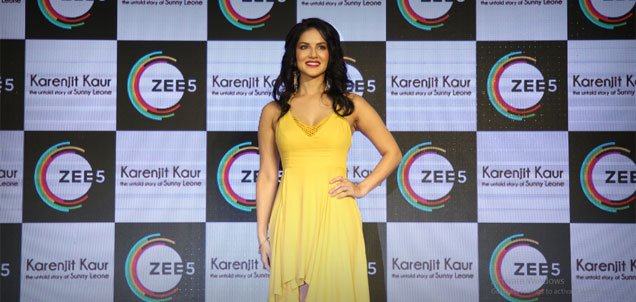
    Let me be honest here. I love and appreciate Karenjit Kaur. Most of us know her as Sunny Leone.

    She is again in the news. This time with the Zee5 web series ‘Karenjit Kaur- The untold story of Sunny Leone’, an eight-part biopic and the objection to using of ‘Kaur’ in the title.

    It was bound to happen. Someone had to wake up late in life to object to it.

    This time, it came from unexpected quarters. A whispering debate suddenly had all the potential to turn scary. Akali Dal and the Shiromani Gurdwara Parbandhak Committee (SGPC) have objected to the series using ‘Kaur’ in the title of the show. Their argument is simple: “She should not have been used the word ‘Kaur’ as it was her past and she had left it far behind and that her act has hurt Sikh sentiments as the word is considered very sacred in the faith and was blessed by the Guru.” The guardians of the community never want a doubtful sleazy character like Sunny Leone to use it.

    Sunny Leone has always been bold in her choices. She has never apologetic been about them. She remained true to herself and remained closely associated with the biopic. She stands by ‘Karenjit Kaur: The Untold Story of Sunny Leone’. That’s Guts.

    She is the one who slapped the interviewer who said ‘I do not want to disrespect a prostitute without knowing the circumstances’. But she comes straight and opens when she talks of similarity between a prostitute and a pornstar.

    ‘Guts, it takes nerves of steel for the streetwalker to stand under the lights empty eyes and empty pockets and still look tempting enough to take home.  And it takes nerves of steel for the porn star to strip off her clothes and not strip her of her dignity.’ Only a few can put it so vividly.

    The story takes you on a journey of transformation of a young, simple girl Karenjit Kaur into sizzling Sunny Leone and then to a popular Bollywood star.

    Not only the director of the show but also Subhash Chandra came to her defence. ‘It may count for nothing, but I completely and strongly agree with them. How silly it will be, say, Karenjit Banerjee: The Untold Story of Sunny Leone’. Karenjit Kaur is her past, the foundation on which her present is built. They cannot be disassociated. It is in many ways a birthright of her.

    No one objects when Joginder becomes Jimmy, Randhava becoming Randy and Mohinder becomes Micky. However, Karenjit Kaur becoming Sunny Leone is a different subject.

    Sunny is a celebrity before she came to Indian screens.

    She was one of the most searched Indian celebrities on Google. She was rated as one of the top baits used by malicious sites to trap innocents!  i.e. she made to the list of most dangerous celebrity. There is a generation still lapping her porn past with free access over the Internet. The porn start coming to BiggBoss was her one of the most calculated risk.

    She then became a celebrity of a different time.

    She like anyone of us is the result of all her choices and experiences. Some went good, and some were wrong. Some were circumstantial and some pre-planned.  And every choice was based on the foundation of past.

    Sunny Leone exists because Karenjit Kaur exists. No way anyone can disassociate the two. And not using the name Kaur in the title changes nothing.

    However, unlike many others, she is willing to stand by her life and the choices she made. She is conscious of what she is doing. I wholeheartedly admire her.

    I am not surprised that no women empowerment group or so have voiced their support for her right to use the name.

    There is fictionalisation in the web series. It is expected.  Dramatisation is essential for presenting anything on the screen. However, most of it seems to be genuinely a real story. Part of a story you want to believe. A transition we hardly much know about. Her past before BiggBoss we only guessed.

    I was bowled over by her when she came into Bigg Boss.

    I respected her for being part of 11 minutes and for standing against tobacco and Gutka. One can’t say that for many of the male stars of Bollywood.

    I applauded her in that interview where she put that silly interviewer in his position.

    She openly exploited her image and desirability in the ManForce condoms advertisement. Hopefully, it has had the desired impact on the sale.

    However, I know, her past and the name Karenjit Kaur will never leave her alone.

    There is more reason to be proud of her than to be ashamed of.

    The series director Aditya says: :I think the toughest part was Sunny playing herself. …. When she is on set, she needs to detach herself from her life. It was important that she played the role as an actor. For this, she had to see herself and her life from a bird’s eye view. And trust me, it was really difficult.” That’s tough no doubt.

    It’s what GUTS is all about.  That’s why Karenjit Kaur’s has more right than anyone else to be Sunny Leone.


  • Sanjeev Kotnala: Celebrate Imperfection

    By Sanjeev Kotnala


    It is not a new thought. Many great thinkers, gurus and leaders have articulated it.

    We humans express a spectrum of endless emotions, experiences and expectations. We also evaluate them against individual parameters that keep getting redefined.

    We exist because imperfection exists.

    Artificial Intelligence, Machine Intelligence and Deep Learning are also based on iterative learning.  They are about continuous learning and evolving in an attempt to attain perfect prediction of possibilities.

    We know, in perfection we are chasing another Maya (illusion).

    There is no way to define perfection. No way to realise when it is achieved.

    Is perfection in life or technology the end of it?

    There is no perfect service, product, delivery, role, employee, relationship, experience and expectation. If you accept it, then there cannot be an ideal relationship or a perfect role model.

    Just like schemes come with ‘Terms and condition apply’, perfection or near perfection comes with ‘Within the constraints’ tag. The moment you lower the bar of false expectation to ‘Within the constraints’ life becomes a lot more comfortable.

    You get into delivering what is possible. You are happy achieving every success. You are focussed on keeping your side of the deal. You give 100% involvement, passion and dedication to every task.

    You focus on taking the best decision with the information available. You willing accept variables within your control and outside your control.

    Get into a beta mode.

    Accept imperfection. Start appreciating and enjoying every change that moves you toward a destination. Stop getting irritated and frustrated with things not in sync with your set of rules. Make space for margin of error and conformity.  Let the tolerance grow without re-calibrating expectations.

    Do learn to celebrate imperfection.

    Imperfection is a part of nature. Everything is randomised imperfection. There is no ideal human being, divine nature, perfect weather and perfect kingdom.

    Do not expect anything to be perfect.

    The search for perfection and the existence of imperfection connects us across races, sex, geographies, tribes and culture. So, don’t be offended by it. Imperfection is the perfection we have failed to understand.

    Go out and change the way you look at things. Go out enjoy the imperfection. Celebrate it.


  • Wagh Bakri… a bit Lukewarm?


    By Sanjeev Kotnala


    The latest Wagh Bakri DVC takes the theme ‘Rishton Ki Garmahat’  to next level with ‘Rishton Ka HI FEVER’. It introduces a granny who uses tea to settle an argument. She makes a point.

    Is The Insight Laboured To Justify Brand Continuity?

    The insight has been simplified to technology leading to shorter conversations. ‘Pranam’ and  ‘Namaskar’ leading to ‘Hello’ to ‘hey’ and now to ‘Hi’.  Further, the brand magically infers that that shortening to ‘Hi’ results in coldness in relationships.

    I must take objection in the agency unnecessarily burdening technology enhancement and shortening of conversation with the blame of accentuating coldness in relationships. A stage we fail to appreciate the pure love of our near and dear ones  in our selfish, independent cocooned world.

    It is a laboured point, and I will let it go.

    Trust me, neither is the consumer privy to the very pleasuring BSM (Boardroom Strategic Masturbation) or PORAC ‘Post-Rationalisation of Creative’, nor interested in it.

    Coming back to this Hi. It is acceptable and almost an undeniable truth that relationships are losing a bit of warmth.  The ever-increasing pressure of achievements, time and success is pushing people to redefine life that is independent, almost selfish with restricted socialisation.

    Yes, I made that inference.

    Lukewarm Garamahat

    This first led Wagh Bakri to the well-accepted multiple-times-clicked ‘Rishton Ki Garamahat’ DVC in 2013.  It has a beautifully sung lyrical background song that accentuated the whole impression. I believe it worked for the brand. Otherwise, the client would not have commissioned a sequel in 2018.

    As per the Scarecrow M&C Saatchi PR release, the research in 2017 pointed to similar inputs including shortening of conversations even in rural India. I understand that agency was quick to take cognisance of it and immediately branded the idea. We now know it as ‘Hi Fever’.

    As a storyline, the DVC has strongly established characters and coordinates that play along with the expected lines. Foreign-return Punjabi Munda. Small bylanes. An unnamed associate who is stuck in a small shop in an already crowded lane has a large heart. Munda ignores and the parents are apologetic of their grown-up son’s behaviour.  They will always be blamed for it. The son meets Daadi (Grandmother), who now ignores him and his ‘Hi’.  She is busy creating the single dose of magic potion that will convert her foreign-return-Hi-Shi-grandson with alienating behaviour to a sanskari munda. That magic potion is delivered with the category-brand connecting magic spell  “Hamare yahan rishte ‘hi’ se nahi chai se bante hain”. (Everlasting relations are created over a cup of tea, not hi). And abracadabra behavioural metamorphosis takes place within seconds.

    Not forgetting that we live in the same social cocoon where there is a severe shortage of characters to express our emotions, the brand suggests you use a simple hashtag #HiNahiChaiPilao.

    Oh, by the way, the format is similar. There is a song with beautiful wordings that you have to pay attention to. “Rishton se na muh mod bande, rishte hain anmol. Nape-tule iss bol se bande rishton ko na tol”. Do not shy away from relations, Relations are precious; Don’t destroy relationships with trivial behaviour.

    The same Wagh-Bakri Chai that got the husband-wife relationship rejuvenated in 2013 works across generation in 2018.

    Having tried my best to poke fun at the creative and saying what I want to, I must confess I liked the DVC. It is a good example of storytelling and keeping the audience engaged with it. But as continuity comparison is unavoidable. Hi is a bit lukewarm.


    Tea category is not so simple.

    ‘Jago Rey’ a category benefit amplified as a social service belongs to Tata Tea.  The musically uplifting melody established with Taj Tea. The kadak stationwaali chai with song and dance with Pathaka Chai and Society Tea trying ‘The tea Society called India’ a very generic expression.

    So, this Wagh Bakri treatment and willingness to stick to the proposition definitely comes as freshness. Trust me the audience uncorrupted with all such ideas and discussion will mostly see it as entertaining, emotive and engaging. The brand is strongly associated with such execution and promise.

    ………………………………………..

    Here are some more DVC’s where you may have your own opinion about what it does to the brand. I personally find them good if not excellent. I know for sure that a large section of audience love them and the client buys into the theme and expression.

    The message, category and the brand are woven beautifully in the story that holds attention. Where the audience associates and recalls it clearly with the brand.


    We must stop creating these highly logical and rational boundaries around development and evaluation of the creative expression.

    We want everything disruptive and out of the box.

    Sometimes, it helps in working and maximising the returns within the box.


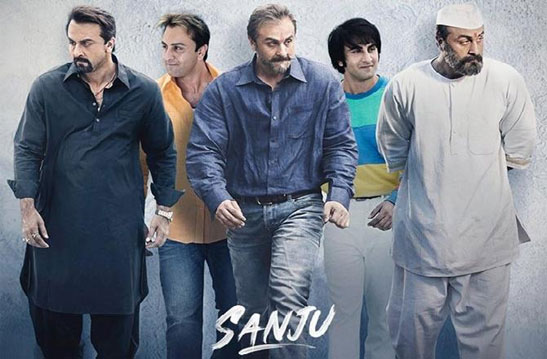
  • Another view by Sanjeev Kotnala: Sanju should win an Effie

    By Sanjeev Kotnala


    Yes, I have a polarised view of ‘Sanju’ the movie.

    You need polarised reaction while sharing a review. You like it or hate it. The middle path or diplomatic talk is of no use to your readers.

    I loved the movie. And I can watch it again.

    Raju Hirani has once again done the magic. Sanju is a smartly done emotionally charged film. There are some brilliant humour soaked scenes too.

    Sanjay Dutt is not an easy subject to dramatise on screen. I love the tight, focused script by Hirani and Abhijat Joshi. They have managed far more than the time permits.

    If at the end of the movie you are on the side of Sanjay Dutt. You think you understand his logic and reasons for what he did. You forgive him for his wrong judgment. You find him more vulnerable than yourself. You give him the benefit of the doubt. You love your Sanju Baba. While you are laughing or weeping with him, the movie in its first weekend does 120 Cr of business, breaking all records.

    If It Was A Commissioned Project, Sanju will win an Effie!

    It is a biopic. And the treatment at the very start settles the case. It is a story that the protagonist Sanjay Dutt is sharing with the writer for his biography. There is a clear, objective of presenting his side of the story. He wants no one to refer to him as a terrorist.

    I understand people have a different take. It is the curse of deep familiarity and high expectation from a biopic on the original bad boy of Indian cinema. They felt cheated by a very focused narrative that had no space for many things in his life.

    If every wrong decision made by Sanjay Dutt and its repercussions in the ecosystem is to be shown, you need a series of films. I am sure there is no scope for Sanju-II to cover what is left out of the movie. The audience misses references and masala of his other well-known affairs, marriages. They want to know how his actions affected the lives of his first daughter. Where was the Industry standing on the subject? Why are Kumar Gaurav, Namrata, Madhuri, Tina, Rhea, Richa, Mahesh Bhatt and many more absent from the narration?

    The questions will remain. Hirani and Sanju may have all the answers they choose not to share. The audience should also grow up to realise that this is a biopic with big Cinematic Liberty license and not a documentary.

    Superb All Round Performance And Excellence Narrative.

    I always thought Ranbir is hugely talented. In Sanju, it is more than acting in the genes.  Ranbir has morphed into the character. He is inseparable. In some frames, you do a double-take. Not sure, if it is the original Sanju Baba or the actor. If you force yourself to catch a chink in his armour, the mask does slips in a few rare occasions of nano frames.

    If Ranbir Kapoor does a great job of being Sanjay Dutt, watch Paresh Rawal (Sunil Dutt) give a masterclass in restrained acting. Paresh Rawal powerfully amplifies the pain, understanding and resolve in his character of Sunil Dutt.

    Vicky Kaushal (Kamesh), the new Yorker Gujarati and a big fan of Nargis and Sunil Dutt. He is the best friend of Sanju. Kaushal has exceeded the demands of the character. He has been superb.

    Not Ironically, Women Find Less Screen Time With Sanju In Sanju.

    Manisha Koirala, as Nargis Dutt has her moment. The shot at the dining table when she is hiding her illness from her son and the scene in-flight while they are returning from treatment belongs to her.

    Dia Mirza plays Maanyata Dutt, Sanjay’s current wife. Sonam Kapoor plays Ruby, Sanjay Dutt’s teenage first love/crush/ infatuation. They don’t have much to do in the film. Anushka Sharma stands out in a short role as Winnie the writer entrusted to do the biography.

    In the end, somewhere having seen him from his first movie to his jail days through the eyes of news, gossip & scandal reporting magazines, one does feel that on screen was a much-diluted version of Sanju Baba. Some times you think, you don’t even know him. There in no scene is much of the fan adulation or the extra-hot-air that the Indian stars carry with them. It is a bit disturbing to miss.

    Slapping The Media For Creating The Terrorist Image.

    A honourable profession (my view) is so clinically subjected to generalised stereotyping of racy journalism, trash reporting, hiding behind unknown sources and rumours.

    I am not surprised that unlike doctors, Rajputs and lawyers, the newspapers have decided to take the slaps without a mummer.  There is no media voice against the film’s purposive demeaning of the media, without which ‘I am not a terrorist’ will fail to hold the audience emotionally. Maybe what they show is the reality.

    I am not surprised that the director avoids showing any masthead with all the news supposed to be sensational, wrong, racy and without any support. The sharp business producer is sensitive. They realise that showing a brand name will jeopardies the situation. And the media happy for not being names.

    So, people end up tapping their feet to the iterative scream of the Original (Sanjay Dutt) and the Actor ( Ranbir Kapoor) as the titles roll down: ‘Baba Kehata hai, Aab Bus Kar’ – Baba says let’s stop, that is enough.

    .

  • At least 8 reasons to celebrate Cannes


    By Sanjeev Kotnala


    The 2018 Cannes Advertising festival, reporting lesser number of entries and higher networking attendance is over. The powerful statements made by the speakers and the knowledge shared over drinks is slowly start losing its impact.

    The social media post of short-term legal immigrants to Nice are becoming sporadic and slowly getting buried in the digital history.  However, the award celebrations will continue for some time, and then the year 2019 will be around the corner.

    Post the festive revenue season, and the creative teams will start focussing on keeping up with the  fast approaching cut-offs for 2019 awards.  Unlike the Maharashtra plastic ban on ‘Single Use Plastic’, the jury and award organisers will fail to catch and penalise the award special  ‘single use creative’.

    CLIENT BAILOUT.

    Saatchi won awards inspite of the parent holding company’s ban on entering awards. ‘Client is paying the bill’ made it possible. It reflects a client’s confidence, desire, agency relationship and hypocrisy in approach. Moreover, there is nothing more to discuss on the subject.

    However, it gives an idea to the creative teams who feel deprived of awards recognition due to organisational or leadership misguided point-of-views and egos.

    INTROSPECTION IS ALWAYS A GOOD THING TO DO.

    Here are few creative expressions and solutions from Cannes that you must watch. Quite a few of them must already be discussed, dissected and coloured with multiple points of view. Give them another see, just because they are part of this column.

    You will agree, most of them are simple and straight in your face. Most professionals in the field will feel embarrassed for not being the first to exploit them for the brand. Many will say their constraints, and mainly the clients never bought such ideas. Maybe they were laughed at when they first presented such ideas. So that was the end of it.

    If that is true, then they must introspect. Such ideas take strong relationship, mutual professional admiration, ownership, understanding of a client’s pain points, self-confidence, an internal infrastructure that encourages such thinking and perseverance of a different level.

    LET’S CELEBRATE THE IDEA.

    These EIGHT works speak and represents the agency ownership and understanding of the situation. It shows their belief in living in a beta version and believing that perfection is work-in-progress.

    I feel collective pride in it and think of the possibilities that exist with such work.

    So without naming anyone, I share the top ones that made my day. Here to celebrating ideas in some kind of order of preference and impact on me.


    IT’S ALL ABOUT THE TIDE AD.
    Wow, fantastic, brilliant, sustainable and so very simple.


    GOOGLE MY LINE.

    Give it to the brand for taking their business seriously and not remain confined to the digital constraints but exploiting the very constraint to deliver a solution.


    BLINK TO SPEAK.

    It is, one of the outstanding global solutions from India.  It’s definitely a solution that makes every one of us proud.


    TRASH ISLAND.

    WOW, it is not only the idea but the execution and amplification that makes it a star.


    PALAU PLEDGE.

    How a small country with a tiny population integrated their solution with tourists that outshout them in numbers.


    TAG WORDS.

    A campaign, which makes it possible for the brand to show what it can otherwise never be able to do. Look out for how they took the idea to its logical end and did a 360-degree campaign.


    THE ARCHES.

    They remind of Martin Lindstrom talk and need to be confident and to be able to SMASH the BRAND. It is simply interesting and hugely powerful. It can be implemented globally without worrying about possible socio-cultural differences.


    CORRUPTION DETECTOR.

    Now this is a bit of technology and idea, and everything else put into it. I can bet, it is needed, however, we will never see this in India before the 2019 election.

    …………………………………………………………………..

    PARTING SHOT.

    After ages saw a brand0building print ad ‘811 Kodak Bank’. It has a decently long copy by today’s standards. However, it is well-crafted around the core proposition. The art director has done justice to the concept and lines. No doubt it lured the reader to read it.

    It is not a large picture from TVC with the brand logo. For a change, the celebrity choice does justice to the campaign idea. It is good to see client not objecting to reduction in size of the celebrity picture in the print ad. In the 811 TVC, the star is upfront and is the spokesperson for the brand. In outdoor, the brand presents multiple faces across socio-economic strata to amplify the  #IndiaInvited concept.


    Ramki of Cartwheel, the agency for the brand, tells me 811 derived its name from the date Modi announced demonitisation – 8 Nov. “An event that galvanised Kotak into taking leadership in the digital banking space. 811 was India’s first downloadable account, enabled by Pan+Aadhaar verification. The process itself eliminates any chance of judgement. It inspired us to take the high ground of a brand that believes in equal opportunity and inclusiveness. The fact that today’s world appears to be getting more divisive, polarised and insular only made the message more relevant. Ranveer helps to amplify this message with his mass popularity. He is an outlier to the mainstream in many ways, and the message seems credible coming from him.’  I agree with him.


  • Sanjeev Kotnala: Uber needs to delight customers on Ground Zero

    By Sanjeev Kotnala


    My Uber driver has just cancelled the short booking. It is not the first or the last time. Last week the Uber driver at the nth hour decided, he was not interested in a ride to the international airport.

    I cribbed, I talked to the bot. I sent emails. All I get is a message.  The customer service is our top priority. The complaint has been registered. We will take action against the errant driver associate. That’s it. More poking and escalating the complaint gets some supervisor on the line. He politely and professionally informs me that as a company Uber does not feel the need to share with the customer the action it takes in the complaint. I am expected to trust them that they will take action. Is that not expecting too much at 6:16 am when your 5:45 am pre-booked Uber has refused fare, and there is no other cab available to help you catch the flight.

    Ola and Uber the story is no different.
    One brand has a call centre uninvolved ‘I care a damn’ voice and reaction.
    The other asks you to interact on screen.
    The customer is just another engagement number identified by the booking id.

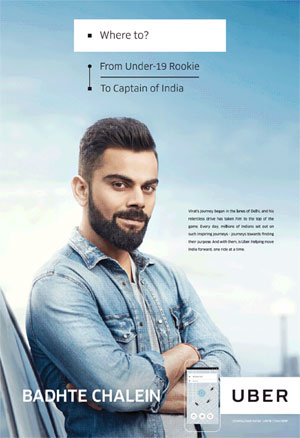
    At this stage, Brand Uber wants me to believe in their campaign ‘Badhte Chalein’ featuring Indian Cricket Captain Virat Kohli. In the advertisement that is splashed across the front page of a large English Delhi in Mumbai – only Virat seems to imbibe the philosophy.  My issue is not whether Virat uses Uber. We all know like many other celebrity endorsement he may not be a regular user of the service. The consumer is amusingly  blind to such questions.

    The campaign leaves much to be desired. The print and digital mailers sound more promising and have some appeal to the customers. The TVC fail to evoke any emotion.

    The citizen of Mumbai (and most metro towns) welcomed taxi aggregators with a sigh of relief. Till then they were at the mercy of private operators or the Kaali Peeli as in Mumbai. The low rates, the comfort of a taxi at the door, pick up any place, the map assisted driving, paying fair prices and many more pluses pushed for a quick trial and building of loyalty bases.

    The security issues, the rash drivers, the last minute ditchers, the cancellation frauds, the now shabby cab interior, failed experiments with entertainment and other such experiences are pushing people to reconsider the service and brands.

    Not that there were no good experiences. However, we all are human, and hence we put our expertise in cribbing and complaining to best use. No surprise,   the social media is full of complaints and hardly have anything good to say. The brands are refusing to listen and understand.

    It’s not that the drivers associated with the brands are any happy. Other than the quick settling of accounts and in one case assurance that the brands are quick to react and take action, the drivers have no reason to be happy. The constant decreasing per driver share and possible earnings is a big point of concern. The claim of stonewalling request and no-discussion attitude is not appreciated either by the customer or the driver.

    In this scenario, the explanation of company philosophy and the campaign by Sanjay Gupta, Head of Marketing, Uber India sounds only poetic: “Uber connects millions of people in India to their destinations each week. That said, each trip represents more than just a physical journey – it’s a step forward in the larger journey of their lives. This is not just a brand idea – it’s happening on the ground, across India, every day. This brand position is as intrinsically human as the millions of people who ride with us each week, and each of their pursuits. … “(Comment from an article published in MxMIndia)

    If only the brand can investigate, listen and invest in to take some proactive preventive actions, build in processes for driver compliance, service assurance and a bit more of transparency on its complaint handling- they will be a winner and may not need a campaign.  The campaign at this phase is slightly misplaced and mistimed.

    In the absence of ‘Customer Delight,’ such campaigns are merely providing the creator and brand custodians of some brand action.

    The brand Uber may want to be beyond transportation from Point A to Point B. It may wish to reinforce itself as an enabler of opportunities for hundreds of thousands of driver partners and riders in India. However, that comes after customer delight and essential service deliverables becoming an assurance not a cause for anxiety.

    I do hope that brand realises the challenges it faces. Moreover, the brand no longer can distance itself from the driver’s behaviour and customer experience. They cannot hide behind the lame excuse of drivers not being employees of the company. They have to recruit appropriately, train, monitor and act in their quest for excellence. Currently, it seems they have set themselves a very low benchmark.

    If the drivers and the consumers have to see every journey as a big or small step in an inspiring journey, the brand has a lot to do. A campaign is no answer or assurance when the losses are mounting every day.  The battle of ‘Badhte Chalein’ need to be fought on the roads across customer touchpoints.

  • The Advertising Association ‘Mafia’


    By Sanjeev Kotnala


    “There is a mafia out there, and the dons play musical chair with understated self-appreciation and mutual admiration”. This was in the loud booming voice of one of the soon-to-retire industry senior.  It was not the first time I am listening to such a comment.

    It is late in the evening, and we are a few drinks down. The naturally self-evolving crib session is on. His point is simple to understand; all the positions in the advertising industry associations seem to rotate between a handful of people. It appears that no new blood is joining the system.

    Typically, I discard such comments. They reek of unfulfilled dreams and ambitions. They echo deep sentiments of a champion breed that has failed to enter the ring.

    Few youngsters on the table with free beer wetting their parched throat in Goa concur with the statement.

    “Yes, there are no young faces.” A few ayes happened all around.

    “Yes, it is the same bunch everywhere,” another added

    “One year they are on this panel, and the next year in the other association.” The PYT on the table sums it up.

    I believe I have a fair understanding of the situation. I appreciate the work the officebearers in the associations put in. It is a tough act to find the time when they have their other jobs and responsibilities.

    So, what do you want, I poke the youngster. “I think you see a problem there. Don’t the associations have elections.” I am unable to find the real trigger for the outburst.

    “Na, Na, Kotnala don’t take me wron”… this is from one with the fresh blood. “Elections happen, but you would know, they are a sham. Every year the team gets elected unopposed.”  He makes a gesture with his finger that says a lot. “I am serious there is a musical chair going on. You can get in, only if you have the organisational and financial backing and… there should be some decency in the whole process… people should find something more productive to do… and some should retire.”

    “Unopposed mean there are no other candidates in the field, it is not the fault of  the elected representatives.”

    “I knew, you are naive, but what you refuse to see is plain stupid. Understand, the mafia won’t allow you to stand for the post. And you dare not be on the wrong side of the mafia. It can be a CLM (Career limiting move).”

    “You are creating a picture as if there is a D-company. As if musclemen stop you from standing in the election.”

    “No, you will not understand what I am saying. You write your column and are politically right. I expected you to know better. But then why would you get into this dirty politics,” the young blood insisted.

    The eyes of the senior who initiated the conversation are rolled up without the customary drag. He interrupts: “I remember, once there was a young agency head. He had dreams. He wanted to make industry associations more productive, accountable, transparent, efficient and effective.” The senior allows the pregnant pause to settle down and continues: “And he tried everything. He did not withdraw from elections. He collected proxy votes. He challenged, and he fought like no one ever has, but he lost.’

    “He lost by one vote if we are talking about the same guy”… I know who he is talking about.

    ‘Yes, just by one vote.  That was the last real elections in the association.” The beer was working overtime with the senior. “You know, we must have something like that committee in cricket for the industry bodies too. Suddenly everything will change. We will see new blood crowned. Retire at 60. Can’t hold more than one position. Can’t hold the position in an association for more than two terms. It will be fun.” He adds: “And I am not going to bell the cat’.

    “No, I think the reason is different.” I am not in agreement with the argument and the direction the conservation was moving.

    “No one wants to do this thankless job. No one takes these events and awards head on. You guys crib like everyone else. I bet you are not even members of the associations where you want to change. I bet you have never been a volunteer or managed something of this nature.” I am warming up to debate and have the attention of everyone on the table.

    “Everyone is an expert. There is never any appreciation… people only crib. The youth like you have a problem with current industry leaders, but tell me, where are the new leaders and visionaries? Name me one young blood capable and willing to do two jobs at the same time? The new generation wants instant glory and gratification. It is easy to sit on the fence and criticise. Have anyone of you ever shown interest and inclination to be part of the association, learn and be part of initiatives. I am sure the seniors will be happy to take any interested youth with potential under their wings and groom as future association leaders. They are more than a willing mentor to ensure the continuum of good leadership.”

    My outburst faces silence from the table. There is no echo of the sentiments. I know, I am in a minority.  No one wants to get in. No candidate is willing to invest time and energies and seek a position of responsibility. Everyone wants to be a SK Swamy, Pradeep Guha, Nakul Chopra, Sam Balsara, Ramesh Narayan from the day they join the industry.

    People come to these association events and crib. They fail to appreciate the hard work that goes into the whole project. They don’t take the membership of associations, and they want leaders of their choice, they want representation. The Ad Club, IAA, ASCI, ISA, AAAI members count is not reflective of the size of the industry.

    In the absence of anyone who is willing, wanting, waiting to take on this thankless job and be a future leader at these industry associations, I wholeheartily subscribe to the ‘Mafia’. Long live the Dons.


    Sanjeev Kotnala is a senior industryperson, business strategy consultant and educator. The views here are personal


  • No ‘mazaa’ in these Tata Sky ads


    By Sanjeev Kotnala


    Every creative team dreams to create a unique communication style deeply associated with a brand. Something so unique, it becomes the default signature style of the brand. It redefines brand tonality and the brand-consumer connect.

    However, creating a unique style of expression, tonality, storytelling or a strong association with a person or character is a dual-edged sword. Few brands, which succeeded in this area, are consistently sensitive to their responsibility. Instead of getting cramped, these brands have learnt to exploit the constraints such associations impose on the brand.

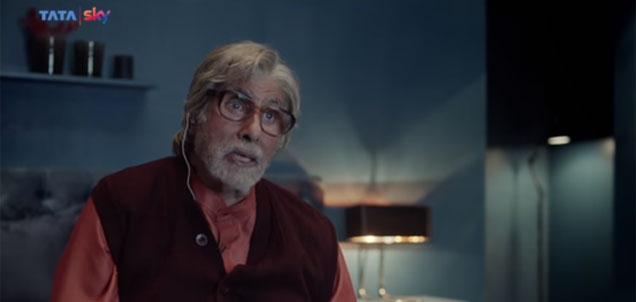
    Tata Sky latest campaign #HarSceneKaMazaaLo leverages India’s favourite brand ambassador Amitabh Bachchan playing a character resembling his role in the recent film; 102 Not out.

    Playing the role of a Bengali movie critic who holds nothing back, he interacts with easily recognisable scenes and character from Indian cinema across screen formats. The campaign features famous Sindoor ki kimat , Khamosh, Babu Moshay, KKK Kiran and Singham dialogues and acts.  It lacks the humour quotient and underutilises the inherent potential of the concept and the actor. It even alienates few of the potential subscribers*.

    Not sure what holds Tata Sky back. The brand in its earlier work has demonstrated how well it celebrates unrestrained creative expressions.   Watch the acting classes advertisement series. Watch the main DVC centred on Ramleela or the DVC that shows AB practising facial expressions. They are entertaining works resonating with the audience.

    I may find few subscribers to the view that the brilliance of Amitabh Bachchan is limiting the scope of creativity for Tata Sky. Here is another work, the Rs 199 Dhamaka pack and suddenly the doubts start raising their head.

    There is no point comparing current communication with the era when Aamir Khan was the brand ambassador. Tata Sky creative expression and execution far better leveraged the talent of Aamir’s talent. He portrayed multiple roles like salesman, saloon guy, Sardar or Milkman and thus was more endearing to a  substantial subset of consumers.

    I think Tata Sky needs to rethink its brand ambassador strategy. At least for this series of communication, the brand needs to interact with its audience playfully but in a younger and vibrant avatar.

    Meanwhile, brand Flipkart has extended the hugely successful format of Adult Kid. It is a unique expression style strongly associated with the brand. They have been treating the subject and the characters with sensitivity and newness preventing staleness to develop. You can watch every TVC many times over and not feel bored.

    Here watch Flipkart Fashion or Big Billion Day where kids and adult both roles are played by kids.

    In the recent ‘tested furniture’ advertisements, Sofa or Trampoline or Table or Tabla, Flipkart remains as lovable and endearing as always. Maybe the brand can consider creating this unique style into a TV Serial.


    Many brands have experimented to create a unique expression style and tonality of the brand. Two of them need special mention. Vodafone with the character Zoozoo , Voltas All Star AC with Murthy and AIRTEL with the Airtel Girl.

    If you now wish to have a signature style of expression and tonality, take the route at your own risk.


    *Based on my interaction with TV viewers across segment


    Sanjeev Kotnala is a senior marketing and business strategy consultant. He writes every Wednesday on MxMIndia. The views here are personal


  • Sanjeev Kotnala: Do Call-for-entry campaign reflect true award picture?

    By Sanjeev Kotnala


    The rising cost of entry, the controversies surrounding awards and the perceived value is forcing many agencies to evaluate their options of awards to enter and even cap the number of entries. Business situations are polarising opinions. In future, it is possible that few of the respected award shows may make way for the new ones to dominate.

    Today differentiation among awards and the respect is a lot more relevant. Awards like the Marquees, Emvies, Effies, Olive Crown and Cannes have no issue as they stand firmly differentiated and to some extend unique in their calling.

    Every award event has interest in the number of entries. Not only do they reflect in a favourable revenue statement, they also are an indication of the respect they command and the hunger entrants have to win it. Entering an award shows acceptance of format, stature, judging and scale, while absenteeism may not signal a rejection of the concept.

    Awards also follow a product lifecycle. Hence, they need to work continuously to remain relevant and keep the aura alive. It needs acceptance and approval from numerous interested parties. At every possible opportunity, it needs to rejuvenate itself by taking critical popular or unpopular decisions.

    The call-for-entry campaigns thus play an important role. It is a presentation of the award’s self-reflection as ambition.

    The award has really arrived when it no longer needs to shout. When the expanding lists of potential winners chase it. When the participants wait for the announcement to block their diaries in anticipation. And when making to finalist list is a news and thing to boast about.

    Otherwise, awards needs to regularly deep-dive to find the pain points of the numerous stakeholders and promise to resolve them. They need to recognise changing trends and tweak the process and evaluation.

    The perceptions adulterated with reality of experience take time to change. Net, awards remain in the perpetual loop of course correction and the call-for-entry campaigns speak a different language every year.

    Awards get the campaigns they deserve?

    Most call-for-entry campaigns are full of hyperbole, exaggerated appeal and unfulfilled promises. They lack accurate self-reflection and fail to answer the question of their relevance or differentiation. They attempt to create high expectations that later only end in disappointment.

    Building an award is not an easy task. It has to navigate a treacherous journey from concept creation, planning, stakeholder approval, immaculate execution and consistency in delivery.

    Awards need a concept to exist.

    Unfortunately, many remain un-differentiated and lack relevance with the target group. The first few years of test run seeks stakeholders’ validation creating an interest to participate.  If everything goes well, the award is able to create a loyal group willing to defend it against every possible claim and negative perception. The award then gets elevated within the fraternity, and few of them do reach the pinnacle.

    The stage of nirvana and moksha in awards is when it is so relevant and impactful that all the award has to do is to announce the dates. And even then, the need to continuously monitor emerging trend and morph as per industry expectations remains.

    Awards rarely reach the moksha stage.

    Every year, the awards must visit the drawing board and validate their relevance. They must redesign and redefine their core. Cosmetic addition-deletion of categories, process tweaks and a policy direction is never the solution.

    Sometimes, being democratic is the problem. Awards need a strong, charismatic leader with full authority to lead the change. Awards controlled by associations and industry is ill-placed to make significant shifts. No one wants to risk the displeasure of any significant stakeholder.

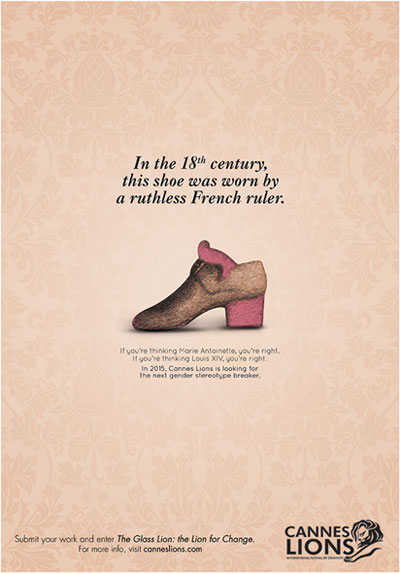
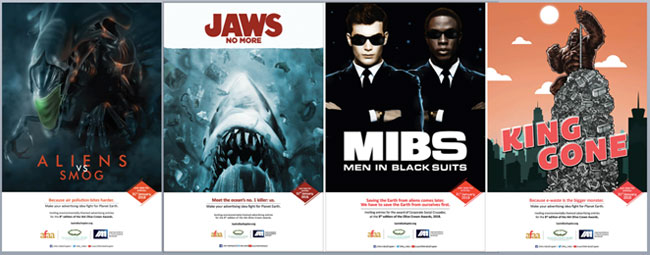
    Here are some examples of call-for-entry campaigns from well-known awards. Judge yourself, if they do justice to the awards or reflect the reality. Is that the best the awards can manage? Evalaute as a representative of the target segment.

    Here is the 2014 campaign of Kyoorius. I loved the meet merit idea. This one is titled DANCE while defining the new award in town. You can watch the other two PENCIL, and CAT on YouTube. There was a edginess to the concept that did justice to the concept and held your attention.

    The Olive Crown campaign presents the concept powerfully and creatively lifts the image of the award. It also won an Olive Crown award!

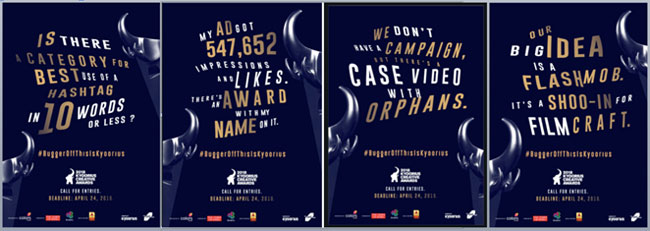
    The Kyoorius call-for-entry campaign 2018 takes on all the talk surrounding the other major award in town. It seems to be listening to the stakeholders and understand the underlying issues. The answer is presented in a loud, confident voice. It will now have to live to the expectations.

    Now it’s different that we have a similar sounding campaign from ‘Eagle Award’ in 2012. Personally I loved it.

    The simple straight to the point Goafest 2016 campaign.

    INSERT 2016 GOAFEST Campaign

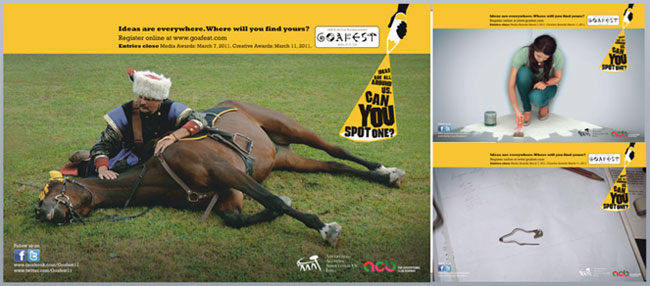
    Goafest call-for-entry campaign in 2011 banked on an Industry saying ‘Ideas are everywhere’. It is questionable whether it was the right campaign and what was its impact.  May be awards will be better off with post-research of their campaigns in addition to town hall with the stakeholders.

    Here is the simplest of them, the YOUNG DIRECTOR award. It announces the awards and asks you to go and find out if you were interested. It is a risky, bold proposition. However, I think, it talks to the TG in a right tone. Maybe it did get the young directors to seek more information.

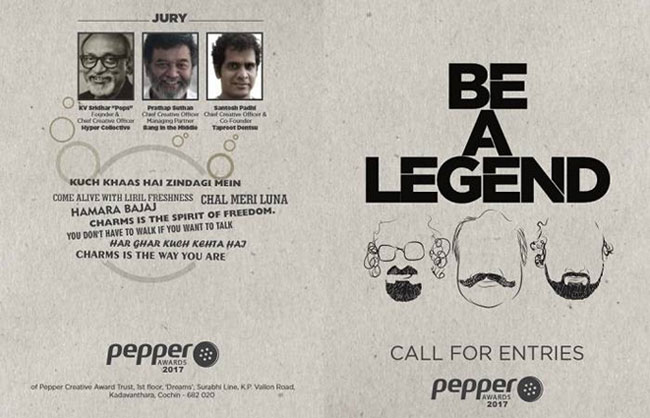
    Not to forget the ‘legend’ advertisement for Pepper Awards. At least the proposition is upfront.

    The campaigns are a self-reflection. They reflect how the organisng committee sees or want to project them. It indicates the committee’s prominent self-doubts and reason for confidence. The call-for-entry campaigns cannot address most of the issues. The forces behind the awards, keep trying to force a superlative misdirected imagery in an attempt to address basic issues. It usually ends up with disappointment.

    An award that is relevant, impactful and established needs no major campaign to pull the entries.  The tricky part of relevance and impact starts raising their nasty head after awareness builds up.

    We must understand that though the awards are always work-in-progress. They are in a beta mode, continuously evaluating relevance, respect and impact in an attempt to remain faithful to the industry needs. The stakeholders and the participants want to see the final version and hence every time the call-for-entry campaign has to work that more harder.  Maybe time, that enough attention was paid to call-for-entry campaigns to reflect the true picture.


    Sanjeev Kotnala is a senior strategy consultant and an educator. The views here are personal


  • Sanjeev Kotnala: Life is only worth living in a Beta Mode

    By Sanjeev Kotnala


    Life is crazy, demanding world of MAdTech professional; Media/marketing, Advertising, and technology. In addition to the pressure and demands of the organisation, there are many that are self-created. There are so many equations and variables to be balanced in an otherwise unpredictable environment.

    We live in a sea of uncertainties. There is with no assurance of outcome. Everything other than death is a mere probability. Moreover, that is not a comforting thought.

    We are busy chasing dreams and seeking perfection in our plans, actions, behaviour, reactions and output. We fail to recognise that outcome is merely a milestone in the journey called life. Everything is work-in-process.

    Honestly, just like your Brand-I, life is perpetually in a beta mode.

    Beta is the second phase of software development. In beta mode, everyone is busy experimenting and learning. It is about uncertainties, openness to feedback and willingness to find a solution. It is for seeking improvement in strategic thinking and enriching experience with enhancements.

    It is about knowing nothing is stable. It is about not expect anything and everything to work correctly or as per expectations. It is about not creating stereotypes and not taking a decision based on immediate impressions. It is about seeking repeat experience and data.

    It is about believing everything can be bettered. That there is no perfect version and there will never be one. It is about seeking not chasing completeness, knowing we will always remain incomplete.

    Beta is all about evolving with time.

    Beta version accepts things as they are. It relishes work-in-progress tag visualising the future. Still, there is no space for complacency.

    People who enjoy beta mode know, you die the day you stop learning and evolving. It’s different; you may still be alive.

    Once we accept a Beta environment of our life, it becomes easy to admit imperfections, mistakes and errors. There is an attitude change. It is no longer a blame game but a lookout for improvement. The barriers and failures are minor aberrations in the path to success. We welcome them with open arms.

    We create problems when we seek illusionary perfection.

    The beta approach is all about progress. It does not matter, what is the quantum of improvement, till there is progress. It teaches us to appreciate smallest of achievement and success. It forces us to seek a stronger foundation for our logic and assumptions. It pushes us to break assumptions, myths, mental blocks, norms and maybe rules, in the process strengthening our self-belief.

    Life in a Beta mode is relaxing yet exciting.

    It is no longer a wait for a disruption to announce our arrival. It is the newly acquired calmness in the sea of welcoming uncertainties; then it is easy to think strategically.

    You never fail in a beta mode, because you learn in every failure.

    Once we realise the advantages of the Beta philosophy of life and how it changes the spectrum. The more you think about it, the clearer we are of our Brand-I, the more happier we are, and then you realise: Life is only worth living when you are in a beta mode.