Tag: Sanjeev Kotnala

  • Sanjeev Kotnala: Brand. Movie. Magic

    Sanjeev KotnalaBy Sanjeev Kotnala


    Well, in addition to the real religion and regionalism, the three prominent religion equivalents in India are Cricket, Movies and Politics. Brands tend to exploit and leverage situations, topical events, and celebrity from them. Nothing else compares to the popularity and engagement than these three.


    Politics being somewhat out of bonds for obvious reason, brands use cricket and Bollywood celebrities for everything: selling a coaching institute, sandal, insurance, banking, car, deliveries, and anything else you may need. Nothing wrong in it.


    Cult movies and specific scenes and dialogues provide an opportunity for the brands to associate and leverage. Some of these have been used in the past very cleverly and successfully. Not necessarily clip merchandising, product placement or movie association.


    But taking the clue from the movie, redoing it, or repurposing it to suit the brand communication. In past ‘Gabbar ki asli pasand’ by Britannia Glucose D has used the character from Sholay and re-enacting the scene. Tetley Tea has used ‘Kitna Inam rakha hai Sarkar nai’. Here are two examples where brands have used the opportunity. Something that just clicks. Where the brands have done well to ensure that association is simple and strong. The audience do not just watch the clip or the restaged scene- but they remember the brand with its message.


    Dunzo uses ‘Tareekh Par Tareekh’  and Sunny Deol to great impact. The cult fitness studio uses DDLJ epic scene phenomenally well.


    I personally feel that Indian advertising has not really leveraged epic/iconic movie situations and moments in advertising films, whereas radio has leveraged or rather exploited every sound- dialogue and situation to no end. Do you remember some other iconic movie shots used in advertising films, do share?


  • Building Trust in Print


    By Sanjeev Kotnala


    Sanjeev KotnalaSanjeev Kotnala People at all ends, the readers, the advertisers and the stakeholder like employees and business associates, have time and again raised questions about the need, efficacy and effectiveness of print. The “traditional media”, as it’s called. So, whenever print does an engaging campaign, it starts answering a few of these questions and works on many levels.


    THE TRUST OF INDIA.

    The Times of India has time and again presented its readers, campaigns that have helped build the brand. The current  TOI Campaign is not based on any differentiated advantage, but the presentation is fresh. Taking the news/ scandals/ events issue, it broke on the national platform and followed it to the logical, final conclusion, presenting the case for TOI as #TheTrustOfIndia.


    The beauty of the campaign is not the choice of six to seven subjects. Any print media brand would have the luxury of such news to pick from. No doubt, the subjects are carefully chosen to cover a spectrum through subject of interest and time period. The headline or the body copy does engage.


    The brilliant choice is using the famous R K Laxman- the common man- a cartoon that goes with the advertisement copy. One that always said more than what it showed. It is a tough act to follow. To use minimalistic words and convey so much more. Moreover, the unique RK Laxman common man is something deeply associated with the brand to help make further helps the point.


    WORKS IN BEB SEGMENT.

    Such a well-crafted campaign engages the readers. More so, it reiterates the power of print as a media. It demonstrates what a well-crafted print advertisement can do. If it can work for the media brand, it would work for the other brands.


    TOI has done well not to go half-page on this campaign. In the process, making another point to would-be advertisers. Print ad to work; they need not be large-sized. Being big in idea and execution makes it equally potent. If you visit the site,  the trust of India, you can see the images of some of these stories in the pages of TOI.


    The brand also ask people to share the common man cartoon on social media and start a conversation on the subject. Well, I don’t know how many such conversations are really taking place- but in few of the WhatsApp groups I see people debating the campaign.


    HINDU too.

    Another print brand that has done brilliant long copy print ads is The Hindu. The ads make another point. If it is interesting and engaging, it will be read and talked about, even in this video led short attention span in the digital world of today.


    The Hindu has demonstrated it across subjects that people typically do not call to be interesting enough. Take any of the ads. Ads like, ‘Meet the dumbest creature on planet earth’. Or ‘All it took was a microscopic organism to make us more human’. Or ‘Hats off to your incredible courage, dear humans’. Or the ad on social distancing or mental health. All of them show how and what makes print ads- work, be engaging and interesting.


    I am not fully aware of the teams who have worked on these campaigns. But whosoever you are, you are doing great work. Just don’t let your client get complacent or lethargic. And trust , unfortunately is now influenced by multiple external factors.


    WILL OTHER PRINT BRANDS FOLLOW?

    I hope other print brands take a lesson from TOI and Hindu. Stop doing those insipid, uninteresting, non-engaging silly print ads invariably crafted and created in-house or from an agency that quoted the least retainership*. Such campaigns are also responsible for contributing towards the reader and advertiser increasing apathy to the media. Suppose a print media brand, which knows the product and the medium, cannot use the print media best. In that case, they have no reason to ask, suggest, recommend or guide any other brand on using print effectively.


    While I am at it. Dear Print Media houses, please do innovation at a just profit, not an astronomical cost that remains viable only for big brands. Let the golden goose of innovation- impact-relevance-originally create a buzz and bring focus to the print media.

    …………………….


    TRUST AND AUDIENCE AND THE REPORT.

    Two questions always get asked on such campaigns. One by restricting exposure in Print and trying to ignite conversation on social- are you limiting the audience? Are you only talking and trying to retain rather than enlarge the audience?


    And the second question, how come the brand feels the need to claim ‘TRUST’. The Print has always been the most trusted media.


    A 46-country survey by Reuters Institute for the Study of Journalism (RISJ) – released on 25th June 2021, listed TOI as the most trusted among major news media brands in India- with a trust score of 74%. The survey respondents were young, affluent, and among the urban population – and ONLY English media was considered. Maybe that is why the report could have initiated the campaign but does not find the mention in the campaign. Moreover, India has been ranked 31 out of the 46 countries. And as per the survey, only 38% of the respondents in India trust the news they consume. Perhaps, TOI saw this erosion of trust and an opportunity leading to this campaign. Your guess is as good as mine.


  • Bridging the Gulf on Raksha Bandhan


    By Sanjeev Kotnala


    Sanjeev KotnalaYou can’t really go wrong with Raksha Bandhan communication. And the space is wide open for some solid thought-provoking brand associated work. However, it is not so easy and straightforward. It is a touchy subject. There are always chances of a buzz on social media turning against the brand. Meanwhile, brands need to be edgy and test the boundaries- work on emotionally polarised communication to break the clutter and create the impact. There is that need to love-me-or-hate-me-but-don’t-be-neutral-to-me feeling.


    As I keep another series of blogs under #IgnorantHindu where I share information on rituals, stories and mythology related to Hindu festivals, I often find people raising the red flag on new advertisements with me. I remind them that I have nothing to do with the communication. I am just an industry representative. And I also ask them why they never give me credit and congratulate me when the industry does a fabulous job on any brand or service. We will keep this debate for some other day. Just like, having no clue as to why so many people are searching details about Atma Shradh.


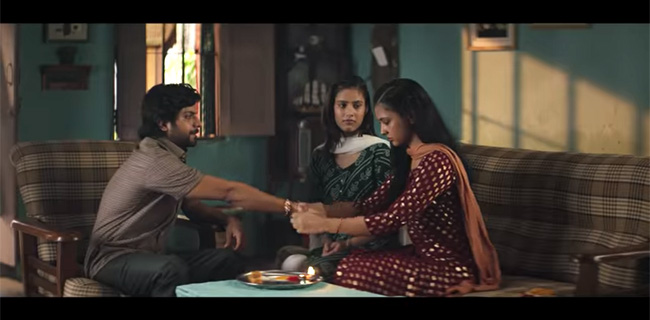
    I was not surprised when one not-so-radicalised Hindu with decently progressive thinking pointed out the Gulf Superfleet SurakshaBandhan advertisement. The objection came from the highly antagonising, irritating attitude of the sister towards the brother. He is trying to make everything to make their lives happy. But he is a truck driver, and the sister has an issue with it. She does not even want her friends in that small town to know her brother’s profession. Until she realises it is her driver brother and the community of truck drivers who have done the incredible work of keeping supply lines open. They have ensured that everyone else could do their work during the covid times. The penny drops, and everything changes with the perspective- and the brand establishes the analogy of trust, faith, and performance.


    I am not sure if there is a gulf in the understanding of the sister-brother relationship. Or if there is a gulf is in the limited set of the audience receiving the message. Exaggeration is part of advertising. Stretching already polarised emotion is an act that comes with pitfalls. But there was no moment in the SMEAR rating.


    What surprised me is that more males in the group had something to say about the Gulf Super fleet ad; the women were silent. When the male POV was shared, pointed out, they smiled and said there is nothing wrong.


    The gap between expectation and experience is a reality. Everything cannot always be idealistic. The story needs a hero and a villain; sometimes, the villain is a woman, which is perfectly okay.


    And they then pointed out the mushy, sweet and salty  all is okay Amazon ad. Telling me, it was also a rarity. Such cooking accidents don’t happen. And they don’t make such brothers anymore. So, if you are willing to accept a completely holier than thou rare event as a storyline, what’s wrong with the sister with an attitude, ego and insecurities.


    And getting back to Gulf Oil, it seems to be working this Suraksha Bandhan nicely. In 2019, its commercial spoke of a bond between the driver and his sister. The driver was laminating that he could never be home during Raksha Bandhan. And this time, the sister met the driver at the dhaba during his transit. Rarity. But somewhere, the brand worked around the Rakhi thread extending beyond hundreds of miles! Pioneering the  #SurakshaBandhan initiative for truck drivers, fostering sibling bonds with over 20,691 Postcards countrywide! And there is a complete brand fit. Something that sounded forced earlier becomes the strength of consistency and authenticity.


    Here watch another gulf oil ad on Raksha Bandhan. Love the way the brand has been working focussed with the trucker’s life and their stories. Maybe they have found a brand  purpose.


    So, how unique is the subject- the relationship, the emotions and the expectations? This is a unique property that Gulf Oil has identified. They have been mining it for a long time and hopefully will keep doing so with more passion. Does your relationship with your sister resemble any sister-brother relationship in these Raksha Bandhan stories?


  • Sanjeev Kotnala: Moment Marketing Gets Another Flip

    Sanjeev KotnalaBy Sanjeev Kotnala


    So many brands jump into moment marketing for the connection, buzz and glory they seek. Unfortunately, most are unaware of how to avoid the pitfalls. Maybe with rampage moment marketing and brands getting away with murder, the marketing teams only woke up when the athlete called the bluff.


    Moment marketing is not bad. Let us not shy away from it. However, the misplaced understanding and confidence of brands is solely to be blamed for the current situation. Lately, we have seen moment marketing more in the digital space and in celebrity achievements. Moment marketing is media- and event-agnostic. However, other media requires more planning, agility, and a bit of preparedness.


    The time is ripe to discuss moment marketing and not question its efficacy and importance. Time to prepare for complexities and the need for better creativity in pursuit of results and avoiding a PV Sindhu situation many big brands face. Brands are expected to be knowing the legality and issues of moment marketing.


    Moment marketing cannot hide behind the excuse of the heat of the moment, excitement, and public euphoria. However, it is foolish to believe it is impossible to leverage the moment within constraints.


    The current situation will not kill moment marketing. And it should not kill moment marketing. I expect the brands and creative teams will take this challenge and explore new paths to beat the known constraints.


    Olympics, in fact, blocks even the brands endorsed by the high sportsperson. They cannot release any ad during the embargo period, which is one month long. However, other brands with no investment in the sportsperson take advantage of the moment. They, however, keep away from the most well-known rule – not using the Olympics rings. That is half-clever. Today, they seem to have miscalculated the sportsperson’s response.


    Oh, our dear ASCI has a guideline for it: “Advertisements shall not, without permission from the person, firm or institution under reference, contain any reference to such person, firm or institution which confers an unjustified advantage to the product advertised… If required, the advertiser and the advertising agency shall produce explicit permission from the person, firm or institution to which reference is made in the advertisement.” And we know how well the brands are blind to it. Left to ASCI, the brands will need to run a disclaimer half the size of the headline stating this is a celebration of achievement and in no way an endorsement by the celebrity.


    Moment marketing has a role in the brand and the celebrity life. It is undeniable that the celebrity achievement is amplified and finds a higher decibel echo because of moment marketing. When the achievement is while representing the nation, there must be an opportunity for the citizen and the brands to collectively celebrate. The argument may sound valid. And hopefully, it is somewhat okay when it is just a congratulatory message. And the brands should not engage in leveraging the moment by associating the promise of the product with the moment.


    What about citizens on social media leveraging the moment to further sound relevant and at times original and impactful. Should they not be treated as brands. Should the usage in these moments not be questioned? Are we going to Talibanisation of communication?


    What if today, Ambuja Cement ran a message of ‘VIRAT compressive strength’ with a hint/suggestion of cricket without using the picture of the Indian winning team.


    Many brands have demonstrated creativity in seizing the moment. Oreo’s ‘You Can Still Dunk In The Dark’ during a 2013 Super Bowl playing on the power outage is one of them. Netflix- Mumbai Rains, streaming now is another such example. I personally rank PEPSI welcoming coke in India and ‘Nothing Official About it’ much higher.


    Amul is King. It has a licence to exploit and leverage every opportunity with humour and without naming the celebrity. It plays on the occasion. Amul knows that the will audience will connect the dots. It uses caricature, one of the devices to further safeguard it. It is damn consistent with its approach. And with time, it has become a symbol of having arrived, being Amul Hoarding worthy. So, there is no objection.


    Moment marketing is, after all, standing apart, joining the conversation and in the process increasing familiarity and preference for the brand. Be talked about- be shared- be commented upon. Without it- it is a damp bomb.


    Moment marketing must be in sync with time. Be at the right moment. Inclusive and not interruptive in nature. Today, we are referring to celebrity achievement. However, it is about anything and everything happening in the brand’s and consumer’s ecosystem. If the content is not contextually placed and fails to engage the audience, the opportunity is wasted. And, in trying to hit the bullseye, the brand and the agency fails. Savdhani Hati- Durgatna Ghati.


    The need for clutter-breaking and yet firmly remaining brand-centric is a tough act to follow, full of possible legal pitfalls. So, brands must up their understanding of the rules and craft creative ways to bypass the constraints. However, the brand must be authentic and consistent enough. In today world of hyper-aware consumers, being fake is a suicidal act.


    Personally, as a brand manager, I would invest time and effort to understand the minefield of moment marketing and then work extra hard to find ways to breach it. That is being creative, and the glory is in doing so.


    Sanjeev Kotnala is a senior marketer and business strategist. He writes on MxMIndia every Wednesday. His views here are personal.


  • Target 2024. But is anyone listening?


    By Sanjeev Kotnala


    Sanjeev KotnalaFinally, Olympics Season 31 comes to an end. The athletes left the Village to meet again and try living to the motto – Faster, Higher, Stronger – Together. The amount of space and time on media dedicated to the games will keep decreasing exponentially. Soon, we will get tired of talking about it.


    Olympics season 32; Paris is too far away in 2024. Elimination or qualifying is yet to start. So, it will have to wait till July-August 2024 to trend.


    The Olympics are like a reality show. The games are played at multiple levels and formats. One where athletes dedicate efforts and energy into qualifying and preparation. Two, the sports bodies and sponsors rarely do what is demanded of them. And three – the netizen and citizens show off a country. The armchair experts in everything – from sprint to swimming, from decathlon to hurdles and boxing to wrestling. The game of hard drawn punch of commenting, mixing politics, case and religion with celebration and result. The moment marketing and the run for taking the credit. The post-show suggesting what is wrong and how it can be tackled. Repeating what has been written, said, read and discussed during and after every Olympic fiasco. Oh! Sorry, we managed seven medals this time round. The ratio of athletes qualifying for quarterfinal and above to the whole contingent was better than before.


    Everywhere, you read the story of hardship. Is that a necessary qualification? What kind of pleasure do we get reading these stories of hardships? What does it say about us as a nation? Have we not tired of fairytale coincidences? Of herculean persistence and passion? Nothing sounds new. Maybe, someone is leveraging this poverty, hurdles, and barriers in creating mentally tough and ambitiously hungry athletes. Is that our solution to get more wins. Otherwise, how come the country yet lacks the infrastructure, process, and grassroots sports facilities.


    There is more discussion on why PM is calling the sportsperson. And if he does so, why is he on speakerphone. I fail to understand. What I understand less is the giant face of PM instead of the sportspersons in every banner and stage. Someone needs to do a reality check and put the proper weightage. I hope that nation knows who the PM is, and he knows that it should have been Major Dyanchand face on the poster. Then who is approving such blatant miscommunication?


    Every member of the women’s hockey team has a background story to share. That Aditi missed a medal – not knowing she was punching far above her weight. Everyone was. No one questions why she stayed at a hotel 90 minutes away from the golf course – when it is known for early morning starts? Why were some athletes’ personal coaches not given national status to be with the athletes when they fought their biggest battle?


    And then we blame cricket for polarisation. The myopic sports federations and the blind journalists, and the politicians fail to see a learning opportunity. Try to find out what happened? How did the tide turn? How have we succeeded in cricket? What is happening at the grassroots? What are the tournaments and academies from where the next crop of talent is ready to be harvested? No cricket may not be the best example, but there is a lot that can be learnt. And doing a part of it would itself make a huge change.


    Maybe the celebrity sportsperson taking the brands to court should give a flip. However, I believe moment marketing criticised by many, may be doing sports something good. Think about it. Success is a success when celebrated. When everyone wants to ride the moment, some realise the existence of future possibilities. And maybe the penny drops. However, it must be done within limits.


    I do hope we snap out of these coincidences and unexpected results. Yes, sports have unpredictability built-in. But there still must be some ranges of operation. Send a smaller contingent of officials, provide the best of coaches, infrastructure and equipment and support.


    Want corporate support. Give the organisation supporting a sportsperson – winning at any international event business, tax advantage, or other such advantages.


    Want a ridiculous suggestion. In 2022-23 take your potential stars and coaches to Paris to practise. Pick a wider set now and invest behind them. But I know the sports ministry, federations have their own way of doing things.


    Soon, the media and social media will also slowly simmer down their comments on the subject. The causes for good or bad performance will be forgotten. The felicitation will be over, and the so-called sports-loving nation will go back to its daily routine. The brand will forget the athletes they honoured. The moment marketing will search for another moment.


    The sportsperson missing the glory will carry their nightmare moments, realising when, where and which moment the glorification slipped out of their hands. Everyone being so moralistic, will only talk of reaching the Olympics and performing at the most significant sports arena.


    Avoid announcing awards and rewards when the games are on. The way they play for the national pride and the medal, coming from the struggle they have seen, don’t distract them. Declare well in advance. Create a body where people who announce such awards deposit the money within 15 days. The body releases it to the sportsperson in the next 15 days. There are no surprises; few are still waiting for the cash rewards of the last Olympics. A transaction that should not take more than few clicks.


    No one remembers the people who missed the medal. Are they not your best and still potential. If sports need to go many levels up, every stakeholder must have a process and complete dedication. To do so, one needs to take care of the fear of athletes. The life after medal and without a medal. Take care of it at the Olympics and at the national stage.


    A junior champion dedicating life to sports misses on studies. Never sure how life will phase out later. Can there be some insurance if the sportsperson has been the nation’s best for a certain period?


    If nothing else: take a printout of this and reread it on August 11, 2024 when the Paris Olympics end. Do you anything would have changed?


  • Mental Health & A&M


    By Sanjeev Kotnala


    Sanjeev KotnalaAt the end of May 2021, women’s tennis star Naomi Osaka withdrew from the French Open to preserve her mental health. As if taking a cue, many athletes in recent times have been vocal on the subject. Fortunately, now it is receiving the desired focus. We, at least for the celebrity and sports personalities, are now agreeing, ‘It is OK to be not OK.’ And celebrating their courage to be open about it.


    In the Indian context, we have read about the mental health issues of Deepika Padukone, Virat Kohli, Abhinav Bindra, Tiger Shroff, Amitabh Bachchan, Sanjay Dutt, Shah Rukh Khan and many others. Many may say that it is easier for them to be open about mental health than an average person.


    Mental illness, also called mental health disorders, refers to a wide range of mental health conditions – disorders that can affect your mood, thinking and behaviour in personal and professional life. Mental illness includes depression, anxiety disorders, schizophrenia, eating disorders and addictive behaviours.


    Reports suggest elite athletes experience mental ill-health at a rate comparable to the general population in anxiety, depression, post-traumatic stress and sleep disorders. We now acknowledge these superhumans – high-performance humans are also vulnerable to mental health issues.


    Which makes me look inwards in the Marketing Advertising community. Just like #MeToo opened up flood gates. People shared their experiences.


    Are we going to see people from Marketing and advertising now coming out with their experiences and issues? Personally, I doubt.


    The industry has all the environment that could lead to mental health issues. It is high performance led. There is subjectivity. There is a swinging of fortunes in approval, appreciation, rejection and dejection. There are creative blocks that make people question their abilities. Then some push confidently even when they are way behind their benchmarks. Loss of business, shifting fortunes, impossibility to predict and control outcomes. The growth. The layoffs. The repeating iterations. The questions about capabilities, abilities and capacity of someone understanding the problem. Long working hours, no control on timelines and expected to be working beyond office hours add to the problem.


    Like me, many of you must have seen cases of people that we never rightly labelled as mental health issues. Because no one wanted to accept such a problem. Theek ho jayega. You will overcome it. Let’s drink to it. ‘Come on. Burn out. Recharge. Are some of the stock solutions offered by colleagues.


    I am not a doctor but, like every advertising marketing professional, an observer of life. And that makes me sure that sooner or later, we will be able to question behaviour and have a place for the proper counselling. Maybe the HR and the stakeholders in the industry could initiate a debate on it and think of possible policies to address it.


    Campaign did a research survey on the subject. Which told us 71% feel that their organisations haven’t taken any concrete steps towards actively reducing workplace stress. Employees claim they haven’t been receiving considerate timelines and are even unable to sign off for the day post 6 or 7 PM. Additionally, they are dealing with the pressures of coming to the office and are expected to be available over weekends.  Exchange4media did a story that told us that as an industry, we are opening up to it. Times Network-initiated #ActNow to spread awareness, normalise conversations around the issue and sensitise people to be responsive to the mental health needs of others. The business insider did a story on World Mental Health Day: How to address the challenges of overworking in an ad agency. Not enough. And we know the reality.


    I may have spoken about the Marketing and Advertising Industry as I am a part of it. But I will not be surprised that it is an omnipresent problem. Police, sales, Manufacturing, Bureaucracy, and students are included in the list.


    We need an ecosystem that does not treat it as a taboo subject. Time we are a lot more open and inclusive in our reaction and acceptance of the possibilities. Remember, It is OK, Not to be OK.


  • Who Moved The Pizza?


    By Sanjeev Kotnala


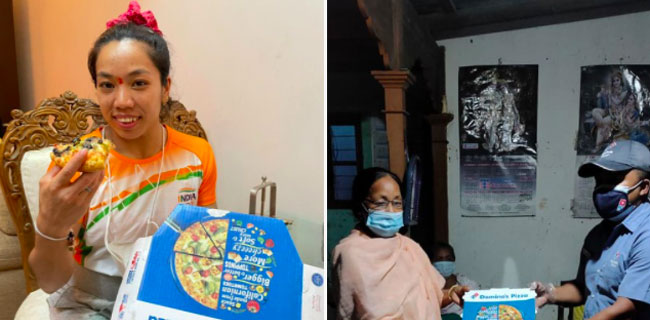
    Sanjeev KotnalaWell, it all started one fine July morning, when Mirabai Chanu from Mizoram, India, won the silver at the 2021 Tokyo Olympics. And then she shared she would be eating a Pizza as she has missed eating it because of her rigorous preparation.  Domino was first to the draw, it offered her lifetime free Pizza. In fact, it delivered Pizza to her family at Mizoram and walked all over social media celebrating the act.


    If I was the CMO, I would have done the same.


    For some inane reason, it did not sit well with many netizens. Domino was criticised for leveraging the marketing opportunity.


    An athlete’s career is no different than the marketing funnel. It is like a funnel, which sharply narrows towards the end. Medals are rare. Life is tough. Everything is stipulated, under policy guidelines, and strictly monitored. One may laugh at the pizza thought, but that is totally logical and natural.


    Many agencies and sponsors invest in grooming these athletes. They start with a wide set of athletes, knowing only a few will really pass the ultimate test. So, when another brand that has never invested in the athlete exploits such an opportunity, the brands and agencies that did the hard work definitely feel cheated. But, that is part of life. They are doing their job and getting returns. And a Domino kind of brand is doing its job.


    Aapne kaha, aur humne sunn liya 🙏
    We never want @mirabai_chanu to wait to eat 🍕 again so we’re treating her to FREE Domino’s pizza for life! #PizzasForLife

    — dominos_india (@dominos_india) July 24, 2021

    Suppose she had mentioned the problem with the local commute and a car company had presented her with a car. In that case, people might have been appreciating rather than trolling. So, is it about the value of the offering? We must understand, the company makes pizzas, and Mirabai showed her desire to have one. They connected the dots and offered what they make. So, where is the problem?


    It is stupidity to say that the company should have delivered the pizzas to her home and kept quiet. Are you mad? How many brands get this opportunity? It would be stupid not to amplify and leverage. And they did it as low-key as marketing could allow. The amplification is the free media they earned.

    “We are elated that we could share this wonderful moment with @mirabai_chanu’s loved ones. She brought a smile to a billion+ faces, our Domino’s Imphal Team brought a small token of appreciation to celebrate the success with her family,” Domino’s Indian tweeted.


    Before anything else, in fact,

    Now, pizza is unhealthy, and it will promote bad habits. As if the sale of pizza was dependent on this micro event. Mirabai, herself said it is not part of her diet, and she wishes to have one. Nothing wrong with it.


    “Thank you @dominos_india for sending some great tasting pizzas & celebrating with us. My family and I appreciate the gesture from Domino’s Pizzas. I look forward to our friendship" pic.twitter.com/asjz8L7yoc

    — Saikhom Mirabai Chanu (@mirabai_chanu) July 27, 2021

    Mirabai achievement is an individual achievement. But, in many ways, it is a public property of every chest-thumping Indian. And in that position, the opportunity was open to every one of the national and international brands. The opportunity was available for every possible brand in the country. ITC or Oberoi, Indian Railways or Indigo, any brand could have done so. And naturally, the brands must use their resources to their best advantage.


    Someone suggested the brand could have given her financial assistance worth a lifetime of Pizza. Well, such a pedestrian thought in the marketing world. It is not that she will eat a pizza every day- but the sound of ‘Lifetime Pizza’ is so good.


    OvenStory, Pizza Hut, Chicago Pizza, and many other brands wasted the opportunity. Does Domino’s brand strength have something to do with it? Did they chicken out fearing a reaction? What if they offered the lifetime pizza and Mirabai said she wanted only Domino?


    The dice were rolled a long time before she made her innocent desire known. It is about timing. One brand was there, and it pushed the other pizza brands off the grid. The case is adjourned in public but in few offices, the brand team is still trying to justify not exploiting the opportunity.


  • Sanjeev Kotnala: Do you treat your High Performers like Olympic Athletes?

    Sanjeev KotnalaBy Sanjeev Kotnala


    Finally, the Tokyo Olympics are underway. After starting with silver on Day One with Mirabai in the 49kg Weightlifting, India’s gameplan is not going as per the script. As expected, it has fuelled diverse and mostly polarised emotions. It is natural for a country supercharged with brand communications telling the followers, it’s our best chance, ‘Hum Hongey Kamyaabm’ and a cry of ‘Iss Baar Lana Hai Gold’. It was never about delivering the best performance or living up to the occasion- but all about the three podium positions? 


    Celebrating success and achievement is one thing. Standing with your representative as they fail to reach the expected standards is another.


    When the athlete fail in the eye of their fellow countrymen, the dreams and years of practice amount to nothing. They must seek solace in participation, regroup their energies, rebuild their dreams, and take the first step in the new journey, hopefully with a lot more resilience.


    Good or bad, the Olympics performance will raise questions. And questions it must raise.  Some of these questions will be buried as rhetoric. Some of them will interest no one. And if we are fortunate, some questions may trigger a rethink. Maybe someone in the right place will take note, and something will change.


    Maybe in future the situation will be different. The  participants will have their  personal coach and the seconds when it matters. We will see more of  athletes and less of officials. We will not have to be reminded there are star sportsperson beyond cricket.  A first time entrant in a sports that India was never represented in- did not have to say sorry at the end. Equipment malfunction is a reality and not an excuse. The world record holders too can fail to qualify crumpling the hope of a success-starved nation. Legendary performers will continue fuelling the hopes or announce the end of a chapter.


    What may not change,  is the armchair criticism of the process, results and performers. And I do hope that does not change. It reflect the hopes, happiness, irritation, frustration, dreams, desire, and aspiration of a fan. Unfortunately, it is impulsive and reactive. Sometimes, it lasts only till the slightest subsequent success.


    I wish the pain lingered, and the wounds never fill up so that someone reacts to it.


    Brands celebrating potential of the high performers, fuel the national hunger for success. Why do they not have  the same stance of collectivism to face defeat and maybe a day of underachievement?


    Till we do not learn to accept sports as a long-term process. Till we stop expecting every day to be great and every athlete a super person capable of delivering every day. We as a nation will remain a nation of possibilities and potential and of individual dreams and failure.


    In the current era of hyper information sharing and social media, everyone wants to vent their feelings. Moreover, many just flow with the reaction and the pattern set up by someone else.


    So, the responses will  always be polarised.


    It is challenging for the athletes to shoulder the responsibilities and not feel let down on an odd day. When suddenly, the whole nation celebrating their potential and possibilities turns against them. Because nothing short of the best is acceptable to the nation that has hardly invested inadequately training and nurturing the athletes. Which has refused to appreciate the hard work and rarely celebration their minor milestones. Where recognition is not a gradual process but a switch that will be turned on- only when they succeed. And while they dedicate themselves to their passion, expect them to navigate the politics of their federations and associations, And outperform everyone in the field.


    So, the only question to all the people is, are you doing the right thing.


    Now flip it over. The Olympics is your organisation and the sports your department. How are you nurturing the high performers? What kind of environment are you creating for them. Are you seriously treating them the way you should, or they are like the Indian athletes at the Olympics?


  • Sanjeev Kotnala: Noise – a flaw in human judgment. Book review

    Sanjeev KotnalaBy Sanjeev Kotnala


    I pre-ordered the book ‘Noise – A Flaw in Human Judgment’ because of Daniel Kahneman, the Nobel Prize-winning star author of ‘Thinking, fast and slow’ and  Cass R Sunstein; the co-author of ‘Nudge’ two books I remember liking. Kahneman co-authored ‘Noise’ with Olivier Sibony and Cass R Sunstein. The book Noise promised to explain, grade, identify and share how to reduce Noise.


    WHAT IS NOISE?

    For that, let me share something you can relate to. One often checks for the boss’s mood before discussing a business proposal because the mood can influence the decision. Or, if you had multiple choices to approach seniors, you pick one over the other. Technically, the proposal should be decided on its merit. All the seniors should take the same decision, or at least the same senior should take the same decision all the time. Or, when you dial into a call centre for a problem resolution, a lot depends upon is assigned the call. And that random, seemingly unbiased allotment of your call may actually decide if the problem will get resolved. We all know life is not idealistic. It does not happen that way. The reason for this is bias and noise. Noise is the “unwanted variability in judgments”, and consistency means fairness to all.


    It seems so simple an explanation. And once you start reading the examples in the book- you realise we have allowed too much noise to creep in some areas at too high a cost. Bias and noise are omnipresent in all judgments. Noise is there in the court judgments, insurance approval, recruitment, analyst recommendations, medical diagnosis, child protection, performance appraisals, fingerprint experts and student grading. In fact, the list is unending. Noise is wherever there is a judgment.


    JUDGMENT

    The authors point out that judgment should not be confused with thinking. Judgment is a form of measurement in which the instrument is the human mind. Judgment informally integrates diverse pieces of information into an overall assessment. They are not computations, and they do not follow exact rules. That is where noise and bias slip in.


    Some judgments are predictive, and some predictive judgments are verifiable; we eventually know whether they were accurate. Many are long-term and unverifiable. The quality of such judgments can be accessed only by re quality of the thought process that produces them.


    They remind that the phrase ‘judgment call’ implies both the possibility of disagreement and the expectation that it will be limited. Matters of judgment are characterised by an expectation of bounded disagreement.


    THE GENESIS.

    In a world of no bias and noise, the judgment on a particular case should not depend upon the judge assigned or the date, day, and part of the day. This is hardly true. A 1974 study of 50 judges setting sentences for identical (hypothetical test case) cases found hardly any consensus. The sentences covered a large spectrum of possibilities. The same drug dealer was sentenced to anything between one and 10 years. A bank robber received sentences ranging between five and 18 years. An extortionist faced anything between three years with no fine to 20 years plus a $65,000 fine. Other studies in 1977 and 1981- showed the same result. These were hypothetical cases where the same set of evidence and short synopsis were presented to the judges. However, real life is a lot more complicated. A lot more information and inferences are on the show. The problem of varying sentences is real, and it is far more significant than what these researchers point out.


    BIAS AND NOISE

    In Noise, a shooting-range example is used to explain it.


    Bias is when all the shots land systematically off-target in the same direction.


    Noise is when the shots are all over the target sheet. The problem is not missing the target but a lack of consistency.


    One has to know the right answer to detect bias, like knowing where the bull’s eye is. For noise, you do not need such details. You will know and identify it even if while looking at the target sheet from the other side. What is important is to know if there is variability.


    ALGORITHMS AND NOISE

    The book does make a strong case for mechanical judgment governed by rules. However, they rightly point out that the algorithms may not be a solution. As they can, in fact, end up amplifying the bias. More so, when the data they are working on is corrupt or has parameters that can generate a bias. The risk of bias in algorithms is discussed, explaining that it can be filtered out of algorithms.


    In the book, the authors clarify that their goal “is to offer suggestions for the improvement of human judgment, not to argue for the ‘displacement of people by machines’”. Algorithms are not perfect, and at least as of now, their lead over human judgment is slender. Also, algorithms may never be perfect “in many domains”, so “human judgment will not be replaced. That is why it must be improved”.


    TOO MUCH NOISE IN NOISE

    The book is far too long. It is iterative. And it seems the authors have a shallow view of the readers’ capacity to understand a subject. Yes, the subject is serious and needs explanation, but keeping it so long and iterative is not something I love. Noise is tiring and hardly an engaging read.


    Maybe I was flawed in my judgment. I was bitten by excessive coherence, thinking that I could possibly not go wrong with the star author of Thinking, Fast and Slow’ and the co-author of ‘Nudge’. Just because last was a superhit does not mean that the next one will be even good enough. Past performance is not a guarantee for future performances; reader discretion is demanded. In the case of John Gresham, I had this feeling when I read the Painted house.


    In fact, in this book of some 454 pages, the book is 385 pages. Twenty pages of enriching appendix covering how to conduct a noise audit, a checklist for decision observer, bias observation checklist, and correcting predictions. Fifteen pages of Review and conclusions- titled ‘taking noise seriously’. And for most of the readers, reading these 15 pages is more than enough.


    WHAT’S NEW?

    You can say Nothing, and then you can say a lot. What is Noise is well known to all of us? As we are intrinsically creators, managers, and victims or beneficiaries of Noise. That every judgment is flawed in many ways is no news to us.


    Noise tells you that not only individual but group decisions can also have noise.


    What it does is give you tags to the noise. A possible explanation and maybe something more to blame. It introduces system noise, pattern noise, naïve realism, forensic confirmation bias, bias blind spot, informational cascade, stable pattern noise, occasion noise level noise, and psychological biases. I think it adds too much noise to the already complicated lives of average men.


    NOISE tells you that some noise is essential and even good- primarily in case of artistic judgment- like movie review- onboarding a script- valuation of a painting. Moreover, controlling noise comes with a cost and the possibility of giving birth to a fresh set of noise.


    It prescribes ways to control noise and, in the process, differentiate between clinical and mechanical decision-making.


    OBJECTIONS TO REDUCING NOISE

    Some of the major objections to efforts to reduce or eliminate Noise are;

    • Reducing Noise can be expensive.

    • Some strategies introduced to reduce Noise might introduce errors of their own.

    • We have to tolerate some noise, if we wish people to feel they are treated with respect and dignity.

    • Noise might be essential to accommodate new values.

    • Some strategies designed to reduce Noise might encourage opportunistic behaviour.

    • People do not want to be treated as if they are mere things or cogs in some kind of machine. Some Noise reduction strategies might squelch people’s creativity and prove demoralising.


    THE IMPORTANCE OF CONTROLLING NOISE

    Quoting from the book. ‘Most of the time, professionals have confidence in their own judgment. They expect that colleagues would agree with them, and they never find out whether they do so. In most fields, a judgment may never be evaluated against a true value. It will at most be subjected to vetting by another professional who is considered a respect-experts. ( experts who are respected by peers in their field). Only occasionally will professionals be faced with a surprising disagreement, and when that happens, they will generally find reasons to view it as an isolated case. The routine of the organisation tends to ignore or suppress evidence of divergence among experts in their midst. This is understandable from the organisational perspective, Noise is an embarrassment.’ And that is the reason enough for people to try controlling noise. Or the need to flow decision hygiene of independent decisions and aggregation.


    The six principles that define decision hygiene are

    • The goal of judgment is accuracy, not individual expression.

    • Think statistically, and take the outside view of the case.

    • Structure judgment into several independent tasks.

    • Resist premature intuition.

    • Obtain independent judgments from multiple judges, then consider aggregating those judgments.

    • Favour relative judgment and relative scale.


    I understand and am with the authors when they point out that enforcing decision hygiene can be thankless. Noise is an invisible enemy, and a victory against an invisible enemy can only be an invisible victory.


    NET IMPACT

    It does make you realise how you have been inconsistent in decision-making. Why you must structure your probe. How appraisals, recruitment, subject expert medical doctors, or to say any judgment can have noise.


    It does make one aware of noise in their life and how one could attempt to be more objective. But then, I don’t know if this awakened phase would last.


    SHOULD YOU PICK UP NOISE

    You may read if you want to bring more objectivity to your judgment. If you are in a decision-making position and have been worried about why you are not confident of your decisions. Read it if your life is not already complicated and you want some new jargon and discussion points on human judgment’s flaws. OTHERWISE, JUST LEAVE THE BOOK ALONE. It is not for everyone. I know Vermajee, my friend and a brand marketing consultant would love it. Maybe he will start offering ‘Noise Audit’ to clients who never knew what the noise is all about.


    Sanjeev Kotnala is a senior industry professional, brand and marketing consultant, a coach, trainer and author of three books. He writes on MxMIndia every Wednesday.


  • Sanjeev Kotnala: Olympics; Brands continue Pride, Possibilities & Determination template

    By Sanjeev Kotnala


    Sanjeev KotnalaThe Tokyo Olympics start on July 23, 2021. We have moved from ‘Pressure on brands rising over Tokyo Olympic Games’ in May 202 to how to leverage them for the brand.


    As a nation, we honour the Olympic Spirit.
    We PARTICIPATE. Other than few sports like Archery, Boxing, Badminton and Shooting, we are rarely in contention for a medal. Naturally, all the brand communication around Olympics is about determination to succeed. We talk about the pride of representing the nation, the pain and sacrifices, and the possibilities. It is tough to differentiate messages and hence the execution style plays an important role.


    BRAND OLYMPIC COMMUNICATION.

    Adani group continues with #Garvhai from Rio Olympics. Give them marks for consistency, but the communication is along the standard lines, overcoming the challenges speak.


    The campaign getting positive reviews, shares and creating some heat is Thumps UP Palat Dal. No, there is not much difference there. But, the lines and the execution is engaging. The words surrounding you and reflecting the attitude of today’s generation. You enjoy it for the moment- wishing for some Palat Dal in the games.


    NOT MUCH HAVE CHANGED.

    Nothing much will change till we as a nation start performing. Till we begin winning medals that count. Till we are not in the top 10 countries on the tally. Till the time, people have no answer to the population – medals won the argument. And for that, the voices and the choices need to be free. Until there is no unbiased support on personal, social, and government levels, let us all continue celebrating the pains and hurdles we cross. And keep singing – Hum Hongey kamyaab eek din.

    JSW Group 2016 campaign ‘Rokna Nahi hai’ featuring 12 Tokyo bound athletes is very descriptive. The communication takes you through the challenges, opportunities and yes, it is somewhat motivational.


    BRANDS MUST CHOOSE.

    There is a choice before the brands. They can remain in the cluttered space of possibilities and potential. Or it can really think through the brand proposition and the Olympic imagery to create something that genuinely leverages the situation.

    It reminds me of the communications from Fevikwik released around the 2016 Rio Olympics. It is not a typical Olympics ad. However, the timing and use of hockey leave not much to the imagination. I find such humour far more effective than the standard hum hongey kamyaab chorus.


    Or the Tata Salt communication during the 2016 RIO Olympics, #NamakkeWaastey. Where they featured Shiva Thapa, Babita Kumari and Inderjeet Singh. Okay, it was still about grit and hope with an additional layer of pride.


    On the other side, here is an example of how to waste the opportunity. Support India, #IAmTeamIndia by Edelweiss Group during 2016Olympics.


    OLYMPICS MOVING FORWARD IN DARKNESS.

    So here is the Olympics communication that takes in to account the COVID time and the way athletes kept moving and preparing for future. Here we know the context and that is what makes it interesting and engaging.


    And when the games were pushed by a year- the one year out made all the difference. And the true Olympic spirit is embedded in this P&G communication.


    The Indian official anthem for the Tokyo Olympics- I am not sure- but here it is – Teer Ki Taraha Chal_ Lakshya Saamne Hai- Jeet Kar Hai Aana. Move like the arrow, the target in sight- come back with a win !!!! This is so disappointing. Outdated. No punch. Maybe someone is being too realistic and lowkey.


  • Sanjeev Kotnala: Sexual Harassment: We have a choice to make

    Sanjeev KotnalaBy Sanjeev Kotnala


    Sexual harassment in advertising agencies. The subject raises its head again. I don’t think much has really changed in the Covid era. Like the coronavirus, the ways, the acts, the pressures, the levers most likely have mutated and morphed (would not like to say evolved) with time into new SoPs. However, I am no one to point a finger or single out advertising agencies. The truth, we all would know. It is omnipresent across corporate or public, metro or Tier-II-III, service or manufacturing, sports or entertainment.


    Yes, we all get perturbed and sensitively troubled whenever we hear and read about it. Unfortunately, we have created a zone of comfort and have adapted to the realities. If I am clean and I am not the culprit, it is not happening to someone near and dear to me, then it is not my case to act.


    This time for me, the thought started with @Ramkid retweeted @Tistathinks’s tweet with a quote: ‘This is a long, uncomfortable, gut-wrenching read. And that’s why it has to be read… if you are in advertising.’ led me to read the long and troubling account of sexual harassment in advertising agencies.


    Tista Sen had tweeted, “I READ THIS AND THEN AGAIN AND AGAIN. If you are a woman in this industry, weep if you are our male ally, raise your voice. This is a US story. India will be a whole new book. Mad Men. Furious Women. – by Zoe.’


    The article in reference is ‘Mad Men. Furious Women’, by Zoe. It says: “Far from dissipating over the last decade, misogyny in the ad industry has simply mutated into something insidious, invisible, lurking in the shadows. It’s time to fire up the floodlights.”


    It made me rescan my corporate life. Made me look at various instances. I was unpleasantly reminded of situations where I have engaged in double meaning dialogues or what was termed acceptable harmless flirting in groups. I realise there is nothing harmless or acceptable in it. I realise that maybe #MeTooGuilty of at least remaining silent.


    And that reminded me of the Amitabh Bachchan dialogue from the movie Hum: ‘Duniya mein do taray ka kida hota hai. Eek joh kachrey se uttha hai aur eek who joh paap ki gandagi se uttha hai. Kachrey waala kida insaan ko bimar kar deta hai, magar paap ki gandagi waala kida saarey samaj ko karaab kar deta hai. Kachrey ke kide ko marney ke liye flit baazar mein milta hai, magar paap ke kide ko marney waala flit saala bana hi nahi hai aaj tak.’


    When I now scan and read about the extent of the crime, I am not really surprised. It seems that there are only two types of males in the society. Maybe an extremely polarised view.


    One who indulge and are the perpetrator of the act. They at least know why and what they are doing. A combination of power, unraised voice, pressured silence and many other factors make them do it. More so, they know they can get away with it. And the reality is, they do.


    And the other, who are guilty of being silent and in some way encouraging it. Again a combination of lack of power and many times – it is not my lookout approach pressure then into silence. At times, even the victim would stop someone from raising their voice because log kya kahenge. Because, unfortunately, it is, again and again, the woman who loses out and is branded the troublemaker. More often than not, the statement, ‘unless she would not have encouraged – how dare the man would have attempted the act’ is used as a defence. How wrong we all have been!


    Before I am lynched for making the above statements, let me say, yes, possibilities exist that there are people characterised by the famous Gandhijee Ke Teen Bandar. They are so isolated, dedicated and passionate about the business that they neither hear, see nor say anything wrong. I will be not be surprised by claims from top management that their organisations are clean. Nothing like that happens there. Trust, what they are saying, is that they don’t have any case reported. And, not reporting does not really mean if there are such cases or not.


    Till the male mindset does not come to terms and differentiate. Society does not start accepting the reality and open up to discuss it at every level. Till the time, the cases are not dragged. Till the time the management in the work environment is not supportive of the victim. Till the time victim is not victimised and branded a troublemaker. Till the time men and women in the immediate ecosystem and the stakeholders do not take on to themselves to help prevent it, nothing much will happen.


    On the other side, many counter the argument by saying males are unnecessarily victimised. That a wrong inference and biased reporting or uncalled for voice can destroy the reputation and career of a person in no time. That there are women who encourage and take advantage of the situation. That people do not jump to conclusions. That things happen in a close working environment. And, unfortunately, I can’t say they are entirely wrong.


    Maybe, we can’t really undo the past. However, each one of us can decide how the new chapters are written on the subject. We can choose not to remain silent and raise the issue at the first instance, supporting the victim- even if she is not our department or known to us. Is that too tough a call to make?


    Sanjeev Kotnala is a senior corporate strategist and educator. He writes on MxMIndia every Wednesday. His views here are personal.


  • Brand Colour. Brand Traps. Brand Nirvana


    By Sanjeev Kotnala


    Sanjeev KotnalaI believe in ‘Smash the brand’ (Martin Lindstrom thinking) the way McDonald’s did in 2018. But before one can even think to ‘smash a brand’ or reaching such a ‘Brand Nirvana’ stage, the brand must own multiple visual elements. Brand colour is one of them.


    I tried this argument with the agency and told them the need for a brand colour paletteto dominate our creative units to build familiarity and recognition. The verbal nail and visual hammer – Laura Ries thinking.


    The agency wanted another ‘Campaign Colour’ to differentiate from past communication. To make a point, the agency shared Nike creative. Their underlying message, ‘Nike uses many colours even if Black & White is in their DNA’.


    Well, I understand it was a defensive pushback. The agency does understand the process of brand milestones and gradual liberation from constraints. Brand Colour is a critical branding and marketing tool. The brand colours communicate emotions, feelings, and experiences.

    Carl Jung, the Swiss psychiatrist, said, “colours are the mother tongue of the subconscious.’

    In marketing language, colour speaks for the brand’s identity and personality, an essential cue for familiarity, and can impact purchase intent.


    Vermajee says

    Almost as a habit, I reached out to my friend and consultant Vermajee to discuss the subject. Despite being drowsy with aftereffects of the second dose of CovidShield, Vermajee agreed to a zoom call, and this is what he said.


    Brand.

    After providing a viable engaging solution to the consumer’s relevant overt or latent need, the first role of the brand is creating awareness and familiarity. Using functional, emotional, contextual, and comparative levers to answer why to prefer or pay a premium for it. In the process, the brand consistently adheres to various visual elements and verbal tonalities to create the desired recognition.


    Only after reaching a level of recognition, familiarity, and popularity, it may be free of these constraints. Just because brands like McDonald’s, Google, and Pepsi can play with their logo, all brands cannot follow the path.


    Brand Colour can be a Trap

    The route to brand communication Nirvana, the stage of complete freedom, is full of iterations. Every brand must find its own solution.

    For example, a brand starts using colour as a dominant visual representation. Soon the association becomes apparent and more robust. The brand colour helps the brand to break media clutter. Soon it becomes a strong association. People think of the brand whenever they see the colour. And the trap is shut. The brand is unable to unshackle the links and associations. Anything that the brand sticks with long invests in creating association- be it a colour, shape,

    format, template, tonalities or cues- can become a trap.

    Gurudev Osho had a story for this. In a village, a person stood on one leg because he was suffering from some problem. He continued to remain standing on one leg- every day. Soon, a business ecosystem of ‘Eek Tang Waala Baba’ (one-legged saint) started around him. He also liked the attention- so he continued standing on one leg. But after many days, one day, he wanted to rest his leg, but now he could not do anything of his free will. The ecosystem around him refused. Many lives were directly linked to him standing on one leg.


    Own it before Discarding it

    And here, I remember Gurudev Osho in his book Sambhog Se Samadhi Tak, simplified the thought. He says: ‘Saanyas is not giving up. Sanyaas is playing with it so much, being deep with the thought-idea-act-desire that after some time, it does not matter you have it or not. Sanyaas is lack of wanting’

    The path for a brand to reach this level of physical familiarity, preference, and positive vibes is consistency. The brand must work at owning the visual and verbal property. It must be ruthlessly fanatic and consistent in adhering and exploiting these associations at every opportunity till a stage comes when nothing matters.

    Honestly, If you remove the logo from Nike communication, one would still reasonably identify the brand. Yes, Nike has black & white in its DNA, but the brand owns a promise and an attitude that defines it more than anything else. Having spent relentless years – media money on that focused attitude gives Nike the freedom to do whatever it wants.


    Nirvana not for Everyone

    Like life, everyone does not have to have a purpose in life. Not everyone reaches

    the stages of tranquillity and peace with meditation. Only a few reach Nirvana. The others can and must not attempt to mirror their way of life and behaviour; they will not last long.

    Similarly, brands may want to reach the stage of creative freedom away from colours,

    tonalities, mediums, commentaries, social interaction – not everyone gets there. Sone attains this status by being the dominant representative of the category. Some because they acquire fanatic fan following – like a religious sect. Then Nirvana happens. Then the absolute freedom is gained. The brand (still within some constraints) can do whatever it wants. The colour and the formats are the least of the problems.


    Pure Nirvana Never Happens

    When you free yourself of something; you bind yourself to something else. That is how life is. And brands are no different. So, as you grow stronger and stronger in associations and following, you become more rigid in your expression.

    The expectations get more defined. The brand experience must meet the expectations. The gap between expectation and experience must become negligible. Think of RED BUL, Burger King, Virgin, and you get the picture.

    Unfortunately, the only way to get out of constraints like colour, shape, tone, format etc., is to follow relentlessly till they become a habit and not a necessity. And brand gets the freedom it deserves.


    More Freedom by Stronger Association

    For a better brand life of nearly complete freedom, there is just one way out. Own

    an attitude, a mindset, an emotion, not necessarily a purpose. The stronger the brand is associated with these intangibles, the freer it will be to leverage and amplify them. It will help the brand reach almost creative Nirvana, brand nirvana in a creative sense.


    Till Brand Nirvana happens, be consistent with your brand’s verbal and visual language and keep course-correcting them with the emerging ecosystem.