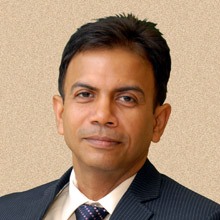
Tag: Sanjay Tripathy

  • Marathon time for Mumbai’s media mavens


    By Shobhana Nair


    “I ran just once in my college when I saw a wild elephant,” says Ravi Rao, Leader, South Asia -Mindshare, “After that it’s going to be the Standard Chartered Mumbai Marathon that I will be running for!”


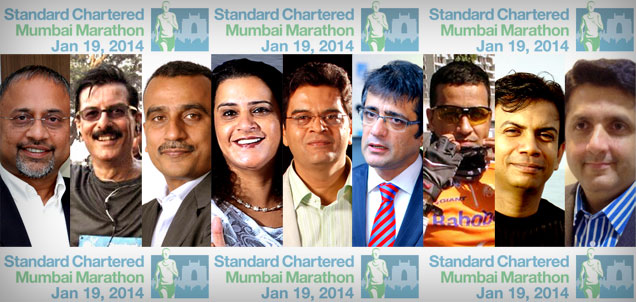
    Members of the advertising, media and marketing community are regulars at marathons held in various cities across the country. Especially the Standard Chartered Mumbai Marathon which sees them enter in reasonably large numbers. Sunday, January 19 promises to see an encore. Mr Rao may be debuting this time, but there are several others who’ve been running for some years now. For Sudhanshu Vats, Group CEO, Viacom 18, running has been a passion and he re-discovered it some 10 years back. Last year, Mr Vats did the full run in three hours, 59 minutes. Breaking his own record is not on the agenda but having a good run tops the list! “I think it is a great addiction and I am addicted to it. I would invite others to get addicted to it as well,” beams Mr Vats.


    It’s interesting to see many top captains for whom stress at work is never really a bother getting the heebie-jeebies. Well, almost. Says Times Television Network MD and CEO Sunil Lulla who is also a debutant: “I am completely stressed out right now and getting a lot of anxiety. I have no other expectations and want to have a good run, start well and finish well.”


    For many, running the Marathon is not just about fitness, but there’s a good cause as well.  S Yesudas, Managing Director, Indian Subcontinent, Vizeum has been offering support and commitment to two causes that are close to his heart. “An old age home and orphanage at Malad, Swagat Ashram Charitable Trust in Mumbai and the other is a tribal school, Vidya Vanam at Coimbatore. The person who manages Swagat Ashram, Brother Stanley stays in the same shelter with his family.  His children grew up with the orphans, eating the same food. These are men of God and they need support from other God-believers.”


    The training for the marathon begins way before the actual date and that really tests one’s power to achieve what is often the impossible. And there are some who believe it actually helps easing work stress. “The aim is to keep yourself fit, keep enjoying the run for a longer period of time. Once you do a long run during the weekend, it sets you right,” says Amin Lakhani, Leader – South Asia, Mindshare Fulcrum.


    “The marathon is a lot about challenging your mind over your body. The fact is that you will be running a long distance but how you keep yourself mentally focussed on the objective? You become more focussed in your personal and professional lives. It gives you an adrenaline rush when you reach that finish line,”reasons Simran Hoon, National Sales Head, Colors.


    There are many who participate not for the run, but the fun element. Paritosh Joshi, Principal, Provocateur Advisory admits that he is not a runner but loves to participate to soak in the atmosphere around him. “There are people who come on the streets to run and then there are those who are present just to encourage the runners. The spirit and the energy is what I like to soak in. In fact, I click pictures & tweet them. That’s how I enjoy it.” And not surprisingly, this is Paritosh Joshi’s ninthth consecutive “fun year” at the Marathon.


    Sanjay Tripathy, Senior Executive Vice President – Head Marketing, Products & Direct Channels at HDFC Life has another motivational reason to get up and run, “It is a competition with yourself rather than with anyone else. I think it is only the Mumbai Marathon that gives you a chance to run on the Sea Link and that should motivate you. Run just to feel how beautiful Mumbai looks in the morning!”


    If this hasn’t motivate you enough, then this should: veteran mediaperson Bharat Kapadia started running when he was 54 and still continues to do so in his 61st year. In fact, he accepts that if he can run, anybody can. So get hold of those sports shoes and run to experience the spirit of Mumbai this Sunday. Or simply do the run around your building, the road, the promenade or a jog track near you. And get set for 2015 edition of the Marathon.


  • Men are putting their own masculine stamp on child care, housework and even skin care: Sanjay Tripathy

    By Ritu Midha


    The financial services sector – especially when it comes to life insurance – is possibly the most challenging when it comes to marketing and promotions. There are restrictions from the regulator on what one promise in advertising and the competition in the marketplace is stiff. For the Marketing 2 Men series, MxMIndia got the views of Sanjay Tripathy, Senior Executive Vice President and Head Marketing, Products & Direct Channels at HDFC Life on whether marketers ignore men, their changing role in the family and targeting them via the mass media.


    One often deliberates about the evolution of the Indian woman in the last decade, but not much about the man. Would you say the Indian man has not evolved?

    It is not entirely accurate to say that men have not evolved. Even though it is still a metro phenomenon, gender conventions are slowly blurring. Men are formulating a nuanced idea of what it means to be a man. The “manly man” has also been portrayed with a wink these days (eg the recent Mahindra Verito TVC) and men are putting their own masculine stamp on child care, housework and even skin care.


    While some men are welcoming the new options that a less prescribed model of masculinity opens up, for others, there is probably no choice. With changing socio-economic status of households wherein the family is nuclear and both husband and wife earn the livelihood, it becomes imperative that the responsibilities be fulfilled interchangeably. With greater influence from western world, people now prefer smaller families and lesser dependence on extended family members. Such a change in equation is what is reflected in advertisements and television programming.


    Are marketers ignoring men due to easy accessibility to women as buyers and influencers?

    Marketers are not ignoring men, but are increasingly seeing women as key influencers, given the rise of nuclear families and the disintegration of joint families. Whether to market to men or women is mostly category- dependent, but current trends show that decision-making is very often a joint collaborative effort between man and woman. Yes, the number of dual income families in India is still insignificant and the man still controls the purse-strings but the woman’s role as a key influencer today cannot be ignored.


    As for segmenting men based on SEC and town class, how do they differ in their aspirations, values and social needs?

    They do differ in terms of behaviour, motivations and notions of masculinity. In some ways, we marketers understand the metro male completely, because we are them and we live amongst them and we interact with them on a daily basis. But that does not reflect the entire universe of population. The male population in non-metros has the money and often the exposure to global brands almost comparable to a metro male. It is important today to understand them first to market effectively to them.


    And how has the man’s role in the family changed or evolved?

    The man, research shows, has changed with the changing familial and social structure. In addition to his role as the provider, there are now additional expectations from him on responsibilities considered earlier as the woman’s domain (eg child care, household responsibilities etc)


    As touched upon before, while some men are welcoming this change (at least on the face of it) for most Indian men, it is anxiety-producing!


    A product like Lux used Shah Rukh Khan in an ad – would you say that even for small ticket items, men are a target audience – though secondary?

    The fantasy element that we commonly associate with Lux (feeling of being a film star that the soap generates) was given a new spin with the use of Shah Rukh (a romantic actor who many Indian women fantasize about). The man was not the TG in this case and he should not be the TG even secondarily for small ticket items unless he has a clear role for the category.


    Can men across the geographies be reached through same/similar marketing strategies?

    No, one size does not fit all. Men in metros and non metros do differ in terms of aspirations, behaviour, motivations and notions of masculinity as mentioned before. Marketing activities need to factor this in.


    Would you say men are getting more individualistic – thus making targeting them via mass media difficult?

    While some urban Indian men are becoming less confined to traditional gender roles and more willing to break long-standing norms to express their individuality, it will be some time before we can discount mass media completely to target this mindset. It is, however, a popular phenomenon in the west now and communication to this mindset is thus much more focused


  • A spell(ing) well laid

    By A Correspondent


    The fifth edition of HDFC Life Spell Bee – India Spells 2013 ended on a high note recently with Vaswati Das of Gurukul Grammar Sr Second School, Guwahati being proclaimed the winner. With a cash prize of Rs 2 lakh at stake, doubled from last year’s Rs 1 lakh, the organizers hyped the excitement this year by allowing the winner to take the principal or teacher from his school to witness the Scripps Spell Bee in Washington DC.


    Seen as India’s adaption of the Scripps National Spelling Bee held in Washington DC, this year’s contest garnered robust participation from 35 cities reiterating the popularity of India’s biggest school spelling contest. Close to 3 lakh students from class 5-9 across 1000 different schools went through grueling initial rounds of spelling tests that challenged them on various parameters of their vocabulary.


    A property of ENIL, Spell Bee has also evolved over the last five years and today is one of the most awaited properties every year. Sharing his experience on the contest, Hitesh Sharma, Chief Operating Officer, ENIL said: “This year Spell Bee has taken a quantum leap in delivering a wholesome experience to one and all within the space of edutainment. An additional level of screening in the form of the ‘Semi Finals’ has helped us focus on bringing out the best spellers at the National level. Spell Bee revised its format of tests completely and the manner in which they were conducted in 2013. The robust participation that we received online stands as testimony to the manner in which Spell Bee 2013 grew to being a competition that young students across India look forward to.”


    Being the principal sponsors for the competition for the fifth year in a row, Sanjay Tripathy, Executive Vice President and Head, Marketing and Direct Channels, HDFC Life said, “It has been a constant endeavour to take the property to the next higher level year on year and this year has been a significant jump over the previous years. We really upped the scale this year not only in terms of the size and spread but also drastically changed the format to make it purely a spelling based contest closer to its US cousin the Scripps National Spelling Bee. Also, we have ensured that the winners are genuine spelling wizards who had to perform well consistently at every level of the competition.”


    Asserting the importance that is levied on making the contest truly big in terms of scale, Mr Sharma said that amongst other engagements that have been crafted by Radio Mirchi, Spell Bee is a unique as it has constantly focused in helping Indian students spell right and thereby communicate better. “The objective of the property has been to make a difference or contribute to the overall development of Indian students across the country.  The biggest benefit that accrues to us is to have the ability to recognise Indian talent and give it an opportunity to shine.”


    Mr Tripathy, who had a similar experience to share, said that the association with such an event has helped HDFC Life to reach out to and increase brand salience of HDFC Life amongst the core TG. “Through this property, we have been able to engage and interact with over 3 lakh students in over 1000 schools across 35 cities in India. We also believe that as a leader in the child segment that we should be responsible and provide a learning platform for today’s children and with Spell Bee, we have successfully managed to create one.”


    With the contest being sought eagerly by school children every year, the organizers are looking at 2014 throwing up even more surprises. Affirmed Mr. Sharma, “The format that we introduced this year has been exciting and has worked brilliantly for us. Having said that Spell Bee is an ever-evolving property and I am confident that interesting things will keep happening in and around it taking the changing needs of the Indian student into consideration.”


    Admitting that he wanted HDFC Life Spell Bee to become synonymous with Spelling-based contests in India, Mr Tripathy said, “With HDFC Life Spell Bee, change has been the only constant. We are continuously evaluating and evolving the property to take it to the next level – a few notches higher – year on year, every year. Therefore going forward there will definitely be some more interesting changes and it’s all a part of continuous evolution.”


  • Radio Mirchi, HDFC Life launch Season 5 of Spell Bee

    By A Correspondent


    Radio Mirchi 98.3 FM and HDFC Life have announced the launch of the fifth season of ‘HDFC Life Spell Bee – India Spells 2013, the Indian counterpart of the highly acclaimed Scripps Spelling Bee, USA. With the theme ‘Celebrate Words. Save the Language,’ the spelling extravaganza will travel to 35 cities and will aim to reach more than 5,00,000 students from Standard 5th to 9th. This year’s Spell Bee will be backed by Times NIE in promoting the campaign and encouraging participation.


    The National Champion of Spell Bee – India Spells 2013 will win a grand prize of Rs. 2,00,000 apart from the opportunity to witness the prestigious Scripps National Spelling Bee with a parent and the school principal/teacher in Washington DC, USA, in an all-expenses paid trip. The four semi-finalists will win a cash prize of Rs. 50,000 each.


    Sanjay Tripathy

    Commenting on the launch, Sanjay Tripathy, Executive Vice President and Head, Marketing, Product and Direct Channels, HDFC Life said, “The era of abbreviated text messaging is having a detrimental impact on the English language, with an increased surge in their acceptance as a convenient replacement for the original word. HDFC Life Spell Bee – India Spells, an annual spelling completion, has been making an effort over the last four years to improve the spelling skills of students in a unique and stimulating format. To maximize the reach, we are continuing with the digital leg, giving an opportunity to students across the country to register and participate online.”


    Prashant Panday

    Prashant Panday, Executive Director and CEO, Entertainment Network (India) Limited said, “We started off Spell Bee with an aim to sensitize young children to the basics of the language. The hunt to find spelling enthusiasts, since then, has continued. Already in our 5th season, we are expecting tremendous success and phenomenal participation. This year Spell Bee will raise the bar of competitiveness as we seek registrations from across 35 cities. It gets tougher as participants from previous seasons re-enrol to make this championship fiercer. Like every year, the competition will be televised to encourage and prepare students for the upcoming season.”


    In the initial phase, an on-ground exercise will be conducted across 1,000 schools where children will be given spelling tests. Later they progress to the city finale round. The top two students from each city will then appear for an online test which will choose the best 16 spellers across India. These students will then battle it out in the grand finale to be held at Mumbai to win the title of Spell Bee Champion.


  • MxM Mondays: Why do marketers not spend enough on digital media?


    By Ananya Saha and Robin Thomas


    According to the latest IAMAI-IMRB report on Digital Advertising, as of March 2012, the total advertising spends, including classifieds, was valued at Rs2,850 crore. It is expected that by FY2013 the digital advertisement spends will be Rs4,391 crore.


    Search advertising constitutes about 20 per cent of the total online advertising spend or about Rs570 crore. Display advertisement, which has many components, forms a sizeable portion of advertising spends. Advertisements on portals and vortals form 13 per cent of the overall pie (Rs369 Crores). Advertisements on Social Media, Email and Videos over the Internet form 3 per cent (Rs94 Crores), 5 per cent (Rs144 Crores) and 2 per cent (Rs59 Crores) respectively. Mobile ads form nearly 4 per cent (Rs90 Crores). A major proportion – around 53 per cent of the overall digital advertising spends – are classifieds listings (Rs1,496 Crores).


    These numbers seem impressive, but there has been some concern that marketers are not spending enough on Digital Media. The theme for this week’s MxM Mondays is ‘Why do marketers still not spend enough on digital?’ While marketing spends may be shifting to the digital media globally, in India, television and print still rule. Is it because digital still doesn’t reach the masses, and homemakers, in particular? Or is that the bucks (hence commissions) are still big in TVCs? MxM spoke to some players in the industry to find out:

     

    Ambika Sharma

    Ambika Sharma, MD and CEO, Pulp Strategy

    The shift to digital media is not happening as fast as the industry would like it to be. However, we are witnessing an increase in aptitude and attitude with regards to usage of digital media. Marketers are not using the media aggressively as they prefer to wait-and-watch. Even then, they are aggressive on ‘search marketing’, but not other aspects of digital media.


    There is hardly any youth brand which is currently not on digital platform. Education is one prominent category that has been using digital media. The cents for digital, however, remain restricted. But as the impact of digital media grows, the impact of mobile advertising has seen a decrease as most people now do not prefer to click on banner ads on mobile screens. Some studies show that in the past one-and-a-half-year, the user has been ignoring banner ads.


    The digital spends depend on ROI, search and impressions, which needs robust backend engine. E-commerce websites have been the heavy users of digital advertising to create impressions. But there is little or no response mechanism on impressions and the visibility is highly fragmented. The numbers, like there is TAM for television, are not available for digital media. If a marketer advertisers on three digital platforms, every platform gives their own numbers. So, there is no comprehensive measurable strategy.


    Going forward, digital media will grow, but it will be a long while before it catches up with other media vehicles. Lotof factors such as measurability, reach, people not preferring to buy online are affecting the growth.

     

    Gyan Gupta

    Gyan Gupta, CEO, I Media Corp Limited (IMCL), Dainik Bhaskar

    In the US, the online spend is 29 per cent of the total advertising pie; in UK, it is 26 per cent. Now if you see the figures in India, it is not even 5 per cent. The trend shows that there will be 50 per cent increase.


    But I will not say that marketers in India are spending enough yet. The typical spender (who spends on television) is yet not on-board. Till the main spenders come on-board, the growth will be limited. FMCG’s have a deep share of the pocket, and it is necessary that they spend on digital media. Auto companies, e-commerce companies, financial companies have been heavy spenders on this medium.


    What are the marketers spending on, and how they spend also becomes important. What needs to be analysed is if the cost of acquisition is happening, if the leads are getting generated, how much a brand is spending on digital activation vis-a-vis on brand promotion. Trending is happening. This year will actually showcase the brands spending on digital media.
     

    Harneet Singh Rajpal

    Harneet Singh Rajpal, Vice President-Marketing, Domino’s Pizza India

    The use of digital media is picking up in India. For any marketer present in India, the digital media is beginning to become a part of their media plan. It is on radar for everyone, especially in the categories where youth is the target.


    For Domino’s, digital media has been important ever since we began our online ordering platform. Currently, it helps us drive traction. Hence, our media spends for digital medium have increased over the last two years. For us the return-on-investment is visible for every buck we spend on this media, since it results from direct conversion from inventory to revenue generation.


    We now spend close to 4-5 per cent of our total advertising budget on digital marketing, from almost nothing in the last two years. We work with leading publishers in the domain to create applications for Google search, Facebook and social media. I must say that on Facebook, we have the largest number of fans in the food category, and also followers on Twitter.


    Social Media management needs time and investment. It is important that the brand keeps the target in mind when planning the digital activations. Going forward, marketers will have to evaluate the prospects digital media brings. Of course, that depends on category to category. Digital media is still limited because of its reach, whereas traditional media garners higher reach. Also, the confidence about using the media is not too high among the marketers since there are no hard numbers to prove its success. The penetration of internet and the efficacy of the media will be tested over time.


    Jonathan Bill, Senior Vice President and Business Development, Vodafone India

    Digital Advertising is a growing medium in India. It will be everything we are hoping it to be and that too quicker than we think, so I think the business is starting to get in a healthy shape. The advertisers are starting to embrace digital more openly and they should do so, because India has the third largest internet population on the planet.


    On TV and Print bagging bigger ad share, I think that is a legacy issue among advertisers, but I do get a sense that it is fast changing. In the West, however, TV and Print advertising have declined in favour of online advertising. Print, therefore, has very less revenue share from advertisers as compared to online advertising and now online is beginning to even threaten television as a medium.


    I think we just need to continue on the path we are going. The quality of sales and, to a certain extent, the market needs to be made. The West took nearly two or three years to be made as far as the start of digital advertising market is concerned and in India we are only about a year ready. So, I am very bullish on digital advertising in India, particularly on mobile on three to five years timeline.


    Narayanan SP

    Narayanan SP, Senior Vice President, and Head VAS Mobile Commerce and Long Distance, Idea Cellular

    Compared to the global benchmark, certainly advertisers in India are not spending as much money on digital or mobile, but this is something which will change over a period of time. Marketers are experimenting to see if it makes sense for them to connect digitally for certain set of products/features and whether digital is the right medium to communicate or engage their brands. Thus, lot of experiments are happening.


    On the internet front, we are already seeing a significant traction which may not be as big as the international market because of the low internet penetration in India. So if you are looking at a certain type of product wherein the target audience are already digitally connected, then it makes immense sense to go digital. Digital, I believe, will evolve as more and more customer profiling is done and advertisers are able to target their customers precisely. When advertisers are able to measure the ROI (Return on Investment), then we definitely believe that a lot more investment will come into digital.


    The fact that TV and Print still bag more advertising share will definitely change over a period of time in terms of mobile being one of the vibrant channels. This does not mean print and television advertising disappear but, you will see an increase in spends on digital advertising and mobile advertising in particular over a period of time. This is because mobile is able to give the advertiser not only a more precise profile of the customer which makes it a lot easier for the advertiser to reach out to its consumers effectively, but it also allows the advertiser to interact with customers and measure the results of their campaigns effectively.


    Mobile industry, for instance, has a wealth of data in terms of customer usage, but there has not been much mining of the data which can be heavily leveraged by the advertisers. However over a period of time, you will see a lot more advertisers leveraging this data.

     

    Rakesh Rao

    Rakesh Rao, National Sales Head, Zapak Digital Entertainment

    The digital media has been growing exponentially. The year-on-year growth of this media vehicle is close to Rs2,800 crore, and is supposed to reach close to Rs4,000 crore in a year. So to say that it is not a preferred media would not be the right statement. Of course, it is not a dramatic growth, but given the growth of internet and smart phones, digital media is becoming a part of our daily life. The marketers are also following the trend.


    The ROI, when compared to TV and radio, is much more measurable. Cost per lead and cost per click measure actual conversions. This is the only interactive platform too, while rest of the media only give reach.


    Education, travel, finance are becoming the biggest spenders on digital because of conversion aspect. E-commerce, and categories like travel that look at selling inventory believe in digital media.


    The challenges that this media is encountering is getting TV-centric brands such as FMCG onboard because of reach. It is a given that while TV is cost-effective when it comes to reach, digital media will catch up in some years. About 60 per cent of these brands are on digital, but 40 per cent need coaxing. There is no hindrance apart from the fact that broadband numbers need to grow. Digital media is here to stay and grow.

     

    Sandip Tarkas

    Sandip Tarkas, President (Customer Strategy) and CEO, Future Media and T24

    As far as Future Media is concerned, our advertising spends on digital have been increasing year-on-year. Despite a lot of digital activities done by marketers specifically on social media, it does not reflect in spends. The problem with digital is not a lack of a credible or universal measurement system, but the fact that it is too measurable as people try to measure every little thing. Although there are so many metrics which evaluate the digital medium, I don’t think it is a lack of measurability at all, as in digital we are clearly able to measure our CPM’s (Cost per Thousands) and so on. Digital is something we use for more engagement rather than reach because it does not offer reach.


    We look at advertising based on two things – reach and cost efficiency. And then you look at everything else – whether the medium is interactive and so on. So, it is primarily about reach and cost efficiency. Digital media spend in India is a reflective of India’s internet penetration, whereas in a lot of markets digital penetration is very high. In those markets both print and television advertising have declined and digital advertising has been growing.


    In India too, digital is growing much faster than the traditional media, and the growth of the media certainly shows the growing importance of digital. The current size of the digital advertising pie is reflective of the kind of inroads it has made in the country.


    On digital being a 360-degree medium in itself and the role of online video and social media advertising, the biggest gain happening in digital at present is the fact that it is changing quite rapidly. Since the late 90s when we first started using digital advertising until now, the role of the medium has changed quite drastically.


    Digital today not only offers more opportunities for engaging the consumers, but the vehicles used in digital have also been changing with time. For instance, in the early days television ads would continue for quite a lot of time, but today with more options, even the television channels have begun to announce that the programme will be back in say a minute or two. So as consumers have more choices, the way the medium gets utilized also changes. Digital, I believe, be it in any form – video, social, mobile – if it is not going to be interactive, it will not be very successful.


    For anybody targeting the youth, digital is an inescapable medium. I believe the biggest change in digital advertising will take place through mobile, particularly mobile VAS and the data cost. Growth spurt in digital advertising will also come through the increase in smart phone usage and the lowering of data cost will revolutionize digital advertising.


    This is because India has a very high tele-density and today mobile phones have reached the lower-most strata. I believe digital advertising in India will explode once mobile advertising comes of age but, right now it is still in its infancy.


    Eventually digital advertising will impact television and print ads as marketers will have to allocate their budgets for digital advertising, once it comes of age. It may probably hit print advertising first and then television but for that to happen there is still some time.

     

    Sanjay Tripathi

    Sanjay Tripathy, Executive Vice President – Head Marketing and Direct Channels at HDFC Life

    There is still limited spend on digital due to lack of knowledge about the medium and utilizing it effectively as a part of marketing plan; reach/penetration of the medium; and its ability to create impact in the short term. Digital still reaches about 10 per cent of the Indian population and there hasn’t been much of a development in building infrastructure to support the growth of internet. TV continues to be the mass medium which gets the maximum eyeballs and reach.


    While the ROI variables will drive spends to digital, marketing needs a serious mind shift to look at the additional advantages which digital brings along –  a medium which allows two-way dialogue  and measurability to the last mile.


    Thirty per cent of our budgets are dedicated to digital this year – a big move from the fact that we spent a negligible amount last year. As BFSI marketing and advertising becomes more ROI focused, digital media will play an important role. Digital budgets will have a healthy growth each year and will also account for a significant part of the marketing budget.


    While marketing spends may be shifting to the digital media globally, in India, television and print still rule. This is because reach plays an important role. Penetration of Internet in India is still low compared to international markets. The consumption of non-traditional online media is still low and 360 degree integrated communication planning in India has not evolved to have online as an integral part of marketing plans. Also, online medium do not works in sync with other media.


    While there has been a tremendous amount of growth in the usage of internet among SEC A, SEC B audience, internet is yet to gain as big an audience in tier 2 or tier 3 cities. TV continues to be the mass medium due to lack of digital infrastructure. It is the reach and channel affinity which mainly drives the spending and this is where a traditional channel like TV gets one up over digital. There is also a problem of lack of content on digital. Either the content has not been customized to cater to the audience or often the language becomes a hindrance in consuming the content.


    But digital media will make a huge impact. Level of engagement, interactivity and ROI afforded by the medium means it has big role to play. For brands which don’t engage their users online will tend to lose their relevance. As reach increases, the importance and level of competition will also increase –  YouTube already affords a higher reach compared to most of the TV channels and is increasingly becoming an important part of the traditional media mix.


    Digital offers tremendous potential for business – whether it’s about spreading awareness or generating business even in the face of a slowdown. In fact, as people tighten up their purse strings, they will want to do more research before they arrive at a purchase making decision and internet remains the primary medium of product research.


    I see the spends going up because the whole media pie has been asymmetric- if you look at the reach-frequency formula and compare it to TV, print, radio and then digital. There are more people spending time on digital in comparison to other traditional media touchpoints. I see the digital percentage increasing in the overall pie.


    Youtube and pre-roll videos have become a mainstay when it comes to hosting TVCs on digital and these unique ad formats are as effective in reaching out to audience as a TVC. For print QR codes help bridge the gap between offline and online world.

     

    Saugata Bagchi

    Saugata Bagchi, Senior VP, Tribal DDB India

    The primary challenge is the need of cracking an ROI metric, which is acceptable by advertisers across the board.  The media spends are happening, but is it delivering enough clickthrough rate goes unanswered. Digital media cannot ensure high reach like television, but with 12 per cent penetration among various categories it can definitely give high frequency. Currently, only 25-30 per cent of population is online; hence, the spending on this medium will remain lower than other mediums.


    The point of advantage is that there is a big influx of youth, and they are ready to spend. While the marketers would want to catch the youth online, they (marketers) get no justification in form of numbers to spend much on media. Hence, they prefer doing mall activation to spending on digital platform. The agency and publishing community need to be more forthcoming to speak to the marketers, and in their language.


    Digital media is currently registering 15-18 per cent year-on-year growth, but it is important to note the gap between digital and television media.


    Since the offices of MxMIndia are closed on Monday, August 20, there will be no MxM Mondays next week. We will announce the theme for the next edition on Tuesday, August 21.


  • Dream start for Satyamev Jayate


    By Meghna Sharma


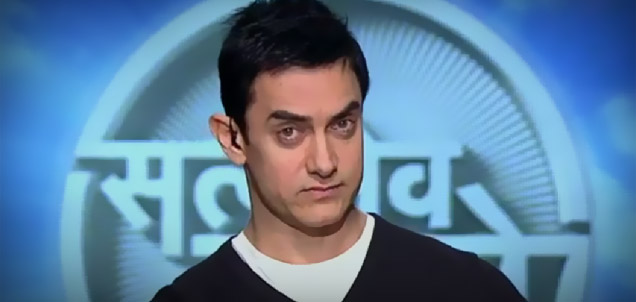
    On World Laughter Day, Aamir Khan was able to achieve just the opposite – make Indians wake up to the social evils we only talk about in hushed tones and cry while consuming  the harsh reality we all run away from. The much-awaited Satyamev Jayate premiered yesterday (Sunday, May 6) morning after a well-orchestrated marketing campaign. As expected, the show was a hit among the masses and media personalities. MxMIndia spoke to a cross-section of mediapersons and experts for their reactions to the show – and to know if the show will be able to sustain the hype and curiosity it has generated.


    Anita Nayyar

    TRPs, no problem

    Most media planners are happy with the show – personally as well as professionally. They feel that the show was able to generate enough curiosity by making people switch on their television sets on a Sunday morning and will continue to do so.


    “The show had a huge amount of emotional quotient, but the way the issue was dealt in the episode will be able to impact people and many of them will wait for the next episodes too. The way everyone is talking about it, I’m sure that the channel will be able to get its TRPs. Apart from the Aamir factor, the issues being discussed on the mass-reach channel will also help it,” said Anita Nayyar, director (customer strategy), BCCL.


    Mediaah! Thank you, Star Plus. Thank you, Aamir Khan

    Anil Thakraney: Oprah Khan

    Agreeing with Ms Nayyar, another senior media planner felt that that the show has the potential of becoming the highest TRP generator in the morning slot. “It’s an episodic show, so a lot depends on how each episode is produced. The show, though a little over dramatic at certain portions, will catch people’s attention,” said the media planner, requesting anonymity.


    The show was telecast on nine channels – of Star the network, Doordarshan and ETV Telugu  and was also dubbed and had subtitles to reach out to various parts of the country.


    Chandradeep Mitra, managing partner, Anvention and who is now based in Kolkata, liked the show and felt that even though it is not pure entertainment and deals with uncomfortable topic, it will be a hit among the masses. “The show was telecast with subtitles in Bengali on Star Jalsa, which helped it retain its genuineness. People here are comfortable with Hindi, so language won’t be a problem. After the initial hype, a lot will depend on how it is written and talked about on the social and mass media. Also, the topics will show how the show will do in the future. For instance, the first episode would have an impact on the Hindi-speaking belt,” he said.


    Anil Sathiraju

    Another media planner who saw the show on Star Plus and a regional channel, Star Vijay, felt that only Aamir Khan will be able to catch people’s attention down south. “It might not catch people’s attention as everyone is expecting, but it’s unpredictable.  Although, one look at the show and one can see that the actor and his team have done their homework well,” said Anil Sathiraju, head – south, Mudra Max Media.


    Many also felt that it’s a bold step by an entertainment channel to deal with such a topic and to such an extent. The money spent on the show is no secret. “Aamir is a popular actor, but I don’t think the show will be able to garner the same kind of popularity and following like other weekday prime time shows on similar channels. But hats off to the channel and the actor for taking up such a bold step and deal with social issues no one wants to talk about,” said Sundeep Nagpal, founder director, Stratagem Media.


    Marketers’ paradise?

    The 10-second advertisement slots for the show were said to have been sold at thrice the usual rates. The main sponsors have already paid a huge sum to be associated with the show. According to the marketers, the tear-jerker has the mass-appeal and the pull.


    Lloyd Mathias

    The show has been ‘trending’ on Twitter the whole of Sunday and has an ever-increasing number of followers on Facebook too. So, on the popularity front, the show has been able to reach out to its target audience. At least the socially networked intelligentsia for sure.


    Former CMO, Tata Teleservices, Lloyd Mathias said that the show is a huge marketing property. “The hype created before and after the show, is a clear signal about the impact it has created. Apart from the Aamir Khan factor, even the issues bieng dealt with have created uniqueness and curiosity.  So, every marketer will be glad to be associated with the show.”


    Sanjay Tripathy

    Even Sanjay Tripathy, executive vice president – Marketing & Direct Channels, HDFC Life, felt that marketers would be glad to jump onto the bandwagon: “Every show has a certain TG and marketers advertise with them according to their TG. Satyamev Jayate is a show which has appeal across sections – class, age, region and religion. So, even though the show is not at a prime time slot and not a pure entertainer, people will watch it. So, why wouldn’t any advertiser want to be part of it?


    More than a tear-jerker

    The first episode dealt with the issue of female foeticide – not something people aren’t aware of. Sociologist, human right activists and media commentators are glad that someone is talking about such taboo topics on such a platform. And since, an actor of certain credibility and reputation is bringing it to the masses, there might be some change in the society.


    “The portrayal of the issue was sensible and the personal experiences of the three women on the show were heart wrenching. Till now, such topics were only debated by academicians and activists. But now it’s in the public domain. And it has shaken up the people. However, now the concern is, will it be able to find a solution for such highly-prevalent evils of our society? A follow-up is needed so that the show doesn’t just become another tear-jerker,” said Sarla Bijapurkar, sociologist.


    Ranjona Banerji
    Ayaz Memon

    Ranjona Banerji, senior journalist and contributing editor, MxMIndia, felt that sustainability is a challenge now. “A lot of times, after a hard-hitting start, many shows tend to bend towards populist themes. So, I hope the show doesn’t do that or run behind TRPs. The show will have the similar constituency of followers like Anna Hazare. Thus, change in a society might happen, but a lot will depend on how the show progresses from here.”


    Agreeing with her is Ayaz Memon, veteran journalist and editor, who too believes that sustainability is a challenge the show will face if it wants to be different: “Very rarely do people want to watch ‘reality’, but the show was able to catch almost everyone’s attention on Sunday. Apart from sustainability, another challenge the show will have to overcome is how quickly it is able to capture the youth’s attention, because one doesn’t know what will happen after three weeks.”


    If that’s not enough, Teesta Setalvad, journalist and activist feels that the show was great, but there were loopholes in it too. “For instance, in the show Aamir Khan said that he will write a letter to the CM, but in reality he can’t do much about it. It’s the chief justice who can make a difference and take action. Also it didn’t tell people where to go when such issues happen, no matter how weak the organization might be. Apart from that, the show was excellent and a good start in creating awareness.”


    Photograph: Video grab from SatyamevJayate.in


    > The Importance of Being Aamir Khan

    > Why SJ will rule weekends; Stratagem analysis: Weekday Show #23 > Weekend Show #1

    > SJ is Aamir’s baby, completely: Satyajit Bhatkal (director of the show)

    > High EQ at Aamir Khan talk show Satyameva Jayate

    > Airtel slashes SMS rates for Satyamev Jayate

    > Anil Thakraney: Aamir wants to play God


  • HDFC Life ‘click(s) to protect’

    By Shubhangi Mehta


    HDFC Life has introduced a policy for its urban customer which will help them buy insurance online. The campaign for this will be hitting television screens soon.


    Until now you online purchase was meant for purchasing goods for one’s use but now after the ‘Click 2 Protect’ initiative by HDFC Life, one can now buy term insurance online and secure your family with a large sum assured at the lowest premium rates.


    Click to protect is available in 750 cities, where HDFC Life is accessible if consumers need any help.


    [youtube width=”400″ height=”200″]http://www.youtube.com/watch?v=WsxjzLfPFH0[/youtube]
    [youtube width=”400″ height=”200″]http://www.youtube.com/watch?v=VCoiYnzZUXQ[/youtube]

    Sanjay Tripathy, Executive Vice President and Head, Marketing and Direct Channels, HDFC Life, on this initiative, said, “This is a new online programme mainly for our informed urban customer between the age of 25-40 years. The online programme is an ease for a customer who plans to buy insurance. The campaign that we have created for the product talks about ‘I love my family’ – it’s about being a son, then a husband, to a father. The thought manages to connect with the Indian consumer. For Indians, family comes first and they want to secure their family’s current lifestyle/dreams/goals even when they are not around.”


    The new campaign mainly focuses on the fact that hypothetically, an individual finishes graduation by the age of 20 years. Post that he starts working, gets married, becomes a parent, buys a house etc, ie with increasing responsibility people become more concerned about their family. Today uncertainties have increased and lifestyle has changed significantly as compared to previous generations. The campaign makes the consumer realize that term insurance is very important today to secure one’s family adequately, and seeks to make him feel concerned.


  • The Anchor: Sanjay Tripathy on 7 reasons a marketer chooses an ad agency

    #1 End-to-end expertise and servicing. An advertising agency which provides a bouquet of services and is capable of creating effective 360-degree integrated communications campaigns is important, as classic one-dimensionaldvertising is becoming less relevant in the current environment.

    #2 Team credentials and clients handled. People form the most important part of an advertising agency, and their credentials and experience are a huge factor in deciding to work with them. The advertising agency needs to be evaluated to determine their expertise in handling different business categories, especially their experience of working on your type of business and if they understand the competition in your field. At the same time, it is important that the agency have some experience in other business sectors as it brings in fresh ideas and helps create clutter-breaking communication.

    #3  Size and scale of agency. It is important to ascertain whether the agency is adequately equipped to deal with the corresponding size of the client’s business in terms of creative, operational and technical resources.

    #4 International exposure. The more the agency has interacted with global clients and has experience in creating campaigns globally, the better. It helps bring in more professional working and a lot of fresh ideas.

    #5 Consistency in dealing. The ability of an agency to maintain consistency as well as transparency in dealing with its clients is very vital from a client’s perspective. It enables ease in dealing on a day-to-day basis and helps meet timelines and implement campaign plans more efficiently.

    #6 Strength in research. A strong research wing in an agency helps ensure that the campaign is backed by high sensitivity in terms of socio-cultural understanding and aesthetics while maintaining the brand philosophy. The tools that the agency uses in planning campaigns and analyzing the brand and competitors need to be scientifically prepared.

    #7 Balance between creative and business strategy. A path-breaking creative idea may not always be the best solution for a business problem. An agency which understands the importance of business problem-solving through communication is beneficial in the long run. Also, its ability to align with the long-term strategy of the client is important.


    Sanjay Tripathy is Executive Vice President – Head Marketing and Direct Channels at HDFC Life.

  • The Anchor: Sanjay Tripathy on 7 reasons a marketer chooses an ad agency

    #1 End-to-end expertise and servicing. An advertising agency which provides a bouquet of services and is capable of creating effective 360-degree integrated communications campaigns is important, as classic one-dimensionaldvertising is becoming less relevant in the current environment.

    #2 Team credentials and clients handled. People form the most important part of an advertising agency, and their credentials and experience are a huge factor in deciding to work with them. The advertising agency needs to be evaluated to determine their expertise in handling different business categories, especially their experience of working on your type of business and if they understand the competition in your field. At the same time, it is important that the agency have some experience in other business sectors as it brings in fresh ideas and helps create clutter-breaking communication.

    #3  Size and scale of agency. It is important to ascertain whether the agency is adequately equipped to deal with the corresponding size of the client’s business in terms of creative, operational and technical resources.

    #4 International exposure. The more the agency has interacted with global clients and has experience in creating campaigns globally, the better. It helps bring in more professional working and a lot of fresh ideas.

    #5 Consistency in dealing. The ability of an agency to maintain consistency as well as transparency in dealing with its clients is very vital from a client’s perspective. It enables ease in dealing on a day-to-day basis and helps meet timelines and implement campaign plans more efficiently.

    #6 Strength in research. A strong research wing in an agency helps ensure that the campaign is backed by high sensitivity in terms of socio-cultural understanding and aesthetics while maintaining the brand philosophy. The tools that the agency uses in planning campaigns and analyzing the brand and competitors need to be scientifically prepared.

    #7 Balance between creative and business strategy. A path-breaking creative idea may not always be the best solution for a business problem. An agency which understands the importance of business problem-solving through communication is beneficial in the long run. Also, its ability to align with the long-term strategy of the client is important.


    Sanjay Tripathy is Executive Vice President – Head Marketing and Direct Channels at HDFC Life.