Tag: Sam Balsara

  • Jaldi 5 with Sam Balsara: Industry’s cautious approach could be replaced by buoyant

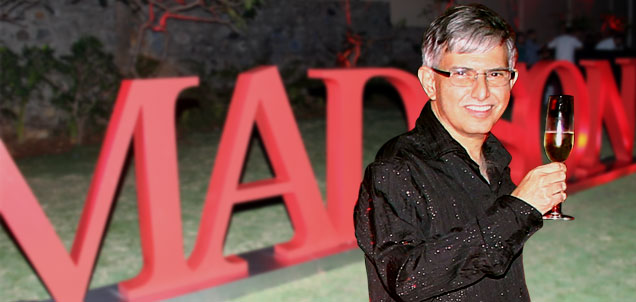
    Like is the norm every year, Sam Balsara, CMD, Madison World took on the mantle of showcasing to the industry how the trade fared in the year gone by and what is expected out of it in the oncoming year. Johnson Napier chatted up with the media veteran on the sidelines of the Pitch-Madison report presentation and got him to spell out the mantras and growth trends expected in 2014. Excerpts:


    Is the media growth outlook a much positive one from what was initially expected from the year 2013?

    The year 2013 has been more than good for the media industry in India with growth estimates at 11.1 per cent. That was much more than what was initially projected where the number was 7.4 per cent. So, yes, it has been good and I believe that the ‘cautious’ approach the industry was taking could be replaced by ‘buoyant’ where the growth projections for 2014 are concerned.


    Medium-wise, did you expect any surprises where market share was concerned or was it the same as last year?

    It was more or less what was predicted where Print continued to occupy the top slot followed by TV and Digital. In fact most of them have managed to post marginally higher rates than what was originally estimated from last year. So it’s a good sign. Moreover, I believe even 2014 will manage to throw up a few surprises if we go by the current trend.


    Apart from elections that you said will occupy a bulk of the adspends share, any other factors that you think will propel growth for the industry?

    In fact elections will be the single biggest thing to take place in 2014. What is heartening is that 50 per cent growth is expected to come from the elections coffers across political parties. Rs 5000 crore is quite a huge number, which is what we are estimating the revenues from elections to be.


    Which are the mediums that will largely drive the growth for the industry in 2014?

    All mediums would contribute in a significant manner with Print and TV continuing to be big, but Digital is something that will post good revenues again next year.


    Do you foresee any challenges for the industry in 2014?

    Challenges will always be there but we have to constantly strive to deliver good ROI to the advertiser and also pray and hope that advertising works. After all, an advertiser spends money so that he can increase his sales and if that does not happen then the entire foundation of advertising gets shattered. Agencies like us have to continuously be on the wall to discover newer ways of assuring the advertiser of adequate returns.


  • Say Cheers! Madison predicts 16.8% adspend growth in 2014


    By Johnson Napier


    With so much being reported and analysed about how the oncoming Lok Sabha elections would benefit or harm the prospects of the economy, there is one section of the trade for whom the election year indeed holds good stead. Going by the growth projections that the election season are expected to bring in 2014, the media advertising business in India is in for a big surprise if numbers revealed in a recent report are anything to go by.


    According to growth projections released by the Pitch Madison Media Advertising Outlook 2014 report in Mumbai yesterday, the advertising revenues are expected to grow by a robust 16.8 per cent in 2014 at Rs 37,216 crores. This is a sharp rise from the healthy 11.1 per cent that was reported by the industry in 2013. In fact the growth in 2013 is much more then the benchmarked figure of 7.4 per cent that was initially predicted by the report.


    Presenting the numbers to the fraternity in Mumbai, Sam Balsara, Chairman and Managing Director, of leading media services conglomerate Madison World said that the time to be cautious – which was the state that the industry was in for much of 2013 – was almost over and that the year ahead would be even more fulfilling with growth projected in the range of 16.8 per cent.  The report was presented by Madison World in conjunction with the exchange4media group’s Pitch magazine.


    “It is great to be clocking a growth rate in double digits, which has come as a boon to the industry that was stuck in clouds of uncertainty given the economic downturn that was witnessed for much of last year,” affirmed Mr Balsara. “Compared to 2012 that registered revenues to the tune of Rs 28,694 crore, the year 2013 reported numbers equalling Rs 31,877 crore, growing by 11.1 per cent. In fact 2014 would outperform the previous year and would register an estimated growth of 16.8 per cent, with revenues totalling Rs 37,216 crore,” said Mr Balsara, beaming.


    According to Mr Balsara, the core factor that would bring in the growth for the industry would be the Lok Sabha and the state Assembly elections scheduled for 2014. This would also include spendings by individual political candidates that would be investing money in reaching out to the masses.


    Presenting a medium-wise break-up to the gathering, Mr Balsara said that like last year, this year too belonged to Print that emerged as the numero uno medium. Advertisers took a liking to the medium as it reported a growth of 10 per cent with revenues equalling Rs 13,167 crore. This was largely due to increased advertising by sectors such as FMCG that contributed by 12.3 per cent to the overall ad pie (replacing Auto from the top spot) and Auto that contributed around 11.7 per cent. Education though saw a decline to 9.71 per cent versus 10.6 per cent share registered last year.


    When asked by MxMIndia to share his observations on the projections for the medium of Print, Varghese Chandy, Chief General Manager, Marketing, Advertising Sales, Malayala Manorama said that the growth was indeed a bullish one for the sector. “I am excited by the numbers that we have managed to throw up as a medium. The fact that we have still got the advertisers attention by being the number one medium of choice is a big thing.” Sharing further on what will drive the sector in 2014, he said that the Lok Sabha elections and the assembly elections that will take place in 2014 will bring in the necessary revenue growth that the medium is known for. But he had a word of caution for the magazine sector as he said that it would still be a task for magazines to contribute as much growth as newspapers too. “While niche and regional magazines will continue to deliver good growth, overall the magazine industry will still be challenged on the growth front.”


    Following the medium print closely was Television that recorded a growth of 8.2 per cent with revenues totalling Rs 12,410 crores. This was in sharp contrast to 2012 where the medium registered a zero per cent growth. Where sectoral contribution was concerned, Media, Retail, Alcoholic Beverages and Corporates registered a negative growth with only FMCG registering a positive growth for the medium. The medium is further expected to grow by 15 per cent in 2014.


    The next medium to vow the advertisers was Digital that has now become the third-most preferred medium for advertisers on a consistent basis. With revenues totalling Rs 3,050 crore the medium grew by a good 32.4 per cent and is expected to grow by 29.5 per cent in 2014 as well. Of this, display advertising will continue to have an upper hand compared to search with revenue numbers totalling to Rs 2,150 crore.


    Siddhartha Mukherjee, Category Director, Chocolate and Media, Cadbury India, Mondelez International was optimistic of the returns that the medium would deliver in 2014. Affirming to this writer, he said, “Going by the projections that were presented today and by the points bought up by panellists, there is no doubt that digital will continue to remain a go-to medium for many advertisers. That is what would be of importance to us too.”


    The mediums of Radio, Outdoor and Cinema combined accounted for the remainder 12-13 per cent of the ad chart with Radio accounting for revenues totalling Rs 1,097 crore (18 per cent growth), Outdoor clocking a growth of 6.2 per cent at Rs 1,977 crore and Cinema registering a growth of 10.4 per cent at Rs 167 crore.


    The evening also witnessed keynote addresses being delivered by dignitaries including Adi Godrej, Chairman of the Godrej Group, Uday Shankar, CEO of Star India, and Girish Agarwal, Director, Dainik Bhaskar Group who presented a roadmap that the industry could adopt to change their business fortunes and also derive positive growth for the several mediums under Media.


  • Madison PR starts 2014 with 20 new clients

    By A Correspondent

    Paresh Chaudhry
    Sam Balsara

    Madison Public Relations (MPR) signed up a record 20 new clients in January 2014. With a growth of 32% in 2012-13 over the corresponding year, the agency is expected to end this year (2013-14) with close to 30% growth.

    The agency signed up The Lodha Group, Zee Media Corp, Indian Merchant Chambers, Enamor, Celio, VVF and Max Fashions amongst others.

    On the achievement, CEO Paresh Chaudhry commented, “It’s a great start for the last quarter of the year and lays a strong foundation for the next year with over 50% of our big wins as retainer clients.”

    Said Sam Balsara, Chairman, Madison World (of which Madison PR is a part): “I am delighted at Madison PR’s consistent high growth over two years. I am glad more and more advertisers are waking up to the power of Brand PR. PR used intelligently and strategically can greatly enhance the power of advertising.”


  • He came, He Conquered


    By Fatema Rajkotwala


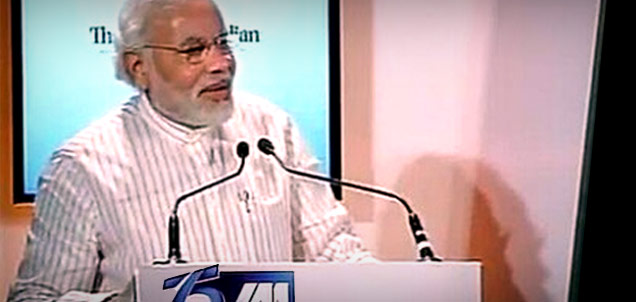
    Outside there were traffic jams as he made his way to Bandra Kurla Complex and then across the tracks to Taj Lands End. Inside the Ballroom of the hotel, the audience didn’t mind waiting. Media professionals of all levels gave him a standing ovation twice over.


    In many ways, it was an interesting choice to get Narendra Modi as Chief Guest. The Gujarat Chief Minister and the Bharatiya Janata Party’s Prime Ministerial candidate’s campaign for the elections is known on the importance he has laid on messaging and employing technology to reach out to people.


    Beginning by acknowledging the fact that as Indians we haven’t done enough to showcase our strengths to the world. He spoke on how we still lack confidence in ourselves as a global brand, a result of years of being subject to submission and foreign rule but even though India has taken the ‘brand route’, some indigenous products have acquired a symbolic value and become door-openers in the global market.


    Mr Modi encouraged Indian marketers to take tips from Mahatma Gandhi’s communication, write a book on it and present it as a case study as a sureshot way for India’s branding and make it an irresistible destination for the world to turn to. He suggested that marketers ought to move away from “impressive marketing” and instead strive for “inspiring marketing” to survive and flourish.


    Industry veterans and captains MxMIndia spoke with were suitably impressed.


    Said Brahm Vasudev, Chairman, Hawkins Cookers: “I thought Mr Modi’s content and delivery were excellent. I think his insights on marketing were top notch and I was very pleased to hear his thoughts.”


    Bobby Sista, who is now founder-trustee of Population First, “The entire day was worth my time. All the speakers were good in their own way and one gathered new insights from each other. From a marketing point of view, Mr Modi’s speech showed that he had no doubt in his mind as to what is Brand India and he spelt it out as we would do for any product or service by listing out values and attributes. We have so many strengths and home truths that he highlighted – from our spirituality to mythology to traditions to our today’s achievements in terms of products and services. And we have not marketed ourselves. He is a brilliant orator and as a marketing and advertising person, I wish we had him as the head of our fraternity. The interest in him is heightened due to the expectation that he will win the elections and judging by the way he is being treated, it does seem to be a possibility.”

     

    Sam Balsara

    Said Sam Balsara, Chairman and Managing Director, Madison World, “Mr Modi struck me as an outstanding communicator and not just an orator, to use his own words. I was truly impressed by what seemed like an impromptu speech on a topic that is arguably, not his subject and yet he spoke eloquently on it with well thought through ideas and concepts. Therefore, I feel that if he could come up with such ideas on what is not his subject, I’m sure he has some very good ideas when it comes to the economy, to uplifting our poor, education, employment and more. So, I think we owe it to ourselves to give him a chance.”
     

    Shashi Sinha

    Shashi Sinha, CEO, IPG Mediabrands echoed this view. “Mr Modi’s thoughts and suggestions on Brand India were excellent and it is evident that he is a great orator.”


    Said Suman Srivastava, marketing consultant and former adman: “As Mr Modi said, we tend to impress or inspire. This may be one of the many speeches he has given today and to think that we tire out after a few presentations… I am left inspired.”

     

    Suman Srivastava

    Mr Modi listed out a range of examples where there is a clear need gap between the global market and our products such as Indian architecture, music and dance, film industry, organic foods, herbal and holistic health care and more. He further highlighted how our rich culture and traditional values could help solve world problems such as global warming because of our beliefs such as respecting of nature and our resources, which were earlier considered orthodox and medieval. “Not everyone has to be sold the Taj Mahal but we have failed to look beyond it. Soft powers rule nations, more than economic or military strength. We have what the world is waiting for but we lack faith in our own product. If we meet global requirements with our legacy, our identity will spread. We have to fill Brand India in our minds; to speak, breathe and live it in order to turn it into a reality.”


    The IAA India chapter made Mr Modi an honorary member.


    The speakers before Mr Modi

    What makes a brand a brand? Are Indian brands still suffering from an apparent lack of confidence in the global market? Are we not recognizing and respecting our “Indianness” and using it to leverage our brand identity? How should marketers brand their corporate responsibility in a way that it builds and leverages their brand and the Indian society as a whole? These are some of the areas on which other conversations permeated at IAA’s Global Marketing Summit.


    To mark the platinum jubilee of the Indian chapter of the IAA (International Advertising Association), marketing stalwarts came together for the Global Marketing Summit on Monday (September 30) at the Taj Lands End, Mumbai.


    In attendance were global names such as Wally Olins, Chairman & Co-founder, Saffron Brand Consultants, UK; Will Platt-Higgins, Director, Global Account Partnerships, Facebook, USA; Arunachalam Muruganantham, CEO, Jayaashree Industries; Ashley Benigno, Director, Creative Expression, Global Brand Strategy & Marketing Creation – Nokia, Finland; Tyler Benson, General Manager – Marketing and Operations, Microsoft, SMSG, India; and Sanjeeb Chaudhuri, Regional Head for South Asia and Global Head of Marketing, Standard Chartered Bank. The gurus shared their insights on brandbuilding, the art of marketing in a competitive environment and the sustainable strategies to be deployed in the future in the Indian context. The marketing knowhow sessions were followed by a dinner session and speech by Hon’ble Chief Minister, Gujarat, Shri Narendra Modi.


    Pradeep Guha

    The agenda and vision for the daylong summit was introduced by Srinivasan Swamy, President IAA India and VP Development, Asia Pacific; Pradeep Guha, VP and Area Director, Asia Pacific, IAA; and Anurag Batra, Chairman and Editor-in-Chief, exchange4media group.


    Wally Olins, Saffron Brand Consultants, UK left the audience nodding in agreement with his eye opening presentation on ‘What A Brand Really Is’. Mr Olins firmly propagated brands to clearly define what they stand for and pronounced “authenticity” as the new zeitgeist for marketing. “A brand is not a logo, a tagline or a slogan. It is what you stand for visually. It is demonstrating what the company does visually. Emotional factors profoundly affect the way we think about brands. If there is no empathy and warmth with the brand then you cannot choose. What does the product stand for? Why should I buy it?”
     

    Wally Olins

    In his talk titled, ‘Encountering a fast changing virtual world and a real slowdown, how does a bank stay competitive?’ Sanjeeb Chaudhuri, Standard Chartered Bank shared handy marketing strategies needed in the banking sector. Looking at the challenges for the software industry, Tyler Bryson, General Manager – Marketing & Operations, Microsoft SMSG India spoke on his presentation, “Reimagining marketing in a digital world”. This was followed by a panel discussion on the ‘Future of Sports and Movie Marketing’.


    Sharing Nokia’s experiences and learning from their latest brand offering, Ashley Benigno, Nokia, Finland presented his talk themed on “Connecting to an Emergent Global Youth – Lessons from Nokia Asha’. Sharing their research and statistics on the Indian youth demographic, trends in internet usage worldwide and emerging behaviours, Mr Benigno highlighted how recent successful crowdsourced campaigns by Nokia in Asian countries such as the ‘Querty Me’ campaign and their experience and learning from them. “Participation, appreciation and awareness” and “resonance and relevance” are two key takeaways for the company.


    Another session that was unanimously applauded and enjoyed by the audience was by Arunachalam Muruganantham, CEO, Jayaashree Industries on his out-of-the-box presentation on his journey as a rural innovator, themed, ‘Marketing and beyond’. Mr Muruganantham’s story is an awe-inspiring one that begun by a simple problem definition within his own home – lack of access to affordable sanitary napkins by women in India. There on, he designed, tested and invented a low budget napkin-making machine that he then converted into a sustainable business model that today, helps offer livelihood, hygiene, dignity and empowerment to underprivileged women all over the world.


    Through his presentation, he dropped nuggets of pure marketing advice and wisdom to an expert audience after pointing out that he had received no formal education. “Be original; don’t copy. As a rule of marketing, don’t fear your future. Marketing is not done on a war footing; it should be a sportive and passionate approach. Be proud of your product. Your product, organization or business model should be the solution to a problem – that is, build your organization on measurable social impact.”


    Will Platt-Higgins from Facebook spoke about how marketers and advertisers can turn to Facebook, things to keep in mind while creating content and design, practical suggestions for brands in his presentation on ‘Building Brands on Facebook’. “Rather than building a brand community, brands need to enter a user’s community. There is a need to design for the Newsfeed but good creative is just good creative. Shared passions are a great way to connect with consumers. One per cent of brand apps get more than 2000 users, so if you are thinking about investing in apps, it is incredibly difficult.” Despite talks on Facebook fatigue, Mr Platt-Higgins argued “Effectiveness on Facebook for advertisers and marketers lies on the basis of the increasing scale of people using it, which in turn increases the time spent, at the new prime time, which is – all the time.” Talking about the evolved narrative on Facebook from fan base count to a greater understanding of ROI, these were the core learning, “Branded content, impressions, reach and placement matter on the Newsfeed”.


    Photographs of event awaited from IAA India Chapter


    Narendra Modi Photograph: www.NarendraModi.in


  • Veena Gidwani, others to conduct PR EDP at Northpoint

    By A Correspondent


    Veena Gidwani

    Northpoint Centre of Learning has has announced a programme for business managers titled   ‘Unleashing the Power of PR to Build Brand Equity’ in association with Veena Gidwani Associates. This has been created by veteran PR professional and former CEO of Madison PR Veena Gidwani to help business managers optimize the outcomes of PR for their brands through a holistic approach that integrates channels and messages that help drive brand and corporate reputation.


    The program has been designed for business executives with responsibility for corporate image building and integrated marketing communications.  It is specifically targeted at senior and middle management professionals in marketing ,sales, external relations/ corporate communications, Account Directors and Managers in PR Consultancies & Advertising Agencies, Promoters/senior executives of small- and medium-sized businesses.


    Through a combination of case studies, best practice examples and teamwork, Veena Gidwani and industry experts  like  Ajay Kakar (Aditya Birla Financial Services), Shweta Shukla (P&G), K Ramakrishnan (Cafe Coffee Day), Anuradha Sengupta (formerly with CNBC-TV18) and several others will  share their insights for  winning with consumers  and building brands through PR.


    Announcing the programme, Prem Mehta Chairman, Northpoint said,”Though brand marketers have begun to taste the gains from planned PR, its real value as a marketing tool has yet to be appreciated fully.  It is emerging as an essential communication medium, and when handled professionally, PR adds credibility to the message because it is not seen as manufacturer speak.”


    Sam Balsara

    Speaking about the importance of this effort, Sam Balsara CMD, Madison World said, “Brands who are spending crores of rupees in advertising are under utilizing the power of PR. This is a big mistake. PR can greatly strengthen an expensive mediaplan and thus help improve ROI of the overall campaign. I am glad Veena is running the Executive Development Programme at Northpoint on Power of PR. It should greatly help practising industry professionals to extract more from their marketing budgets.”


    Sharing the rationale  for  the programme, Veena Gidwani  said,”My experience of over 17 years in managing  PR agencies, interacting with client/corporate teams,  made me realise that a large number of Marketing/Sales  Managers and Account Managers, underutilize PR as they do not  fully understand  the power and dynamics of PR. This program has been created to meet this need. I am delighted that we have eminent industry experts on our faculty panel.”


    For details: www.northpointindia.com or contact Nitasha Gupta on +91 22-24212241, +91 9594992588.


  • Meet the IAA Awardwinners-1 | Leadership can only be earned: Sam Balsara

    In his long and illustrious career, Sam Balsara has played a key role for the Indian advertising and media in industry forums and the government.  And as As Chairman & Managing Director, Madison World, he is known to have a keen sense for offering top value to clients even as he is a formidable force at client pitches.  Last Saturday, at the IAA Leadership Awards, Mr Balsara was recognised with the Media Agency Head of the Year award. In the first of the interviews with IAA Leadership Award winners, Mr Balsara shares with RITU MIDHA what lies at the core of Madison’s success


    How would you define a leader?

    I don’t think you can consciously become a leader – it’s your actions that make others recognise you as a leader. Leadership, to my mind can only be earned – and that is why there are very few leaders. I am not saying that I am one of them.


    What would you attribute this award to?

    I am not sure if I have done too much to earn it. Maybe, it can be attributed to the unique ownership position of Madison. There are not too many independent media agencies in the world – and probably industry acknowledges that surviving and driving for so long in this highly competitive world is no mean feat. I am thankful to the industry for considering me worthy of this award.


    What lies at the core of Madison Media’s success?

    A very simple premise: we are serving our clients, and we should deliver a much greater value to them than we are earning from them.


    You are a role model for many – what do you think would be the right steps for these youngsters.

    What I have followed is publicly known – but I must clarify – that is not the only way to success or leadership. It took me 16 years of working with large companies on the client and agency side, before I stepped out on my own – younger people these days don’t have the patience to last out that long trying to gather experience, expertise, knowledge before you can set out on your own. One of the things I had in my mind as a criteria and which I believe every entrepreneur should have – would I join that agency as an employee if I was not the owner of that agency. It is an important yardstick to follow before you set up on your own.


    Do you think people at any level can show leadership traits – or does it come only as you climb up the ladder?

    Generally CEO or Head of an organisation is recognised as a leader but to my mind even a media planner or an account executive can earn mantle of leadership. Leadership is something that you can demonstrate at every level. Leadership qualities are immediately noticeable to those around that person.


    TOMORROW: Anil Dua and Gayatri Yadav


  • The Importance of Being Vikram Sakhuja


    By Johnson Napier

    With inputs from Ananya Saha


    It may be the calling of a lifetime but as Vikram Sakhuja gets ready to shoulder new responsibilities as Global CEO of Maxus, he leaves behind a legacy at Group M that’s not going to be easy to match. Apart from influencing the team and colleagues to take on bigger challenges at the workplace, Mr Sakhuja has ensured that that the four media agencies under Group M umbrella continue to dish out excellence in whatever manner possible. The results are for all to see as the Group collectively has soared to great heights over the past few years and has become a hot favourite with several clients as well.


    On the eve of a farewell the team at Group M is hosting for him, MxMIndia spoke to a few industry captains who have worked or interacted closely with Mr Sakhuja maverick to gather their perspective on his contribution to Group M and towards the industry.


    CLIENT:

    Ajay Kakar, Chief Marketing Officer, Aditya Birla Group – Financial Services

    What does one say about Vikram? He is an omnipresent shadow. And what i mean by omnipresent is that he is there all the time but in his perfect humility and understated personality. He is not overpowering or overbearing but always there wherever you need him, wherever you need him. So as a client, i can say he is an omnipresent shadow, a very reassuring person to have to have access to and he will be there.


    As an industryperson, he is a very rounded person because he has the rare experience of agency, client and media. He is not a theoretical preacher but he has been on all sides and knows the practical side of clients and clients’ business. It gives him an unparalleled edge. The biggest thing i have noticed about him that he has managed to create culture at Group M, which reflects his personality of understated people who just do their best. Typically, advertising is about talking about your own self and talking about your own work. Here, his personality is of being understated and letting his work speak for himself and he has managed to permeate that culture across all Group M companies. Today, if you look at the Group M leadership belt, you find the same welcome personality across the agencies and people.


    What he has achieved is unparalleled  Look at the way Group M agencies are ruling not on size but on recognition also. On one end it is Mindshare and at the other, it is Maxus. Whichever horse won the race, it was Group M or Vikram.


    COMPETITION:

    Sam Balsara, Chairman & Managing Director, Madison World

    I’ve known Vikram Sakhuja for quite some time now first as a client at P&G and Coca Cola and then at Star India and later Group M. I see Vikram as a true-blue professional with high professional integrity and commitment to do a good, objective and honest job at hand. Also, he has performed well as a leader at Group M and his promotion is richly deserved. His promotion in fact is a cause of pride for all of us in the media industry and also India Inc. because he is an outstanding example of someone from within our industry who has been chosen to be a global head and that too operate out of India.


    Ambika Srivastava, Chairperson, VivaKi Exchange India
    I’ve known Vikram Sakhuja since his brand management days when he was with Coca Cola. He was very sharp and clear and was always able to ask the right questions. It’s a fundamental want but some people do not ask the right questions especially at forums. What I’ve noticed with Vikram is that he is always focused and asks the right questions. That is what enables him to articulate and address issues in the right manner.


    As for his stint at Group M, I personally feel that he has done a great job especially during the last 2-3 years when the economy was going through a tough phase. His appointment as global CEO of Maxus is indeed an achievement; he would be a great role model for the younger generation. I am indeed pleased that Indian talent has been recognised; it was indeed waiting to happen.


    MEDIA HOUSE:

    Bhaskar Das, Group CEO, Zee News (cluster)

    From what I’ve seen of Vikram Sakhuja, he is truly an inspirational leader as he is known to lead by example whether on the intellectual or managerial front. Of the many qualities that he possesses the one I think he is good at is keeping his eye on the future and seeking out cutting-edge development in the business and media space. He has a good understanding of business theories and the way it needs to undergo constant evolution for its own betterment. Our industry is such that it is undergoing continuous evolution due to acceleration in technological development and global practices. For a media buying house to be successful needs to have a good thought leadership in place and that is what Vikram Sakhuja has excelled in abundantly.


    During his stint, I think Group M has achieved greater heights and much of that has been possible due to his dynamic thought leadership skills. He has even created leaders out of his organisation in the time that he was at Group M. It is a matter of pride that an Indian has managed to get a global mandate, which signifies the importance being paid to Indian talent and also India being the epicentre of intellectual and managerial ability.


    (Dr Bhaskar Das was until recently President, Bennett Coleman and Company Ltd)


    COLLEAGUE:

    Ajit Varghese, Managing Director South Asia – Maxus and Motivator
    Vikram has been a client, a boss and great leader for me in the last decade. His biggest strength is depth of knowledge, ability to dig deep into issues and ability to focus on issue in hand than the people involved. To me his biggest contribution to GroupM is his ability to choreograph the strengths of 15-17 units heads and not letting competition have anything easy.


  • Make ASCI membership compulsory: CII white paper

    By A Correspondent


    The CII National Committee on Marketing has released a white paper on “Self-Regulation in Advertising in India – A critical Evaluation”. The paper identifies key concerns regarding misleading advertisements and analyses the issues. It also critically evaluates the role and responsibilities of all stakeholders – regulators, industry, activists and consumers. The paper further suggests that the solution to the problems posed by misleading advertisements is not to add one more legislation in the form of an Administrative Authority as proposed by Department of Consumer Affairs (DCA), and only in cases of non-compliance of Consumer Complaints Council’s (CCC) decisions should the matter be referred to any other regulatory body.


    Adi Godrej, President, CII, said, “This white paper reinforces that self regulation in advertising works, as seen in over 70 countries already. In India too, we believe in the efficacy of ASCI to regulate misleading advertising and more importantly its ability for speedy redressal. We urge the Department of Consumer Affairs to reconsider its recent proposal to set up a parallel administrative authority, which we strongly feel will delay the process of consumer redressal and be counter-productive to its intent. Instead, we request them to consider partnering with and strengthening the current mechanism of self regulation through ASCI further, a win-win for consumers, industry and the government.”


    The CII advocated that given the Advertising Standards Council of India’s (ASCI) track record in self-regulation of ad content, co-regulation between ASCI and regulators like DCA, Food Safety & Standards Authority of India (FSSAI), Ministry of Information & Broadcasting etc. as an effective solution. Co-regulation will ensure that ASCI and the government work together with all stakeholders to enforce compliance currently vested with ASCI but without any punitive powers. However, the paper suggested following areas of improvements of ASCI:


    • Mandatory membership of ASCI. Membership of ASCI be made compulsory for all industry players with exposure to advertising industry in India – the media vehicles, the advertisers and advertising agencies. For instance, rules in Holland require all organizations releasing ads on TV and Radio to be member of its SRO.
    • Integrate ASCI Code into statutory provisions: Sub rule (9) of rule 7 having Advertising Code of the Cable Television Network Rules, 1994 prohibits TV channels from carrying any advertisement that is in violation of the ASCI Code. Similar provisions may be introduced in other statutes like Press Council of India’s Advertising Code to ensure that advertisements while in conformity with the statutory provisions also adheres to the ASCI Code.
    • Expand coverage of ASCI code to digital and social media: A strong digital outreach programme is required to monitor digital and home shopping networks including outdoor advertising and mobile advertising. Large digital companies like Google, YouTube, and Twitter must join as members and compulsorily sign on to ASCI code.
    • Suspension pending investigation: This is one of the major concerns, and therefore control is required on account of advertising with sexual overtones, religious underpinning, and delivery of magical remedies/promotions in the mushrooming Indian advertising industry. To stop airing such advertisements a special fast track process which involves temporary suspension of an advertisement, which prima facie causes harm to the society, pending final decision by CCC can be implemented.
    • Co-regulation between ASCI and DCA as an effective solution instead of a new legislation. The committee has drawn a parallel with the successful model of Advertising Standards Authority (ASA) in UK, which does not possess any punitive powers but co-regulates with the government bodies to ensure smooth control over the misleading advertisements in that market.


    Thomas Varghese, Chairman, CII National Committee on Marketing 2012-13 and CEO, Textile Business, Aditya Birla Group advocated self-regulation in advertising. While he maintained that awareness about ASCI is low, Nandini Chopra, Partner and Head – FDCG, KPMG India, said, “ASCI is moving from reactive phase to proactive phase. Of course, lack of punitive powers and insufficient awareness needs to be tackled but with a lean budget that ASCI has, the proposed road would make for conducive eco-system.” She also pointed out that 60% of complaints come from competition, which helps in keeping the industry honest and self-regulated.


    Sam Balsara, past Chairman, ASCI and MD, Madison World said, “Everyone knows and understands that advertising is an engine of growth and economy. It is up to the industry to increase the confidence of consumers in advertising. Even as the white paper mildly criticises ASCI, we welcome it. We at ASCI will be looking at all these suggestions. We are also setting up machinery to screen the ads ourselves, before we get complaints,” he added.


  • Jaldi 5 with Sam Balsara: ASCI works despite no teeth

    While the CII National Committee on Marketing released a white paper on ‘Self-regulation in Advertising in India – A Critical Evaluation’ that advocates Advertising Standards Council of India’s track record in self-regulation of ads, MxM India caught up with Sam Balsara, ASCI’s past chairman.


    1. One of the key recommendations of the white paper is the mandatory membership of ASCI. How does ASCI plan to push that?

    Over the last 10 years, ASCI and I personally have taken the initiative to sign up more advertisers, media vehicles, and advertising agencies. With this CII recommendation of ASCI, I am hoping that industry would want to be a past of ASCI.


    2. Why has the industry been so slow to sign up?

    Low awareness can be one. Also, there if they sign up, the contract says that they cannot take us to court. But I am sure that once the industry gets to know of good points about signing up, they would want to associate with ASCI.


    3. Would more members, or less as the case is right now, give more teeth to ASCI?

    The beauty of ASCI lies in the fact that it does not have teeth and still works with the advertisers who make false claims. What happens is if we blacklist an ad, the frustration and anger in the advertiser rises. The bigger the advertiser, greater the anger.


    4. How does this help?

    In self-regulation. Co-regulation in itself helps the environment to become more facilitating. This enables ASCI to have more teeth.


    5. How many ads go off-air after ASCI blacklists them?

    The CII report says that it is close to 80 percent. But this is the number that inform ASCI in writing that they have taken the ad off-air. The number would be greater. Some prefer to pull it off without informing ASCI.


    (As told to Ananya Saha)


  • Jaldi 5 with Shailesh Gupta: Both readership & circulation will co-exist & complement each other

    On Friday, Shailesh Gupta, Director-Marketing, Jagran Prakashan was unanimously elected Chairman of the Audit Bureau of Circulations (ABC) for the year 2012-2013. S M Ahmad, Executive Vice President – Marketing of ITC was also unanimously elected as the Deputy Chairman of the Bureau for the year 2012-2013. Sam Balsara, Chairman and Managing Director, Madison World was the outgoing Chairman of the ABC.


    MxMIndia caught up with Mr Gupta on the sidelines of a dinner hosted by Mr Balsara on the occasion and sought his answers in the first edition of a new ‘quick interview’ series.


    01.   What will be your priorities as Chairman of the ABC?

    The priority is to bring about a more transparent system, evolve the ABC as a currency and make it a powerful decision-making tool for the industry.


    02.  Over the last few years, the ABC’s role has diminished given the growth of readership as a currency… what will be your attempt to reverse it?

    The idea is not to reverse it. Both Readership and Circulation as currencies will co-exist and complement each other. However, in order to make it more relevant to decision making, the currency needs to evolve with the changing times. The attempt will be to ensure that circulation as a currency regains the confidence of the industry and is of genuine use for decision making by both planners and media owners.


    03.  With the merger of the NRS with the IRS, the readership currency will only get stronger with newspaper marketers. Do you see a further diminishing of the role of the ABC and the currency of ‘net paid sales’?

    The core issue I think is that while the Readership currency has evolved on the one hand, the circulation as a currency has lived in status quo. Also while Readership as a currency will always be a sample-based study, Circulation is the census – therefore, the importance of the NPS is very clear. Rather than the role being diminished, I look at a scenario where we see these studies complementing each other and eventually benefiting the print industry at large.


    04.   One of the charges that many publishers have had is that the ABC – over the last 15-20 years – has failed to take into account present-day practices of invitation pricing and low cover prices of publications. As publisher of India’s largest daily, do you see that rule being amended in the near future?

    It’s too early to talk of the possible amendments. But clearly we will need to march ahead, look at the changes in the environment, and be able to evolve the currency to reflect the changes. For this, we will need to have all publishers on the same page. It will be important to consider suggestions and opinions of all stakeholders to create a robust and transparent currency – one that truly reflects what’s happening in the marketplace.


    05.   In the United States, there’s an ABCi for measurement of traffic on websites. Do you see the ABC in India doing that in the future?

    Too early to comment on that at the moment, but as of now we have a clear priority ahead in terms of restoring the sanctity of ABC as a currency and making it more relevant for the entire industry eco system.


  • Decoding Communication launched by TRA Publishing

    By A Correspondent


    Communication is a universal remedy. It helps bridge relationships, sustain knowledge and also makes chance more predictable. Communication builds a nourishing environment for organisations, brands and individuals to grow. In today’s environment of information overload, it is imperative that anyone interested in understanding, influencing and managing communication, has full knowledge of the subject and Decoding Communication is a book that helps in deciphering this complex subject through its fluid and anecdotal writing.


    Sam Balsara, Chairman and Managing Director of the Madison Group, says about the book, “Decoding Communications is an excellent read for both students and practitioners of communication. It helps provide a conceptual framework to better understand what we do intuitively and why it works and sometimes doesn’t. Chandramouli needs to be complimented on coming up with this alongside running two successful companies. The purpose of all business is to create ‘Trust’ and if it succeeds in doing that, business succeeds.”


    Author N Chandramouli is the CEO of the Comniscient Group which has interests in several communication businesses. He has been a communication consultant to several global companies that include brands like DHL, Henkel, Botox, D&B and J&J. He lectures in several communication colleges and is also the author of The Brand Trust Report, India Study (2011 and 2012), and Decoding Communication. More information is available at www.nchandramouli.com.


  • Madison Media wins Crompton Greaves AOR

    By A Correspondent


    Madison Media Sigma has just announced the win of Crompton Greave Ltd. The agency will handle its entire range of Products including fans, lights, lighting fixtures, pumps and electric appliances.


    Mr. Sam Balsara, Chairman & Managing Director, Madison World said: “We are delighted to add a reputed global engineering conglomerate like Crompton Greaves in our roster of clients and are confident of helping Crompton Greaves get its rightful share and more in India’s growing market.”


    Ms. Vanita Keswani, COO, Madison Media Sigma said: “I look forward to working on a new and diverse set of categories and creating powerful media strategies for the entire portfolio.”


    Madison Media was recently in the news for winning Dixcy Textile’s Media AOR.


    Madison Media Group is India’s foremost media agency handling media planning and buying for blue chip clients including Airtel, Godrej, Cadbury, ITC, General Motors, Marico, McDonald’s TVS, Britannia, Procter & Gamble, Asian Paints, Tata Tea, Shriram Transport Finance, Levis, SpiceJet, Axis Bank, Domino’s, Bharti Axa, MaxNewyork Life Insurance, Tata Salt, Acer, Dish TV, Imagine TV, Times Television Network, Indian Oil and many others.


    The gross billing of Madison Media is Rs3,000 crores.