Tag: Reviewing the Reviews

  • Reviewing the Reviews: Besharam is savaged by critics

    Director: Abhinav Kashyap

    Cast: Ranbir Kapoor, Pallavi Sharda, Rishi Kapoor, Neetu Singh


    By Deepa Gahlot


    Ranbir Kapoor’s golden boy image took a bit of battering with this one, more so because this pairing with Dabangg director Abhinav Kashyap was expected to work wonders.


    The plotless film, with crude gags, has Ranbir playing a Delhi lout who first steals the car of the woman he loves and then tries to get it back. The film depends too much on the star and his parents Rishi and Neetu Kapoor, who play cops, but are actually there, because it made for a newsworthy casting coup. The leading lady (Pallavi Sharda) and villain (Jaaved Jaaferi) seem incidental to the goings on.


    No wonder the film was savaged by critics, the unkind one giving one star and the kinder ones, two. Most hovered at the 1.5 stars mark.


    Rajeev Masand of ibnlive.com ranted: “The film’s plot, likely scribbled on toilet paper during an inspired moment on the pot, is centered on a loutish car thief, Babli (Ranbir Kapoor), who must steal back a car that he sold to a murderous money launderer (Javed Jaffrey), when he falls for the poor girl who owned the car (newcomer Pallavi Sharda). Handled with adequate lightness, this might have been an inoffensive, forgettable comedy, but Kashyap’s treatment of the material is so indifferent, the film doesn’t even hit that mark. Indeed ‘Besharam’ appears to be rolling out rather than unfolding, with not one actor so much as pretending to have a good time. What do you say about a film in which Javed Jaffrey looks too bored to over-act?”


    Sukanya Verma of rediff.com lamented: “The director of the predictable but entertaining Dabangg opts for yet another hackneyed plot about the proverbial misguided but golden-hearted orphan cum car thief and his decision to turn a new leaf after he falls in love. Only Besharam, with its tedious soundtrack (brace yourself for a song after every few minutes) and low-cost disposition, is so unbelievably sloppy and senseless, not even the best actors in the business can redeem it no matter how hard they try. And try they do, hard, too hard.”


    Wrote Karan Anshuman of Mumbai Mirror: “Filmmakers and stars should realise that a formula done fifty times over is not a similar golden egg-laying goose. The only motivation behind Besharam is to devise a hit– to work a spreadsheet and spit out receipts worth Rs 100 cr at the box office. Everyone understands that films need to be profitable. But are filmmakers forgetting that telling engaging stories is also a part of the job? Can cinema be reduced to an equation? In case you’re wondering, here it is: [Dabangg-Salman+Ranbir x flip introduction for climax+new girl+6 songs (subdivide one for each mood)-story+meta father son jokes] 2.”


    Sarita Tanwar was bowled over by Ranbir in DNA. “There is no denying that he is the glue that holds this film together. He is in every frame. And he does this new genre unabashedly. He proves there is nothing he cannot do. He shows off his versatility (and butt cleavage! A dig at Saawariyaa and Sanjay Leela Bhansali?)”


    Nandini Ramnath of Mint commented: “The flesh is willing but the spirit weak in Besharam, Abhinav Singh Kashyap’s unimaginative tribute to seventies Hindi cinema. Ranbir Kapoor’s carefree car thief Babli is inspired by characters played by Dharmendra and Amitabh Bachchan, but there’s a big difference between now and then. None of Kapoor’s predecessors had to shove socks into their underwears, adjust the area of their trousers around their crotches, imitate Michael Jackson dance moves, sniff the mattress used by their lady loves, and verbalise their sexual prowess. Kapoor’s bare back and a hint of whatever lies below it is viewed in a bathing scene that is sure to have a long afterlife on YouTube. Another seventies star, Ranbir’s father Rishi Kapoor, plays a constipated police officer who is seen in two painful sequences on the toilet pot, willing his intestines into action.”


    Shubha Gupta of Indian Express nailed it: “This is a film which pre-empts us from coming up with the classic line, “haaye, sharam nahin aati hai kya”, because it is called Besharam. Which then frees it to indulge in every single “shameless” thing a Bollywood flick safely can, presumably because it has an A-list star. This is a film in which the hero is a self-confessed luchcha-lafanga: remember that phrase? The kind of thing that the villain used to do- be an illiterate lout, crack cheap jokes, harass the heroine, and pull at his crotch whenever possible – is now down to our hero. Not discreetly, that would be unbecoming of a ‘besharam,’ but loudly, accompanied by background music, with the kind of exaggeration that doesn’t allow you to look anywhere else.”
     

  • Reviewing the Reviews: Critics give Apoorva Lakhia’s Zanjeer a mauling

    By Deepa Gahlot


    Zanjeer

    Director: Apoorva Lakhia

    Starring: Ram Charan, Priyanka Chopra, Sanjay Dutt


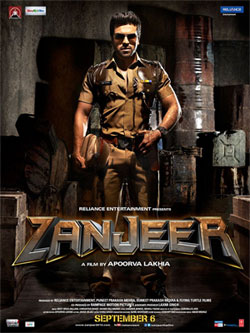
    Many of today’s multiplex audiences were probably not born when the original Zanjeer was made by Prakash Mehra in 1973. In spite of having no memories of the film or knowledge of its legacy, they rejected it.


    Critics, were of course, understandably savage—Apoorva Lakhia’s remake deserved a mauling. And Ram Charan was thrashed too, for even trying to do a role immortalised by Amitabh Bachchan.  This film got 0 stars and some 2 or 2.5s, but the unarticulated question was: How dare they?


    Aniruddha Guha of Time Out ranted, “For Lakhia, this is another dud in a career that boasts of some of the most terrible Hindi films of the past decade. Without a shred of originality, no sense of aesthetics, and a major lack of finesse, Lakhia needs to reinvent himself completely if we have to sit through another one of his films. That’s a rather unrealistic hope, I must add.”


    Raja Sen of rediff.com commented, “Ram Charan Teja makes his Hindi film debut with this Bachchan remake, and my heart goes out to his fans who will have to sit through this tediously trashy film. To paraphrase an unforgettable Indian movie character who shares a name with this new hero: Teja tum ho, marks idhar hai — alas, it isn’t anywhere close to a passing grade, son. You shouldn’t have bloody tried.”


    Shubhra Gupta of the Indian Express asked ‘why’. “Implicit in all remakes is the idea that you are refreshing the film, both for those who may have seen the original, as well as for newbies ( in the screening I was at, I found someone who, gasp, hadn’t seen the old one). The filmmakers have been carefully calling it a “tribute”, and they have added a couple of elements which weren’t in the older film, but to me it was a neither here-nor-there thing: it’s neither faithful remake nor campy, knowing tribute. It’s just a poor copy. So why?”


    Rajeev Masand of CNN-IBN fulminated: “Directed by Apoorva Lakhia, who has previously unleashed such atrocities on our senses as ‘Mumbai Se Aaya Mera Dost’ and ‘Mission Istanbul’, the new ‘Zanjeer’ isn’t just a bad film, it’s a shameless exercise in laziness. As anyone who watches movies for a living will tell you, there’s some merit to be found even in awful films…a nicely picturised song perhaps, or a decent performance from a random supporting actor, possibly a relevant message buried somewhere in the mess. But I’m afraid there’s nothing polite that can be said about ‘Zanjeer’.”


    Vinayak Chakravorty in India Today rightly commented: “They shouldn’t have messed with Zanjeer. Don was still understandable, Agneepath too. But if you can’t get an actor who can use silences to emote aggression you should not fiddle with an original that pretty much defined new-age violence for the Hindi screen. It is pointless saying comparisons will not crop up, every frame of Apoorva Lakhia’s remake shouts out reasons why it shouldn’t have been made. The remarkable thing about Prakash Mehra’s 1973 original was its underplayed angst. Lakhia’s version goes over the top with dumb action and dumber drama. Essentially, he fobs off Salim-Javed’s original idea, passes it off with a few tweaks, and gives it mindless treatment.Zanjeer 2013 looks like one of those noisy south Indian remakes Bollywood regularly peddles rather than a tribute to one of the greatest commercial films of Hindi cinema.”


    Tushar Joshi of DNA deplored its weak points: “Zanjeer struggles to find its own ground. The first half is a land mine of unnecessary songs and hackneyed dialogues that seem written for an audience for a different era. Whenever Lakhia tries to create a reference point to the original or recreate a moment, the initiative falls flat. It’s not just originality but also lack of novelty that mars the film from being anything but ordinary.”


    Karan Anshuman of the Mumbai Mirror wrote: “If Salim-Javed do watch this film, one wouldn’t be surprised if they decided to give the money and ‘core story’ credit back and disassociate themselves from this embarrassment of a “remake”. In this distressing time of remakes and hand-me-down inspirations, let’s remember Herman Melville, “It is better to fail at originality than to succeed in imitation.” Zanjeer manages neither.


  • Reviewing the Reviews: Serious critics give ‘Satyagraha’ 1-2.5 stars, rah-rahs upto 4.5

    By Deepa Gahlot


    Satyagraha

    Director: Prakash Jha

    Starring: Amitabh Bachchan, Ajay Devgn, Kareen Kapoor


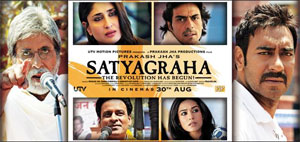
    Prakash Jha doing his patented small-town politics, issue-waving films, draws a line between the serious critics and the ones who provide the rah-rahs for the purpose of providing 4 stars ratings for ads.


    The serious critics ripped the film apart and give it 1 to 2.5 star ratings, while the rah-rahs went up to 4.5.  So audiences confused again and will either go check out the film themselves on opening weekend, or wait till is shown on TV.


    In a line, Jha took a topical theme and made a hash of it, but is saved by the stars.


    Shubhra Gupta of The Indian Express ranted, “The trouble with cobbling together your film’s plot from current headlines is glaringly evident in Satyagraha, Prakash Jha’s latest take on What Ails The Nation. It becomes a case of putting on celluloid events that have just finished unfolding, and are still unravelling in front of our eyes: if it is happening in real life, why do we need a reel version? Especially a version which doesn’t add anything of significance to the narrative: it’s all been-here-seen-this-and-that before.”


    Sanjukta Sharma of Mint was scathing: “Jha is more a pamphleteer rather than a director here. Besides the blinkered view on the politics of the common man, he is surprisingly blind to some film-making basics. Lighting by cinematographer Sachin Krishn could suit a TV soap opera. Editing is slack. The production design of this film is so poor, that even if there are some weighty scenes and some snatches of moving performances, you are unlikely to notice them.”


    Vinayak Chakravorty of India Today is a little kinder. “Raajneeti got it right. Aarakshan messed it up midway. Chakravyuh looked like Prakash Jha was not even sure of what he was doing. The writer-director’s fetish for cocktailing topical realism and box-office friendly masala continues with Satyagraha. A comparative analysis of Jha’s recent oeuvre becomes essential because in look and rendition Satyagraha reminds you of every film the director has made Raajneeti onwards.  If the Prakash Jha film in itself has become a formula, his latest does not break the pattern. The film is well-intentioned film, its message relevant. Unfortunately, not every well-intentioned film with relevant message leaves an impact. Satyagraha is more Aarakshan than Raajneeti in quality.”


    Sarita Tanwar of DNA made a valid point: “The thing that troubles me is: why make a fictional version of a subject like this? The only valid reason seems to be to not piss off the powers that be. To ensure a release. Admitting this is based on the Anna Hazare movement would have meant many hurdles. From political pressure to censor trouble to say the least. So director Prakash Jha chooses to call this a drama/love story, thereby defeating the whole message/point of making a film like this. You can’t make a film about what is wrong with the system, while surrendering to the system. It is a cop-out.”


    Anupama Chopra of the Hindustan Times commented: “If good intentions were enough to make good movies, Satyagraha would be a masterpiece. Prakash Jha is one of the few directors in Bollywood who has consistently championed political cinema. His rage at the rotten state of the system has simmered through his movies for nearly three decades. But from the National Award-winning Damul in 1984 to Satyagraha, his stories have become increasingly simplistic, star-driven and heavy-handed.”


    Rajeev Masand  of IBNLive expressed disappointment too. “With Satyagraha director Prakash Jha once again raids the headlines, this time turning his gaze on the growing public resentment towards the deep-rooted corruption in the system. Jha borrows liberally from real events and the lives of real people, including famed anti-corruption crusader Anna Hazare and the Jan Lokpal Andolan he inspired. Unfortunately Jha’s heavy-handed direction turns this well-intentioned drama into a plodding sermon.”


    Karan Anshuman of Mumbai Mirror wrote: “Prakash Jha came a full circle with his brand of cinema with Gangaajal in 2003, returning to what put him on the map in the first place with Damul (1985). He gave himself a mandate – activism through mainstream cinema – and embarked on a series of films on remarkably diverse subjects ranging from the Bhagalpur Blindings case to the state of education in the country, from an assessment of Indian dynastical politics to the Naxal quandary; always subtly offering to weigh in on a position that may not be the prevalent opinion.  But Jha’s films try too hard to sell themselves in this escapist market. Whether it’s the item song or the melodrama – in the last decade his style has been too consistent, and hence predictable – there’s reluctance to evolve.”


  • Reviewing the Reviews: 2.5-4 stars for Madras Cafe

    By Deepa Gahlot


    Madras Cafe

    Director: Shoojit Sircar

    Main Cast: John Abraham, Nargis Fakhri, Rashi Khanna and others


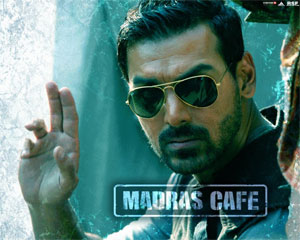
    Shoojit Sircar’s Madras Cafe is one of those films that put critics in a quandary. It takes up a subject unusual for Hindi cinema, and treats it with a no-frills realistic style, so it deserves praise. But then, it is an uneasy blend of fact and fiction, has lapses of logic and below par performances, and that is a problem.


    In the end, it won some heartfelt praise, some grudging, and ratings from 2.5 to 4, which can confuse readers of multiple media. There was also the controversy raging, with Tamil groups protesting against its release.


    Anupama Chopra of Hindustan Times wrote, “Watching Madras Cafe is both frustrating and satisfying. The thriller, set against the backdrop of the Sri Lankan civil war, is, in equal parts, muddled and moving. There are sequences of power and eloquence. And passages in the first half that had me so confused that I couldn’t figure out who was chasing whom.”


    Rajeev Masand of CNN-IBN was all praise. “Solidly directed by Sircar, who steers clear of typical Bollywood machismo and avoids oversimplifying characters or their motives, the film – at a little over two hours – is a compelling watch….  Until the climate is more conducive for filmmakers to boldly make real-life stories without fear of controversy or censorship, this may be the best way to approach important stories that must be told.”


    Sukanya Verma of rediff.com commented, “When done right, few combinations have the allure of fact meets fiction. The veracity of one pitched against the ingenuity of another can produce awe-inspiring results. Though not entirely above faults, Shoojit Sircar’s Madras Cafe marries the two to direct an engaging political thriller about a fictional character’s experience against real events and references, namely Sri Lankan Civil War and the assassination of ex-Prime Minister of India, Rajiv Gandhi.”


    Nandini Ramnath of Mint came close to panning it. “Madras Cafe hints at a conspiracy within the conspiracy, but it’s never really clear what exactly is the untold truth being revealed. The nationalities of the Caucasian men with whom LTF cadres are consorting? The extent of corruption within RAW? The notorious inefficiency of the Indian state?”


    Karan Anshuman of Mumbai Mirror was lenient. “In a predictable trend, if a film’s opening titles are a classic text-on-black you may assume with near certainty that it is going to be a sensible film. Not that experimenting with opening credits doesn’t often make for sensible cinema, but the simplicity of the concept usually foretells complexity of the story to follow. And Madras Cafe is a complicated film.”


    Saibal Chatterjee of NDTV.com was warm in his praise. “Madras Cafe is a sinewy and riveting espionage thriller that entertains without having to play to the gallery. That isn’t the only departure from norm that director Shoojit Sircar makes. He also attempts a risky tightrope walk between staying true to recent geopolitical history and the need to serve up an imagined, dramatised spy story. He succeeds on both counts. At no point does Madras Cafe appear to be in danger of losing its balance and plummeting into a void. Sircar hits the right strides, and blends fact and fiction with great narrative aplomb and visual flair.”


    Srijana Mitra Das of the Times of India raved, “Madras Cafe’s true star is its story which builds up to an agonizing end. It brings to life the Lankan war which many viewers were too young to have known. It highlights India’s ambiguous role, moving sensitively, taking no sides, except those of relationships involving respect – but no romance – between Vikram and Jaya, duty, victory and loss. Its second half grows more fraught and taut, conspiracies and compulsions becoming clearer. John stays low-key and competent as Vikram while supporting actors, like agents Bala, SP and Vasu, stand out. Restrained performances by the LTF suicide bombers are chilling.”


    Anuj Kumar of The Hindu was impressed too, “After a rather uninspiring start, Sircar has plotted a gripping tale where the action shifts from South Block to South India in almost real time. Here, it is not just the people in a scene that you have to listen to; you have to keep an ear out even for those who are not in the frame. Considering he starts with a handicap, where we know the end from the start, he manages to keep us riveted for the most part. His victory lies in the fact that he makes us believe that the tragedy could have been prevented. His hint at a larger conspiracy of a syndicate with business interests in the region echoes what Agent Vinod also hinted at, but Sriram Raghavan got carried away with the demands of the box office. Sircar chooses to keep it closer to reality.”


  • Reviewing the Reviews: 1.5-2 stars for OUATIMD

    By Deepa Gahlot


    Director: Milan Luthria

    Starring: Akshay Kumar, Imran Khan, Sonakshi Sinha


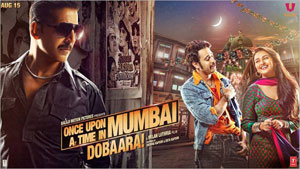
    At least the Mumbai is spelt correctly this time, even if the ‘a’ becomes ‘ay’. Numerlogical predictions, probably. The sequel to Once Upon A Time in Mumbaai and Milan Luthria gets a battering this time, not just for glorifying a gangster to absurd heights, but for its weak plotting and overwrought dialogue.


    Akshay Kumar gets way because he plays the don with the required swagger, but Imran Khan is not made to play a Dongri boy-he can’t get rid of his urbane personality.


    The film got 1.5 to 2.5 stars, with the Times of India coming up with the expected 3.5. Even Taran Adarsh’s generous count stopped at 2.5.


    Karan Anshuman of the Mumbai Mirror commented, “The Milan Luthria/Rajat Arora director-writer combo is back; this time with an even more baffling titled film: Once Upon Ay Time in Mumbai Dobaara. Stare at that for a moment and see if it makes sense on its own and then in context with the film. If it ain’t broken, don’t fix it. This mantra is entirely understandable from a producer’s point-ofview, but one wonders how many identical looking films can a creative mind keep cranking out. Unlike in Hollywood, where a franchise is usually handed over to another director while the original creator moves on, our filmmakers are content repeating themselves for most part.”


    Rajeev Masand of IBNLive slaughtered it. “This disappointing sequel to 2010’s Ajay Devgan-Emran Hashmi starrer is constructed around the premise of a love triangle…the laziest love triangle you could possibly imagine. Shoaib (Akshay Kumar) is a mob boss. Aslam (Imran Khan) is his loyal protégé. Both men develop feelings for struggling actress Jasmine (Sonakshi Sinha), who is close to Shoaib and Aslam. But Jasmin doesn’t know that Shoaib is a don, or that Aslam works for him, or even that Shoaib has designs on her. Shoaib and Aslam, meanwhile, are unaware that they’re both in love with the same girl. That’s way too many clueless people in one film!”


    Aniruddha Guha of Time Out was not kind either. “The sequel to the awkwardly spelt but rather enjoyable Once Upon a Time in Mumbaai was initially called Once Upon a Time in Mumbaai Again, before the “Again” was replaced with “Dobaara”. A closer look at the film’s poster will reveal that a “y” has been added to the “a” lately, and the name currently stands at Once Upon ay Time in Mumbai Dobaara. You could brandish a dictionary in revolt, or hold that Wren & Martin close to your chest and weep, but the idiotic title makes complete sense once you’ve watched the film. If anything, it reflects the mindset of its makers perfectly. The sequel’s a confused, botched-up attempt at reworking the formula of the first film, one that hurtles from point A to B without any sort of focus. The title is its least unintelligent feature.”


    Shubhra Gupta of the Indian Express wrote, “What did you expect from the sequel of Once Upon A Time In Mumbaai which came out in 2010? Given that its director and writer are the same, I knew that the clunkily-titled-and-spelt Once Upon Ay Time in Mumbai Dobaara! would tread the same territory: gangsters- muscle-flexing-in-Mumbai-which-used-to-be-Bombay, non-stop rat-a-tat of ’70s style dialogue-baazi, loud background music, and a plot riddled with predictabilities from beginning to end. What I wasn’t prepared for was just how similar it would be, despite the change in leads (Ajay Devgn and Emran Hashmi have been replaced by Akshay Kumar and Imran Khan, and instead of Kangna Ranaut, there is Sonakshi Sinha), and after a point, just how listless it would turn out to be.”


    Rediff’s Sukanya Verma panned it too calling it a “complete drag, unintentionally comical and painfully verbose unlike the prequel which hit quite a few right notes with its slick take on the anti-hero against the half-hearted immorality of the 1970s. Rivalry makes way for romance in the follow-up but for a film set against the mafia, the predominant action is the yak yak coming out of Akshay Kumar’s mouth. Though the actor, saddled with an absurd script against a gaudy set in a jaded love triangle, is a treat though conveying an extravagant personality and remorseless menace as the underworld kingpin.”


    Sanjukta Sharma of Mint was equally scathing. “The Dawood prototype in Milan Luthria’s new film, mindlessly titled Once Upon Ay Time in Mumbai Dobaara!, is a raunchy playboy who transforms into a wrathful and obsessive lover. Not a diabolical underworld don by miles. There is something incongruous about a Dawood remotely akin to Rahul in Darr. That Akshay Kumar plays the role with a lot of relish does not really help. The ersatz, 1970s-style dialogue-baazi, many notches worse than those in Once Upon a Time in Mumbaai (2010), combined with Kumar’s hammy, monotone performance-his tricks for the role include craning his neck to the left and a swagger that works only in slow motion-add to the banal claptrap that it is.”


    Saibal Chatterjee of NDTV.com was mild in comparison. “Stylishly mounted, Once Upon Ay Time in Mumbai Dobaara! is shot in muted hues, which captures both the street-level dread and the soaring sparkle of 1980s Bombay with consistent sharpness. What robs the film of genuine traction is that the action seems to unfold in a disinfected bubble that is out of bounds for the urban realities of the era.


    Moreover, there is very little chemistry between Sonakshi and the two male leads. The only time sparks actually fly is when Jasmine and Aslam lie under a small rail bridge and watch the wheels of a running train as it races by, generating electro-magnetic flickers in the darkness.  What makes matters worse is a overly sterilised narrative that presents every hint of passion between the girl and the two men only as flights of the febrile male imagination running riot to the accompaniment of ‘romantic’ songs.”


  • Reviewing the Reviews: Chennai Express gets 2-2.5 stars

    By Deepa Gahlot


    Chennai Express

    Director: Rohit Shetty

    Starring: Shah Rukh Khan, Deepika Padukone, Satyaraj and others:


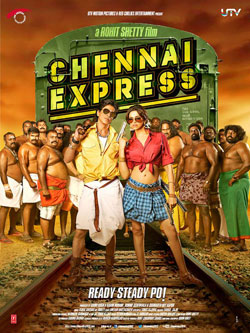
    This is the kind of film that even the media agrees is critic-proof. No matter how awful a Rohit Shetty film may be, his success rate and Shah Rukh Khan’s stardom is enough to guarantee a massive opening. Add to the aggressive marketing and huge number of prints released, and it would take a miracle of another kind to lose on a gamble this big.


    Still, reviews were scathing, 2 and 2.5 star ratings, except for a couple of regulars prone to flattery. Deepika Padukone was the one who came out smelling of roses, and she was universally appreciated– faux accent and all.


    Anupama Chopra of Hindustan Times wrote, “Chennai Express plays neither to Rohit’s strengths nor to Shah Rukh’s. It’s a strangely sloppy mishmash of cheesy humour, half-hearted romance, half-baked emotion and head-banging action. The film is filled with gigantic men whose size functions as a punch line. Yes, some of it is funny. The locations are beautiful. And I enjoyed watching Deepika Padukone as Meena, the don’s daughter with the thick accent, who meets Rahul on Chennai Express and turns his life upside down. Padukone’s spirited performance – she even makes that accent attractive – helps to lift the film.


    But, mostly, Chennai Express is a slog. Rohit’s movies have never been about plot or character or performances. His films have only one function: to entertain you by whatever means necessary. But sadly a film specifically designed not to bore does exactly that.”


    Rajeev Masand of CNN-IBN rightly called it a bloated vanity project. “Some films are hard to make sense of. Others are just nonsense. Chennai Express, directed by Rohit Shetty, ticks both boxes. More than a quarter of the film is in Tamil, and hence incomprehensible if you’re unfamiliar with the language. The rest is a stew of puerile humor, lazy stereotypes, and way-over-the-top acting from a star who appears to be trying too hard.Shah Rukh Khan, who’s provided enough evidence to convince us that he can do comedy effortlessly (remember Kabhi Haan Kabhi Naa, DDLJ, and Main Hoon Na?), spends a chunk of this film referencing his earlier hits, and bouncing off the walls like the Energizer bunny. Could he possibly be overworking himself to compensate for the film’s tired writing? Because it’s clear from Chennai Express that Shetty has launched an elaborate expedition with a plot so thin, it could give a paper dosa a run for its money.”


    Sukanya Verma of rediff.com tried to be kind to SRK. “What stays put through and through is SRK’s incredible charisma and gusto as he lightens the screen with his unabashed buffoonery, visibly enjoying his role as entertainer while lampooning it just the same.  His effervescence is met with dazzling reciprocation in Deepika Padukone’s ‘Meena Washing Powder Meena’ who gets top billing in the opening credits. There’s so much control in the stunner’s performances since the last couple of films. And her dynamic comic timing even against faulty sensibilities is part of that evolution. Finally, did I get my ten laughs? Well, I came *this* close. By the time the count had reached seven, Chennai Express decided to shift tracks from droll comedy to dreadful drama.”


    Shubhra Gupta of Indian Express commented, “This could have been a good caper, in which madcap characters race around the countryside with other madcap characters in hot pursuit. Especially when Shah Rukh Khan is so willingly sending himself up as only he can, with such a knowing nudge-and-wink that you smile despite yourself. “Rahul”, he introduces himself to Meenamaa (Padukone): “naam toh nahin suna hoga”. You know you are being set up, and yet you can’t help being amused. The amusement lasts only momentarily, and you are left feeling sorry at the waste.”


    Nandini Ramnath of Mint gave it more thought that it deserved. “Social observation isn’t Shetty’s forte, to be sure, and is nigh impossible in a movie whose dialogue writers are the impoverished punsters Sajid-Farhad. Shetty does work hard to be true to the story setting. He packs the movie with a largely Tamilian cast, drawn from a pool of extras and television talent, although he squanders the potential of a seasoned actor like Sathyaraj. Tamil folk and film music influences can be heard on the soundtrack, while the choreography attempts to replicate the energy of song-and-dance sequences in Tamil movies. There’s even a “lungi dance” at the end to name-check Bollywood’s tribute to the reigning god of Tamil cinema, Rajinikanth, but the entire endeavour proves to be as ersatz as Padukone’s Tamil accent.”


    Karan Anshuman of Mumbai Mirror wrote, “3500 local prints. 700 overseas prints. The widest Indian release ever. Production budget a shade under 100 crores. 6.75 crore paid preview collections on a Thursday, the highest ever. 100 crore over the weekend? 200+ crore lifetime? 2nd place for 3 Idiots? It’s troubling that, forget the producers, even the audience is interested in attending a math class rather than watch a movie for what it is.  An individual opinion in such critic-proof films is like a smashed up secondary car in a Rohit Shetty convoy: it amuses momentarily. Still, when you watch Chennai Express (and you will – because you like SRK, or liked Golmaal and Singham, or simply think it’ll make for a clever Facebook update), no harm in being prepared.”


    Saibal Chatterjee of NDTV.com gave it a surprising 3 stars. “It’s a somewhat long ride that occasionally teeters on the edge of tedium, but it certainly isn’t all wrong. Parts of Chennai Express, propelled by a spirit of inspired lunacy that holds the no-holds-barred action comedy in good stead, is markedly better than the sum total of the film. If only it had enough steam to sustain its momentum all the way to the very end, it would probably have been far more fun to watch. But do hop aboard. This Express is designed for quite a crazy carousel. If you hang in there and do not allow the many distractions and diversions along the way throw you off track, you might actually find yourself getting into the swing of things, especially in the first half. Some of the stops en route might seem rather unnecessary and overstretched. In fact, not all the platforms that Chennai Express chugs into are uniformly inviting. But the thunderous rhythm of the voyage does generate some genuinely funny gags.  Chennai Express warms up pretty quickly and delivers exactly what you would expect from a Rohit Shetty film: runaway entertainment.”


  • Reviewing the Reviews: Mostly 2.5-3 stars for Bhaag Milkha Bhaag

    By Deepa Gahlot


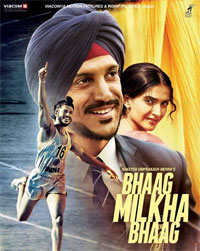
    In our films, the actors often rise above the material. But once in a while there comes a performance that takes a film onto a different plane altogether– and Farhan Akhtar’s turn as Milkha Singh in Rakeysh Omprakash Mehra’s Bhaag Milkha Bhaag is stupendous.


    Most mainline critics, however, found the film too long, melodramatic, unfocussed and fake. Even though the subject of the film is living and participated in the making of the film, it hits so many false notes. It turned the protagonist into a demi-god, but how accurate was the portrayal?


    Bhaag Milkha Bhaag

    (Released: July 12, 2013)


    Key Credits

    Producers:

    Rakeysh Omprakash Mehra, Viacom18 Motion Pictures               


    Director:

    Rakeysh Omprakash Mehra                     


    Writer and Lyricist:

    Prasoon Joshi                  


    Key Cast:

    Farhan Akhtar (Milkha Singh)

    Sonam Kapoor (Nirmal Kaur)

    Rebecca Breeds (Stella)

    Dalip Tahil (Jawaharlal Nehru)


    Music:

    Shankar Mahadevan, Loy Mendonsa, Ehsaan Noorani                


    Cinematography:

    Binod Pradhan                


    Editor:

    P S Bharathi


    Full credits at IMDB: http://www.imdb.com/title/tt2356180/


    The ratings were 2.5 to 3 stars, though the RJ and blogger kind of reviewers gushed unabashedly, one going the whole hog with a 5-star review. How seriously these writers are taken is the question.


    Rajeev Masand of IBNLive.com used the dreaded B word– boring. “The problem with adoring, reverential portraits of real people is that they tend to lack objectivity and quickly become boring. It’s true of Rang De Basanti director Rakeysh Omprakash Mehra’s Bhaag Milkha Bhaag, an ambitious account of the first 27 years or so of celebrated Indian sprinter Milkha Singh’s roller-coaster life….There are moments of great pathos here, and an inspiring lesson on the importance of perseverance and hard work. But it all moves at a snail’s pace, even as the drama of Milkha’s rise on the race track is punctured routinely by too many songs, overlong romantic tracks, and the kind of ‘commercial-movie trappings’ that are counterproductive to a film of this nature.”


    Sukanya Verma of rediff.com commented, “Bhaag Milkha Bhaag fails to achieve that level of clarity or coherence, primarily because of Prasoon Joshi’s faulty screenplay and sleepy editing by P Bharti, which appears both overwhelmed and clueless about putting together the many chapters of a sportsman’s eventful existence. So Bhaag Milkha Bhaag adopts the contrived route wherein everyone competing with the titular hero is entirely nefarious and out to break his legs or bully him like those Rajput dudes in Jo Jeeta Wohi Sikander and everything Pakistan implies hostile like those arrogant tyrants in every second jingoistic Bollywood flick.  Moreover, this indecision to project Bhaag Milkha Bhaag as either a) a man dealing with the painful memories of his childhood in partition era, b) the blossoming of a happy-go-lucky army man into a superstar athlete or c) why an individual doesn’t want to visit Pakistan overlaps too often in this three-hour plus, flashback-within-flashback drama to ruin a potentially promising premise. The last point, especially, makes no sense.”


    Shubhra Gupta of The Indian Express  found it tiresome. “Carefully skirting the tag of a bio-pic, Bhaag Milkha Bhaag manages to tell the story of Milkha Singh, as enacted by Farhan Akhtar, while giving us, tiresomely, all the familiar bells and whistles of a Bollywood entertainer with the naach-gaana, and the rona-dhona.  The story of Milkha Singh is inspirational, doubtless. And Mehra leaves, literally, not one stone unturned (and adds a few of his own, doubtless) in this three hour and some saga…”


    Sanjukta Sharma of Mint wrote, “It is a marathon trudge from cradle to national glory following a win in Pakistan against a Pakistani athlete, who incidentally has an aggressive coach, the film’s only villain. The long narrative rallies around the event that carries emotional charge for Milkha Singh and its details are painstakingly overemphasized. So Joshi hooks Milkha Singh’s story out of the context of Indian sports at the time and puts it under an isolating, personal microscope—an interesting approach if not taken to an extreme, clearly against the tradition of the biopic as a chronology of milestones.”


    Saibal Chatterjee of NDTV.com ranted, “The overlong Bhaag Milkha Bhaag seeks to achieve a dramatic heightening of the effect of a champion athlete’s rousing struggle to break free from the traumas of the past and turn adversity to opportunity.  In the bargain, it reduces the human saga to a loud, melodramatic and over-wrought tale that overstays its welcome.  It is amply clear by the end of the three hours of the film’s running time that the song-and-dance Bollywood form does not lend itself to the simple dynamics of a sporting biopic. Scenarist Prasoon Joshi and producer-director Mehra attempt to squeeze every ounce of emotion out of the real-life Milkha story. Unfortunately, it is reality that seems to be the biggest casualty in this deeply flawed endeavour.”


    Sudhish Kamath of The Hindu nailed the reason why the film may have failed as a biopic, but not as a commercial film. “No, Bhaag Milkha Bhaag is not a boring biopic or a detail-obsessed docudrama on one of India’s greatest sporting legends. It is an old-fashioned Bollywood film that caters to mainstream Hindi audiences. It would be more accurate to call this a tribute film inspired by the life of Milkha Singh than refer to this as a history lesson. The film acknowledges this when it ends with a disclaimer: “Inspired by a true life”.  And yes, it’s a complete sell-out of a film. But no complaints there because the best way to honour a legend is to make a film that a majority of India would watch. In an idiom that they prefer, even if it means exaggeration, melodrama and creative liberties with the hero’s love life. And Rakeysh Omprakash Mehra deserves that artistic licence considering that Milkha did indeed face extreme struggle, rose from abject poverty and had to make peace with his painful past.”


    Deepa Gahlot is an award-winning film critic and one of the seniormost journalists tracking films and entertainment in the country. The views expressed here are her own and the featuring of reviews is not MxMIndia’s endorsement of the views expressed therein.


  • Reviewing the Reviews: Mixed praise for ‘Lootera’

    By Deepa Gahlot


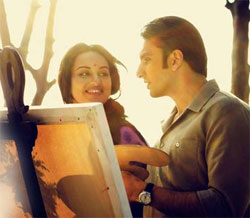
    Vikramaditya Motwane’s second film after Udaan, seems to have driven some critics into paroxysms of praise, including one rare 5 star rating, by rediff.com’s Raja Sen.


    Words like poetic, lyrical, awe-inspiring studded most reviews, though hardly anyone mentioned the tradition of filmmaking from Bengal that Lootera is inspired by. As some of the not-so-positive reviews pointed out, the slow pace is a problem, and just because it is a sumptuous-looking period piece, does not automatically make it a masterpiece.


    All this left the audience quite bewildered. How to figure out whether the film is worth 2/5 stars or 5? It may be said that at a time when gangster films and crude comedies get the box-office, the best that can be said about Lootera, is that it does not pander to the lowest common denominator.


    Deepanjana Pal, writing in Firstpost.com commented, “Lootera is heartbreaking in many ways, but the most crushing is the realisation that the smartest filmmakers of Bollywood coming together – Motwane’s long-time champion Anurag Kashyap wrote the dialogues and is one of the producers – doesn’t necessarily make a good film. Worse, it can result in a film that begins with promise and ends up as flat-out boring.”


    Shubhra Gupta of Indian Express was let down too. “I should have watched Lootera backwards, because it finishes with an almost unbearable loveliness. The ache in the heart comes as a welcome relief, but a little too late. The journey towards the end is shot through with beauty, one painterly frame after another evoking admiration, but it did not touch me. And that is where Vikramaditya Motwane’s film becomes a disappointing second act, after his magnificent debut Udaan.”


    Sudhish Kamath of The Hindu wrote, “Short stories work best as short films. There is a certain brevity and inherent pace that must not be tampered with. Especially, if the source material relies on an O Henry ending. O Henry’s short stories, especially The Last Leaf, that Lootera is based on, have the structure of a joke. It’s all about the punchline. You need to say it with all the detail you can, keep your audience wondering and before they know it, deliver that last line with sweet timing and get out of there. The good news is that Vikramaditya Motwane’s Lootera delivers that last line with perfection. If only the makers had kept the rest of the storytelling equally tight and gripping.”


    Karan Anshuman of Mumbai Mirror was mildly critical, “An O Henry short story is the spark that ignites a cinematic interpretation that undoubtedly would leave even the celebrated writer dazzled, if unaffected. Director Vikramaditya Motawane has constructed an elaborate experiment of a film. A big-budget visual delight starring A-list actors, Lootera’s story is simplistic; it’s telling self-consciously un-Bollywood, and one that aspires for artistic glory.”


    Then there were the 4 star raves:

    Rajeev Masand of IBNLive.com recommended dropping everything to watch it. “There is attention to the smallest details in ‘Lootera’, like the art direction, the lighting, and particularly Mahendra Shetty’s intuitive camera that knows just how to capture the lovely landscapes as well as the somber mood of later scenes. Amit Trivedi’s beautiful songs and background score add another layer of feeling to the aching love story here. Yet it’s hard to resign yourself to some convenient coincidences in the plot, or even the naivete that filters in towards the end. In a film so close to perfection, the small lapses are hard to hide.”


    Raja Sen gushed, “Motwane’s direction is so assured and confident that this scarcely feels like his second feature. The script is clearly one he believes in, and the film is resultantly free of false-notes. Even the few moments that feel like narrative missteps turn out to be masterstrokes. And, as exemplified by a breathtaking chase sequence that could result in any number of outcomes, Motwane sides with his story, not with any one of his characters. A film, then, about life, love and leaves. And in the end it comes down to the sort of snow-surrounded tree that you can draw even if you’ve always had trouble drawing leaves. Magnificent.”


    Meena Iyer of the Times of India gave it the expected rave, but with a rider, “In his second outing, post-the critically acclaimed Udaan(2010), Motwane definitely shows an upward graph. He transports you to the ’50s effortlessly with his vintage cars, opulent havelis, authentic costumes and terrific performances from his lead cast. Every frame is a picture postcard. Sonakshi, Barun Chanda and Ranveer need special mention. However, be suitably warned; the old-world aura and the languid pace are not for the young and restless. Note: You may find this film boring if state-of-the-art, slow romance is not your idea of a movie outing.”


    Saibal Chatterjee was hugely impressed. “An epic canvas, a quiet love story, a cops-and-robbers drama and an impressively sophisticated storytelling style: Lootera has all this and much more. Vikramaditya Motwane, who earned his spurs with the critically acclaimed Udaan in 2010, works here with a completely different cinematic easel. What he has carved out of the raw material at his disposal can only bolster his reputation as a filmmaker who knows exactly how not to be run of the mill. He fills the Lootera frame with fable, history, art, literature, poetry, occasional nods to classic Hindi cinema and music, and loads of passion, beauty and magic. In short, Lootera is a Bollywood miracle – a rare Mumbai film that is mounted on a lavish scale and yet dares not to play by the established norms of the marketplace.”


  • Reviewing the Reviews: Ghanchakkar fails to spin

    Ghanchakkar

    Key Cast: Emraan Hashmi, Vidya Balan

    Written By: Parvez Sheikh, Raj Kumar Gupta

    Directed By: Raj Kumar Gupta

    Produced By: Ronnie Screwvala, Siddharth Roy Kapur


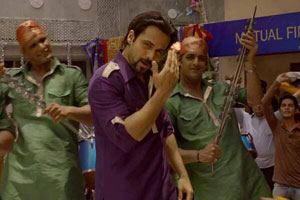
    So much promotion – Emraan Hashmi in red polka-dotted ‘night-suit’ and Vidya Balan in ghastly Lokhandwala costumes went everywhere. They must have believed in the film to do this, but critics were not so impressed. More so because director Raj Kumar Gupta’s earlier films, Aamir and No One Killed Jessica were such zingers.


    Mostly 2 or 2.5 stars, and a common refrain… starts off well and goes downhill.


    Shubhra Gupta of The Indian Express quipped, “Horny woman who doesn’t bother hiding it plus dour man with a secret, has the potential to be a humdinger. Ghanchakkar sets up trying-to-go-straight safe-breaker Sanju, and his blowsy trying-to-be fashion-forward wife Neetu, and a couple of rogues, around a bank heist, and lets them loose. This could have been a hoot, but the execution lets down the premise, and the film remains one of those that could have been edgier and funnier.”


    Rajeev Masand of IBNLive.com sounded almost disgusted. “The mystery in Ghanchakkar involves the whereabouts of a suitcase containing stolen cash. Yet, a harder puzzle to crack is figuring out just how so many talented people could make such a disappointing film. No One Killed Jessica director Raj Kumar Gupta recruits a competent cast, but flounders with a half-cooked script that doesn’t know where to go after setting up its delicious premise.


    Karan Anshuman of Mumbai Mirror wrote, “Gupta paints himself into a corner with no out and ends up botching the third act. He meanders, wastes time visualizing the obvious, and refuses to get a move on by throwing in situation after situation that only serve to widen, not propel the premise. Perhaps he could’ve started with more characters to play with rather than the four we’re focused on, for the majority of the time based in one apartment. Sure, Gupta eventually takes the story to a place you don’t expect, but is this a satisfying end? I didn’t think so. Because this entire construct, this choice of subject, hinges more on the destination rather than the journey, the sense of loss is even greater. And if there’s a deeper layer to this film, I’m missing it.”


    Raja Sen of rediff.com commented, “The finest, most fascinating mysteries are the ones where we find the red herrings stashed away in plain sight all along. In Raj Kumar Gupta’s Ghanchakkar, the true clue to the proceedings is barely hidden. It’s in the song playing in every trailer, the song over the opening credits of the film: it’s fiendishly smart to say Lazy Lad and make us assume the filmmakers are talking about the protagonist when in reality they mean the screenwriter. For this is a confoundingly half-written film. What is exasperating is how good it is right up to the third act, right up to the point when the people plotting this clever and twisty story decided not to type out any more ideas and let the film remain an almighty mess.”


    Nandini Ramnath of Live Mint sagely commented, “It helps to keep expectations low while watching Ghanchakkar, which isn’t as madcap as the title promises. Gupta opts for a mix of deadpan and mental, slowing down the movie ever so often to let a joke play out, and then speeding it up in order to reach the next humour zone.”


    Saibal Chatterjee of NDTV.com ranted, “The odd-couple pairing of Emraan Hashmi and Vidya Balan apart, this madcap whirligig has little on offer by way of innate allure. The fundamental concept of Ghanchakkar is intriguing all right, but it simply isn’t sturdy enough to bear the weight of an entire two hour-plus film. It presses a 1980s plot device into the service of what is meant to be a new age comic thriller and inevitably comes a cropper. Three guys pull off a bank heist, one of the robbers suffers a memory loss, and the booty goes missing. The pace of this black comedy is so somnolent that all the characters, and not just the ‘lazy lad’ of the film’s quirky opening song, appear to be sleepwalking through it all. What makes the film worse is that none of the handful of players is a rounded figure that the audience can relate to.This film about a man’s lost yaadasht and the complications that it sparks off seems destined to be quickly forgotten.”


    Aniruddha Guha of Time Out wrote,”Ghanchakkar’s best moments come in the latter half, when a bewildered Sanju (Emraan Hashmi) struggles to fathom everything that’s going wrong in his life. He can’t remember where he left a suitcase full of cash, two men threaten to end his life, and he’s unsure about where his wife’s loyalties lie. He runs helter-skelter, trying to piece together fragmented memories, waiting for a clear picture to emerge. These moments, shot on the streets of Mumbai, remind you of director Rajkumar Gupta’s first film, Aamir, which also involved a harrowed man and a suitcase.”


    Meena Iyer of The Times of India tried to be kind with 3 stars, but it doesn’t quite reflect in the review. “Director Raj Kumar Gupta is an ‘inspired’ writer/filmmaker. He draws liberally either from other cinematic material or from headlines. His first film Aamir had many similarities to the Filipino film Cavite. His No One Killed Jessica was quite obviously taken from the Jessica Lal murder case. In his third movie outing, Ghanchakkar, the director is ‘inspired’ by innumerable Hollywood and UK black humour flicks.”


  • Reviewing the Reviews: Raanjhanaa wins them over

    Raanjhanaa

    Key Cast: Dhanush, Sonam Kapoor, Abhay Deol

    Written By: Himanshu Sharma

    Directed By: Aanand L Rai

    Produced By: Krishika Lulla


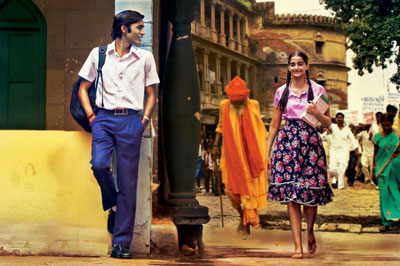
    Southern star Dhanush has bowled critics over with his powerful performance as an obsessed lover. His casting was undoubtedly a coup. The film by Tanu Weds Manu director Aanand L Rai has won accolades for its technical excellence and astute portrayal of small-town society.


    It has also been criticized for the naive picture of youth politics in the second half – the two halves look like they belong to different films.


    Female critics have also been somewhat spooked by the protagonist being a stalker – more so at a time when crimes against women have become a serious concern. Still, it earned 3 to 3.5 star ratings across the board, and a decent word of mouth too.


    Shubhra Gupta of the Indian Express wrote, “‘Say you love me, or I will slit my wrists’, Kundan threatens Zoya, and we know instantly that he means business. He is not saying this for a lark. Nor for a nudge-and-wink. He is saying this as if he means it. We know instantly that Raanjhanaa is a no-holds-barred love story, not your half-hearted romcom that passes for a romance these days in Bollywood. The riveting first half of the film lives up to its old-fashioned title, with a young lover whose chief driver is passion, the innocent young girl who is the object of his adoration, and the problems that keep them apart. Post interval, it comes unstuck, and squanders its gains. If Raanjhanaa had kept its tone intact, it would have been a great love story.”


    Meena Iyer of the Times of India raved, “Director Aanand Rai should be credited for drawing a superlative performance from the National Award-winner Tamil superstar, Dhanush, who makes his Hindi cinema debut here. His Kundan is a gem (pun intended). Sonam Kapoor is in top form giving Zoya several shades from giggly to grey. Unfortunately, she gets covered more for her fashion than her true mettle as an actor.

    Note: You may not like this film if you cannot digest brooding love stories.”


    Saibal Chatterjee of NDTV.com was appreciative too. “Raanjhanaa, director Aanand L Rai’s second film, not only averts the curse that often befalls a sophomore effort, it also actually turns out to be an improvement on the well-received Tanu Weds Manu. Raanjhanaa, scripted by Tanu Weds Manu writer Himanshu Sharma, is a love story with a huge difference that benefits no end from a clutch of exceptional performances. The film defies the expectations of the audience at several crucial junctures and holds out absolutely no apologies for springing abrupt surprises. It builds the drama at a gentle pace, taking care to create the right kind of physical and psychological spaces for the characters to breathe and evolve in.”


    Karan Anshuman of Mumbai Mirror gushed, “The first thirty minutes of Raanjhanaa is absolutely riveting. Well, riveting might be the wrong word but the searing strides of a romance that covers decades in fast forward leaves you having to remember to breathe. It is impossible to tear your eyes off the screen as two factors work their magic: Dhanush’s madly infectious enthusiasm as the young Kundan and the signature tune that plays every time his heart beats for the love of his life, Zoya. You want to grab on to these moments, pin them down so you can stare at them on your time with the same elation as Kundan’s eyes have for Zoya. And you wonder if director Aanand Rai is going to tell his tale all so quickly – is this film going to end all too soon?”


    Sanjukta Sharma of Live Mint was not completely sold on it. “There’s a lot happening in Raanjhanaa although not all of it neatly collates on screen. Rai’s treatment is lyrical and his ingredients are that of a sweeping Bollywood drama: a story charged with emotions, A. R. Rahman’s staple lilts, the camera’s busy, colourful frames and a tempo accentuated by the background music. The unlikely hero’s remarkable arc is the events and lives which surround him not quite forming a seamless ring. As much as Sonam Kapoor’s stilted histrionics try to derail the already overburdened plot, Dhanush keeps the film buoyant and watchable till the last scene.”


    Sukanya Verma of rediff.com praised Dhanush to the skies. “In Raanjhanaa, a guy from Benares tests his owns limits to the extent he’ll go for the girl he’s been besotted by ever since he was a little boy. Endeavours that begin this early have a way of getting out of hand and exasperating. But Rai has Dhanush – wonderful, tangible, indefatigable Dhanush, and the actor in his first Hindi film holds fort from start to finish. This is his story – complicated but transparent, one that you may be inclined to feel judgemental about but one that you’ll see from his perspective. Eventually.”


    Rajeev Masand found much to like. “Tanu Weds Manu director Anand Rai exploits the vibrancy of the holy city, and yet gives us a lived-in feel of Benares, rather than taking the typical travel-brochure approach. He banks as much on the unmistakable charm of his leading man to deliver a terrific first hour that breezes by with plenty comic moments and some genuinely heartfelt scenes. Kundan’s obsessive pursuit of Zoya is nothing short of stalking. Equally disconcerting is the idea that the filmmakers would endorse slashing one’s wrists as a way to profess love. Yet, truth is, these scenes don’t necessarily ring untrue in the film’s spot-on depiction of small-town India and its Bollywood-bred youth. The script unfortunately goes off the rails in the film’s second half, when the story shifts to the JNU campus in Delhi, where our protagonists put romance on the backburner and busy themselves with active politics.”


    Anupama Chopra of Hindustan Times wrote, “This love story is fantastical but these are characters we could know. Their emotions move us – so much so that when Kundan finally breaks down and cries, I wept too. But this is where Raanjhanaa gets frustrating. Rai hits a false note as soon as the story shifts to Zoya’s romance with her college friend, Akram, played by Abhay Deol. And post-interval, when we leave Benares for New Delhi, the film derails considerably. The actors still move us – including Sonam who looks effortlessly beautiful and gives her career’s best performance – but the plot becomes more and more convoluted. You are neither immersed in the film nor removed from it.”


    Shubha Shetty-Saha of Mid-day was impressed too, “There is this unique energy in Aanand L Rai’s films, the earlier one being ‘Tanu Weds Manu’ and now ‘Raanjhanaa’. Colourful and vibrant, but laidback and subtle. It was Kanpur in ‘Tanu Weds Manu’ and in ‘Raanjhanaa’, Varanasi gets lucky. In this film, Varanasi is captured beautifully. But interestingly, it is the backdrop to the characters and never the ‘please look at my landscapes and get awestruck’ kind of way (cinematography by Natarajan Subramaniam and Vishal Sinha). In a way, that makes this film more beautiful. And in a way, that also reflects in the most interesting character of this film, the unassuming but fiercely passionate Kundan, the beauty of whose character is not in your face but subtle and endearing, nevertheless.”


  • Reviewing the Reviews: Fukrey not quite there

    Fukrey

    Key Cast: Ali Fazal, Manjot Singh, Pankaj Tripathi, Priya Anand, Pulkit Samrat

    Directed By: Mrighdeep Singh Lamba

    Written By: Mrighdeep Singh Lamba, Vipul Vig

    Produced By: Farhan Akhtar, Ritesh Sidhwani


    It would seem as if Excel Entertainment (Farhan Akhtar-Ritesh Sidhwani) have patented the buddy movie. Fukrey is a buddy movie, without the glamour associated with their films like Zindagi Na Milegi Dobara and Delhi Belly.


    Critics were divided over this Mrighdeep Singh Lamba film – there was the deja vu, of course, but also some ‘fukra’ humour and set in Delhi, where the slang is funnier and the moral compass out of order. The actors did their bit to elevate the film to 2.5 and some 3 stars. Considering that the director’s last film was Teen Thay Bhai, he could only go up from there.


    Anupama Chopra of Hindustan Times was cool with its flaws. “Director Mrighdeep Singh Lamba gives us a theatre of the absurd set in East Delhi. The characters and actors are a perfect match. Pulkit embodies the over-confident charmer and Manjot looks comically sweet and bewildered all the time. But my favourite was Varun as the foolish and always-in-heat Choocha whose dreams kick-start the entire mess – he manages to be both, idiotic and endearing. Ram Sampath’s boisterous score add to the rough and tumble feel of the film. But the problem with Fukrey is that the characters and milieu are more engaging than the plot, which gets more far-fetched as it thickens. By the time we get to a rave party and drugs, the outrageousness of the story becomes exhausting. By the climax, the writing becomes slack. Anything is possible, including a financial windfall from a character who seems tacked on to save the day. But there is enough pep in Fukrey to make it pleasantly diverting. I’m not suggesting that you drop everything and get to the theatre. But if you happen to stroll in, you are likely to come out smiling.”


    Rajeev Masand of IBN Live commented, “Four slackers in Delhi seeking fast cash make a deal with a ruthless don. But when things go wrong, as they inevitably do, they must pay the price for it. That familiar premise gets a fresh coat of paint in Fukrey, with co-writer and director Mrighdeep Singh Lamba putting a new spin on some old cliches. Yet, while individual scenes inspire laughs, the film doesn’t quite fly because there are too many gags and not enough plot.”


    Shubhra Gupta rightly pointed out how cliched this kind of Dilli film is getting to be. “Four Fukreys which loosely translates as good-for-nothing waste fellows are let loose in the gallis of Dilli in order to a) save their skins b) earn some ill-gotten moolah c) run miles away from a foul-mouthed female goon. All of which comes down to the first point namely a) save their skins. This may be a new film, but it is certainly not madly novel. Delhi Belly had the same idea with the addition of some excrement and expletives, minus one fukra. Also minus the fun, because this combo of Dilli slackers-using very Dilli slang-doing very Dilli things already feels like a template.”


    Karan Anshuman accorded it a mild rave, “There’s a lot to like in Fukrey. It sticks to the subtle and shies away from the tomfoolery and slapstick you’ve come to expect in films of the genre. It gives you an almost absurd Delhi-based love story that relies merely on stolen looks and notes exchanged across terraces on kites. In fact, it presents Delhi unpretentiously and one can tell that the details have a lived-in quality about them, the sort that Khosla ka Ghosla had. The writing often jumps time, leaving the audience lagging and playing catch-up. This isn’t always a bad thing in times of spoon-feeding viewers. Ram Sampath’s music is catchy but comes in spurts, making you long for more. Some of the film’s transitions are outstanding, the mark of a good director. However, a few shortcomings keep Fukrey from hitting the bullseye.”


    Sanjukta Sharma of LiveMint sounded a bit fed-up. “The buddy movie in Hindi cinema, in surfeit in recent times, always rests on the comical charm of floozy men, and Fukrey is no different. Lamba extracts his humour from the academically challenged boys’ desperate fraudulent measures to get ahead in life. The story’s backdrop consists of corrupt and depraved ministers, thieves, money-minded teachers, and the unspoken premise that the only way to survive and rise above middle-class circumstances is to be part of a circle of cheats-the kind of vapid, humdrum thinking that abounds in our film writing.”


    Saibal Chatterjee of NDTV.com wrote. “There is something hugely infectious about the exuberance of youth. That is probably why Fukrey, a comedy about four Delhi boys in a tearing hurry to realise their little dreams against all odds, appears to exude much greater energy than it intrinsically possesses. While the bubbly air of eccentricity that underlines the script is endearing for the most part, it tends to get trapped in a repetitive loop at times. But, in the end, its meanderings do not last long enough to mar the fun beyond salvation. Comparisons, though odious, are inevitable. Fukrey is unlikely to hold up too well against similar buddy-buddy flicks that Bollywood has churned out in recent times with such frequency that they have now begun to feel like rip-offs of each other, barring a minor tweak here and a little twist there.”


    Madhureeta Mukherjee of The Times of India was the only one who punned on the title (cringe!) and raved, “Mrighdeep infuses comedy throughout, subtle and fresh. The humour is finely spun in the writing and dialogues (Mrighdeep, Vipul Vig). There’s levity in the language and some hilarious moments. The first half is slow-paced, but it rips riot soon. The story has newness, but at times it lacks the chaotic craziness that such a comic premise can unfold. Yet, the laughs are many to keep you entertained. So what the ‘fuk-rey’, go, crack up on your seats.” Indeed?


  • Reviewing the Reviews: Yamla Pagla Deewana 2 exasperates all around

    Yamla Pagla Deewana 2


    Key Cast: Dharmendra, Sunny Deol, Bobby Deol

    Directed By: Sangeeth Sivan

    Written By: Jasvinder Bath

    Produced By: YPD Films and Sunny Sounds


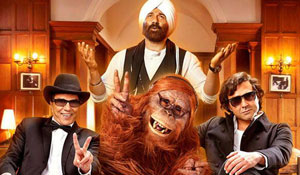
    The exasperation was evident in every review. The waste of the Deol pater et fils combined stardom for a movie as stupid as Yamla Pagla Deewana 2, which actually had some feeling nostalgic for the original, since Part 2 had even less merit. A filmmaker should worry if the best thing about his film is a man in a monkey suit. It takes a kind of talent to make a film so bad and the promote it proudly as if it were the best thing ever made, and then complain that the Deols never got their due because they are not good at marketing themselves.


    If a critic was kind – Dharmendra has the power to invoke nostalgia – the film got 2.5 stars, otherwise 1.5 was the standard.


    Shubhra Gupta of the Indian Express commented, “The Yamla Pagla Deewana gang is back with a sequel, with more of the same. Papa Bear Dharmendra doing his senior conman act, Sonny Bear Sunny doing the good guy with macho muscles and soft heart, and Baby Bear Bobby doing what Bobby does. A plot that should shame a wafer by its thinness. Random characters popping in and out. And the only thing one can say in its favour is that it is not as terrible as the first.”


    Sudhish Kamath of The Hindu ranted, “Yamla Pagla Deewana seems like a script that could have been written by that drunken monkey from the film in sheer defiance of art. We know that the Deols can be really funny. If the first part was somewhat passable, it was because it packaged Dharmendra nostalgia and the feel-good factor of the casting. Here, the idea of manufacturing nostalgia involves Dharam singing ‘Yeh Dosti’ with a monkey. It instantly makes us sad to see a veteran actor of his calibre reduced to this caricature of a man he used to be. So when Johnny Lever does a Don spoof in the same film, we realize that the joke is not on Sholay but on Dharmendra, just like the joke was not on Don but on Johnny Lever.”


    Anupama Chopra of The Hindustan Times was scathing. “Even the collective charm of the Deols can’t make this drivel palatable. It’s exhausting, loud and so cheerfully moronic that it hurts.”


    Saibal Chatterjee of NDTV.com panned the film saying, “Those that have been through the first round of the Yamla Pagla Deewana shock treatment might be forgiven for thinking that it couldn’t get any worse. Think again. The sequel is double the pain. It scrapes the very bottom of the barrel. Yamla Pagla Deewana 2 is much worse than brain-numbing. The screenplay jumbles up a few songs, some action scenes and a string of vapid comic gags and then dumps it all into a messy mix that makes about as much sense as Garam Dharam’s pow-wows with the mute ape. You’ve got to be yamla, pagla or deewana, preferably all three, to grasp what is going on.”


    Sukanya Verma of rediff.com all but gnashed her teeth in rage. “Calling Yamla Pagla Deewana 2 a joke would amount to a compliment. And I am in no mood to extend such courtesy. The purported comedy with a little less than half a dozen Deols on board – Dharmendra, sons Sunny and Bobby, daughter-in-law Lynda (it’s her story) and grandson Karan (as assistant director) is a 155-minute long giant bore. It’s not like the first one in the series was paradigmatic of Deol togetherness but at least it had *some* storyline and camaraderie. Also, the humour, which mocks their individual images or takes light-hearted digs at the Santa-Banta/Canada milieu provided the Sameer Karnik version genuine hilarity. But the sequel, directed by Sangeeth Sivan, is unimaginably insipid and tedious. And no orangutan, dragon, unicorn or dinosaur can rescue a mess like this.”


    Shubha Shetty-Saha of Mid-day was relatively mild. “This string of a script, tried to be accessorized by largely heard-before gags and two orangutans, doesn’t really work. The Deols, Dharmendra especially, are endearing as usual. But they or to some extent even the director, Sangeeth Sivan couldn’t do much with the clear lack of thrill or funnies in the script.”


    Tushar Joshi of DNA wrote, “The Deols madeYamla Pagla Deewana watchable because we bought their tomfoolery and goofiness that seemed enjoyable and natural. But the second part is laced with so many ridiculous moments, dialogues, sketchy characters and unflattering camera angles that you hope the family has a better hold of the franchise the next time around.”


    Rajeev Masand of IBNLive.com was not too harsh. “Directed by Sangeeth Sivan, ‘Yamla Pagla Deewana 2’ isn’t all bad, but at 2 hours and 35 minutes it’s overlong and repetitive, and doesn’t offer anything particularly original or inventive in terms of comedy. It’s a pity the jokes run out faster than your popcorn does.”