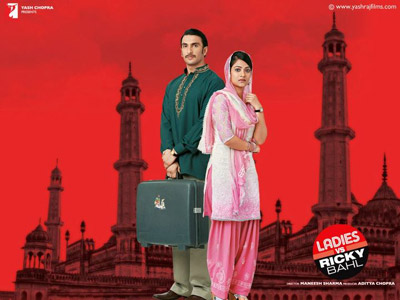
Tag: Reviewing the Reviews

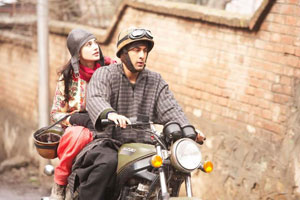
  • Reviewing the Reviews: Ladies vs Ricky Bahl

    Ladies vs Ricky Bahl

    Key Cast: Ranveer Singh, Anushka Sharma

    Directed By: Maneesh Sharma

    Written By: Devika Bhagat, Habib Faisal, Aditya Chopra

    Produced By: Aditya Chopra


    Coming out with the notable YRF stamp, Ladies vs Ricky Bahl got mixed reviews, mostly on the negative side. The director Maneesh Sharma’s first film Band Baaja Baraat had been such a delight, that the second one had trouble matching up.


    The one who came out a clear winner is Parineeti Chopra who played a loud, chatty Delhi brat, and is likely to bag all supporting actress awards next year.


    Gaurav Malani, in the Times of India online, feels, “The major hiccup in this otherwise engaging film is that it falls prey to the typical trappings of Bollywood. As romance takes over the con-games, the smart-n-saucy film is substituted by a tepid tale where the conman wants to come clean and change his ways for that one girl in life. That makes for a lame climax and a conventional end. The graph of the narrative drops somewhere in the second half and plunges even further as one realizes mixing con with cupid might not be the best of ideas. Thankfully the pacing is perfect and the film never seems stretched.”


    Sanjukta Sharma of Livemint is left cold. She writes, “The screenplay … gets tiringly predictable from this point. Forget being similar to Frank Abagnale, the smug, glorious con man in Steven Spielberg’s Catch Me If You Can. Sunny starts showing signs of a weepy lover boy. The film falls right into the Yash Raj formula of hinging all stories on soppy romance. This guy is not even a patch on the smiling assassin he is in the first hour.”


    Bollywoodhungama’s Taran Adarsh is uncharacteristically tepid. “On the whole, Ladies vs Ricky Bahl is, at best, decent fare, which appeals in parts. The film starts well, even ends well. It’s the in between that’s plain ordinary. One definitely expected more from the director of the immensely likeable Band Baaja Baaraat. Ideally, the film merits a two-and-a-half star rating, but that extra half star is for Ranveer and Anushka, who steal your heart with truly striking performances.”


    Rajeev Masand found the film watchable and went with2-1/2 stars, but also pointed out flaws. “Ladies vs Ricky Bahl nosedives further post-intermission because of script holes the size of craters. The trio of women track down our hero way too conveniently, and you can’t help but question how a seasoned conman could so easily be charmed into parting with his cash. Doesn’t help either that the narrative is interrupted far too often with unnecessary songs.”


    Raja Sen found it sluggish and predictable and gave it 1-1/2 stars. “It’s always tragic to see those who defy the cookie-cutter mould try and sanitise themselves in an attempt to fit in. Ranveer Singh, who was fantastic in last year’s Band Baaja Baaraat, here has his rough edges blunted by the generic sheen of wannabe stardom, and the result is most unfortunate. ”


    Shubha Shetty Saha of Mid-day settles for 2-1/2 stars too. “The script should have been as clever as it is trying to portray its lead man to be. For Ricky, cheating comes naturally, but disappointingly, it seems like he doesn’t even have to exercise his brain cells to cheat any of them. Ricky gets so lucky every time that things easily fall into place or his victims are so foolishly gullible that they are more than willing to fall into his trap, again and again. Also, the track where he becomes an art dealer, Deven Shah and cheats Raina (Dipannita Sharma) seems highly improbable.”


    Mayank Shekhar is kinder than usual with 3 stars. “The young Ranveer Singh plays Ricky Bahl, his character’s real name, which we don’t know yet. Given almost all Bollywood leading men now are forced to play proper characters (something they used to do back in the 1950s), as against portray merely themselves: a back-story might become slightly necessary. We know nothing about the motivations of this conman, besides what we see: he is single, looks like a loner, is pretty much sexually uninterested in the women he takes for a ride, and is interested in money for money’s sake. Placement of this kind of guy was handled much better in Yashraj’s previous, similar flick, Badmaash Company (2010), which had suffered for completely other reasons.”


    Soumyadipta Banerjee of DNA didn’t dislike the film at all. “Right from the first shot to the last shot, the film has stayed real without the usual loopholes that draw it away from reality. And yet, the film has stayed on top when it came to the entertainment quotient. It has been edited well which doesn’t let the pace slacken and engages you till the last moment. It seems that the film has been developed after consulting a lot of DVDs of Hollywood rom-coms, but who cares? Everybody does that and yet comes up with a shoddy film. This time, all the home-work seems to have paid off.”


    Sudhish Kamath of The Hindu nails it. “How good is a con if the stakes aren’t high? This is the safe, family-entertaining Bollywood film where the hero is virtuous even if he’s a con man (he wouldn’t even let the girl he’s conning kiss him) and turns out to be smarter than four women put together. The makers aren’t even in the mood to play Bluff. The film unfolds in a linear fashion and we are privy to all that’s happening and the only twist coming our way is that there is no twist.”


    And just by the way, none of the mainstream critics found similarities with Mohan Sehgal’s 1974 film, Woh Main Nahin.
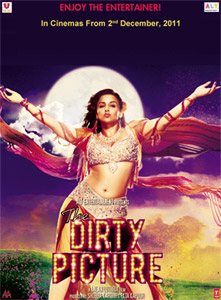
  • Reviewing the Reviews: The Dirty Picture


    By Deepa Gahlot


    The Dirty Picture


    Key Cast: Vidya Balan, Naseeruddin Shah, Emraan Hashmi


    Directed By: Milan Luthria


    Written By: Rajat Arora


    Produced By: Ekta Kapoor, Shobha Kapoor


    The promotions of Milan Luthria’s The Dirty Picture were such that nobody had any doubts about its content-for once the audiences get what they expect-an uninhibited Vidya Balan in a sex-on-toast film loosely based on the life of Silk Smitha, who blazed a trail as a voluptuous siren and then, shockingly, committed suicide.


    The film got 2 ½ to 4 star ratings and from all accounts a smashing opening. Which proves once again that sex sells and Ekta Kapoor knows that. If sleaze comes with a big banner attached, it ceases to be ‘dirty’. Everyone is unanimous in praise of Vidya Balan, however, and all awards next year will go to her-she has left the competition far behind.


    Shubhra Gupta of the Indian Express was one of those who was left underwhelmed by the film and gave it 2 ½ stars. “What ‘The Dirty Picture’ does is to place Vidya Balan and her heaving bosom, complete with the dirtier, orgiastic ‘ha-aaa’ sound, so much a fixture of so many oomphy ’80s tracks, at the centre of the narrative. Which is fine, and we are quite taken in by the sight for a while. But then we start looking for something more, and find it, only towards the end, only very fleetingly.”


    Mumbai Mirror’s Karan Anshuman is equally unimpressed: More Dirty Less Picture is the title and a 2 ½ star rating. “It just doesn’t quite come together. What gets plated is an entre overdone on the outside, and not entirely cooked from the inside. Director Milan Luthria falters. He is just in such a tearing hurry to tell us the dizzying story of the rise and fall of Silk and the hot-and-cold behaviour of her fans, detractors, and co-stars – inconsistent one-liner upon one-liner, the flashback in negative image (why?), just the lack of any buildup or lingering – that he doesn’t take a breath for the audience to appreciate and unravel Silk’s mind until much later. Because the film focuses so much on dressed-up cliches of sleaze in tinseltown and Balan’s carefully constructed look, there is precious little else to take in. Fewer incidents focusing to get the viewer involved would work better than too many repetitive ones packed in for the sake of impact.”


    Sukanya Varma of rediff.com gives it 3 stars, but writes, “The Dirty Picture, despite the comprehensive objectivity implied through its title, is not a full-fledged biopic. Instead of painting a layered portrait of Silk, it draws an outline of an unapologetic resident of a flesh-obsessed film industry responsible for her rise and ruin. But Vidya lends her so much transparency, aplomb and sauciness, the outcome is far more awe-inspiring than it deserves to be.”


    Commenting on the actors, the usually acerbic Kunal Guha of yahoo.com, gives it 3 and writes, “Vidya is scrumptious as the imperfect and unrestrained Silk, while Naseer is convincing as a superstar out to play shepherd to every newcomer. Tusshar may have dropped his surname for the credits but that hardly undermines the fact that he’s been cast in his home production, again. Emraan’s character gives itself more importance than you or anyone else does. Luckily, his presence is limited and tolerable.”


    From Chennai, Silk Smitha’s playground, Sudhish Kamath of The Hindu writes, “The makers (Milan Luthria and writer Rajat Arora) seem a little too afraid to get into the darker aspects of the tragic life of a star like Silk and most of the sadness is limited to showing the dark circles under her eyes. Even when her life is spiralling down, the film wants to go away from the tragedy and show you a love song. Clearly, they don’t want to depress you because depressing films don’t do well at the box office. However, The Dirty Picture makes up for lack of depth with spirit and attitude.”


    Rajeev Masand also gives it 3 for Vidya. “What it suffers most from, unfortunately, is lazy writing. With a plot straight out of a Madhur Bhandarkar film, and a screenplay that follows a familiar graph, The Dirty Picture offers a superficial, simplistic view of the seamy, exploitative side of the 80s film business. There is little attempt to treat this material with sensitivity and depth. No sir, this film unfolds as a series of provocative scenes strung together on the strength of their sexually loaded dialogues.”


    Mayank Shekhar also comes up with a reluctant 3. “The film however, even when not mimicking its subject, somewhat retains its ’80s feel: excessive dialoguebaazi, often loaded with double entendres, some loud scenes with actors always in a state of emergency, and the ‘serial kisser’ (Emraan Hashmi) who must land a Sufi song, and a girl’s lips to satisfy his core audiences. Sometimes we remain suspended too much in disbelief. It starts to match the film within the film! This irony is oddly intriguing. It won’t be lost on anyone.”

  • Reviewing the Reviews: Rockstar

    Rockstar

    Key Cast: Ranbir Kapoor, Nargis Fakhri

    Written and Directed By: Imtiaz Ali

    Produced By: Ronnie Screwvala, Dhillin Mehta


    Imtiaz Ali whose Jab We Met got him a great fan following, had Love Aaj Kal in between and now Rockstar, which has united critics and the general public in their adoration for Ranbir Kapoor, who is a star actor and superstar material; poor Nargis Fakhri came in for an equal amount of battering.

    The film itself got madly mixed reviews with rating from one to four stars that must have confused the reading public.

    Aniruddha Guha of DNA loved it. “For about 15 minutes in Rockstar, the narrative tends to resort to ‘Bollywoodism’; true love having the power to cure a terminal illness (almost), for example, doesn’t exactly fit with what the rest of the film has to say. Yet, Imtiaz makes it work somehow, interweaving the fantastical romantic part of the film with the more gritty, dark bits deftly.”

    Taran Adarsh of Bollywood Hungama, is left cold, “Alas! Rockstar is a sumptuously shot movie that is disjointed on script level. The problem with Rockstar is that it starts off most impressively, has some terrific moments in between, but the writing gets so erratic and incoherent as it heads towards the conclusion that you wonder, am I really watching an Imtiaz Ali film?” Strange coming from one who is otherwise generous with praise.

    Saibal Chatterjee, NDTV.com observes, “The film, nearly three hours long, traverses long physical distances – from Delhi to Kashmir and from there to Prague and then back again to Delhi as JJ follows his lady love (who gets married quickly enough and settles down to drab matrimony in faraway Czech Republic to make matters difficult) halfway around the world, singing and dancing his woes away. But despite all the frenetic movement in space that Rockstar offers, the film really goes nowehere. It feels strangely static.” Which is one of its major problems.

    Shubha Shetty Saha of Mid-day pins down another problem area, “The film that is supposed to be following the journey of a nobody later turning into an insanely famous musician, leaves you uninvolved as many milestones in that journey have been left out. One day, Jordan is in Pitampura trying to regale a few bystanders on the street, a few months later, he is this huge phenomenon running away from the paparazzi.”

    Sumit Bhattacharya of rediff.com found it in the Devdas mould. “Don’t let the title fool you. This movie is more an old-school Bollywood love story than the advent of heavy metal in Hindi cinema. Jordan is more like Devdas than his idol Jim Morrison….On the surface, the film is about a guitar-toting dimwit transforming into an angry ‘rock star’, an expression that can perhaps give ‘awesome’ a run for being the most misused term in the English language …But this film is devoid of any insight into an artiste’s anguish, try as it might by quoting Jalaluddin Rumi.”

    Mayank Shekhar gives it three stars but a tepid review. “From its start, to the way it progresses, you can tell, the film’s been through various stages of editing and several second thoughts. Sometimes the patchiness shows. It’s a stretch. Anything that’s 18 reels long (close to three hours) in a flickering world of low attention spans would be. Something fizzles out towards the end. You still don’t begrudge a movie that’s been this engaging, entertaining thus far.”

    Komal Nahata is critical of the extra-marital affair of the heroine which is without justification, and says, “The extra-marital affair may have been overlooked by some of the orthodox audience if that affair would’ve had a magical effect on Heer’s illness in the end but when that doesn’t happen, the audience is unable to stop itself from seeking reasons for the affair – and not finding any. The narrative style is also a bit confusing for the audience as overlapping scenes have been used to further the drama.

    On the plus side, the making is fresh and the canvas, big and wonderful. Dialogues, penned by Imtiaz Ali, are very natural. The film is extremely colourful and youthful and for that section of the youth, which won’t question the morals of Janardhan and Heer, the film becomes a veritably enjoyable fare. Again, a minus point of the drama is that comic and light moments are few and far between. The second half, especially, becomes dark and even depressing. Emotions don’t draw tears.”

    Anuj Kumar of The Hindu is also unimpressed. “A film works when the pain experienced by the characters on screen permeates into the darkness of the theatre. No such luck here. After an explosive opening, you become restless for lack of ingenuity on the part of the writer-director even when he has got the ingredients to turn it into a never-before experience. A. R. Rahman’s soulful tunes, Anil Mehta’s breathtaking camerawork and a malleable lead actor, but still it remains a glazed canvas. It has a lot to do with inappropriate casting and an overtly indulgent director, who seem to have started with the idea of making a global blockbuster with Ranbir Kapoor and then started work on the content.”

    Rajeev Masand of IBNlive also slams the script. “The film’s chief lapses are its meandering script and its less than impressive leading lady both of which cost the film dearly… “

    Sanjukta Sharma of Livemint notes, “The second half is a mess, as it travels picturesquely but cluelessly from Kashmir to Prague in search of ideas. And it goes on for much too long, as we wait for something better to happen. Nothing of the sort does. Whatever happened to Imtiaz’s sure-footedness which made ‘Jab We Met’ such a breeze ? Shakiness was evident in his next ‘Love Aaj Kal’. Here, he seems to have very little idea of how to get his lovers to smoulder despite the liplocks : most of the romance feels constructed, and contrived.

    Kunal Guha one of the first to review it on Yahoo with a brutal one star, writes, “Watching ‘Rockstar’ once is like watching it many times over, thanks to the repeated montages that sporadically recap the film. If you thought being stabbed once was bad, here’s what a knife set can do. The film drives home an unscientific hypothesis that people who’ve endured sufferings/ heart break/ loose motions etc will reach their creative best. By this logic, each person in the audience will be blessed with superhuman creativity as they step out after watching ‘Rockstar’.”

    Nikhat Kazmi, of the Times of India is predictably soft. “The fact that this romance unfolds on screen in the form of an explosive musical, capturing JJ’s transmutation into Jordan, the edgy artist, makes the film an absolutely engaging affair.”

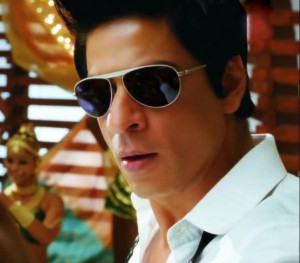
  • Reviewing the Reviews: RA.One

    RA.One

    Key Cast: Shahrukh Khan, Kareena Kapoor, Arjun Rampal

    Written and Directed By: Anubhav Sinha

    Produced By: Gauri Khan, Shahrukh Khan


    Of course, with a hefty budget and relentless marketing, RA.One was expected to be something of a breakthrough movie. That it turned out to be akin to an idol with feet of clay, caused disappointment across serious reviewing platforms — not the box-office counting ones, who are still arguing about just how much money the film made on opening day.

    Interestingly the film, which was released with thousands of prints worldwide and god knows how many red carpet premieres, was reviewed by several foreign critics—most of them ignorant of, or insufficiently exposed to, Bollywood cinema. So the tone was either cruel or condescending.

    Simon Abrams of Slant Magazine was brutal. “The film champions an incoherently hackneyed kind of morality where filial piety matters more than treating your fellow man well. Virtually every character in the film, save for Shekhar and his character’s nuclear family, are made fun of, and even they aren’t safe from ludicrously loaded assumptions of how both children and adults should behave. RA.One is consequently a flashy, gratingly broad action-comedy hybrid whose family values are meaningless.”

    In contrast James Luxford of The National fawned, “Khan demonstrates what a versatile actor he is, with his performances as both Shekhar and G. One feeling like completely different people. Elsewhere, the critically acclaimed actress Kareena Kapoor provides excellent support and has great chemistry with Khan, while the model-turned-actor Rampal oozes menace as the titular villain, in a role akin to the Terminator movies.” That he is a bit clueless is revealed in his line, “Not the best work of the director nor the star, but certainly their most spectacular.” Err, what was he counting as Anubhav Sinha’s best work?

    Kirk Honeycutt of The Hollwood Reporter seemed mildly amused by the hoopla. “The film, directed by Anubhav Sinha, is gloriously silly, with stunts, CG animation and music numbers bursting out all over yet its beating heart lies in a commonplace story of a family and most especially a father and son who don’t understand one another. Oscar Hammerstein II once said something to the effect that you have to believe in whiskers on kittens and warm woollen mittens to get away with writing about such corny banalities in a lyric and so Shah — SRK as he is known to billions of fans — really does believe in family values and the power of cinema.” Indeed.

    The rival trade magazine Variety, has John Anderson write, “Featuring superstar Shah Rukh Khan and festooned with enough CGI ornamentation to qualify as a subcontinental Christmas tree, RA.One is a frenetic, tuneful, full-throttle action-comedy that has reportedly crushed Indian presales records. Still, this videogame-themed outing seems unlikely to become a crossover hit: While South Asian auds will likely flock to a film that does what Bollywood does with a major techno bump, the aesthetics of overkill will make the result inaccessible to Westernized Americans, the campiness, as usual, muddying the translation.”

    Tamara Baluja of The Globe and Mail gives it one star and rants, “The film is as cheesy as it sounds. It falls into the very traps that Khan himself complained about: weak plotline, random song-and-dance routines and a plethora of tacky crotch-related jokes, which left me grimacing. And for audiences who don’t understand Hindi, the subtitles were frustratingly lagging – on occasion, almost a whole dialogue behind. RA.One is Khan’s baby and boy, are you not allowed to forget that. The actor almost never leaves the screen. It’s a pity, because he’s not really the one who shines in the film…”

    Rachel Saltz of The New York Times tries to be balanced. “You can see the money on screen, if not in the screenwriting. The exposition is longwinded and confusing, as are the rules of the game, in the virtual and the real worlds. The bumbling Shekhar is too clownish; RA.One is a dud demon (Raavan is invoked to little effect) who disappears for chunks of time; and you probably won’t hold your breath as good fights evil. But if the storytelling disappoints (shocking!), the film mostly doesn’t. It relies on action and effects and Bollywood’s trump card, star power, to carry the day. This is Mr Khan’s movie, and once he sheds Shekhar’s droopy locks, he shines as the deadpan, action-hero robot with digital snot and smooth moves on the dance floor.”

    Andrew O’Hehir of Salon.com nails it with, “I make no claims for RA. One as great cinema, and director Anubhav Sinha displays no particular vision, beyond that of a general who’s kept his enormous army moving in roughly the right direction. (Sinha and five co-writers, Shahrukh Khan among them, get credit for the story and screenplay.) What makes this movie worth seeing is its blend of aesthetic and technical approaches — some of the crew and special-effects team was Western — its immense scale and abundant confidence, and its utter shamelessness in trying to entertain nearly all imaginable viewers, from Abu Dhabi to New Jersey to Zanzibar. If you’re bored by the action scenes or the love story or the dopey domestic comedy, just wait three minutes for something else to come along — and whoever you are, you won’t be bored by the musical numbers!”

    Back home, most critics are underwhelmed. Mayank Shekhar in the Hindustan Times writes, “For most parts, this doesn’t seem a super-hero movie at all. It’s more of a weirdly boiled, Bollywood please-all: vaguely soppy romance, Salman-type sasta comedy, narcissistic SRK set piece. Die-hard fans of all three genres are likely to be disappointed,”

    Aniruddha Guha, writing in Daily News & Analysis: “But blame it on Anubhav Sinha, the director with slick-but-hollow films Dus and Cash on his CV (one worked at the box office, the other bombed). RaOne is no different; it is beautiful in appearance, but empty within. Which is a pity. Anubhav could have really made a mark with this one.”

    Going Going G.One is the title of Shubhra Gupta’s review in the Indian Express. “It’s not just Shekhar-the-appa, who is lame. The whole film seems to be dipped in the stop-start-go stutter of an overlong video game. As the bumbling Tamilian techie, Shekhar is single-tone; G.One seems to be a confused creature, ‘made-of-metal but-with-emotions’. And curiosity. He demonstrates this by asking Kapoor: what is Karvachauth? Got it, this is a Bollywood robot. The sfx is wonderful in parts but mostly derivative, with Shah Rukh mouthing such iconic lines like ‘I will be back’ (oh Arnie, my Arnie), and clutching a pole on top of a high building, like..? Spidey. That’s right. Go to the top of the class.”

    Sanjukta Sharma of Livemint writes, “Why ape Hollywood’s extravagance and technical virtuosity with limited resources? Despite the largely thrilling ride, Khan’s ambition for RA.One is misplaced. It is without real commitment to the art of storytelling or genre. The producer-actor is its only relentless, narcissistic showpiece. Anubhav Sinha’s RA.One is a spectacular disappointment.”

    Kunal Guha’s review in Yahoo Movies was one of the first to slam the film. “Shahrukh’s robotic expressions will remind you of his ‘My Name is Khan’ role, as he confuses machines with differently-abled humans. Kareena’s character covers the entire gamut of expressions but isn’t memorable or mentionable enough to be regarded. Arjun Rampal has bagged his dream role: an android with mechanical expressions who allows his body to do the talking. Good job, Arjun Rampal’s body!”

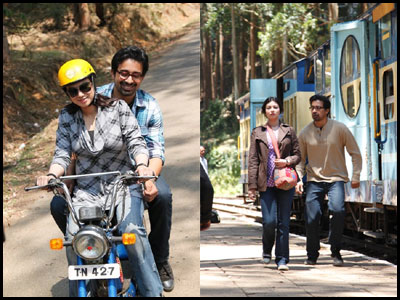
  • Reviewing the Reviews: Mod

    Mod

    Key Cast: Ayesha Takia Azmi, Rannvijay Singh Singha, Raghubir Yadav, Tanve Azmi, Ananth Mahadevan

    Written and Directed By: Nagesh Kukunoor

    Produced By: Sujit Kumar Singh, Elahe Hiptoola


    In the glut of releases this week, Mod is the pick, simply because Nagesh Kukunoor is the director, and even though his last few films have been heart-breakingly bad, there are still hopes from the man who made Hyderabed Blues and Dor.

    The title is confusing, most read it as the abbreviation of modern, when it is intended to mean turn. Most critics, perhaps relieved that it wasn’t as awful as Kukunoor’s Bombay to Bangkok, found good things to say about it. Readers would be confused, however, when ratings range from one to three and a half. What is slightly off-putting that Kukunoor has given up on originality. This one too, is taken from Korean film, Keeping Time.

    Mayank Shekhar of the Hindustan Times gives it one and a half stars, but perhaps nails it when he writes, “Most still recall Kukunoor for Hyderabad Blues (1998), a game-changer in low-budget Indian films, which could instruct and delight at the same time. He has since become a pure genre filmmaker. Which is truly what separates the so-called “indie” from the supposed hard-core mainstream. Traditional Bollywood directors pack in every genre into one movie, alternating action with romance, comedy, drama etc. “Cutting edge”, “independent”, “Hindie”, potentially global “crossovers” would be too flatulent an epithet for those who don’t do that. But they don’t produce anything extraordinarily personal, astonishingly moving or real, either.”

    Trade journalist Komal Nahata on koimoi.com gives it one star and writes, “On the whole, Mod may win critical acclaim but it will remain a dull fare at the box-office, its poor initial and the dull pre-Diwali days only adding to its problems.”

    Another trade man, Taran Adarsh, writing in bollywoodhungama.com gives it two stars and states, “Mod is an emotional love story of two completely mismatched people – a genre Kukunoor has never tackled earlier. In fact, in his earlier movies, love was a part of the main plot, but it’s the central theme this time. Mod boasts of an interesting idea and even Kukunoor’s mature handling of the material needs to be lauded, but the film suffers for two reasons – it unfolds at a sluggish/lethargic pace and is prolonged.”

    Rajeev Masand on IBNLive goes with two stars but is brutal. “Mod is a test of your patience because the screenplay is a complete drag. The film unfolds lazily well after the twist has been revealed; and the central conceit isn’t even true to its own logic. There are plot holes the size of craters here. Ayesha Takia has a calming presence, but Ranvijay Singha, despite his earnest efforts, simply doesn’t have the chops to carry off such a complex part… Let down by sloppy writing, this is one hard slog.”

    Aakanksha Naval-Shetye and Soumyadipta Banerjee of DNA, however, give it three stars and say, “The film feels straight out of a book of short stories and has a certain old-world charm. The downside is that everything is too picture perfect here, and things just fall into place rather conveniently towards the end. The music doesn’t help much. The slow pace especially in the first half drags on forever, even though thankfully Ayesha’s cutesy act won’t let you complain too much.”

    Surprisingly, Nikhat Kazmi of the Times Of India gives it a low (by her standard) two and a half stars. “It’s a sweet, small and simple film spilling over with charming locales and charming people too. It’s the pace of the film that takes its toll on you. Understandably, life follows a languid rhythm on the hills and cannot move at lightning speed. But hey, a film’s got to have sufficient movement and pace to keep the drama flowing. Here, the events unfold with extenuating lethargy and test your patience time and again.”

    Ganesh Nadar writing in rediff.com gives it two stars. “Out of 12 reels, 10 are focused on Ayesha (Takia). The rest of the cast have to make do with the remaining two. All one can say of the hero is that many a time one is left wondering why he does what he does, and many a time he looks like he doesn’t know why he does what he does. It’s a lovely story with great actors, and great scenery. What screws it up is the slow movement. You really have to have patience to watch the movie or be happy just to watch Ayesha. Wish director Nagesh Kukunoor had someone to tell him that slow and steady doesn’t win races any more. You have to be fast and racy. A must-see for Ayesha fans; the rest can give it a miss.”

    The level-headed Shubhra Gupta of The Indian Express says, “It’s so obvious that Andy is not who he says he is that you wonder why Kukunoor takes so long to get to the point. But then, he needs to pause to show off all the nice waterfalls and the rocks and the winding roads. The scenery is fine only for a bit, but then gets overtaken by situations which you can see a mile off. You know that that Andy is disturbed much before the doctor (Mahadevan) pronounces his diagnosis. The reason for his being the way he is unspools with no surprises. Takia is her familiar wholesome-girl-next-door but has to shoulder too much of the film, and Rannvijay is one-tone.”

    The unsigned NDTV.com review goes off on a tangent: “Mod is like a gentle sonnet played on a cosy winter morning. It is the tenderest love story in ages with a central performance by Ayesha Takia that strikes a chord deep in your heart. It’s a film you want to adopt, embrace and hold close to your heart.”

    No wonder audiences go by friends’ tweets or word of mouth to decide on which movie to watch!

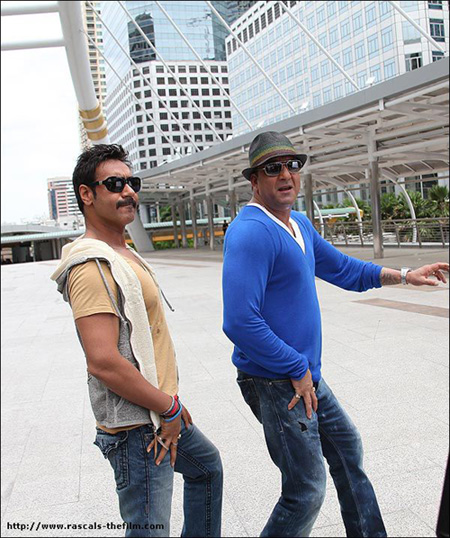
  • Reviewing the Reviews: Rascals

    Rascals

    Key cast: Sanjay Dutt, Ajay Devgan, Kangana Ranaut, Lisa Haydon

    Written by: Yunus Sajawal

    Directed by: David Dhawan

    Produced by: Sanjay Dutt, Sanjay Ahluwalia, Vinay Choksey


    Nobody expects masterpieces of comedy from David Dhawan, but now, more often than not his films are what would be called in Mumbai slang thakela (tired). The idea of Rascals is overused and in the hands of the two lead actors who have done better comedy before—Sanjay Dutt in the Munnabhai films, Ajay Devgan in the Golmaal series, it is quite disconcerting– more so when a large part of their comic antics involve pawing the much younger and very under-dressed leading ladies Kangana Ranaut and Lisa Haydon.

    Most critics panned the film with one or one and a half stars. Only Taran Adarsh of bollywoodhungama.com found it worthy of three and a half. He writes, “Be forewarned. Rascals is strictly for the hoi polloi, those who relish masala entertainers with glee, those with an appetite for movies that transport them to a different world in those hours spent in the dark auditorium, those who swear by movies that defy logic, motive and intellect. Do you think you fit into this description of a moviegoer? If you do, Rascals is just for you.” A backhanded rave, sounds like.

    Sukanya Verma of rediff.com finds it “lame” but still gives it a generous two and a half. “Recycling paper is nice. Recycling movies? Now that’s plain lame. But director David Dhawan has never been the discerning sort. He painstakingly built his brand around cheesy, slapstick wit, resolutely steering clear of logic, relying on spontaneity and a cast skilled in comedy to accomplish the shtick to which his coterie of writers like Rumi Jaffrey, Anees Bazmee, Sanjay Chhel, Kader Khan and Yunus Sajawal have contributed immensely.…Rascals, with no structure or motive, cannot (rather does not even try to) conceal its desperation to make itself funny. And this insecurity shows in each and every gag.” Then why the higher rating?

    Anyway, Mayank Shekhar of the Hindustan Times goes with one star and cribs, “No one minds mindless movies. They come with known caveats: leave your brains behind, as they say. It may be hard to tell what your brains would do, alone at home. Replacing the hollow space between your ears with some hilarious stuff may not be a bad idea still. The unconnected, unfunny skits here offer you none of that relief. You just feel brain-dead instead.”

    Rajeev Masand of IBNlive is understandably caustic. “David Dhawan, who’s no purveyor of good taste, plumbs new depths of crassness with this expectedly insensitive film that’s so short on real jokes that it makes light of everything from starving orphans in Somalia to the physically handicapped….The laughter, if it was ever intended in the film, is strictly incidental. The gags in the movie are so stale and tasteless and the situational comedy so devoid of any kind of originality or freshness, you wonder if David Dhawan just made this unfunny comedy to please his friends who play the major roles in the film.”

    Manisha Lakhe, writing in DNA sounds anguished, “Surely smashing your toes by a hammer would be more entertaining. Invest in that hammer instead of buying a movie ticket. And please sign an online petition that will prevent David Dhawan from remaking Chupke Chupke.”

    Gaurav Malani of TOI online writes, “Rascals is what one can call a ‘vacation’ filmmaking stint where everyone works on the film as if they were on a ‘holiday’ and the audience is expected to ‘leave’ their senses behind. The actors make least efforts to add conviction to their performances and the patchy writing just allows them to play as they please. Invariably the director tries to camouflage the shallowness in the story by adding depth only in the decibel levels of the dialogue delivery.”

    In Outlook, Namrata Joshi commenting on the actors, writes, “Kangna makes a grand entry in a white bikini, goes on to wear assorted minis, shrieks, displays her shapely legs and cleavage and shows off her inability to pronounce difficult words like ‘congratulations’. Ajay goes loud, Sanjay sports multi-coloured shirts and Arjun looks perpetually flustered. The climax whimpers, is utterly clumsy and needlessly protracted, as though Dhawan forgot he needed to wrap up what he’d wrought. Let alone laugh, I could barely manage a smile through ‘Trashcals’ (oops!)”

    There’s more of the same across publications. Clearly David Dhawan needs a sabbatical.