Tag: Reckitt Benckiser

  • DDB Mudra Delhi bags Marico’s Livon

    By A Correspondent


    DDB Mudra Delhi has added Marico’s Livon brand to its slew of accounts. The size of the account is pegged at Rs 40 crore. The incumbent on the account ‘Cut the Crap’ had been working on the brand before Marico acquired the brand from Reckitt Benckiser earlier this year. DDB Mudra Group won this mandate after a rigorous multi-agency evaluation process.


    Sonal Dabral

    Sonal Dabral, Chairman & CCO, DDB Mudra Group, said, “Livon presents us with a wonderful opportunity to take the DDB ideology of social creativity forward. A brand that talks to audiences that live in a connected world, we look forward to creating ideas that have an inherent ‘talk value’ that drives the brand forward. Besides, with Marico, we are really excited about partnering with one of the most professional Indian multinationals.”


    Vandana Das

    Commenting on this big win, Vandana Das, President, DDB Mudra Group, Delhi, says, “It’s a great starting point and very encouraging for all of us to be associated with a brand from Marico’s stable. Having won Livon, we are all really delighted and geared to have a long innings together. We look forward to doing some path-breaking and exciting work on the business in months ahead.”


  • Kiranas dump big brands for high margin Bharti Walmart wares

    By Sagar Malviya


    A few months ago, Dhananjay Jain, a grocery owner at Vidisha Road in Bhopal, decided to stock two alien brands – Right Buy and Members Mark – because they offered much higher margins than national brands and had lower price tags. Today, these floor cleaners, tea and cornflakes brands contribute nearly 20 per cent to his monthly sales.


    Many of his consumers may still have no idea where these brands priced 10-30 per cent less than those of Hindustan Unilever, Dabur and PepsiCo are sourced from. Well, they come from the world’s largest retailer, Walmart.


    Mr Jain gets these brands from a Best Price Modern Wholesale outlet – run by Walmart’s joint venture with Bharti Enterprises – just two kilometres from his store.


    Walmart is not allowed to sell directly to Indian consumers yet, but its brands across some three dozen categories have started sliding into Indian homes, as its cash-and-carry venture becomes a hit among grocery shop owners.


    “The idea is that the reseller should make more profits by selling our brands than he does by selling national brands,” said Arvind Mediratta, chief operating officer of Bharti Walmart. He said the firm’s private labels adhere to all the quality norms despite their lower price tags.


    Bharti Walmart operates 17 cashand-carry format Best Price Wholesale outlets, selling products to licensed neighbourhood stores, schools, offices and large enterprises. It has more than 3 lakh members, who own grocery stores.


    The firm launched Right Buy and Members Mark after phasing out its earlier brand Great Value, which is now restricted to Bharti’s Easy Day supermarket chain.


    So far, Walmart has developed a network of 100 suppliers to make private label products ranging from groceries, home care and personal care products to apparel and stationery. And it may soon get into categories such as soaps, shampoos and detergent. “We are planning to add several more categories in coming months and open over 10 outlets by next year,” Mr Mediratta said.


    Company officials say its brands already control 20-22 per cent share in most categories at its members’ outlets. Some shop owners even say they have stopped stocking national brands. “In categories such as floor cleaners and dish washing, we have stopped stocking national brands as consumers just want the lowest priced products in these segments,” said Mohammed Fayaz, a storeowner at Guntur in Andhra Pradesh, where Walmart has opened two wholesale outlets.


    What excites kiranawallahs is the huge margin they get. For instance, a 500ml bottle of Walmart’s toilet cleaner brand sports a price tag of Rs55 but is available to a kirana owner at Rs37. That makes the retailer’s margin a whopping 48 per cent. National rivals such as Reckitt Benckiser’s Harpic and HUL’s Domex are sold at Rs58, with the grocer earning 12-15 per cent margin on an average. Bharti Walmart also provides 10-30 per cent higher margins than national brands on tea, colas and juices that allow shopkeepers earn 10-30 per cent higher margins than national brands. Consumer products companies have been increasingly fighting private labels of modern retailers.


    In fact, private labels outsell several national brands in home care and packaged food categories at the outlets of retailers such as Future Group, Reliance Retail and Aditya Birla Group.


    FMCG companies didn’t feel too threatened because modern trade accounts for just 7-10 per cent of their total sales. But now, with Walmart’s private labels finding place in consumer companies’ largest sales channel – the country’s ubiquitous neighbourhood stores – this trend could become a headache for them.


    “As Walmart and other similar players scale up their cash-and-carry operations, given the price consciousness of the Indian consumer and the fact that kirana stores are here to stay, it is likely that this trend will start to worry large consumer goods companies,” said Siddharth Bafna, partner at advisory firm Lodha & Co.


    Not everybody agrees. The chief executive of a leading consumer products firm, however, said such private labels would not challenge big brands in evolved categories such as personal care. “There are always some categories, especially commodities, that are more prone to losing out to private labels because of pricing. However, several brands in the personal care segment that keep innovating aren’t threatened by private labels even in markets where modern trade is evolved,” the person said, requesting anonymity because Walmart is one of its partners.


    Some shopkeepers say it’s not easy to make people try new brands. “We are able to convince some consumers to opt for lower priced Walmart brands. But there are still many consumers who want to buy popular brands from national companies even if the price is higher,” said Jas Karan Singh, a store owner in Amritsar, where Walmart opened its first cash-and-carry outlet four years ago. Private labels accounted for around 7 per cent of Bharti Walmart’s annual sales of Rs 1,876 crore last calendar at over Rs 130 crore.


    Worldwide, the US retail giant is performing well despite the slowdown. For the fiscal year ended January 2012, it increased net sales by 5.9 per cent to $443.9 billion and ranked first on the 2011 Fortune 500 list of the world’s largest companies by revenues.


    Source: The Economic Times

    Copyright © 2012, Bennett, Coleman & Co. Ltd. All Rights Reserved


  • Creative agencies have allowed themselves to be dumbed down: Vikram Sakhuja


    By Anil Thakraney


    Vikram Sakhuja heads GroupM, India’s largest media buying conglomerate. In a long and animated discussion, the ace number cruncher shares with us insights from the Indian media industry. As well as his own organization’s approach to the various challenges staring at the media business.


    Fifty-year-old Sakhuja is an IIT/IIM grad, and he did a number of years in marketing before he shifted to the world of media in 2001, when he signed up as Managing Director of Mindshare Fulcrum. During our meet, I could see that the outspoken GroupM boss is extremely passionate about his work, and is someone who could get easily agitated over provocative questions. Thankfully, we had a smooth run. Guess it’s all thanks to Yoga which Sakhuja has recently taken up. 🙂


    You were a hard-core marketing man at one point. What prompted the switch to media?

    I believe in taking the career as it goes, and taking decisions at different points of time. Let me take you through my career graph to explain this. After IIM, Calcutta, I was pretty clear I wanted to get into the marketing side of things. So I joined P&G and did eight years there. When I joined them, Richardson Hindustan Limited (RHL) was becoming Procter & Gamble (P&G). So when I started out, the company had RHL values and very quickly the organization got Procterised.


    And you were not happy with that?

    I was happy with that, but Procter believed in the system of specialization. So the guy who gets into sales, stays in sales. The guy who gets into advertising, sticks to advertising. I was in research and they extended that to marketing services. I learnt a lot there, but later on I wanted to move to brand management and P&G wasn’t allowing me that. And I didn’t want my epitaph to read ‘Marketing Researcher’. So I moved to Coca-Cola which was more flexible in these areas. Out there I managed the entire brand portfolio. That worked very well for 5 years. I was reporting to Sanjeev Gupta in those days, and he was handling both, marketing and bottling. And later he went on to take up a bigger job. So they got Shripad (Nadkarni) to head marketing, and I felt my job would get undermined a little bit. And so I left to join Star TV.


    And you lasted there for just one year.

    It was a mistake. I call it jawaani ki bhool. Peter (Mukerjea) said they wanted to start a strategic marketing function there, and it would include marketing of the creative product as well as on-air marketing, which is where the bulk of the spending goes. But it didn’t pan out like that because the programming department had a territorial interest in the programming piece. So it became very clear to me this was going to be an off-air game, and that didn’t have too many legs. And I left Star without a job. Later, Ranjan Kapur introduced me to Andre Nair (this is year 2001) who was looking for people to start Mindshare in India. We had a drink and one thing led to another. I felt a little trepidation in the beginning because I perceived ad agencies to be a little unprofessional. But later I thought about it rationally and it made sense. And so here I am.


    There are large media shops under the GroupM umbrella. How do you manage to give personal attention to each one?

    I am running GroupM, I am not running Mindshare or Maxus. There are capable people running those. I am a management by objectives kind of a person. One aspect of my deliverable is Profit & Loss, there’s no getting away from it. I have told my guys we should get growth from our existing clients. We should have the source credibility to go to them and manage 100% of their marketing investments. That is the agenda I drive. Then, I have to create an eco system for technology, talent and on how to do things better. The scope of service has actually dumbed down, clients are paying peanuts and they are getting monkeys. So I go and tell my clients if they want the right kind of talent and want to get the value out of it, then this is how it works.


    I suppose you operate more as a coach than as a player.

    Do I meet clients? Yes, I do. Am I directly involved in the day to day plans? No, I am not. Unilever is our biggest client. So every year at least one or two deals I will sit in on. Also for other clients. I love to be there for the sheer passion of it.


    What is Sir Martin Sorrell’s brief to you?

    Martin is pretty hands-on in most of the businesses. I rely on him more for counsel. I whet my new plans with him. For example, I went to him with the idea of celeb endorsements. And he felt it wouldn’t work, but asked us to try it anyway. And it didn’t work. Then there was a time we were offered some sweat equity in the IPL Deccan Chargers team. I took it up to Martin and he didn’t think it was a good idea, because he didn’t know the nature of the animal. But he’s brilliant, he is one of the few guys who understands our business, he wants to get in deeper.


    What is your stand on the shift from the commission system to the fixed fee system for media agencies?

    I definitely support the fee system. Though I would prefer a balance of commission and fee. Because in a growing economy you win with commissions. But when spends are not looking good at all, as is the case this year, fee bails you out. In principle, however, I like the fee system.


    How are the clients reacting to it?

    The people who take their marketing seriously believe in the fee system in letter and spirit. The top notch companies like Unilever, Ford, Pepsi, etc, totally get this. I believe clients should pay us Cost + for service, and a factor of that for the value we are able to demonstrate.


    What qualities do you look for in a media buyer in today’s time?

    You must understand that in our organization we don’t just buy media. I would like to believe that our agencies are actually driving the marketing agenda, probably more than the creative agencies. Most of the creative agencies have allowed themselves to be dumbed down, most of them are only interpreting briefs in a TV commercial format. They are only driven by the tactical creative idea rather than a long term view of the brand. All these wonderful creative minds should spend a little time thinking brand stewardship. Out here, we want people who can think account planning and communications. People who can understand the brand, the consumer, and then have the ability to unlock all the media solutions. So the media person needs to understand content, activation, digital, conventional media, and then he has to see how all this comes together.


    Key challenges ahead for media agencies?

    The clichéd one of course is that the commissions we earn are not allowing us to invest in the best talent. But we have to all individually work ourselves, show value and then ask for stuff. The other challenge is in the digital space. The erstwhile DNA of the media companies excluded digital. I believe integrated media planning is the way to go. This is distinct from multimedia planning, which had the TV plan, print plan, radio plan, etc, all working in silos. But with the increasingly multi media environment, the key is integrated planning. And digital is allowing that seamlessness even more. We have embraced this some time back.


    And yet, the media buying business, after the unbundling, has got totally commoditized. Shashi Sinha said to me the media planner has become a zombie.

    I was the first guy to bring the AOR into the country. So you can blame me for the disintegration of the full service agency. (Laughs) I would say each of our agencies has its own planning way. Maxus has something called ‘Relationship Media’, MEC has got ‘Navigator’, and so on. Each of them talks the consumer journey. They talk much more about the communication challenge. I am actually finding the plans looking more different now than they were earlier. So I disagree with my dear friend Shashi Sinha. Maybe I am not cynical. The planner is alive and kicking. It’s in fact the most exciting time to be in the media because of the large amount of fragmentation and the large amount of media choices.


    You did a stint with television. Do you foresee threats to this medium in the near future?

    Yes. The problem with TV today is that it has become a media game of the value of the inventory. At the end of the day, there are only about four million commercial GRPs being broadcast every year at an all India level. And that’s growing at 2 or 3% per year. This is the market for TV eyeballs. So like it or not, you have to extract value out of this. Today, at last count, we have 500 or 600 channels, and it’s getting fragmented. If an Imagine TV dies, someone else will pick up ratings. And if someone else launches, there’s further fragmentation. So the problem is that the same money is chasing some eyeballs. Until the new ratings system comes up and there’s a tectonic shift, you are talking about a metastable equilibrium. Now if the value has to go up, either you have to deliver more reach, or you have to deliver some associated imagery or sponsorships or incremental value.


    When do you expect the shake-out to happen in television?

    We’ve been expecting a shake-out since 1996. I guess some people seem to be having deeper pockets. I am not a finance guy so I don’t know how it works. But I can’t imagine many of them are making money.


    Think the IPL is losing some of its sheen?

    No. The ratings this year were a tad higher than the last year. But for all practical purposes, have held on to last year’s levels. It has stabilized at about 5 rating points. In fact, this year was the best year primarily because of the games, which went down to the wire.


    And it’s a good investment for team owners?

    For them it’s going to be a slow burn. You have do it sensibly, like the KKR franchise does, and I think they make money. Whereas a large number of other people don’t make money. It’s about how you manage the entire franchise.


    There’s a perception that you guys are not passing on bulk rates you get from the media to your clients.

    We have something called the WPP Compliance. And we take it very, very seriously. So we are making sure that we do everything as per our contract with each client. In letter and spirit. We are definitely not holding back anything which is due to a client. We have a media owner invoice and it’s backed by an agency invoice. If the clients want to audit us, they are most welcome to do so. We are a global leader in this space doing global deals, we won’t mess around with something where there’s a breach of trust involved. We can’t afford that.


    Perhaps this was one of the reasons Reckitt Benckiser came up with the idea of agencies paying to pitch, and compensating them in case of a drop in ratings.

    They invited us to pitch and we asked them if they were being ridiculous. We turned them down. If somebody has an obscene point of view, I cannot subscribe to it.


    And yet, some agencies pitched for that account. Isn’t the industry united in these things?

    I thought we were united on that but obviously we weren’t. What do I say now?


    You’ve done many years in this business. Ever thought of starting out on your own?

    The thought has crossed my mind but I didn’t pursue it. I am not a very entrepreneurial guy. My philosophy is: Don’t fix it unless it’s broken.


    Does the lack of adequate talent in the media industry frustrate you? Is it a constant battle to find the right people?

    Yes, it is. But we have to be able to pay right to get the right talent. And for that we have to work our own internal financial structures. The level at which we work, there’s only so much we can afford to pay people at the entry level.


    Is there corruption in this business? There are allegations of planners taking money and other favours.

    One hears about these things from time to time. There is an opportunity for something like this, and clearly we have to plug it. This is where I believe organization culture is very important. If conversations in an organization involving integrity are strong, then the one or two people who entertain these thoughts will find themselves in a very uncomfortable situation.


    Have you ever fired people from your company because of this?

    Oh yes, I have.


    I saw a Youtube video of yours where you mention something about getting stressed out at work.

    I tend to be very animated and passionate, and I do get worked up. But I have been doing Yoga and stuff like that. And that’s helped. I have also started taking it a bit easier now, we have a good team. And at the end of the day, tension lene ka nahin, dene ka! (Laughs.)




  • AdEx 2011-12: Print grows 14%, TV 11%, Radio 0%


    By A Correspondent


    This is perhaps the shortest Big Story you’ve read in the eight-month existence of MxMIndia. But then more than words, it’s numbers that have got to do to the talking.


    MxMIndia requested TAM Media Research which painstakingly computes data for ad volumes for the television, print and radio sectors. The growth figures are indicative of how these are doing: print isn’t down and out yet with 14%, TV is growing but it’s not as dramatic as we thought it would and Radio hasn’t degrown. In fact we must urge radio practitioners to interpret the 0% in a positive way because there were enough naysayers willing to rubbish the potential of the business.


    Note: the analysis is based on ad , that is duration in seconds/CCMs and excludes promos.


  • Shahs to drop Anchor’s oral care portfolio; Emami close to buying toothpaste brand

    By Kala Vijayraghavan & Sagar Malviya


    Mumbai-based consumer products Anchor Healthcare has had several rounds of discussions with the Kolkata-headquartered Emami to sell its oral care business, top officials close to the development said.


    Kotak Mahindra, the investment banker to the deal had also approached other personal care companies such as Godrej, Dabur and Marico for a potential transaction, added the officials.


    However, interest in Anchor’s only other brand outside of oral care, Dyna soap, was lacklustre, with buyers more interested in Anchor White toothpaste, Anchor Gel as well as a toothpowder and toothbrushes. When contacted, Atul Shah, promoter of Anchor, denied any sale plans. However, a senior executive at a domestic investment bank confirmed that the company has been sounding off various buyers.


    In early 2011, Business Standard had reported that the Shahs had plans to sell the entire consumer products business, lock, stock and Dyna. However, a banker privy to the proceedings pointed out that valuations of the business may have deterred the promoter family from selling in single transaction.


    The Shahs are expecting over Rs1,000 crore for the consumer business, added the banker. The company is estimated to have closed the year ended March 2012 with sales of Rs450-500 crore, said a research analyst covering the fast-moving consumer goods sector.


    Emami, for its part, has created a war-chest to fund acquisitions. In 2010, the board of the cosmetics and toiletries marketer had approved plans to raise long-term resources up to Rs2,000 crore through the issue of securities as well as to double the borrowing limit to Rs3,000 crore primarily to fund potential buys.


    In 2008, Emami had acquired Zandu Pharmaceuticals, but subsequently hasn’t had much luck with buyout attempts. Last year it lost out to Reckitt Benckiser in the race to buy Paras’ personal care business that includes brands such as Livon, Borosoft and SetWet. Early this year, Reckitt sold some of Paras’ personal brands to Marico in a deal that Emami too was keen on.


    “Emami will continue to explore avenues for inorganic growth, but we do not wish to comment on any speculations,” said NH Bhansali, CEO, finance, strategy & business development, Emami.


    In 1997, Anchor challenged multinational giants like Colgate and Hindustan Unilever by finding a unique proposition in a tough-to-differentiate category by launching a ‘vegetarian’ toothpaste. In the initial years, Anchor managed to grab a market share of close to 10 per cent in a highly-competitive market.


    In 2007, the Anchor group had sold an 80 per cent stake in the business of electricals to Japan’s Matsushita Electric Works – owners of the National and Panasonic brands – for Rs2,000 crore. Personal care became the family’s focus area. Soon after the sale of Anchor Electricals, the group bought Forhans, one of the country’s oldest toothpaste brands, from John Oak Remedies. However, the Shahs didn’t make much headway with Forhans, which does not figure amongst Anchor Healthcare’s brands on its website.


    Source: The Economic Times

    Copyright © 2012, Bennett, Coleman & Co. Ltd. All Rights Reserved


  • Nokia, Reckitt etc outsource @Twitter to woo consumers

    By Shelley Singh


    Abhishek Roy, a 25-year-old commerce graduate from Delhi University and a diehard believer in social media, has more than 100 followers to his Twitter account. But that’s not the only account the heavy-metal addict operates on the social networking and micro-blogging service. Mr Roy also tweets for a living.


    As an employee of Bloggers Mind, a social media-focused start-up that promises to ‘multiply your brand buzz’, Mr Roy spends his working day putting out tweets that typically promote products and services of companies. One of the companies that keeps Mr Roy busy is Nokia, which has outsourced its Twitter handle to Bloggers Mind.


    “A great app to become an amazing cook! bit.ly/zo6bvd. Here’s a review of the app from @mynokiablog,” is just one of Mr Roy’s tweets that go out to some 15,000 followers of Nokia India.


    In Mumbai, 26-year-old Upasana Sanyal’s typical day is no different. Ms Sanyal, who joined technology services provider Mahindra Satyam six months ago, sends out 300-400 tweets a month. A recent one was on the company’s quarterly results.


    Q3, Re dip gains mixed; volatility high,” was the cryptic but crisp message to the twitterati following the company. “Tweets spike around results time or key announcements. It’s a good deviation from the mundane,” said Ms Sanyal, a consultant with Mahindra Satyam.


    At Dell India, Suyesh Shankar, 39, a marketing manager for consumer and small- and mid-sized businesses, spearheads the US firm’s social media agenda, which comprises a Twitter team that sits out of the company’s Bangalore-based Social Media Command Centre.


    Roy, Sanyal and Shankar are the communicators with the mandate to capture consumer attention in 140 characters. While Mr Roy is with a specialist social media services provider, the latter two are key members of in-house Twitter teams.


    Across India Inc, Twitter has fast transformed from an individual tool into a key platform to create and sustain brand buzz. The communications range from customer feedback and new jobs announcements to customer grievances and no-holds barred promotional blitzes.


    While companies such as Nokia India, Kotak Securities, Reliance Digital, Reckitt Benckiser and TripAdvisor outsource their Twitter handles, others such as ICICI Bank, Dell, IBM and Flipkart manage it in-house. Other agencies, such as Bloggers Mind, that provide third-party tweets include Convonix, Interactive Avenues and OgilvyOne.


    Twitter for most corporates is one link in an integrated marketing chain. “Our Twitter team is an extension of our ‘khayaal aapka’ effort and brings to life our commitment to be where our customers are,” said Anita Pai, senior general manager, ICICI Bank. In a typical month, ICICI Bank monitors 200,000 social media mentions, out of which 70,000 are tweets.


    Handset major Nokia India manages between 400 and 700 tweets a month via Bloggers Mind. “We use Twitter to engage with consumers on a real-time basis, share tips, information and address feedback or queries,” said Viral Oza, director (marketing), Nokia India. Bloggers Mind has a nine-member team for Nokia and four for Reckitt Benckiser.


    Aditya Vaidyanathan, account director for Nokia at Bloggers Mind, said: “We have a weekly planner with clients as to what messages to send out and how to address queries.” This includes promotional trivia such as: “Did you know that 360,500 text messages are sent out from Nokia phones every second”; or answering queries like: “How do I add new dictionary words to Nokia Lumia?”


  • Copy us? Go ahead, says Reckitt honcho


    By Shruti Pushkarna

    Reckitt Benckiser needs no introduction and neither does the man who has ensured an outstanding record for the company in India.


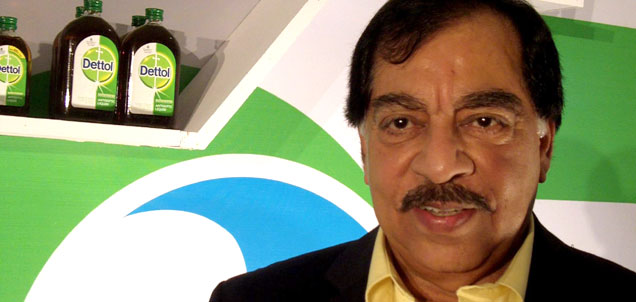
    MxM India caught up with Mr Chander Mohan Sethi, Regional Director – South Asia, Chairman and Managing Director, Reckitt Benckiser (India) in a one-on-one interview, at the release of the latest international Dettol Habit Study by the Global Hygiene Council in association with Reckitt Benckiser, in New Delhi. The study which was carried out in 12 countries including India, found that people who have good manners have better personal hygiene.

    Mr Chander Mohan Sethi has envisioned and assisted Reckitt Benckiser in its entry into various sectors, as well as helped the company establish a strong foothold in the household products and personal care sector.

    Mr Sethi began his career at Reckitt Benckiser India as Branch Manager- Eastern Region in 1984. He was promoted to the position of National Sales Manager in 1987 and in three years, recognizing his huge contribution to the company, he was promoted as Head of Marketing and Sales. He also headed Reckitt Benckiser, Nigeria and West Africa in 1994. Mr Sethi began his career as a management trainee with Glaxo SmithKline Consumer Products Ltd.

    Reckitt Benckiser, a global consumer goods company, headquartered in UK, is a world leader in household, health and personal care. Some of its leading brands include, Dettol, Harpic, Strepsils, Vanish, Veet and Mortein.

    In this candid interaction, Mr Sethi reinforces Dettol’s growing market share and the need for competing brands to think of newer ideas to take on an iconic brand like Dettol.


    Q: What are the key insights of the latest Dettol Habit Study, specific to India?

    First and foremost, the study has been done in 12 countries; more than 14,000 consumers have been contacted. In India, the study has also been done, both in metros, mini metros and in smaller towns. I think two key insights have come. One is that, male and female hygiene habits are the same. And secondly, which is a bit concerning, is that the younger generation unfortunately is not following as good hygiene practices as they should. I think that certainly is a surprise for us.


    Q: As the latest report states, good manners and behaviour are equally important factors as much as the availability of good infrastructure to practice good hygiene. How do you react to that?

    I think it’s a great insight, it’s a great fact of life, that you could have the best infrastructure but if you don’t have the right hygiene habits, it would lead to, you know, infection. So you can have a very clean room, you have a very large home but if you don’t have the right habits, there is going to be a problem of hygiene.


    Q: Is Reckitt Benckiser taking any specific initiatives for hygiene awareness in rural India?

    There is a very fine definition between rural-rural and what I call semi-urban. In very small, 40,000-50,000 population towns, we focus in different regions in terms of going to these towns and doing mother contact programmes, also in school programmes and hospitals. I would like my team to go into areas where they can effectively to do it.


    Q: How does the Global Hygiene Council function?

    The Global Hygiene Council is basically an independent body made up of very eminent doctors and scholars. They do studies on hygiene practices, on what should and what should not be done, after getting insights into consumers’ lives and consumers’ homes, in places of work. These are independent specialists, who get funded by their universities or hospitals where they are attached. But when they come to the Council, which is where we put an education endowment to run this entire body for more than ten countries, they meet a couple of times, and we use their material to be able to propagate good hygiene.


    Q: Dettol ranked as No1 in the Most Trusted Brand survey by Brand Equity in 2002. It slipped down to No2 in 2003. Even though the brand has consistently ranked in the Top 10 Most Trusted Brands, it never regained the No1 mark. How do you react to that?

    The first point is that Dettol is one of the most trusted brands in this country and over decades together. The second point is that there are a lot of new brands that have come, whether it is in the technology sector, cars, information or services etc. So it’s a question of what is the priority in that consumer’s mind at that point of time on his list of things. For us, it’s very important that we read the consumer’s reaction and feedback. But just to give you an idea, Dettol Liquid, in an independent survey by Nielsen, is 85 percent of the market. If you take Dettol Liquid hand wash, again Nielsen says, 53 percent of the market, so I could go on. Now if Dettol were not in one of the most trusted brands then we wouldn’t have 85 percent of the market in liquids, wouldn’t have 53 percent in hand wash. And just to say, Dettol soap for example, the body soap, it used to be No 8 in the soap market, and it is today No 3 in the entire soap market. Certainly in the germicidals, we are today at the top.


    Q: Dettol has positioned itself as the germ fighter brand; how have other players in the market affected this position? In fact, as a study indicates, in 2007 Dettol made an effort to reposition itself to take on Lifebuoy. What do you say to that?

    Lifebuoy tried to position itself like Dettol, I mean they must be running out of ideas that they have to… but you know, I can’t blame them. If you have an iconic brand like Dettol, everybody would want to be like Dettol. So good luck to those guys who want to copy us but the consumer says there is only one Dettol, there is only one brand which they trust in terms of hygiene.