Tag: RAM

  • RAM ratings for Week 45

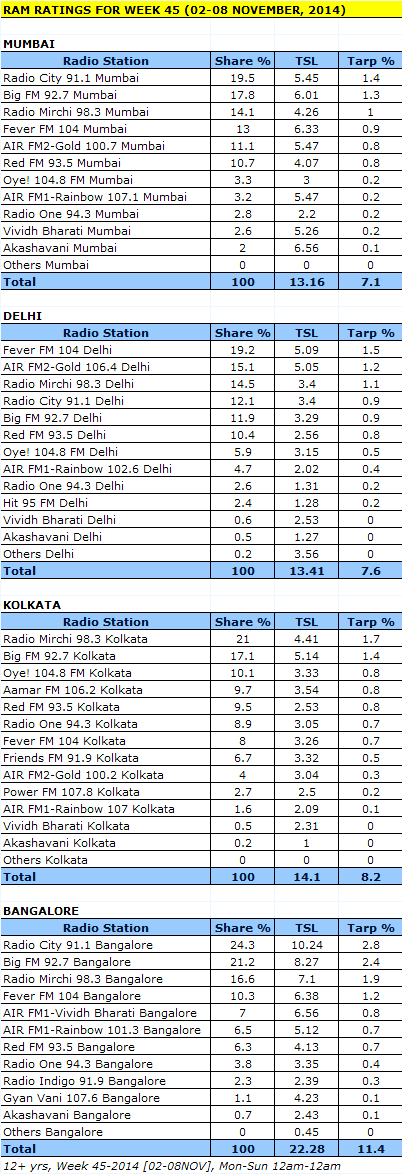
    Ram, Ram! So here we are with the RAM numbers for Week 45 as per RAM. Like in the case of TAM, these numbers are not provided by RAM, but we source it from one of the subscribers. We advise advertisers and media agencies to make their buying decisions after validating the numbers with authorised data.


  • Week 44 RAM Ratings for Radio Stations in 4 cities​

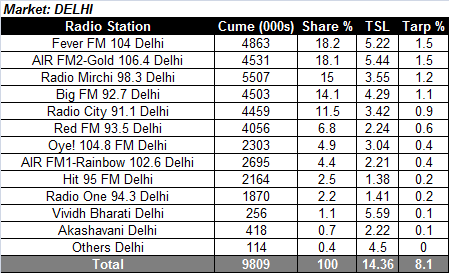
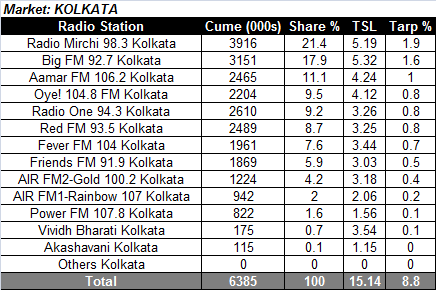
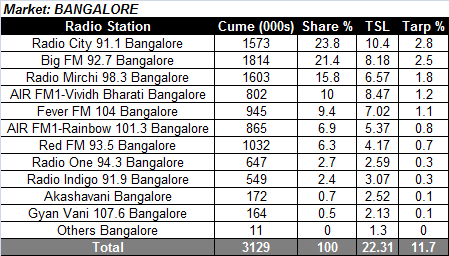
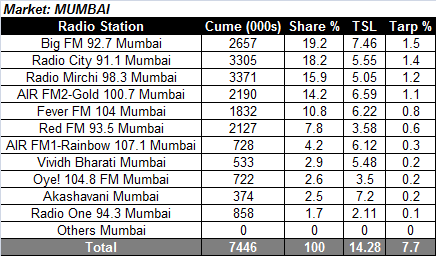
    Presenting RAM ratings for Radio Stations in the four cities of Mumbai, Delhi, Kolkata and Bengaluru (earlier Bangalore). These numbers have not been sourced from RAM so we urge those who plan to use them for their buying decision to verify them.


    TG: 25+ yrs, Week: Week 44-2014 (26OCT to 01NOV), Daypart: Mon-Sun 12:00 AM-12:00 AM


    TG: 25+ yrs, Week: Week 44-2014 (26OCT to 01NOV), Daypart: Mon-Sun 12:00 AM-12:00 AM


    TG: 25+ yrs, Week: Week 44-2014 (26OCT to 01NOV), Daypart: Mon-Sun 12:00 AM-12:00 AM


    TG: 25+ yrs, Week: Week 44-2014 (26OCT to 01NOV), Daypart: Mon-Sun 12:00 AM-12:00 AM


  • RAM ratings for Week 43

    Starting this week, we will carry RAM ratings regularly for the four metros. We are starting with six stations, but from next time, we will carry of all the stations. Like in the case of TAM, these numbers are not provided by RAM, but we source it from one of the subscribers. We advise advertisers and media agencies to make their buying decisions after validating the numbers with authorised data.


  • Jaldi 5 with Ashwin Padmanabhan: The retro way to rise in ratings in Mumbai

    Two Sundays back, Reliance Broadcasting Network Ltd’s 92.7 Big FM in Mumbai switched from being a current hits radio station to one that plays retro music. Last year, after it did the same in Delhi, the station leapfrogged the RAM ratings charts to the Top 3. With the change to retro, the RBNL thinktank hopes to achieve much success in Mumbai too.We posed a few questions to Ashwin Padmanabhan, Business Head of the 45-station 92.7 Big FM. Here goes the Q&A.


    1. So why the switch to retro in Mumbai too?

    We initiated an exhaustive research to evaluate the preferences of our listeners and understand our brand positioning better. The results showed that listeners favoured retro music and there emerged an opportunity to offer listeners music and content of their choice. This decision was also influenced by the success generated at the 92.7 Big FM Delhi Station, which went retro sometime ago and the market has reacted exceedingly well. The response from listeners was overwhelming, with the station reaching leadership numbers.


    2. Would you go retro with your other stations too?

    We have never believed in a one-shoe-fits-all format. We evaluate and treat each market independent of the other and understand the requirements of each individual market. We have gone retro in six markets – Mumbai, Delhi, Baroda, Kolkata, Bhopal and Rajkot.


    3. 92.7 BIG FM was meant to be a mainstream FM radio station. By going retro, while your listenership rises, you move away from the mainstream… something that you would’ve possibly have as your second station do post Phase 3?

    The team has mapped out its positioning strategy based on unique yet strong on-air and digital concepts, while taking into consideration the lifestyle of Mumbaikars, the amount of time they spend in travelling and the blend of listeners in Mumbai. Although the stationality has been changed to retro, the revamped content strategy will also bring to listeners a plethora of current happenings in the city including stock and gold updates, city affairs, traffic and weather updates, sports, music-related trivia and more. In addition to this, 92.7 Big FM Mumbai intends to keep up with the local roots of Maharashtra by airing Marathi music and will have Marathi-speaking RJs as well. So no, I would think we are still very mainstream.


    3a. Tell us more about the local Marathi content? How much of it will be at peak hour?

    We are still working on this and might be a little early to talk about.


    4. How do you anticipate the retro positioning faring in terms of ratings?

    Well, we believe this will work in the Mumbai market. Our endeavour is to break the clutter and offer listeners content that is engaging and meets their aural preferences. Right now might be a little premature, but the feedback coming in from across the city has been extremely encouraging. We are confident it will work well with listeners.


    4a. Yes, your Delhi ratings have most certainly improved… In terms of ads, how has the higher ranking helped?

    Advertisers pan India have supported our decision. Differentiation is the way forward, and our advertisers realize that.


    5. What does your Delhi experience say… does retro music alienate the young and restless?

    Certainly not. We think the music from the sixties and seventies has always been appreciated by listeners across age groups. We think 92.7 Big FM can offer a distinctive change from the monotonous pattern of music that is heard elsewhere. We have seen an increase in listenership and are very happy with the results of the new positioning.


  • BIG FM hosts Twenty20 World Cup trophy display

    By A Correspondent


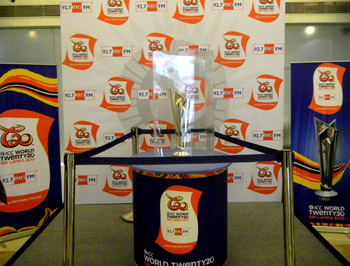
    Reliance Broadcast Network Ltd’s radio vertical 92.7 BIG FM announced its set up as the official FM Radio Partner for the fourth edition of the ICC World Twenty 20, Sri Lanka 2012 in Delhi. The announcement was made as they hosted an exclusive display of the prestigious trophy at an exclusive closed door preview at Maples Emerald, New Delhi.


    The elegant, glittering, 7.5 kg trophy was unveiled for key partners from advertising agencies and top clients across FMCG, retail, banking, pharma, manufacturing and other sectors.


    As the official FM Radio Partner for the ICC World Twenty 20, 92.7 BIG FM will get to display the trophy in Mumbai as well, which is scheduled to happen next week. It will also mean exclusive access for the station to players from India and abroad during the course of the tournament.


    Exclusive interviews and bytes from players and other match officials will be aired first only on 92.7 BIG FM. In order to promote the tournament on-ground, 92.7 BIG FM will conduct a number of T20 matches for listeners across cities, who will fight for the BIG T20 CUP, the winning team here will also get the rare opportunity to witness a match involving India in Sri Lanka.


    According to the latest RAM ratings, 92.7 BIG FM with a listenership of 1076 (age group 24yrs -34 yrs) in the 7am-11am time slot is the No. 1 FM radio station in New Delhi.


  • RAM releases the second Radio Listenership sweeps for 9 cities

    By A Correspondent


    RAM (Radio Audience Measurement) service, launched by TAM Media Research in 2007 for the radio industry, has released the second round of its 9 cities Listenership Sweeps. The first round was released in October 2012, along with the announcement of the news on RAM panel coverage expansion to 9 additional cities – Ahmedabad, Chennai, Hyderabad, Indore, Jaipur, Kanpur, Lucknow, Nagpur and Pune. Prior to that, RAM operated out of the four Indian metros – Bangalore, Delhi, Kolkata and Mumbai only.


    As planned and announced, the second sweeps data is for the period of February-April 2012. This sweeps, released by RAM, will help the radio industry: broadcasters & media planning agencies, to assess the impact that radio medium is having on audiences in towns other than the major metros.


    Commenting on this release, LV Krishnan, CEO said: “The second roll out is as per timelines committed by us. After the first sweeps in October last year, the second one shows interesting changes in radio consumption patterns. While in some markets, radio consumption base itself has seen an increase, in others, granular trends like Out Of Home (OOH) listenership has seen an encouraging increase.”


    RAM’s second sweeps highlights certain interesting changes in radio consumption behaviour, not only across the 9 cities, but also in comparison to the October 2011 sweeps release.


    Some highlights are:

    • Ahmedabad, Chennai & Hyderabad are the growth markets. Southern metros have seen more than 30 per cent growth in listening thresholds while Ahmedabad has witnessed 15 per cent growth
    • Pune,Kanpur,IndoreandNagpur, have remained almost the same levels as the previous round


    Ahmedabad:

    • Average audience has seen a significant increase in morning while other day parts, remained at the same level. The peak at 9am has grown by 70 per cent.
    • The increase in morning day part is due to 10 per cent growth in cume reach levels.
    • Share of Out of Home listening has grown significantly. Particularly during travel/conveyance with share of listening growing from 9 to 16 per cent
    • Cume reach levels have gone up across all the days, while Sunday has seen a significant growth
    • Time spent levels have seen a very marginal drop across the days. Sunday remains the day with highest time spent level
    • While 90 per cent of cume reach build up was achieved by afternoon earlier, now 95 per cent of the audience can be targeted by the morning day part alone at a weekly level


    Chennai:

    • While cume reach levels have dropped across all the day parts, time spent levels have significantly increased. The maximum increase in time spent being in the morning day part.
    • The audience build up has got spread through the day. It takes up to afternoon day part to cover 95 per cent of all audience.
    • Share of SEC C’s listening has grown from 37 per cent to 43 per cent
    • Share of in-home listenership grows from 76 per cent to 87 per cent
    • While Saturday had the highest listenership thresholds the previous round, Sunday has grown beyond Saturday in round 2 – both in terms of cume reach and time spent


    Nagpur:

    • The weekly listenership levels have remained at the same levels as the previous round
    • The daily cume reach has gone up, with Sunday being the maximum, but time spent levels are down across all the days.
    • Share of In-home listening grows from 82-87 per cent


    Jaipur:

    • Drop in listenership thresholds across the day
    • The same reflects in the cume reach levels across the day parts
    • Dominance of SECDE in Jaipur’s listenership contribution is normalized. Proportionate contribution from all SECs to listenership
    • Morning day part continues to be the one where listenership peaks, though at a lower threshold
    • Sunday emerges as the one with highest cume reach and time spent levels
    • The audience build up has got spread through the day. It takes up to afternoon day part to cover 95 per cent of all audience


    Indore:

    • The listenership peaks have interchanged between mid morning and morning, morning peak emerging as the highest. Other day parts are more or less are at the same threshold
    • At a weekly level, morning day part emerges as the highest in cume reach and time spent
    • Mid-morning day part saw a reduction cume reach levels.
    • TSL level growth in night day part
    • Share of In-home listening significantly drops from 94 per cent to 71 per cent. Maximum growth in Car share of listening at 22 per cent
    • Saturday loses audiences as Sunday emerges as the destination of maximum listening
    • Faster cume reach build up across the day as 95 per cent of the audiences are reached by the mid-morning day part


    Hyderabad:

    • Across the day parts TSL has almost doubled
    • Evening and night day parts have grown significantly while morning has witnessed a drop in listenership levels.
    • The drop in morning day part is primarily due to drop in cume reach levels, while TSL has grown.
    • Contribution from SEC A & B increases
    • 6 per cent drop in share of in-home listening, reflected in the growth of listening share from car/travel/conveyance
    • Equal and high threshold of listenership across weekdays and weekends
    • Evening and night day parts add significant amount of audiences to cume reach build up


    Pune:

    • Similar listenership thresholds across the day parts
    • Mid-morning to night, there is a drop in cume reach levels, but across the day parts there is a growth in TSL levels
    • Contribution from different places of listening remains the same
    • Sunday emerges as the destination of highest listenership
    • Audience addition from afternoon grows in the current year


    Lucknow:

    • Listenership thresholds drop across the day parts, while night primetime holds the thresholds
    • While there is cume reach growth in some of the day parts, there has been TSL drop across all of them
    • Share of listening from 35+ age group comes down
    • Contribution from in-home listening grows from 89 per cent to 93 per cent
    • Cumulative audience on Sunday grow from 82% to 94%
    • Weekdays and weekends have similar thresholds of TSL


    Kanpur:

    • Marginal changes in day part wise preferences
    • Growth in consumption share fromSECABand 45+ age group
    • OOH share of listening grows from 23 per cent to 29 per cent, majority of the growth coming from car/travel
    • Sunday emerges as the clear leader in listening thresholds


    TAM is a joint venture between Nielsen Company and Kantar Media Research. Besides measuring TV Viewership, TAM also monitors Advertising Expenditure of Television, Print & Radio through its division AdExIndia. Since 2004, it extended its presence in the PR Measurement & Analysis space for Corporate/Marketing Clients by setting up a separate division – Eikona PR Measurement.


    In 2007, the joint venture introduced RAM (Radio Audience Measurement) service to track Radio Listenership for the Indian Radio Broadcast Industry. In year 2009, TAM launched a division, called TAM Sports that specializes in monitoring Sports Sponsorship ROI.


  • RAMcheck: Besides Mumbai, no change in #1s

    By A Correspondent


    TAM Media’s Radio Audience Measurement (RAM) – which covers four key metros, Mumbai, Delhi, Kolkata and Bengaluru – released its latest radio listenership figures for wk 13 to wk 16, 2012 (Last week of March to first three weeks of April, 2012). According to the latest RAM data, for listeners of 12 years of age and above, all places of listening, and according to radio channel shares, RadioCity, Radio Mirchi, Fever FM, Big FM, Red FM, Radio One, Oye! FM continue to be the top FM stations in the big four metros.


    Mumbai:


    Radio Mirchi emerges as the number one FM station in Mumbai with a market share of 15.3 per cent, followed closely byRadioCityat 15.2 per cent. The two FM stations are closely competing for the top spot, but what remains to be seen is which of these two FM stations retains the top spot. AIR FM2 Gold, Fever FM and Big FM make the top five FM stations in Mumbai. The other FM stations in the Mumbai market include Red FM, Radio One, Oye! FM, AIR FM1 Rainbow, Vividh Bharati and Akashavani.


    Delhi:


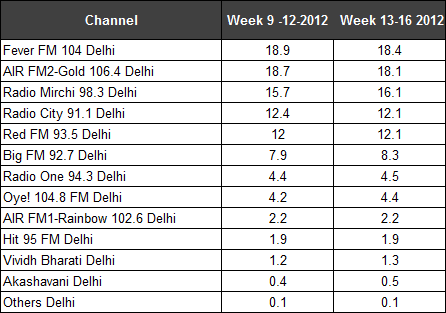
    Fever FM continues to be the most popular FM station in Delhi with a market share of 18.4 per cent, its nearest rival is the AIR FM2 Gold which is comfortably placed at number two with 18.1 per cent market share. Ranked three is Radio Mirchi followed by RadioCity which is ranked four and Red FM as ranked five in theDelhimarket. The rest of the FM stations in Delhi include Big FM, Radio One, Oye! FM, Hit FM, AIR FM1 Rainbow, Akashavani and Vividh Bharati.


    Bengaluru:


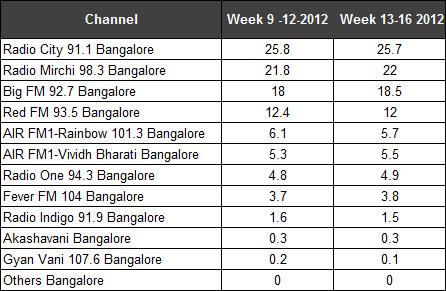
    RadioCity continues to maintain its leadership position in the city. RadioCity, Radio Mirchi and Big FM are the top three most popular FM stations in Bengaluru. RadioCity received a market share of 25.7 per cent whereas Radio Mirchi and Big FM received a market share of 22 per cent and 18.5 per cent respectively. Ranked four is Red FM with 12 per cent and the fifth most popular FM station is AIR FM1 Rainbow with 5.7 per cent. The other FM stations in Bengaluru include AIR FM1 Vividh Bharati, Radio One, Fever FM, Radio Indigo, Akashavani and Gyan Vani.


    Kolkata:


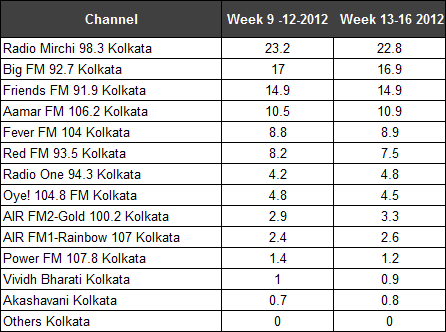
    Radio Mirchi is the clear winner in Kolkata with a market share of 22.8 per cent. The top three FM stations in Kolkata haven’t changed as Radio Mirchi continues to be the number one FM station of the city followed by Big FM with a share of 16.9 per cent and at the number three FM station of Kolkata, Friends FM received a share of 14.9 per cent of the share. Ranked four and five are Aamar FM and Fever FM with a share of 10.9 per cent and 8.9 per cent respectively. The other FM stations in the city are Red FM, Radio One, Oye! FM, Power FM, AIR FM1 Rainbow, AIR FM2 Gold, Vividh Bharati and Akashavani.


  • RAMcheck: No change in #1 stations across RAM markets

    By A Correspondent


    TAM Media’s Radio Audience Measurement (RAM) – which covers four key metros, Mumbai,Delhi, Kolkata and Bengaluru – released its latest radio listenership figures for Wk 8 to Wk11 (Last two weeks of February 2012 and first two weeks of March 2012).


    According to the latest RAM data, for listeners of 12 years of age and above, all places of listening, and according to radio channel shares,RadioCity, Radio Mirchi, Fever FM, Big FM, Red FM, Radio One, Oye! FM were some of the top FM stations in the big four metros.


    WhileRadioCityretained its leadership position in Mumbai and Bengaluru, Fever FM and Radio Mirchi also continued to remain the leading FM stations inDelhiand Kolkata respectively.


    Mumbai:

    RadioCitycontinues to be the most popular FM station in Mumbai, as the FM station has maintained its leadership position in the city. Ranked second is Radio Mirchi followed by AIR FM2 Gold, Fever FM and Big FM which are ranked third, fourth and fifth respectively. These top five FM stations and Red FM, ranked sixth have secured their listenership share in double digits. The other FM stations in the city include Oye! FM, Radio One, AIR FM1 Rainbow, Vividh Bharati and Akashavani Mumbai.


    Delhi:

    According to the Wk8 to Wk 11 RAM data, Fever FM has once again retained its leadership position inDelhiwith a listenership share of 18.6 per cent followed by AIR FM2 Gold which garnered a share of 18.5 per cent. Although Fever FM is the number one FM station ofDelhi, the government owned AIR FM2 Gold is a close second. What remains to be seen is whether Fever FM is able to widen the gap between the number one and number two FM station? Or will AIR FM2 Gold claim the leadership title?  Once the undisputed leader ofDelhi, Radio Mirchi is now ranked three with a share of 15.2 per cent followed byRadioCityand Red FM with a share of 12.3 per cent respectively. The top five FM stations have received their station share in double digits. The other cluster of FM stations inDelhiincludes Oye! FM, Radio One, AIR FM1 Rainbow, Hit FM, Vividh Bharati and Akashvani Mumbai.


    Bengaluru:

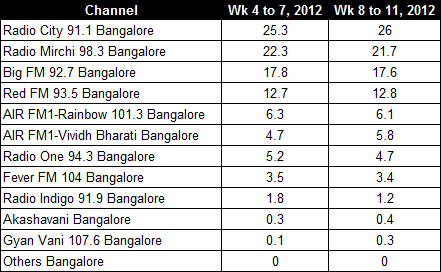
    RadioCitymaintained its leadership position in Bengaluru with a share of 26 per cent, its nearest rival Radio Mirchi, on the other hand, received a share of 21.7 per cent. Ranked three is Big FM with a share of 17.6 per cent followed by Red FM which received a share of 12.8 per cent. While the top four FM radio stations in Bengaluru received a double digit share, AIR FM1 Rainbow which is ranked five received a share of 6.1 per cent. The other clusters of FM station in the city are Fever FM, Radio One, Radio Indigo, Gyan Vani, Akashavani and Vividh Bharati.


    Kolkata:

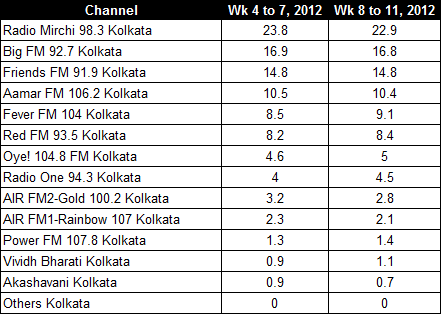
    The top five FM stations of Kolkata continue to remain the same. Radio Mirchi is unanimously the most popular FM station in Kolkata with a whopping 22.9 per cent of the station share. Its nearest rival is Big FM which received a share of 16.8 per cent followed by Friends FM and Aamar FM which are ranked four and five respectively. Kolkata is the only RAM market which perhaps has not seen a change in the top four rankings in a long time. While Fever FM and Red FM are ranked five and six respectively, other clusters of FM station in Kolkata are Oye! FM, Radio One, Power FM, AIR FM1 Rainbow, AIR FM2 Gold, Vividh Bharati and Akashavani Kolkata.


  • RAMcheck: What women listen to…

    By A Correspondent


    Which are the most popular FM stations among women? MxMIndia shifts focus on women listenership trends in the four RAM (Radio Audience Measurement) – Mumbai, Delhi, Bengaluru and Kolkata. The data consists of women who are 12 years of age and above, all places of listening from WK 47, 2011 to WK 6, 2012. The most popular FM stations among women in the four metros are Radio Mirchi, Radio City, Big FM, Red FM and Fever FM.


    Delhi:

    Fever FM is the most popular FM station among Delhi women listeners, followed by Radio Mirchi, AIR FM2 Gold, Red FM and Radio City – the top five FM stations for women in Delhi. The listenership share of Fever FM has in fact moved slightly higher on Wk 3 to Wk 6 as compared to Wk 47 to Wk 50. The top five FM stations in the city have managed to sustain their listenership rankings from wk 47 to 50, 2011 to Wk 3 to 6, 2012. The other FM stations in the city are Big FM, Radio One, Oye! FM, Hit FM, AIR FM1 Rainbow, Vividh Bharati and Akashvani.


    Mumbai:

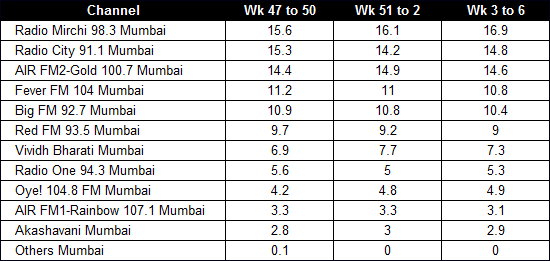
    For the women listeners in the commercial capital, Radio Mirchi is the numero uno FM station, at least in terms of station share. Radio City is the second most popular FM station among the women listeners of Mumbai followed by AIR FM2 Gold which is ranked three. The other two FM stations in the top five category are Fever FM and Big FM, which are ranked four and five respectively. While these top five radio stations have received a double digit listenership share, the other FM stations in the city are Red FM, Radio One, Oye! FM, Vividh Bharati, AIR FM1 Rainbow and Akashvani.


    Bengaluru:

    The Bengaluru women listen to Radio City the most. Radio City has maintained its leadership position among women listeners from Wk 47 to Wk 50, 2011 to Wk 3 to Wk 6, 2012. Ranked second is Radio Mirchi followed by Big FM, the third most popular FM station of the city. Ranked four and five are Red FM and AIR FM1 Rainbow. The top four FM stations have infact witnessed their share per cent in double digits. The other FM stations in the Bengaluru market are Radio One, Fever FM, Radio Indigo, AIR FM1 Vividh Bharati, Akashvani and Gyan Vani.


    Kolkata:

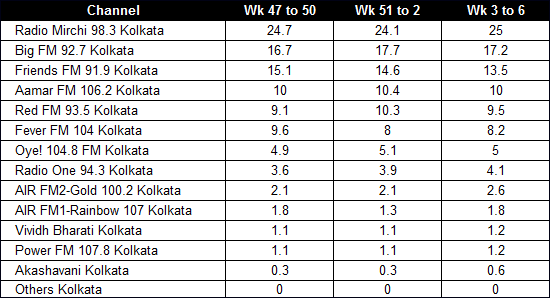
    Radio Mirchi is clearly the most popular FM station for Kolkata women. The FM station has maintained a significant lead in the city with 25 per cent of the market share as on Wk 3 to Wk6, 2012. Its nearest rival in Kolkata is Big FM with a share of 17.2 per cent followed by Friends FM with 13.5 per cent of the share. Aamar FM and Red FM are ranked four and five with a share of 10 per cent and 9.5 per cent respectively. The other FM stations in the city are Fever FM, Oye! FM, Radio One, Power FM, AIR FM2 Gold, AIR FM1 Rainbow, Vividh Bharati, and Akashvani.


  • RAMcheck: More surprises for FM players

    By A Correspondent


    TAM Media’s Radio Audience Measurement (RAM) – which covers four key metros, Mumbai,Delhi, Kolkata and Bengaluru – released its latest radio listenership figures for Wk 4 to Wk7 (Last two weeks of January 2012 and first two weeks of February 2012).


    According to the latest RAM data, for listeners of 12 years of age and above, all places of listening, and according to radio channel shares,RadioCity, Radio Mirchi, Fever FM, Big FM, Red FM, Radio One, Oye! FM were some of the top FM stations in the big four metros.


    Mumbai:

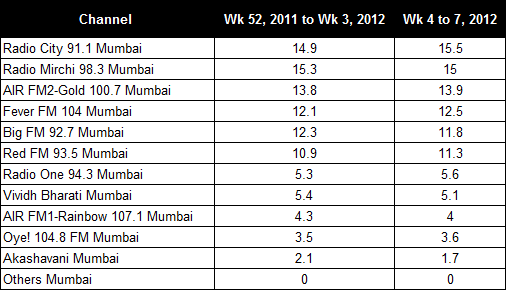
    Radio City surged ahead of Radio Mirchi as the most popular FM station in the city with 15.5 per cent channel share from Wk 4 to Wk7, 2012 whereas Radio Mirchi’s channel share stood at 15 per cent. Ranked three is AIR FM2 Gold which more or less remained unchanged in listenership share from wk 4 to 7, 2012 as against Wk 52, 2011 to Wk 3, 2012. As compared to Wk 52, 2011 to Wk 3, 2012, six FM stations witnessed growth in their listenership share in Wk 4 to Wk 7, 2012 namely, Radio City, Fever FM, Red FM, Radio One, Oye! FM and AIR FM2 Gold.


    Source : RAM

    Market: MUMBAI

    Demographic: All People 12+ Filter Demographic: None

    Statistic: Share %

    Daypart: Sun – Sat 12:00 AM – 12:00 AM

    Place of Listening: All


    Delhi:

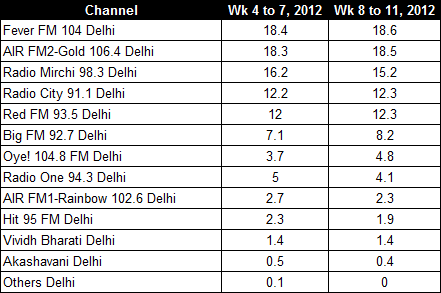
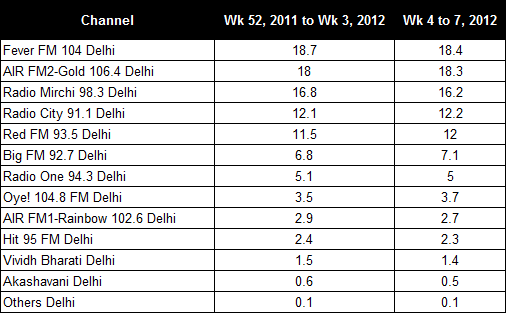
    Fever FM once again manages to retain its leadership position inDelhi, its nearest rival in Delhi is Radio Mirchi, if the government owned AIR FM2 Gold is excluded. According to figures for Wk4 to Wk 7, 2012, AIR FM2 Gold is close behind Fever FM for the top spot. What remains to be seen is whether or not Fever FM is able to retain its leadership position inDelhi.


    The Wk4 to Wk 7, 2012 RAM numbers reveals that in comparison to Wk 52, 2011 to Wk 3, 2012 only five FM stations witnessed any growth in the Delhi market. The FM stations to have seen growth in their listenership shares are Radio City, Big FM, Red FM, Oye! FM and AIR FM2 Gold.

    The other FM stations in the Delhi market are Radio One, Hit FM, AIR FM1 Rainbow, Vividh Bharathi and Akashavani Delhi.


    Market: DELHI

    Demographic: All People 12+ Filter Demographic: None

    Statistic: Share %

    Daypart: Sun – Sat 12:00 AM – 12:00 AM

    Place of Listening: All


    Bengaluru:

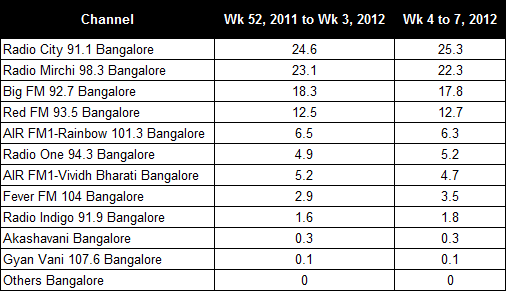
    In Bengaluru too, Radio City continues maintain its numero uno position, the FM station has managed further grow its listenership share in Wk 4 to Wk 7, 2012 as against Wk 52, 2011 to Wk 3, 2012. The second most popular FM station in Bengaluru is Radio Mirchi followed by Big FM and Red FM, ranked third and fourth respectively. Ranked fifth is AIR FM1 Rainbow and Radio One is ranked sixth. The five of the eleven FM stations in the Bengaluru market which witnessed growth in listenership share areRadioCity, Red FM, Radio One, Fever FM and Radio Indigo.


    Market: BENGALURU

    Demographic: All People 12+ Filter Demographic: None

    Statistic: Share %

    Daypart: Sun – Sat 12:00 AM – 12:00 AM

    Place of Listening: All


    Kolkata:

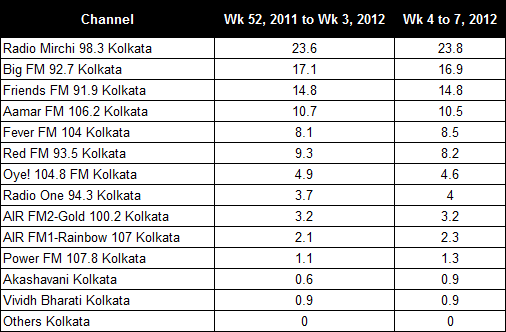
    Radio Mirchi has not only maintained its leadership position in the city, but has also witnessed some growth according to the Wk4 to Wk 7, 2012 RAM data as against Wk 52, 2011 to Wk3, 2012. Kolkata is the only RAM market to have seen no change in atleast the top three rankings. Radio Mirchi, Big FM and Friends FM continue to be the top three FM stations in the city. Ranked four is Aamar FM, followed by Fever FM, Red FM and Oye! FM. Of the thirteen FM stations in Kolkata, six FM stations in the city have witnessed growth in their listenership shares: Radio Mirchi, Fever FM, Radio One, Power FM and AIR FM1 Rainbow. Although Friends FM remained stagnant in its listenership share, nevertheless it is comfortably placed at number three. The other FM stations in the Kolkata market include Radio One, Power FM, AIR FM1 Rainbow, AIR FM2 Gold, Akashavani Kolkata and Vividh Bharati.


    Market: KOLKATA

    Demographic: All People 12+ Filter Demographic: None

    Statistic: Share %

    Daypart: Sun – Sat 12:00 AM – 12:00 AM

    Place of Listening: All


  • Radio still needs to be evangelized: Harrish Bhatia

    Harrish M Bhatia, the Chief Executive Officer, MY FM, is said to have several landmark achievements to his name. He is said to have played a key role in making MY FM, the radio business of Dainik Bhaskar Group achieve its break-even position within a short time since its launch. Since the launch in 2007, he is said to have successfully launched the MY FM brand in 17 cities in under two years and led the company to operational break-even in just three years. In conversation with MxMIndia’s Robin Thomas, Mr Bhatia shared his views on MY FM’s Q3 results, the radio business post break-even, his FM phase III plans and much more.


    Q: Let’s start with the Q3 results. The ad revenues grew 22 per cent in Q3 2011- 12 and EBIDTA stood at Rs44 million… The results must have provided MY FM an extra boost for 2012? What would you say are the key factors behind the growth?

    We have always believed in the growth story and economic vibrancy of the 17 non-metro markets that we operate out of. The surge in the demand for consumer goods, services, FMCG products, better education avenues and son on makes the non-metro markets interesting and rewarding for marketers. While global slowdown may have affected the revenue of metro players, retail advertising remained unaffected as the consumers in these cities are not exposed to the daily stock market fluctuation.


    MY FM, with a strong focus on the non-metro markets, unparallel content offering like My Ramayana and Murari Babu in spiritual time band, daily song request shows like Dil Chahta Hai and listener engagement initiatives such as the award winning CSR – Ek Koshish and CJ943- City ka Campus Star with VJ Ranvijay and great HR practices, have all led to this outstanding performance.


    Q: The radio industry is, more or less, completely dependent on advertising revenues. Do you agree? What are the other sources of revenue for MY FM?

    Intelligent and smart advertisers who believe in radio are using radio to its true potential by going beyond FTC through innovations like sponsorships, content integration and activations. There is infinite scope to innovate on radio. Traditional advertisers, however, on account of their own consumption habits, are not taking the medium seriously.


    Radio offers opportunities to create unique ‘Radio properties’ and build ‘sonic triggers’ that are hard to replicate on other mediums. Long term properties like Ramayana, Murari Babu discourses in the spiritual time band, the remix show hosted by DJ NYK and others on MY FM should be seen as a strategic investments by advertisers to build a connect between the consumer and their brand.


    Q: MY FM achieved break-even way back in 2009… Has there been any change in the business since then – more focus on internal communications or infrastructure, getting more talents?

    Break-even was achieved as a result of cost optimisation and resource rationalisation.  The scenario has changed a lot since then with a focus on innovative HR practices and an ‘Employee First’ policy that includes:-

    • Trainings the Talent: Based on the leadership roles, key talent are identified and sent for training and workshops that best suits their development needs – from training by UK Radio, London to workshops at MDI and IIM-A.
    • Variable pay policy: Innovative policy for employees across the board liked to their quarterly performance.


    Q: You have always maintained that the actual growth of radio is coming from the non metros… Has the FM radio listenership in metros reached a saturation point?

    Trends indicate that there is an exponential growth of listenership in non-metros on accounts of factors like more leisure time, low internet penetration, power shortage and so on, while it is growing at a slow pace or almost stagnant in metros.


    FM penetration has already reached decent levels in metros with hardly any scope of growth – 88 per cent inDelhiand 87 per cent in Kolkata. While non-metro cities like Ahmedabad andNagpurhave low penetration levels of 53 per cent and 69 per cent respectively.


    Q: It’s been five years since MY FM came into existence in 2006. You have had several landmark achievements since then. What would you say were the high points and the lows for MY FM since it first started?

    Highs:

    • Fastest launch of stations in a record time of under a year.
    • Achieving operational break-even within 3 years of launch.
    • Appointment of an ombudsmen.
    • Content innovations like MY Ramayana, Murari Babu, DJ NYK, My Vastu, Numerology show with Sanjay Jumani, Kahani ki Kitab Se and others.
    • MY FM joining the league of select stations with the launch of its TVC and song last year.


    Lows:

    • Government policies that have resulted in the industry being unviable for investment.
    • Limited growth on account of content restrictions imposed on a nascent industry.
    • Absence of an acceptable radio measurement tools.
    • Talent crunch during the initial years.


    MY FM is present in 17 cities and 7 states. How is the radio consumption behaviour in these cities different from those of the metros? In Mumbai for instance, a chunk of listenership comes in the morning. Is the trend same with the mini metros?

    Radio consumption is very different in non-metros. InIndore, late morning records the highest listenership, while Jaipur has high listenership throughout the day; whereas Ahmedabad peaks in both morning and night time bands. Moreover, the time spent on radio is much higher in non-metros and set to go up further with increase in FM listenership on mobiles.


    Does the medium still need to be evangalised to advertisers or are advertising willingly flocking to radio?

    Yes, radio still needs to be evangelized. Radio is the medium that many professionals include in their quarterly and yearly plans at the last moment to highlight the probability of their idea being executable.


    Moreover, media spends are not being proportionately allocated to radio even though it has outgrown other media in time spent. As per the recent RAM research conducted in the four markets- Jaipur, Ahmedabad, Nagpur and Indore – average time spent listening to radio is 160 minutes as compared to IRS figures of 107 minutes watching TV, 85 minutes reading newspaper and 30 minutes on internet respectively.


    Smart and intelligent advertisers who believe in radio know that if properly planned and used innovatively, the radio can do wonders for a particular brand. Unlike TV, Radio is the only medium that has the power to address area-specific challenges through a focused communication in their own local language and is value for money. Big radio players should come forward for the growth of the industry and to highlight its mammoth reach and effectiveness.


    Q: We have learnt that AROI is working on content codes for radio stations. Is it high time that radio also follows self regulation?

    We welcome any such move. We are already following a stringent AIR code for content.


    Q: Although news will be sourced from only AIR, nevertheless how prepared is MY FM for news? Does MY FM have the infrastructure ready for news or is it that the present infrastructure is more than sufficient for AIR bulletins?

    Yes, MY FM, being part of a larger news media group, already has the infrastructure to broadcast news. However, we believe that radio players should be allowed to carry their own news-based content, making it relevant for our listeners.


    Q: You seem to be quite active on Facebook and Twitter. What about your website? Can you share with us your digital media plans? How are you using the digital medium to engage listeners?

    Digital media is an integral part of all our campaigns and promotions – both for communication and engagement like content participation, feedback on music preferences and so on. Radio is an aural medium, however, with the launch of the “radio dikhta hai” campaign, listeners became viewers as they are able to see the radio and the RJs hosting the show on YouTube. We recently concluded our microsite contest encouraging listeners to participate in brand evolution by sharing their ‘jiyo dil se’ moment with the best entries winning big ticket prizes.


    Q: Currently what according to you are the key challenges facing the radio industry? And what are the trends to watch out for in the coming years?

    Challenges:

    • Deregulate radio: Content restrictions are a big restraint for the industry and our creative freedom gets affected due to the limitation to provide any kind of news-based content.
    • The most important is the Music Royalty Issue. The royalty issue continues to worry FM stations, especially the smaller FM players or those in small towns.
    • Absence of an acceptable radio measurement tool, due to which media planning and buying is done on the basis of researches like IRS, is another challenge that we face in our industry.
    • The license fee for new stations is a challenge, making the medium unviable for investment by existing and new players.


    Trends:

    • Expansion of radio post Phase III rollout, covering newer towns, increasing radio footprint.
    • The way consumer soaks information is more fragmented and varied like never before. Not only has the mechanisms to reach to the consumers changed, the vehicles option have also multiplied. Radio has evolved and outgrown all other media with consumer spending more time on it. To reach out to such a consumer and influence them by appropriately allocating media spends is going to be a big thing for advertisers in 2012.
    • While metros will remain a staple for marketers, an increased non-metro footprint will be critical for volumes in the long run. There is a growth opportunity that is vastly under-rated by many marketers today, which could emerge as a key growth engine for the next 10 years.


    Q: What are your FM phase III expansion plans?  Would you explore the metros? New genres with multiple frequencies? 

    Yes, we would be exploring metros in Phase III as long as it makes business sense.


    MY FM has major expansion plans for Phase III. However it is too premature to discuss this. Moreover, as mentioned earlier, the license fee for new stations is a challenge that needs to be address before the Phase III rollout to encourage bidding.


    Q: What is the overall workforce or team size of MY FM? Is employee retention a challenge in the radio industry? Or is there a talent crunch that needs to be first dealt with?

    MY FM currently employees 350 full-time employees. Retention is never a challenge for key management / leadership team. It’s the support staff that is a challenge. Moreover, MY FM’s robust HR practices are one of the best in the industry allowing development and growth of talent.


    Q: On a lighter note, what is a typical day like for Mr Harrish Bhatia, CEO, MY FM?

    I believe in pushing myself each day. I am very passionate towards my fitness and wake up at 5am every day to jog and do yoga which is followed by breakfast with family. I reach office around 10am and quickly move to make an agenda for the day that needs to be looked into, pointers to be discussed with the team and any meetings in the course of the day as well as near future. I meet the Business Heads/Programming Heads for programming review followed by lunch.


    After lunch, I catch up with the senior management for strategising and ideating, checking emails and reverting back to any queries. At the end, I review the work according to the daily agenda and makes sure that the work assigned for the day is done.  After winding up work, I head home, spend quality time with my family and friends, watch television, checks emails on my iPad and hit the bed for another challenging day.
     

  • The Anchor: 5 reasons why radio is very effective in tier 2 and 3 cities

    By Harrish Bhatia


    #1 Radio offers localised content:

    Radio speaks to consumers in their own language or dialect, and the degree of connect of the local content with people in these markets is far higher than any other medium.


    #2 People have more time for radio consumption:

    Since the level of activity in these markets is lower than in metros, people have more time to spend for themselves. This is where radio fills the gap. The increasing number of FM-enabled handsets has further increased the consumption of radio. Radio measurement survey conducted by RAM has proved that the average time spent listening to radio per day is 244 minutes inNagpurand 206 minutes in Jaipur as compared to 127 minutes in Mumbai and 124 minutes inDelhi. (Source: RAM Sweeps 1.0)


    #3 Radio serves as key source of information because of lower literacy rates:

    Literacy rates in these markets are much lower than in metros and as a result, radio serves as the primary source of information. Another critical point is that radio provides regular updates throughout the day whereas a newspaper provides news only in the morning.


    #4 Radio works even when there is no electricity:

    Since tier2 and tier3 cities have fewer electricity connections as compared to the metros and also suffer more frequent power cuts, radio serves as a main source of entertainment for people, instead of television. As a result people tune into radio using transistors and mobile phones.


    #5 Low internet penetration:

    Low internet penetration and inadequate bandwidth in these markets means that internet remains a distant dream. Thus, in the absence of internet, radio serves as a major source of engagement and personal entertainment.


    Harrish M Bhatia is the CEO, MY FM.