Tag: Rajdeep Sardesai

  • Goafest announces key speaker line-up

    By A Correspondent


    Upping the ante on engagement this year, Goafest has announced an experienced array of speakers from across the world of film, media, marketing and business. These include leaders and innovators like Benny Thomas -Strategy head, Crispin Porter and Bogusky, Carter Murray – Global CEO – FCB, Ace Director, Producer, Screenwriter, Actor and Television Personality Karan Johar and leading filmmaker and advertising guru R Balki. Adding to the enthralling line-up will be an engaging session with veteran journalist Rajdeep Sardesai in conversation with Honourable Deshamanya Arjuna Ranatunga, Minister of Ports and Shipping & Former Sri Lankan Cricket Captain.


    Key speaker line up:

    Benny Thomas -Strategy head, Crispin Porter + Bogusky,

    At CP+B, Benny leads strategy, planning and a team of strategists for businesses including PayPal, Braintree, NBA2K and Charles Schwab


    Karan Johar – Director

    Film Director, Producer, Screenwriter, Actor and Television Personality


    R. Balki – Director

    Film director, Screen writer, Producer and Chairman of Mullen Lowe Lintas group


    Prakash Sangam – CEO, Red Bus

    Prakash Sangam is the CEO of redBus, which is the world’s largest bus ticketing service that is ‘Made in India’. Prakash is engaged in growing the market leadership of redBus in the Indian market, expanding redBus to other countries globally and extending the business into adjacent travel segments of Hotels and Holidays.


    Tara Marsh – Global Content Head, Wunderman

    As global content lead, Tara Marsh ensures that Wunderman’s clients have an agile partner capable of providing strategy and resources – anywhere in the world. Tara brings valuable experience to bear navigating through complex technologies as well as identifying the right talent.


    Carter Murray – Global CEO – FCB

    A passionate champion of great creative and a consummate brand steward, Worldwide CEO Carter Murray took the helm of FCB in September 2013.Based in New York, he oversees 151 offices in 90 countries globally.


    Jean Lin – Global CEO – Isobar

    Jean Lin started her digital journey by establishing digital agency wwwins Consulting in 1999 it then became Isobar’s first Greater China offices in 2004 and was the driving force behind Isobar’s expansion in the Asia Pacific region. Jean was appointed a member of Global Executive Team at Dentsu Aegis Network, Isobar’s parent company.


    Raghu Raman -EX Army Man

    Raghu Raman is the President Risk, Security & New Ventures at RIL. He is the former founding CEO of National Intelligence Grid (NATGRID), GoI. In his earlier avatars, he has led Mahindra First Choice, Mahindra Special Services Group and Mahindra-British Aerospace joint venture as the CEO.


    Alasdair Lennox Creative Head – Fitch

    Executive Creative Director for EMEA in 2014, Alasdair directs the creative output for FITCH’s studios in the region. Alasdair joined FITCH as a junior environmental designer in the late nineties. He evolved a broad spectrum of design skills and a well-worn passport. He can bring a brand’s unique personality to life across all points in the customer journey and solves complex commercial and strategic challenges for international clients including Adidas, Vodafone, Diageo, UBS and Apple.


    Fergus O’ Hare Head of APAC Facebook Creative Shop

    Fergus O’Hare is the lead Creative Strategist for Asia Pacific of Facebook Creative Shop. He is tasked with creating and building ideas that transform how the world’s largest and most innovative marketers use Facebook to drive business growth.


    Stay tuned for more on the speaker’s line-up at Goafest 2016.

    This year’s exemplary speaker’s line-up at Goafest is set provide an enriching experience by emerging as a great melting pot of ideas and vision.  Presented by the Advertising Club and AAAI the Goafest ABBYs 2016 will once again see the entire advertising and marketing community join the celebrations in Goa from 7th April, 2016 to 9th April 2016 at   The Grand Hyatt, Bambolim, North Goa.
     

  • Can CNN-IBN survive (and thrive) minus CNN?

    By A Correspondent


    One still recalls the euphoria about the first Gulf War coverage on CNN in 1990-91. Or the coverage of the Babri Masjid demolition of 1992. Both channels had a headstart in independent television news journalism in India. A World This Week and news on Zee TV or Aaj Tak and Tonight hadn’t started by then. Doordarshan news had its star anchors, but it was a government mouthpiece.


    If both channels had got their act together, we wouldn’t have the half-dozen English news channels in existence today.


    While BBC still has some India-centric programming, CNN has hardly any of it. Even though it’s had a full-time bureau here and several desi names across the world.


    So when Rajdeep Sardesai quit NDTV to team with up Sameer Manchanda and later with Raghav Bahl, stitching up a licensing agreement with CNN made sense. Although NDTV was an independent operator and Bahl had earned his stripes with CNBC-TV18, a CNN prefix gave their new channel the push for it to speed ahead. The fact that it was CNN-IBN and not IBN-CNN indicated that there was a sentiment that the CNN connect will give the channel an upper hand.


    It did, but we soon realised that save on occasions when there was an American election or some other major developments, there wasn’t much of Made by CNN coverage on CNN-IBN. In recent times, we had some Farid Zakaria interviews – including one with Prime Minister Narendra Modi – but they made no impact.


    Clearly, IBN didn’t need CNN.


    For the channel, the exit of Rajdeep Sardesai last year was a bigger setback. The primetime bulletins aren’t bad, but the channel is no longer counted among those that matter.


    So TV18 and CNN have announced the concluding of their 10-year licensing arrangement in January 2016. The conclusion of the arrangement will enable each company thereafter to chart its own growth trajectory independently.


    Said A P Parigi, Group CEO, Network18 in a statement: “The last decade has seen a lot of momentum in the Indian media industry and has been particularly exciting for us. During this time we witnessed two media houses coming together to redefine the way news is presented to a demanding audience; we at TV18 have benefited from this relationship with CNN. At the launch of the channel, TV18 was a relatively small organization; that has changed now.  Network18 has grown from two news channels in 2005 to 17 news channels in 2015. Today, we have the largest footprint in the current affairs, regional and business news space in India.  The TV18 line-up of channels today are well established and highly regarded in this dynamic, complex and challenging environment.”


    Now, let’s interpret this. What Parigi obviously means is this:  “Ten years back, both media houses needed each other to present an offering to a demanding audience. We were a small organisation then, but that has changed.”  And of course this: “We don’t need CNN.”


    As for CNN, talks with the Zee group are reported to have reached an advanced stage and this could well result in an all-new English news channel from the Zee Media Corp stable.


  • From Yesterday: Rajdeep Sardesai joins India Today group as Consulting Editor

    By A Correspondent


    Rajdeep Sardesai

    It’s now final. After many rumours doing the rounds including one where he was to join NewsX, we have now received a mail from the India Today group announcing the appointment of senior journalist and founder and editor-in-chief of IBN18 Network Rajdeep Sardesai as Consulting Editor.


    Welcoming him to the group, India Today group Chairman and Editor-in-Chief Aroon Purie said, “Rajdeep has been an asset to whichever team he has belonged to, including the cricketing ones. Great to have him with us. I know he will hit the ball out of the park for Team India Today.”


    Mr Sardesai started his television career in 1994 and was a founding member of NDTV and, subsequently, CNN-IBN. Prior to television, he worked with The Times of India for six years and was the City Editor of its Mumbai edition. He served as the Editor-in-Chief of IBN18 Network, including CNN-IBN, IBN-7 and IBN-Lokmat for the last nine years. He has just finished his first book based on the historic 2014 elections. Mr Sardesai has won several national and international awards for journalism, including the Padma Shri in 2008. He has also been President of the Editors Guild of India and was chosen a Global leader for tomorrow by the World Economic Forum in 2000.


  • Mediaah! Will CNN-IBN survive without Rajdeep Sardesai?


    Mediaah! By Pradyuman Maheshwari


    Rajdeep Sardesai’s decision to quit CNN-IBN isn’t like that of an employee leaving any organisation. Had he not quit NDTV in 2005, he wouldn’t have not gone on to team up with Sameer Manchanda and Raghav Bahl and set up the channel.


    In Bahl, Rajdeep found an able ally and his teaming up with Manchanda, one of the sharpest brains in the business, ensured that the new channel started operations near-instantly. Rajdeep quit NDTV in April and CNN-IBN went on air in December 2005, and its instant success contributed much to Bahl’s fortunes as well as image of being a television news tycoon.


    Until early 2008, Rajdeep and his channel were the clear leaders. They had trounced NDTV early and the year 2006 and 2007 belonged to them. Rajdeep was voted ‘Impact Person of the Year’ in 2006 and was clearly the toast of town and the must-have guest in the capital’s political circuit.


    However, from 2008, after much fumbling and a really terrible take-off,  Times Now started gaining ground. This columnist, then writing on exchange4media.com, commented much to the annoyance of many how Arnab Goswami was a better, more aggressive, news anchor.  If Rajdeep would frown on his shows, Arnab would ask the tough questions. He was bratty, and often abrasive, and represented the mood of the viewing masses.


    The November 26 Mumbai terror strike changed things dramatically for Arnab and Times Now.  It was the undisputed leader. Simultaneously there was a sense of outrage against Barkha Dutt, though not as much against Rajdeep, who was equally shrill in his coverage from the terror zone. But then so were most other television journalists, including Times Now staffers.


    What emerged from Arnab’s show right then and the scene hasn’t changed dramatically ever since is that there’s little else other than the Newshour on Times Now. The other popular programme is Total Recall, but that’s Bollywood nostalgia.


    NDTV has established a huge second and third layer, though other than Prannoy Roy and Barkha Dutt, the rest of the cabin crew  – Vikram Chandra, Sonia Verma Singh and Sreenivasan Jain – pale in comparison even as they can hold fort for a month or two. Quite like CNN-IBN where Bhupendra Chaubey was an excellent stand-in for Rajdeep on the days he took off, but is he the man who can steer the channel to the top slot amongst English news offerings? Can his interviewing skills match those of Arnab?  The answer is a clear No. Read that in 200 points, all caps.


    So will CNN-IBN survive after Rajdeep Sardesai’s exit? Oh, yes, it will. Just as India not just survived but thrived after Indira, the Tatas after JRD, the Aditya Birla group after Aditya Birla etc etc. Also, remember, we have had channels which have meandered directionless for years. Headlines Today, for instance. Or even NewsX.


    Headlines Today has seen a fresh lease of life after the entry of Karan Thapar and it will gain more respectability with newly appointed vice chair and editor-in-chief  Shekhar Gupta on air.


    There were rumours that both Arnab Goswami and Barkha Dutt were approached by Reliance Industries for the top editorial job at CNN-IBN. Barkha is said to have spent a few days in Mumbai recently and even though she denied the news posted by Sahara Samay on its website last week, many believe she may well accept the job now that it’s clear that Rajdeep has exited. A well-known face like Barkha’s will ensure that Rajdeep’s absence is not felt by viewers.


    Meanwhile, a new top deck is reportedly assuming charge at Network18 and an announcement is likely to be made on who will lead the company in the absence of most biggies in the organisation.


    Will Rajdeep join the India Today group, as was speculated? Or is he taking time off to write a book? Since MxMIndia doesn’t revel in breaking news or carrying wild gossip , we recommend you look up other trade sites for that. What we would like to reinforce are three things.


    1. Had Rajdeep Sardesai not existed or not quit NDTV, CNN-IBN would’nt have been around or at least not happened as early as December 2005. Of the various news channels, CNN-IBN has an excellent reporting team, even though many were retrenched last year.


    2. The success of any leader is indicative by how it manages operations after he or she leaves. Prannoy Roy has ensured that. Arnab hasn’t. You don’t want to watch the 9pm bulletin when he’s not on air. Rajdeep has a good B and C team but none of them with the same profile has him


    3. CNN-IBN (and IBN7) will survive for sure. But it’ll need a new face soon.  Clearly, money is not going to be the constraining factor for this recruitment. For Mukesh Ambani and Reliance Industries Limited, that’s hardly a worry. What the master and his advisors have to convince the big and famous editors is that they will be allowed to operate in a free and frank manner.  That they will be allowed to carry news which may be negative on them. Now will that will be a tough ask?


    There are many who  believe news journalism is doomed with the active entry of Reliance Industries in news media. That, as I have written earlier, is an incorrect assumption. Most of our big publications were set up by business houses – large or small.  Moreover,  we do know of some well-known media conglomerates indulging in corrupt or incorrect practices.


    If in the true spirit of business, Mukeshbhai and Reliance Industries do not devalue the brand, there is no stopping CNN-IBN and the rest of the media empire from attaining greater heights. If considerations of the rest of their businesses impact the editorial policies, the Ambanis know what happened to TheSunday Observer and the Observer of Business and Politics in the 1990s.


    Interesting times ahead for sure.


  • My son does not watch news channels: Rajdeep Sardesai

    By A Correspondent


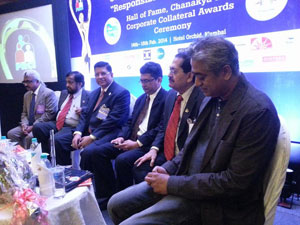
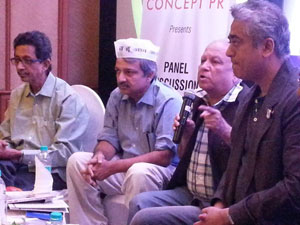
    It’s the favourite topic of discussion in media forums these days, and this is what they did while participating in deliberations in a two-day Global Communication Conclave in Mumbai. Media and communication professionals raised questions relating to journalistic ethics and corporate and PR professionals’ pressures to garner space.


    Organised by Public Relations Council of India (PRCI) in association with the Press Club Mumbai, the conclave focused its discussion on the theme of Responsible Communication, dealing with aspects related to media, corporate, social media and GenX. Editor-in-chief of IBN 18 network Rajdeep Sardesai was candid when he said: “My son does not watch news channels. He gets his news from the Internet.” When a delegate to the conclave observed that some news coverage reminded him of jokes, the former Mumbai journalist said: “Watch news channels if you want to cartoons” as the gathering burst into laud laughter. “Breaking news is breaking down and in sensationalizing the news, we seem to be losing sense,” said Mr Sardesai.


    He admitted the intense competition among 483-odd news channels in the country, and over 150 channels waiting for clearance, keeps journalists on their toes which at times results in output editors flashing the news even without cross-checking just because a rival channel broke the story. He said he failed to understand the growing one-upmanship since viewers do not watch all the channels at any given time. “They may at most have two TV sets at their homes and cannot be expected to watch twenty news channels as we do in our studios,” he said.


    Senior journalist and Chairman of Press Club Prakash Akolkar expressed distress over some managements asking journalists to indulge in paid news and raise funds for their news channels. Another media veteran Kumar Ketkar pointed at the vanishing thin line between private and public lives and intrusion of TV cameras into almost every aspect of lives of people. Bengaluru-based TV personality Aparna Narayana Swamy said the race for ratings has unfortunately spread to regional media as well and some television shows cross boundaries of decency.


    Dealing with a question whether political parties are using media to suit their needs, Mayank Gandhi of Aam Admi Party said today’s politics is all about messaging their audiences and that there was nothing wrong in them using the news medium.


    Conclave chairman and media professional B N Kumar pointed out any one with a mobile camera and the internet connection is a potential broadcaster and, in this context, responsible communication assumes added significance.


    Senior journalist and President of Press Club Mumbai Gurbir Singh, who anchored a panel discussion, pointed out that increasing corporate pressure on media for coverage and some attempts to ‘kill’ the news that does not suit them are some of the challenges that media professionals face today. He said the emergence of the alternative media in terms of social media and blogs opened up new means of communication which corporate must take into account as the voice of dissent cannot be suppressed any more.


    Young participants in a discussion on the role of GenX felt that those posting on social media must also do so with a sense of responsibility. But most them did not like the idea of having their parents on the same page as it could leave to disastrous situations. “Our tastes, choices and style messaging differ a lot due to a huge generation gap,” said a girl participant.


    The PRCI also felicitated achievers in the fields of media and communication with its prestigious Chanakya Awards. Mr Sardesai was named the Mediaperson of the Year. We do not have the full list of awardees but we do know that senior PR and corporate communications professional and a former journalist Raju Kane was inducted into the PRCI’s Hall of Fame.


    Photographs: B N Kumar


  • Vinod Dua, Sanjay Pugalia to star in revamped IBN7 primetime

    By A Correspondent


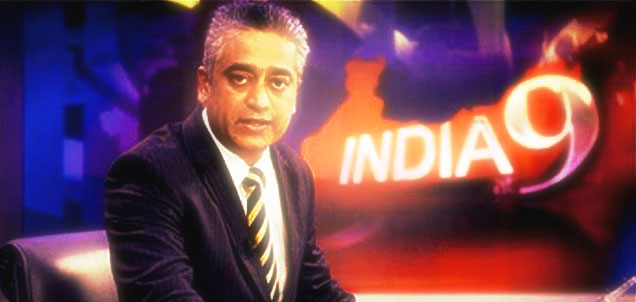
    The pecking order amongst Hindi-language channels doesn’t place IBN7 in the Top 3, as per ratings at least. And even in terms of perception. But in a coup of sorts, the channel has announced two shows – Vinod Dua Ka Prashnkaal at 8pm – Monday through Thursday and India 9 Baje at 9pm Monday through Friday with Sanjay Pugalia as the host.


    Mr Dua’s show starts February 17 and Mr Pugalia will be on air from Feb 18.


    Speaking on IBN7’s new prime-time line up, Vinay Tewari, Managing Editor, CNN-IBN and IBN7, said, “Elections are a complex, engaging and diverse event. It needs solid professionals who understand the complexities, who can simplify it for our audience and who believe in clarity over noise and sensation. We have brought in two of India’s leading journalists to take our primetime programming to the next level and who symbolise our beliefs about news. Vinod Dua, with his experience and unique style, is back to give viewers his take on the elections and engage them in our daily discourse while Sanjay Pugalia, whose understanding of politics and political economy is unparalleled, will debate and encapsulate the day’s major news on India 9 Baje.”


    Rajdeep Sardesai, Editor-in-Chief, IBN Network, said, “We are looking at possibly the most crucial general elections in Indian history. And IBN7 is set to launch two new shows anchored by two of the most influential and experienced journalists in the industry.”


    Indeed.


  • Dilip Venkataraman quits IBN, to turn entrepreneur

    Ajay Chacko

    CNN-IBN and IBN7 CEO N Dilip Venkatraman has announced his decision to turn an entrepreneur and move on from his current responsibilities at TV18 after a stint lasting eight years.


    Mr Venkatraman managed a variety of mandates on the general news side of the group. Prior to his current role, he led marketing operations for CNN-IBN, IBN7 and IBN-Lokmat and also managed IBN Focus, the customized media solutions unit for these news channels. Ajay Chacko, COO, Network18 will oversee the operations of the IBN News Network in the interim.


    B Sai Kumar

    Speaking on this development, B.Sai Kumar, Group CEO, Network18 said “Dilip has played a pivotal role in building our general news network, right from the outset. Today, CNN-IBN, IBN7 and IBN-Lokmat are benchmark brands in the general news space and Dilip has contributed significantly to laying such a strong foundation for the future.”


    Added Rajdeep Sardesai, Editor-In-Chief, IBN News Network: “Dilip’s passion and leadership has been instrumental in making the IBN News Network into one of the most trusted news voices in the country today.”


    Rajdeep Sardesai


    Said Mr Venkatraman, who had only recently led the refresh of Hindi news channel IBN7: “The past few years have been one of the most fulfilling and exciting phases of my professional career. I’m thankful to all my colleagues who have been a part of this enriching journey and I now look forward to taking on newer challenges.”


  • IBN Network presents 5th edition of Citizen Journalist Awards

    By A Correspondent


    IBN Network, in partnership with Idea Cellular Ltd, is back with the fifth edition of its Citizen Journalist Awards, an initiative to empower the Indian citizen. Promoting the principles of inclusive journalism, these awards honour individuals who are determined to uncover the truth, expose injustice, change the system, and in the process, help create a better India for themselves and their countrymen.


    This year, the Citizen Journalist Awards will be given under four categories:


    > Fight for Her Rights – This category will recognize women CJs who are fighting for justice and their right to live a life of dignity

    > Citizens Against Corruption – This category will recognize CJs who are fighting for a corruption-free India

    > What an Idea Sirji – This category will recognize CJs who have come up with innovative ideas to bring about a change

    > CJ Video & CJ Photo – This category will recognize those alert CJs who captured a crime, an illegal activity or rules being flouted in the form of videos and pictures


    The award ceremony will be held on March 2, 2013.


    The Citizen Journalist Awards adheres to a stringent selection process where the IBN Network Editorial Board shortlists the nominees in the first phase basis their stories featured on the IBN channels and/or on the CJ microsite www.ibnlive.com/cj. The IBN Network team then deliberates on the nominees, before reaching a majority decision on the winners.


    Rajdeep Sardesai, Editor-in-Chief, CNN-IBN, IBN7 & IBN-Lokmat, said, “The CJ initiative has become a mass movement that has seen a lot of participation from across the nation. The Citizen Journalist Awards is a salute to all those citizens, who have taken the responsibility to fight for a better life for their countrymen.”


  • Mediaah!: What’s not right with Arnab Goswami

    By Pradyuman Maheshwari


    Many months back, even ahead of the November 26 terror strike in Mumbai which transformed the English news television landscape entirely, I had written that Arnab Goswami was the best anchor on primetime news TV.


    He was different from Rajdeep Sardesai and Barkha Dutt who were stars of the nightly bulletins. He was direct, he asked the tough questions and didn’t let his guests get away easily.


    In many ways, just as Angry Young Man Amitabh Bachchan mesmerized the nation in the 1970s, the Angry Young Man Arnab Goswami grew big on television. Rajdeep and Barkha (and Prannoy Roy etc) were journalists… this guy was like one of us.


    November 26, 2008 onwards was when he was at his peak. Some may say he took the easy (and if one may add uncharitably: safer) option of being in the studio as his reporters went closer to the hostage drama. But it was a wise decision. While it’s good to have your trump cards in action  – whether they should be on the field or off is a call that’s got to be taken. By staying in the studios, Arnab ensured that the 60+ hours of the hostage crisis was covered the best on Times Now.


    Arnab Goswami

    It’s been no looking back thereafter. He took the nationalistic line and the longevity of the terror discussion ensured that he would go on and on and on. Then there were border concerns in China and immigrant problems in Australia and wherever there was an issue where there was an Indian case to be fought for, Superman Arnab came to the rescue.


    A variety of political scandals and multiple scams ensured that there were enough ratings for news on television. Plus a packed sporting season.


    However, Arnab appeared to have got greedy. Or was forced to not see reason and hold back. He stretched his nationalistic debates a bit much.


    Agreed the nation wants answers and is happy that Arnab asks for them too, but the shrillness with which he goes about his task makes it a charade. There is a hardly a night when there is peace among his his panelists.


    There are other problems with the Arnab we see on Newshour and beyond. His body language as he faces the camera shows that he gets in with a view. And he wants to lead the discussion as per that.


    He gets carried away. Like he failed to see reason when Anna Hazare was at his peak. Like he did last Sunday as anchored a newsroom discussion through the day for Shiv Sena chief Bal Thackeray’s funeral procession. While one didn’t expect him to damn him, the death of a political leader like Thackeray offered enough reason for a debate on his policies and style of functioning.


    Arnab’s ‘Frankly Speaking’ with Raj Thackeray may have seen him raise some probing questions, but he let him get away. Raj even had some fun at Arnab’s expense.


    Last night (on Tuesday, Nov 20), we had a discussion on the two girls in suburban Palghar being arrested over a Facebook comment. The arrest as well as the vandalism thereafter must be damned. Those who committed both the crimes ought to be taken to task.


    I hold no brief for any of the three Mumbai women guests present, but Arnab was being offensive. At least allow Shaina NC to speak and move on if she’s not making a direct reference to the Sena, though later she did make an oblique reference!


    Arnab is fortunate that his competition, save Rajdeep Sardesai’s CNN-IBN, is not formidable. The NDTV 24×7 coverage of the Bal Thackeray death and funeral procession was pathetic. Sreenivasan Jain is poor with live news TV. His performance has been consistently below par: he was no great shakes when he was the Mumbai bureau head some years back, on Profit and now with the Thackeray coverage. Yes, on-off documentaries are great as are his exposes.


    As for Headlines Today, I think I have the solution to how it can be a force to reckon with. Let Rahul Kanwal be around for interviews et al, but get another primetime anchor-editor.


    Since I don’t have NewsX piped in through my digitized signal, I don’t watch the channel, but to my mind, CNN-IBN is by far the best English news television channel.


    Mind you, Rajdeep also gets shrill at times and Sagorika Ghose is a dozen times his decibel levels, but what makes the channel stand out is that it’s got multiple faces.


    Times Now appears happy to have not created a face beyond Arnab. But that’s their internal policy, though I am not sure if it’s a wise one.


    As for NDTV 24×7, it’s sad to see a wealth of talent often being wasted. Although I didn’t see much of the channel after a point last weekend, perhaps getting Barkha Dutt on would’ve been better with the Bal Thackeray coverage.


    Back to Arnab. If he really wants the viewing masses to find him spending their primetime with, he must switch tracks, get less combative and chill.


    A 10-day Vipassana course perhaps?


    Mediaah! Is written by Pradyuman Maheshwari, Editor-in-Chief, MxMIndia. The views expressed here are his own. If you don’t want to use the messageboard below, inbox your comments to him at pradyumanm@mxmindia.com. Or BBM 29FEA79C.

    File Photo: Fotocorp


  • Zee@20 | Rajdeep Sardesai: In 1992, no one believed a 24-hr channel was possible

    Rajdeep Sardesai

    By Rajdeep Sardesai


    I still remember the day in 1992 when I got a request to write about a private channel that was about to start and if I would be interested to meet the person behind the initiative. I was the city editor of the Mumbai edition of Times of India then. I went to the Worli office of Zee to meet Mr Subhash Chandra. During the course of the interview, he told me about Zee’s plans of launching 3-4 hours of entertainment programming, including films and serials, and then also told me about plans to make Zee a 24-hour channel.


    After that meeting, when I came back to office and told my colleagues about it, no one would believe that the 24-hour channel was possible. My editor allowed me to make it front-page news about Zee. In 1992, a 24-hour channel drew apprehensions of whether it would work or not work. To tell you the truth, even I was sceptical. Who would believe that in 1992, a channel that would be uplinked from Hong Kong and would show 24 hours of entertainment would work! It was the era of Doordarshan. Even Star had not made a mark then. Frankly, none of us had foreseen the future.


    But Zee has been ahead of the times in whatever they have done. In the media, they have successfully stayed ahead of the curve. And for this, the visionary Subhash Chandra deserves huge credit.


    Zee, as it stands today, has become synonymous with certain kind of strength. Even though I am not sure about their news since it is kind of patchy, they have shown enormous strength in entertainment. Their success lies and has root in the ability to foresee the future.


    I have another great memory of Subhash Chandra. We became good friends after the first article I wrote about Zee. We were members of the Bombay Gymkhana. And I have seen him many times sitting in a quiet corner of the club with his wife, and smoking a bidi. I am sure that even today he goes to the club, sits quietly, and smokes a bidi.


    Mr Chandra was never flamboyant or has courted publicity, even when he has reached this stature. Over the years, I have secretly admired the manner in which he has risen to this position.


    (As told to Ananya Saha)


  • Ranjona Banerji: Anna movement reaches its predictable end

    By Ranjona Banerji


    The news was quick to jump on India’s new Union Home minister after a series of bomb blasts hit Pune the day Sushil Kumar Shinde was appointed. In a revealing interview with Rajdeep Sardesai of CNN-IBN, Shinde exposed himself as a “family” man and also attributed his political success to his Dalit caste. These are just the kinds of things a new India does not want to hear. Even worse, he then went on to say that he had been an “excellent” power minister – this on the day that North and East India reeled under power blackouts for the second consecutive day.


    Fortunately for Shinde and his possible short-comings – and also therefore for the UPA government – escape came from what has been the top news story, especially on television: the Anna Hazare-led anti-corruption movement.


    Two days ago, Times Now editor-in-chief Arnab Goswami had practically been in tears over the frail but defiant condition of Anna Hazare adviser Arvind Kejriwal. The activist, who is apparently a diabetic, was in a bad way but was refusing to break his fast until all his conditions were met – arrest half the government and so on.


    Goswami therefore got into fighting mode as there were indications that the movement was looking for a political solution. Karan Thapar also explored this on his Last Word on CNN-IBN.


    By Thursday, it was announced that the anti-corruption movement would now become a political platform. The news was welcomed by all political parties since the fight had moved away from civil society to a battle ground they were all very familiar with.


    The media’s relationship with the Anna Hazare movement has been fascinating. TV went overboard last year as it supported the movement wholeheartedly and since most TV journalists are under the age of 11, they must have felt this was bigger than the freedom movement. The print media however remained cautious and in some cases critical. The people of India also get enthusiastic and social media was buzzing with anti-corruption rage. The government helped by bumbling and fumbling in its negotiations. But nothing topped the one lakh people who supported the movement in Delhi last year. The Lokpal bill was passed in the Lok Sabha but did not get past the Rajya Sabha.


    Buoyed by its success, the movement went a little overboard in its demands and so TV also started asking difficult questions. No one showed up in Mumbai in December and TV totally turned. All the allegations against people like Kiran Bedi and Arvind Kejriwal were discussed. Hazare’s rustic ideas on politics and society became public knowledge. The group’s diverse and contradictory views on the politics, on political parties and ideologies were exposed.


    This time’s agitation saw the love coming full circle. TV tried to be supportive but the people were not. The movement’s supporters roughed up journalists for reporting the lack of popular support. The government was unmoved.


    The result is that the movement has gone political. Media support, which bolstered the movement so much in its early days, is now no longer assured. An interesting tale of how activists took on the government and enthused some people for a short while has reached a very predictable end. The media, they will have to remember from now on, will never be a pillar of support if it has to be a pillar of democracy.


  • Ranjona Banerji: Why TV anchors must not write on edit pages

    By Ranjona Banerji


    I now understand the pain of being a TV journalist. There is no avenue within the medium to become a pontificator. For print journalists, it’s easy. You work a few years as a reporter-correspondent-sub-editor and then some boss type person decides you have some writing skills that can be further explored or some pages fall short of stories and some boss type person makes you write a quick news analysis or you are a boss type person and decide (or someone tells you) that the world wants to know what you think. And you know how angry print journalists can get if their “columns” are stopped, if you read the excerpts of Kuldip Nayar’s memoirs. The reader then believes that these columnists and analysts are experts.


    But what can a TV journalist do? Having spend years running from pillar to post saying “I am standing at the gate waiting for something to happen” interspersed with many in facts and of courses – “I am of course standing at the gate in fact” – does someone say to him or her, here’s half an hour of TV time as a reward for so much standing, now say what you want?


    No, instead you become a prime time anchor and you have to ask other people what they think. And some of those people, in fact, of course, have to be print journalists who have now become analysts and columnists. Talk about rubbing salt in it.


    The result is that you yourself don’t know what to think. If you have ever read any columns by famous Indian TV anchors (I think Rajdeep Sardesai and Sagorika Ghose of CNN-IBN and Barkha Dutt of NDTV, all have columns in Hindustan Times, which has reduced the effectiveness of its edit page by half) you will know what I mean. Half the time they plug their own channels and shows and the rest of the time they sort of sum up what’s happening. There’s very little original thought there except some anodyne comment. No provocation, no incisive comment, no contrarian viewpoints. This comes from years of TV panel discussions where you have to listen to other people. Print journalists are terribly egoistical and after a few years stop listening to other people and only like other people to listen to them. This gives them a great advantage as pontificators.


    (I must here advise newspaper editors to end this new trend of giving columns to journalists with little or no experience because they are even less readable than TV anchors. Youth may be attractive but it has its limitations.)


    What is the solution for famous TV anchors? Instead of bothering to write which they can’t, they should get their back on usual suspect panellists. Call them to their studios and make them question the anchor. The anchor will then hold forth while the panellists listen. However, the anchor is not allowed to ask questions…


    This way, we might find out if they can actually think. India wants to know.


    Ranjona Banerji is a senior journalist, commentator and Contributing Editor, MxMIndia. The views expressed here are her own. Twitter: @ranjona