
Tag: Puma

  • Virtual Influencers: Hit or Miss?

    Virtual Influencers: Hit or Miss?

    Kunal SinhaIf you looked at recent CMO surveys and panel discussions lately, artificial intelligence (AI) and influencer marketing are on top of the agenda. 81% of US marketers say that influencer marketers is an essential part of their social media strategy; 77% of Indian marketers are confident in their agency’s capability to effectively manage influencer campaigns[1]. At the same time, 81% marketers say that AI has had a positive impact on their work[2]; and over three quarters of Indian marketers (78%) say they are ready to embrace AI[3].

    What happens when you combine the two? We get virtual influencers. Even though human influencers still vastly outnumber virtual influencers, the latter have caught the fancy of marketers and agencies and are becoming increasingly common.

    52% of U.S. social media users already follow a virtual influencer, and that percentage is higher in India at 58%[4].

    Global brands including Prada, Cartier, Disney, Puma, Nike, and Tiffany use virtual influencers to promote their products.

    Lil Miquela is a pioneer in the virtual influencer space. Describing herself as a 19-year-old robot living in LA, she has 2.6 million followers on Instagram https://www.instagram.com/lilmiquela/?hl=en

    and 3.5 million followers on TikTok https://www.tiktok.com/@lilmiquela?lang=en

    Managed by creative agency Brud, she has featured in brand partnerships with Prada, Calvin Klein and BMW, earning a spot on TIME magazine list of 25 Most Influential People on the Internet.

    Fashion brand Myntra created the virtual influencer Maya, incorporated her into the studio section of the Myntra app, where she doles out fashion advice apart from advocating mental health, inclusivity and body positivity. ‘Based out of Bangalore, and a student’, she has a follower base of 178K already, and endorses brands like L’Oreal.

    https://www.instagram.com/maya_unlimited/?hl=en

    Kyra or Kyraonig was created by Himanshu Goel, launched in Jan 2022, and enjoys a following of 243000 on Instagram https://www.instagram.com/kyraonig/?hl=en.

    She has has been prominent in the music and entertainment industries, endorsing various brands such as Amazon Prime Video, boat, MG, Titan EyeX and John Jacobs.

    Within two years, it is expected that  marketers will dedicate 30% of their celebrity and influencer marketing spends to virtual influencers[5].

    What should they keep in mind, as they embrace this opportunity?


    Virtual influencers give you control over content

    Brands that want to get across a certain message or have a specific point to make through their influencer partnership have a higher level of control over content with virtual influencers. Being able to control what an influencer posts can be appealing to some brands with a very specific message to share.
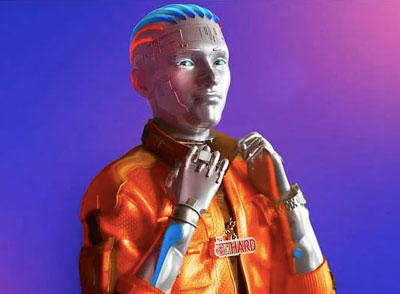
    Youth entertainment channel MTV collaborated with DDB Mudra to develop India’s first virtual rapper ‘BotHard’ to draw attention to its property, MTV Hustle 2.0. The bot was brought to life with the GPT3 platform and was specially trained to find rhyme structures of popular rappers. This collaboration inspired the creation of over 350,000 rap videos, with the show racking up 2 billion views across social platforms. This represented a nine-fold growth over the previous season. By creating a virtual influencer in-house provided the brand with greater control, agility, intellectual property ownership, and brand differentiation.


    Adaptability

    Virtual influencers don’t age, can speak multiple languages and can be made to travel to any place. This level of adaptability and flexibility allows brands to potentially use one virtual influencer for campaigns in different regions instead of identifying and engaging different influencers in various markets.

    British fashion house Ralph & Russo, successfully used a virtual influencer to launch its 2020–2021 couture collection. The company designed Hauli, a tall Black virtual model. Her name was derived from the Swahili words for strength and power.
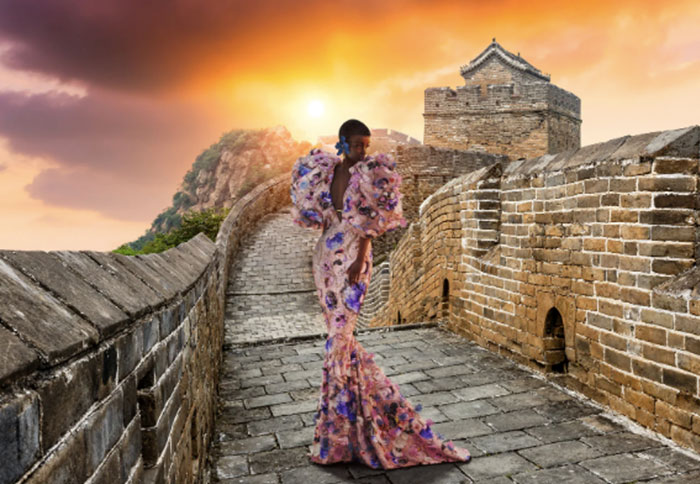
     

    The campaign featured her posing at the Taj Mahal, the Great Wall of China, and other wonders of the world, location where conducting a photo shoot with a human influencer would be difficult (and expensive). The combination of an African influencer and a global context contributed massively to the campaign’s success. The promotion achieved 19.4 million views worldwide, with the brand estimating the value of the media exposure at $65.1 million.


    Brand safety and reputation

    While virtual influencers may seem to be a safer bet than real-life influencers, they’re not completely immune to controversy.

    Humans don’t fully understand how these systems work or make decisions, which poses a huge challenge for marketers and agencies. In the absence of clarity, is difficult for brands to predict how these virtual influencers might be accepted. Granted AI’s cool factor, marketers should be careful about diving in headfirst to avoid unfavourable PR.

    Earlier this year, automaker Mahindra launched an AI-generated influencer named Ava, which was designed to showcase the team’s journey in the ABB FIA Formula E World Championship, and towards a more sustainable future for the planet. Mahindra’s team used GenAI tools like Midjourney and Leonardo AI to create its new ambassador, saying ‘Having Ava, an influencer that is strongly associated with us and documents our journey, but with a broader appeal to help promote our core values as an organisation, is a project we’re hugely excited about.’
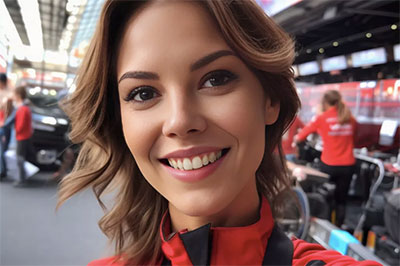
    Eva’s Instagram account @avabeyondreality described itself as a “Sustainable Tech Queen & Racing Rebel Robot”, with the goal of fueling inclusion through AI innovation. It documented the virtual influencer’s life through 11 posts, the first of which dated back to 8 December 2023.

    The launch of Eva was met with backlash from fans and media alike on social media. Many argued that the team should have hired a human ambassador rather than a virtual influencer.  Devin Altieri, a PR consultant in motorsport, wrote on X:  “Mahindra creating an AI team ambassador that is a woman instead of simply hiring one real, actual woman to fill that role is so incredibly messed up”. Alanis King, an auto journalist added: “I’m not an AI expert, but everything I see is about enormous energy use. Isn’t it weird to call this a ‘Sustainable Tech Champ’?”

    Faced with such strongly negative response, particularly from experts, Mahindra abandoned the project and deleted Eva’s Instagram account.


    Fuel fans and consumers’ desire for novelty.

    With some brand ambassadors and influencers, some brands find value in stability and longevity. We know how Tiger Woods’s association with Nike lasted 27 years.

    On social media era, on the other hand, many consumers crave something new and different, and find brands that rely on familiar celebrities as stale or uninteresting.

    As they scroll social media quickly, it requires something unusual to make them pause.

    Research shows that one reason consumers follow virtual influencers is that they are unexpected and previously unknown. Although betting on a virtual influencer may require a leap of faith, marketers should realize that human influencers may be perceived as overexposed or past their prime.

    Traditional influencer marketing can be expensive, particularly when collaborating with celebrities or industry experts. On the other hand, virtual influencers are a cost-efficient and scalable option, requiring less time and resources. While the initial investment in creating a virtual influencer can be significant, the long-term benefits far surpass the costs.


    Kunal Sinha is a senior strategy and foresights executive based in Jakarta, Indonesia. He is the author of several books including The Future of India’s Rural Markets and Raw – Pervasive Creativity in Asia. He writes for MxMIndia every other Monday. His views here are personal.

    ________

    [1] https://www.ey.com/en_in/media-entertainment/how-influencer-marketing-is-impacting-brands-in-india

    [2] https://sproutsocial.com/insights/index/

    [3] https://www.campaignasia.com/article/47-marketers-in-india-believe-ai-will-make-them-more-productive-linkedin-report/491903

    [4] Influencer Marketing Factory Report

    [5] Gartner global forecast, 2024

  • Puma appoints Havas as its Media AOR

    By Our Staff


    Sports brand Puma India has roped in Havas Media Group India as its Media AOR. As part of the mandate, Havas Media Group India will be overseeing the entire offline and online media service suit including digital, TV, print, radio, OOH and cinema mediums for Puma. The account will be managed by the agency’s Bengaluru team, helmed by Saurabh Jain, President – South, Havas Media India. As Managing Director, Havas Media India, Uday Mohan will support the team devise the strategy and ensure seamless operations. Just recently, the media agency had extended its offline media services (print and OOH) to Puma for its campaign announcing Anushka Sharma as the brand ambassador.


    Commenting on the occasion, Shreya Sachdev, Head of Marketing at Puma India, said: “Puma holds a leading position in sports and lifestyle segment in the country with state-of-the-art product innovations and influence on youth culture. As a brand, we keep a sharp focus on staying relevant and resonating with our audience across markets and platforms. With Havas Media Group India, we look forward to effectively connect with our consumers at scale.”


    Added Mohit Joshi, CEO, Havas Media Group India: “Puma as a brand is known for its strong voice and vibrant spirit. Havas Media Group India has been on an upward trajectory consistently; last year was a landmark year for us as we were recognized as a dominant agency by RECMA and secured second place among all media agencies in the country. For us, winning the mandate of a brand like Puma has set the tone for the remaining year and we can’t wait to offer our expertise to the global sports brand. At Havas Media, we focus on designing and delivering impactful media solutions and hence, resonate with Puma’s efforts to leverage relevant consumer touch points, services and messages that hold immense credibility for its audience. We are excited to make a meaningful difference for Brand Puma and look forward to a fruitful partnership.”


  • Puma & Digitas India highlight what it takes to be ‘Propah Lady’

    By A Correspondent


    Global sports brand Puma has partnered with Digitas India for its latest campaign ‘Propah Lady’.


    Said Siddhi Desai, Creative Director, Digitas India: “Pumais a brand that can impact world narrative and hence we knew the responsibility while taking on this brief. We all agreed we wanted this campaign to live in the post empowered universe, so we decided to represent all those women around us who are bringing a change in this world by normalising a way of life through their everyday choices. That being the starting point, we knew, the first step was to shatter the very definition that had conditioned society for so long. Today, it’s out there. We are glad to see women being so proud of it and organically talking about it. None of this would have been possible without Puma’s conviction. We are also thankful to Team Catnip and every other collaborator. They went all in, heart and soul, to bring this alive.”


    Added Debosmita Majumder, Head of Marketing, Puma India : “From being told how to talk, think and act to defining it for themselves, women have changed the meaning of being a ‘proper lady’ in their own individual style. This special campaign by PUMA and our agency Digitas is an ode to all the women who have the gumption to live life on their own terms and write their own rules. Our ambassadors Mary Kom, Sara Ali Khan, Dutee Chand and Anjali Lama’s authenticity in this campaign is very refreshing.”


  • Sara Ali Khan appointed brand ambassador for Puma

    By A Correspondent


    Global sports brand Puma has announced Sara Ali Khan as their latest brand ambassador for India. Signed on for a period of two years, Sara will be one of the leading faces for Puma women in the country, and promoting both the sportstyle and training business for the brand.


    Talking about their new brand ambassador, Abhishek Ganguly, Managing Director, Puma India saia: “Sara truly embodies what PUMA stands for – She is brave, fierce, confident and fun, with a strong influence among the youth.  These attributes, make her a perfect ambassador for the brand. Our women’s category has been in big focus for us, and with Sara now part of the PUMA family, we are confident that we will elevate it to greater heights in the years to come.”


    In addition to leading Puma’s Do You campaign, Sara will also be the face for the brands’ key product stories such as Cali, Nova and Defy, in the coming months.


  • Puma and DDB Mudra launch ‘Suede Gully’

    By A Correspondent


    Lending voice to a new generation of creators, global sportswear brand Puma has pioneered the largest movement in the country’s street culture with its latest collaboration campaign – Suede Gully. A brainchild of Puma and DDB Mudra, this collaboration portrays the street culture of India, giving a single, creative stage for self-expression to a talented breed of artists, musicians and dancers.


    Speaking on the campaign, Debosmita Majumder, Head of Marketing, Puma (India) said: “Today’s youth have taken to modern forms of self-expression, giving rise to a new generation of creators. They use the streets as a canvas to express themselves through various forms of art, music and dance.  For the first time in India, Puma is bringing these diverse art forms on a single platform – Suede Gully. Suede Gully is our attempt to bring to the forefront the true essence of Indian street culture.”


    Speaking on the work, Vishnu Srivatsav, Creative Head, DDB Mudra South said: “Puma’s Suede has always been a voice of street culture and Suede Gully looks to bring to life the incredibly unique and diverse culture and expression of our very own gullies. It’s art, its music, its culture and it’s fashion.  So many people, folks who live for their art, from different corners of the country, bringing their awesome talents to collaborate on this platform, that’s really special.”


  • DDB Mudra Group wins the creative mandate for Puma

    By A Correspondent


    Lifestyle and sportswear brand, Puma has decided to partner with the DDB Mudra Group for the brand’s creative mandate in India.


    Speaking on the partnership, Abhishek Ganguly, Managing Director, Puma India said:“We firmly believed in new age media and have constantly strived to create our own differentiated patterns and modules; to engage with our consumers. I am confident that our partnership with DDB will help us create more resonance with our customers and bring forward the true spirit of our brand.”


    The business will be led by Ranji Cherian, President and Managing Partner, DDB Mudra South and Vishnu Srivatsav, Creative Head, DDB Mudra South.


    Added Ranji Cherian, President and Managing Partner, DDB Mudra South:“We intend to bring Puma’s unique voice to life in the sports and lifestyle category. It’s a prestigious account win for us, and a great canvas for our own capabilities and creativity. We’re relishing the challenge and the opportunity to be Puma’s partner in embedding itself in India’s consideration and culture.”


  • Puma unveils its new #RunTheStreets campaign

    By A Correspondent


    Global sportswear brand Puma has unveiled a brand new #RunTheStreets campaign that depicscultural exchange and features influential names in street culture from India and Eastern Europe. The video tracks crews from different cultures crossing paths in Delhi and Mumbai and creating a social connection between all of them.


    Blurring the lines between performance and style, Puma’s new Sportstyle “#RunTheStreets” platform puts forward street-ready and technically progressive products for those who aspire to change the game with every hustle and grind. It speaks to true individuals who own their looks and the moment. Internationally, headlining the campaign is PUMA’s newest creative collaborator, Grammy-winning artist, lyrical genius, and style icon The Weeknd.


  • Puma ‘Runs the Streets’ promoting its new offering in India


    Sportswear brand Puma has just launched its new ‘Run The Streets’ campaign in India. This campaign speaks to go-getters who follow their instincts and live life at full speed. The ‘Run The Streets’ campaign, while rooted in performance, is also a celebration of street style and street culture. It is about following your instincts and never the crowd, nurturing the limitless ambition and passion in you and running your city streets on your own.


    ‘Run The Streets’ was launched globally in November 2016 with the announcement of Abel Tesfayea.k.a ‘The Weeknd’ as the face of the campaign and PUMA’s new creative collaborator.  His long list of musical achievements including Grammy wins and Academy Award nominations along with his laidback, streetwise style and swagger made him the right fit to headline this campaign.


  • Puma signs Virat Kohli as brand ambassador

    By A Correspondent


    Global Sportswear brand Puma announced the signing of Indian cricket captain Virat Kohli as its global brand ambassador. Kohli joins the global sports brand’s growing portfolio of world renowned athletes. The partnership between Kohli and Puma is for eight years, which will see both work towards transforming the sports and fitness ecosystem in India.
     

    As part of the association, Virat will work closely with Puain developing a line which will include cricket, fitness and sports style. This range would be launched in the Autumn Winter season this year.


    Speaking on the occasion, Abhishek Ganguly, Managing Director, Puma India said: “It gives us immense pleasure and pride in announcing this association with the country’s favourite youth icon and world class athlete – Virat Kohli.”


    Kohli joins an expanding list of sportsmen who have partnered with Puma. Past collaborations have included Usain Bolt, Asafa Powell, Thierry Henry, Antoine Griezmann, CescFàbregas, Olivier Giroud amongst others. The brand has also garnered an impressive list of pop culture icons like Rihanna, Rapper Meek Mill, The Weeknd among other notable names.


  • PUMA ready for the Indian market with #DoYou movement

    By A Correspondent


    On the occasion of International Girl Child Day, PUMA has launched ‘Do You’ – a movement with women at the core of it. Launched internationally last month, the campaign aims to inspire confidence in women across the globe to do what they want to do. “#DOYOU” is all about expressing your core strength that stems from your inherent beliefs and individuality. Through this campaign PUMA encourages women to follow their instincts and find their best self.


    While model and actress Cara Delevingne is helming the movement globally; PUMA India has fitness addict Jacqueline Fernandez, avid marathoner Lisa Haydon, Olympic wrestler Sakshi Malik, and a host of other women achievers lending their voices and their stories for the Indian leg of the campaign. Some of the other incredible women involved are, the Everest sisters Tashi and Nungshi Malik, musician Anushka Manchanda, international Zumba education specialist Sucheta Pal, supermodel Ujwalla Raut, actress Kalki Koechlin, fitness and nutrition specialist Nidhi Kamal Mohan, and professional golfer Sharmila Nicollet


    In order to train women and to help them build their core strength, PUMA will be organizing a series of regular planking events in Mumbai. From 15th October ’16 to 23rd October ’16, these events will be taking place at various malls which witness high footfalls from customers especially women, like High Street Phoenix (Lower Parel), R City (Ghatkopar), Phoenix Market City (Kurla), Viviana Mall (Thane) and Infiniti II (Malad).


    Following the mall activations, from 17th October ’16 to 28th October ’16, these planking events will also be held at popular corporate parks to target the growing female workforce of Mumbai like India Bulls (Lower Parel), Westin Woods (Goregaon), Equinox (Kurla) Capital (BKC), Trade Centre (BKC), Platina (BKC) and Ashar IT park (Thane).


    The movement will culminate on the 6th of November, 2016, at Reliance Jio Park, BKC, where the largest number of women will hold the longest plank and create a new world record. By doing this, PUMA aims at providing an opportunity for all the fearless women to break a record and be a part of the Guinness Book of World Records.


    Talking about the campaign, Debosmita Majumder, Senior Marketing Manager, PUMA says, “We are thrilled to introduce the unique, women centric campaign – DO YOU. The campaign is bold and allows us to strongly engage with the women consumers in a very unique manner. Through this movement, PUMA is encouraging the women in India to begin their journey of self-discovery and DO YOU.”


  • Shoppers haven’t stopped shopping at brick-and-mortar outlets


    By Writankar Mukherjee & Sagar Malviya


    Leading brick-and-mortar retailers are seeing double-digit surge in their same-store sales this Diwali season despite top online rivals’ big discount sales last month, signalling a sharp reversal from last year’s trend when physical stores reported subdued demand as ecommerce players wooed away consumers.


    Top retailers such as Future Group, Arvind Brands, Shoppers Stop, Vijay Sales, Puma and Max report buoyant demand over the past two weeks. Future Group founder and CEO Kishore Biyani said the country’s largest retailer is set to grow its business 25-30% this Diwali over last as sentiments look positive. “Ecommerce is still a minuscule of the entire market, except a few categories like mobile phones, so there is not any impact on business,” he said.


    Some other retailers attributed the rise in demand to fresh merchandise, fewer discounted merchandise of big brands on online portals, and early onset of winter chill in some parts of the country.


    “It (online) had a novelty factor that helped last time,” said J Suresh, chief executive at Arvind Lifestyle Brands, which sells brands such as Gap, US Polo, Wrangler and Calvin Klein. “With fewer discounts by ecommerce and new season merchandise offered by physical retailers, we are seeing same-store sales growth of 8-15%,” he said. A year ago, ecommerce giants Flipkart, Amazon and Snapdeal had pursued an aggressive discounting policy during the festive season to gain market share and traffic. This impacted demand in physical stores, even prompting traditional retailers to approach the government over what they said was predatory pricing.


    This season, while the ecommerce players got good response to their big sale events, their discounts were mostly limited to select brands such as online exclusive ones, old merchandise and their own labels as they looked to protect margins.


    This also signals that ecommerce players and brick-andmortar retailers can coexist in the market, without necessarily harming each other. Historically, Diwali is considered a no-discount period for physical retailers as brands try to cash in on the positive festive season sentiment and fresh merchandise. Physical retailers have not changed this strategy this year despite reporting low same-store sales growth of 5-8% in the last two quarters and their online rivals advancing their sale period.


    Govind Shrikhande, managing director at the country’s largest department store chain Shoppers Stop, said the “huge gap” between end of season sales in August and Diwali has also helped the surge in demand. “There was a pentup demand which is reflecting in a higher double-digit growth since last month after a dull September,” he said. “We aren’t seeing a huge surge in footfalls which indicates higher billing size or better conversion at stores,” Shrikhande added.


    A survey by global research firm Ipsos suggested that nearly 81% consumers would buy from offline stores during festive season and not from online companies even as they were holding up purchases in anticipation of discounts.

    The festive season peaks between Durga Puja and Diwali with Karva Chauth and Bhai Dhuj coming in between. The period — which is also when the salaried get their bonuses — traditionally marks an upsurge in consumer spending, accounting for at least a third of sales for big brands. “Money is never an issue for consumers during Diwali,” said Nilesh Gupta, MD at electronics retail chain Vijay Sales. “Our sense is either there is a revival in consumer sentiment or they are hopeful that things could get positive soon at the macro level.” Vijay Sales, he said, is seeing a growth of over 20% this season, its highest in the last three years.

    Industry insiders said big marketers such as LG, Apple and Panasonic started their festive promotions much earlier than usual this year to ensure the offline trade is not hit hard by online discounts. K Krishna Pawan, executive director at cellphone retail chains BigC Mobiles and Lot Mobile, said sales in their 225-odd stores have not been impacted by online discount sales because there was hardly any online deals on mainline smartphone brands and current models.

    Puma India managing director Abhishek Ganguly said the sports shoes and activity wear brand has so far grown samestore growth by 13% this Diwali season over last, with sales in East India during Durga Puja growing 25%, with winter apparel driving growth.

    Meanwhile, ecommerce majors have started consolidating their business, having significantly increased the number of vendors and product categories on their platforms and with more and more people taking to online shopping through mobile apps, which has helped expand the overall market.

    Max Retail executive director Vasanth Kumar said consumers’ wallet size may be getting thinner due to some shopping online, but it is getting compensated by newer customers and a positive sentiment all around. Max has grown same-store sales by 15% over the last festive season and its average billing value has increased 10% over last Diwali. Industry estimates suggest that ecommerce companies will spend Rs 2,000 crore this year on marketing and offering discounts to consumers during the festive season.


    Source:The Economic Times

    Copyright © 2015, Bennett, Coleman & Co. Ltd. All Rights Reserved

    Licensed to republish


  • PUMA gets Bolt to bolster presence in India

    By A Correspondent


    PUMA has announced the launch of its new brand platform, Forever Faster in India with sprinter Usain Bolt. The new brand platform signifies PUMA’s mission to become the fastest sport brand in the world.


    “Forever Faster is a great slogan, it describes me perfectly. I’m overwhelmed by the love shown by the people of India and I’m thrilled to be here as a PUMA Ambassador,” shared Usain Bolt.


    Forever Faster- the new brand positioning is about PUMA reminding people that we are and will continue to be the fastest sports brand in the world,” said Rajiv Mehta, MD, PUMA India. “We’ve always been known for our risk taking as a brand and that will remain our ethos. Forever Faster clearly represents that and allows us to make a statement as a brand. Having the fastest man in the world here in India to launch Forever Faster – Usain Bolt himself – we could not have it any better.”