Tag: Publicis Worldwide

  • Sequel to the Beer Shampoo man takes off

    Taking its Beer Shampoo proposition further, Publicis has unveiled a new TVC for the brand. The thought process that was followed for Beer shampoo was that while every man is entitled to buy his own manly Beer Shampoo for his own hair, there was a practical barrier. In most cases, the lady of the house reserves the first right to the shopping cart. Hence, it was critical for the brand to encourage the lady of the house to buy into Beer Shampoo.


    The communication was developed as a tool to warm up the lady to the needs of her man. It seeks to make the shampoo as essential to her own happiness as it is to her man’s. The communication achieves this by igniting the emotional trigger of every woman wanting her man to be manly, particularly in romantic situations.


    Commenting on the new TVC, Raja Chakraborty Head Marketing – J K Helene Curtis Limited said, “The recent Park Avenue Beer Shampoo creative has been conceptualised to generate more trials for the product among those who are aware but having some apprehension or the other to use it. We are sure this creative will put those apprehensions aside and get more trial into the product”.


    Bobby Pawar

    Bobby Pawar, Director – Chief Creative Officer – South Asia at Publicis Worldwide said, “This is Beer Shampoo Part Do – the sequel. It stars the epitome of manly man-ness, the peak of the pinnacle of male perkiness; Rockland Steel. He became quite a hit with the people in his debut. In this go-around we see the softer side of the man, as he waxes eloquent about what man hair feels like with his own style of poetry, which admittedly veers more towards cheesy than Shakesparean (I doubt if he can spell Shakesparean). Armed with a pan flute that magically transports you from place to place, he drops hair wisdom that is as golden as, well, his outfit.”


  • Kansai Nerolac unveils HD paints concept

    By A Correspondent


    Kansai Nerolac Paints Ltd has introduced a first-of-its-kind High Definition (HD) paint technology. Nerolac Impressions is the first range of premium interior emulsions in India that comes with a ‘High Definition’ color technology.


    To showcase the new product and its value proposition, Kansai Nerolac has unveiled the campaign comprising of a TVC and digital campaign. With this campaign, Nerolac reinvents its positioning through a new creative punch-line: “Jab Nerolac Impressions ka HD Paint lagega, toh ghar ke saath aapka bhi Impression badhega!”


    Enhanced with Micro-Embedded Brightness Boosters (MEBB’s), Nerolac’s Impressions range of interior emulsions offers a sharper look and superior finish. This technology makes the color of walls look brighter, richer and cleaner than other standard emulsions.


    “High Definition has become synonymous with our lifestyle today. Based on this insight, we aim to extend this technology to homes as well through HD Paints. Having launched several innovative products under the Impressions brand in the past we hope to provide customers with a larger than life experience and take our offerings to the next level,” said Anuj Jain, Director (Decorative), Kansai Nerolac Paints Ltd.


    Bobby Pawar

    Bobby Pawar – Director – Chief Creative Officer, South Asia at Publicis Worldwide said, “We wanted to change the conversation that the category leader was having, and we had a product that could do that. So for Nerolac Impressions HD paint we shifted the conversation from emotions and the effect of the color on relationships to the impact a great paint can have on the perceived value of your home and you. A great way to do it was a side-by-side perception demo.”


    The entire campaign is based on the insight of ‘how one’s home is an extension of one’s lifestyle and personality’. To reinforce this message, the TVC features brand ambassador Shah Rukh Khan, highlighting the difference between Nerolac Impressions HD Paint and Standard Definition Paint. It uses the humour element to subtly showcase how individuals living in HD Homes vis-a-vis standard definition homes are perceived. These HD paints replicate the color quality difference one would observe between a standard definition TV and a HD TV.


    Conceptualized and executed by Publicis Ambience, the film is also dubbed in Hindi and other regional languages and is currently being aired across all national channels.


  • More khushi when there’s gham


    By Shobhana Nair


    Advertising and marketing have always been in a happy state in India. It’s an emotion that combines joy and delight of consumers, thereby creating a happy environment for consumption.


    Lloyd Mathias

    Before going for a macho refrain, soft drink Thums Up had embraced its tagline of ‘Happy days are here again’ nearly four decades back. In fact as one brand manager told us, it’s an evergreen emotion and always works magic for a brand. “Happiness is a very positive emotion with most brands wanting to build messages around it as it is a primary emotion,” says Lloyd Mathias, director Green Bean Ventures who was head of marketing at Tata Docomo, Motorala and Pepsico India.


    Indeed it is. From Thums Up to Domino’s Pizza with Khushiyon ki Home Delivery and from Khushiyon ki Planning at Max Life Insurance to Khushiyon ki Chaabi for Tata Nano and Khushiyon ka Khazana wali Maggi for Maggi, it’s khushi-ness all over. In fact the same line – Khushiyon ki Diwali – was used in the ads of brands Airtel and Asus.


    The recent Coca-Cola campaign with Deepika Padukone and Farhan Akhtar talks about the little moments of happiness. The entire sequence of missing the bus, chasing it and boarding it. “It makes a lot of sense to be associated with a positive emotion. Products like beverages and food are consumed by people in a positive frame of mind,” reasons Mr Mathias. “Another commercial by Nestle about a family adopting a girl child and how the boy makes up with her over food is a good campaign. There’s a lot of joy in the food category.”


    K V Sridhar

    Khushi, when there’s Gham: Although happiness is an emotion that has been used by marketers for decades, in times of a slowdown and a liquidity crunch, it’s often the possible solution to keep buyers happy. Says K V ‘Pops’ Sridhar, Chief Creative Officer India subcontinent, Leo Burnett: “When society is depressed, it needs something which is optimistic or makes people happy. Unemployment, corruption, politicians, etc add to this state. Therefore, brands are showing optimism and presenting a picture that not everything is going wrong. Today, it has become important for big brands to not talk about the values their brands have, but the values that the brands will bring.”


    Santosh Padhi

    According to Santosh Padhi, Chief Creative Officer & Co-Founder, Taproot, happiness is an emotion that’s employed by most brands. “If I want to sell something, I would rather do it in a positive way. In general, brands talk positive unless it is a category like insurance where you need to make your point in a negative way where it gets hammered and more understood. Otherwise, life is all about positivity. Happiness is one part of it; humour is another. And then there is hope and simply being positive.”


    Happiness is of course not a phenomenon that works only in India. It’s a global sentiment. Adds Mr Padhi: “In China, Pepsi released a big campaign on Happiness. There’s a man who’s offering happiness to people who are in need like education, shelter, umbrella, spectacles. Pepsi is running it for the past 20 years in China. So when Coke came a few years back with ‘Open Happiness’ as part of a global mandate, Pepsi China didn’t stop. In a huge market like China, two competitors are ‘doing’ happiness.”


    The Coca-Cola brand launched the campaign internationally in 2009 – around the time of the slowdown – and the ongoing  Deepika-Akhtar commercial is a part of the five-year-old activity.


    Bobby Pawar

    Over-used concept: Says Bobby Pawar, Director and Chief Creative Officer, South Asia, Publicis Worldwide: “I think in tough times, brands want to hold out people to heart. Happiness has a gravitational point for that. But it is such a broad concept unless you try to find true meaning in it. ”


    Mr Pawar believes not all advertisers are doing it right. “Happiness as a term is getting over-used. Coke has nailed it internationally. They do create happiness with their world machines,. Only Coke has got it right. Rest of them are like whatever.”


    Anand Halve, brand consultant and a veteran ad professional and Co-Founder, Chlorophyll adds on to Pawar’s sentiment:  “Not only happiness, all emotions are being over-used. Brands have started to use this term that aapki zindagi badal jaayegi. Just look at the number of brands that use the word ‘life’. Brands should aim to do beyond just the functional thing. You have to be careful about not going overboard and sounding incredible.


    “Coke is doing really well through Coke Studio. Music makes people happy and that to me is genuine happiness. Just hanging a line at the end of an ad doesn’t mean anything… agar mujhe khush karna hai toh, take me out for dinner…don’t just send a voucher,” says Mr Halve.


    But Mr Mathias believes, happiness is here to stay. “It can never go out of style. It is a very basic emotion and in a typical day one has a lot of happy moments. It is very logical for brands to show people in a happy frame of mind especially categories like beverages or food which are driven by this. It is an important emotion to build your brand on.”


  • Acquisitions will continue: Publicis


    By A Correspondent


    This is Jean-Yves Naouri’s third officially announced visit to India. As Chief Operating Officer of Publicis Groupe and Executive Chairman of Publicis Worldwide, he has been the group with 19 years and knows perfectly well that India is a very critical market for the network over the next five years. Soon after announcing the acquisition of well-known consulting firm MarketGate and digital shop iStrat, Mr Naori addressed the media in Mumbai. He spoke to MxMIndia and a dozen other business and trade publications before flying back to Paris soon after midnight.


    Jean-Yves Naouri

    We had made a conscious decision a few years ago that Publicis will work with two strategic pillars – one is digital and the other is e-commerce. This is a long-term strategy that we have drawn out. So we are not considering tactical investments, we are moving forward using our previously devised strategy.


    When you talk about slowdown,  many countries dream to have the kind of growth that India has shown this year. We are very confident in the potential that India seems to offer and have taken some measures that seem to be promising. So we strongly believe in the potential of India going forward and by making investments we are not looking at the GDP numbers vis-a-vis the year 2012 but the longer implications that it would offer.


    Don’t you feel it would have been apt for you to have a one digital agency servicing all other agencies?

    This is not the approach that we have. For us digital is an intrinsic part of our vision and strategy and we want to make Publicis group the numero uno digital company. We want every single operation to become fully digital. This is a change of approach in order to better service our client. You cannot expect one digital agency to service all our clients not only because of cost reasons but also sometimes they do not have all the capabilities required to cover all areas. So we have made a choice to have a different approach where we want every single operation to become fully digital. We are consciously strengthening and adapting our every single operation and that’s how you see Indigo joining hands with Leo Burnett and participating in this transformation. Also, iStrat joining Publicis and Resultrix joining ZO… Saatchi has a very different organic approach where it is hiring digital talent to transform itself from the inside.


    So wouldn’t hiring hiring talent have been better?

    I do not think one strategy can be better; strategy is a result of the approach that we are taking or the conscious analysis of the best way by brands based on their contracts and situations and sometimes we feel it is better to do it organically and sometimes through acquisitions.


    How would you rate the performance of Publicis Groupe in India?

    Firstly, we have made India our true area of focus. As we’ve said, in the BRIC countries we have doubled the size of our operations in Brazil over two years, we are on the verge of doing the same in China and we continue to accelerate our efforts in India.


    And if you were to compare your network versus the others operating in India?

    I do not look at comparisons rather I look at our clients – that is what matters to us. This has been the driving force for us. When we announce our strategic plans the first element that we take into consideration is: what do our clients need and how can we take them to the next level? So the acquisition of MarketGate on the one hand that brings in some strong expertise in consulting to the CEOs and CMOs with undisputed talent is one such message. Also, the fact that we have announced our partnership with IBM in the area of e-commerce and have presence in China and in India is also a strong commitment to this domain.


    We also look at initiatives in the healthcare domain where India is very strongly placed.


    Is research something that you are looking at in a big way?

    No, we are not looking at research for some conscious reasons. We feel odd that a same company will be releasing a campaign and will also be judging its relevance through a market research company of its own. We see an ambiguity there and are not pleased with it. Secondly, there is a profound transformation of market research these days and it’s due to digital. It enables you to have access to the best sample of audience from around the world that can provide you immediate and more adequate reactions to your needs. So we do not feel comfortable investing in research.


    How active is Razorfish going to be in India?

    It is very likely that we will see some development of all our pure-play digital agencies.


    In 2010, you had mentioned that your revenue will double by 2015. Do you see that goal being achieved a bit earlier?

    If there is a surprise, I would announce it in due time.


    Any regrets on not bidding aggressively enough for Taproot India?

    We never look back; we look forward.


    Can we expect any more acquisitions in the near future?

    We will continue to explore possibilities and again, I use the word acquisitions in different ways. It’s a acquisition of talent, of companies etc.


    Are you looking at acquiring more creative agencies?

    We have no limitations in the areas that we are strong in. India is important for us and we will continue to strengthen our focus around it.


    ***


    The advertising business is not like Bollywood: Bertrand Siguier


    You could mistake him for a pensioner sipping his cup of coffee and reading the papers at the India International Centre or the Indian Merchants Chamber. At the media interaction at Mumbai’s Four Seasons Hotel last Friday, he was quiet looking around occasionally to figure what was happening.


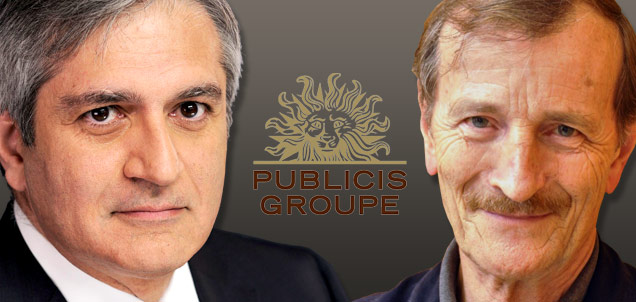
    Bertrand Siguier has a rather long title: Special Advisor to Maurice, Levy chairman of Publicis Groupe. He was Executive Vice-President of the group till 2009. Mr Siguier has been overseeing India operations for a while and is familiar with the market here. Soon after the announcements of the twin acquisitions of MarketGate and iStrat, and as the mediapersons made a beeline for Jean-Yves Naouri (interviewed above) and MarketGate CEO Shripad Nadkarni or IStrat CEO Navneet Singh Sahni, MxMIndia caught up with Mr Siguier for a quick, freewheeling chat.

     

    Bertrand Siguier

    Wouldn’t it have been better if you would have had one digital agency that services various creative agencies rather than three that the Publicis Groupe has acquired this year?

    It is one of the ways to go about doing business but we have chosen to do it the other way round and that’s because of our agencies. For example, given that Leo Burnett is quite big and that it prefers to operate in a certain way, we didn’t want to twist their arms and force Arvind Sharma to follow a certain model. That’s one of the reasons that we acquired Indigo, which is one of the biggest and best digital agencies in this country. If you ask me whether Indigo would work with other companies in our group I would say, yes.


    Do you think the issue of fiefdoms or egos is an international trend or is it just limited to India?

    It’s an international trend I would say except a few countries. Like say India, which is a priority and a large market and has potential, we can yes. But in other countries that is not the case. It may be okay for India, Turkey or Germany.


    What about Saatchi & Saatchi? It’s still not up there in India?

    Saatchi will be back; we’re not going to let Saatchi go down. Saatchi has a huge history and we need to have a strong Saatchi in India, which hasn’t been the case for some time. It will be the case starting next year. There has been a change in leadership already last year with the coming in of Matt Seddon who is not Indian but has done a terrific job in restoring order in the organisation. It is not an easy job to do….


    What about Publicis – are you content with the way the agency is doing in India?

    Oh, yes, we are very happy with Publicis; altogether it is doing very well. If you ask me, I am not pleased with anything but given the overall picture Leo Burnett is doing well, Publicis has made a lot of progress but I still want to see more in terms of creativity and visibility. For example, we were not present enough in Goafest so, that is one area that we need to work on.


    But Publicis is not considered a sexy agency in India…

    You may be right but you have a very Indian focus. I do not know why this market is obsessed with stars – the advertising business is not like Bollywood. I know that in India some creative people are considered as stars. You see them in newspapers, you see them with beautiful ladies, you see them trying to film things for Bollywood…we are not in that league. I think we could do a bit more.


    With low margins, is it profitable to stay in the Media agency business these days?

    Low margins on big business can produce some satisfactory results. If you play legally and in a straightforward way and if there are no funny things going around and under the table, it’s a low-margin business.


    Will the doubling of turnover for Publicis happen sooner than the prescribed timeline of 2015?

    I only have a guesstimate and I think we can achieve that before the set timeline. It would be good if that happened.


    Are you looking at hiring more talent across creative agencies here in India?

    Yes, there is a possibility. It is a question of opportunity; I do not want to make a big declaration. If we come across companies that we feel are exceptional and have exceptional talent then why not…