Tag: Public Relations

  • Abhishek Sood joins Prabhudas Lilladher as Lead – PR

    By Our Staff


    Prabhudas Lilladher, the financial services organisation, has appointed Abhishek Sood as the Lead – Public Relations. He will report to Shaili Vora – Head of Group Strategy, Prabhudas Lilladher Pvt Ltd.


    Commenting on the appointment, Amisha Vora, Owner and Joint Managing Director, Prabhudas Lilladher, said: “Over the years, our mission has been to power India’s financial growth and help our clients in their wealth creation journey. To achieve this mission, strategic communication is important, which is where Abhishek’s role becomes critical. We are pleased to have him on board to spearhead the media engagements for Prabhudas Lilladher. His rich experience and in-depth understanding of the media landscape will add immense value, and help in amplifying the the impressive work we have been doing.”


  • Bela & NS Rajan to say Sayonara to Ketchum-Sampark on September 15

    By Our Staff


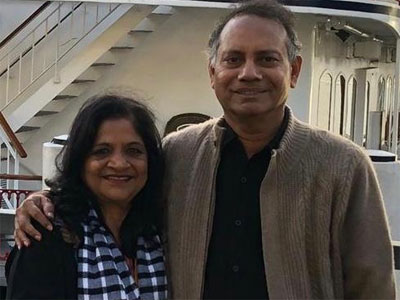
    Bela & NS Rajan
    Bela & NS Rajan

    Public Relations agencies veterans Bela and N S Rajan have announced their retirement and exit from Ketchum Sampark, an agency they founded in 1994. After a hook-up around 2003 where both agencies chose to work with each other in India, in 2011, Omnicom-owned Ketchum bought majority stake in Sampark.


    Post that, the Rajans continued running the agency, as they did before. With this announcement, the Rajans will exit Ketchum Sampark completely. Both Bela and NS Rajan declined to comment, but Ketchum issued a statement, which said:


    “After more than 27 years building and leading one of the biggest public relations brands in India, Ketchum Sampark founders NS and Bela Rajan will retire in mid-September.


    “As Rajan and Bela transition to retirement, Ketchum Sampark and Fleishman Hillard are establishing a collaborative services model in India that leverages the agencies’ individual strengths to provide clients with broader access to talent and expertise in India’s fast-changing environment.


    “While the two agencies will continue to distinctly operate under their individual brands and will continue to service their clients and the marketplace through their respective core services, FleishmanHillard and Ketchum Sampark have created a combined India management committee comprised of seasoned leaders from both brands who will work together in concert to design the next chapter of growth ahead.”


    Sampark was set up in 1994 by Bela Rajan, after a successful career in PR where she worked with Consilium, one of the country’s first communications consultancy firms. N S Rajan, on the other hand, moved out as Head of Communications at the Essar Group to join his wife in Sampark as Co-founder and Managing Director. Over the  years, Sampark had built an enviable reputation in financial, corporate and crisis communications. Other areas have also grown in the decade and a half, but Rajan is clearly the go-to person for an understanding of how a crisis can be handled.


    Rajan is on the Board of the Advertising Standards Council of India (ASCI) and is an active participant in their CCC and also the  founder and majority stakeholder in SCoRe, the communications school.


    What next for the Rajans? A close friend told us that they first plan to spend time with their children and their respective families in North America. There are plans to invest and associate with social sectors and mentor young talent.


  • 11 comms professionals set up PR Club

    By A Correspondent


    Eleven Public Relations professionals have come together, supported by The Promise Foundation, to create a membership-led knowledge sharing collaboration for betterment of the professional community. The PR Club – as the initiative is referred to, will offer continuous learning to the community.


    The 11 co-founders include (in alphabetical order): Aniruddha Bhagwat, Liza Saha, Nicky Singh, Pooja Trehan, Rahul Rakesh, Ritesh Shete, Rozelle Laha, Sandeep Rao (Co-Founder of One Source), Tarunjeet Rattan (Creator of PR-POI), Tinu Cherian (Lead at ICG) and Vikram Kharvi (Founder of IPRF).


    Membership is open to any working professional who has a basic understanding of Public Relations. There will be an annual fee of Rs 10,000 + GST (introductory fee). The first 50 who join in July 2020 will get a one-time 50% discount on the fee. The founding members will not be affected by a fee hike in the subsequent year.


  • Siddhartha Mukherjee: Why Listening is a Must in the New Business Environment

    By Siddhartha Mukherjee


    Every disruption, like the one we are currently in, leads to a ‘New’! The existing definitions of Life As Usual or Not As Usual and therefore, Business As Usual & Not As Usual (BAU/BNAU) transform into something new in shape, size and meaning. For example, one of the dynamics that is undergoing change is “how much”. How much do I need, how much time and money do I spend, etc.


    During this phase, stakeholder sentiments – human sentiments after all – go through peaks and troughs. The Quantity and Quality of what individual stakeholders express is not only NEW but very importantly, an Information Goldmine!


    Hence, for businesses or corporate and product brands, it’s a great time to intensify their Listening capabilities. It is not just about listening to consumer (revenue generators) mood alone but across stakeholders, both internal and external! Only when you listen more, listen better, your brand will empathise more, empathise better to the New future! After all, brand engagement and conversion pivot on Empathy!


    Listening, in simple words, means understanding the current and estimating the future Mood of your ecosystem! A stakeholder-wise analysis of their sentiments – happiness, concerns, memories, aspirations, and so on. Such studies can be Brand Specific and/or Agnostic!


    In fact, if executed and sustained well, insights from Scientific Stakeholder Listening can lend to a healthy balance sheet!


    With timespent being majorly high online currently, it makes Listening Analytics focused and logistically easier to execute. Currently, all stakeholders (humans after all), are proacting and reacting, expressing in other words – primarily online (digital and social)!.


    Hence, for both brand owners and communication consultancies, this is a great time to put its Online ‘Listening’ Analytics desk to full use! Every CxO would love to learn and act on the New future! Listening for a brand is a science! Nothing tactical or superficial about it!


    BENEFITS OF LISTENING: 

    1. Reconciles Future Business Plans: The insights from listening analytics will lead to a reconciliation dashboard for CXOs and Board of Directors in terms of the required business direction and KRAs for each business function.

    2. Prepares the Brand/Organisation to Empathise– If the two of the key constituents of brand empathy are messaging and action, the Listening Analysis prepares the organisation CXOs for it.

    3. Mitigate Brand Reputation Loss: The exercise helps understand current crisis chain and future time bombs ticking away towards disaster. Listening to human expressions and analysing them lead to better mitigation preparedness.

    4. Create New Product/Services: Very often, Listening Analysis leads to new Product/Service ideas. Online data offers huge information across what went wrong, what Target Audiences want, what they want to be, and so on.

    5. Re-Orient Stakeholder Profile: Listening to Insights lead to business organisations being able to decide the weightage and the profile of each stakeholder that would be needed to tackle the ‘NEW’!

    6. Assess effectiveness of Brand Building thus far: A key outcome of Listening during disruption phases is that it acts as a reality check of how robust the brand building and business delivery mechanism have been so far.

    7. Fortifies Client-Agency relationship: Listening cannot be a one-way street! The understanding of the current and future ecosystem creates opportunities for even the clients to understand their service providers’ adjustment areas and creates opportunities for working together even longer.


    In a sales-obsessed business environment, giving low or no priority to scientific, healthy and regular ‘Listening’ is still understandable. However, in situations like we are currently in, a pandemic or disruption, businesses and brands should re-optimise their time towards Listening and gear up to strengthen its future balance sheet during the ‘New’.


  • Journalist Boby Kurian joins Adfactors PR

    By A Correspondent


    Boby Kurian

    Public Relations major Adfactor has brought on board yet another senior journalist with Boby Kurian, former National Corporate Editor of The Times of India, joining the firm as Senior Vice-President, Strategic Communications Group (SCG). He will be based out of Adfactors’ Bengaluru office.


    The national role will focus on delivering C-suite counsel and engagements ranging from broader corporate reputation issues, CEO positioning and thought leadership. Kurian has two decades of experience in business journalism, reporting on some of India’s biggest corporate events and business personalities. Kurian held senior editorial positions at several leading media institutions, including VCCircle, The Economic Times, and The Hindu Business Line bureaus in Bengaluru.


    Said Adfactors PR Co-founder and Managing Director Madan Bahal said: “We are proud to have someone of Mr. Kurian’s calibre joining us. His keen business and economic perspectives will help us bolster our consulting capabilities to deliver strategic counsel to the vast ecosystem of businesses – driven by frontier technologies, newer opportunities and risks in a rapidly-transforming India.”


    On his new role, Kurian added: “I am excited about joining India’s leading public relations firm at this juncture of my career. The Strategic Communications Group has the potential to become a critical part of the firm’s value proposition. I am confident that, together, we will create a valuable and lasting asset.”


    Added Adfactors PR’s Bengaluru head of operations and Vice-President S Roy Kandpal: “Team Bengaluru is thrilled to have Boby joining us. I am confident that together, we will further strengthen our service offering and consolidate our market-leading position in South India.”


  • Amith Prabhu: What can our Festivals teach us?

    By Amith Prabhu


    We are at the fag end of the year. It is festival time. We are in the week between two of the most celebrated festivals. There are holidays galore. What do these festivals teach those of us in Public Relations? Dassera is the festival where the triumph of good over evil is celebrated and Diwali is the celebration of victory of light over darkness.


    They almost signify the same thing and are usually celebrated a few days apart. The logistics aside there are few things that stand out in these festivals. First, newness – new clothes, newly done up houses, new start to the calendar and new reasons to get together. Second, is an exchange of sweets to mark celebration and third is coming together of families and friends to have a good time.


    How do we apply these three elements of newness, sweetness and togetherness to our lives as Public Relations professionals? Newness is about innovation. About bringing freshness into the things we do for the organisations and brands we work on. Sweetness is in how we make our work stand out to bring a smile to the end consumer – our clients’ customer and Togetherness is about how we use our various networks to deliver the best thinking to the product and service we ideate on.


    There are a few young professionals who are trying to do this all the time. Before the year end I will try and feature 15 of them. If you think you are one of them or know someone who constantly tries to innovate, stand out and bring people together please let me know.


    The question that I keep asking is that why are there very few among us who innovate, or stick our neck out or do things to make a difference to our profession? Is there a lack of encouragement? Is there an inherent absence of inertia? Or is it just lack of interest and desire to the new like we would do during the festival time? Why cannot we carry the festival spirit to our professional world?


    I have interacted with more public relations professionals in 2015 than I have in the previous years. I have met with people across multiple organisations and across all levels. I still can’t think of more than a handful who write a regular blog on the profession. I cannot think of more than two who are outstanding public speakers. I cannot think of more than the usual pioneers who can be role models beyond the four walls of their organisation. I don’t think there is dearth of talent. I feel it is just the absence of a spirit to go out there and showcase the newness, the sweetness and the togetherness beyond that rare annual occasion.


    I hope this Diwali marks a period of fresh thinking and renewed vigour for the professional community in the country. And we hope to see that in a couple of Cannes Lions coming home for the PR category next year. Until then, enjoy the celebrations and watch what you eat.


  • Amith Prabhu: Public Relations is about the simple touches

    By Amith Prabhu


    My cousin’s son who lives in the American Midwest is a 19-year-old freshman in college (equivalent to first year). He is a regular American teenager whose parents are of Indian origin. The interesting part is that he is currently a White House intern. That’s not the story. The story is that he is currently enjoying his summer vacations with his parents and every Saturday evening the President of the United States in whose office he is an intern calls him to check on him and get a sense of how he is doing. This in essence is Public Relations.


    I recently heard that the Global VP of Marketing of an upcoming mobile handset brand spends 30 to 40 minutes with journalists on a one-on-one call during the launch of a new device. The outcome is some outstanding coverage in the media outlets on the day of launch. These seem like minor interventions but they go a long way.


    I have heard this legend about this famous Indian actor. He is a stickler for punctuality and down to earth. If he has to be at a venue or a film shoot location at 9 am he ensures he reaches there by 8.45 am and either circles the neighborhood or waits patiently in his car so he can show up on time and then on meeting people he will introduce himself by stating his full name which makes people see the human side when he says, “Hello, my name is Amitabh Bachchan”.


    When asked what the secret of his popularity was, the Chief Minister of Tripura said, “We do not keep any secrets from the people — that is our secret. We are transparent. We do not make any promise which we cannot fulfill. We make only those promises which we can fulfill. If we try to fulfill people’s expectations, they will obviously then elect us.” He is more famously known as India’s poorest Chief Minister and is the longest serving CM of the state. People love him and there is no greater public relations than honesty and simplicity.


    More often people mistake public relations to be something else. And forget the easy methods of outreach which are about simplicity, honesty and punctuality. We see and hear of these stories in daily life. Ultimately, it is the individual who represents the brand or the organisation who makes all the difference. Public Relations is about the simple touches that an effort goes into that registers in the mind of people a connection is aimed at.


  • Amith Prabhu: New age brands that have built themselves using smart Public Relations

    By Amith Prabhu


    In the past couple of years we have heard more about start-ups than any time in the previous years. And among all the stories of these new age companies, a few stand out. They are built by solid teams and have mostly made news for the right reasons. In this column, I have compiled a list of a dozen companies that have made news, stayed the course and survived to lead the categories they operate in. This is not a comprehensive list but nevertheless is a made up of companies that have built brand with smart use of Public Relations.


    First up, are the two poster boys of e-commerce. Flipkart and Snapdeal. They are talked of in the same breath and have grown from strength to strength through smart inward investments and some smart acquisitions. They are in the news each single day.


    Next, in my list is Ola. This company has made city commuting a breeze alongside its international rival. But more than anything, the positive word of mouth it gets from its drivers is worth mentioning. Zomato is the brain child of a young consultant which has gone onto buying several companies across various countries. Today, this app dictates where one should go for a date, or to just grab a bite or for a nice brunch. Completely built through word of mouth.


    PayTM is a boon for those who do not own a credit card. This mobile wallet company is a gateway for those who use Uber. It is going places and has some very smart investors. Next up is Micromax. This handset-maker is giving a tough fight to established players like Samsung in the mobile device market. Largely built on high quality at low pricing.


    Indigo Airline is the only profitable airline and is less than 9 years old. Though not a start-up in the true sense it has the heart of a start up in everything it does. One of the coolest brands around and has done very well for itself. Make My Trip is the online booking portal which has become the default website to plan holidays, book air tickets and reserve hotel rooms. Again, a good example of how brands are built through word of mouth.


    Urban Ladder and Blue Stone are two of the nearly dozen brands which have drawn the attention of Mr Ratan Tata. That in itself is good public relations. Few other brands in this list have managed to do that. But when unknown brands manage that they indeed get noticed.


    Lastly, Housing would have featured in this list of smart Indian brands but then I chose to keep it out for obvious reasons. The two brands I want to highlight are media brands that are making waves. Scroll and Scoop Whoop have made their presence felt with uniquely different yet refreshing brand of journalism.


    When you think of Public Relations and are seeking ideas, think of what these twelve brands have done uniquely to stay in the news or make news. Lots of stories are hidden that can ignite and inspire. Please share your list in the comments section.


  • Siddhartha Mukherjee: Indian standalone PR Firms are fighting back!

    By Siddhartha Mukherjee


    There was a time when the advent of multinational PR firms into India was seen as bullish and a fresh breath of air! Clients became happy expecting “international standards”, “western learnings”, “professionalism”, “customisation”, “strategic inputs instead of tactical, table and chair management services” and so on. Which is why, paying a premium service fee did not receive too much of a resistance.


    As for the employee base, they expected better work environment, training and development, a respectable employee identity and fatter pay package.


    Well, the dust is settling down now. The air is clearing up! The reality on the ground is becoming kind-of visible. Basis the feedback I have received from various corporates and industry captains, who have worked with/for both multinational and Indian PR firms, it seems the desi players are fighting back and setting their own innovative standards.


    An eventual conclusion can also be that, if this trend continues, the core business advantage of deep pockets (allowing wait-and-watch patience), that multinational firms have been known to leverage upon, may not be a potent gamechanger any longer.


    Let us look at what the Indian PR firms are doing to fight this battle:

    a. “Dil Dhadakne Do” Zeal: In one of my previous articles, I had spoken about “It is time for India Principles”. Well, this is an interesting beginning! The very fact that Indian PR Firms have realised that “Zindagi Na Milegi Dobara” so “Dil Dhadakne Do” means a lot towards creating a mark in the global arena! The fact that Indian PR firms have started setting up international offices, getting invited to juries of international advertising and PR award functions is a wonderful pat on our back! The fact that they want to LIVE is by itself a great change! Indian PR Firms are wanting to relive life and set the Dhadkan!


    b. Transition of Management Philosophy: The sole proprietorship or mom-n-pop shop approach is dead! Phew! The core postman job of delivering press release copies from publication door to door is fast becoming a small fraction of PR Agency KRAs. Agency top management is no longer just the founder or owner but an array of thinktanks. They are expected to face, answer, guide and counsel the client top management with strategy and direction. Thinktanks from outside the industry – management consultants, auditors, economists, researchers, statisticians, etc – are being enrolled into the thinktank panels. Indian PR Firms have put on the thinking caps!


    c. Professionalism is taking a U-turn, towards Good: Before we take it otherwise, let me clarify that by professionalism, I simply mean basic hygiene factors like punctuality, quality of language (written and spoken), planning skills, creating client briefs, delivering on the expectations, reviews and appraisals and so on. Well, I am happy to see things changing… for the good. To start with, PR firm client servicing teams are reaching for meetings on time! Second, they come much better prepared. Third, they are well-read and have some perspective beyond just “news coverage”, “publication name”, “edition name” and “journalist name”. They have started talking about brand building – and it makes me excited as I write this) – and they are talking about matching their efforts with outputs and outcome. Indian PR firms are professing professionalism!


    d. Strategy & Customisation outweighing Template Culture: Clients are being treated with unexpected yet welcome pleasantries in the form of getting much more increased amount of customised strategic inputs which typically, at least perception-wise, has been the bastion of the multinational firms. Indian PR firms are setting high levels of innovative and out-of-the-box expectations within a client’s mind on what an ideal PR firm should do and deliver. It is no longer about tactical media relations skills. Clients have started realising that Indian PR firms have the inherent advantage of local ground knowledge. Second, Indian firms are (still) not bound by templates that many of the multinational firms are forced to follow because of diktats from the western headquarters. The Indian firms have had the advantage of fighting heterogeneous market situations for decades where templates were no remedy. This gives Indian PR firm thinktanks immense advantage setting expectations and delivering to them. India teaches you the art of living through instant improvisation! It seems, Indian PR Firms are faster and nimble footed!


    The decision is not final yet. The quarters and semis are being played currently. Who the winner will, probably, get decided in the next few years. Going by the trend, it is for sure that a client’s imagination about an ideal agency is set to undergo a sea change! The tide is taking a turn. Top-of-mind recall levels are drifting back – slowly though – towards Indian PR Firms.


    Siddhartha Mukherjee is a senior PR industry professional and currently Senior Vice President, Eikona – Earned Media Planning, Audit and Advisory. The views expressed here are his own.

     

  • Amith Prabhu: If Public Relations cannot be measured, then what can be?

    By Amith Prabhu


    In my column last week I wrote about how Public Relations should be looked at by understanding the definition of religion. One cannot measure Public Relations efforts. Public Relations covers four spheres and specific activities within the four spheres can be measured. The four spheres I wrote about are: Content creation, Connecting stakeholders, Crisis management and Counseling leadership.


    Almost every activity that is linked to Public Relations will fall under one of these four spheres. Let us look at these four spheres individually and list various aspects that fall under each. That will then give us a sense of what can be measured and what cannot.


    Content creation includes and is not limited to drafting and collating information that goes into the website, on social networks, into annual reports, into media releases, into briefing documents, employee emails, internal branding material and any written word, image – moving or still, musical rendition that represents the organisation or department. These have to always be of high quality which means good grammar, zero typos and fairly well composed. A document can be rated on certain parameters but seldom can it be measured.


    Connecting stakeholders covers all connections the company or the brand makes internally and externally starting with employees, investors, shareholders, community, customers, past and future employees and customers and specifically relevant members of the media who are both a stakeholder as well as a medium to reach stakeholders through the media outlets. The quality of these relationships can be measured in various ways. With internal stakeholders by evaluating a survey or through the outcome of low attrition and higher supply of talent. With external stakeholders by top of mind recall surveys as an output or increase of sales as an outcome. With media specifically when a specific activity is undertaken it is imperative to have a written brief that clearly indicates goals. And the output for a media release and a media conference should be measured based on targeted conversion, tonality and key messages being present. For other media activities like an interview or a story that appears inorganically the same measure of tonality and key message should be considered.


    With the advent of digital media and social in particular anything can be said by anyone at any time. There is the owned and earned media aspect. Not much can be within one’s control for the latter. However, two things are imperative: a) To advise management to constantly do the right things with a playbook that describes the outcomes of a wrong move. And b) To be responsive and be able to respond with facts and figures when there are stray comments in the online world. There are limits to what can be measured.


    Finally, with regard to crisis management and counselling leadership these are similar to what a legal counsel would do in an organisation. Constantly evaluating risks and mapping potential issues with a crisis management plan always in place. These again, cannot be measured unless there are specific metrics for a lengthy crisis management programme that are again specific to activities that are linked to a crisis.


    That leaves very little to be measured in Public Relations. But the billion rupee question on measuring Public Relations which is a non-question to start with persists. Next time someone asks you how you measure Public Relations it would be prudent to educate them that Public Relations cannot be measured but specific activities within the ambit of can be measured and each activity has its own set of measurement parameters and differs from brief to brief.


  • Amith Prabhu: Three men who made news in interesting ways last week

    By Amith Prabhu


    If you are a news junkie there is no way you would have missed news on Rahul Yadav, Salman Khan and David Cameron. The first two in the news for not-so-pleasant reasons and the third for winning against all odds in the UK elections. All three masters of the art of Public Relations.


    Let us examine each of them briefly starting with Rahul. The 26-year-old IIT drop-out is CEO of Housing.com. He has made several outbursts in the past few weeks taking on big daddies of the game and ensuring he hogs the limelight both in Twitterverse and in the print media. He has done the unimaginable which most old school corporate types have rubbished as mindless arrogance. But in the process what he has achieved is capturing mindspace, attracting eyeballs and more bang for the buck on his crazy outdoor campaign. No one can tell whether all this is planned or ad hoc. But Rahul Yadav has ensured that in a bland category he has got noticed and four of five serious home buyers I spoke to consider his portal as a player to reckon with despite his tantrum-laced behaviour.


    Next we have Salman Khan whose 12-year-old hit-and-run case made news last week when he was convicted by a Sessions Court, later released on interim bail by the high court. His foundation Being Human which he created in the past few years was used by the defence lawyers to highlight his good work. So also the role he played of a cop, a good Samaritan and a role model in some of his recent movies, which in hindsight were carefully chosen roles in order to offer perceptions to people that would look at him in a new light. He has won the Public Relations game largely and gotten away with a very tiny wrap on his knuckles for now.

    Lastly, we come to David Cameron, the British Prime Minister who won a second term when everyone had predicted a hung Parliament. It may be important to note here that he is one of the few world leaders who was formerly a Public Relations executive as Head of Corporate Communications at Carlton Communications. He understands reputation management better than most of his rivals and used that smartly during his campaign similar to how his counterpart in India did a year ago. He was the first British to visit a Gurudwara. He used a catchphrase in Hindi to capture the imagination of South Asian voters and put up several candidates of Indian origin to run for office.

    It will be interesting to see how they live up to the news they have made in the coming weeks. For now they have become more famous than they already were. The reasons may not be right, atleast for the two Indians. It may not be the best way to be in the news but sometimes being in the news in smart ways that do not break the rules is better than not being in the news. My reference to not breaking the rules in Salman’s case is how he used very popular characters and how he created a foundation to offer a new perspective.


  • Introducing a new fortnightly column on PR insights – PReamble by Siddhartha Mukherjee

    By Siddhartha Mukherjee

     

    Advertising is BIG in Size, even BIGGER in Stature. Tracing back many years, one will observe that towards the foundation and gradual development of our Advertising Industry, both in size and aura, the intrinsic role of Public Relations cannot be ignored.


    What has Public Relations got to do with the SIZE of the Indian Advertising Industry?

    Our Indian Advertising Industry would not have been half as rich as it is today had it not been for the Public Relations Industry’s decades of effort to get the multinationals enter the Indian economy smoothly, help them settle and start their operations. I believe that Public Relations has played a key role in transforming our India’s erstwhile Swadeshi Market to today’s India Inc. It is the Public Relations machinery that has worked tirelessly with the media and foreign Investment corridors to ensure the smooth entry of Multinational Organizations before it fell into the lap of the Advertising Industry as prospective Client Revenues.


    Why talk about Multinationals alone? Even the India-based Corporates and Organizations have made a fair use of Public Relations before jumping on the Advertising band wagon. Mergers and Acquisitions, Brand Crisis, Investor Relations/IPOs, CSR, Employee and Trade Relations, Regulatory dynamics, well, many such other dynamics were tackled through Public Relations before those Corporate and Product Brands started using the Advertising tool.


    Ask any PR/Communication professional, especially veterans, and they will have amazing facts to narrate which reiterate the role of Public Relations in creating and stabilizing a brand. PR Consultancy Heads or its Senior Management, Corporate Communication Heads, CXOs, etc., will have an amazingly rich archive of actual, real life PR Effectiveness & Success Case Studies to share – some of which that they themselves ideated or implemented. It is a different story though, that no one has bothered to document these decades of initiatives. All that was needed to be done is to approach the right Industry professionals and Thought Leaders. Case studies will come pouring from various management corridors – Corporate, Human Resource, Marketing, Finance, Manufacturing etc. Function head will have interesting anecdotes to share on how Public Relations helped them in their respective spheres whether it was Business As Usual or Business Not As Usual scenarios.  It really doesnot matter if the case study pertains to a National or Multi-national organization. The important thing here is that every industry vertical will have many case studies buried deep within the wisdom of both veterans & visionary Corporate Business Leaders and Communicators. Each of those stories will somewhere, very humbly, highlight the underlying message of how it helped contribute towards the growing revenues and size of the Advertising Industry.


    Today, if the Indian Advertising revenue size is touching close to 1% of our GDP, well, you know who or rather which Industry to acknowledge!


    How did Public Relations build Advertising Stature?

    My 10-year-old son’s school curriculum has capsules and questions on Advertising, Copy writing, Medium, Slogan etc. It made me wonder & trace back as to what could have been the trigger of all this? Why was my son not being taught about news, news writing, etc. Like advertising, why isn’t he getting the exposure to the world of Journalism as one of the facets of Public Relations?


    Advertising Industry and its Celebrities (well, names like Alyque Padamsee, Sylvester da Cunha, Prem Mehta, Piyush Pandey, Prasoon Joshi, Balki, Vikram Sakhuja, Sam Balsara, Shashi Sinha,…well, it is a long list) have become household names. Parents of employees working in the Industry, their friends and family, social ecosystem, clients, have all acknowledged the  Advertising Industry as a respectable employer, a brand partner and sustainers of brands.


    Well, mind you, this did not happen overnight. This has happened after years of regular use of PR of the Advertising Industry and its Industry Captains.


    Day on day, week on week, Advertising Industry’s credentials, its achievements, plans and yes of course, the Celebrity quotient have an had ominous presence in Newspapers, TV News Channels and Online Networks.


    No wonder then, most of the Management Institutes still continue to believe that when it comes to preparing or revising their marketing course curriculum, Advertising is the nucleus of Brand Communications and Management.


    If anyone doubts on the scientific impact of PR, well, the example is live and all around us. It is one of the best examples to give to establish that PR works, it moves the cheese and how!


    Hopefully! one day, in a similar fashion, PR will have a lot do with PR!


    Siddhartha Mukherjee is a senior PR industry professional and currently Senior Vice President, Eikona – Earned Media Planning, Audit and Advisory. The views expressed here are his own.