Tag: Prathap Suthan

  • Is Delhi upstaging Mumbai in A&M?


    By Ananya Saha


    Chalo Dilli, as Ad Club drops Bombay


    Jaldi 5 with Shashi Sinha: “The idea is not to emerge as the only Ad Club in India”


    Anil Thakraney: Delhi ad guys less cynical than Mumbai frat


    At first it may not sound like a big deal. What’s in a name? And what’s in just the shedding of a part of the name? A lot, we think. For, in the context of the Advertising Club Bombay dropping the Bombay from the name, it’s indicative of the changing times.


    The attempt  to be more all-inclusive is a welcome sign no doubt. But as the Club’s president told MxMIndia: “Delhi is a key market for the advertising industry with big agencies being housed there and also some big clients too based there. This is definitely one of the main reasons for us bringing Delhi under our purview.”


    So is this move a firm indicator that Delhi is emerging as a more challenging player than Mumbai in Advertising and Marketing?

     

    Rahul Kishore

    According to Rahul Kishore, Senior VP – Priority Projects at Mogae Media, does not believe in this creative demarcation and would rather see Delhi (“Gurgaon actually”) and Mumbai sharing an equal pedestal.


    Mr Kishore said, “I am totally against this Delhi v/s Bombay tussle that keeps happening on and off. It should just be The Advertising Club. As I said there are agencies that are present all across the country but just because a few are headquartered in Mumbai it doesn’t give Bombay to be the leader of sorts. I don’t think that’s a true representation; I think there’s a lot more business that happens out of North India. I can tell you that in North India.”

     

    Satbir Singh

    Satbir Singh, Managing Partner & Chief Creative Officer: Euro RSCG India, echoes this view. He believes that Delhi has an edge over Mumbai especially when it comes to clients. He said, “The rate of growth that Delhi has had over Mumbai has been phenomenal, especially over the last four-five years. Delhi has largest spenders: whether it is auto sector, telecom or large scale FMCGs like Reckitt Benckiser, Dabur, Pepsi, Coke etc.”


    “Mumbai still scores with financial sector and the fact that large-spending media clients like GECs are based out of Mumbai. One spender that can perhaps tip scales in favour of Mumbai is Hindustan Lever since it equals the large spenders that Delhi has,” Mr Singh added.  “But that apart, the sheer number and concentration of large spenders is very heavy in Delhi and this will continue for a long time. Earlier, most of the senior people were based out of Mumbai. But increasingly we see more senior people either based out of Delhi or flying to the capital for meetings and decisions.”


    Delhi has the edge, no doubt. Mumbai, though, still has a dominant edge when it comes to creativity – in areas like advertising films etc thanks to the presence of Bollywood and the best post production facilities – but here too the gap is narrowing.


    Lloyd Mathias

    Lloyd Mathias, Director, GreenBean Ventures, Former President & CMO, Tata Teleservices is originally from Mumbai, but has worked extensively in Delhi and for a bit in recent years in Mumbai too. “I would not say dominant, but Delhi is rapidly moving to equal Mumbai in the advertising and marketing space,” he said. “In certain sectors, such as mobile phones, consumer durables and automobiles, Delhi has already pulled ahead of Mumbai. Given Mumbai’s historical dominance as India’s commercial centre it had the edge with a more professional approach to work; but the with the emergence of MNC’s over the last decade in the Gurgaon/Delhi/NCR region , the gap has narrowed down to a large extent,”  he added.


    An industry analyst with a leading consulting firm who did not wish to be named, said, “There has been a massive increase in Delhi , definitely. Delhi team is more efficient at negotiation, is the finding. The Delhi team thinks bigger. They do not approach clients as space-vendors; rather they go as concept-sellers and are able to get higher rates from advertiser.”


    Sathyamurthy NP

    What has possibly helped Delhi is the increasing professionalism and an improved work ethic. The industry analyst further said, “What has become a norm is that the foreigners come and set up base in Delhi. An MNC set-up brings in systems and processes of evolved advertising markets to Delhi . When you sell to those guys, you sell fancier ideas. All that gets a premium. Advertisers in Delhi are savvy, wherein Mumbai guys are more focused on bottom lines and rates. That is why we also think of servicing a client out of Delhi , for the Delhi team can present better concepts and thus, crack better deals.”


    Prathap Suthan

    Sathyamurthy NP, President & Head – DDB MudraMax reasoned that we should not be making too much of the move by the Advertising Club. “Though Mumbai will continue to be the advertising hub of India, it’s time we hear the voice of Delhi too,” he told MxMIndia, adding:  “When it comes to being professional, Delhi is as good as Mumbai.”


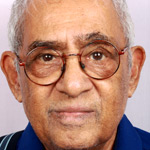
    The move by the Advertising Club to be more inclusive is decidedly in the right direction. But will it help the industry to keep politics aside and show more participation, only time can tell. Meanwhile, the Mumbai v/s Delhi debate is endless. And, as veteran adman Prathap Suthan told MxMIndia, “intercity rivalry is healthy, positive and must be sustained”.

    with inputs from Tuhina Anand and Johnson Napier

     

  • Chalo Dilli, as Ad Club drops Bombay


    By Tuhina Anand


    As the Advertising Club Bombay gears up to don a new avatar, the crucial question is: will it help the industry? And will the industry accept the new inclusiveness? Ad Club Bombay has been looking at expanding its footprint and in its bid had last year held some of its judging for Effies in Delhi. Shashi Sinha, the President of the renamed The Advertising Club (till yesterday The Advertising Club Bombay) has been vociferous in the Ad Club’s demand to have a more inclusive approach, especially including the Delhi NCR advertising fraternity.


    Shashi Sinha

    In fact, their priority has been to bring Delhi under their ambit and not other cities like Bengaluru, Chennai, Kochi or Kolkata. One of the reasons for setting their eyes on Delhi is that the capital is a key market for the adfrat, considering that most of the agencies have offices there and some even their head offices. The other reason for extending their footprint could be the functioning of the Delhi Advertising Club (DAC).


    It is no secret that many in the ad fraternity in Delhi NCR prefer to stay from DAC activities. Its awards, one of the key events for any Ad Club, are not a patch in comparison to the Abby by Ad Club Bombay. When MxMIndia called the DAC office in Delhi, President RC Tanwar seemed miffed and said, “I am the President of Delhi Ad Club and we have given no right to anyone to decide on how DAC should function. I think people from Mumbai should realize that DAC is much more active than their counterparts. We don’t just have awards but other events too. What is Ad Club Bombay about – Goafest?” He categorically said, “We will never partner with Ad Club Bombay; they can have their own plans and we are not interested to be part of those.” However, though Mr Tanwar said he would reply to MxMIndia’s questions, he did not do so.


    While there have been issues in the past like the awards leaks in Goafest, the awards process has been cleansed in the last two years. One cannot also overlook the fact that Ad Club Bombay (now The Advertising Club) is a formidable force and includes some of the big names from the industry. Its Managing Committee has enviable names on board and there is no ignoring that.


    Prathap Suthan

    It may be recalled that a few years ago Prathap Suthan had floated The Delhi Alternative (Alt Delhi) a platform that gave an opportunity to fraternity from Delhi to come together. The initiative is still going strong. Mr Suthan on the current development said, “On Ad Club Bombay becoming The Advertising Club, my take is very simple. It is a good thing. It is the right thing. Just that this should have been done ages ago. It just underlines the fact that Delhi is actually growing into a market that has already or will soon become larger than Mumbai. It is almost that they suddenly don’t want to miss the boat. Unfortunately rebranding isn’t going to change geography. And I personally think intercity rivalry is healthy, positive and must be sustained.”


    He added, “Alt Del isn’t an idea that was ever set up to challenge the Bombay Ad Club or the Delhi Ad Club. It was and is still a growing forum away from the industry to promote the coming together of communication professionals, much larger than just advertising. Plus the fact that it is also alive on FB with members from across India. It was led by a leadership of senior people from different facets of communication, and set up for individuals to interact, learn, network and enrich their advertising quotient. We wanted to supplement learning through workshops, meetings and exhibitions. There has been zero support from any agency, corporate, media house etc and it has been running only on the collective steam and money of our leadership. Until now we have had a few workshops, great participation, excellent quality, and wonderful feedback. Now that winter is here in Delhi, Alt Del is planning to make the best use of it.”


    Rahul Kishore

    The Delhi and Mumbai competition that Mr Suthan has mentioned seems to be playing on the fraternity’s mind. Rahul Kishore, Senior VP – Priority Projects, Mogae Media, commented, “The move seems to be a sensible one as there are Ad Clubs that are present all over the country. I see no reason why it should be referred to as Ad Club Bombay only. However, I’d like to add here that most advertising agencies today operate out of Gurgaon.”


    Sathyamurthy Namakkal, President, DDB MudraMax, Media, said, “I think we are reading too much into the whole situation. Delhi is an important market with lots of advertisers being based out of the city so it is a gesture to have more representation in the Ad Club than it to give it more weight than required.”


    Sathyamurthy Namakkal

    As for some of the Ad Clubs around India, The Advertising Club Bangalore has been pretty active. It holds its yearly awards fest called Big Bang. It also conducts lot of sporting events that have been popular at the advertising festivals. Among its events is one called Melting Pot that encourages participation from creative teams to come up with a public service campaign.


    Talking about an issue that Ad Club Bangalore faces, Arvind Kumar, Executive Director of the Ad Club said, “For the awards we get entries from small and medium agencies but there is reluctance on the part of bigger agencies to participate, citing that their companies’ `unwritten’ policy bars them from entering any Indian awards. This is a major dampener as the participation from bigger agencies would certainly help in raising the quality of entries. It would also help the creative people from those agencies get wider recognition.


    The Advertising Club Cochin has been fairly robust considering that it has 400-500 members. Sandeep Nayar, President of Ad Club Cochin, said, “We have at least one event planned for each month that includes creative competitions, sports events and workshops among others.” The Ad Club is 15-16 years old and its biggest property is the Pepper Awards – the awards night for the creative fraternity from Kerala. Mr Nayar in fact seemed open to any collaboration with other Ad Clubs across the country that would give them a wider platform to showcase works from down South.


    In the end, it’s not about which city is better. The move by the Ad Club Bombay can only help the fraternity, in Delhi NCR in particular. A move that helps the industry has to be taken in the right spirit.


  • Bang in the Middle launches in US

    By A Correspondent


    Reversing the trend of global agencies launching in India, the newly formed independent agency Bang in the Middle announced the launch of its operations in the US. The agency is opening offices in Chicago and New York to start with and will expand to other cities at a later date.


    “We have been clear from the start that we won’t be a single country operation. This is the next step in our evolution and we aren’t going to stop here. We are exploring some more opportunities in Asia and Europe, and we hope to expand into those markets. It’s time to demonstrate a brand new way of doing business, and what a better moment than India’s Independence Day to announce this,” said Prathap Suthan, Managing Partner, Bang in the Middle.


    To facilitate the US entry, Bang in the Middle has brought on board Ms Saira Mohan as the president, Bang in the Middle, US. Ms Mohan is a well-known international supermodel with extensive advertising and marketing experience, especially in the world of global fashion, luxury and design.


    “I am excited to partner this incredibly talented team in India and open up the opportunities in US for brands from India and open up Indian markets for brands in US,” said Ms Mohan. “I have been in the world of branding and design for over a decade and I intend to fully bring that experience on table for all our current and potential clients” she added.


    Bang in the Middle, US will help the growing ambitions of many mainstream brands who are not owned by MNCs, but want to expand their ambit and enter India. Bang in the Middle will also help its clients like iYogi and Veen Waters to establish their brand in US. It is currently in conversation with a few brands in US, and some leading communication and professionals to bring them on board. Through its unique suite of offering that span design, branding and digital marketing, this is Bang in the Middle’s first international foray into establishing itself as a mainstream global creative media company.


    “We currently have a very eclectic bunch of clients who require our services in more markets than just US. We have launched campaigns in US, Europe and Middle East already for our clients, and are about to launch some more for our brands. In today’s hyperconnected world, you need to be present in everywhere where opportunity is, and for us USA is a vast opportunity” said Naresh Gupta, Bang in the Middle.


    Bang in the Middle currently works with iYogi, Veen Waters, Hawktrack from Knoxx Global, Dulux Paints, Vimal, and BigFlix among others.


  • The Anchor: Prathap Suthan on 7 reasons why mango is the Emperor of Fruitland

    By Prathap Suthan


    Honestly, I am yet to stumble on to someone who doesn’t rage after this fruit. In fact, if I do meet him or her, it just might be a fickle pretense.


    Take lush mango away from the menu of pleasures, and you’d dread the emptiness that stares at you from the fruit bowl.


    I mean everything that’s left inside, including moldy grapes, obese melons, and squishy jackfruit, is one mediocre disappointment after another.


    You’d be truly blessed if you ever had an orgasmic experience with a guava. One errant seed raking up screaming havoc in an old dental cavity notwithstanding.


    In all my years as a devoted single fruit pilgrim, no one really asked me if any other fruit deserved the altar. But now that I have to defend my icon, allow me 2 non-noodle minutes.


    Thankfully, I didn’t have to invent any of the reasons why Mango will reign undisputed. They have always existed. I just had to put them in no particular order.


    1. Mango, the great Equalizer

    No matter who you are, where you live, or what you like, you are a subject of this awesome fruit of plenty. If you aren’t an eternal slave of its yumminess to the nth degree, dude you have no clue what you are missing. Regardless of our faiths, beliefs, geographies, physical differences, skin colours, hairstyles, fashion skews, cultural peccadilloes, bank balances, and even sexual orientation, the mango is not mere king.


    It’s a great leveler. We are all equal victims. Unless some of us are lashed by daily nightmares of man-eating mangoes, snorting rhinos can’t wrench most of us away from slobbering over its spell. It’s worthy of leading a new age religion. Or at least a dozen political parties aligned along gourmet tastebuds.


    2. Mango, the winning Politician

    I am often pushed into vague corners by sour men and women who poke holes at India Shining. But then, little do they consider the mango side of it. If it wasn’t for that campaign, aam aadmi as an expression wouldn’t have been brought to the fore. The ordinary men and women of our country wouldn’t have found such a powerful public idiom. Come to think of it, there nothing else unites us so tastefully across all socio-economic definitions. Considering that we grew up in a country where every neighbourhood has at least one mango tree, and every one us would have either plucked or thrown down a mango. Centuries from now, mango people will be linked to the history of the 2004 elections. As the little big people who torpedoed a government’s feel good carrier.


    3. Mango, the giver of Words

    I am yet to lick an apple, salivate over a plump orange, drool at a spiky pineapple, or go anywhere oral near a banana. Yuck. On the other sticky hand, I can’t wait to get cozy with a juicy mango, unpeel its skin, and allow my tongue to plunder its curves. Every word that’s been designed to bring out osculatory pleasure makes ample sense and effective relevance. Go on, close your eyes. You can bite a mango, you can slurp a mango, you can nibble a mango, you can kiss a mango, you can moan a mango, and oh yes, you can suck a mango. I doubt if there’s a wildest word you cannot do to a mango.


    4. Mango, the Cultural Fountain

    Undoubtedly, inspiration isn’t just limited to pushing and expanding the frontiers of vocal expression. The mango has undoubtedly aided the growth and profusion of our aesthetics. If it hasn’t stimulated us enough, I think we have been fools to overlook the cornucopia it unleashes. From paisley that makes huge contributions to the clothes of men and women – neckties to sarees, I am sure mango has pandered itself to aspiring writers of novels and poetry. There’s much hidden in the gush of its juices, the allure of its nectar, the softness of its body, and the blush of its colours. I certainly cannot see glorious muskmelon or splendid kiwi goading me to spill my ink. I might suffer from permanent drought. If I am not entirely mistaken, the fertile mango has already spawned fashion, books, taxis, beverages, radio stations etc. There’s so much more possible.


    5. Mango, the natural Aphrodisiac

    Here’s a quickie. Whenever you two decide to bathe each other’s teeth, grab a nice handful of Alphonso. Or any common mango from the fridge. With so much of passion held inside its ripe and near gossamer thin skin, it does give human chemistry a bit of a goosebumpy spur. Add a little dose of imagination, and the humble mango could be quite an experimental grenade while rolling in the hay. While there could be unexplored magic potion and endless ginseng within pears, peaches, and pomegranates, I’d still bet that they offer precious zilch to help you better Vatsya’s magnum opus. The mango is the undoubted king and queen in bed – as much as it’s on the dining table, in the living room, under a moonlight night, in the bathroom, under the staircase, and just about everywhere both of you want to come and go.


    6. Mango, the sensitive humanist

    Mango may have a large nut. But maybe there’s a thumping heart inside. Perhaps that’s the way one should read that.Look at it this way. Why do you think mangoes come in all sorts of shapes? And sizes. And colours. And even price ranges? They mirror us. They do their best to become like us. They understand us better than most other fruit. Unlike plebian chikoo, jamun, plums, and even rambutan which have negligible variety. Almost one size fits all. On the other hand, consider the benevolence of the Gods. The great mango has just as many rich variations as us – tall, short, squat, stocky, beautiful, small, lean, thin, overweight and so on. Long mangoes. Short mangoes. Big mangoes. Small mangoes. Pointy mangoes. Round mangoes. Fat mangoes. Thin mangoes. Green mangoes. Red mangoes. Blue mangoes. White mangoes. Sweet mangoes. Sour mangoes.

    For every distinct physical and even mental trait, there are mangoes that have evolved to characterize people. Just how more awesome can this true monarch be?


    7. Mango, the incredible Indian

    With so many different varieties that you might know, here are a few you wouldn’t have heard of. All harvested across the corners of our country. Kishenbhog, Jamadar, Fazli, Gulabkhas, Badami, Raspuri, Zardalu, Pairi, Malkurad, Beneshan, Bangalora, Jehangir, Suvarnarekha, Mulgoa, Himayuddin and Samar Behest Chausa. Ignore them if you like to lead a poor life. While all of them represent the mosaic India is, with the hottest summers giving you the sweetest mangoes, the mango is no longer a seasonal protege. With the koel as its raucous herald. Today, science and ingenuity has helped mango mutate into anything you think of. And most of them brim with the essence of its inherent mischief. You can have them as shakes, aam ras, aam panna, sherbet, squashes, nectar, juices, drinks, candy, jams, jellies, preserves, chutneys, curries and achaar. Until civilization declares similar lust for any other fruit from the planet’s orchards, the mango will remain raja. And me and you its besotted praja.


  • Bang in the Middle is Veen’s communication partner

    By A Correspondent


    Veen Spring Waters has appointed Bang in the Middle as its official communication partner. Bang in the Middle will help Veen enter newer luxury markets of Asia and also consolidate their already strong presence in European, Middle Eastern and Chinese markets. Bang in the Middle will henceforth be responsible for managing the brand’s health globally.


    “I am thrilled to find a like-minded partner in Bang in the Middle. The market for premium water is growing rapidly, and this growth is a potent opportunity for a young brand like Veen. Together with their expertise, we would be looking at entering various new markets including India,” said Aman Gupta, Director, Veen Waters.


    “For a world thirsty for gourmet experiences, Veen is an extremely special offering. I believe that we have been very fortunate to be considered as Veen’s global communication partner. At Bang in the Middle, our focus, work and thinking aren’t going to be limited by geography, and Veen is a brand that fits our plans to a brilliance,” said Prathap Suthan, Managing Partner, Bang in the Middle.


  • Bang in the Middle to handle Knoxx Global’s communications

    By A Correpondent


    Knoxx Global, an Australian conglomerate that provides integrated security and management services, announced that it has appointed Bang in the Middle as its communication partner for launching its services in India and then subsequently to the world.


    Knoxx Global is in the process of introducing GPS tracking services and devices backed by latest technology in a seamless and integrated manner for commercial and individual vehicle owners. The GPS tracking services have a high tech but a user-friendly interface and remote tracking abilities that are absolutely state of the art which can be easily controlled through SMS from mobile phones.


    “I am delighted to announce that we have found likeminded partners in the Bang in the Middle team,” said Ajay Pal Singh, Managing Director of Knoxx Global. “We have very ambitious plans for our services. We, along with Bang in the Middle team, will surely create a brand thatIndiawill aspire for,” he added.


    “This just reaffirms our collective calibre and ability to launch and grow a brand withinIndiaand globally,” said Prathap Suthan, Managing Partner, Bang in the Middle. “We are very proud to have been chosen by Knoxx, and I am pretty sure we will help Knoxx become the marquee global brand they truly can become.”


    Bang in the Middle will manage the entire spectrum of services for Knoxx Global for its India plans.


  • Utterly Butterly Everlasticious!


    By Tuhina Anand


    Sylvester da Cunha

    You just cannot ignore the impish Amul girl with her chubby cheeks and red-polka dot dress. Don’t go by her diminutive form as the li’l one has a take on everything that is going around her. Being created in 1966, the Amul girl is still going strong after more than four decades. It is the perfect example for all those following advertising how a simple idea and even simpler words can catch the fancy of a nation. Not to forget that the Amul ads are not a critique of a nation but also a masterpiece in advertising for people across the globe to study and understand.


    It all started in 1966 when Sylvester da Cunha was entrusted with the responsibility of working on Amul and they came up with the Amul girl which actually was in answer to the rival brand’s mascot. When it started, Amul hoardings which grace the skyline of many cities today were intelligent play of words that got the people intrigued and wait for the next hoardings. However, slowly these ads changed and morphed into being mouthpiece of a nation and bringing a take on happenings not just in India but across.


    When asked if he ever expected that what he was creating in 1966 would become an advertising icon and continue for so long, Mr da Cunha says: “I think in 1966, we knew that we had created something special in both the Amul girl as well as the tag line, Utterly Butterly Delicious – but a good creative product requires inspired clients to believe in it – Dr Kurien believed in this campaign in 1966, and Mr RS Sodhi believes in this campaign in 2012. That’s why this campaign has lasted as long as 47 years!”


    So what is it that when in today’s advertising people are always bringing in new faces even if the message remains the same but the Amul girl never seems dated.”I think the Amul Girl, has never seemed dated, because we invest time and creativity in her,” reasons Mr da Cunha. “Plus we can see what a universally loved cartoon character she is. We strive every single day, to keep her young and relevant.”


    Rahul da Cunha

    Rahul da Cunha, the Managing Director and Creative Head, daCunha Communications who has taken over from his father Sylvester and has been working on Amul advertising for a while added, “No, I don’t think the Amul girl will be dated as long as we keep her contemporary and keep the topics covered relevant. One thing I’ve learnt, you are only as good as your last creative.”


    The launch of Amul’s India


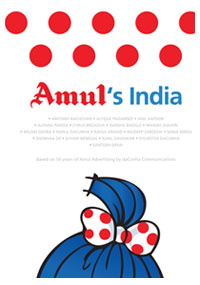
    The Amul ads are no less than a study on modern day India thus DY Works and Harper Collins along with daCunha Communications has come out with the Amul book titled Amul’s India which is an anthology of Amul advertising plus eminent people giving their take of the advertising.


    Says Rahul da Cunha on the reason behind coming up with the book, “As an agency we’ve been wanting to bring out book tracking this amazing campaign, its history, controversies, anecdotes  and the rest associated with the book. Attempts with several publishers failed and then DY Works and Harper Collins came along, and the fit seemed right.”


    The book took about a year to take shape and be published. The objective is to track the amazing history of the Amul outdoor campaign from its inception to its present avatar thereby tracking the history of India


    Alpana Parida, President, DY Works commenting on the design aspects that were kept in mind while working on this book, said, “The book had to be accessible to a large number of readers and thus we had to keep it a paperback. But we were clear that we needed a unique design element that would hold the diverse essays from different personalities on various topics together. The polka dots were a clear winner as a continuity device - as they are unique to the Amul girl. You do not see another brand in India using these red dots. The design had to do justice to the hoardings and not over power them. Eventually, we believe the design has enhanced the content of the book greatly.”


    She added that for her the chasing up all the celebrity contributors was the toughest part. She said, “There were many who refused as there was no remuneration for the writers. There were many who were so difficult to get hold of. We would have loved to get Aamir Khan, SRK, Ratan Tata and Rahul Gandhi - but our attempts to reach them were unsuccessful. To our utter delight, Amitabh Bachchan was the easiest to get hold of - and he agreed to contribute to the book immediately. Rajdeep Sardesai wrote a beautiful piece with a personal memory about an obituary to his dad. Harsha Bhogle was all over the map and it was hard to pin him down - but he graciously obliged somewhere between London and Australia. And there were many days spent with Santosh Desai to shape the definitive content for the essay that would be central to the book. Without doubt - the book had more moving parts than pages! We pulled it off eventually.”


    The book will be officially launched on June 11 in Mumbai and June 13 in Delhi.

    While Amul advertising is being continued for decades has there been a change in the way the advertising is being done today? Mr Sylvester da Cunha points out that there are two main differences that he can clearly see. One is that the hoardings are being created at a much faster pace. In the ’70s there was one hoarding every month or so and now they are done almost daily for some city or the other. Another is that as we live in rougher, edgier, more controversial times, the hoardings and the messages too are reflecting these times.


    Adds Mr Rahul da Cunha, “I think two things have changed one definitely is our speed of response to an event has become faster. And the tone of our hoardings has become edgier. We are not scared to take on an issue however controversial. We are careful however not to be malicious.”


    On the periodicity, he says, “Actually it’s not every week, it’s now almost every two days. So much is now happening in our crazy country – be it politics, sport, Bollywood, popular culture and we’d like to comment on all of it. So one new hoarding leaves the agency almost every day.”


    Recalling one of the recent incident that happened, Mr Sylvester da Cunha says, “The funniest incident was in 2009, when we ran a hoarding criticising Satyam for the terrible scam it had wreaked on the Indian public, to the tune of Rs 7000 crore. We said ‘Satyam Sharam Scandalam’ and we got a letter from the Satyam board, telling us how ‘wounded’ they were, and if we didn’t withdraw the hoarding, they would advise all Satyam employees to stop using Amul products! We were at a loss of words.”


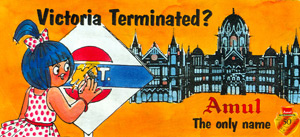
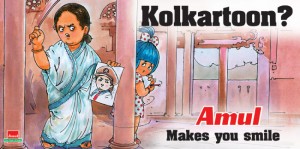
    Mr Rahul da Cunha picks up his three favorite Amul ads which include ‘Victoria Termianted” when VT got renamed, the obituary we did recently for cartoonist Mario Miranda and the one done recently on Mamata Banerjee’s response to the controversial cartoon ‘KOLKARTOON!”


    Giving her take on Amul ads, Priti Nair of Curry-Nation, says, “I feel they take a nice lopsided view of the mess we face day in and day out. They at least put a smile on hopeless situations because quite frankly there is nothing you can do but feel angry and frustrated by the stupidity you fall prey to. Their potshots at least lighten you up most times.”


    “Also as advertisers we know if Amul picks on a topic it is the hot topic or for instance if they pick on your ad you feel quite happy. I know we felt damn good when they did a spoof on Balbir Pasha and Manjula. That’s the power of the communication medium they have chosen and stuck to for years,” adds Ms Nair.


    Says Anil Nair, CEO and Managing Partner, Law & Kenneth India, “Amul is the only brand which has truly done what many brands have preached about, ‘connecting with consumers life beyond making transactions’. Advertising is applied anthropology and hence (should) reflect the society as it evolves. Amul hoardings have done that for years, consistently. Amul hoardings bring huge credibility and pride to an otherwise frowned upon industry. Am a fan… No, am an eternal fan.”


    Prathap Suthan, Founding Member of Bang in the Middle, believes Amul manages to always come up with a perspective that brightens up the subject. “There is an innocence that is welcome no matter the event or subject. A spot of optimism that works like charm, and often disarms the audience,” Mr Suthan says. “With its almost topical and quick changes, it adds to the daily relevance that butter is all about. So much so, like the butter it sells, its advertising has grown to become almost a habit for India.”

    Well said.


  • Out with a Bang! Prathap Suthan, Naresh Gupta etc launch new agency

    By A Correspondent


    Prathap Suthan
    Naresh Gupta
    Viral Pandya
    Manoj Deb
    Sabu Paul

    It was one of the biggest news to have hit adland in March 2011 when Cheil Worldwide’s NCD Prathap Suthan quit his agency to join lesser-known direct-to-consumer remote tech support company iYogi as its Chief Creative Officer. It was seen as an unexpected move by the creative maverick who was responsible for creating some startling work for Cheil Worldwide in India. But after lying low-profile with its activities and having stayed away from the advertising glitz and glam for most part, Suthan (or Pat, as he is affectionately called) made an interesting announcement on Monday when he announced branching out from iYogi to float ‘Bang in the Middle’ as an independent agency.


    Started in early 2011, the division headed by Prathap Suthan was set up as the in-house branding, advertising and communication team at iYogi. The unit managed campaigns for the company, primarily leveraging digital media across North America, the United Kingdom, Middle East and Australia. After 12 months, and over 20 campaigns later, iYogi’s in-house agency is ready to step out and offer its services to a wider set of brands. The agency will now offer expertise in brand advisory, communication design and advertising to Indian and global corporations.


    To be based out of Gurgaon, the team line-up includes some of the best names in the business including Prathap Suthan, Naresh Gupta, Viral Pandya, Manoj Deb, and Sabu Paul. Speaking about the team, Naresh Gupta, Managing Partner, Bang in the Middle, said: “All the existing employees who worked in the branding department of iYogi are the founding members of BITM. Prathap is a creative leader of outstanding pedigree. I, myself, have worked for a spectrum of clients. Viral Pandya is a celebrated designer who has won every possible international accolade and Manoj Deb is a celebrated art director. Between the four of us we have over 100 years of experience across geographies. The team we have right now is the best that is in the business.”


    When asked on the funding pattern being adopted by the company, Gupta said: “There is an external investor who is helping us make the unit operate independently. Our approach is to marry the strengths of new media with the traditional roles of mass media. We have an industry tested model of working and we have real life experience of making it work for the brands.”


    In a statement to MxM India, Prathap Suthan, Managing Partner, Bang in the Middle, said: “Despite an overcrowded communication services market, India needs a new kind of communication agency. India is booming with opportunity. Increasingly Indian brands are spreading their wings to global opportunities and new age businesses are coming up all over the country bustling with enterprise, ambition and opportunity. There is an increasingly younger nation out there with global ambitions and enterprises are demanding better communication solutions.”


    On his decision to branch out from iYogi, he said: “Organized advertising is getting weaker and getting scattered across many areas, giving rise to independent agencies. We believe that Bang in the Middle comes with the right experience to exploit that opportunity.”


    The agency’s services span across brand advisory and campaign design and advertising across platforms and customer touch-points. Bang in the Middle will assist brands in establishing a deeper engagement with customers by creating an ecosystem from visual language to design guidelines and interaction across mediums. It will also assist brands create holistic communications approaches that will reduce dependency on traditional media and leverage digital to gain market share.


    As of now, the company just has a single client to boast of but are said to be in advanced talks with a few clients already. But that really may not be an issue for BITM, who have some experienced team that have bagged big clients in the past. What will now matter for the agency is to be seen as a new and small creative force to be reckoned with. Asserts Gupta: “We believe the age of independents is here. The biggest thing going for them is flat structure, focused delivery and hands-on experience of senior people.”


    That seems to be an assurance high on confidence and competency too. Given the run that small independents are having at the awards, a new addition will only make life for other agencies, especially the biggies, a tad more challenging. Only time will tell if BITM has it in them to challenge leadership norm and emerge a superior agency in the future.

     

  • Power of +ve campaigning: Why SP won & BSP, Cong lost

    By Rajiv Singh


    Political pundits talk about caste factor, anti-incumbency, development, corruption and so on to explain Tuesday’s assembly election results, but some advertising experts give a completely different explanation – negative advertising failed and positive campaigning clicked.


    It’s open to debate if people vote on the basis of advertisements or not, but look at some campaigns:

    “Utho, jaago aur badlo” (Rise, awaken and change) and “Jawab hum denge” (We will give a befitting reply) – the taglines used by the Congress to woo voters in Uttar Pradesh flopped.


    Power of Positive Campaigning

    Jeeta and Jaggi – the toon characters used by the Congress to connect with the people in Punjab by poking fun at the Badal government – too failed.


    “Na hatya, na phiroti, na balatkaar, hum denge saaf suthri sarkaar” (No murder, extortion or rape, we would give you a clean government) – the BJP’s election plank in Uttar Pradesh didn’t revive the fortunes of the party.


    Now, look at what worked: “Umeed ki cycle” (Bicycle of hope), the tagline of Samajwadi Party’s successful campaign in Uttar Pradesh.


    “While Mayawati’s BSP and Rahul Gandhi-led Congress were busy fighting each other, the SP talked about problems faced by the aam aadmi,” said veteran adman KV Sridhar.


    “That’s why their campaign clicked; it didn’t take a potshot or dig at the rival parties,” added the national creative director of Leo Burnett.


    One of the TV commercials made by Arkash Entertainment – the Mumbai-based production house in charge of Samajwadi Party’s campaign – shows a cycle racing past an elephant.


    “We wanted to say something without saying anything,” said Arjun Sablok, the creative head of Arkash Entertainment, who made his debut in political advertising with this campaign.


    “Our campaign focused on positives and avoided mudslinging,” added the 45-year-old adman and filmmaker who first met Akhilesh Yadav three years ago in a UP village. Saurabh Uboweja, director of brand consulting firm Brands of Desire, said this approach worked because the voter is not in a negative mindset.


    “Voters have seen growth recently as a general positive economic environment reverberates in the nation. When one has a positive mindset in general, positive campaigning linked to higher growth will tend to prove more beneficial than dragging voters into the past,” he said.


    Mr Sablok – who has made a film with Hrithik Roshan and a music video with Lata Mangeshkar besides several commercials with leading Bollywood actors – said he started preparations for his first political campaign a good nine months before the elections. An outsider in Uttar Pradesh, he travelled extensively to know about the ground realities there. And he used real-life situations and people.


    In one of the television commercials, for example, Raju, a rickshaw puller, talks about his problem of working everyday to pay back the loan and then a voiceover says the Samajwadi Party will implement an insurance programme for rickshaw pullers. Other such characters used in the campaign include Buddhiram, a farmer lamenting about lack of electricity, and Neetu, a housewife whose husband works in another state because of lack of jobs in Uttar Pradesh.


    Mr Sridhar of Leo Burnett said this smart and straightforward campaign worked at a time when Mayawati and Rahul Gandhi were busy blaming each other.

    So, in his mind, Rahul Gandhi’s relentless campaigning failed to revive the Congress in the country’s most populous state partly because the party’s advertisements failed to connect with people.

    The Congress campaign in UP, created by Percept/H, talked about the misrule of the Mayawati government and asked people to give Congress a chance. “The campaign had no insight into people’s lives,” said Mr Sridhar. Negative campaigning proved disastrous for the Congress in Punjab too, a state that had never before voted the ruling party back to power.

    The opposition party’s campaign, created by Delhi-based advertising agency Crayons, featured toon characters Jeeta and Jaggi who talked about corruption and other problems under the ruling Shiromani Akali Dal-BJP government.

    This failed to pull down the Badal government.

    The Akalis’ campaign, handled by New Delhi-based agency Brand Curry, highlighted the development work done by the government.

    “Over the past few years, there has been a demographic and psychographic change in the profile of voters. In terms of demographic change, young voters have emerged, who abhor negative campaigning,” said Brand Curry MD Subrata Chakraborty. “In fact, even the old voters have no appetite for advertisements that look down upon others,” he added.

    The BJP, which rose to national prominence in early 1990s with its Ram Janmabhoomi movement centred on Ayodhya in Uttar Pradesh, lost the plot in the state not only in terms of negative slogans but also due to lack of synergy between its print and television campaigns. “The TV campaign was not in sync with the print campaign,” said a BJP leader in the state.

    One of the TV commercials showed famine-like situation in the state and starving people, he said, requesting anonymity. “But this is not the ground reality. This election was not fought on starvation and malnutrition…This left the people cold.”

    Sushil Pandit, owner of Hive Communications, the ad agency that handled the print campaign for the BJP in UP, said the party highlighted too many issues without a clear focus. “There was no consistency in approach,” he added.

    But experts say it’s up to the agencies to help political parties with a nice strategy.

    “Political advertising is driven by politicians, and not the ad agency, but the strategy should come from agency,” said Prathap Suthan, the creative mind behind the ‘India Shining’ and ‘Incredible India’ campaigns and chief creative officer of tech support firm iYogi.

    Source: The Economic Times

    Copyright © 2012, Bennett, Coleman & Co. Ltd. All Rights Reserved


  • Big brands use TV stars to connect with masses

    By Rajiv Singh


    Now, Malhotras can raise a toast. After gulping down countless cups of tea during umpteen meetings over the last few months, this middle class family in North West Delhi has finally found a ‘perfect’ match for their son. Rashmi, their prospective daughter-in-law, is not only beautiful but also has a pet name ‘Toasty’ – something that instantly clicked with the Malhotras.


    Reason: The other Toasty they know is a lovable daughter-in-law, played by Aishwarya Sakhuja in Sony’s TV fiction Saas Bina Sasural, who keeps her family together. “I am sure Rashmi has similar qualities like Toasty,” said an elated Mrs Malhotra.


    Malhotras are not alone in getting influenced by serial characters. There are thousands of such people across the country. And several marketers are now waking up to the potential of small screen stars as brand endorsers.


    Over the last six months, a slew of brands including Cadbury, Emami, Hyundai, Maruti, Dulux, Red Label and Lux has roped in popular TV celebrities such as Sakhuja and Hussain Kuwajerwala who can connect well with people at a fraction of cost of hiring a popular Bollywood actor.


    “It’s a great strategic move by brands. The TV characters have a strong resonance with the viewers, especially the middle class that relates to the values shown in the serials,” said Prathap Suthan, an advertising industry veteran who created the government’s ‘India Shining’ and ‘Incredible India’ campaigns and is now the chief creative officer of iYogi, an online technical support services provider.


    Saurabh Uboweja, director of brand consulting firm Brands of Desire, said that by casting TV stars with successful running soaps, advertisers can have the dual advantage of both role and star endorsement for a sensible signing amount: “They get two candies for the price of one.”


    MONEY MATTERS

    While TV celebrities do have their own large fan following, their relatively lower endorsement fee is a huge plus for several companies in the present tough business environment where subdued consumer sentiments and rising costs have hit sales of several products.


    One such company is Maruti Suzuki, the country’s largest carmaker that has had a tough last year and expects its sales to fall 11 per cent in the year ending March.

    “In the current cost-cutting environment, it makes more sense to hire TV stars,” said Shashank Srivastava, Maruti Suzuki Chief General Manager (Marketing). The carmaker roped in TV celebrity Anita Hassanandini this month to feature in its Swift Dzire commercial. Last December, it signed Kavita Kaushik and Rajesh Kumar from SAB TV to endorse its multi-purpose vehicle, Eeco.


    “Selling a car is not like selling a Bournvita,” said Mr Srivastava. “So, there’s no point in shelling out fortune in having big Bollywood celebrities.” Big celebrities have not really worked for Maruti. Father-son duo of Amitabh and Abhishek Bachchan could not boost its Versa sales in 2000-2001. Maruti has also had actor-director Farhan Akhtar and actor R Madhavan to endorse A-Star and Wagon R, respectively, but with limited success.


    CLOSER TO LIFE

    Marketers also say it’s easier for people to relate to TV celebrities than big screen stars. “While a Bollywood celebrity projects an image which is aspirational and larger than life, TV celebrities relate closer to the real life of the viewers and are hence becoming extremely popular,” said Krishna Mohan, CEO of FMCG firm Emami, which signed Suhana of Star Plus’ serial Sasuraal Genda Phool aka Ragini Khanna in November last to endorse its moisturiser Vasocare.


    Unlike film stars, small screen celebrities are identified with the characters they portray in popular long-run serials. So people relate them to the values their characters hold, like a committed housewife, an ideal husband, a perfect daughter… ¦ It helps brands project a distinct identity by endorsing them.


    Late last year, paints brand Dulux rolled out a media innovation by tying up with three popular television serials to create vignettes that resonate with their thematic campaign, ‘Apne Rang Chalakne Do’. AkzoNobel’s brand showed the lead pairs from Star TV soaps Yeh Rishta Kya Kehlata Hai and Iss Pyar Ko Kya Naam Doon, and Sony’s Saas Bina Sasural in its commercial.


    “Since daily soaps are a big draw in India and the consumer follows their journey closely, the protagonists of the daily shows had the appeal that was needed to propel the idea,” said Pushkar Jain, marketing manager for Dulux at AkzoNobel India.


    However, there’s a flip side of using TV celebrities as well, said Mr Uboweja: “Brands want to capture these stars and their soaps when they are running hot. But the shelf life for both is fairly short”. “This ad strategy is a bit like instant noodles, good enough to fill the stomach but not enough to satiate the appetite,” he added.


    Source:The Economic Times

    Copyright © 2012, Bennett, Coleman & Co. Ltd. All Rights Reserved


  • Bajaj takes a dig at Hero’s Passion & Splendor in its latest Discover 125 ad

    By Rajiv Singh & Bhanu Pande


    “We have not yet beaten Bajaj, they’ve just been overtaken by us,” said Brijmohan Lall Munjal in 2001, when the reticent Munjal family patriarch and chairman of Hero Honda understated the fact that his company sold more two-wheelers than Bajaj Auto.


    Fast forward to 2012.

    The latest TV commercial for Discover 125 takes a veiled dig at Hero’s flagship brands Passion and Splendor as the old bonhomie between two industrial giants gives way to no-holds-barred marketing strategy in a fiercely competitive market.


    Bajaj Auto MD Rajiv Bajaj said the advertisement reflects a strategic repositioning and it’s not about Hero: “Our campaign is based on a consumer research interpretation and has nothing to do with taking on Hero”.


    That’s the official line. But most people who have watched the commercial feel it’s unmistakably targeted at Hero MotoCorp, the new entity formed after the Munjal family-owned Hero bought out its 27-year long partner Honda last year.


    Industry watchers say the breakup with Honda has weakened the market leader in the world’s second-largest two-wheeler market and Bajaj Auto wants to make the most of it.

    “Now Hero is without the safety helmet of Honda, so it is the best time for Bajaj to inflict maximum damage on the leader that is weak and vulnerable,” ,” said Prathap Suthan, chief creative officer of iYogi, a global remote tech support company and the man who created the government’s ‘India Shining’ and ‘Incredible India’ campaigns.


    KYUN, HERO?

    The advertisement shows three men owning different commuter bikes (seen in the background) say they always desired Discover 125, but settled for something lesser to satisfy father or wife, or to avoid annoying boss.


    They sound apologetic and wistful about their bikes. When they name them, a bleep sinks their voice, but it leaves enough for viewers to guess they are referring to Hero’s Splendor or Passion. “Discover nahin hai, par chalta hai,” each of them says. And the commercial, created by Ogilvy & Mather, ends with voice over, “Discover 125, ye chalta nahin, daudta hai.”


    The only previous time a Bajaj commercial took on Hero Honda was back in the early 1990s when a campaign for its 4s Champion teased Hero Honda with a tagline, “Kyun Hero?”


    Bajaj Auto President, Motorcycles, K Srinivas said that the advertisement does not take a dig at any rival, but wouldn’t comment on the bleep sound.


    DOING A BMW

    Rajiv Bajaj says his company wants to do what luxury carmaker BMW did when it entered the US 30 years ago – reposition the leader: “Mercedes was already an established player. So BMW said that Mercedes is the ultimate sitting machine, while BMW is the ultimate driving machine.”


    Now Bajaj wants to do something similar. “As part of an internal discussion, we felt that if you are not a leader, position yourself and re-position the leader by projecting yourself as the opposite of a leader… that’s what we are doing,” said Mr Bajaj.


    With Discover 125, Bajaj seeks a large chunk in the biggest segment of the two-wheeler market. Discover competes in the executive commuter segment – or bikes in Rs40,000-50,000 price range – that accounts for two-thirds of the two-wheeler market that sells more than a million units a year. This segment is dominated by Splendor and Passion. But that may soon change.


    BATTLE ROYALE

    “Splendor and Passion have not changed at all over the last few years, except maybe a tweak in graphics. They are heading the way Bajaj Chetak did,” said Adil Jal Darukhanawala, Editor, Zigwheels. One of the most popular scooters in the country, Chetak was discontinued in 2009.


    Analysts say Hero is grappling on technology front after the exit of Honda and this opens up the largest segment to competitors like Bajaj Auto and Honda Motorcycle & Scooter India that have planned aggressive model refurbishment and new launches.


    “For the first time in a decade, Bajaj is sniffing an opportunity to challenge the numero uno,” said Saurabh Uboweja, director of brand consulting firm Brands of Desire.


    He said that Bajaj’s take on Hero MotoCorp is deliberate and well timed: “By projecting buyers of Hero bikes as meek and compromising, Bajaj is also highlighting the weaknesses of Hero MotoCorp-withdrawal of Honda and its tech platform.” Without Honda, Hero might struggle to launch path-breaking products like it did in the past.


    “Hero has money but no technology. This is something that Bajaj is going to take advantage of with its slew of new models blitzkrieg that it has lined up this year,” said Mr Darukhanawala. The Discover ad is in line with Bajaj Auto’s aggressive stance in the market. Last year, one of its TVCs proclaimed that ‘Pulsar sells five times more than any Japanese sports bike in India’. With inputs from Lijee Philip


    Source:The Economic Times

    Copyright © 2012, Bennett, Coleman & Co. Ltd. All Rights Reserved


  • Prathap Suthan: 8 fun ideas for Republic Day without being unpatriotic [Recall]


    This was first carried on MxMIndia in January 2012. Save the Kolaveri context, all of it is still relevant and we felt it was worth carrying given that it’s Republic Day on Sunday.


    By Prathap Suthan


    I better walk the tight rope here. Caught as we are between two completely disconnected groups of Indians.


    One is a grizzled leadership that’s way too hemmed in, frugal, and touchy about the tricolour and its marching bells and regimented whistles.


    And the second is a younger generation who are anything but bothered with the antediluvian huff we make about pride and other mushy matters of the soul.


    Come to think of it, in these days of viral Kolaveri, the Republic Day and its patriotism shouldn’t continue to be seen as the preserve of those sitting behind bulletproof glass.


    Our Republic Day shouldn’t lie trapped in strict Government imagery. We must ease up on the straitjacket we have strapped ourselves in. Our nation is free. Not bound.


    It must be the day ofIndia. Celebrated with more freedom and fun. It must be more popular and populist. The democracy should celebrate it. Less stiffness, and more abandon.


    Love for the land should be much more than just standing ramrod straight when the national anthem plays. Loosen up people. We cannot be snoozing all day on the 26th.


    So what can we do to inject fun into this grave day? Please add your own versions.


    Though please don’t skid over the edge, and start redefining bikinis. Some amount of restraint is good. Atleast in public.


    1. Instead of curling into your couch to watch the parade on TV, get your society to hire a big screen. Watch the parade like an IPL final. Get some hot samosas and jalebis. Give flags to all the kids, and watch the soldiers pound the Rajpath. I can guarantee monster goosebumps.


    2. Ride a horse. Get off your cars and bikes, and live true horsepower. Get on the back of an old unemployed filly and relive a bit of royalty on hooves. I am sure you won’t be able to gallop. But I am pretty sure that fine equine discretion will lead you to the difference between a canter and a trot. Pay the local ghodawalla some attention. I am sure he will smile a wider smile.


    3. Invent a patriotic dish. Give it the finest name possible. Buy from theRepublicofChicken. Or do something that needs a handful of saffron. Ouch. Don’t do the tricolour rigmarole pudding. It’s too cliched. Make the Dal of Thunder, The Saffron Inquisition, or the Great Onion of Panipat.


    4. Step out of home, and go and meet your neighbourhood fauji. Remember them. Those gallant valiant men with moustaches curled. Also do shake hands with the neighbourhood cops. They might expect a rolled up currency note. Instead, wish them a great day.


    5. Fight for the flag-raising event. Let a younger member raise the flag. Why do we depend on brash old men? The nation belongs to the little ones. Instill nationalism early in their lives. They will never forget. They will be grateful. Jai Hind!


    6. Add a flourish of Indianess to the Armani ensemble you wear everyday. Applies to both originals and fakes. Or offset the affected kurta you will stuff yourself into on Republic Day. Basically, try a new thing, and wear a Gandhi cap. You could wear it on your monkey cap if you are a devout Bangla. But there’s something earthy that happens when you switch to khadi. Gurkha cap also doesn’t work for me.


    7. I think we should make an effort to commercialize the day. Why waste a full day sitting at home? Imagine the plight of the millions people who eke out their living on a daily basis. For them, it’s a forced holiday. Maybe we should take the lead and get the great T-shirt sale going. Or we should begin a series of Republic Day picnics; initiate a nationwide drive to buy a compulsory flag for all homes, or do something else that will go to annually fund war widows or something as noble.


    8. How come there’s no tradition connected to this day? Barring that really long speech the society elder will deliver. In which he will talk more about himself, his childhood, how Nehru almost shook his hand, and how he braved British boots. Maybe we should all speak in Hindi that day. Maybe we should only eat Indian food. Maybe we should have a fireworks show where the whole city is invited. Or maybe we will have a citizen’s parade in the city stadium.


    Whatever we choose to do, we must celebrate in our own way. We must take the celebration to the people. We must make it more meaningful and involving. Otherwise this country’s pride will get locked up inside octogenarian ministries. And we will all have breakfast at 3 pm.


    Prathap Suthan is the Chief Creative Officer at iYogi.