Tag: Pratap Bose

  • Thinking Big with The Social Street


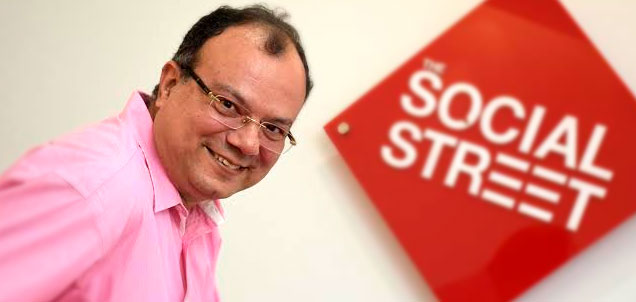
    If you drive around the arteries of Mumbai, the billboards – some fifty of them – tell you the story. Pratap Bose, former Chief Operating Officer of the DDB Mudra group, has moved to the fast lane. And with a bang. Last Monday, Bose announced that he along with outdoor and experiential specialist Mandeep Malhotra, Arjun Reddy an entrepreneur who owns and runs a diversified portfolio of businesses, and Pradeep Uppalapati, who was Senior Director and India Lead for Global Corporate Development Team at Accenture have teamed up to launch ‘The Social Street’, billed as India’s maiden advertising conglomerate. Positioned as a digitally driven agency, traditional creative advertising, digital and social media will be added on to the bouquet of offerings by the end of the financial year along with more offices across the country.  In an interview with Pradyuman Maheshwari and Dyanne Coelho, Bose that he believes starting big, with multiple types of businesses, several offices and many big-ticket clients, all within a few months.


    What’s the journey been like from the time you left DDB Mudra. And when did you start thinking about this venture?

    To be honest, when I left at the end of April last year, the natural tendency was to reach out to headhunters, and find out what the offerings and options were.


    So you had nothing in hand when you left?

    No. I had no inkling that I was going to start my own agency. That’s a thing you do when you’re still working. The thought was there, but honestly when I left, the first thing was that headhunters started calling within the first 10 days [with offers].


    And you were getting offers until as late as December 2014?

    Yes, in fact, I was getting calls until I announced the venture. I was flying to Malaysia, Hong Kong, Singapore, New York for meetings. But on one flight back from Singapore, after an interview that went very well and the company pretty much confirmed me for a regional position, I asked myself: do I really want to do the same thing for another day? You live month by month, not even quarter by quarter. It’s all about the numbers at the end of the day. I sort of snapped and decided that I don’t want to do this again. I’ve done it for 24-odd years, and if there is a better option, then I’ll look at it. I got a few client calls as well which were interesting, but at the end of the day it’s one client, a few brands, and it didn’t excite me enough.


    So when did you actually think of setting Social Street?

    Mandeep and I went to Cannes in June, and on one drunken afternoon we went to that love bridge and proclaimed our undying love for each other and the business. When we came back, we said it’s probably a good idea that we should start something of our own. But at that point of time, we had no inkling of how we were going to do it.


    You went to Cannes on your own?

    Yeah, I have been going there for some years. All the global heads and CEOs were there and I had a lot of meetings and interviews lined up. That was two months after I’d left, so the time was also right. But around then my mother was detected with cancer. That was in July. I brought her to Mumbai and was looking after her, but then she passed away a day before my birthday. That shattered me and any thoughts I had of starting anything on my own, fell by the wayside. At the end of October, given that my gardening leave and contract with Mudra ends in December and I need to move now. That’s when I sort of started putting things together. I envisaged what sort of agency I wanted and met every probable Venture Capital firm in the country, because I needed a certain amount of money to start up.


    I heard from VCs that you were asking for loads of money…

    Yes I was asking for a lot of money because I’m not the type of person who’s going to start with 10 people, build an agency, win your first client, then grow with it and add people. I think if you’re really serious, start big and take the risk. If you’re sure of your business model and you know your numbers, then there’s no point in starting small. Also, because of the kind of businesses we are in and the clients we chase want scale. Large clients want scale in terms of ideas and capabilities. The fact that we’re opening up three offices simultaneously, which not many people do, and then scaling up to 140-150 people within a year or less, needs a considerable amount of funding. I spent a lot of time trying to work out the business model. You can have any number of great launches, but at the end of the day, you have to have a business that works. I spent a lot of time looking at areas that are high-growth margin businesses, or those that have the potential to grow for the next 10 years in the space where we are.


    Let me give you an example, in the rural space. I don’t think there are more than four rural agencies in this country. It’s virgin territory, with no competition. That’s the space to be in, because that is the future. If you’ve got a great offering, I think there’s a lot of money to be made, especially with not too much competition. So it makes it easy to grow. Why will I not be excited about digital? There’s no finite definition of what is digital, and technologies are changing so fast. So I will not start and build a digital agency; it doesn’t make sense. I will go and acquire somebody.


    And finally you got somebody who is not a typical VC…

    Yes, so I decided two months after meeting every VC, that I was just making them more knowledgeable about my business. VCs come with a huge chip on the shoulder saying ‘since I’m giving you the money, I’m your Lord and master’, and they contribute very little to the business. I decided that VCs are not the route I want to take. Therefore, I went around looking for like-minded individuals who trusted and believed in the business that I was in, and were prepared to stay with me for the long term. I ended up with a short list of about three or four people who were happy to fund me.


    So how active are Pradeep and Arjun going to be in the business?

    So Pradeep has worked for 11 years with Accenture. I think he spent eight years in Australia, and three in India. Obviously he’s the CFO/analytics/strategic investor, and Arjun is the part of a larger conglomerate. He owns hotels and varied businesses, and is on the retail side of the business.


    Have you also put in any money?

    Yes.


    Is this a long-term investment or will your investor-partners and yourself sell out eventually?

    No I don’t think you start a business with the idea that you’re going to sell out. If someone is starting a business with the idea that he is going to sell out, then I don’t think he should be starting a business in the first place. Does that thought occur to you? I’d be lying if I said no. But I think right now that’s far from anyone’s thought.


    So this happened April-end, May first week. How many people have joined you from DDB Mudra?

    I’ve lost count. But I think the media is making too much of an issue of it.


    Come on, there is an issue.

    There isn’t (laughs).


    Okay, but what you’ve started is like a MudraMax, right?

    I think people make that comparison. But I’ve already been there and done MudraMax. I don’t want to create MudraMax 2; that’s not my intention.


    Things like content, digital and social is pretty big for us and will become very big, but was never part of MudraMax, nor was branded content or entertainment, sports marketing etc. We’re looking at the businesses very differently and, unfortunately, not very many people are able to actually see a USP. So we’re in this space, and I’ve been in this business long enough, and the one guy who really taught me what the real power of integration is with clients was Ranjan Kapur.


    Did you go to him for funding, because he is also a VC in his personal capacity?

    No. Ranjan has always been my boss and mentor. I have the most immense respect for him as an individual, so I did talk to him in his personal capacity.


    Given that you are an outdoor-experiential business guru, isn’t that’s going to be your mainstay?

    No, it won’t. We have all the operations right. We have all of the skillsets. So we into out-of-home, rural, events, promotions, trade marketing, retail, shopper, youth marketing, media, branded content etc.


    The way I see it, in the next three years, I think retail, sports, branded content are going to be the big players and not the other businesses. Because the big money and opportunity are in those areas. The retail industry is probably five times bigger than the entire communications and advertising business. Sports entertainment is massive. Exhibitions, though we’re not into it, is part and parcel of the experiential and retail business. It’s probably bigger than anyone can imagine.


    These are areas that you’ve not typically been specialists in…

    No, but I’m saying that’s the opportunity. At the end of the day, most agencies see themselves as B2B and never B2C; they’re never in direct contact with consumers. I think with the offering that we have, and the use of technology and the ability on great ideation, for me the biggest challenge would be in the B2C area.


    So Social Street isn’t going to an outdoor specialist?

    No, outdoor is a medium, as much as digital is a medium. It’s part of a media plan. It never works in isolation. Twenty-five years ago, I brought the specialisation into this country. I created the AOR concept. I started my career with it and I’m very proud of that.


    But outdoor is or was 12-15 per cent of DDB Mudra’s revenues?

    It always has been profitable. It was an extremely profitable part of Ogilvy when I was there. I’m not saying that that is not going to be a part of my business, it is. I think what’s important is the positioning in which we go with clients. It’s not that we’re experts in all of those areas. I think the biggest USP for us is that we’re able to string it together with a team that is a combination of excellent creative people within those tiers. Not typical agency people who are making print and TV ads. Everyone’s asking me why I have media in this whole business. I think people don’t realise that media for me is the kind of glue that binds everything together.


    Do [clients] take advice from people from a creative consultancy or from a marketing consultancy service like yours?

    Only if you really understand his/her business as well as he does, then are you a trusted partner. You can never do it across clients. You can do it with a select number of may be eight to 10 large clients. But it positions you as far more than just an advertising agency. And the kind of businesses I am, I’m looking at marketing budgets of clients, not advertising budgets. Sometimes marketing budgets are much bigger than advertising.


    How did you come up with the name?

    Actually the biggest problem was that no one had ever talked about finding the name of the agency.


    Getting Josy and Bobby to help was interesting…

    So I came up with about 150 names, and we were struggling for about 45 days to come up with a name, so names from Wasabi, to Deep End Purple and all floated around like those names, but once Mandeep just went to meet Josy and told him we’re struggling for a name. So Josy asked what are the businesses you’re going to be in. So he rambled off some things and Josy just came with The Social Street within like 10 seconds. If you’re in advertising you try and look at the sexiest names. So the name social in terms of what we do, and also the brand manifesto that we wrote out, it fitted, it was kind of very apt for what we did.


    So when was the name finalised?

    About four to five weeks ago.


    Moving on, are your partners ready for the vagaries of the business?

    They understand the business. I think a lot of people ask me because the businesses that are in it, are also very spread out. I’m not risking it; I’m not just a digital or advertising agency where, if something goes wrong, I’m screwed. Because I have so many verticals, even if just three or four fire, I’m home on the numbers.


    You obviously have a lot of senior people and more will come. When are you getting your creative head?

    I think it’ll be a while before I have a creative head, since I’m not an advertising agency. First of all, I don’t think there’s anyone qualified to be a Creative Director for all of the businesses that I have. So I’m not looking at a typical Chief Creative Officer profile.


    So how many clients have you had on Day1? Is the meter running?

    The meter is running, the clock is ticking, the taxi is moving. I would say we have about 15 to 20 clients on board.


    One or two names?

    I don’t want to talk about it.


    But you will eventually?

    Of course I will. I’ll be releasing saying that streetsmart Social Street wins  creative duties of xxx.


    Any targets to yourself? What do you want to achieve?

    I think the role I see — apart from driving business — is to build a strong people-driven agency. A sense of ownership is something that I’m currently driving. I use the word ‘our’ and ‘we’ all the time and every single person that I’ve spoken to I’ve told it’s your agency, our agency.


    So numbers purely in terms of business and revenue targets — any ball park figures?

    I will have about 140-150 people by the end of year, or within nine months of operation. We’ve already hired about 50-odd. We’re across three offices, not just one. If I broke even in 14 months, I’ll be a very happy person.


    And how much will it take to break even?

    You can ask the question in as many ways you want to ask (laughs). When I moved from Ogilvy to DDB, we made huge investments. With no business, we probably hired about 120 people overnight. We broke even in 12 months.


    So do you think you should achieve a Rs 100-200 crore you’re looking at Rs 100 crore in year one or nine months, in billings?

    Yes, billings will be about 250 crore. But billings is not an indication of what your revenue is. However, 250 crores we will definitely do, easily.


    It helps being a finance person to run a business?

    It does, at the end of the day numbers bring a lot of happiness because you can invest and go to exotic locations for conferences. You can go to Barbados, you can go to Port of Spain, you can go to Hawaii, you can only do that if you have profits, you can’t do that if you have no money.


    One last question: Can you, in 140 characters, tell us what ‘The Social Street’ is all about and how are you different?

    It’s difficult to say it in 140 characters. I believe in brevity, so you need to be able to say it on one slide. But because we are so many different businesses, we’re not just one digital or advertising agency. I think we want to be seen as the best-in-class digitally-driven social agency.


    A shorter version of this appeared in dna of brands dated June 29, 2015
     

  • Pratap Bose, 3 others launch The Social Street, a digitally driven ad conglomerate

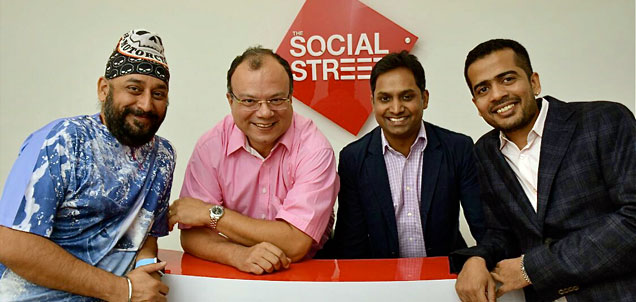
    L to R: Mandeep Malhotra, Pratap Bose Pradeep Uppalapati and Arjun Reddy


    By A Correspondent

    Former DDB Mudra group Chief Operating Officer Pratap Bose, Outdoor and experiential specialist Mandeep Malhotra, Arjun Reddy an entrepreneur with a diversified portfolio of businesses, and Pradeep Uppalapati, who was a Senior Director and India Lead for Accenture’s Global Corporate Development Team have teamed up to launch ‘The Social Street’, billed as India’s maiden advertising conglomerate.

    Positioned as a digitally driven agency, traditional creative advertising, digital and social media will be added on to the bouquet of offerings by the end of the financial year along with more offices across the country.


    Brand Manifesto
    Stories start on the street. They are inspired by the lives of consumers and the interesting mindspaces where they intersect with brands.We find, tell and amplify those stories, no matter what form they take. We make sure that they are powerfully rooted in an authentic brand truth or its point of view.


    Why? It’s simply because these narratives play well on the streets that matter most to your brand and you.


    The ones that people inhabit.


    It may be, the literal ones that they walk beside and drive on. Or the virtual highways that they surf. The verbal paths that connect mouths to ears.Sometimes all of the above. These are the streets that make brands social. And very few can help you navigate them as well as we can.


    Welcome to The Social Street !


    According to communiqué, for now, The Social Street embraces the best in technology processes and systems, across its service offerings which include branded content & entertainment, shopper marketing, media, out-of-home, retail, sports marketing, events and promotions, rural marketing, trade marketing and youth marketing, with operations in Mumbai, Delhi and Bengaluru.  The agency will be headquartered in Goregaon in North West Mumbai, within a stone’s throw from the offices of Ogilvy and GroupM.

    Interestingly, creative gurus Josy Paul, Chairman & CCO, BBDO India and Bobby Pawar, Director & CCO, Publicis South Asia have helped with the name and the brand identity respectively.

    The name ‘The Social Street’ springs from the thought that very brand’s story starts on the street. They are inspired by the lives of consumers. They are born on the crossroads, where the lives of consumers meet the purpose of the brand.

    On the launch of The Social Street, Pratap Bose, Managing Director and Chairman said, “Everybody today wants to start something they can call their own. Something they can create from scratch. And thankfully for me, this dream has come true. It’s been a year of hard work and patience, but the fruits of it have started to pay off. This wouldn’t have been possible without Mandeep, Arjun, Pradeep and all the employees who have put their faith and trust in me. Our aim at The Social Street is to find, tell and amplify the stories that are inspired by the lives of consumers and intersect them with brands. We are here to connect the streets that make brands social. And nobody will be able to navigate these streets as well as we can. Here’s to a crazy ride with The Social Street.”

    Said Mandeep Malhotra, who quit DDB Mudra last month: “I am very excited and am looking forward to being a part of this unique agency and hope to build The Social Street into one of the hottest agencies in the years to come ’’

    Added Pradeep Uppalapati: “Social Street is an agency that is capable of addressing the entire suite of client marketing requirements.  It is all about latest technologies and processes to offer our clients nothing but the best.  Our strong and diverse team is fully geared up with fresh and innovative ideas to serve our clients.  I am really looking forward and excited to be working with Pratap and the team.  This will be one of the most exciting journeys of my professional career so far”

    And this is what Arjun Reddy said in a communique: “ I am personally very excited about this venture and looking forward to the exciting times ahead of all of us. I am very confident that we will be creating immense value to our clients in this space”


  • Is Bobby Pawar quitting Publicis to join Pratap Bose?

    By Pritha Mitra Dasgupta


    The startup bug has bitten the Indian advertising industry and Bobby Pawar, chief creative officer at Publicis Worldwide, is set to join a growing list of high-profile professionals walking out of their jobs to run their own business.


    Over the past six months, at least 10 senior advertising professionals have left, or are leaving, their top-dollar jobs to launch startups, hoping that the expected revival in the economy under a pro-reforms government and increasing importance of digital and social media will present huge opportunities for specialised and niche service providers. And their number is rising.


    Two top industry executives said Pawar will soon quit Publicis to become a creative and equity partner in a new agency being set up by former DDB Mudra COO Pratap Bose.


    Pawar and Mandeep Malhotra, who recently quit as president of DDB MudraMax, will be in the top management of Bose’s new venture, they said.


    “From business strategy to investors to the branding of the new company, Bobby Pawar is hands on with most of the aspects of the new company and Bose consults him on everything,” one of the executives said. Both Pawar and Bose denied it.


    “There is no truth to it. We are just very good friends,” said Bose. Pawar said, “I’m not joining Pratap Bose, therefore I won’t have any stake in his company and my profile in his company will be that of a well-wisher and occasional cheerleader (minus the skirts and pom-poms).” He also denied any plans to quit Publicis in the near future.


    Two industry veterans aware of Pawar’s plans said that even if he quits Publicis, he would have to honour a short-term non-compete clause in his contract. “He can formally join Bose once that ends,” one of them said.


    The trend of top talent breaking away to start their own venture started last year when O&M’s national creative director Abhijit Avasthi quit along with his colleague Sonali Sehgal to launch an independent agency.


    More recently, Kawal Shoor and Navin Talreja quit Ogilvy & Mather to launch an independent venture. Two senior advertising professionals said the surge in entrepreneurship has picked up after the Narendra Modi government came into power with a clear majority, promising growth and development.


    “The current economic environment is most conducive for startups,” one of the professionals said. “There is a lot of hope and optimism and that is what is driving the investor community.”


    Bose, who quit DDB Mudra last year, is floating his own agency. Several top officials in the know also said that Bose is acquiring some equity in Shoor and Talreja’s agency, and, in turn, he is offering them a stake in his company. Talreja and Bose denied it. “Absolutely not,” Talreja said when asked about the equity partnership with Bose.


    While Bose will launch his agency by June 15, Talreja and Shoor will launch theirs by end of June. An industry insider said Talreja and Shoor have already bagged the creative duties of Milton and that Cadbury has given them a project work. “Currently they are on a hiring spree. They have hired two senior creative people from Contract,” the person said.


    Talreja denied that too. “We’re still in the process of incorporating our company. So talks about clients are very premature. And specifically on Milton and Cadbury, the news is untrue,” he said.


    Top industry officials also said Bose has raised around Rs 40 crore from a group of private investors in Bengaluru.


    Bose confirmed that he has raised money but declined disclose the names of investors or the amount he raised. Last week, we wrote about Bose’s new venture, which is being positioned as a communications conglomerate. At least 45-50 of his former colleagues are speculated to have quit DDB Mudra to join his firm.


    Sandeep Goyal, who sold his 26% stake in Dentsu India in 2011 and stayed away from the advertising business for five years owing to a non-compete clause, is also set to return to advertising by the year-end. He has started meeting ad industry executives and some are likely to join with equity, industry insiders said.


    Bobby Pawar was in the news in 2013 when a series scam advertisements — or, ads created by agencies or individuals solely for the purpose of awards and not approved by clients — became highly controversial for its sexually offensive content.


    One of the ads showed Italy’s former prime minister Silvio Berlusconi driving a Ford Figo flashing victory sign as three scantily clad women lie tied up in the trunk. Pawar, who was then JWT India’s chief creative officer and managing partner, and Vijay Simha Vellanki, creative director at Blue Hive, a WPP unit dedicated to managing the Ford business, resigned following an uproar.


    Source:The Economic Times

    Copyright © 2015, Bennett, Coleman & Co. Ltd. All Rights Reserved

    Licensed to republish


  • Samyak Chakrabarty quits DDB Mudra, to start social enterprise. May join Pratap Bose

    By A Correspondent


    Samyak Chakrabarty

    Joining in the flurry of activity at DDB Mudra is Chief Youth Marketer Samyak Chakrabarty who is also reported to have quit the network  along with his team.


    He has been working with DDB Mudra since 2011 when the agency decided to partner and eventually acquired his start-up Electronic Youth Media, billed as India’s first youth marketing & communications agency.


    So what’s next for Samyak: Setting up Social Quotient, a social cause marketing and communications enterprise. Social Quotient has signed a jv with Cineyug to Launch “SamajScope” which will create online content/ conversations for brands around social causes – another first in the industry.


    In addition, he is also looking at taking the youth marketing concept to the next level with former DDB Mudra COO Pratap Bose.


    The recipient of the Young Emvie of the Year 2014 by the Advertising Club, he has figured in Impact magazine’s ‘Top 30 under 30’ list for two years in a row. He has bagged awards for the Tata Nano Student Brand Manger Programme and was associated with Operation Black Dot which enabled 40,000 students to vote for 2014 general elections. He produced the DDB Mudra Group Youth Report and built an “offline social network” of insight seekers and conversations seeders in campuses for clients spreading across 6 metros


  • Pied Piper of DDB Mudra?


    By A Correspondent


    We all know the Pied Piper story, don’t we? Let’s look at one of the Wikipedia descriptors: “In 1284, while the town of Hamelin was suffering from a rat infestation, a Piper dressed in colourful red clothing appeared, claiming to be a rat-catcher. He promised the Mayor a solution to their problem with the rats. The Mayor in turn promised to pay him for the removal of the rats. The Piper accepted, and played his pipe to lure the rats into the Weser River, where all but one drowned. Despite the Piper’s success, the Mayor reneged on his promise and refused to pay him the full sum. The Piper left the town angrily, vowing to return later to take revenge. On Saint John and Paul’s Day, while the Hamelinites were in Church, the Piper returned, dressed in green, like a hunter, playing his pipe, and in so doing attracting the town’s children. One hundred and thirty children followed him out of town… “


    Now read this other story, circa 2014-15. There was the boss of an ad agency. His name: Pratap. He was the promised the top job of the agency (called DDB Mudra?). When he didn’t get it, he quit and decided to set up his own shop and lure a host of employees. Do we call him the Pied Piper of DDB Mudra?


    So wassup at one of the hottest advertising agencies in the country? Is MudraMax, the division handling the media buying and planning, outdoor (OOH), experiential and retail businesses facing extreme heat? Although there are no official numbers available, some senior DDB Mudra (DDBM) staff currently in and outside of the system suggest that around 50 percent of the total DDBM revenues would come from MudraMax clients.


    Madhukar Kamath

    In many ways what’s being played out now was expected to happen ever since former Chief Operating Officer of the group Pratap Bose put in his papers last year after CEO and MD Madhukar Kamath was given an extension of four years. He was clearly miffed at losing out. “Everyone knows I was looking at the Top Job. There were promises made. I am not the kind of guy who will wait for four years,” he told MxMIndia then.


    Now, after having stitched up his funding and with some prized clients in the kitty, Bose has gone on the offensive. Though a confidante insists it’s not a case of revenge or showing DDBM the finger. “It was better for him to exit than bicker. If he doesn’t call people whom he trusts to his own venture, who will he get? There was a non-compete clause till the end of the year and that allowed him enough time to read, attend to chores he never did when he was working, look at Advertising Club work and travel.” Plus some brilliant wildlife photography, we may add.


    Mandeep Malhotra

    Although the parent Ominicom-owned DDB Mudra Group agency was quick to restructure operations after the exit of Mandeep Malhotra, President, DDB MudraMax on Monday, the damage was done. Malhotra was reportedly on a holiday last week, and his quitting was sudden.


    A townhall was conducted on the MudraMax floor of the agency’s headquarters in North Central Mumbai where Kamath reportedly said: “Twenty will go, 20 new will come, I’m not bothered.” Kamath later hinted at activities hampering the interests of the organisation happening on the floor. “We clear don’t want that to happen,” he said.


    When asked whether it was true that MudraMax may be merged with OMD, as it was rumoured, he scoffed at the suggestion. “No way,” he exclaimed.


    Meanwhile, Malhotra is expected to join Bose as Managing Partner in his proposed venture. It is learnt many others from within the DDB Mudra fold and outside of it will join in.


    And at MudraMax, Executive Directors Sathyamurthy Namakkal and Aneil ‘Andy’ Deepak were handed additional charge of the outdoor and experiential businesses respectively and TracyLocke head of business and operations Sameer Mehta will now report directly to Kamath.


    Kamath also told MxMIndia that it was business as usual and rubbished rumours that employees were asked to sign affidavits to pledge their continuance or leave the organisation. While MxMIndia hasn’t been able to verify claims from either side, at least one of the employees who has moved out very emphatically said that they were shown the ‘sign or else’ undertakings.


    Meanwhile, Kamath says just 15 staffers have quit, though one of the employees who has quit said the number will be in the range of 25. All the exiting employees are likely to join Bose in his new venture. Another 30-odd are rumoured to be hopping over in a month’s time and a few others from other agencies will also join in.


    Kamath on his part isn’t fazed by Bose’s proposed venture. “We’ve had many people who have turned entrepreneurs after leaving Mudra… We wish them well,” he said, without taking Bose’s name.


    Although Bose was unavailable for comment, he is said to be establishing an agency network with equity investments in various communication companies. He is said to have locked in a string of clients, some of them from DDBM. The first of his ventures is expected to be afloat around mid-June 2015. That’s a little over a month away.


    While a senior marketer dubbed this the biggest ever churn in the ad agency business in the last decade, Kamath said it would be incorrect to term it an exodus from his agency. Over a hundred fresh recruits are likely to join the group over the next few months, he said.


    So what’s next? It will all settle down soon. DDB Mudra has weathered several storms. It can do that again. It’s just won the Aircel account and Madhukar Kamath says more are expected. As for Pratap Bose, we all know that he’s a go-getter and has a fine bunch of people he can rally around. May both co-exist and thrive.


    And the Pied Piper? Ah, well. This is no fairy tale that you’re reading. Let’s hope they all live happily ever after.


  • Credibility of Abby has been restored: Pratap Bose

    Is there anything to ask, Advertising Club’s Pratap Bose asked us, minutes after announcing the 2015 edition of the Abby Awards. The awards have been controversy-free so far, and save the non-participation of some of the bigger advertising agencies, they could be termed a huge success. In this Q&A, Mr Bose speaks to Pradyuman Maheshwari on how the awards have been this year, and whether the Ad Club will ever be able to bring Ogilvy and Lintas back to participate.


    Your broad view of how the Abby Awards have been this year…

    I think on the personal front I am happy because we continued with what we did last year. My objective was to deliver a fair and controversy-free process at Goa, which will ultimately bring back the confidence of most advertisers in the future. Now, whether they come next year, or the year after, I won’t hazard a guess. But I think the credibility of the event, the awards and the awards metals we gave out, have been restored.


    Would you say it was scam-free also?

    That’s a debate I can have for three days with you. What is the definition of a scam? We are not the Interpol at the Ad Club. It’s work that has ticked all the boxes in terms of the process. That’s been done and adhered to. It is very difficult to say it is a scam ad. Has it been created just for the awards? If that is the case, it’s been sanctioned, it’s been delivered, the client’s approved it and it’s gone out in the market, on even one release. Can you then call it a scam? I think you should be able to answer that question.


    JWT is the No 1 agency in terms of the number of metals (it has won). But then, Since you’ve not had an Ogilvy or Lowe participating in the Abby. Do you think JWT can rightfully say they are the No 1 creative agency in the country?

    We don’t take the position on whether they are No 1 or not. I think they have won the most number of metals in terms of the actual number of awards. In that sense they have been the most successful agency. It would be unfair of me to comment  on whether they are the most creative agency or not. Our job is to deliver an awards event that celebrates creativity. That’s always been the mantra at Goafest. We haven’t gone back to the old days where we declared an ‘Agency of the Year’.


    What do think will get an Ogilvy and Lowe to come back?

    I think it’s largely the leadership at the top which takes those calls. It’s not going to be easy. For example, Balki has clearly said I’m not going to enter the creative awards though the Grand Prix winner this year – Linen Lintas – is part of the same group. I don’t know whether he is going to smirk or have a smile on his face (because of this). But I think it’s difficult for anyone else to say whether they would participate or not because at the end of day, it is the boss who needs to decide.


    You’ve been leading the Ad Club and the Abby for two years. Must be sad to see these guys not participating. Is it a kind of unfinished agenda?

    Of course, if you had every agency in the country participating without exception, that’s always the best cake you could get. But life is not always about pretty roses.


    How do you take it to the next level?

    That’s something we need to get back to the drawing board for, because Goafest is a templated event over three days. It has graduated from two days, to three.


    Will Abby continue to be part of Goafest?

    Yes, that is the intention as we go forward.


    One of the reported reasons for an Ogilvy to not participate in the Abby is it’s not in Mumbai…

    Well, no one holds any one at ransom. An agency can’t decide where the awards ceremony is going to be held.


    You think combining an Abby with an Effie will help bring back Lowe and Ogilvy, both of whom participate in the Effie?

    Both the events are completely different. This is a creative show.


    One message to the people who did not participate…

    Goafest is a celebration of work. I would say there is nothing you gain by not participating. And you only stand to gain when you do. We are not ranking agencies over here; that’s the media’s job. But I think it’s for the younger people that work in the agency, to give them a sense of pride, a sense of achievement in their hard work. That’s one of the biggest reasons I would recommend every agency to participate.


  • GroupM maxes Media Abby as Lodestar UM wins 3 Golds

    All smiles: CVL Srinivas and Shashi Sinha at the Media Abby on Day 1 of Goafest 2015. Picture by Shailesh Mule/Fotocorp


    By A Correspondent


    “It’s all in the family,” said CVL Srinivas, CEO South Asia, GroupM on his network of media service agencies in India winning 28 metals at the Media Abby last evening. Held as part of the ongoing three-day Goafest, behind held in Goa, the Media Abby is conducted by the Advertising Club for excellence in use of media. Goafest is jointly organised by the Advertising Agencies Association of India and the Ad Club.


    According to Pratap Bose, President of the Ad Club and also Chairman of the Media Jury, as many as 70 leading professionals constituted the judging process which was held over four days. There were 674 entries as against the 619 of last year from 53 agencies. “This year we attracted the best possible response in the Media category over the years,” added Nakul Chopra, Chairman of the Goafest Organising Committee. There were a total of 74 metals awarded – 12 Golds, 23 Silvers and 39 Bronzes.


    “The quality of entries was more or less similar to that of last year with nothing really very outstanding and hence there was no Grand Prix awarded,” explained Bose.


    Commenting on the overall trends in the entries, Bose said that with the pressure on margins and the bottomline, getting creative in media is possibly taking a backseat.


    Meanwhile, Shashi Sinha, CEO, IPG Mediabrands India is happy to see his network of agencies winning 14 metals. The maximum number of golds won by an agency this year  – three – was from his network’s Lodestar UM. “It speaks for the splendid work put up by our teams from across all our offices,” Sinha said.


    The Advertising Club does not award a title of Media Agency of the Year at the Media Abby and also does not rank agencies in any specific order of metals.


    Along with the Media Abby, the Publisher Abby category of the Creative Abby was awarded on Day 1 of the Goafest.  There were 62 entries in all from across 10 publishers and 17 metals were awarded. There were four Golds, six Silvers and seven Bronze metals. Bose admitted that the awareness for the Publisher Abby needs to be raised to generate more entries from across the print media.


    Result


  • All set for the 10th Goafest…


    By A Correspondent


    It’s that time of the year when advertising, media and marketing professionals head to the sunny climes of Goa for an annual dose of some knowledge, networking and winning awards. It’s also celebration time as this is the tenth edition of Goafest, the annual congregation organised by the Advertising Agencies Association of India and the Advertising Club.


    The latter brings to the party the Abby Awards which have been expanded since last year to include various members of the media ecosystem. What started as essentially a Creative Awards show now includes Media, Digital, Print, Film, Film Craft, Out of Home, Ambient Media and Design, Radio, Direct, Branded Content and Entertainment, Brand Activation and Promotion, Print Craft, Integrated Advertising, Public Relations, Broadcaster and Publisher. Awards will be presented category-wise on each day of Goafest – that’s starting today, April 9 through April 11.


    Yes, there are naysayers, but they’ve been silenced by the response that the event has generated.  After the inauguration today, the Industry Conclave will start mid-afternoon followed by the Media and Publishers Awards.


    Said Nakul Chopra, Chairman of Goafest 2015 organising committee: “It is our endeavour to make Goafest 2015 better and superior. We will bring together the best minds in the field of advertising, communications, marketing industry to discuss, debate, interact, offer thoughts and experiences, share ideas and questions on our industry.”


    Meanwhile, Ad Club president Bose is ecstatic about the number of entries he has received this year. While some of the leading agencies like Ogilvy, Lowe Lintas, McCann and Leo Burnett have not sent entries, Bose boasts of a near-35 per cent increase from 2014. “The fact that we followed a rigorous judging process last year brought back the faith in the system which had eroded in the previous Abby.”  The number of entries is up 900 to 3500 with participation from 200 creative and digital agencies. In the Media Abby, the number of entries has grown from 574 to 612 from across 53 agencies. “Agencies you thought weren’t participating are doing so,” Bose smiles. “Some clients have pushed their agencies to participate while many others have entered directly.” Talking of the new categories introduced last year, he said that Public Relations has shaped up well and so has the Broadcaster category.  When asked about efforts being taken to woo back the agencies which have boycotted the awards, he said: “We tried our best to persuade them.” Bose is of the view that agencies don’t gain by staying away. “For the sake of the young professionals who do some splendid work, they must enter.”


    At the time of writing, the final numbers of registered delegates at Goafest was not known.


    If there were no awards, you wouldn’t even have half the participation in Goa: Nakul Chopra
     

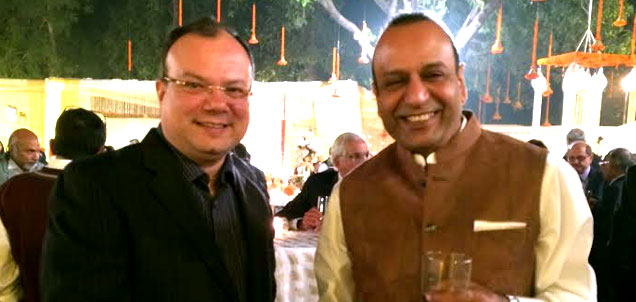
    This is the second year, Publicis’ CEO South Asia Nakul Chopra has helmed the Goafest Organising Committee. In an interview with Pradyuman Maheshwari, Chopra speaks on organising the festival and the controversies about some leading agencies staying away.

     

    Many sleepless nights because of Goafest?

     I never had sleepless nights because of GoaFest.


    But must be a thankless job?

    That’s why it must be done. I think you hit the nail on the head. To share an honest personal experience with you,  I got into Goafest actively because I was a vocal critic. I protested 2011 and was chairman of Goafest in 2013. It’s easy to sit and critique others. I’ve done both with a very cynical filter in how I saw things. Except, when you look at it from the perspective of what you said: It’s a thankless job. Somebody spends a lot of time and effort to make something happen and you don’t look at the stuff that worked or you could appreciate. Instead, you catch onto the three things that didn’t work or that personally pissed you off for some reason. It could be just the food or who got the awards…


    Last year you didn’t do it because the timing wasn’t right?

    Last year, the timing had to be changed, so, I thought it better if somebody else did it. This year, the AAAI President didn’t give me a choice. I think we all have to, turn by turn, take the responsibility. Either the association decides they don’t want to do it, so, they should parcel it off to some third party to do it. But, if the two associations want to continue to do it, somebody has got to take responsibility.


    Obviously, you run a network of agencies. Goafest is also more than a full-time job for a couple of months. It must be taking away from your time here at Publicis.

    It takes away from time at Publicis and at home. It does. I’m fortunate that we have a very strong team at Publicis. We have also a good team helping out with Goafest… many people pitching in to take on different responsibilities.


    You’ve done Goafest in the past, so you obviously know…

    But the grammar has changed from an organisation and logistics standpoint. There was the Beach GoaFest which was the first three or four years. Then there was the GoaFest at Zuri. When you do it on the same format with similar vendors, by Year 3, things become much simpler. You’ve learnt from the mistakes, you know what can go wrong. Last year was the first year at Grand Hyaat. Many of the things worked for us. From a sheer organisation standpoint, it wasn’t that well-organised, perhaps.


    What about the festival format? The general perception is Goafest is more about the beer than the knowledge or conclave or the people speaking…

     This is a little bit of an unfair pseudo comment to make. Firstly, is it fair to say Cannes Lions is more a corporate junket than it’s about people learning? If I’m not mistaken, there are maybe 8 to 10,000 delegates who register for Cannes. There isn’t even a room large enough to hold more than 1,500 of them and in most cases the rooms aren’t full. If you start seeing something in a uni-dimensional sense, are people studiously sitting in the knowledge seminars and listening? I don’t think that’s the only form of learning.  Second, Goafest, unlike really any other festival of its kind in the world, has an inverted participation where as much as 60 per cent or more people who attend are under-30. There are more people sitting in the room to listen and learn in Goafest than there are in any other such festival anywhere else in the world. Young people have something which is part of their nature. If you make Goafest an attendance-oriented class, the young people won’t come. They will learn in an atmosphere of fun and frolic. It’s an over-exaggerated view of the Goafest that it’s just about the booze and the beer. It’s not!


    Without getting into speakers are there one or two standout things this year that one could look forward to?

    I think Goafest is beyond that phase of being about one standout thing. We’ve consistently invested behind building some properties. And we amend or change or junk some of them basis the feedback we get. Last year was the first year we had three award nights and we are continuing with that.


    How critical is the Abby to Goafest? Last year, I remember, there was a statement made that the Goafest is not all about awards.

    It’s not all about awards, but it’s been around the awards as well. Goafest is not an awards fest, in which case it might as well have been in Mumbai. But it’s not fair to say, Goafest is more about the festival than it is about the awards either. I think it’s a balance of both. The celebration is more about the awards. The participation is more about the festival. At its peak, we have had more than 3000 people… Three thousand people don’t win awards.


    Ogilvy and Lowe have no issues participating in the Effie Awards. Obviously, there’s something wrong with the creative Abby  that stops them from coming there.

    I don’t think that would be a fair thing to say about the Creative Abby. There have always been some agencies, different ones in different years including Pubicis in one year that may have felt upset or slighted by something that happened and that’s understandable. In the case of the Effie, the points here are part of the global Effie agency rankings.


    If you had no Abby, you’d have Ogilvy and Lowe as part of fest?

    If that’s true, they can still send people to the Goafest. There’s no restriction on your coming and participating in the festival part if you’re not participating in the awards part. If there were no awards, you wouldn’t even have half the participation in Goa.


  • Kyoorius to partner Goafest?


    By Noor Singapuria


    Is the Kyoorius Melt Fest mulling a move to be part of Goafest?


    The annual extravaganza organised by the Advertising Agencies Association of India and the Advertising Club may have taken a decision to embrace Kyoorius Melt, the all-new festival of creativity that was announced by paper magnate-turned-media baron Rajesh Kejriwal yesterday.


    The idea reportedly came from a veteran advertising professional who has requested anonymity. His view: “When I first heard about an adfest called ‘Melt’, I thought it’s happening as part of Goafest. After all, in Goafest despite the beer and the babes and the beaches, you melt in Goa,” he said adding:  “Whether you are walking around in hardly anything or if you are wearing a black or green kurta like your boss, it’s damn hot.”


    According to the grapevine, the first talks happened at a party held late last year in New Delhi. As it happened, Advertising Club President Pratap Bose and Rajesh Kejriwal were standing at the bar. And after drinks were served to them, in a classic case of cigarette-lighting diplomacy, Kejriwal lit Bose’s cigarette, followed by his own and they got talking.


    Bose appreciated the gesture, a person close to the development told this writer. “This is the ultimate sign of humility in a man-to-man relationship,” she said referring to lighting of the cigarette. Plus for Goafest and the Abby and Kyoorius, it will be a win-win.


    It is learnt that Kejriwal is keen on organising the fest in January, just before the Republic Day. The weather is nice with a gentle breeze blowing over the Mandovi and the Arabian Sea. What grabbed the deal was the luxurious transportation on offer. “We are in discussions with a luxury cruise liner like QE3. The idea is to get everyone to celebrate the fest in Goa and then let it culminate in a cruise ride from Goa to Mumbai.”


    It is learnt that the original idea was to have the Creative Abby on the cruise, but then the security committee suggested that there is a risk. If an agency doesn’t win a coveted Abby, the NCD may want to dump himself or herself in the Arabian Sea. We don’t want all of this so our Awards Security Committee has suggested that you should conduct the awards inhouse. On his part, Kejriwal liked the fact that like him the Goafest folks also want to do their bit for the fraternity. “Right from the time the shortlists are announced, we now keep available a large number of shrinks. This year, we have tied up with a leading mental health hospital in South India. They will supply psychiatrists and counsellors  because people get awfully depressed and then mouth all types of expletives,” a committee member told MxMIndia. This is our way of giving back to the community. Click here to read the rest of this report.


  • What ad veterans have learnt from the younger lot


    By Delshad Irani


    At work, like in any human tribe, there are two kinds of people – the Elders and the Young. The latter, of course, are eager to conquer the world. The elders, who have been there and done it all (or so they’d like to think) remind the impatient youth, Rome wasn’t built in a day.


    ‘No schnitzel, Sherlock!’ is the response, generally. While it’s not the elders’ job to shatter the young’s exaggerated sense of self-belief, it is however their duty to voluntarily impart pearls of wisdom and teach a lesson or twelve. That is if the children aren’t of the know-all variety with brains like sieves.


    However, at no other point in history has there been such a high premium on youth and the mad dash to make everything from buttocks to board rooms look younger is testimony to that fact.


    Yet, rarely are inhabitants of corner offices conscious of the learnings they’ve gathered from the younger tribe. It might not seem so but there are some important lessons to learn. And we’re not talking about teaching grandma to text and abbreviate every word known to man here.


    In advertising agencies, there are endless corridors of hormone-fields. It’s one of the youngest industries, where millennial minions slave day and night to create ads for unrelenting and often unreasonable clients so their award-winning bosses can scale the Palais in June, every year.


    So whoever said the millennial is fickle or needs constant validation and expects “Look maa, I drew within the line!” to be followed by a treat and a cuddle or that they are as loyal as a mercenary is nucking futs.


    Well, there are exceptions. But amid the myriad of contradictions, millennials have come to represent quite effectively, the new generation of adwallahs. They too have priceless wisdom to share with the generations that preceded them, even if they aren’t quite aware of this yet.


    In an attempt to bring these to light, Brand Equity asked advertising’s “seniors” about the valuable lessons they’ve learnt from their juniors.


    Striking the right work life balance, not being averse to risk and cultivating a very low embarrassment threshold, are just some of the beautiful learnings but let’s not get ahead of ourselves.


    Read on to see the lessons advertising’s heads have learnt from the legs that prop them up.


    Prasoon Joshi, Chairman Asia Pacific & CEO of McCann Worldgroup India

    What I have learned from the younger generation, is the work life balance. My generation (or at least speaking for myself) were very extremist, single minded and did too much work. We’d go to Cannes and it was like a project: go and return.


    The younger lot tie it up with travel and exploration. With youngsters, right from the start, there’s a more holistic approach to life. They believe it’s good to take breaks, even short ones. And so to someone like me, with a crusader mentality, I’ve learned a lot.

    Moral of the story: Take as many breaks as HR will allow.


    Bobby Pawar, Director and Chief Creative Officer, South Asia, Publicis

    The lessons I’ve gathered from my youngest colleagues? Holy-moly, where do I begin? Tenacity. Irrational passion. Being curious of the changing world. Trusting my instincts as much as my experience. Experiment. When to step in. When to sit on the sidelines and applaud. Rediscovering that this business is supposed to be fun. Patience. The list grows almost every day.


    I believe, if you aren’t learning from the people you are with, you have the wrong people, or more likely you have the wrong attitude. One day at work we were discussing ideas. It was a big brand, big brief, big budget, big stakes. This kid had an idea that sounded cool, but it was pretty much out there. And I said, I don’t think we can take a chance like this on a billion dollar brand. The kid looked bummed. He remained quiet for a bit, while we chatted.


    Then he said, “Bobby, failure is temporary, success is permanent.” I said, “Getting fired is temporary too, but it stings.” Everybody laughed. What he said haunted me. The next day I caught up with him and we spent time trying to make his idea work. Let go of your professional prejudices. A new marketing order is coming and it will be shaped by those willing to shape it and be shaped by it.

    Moral of the story: Don’t save your precious aphorisms for Twitter, try it in conference. Even if it sounds dumb. Never stop being bold and curious. Christopher Columbus wouldn’t have gotten far if he weren’t a nosy fella.


    Ambi Parmeswaran, Executive Director and CEO, FCB Ulka

    The youngsters taught me how use technology to solve problems. Sometimes what looks difficult is really a piece of cake.


    The younger lot have innovative skills that they bring to the table. It’s great interacting with trainees from management and creative. They are supposed to make a 20 minute presentation to us at the end of their stint, and I remember a boy making a video presentation in the form of a daily diary to his mom. It was great because of the ‘We haven’t seen this before’ feeling.


    Their approach to work is very different, which we often criticise, but there are plenty of takeaways. I remember the time when an employee was moving on from our agency, and I asked him to give me a call in case he wasn’t happy at the new place. I told him there was nothing to be embarrassed about and we could definitely work something out for him if he decided to return. “Why would I be embarrassed?” he asked me. And he was back in six months.

    Moral of the story: Never criticise before thinking. And if one is ever in need of a smashing presentation, commission the millennials in your employ.


    Joseph George, CEO, Lowe Lintas

    Their belief in the spirit of “moving on”, it allows you to not get stuck with any issue (good or bad) for too long. It allows you to accomplish a lot more. And it makes you a lot less emotional and more objective. It also allows you to stay focussed in meetings and conversations instead of the hangovers of an earlier issue or a previous meeting still clouding your head.


    Many times, we seem to dismiss and brand this trait of the youth as being fickle and superficial. Or even accuse them of being disinterested. It took me a long time to realise that those were erroneous and lazy conclusions. I was interviewing this young planner ( I personally interview all planners coming into Lowe Lintas ), and as we concluded with me saying that HR will get back to him, he said in a matter of fact way “to not let his youth come in the way of his salary or indeed his designation!” There are three brand lines that sum them up “Move on”, “Impossible is nothing” and “Poochne mein kya jaata hai”?

    Moral of the story: Life’s too short to cry over yesterday’s headlines, delusion of grandeur is a millennial condition and there is no such thing as a stupid question


    Josy Paul, Chairman, BBDO India

    One of the greatest things that my youngest colleagues have taught me is to be more authentic. They value that in themselves and they seek that from me. It helps me relax in their company and be who I am. It brings out the best in all of us. I feel the younger generation is a reminder medium of who we once were. They remind me of the strengths that I had, and have now forgotten. They revive and rejuvenate my authentic side. They point out things I once told them when I was a visiting faculty in their colleges. And they don’t let me forget. It’s a great source of energy.


    “We work differently from how you work. You guys work really hard and are obsessed with excellence about work. But excellence for us is how we manage both work and life. We need more breaks, more away-time. That’s how we create excellence at work. For you work is everything. We work for life” – Hemant Shringy, senior creative director, BBDO Ashram, age 29. It’s an insightful jolt and a beautiful truth, and I have accepted it. It is important to me. Which is why I remember it. Reverse internship, osmosis and learning are part of my world. I spend at least two hours a week speaking at colleges. The best thing that an experienced generation of marketers can learn from millennial marketers is to let go! The best way to contribute is to get out of the way.

    Moral of the story: Be real and weekends are not just Saturday to Sunday.


    Kawal Shoor, National Planning Director, Ogilvy & Mather

    I like their naivete and candour the most. I especially love their language, as yet un-corrupted by the dreaded ad lingo. And fresh language is often a window to new thoughts. No ‘target audience’, no ‘strategy’, no ‘360 degrees’ no bullshit. When they talk formally, they are pretty predictable and ordinary ; maybe they say what they think they’re expected to say, but when they let go, when they just chat with you, when they talk about how people are, and why they are the way they are, is when they can really say interesting things.


    The biggest life lesson is that there are no rules. Yes, there are a few rules on how you anchor a thought f o r clients to feel comfortable with them, but for creation of new thoughts and ideas, there are absolutely no rules. I also think today’s young are a lot more confident, sometimes even before they’re able.


    Exactly the opposite of how I was, or still am. And then I have a 14 year old at home who’s my anti-aging insurance. There’s a daily crash course I get on staying young. There are times I fail, times I pass, but I can’t say life’s boring.

    Moral of the story: Speak without thinking.


    Sunil Lulla, Chairman and Managing Director, Grey Worldwide India

    “I work harder.” It was a simple statement made to me by a fresher at JWT in the late 80s. It expressed the strength of the individual and the difference one can make to one’s success. i.e. Work Harder, than anyone else, until success is yours. He was working really late hours and was undertaking very simple and humble tasks. It was late and I asked him to stop working and go home and complete it the next day. This response, “I work harder”, got me to agree, smile and adopt this attitude.

    Moral of the story: Forget what was said about frequent getaways, work your backside off.


    Subhash Kamath, Managing Partner, BBH

    There are many lessons I’ve learnt from some of my young colleagues. Most importantly, I’ve realised that their youth is very different from how mine was. They’re growing up in a very different society, they’re far more optimistic and daring, far more capable of taking risks and exploring newer things than I was. And thanks to the digital age, they seem far more connected and have much better access to information than I did.


    Sure, it’s much more competitive now than it was in the 80s, but I think today’s youngsters are upto it. Our generation was taught to play safe, hold on to our jobs, save for a rainy day etc. Today’s youngsters have grown up in a more plentiful society. They have many more options to choose from, more entrepreneurial opportunities.


    Talent and ideas get rewarded more easily today than it did in my time. So the same values and priorities that I had don’t necessarily work for them. The one anecdote I remember very vividly that would perhaps illustrate this change was when, some years ago, I was doing an exit interview of a young star who’d decided to leave the agency. She had been doing extremely well, her colleagues and clients loved her, and she’d just been promoted with a hefty increment. But a month later, she put in her papers. I was completely taken aback. When I asked why, she said the job was keeping her too busy and that she was not getting any chance to spend time with her family and friends.


    Trying to give her some sagely advice, I explained that even I had to go through this phase in life. That it was important to give it one’s all at this early learning stage to build a long term career. That one day she’ll be able to balance it having come on top of this service business.


    To which she coolly looked me in the eye and said “But what makes you think I want to lead the same life as you did? I want to do it differently and enjoy both work and play now, not later.” I honestly had no answer to that. Just the strong realisation that things have indeed changed. This generation looks at things very differently. And the worst thing a senior person like me could do was to think of my own upbringing and youth in evaluating today’s generation.

    Moral of the story: Don’t evaluate the world through the prism of your life. It’s not that great a life, after all, if a millennial doesn’t want it.


    Rahul Jauhari, National Creative Director, Everest Brand Solutions

    I guess the number one lesson is that these kids don’t take shit for too long. They are not as tied down by stuff like loyalty to boss/agency as we used to be. So if they don’t get a good deal (monetary or opportunity) they move on. They have innumerable options – advertising copywriting is not bigger or smaller than content writing or opening a wedding ideas shop with friends or something else.


    I guess fundamentally, they are experimenting more than we did, they take less load than we did/do. Long ago, after I finished seeing a complete fresher kid’s folio, he asked to see mine. I kicked his butt for not doing his homework, but loved the attitude. We are in a people’s business.

    Moral of the story: You can’t take designations and dignity to the bank.


    Mythili Chandrasekar, SVP & National Planning Director, JWT India

    The youngsters absorb so much from the world around at a blistering pace, and are intuitive culture and technology experts. They challenge conventional wisdom and it is good to be constantly tested. Free flowing and lateral thinking is something we can learn. Some very young colleagues have stunned me with their depth of work and speed of learning.


    While one cannot generalise, I do find disrespect for dress codes, time and casualness in tonality ends up working against youngsters being taken seriously. They certainly seem to have better work life balance, and are able to switch off far more easily – too late to learn that! After a point it’s not about age, but character. Those who are tenacious, unrelenting, passionate, bold, and thorough are those who stun you and teach you every time.

    Moral of the story: Study hard, study fast. Dress for comfort, but save the ‘Frankie Says Relax’ t-shirt for under the comforter.


    Pratap Suthan, Managing Partner and Chief Creative Officer, Bang In The Middle


    This was when I was a CD in Grey Delhi in about 1999. I had a trainee for about six months – he was really good at his job and had a lot of spunk. I wanted to hire him as a junior writer, but apparently we didn’t have the budgets. I kept delaying telling him because I wanted him on board, till the time he asked me what the status was.


    When he realised that the branch head couldn’t bring him on board, he walked into his office, gave him a piece of his mind and got out, only to start his own agency. That boy is Sidharth Rao of Webchutney. That day I learned that if you are convinced about something, you should stand by it no matter what anyone says. All it takes is belief and some spine.

    Moral of the story: Never listen to your branch head. And go with the gut every time. (At your own risk.)


    Sumanto Chattopadhyay, ECD – South Asia, Ogilvy India

    The most obvious fact is that the young colleagues are digital natives and we are digital dinosaurs. That is one area I have learnt everything from my juniors; I harass them and pick up a lot of internet and socialmedia related things from them. I can now ideate on digital campaigns today, and the only reason I can is because I had juniors who were complete whizzes at this. They’re born into it and have been using technology since the time they were in school.


    Another thing that is amazing is their comfort level with all kinds of apps and software to get things done. They find ways to easily put together a little film for a presentation, for instance. These little things seemed so difficult but they’re not; they helped me break that barrier. We belong to the doctor-lawyer-professor-bano generation, where we were told to pursue our passions only after first securing an academic degree and a steady job.


    Our mentality was to stick it out whether or not you’re enjoying your job. While there are good and bad sides to this way of thinking, I am going to say that the changes in the world and economy give youngsters the option to not waste their time at a place they aren’t having fun. The flipside is that they decide in three months that they don’t like advertising and quit. Three months! At least give it a year?


    Sure, go ahead and explore if you like something or not, but three months is too short a time. Some people are too hasty in deciding if something is working for them. They just need to find their happy medium. I like that they explore and have the confidence, but just take your time.

    Moral of the story: It’s never too late to learn.


    Narayan Devanathan, Executive Vice President and National Planning Director, Dentsu India Group

    The natural ease with which they carry themselves, knowing their place in the world (at the centre). Their ability to keep me grounded with an “Ae, kidhar ja raha hai, pehle good morning toh bol de.” Knowing how to be wrong with complete confidence, and most of the times, with a good idea of what failure looks like. Being completely comfortable with uncertainty, with “maybe” as a valid life choice.


    Work hard, party harder (I haven’t been able to apply this as effectively as them though.) But time and again, the young ones have taught and reinforced to me the idea of embracing uncertainty. “We’re dating currently, but he’s at IIM Ahmedabad and I’m here in Delhi, and I’m not sure if we’ll be in the same city after he finishes. I might find somebody else by the time he comes back. Or he might. Ya, I know we’ve been together for five years, but who knows what will happen tomorrow? I’d like to marry him, but that’s too far away.”


    This was a 20-year-old intern who worked with me several years back. I have no idea who she is with right now, but I don’t think she’s worrying about it. The value of persistence: A girl applied for a position in a previous job of mine, and after I met her, I was pretty sure I wanted to be on the same team. Except we didn’t have the budget to hire her then. So I told her, “Listen, I’m pretty bad at keeping in touch. But call me regularly. And if I don’t answer, message me. And if I don’t respond even then, email me.” She did all three for three weeks continuously.


    I managed to wrangle a budget out of the management to get her on board after that. I hope I apply these lessons regularly. But those who work with me will probably be able to better speak about the impact. In life, I definitely am more actively trying to embrace the uncomfortable, the uncertain. As I said elsewhere sometime back, I’m discovering the joys of confusion. Clarity is overrated, if you ask me.

    Moral of the story: Don’t date anyone at IIM-A. Embrace uncertainty and confusion every morning and there’s no shame in being stalkerishly persistent. However, try and stop short of a restraining order.


    Pratap Bose, former COO, DDB Mudra Group

    I remember once going through my worst crisis ever on the IBM account, and by the end of the evening it looked like we would lose the account through a horrible mishandling which had the worldwide IBM CEO and CMO threatening hell and high water.


    At 9 o’clock in the evening, when I was in the depths of despair and totally at my wits’ end, a young colleague came over and said to me, “Sir, why don’t you go home and sleep on it? It never seems so bad in the morning after you wake up.” To this day, I follow that advice I learnt from my younger colleague. In life, no matter how disastrous or how enormous the problem, it always seems smaller after you have slept on it.

    Moral of the story: Snoozes, not weekend getaways are the pillars of success.


    (With Inputs from Ravi Balakrishnan, Amit Bapna, Shephali Bhatt, Mukta Lad & Priyanka Nair.)


    Source:The Economic Times

    Copyright © 2015, Bennett, Coleman & Co. Ltd.

    All Rights Reserved, Licensed to republish


  • AAPHEW!| How Bad Messaging did the BJP in


    By Pratap Bose


    So the Aam Aadmi Party scored a landslide victory in the Delhi elections. It’s a huge win. Massive.
    As I wrote last week,  AAP was very clear and focused in its election campaign. The messaging was simple.  It was to provide an alternative to the BJP and Congress, and for those keen on a government run by a true representative of the common man. While it was an anti-Bharatiya Janata Party, anti-Congress, there was no negativity from Arvind Kejriwal this time.


    And as for the BJP, the negativity in the campaign didn’t work. In fact the very reasons why there was much sympathy towards the BJP and Narendra Modi in the Lok Sabha elections, seem to now be the reasons why Kejriwal won.


    Negative campaigns don’t work. Even if the BJP’s Lok Sabha ads painted a dismal pic of the country, the essential message was positive: Achhe Din Aane Waale Hain.


    In these elections, while there was a ‘Call to Vote’, the messaging was negative. And, according to me, that’s what possibly did the BJP in. There are of course a variety of other factors – the public’s belief that the AAP can deliver better and some dissatisfaction on the BJP doings at the Centre – but the sensitivities of the public at large cannot be ignored. How else can you explain a 23% drop in voter share?


    If you think about it, there was nothing spectacular that the AAP did. The BJP had far greater assets in terms of budgets, advertising expenses, and the might of the entire top cabinet at their disposal, but like any strong brand the AAP stayed close, relevant and true to the people of Delhi. The symbols of the AAP, like the broom, the AAP cap, Kejriwal’s muffler, the simplicity in which he dressed, and the simple promises, all clearly resonated in this humongous victory.  One must never forget that aspiration is always secular and never based on class-based politics.


    After the Grand Effie-winning campaign of the BJP last year, this was a dud.


    Courtesy: www.PratapBose.com

    Pratap Bose was until recently COO, DDB Mudra Group. He is currently President, The Advertising Club. Visit www.pratapbose.com for this views


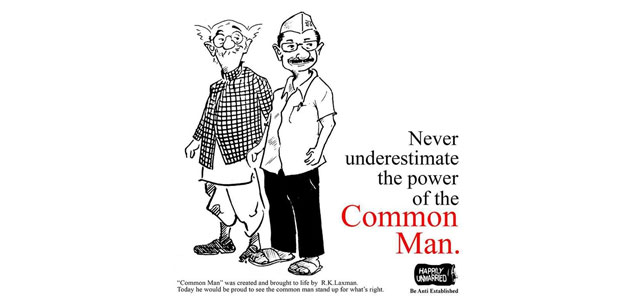
    Big Story image taken from the Aam Aadmi Party Facebook page. Visual of RK Laxman’s Common Man with Arvind Kejriwal in an ad by ‘Happily Unmarried’


  • Shashi Sinha, CVL Srinivas, Pratap Bose & Rohit Ohri present Outlook for 2015


    Interviews by Shruti Pushkarna


    2015 is acid test year for our industry:

    Pratap Bose, President, The Advertising Club

    I don’t want to sound pessimistic but honestly I have spoken to a lot of people in the industry. It’s a view that everyone’s taking which is the whole thing of being very cautious. There is optimism but there’s cautious optimism. And therefore I think, 2015 is really the acid test year, both for the BJP as well as for our business. The promise is large, the delivery is yet to happen. The strain on the government to actually do something concrete, pivotal around strategy, around implementing, to make things happen is huge. People say it will happen, give us time… I understand that. So there’s a lot of optimism that things might happen but unfortunately we haven’t seen the fruits of that yet. I don’t want to sound like a pessimist but I think we have to take the wait and watch approach. Even if you see the Congress men talk about Narendra Modi right now, they are saying that we’ve heard a lot, he’s made the right impression, the mood is right, but we need to see real time action. To summarise what I said, 2015 is the acid test year for our industry. There’s a lot of hope but I’m still pessimistic about it because it needs to transpire into concrete decisions that grow the economy and move the economy forward. That’s not been seen yet. I tread very carefully.


    Digital is finally kind-of becoming a strong reality:

    Rohit Ohri, ‎Executive Chairman, Dentsu India & CEO, Dentsu Asia Pacific (South)

    I think 2015 will be a promising year for everybody because I think a lot of the work that the new government has started, should show some results. And we are hoping that the positive sentiment will carry through to 2015 and 2016 as well. The other thing is, from the entire advertising and media industry I think digital is finally kind-of becoming a strong reality. It’s no longer just good to do, I think brands are realising that it’s an interesting part of their plans. And I think we are going to see a big change in the next two years in how brands actually communicate online. And what we have seen in 2014 was this big thing about brands creating content, which they did in a mini movie kind of format releasing online. I think that’s something we’ll see a lot more of going forward in 2015. All in all, from a creative perspective, and from a media spends perspective, I think the industry is looking up.


    Government has great plans but they have to push it through:

    Shashi Sinha, CEO, IPG Mediabrands

    I’m hoping and praying that the next year is good. I am hoping that Budget works out well for the government, whatever they decide, they implement because to me, that’s important. This government has great plans but they have to push it through. As we speak, currently GST is held up… so if they pull off a great Budget, life will be good. To me that’s vital. And not because it’s will be a great Budget but that will show their ability to push through and resolve things. But if they still get caught up in this religious thing that is happening, then there’s trouble. So we hope the government succeeds.


    In terms of adspend growth, it’ll be pretty much similar to this year:

    CVL Srinivas, CEO South Asia, GroupM

    We see 2015 to be a good year. On an overall basis, I think in terms of adspend growth, it’ll be pretty much similar to this year. But one must remember that this was an election year so we had a bit of a bump up to growth because of elections. Next year, despite it not being an election year, we see the growth rates to be more or less similar. We see digital growing upwards to 35 per cent like it has been over the past two or three years. We also think television is going to continue its strong growth in healthy double digits and so will the regional print dailies. So, all in all, it looks like an interesting year. We have the ICC World Cup coming up next year so that will lead to spends at some level.