Tag: PR

  • Amith Prabhu: The Public Relations Campaign brief

    By Amith Prabhu


    This column is for in-house communications professionals. Also known as corporate communications or marketing communications or public relations or fill in the blank as various organisations call it by different names with slight differences in the job description. This column is for those who believe in a better way of planning, executing and measuring a campaign.


    This column is not for the corporate communications professional who has not worked in a PR firm prior to his or her in-house job. This is also definitely not for one who manages all external outreach internally without being the client of a PR firm. This column is about the client brief which barely exists in this day and age.


    I have been hearing several clients of PR firms complain that There Is No Alternative to the firm they are currently engaged with as all firms are almost the same especially when it comes to measurement. I also know several of the clients do not have a seat at the table and hence are unable to convince the high command in the organisation to look beyond advertising value equivalent more notoriously known as AVE. I think the only way to solve this problem is through a basic document that the consultancy and client create together which is the “Brief” that lists out the deliverables and measurable before each campaign.


    A Brief has to be written in a mutually agreed upon template. It has to be professional. It cannot be verbal and it needs to clearly have a measurement metrics that can change campaign to campaign.


    When clients and consultancies join forces to make this a mandatory practice which is not impossible more accountability will set in and better understanding and appreciation of the power of Public Relations will come to the fore. The brief should come to become a non-negotiable document. Teams at PR firms should insist on one and should refuse to work without one. Clients should ensure these briefs are fool-proof and unambiguous.


    Ultimately, a PR firm is made up of people who most often end up becoming clients of some other firms in the future. If this habit is not inculcated early on we are staring at troubled times. There will always be certain aspects of reputation management that will take place without a brief. Those are understandable.


    But what has to be measured should begin with a brief. It is pointless being part of a vicious circle. Maybe in 2015 a new era of briefs gathers support from the fraternity. If PRCAI can take the lead and create a template for all its member firms to follow we could see some hope on this front. We certainly need to move from return on investment to return on objective.


    Award organisers need to have a category for the best brief to drive home the point. Let’s hope this becomes an approach for the future. Here’s to the next Brief.


  • Amith Prabhu: Managing the three Es in PR

    By Amith Prabhu


    I often get asked this question – What do you PR people really do? What else do you need to have besides good relationships with the media? I’m sure every PR professionals gets asked this question every now and then. The response can range from straight forward to sarcastic to convoluted depending on who is asking.


    Well, I do not think there are too many other professions in the world where professionals get asked this question. I have written about this in different ways in the past but will do it once again as India gets ready to host the biggest international PR conference later this week with the ICCO Summit taking place in New Delhi on October 9 and 10.


    I have come to believe that the R in Public Relations should stand for Reputation and Relations is just one aspect of the entire Reputation ecosystem. I am also convinced that PR is about managing three Es – events, egos and expectations. But these lines are useless to people who want a bang for their buck. PR has been defined by various individuals and organisations but those are great for textbooks.


    So how do we find an answer that is sensible and uniform for our own good? There is no one answer that will work. But let me attempt taking a stab at it anyway in two sentences. PR professionals help manage reputation for organisations, individuals and brands through meaningful engagement with stakeholders. The PR profession involves planning, strategizing and executing to achieve favourable results.


    Public Reputation includes Investor Relations, Employee Engagement, Consumer Outreach, Media Management and External Relations which to those not familiar with the range of offerings may just seem like talking to journalists, pushing for a positive story, blocking a negative story interspersed with some wining and dining. This is far from the reality. There is no such glamour in the profession as it is made out to be.


    The high in the business comes from being able to advise senior leaders within the organisation or in the client organisation based on data gathered that is translated into insights. There is a wide canvas to explore creativity if one is able to sell an idea well. Lastly, smart PR campaigns are linked to objectives which when realized can be highly satisfying.


    So the next time you get asked the question or need to explain try the two sentences in bold above. If the other end is blank with just a stare then you have achieved partial success. If the person at the other end still has counter questions then we need to do more homework on how we tell the world what we do.


  • Amith Prabhu: Public Reputation is a matter of PRide

    By Amith Prabhu


    As I write this column my first book is getting wings and taking flight. My first book is a collection of all columns I wrote here from the start and over twelve months. I felt it would be good to put all these columns in one place as our profession lacks literature that one can refer to.


    The book is available for those who want a copy by contacting me on Twitter @amithpr using the hashtag #TakingPRide. Talking of books and I’ve said it earlier that we in India need books on the profession to guide us to do Public Relations the right way. I hope some of the doyens of the Indian PR business will take out time to write books that will inspire and show the way.


    As you read this column, the World PR Forum is taking place in Madrid. This event held once in two years is organised by the Global Alliance for Public Relations and Communication Management, an international federation of organisations and associations devoted to Public Relations. I had made plans to attend but work commitments led to me calling it off at the last minute.


    Communication with Conscience is the theme of this global forum and one can follow conversations on Twitter by checking the hashtag #WPRF2014. I have urged fellow professionals in the past and I do so again to invest in attending one solid national conference in the first five years of the career and one international event in the second ‘five-year’ of the career because there is so much to learn from the connections and conversations that take place in these. It is worth the investment of time and money.


    We have every reason to be proud of our profession, despite the tags that get thrown at it from time to time. In a few weeks ICCO Summit will take place in New Delhi. This global conference is back in the national capital for the second time in six years. Again, a golden opportunity to save on air ticket and visa costs by attending the India edition. If you have not registered yet, the time is now.


    What else can we do in addition to hoping for an accreditation system, of which I wrote in my last column besides hoping that books on our profession get written and attending global events? I think nothing beats award winning work. One way of doing it is by doing some real good work and then entering them for awards. But a better way is to keep awards in mind and design a campaign that will really stand out. Because to have a public reputation is a matter of Pride.


  • The Promise of Better PR at Praxis


    By Pradyuman Maheshwari


    Not many moons ago, MxMIndia requested Amith Prabhu, earlier head of communications at Vivaki (Publicis Groupe) and then working at the Edelman office in Chicago to write an article on how Indian PR agencies had fared miserably at the Cannes Lions advertising awards. He then mooted the idea of a Lions-like conference for the PR industry, and even as we spoke with him to co-organise it, he had taken the lead with his friends to take things forward.


    We stepped back and offered him all the possible support in the effort, and are happy to report that the third edition of Praxis, as the PR conference is called, is being held starting today (September 12) in the historic city of Agra.


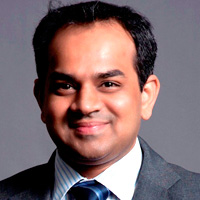
    So while MxMIndia is media partner, that didn’t prevent us from posing some ticklish questions to Amith Prabhu, founder and chief mentor of the event. Amith was not too keen on being interviewed and said the co-chairs of the conference should be doing the talking, but we could finally prevail upon him with an understanding that his pic will not appear as the Big Story image. Pssst, we’ve still sneaked in this headshot. We’ll try and feign ignorance. Read on…

     

    Pondicherry (or Puducherry), Lavasa and now Agra. How will the third edition of Praxis be different from the previous two?

    Each summit is unique in different ways. Praxis 2014 caters primarily to the professionals in the NCR. We call it the super, smarter, slicker edition. The theme is Communicating for a Better World and the focus is CSR. We have nearly 30 speakers of which eight are are international.


    In many ways it was for you a dream to build this forum for early and mid-career professionals. Do you think you’ve been able to achieve what you had set out to? Or is it still mission unaccomplished?

    From 250 professionals in the first edition, 22 months ago to almost 350 this time around we have come a long way. A large chunk of participants from both consultancies and in-house are young and raring to go. We want this to be THE forum that professionals of all levels head to every year and we have managed to achieve that.


    And would you say that the PR industry and professionals have gained from this?

    I still like to believe we are not an industry but a growing community of very smart professionals. These forums help celebrate the profession. It is for those who attend to say if they have gained or not. The response this year has been overwhelming which makes us believe we are on the right track.


    The format though is still very short, right. Like in this year’s edition, just as people would’ve warmed up, it’s time to say your goodbyes?

    Time is at a premium. We have experimented with an additional night in the second edition but the feedback was that it should be optional because half the time we are dealing with client crises which allows for minimal time commitment outside work.


    Why not have a longer format? Because it’s just an incremental extra hotel night that people have to pay for, na? You’ve already got them out of their office and spend on travel?

    As I mentioned earlier, time is at a premium for PR professionals. We have had 15% drop-outs in the last 5 days, especially from clients who would have been over 100 at the summit but are now about 85 at the summit because work exigencies. We offered an option for those who wanted to learn from experts to stay back a second night and attend the workshop at an additional fee. So it is really not shorter in the true sense. Also, an additional night would cost Rs 10,000 more on an average which we felt younger professionals would find hard to bear.


    Has this South-West-North rotation of venues worked? What will you have next year… East? How about a Praxis in Bangkok, Nepal or somewhere cheap and still away from it all?

    We are open to having Praxis in the Eastern part of India or even in another country which does not require visas. We are exploring that option. Hopefully, when the third edition ends the team of volunteers may have a location for 2015. Someday, we will plan it overseas for sure.


    There is a cross-section of top professionals who’ve been giving Praxis a miss? Dilip Cherian, for instance. Various veteran corporate communications professionals.  Comments?

    Like several other leaders, Dilip Cherian has been invited every year and we are hoping to convince him hard enough to be there next year. This year, the CEO of his firm will be chairing a session. We have nine of the Top 10 firms and 18 of the Top 20 firms present in India that are represented. Unlike most events of this kind that are organised by associations we are just a bunch of volunteers with full-time jobs who put this together. Given that, there are six firms participating for the first time this year which is an achievement. One Founder is making his stage debut in a public forum, though his firm has been around for 20 years, which is amazing.


    Also, I was just speaking to the CEO of a Mumbai-based PR firm Who was sadly just not aware of the forum. Would you say this is ignorance on the part of the CEO or still miles to go for Praxis (and the Promise Foundation) to promote the conference?

    We would not say it is either. If you were speaking to the CEO, he or she has now heard of it ;-). Sur summit has been built on word of mouth and primarily on social networks. We have a long way to go as a community. The Summit was sold out a month ago and we decided to increase the number from 300 to 330 which is 10% of the 3000 professionals in the country.


    So a little about this year: standout, must-attend sessions?

    We have the mother of cause marketing, Carol Cone, who is Edelman’s global practice chair of the CSR practice who has flown all the way from New York to deliver the opening keynote. Paul Holmes will do the second keynote on the Consultancy of the Future.  These are not to be missed. The other stand-out sessions are a presentation on Measuring Metrics and four panels – one by millenials, one by CSR experts, one celebrating Founders of India’s iconic firms and one with regional chiefs of PR firms.


    If you were given to chance to go back three years and re-curate Praxis, would you do it differently?

    Each Summit has been planned with learning from the previous one and built with passion. We are proud of the fact that we do not have more than one speaker from an organisation and that we typically do not repeat speakers. We also follow a cooperative sponsorship model where partnering companies pay our vendors directly. What we can do better is to make more Indian professionals in the middle east and far east attend.


    Is the organisation of Praxis really a collective, cooperative effort finally? Wouldn’t you want to give the job to an event organiser to do it on a professional basis?

    Praxis began as a movement and continues to remain so. The commitment of some of us is for ten editions. An event manager still helps put together the final look of the conference. With or without an event manager, we are a professionally run social enterprise. But the personal touch can only be there when those who conceptualised it, remain at the forefront of driving it. We are a dozen professionals who ideate virtually and come together at the summit to bring the event to life. The uniqueness is that the 12 volunteers represent 12 different organisations – some PR firms and some corporations.
    So what’s driving the organisers like yourself and others to spend a huge amount of time, effort and possibly monies to organise Praxis?


    People and passion for the profession are the cornerstones of this initiative. We needed to bring back the reputation to the profession that had begun to get affected by two important events – the controversy of 2010 that led to one of the largest firm shutting shop and the fact that almost all of the Top 20 global firms making their presence felt in India by the beginning of this decade. One would have worked for a non-profit, but instead we decided that we will create a non-profit that builds reputation for the profession. So here we are!
     

  • Amith Prabhu: Public Reputation in Politics

    By Amith Prabhu


    It is good to see numerous Indian politicians investing big on their Public Reputation management. Thanks to the current Prime Minister who brought in a culture of marketing and communication, the importance for this craft has increased ever since the election victory of May 2014. Chief Ministers and Members of Parliament are setting aside time and money to ensure they communicate with their stakeholders, something they never took seriously earlier.


    So what is it that these national politicians can look for from reputation management professionals? If they are expecting a quick fix to their own or their party’s reputation then they have not understood the power of this craft. Public Relations is like Rome – it is never built in a day. What most people miss is that Narendra Modi built a PR campaign over 10 years starting in 2003. He carefully laid the foundation that is today a rock-solid structure.


    In doing so, he ensured the stigma of a deadly riot under his watch got gradually erased. On the other hand, few politicians let their good reputation turn bad and worse in a matter of few days. So, what then can one offer in terms of a reputation management bouquet?


    I think there is much more than mere Public relations or media outreach here. It starts with communications research where talking to stakeholders, especially voters and getting their feedback is the bare minimum. The research can be through surveys or focused groups, which is better known as polling. Polling leads to the understanding of what one needs to communicate. But between polling and communication lies the real Action. If politicians do not do the right thing then no amount of communication can help. Communication needs to happen in real time and not in retrospect. Voters have a short-term memory. A politician is only as good as his or her last appearance. Hence a key messaging framework can stem from a bit of Doing.


    Community relations, constituency outreach, and voter engagement are all the same thing but called differently. If this element is not in place then Doing the right thing is never good enough. Building this connect is part of the larger narrative and needs time and tools to be done well.


    Then there are backroom elements of speech writing and delivery, digital marketing which includes smart use of apps, social, mobile, display, search and creativity that then lends itself to a media plan that encompasses Earned, Owned and Paid. Politicians seldom understand the difference. In simple terms Paid is what we pay for in the form of advertisements, advertorials or buying air time or print space to share content. Earned is what is written, spoken or said about us with no transaction involved in cash or kind. And Owned is having our own outlets and channels to share information.


    In a nutshell, a public reputation mandate for a politician encapsulates the gamut of communications solutions and there are specialist firms emerging to offer just that. Will politicians come forward to use these services? Will they then pay ethically and offer the right price? Will they appreciate the impact of professional support? Only time will tell!


  • Amith Prabhu: Public Reputation cannot be built in a day

    By Amith Prabhu


    This column is about three separate ideas and how they need a rehaul.


    First idea: Some PR firms in India are known to have built their business based on undercutting, wherein they have made their money but ended up offering low quality service and talent bringing disrepute to the profession. These topics are never discussed in public but we all know this happens in every profession and push it under the carpet. Is there a way this can be fixed? I think there is. We need to welcome an accreditation system, we need to ensure a minimum billing standard which the association of consultants and its members should follow and we need to invest in good talent that delivers beyond media relations.


    Second idea: Talking about talent. I have happened to work directly or indirectly with four to five PR firms in India, as an employee, as a consultant and as a client. I have noticed that every firm has some talent that is on par with those in developed markets. I have also noticed that several firms have a large number of run of the mill human assets who do not want to go above and beyond. This can only change when we identify a minimum qualification and a basic intensive training that is a mix of general training that is common to entry level employees of member firms and specific training from a common syllabus that each firm imparts on its own with required customization.


    Third idea: Having worked for over 50 brands and organizations over the last decade in the corporate world and now in the political world, I have come to realize how shallow some minds at the other end are. Some clients need to be trained on an understanding of Public Reputation and there needs to be a training programme that teaches these clients who do not have a background in PR firms or good corporate communications. The folks I’m referring to generally come from the area of sales, administrative services or writing. They think a media contact can swing a positive story or two and that is good enough. Not any longer in a highly digitally sensitive world.


    This column could be slightly provocative. That was the original intention. When these three ideas are talked about and then solutions are discussed and implemented we will have better days. Public Reputation Management needs some reputation enhancement.


  • Amith Prabhu: Why is Public Reputation Management widely misunderstood

    By Amith Prabhu


    In the start-up I run, I work with a tiny bunch of political clients helping them embrace the power of communications and enhance their public reputation. Kindly note the absence of the term Public Relations. They are in a phase that most corporate clients were in a decade ago – completely focused on media relations.


    They find it hard to believe that Public Reputation Management is a science and not just an art of charming and buttering which may have been the case 20 years ago. But the good news is there is a change in mindset that is slowly evolving.  Let’s examine why there is a complete misunderstanding of our profession by clients and potential clients.


    We do not position right – We are unable to communicate accurately about what we do because we have not taken the pains to get together and find an elevator pitch that make sense. We are questioned by family, friends and random acquaintances and most often than not we end up cutting a sorry figure. Many end up thinking we are in the sophisticated courier business.


    We do not behave like lawyers – PR firms began after the World War II in order to help some smart organizations capitalize on earned media. Firms were designed like law firms and expected to achieve an objective for a fee. Commissions were not paid because remuneration was on a project fee or retainer for consultancy and execution similar to how lawyers first advised a client and then argued a case in court – our courts are the many stakeholders and they make the judgment on how well we offer or position our product.


    We do not convey that what we do is a science and not just an art – Recently, a client of mine wanted me to change the format of a mobile press conference (yes – you read it right, a press conference on wheels) with a 12-hour notice. On telling him that the new plan would not only pose security risks but also hamper positive coverage, he retorted by saying security should not be the worry of PR, just getting positive stories should be. The science I’m referring to is about taking into account every detail to ensure a good reputation only gets better.


    We do not train journalists who move into the profession to understand what we do better – Very often journalists are hired by PR firms without a proper orientation on what encompasses the business of public reputation management. They in turn fail to realise there is much, much more to the profession than mere media relations. I have interacted with a few in the recent past and feel sad that the firms hiring them are not being fair to them.


    We do not measure our efforts in a pre-defined manner – Public Reputation professionals rarely go to their bosses or clients with a focus on measuring their campaigns so that they can be evaluated in a fair and just manner. Measurement is mostly an after-thought. This only hampers making us come across as serious professionals. Hope this changes for the better.


  • Amith Prabhu: The art of Public Relations – it is about practising what we preach

    By Amith Prabhu


    Last weekend I encountered a unique situation on social media. A suggestion I made on Twitter was misconstrued by the officebearer of the organization in question. Instead of taking it in the right spirit and offering to make amends in the future for the betterment of the profession he started vociferously defending an omission.


    My biggest strength is my humility. I unleashed it fully after realising the allegations and counter allegations were going nowhere so I chose to apologise and let go. I not only apologised on Twitter, on text and on email but also made attempts to call the person and also offer to meet in the following week for hardly any fault of mine.


    Two quick learnings from the above. As Public Relations professionals we advise clients not to take a spat in public but sometimes we forget this advice we give out so often. But humility and quick thinking are essential ingredients in our profession and I chose to apply these in good measure.


    Anyway, all is well that ends well. We met on Friday for lunch and decided to focus on the future and leave behind the past. The purpose of mentioning this incident in this column is because every situation has some learning in it.


    How we apply this learning in our personal and professional lives is of paramount importance. Well, on a different note I have begun to believe that PR should no longer stand for Public Relations but the ‘R’ should stand for Reputation. I will write about Public Reputation in the future and try and explore the various facets of this concept.


    Public Reputation is about a holistic approach to building, managing and enhancing the reputation of a product or corporate brand. It is bringing in creativity, digital marketing, consumer outreach, media relations and event management under one bouquet to strengthen relationships and offer experiences. Advocacy plays a bog role in all this and Public Reputation is built. As I move to a new philosophy of looking at PR, I would like to sum up what PUBLIC RELATIONS is all about in a way that captures its true essence.


    Publicity Campaigns

    Unique Stunts

    Big Ideas

    Leading Communications

    Intelligent Conversations

    Creative Solutions

    Reputation Management

    Ethical Approaches

    Leveraging Relationships

    Agenda Setting

    Tactical Support

    Igniting Thoughts

    Opening Avenues

    Nurturing Stakeholders

    Supporting Causes


  • Amith Prabhu: The vicious PR cycle of education, jobs and salaries

    By Amith Prabhu


    I spent a day on the campus of a leading communication school this past week interacting with first and second year students. Something that is an annual feature on my calendar. The institute also happens to be my alma mater. Students here invest or spend a million rupees over two years to get a master’s degree – this amount is ten times more than what my batch mates and I shelled out a decade ago.


    The students hope to graduate and get job offers at an annual package that is close to what they pay as their fees in the first year and this is where a major mismatch happens. Half the fee is Rupees 5 lakh and starting salaries at most PR firms are not even remotely close. They range between Rs 2.5 to 3.5 lakh. This leads to students wanting to pursue corporate jobs which promise better entry level salaries but not the kind of learning one would get at a PR firm. To add to this wound, I’m told some firms discriminate between institutes and choose to pay students from one institute a premium over the other, which is an unfair practice, if there is truth in it.


    The reason PR firms cannot pay fairly higher salaries to freshers is because the retainers have not risen in the last ten years the way the fees have skyrocketed. Hence there is a major disconnect between college fees, starting salaries and retainers. How does one fix this constant problem?


    To add insult to injury, there are the undergraduate courses which compete for the same jobs and same internships. Can PRCAI step in to work closely with the communication management institutes offering two year programmes to offer them opportunities that are better I terms of number of quality jobs at a better pay?


    Because if this problem is not addressed we will continue to pay peanuts and get monkeys.


    Our profession will continue to remain mediocre. And no amount of tall talk can salvage the situation. There is a school of thought that feels a master’s degree in communications is not a prerequisite for a career in Public Relations but that idea is not based on a solid foundation.


    The communication institutes need to unite and relook at their fees. One can’t hope to recover huge infrastructure costs in five years instead of ten and put the onus of paying back huge investments indirectly on PR firms through greater starting salaries than they already are. A vicious cycle is being created which does not seem breakable in the short to medium term.


    The salaries, retainers and college fees need to be interlinked and three sets of stakeholders need to sit across the table and find a solution. Clients need to realise that if they want to get the best team working on their business from a PR firm, the PR firm needs to hire the best talent available. This can only happen when retainers go up.


    Until such time this happens, there will be sulking faces all around. Public Relations firms will not be able to attract better talent who come at a price. The face of the business will not change.


  • Amith Prabhu: Praxis 2014 is slicker, smarter and super

    By Amith Prabhu


    There is one instance every four to six months when I use this space to promote an event close to my heart. I do it because this is not a commercial venture and MxMIndia is a founding online media partner. This column will give readers an overview of the upcoming summit, which is India’s only offsite, weekend conference for the fraternity.


    This year we have divided the summit into two parts. The conference on afternoon of Day 1 and morning of Day 2 which is the main event and a workshop segment on the evening of Day 2 and morning of Day 3. While over 250 professionals are expected for the summit, only about 50 are expected to pay an additional sum and attend the workshop, which is being organised in partnership with The Communique, a company that focuses on training for PR and communications professionals.


    The opening afternoon will have a keynote address and a special address along with two high profile sessions. The first of two keynotes will be by the mother of cause-related marketing in America, Carol Cone who is the global chair of the Business+Social Purpose practice at Edelman. This is followed by a session where we bring together four individuals who founded four of India’s big firms. They include Prema Sagar of Genesis BM, N S Rajan of Sampark Ketchum, Sunil Gautam of the erstwhile Hanmer & Partners which is now MSLGroup India and Madan Bahal of Adfactors. The other high profile session will have three veterans who run the Asia operations of some of the large firms. They are Viv Lines of H+K Strategies, Jon Hughes of Golin and Bob Pickard of Huntsworth. A fourth chairperson is likely to confirm shortly. This is followed by a perspective from Europe by Yanina Dubeykovskaya who runs an independent event in Davos called the World Communications Forum.


    This then moves on to the regular feature of a few felicitations and a Friday evening of entertainment over cocktails and conversations, followed by dinner.


    Saturday morning starts early with a panel of and by millenials from both in-house and consultancy backgrounds. This is followed by either a panel of corporate responsibility chiefs or a special address by an international speaker. Bonin Bough of Mondelez and Jimmy Soni of Huffington Post have tentatively indicated their interest to be present for this session. The second keynote will be by Paul Holmes who needs no introduction. The ultimate session is MINDFIRE 2468 where 10 firms are invited to present a campaign along with their client in not more than 8 minutes, using no more than 6 slides, with not more than 4 bullet points per slide and will have to be presented by 2 individuals from the client and consultancy side.


    Once this concludes, attendees break for lunch followed by which those who wish to see the Taj Mahal may do so, the others are free to return to their next destination. The workshops commence at 3 pm with journalist Charles Assisi leading a segment on Creative Writing Skills and on the following day a session on Leadership Skills by executive coach Advait Diskhit. These sessions will be of four hours duration each. And one can register directly for these at http://www.thecommunique.co.in/workshops/


    This seems like a slicker, smarter and super summit in more ways than one. More information is available at www.praxis2014.in This completes the journey to PR heavy zones from Pondicherry in the south to Lavasa in the west to Agra on the north. Since the response from the East is lukewarm, in all likelihood the summit will move to the South in 2015. Where and when will evolve from feedback and conversations.


  • Amith Prabhu: The great PR place to work

    By Amith Prabhu


    I’m no spokesperson for any PR firm as some may want to believe. I’m a big believer though that PR firms must practice what they preach. Several PR firms advise their clients to participate in the Great Place To Work (GPTW) Survey and get listed as one.


    It was heartening to see that Edelman India was featured in the survey last year and MSL Group India was featured in the same this year. I wish an increasing number of PR firms participate in the same and do the right things to feature in that prestigious list. This column is about the three things that make a workplace great according to the survey organisers and you may add to this list.


    Every firm can ensure they get these basics in place and thereafter all it takes is to apply to be a GPTW. I’m hoping there are at least three firms that feature in next year’s list. So what are the three things that a company needs to get right? The three that GPTW mentions on their website are –


    a) Trust the people they work for

    b) Have Pride in what they do; and

    c) Enjoy the people they work with


    Let’s analyse what goes into each of these three. I have had the fortune of being associated with both the firms that have made it to this list. With Edelman, having spent two years in their Chicago office and with MSL Group first as a client in 2009 and currently as a consultant on special projects.


    There are many firms who do a lot of things right but then do not muster the courage to participate in this survey. They say people join companies but leave their managers or because of their managers. This most often happens because of the arrogance with which the leadership operates leading to mistrust and a disgruntled employee base.


    Working on a set of blue chip clients enables professionals to not only learn more and do more but also take pride in what they do. A firm that has great brands as clients ends up doing great work. This in turn gets into the portfolio of employees as things accomplished.


    Lastly, right hiring and managing attrition well leads to a good work atmosphere. If the environment we wok in sets a positive tone, it leads us to bring out the best in us. This in turn has the potential to create happy minds and hearts which all leads to a great work place.


    I think building trust, instilling pride and making the experience of working enjoyable is not a difficult ask, it is neither easy. It needs consistent leadership, a great product or service that one can offer customers or clients and the right hiring of a good mix of people. PR firms can certainly get this formula right. Hope this becomes a trend and we see more PR firms in the list because then we can tell our clients more confidently how to be on that list as well.


  • Amith Prabhu: Whose Cannes Lion is it anyway?

    By Amith Prabhu


    My column last week was blank to express dissatisfaction that no Indian PR firm won a lion and that no PR firm won the Grand Prix. Some friends wrote to me stating that a PR firm had indeed won the Grand Prix and I told them that I had done my research before stating publicly that no PR firm had won the Grand Prix.


    First, some background from publicly available information. Only two firms based in India decided to send four and two entries respectively for four campaigns. Madison sent one entry in three categories and one in one. Perfect Relations sent one entry each in two categories. All the other 32 entries from India were from ad agencies. Some of them won Lions. I keep saying that PR firms are used by ad agencies to publicise their work, similarly PR firms should use ad agencies to package their work better.


    Coming to the second point. It is unfortunate that the Grand Prix went to an events/content agency based in LA called Creative Artists Agency. In India they have are better known as CAA/Kwan and run by Anirban Blah. A new rule demands that the entity that enters the award should name the PR firm that worked on the campaign. However, the Scarecrow campaign was out and out a creative campaign by Moonbot Studio and CAA.


    The world’s largest independent PR firm was fortunate to be present at the awards ceremony and claimed that the Grand Prix for PR was finally in PR land. Edelman was lucky that CAA who entered in this category gave it due credit. Many campaigns did not mention the name of the PR firm because creative agencies do not want to share the limelight. Edelman was luckier that folks from CAA or Moonbot Studio were not present to accept the award and they got to claim the trophy as their own.


    For more context, the Chipotle Scarecrow was created by film makers Brandon Oldenburg and Limbert Fabian. CAA stepped in and worked with them as the main force, but the messaging came from Chipotle. The production was done by Moonbot Studios. All this for an app, which was a game accompanied by the video.


    The PR firm came into the picture to help support earned media initiatives. Solely promoted through PR, starting with a USA Today exclusive and earned social media, the Scarecrow generated over 7 million views. I lived in the USA when this campaign was launched and personally, it did not make an impact on me though I love Chipotle. This column is not to belittle the PR firm. I have worked there. I have the highest respect for the company. But somewhere it does not feel that the Grand Prix has come to PR land yet. In fact Fleishman claimed that they were the first to win a Grand Prix for PR a couple of years ago. Even that is incorrect as the submission was by their sister company TBWA.


    Firstly, the PR firm did not conceptualize the campaign, they only amplified an existing initiative. Secondly, they entered several of their campaigns from offices in Shanghai and London and New York but this was not a campaign they entered and lastly, because for a student of PR there is nothing to learn from this campaign that was done uniquely or differently.


    This column is to wish Edelman which is the largest single firm in revenue better luck in 2015. May a campaign win next year, which is conceptualized and submitted as an entry by a PR firm. I hope that firm is Edelman because having worked in one of its largest offices I am convinced they have the potential. And then we can all say with pride the Grand Prix has truly come to PR land.


    It is weird that no one has written about this. I choose to because the question remains; as to whose Cannes Lion is it anyway?