Tag: PepsiCo

  • Anuja Chauhan of ‘Yeh dil maange more’ fame back at JWT to pep up Pepsi campaigns

    By Pritha Mitra Dasgupta


    Anuja Chauhan, who built a solid reputation in advertising (‘Yeh dil maange more’) before veering off into chick lit (‘The Zoya Factor’), is returning to J Walter Thompson India as creative consultant. She will be part of the Power of One (Po1) team that the ad agency is putting together to work on the PepsiCo contract, the first time that JWT will have a group of people solely dedicated to the promotion of one brand. Chauhan is returning to advertising at the behest of PepsiCo, having worked on several campaigns for the company, including ‘Mera number kab aayega’ and ‘Nothing official about it’, apart from the one cited above.


    The agency set up the team about two months ago to work on the 15 PepsiCo brands that it handles. JWT has had the account for the last 25 years and it’s the agency largest.


    Colvyn Harris

    Colvyn Harris, CEO, JWT South Asia, said the agency has similar structure in other geographies which are formed “on the specific requests of clients, and depends on their scale and ambition.”


    The Po1 team is headed by Babita Baruah, senior vice president and executive business director, JWT Delhi. Baruah, who recently took over the account from executive business director Saurabh Saxena, will be assisted by senior VP Mythili Chandrasekhar on the planning side. On the creative side, the account has been divided into three–cola, foods and juices–and placed under various executive creative directors.


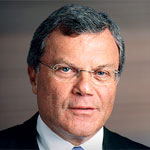
    Martin Sorrell

    Commenting on this new initiative, Martin Sorrell, CEO of WPP Group, of which JWT is a part, said: “In creating “Power of One”, JWT has brought together skills and capabilities from across our Group, for both foods and beverages, under one single unit to provide integrated solutions to PepsiCo’s brands and businesses.” Chauhan said she was “excited to be part of the team”, which she describes as nimble and flexible.


    PepsiCo is upbeat about Ms Chauhan’s return. “It’s great to have Anuja make a strong comeback on the PepsiCo portfolio,” said Deepika Warrier, vice president of marketing at PepsiCo India. “She conceptualised the #BackToSchool video that we recently released digitally. It became a big hit overnight!”


    Santosh Desai

    Santosh Desai, managing director and CEO of Futurebrands, said: PepsiCo needs to take risks and lead the youth rather than following them. Anuja Chauhan is associated with some of greatest ads and therefore the answer is clear. The company needs to go out on a limb and create some great advertising for others to follow.”


    Source:The Economic Times

    Copyright © 2014, Bennett, Coleman & Co. Ltd. All Rights Reserved

    Licensed to republish


  • Lay’s unveils biggest global integrated mktng campaign

    By a correspondent


    PepsiCo’s Global Snacks Group has unveiled its biggest worldwide, integrated marketing campaign ever. The campaign features international football superstar, Leo Messi, on millions of Lay’s packages, including 50 million bags in India, as part of a multi-dimensional effort that includes television advertising, and out-of-home, digital, in-store and point-of-sale executions.


    This global campaign, which will be executed across more than 60 countries, is a direct result of PepsiCo’s ability to leverage its size and scale to improve the impact and efficiencies of local advertising to tell equity-building brand stories on a mass scale.


    Lay’s will be bringing forward the global campaign with international football superstar Messi in India, beginning with a master brand commercial that will be aired on YouTube, starting June 12, 2014. Lay’s will also be activating a Mega Consumer Engagement program led by 3 New Flavours called ‘Football Favorites’, that kick starts with a television commercial (TVC) starting June 20, 2014. These new flavours, along with core flavours of Lay’s, will provide soccer fans an opportunity to watch Messi in live action.


    The master brand commercial and centerpiece of the campaign “Messi Photo,” was shot over the course of three days in Rio De Janeiro, Brazil, and Barcelona, Spain. With the great taste of Lay’s potato chips at the center, the commercial builds off the insight that people enjoy pinching a Lay’s chip whenever they are near one. “Messi Photo” shows that not even a world-class footballer can avoid his fans’ fingers.


    “We are proud to deliver the first-ever global equity integrated marketing campaign for Lay’s using the universally beloved game of football as our backdrop,” shared Lorraine Chow Hansen, president, PepsiCo Global Snacks Group.


    “As a leading macrosnack brand around the world, Lay’s now has a fantastic program that will maximize our brand message throughout globe,” she said.


    Vidur Vyas, Senior Director – Foods Marketing, PepsiCo India said, “Our global campaign with international football superstar Messi offers consumers an exciting opportunity to engage with the brand. True to tradition, the launch of new Football Favourite flavours will offer taste delight, international flavour appeal and the excitement of getting a chance to watch Messi play live.”


    Messi will also appear in a commercial for Pepsi and Lay’s – PepsiCo’s two global flagship brands that are both activating football programs in 2014.The commercial is the biggest global marketing initiative to feature both Pepsi and Lay’s products, and with football as a driver of awareness for PepsiCo’s food and beverage brands around the world, this campaign reflects PepsiCo’s broader strategy to combine the power of global brands, showcasing them better, together.


  • Lloyd Mathias joins HP as CMO

    By A Correspondent


    Lloyd Mathias

    He has headed the marketing and strategy functions at organisations as diverse like Tata Teleservices, Pepsico and Motorola, and now after a two-year entrepreneurial stint with Green Bean Ventures, Lloyd Mathias gets back to the corporate world at Hewlett-Packard India as Chief Marketing Officer.


    As HP’s CMO, Mr Mathias will lead the offensive for the highly promoted HP printers and personal computers. Mr Mathias, who was named among the Top 15 international marketers of the year by Internationallist magazine in 2007, was Chairman of the Media Research Users Council (MRUC) and Co-chairman of the Device Strategy Council of the CDMA Development Group.


  • Oh, yes, but kabhi?


    By Ratna Bhushan


    Why hasn’t IPL title sponsor PepsiCo not featured its prized and most famous brand ambassador MS Dhoni, India captain and captain of IPL team Chennai Super Kings, in any of its IPL ads yet, despite PepsiCo being title sponsor of the IPL, and despite this being peak season for colas?


    Dhoni, the most prominent face of PepsiCo other than actor Ranbir Kapoor, is conspicuously absent in Pepsi’s advertising at least till now in the ongoing IPL, a departure from previous years when PepsiCo, in its trademark flamboyant style, had splashed media bursts on TV and outdoor featuring Dhoni either before the IPL kicked off or coinciding with the start of the tournament. But this time, the cola firm has restrained showing him in ads till now.


    For the time being, PepsiCo has released teaser ads, which are expected to culminate in advertisements showing the India captain and the flavour of the season, cricketer Virat Kohli together as one of the options. But the timing of when these ads will be released isn’t clear yet. A PepsiCo spokesperson, however, said releasing Dhoni ads later in the tournament was part of strategy.


    According to an official, one of the ads showing the Dhoni-Virat duo, which is likely to be released later as the tournament progresses, shows Dhoni as the lesser aggressive of the two and Virat as the younger go-getter.


    The PepsiCo’s IPL ads so far have featured actor Ranbir Kapoor, based on a theme called the Pepsi Intern.


    Last year in January, PepsiCo had announced its Oh Yes Abhi campaign, featuring Ranbir Kapoor, Dhoni and Priyanka Chopra. And the previous year too, Pepsi’s ‘change the game’ advertising featured Dhoni as the star in ads featuring several cricketers including Virat Kohli, Suresh Raina and Harbhajan Singh, along with many top footballers like Didier Drogba and Frank Lampard.


    In Pepsi trademark style, the ‘change the game’ hoardings and ads were pushed very aggressively.


    Two officials who work closely with PepsiCo, said the firm is being cautious about using Dhoni because of the company’s global code of conduct, which says, among other things, that the company needs to restrain itself from showing celebrities who’s names are involved in controversies. PepsiCo works with ad agencies JWT and Dentsu India-owned Taproot.


    “It’s a given that Pepsi would want to cash in on their association with the India captain in peak cola and cricket season. But they are walking a tight rope and need to tread cautiously,” one of the officials mentioned earlier said.


    On the other hand, it would not want to disassociate itself from Dhoni – still a youth icon, hugely popular and a successful captain. But Dhoni’s name is been dragged in the IPL spot-fixing scandal, and he has been alleged to have hidden the fact that Gurunath Meiyappan, named as accused in betting, was not the team principal of Chennai Super Kings but just a cricket enthusiast.


    The IPL probe committee headed by Justice Mudgal indicates that Dhoni did not say the truth on the matter. The Mudgal report also mentions prominent cricketers as involved in spot fixing, though the names of the cricketers are not in public domain yet.


    On the other hand, brands like telecom services player Aircel and Orient are liberally showing ads featuring Dhoni, cashing on the cricket season.


    The IPL is currently being played in the UAE, as its timing clashed with the Elections. The tournament will return to India in its second leg.The time difference between the UAE and India is less than two hours, so the tournament remains a prime time view for Indian audiences.


    Pepsi also happens to be a leading sponsor of the IPL on broadcaster Multi Screen Media.


    Source:The Economic Times

    Copyright © 2014, Bennett, Coleman & Co. Ltd. All Rights Reserved

    Licensed to republish


  • No Coke at IPL stadia as Pepsi likely to be beverages partner of Mumbai Indians

    By Ravi Teja Sharma & Ratna Bhushan


    PepsiCo is close to signing a deal to become the beverages partner of Indian Premier League team Mumbai Indians, potentially shutting out rival Coca-Cola’s products from stadiums hosting the country’s most popular sporting event.


    The US beverages and snacks maker is expected to shell out close to Rs 11 crore for a three-year pouring rights deal with Mumbai Indians, an official closely involved with the developments said. It gives the firm exclusive rights to serve its beverages at teams’ home matches.


    PepsiCo already has pouring rights of seven of the eight teams in the IPL, besides title-sponsorship rights for the cash-rich league. Coca-Cola, which had been holding the pouring rights for Mumbai Indians for three years till last season, has also been in talks to renew its contract with the team.


    “But Coca-Cola is unwilling to pay a premium for the rights and since PepsiCo is already associated strongly with the IPL as title sponsor and with the rest of the teams, PepsiCo has been more keen on the rights,” the official quoted earlier said. A spokesman for Mumbai Indians declined to comment on the potential deal with PepsiCo.


    Spokespersons for PepsiCo and Coca-Cola too declined comment. Cricketer Sachin Tendulkar, who retired last year, represents Mumbai Indians and is also associated with Coca-Cola’s social campaigns. But his contract with the firm is up for renewal this year.


    The firm did not comment on whether it would continue its association with him. Coca-Cola had paid about Rs 5 crore for its three-year deal with the Mumbai franchise.


    Source:The Economic Times

    Copyright © 2014, Bennett, Coleman & Co. Ltd. All Rights Reserved

    Licensed to republish


  • Return of the global desis

    By Kala Vijayaraghavan & Ratna Bhushan


    Sanjiv Mehta, who took charge as MD and CEO of HUL early last month, has never worked in India before. But he has headed two countries and a region (north Africa and Middle-East) in his 21-year career in Unilever. Sources within Unilever say he specifically asked for an India posting.


    Like Mr Mehta, over half-a-dozen top-level executives from P&G, PepsiCo, Mondelez, Coke and Reckitt Benkiser have given up global roles to move back to India in the past six months.


    “India provides a unique leadership experience,” says Samik Basu, chief people officer, PepsiCo India. “It is a highly competitive and complex market and provides an opportunity to combine global learning with local resourcefulness.”


    Gautham Mukkavilli, CEO-beverages, and Chetan Mathur-controller, Pepsico India, both moved back to India from Dubai in mid-2012.


    At Coke, Venkatesh Kini spent three years at the beverage firm’s head office Atlanta as global vice-president for juices, before moving back to Gurgaon as deputy president, India and South West Asia.


    P&G’s Sonali Dhawan moved here as the India marketing leader after leadership roles in Singapore on hair care and more recently as the pet care marketing leader for Asia & Australia-New Zealand.


    So has Vivek Sunder, who has spent a decade outside India in various roles across Thailand, the UK and Singapore, before coming back here in a leadership role in the India sales & distribution team. At least three senior managers from Mondelez International – Arjun Bhowmik, Sid Mukherjee and Venkat Venepally – have also done the same.


    “The most exciting reason for me to come back was that the India business of Mondelez International has been growing at a rapid pace and is one of the key priority markets for the company,” says Arjun Bhowmik, director, expansion, Mondelez. “Also, I wanted to be closer to family and was keen that my daughter should complete her secondary education in India.”


    He worked in the Philippines, Thailand and Indonesia for over seven years. Industry watchers say even with a 6-7 % growth, India fares better than other developed markets.


    “Several managers who had moved straight into global roles are now keen to work in India,” says Rajesh Ramanathan, HR director of Mondelez India. “Those with developed markets exposure now want developing markets and India experience on their CVs.”


    In advertising, Leo Burnett’s Saurabh Varma and Lowe Lintas’ Vikas Mehta both moved back from Singapore.


    “India postings have become hot property since it is an exciting growth market and offers diversity of experience,” says Suchet Narain, MD, DRH International, a global executive search firm.


    “Global organisations are also happy to send their managers to markets such as India to ensure implementation of global best practises such as corporate governance, safety or environment issues.” Most managers have children studying abroad, so they move in with their spouse but may not necessarily stay here long term. India’s infrastructure still compares very badly with other cities globally. “But having India on their CV gives them that depth of experience,” he says.


    Several top managers such as Atul Singh of Coke and V Chandramouli of Cadbury who have been offered global postings are opting to remain in India. Gopal Vittal, former director of HUL’s home and personal care business, once seen as a top candidate for the CEO job, chose to opt out of a plum global posting and quit early last year. Vittal, officials close to the development say, was unwilling to move out of India. He now heads Bharti Airtel in India.


    Says Sameer Wadhawan, VP, HR, Coca-Cola India and South West Asia: “India is emerging as one of the nodal points of the world economy and one-fourth of the world’s population is centred in Asia. India can be an operational hub for global CEOs.” But not all executives want to come back home. “Many young executives in their late 30s or early 40s are still open to take diverse challenges in different countries,” says Sangeeta Pal, partner at search firm Transearch.


    Source:The Economic Times

    Copyright © 2013, Bennett, Coleman & Co. Ltd. All Rights Reserved

    Licensed to republish


  • Yash Raj Films signs big licensing deals with Mattel, PepsiCo, etc. for Dhoom 3

    By Nandini Raghavendra


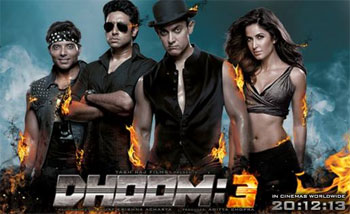
    Dhoom 3 will mark possibly the most-ambitious licensing merchandise programme yet mounted on an Indian film as Yash Raj Films plans to bet big on the licensing market with the third instalment of the popular Dhoom series.


    Yash Raj Films (YRF) has signed licensing deals with a number of companies including Mattel Toys and PepsiCo for Dhoom 3 and more than 100 items ranging from games and toys to gadgets and apparel are set to hit the markets in time for the year-end release of the film.


    “Licensing is on the cusp of experiencing a major breakthrough in the Indian market,” Danny Simon, consultant to YRF and a ‘guru’ in this field, having headed Fox Licensing and managed licensing programmes of Hollywood franchises such as Rambo and Terminator, said.


    “There is an increase of disposable income, the growing influence of media and the development of multiple-store chains,” he said, speaking from Los Angeles. YRF has developed of a fullservice licensing division to maximize the financial and marketing returns that can be derived not only from their own properties, but also through the representation of third-party intellectual material.


    “Dhoom 3 has a list of licensees that include companies such as Mattel Toys (D3 Barbie, Hot Wheels toy products), Pepsi (D3 Drink) to name a few,” Mr Simon said.


    The merchandise would include biker games partnered with Microsoft, funky fashion accessories for men, Ice X Electronics’ Dhoom branded phones and tablets with content from the movie, Mattel’s collector’s edition dolls of Aamir and Katrina, Hot Wheel bikes, race track sets, UNO cards and kids apparel.


    This is the first time Mattel has signed a licensing deal for a Bollywood movie. The worldwide licensing merchandise market is estimated at $123 billion, although it has yet to take off in a big way in India.


    Rohit Sobti, vice president at YRF Licensing, said that while there have been few examples of successful movie merchandise sales in India like Chhota Bheem and royalties range between 5-15% in this business, Mr Simon helped YRF change its perspective on the potential of licensing with some meticulous research and planning over the last year.


    “India is a tough market, but I see a big spike in the next three to five years,” Mr Sobti said, adding that he expects a minimum of Rs 20 crore in sales within the first year of operations of YRF Licensing from Dhoom 3 merchandise alone. YRF also plans to use licensing as the means to monetise other company assets. In the past two years, it has licensed a significant number of products ranging from lifestyle merchandise to social expression products within India and in various international markets.


    After launching Diva’ni, India’s first Bollywood-inspired fashion label, YRF launched musical cards with tunes from their film library, and next on the anvil is branded hospitality rooms as well as cafes. After Dhoom 3, the firm’s immediate plans include leveraging on 1,000 weeks that Dilwale Dulhaniya Le Jayenge (DDLJ) is expected to complete in 2015.


    “The plan is five-fold,” Mr Sobti said. They include products for age groups ranging from 12-40; launch of more brands like Diva’ni for cinema inspired fashion; gaming beginning with Dhoom films; TV animation for kids in 52 episodes with Dhoom 3 as well as films such as Hum Tum; and then, hospitality, rooms, cafes and perhaps even a theme park, he said. Mr Sobti estimates the vertical to grow to a value of Rs 50 crore in the next three years.


    YRF’s consultant Mr Simon said licensing, though a proven marketing model used in several countries around the world, does not suit all films. “It is important to acknowledge that not all films have the ability to support a licensing programme. Therefore, we are focusing on those films that have the ability to generate successful licensing programmes,” he said.


    Source:The Economic Times

    Copyright © 2013, Bennett, Coleman & Co. Ltd. All Rights Reserved

    Licensed to republish


  • Pepsi takes on ‘localikes’: It’s crunchy, it’s munchy, but it’s not Kurkure

    By Rajiv Singh


    Chutkure, Hurhure, Chulhule, Karkare, Taktake – all may be crunchy, but not Kurkure.


    Feeling the heat from a sea of lookalike local and regional brands that have been munching on the popularity of Kurkure over the last few years, beverages and snacks major PepsiCo has finally decided to fight back.


    Tedha’s Straight Journey


    Launched in 1999, Kurkure is not only the first made-for-India salty snack brand from PepsiCo but also among the eight Rs 1,000-crore plus brands in PepsiCo India’s portfolio.


    Over the last few years, the brand has been adding regional flavours. In 2010, Kurkure rolled out an ingredient innovation with the launch of Kurkure made with Rajma. Next year, ‘Ingredients of India’ range rolled out regional flavours like Mumbai Chatpata Usal, Bengali Jhaal and South Spice Mix. Earlier this year, it introduced three new flavour combinations, based on popular international cuisines but with a desi twist-Punjabi Pizza, Andhra Bangkok Curry and Rajasthani Manchurian.


    Last December, the brand went for a makeover. It dropped its long-time mascot Juhi Chawla and roped in five new brand ambassadors-Parineeti Chopra, Kunal Kapoor, Boman Irani, Farida Jalal and Ramya Krishnan-to widen its appeal.


    The latest TV commercial of PepsiCo’s flagship salty snack brand Kurkure asks viewers: Kuch bhi crunchy milega toh khaoge kya? (Will you eat anything that is crunchy?). The advertisement, pushing Rs 5 pack of Kurkure, ends by saying ‘5 Rupaye mein koi khaane waali cheez khao.’


    However, PepsiCo says desi brands are an irritant, but definitely not a headache. “There are over 140 lookalikes of Kurkure,” says Nalin Sood, category director, India Snacks, PepsiCo India Foods, “and over 2,500 local players in this segment.” But we are not feeling the heat from them, he avers.


    The Rs 5 price point is an impulse category where consumers are not emotionally attached to the brand, points out Sood. “Our latest advertisement not only hits at local brands but also tries to inculcate brand loyalty among consumers for this low price point,” he says, explaining the trigger for the latest commercial.


    But marketing and branding experts disagree. The fact that PepsiCo for the first time is urging consumers to make an informed choice while buying snacks says it all.


    “Unarguably, Kurkure is feeling the heat from local brands that are near lookalikes,” says Smitha Sarma Ranganathan, a brand communication specialist who teaches marketing management at IBS Bangalore.


    Instead of targeting some unknown brand in the commercial, the company should have continued with its focus on creating a family-driven context for connecting with Kurkure wherein the brand becomes the snacky content of choice, she adds. “Consumers look for value-for-money and not loyalty at Rs 5 price point.”


    The Head is On

    PepsiCo’s Kurkure and Lay’s, which dominate the Rs 9,500-crore Indian snacks market, have been steadily losing market share to a slew of regional players such as Gujarat-based Balaji, Indore’s Yellow Diamond and DFM Foods’ Crax that have cracked the local market as well as matched global players on pricing, quality and regionalization.


    While the market share of both the brands slipped 2-3% in the April-September period last year, Balaji, Parle, Yellow Diamond and ITC’s Bingo gained, according to Nielsen data. However, PepsiCo’s Sood says the market share of Kurkure is intact.


    Recently, PepsiCo has been facing headwinds not only in the snacks sector but also in the beverages segment, as it reaped less-than-expected returns from Rs 160 crore spent on the sixth edition of IPL.


    While its market share in April this year fell to 29.7% from 32.1% over the same month last year, rival Coca-Cola increased its share to 48.3% from 45.8%. Moreover, PepsiCo’s region president for India and South Asia Manu Anand quit late last month.


    Desi Tadka Rules!

    Desi brands, say FMCG analysts, not only have their finger on the pulse of regional flavor and taste, they also pip global biggies in giving more margin to the local retailers.


    “Local brands know PepsiCo can’t match them in terms of offering high margin to distributors,” says an analyst, requesting anonymity. So the retailers keep pushing desi brands, he says, adding that Rs 5 price point has become highly competitive. “And PepsiCo is feeling the heat because Rs 5 is the single-largest selling pack for Kurkure.” So, they are left with no choice but to react, he says.


    But if PepsiCo indeed is hitting at the local brands, the message that its TVC conveys is tedha (twisted), point out experts.


    They need to make it clear who they are fighting against, says KV Sridhar, chief creative officer of Leo Burnett, Indian subcontinent. “If they are targeting look-alikes, then the advertisement doesn’t talk about it.”


    The TVC shows a chic pack of a 5-rupee snack in the hands of Kunal Kapoor, which supposedly attempts a direct hit at local 5 brands only to that it turns out to be a googly, says Ranganathan of IBS Bangalore.


    A closer look at the pack visual translates into ‘oh-so-familiar looking’ feeling of deja-vu, only to get the consumer relate it to Lay’s, also belonging to the PepsiCo snacks stable, perhaps risking a cannibalisation, she adds.


    Agrees Sridhar. If indeed they are hitting at local brands, then they could have used transparent packs to show that, he says. “In their eagerness to push sales, they have missed out the details.”


    PepsiCo says it carried out intensive pre-tests with consumers before the launch of the TVC. “During the research conducted both prior and post the campaign, an overwhelming majority associated the pack with the unorganised/unbranded snacking options available and not to any branded large national player,” counters PepsiCo’s Sood.


    Source:The Economic Times

    Copyright © 2013, Bennett, Coleman & Co. Ltd. All Rights Reserved

    Licensed to republish


    Box:



  • Early rains knock off fizz for Pepsi, Coke & other ‘thandas’

    By Ratna Bhushan


    Early and heavy rains flooding almost the entire country have hit soft drink sales in June, the most critical month for the Rs 14,000-crore industry.


    “June has been a bad month with sales down across the country because of early rains,” a leading bottler said. “Typically, if the month of June does robust sales, it sets the momentum for the rest of the year. But this year, that’s not been the case,” the person added.


    With growth slowing to single digits, soft drink giants Coca-Cola and PepsiCo are stepping up consumer promotions and trade discounts to push sales. “The firms are discounting heavily to trade and buying volume,” said an executive at a retail chain.


    The April-June quarter marks the highest spurt in soft drink sales in a year, contributing close to 40% of annual sales. A spokesman of PepsiCo India, which makes Pepsi Cola, 7Up lime drink and Aquafina water, however, said August could make up for the slowdown in June.


    For the beverages industry, the five-month period from April-August should be considered as the critical season instead of looking at just one month, he said in response to a query.


    “If monsoon arrives early in some years (say in June), the industry usually witnesses better than average August sales, as monsoon also recedes early in those years,” he said.


    To counter the impact of early monsoon, PepsiCo is focusing on providing better value to consumers through pricing in traditional trade and driving distribution, especially in rural areas. “We also have ongoing consumer promotions in modern trade to drive planned purchases of multi-serve packs for in-home consumption,” the PepsiCo spokesman said.


    A Coca-Cola India spokesperson maintained that the seasonality curve for beverages industry was ‘tapering off’ and that the firm was continuing to offer products in different packs at varying price points.


    Besides trade incentives, Coca-Cola has been pushing 200-ml glass bottles of brand Coke priced at Rs 8 in smaller markets at the cost of profitability, hoping to make up in volumes. In bigger markets, the firm is selling multi-serve packs such as 300-ml, 400-ml and 500-ml bottles.


    The world’s biggest soft drinks firm, which makes Coke, Sprite and Fanta aerated drinks, had posted a robust volume growth of 20% in India, the highest among BRIC countries in the April-June 2012 quarter.


    An industry veteran said the growth would not touch the levels of last year in the June quarter. “Market conditions are very different now and consumption is down. The unseasonal rains have added to the tough times,” the person said.


    During January-March, Coca-Cola had posted 8% volume growth in India. PepsiCo does not declare volume sales of its India division.


    According to India meteorological department, the country received its heaviest rainfall in 12 years in the month of June, and the monsoon season is expected to last through September. The department also said that the south-west monsoon has advanced the fastest this year over a period of 50 years, a month earlier than expected.


    Last month, rains and flash floods wreaked havoc in Uttarakhand, a sizeable tourism market for beverages, especially in peak season.


    Source:The Economic Times

    Copyright © 2013, Bennett, Coleman & Co. Ltd. All Rights Reserved

    Licensed to republish


  • Kohli ousts Sehwag in Top 3 sports endorsers in 2012

    By Samidha Sharma


    The number of brands which associated with sports came down last year compared to 2011. However, international sports celebrities made a significant impact in this period, indicating the growing relevance of football and other global sports in India.


    Only 128 unique brands placed their bets on sportspersons last year compared to 140 in 2011 even as more non-Indian sports celebrities were visible across different media platforms, according to findings of a study shared exclusively. Despite fewer individual brands piggybacking on sports, more sports celebrities were seen in advertisements throughout last year, said a study conducted by Tenvic, a sports training and consulting firm co-founded by former Indian Test cricket captain Anil Kumble.


    “There could be seasonality attached to these numbers as 2011 was the year of the cricket world cup. But what is clearly a trend is the growing relevance of international sports celebrities in India. This is a result of the huge exposure to various football leagues and popularity of Formula One and golf. Today, global brands don’t need to customize their campaigns for Indians as these sportspersons are familiar names now here as well,” said Nitya Guruvayurappan, marketing head, Tenvic. In the brand endorsement space, football and Formula One will definitely get greater recognition, she said.


    The influx of non-Indian sportspersons increased from being around 25% of the total volume in 2009 to up to 40-45% of sportspersons used as endorsers in 2010 and 2011. With the 2012 Olympics, the proportion of Indian sportspersons has once again gone up as a percentage of the total, since sportspersons from several Olympic sports were signed up by brands.


    Still, cricket accounts for 45% of the entire sports endorsement market, followed by football at 17%, which is largely international in nature. What is interesting is that the cricketing endorser pool as a percentage of the total endorsers declined in 2011 as against 2009, despite it being the year of the cricket world cup. But most brands such as cola major PepsiCo which has been riding on sports largely cricket still bet on the sport. Homi Battiwalla, senior director, marketing, colas, juices and hydration, PepsiCo India, said, “Sports is a key communication platform for brands in our portfolio; whether it’s cricket for Pepsi and Lay’s or action sports for Mountain Dew. Specifically with cricket, the sheer popularity of the sport in India makes it an exciting property to reach out to our target audience, especially youth.”


    The Top 15 sports brand ambassadors in the 2009-2012 period make up for 50% of the total number of endorsement associations in this period, on a base of 140 sportspersons. This top 15 does not have any non-Indians. The top three endorsers, Dhoni, Sachin and Sehwag, have been consistent in the period 2009 to 2011, but last year Virat Kohli ousted Sehwag from the third position.


    Badminton star Sania Nehwal is the biggest non-cricket star having endorsed 10 brands followed by retired footballer Baiching Bhutia, who associated with nine brands in this period, said the Tenvic study which tracked the Indian sports celebrity market over the last four years.


    Source:The Economic Times

    Copyright © 2013, Bennett, Coleman & Co. Ltd. All Rights Reserved


  • Kiranas dump big brands for high margin Bharti Walmart wares

    By Sagar Malviya


    A few months ago, Dhananjay Jain, a grocery owner at Vidisha Road in Bhopal, decided to stock two alien brands – Right Buy and Members Mark – because they offered much higher margins than national brands and had lower price tags. Today, these floor cleaners, tea and cornflakes brands contribute nearly 20 per cent to his monthly sales.
     

    Many of his consumers may still have no idea where these brands priced 10-30 per cent less than those of Hindustan Unilever, Dabur and PepsiCo are sourced from. Well, they come from the world’s largest retailer, Walmart.


    Mr Jain gets these brands from a Best Price Modern Wholesale outlet – run by Walmart’s joint venture with Bharti Enterprises – just two kilometres from his store.


    Walmart is not allowed to sell directly to Indian consumers yet, but its brands across some three dozen categories have started sliding into Indian homes, as its cash-and-carry venture becomes a hit among grocery shop owners.


    “The idea is that the reseller should make more profits by selling our brands than he does by selling national brands,” said Arvind Mediratta, chief operating officer of Bharti Walmart. He said the firm’s private labels adhere to all the quality norms despite their lower price tags.


    Bharti Walmart operates 17 cashand-carry format Best Price Wholesale outlets, selling products to licensed neighbourhood stores, schools, offices and large enterprises. It has more than 3 lakh members, who own grocery stores.


    The firm launched Right Buy and Members Mark after phasing out its earlier brand Great Value, which is now restricted to Bharti’s Easy Day supermarket chain.


    So far, Walmart has developed a network of 100 suppliers to make private label products ranging from groceries, home care and personal care products to apparel and stationery. And it may soon get into categories such as soaps, shampoos and detergent. “We are planning to add several more categories in coming months and open over 10 outlets by next year,” Mr Mediratta said.


    Company officials say its brands already control 20-22 per cent share in most categories at its members’ outlets. Some shop owners even say they have stopped stocking national brands. “In categories such as floor cleaners and dish washing, we have stopped stocking national brands as consumers just want the lowest priced products in these segments,” said Mohammed Fayaz, a storeowner at Guntur in Andhra Pradesh, where Walmart has opened two wholesale outlets.


    What excites kiranawallahs is the huge margin they get. For instance, a 500ml bottle of Walmart’s toilet cleaner brand sports a price tag of Rs55 but is available to a kirana owner at Rs37. That makes the retailer’s margin a whopping 48 per cent. National rivals such as Reckitt Benckiser’s Harpic and HUL’s Domex are sold at Rs58, with the grocer earning 12-15 per cent margin on an average. Bharti Walmart also provides 10-30 per cent higher margins than national brands on tea, colas and juices that allow shopkeepers earn 10-30 per cent higher margins than national brands. Consumer products companies have been increasingly fighting private labels of modern retailers.


    In fact, private labels outsell several national brands in home care and packaged food categories at the outlets of retailers such as Future Group, Reliance Retail and Aditya Birla Group.


    FMCG companies didn’t feel too threatened because modern trade accounts for just 7-10 per cent of their total sales. But now, with Walmart’s private labels finding place in consumer companies’ largest sales channel – the country’s ubiquitous neighbourhood stores – this trend could become a headache for them.


    “As Walmart and other similar players scale up their cash-and-carry operations, given the price consciousness of the Indian consumer and the fact that kirana stores are here to stay, it is likely that this trend will start to worry large consumer goods companies,” said Siddharth Bafna, partner at advisory firm Lodha & Co.


    Not everybody agrees. The chief executive of a leading consumer products firm, however, said such private labels would not challenge big brands in evolved categories such as personal care. “There are always some categories, especially commodities, that are more prone to losing out to private labels because of pricing. However, several brands in the personal care segment that keep innovating aren’t threatened by private labels even in markets where modern trade is evolved,” the person said, requesting anonymity because Walmart is one of its partners.


    Some shopkeepers say it’s not easy to make people try new brands. “We are able to convince some consumers to opt for lower priced Walmart brands. But there are still many consumers who want to buy popular brands from national companies even if the price is higher,” said Jas Karan Singh, a store owner in Amritsar, where Walmart opened its first cash-and-carry outlet four years ago. Private labels accounted for around 7 per cent of Bharti Walmart’s annual sales of Rs 1,876 crore last calendar at over Rs 130 crore.


    Worldwide, the US retail giant is performing well despite the slowdown. For the fiscal year ended January 2012, it increased net sales by 5.9 per cent to $443.9 billion and ranked first on the 2011 Fortune 500 list of the world’s largest companies by revenues.


    Source: The Economic Times

    Copyright © 2012, Bennett, Coleman & Co. Ltd. All Rights Reserved


  • It’s wrong for us to say that India is slowing down: Muhtar Kent, Coca-Cola

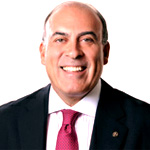
    Muhtar Kent

    By A Correspondent


    Unfazed by the economic slowdown and talks of policy paralysis, Muhtar Kent, global chairman and CEO of beverage maker Coca-Cola, on Tuesday announced a fresh investment of $3 billion (approx Rs17,000 crore) over an  eight-year period for expanding its bottling, cooling, and distribution operations as well as accelerating its pace of growth in India.


    “Whether or not the government makes policy changes, we continue to announce investments in India,” Mr Kent said, adding that the company’s focus would be on ‘continuing to be flexible, and work with more speed than ever before’.


    “Yes, there are some issues in the world economy. But it’s wrong for us to say that India, or China, or Brazil or any emerging market is slowing down. As you go up, the oxygen gets thinner. What’s being created today at 6-7 per cent GDP is incrementally much higher than it was some years back… what’s more important is sustainable growth and not growth that can’t be controlled, ” he added.


    The $3-billion investment is over and above the $2 billion, the maker of Thums Up cola and Kinley water had announced last November. The company has invested $2billion in India since 1993, when it-entered the country.


    Mr Kent said he expects India to be among its top 5 markets soon’, up from its current No 7 ranking. “This is a realistic goal. India’s demographic, economic and social trends are all huge drivers of growth. Six years ago, we were not strong here, not at all… but India has been a remarkable turnaround story,” he said.


    The CEO, who got a pay package of $21.2 million last year, up 10 per cent from the previous year, flew down in his private jet with close family and friends on what is his first India visit as Chairman on Monday night. During his three-day India stay, he is visiting the Taj Mahal in Agra, making a flying visit to Amritsar to meet a handful of key bottlers and attending a Coke Studio concert in Delhi. Thrown in between is a town hall meeting with Coca-Cola employees, a few market visits and a visit to the beverage giant’s headquarters in Gurgaon. Unlike rival PepsiCo’s Chennai-born global CEO and Chairman Indra Nooyi who’s a frequent visitor to India – a key growth bastion for both cola majors – Turkish American Kent had not visited India since he took over the corner office at Coca-Cola’s headquarters in Atlanta in 2008.


    Coca-Cola’s portfolio in India includes aerated drinks Coke, Thums Up, Fanta, Sprite and Limca, Kinley water and Minute Maid juices. Even after two decades of being here, the beverage maker’s top-selling drink here remains Thums Up, which it acquired from Ramesh Chauhan-owned Parle Bisleri.


    But Mr Kent said the choice depended on ‘the consumer’. “We remain “constructively discontent and we believe we are just getting started. We need to make sure we provide choices to consumers… responsible choices. And help create solutions for over-nutrition and under-nutrition,” he said.


    Like most food and beverage firms worldwide, Coca-Cola too is trying to transform itself as a ‘health and nutrition-focused company’. But over three-fourths of Coca-Cola’s revenues continue to come from sugary aerated drinks . “We let the consumer decide what he wants…. and we label our products responsibly.” said Mr Kent.


    Like its American rival PepsiCo, Coca-Cola too, has been depending on India for driving double digit growth. For fiscal 2011, for example, Coca-Cola said its global volume grew 5 per cent, aided by key emerging markets such as Latin America, India and China. A consistent growth performer, Coke’s India business has been growing for the last 23 quarters, of which 17 were in double digits.


    Source: The Economic Times

    Copyright © 2012, Bennett, Coleman & Co. Ltd. All Rights Reserved