Tag: Outlook

  • The Half-Year That Was


    By A Correspondent


    It’s July 2 today, and the first six months of the year have passed. While the slowdown has impacted spends in a major way, most of the 182 days from Jan to June have been eventful. On the positive side: new television channels, new agencies – media and creative, consolidation, people and account movements, government issues, digitization, awards… the list could go on. And on the negative: a channel being shut, pink slips, pay cuts, appraisals deferred, digitization delayed… the list could go on here too.


    We have already embarked on the second half of the year, but as we do that, here’s a quick look at how industry captains review the half-year. We present you the half-yearly review in two parts… the first today and the second mid-week… on Wednesday.


    As you would gather, there is much gloom in the industry, though no despair. Not yet.


    ADSPENDS:


    Nagesh Alai, President, Advertising Agencies Association of India (AAAI) & Executive Director, India Operations, Draftfcb Ulka Group

    Nagesh Alai

    If I were to summarize the indications of the economy, then one has seen softness beginning last November and December leading to a situation of downturn. The macro-economic indications like rupee falling, impact in production and fall in demands have also reflected in the consumer behaviour in a negative way. The last quarter of 2011-12 (Jan-March) has seen a fall in GDP to 5.3 per cent. All this have impacted the manufactures as well as service providers, with the mood being that of postponing a decision. While some would have thought that the situation would not impact FMCG, but that one has seen a resistance from that sector too.


    So in terms of advertising, the impact being in terms of ad outlays and remuneration; while the latter has been up for constant negotiation and any further would only impact the quality of service being provided, it’s the latter that is being hit now. I think this year one would see a growth of maximum 10-12 per cent as compared to 14-15 per cent in the past. While print and TV still comprise 80 per cent of the spends, but advertisers are looking at newer mediums, where the spends is not high and get better mileage for monies being spent.


    I personally believe that even if government were to take corrective measures, one will only begin to see the recovery by mid-2013. The mood can be aptly summarized as being that of cautious approach.


    PRINT:


    Narendra Kumar Alambara, COO, Thanthi Group

    Narendra Kumar Alambara

    In terms of the regional publications, I would say that the past six months have been good and bad. If one looks at readership and circulation, the regional dailies have seen an increase vis-à-vis the English language publications. However, there is a need to be bold and unconventional when it comes to regional publications, both by those selling this space and advertisers themselves. In today’s time when every paisa has to be accounted for in terms of returns, I think regional publications would have been an excellent answer to have targeted reach because of the value they provides for the money and reach.


    However, we have failed to do that. Today when most media houses are not restricted to being uni-dimensional and have different platforms for advertisers be it television, print, digital and even regional newspapers and channels under their umbrella; I think the solution lies in integrating various offerings, including the regional to get a better value and growth.


    Krishna Prasad, Editor-Outlook

    It’s difficult to put a number as yet on the kind of growth that has been witnessed, but you will always see print being challenged by television and other mediums. As far as the past six months are concerned, I would say the growth of print has been at par. By this I mean that even though most advertisers have huge monies, they are shying away from advertising with this medium. This is somewhat similar to what was observed during 2008, where companies didn’t have any reason to opt for cost-cutting, but were up for it. Many advertisers are seeing this downturn as a reason to go easy with their spending and not be too extravagant.


    Most newspapers today, especially in Delhi like Delhi Times, Hindustan Times and others appear chunky in their appearance, which gives you a sense that all is well but that may not necessarily be the case. Most of them are actually going slow with their spending and are trying to play it safe. I expect things to look better from October onwards – around the festival period. So largely, the growth of media will be dominated by how the economy transforms itself; it’s not operating in a vacuum. That’s the best case scenario.


    But the worst case scenario is that it may take a little bit longer for things to get better; perhaps with the elections coming up soon, with the country seeing a new Finance Minister and the markets going topsy-turvy, the print industry may still take some time to stabilise itself.


    RADIO:

     

    Prashant Panday

    Prashant Panday, CEO, Radio Mirchi

    The radio industry has been hit just as hard as any other segment. Maybe a little less than print and a little more than TV. The economic slow-down and the policy freeze has made advertisers a little wary. They are not exactly cutting spends, but they are demanding more from broadcasters. A broadcaster can either cut prices or offer more for the same. In some sectors, the advertising cut has been more severe like telecom, real estate and so on. But there are other segments that have done better – like core retail, and even auto.


    Given the economic conditions, and the lack of new frequencies, radio has done as well as it possible can.
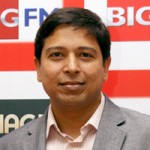
     

    Rabe T Iyer

    Rabe T Iyer, Business Head, BIG FM

    The last financial year was alright, but the last three months have been pretty flat. The reason for that is because categories like BSFI, Auto and some of the campaigns of the usual summer categories were a bit slow. Nevertheless, we expect the next three to six months to be a good run. This is because people ultimately want to keep their goods moving, and hence the next three to six months are going to be good. The last three months were flat for the industry because the dollar exchange hit the sentiments and some categories which were expected to fire up in the month of May-June have taken some more time, mainly because of the overall economy conditions and the sentiments attached to it, and also because of the fluctuating dollar prices. This has directly impacted the ad spends, not just on radio, but across the portfolio on media brands.
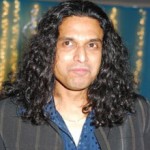
     

    Ashit Kukian

    Ashit Kukian, COO, Radio City

    The last six months has been very good for the radio industry. One of the reasons I would say is because the core advertising categories in radio namely: Telecom, FMCG, and Entertainment channels to name a few, had increased their advertising spends on radio.


    DIGITAL:


    Chhaya Balachandran Aiyer, CEO and MD, BCWebWise

    Chhaya Balachandran Aiyer

    More and more brands are getting ready to seriously look at digital media and those who have been using it already, are increasing their spends. Digital is expected to deliver more cost-effectively. Amazingly, even production charges of films are expected to be cheaper, if they are being produced by digital agencies. It would help if brands which see real value in digital and see it delivering, also realize that results won’t come if they tighten their purse strings so much. Fortunately, there are a few clients who have realized the quality v/s quantity value and are waking up to the real digital age and extending their budgets.
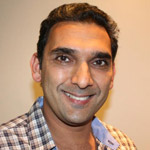


    Rajiv Hiranandani

    Rajiv Hiranandani, Co-founder and Executive Director, Altruist, Mobile2win

    I think the mobile industry has underperformed in last six months, as per the overall outlook was supposed to be, in terms of number of handsets sold and amount of value-added services (VAS) consumed. Mobile industry has seen its slowest growth, and this has been also because of the negative outlook in the economy. Some of the reasons have been people waiting for better handsets models, the overall mood of economy not being good, and mobile VAS seeing a lot of restrictions in terms of TRAI guidelines.


    OOH:


    Noomi Mehta, Chairman and Managing Director, Selvel One Group
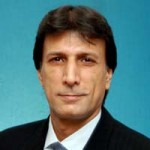
    Noomi Mehta

    The last six months have not been good for the out-of-home (OOH) industry. The month of June, however, has seen a significant improvement, which is perhaps because the IPL campaigns in the months of April and May have fructified. Otherwise, I believe, the industry figures have been down. The markets, by and large, seem to be in a depressed state, along with the economy. Going forward, one of the basic steps needed to improve the industry’s performance is the need for a common currency for measurement. OOH is part and parcel of the country’s economy, and hence it will also be subject to the same pressures as the economy.


    Image: Rafiq
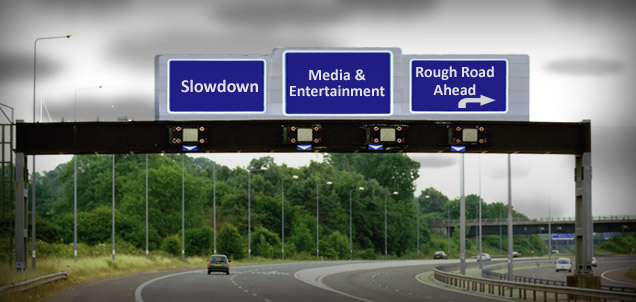
     

  • Rough roads ahead for M&E, but not everyone’s complaining


    By Johnson Napier with Tuhina Anand, Shruti Pushkarna, Meghna Sharma and Shubhangi Mehta


    Not many in the business arena would want to relive the harsh moments of 2008-09, which saw the economy at its most downward. While the phase did see a few corporate entities engage in a growth spree of daredevilry proportions, most brands were put to the ultimate test of surviving the slowdown odds or risk folding up business. The phase was, as most experts would agree, the toughest that had hit the Indian shores in a long time. And that there wouldn’t be anything harsher than that in a long time to come.


    But then that phase was a thing of the past and if one has to assess the current scenario, there is a sentiment of adversity that’s staging a strong comeback yet again. Given the spate of hurdles facing the economy like rising inflation, hike in petroleum prices, falling value of rupee and global uncertainty, the question doing the rounds is whether the current economic crisis is putting as much strain on the industry as it did in 2008-09? And, importantly, will the gloom see the growth numbers nosedive to lower levels than what was originally anticipated for 2012-13?


    To recap the growth numbers that was predicted for the media industry for 2012, Mindshare’s annual report – ‘This Year, Next Year: Indian Media Forecasts’ – had projected net revenue for 2012 at Rs37,397 crore, slated to grow at 12 per cent over 2011. This was somewhat close to the kind of growth that was witnessed in 2011, which stood at 12.8 per cent. But with the current crisis refusing to die down and with the sector already moving at a slow pace since January this year, the growth figures may see a marginal fall or remain stagnant.


    Sectoral evaluation

    Providing his outlook, Sujay Ghosh, Senior Vice President, DDBMudra South said that there is indeed a slowdown being felt across sectors. “There is a slowdown across several sectors like retail, apparel, real estate to name a few. As it happens with every slowdown, consumer spending gets concentrated on essentials and indulgences get affected. So, footfalls have shrunk and “like to like” buying has also come down. And with the petrol price hike, things will worsen further.”


    Divya Gupta

    Sharing a similar sentiment, Divya Gupta, CEO, Dentsu India said that there is a slowdown being witnessed in certain sectors, but then there are others that are doing business as usual.


    When analysed further across sectors, the buzzword that’s doing the rounds is “caution”. Expressing such a trend in the domain of television, Ravikumar Gilganchi, VP, Sales, Kasthuri TV shared that in the last two months there has been an increased demand from the advertisers on returns and they have become very rigid on spending: “The dip would be around 15-20 per cent. However, I would like to believe that this is a short-term scenario and by June things would bounce back to normal.” His reason being that since it’s just the start of the financial year many would still be getting their budgets approved and hence, June is when the action would begin.


    Sujay Ghosh

    He further shared: “For the first rung channels, there is not much choice for advertisers and they will go with whatever price is being quoted with not much negotiation as they would want that channel to be part of their media plan. They would start negotiating hard with second rung channels where there are many options available.”


    And it’s not just broadcasters who are feeling the heat. Production houses that play an integral part in the broadcast business too are seeing a rough patch. Hemal Thakkar, Director, Playtime Creations, whose show ‘Ruk Jana Nahi’ airs on Star Plus said, “This time economic slowdown has brought inflation with it which is the biggest cause of concern. This has led to a spike in manufacturing cost of product and budget limitation puts everyone in a spot. Interest costs too have shot up in last two years and so it triples the burden of execution in limited budget.”


    Hemal Thakkar

    But Rahul Kumar Tewary from Swastik Productions Pvt Ltd  whose show Navya airs on Star Plus thinks there is also an opportunity in all this: “The economic downturn has affected the industry as can be seen with the shutdown of channels like Imagine, but it hasn’t made any impact on the major players. The TV industry is on track for major growth as per the industry reports.” According to him, there are unlimited opportunities in the media space as it is a growing industry.


    Another sector that may see a saturated growth pattern is print, which is the second favourite with the brands after television. Alok Sanwal, Project Head & Editor, Inext, expressed concern as he said, “Largely, there is a note of caution for each one of us and this phenomenon is something that a lot of ad agencies had predicted from the beginning of the year for us. If we look at the larger advertising scenario, it was not good even last year. As of now things have been fine for most publications, including us. I feel each one of us have to be sceptical of how things would shape up in the second and third quarter of 2012-13.”


    Rahul Kumar

    As for the larger players, Sanwal feels that there is a word of caution there and the trend is utilitarian, by which he means, it is extremely sales driven: “So to that level, I think, it is a challenge for them. At the end, revenues may continue to grow but the larger challenge would be how to control expenses or optimise investments.”


    R Rajmohan, publisher, Open said: “What we are seeing now is worrisome but the print industry has been witnessing a slump from January this year onwards. The range varies across newspapers and magazines and in some cases it is much more than 20 per cent drop in revenues. The market sentiments have not been positive for a long time and this has led to people curtailing their ad spends on a large scale.” As for the brands, he feels they are playing the game of caution. “They will only spend where they see a genuine need. As for the genre, I feel the lifestyle magazines would continue to do well while the others may not do so well. But the scenario may change with the onset of the festival season. Till then it is wait and watch.”


    But there are those who believe that the scenario is not as bad for the sector and that it is on track for recording modest growth. Krishna Prasad, Editor, Outlook said: “I don’t know if the sentiment is as gloomy as it looks. If you look at the papers and magazines, there are so many sectors that are still promoting ads in them. The media, per se, has been witnessing tremendous action with so many new channels being launched and so many acquisitions and takeovers being the order of the day. So from a macro view, the economic gloom is not really taking a toll on our industry. But that does not mean all our problems are over, far from that. Oil prices are shooting through the roof, the value of rupee is falling further and all these factors will make our growth a challenge. We will have to see how things pan out in a couple of months from now.”


    He added: “Brands are being careful with their spends. Even big brands are treading cautiously and are not going overboard, unless required. We will have to wait and see what the forthcoming months will unfold for the print industry.”


    Agreeing with him, Mr Ghosh said that there are indeed pressures being felt by the clients as well: “There are client pressures in terms of numbers and therefore the client expects us to value add…in terms of strategic thinking on how to get more share of wallet. So our involvement with the client has gone up significantly. Similarly, the clients are concentrating on trying to get more out of their spends from everywhere.”


    He further stated: “I think the spends will remain constant or probably fall a little but nothing drastic will happen. Because the clients have been through it earlier and are experienced enough in not going overboard with expenses…especially with hiring, inventories and so on. So they won’t have to cut down much on marketing spends or any other spends for that matter.”


    Need for self-introspection

    KV Sridhar

    Always the one to be bridging the gap between the client and the consumer, the advertising agencies too are approaching the gloom with a note of caution. Providing his outlook, KV Sridhar, NCD, Leo Burnett, said: “If the industry is affected, the agency is affected and all this is caused by our internal issues more than the external issues. There are three pointers to this. First, advertisers do cost cutting and there are agencies available that are ready to work at lesser prices, this in turn affects the complete industry. Second, there are inefficient government policies, where the government is neither affected nor concerned about the sky-scraping inflation. And third, it’s the fact that we are all a part of a global family as an advertising fraternity. Keeping all this in mind we can still expect a double digit growth, the issue being that growth is also not enough for us, we are always aiming for more.”


    Agnello Dias

    Agnello Dias of Taproot India spoke on behalf of small and independent agencies when he said: “Ours is a small and independent agency, and hence personally, I do not think that agencies like us get affected by slowdown. It’s actually the bigger agencies having clients who play a part in the rise and fall of the economy of the country who get affected by the slowdown.”


    Representing the industry as president of AAAI and also the Executive Director – India Operations of Draftfcb Ulka Group, Nagesh Alai too feels that the current slowdown is affecting the advertising industry: “The advertising industry, to a considerable extent, is linked to the fortunes of the country’s economy/GDP. The recalibration of GDP growth to under 7 per cent, the high inflation, the high interest rates, falling FDI inflows and share portfolio pullouts, the plunging rupee, lowered credit rating, policy paralysis at the government et al have significantly heightened concerns in the business world and that is reflected in poor business confidence.” According to him, while a few sectors like FMCG seem a bit more confident, most other sectors are seeing a softening and are seeing revenue and profit pressures.


    Suggesting the possible solution that agencies could adapt, he said: “Overall, it’s going to be quite a challenging 2012. Most agencies will be affected and may have to relook at their numbers. Having said that, it is better to accept the situation as a business cycle and weather it with prudence and caution. It’s certainly not gloom and doom. My sense is that this time around, it is entirely up to us to rescue the situation and the sooner we do it, the better it will be for everybody. I only hope that the incumbent government gets out of paralysis and inaction and takes some positive steps in the interest of our economy and its people, if they are hoping to win at the 2014 general elections.”


    Though a relatively small domain, Out of Home too is seeing the effects of the slowdown. Sunder Hemrajani, MD, Times OOH highlighted the trend as he said: “After the last slowdown which happened in 2008-09, when the industry actually declined, subsequently the industry had two good years, 2010-11 and virtually 2011-12. The last year, 2011-12 started well for the industry, in the first half from April to September, the (Out of Home) industry saw good double digit growth rates. The slowdown started in November and carried on right upto March and April this year. So overall, you had a situation where the industry grew at about 8 per cent but first half was significantly better than the second half.”


    According to Mr Hemrajani, what has happened is the whole environment, and this is true not just of OOH but all media segments, has become very uncertain. “As a result of that uncertainty you find that people are holding on, clients are not making long term commitments. Earlier one used to get an annual deal or a six months deal, but now they have become three months and one month…so the level of commitment is becoming more short-term rather than long-term. Secondly, the pricing…it’s becoming difficult to increase prices and in some segments the prices have declined as well.”


    But the situation is not as bad for Rajan Mehta, Founder and CEO, LiveMedia. He said, “Contrary to the current economic situation, our business is growing quarter on quarter. Possibly because it’s new and hasn’t hit saturation as yet and also because it is very well targeted and hence cost effective. We are seeing that marketers for whom we were not a priority medium earlier are beginning to consider us as their media budgets have been reduced. They say ‘necessity is the mother of invention’ and therefore it is in these hard times that when advertisers are being challenged to get a bang for their buck that they are discovering and adopting mediums like LiveMedia.”


    Adding his thoughts, Haresh Nayak, MD, Posterscope Group India said, “From trade point of view we are seeing trends as close to 2008 and clearly non occupancy has gone up resulting in loss of business. This coinciding with monsoon which is supposed to be the lean period for OOH has brought down business and according to our estimates the non-occupancy has gone to 50 per cent. Though we implemented 18 campaigns last month, we are seeing a trend of quick availability and ease in implementing large campaigns due to slowdown.”


    With the rupee showing slow signs of recovery and with petroleum prices expected to be hiked further in the coming months, the M&E industry will have to look at alternative strategies to see itself emerge stronger from the economic broil. It may help that the mediums of digital, radio and so on are putting up a strong show, especially digital that is scheduled to grow in excess of 30 per cent. Radio, too, could make merry with the stage set for phase 3 rollout, providing them alternate streams for revenue generation. For now, players are opting to tread on the cautious route and one will have to wait a couple of quarters before the fate of the sector could be ascertained.


  • Paranjoy Guha Thakurta upgrades book on ethics


    By Shruti Pushkarna


    Veteran journalist, Paranjoy Guha Thakurta came out with a second expanded edition of his book, ‘Media Ethics: Truth, Fairness and Objectivity’. The revised edition of the book was launched in the capital on April 27 at the India International Centre.


    The first edition of this book had come out in 2009. When asked, why he decided to bring out a second edition, Mr Thakurta told MxMIndia, “After the book came out three years ago, a lot of people came up with suggestions on how this book could be improved. So this book is about 40 per cent bigger than the earlier edition and there are new chapters…there is an entirely new chapter on corruption in media. There’s also a new chapter on Reality television and some of the existing chapters have been drastically rewritten and revamped.”


    ‘Media Ethics’ discusses key ethical issues in media today, delving into issues like truth, objectivity, sensitivity and privacy. The expanded edition has new chapters on paid news and reality television. It has also has revised chapters on introduction to media ethics, media market, new media and ethics of advertising.


    Attending the event were senior journalists, academicians and students. The launch was followed by a discussion on media ethics by an eminent panel comprising Chief Election Commissioner, SY Quraishi, and senior journalists, Vinod Mehta and Rajdeep Sardesai.


    Media has to inform and educate…

    Addressing the gathering at the book launch, Chief Election Commissioner SY Quraishi said, “The title of this book, truth, fairness and objectivity is an acid test of media’s fairness. This book is a virtual encyclopaedia and Paranjoy is a crusader of media ethics.”


    Mr Quraishi, in his address, also touched upon issues like paid news, opinion polls, hate mails on social media and the whole debate around freedom of expression in the internet age. He said: “Media has a duty to inform and educate the citizens of this country. And, in the context of elections, media has assumed new proportions. There was a revolutionary 30 per cent increase in the voters turn out in UP this year because of the partnership between the CEC and the media.”


    Talking about freedom of expression, he said, “No one wants to encroach on freedom of expression but there are some things which are illegal. Anonymity of the internet media is disturbing and damaging.” Mr Quraishi concluded by saying that media is like the eyes and ears of the society and we should do everything possible to check malpractices in media.


    Editors are like ordinary people…

    Mr Vinod Mehta, Advisor, Outlook magazine started his address by saying that the custodian of any media organization is its Editor. If the Editor is corrupt, the organization is corrupt. He said: “The biggest myth about media is that editors are like gods, that they are independent, that they make no mistakes and they are on a social mission to tell the truth. While this might largely be true, it is highly exaggerated. Editors are like ordinary people, often most opinionated, and they have a view on everything. So they come with their own baggage. So what you get in media is various shades of opinions where the editor’s point of view is reflected. After this polarization of views, in the end you get something approximating the truth.”


    Mr Mehta added that one of the greatest assets of media, which is public trust, is declining and the uproar that used to be about the fourth estate has gone down significantly in the last few years.


    According to Mr Mehta, two reasons for the rise of unethical practices in media are: the reluctance on the part of media persons to admit their mistakes and secondly, intense competition, which has created its own problems. He also said that Editors often assume a larger than life role, thinking that they are setting the national agenda. He said: “We journalists are not players, we have the best ring side seats but we are not players, we can’t get involved in the game.”


    On self-regulation, Mr Mehta said: “We in the media are always telling the other guy what’s wrong, we never correct ourselves. Self-regulation is always for the other guy. So I believe we need a strict code of conduct.” Mr Mehta also suggested that all Editors like politicians should declare their assets on the Editors’ Guild website.


    Problem lies in the business model…

    Mr Rajdeep Sardesai, Editor-in-Chief, IBN18 Network confessed: “Media is more powerful than ever before, but it is also less respected than ever before. In this age of quantification we are facing a credibility crisis.” But he added that the viewer has almost a ‘schizophrenic’ attitude towards the media, so the messenger (media) who is expected to play ‘god’ is repeatedly shot at. Mr Sardesai indicated two main threats to the main stream media, internal and external. Talking of the external threat he said: “The business model is the main problem. The declining ethical standards are because of how the business model is, where 95 per cent dependency for revenues is on advertisements. The channels have to pay what is called a carriage fee, which is actually illegal and completely unethical.”


    Mr Sardesai offered ‘disclosure’ as a solution to paid news. He said: “If it is paid news, then it needs to be said that it is paid news. Disclosure is the only way out, tell the world it is paid news. If an advertiser or a political party is sponsoring a certain programme, then you need to mention outright that the show is sponsored by xyz. But the problem is, in this era of maddening competition and declining revenue, who will set the rules of disclosure?”


    Speaking of the internal threat, Mr Sardesai said that this is one area where you can’t blame the proprietor. He said: “Who asked us (journalists) to replace sense with sensationalism, to replace news with noise? The moral compass that makes journalism different from any other profession has gone.” Mr Sardesai cited the example of theNorwayissue where a domestic problem within a span of no time took the shape of a diplomatic battle.


    He also added that what has changed about media today is the fact that the public is turning against media, the public is willing to teach media a lesson. For ethical cleansing to happen, Mr Sardesai concluded, “We have to name and shame the transgressors and the naming and shaming has to happen by someone within the system.”


  • [MJR] It’s all about how the media operates

    By Ranjona Banerji


    The most serious news programme on TV sometimes is The Daily Show by Jon Stewart, aired every week night on Comedy Central at 11.30pm. The only show that comes close is, of course, The Week That Wasn’t on CNN-IBN with Cyrus Broacha.


    On Monday night, on The Daily Show, Stewart was all ready to discuss the fact that the Trayvon Martin case was finally going to trial. He was ready with the legalities of the case. Only, his reporters all vanished on him. There they were in Florida, standing outside the courthouse, because story was now no longer about George Zimmerman shooting Trayvon Martin: it was about the media and its reactions.


    A programme with a 24-hour discussion on whether the media was over-reacting was proposed. As Stewart had fits in the studio and ordered his reporters to get back to New York, they refused saying that this case was already being called the “case of the century”, “case of the millennium” and “case of the millennia” and they were not going to lose out.


    What a fine exaggeration of the way the media operates, I giggled to myself.

    Then, at midnight, I shifted to Times Now. Only to see Arnab Goswami in fine form, as he held forth on morality and the nation and the alleged sex CD featuring former Congress spokesperson Abhishek Manu Singhvi and a lawyer. Some mention of becoming a high court judge as a result of this slap-and-tickle was made.


    The panel was three journalists (four, if you count Goswami) and Siddharth Singh of the BJP. The BJP was, as far as I could understand, upset that Singhvi had resigned from his posts. They wanted him to explain the CD in the house (presumably not in a sex education way but knowing the BJP’s penchant for porn in legislatures, anything is possible). If the CD was real, then a probe (not like that!) was required. And if it was not real – as Singhvi has said – then another probe was required.


    Vinod Mehta, guiding light of Outlook said it’s all over and done with, Singhvi has resigned and let this remain a private matter. Vinod Sharma of Hindustan Times said the BJP was trying to squeeze every last drop of political mileage out of this, in spite of their own transgressions and once the Pandora’s Box was opened, they would not be safe. Arati Jerath said if this is the way high court judges are appointed, it is shocking and the matter should not be ignored.


    Goswami said that politicians can no longer as for privacy when their private lives are made public by the media, given the BJP’s demands.


    If this wasn’t fascinating enough, the next debate turned to the rift within Team Anna. Here the viewer was spectator to an incredible public squabble between three Team Anna members as Goswami and Hartosh Singh Bal of Open magazine watched with their mouths opening astonishment. Truly it was jaw-dropping stuff. All sorts of internal problems and ego battles were revealed.


    At the end, Goswami sternly admonished Team Anna that the fight against corruption was not anyone’s monopoly!


    At the end – 1.30 am — there was only the terrible truth of The Daily Show to think about. I didn’t sleep till about 3am as a result.


    * * *


    There is plenty of cyber rage over Press Council chairman Markandey Katju’s “proof” that 90 per cent of Indians are fools. People, get over this. The man is entitled to his opinion!


  • Indranil Roy to take charge from Maheshwer Peri @ Outlook from April 1

    By A Correspondent


    The change of guard at the Outlook group is now official. Though in the works for a few months, it happens due to president and publisher Maheshwer Peri’s decision to concentrate on his own business – Pathfinder Publishing Pvt Ltd which publishes Careers360 in English and Hindi, and Competitions360 amongst others.


    With effect from April 1, Mr Indranil Roy, who has been working with the Outlook group for over a decade-and-a-half, will assume all the non-editorial responsibilities that Mr Peri held. Mr Peri will, of course, continue to be on the Board and be available for advice.


    Speaking to MxMIndia, Mr Roy indicated that the revamp Outlook Business has seen could be visible in other brands too. For instance, Marie Claire will soon make a strong positioning statement of a premium luxury magazine.


    As part of the restructuring, Ms Vidya Menon will head the lifestyle and entertainment brands of the group and Mr Johnson D’Silva will head the Western region in addition to Outlook Money. Mr Roy will relocate to New Delhi.


    The Outlook group will continue to steer the distribution for Mr Peri’s magazines.


  • Book Review: Lucknow Boy is a fluent, easy & juicy read

    By Ranjona Banerji


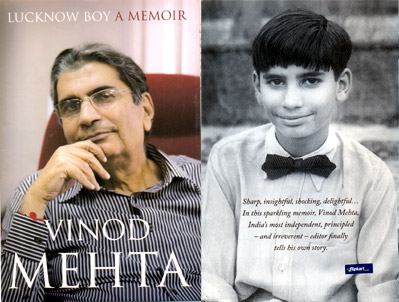
    If you want a fluent, easy and juicy read there’s nothing quite like hunkering down over a weekend with Vinod Mehta’s Lucknow Boy – especially of course for a media person. Yet, thanks to the letters page on Outlook, where so many readers seem to know him so well, one suspects that anyone interested in the news or the way the media runs will want to pick this one up.

    The story starts at the beginning with a solidly middle class upbringing in quieter, gentler times in charming and civilised Lucknow, which Mehta describes movingly but not in a maudlin manner. All those Outlook readers who fume at Mehta’s secularism can blame his childhood and this rather inclusive town in which he lived – as he himself does. Not quite sure what he was going to do with his life – apart from being a table tennis champion – a young Mehta landed up in England looking for opportunities and it must be said, girls. The swinging sixties provided the latter in plentiful apparently and also a variety of odd jobs. Mehta returned to India still with little clue about what he wanted to do and then headed for Bombay and advertising.

    From here it was a few skips and jumps to becoming the editor of Debonair which some might remember as India’s first “girlie” magazine. Mehta is one of a small but significant breed which started a career in journalism as an editor, without doing the slog. Those who are old enough (waaaaah!) will remember that in spite of the uncomfortable semi-nudes, Debonair had some good reading matter, using the Playboy model.

    The next episode in Mehta’s life led to his becoming a legend – starting and editing two classy newspapers from scratch (Sunday Observer and Independent) and recasting one (Indian Post) and resurrecting another (Pioneer). All four were well-planned, classy, stylish and paid attention to good writing. There are and must be a variety of views on them and not all of them positive but there is no doubt that they shook the establishment and frightened the fuddy-duddies.

    Not all were successes and Mehta himself suffered for decisions taken or managements changing tack. It is here that he is at his most acerbic about his fellow journalists and editors. The debacle at Indian Post where owner Vijaypat Singhania could not withstand political pressure was followed by another at The Independent. Mehta quit this paper a month after it launched when a huge scandal broke out over a story which said that YB Chavan was an American mole.

    Mehta describes all these quite candidly. The animosity he mentions shown by Times of India staffers to The Independent was quite amusing for those of us who were outside both: where the nose-in-the-air ‘we are Times journos and no one can touch us’ battled against the ‘we are the intellectually and stylishly superior’ Independent brigade. To be honest, both sides were a bit full of themselves!

    Mehta doesn’t hold his punches when it comes to Dileep Padgaonkar, who was editor of Times at the time and later with Lalit Mohan Thapar, owner of Pioneer. The end of his one month at the Independent also led to his shifting to Delhi and then to The Pioneer. The creation of Outlook follows a low period in his life and from here on, the way is up which is where the story pretty much ends.

    Lucknow Boy is a good nostalgia trip for those who are familiar with the place and time and will remember names and incidents. It is also a good lesson for those starting in the profession.

    Mehta also adds his views on people he has known and who have influenced him (yes, Sonia Gandhi is in one section and Editor the dog in the other) as well as tips to budding journalists. Expectedly, there is both humour and insight here.

    I have to thank Mehta for the huge space he has given to my old friend, the late designer MG Moinuddin whom he met at Debonair. Moin was indeed a massive talent and we were colleagues for many of the years that he moonlighted for Mehta’s various papers.

    In this very compelling read, there are some negatives, primarily when we reach the Outlook story. It gets a bit tedious and self-congratulatory – perhaps acceptable but still mildly annoying: all publications after all can come up with lists of some good story or the other it has done. However the sections on the letters to the editor, full of communal rants, as well as the fights between Ramchandra Guha and William Dalrymple are amusing.

    Although Mehta writes about the Radia tapes, where Outlook played a sterling role, I would have expected also some more stringent comment on the fallout as far as journalism is concerned. Mehta discusses Vir Sanghvi’s decision to step back from journalism but lets Barkha Dutt off the hook.

    There is one error which I have to point out because I take it personally. Mehta mentions that Bombay magazine wrote an item after the launch of Outlook. As one of the last employees of that wonderful magazine I can very confidently state that since it closed down in early 1991, there was no possibility of it having commented on Outlook’s launch in 1995!

    Also I must admit that I do not know Mr Mehta – I have met him fleetingly a couple of times so it is unlikely that he will remember. But this was undoubtedly one of the most enjoyable books I have read in recent times. Personal anecdotes and revelations are sparse but they are illuminating and even endearing. Every autobiography is entitled to its one-sided-ness and its quirks and that of course is why we read them


    Lucknow Boy by Vinod Mehta, Penguin Viking, hard cover, 325 pages, printed price Rs 499.

    Flipkart price: Rs 349.

  • Vinod Mehta: I just want to fade away quietly (Text + Video interview)


    This interview with Vinod Mehta was conducted in November 2011 soon after the launch of ‘Lucknow Boy’. As we look at the late Editor’s life and times, we replay this interview – in text and video – which so effectively captures what made him such a great journalist. Read on…


    By Shruti Pushkarna


    Soon after he launched his memoirs ‘Lucknow Boy’ in the capital, MxM India caught up with Mr Vinod Mehta, Editor-in-Chief of Outlook magazine, for an exclusive interaction in his Delhi office. He spoke at length about his memoirs, his editorial journey and of course, his dog, Editor.

    Prior to his memoirs, Mr Mehta has also authored biographies of Sanjay Gandhi and Meena Kumari. In 2001, he also published a collection of his articles under the title, ‘Mr Editor, How Close Are You to the PM?’

    Popularly referred to as ‘one of the most independent editors’ of our times, Mr Mehta has founded and edited numerous publications, including The Indian Post, The Independent, the Delhi edition of The Pioneer and also India’s first Sunday paper, the Sunday Observer. At present he is the Editor-in-Chief of the Outlook Group, which brings out ten magazines including the weekly newsmagazine Outlook.

    Q: Tell us a little about your memoirs.

    It’s not just my life that I am presenting; it’s a snapshot of India from 1974 when I started, to 2011 which is now. And I am giving you a kind of history of India from that period, a personal history as I have seen it. So it’s more than my life, it’s a history of India – and whether they agree with my version of history or not, that’s another point but I have tried to present people, places, incidents that I saw and I interacted with since 1974. In that sense, this is not just about a journalist writing about his life, it’s about a very important period of India’s history which should be remembered, and I hope that I got some of it right.

    Q: Why Lucknow Boy? You’ve always prided yourself as a Bombay Boy…

    No, I was born in Lucknow, and studied in Lucknow and I reached Bombay much later. So I called it ‘Lucknow Boy’ because I am, my education etc. was all in Lukcnow.

    Q: Was it tough writing a free-and-fearless memoir? Especially the admission about your daughter?

    Well, these things are never easy but if you’re writing a memoir then you have to tell the story of your life and you must tell it in its entirety, the good and the bad. So you can’t hold anything back, otherwise it’s half the story.

    Q: Anything that you’ve not mentioned in your memoirs? In hindsight, would you have liked to include anything?

    No, no; I made sure that everything that I wanted to put in my memoirs, I did put in my memoirs. There were so many other things which were not important, the more important things I’ve put in my memoirs.

    Q: Given that you had moved jobs rapidly before Outlook, what’s the secret of your lasting so long with the Rajan Raheja group?

    Well, I’ve been here for 17 years and I think the mean reason is the fact that I got the kind of editorial freedom which I didn’t get elsewhere, so I lasted so long – because I was allowed to do my work, and I was allowed to produce a magazine according to what I thought was right, and what my colleagues on the staff thought was right, and there was very little or almost no interference from the proprietors.

    Q: We missed you at the World Magazine Congress. Why were you not there?

    Well, I am told the magazine congress was mostly about the management side of things and not editorial, but I wasn’t invited.

    Q: If given the opportunity, would you like to edit a daily newspaper again?

    No, I’m too old now. I’ve done three daily newspapers and now I don’t want to do anything new. I’ve reached the end of my career so I just want to fade away quietly.

    Q: Wouldn’t it have been good to have an Outlook current affairs programme for television, if not a full-blown channel?

    No, we thought about this many times in Outlook and nobody in Outlook, including the proprietor, was very interested in television, simply because there were so many other… there are already about 300 news channels. So we felt that we couldn’t provide anything new or different and we were quite happy with print. And since I’m mostly interested in print, I didn’t show any great interest, neither did the owners, to get into television.

    Q: Your word of advice to a wannabe media baron?

    Well, my advice to a new media baron would be – don’t get into this business if you are just interested in making money. This is a business where, of course, profits are important but this goes beyond profits. So if you have any kind of commitment to the country and if you can withstand occasionally some kind of losses even to your investment, then get into the business. But if you are getting into the business because you think there are profits, or you think that you will have great political clout in the government etc, then those are all the wrong reasons for getting into publishing.

    Q: And your advice to someone working with a wannabe media baron?

    Be good at your job, that’s very important. Whatever you do, you must be very good at your job, outstanding at your job; therefore if you are outstanding at whatever you do, if you are sub-editor, or a correspondent or a photographer, if you are outstanding in your job, somebody somewhere will always hire you.

    Q: Debonair is dead. Would you like to revive it?

    No, that was just the beginning of my career and I wouldn’t like to go back there. But the seven-eight years that I spent there were very interesting, and I learnt a lot in that period.

    Q: Back to the book: worried about it upsetting anyone? Vijaypat Singhania?

    I don’t think so, because I’ve been fair to everybody. In his case, he was also under a lot of political pressure so I had full sympathy for his situation, where between Indian Post and his own business interests, he couldn’t sacrifice his entire business interest because at that time you had this license permit raj and the government would be active in economic affairs.

    Q: Did you read those barons wrong… Singhania and Thapar especially? And Ambani and the Jains?

    No, I didn’t read them wrong because they also I suppose, did not realize how difficult it is to be a media baron at that time, I am talking of 1980s and 90s, when businessmen who had say 5 percent interest in publishing and 95 percent interest in other things. If they attacked the government, then their other business interests would suffer, and I don’t think they fully appreciated this.

    Q: Any career regrets?

    Oh, I think there are always some regrets, some things that you should have done and you didn’t do. But by and large, I think I have played it by the book, as I say. I have no regrets. I think life has been very fair with me.

    Q: Do you think the news TV folk sensationalize more than inform?

    Yes, I think there is some need for self-regulation, there is some need for accountability. You can’t have a free-for-all as far as the channels are concerned. And I think most channels now are realizing that they are losing public support; the most important thing is their viewers’ support and therefore they need some professional guidelines. There is that appreciation now and I think that in the next few months, you will see something, some self-regulation.

    Q: We know you don’t agree with this, but still: do you think news only constitutes current affairs and matters of national importance?  For instance, would current affairs only mean political news or also whom Ranbir Kapoor is dating?

    No, I think current affairs is current affairs, anything which is current, for example, film stars, Aamir Khan made a film called Peepli Live , that was very much part of news. Entertainment is part of news, entertainment and news are not separate, but I think that there is a place for everything. Entertainment has a place, national politics has a place, everything has a place. So you must find the right balance I think; that’s the job of an editor.

    Q: Is there a need for a Press Council-like body, or should the print media too have a NBSA- like self-regulator?

    Well, we do have a Press Council but I think even the print media now realizes that the Press Council doesn’t have any teeth, doesn’t have any punitive powers. So, there is some need even in the print media for a new set of guidelines.

    Q: Your dog is called Editor. If you had another dog, what would you call it?

    Editor Junior. Well I have already got Editor Senior so I got Editor Junior now. But I can’t keep another… We tried to keep another dog, my wife was very keen that we should have two dogs. But Editor wouldn’t just allow another dog to come in. So we tried once or twice, actually brought a dog into the house but he made life hell for that dog, so we finally had to give him away to somebody because he is very possessive and he likes 24/7 attention.