Tag: Outlook

  • Magazine publishers join hands for content marketing solutions

    By Our Staff


    The Association of Indian Magazines (AIM) has announced the launch of a content marketing studio, which will draw in the collective strengths of more than 125 magazine titles, their websites and digital media assets, to offer to marketers content marketing solutions that can reach over 150 million people. Called Dastaan Hub, the exercise seeks to expand content marketing opportunities for brand marketers.


    The studio has been put together by AIM member publishers, recognising the increasing need at marketers end to move from vanilla display advertising towards developing engaging content solutions for narrating compelling brand stories.


    Commenting on Dastaan Hub, AIM president B Srinivasan said: “Magazines by their very essence are a deeply immersive medium, and are trusted for the depth in their editorial content. Moreover, magazines cater to highly engaged communities, and each magazine publishing team has deep insights into their readers’ emotional psyches and consumer interests. This is where they have inherent strength for partnering with brands for creating compelling brand stories.”


    Some of the leading participating publishers in Dastaan Hub are India Today, Ananda Vikatan, Delhi Press, Outlook, Malayala Manorama magazines, Network 18 magazines, ABP magazines, Business World, and Diamond Publications.


    The studio is being led by industry veteran Shripad Kulkarni, who along with a team of experienced professionals, will offer full content marketing solution in appropriate multiple formats like video, shorts, podcast, articles, panel discussion, Facebook Live, contests and social media posts.


    Explaining how it will work, Kulkarni said: “Dastaan Hub team will be following a 3-step process. A classical first, studying the category and brand challenges. Second, the creative and strategy team will customise native communication led ideas, based on client brief. And then add an O2O, online to offline media delivery plan. All this will be co-created to capture the essence of the dialogue the brands want to have with their customers”


    Said Yogesh Dashrath, Country Manager, Storytel India on the launch: “Stories are a powerful means to influence and inspire. So I am sure that the Dastaan Hub plan to recreate brand stories in the regional language and cultural context will greatly help brands to connect with their customer”


    Added Pawan Sarda, Group CMO, Future Group: “Each region, each State of India is unique. So, there are so many cultural and contextual nuances one needs to keep in mind. The Dastaan hub initiative, is a good single window opportunity to connect with customers across the length and breadth of India”


    Speaking on the launch, AIM General Secretary Anant Nath said: “It is no secret that there has been an erosion of interest in magazines by marketers, and that we have been facing some serious problems in maintaining our distribution. Therefore, as a first step, we collaborated to tackle this fundamental problem. A joint distribution agency network has been put together by AIM, so that publishers can take advantage of collective bargaining and increase their footprint across geographies. Secondly, massive efforts have been put to improve the subscription ecosystem, which includes working with Indian Post to improve delivery, as well as joint subscription marketing efforts. As a result, the subscription numbers across publishers have increased during pandemic, to compensate for loss in newsstand”.


    Here’s what some leading magazine publishers have said. Manoj Sharma of India Today: “Dastaan Hub is a logical extension of our distribution efforts as we are confident that we can deliver highly engaged audiences to our advertisers. At the same time, we will be careful to ensure that this branded content will follow global ethical guidelines of content marketing, as reader trust is of utmost importance to us”.


    Indranil Roy of Outlook: “We are confident that with our collaborative working across distribution, subscription marketing, and now Dastaan Hub, our magazines will strengthen their deeply engaging relationship with readers as well as brand partners.”


  • One year of the Lockdown: Gov’s Biggest Failure was Media’s Biggest Failure


    By Ranjona Banerji


    Ranjona BanerjiFor the past week, we’ve had several reminisces on the beginning of the pandemic lockdown, across the world. Of course, we knew about the virus, later named Covid-19, earlier than this. But we didn’t take it seriously, because it was like so many warnings about dangerous viruses which hadn’t become pandemics.

    Until this one did.

    Today marks the date India was put into lockdown. And like all announcements made in today’s India, this one was full of dramas and promises: Very short notice, very severe conditions, large assurances that the virus would be “vanquished” in 21 days when the lockdown ended and most importantly, that the time we were indoors would be spent by the Government to augment health infrastructure.

    The lockdown was definitely necessary, and the Centre did not balk at this tough decision. Sadly, a mere lockdown was insufficient without the promised augmentation.

    But the biggest official failure of those early days was the lack of provision made for India’s neediest: daily wage labourers, street vendors and migrant labour. And what was the government’s biggest failure was also the media’s biggest failure. It took the mainstream media, particularly television which has the widest reach, far too long to accept and acknowledge the tragedy being played out on India’s streets. Thousands and thousands walked home in the increasing summer heat because they had no means to survive in the cities where they had moved to work. India’s invisible workers remained invisible even as they walked in plain sight.

    It took smaller, independent media voices, the digital media and the print media to bring the horror to public attention. Barkha Dutt and her Mojo Story as they walked with the migrants for 100 days was the most prominent and served as a wakeup call for some TV channels.

    https://www.youtube.com/channel/UCrdPiSPVW0rtRsI002BX8iw

    This analysis from Outlook, from end May 2020, looks at how India’s economic policies impact migrant labour.

    https://www.outlookindia.com/website/story/opinion-indias-migrant-workers-conundrum-is-not-just-about-economic-inequality-but-social-too/353682

    Most damning are the first three paragraphs of this exhaustive report by IndiaSpend underlines the severity of the crisis:

    “A day before the lockdown was announced on March 24, 2020, the government told parliament that “it is not feasible to keep record/data of migrant labour workforce” because migrant workers tend to move often in search of employment. But over the next 68 days of the lockdown, as an unprecedented migrant worker crisis unfurled in India, it became clear that reliable data were critical to developing an effective migrant worker policy.

    “Between March 25 and May 1, 2020, distressed migrant workers, stranded without jobs, savings, shelter, food, transport or any organised support system, began long treks back home with their families and sparse belongings. The homeward exodus of around 11.4 million migrant workers–more than the population of Uttarakhand–resulted in at least 971 non-COVID deaths, including 96 workers who died on trains.

    “Five months after they left the cities where they worked, migrants started returning because of the lack of employment opportunities in villages, showed a rapid assessment survey. However, the pandemic had caused an economic contraction by then, and the number of poor Indians (with incomes of $2 or less a day) rose by 75 million. In April 2020 alone, 122 million Indians lost their jobs, a 30% fall in employment over the previous year.”

    https://www.indiaspend.com/governance/migrant-workers-no-reliable-data-or-policy-737499

    This article from The Indian Express looks at a year of misery:

    https://indianexpress.com/article/opinion/columns/coornavirus-national-lockdown-impact-migrant-workers-exodus-women-7241944/

    And this report from the Hindustan Times highlights how the exploitation continues, a year on:

    https://www.hindustantimes.com/india-news/fare-deducted-from-pay-of-workers-who-flew-back-to-rejoin-work-j-khand-report-101616564702356-amp.html

    Yes, all these links are from long after the migrants walked home: two are from this week. If you do an internet search for the coverage of the migrant workers as it happened, you get more academic reports than TV coverage. That is a telling indictment of the failure of large sections of the Indian media.

    However, if you search for stories for how we clapped, banged our pots and pans and sang “Go Corona Go”, you will find many reports, gasping with excitement at our amazing response to Covid19.

    We all know the reasons why.

    Even today, we have journalists who cannot hold the authorities to account, in spite of the enormous mistakes made and the lies told.

    This, to me, was and is our biggest media failure for the pandemic.

    With numbers still rising, next week let’s look at the small band of health reporters who tried to walk the publicity minefield laid out by their colleagues to try and decode both the virus and the official response to it.

    Please mask up and get yourself vaccinated as soon as you can, if you are within the allowed categories.


    Ranjona Banerji is a senior journalist and commentator. She is also Consulting Editor, MxMIndia. Her views here are personal


  • Outlook completes a month of Bollywood Talkies by Mitrajit Bhattacharya

    By A Correspondent


    Mitrajit Bhattacharya

    In keeping with its growing digital presence, the Outlook group added a new Bollywood interview series with senior mediaperson, columnist and author Mitrajit Bhattacharya. The show airs every Friday at 9pm on Facebook, Twitter, Instagram and YouTube apart from the Outlook website. Currently on to its fifth episode, each show has Bhattacharya conversing with film personalities such as Neeraj Pandey, Kabir Khan, Taapsee Pannu, and Adil Hussain.


    Said Shrutika Dewan, Vice President Brand Marketing of the Outlook Group: “Since 25 years now, Öutlook has been synonymous with serious and credible journalism. Through Bollywood Talkies with Outlook, we deep dive into the world’s biggest cinema, their protagonists and behind the scenes”


    “Added Bhattacharya: “We are trying to create a show which is all encompassing – mainstream to niche, that covers all kinds of cinema. Of course, we will have A lister actors and directors from the Hindi and regional movie industries. Longform and indepth, this show aims to have freewheeling conversations with the movers and shakers of Indian movies on the highlights of their careers, craft of acting and direction, and their favourites from the world of cinema. There is no show like this on any platform currently, entertaining and archival both at the same time.”


  • MxM Live with Maheshwer Peri…


    Red hot chatter with Maheshwer Peri, Chairman and Founder, of Careers360. An entrepreneur, dreamer and worker. And may we add an activist and do-gooder.


    A Top 25 rankholder in CA, he joined SBI Capital Markets and moved to join the Rajan Raheja business group. He moved to Raheja’s foray in the media with Outlook in 1995. In this interview, Peri looks back at his beginnings in the media, why he refused to have his name on the masthead for some years, his view on Vinod Mehta and Outlook – then and now. And more.


    Watch on…


  • Will News TV lose its Mojo with MoJo


    By A Correspondent

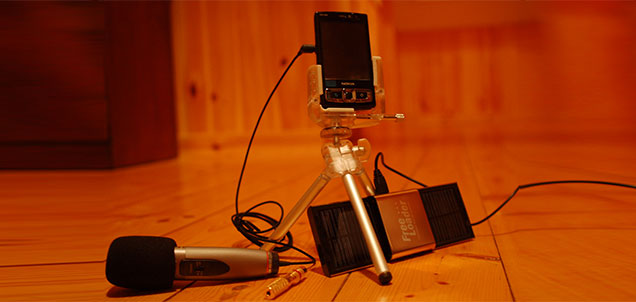
    Mobile journalism  isn’t new. In fact mojo, as the craft is called, is said to have orginiated at the Fort Myers News-Press in the United States way back in 2005. There is no rocket science to the craft: journalists move around with handy electronic devices which help them gather, edit and disseminate news and miscellaneous content.

    As data speeds increase and connectivity stabilises in India, the usage is bound to increase given high- to medium-end smartphones and the presence of cheaper and efficient 4G connectivity via mobile phones and WiFi-enabling dongles, hotspots and devices.

    So why are discussing this today? Because leading news network NDTV has announced a restructuring of its newsroom resources to focus on mobile journalism. The question that’s being asked is: Can MoJos replace the cameraperson?

    And some more: Will picture quality suffer because of smartphone photography? Will reporters be distracted by all the camerawork and not do enough of what they are supposed to be doing? Will it hence be a loss for journalism as a whole, even though it may save precious monies.

    First, let’s read the NDTV statement on its website:

    Like other news broadcasters around the world, NDTV is reorganising its newsroom and resources to focus on mobile journalism. NDTV has always been an early adapter of new technology – and we are the first major network in India whose reporters are all trained in using mobile phones to shoot stories. This is not just about cost-cutting, though that is certainly, for us – like any other responsible business – an important factor in operations. Mobile journalism means reports are lightning-quick and much more efficiently produced – a priority for any news company. After NDTV’s switch to this new model, other news networks in India are now experimenting with similar training.

    It would be irresponsible to viewers and to shareholders – as well as archaic – to maintain decades-old templates of how to shoot and edit. NDTV has long been valued for its commitment to its employees – our record on attrition across more than 20 years is testament to this and spoken of across the industry. We have ensured fair compensation for those employees affected by our restructuring.

    As not just business models but broadcasting models change and evolve, we need to restructure. This also explains why we were far ahead of other networks in building our digital content and brand – and again, our success has become the playbook for our competitors. This shift in expansion, away from conventional broadcasting and towards digital, is again an international trend and we are showing standout growth in this area. How users consume content is changing – and we cannot ignore that.

    Further, in any commercial operation – and especially in one so shaped by the constant modernising of technology – it is essential to play to the strengths of what that technology offers.

    The court cases that are an attempt to punish NDTV for its award-winning objective journalism do not influence how we run and operate our newsroom. The emphasis on restructuring is rooted in the broader financial climate, our commitment to controlling costs (our financial statements are available on our site) and, most importantly, our move to consolidate on our core business – quality news content.


    We aren’t sure if we should take the NDTV statement with a pinch or sackful of salt, but the fact is that it has terminated the services of some staffers given the mojofication.

    The number, according to a report in Outlook magazine’s digital version is pegged at 70, but this could eventually be larger, we are told. This follows similar moves in other media companies in the recent and distant past.

    In fact, if the NDTV experiment with Mobile Journalism work, it may well be embraced by other news networks, at least those who haven’t done it already.

    On the question of how it will impact news journalism remains to be seen. Will MoJo diminish the mojo of news television remains to be seen. There may be some who may argue that news television has long lost it given that the course that content has taken over the last few years. There may be some who may say that news journalism, the way it is ruled today, happens more via in-studio discussions than on-ground reportage.

    Be that as it may, MoJo is here to stay and grow.


  • Outlook announces launch of Social Media Awards

    By A Correspondent


    To mark the 20th anniversary celebrations, Outlook magazine has announced the launch of India’s first social media awards. Outlook Social Media Awards or OSM Awards is the first initiative by a mainstream media organization to honour the stars and superstars of the social media world, and will be an annual event.


    Aimed at recognizing and rewarding the Outspoken, the Outstanding, and the Outliers of the social media universe, OSM awards will acknowledge stellar work by individuals, brands and corporations across categories.


    The OSM awards, in partnership with Creatigies Communciations, will be launched in New Delhi. The launch event will see the nominees and the jury being announced.


    “With OSM awards, we hope to bring the same level of integrity and credibility that ‘Outlook’ as a national media vehicle has built up and enjoyed over its first 20 years,” said Krishna Prasad, Editor-in-Chief, Outlook.


    “Creatigies has always prided itself on creating out-of-the box opportunities for brands and OSM awards is an exciting journey we are delighted to embark on with Outlook,” said Navroze D. Dhondy, Founder & Managing Director, Creatigies. “We are confident that OSM will become the definitive and most ‘awesome’ awards in the social media space.”


  • Labour Court halts termination of People India edition staff

    By A Correspondent


    The Labour Court in Bandra, Mumbai has stayed the Outlook magazine group’s decision to terminate the employment of 17 staffers of the Indian edition of People magazine. The Editor of the magazine, Saira Menezes, and 16 other editorial employees moved the Labour Court since they felt that the employers were not forthcoming about their settlement (read: dues).


    From what MxMIndia learns, there is no termination notice served on the employees, and only a verbal communication was made by Outlook group President Indranil Roy that their services would stand terminated from the evening of July 31. The communication was made only a day after the news was made public with the Outlook group’s statement appearing in sections of the media.


    While the employees have questioned the decision of the management to close People magazine’s Indian edition, all that they appealed to the Labour Court was that proper procedures of law be followed if their services are terminated. The employees felt that Outlook Publications was indulging in unfair labour practice by terminating their services without due legal procedure.


    Saira Menezes and 16 others were complainants, Mr Vinod Mehta, Editorial Chairman, and Mr Roy were the respondents.


  • People, Marie Claire & Geo India edition closure: Dues to be settled soon, no written intimation yet

    By A Correspondent [updated]


    It’s ironic that both Marie Claire and People magazines celebrated their seventh and fifth anniversaries respectively just last month. The Indian editions of the two magazines have been doing rather well, or so we were made to understand until recently. And then there was Geo, which has been in the niche space.


    On Friday, the Outlook group decided to announce the discontinuing the licensed editions of the three  magazines.  A press statement was issued as follows:


    “Outlook Publishing (India) Pvt. Ltd. wishes to inform its readers that it is discontinuing its licensing arrangements with People, Geo and Marie Claire magazines with effect from the forthcoming issues of these magazines.


    “Outlook, its promoters and management, however remain fully committed to all other Outlook Group magazines, which will continue to be published in the normal course.”


    That last bit is evidently to quash rumours that the entire publishing company is being sold.

    Although Outlook group president Indranil Roy wasn’t available for comment, we were told that all dues of employees impacted by the decision will be settled soonest. Staff salaries have been delayed as have the dues to some editorial vendors for a few months now. Interestingly, from the information received from a few of the affected staffers, no termination notice or written intimation has been issued.

    According to sources, the economics of the publishing licensed titles has been severely affected by the rising dollar prices. What was negotiated in the boom period at around Rs 40-45-odd to the dollar has now crossed Rs 60. Says an industry watcher on anonymity: “While there is advertising revenue for luxury publications, content costs of lifestyle publications have been very high given staff costs, photography and design expenses, et al.” The dollar/euro conversion rate has evidently made the business unprofitable if the revenues don’t go above a threshold.

    Meanwhile, a Facebook post by Marie Claire editor Neena Haridas has led to murmurs on whether the magazine would continue with another partner. “Marie Claire International is a very powerful media brand with 34 editions and we are NOT shutting down our interest in India. Marie Claire India is an integral and important part of our international strategy,” the post read. It is said that even Time Inc, the publishers of People, may not be averse to bring in a new partner or coming in to India independently.


  • Growing to No1, ethically: Maheshwer Peri


    By Ananya Saha


    After spending 18 years as the publisher of the Outlook group, Maheshwer Peri launched Pathfinder in 2009 with the aim of making it India’s largest and most credible career counsellor in five years’ time. While still a mentor with Outlook, he has been associated full-time with Pathfinder since April 2012. Mr Peri rewrote the plans for the magazine, closed a publication, injected positive energy and weaned out negative energy.


    With an aim to reach students on a platform-agonistic way, Pathfinder’s magazine Careers 360 offerings are available in print, web and mobile. And it is succeeding. The webpage of the magazine has recently overtaken the more established portals, becoming India’s largest education and career portal.


     In a freewheeling conversation with MxMIndia, Maheshwer Peri, Chairman and Founder, Pathfinder Publishing, talks about the publication and the high digital notes it has been striking. And whether his ethical standards have come in the way of advertising.


    How has the journey of Careers 360 shaped up?

    It has been fantastic for one simple reason: there was no one who was competition. There was no one who approached the genre at all in terms of journalism, content and student. Everything you had in the market till that point in time was marketing or advertorial features that were coming up because there was an advertiser waiting. There was no one who made a model which is to say that student will buy this product, which is suited for the student and not for the institute. From that perspective, it was a complete paradigm shift.

    Even today, the content that you see is created because there is an advertiser around. They are advertising and marketing features. This is a first product that has been created with student in our mind. That is why the journey has been good, since there was no one as competition.


    Does the magazine attract a different set of advertiser then?

    The advertiser had multiple options. In any business, or publishing business, you need to create something that attracts readers. Once the reader is there, the advertiser follows. In any niche, if you are to create content because of which a set of loyal readers follows you, the advertiser follows. They cannot avoid us – that is the stage at which we are.


    Has the print run of the magazine increased as well?

    The initial print run was very high earlier, of the English and Hindi magazines of Careers 360. It was about 1,80,000 but today we print about 1,30,000-1,40,000 copies. We sell about 1,20,000-1,25,000 copies of which 30,000-40,000 are school and college libraries.


    Have you broken even yet?

    No. It’s an investment phase. The reason why I think it is a case study… there has never been a case in India that a single stream of content has been monetised over multiple platforms. The articles that we do are backed by data. And that data has to be complete. So we decide how much of that should be put into the magazine, and the balance we put on the web. There are journalists who create content, which is suitable for the magazine, for our almanacs and guidebooks and for the website, and going from there to the physical career workshops that we do.

    The challenge is if I were to say if the magazine would break even, it would not. Because I am still going though the phase of seeing how many more platforms I can grow to and keep investing in those platforms also. It is definitely going as per my plans and projections.

    On the digital space, we are the No 1 website in the country. One or one-and-a-half-year ago, when I started this journey, I had 4,000 students on the site each day. Today we have guaranteed 100,000+ each single day.

    Now the challenge for me is; since I have become the largest website in the country, the largest website has 10 crore of ad revenues and sitting on 5 crore of data. And I do that, yes, I will make money. That is the next step for me. Now that I have got the audience, I will monetise that.


    What are the factors responsible for the growth of the web presence of the magazine?

    I realized that the content we are creating for the magazine is not being leveraged. It is just limited to the magazine, so for me the challenge is how I invest myself in a way that the content I create can reach out to plenty more audience.

    Today 2-2.5 million students come to my portal every month. That is 30 percent of the audience of that category. Today if 1.4 million students have opted for engineering, and one million students have come to my portal, it captures 70-80 percent of the students. For each of the verticals, I need to say that I reach out to more than 30-40 percent students. And that is with the guidebooks, almanacs, counselling workshops, magazine, and digital portal.

    If you look at the content creators in the country, we are the largest content creators. There is no one who comes close to even 10 percent of what we do in the marketplace. The reason why student come to us, they have more and enough value to add to their decision-making.


    Has the strategy for magazine changes over the year?

    Strategy has changed to the extent that the moment we talked about digital. The typical thing that journalist does is goes and collects information, edits it, and puts out a 1,000-word story. This is not exactly career-driven journalism thing here. It is actually lot of data also. We are not just advisors; we are counsellors to the students. And counselling means two-fold integrity for us: financial integrity where no one is able to influence the way I right. The other big part of integrity is that we have covered everything so that student makes an informed decision, which means I have not omitted anything because of lack of research. It is important that the student does not suffer because you did not inform him of a very good option, which he otherwise should have known.


    Are you considering any brand extensions in the near future?

    Online we have lots of products. There is student space. There is mock counselling on our Engineering page. Each student pays Rs1,499 to take our advice. It is based on the data and information that we have collected in the magazine for our website. If a student comes and asks, ‘I have got a JEE rank of 11,000, what should I do?’ I give him seven options because I have cut off of all colleges in the country, which no one has. All that information that we research, collate is sitting with us. In my opinion, we are the best position advice student what to do. if the student’s choice if for five, I will make it eight. We optimize students’ choices, include one or two that he doesn’t know or remove what I think are bad for him. It is for him to decide where he wants to join, because I am not an agent.


    And is the counselling handled in-house?

    We have counsellors. We appointed a BPO company in Bangalore, which created all data for us. So the data is for more than 6,000 colleges and it cost a lot of money to create the data. I cannot do the data myself. We have journalists, a set of digital content creators, and data people, which is a BPO, working from Bangalore. Increment in further content creation would take 1x cost to become 1.5-or-1.8x cost. But the 1y of revenue can become 3y. That is the whole objective here: how do you add 10-20 percent investment in cost to add another stream of revenue that gives you one more ‘x’.


    You also closed down Competition 360. Why?

    When I moved from Outlook, I actually had three publications: Careers 360 English and Hindi and Competition 360. Competition 360 was dealing with competitive exam in the market like Competition Success Review or Pratiyogita Darpan. What I realised was there were many who were doing far better job than me, whereas in career-side, there was no one who was doing it. It is important for me to focus on something that I see as my path. So today my path is that I want to be India’s largest career counsellor; I want to be hand-holder for this country’s biggest student community. The moment that is decided, I am not getting into the job space and competition space. I am not going there because there are people who are already doing wonderful job out there and they will continue to do that. It doesn’t need me.


    You’ve been asked this earlier, but in the light of the strides you’ve taken: Outlook was going great guns under your leadership so what prompted you to start Careers 360?

    At some level, there are many people who will do Outlook. Aspirationally, Outlook is there. In India, and it has nothing to do with me or Outlook, you will see a lot of people getting into mainstream media or celebrity media. You would not see anyone coming into a morbid area, which is education. It’s standardized and regulated. But if you look at the demographic dividend that India has, the biggest demographic dividend would be when you handhold the students to nurture them otherwise it will become a nightmare. Someone has to handhold them otherwise we are sitting on a time bomb.


    What exactly is your role at Outlook now, and has it changed in the past one year?

    I am still the Mentor and Publisher. In fact, in March it was to get over but it got extended I am continuing for one more year. Me and my promoters have a fantastic equation. I will not influence that they remove my name. As long as they want, I will be around. Whenever they call me, I will be there. Period.


    Who handles the sales and marketing for Careers 360, now? Is it being handled by Outlook still?

    There are 4-5 people in my team, two of them were in Outlook. One, I always had arrangement with Outlook that I will never poach a single person from there. And I have stuck to it, and will even going forward. But these were people who were handling Careers 360 in Outlook. And they have moved with me.


    What is your next target for Careers 360?

    Within the next two years, Careers 360 would be India’s largest career counsellor. I would want to say that about 20 percent of students in India take a decision because Careers 360 influenced them. The day I start influencing the decision, and already we are doing it and handhold the students and also tell the institutes what students think about it: I have done my job. In India, regulators want to control without giving freedom to the private guys and institutions do not want any control. The balance is between them: the regulators need to give bit of freedom while institutes need to understand that their freedom is going to be limited by what regulation would want.

    We are aiming to achieve this balance.

    In a larger sense, this country has to start invest in its youth. And I hope more mainstream publications understand. Health, religion and education and jobs are the biggest things for people in India. In every mainstream media, these are supplemented by marketing activities. People like us come in because mainstream media has somewhere ignored it.

    Apart from the great things that Careers 360 is doing, you are also becoming very ‘activistey’.

    As Outlook, whatever I say was Outlook. It was a news media. There is no identity as Maheshwar Peri; it was only an Outlook publication. My view need not be Outlook’s view. In certain positions, you don’t have your own voice. It is the position that carries the voice. And I did not want any confusion between Outlook’s voice and my voice, so I was never active then. I was very conscious of the fact that whatever I speak is going to be taken as voice of Outlook. And now that the burden of Outlook is not with me, I have my own voice, which is what is coming out.


    Given your ethical stands on many things, has your advertising suffered?

    Yes, but that is again a conscious call. Whenever you take a stand, there are bound to be a set of people who will not stand with you. The current market situation is: I will give you an ad what will you give me in return. Not that is much more prominent in education sector. All these institutions are colleges are looking for ratings and rankings and some kind of coverage. And there are people who do that in the market. But again I say that once you create the content, which makes the reader stick to you, the best of the advertisers cannot avoid you; and then the other follow because the best advertisers are with you. There is a change that you need to crack. It takes a lot of time, perseverance and stamina. That is something I always had. When I launched it, I said I will create a DNA where nobody can change the credibility of the magazine or question the credibility of the magazine.

    So initially, when people were saying “Why don’t we have those guys and these guys”, I said, “Let’s create a DNA first, come what may”. It means lot of cost, money, time. But all those things are fine. Once we create the DNA, even when we go out unless we go to a new advertiser, the old advertisers know that they cannot bend us.


    Very recently, I went to an advertiser in the northern part of India. He looked at the magazine, and said, “Obviously, we cannot buy you.” So I was very intrigued and asked him what made him say so. He said, “Typically when we give an ad, our ranks are very high. In your magazine, we have given our ads in your magazine, but our ranks are very low.” That is the image that has reached the advertiser, for each time and every time, and I think we have managed to do that.


  • Outlook Puja Special has Sandeep Ray as Guest Ed

    By A Correspondent


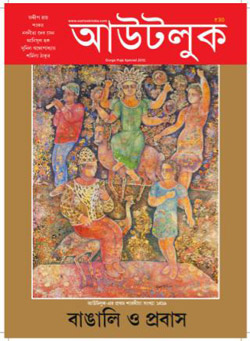
    Bangali O Probas (The Expatriate Bengali), Outlook’s first Puja special in Bengali has Sandeep Ray, the filmmaker and Satyajit Ray’s son, as the Guest Editor. The cover design is a painting done by the renowned Paris-based artist, Shakti Burman. The lead essay is by one of the leading and most popular Bengali writers, Shankar, of  Chowringhee fame.The focus of the issue is on the expatriate Bengali and contributors include Nabaneeta Deb Sen and Sunil Gangopadhyay, two respected figures in Bengali literature. Contributions have also come in from London, Massachusettes and Australia. Graphic novel has been done by Delhi based Bishwajyoti Ghosh.


    The art review is by curator Ina Puri. There is a bit of history, a bit of nostalgia, a bit of humour, an adda session on Bengal’s politics, a humour column by Suhel Seth and column by Sharmila Tagore.There are interviews with Bipasha Basu, Diya Mirza and the director of Kahani, Sujoy Ghosh. There is a photo feature as well on Bengali actors. There are provocative reports on Bengali actresses hogging the limelight in the South, a Bengali being the first Law Minister of Pakistan and the growing matrimonial bonds between Kerala and Bengal. There is an erudite essay on Bihar based Bengali writers enriching Bengali literature and also a review of Bengali blogs. A whosesome and varied fare, in short, to stimulate the mind, draw a laugh or two and make readers think.


  • My First Sale… with Indranil Roy, President, Outlook Group

    Indranil Roy, President, Outlook Group

    Our Thursday series of Relative Values, My First… etc now shifts to Fridays, beefing up our weekend package that kicks off next week. Last month we had Bhaskar Das, and this time we spoke with Indranil Roy, President, Outlook Group


    I joined the circulation department of India Today in the year 1990. My first induction to the corporate world, my boss then and now a good friend – Patrick Ghosh – taught me hard work, perseverance and dignity of work. Travelled the length and breath of Bihar, the North East, Orissa, Assam to meet magazine distributors. It’s been 23 years and i have not met them after the few initial years of selling but I still remember them for their simplicity and care.


    When I joined Outlook, I also started selling advertising. My first big client was ITC. I used to attend meetings in ITC with our Group President… then Deepak Shourie. It was a fantastic experience to learn from his marketing mind. The ITC tobacco division used to support us extensively since we launched Outlook. The media agency for ITC was then headed by Rajat Gupta and Indranil Basu in Kolkata and they both supported me always. Today both of them are my closest friends.


    For me, the ad deal struck with ITC in 1996 is the proudest and most memorable sale. We were new in the market and were pitching against India Today. After a lot of agency meetings, we were able to sell innovations and other deals to them. They even booked every back cover with us! Even today, after almost 17 years, one of the innovations sold by me to ITC is on the wall of the Outlook office which makes me proud.


    Ad sales isn’t about spinning yarns because it might work for you once but won’t rescue you every time. I don’t believe in storytelling and always ask my team not to promise a client something we cannot deliver. Today, a client isn’t meeting just us but 100 others too, and he/she has ways to verify facts. One needs to build relationship through trust and telling the truth.


    It’s not a thankless job because one gets to meet and understand different people and their perspectives. There is something to learn everyday.


    As told to Meghna Sharma


  • Is news media ownership a cause for worry?


    By Shruti Pushkarna


    Hardly had the news of the acquisition of English news channel NewsX by ITV Media Group and Hindi news channel Live India by Prosperity Agro filterd in, there were murmurs on whether it was vital for the government to impose entry barriers for the news media. ITV of course has been in the news for around five years and Live India already had a sizeable stake by a property developer HDIL.


    As part of MxM Mondays, we spoke to a cross-section of news media practitioners to offer their views on the issue.


    This issue of media ownership has been debated on in the past, and more so recently, because of the entry of corporate groups into the news media. Earlier this year we saw two big corporates enter the media domain, when Reliance Industries bought a stake in Raghav Behl-led Network18 and Aditya Birla Group invested in the Aroon Purie-led Living Media India.


    While big business owning media is not a new phenomenon, there are numerous instance of politicians owning and controlling sections of the media, especially in Southern India.


    Hence the question arises: Is it a cause for worry when people with non-media interests start owning the mass news media?


    Here are a cross-section of views from captains of the industry (in alphabetical order of their last names):


    Tariq Ansari, Chairman and Managing Director, Next Mediaworks Ltd

    Tariq Ansari

    The worry is not around who owns the media but whether they act in a way that is consistent with journalistic standards of integrity and fair play. We seem to have forgotten simple journalistic conventions like a declaration of interest from the owner of the publication/channel on stories in which there is a substantial commercial interest.


    Media, much like steel or fertilisers or communications, will eventually belong to those who have the means and desire to invest in it. The point about it being the preserve of a few is inexplicable. Nobody is stopping anyone from raising the capital to start a newspaper/magazine/TV station/radio station/website. We live in a free country. Anyone who has the ability to own media should be able to do so, without limitation. Clearly my preference would be that criminals or those with clear vested interest should not own media, but I am not sure if the law of the land can prevent this from happening.


    Vinod Mehta

    Vinod Mehta, Former Editor-in-Chief, Outlook magazine

    I am worried. Media diversity is very important for freedom of the press. I don’t want Media in the hands of a few owners. It should be open to all.


    And here’s what MxMIndia’s regular columnists say:
     

    Ranjona Banerji, senior journalist, columnist and Contributing Editor, MxMIndia

    Media ownership is a worry to the extent that journalists are not able to withstand corporate pressure. For instance, the Birlas started Hindustan Times and the Tatas has a stake in The Statesman (to name just two) and the battle between marketing and editorial is as old as the profession. The problem comes when senior editors capitulate and reader interest is surrendered or sacrificed. I would turn the spotlight back on journalists: are we fighting the good fight?

    _______________________________


    Mediaah/Pradyuman Maheshwari, editor-in-chief, MxMIndia:

    Many years back when I asked a leading industrialist why he was keen on starting a news channel he replied with the famed Deewar dialogue (some alcohol in the system did the trick): Aaj mere paas buildingey hai, gaadi hai, bank balance hai, but even then these guys owning newspapers and channels are ruling the world. We were in the late 1990s, and journalists and news media owners were indeed much sought after. That may have waned over the years, but the desire to own news media stays. What hasn’t changed is that the intent of owning the news media goes far beyond returns on investments.


     

    When the British ruled India, it was the desire to mobilize public opinion that led to several national leaders and even businessmen to embrace news. Post-Independence, with the birth of a new economy, it was a mix of nationalistic sentiment and also to use it as an ally in a tightly controlled business environment. The ’60s and ’70s saw the media taking off with magazines like the Illustrated Weekly of India, later India Today and several others in regional languages. The imposition of the Emergency got people to realize the importance of the news media as the liberalization of the economy and and the airwaves ensured that there is no looking back.


    Being a democracy, there are no entry barriers to the media. And rightly so. However, when a few years back a few real estate and assorted players jumped into news television there were representations to the information and broadcasting ministry that there ought to be tighter controls.


    The current murmurs are being heard because NewsX has been acquired by businessman Kartikeya Sharma. ITV, his media company, also runs the newspaper Aaj Samaj and regional and Hindi news network India News. And the reason for the concern: it was feared that being the brother of Manu Sharma who has been convicted in the Jessica Lallmurder case, he could misuse his position to influence the executive and the judiciary. Well, the Supreme Court upheld its sentence of life imprisonment in 2010, so evidently he didn’t achieve much. To be fair to Sharma, a senior editorial and business executive who has worked with him, told me that he saw no interference on content, especially on the Manu Sharma front.


    Clearly, the money power of rich businessmen and politicians cannot bring in readers or viewers, as the case may be or make a success of the media enterprise. In the late’80s, the Ambanis acquired Commerce Weekly and converted it into a business daily. They also acquired The Sunday Observer that was once edited by Vinod Mehta and was exceedingly popular.  The Ambani indulgence in the media failed despite hiring top journalists and publishing executives. They could only use the papers to fight a few minor battles, and even those without much success.


    Mehta worked and fell out with industrialists Vijaypat Singhani and L M Thapar as both found news too hot to handle and counter-productive to their primary businesses (and revenues). One had assumed he would meet the same fate when Rajan Raheja, a then-emerging industrialist with some interests in real estate, set up the Outlook magazine group. Mehta has led many battles with the mighty and powerful in his magazine and both Raheja and Mehta have survived each other.


    Save the Outlook example which is a good indicator of business interests and independent journalism co-existing, clearly big money is not enough to drive consumption of news media. My worry though lies elsewhere:

    1. Lack of transparency in the ownership of media.

    2. Creation of a monopolistic scenario with business groups investing in multiple and similar vehicles

    3. Level playing field for competition in case of vertical and/or horizontal cross-ownership, and

    4. Diversification of media companies  into entities beyond news


    1 & 2. Transparency requirements in media ownership are critical. When the government announced recently that a certain conglomerate doesn’t not have interests in the media, is it really the case, or is that what is on paper and hence deemed correct? While doubts have been raised about how the acquisition of a sizeable chunk of Network 18 via an independent trust would impact the editorial independence of the group, the real worry is the rumoured interests of the group in other media ventures too.


    Could we have a situation that a genre of channels or newspapers or the media entities in particular region of the country be owned – directly or indirectly – by one group? How do we tackle a monopolistic scenario such as this?


    3. The PR head of a radio station in Delhi once complained that she could never hope to get her press release into the two main English dailies in the city because both had their own FM stations. So, while the most inane event from the group’s radio station gets covered, the lady’s FM frequency never got a mention even for a big activity. So rampant is this blacking out of a rival group’s activities that it’s now considered standard practice. In many countries there are strict rules for horizontal and vertical cross-ownership. While the TRAI has suggested restrictions in vertical ownership (a TV channel can’t fully own a DTH or cable platform etc), horizontal ownership is fine (so a TV channel can also run a newspaper, radio station etc).


    4. The last of my worry areas can be a bigger concern, and, if misused, even graver than big business or a political party getting into the media. Many news media groups have invested in sectors outside of news and doubts have been expressed if there is any connect between the relationships with governments via the news media and the winning of such contracts.


    Even though the government at the Centre is weak, and we can be sure it will flex its muscles often enough in the run-up to various elections until 2014, I don’t see any immediate solution to the problem. But what can play a deterrent for those who abuse the media will be public opinion via social media.


    Sevanti Ninan, Editor, thehoot.org and Columnist, Mint

    Sevanti Ninan

    Yes, it is a cause for worry when people with vested interests start owning the mass media because political ownership of the media is increasing, and there are no transparency requirements on media ownership.


    Readers and viewers are unable to discern ownership-related biases. There is also a renewed trend of corporate investment in media increasing. Media companies are supposed to file ownership details with the registrar of companies, but one, it is not properly done, and two it is very difficult for lay people to access the correct and latest data.


    On the issue of media being a preserve of only a certain groups, even now it is fairly widely owned.


    Maheshwar Peri, Chairman, Pathfinder Publishing India Pvt ltd

    Maheshwar Peri

    In my opinion there is no cause for worry. I think, increasingly, the cause for worry comes from a few industrialists who’ve gotten into media. But if you go back to the flag bearers of Indian journalism in the 1980s, Indian Express was owned by RNG, an industrial group. So, to say that ownership by industrialists would hurt media is a slightly wrong way of looking at it.


    There is definitely a cause for worry when people get into media for reasons other than running it as a professional empire. If you look at some of the politicians who’ve come into media or political parties that are launching their own channels, that’s a cause for worry because they have a reason to dish out news which suit their needs and opinions.


    So there is a problem when people in public office get into media, but it’s not so much of a problem if industrialists or venture capitalists or any others moneybag get into it because they want to make it a commercially viable operation. And they know they can make it commercially viable only when the reader/viewer respects them. In case of politicians, they are not interested in making it commercially viable; they just want to ensure that their point of view finds a space in the public domain.


    I think unless a reader or consumer respects you, you won’t be able to sell beyond a point. So all of us, whether or not owned by corporates, are always trying to ensure that we give unbiased and credible information so that the reader continues to respect us as well as the advertiser continues to invest in us.


    And what makes one think that they have a better opinion about media than a fruit vendor? I don’t think there can be a classification of who has a better opinion about certain things in this country – we are a democracy. So the worse thing is to say that ‘these’ kind of people can get into media and ‘those’ kind cannot.


    Tarun Tejpal, Editor-in-Chief, Tehelka magazine

    Tarun Tejpal

    To some extent, there is cause to worry about media ownership. We have to air, discuss and examine issues of monopolies, cross media ownerships, and of cross business ownerships. And to try and build in some structural safeguards that both help ensure the financial viability of honest, robust media, and deter media owners from using their media instruments for unfair advantage in their other businesses.


    Theoretically, it (media) should be open to all. But we must build in safeguards that minimize the misuse of public discourse and public instruments of media. This is not easy, but a discussion must start on this issue at all levels.


    Paranjoy Guha Thakurta, Senior Journalist

    Paranjoy Guha Thakurta

    The growing corporatization of the Indian media is manifest in the manner in which large industrial conglomerates are acquiring direct and indirect interest in media groups. There is also a growing convergence between creators/producers of media content and those who distribute/disseminate the content.


    In India’s unique ‘mediascape’, it is often contended that the proliferation of publications, radio stations, television channels, and internet websites is a sure-fire guarantor for plurality, diversity, and consumer choice. There were over 82,000 publications registered with the Registrar of Newspapers. There are over 250 FM radio stations in the country. Despite these impressive numbers of publications, radio stations and television channels, the mass media in India is possibly dominated by less than a hundred large groups or conglomerates, which exercise considerable influence on what is read, heard, and watched.


    One example will illustrate this contention. Delhi is the only urban area in the world with 16 English daily newspapers; the top three publications, the Times of India, the Hindustan Times, and the Economic Times, would account for over three-fourths of the total market for all English dailies.


    However, what is unacceptable is media barons using news outlets as tools to further their business interests. In this country, as in the world over, large media corporations are clearly playing a bigger role in the political economy that they report on. Though a free media is fundamental to the existence of a liberal democracy, concerns about the accountability and transparency of media companies remain. For instance, the RIL deal has enabled Network 18, Eenadu, and the merged group to expand its offerings to benefit its stakeholders and its advertising target audiences. What remains to be seen is whether clear boundaries can be etched between the boardroom and the newsroom.


    There’s absolutely no doubt about the fact that if it’s truly going to be a responsive media, then the media should reflect the views, the interests, the aspirations of a larger section of population as possible. The problem with much of our media is that they are too busy trying to ‘reach’ consumers to potential advertisers than providing information to citizens.


    Next Week:

    Why do we all like to damn TAM?

    The Sectoral Innovation Council recommendations last week said that there was need for an alternative to TAM, short for the media research company formed by a jv of two international research biggies: Nielsen and Kantar. This is a view that has been expressed several times over the years.


    One of the main peeves against TAM is the number of Peoplemeter boxes present to collect data. Can 8000+ boxes effectively poll a populace of 1.2 billion, is what many broadcasters keep asking in public. In private though, not many are ready to pay up by increasing their subscription fee to enable the installation of more boxes across the country.


    Also, what’s happening to BARC, the joint industry body that was to provide an alternative?


    MxMIndia will speak to a cross-section of the industry to get answers. Meanwhile, if you have a view, email it to us at editor@mxmindia.com with the subject ‘MxM Mondays #2’