Tag: NP Singh

  • Gaurav Banerjee to take charge of Sony

    Gaurav Banerjee
    Gaurav Banerjee

    Sony Pictures Networks India (SPNI) has announced the appointment of Gaurav Banerjee as the new Managing Director and Chief Executive Officer (CEO), effective on or before August 26, 2024, pending regulatory approvals. Banerjee will succeed NP Singh.

    Said Banerjee:  “I am deeply honoured to take on the role of MD & CEO at SPNI. Under N.P. Singh’s remarkable leadership, SPNI has achieved tremendous success and innovation in the entertainment industry. I am excited to lead talented teams as we explore new frontiers in original programming, enhance our viewers’ experiences, drive our distribution footprint across India, and significantly boost our revenues. Together, we will set new benchmarks in entertainment and deliver exceptional value to our audiences and stakeholders.”

    NP Singh
    NP Singh

    Added Singh, who with this appointment will move into the role of Non-Executive Chairman to support this transition through the end of the fiscal year: “I am immensely proud of the success and innovation SPNI has achieved. I am confident that Gaurav will elevate SPNI’s impressive portfolio to new heights. His visionary approach will undoubtedly continue our legacy of excellence and creativity. I look forward to supporting him and our talented team as we further our impact in content creation, audience engagement, and digital media initiatives. And most importantly, I would like to thank the entire SPNI team for being the fulcrum of our growth and success.”

    Said Ravi Ahuja, Chairman of Global Television Studios and President and COO of Sony Pictures Entertainment: ” NP Singh’s leadership has been instrumental in shaping SPNI into the powerhouse it is today. I am confident that Gaurav Banerjee, with his proven track record and visionary approach, will continue to drive SPNI’s success. Gaurav’s expertise in content creation and strategic leadership will undoubtedly lead SPNI into an exciting new chapter of growth and achievement. We are thrilled to have him at the helm and look forward to the continued success of SPNI under his leadership.”

  • One step closer to the merger. Zee & Sony sign definitive agreements

    By Our Staff


    Sony Pictures Networks India Private Limited (SPNI) and Zee Entertainment Enterprises Ltd. (ZEEL) have announced that they have signed definitive agreements to merge ZEEL with and into SPNI and combine their linear networks, digital assets, production operations and programme libraries. The agreements follow the conclusion of an exclusive negotiation period during which ZEEL and SPNI conducted mutual due diligence. After closing, the new combined company will be publicly listed in India. The closing of the transaction is subject to certain customary closing conditions, including regulatory, shareholder, and third-party approvals.


    Under the terms of the definitive agreements, SPNI will have cash balance of USD $1.5 Bn (assuming an INR:USD exchange rate of 75:1) at closing, including through infusion by the current shareholders of SPNI and the promoters (founders) of ZEEL, to enable the combined company to drive sharper content creation across platforms, strengthen its footprint in the rapidly evolving digital ecosystem, bid for media rights in the fast-growing sports landscape and pursue other growth opportunities.


    SPNI is an indirect subsidiary of Sony Pictures Entertainment Inc. (SPE). Under the transactions contemplated by a non-compete agreement, SPE, through a subsidiary, will pay a non-compete fee to certain promoters (founders) of ZEEL, which will be used by such promoters (founders) to infuse primary equity capital into SPNI, entitling the promoters (founders) of ZEEL to acquire shares of SPNI, which would eventually equal approximately 2.11% of the shares of the combined company on a post-closing basis. After the closing, SPE will indirectly hold a majority 50.86% of the combined company, the promoters (founders) of ZEEL will hold 3.99%, and the other ZEEL shareholders will hold a 45.15% stake.


    Punit Goenka will lead the combined company as its Managing Director and CEO.  The majority of the board of directors of the combined company will be nominated by the Sony group and will include the current SPNI Managing Director and CEO, N P Singh. On closing, Singh will assume a broader executive position at SPE as Chairman, Sony Pictures India (a division of SPE) reporting to Ravi Ahuja, SPE’s Chairman of Global Television Studios and SPE Corporate Development.


    As part of the definitive agreements, the promoters (founders) of ZEEL have agreed to limit the equity that they may own in the combined company to 20% of its outstanding shares. This construct does not provide the promoters (founders) of ZEEL any pre-emptive or other rights to acquire equity of the combined company from the Sony group, the combined company or any other party.  Any shares purchased by the promoters (founders) of ZEEL, must be in compliance with all applicable laws including any pricing guidelines.


    Commenting on this development, Punit Goenka, MD & CEO, ZEE Entertainment Enterprises Ltd. said, “It is a significant milestone for all of us, as two leading media & entertainment companies join hands to drive the next era of entertainment filled with immense opportunities. The combined company will create a comprehensive entertainment business, enabling us to serve our consumers with wider content choices across platforms. I am immensely grateful to the teams at ZEEL, SPE and SPNI for their efforts, that swiftly led us to this point within the stipulated timelines. This merger presents a significant opportunity to jointly take the businesses to the next level and drive substantial growth in the global arena. I look forward to working with the guidance of the esteemed members of the combined company’s board to unlock the potential of this merger, and I wish N.P. Singh all the best in his new role at SPE. His contribution to the Indian media & entertainment industry has been invaluable. I am most certain that our collective wisdom, rich experience and expertise will lead to a more value accretive and exciting company for our shareholders and employees, and a more engaging one for our customers and partners.”


    Added Ahuja: “Today marks an important step in our efforts to bring together some of the strongest leadership teams, content creators, and film libraries in the media business to create extraordinary entertainment and value for Indian consumers,” adding: “I want to thank Punit and his team at ZEEL and the small army of people at SPE and SPNI who have worked so hard to get us to this point. I especially want to thank N.P. Singh, who presented us with the idea to explore this merger well over a year ago.  N.P. has done extraordinary work building SPNI to what it is today, and we look forward to continuing our work with him in his new role after closing.”


    Said Singh: “This merger will create a company that’s best in class and will redefine the contours of the media and entertainment industry. As a representative of SPE on the Board of the new merged company, it will be my endeavour to provide strategic guidance and support to the company’s operating team in achieving our vision. I am also excited at the opportunity of being appointed, Chairman, Sony Pictures India, to oversee SPE’s investments and craft a wider footprint for Sony in India.”


    SPE was advised on this transaction by Morgan Stanley, KPMG Corporate Finance, and Shardul Amarchand Mangaldas & Co. ZEEL was advised by KPMG, JP Morgan, Trilegal and Boston Consulting Group.


  • Sony Pictures pledges Rs 10cr to daily wage-earners

    By A Correspondent


    In response to the nationwide lockdown, Sony Pictures Networks India (SPN) has decided to contribute a fund of Rs 10 crore to support the daily wage workers in the Media & Entertainment industry.


    The network is reaching out to the daily wage-earners identified by their respective trade associations with free coupons which they and their families can exchange for their daily necessities like food and essential items at select retail stores. SPN is also working with its various commissioned production houses to disburse a month’s salary to each daily wage earner.


    Said NP Singh, Managing Director and CEO, Sony Pictures Networks India (SPN): “In light of the global pandemic, we are witnessing large communities across the world coming together to tide over the crisis. These unprecedented times have had a cascading impact on the media and entertainment industry, which employs a huge number of daily wage workers. As a conscientious conglomerate, it is our responsibility to direct efforts towards ensuring aid reaches our primary beneficiaries who have contributed to the success of the network.  Besides this initiative, we are also providing coupons to the migrant workers from this daily wage workforce, which they can trade off at certain retail outlets for groceries and essential supplies. We will leverage every opportunity to help our country at large to get through trying times like these.”


    Additionally, in sync with some other networks, Sony Pictures has made its channel Sony PAL, available free of charge on all DTH and cable networks to its viewers for a period of two months.


  • IBF President & VP statement on NTO-2

    By A Correspondent


    NP Singh, MD and CEO, Sony Pictures India and Sudhanshu Vats, Group CEO, Viacom18 who are also President and Vice President of the Indian Broadcasting Federation (IBF) issued statements at a press conference convened in Mumbai on Friday.


    Here is the statement by NP Singh:

    “IBF is the industry body of broadcasters. It works towards ensuring that the television industry has a common voice which helps orderly growth of this sector. It also is a forum for the broadcasters to highlight issues which impact the industry as a whole. We all have gathered here under the aegis of IBF to discuss recent developments that can potentially trigger another round of large-scale disruptions, detrimental to the orderly growth of the sector.


    “Content is king and broadcasters invest substantial resources in producing and acquiring world class content, be it entertainment, knowledge or live sports. By packaging a variety of genres in economically priced bouquets, broadcasters offer the Indian consumer  world class news, sports, movies, music and entertainment at affordable prices. Any industry and especially one that is regulated, looks forward to a stable and consistent regulatory regime that works for the benefit of all stakeholders. As broadcasters, we expect a stable regulatory regime, which is necessary to enable long term business planning and a strategic approach towards investments. This is absolutely critical to enable us to provide the best of content to our consumers, more so in these times of rapid technological change.


    “As we have seen, in the last 15 years of regulating the broadcast sector, TRAI has issued more than 36 tariff orders, in an attempt to micro-manage what is arguably the most “value for money” form of news and entertainment in the world. This goes contrary to the Government’s stated position of ensuring the “ease of doing business”.


    “Last year in February 2019, TRAI came up with a New Tariff Order (NTO), which brought about far reaching changes to the way pricing of pay channels was managed. While the broadcasting industry was apprehensive about the magnitude of changes, we supported the move with the best of our abilities. The collective cost to the broadcasters was well over 1,000 crores in just communicating the changes to the consumers. Even with that, there was an overall loss of 12-15 million subscribers in the process. All stakeholders, most of all our consumers, went through considerable inconvenience during the transition period.


    “Even as the new regime was settling down, on 1st January 2020, TRAI notified certain amendments to the New Tariff Order and Interconnection Regulations for the Broadcast sector. These amendments attempt to make further disruptive changes in an industry already grappling with the paradigm shift to an MRP based pricing regime.


    “While the changes are many, I will summarise a few of the key ones:


    1. Arbitrary Reduction of MRP cap from Rs. 19/- to Rs. 12/-, for channels to be part of a bouquet: 

    Just a few months ago (February 2019) the Regulator notified a cap of Rs. 19/- as the threshold for creating bouquets and backed this up with empirical analysis. And now this has been reduced by 40% to Rs. 12/- without any logical rationale or consumer insight to back this change.


    Channel pricing is related to the quality and cost of content being offered, which the Regulator appears to consistently ignore. In a competitive and free market like broadcast, channel pricing should be determined through open market forces rather than through the arbitrary fixing of caps without any fundamental basis.


    2. Imposition of twin conditions on bouquet pricing:

    When the NTO was introduced last year, TRAI took a conscious decision to do away with the twin condition formula for bouquets as the Regulator advocated free pricing. Within a few months, in NTO 2.0, TRAI has sought to reintroduce the twin conditions, negatively impacting the pricing and packaging of bouquets. In order to offer wider choice to their consumers through affordable bouquets which is the practice world over, the broadcasters will have to either price their premier channels very low, hampering the ability to provide quality content or increase the price of other channels just to fit in the maths but artificially increase the burden on consumers.


    Another fall-out of the twin condition restrictions is that it limits the number of channels in the bouquet, which in-turn reduces the value delivered to consumers.


    Moreover, when SD and HD channels are clubbed together in a bouquet, the same price reduction is applicable to both in spite of HD being a premium offering.


    Additionally, using regulation to limit the number of bouquets being offered to consumers is fundamentally restricting consumer choice, given the large variability in consumer preference across 200 million TV homes.


    3. Restricting incentives only to a la carte:

    This is a completely arbitrary discrimination between a la carte and bouquet without a rationale. Just a few months back TRAI thought it fit to allow incentives on both bouquets and a la carte and now in NTO 2.0 TRAI has changed its mind and removed discounts on bouquets. From the regulator looking at the interests of all stakeholders and the industry at large, we expect a market facing and non-discriminatory approach to regulation.


    A few months back, at the request of the Regulator, the major broadcasters including Sony, Star, Zee, Viacom introduced promotional schemes and offered their premier channels at an MRP of Rs. 12/- for a limited period. But the results showed no uptick in the a la carte offering in spite of the price reduction, clearly highlighting the consumer’s preference for bouquets. In fact, our members suffered revenue losses in this whole exercise.


    Additionally, the on-ground experience of this consumer offer has indicated that the desired intention of consumers getting the benefit of such an offer has not materialised in a majority of cases but may have got absorbed as additional margin in the distribution chain. So, it begs the question whether the new changes being recommended will not again end up with the same outcome, given the challenges of on ground execution.


    However, TRAI appears to have a predisposition and bias towards a la carte and against bouquets and is attempting to compel DPOs to not offer bouquets by removing their incentives to do so. Clearly, this is arbitrary and discriminatory. Inspite of 15 years of regulations that sought to influence a consumer’s choice for a la carte, the lay consumer still prefers bundling, a fact the regulator seems unwilling to accept.


    4. Impact of NCF:

    While the stated intent of the Regulator is to allow consumers to get content at more affordable rates, the fact that it’s the imposed NCF is the single largest component of end consumer price is not being addressed.


    In the current NTO, if a consumer is paying, say Rs. 275 per month as his/her bill, ~60% goes to the distribution platforms, 15% towards taxes, and only ~25% comes to pay broadcasters. This when it’s the broadcasters who are creating the content, investing in talent and capability, and taking all the risks related to content development. Why then is the focus only on the broadcaster’s component of revenues, which is only 25% of the consumer bill?


    It is fair to say, the implementation of the MRP regime which came into effect on 1st February 2019 resulted in seismic changes in the distribution landscape. Nevertheless, with the support of all stakeholders and the end consumer, the transition to the new regime was managed relatively smoothly. Broadcasters, on their part, along with other stakeholders, did their best to ensure a smooth transition without disruption of services. It is therefore quite surprising that in less than 12 months after the commencement of the NTO and even before the industry at large and more importantly the end consumer has fully adapted to the new regulatory regime, TRAI has notified amendments in the NTO.


    IBF in its response to TRAI’s consultation paper had pleaded with the regulator to adopt a “soft touch” and allow the industry to come to terms with the current NTO before making further changes. In fact, TRAI itself had acknowledged this need by proposing a two-year moratorium on further regulation. Unfortunately, all IBF’s pleas have been ignored and, in this exercise, content creators and owners have been disempowered by taking away their fundamental right to monetize their content in the manner they choose.


    IBF believes these amendments will severely impair broadcasters’ ability to compete with other unregulated platforms and adversely affect the viability of the pay TV industry.


    And this is what Sudhanshu Vats said: “The objective of NTO 1 was first – to give choice to consumers, second – to bring transparency and third – to reduce litigation. While only the first two have happened, it’s too early to talk about the third. Statistically, overall 94% of Indians are aware of the NTO and the choices they have because of the efforts made by the broadcast industry collectively. The month on month churn in industry shows that people are continuously fine-tuning their choices. The other objective of NTO was transparency which it has also brought in. The question therefore, is “what is the fundamental need to change again? In my opinion there was no need.


    “India is a heterogenous country with different choices and abilities to pay. In every sector there is a wide spectrum and that needs to play out more in Indian media as well. This push for consistency shouldn’t come in the way of the industry’s and economy’s growth. In the M&E industry there is a lot of dynamism and flux and hence the broadcast sector needs to be able to settle down. If there has to be any change we need to allow for enough time for its implementation and also changes shouldn’t be suggested so frequently.”

     

  • SPN too unveils festive ad campaign

    By A Correspondent


    After Star India, Zee and Viacom18 Sony Pictures Networks India (SPN) too brings cheer to its viewers through its ‘Ab India aur bhi Happy’ offer. SPN has announced a special offer, allowing consumers to avail of a festive à-la-carte pricing of Rs.12 month on its premier entertainment channels, SET, Sony Sab and Sony Max.


    Said NP Singh, Managing Director & CEO, Sony Pictures Networks India (SPN) said: “We are grateful to the viewers that our premier entertainment channels are leaders in their respective genres. It is our constant endeavour to provide quality entertainment at great value. This festive offer includes our highly rated marquee prime time content. Our intent through this initiative is to contribute towards and complement the festive spirit.”


  • Sneha Rajani moves on from SPN

    By A Correspondent


    Sneha Rajani, Head of Sony Pictures Networks (SPN’s) film production division, has quit the organisation. She has been instrumental in launching Sony Max, the leading Hindi movie channel. In addition, Rajani played a key role in shaping the diversity agenda of SPN, enabling an inclusive work environment.


    Said NP Singh, Managing Director & CEO, Sony Pictures Networks India (SPN): “At an organisational level, Sneha’s contributions have been game changing. She has successfully chaperoned the organization’s growth from launching Sony Max, India’s leading Hindi movies channel to leading our flagship channel, SET, and establishing SPN’s theatrical division – SPNP and many more. She has been an active crusader for dignity and has led the diversity team at SPN, shaping the organization into a truly inclusive workplace. Her dedication and commitment to the organisation’s cause has been unflinching and symbolic of her loyalty. Sneha’s exit later next month will leave a large void in SPN’s management team. My best wishes are with her.”


  • SPN bags rights for Olympic Games Tokyo 2020

    By A Correspondent


    The International Olympic Committee (IOC) announced that Sony Pictures Networks India (SPN) has been awarded the broadcast rights in India and the Indian subcontinent for the Olympic Games Tokyo 2020, as well as the Winter Youth Olympic Games Lausanne 2020. The Olympic Channel and other IOC digital platforms will also feature highlights and replays of key events.


    In addition, the IOC and SPN will collaborate on creating a permanent Olympic Channel home within the SonyLIV service. Programming will feature year-round coverage of Olympic athletes and sports, highlighting locally relevant original content produced by SPN and Olympic Channel.


    Said NP Singh, MD & CEO, Sony Pictures Networks India: “As an organisation, we continue to play a leading role in shaping and meeting the entertainment needs of the evolving consumer base across television and digital platforms in India. The Olympic Games is the largest and most prestigious international sports competition in the world with over 200 countries participating. The addition of the Olympic Games Tokyo 2020 broadcast and digital rights complements our portfolio of International sports events and properties.”


    Added Thomas Bach, President, IOC: “As a dynamic sports and media market, India and the Subcontinent is an important strategic region for Olympic broadcasting. The IOC is pleased to be working with Sony Pictures Networks India to collaborate together to bring the best coverage of Tokyo 2020 and the Youth Olympic Games to fans across the region, on their platform of choice, with the aim of inspiring young people to engage with Olympic sports and the Olympic values.”

  • Broadcast captains defend need for ratings at India TV conclave

    By A Correspondent


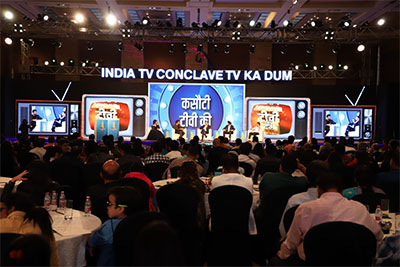
    “You cannot take out mass from ‘mass media’, because then there will be no media left”, said Uday Shankar, President of 21st Century Fox and former chairman and CEO of Star India at “TV Ka Dum”, a daylong conclave organised by India TV in Mumbai last weekend.



     

    Participating in a panel debate with Raj Nayak, COO of Viacom-18 and N P Singh, CEO of Sony Pictures Networks, Shankar said: “Television shows are made to get ratings, because the viewers are the ultimate arbiters. TV shows are not made for private viewing. Whether TV shows, newspapers or films, unless the masses read or watch them, you cannot judge their popularity,” adding: “Ratings are only the output to judge the content that is produced. Ratings is the sum of how many number of people watched a particular show. No astrologer can predict the ratings of a show. Producers are interested only in what viewers would like to watch or know, whether it is horror, comedy or love story.”


    Uday Shankar

    On the issue of why more and more TV shows based on superstition and horror are being produced, Shankar said: “There are serious TV shows too, like Satyamev Jayate, but to cater to a nation of 125 crore people, you cannot have a single size boot. One has to make shows according to the size of the foot of different types of people.”


    Reasoned Shankar: “If a car or bicycle manufacturer can want more and more people to buy vehicles,  then why not a TV producer can want more and more people to watch the show. There is nothing wrong in it.” On naysayers, Shankar said: “Some vested interests, including some politicians, do not like to watch certain TV shows. My answer is: if the people of our country have become more conscious and they are asking questions from those in power, it is not because of consciousness spread by the political class. TV programmes, whether entertainment or news, have spread awareness among the people.”


    Raj Nayak

    Said Viacom18 COO Raj Nayak: “My question is why do those who raise objections watch TV programmes that are negative? If some TV shows get good numbers it is because they are in demand. But one should also know that people watch shows like Satyamev Jayate, Balika Vadhu, Shakti (on transgenders), Udaan (on bonded labour). These shows entertain and also try to bring about social changes,” adding: “The Star Plus show Saathiya was on women empowerment, and shows like these educate people. Shows are made to care to different tastes of viewers. If more people watch the TV show Naagin, let me say, television did not create Naagin. Already there were four Bollywood films on Naagin.


    Nayak added: “Television and cinema reflect what is happening in society, they reflect what people want. Whenever we launch a new show, we never look at the TRP. No channel makes shows after watching TRPs. Shows are made only when there is good content. TRP is only a byproduct. Of course, at the end of day, the channels want TRPs because, after all, we have to run our company.”


    NP Singh

    And this is what NP Singh, CEO of Sony Pictures Networks, said: “I agree that television is an important medium for creating social impact.  Our shows did create a positive impact on society. Kaun Banega Crorepati is a very powerful and successful format, and its success was a given. It is a vehicle to create a positive and social change impact.


    We showcased stories of small town people whose work inspire others. That is why we decided that we will show the life journey of KBC participants so that it can inspire viewers.”


    Asked by hosts Maniesh Paul and Charul Malik as to why TV shows are pulled off the air abruptly by GEC networks, Shankar replied: ” It’s natural that when viewers do not like a show, it is pulled off the air. What can we do? We are not running an autocratic regime where shows will continue to run by government diktat, even if viewers like it or not. Here you have to respect the wishes of the people. For us, shows are a commercial enterprise. If viewers do not watch the show, how can we sell it (to advertisers)?

  • Stage set for Season 9 of KBC

    By A Correspondent


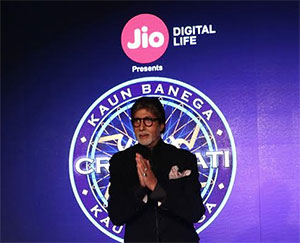
    Bollywood megastar Amitabh Bachchan is back with Season 9 of Kaun Banega Crorepati (KBC) which starts today (August 28) on Sony Entertainment Television (SET).


    KBC 9 will have new lifelines, thrilling gamification and an array of technological advancements in a concisely packaged limited episode season. The Phone-a-Friend lifeline will be revamped this season to video-a-friend. Additionally, an aptly titled new life-line Jodidaar has been introduced – wherein the participant can bring along a partner to join him/her on the coveted hot seat. The jackpot question will be for Rs 7 crore. Interestingly, the live-sized cheques will be replaced with digital currency transferred directly into the winner’s account via Axis Bank.


    Produced by Big Synergy, Kaun Banega Crorepati 9 has a host of sponsors in Vivo, Jio, Chings, Datsun, Raymond, Axis Bank, Akash Tutorial, Big Bazar and Quick Heal.


    Said NP Singh, CEO, Sony Pictures Networks India on the show: “This show has always exemplified attainment via the power of knowledge. Guided by insights, KBC is back to Indian television in its 9th season, in a new avatar that showcases some game-changing innovations.


    Added Danish Khan, EVP and Business Head at Sony Entertainment Television (SET): “One of the most relevant shows for India, Sony Entertainment Television is happy to present a fast-paced, thrilling, technologically upgraded season 9 of KBC with the most popular host in the television world, Mr. Amitabh Bachchan.”


  • Sony Pictures rebrands sports bouquet with Sachin Tendulkar as brand ambassador

    By A Correspondent


    In a country where cricket rules more than any other sport, Sony Pictures Networks India (SPN) announced Sachin Tendulkar as its Ambassador for Sports, as it grouped its sports brands together under the business vertical – Sony Pictures Sports Network (SPSN).


    With the addition of two new HD channels, SONY TEN 2 HD and SONY TEN 3 HD, the network now has 11 channels in its fold.


    Interestingly, the contract for the tournament that got the the broadcast network into the big league in sports a decade back is now up for renewal.


    Said NP Singh, CEO, Sony Pictures Networks India: “Our corporate philosophy of Go-Beyond encourages us to be brave, curious, insightful and visionary in everything we do. It takes leaders to Go-Beyond at every step of the game because leaders just don’t prepare for the future, they create it. And, it is the leader-mindset that has taken us from a single sports channel in 2012 to 11 dedicated sports channels in a span of five years. Currently, we are among the largest sports broadcasters in the Indian subcontinent.”


    Added Rajesh Kaul, President, Sports and Distribution, Sony Pictures Networks: “At Sony Pictures Networks, we are committed to providing an unparalleled sports viewing experience with the best leagues, best athletes and the best of sport entertainment. We are in a unique position with over 11, 000 hours of live content this year that has given us the opportunity to create channel destinations for different sports. Each of our 11 channels will project a distinct content line-up from our expansive portfolio of domestic and national sporting properties.”


  • Sony refreshes Sab TV with new identity and “energy”

    By A Correspondent


    For long, the humour channel of the Sony Pictures Network has been the highest rated. Even ahead of flagship Sony Entertainment Television. The channel has ensured that it’s fit for family viewing and hence it has steered away from stuff that even border on the risqué. Now, Sony Sab has launched its a new brand identity. The ‘re-energised’ channel will see a new line up of comedy shows, lively packaging and vibrant visuals, notes a communique.


    Actor Varun Dhawan has been roped in as a Happiness Ambassador for the channel. Said NP Singh, ‎CEO, Sony Pictures Networks India: “For over a decade, SAB has emerged as the most distinctive channel in GEC and built a sizeable loyal audience. The new, re-energised SAB is all set to deliver on the promise of Haste Raho India as its mission is to be recognised as the ‘frown flipper’ for Indian audiences.”


    Added Neeraj Vyas, Senior EVP & Head, Sony Sab and Max cluster: “The re-energised SAB further strengthens our core proposition through a reinvigorated language of humor and a compelling purpose of making more than a billion Indians laugh more, every day. The new brand identity along with a range of new shows offering more laughter, modernity, relatability and variety, will help us strengthen the connect with our core audiences as well as attract newer audiences to the channel.”


  • Sony Yay to launch on April 18

    By A Correspondent


    Sony Pictures Networks India announced the launch of its much-awaited kid’s entertainment channel – Sony YAY! that will go live on April 18. With the premise of being the ‘Destination for Unlimited Happiness’ for kids, the channel has roped in dancing cinestar Tiger Shroff as its brand ambassador.


    With the primary TG of 2-14 years of age, Yay will go live with four original, locally produced, animated shows. A musical comedy titled Guru Aur Bhole on Mon – Fri at 10am, Sab Jholmaal Hai starring a world full of pets on Mon – Fri at 9am, a tale of friendship in Prince Jai Aur Dumdaar Viru on Mon – Fri at 11am and a ghost comedy called Paap-O-Meter on Sat – Sun at 12 noon  will form the key programming mix of the channel at the time of launch.


    Said NP Singh, Chief Executive Officer, Sony Pictures Networks (SPN) at a media meet on Thursday: “It goes without saying that the Indian television industry is at an interesting crossroad, with the kids genre being a frontrunner in demanding innovation and freshness. With the launch of Sony YAY!, the network now offers tailormade propositions for every member of the family.“


    Added Leena Lele Dutta, Business Head, Sony YAY!: “We are excited to launch Sony YAY! and be the platform that provides children with original Indian content that they can relate to and identify with. We couldn’t be happier to have Tiger Shroff on-board to support our vision of spreading happiness amongst our young audiences through content that is truly sensitized to their needs. We are certain that kids will find an instant connect with our shows…”


    The channel will will be aired in Hindi, Tamil and Telugu languages across direct-to-home (DTH) and digital cable platforms starting April 18.