Tag: Nokia

  • Nokia reports three-fold increase in mobile data usage

    By Our Staff


    Last week Nokia announced in its annual Mobile Broadband Index (MBiT) report that mobile data traffic in India has risen 3.2 times over the last five years. The report also revealed that pan-India mobile data usage per month grew from 4.5 exabytes in 2018 to 14.4 exabytes in 2022.


    Nokia’s report includes many key takeaways about the evolution of the Indian mobile market, including data on mobile data consumption and growth, the ongoing transition from 4G to 5G as well as the prospects for enterprise adoption of 5G with private networks.


    Further findings point to mobile data consumption increases coinciding with the launch of commercial 5G services in the country in October 2022, as Communication Service Providers (CSPs) deploy 5G networks and expand to newer areas at a fast pace. Together 4G and 5G subscribers now account for almost 100% of the total mobile data traffic in the country.


    In addition, average data consumption per user has risen sharply since 2018, reaching 19.5GB per user per month in 2022 – this is the equivalent to 6600 songs. At an aggregate level, total mobile data consumed in India is expected to more than double by 2024. Over 70 million 5G devices are estimated to have been shipped to India in 2022, indicating a strong traction for 5G in the market.


    MBiT 2023 highlights a significant acceleration in enterprise investment. Enterprise spending on Private 5G networks will be driven by new use cases in diverse industry verticals, including manufacturing, utilities, transportation and healthcare among others in India. India’s investment in private wireless network is expected to reach around US$ 250 mn by 2027.


    Said Sanjay Malik, SVP and Head of India Market at Nokia: “India has seen a massive uptake of mobile broadband based on successful deployment of 4G LTE networks. We believe that 5G will take mobile broadband consumption to the next level in India by will enabling new digital use cases for both consumer and enterprise segments. It is essential that this growth is managed in a sustainable manner while supporting India’s aim to become a trillion-dollar digital econom.


  • Xaxis & Wavemaker collaborate to influence store visits

    By A Correspondent


    Xaxis, GroupM’s programmatic arm has announced the results of a national campaign for Nokia smartphones with Wavemaker South Asia. The goal of the campaign was to reach potential customers digitally to influence them to visit a Nokia phones retail store.


    Said Ruchira Jaitly, Head of Marketing – India, HMD Global: “Xaxis and Wavemaker have delivered outstanding results that enable us to see the impact of digital ad targeting on real world actions. This campaign highlights the important connection between digital ads delivered to the right people at the right time and its impact on offline behaviour. We look forward to applying these insights to future campaigns.”


    Added Bharat Khatri, Country Lead, Xaxis India: “The campaign proves the growing importance of an insight-driven approach in today’s marketplace. With Xaxis Places and our technology partners, we were able to demonstrate the positive influence that digital targeting can have on driving awareness, offline behaviour and overall value for the brand.”


    And this is what Ajay Gupte, CEO, Wavemaker South Asia said: “There are many developments in digital that are changing the models of advertising in India, and our client HMD Global, the home of Nokia phones, has been at the forefront of bringing fresh strategies to market,” “Our partnership with Xaxis underscores the power of mobile data and other digital insights and its impact on customers in the real world.”


  • Ex-Nokia MD D Shivakumar is Pepsi’s India region CEO

    By A Correspondent


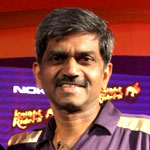
    D Shivakumar

    US food and beverage maker PepsiCo on Monday named former Nokia executive D Shivakumar as its chairman and CEO for India region, a position lying vacant since Manu Anand quit in June.


    Mr Shivakumar – who was managing director at Nokia India before taking over as the handset maker’s senior vice-president for India, Middle East and Africa in 2011 – is PepsiCo India’s first outsider CEO since Rajeev Bakshi, who led the firm from 2001 to 2006.


    “Shiv has a proven ability to take billion-dollar businesses to the next level by maximising innovation, execution and collaboration,” Ms Indra Nooyi, chairman and CEO at PepsiCo, said in a statement. He takes charge with immediate effect. ET NOW business channel broke the news before the official announcement.


    PepsiCo on Monday also announced promotion of Gautham Mukkavilli, currently general manager of its beverages business in India, as senior vice-president, business transformation, for the Asia-Middle East-Africa (AMEA) region. He will oversee strategic initiatives in foods and beverages across the region with effect from March 1, 2014.


    Both Messrs Shivakumar and Mukkavilli will report to Sanjeev Chadha, CEO of PepsiCo AMEA. “Shiv and Gautham will be playing key roles in driving PepsiCo’s business forward in the region,” Mr Chadha said.


    PepsiCo India has been operating without a country head since Manu Anand quit dramatically in June to join foods company Cadbury Kraft. Since then, Mukkavilli and foods division head Praveen Someshwar have been reporting to Mr Chadha.


    An engineer from IIT Chennai and an MBA from IIM Calcutta, Mr Shivakumar’s appointment has come as a surprise to many as his immediate predecessors Manu Anand (India head from 2010 to 2013) and Mr Chadha (2006 to 2010) were chosen from PepsiCo’s internal talent pool.


    Mr Bakshi was the last outsider CEO of PepsiCo India, brought in from Cadbury. Mr Shivakumar’s immediate mandate at the firm will be to accelerate consumption of colas and snacks in an environment when growth has slowed down significantly.


    Growth of soft drinks has slowed down to single digits as early rains cut short last summer on top of weakening consumer sentiment. PepsiCo’s snacks business is facing increasing competition from national rivals, such as ITC and Parle, as well as local players.


    “PepsiCo is in a challenging phase and will test Shiv’s abilities to the hilt,” said Vibhav Dhawan, managing partner at search firm Positive Moves Consulting, said.


    Mr Dhawan, who knows Mr Shivakumar well and has tracked his career, said he is a good choice to lead PepsiCo in India. “Shiv is a rare marketer who has worked both in traditional consumer and new generation mobile consumer sectors. His marketing prowess makes him a great choice for a brand like PepsiCo which targets the youth,” he said.


    Mr Shivakumar, who spent eight years at Nokia, quit the firm in June this year. Before joining Nokia, he worked with consumer electronics maker Philips and top consumer goods firm Hindustan Unilever.


    During his tenure, Nokia’s user base jumped from 80 million to about 900 million but its market share declined from over 70% to about 25% as Chinese manufacturers and some homegrown brands like Micromax and Karbonn eroded its market share in the entry level segment, while Samsung and Apple ate into its share in the smartphone segment.


    Nokia’s biggest failure under Mr Shivakumar was missing out the dual-SIM revolution, which accounted for as much as 50% of handset sales in India between 2009 and 2010.


    Source:The Economic Times

    Copyright © 2013, Bennett, Coleman & Co. Ltd. All Rights Reserved
    Licensed to republish


  • Samsung replaces Nokia as #1 cellphone in India

    By A Correspondent


    The Indian mobile handset market posted revenues of Rs 35,946 crore in FY 13 compared to Rs 31,330 crore in FY12 showing a growth of 14.7%. This was mainly due to the increasing uptake in smartphones by the Indian consumers.


    The 18th annual survey ‘V&D 100’ by Voice&Data magazine covered over 30 mobile handset companies doing business in India across categories like feature phones, multimedia phones, enterprise phones and smartphones. Both multinational and Indian mobile phone firms were surveyed for this report.


    The biggest surprise of the year was Korean electronics maker Samsung dethroned Nokia from the top position. The Finnish handset maker had been holding the fort for over a decade.


    Samsung’s rise in the Indian market is attributed to its rich product portfolio that was able to cater to customers of all budget categories. Samsung handset prices range from Rs 1,500 to Rs 50,000. Samsung mobile handsets come in varied screen sizes. These two factors helped the company grabbing customer’s attention, besides the product quality and new features.


    Samsung ended the year with revenues of Rs 11,328 crore compared to Rs 7,891 crore in FY12 showing a growth of 43.6%. The company also became the market leader with 31.5% market share.


    The former leader of the Indian mobile phone market Nokia dropped a rank to be placed at No 2 in the Voice&Data survey with 27.2% market share with a significant 18% drop in revenue.


    In the 12 months ended March 2013, Nokia revenues from Indian operations were placed at Rs 9,780 crore compared to Rs 11,925 crore in FY12. The revenue loss at Nokia has been staring at Nokia worldwide in view of a few strategic missteps. Nokia’s drop in market share started when the company failed to sense the need of a dual-SIM phone for the Indian consumer, and the same was tapped by the Indian players years ahead of global players like Nokia.


    On a global ground, not embracing the most popular and most accepted operating system – android – for its Smartphones, gives its potential customers very little choice.


    Nokia’s Lumia series phones that witnessed huge growth globally in the initial phases could not draw much attention in India.


    “The rise of smaller local players like Micromax, Karbon, Lava, and Zen is a clear indication that consumers want cheaper feature rich phones. The next phase of mobile penetration in the bottom of the pyramid India will be driven by these companies,” says Ibrahim Ahmad, Group Editor of Voice&Data.


    Homegrown handset company Micromax captured #3 position among V&D100 Top10 mobile handset brands for the year 2013. Though it performed pretty badly in FY12 and the first quarter of FY13, through some smart thinking and innovative products, the Gurgaon-headquartered phone maker grew by 58.6%. By the end of the last fiscal, the company posted revenues of Rs 3,138 crore compared to Rs 1,978 crore in FY12. With this Micromax enjoys a market share of 8.7%.


    Closing in next is Karbonn Mobiles, the company among the Indian handset players that grew most consistently. In FY13, Karbonn grew by 73.1% to register revenues of Rs 2,297 crore compared to Rs 1,327 crore in FY12. IN FY 2013 Karbonn grew by 32%.


    With thism the Bengaluru-based UTL Group and Delhi based Jaina Group Joint-Venture Company, Karbonn captured a market share of 6.4% and is placed at #4 position in the table. Last year they were placed at #5.


    Also making an entry into the Voice&Data Top10 table in the handset space is Apple that grew a mammoth 417.2% to post revenues of Rs 1,293 crore in FY13 compared to Rs 250 crore a year back. Though India was never a focus market for the Cupertino-based smart device maker till Steve Jobs’ era, in the last two years Apple has started making inroads, though slowly.


    In the last fiscal, the company made some disruptive changes in its sales strategy which paid off. Appointing Ingram Micro and Redington as the national distributors for their entire sales, and offering EMI schemes to the consumers to buy the most coveted Apple product changed the game for them. The company now enjoys 3.6% market share in India with the smallest number of handset models in its portfolio.


  • 92.7 Big FM goes ‘Rangeen’ for Nokia

    By A Correspondent


    92.7 BIG FM, India’s No.1 and largest Radio Network went Rangeen, literally, for an entire day last week (Aug 7) as part of an innovation for Nokia Asha 501’s #Colorisin campaign. The campaign saw the re-christening of the 45-station network to 92.7 Rangeen FM to promote the colorful features of the Nokia handsets.


    The roadblock saw execution in multiple local languages across the network. Ensuring high audience engagement and gratification, the station wove in programming pegs and contests around the Nokia Asha 501 and its USPs, notes a communiqué.


    As part of the campaign, innovations from Nokia, beyond Radio included filling colours in black and white public signages with the aim of adding a dash of color to surroundings. From coloring a Zebra crossing in Mumbai to giving public transport systems of trams in Kolkata, double decker buses and local trains in Mumbai, a colourful makeover was initiated.


    Ashwin Padmanabhan

    “Through our association with 92.7 Big FM, Nokia aimed to engage with consumers across 45 cities and infuse colour in their everyday lives with exciting activities for the listeners. We are delighted to see this campaign manifest at various levels and get bigger and better with every initiative,” said Viral Oza, Director Marketing – Nokia India. Added Ashwin Padmanabhan, Business Head – 92.7 Big FM said, “The campaign has made for conversation currency. Client centricity, while keeping the listener requirements at the top, has been our focus right from the beginning and the campaign for Nokia Asha 501 highlights that once again.”


  • No kiya! Tired of telecom, D Shivakumar wants to move on

    By Shelley Singh


    After eight years in the sector that showered him with both stirring recognition and stinging criticism, D Shivakumar is done with telecom.


    Talking to a week before he calls time on an eight-year stint in the sector that saw him catapult handset maker Nokia into a leadership position in India only to find it fall steeply from grace, 56-year-old Mr Shivakumar says while he hasn’t firmed up his plans, he will not be involved with telecom, a sector he painted as brutal and unforgiving.


    “It’s an industry with possibly the highest rate of innovation -  lifecycles are very short,” says the senior vice-president, Nokia, India, Middle East & Africa. “In other categories, you have six innovations in 100 years; in telecom, you will have that many in months. One thing telecom teaches you is to be extremely fit, mentally and physically, as a company and as a brand. Otherwise, telecom can punish you.”


    Nokia, both in India and globally, found that the hard way. When Mr Shivakumar switched from Philips, where he headed consumer electronics, to Nokia India in 2005, the Finnish handset marker was in the midst of a strong run. According to figures from IDC, it had 49% share of the Indian handset market in 2006, which peaked under Mr Shivakumar at 56% in 2008, amid a significant expansion in the overall market size.


    But then, the company was slow to change, first in the dual-Sim space and then in the touchscreen space, and saw its share dip to 33% in 2010. In 2011, Mr Shivakumar moved to a global role in Nokia and relocated to Dubai.


    Mr Shivakumar leaves Nokia at a time when it is trying to claw back globally, which he feels it will accomplish on the back of its Asha and Lumia ranges of phones, and transition from Symbian-based platform to Windows-based platform. “Turnaround is defining strategy, aligning resources and capability, and correcting the wrongs of the past,” he says. “When you are in a turnaround phase, people expect it to happen tomorrow morning.”


    In 2012 (January to December), Nokia posted revenues of €30.1 billion globally, down 22% over 2011. Its operating loss stood at €2.3 billion compared to loss of €1.1 billion in 2011. “It’s (a Nokia turnaround) an uphill task,” says a telecom analyst with a multinational consultancy firm, on the condition of anonymity. “Rivals aren’t going to give room to Nokia to bounce back.”


    Mr Shivakumar’s resignation, announced in March, has led some to believe that he is leaving a sinking ship. “How long do you stay in a company that is going down?” asks the country head of a global hardware major, not wanting to be named.


    Calling telecom a “brutal” market, consultant Mahesh Uppal says the challenge in the sector is to manage expectations. “A leader in telecom needs a hawk’s eye on marketing, applications and services, to get the pulse right and not lose sight of the market,” says the director of Com First, a telecom consultancy firm, without referring to a specific individual. “Hardly a day passes without something new. It can be nerve-racking and exhausting.”


    But Mr Shivakumar, who is relocating from Dubai to Delhi, says telecom has been a “wonderful journey”, and though he is not tired off it, he now wants to go beyond. “Good leaders cross boundaries of categories as what they bring to the table is clarity, strategy and leadership,” he says. “I’m not a one industry person.”


    Areas that attract Mr Shivakumar include retail, education, skills development, health and wellness. “I haven’t thought what I’ll do next, but the few things that I really value are institution building, growth and brand,” he says. “Any industry that has a combination of this will attract me. But it won’t be telecom again. I’m done with it.”


    Back in India, its Indian arm was hit with a 2,000-crore demand from the income tax department for violation of transfer pricing norms. Mr Shivakumar asserts the company has complied with tax rules and denies this was a factor in his leaving. “Nokia followed every single rule in filing its returns. The issue is of interpretation,” he says. “It’s completely incorrect to associate my leaving to the tax case.”


    Source:The Economic Times

    Copyright © 2013, Bennett, Coleman & Co. Ltd. All Rights Reserved

    Licensed to republish


  • Samsung, Nokia, Micromax more researched than Apple

    By A Correrspondent


    PrecisionMatch, data provider for digital marketing in India, MEA and SEA, has released its ‘Mobile Handset Market Insights’ for India for the period December 2012 to February 2013. The consumer data in the mobile handset market suggests that Samsung, Nokia, Micromax, Sony and HTC are the five most researched brands on the internet and Samsung Galaxy S3 with its unique features is the most researched handset model.


    A key insight gathered from the data is the increasing consumer interest in Micromax phones. Micromax was the second most researched handset brand after Samsung in Feb 2013 while Micromax A110 Canvas 2 was the most researched handset model in January 2013. The data also suggests increasing popularity of Nokia, with its range of Nokia Asha and Nokia Lumia models that are competing with the likes of HTC, Apple and Sony Mobile. Another interesting revelation is Sony’s consistent performance making Sony Mobile the 4th most researched handset brand.


    PrecisionMatch Mobile Handset Market Insights was derived from aggregation and analysis of audience data for 5.3 million unique users across India over the 3 months. The 5.3 million unique users are audiences who displayed strong purchase intent by either researching, comparing or reviewing handset brands across sites. PrecisionMatch utilizes advanced data mining and analytics to identify prospective consumer segments for advertisers, generate actionable insights from aggregated data and develop consumers online behavior models.


  • Saavn launches new ad platform

    By A Correspondent


    Indian music service Saavn has announced the launch of its new advertisement platform, Impact. This platform enables brands to identify, connect and engage with its 10.5 million users in India and across the globe.


    Impact is an innovative approach to digital and mobile advertising that gives brands 100 percent share-of-voice. Using Impact, brands get complete and exclusive access to all advertisement units on the Saavn web site and mobile apps for a set time period. These include Custom Skin, Web Display, Web Audio, Mobile Spotlight, Mobile Display, and Mobile Audio. Impact is a powerful model that allows brands to build positive associations with their products and services through music. The model has proven to create strong brand awareness, shape brand preferences and increase purchase consideration through undivided mindshare of listeners of Saavn across platforms.


    “In India, we all know that music plays an integral and meaningful part in every individual’s life. Impact is a powerful solution that enables the advertisers to build an emotional connection with their target audience during a passionate, social and engaging musical experience,” Vinodh Bhat, co-founder and CEO of Saavn, said. “The Saavn Impact model is based around engagement, curation and social sharing rather than the archaic click-through. Brands are able to measure ROI in meaningful ways, such as increases in perception, awareness, recall and purchase intent. The byproduct of our strong focus on the consumer experience is helping brands grow their businesses.”


    Some of the major brands utilizing Saavn to reach million of engaged users in India include: Samsung, Lay’s, Pantene, Pepsi, Nokia, Vodafone, Airtel, Hyundai, Domino’s Pizza, 7Up, Nielsen, MakeMyTrip, Max NewYork Life, Google Plus, Nokia, Vanish, Groupon, Intel and several others.


    Saavn delivers a comprehensive catalogue of Bollywood, Indian and regional South Asian music, licensed from more than 200 content providers. Saavn users can search, browse, and play a catalog of more than 1 million tracks; create and save their own playlists; and share their music tastes seamlessly via Facebook.


  • AdNear raises Rs 35 crore in its first round funding

    By Biswarup Gooptu


    Location-based mobile advertising platform AdNear has raised Rs 35 crore in its first round of funding from venture capital firms Canaan Partners and Sequoia Capital, signaling the growing attractiveness of the sector for risk capital.The funds will be used by the Bangalore and Singapore-based startup to expand its presence across the Asia Pacific region, including Australia and New Zealand, as well as towards building its team.


    “We decided to participate in the mobile advertising eco-system, and picked AdNear, because it has built technology to provide target advertising on mobile phones,” Rahul Khanna, partner, Cannan Partners, said.


    The four-year old startup, promoted by Anil Mathews, has developed its own platform that does not require Global Positioning System (GPS). It also works on both feature and smart phones. Within a year of launching its service, it has picked up multinational customers, such as Nokia, Toyota and Samsung.


    Sequoia and Canaan declined to state their exact holding, only saying they would hold minority stakes in the company.


    “It’s a technology play after a very large market of mobile advertising that has not been explored in this part of the world,” Mohit Bhatnagar, managing director at Sequoia Capital said on the AdNear transaction.


    The investment comes soon after Bangalore-based InMobi, an independent mobile advertising company announced that it was shutting its operations in Africa and Russia.

    The global mobile advertising market is dominated by Google’s AdMob, with growth coming from markets where smart phones dominate, including, Japan Korea and the US.

    In September last year, InMobi raised $200 million – till recently, the largest deal in the global mobile internet space – from Japanese telecommunications and media corporation Softbank.


    Mojiva raised $7 million earlier in the month, while Jumptap raised $27.5 million in July, prior to its public offering.

    On the mobile side, Canaan Partners had earlier invested in interactive mobile content manager Cellcast in 2007, and has also invested in mobile gaming company Kabam.


    Source:The Economic Times

    Copyright © 2012, Bennett, Coleman & Co. Ltd. All Rights Reserved

     

  • Suresh Balakrishna now also CEO of Lintas Outdoor

    Suresh Balakrishnan

    IPG Mediabrands has announced the appointment of Suresh Balakrishna as CEO of Lintas Initiative Outdoor. The leadership responsibilities of all the OOH businesses of IPG Mediabrands will now report to Suresh Balakrishna, with immediate effect, according to the official communique.


    Mr Balakrishna, a media veteran with over 25 years of publishing, brand building and media agency experience, had rejoined Lintas Media Group in January this year to roll out and lead BPN, the third agency network of IPG Mediabrands.


    He will be handling this assignment in addition to his current responsibilities as CEO of BPN India.


    Hemanth Shah, Managing Director of the company resigned a month ago and will be with the organisation till the end of August. His next destination is not known. He joined the company two years ago from Times OOH.


    Some of the leading OOH businesses in IPG Mediabrands include Nokia, Hindustan Unilever, Union Bank ofIndia, Coca Cola, Tata Consultancy Services, Expedia, Citibank, Monte Carlo etc.


    For the record, Lintas Initiative Outdoor has 22 offices around India.


  • Mobile handset revenues drop 5% to Rs 31k cr

    By A Correspondent


    The Indian mobile handset market saw a drop of 5 per cent in revenues in FY 2011-12. The revenues dropped to Rs31,215 crore from Rs33,031 crore a year back. The annual survey of the Indian telecom industry by CyberMedia Group’s flagship journal for the telecom industry – Voice&Data attributes this drop to de-growth in the feature phones sales as well as lower average selling values (ASVs).


    The 17th annual study ‘V&D 100’ surveyed over 30 mobile handset firms – both multi-national and Indian – selling feature phones, multimedia phones, enterprise phones and smartphones in India.


    The disappearing act by the home-grown handset makers was a big surprise of the year. Barring Karbonn and Lava, none of the Indian handset players could face intense competition. Their main stay – feature phones – saw a negative growth while the entry level smartphones of various companies saw a marginal rise.


    “Indian mobile phone brands that had hoped to make a mark by sourcing Chinese handsets and selling them only on the price plank were in for a big surprise. These players will have to quickly rethink their product, marketing and service strategy afresh to put their house in order,” said Ibrahim Ahmad, Group Editor, Voice&Data.


    Top 10IndiaMobileHandset Vendors: Voice&Data 100 survey 2012
    Revenue in Rs Crore
    Rank 2011-12 2010-11 Change Mkt Share in %
    1 Nokia 11925 12929 -8 38.2
    2 Samsung 7891 5720 38 25.3
    3 Micromax 1978.0 2289 -14 6.3
    4 Blackberry 1460.0 1950 -25 4.7
    5 Karbonn 1327.0 1004 32 4.3
    6 HTC 923.0 450 105 3.0
    7 Spice 790.0 920 -14 2.5
    8 LG 780.0 1834 -57 2.5
    9 Huawei 750.0 626 20 2.4
    10 G’Five 670.0 1326 -49 2.1
    Total 31,215.0 33,031.0 -5 100.0
    Source: Cybermedia’s Voice&Data Annual survey of the industry 2012


    Nokia remained the number 1 player in the handset business in FY 2011-12 with revenue of Rs11,925 crore, despite a 8 per cent  drop. The Finnish company lost market share in smartphones and multi-media segment to Samsung, HTC and Apple, among others.


    Nokia felt its absence in the Android ecosystem dent its performance, it made a head way in the dual SIM phones category but lost out in the smartphone market and ended the year with a market share of 38.2 per cent.


    The Korean giant Samsung, grew its revenues 38 per cent to Rs7,891 crore at the second spot with a market share of 25.3 per cent. Voice&Data analysts attribute Samsung’s success to its rich product portfolio based on Windows, Android and Bada operating systems. Samsung’s Galaxy Note, a hybrid between smartphone and tablet was a trail blazer selling 40,000 units each month since launch in late 2011.


    “As consumers look for applications beyond voice and SMS, the market will see fight for high-end feature phones and smart phones intensify further. Consumers can also look forward to steeper price drops and more features in the same price,” said Mr Ahmad.


    Homegrown handset company Micromax with revenues of Rs1,978 crore ranked third among Voice&Data100 Top10 mobile handset brands, recording a 13 per cent negative growth and a market share of 6.3 per cent.


    The only other Indian player to post revenues of over Rs1,000 crore was Karbonn. The company grew its revenues 32 per cent to emerge as the No 5 player with a market share of 4.3 per cent.


    Among the global companies in the V&D100 Top 10 players, BlackBerry maker Research In Motion dropped the most- 25 per cent – to post revenues of Rs1,460 crore. At No 4, Blackberry had a market share of 4.7 per cent on the back of entry level smart phones last year.


    Taiwanese handset maker HTC saw maximum growth among all the brands surveyed by Voice&Data. HTC’s revenue more than doubled to Rs923 crore to inch a 3 per cent market share.


    The other key players in the Top 10 list include Spice Telecom (Rs790 crore), LG (Rs780 crore), Huawei (Rs760 crore) and G’Five (Rs670 crore),


  • What’s ailing RIM’s Blackberry drive globally & in India?

    By Ravi Balakrishnan


    Don’t let the kid on the next seat in the train, furiously typing away on his or her BlackBerry fool you. Despite the fact that Indian youth have bonded over BBM, the performance of the parent RIM and maybe even the launch of its latest product in India have revealed a number of holes in the phone maker’s strategy. BE asks what’s troubling BlackBerry, boys?


    Minutes before Research In Motion, the makers of BlackBerry, made an announcement at a press conference in Delhi, there was a definite vibe of anticipation. Tech hacks idly wondered just what was going to be unveiled, given that BlackBerry has a fairly conservative release schedule.


    The more optimistic were holding out for a glimpse of BlackBerry’s OS 10 rumoured among the brand’s faithful to be a potential Android-slaying, iOS-wrecking killer operating system; one that would propel BlackBerry back to the top of its game. But instead, BlackBerry amid much fanfare and celebrity preening unveiled the Curve 9220.


    At the Q&A and after, the questions flew thick and fast: why only a 2MP camera? Why no 3G? And why such a stiff price tag for a phone that lacked these two features?


    The device was launched at Rs10,990; inexpensive for brand BlackBerry, but a tad pricey compared to other mobiles, even smartphones if one considers budget Android models from Samsung, LG, Spice and Lava among others.


    The Curve offered unique features like a quick access BB messenger button and, critically, long battery life, something of a rarity in the smartphone category.


    FM radio, a feature that’s bog standard even for phones that are sold at a tenth of the cost, made its way to Blackberry Curve. But to an audience weaned on revolution, having to settle for evolution was a disappointment. It was a dangerous reaction for any company to deal with; especially a tech firm that’s been gradually losing its reputation as a pioneer.


    As one of the first smartphones, BlackBerry had a dream run starting with the enterprise segment and slowly making inroads into the consumer space. ‘Sent from my BlackBerry’ soon became a ubiquitous signature; first for emails from globetrotting CEOs and later among the rank and file as well. Except of late, it has taken a beating globally, trounced by the iPhone on the one hand and a gamut of Android powered devices on the other.


    Its most recent financial results reveal a loss of $125 million. And shipments of 11.1 million, down 21 per cent from the previous quarter. Reviews for its Torch series have been unenthusiastic and the game changing OS10 is expected to show only in the latter half of 2012. An industry insider said: “They decided to step back and relax and that cost them. The engine has stopped innovating for some time.”


    In some countries like India though, BlackBerry still counts among the contenders. According to Frost & Sullivan, it’s at the third place in the Indian smartphone market with a share of 15 per cent, trailing behind Nokia’s 35 per cent and Samsung’s 40 per cent. It’s attracted a strong app developer network of 30,000 in India up from 4,000 two years ago, according to a company source.


    More importantly, for a product that’s worldwide reputation veers towards the stodgy, it has a strong traction with the youth. Abhishek Chauhan, senior consultant, ICT Practice, Frost & Sullivan, South Asia & Middle East observed: “In India, they’ve been taking segmentation seriously, targeting the youth. I don’t feel India will be a danger space for them if they launch affordable devices and data plans for their consumers here.”


    The youth connect has been built in part on the back of initiatives like the BlackBerry Boys campaign; a co-branded effort with Vodafone, currently in its second year. On the distribution front too, BlackBerry was quick to realise there was a world beyond the metros. It is currently present across 250 cities and according to RIM India’s managing director, Sunil Dutt, it continues to expand.


    However, BlackBerry India has not remained unaffected by the pressures facing its parent. The pricing strategy has changed: the jury is out on just why this is happening and what it will lead to. Of late, there have been price cuts across its portfolio.


    Coupled with the relatively ‘inexpensive’ tag on the new phone, it indicates either a thawing on part of the company or an act of desperation depending on who you ask. Mr Dutt explains the price cuts: “Sometimes when you reach economies of scale, they allow you to pass on benefits to customers.” This becomes important as the phone reaches towns and cities that want the device but find the price tags forbidding.


    Mr Dutt has a different take on discounts. He believes they are not an indication of a brand in trouble but an invitation to consumers to be a part of an ecosystem and experience. “We want to reach more consumers. A lot of them want an affordable solution and we provide just that,” he said.


    Marketing consultant Shripad Nadkarni of MarketGate however cautioned that the strategy could well be a double edged sword: “It helps garner short term sales, but the brands future depends on how they keep in synch with innovations of the competition. They can reduce the price of existing products but need to buffer up the offering to be a serious player.”


    There seem to be several options and suggestions available to BlackBerry, many offered gratis by various tech columnists. Part of the problem according to industry pundits is that the brand strayed too far away from its enterprise roots and ran the risk of being “everything to everybody.”


    The industry insider said: “It is still a high stable platform that gets jobs done in least number of steps. They need to recognise what’s driving them as a company and drive it even harder. BlackBerry 10 could change the way people think about the  company. The question is whether it will be too little too late.”


    For the longest time, BlackBerry believed the experience its products offered was good enough for it to command a premium. Even as rivals ramped up the megapixels on cameras, and made their phones more music, game and leisure friendly, BlackBerry’s phones remained on a pound for pound basis, a tad underpowered.


    But with the competition evolving at a furious pace and throwing in more for less with each generation of phone, it may be a matter of time before even the BlackBerry boys begin to wonder if the experience is worth the price.


    Source: The Economic Times
    Copyright © 2012, Bennett, Coleman & Co. Ltd. All Rights Reserved