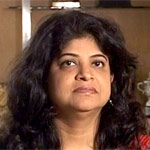

Tag: Nandini Dias

  • Jury announces the winners of Mumbai Moments 2015

    By A Correspondent


    The judging process for the photo contest – Mumbai Moments 2015, came to a close on December 4, 2014 by a three-member jury comprising of Mahesh Bhat, film director, Nandini Dias, CEO, Lodestar UM and Mukesh Parpiani, Senior Photo-journalist and Head of Piramal Gallery, NCPA.


    The images for the contest are required to capture Mumbai’s mood – the memorable moments that make the city what it is. About 70 photographers submitted their entries with photographs numbering nearly 800.


    The following entries have been judged as the best 13 that will be included in the Mumbai Moments 2015 calendar:


    Cover Swapnil Sakhare – DNA
    January Ashish Rane – Mid-Day
    Februry Amay Kharade – Mumbai Samachar
    March Ashish Raje – Mumbai Mirror
    April Shadab Khan – Mid-Day
    May Nimesh Dave – Mid-Day
    June Raju Shinde – Mumbai Mirror
    July Indranin Mukherjee – AFP
    August Nimesh Dave – Mid-Day
    September Anshuman Poyrekar – Hindustan Times
    October Shadab Khan – Mid-Day
    November KK Choudhary – Times of India
    December Sanjay Hadkar – Times of India


    The winners will receive a certificate, trophy and cash prize when the calendar is formally released later this month.


  • Ad Club’s Media Review sets its date with members

    By A Correspondent


    The Advertising Club’s Media Review has been a hit with the members over the years. It started out with a solo speaker presenting his perspective and the luminaries that did the event as sole presenters included Sam Balsara, Sameer Nair and Subhash Chandraji.


    Later the format was tweaked and presented as a panel discussion. Some of the luminaries who were panelists included Nandini Dias, Pratap Bose, Punitha Arumugam, R. Gowthaman, Farokh Balsara etc. This year the event will have three experts presenting for 30 minutes each followed by a QnA session with the audience.


    Discovery Communications India has come on board as Presenting Sponsor whereas PepsiCo India Holdings Private Limited will be the Associate Sponsor.


  • Kids wanting to star in TV shows/ads may soon need permission from Labour min

    By Yogima Seth Sharma


    Are you grooming your child for a career in show business? Perhaps she has a chance of getting picked for a spot on a talent show, or he could land a role in a TV ad. But you may soon need the government’s permission before seeking to achieve such ambitions. The ministry of labour and employment is planning a legal clause to make such clearance mandatory for children engaged in any form of audio or visual entertainment, which covers advertisements, films, television serials and sports among others. Officials argue that the government needs to step in to prevent the exploitation of children.


    “We have requested the legislative department to draft an appropriately worded clause to permit children to be engaged for performance in any form of audio or visual entertainment after obtaining written permission, the conditions for which can be prescribed in the rules or regulations of the Child Labour Act,” a senior ministry official said.


    The official said there is a need for regulation as the involvement of children, including adolescents, in the entertainment industry has risen exponentially and there have been several instances in which they’ve been unable to cope with the physical and mental trauma associated with the rigorous routine. The ministry will draw up the detailed process for obtaining permission once the proposal is vetted by all stakeholders.


    According to the 2001 census, the total number of working children aged between five and 14 was 1.26 crore. The National Sample Survey Office survey of 2009-10 put the figure at 49.84 lakh. While there is no official estimate of the number of children employed in the audio-visual industry, experts peg it at 1-2% of the total children employed across the country and feel that the number is rapidly growing.


    Children’s entertainment is the second-largest genre on television after general entertainment channels and is expanding fast, especially in regional languages because production costs are relatively low and viewership is assured.


    As a result there’s been a surge in the number of shows featuring children, whether it’s music, dance or stand-up comedy, while some serials even have them as the main characters. The government feels that the participation of children in reality shows puts immense pressure on them, with some parents pushing them too hard, which can have an impact on their mental and physical wellbeing.


    Experts though are concerned that such a move could act as a deterrent to producers who are working on wafer-thin margins as the category doesn’t attract much advertising.


    Nandini Dias

    “Most producers are already sensitive and alert to child actor needs, circumstances etc. Also, since they are on broadcast media, it is not a hidden activity. Now, with one more permission needed, I just hope it doesn’t become a determent. Since many a time kid movies and programmes are not as profitable, with this impediment, the few who are willing to pick up these projects will also reconsider,” said Nandini Dias, CEO of Lodestar UM.


    Source:The Economic Times

    Copyright © 2014, Bennett, Coleman & Co. Ltd. All Rights Reserved

    Licensed to republish


  • Helps being a strategically driven agency: Nandini Dias

    Nandini Dias

    A total of 11 metals comprising 2 Golds, 3 Silvers and 6 Bronzes were awarded to Lodestar UM at the Media Abby on Day 1 of Goafest 2014. Shobhana Nair caught up with Nandini Dias, CEO, Lodestar UM minutes after she and jubilant team got together for a group pic:


    Did you expect to win so many awards?

    In all honesty, I was a part of the jury so I had some idea that we had done well. But didn’t know how well, because when the categories go on and when we are judging, it goes on one after another. To that extent I am pleasantly surprised and happy to win these many awards. We have done a very good job. I am just dying to go back to the team and show them all the awards. Unfortunately, a limited people came to Goa and I am sure everyone back home will be surely celebrating.


    Who would you attribute the entire success the most? Which are the factors that have led to this win?

    I think in the last 10 years, we have always won whether it’s as a winner or a runner up. We have been doing well at the awards and thankfully, we continue to do so. The teams across the agencies really push themselves. At Lodestar, we see ourselves as a strategically driven agency… the kind of investment we do on the strategic front, the amount of investment we make to train our people and it is not about training them in an individual medium but across all mediums. I think anybody who has been at Lodestar will vouch for the best strategic thought processes that happen in the agency so I think it is an outcome of the kind of work, training and thinking that goes within the agency.


    Any category where you were not anticipating a win, but you did!

    In fact, it’s the other way round, personally Coke studio is by far the best youth work that has happened in the country in the last couple of years. Though it may have been a work that has happened from the agency, I can’t think of a better consistent campaign with the kind of marketing and ground activation that has been happening. We started off as a single MTV channel but it runs across on Colors with an occasional run on Doordarshan. It also airs across various radio stations so the kind of work in Coke studio is really amazing. I am surprised that it didn’t come through and that is a big disappointment. However, today is the winning day and I can’t be saying that I am not happy.


    Apart from Coke Studio which is close to your heart, any other work that you are really proud of which has won an award.

    We did an amazing job on Tata Safari 24. It’s amazing how the new age collaboration has come through. Everyone at Colors, Tata Safari 24 and Lodestar did things differently this time. It was not only about just buying FCT and going ahead. At every episode, we knew what’s going to happen and how would we integrate it. This is a great example of how content will be leveraged by brands in the future.


    You were a part of the jury and so have closely looked at the entries. Any favourites from other agencies?

    I loved BeBeautiful. In a simplistic way, it may look like a website but the kind of detailing that has gone into it is amazing. I am not surprised that it won as many Golds as it did including the Grand Prix. Unanimously, the jury voted for it!


  • Freeze! Media agencies put on hold IPL-7 buys given uncertainty over tourney

    By A Correspondent


    Media-buying firms have frozen all ad sales of the Indian Premier League for the next 48 hours as they await clarity on the future of the tournament, two top officials of leading media buying firms said.


    They said advertisers are considering either re-negotiating ad rates for the IPL, or considering pulling out of the twenty20 tournament and putting their money on elections instead, after the Supreme Court on Thursday recommended suspension of two teams – Chennai Super Kings and Rajasthan Royals.


    Gautam Kiyawat

    Gautam Kiyawat, CEO at media buying firm Madison Media group, said the development will hit the sentiments of marketers. “There was a bit of scepticism from the beginning with some matches being moved out of the country and now with the potential disappearance of two star teams, advertiser sentiments are going to tank even further,” he said. Media buyers, which represent some of the country’s biggest advertisers, are of the opinion that if 20-30 per cent of the IPL matches are scrapped, it would bring down the overall revenues of the popular twenty20 tournament by half.


    Multi Screen Media-run Sony Entertainment, which holds broadcasts rights for the tournament, would also face a similar quantum of losses because advertising airtime would also shrink with less number of matches, said the CEO of a top media buying firm.


    Multi Screen Media (MSM), which is charging Rs4.5-5 lakh for 10 seconds, was expected to better its last year’s IPL earnings of around Rs900 crore that was helped by 30 per cent – 40 per cent jump in advertising revenues. Rohit Gupta, president at MSM, said: “Since the final order has not come yet, it is too early for us to comment on the matter. Let the order come.”


    If Chennai Super Kings and Rajasthan Royals are banned, then it would have a direct negative rub-off on advertisers. Title sponsor PepsiCo, which had has committedRs400 crore for five years, stands to lose the most, as it has hinged its entire annual plans on the tournament that falls in peak summer season for the soft drinks sector. PepsiCo declined comment on the matter.


    CVL Srinivas

    CVL Srinivas, CEO at GroupM, the country’s largest media conglomerate that also represents PepsiCo, said, “It is too early to take any decision (on whether or not we should advice our clients to stay away from the IPL) as we don’t know which way the scenario will pan out. We will get more clarity in days to come and then we will weigh the options for our clients.”


    Some matches of the IPL will be played in the UAE, which is not a market for many brands, and with the Supreme Court banning two teams, advertisers stand to accrue huge losses if the tournament is scrapped. Navin Khemka, managing partner at media buying firm ZenithOptimedia, said absence of two key teams will bring down the value of IPL as a property.


    IPL’s brand value grew 4per cent, from $2.92 billion in 2012 to $3.03 billion in 2013. The total brand value of the nine franchises last year reached $325.8 million from $321.12 million in 2012, according to consulting firm Brand Finance.


    Nandini Dias

    Mr Khemka said that big advertisers may choose to be on elections over IPL, while likely lower ad rates may open IPL doors to smaller companies. “The sense is that overall ad rates could come down in the IPL. The flip side is that many small advertisers, who otherwise were not able to afford IPL as the entry costs were very high, may get a chance to be a part of it this time,” he said. Nandini Dias, CEO at media-buying firm Lodestar UM, said the agency was not advising clients to pull out of the tournament.


    “Controversies in cricket seem to have become a regular occurrence. Advertisers like PepsiCo have paid unprecedented amount of money despite all the controversies and uncertainties,” she said. “There are enough clients who want to ride on the higher viewership likely due to controversies. In fact, there are clients who change their media plans and skew their media plans to news channels when the channel is breaking news regarding controversies and scams.” The hospitality industry too could take a hit if some matches are cancelled.


    Source:The Economic Times

    Copyright © 2014, Bennett, Coleman & Co. Ltd. All Rights Reserved

    Licensed to republish


  • Sunny times in 2014, say media agency bosses


    By Pritha Mitra Dasgupta


    Most media agencies predict a good year for the entire media sector in 2014 with television, radio, digital and out of home continuing to grow and print making a revival. The industry also expects media groups to continue consolidating across different formats this calendar, transforming the entire media buying business.


    Ashish Bhasin

    Ashish Bhasin, India chairman and South East Asia CEO at Aegis Group, said digital, out-of-home (OOH), rural and below-the-line (BTL) media will play a much bigger role this calendar. BTL refers to non-mass media promotions such as direct mail campaigns, telemarketing and trade shows. “There will be a clear shift from ATL (above-the-line) to BTL in client spends – a trend that has already started,” he said. “Print will hold its own, though focus may shift towards regional print,” he added.


    In 2014, media planners estimate television will grow by 15-18 per cent, print by 8-10 per cent, and digital media by 30 per cent. In 2013, the media sector is estimated to have grown 7-8 per cent. CVL Srinivas, CEO at GroupM South Asia, pointed out that India is one of the few markets where print continues to be a dominant medium, garnering nearly 40 per cent of the total advertising spend. “Media buyers will look for long-term deals that secure inventory at a certain price coupled with shorter-term opportunistic buys. Content will emerge as a new currency on TV,” he said. Mr Srinivas said clients will increasingly opt for integrated media solutions spanning digital and offline against the current majority practice of treating digital as a standalone medium.


    Boosting this trend will be the consolidation drive of media groups. Mr Bhasin of Aegis said more and more media owners will consolidate in print, TV, OOH, cinema and in radio, putting pressure on smaller and weaker players. “Media buying will… transform into weaving messaging into content the consumer loves, across formats,” he said.


    The general elections are expected to provide the biggest impetus to media industry, with print emerging the biggest benefactor. “The general elections will definitely be a huge boost to the advertising industry in 2014.


    Nandini Dias

    Expectations are that between television, print and radio there will be an additional advertising money of approximately Rs 1,000 crore,” Nandini Dias, CEO at Lodestar Universal, said. Print medium is expected to consume at least 65 per cent of this money. “Since print is more segmented and has more depth, there are various kinds of ads which are put out on print,” a senior media planner said. “There are poll results, classifieds, information of candidates, ads on party manifestos and so on. So print garners the bulk of the advertising election spends,” he said.


    The person said television is mostly used for umbrella campaigns and the medium captures about 25 per cent of the total advertising spends. And radio is about 10 per cent. According to industry estimates, Congress is expected to spend Rs 500 crore, BJP Rs 300 crore, and all the other parties together Rs 200-300 crore.


    The newly introduced cap on television ads – a channel can air a maximum of 12 minutes of ads for every one hour of broadcasting – too is expected to help print media. Some media planners are, meanwhile, sceptical about the industry’s prospects in 2014. Debraj Tripathy, MD at Mediacom India, said he expected 2014 to be a more difficult year than 2013, as overall economic condition has not improved.


    Gautam Kiyawat

    “It may get little better around the elections. But the second half of the year will be really challenging.” Gautam Kiyawat, CEO at Madison Media Group, said: “The first half of 2014 will continue to be soft as marketers are conserving money for the first quarter.”


    Source:The Economic Times

    Copyright © 2013, Bennett, Coleman & Co. Ltd. All Rights Reserved

    Licensed to republish


  • Meet the new CEOs of Lodestar UM & Initiative


    By Ritu Midha


    Media agency major IPG Mediabrands has dressed up its top deck with three elevations. Nandini Dias, till now COO, Lodestar UM, will now lead the agency as its CEO and will be based in Mumbai. New Delhi-based Anamika Mehta, the second COO of Lodestar UM, is the new CEO of Initiative. Amar Deep Singh has been elevated to the post of CEO, MAP (short for Mediabrands Audience Platform), comprising Reprise and Interactive Avenues. He was, till now, CEO of Interactive Avenues. With this announcement, the four entities of IPG Mediabrands in India have independent chief executives. The fourth arm – Business Programming Network or BPN has Suresh Balakrishna as CEO.


    Said a visibly elated Shashi Sinha, “When I became CEO of IPG Mediabrands, it was decided that for the first six months I would double act, as the CEO of IPG as well as Lodestar. In Initiative while we had senior level resources there was no CEO. Though we have made announcement of our CEOs now, they have been running the organisations for quite some time now.”


    IPG Mediabrands formally entered India in March 2012. Media agencies Lodestar UM, Initiative, BPN, Reprise, Interactive Avenues, Magna Intelligence and the outdoor business are part of the global media agency conglomerate. Sinha took the responsibility of the CEO of the holding company in October last year.


    Nandini Dias: volume and intensity of external demands will increase manifold

    On how it feels to be elevated to the role of CEO:

    It’s a proud moment for me.  It is not very often that a person remains steady in one organisation and moves up the rank right to the top. I joined the organization 18 years back and never imagined one day I would head it. Since I have always felt tremendous loyalty for the firm and share great camaraderie with my colleagues, it looks like an exciting prospect.


    On the new responsibilities:

    As a COO, I was focused on the internal operations and the day-to-day business needs. With the CEO role, I am aware that the volume and intensity of external demands will increase manifold. Whether it is international, industry groups, or as a brand ambassador of the agency, the interaction with the outside community will contribute to a large part of my responsibilities. I will have to be able to manage the dual roles of being both inside- and outside-focused.


    On equation with clients - will they change?:

    Clients like Mahindra, Amul, Nerolac, Wipro, Zodiac and Tata have been with me all of the 18 years and my relationship with these clients run really deep. In fact in all these organizations, the heads are also people who have risen alongside me and are now in a pivotal role. So I will do all I can to not let the equation change. On the back of my clients, I have found my victories so it is important for me to keep their confidence. There are also clients, I have met socially or in client agency parties but I have not worked alongside. I need to earn their confidence. The heartening fact is that the top 15 leaders who are custodian to these businesses have been with Lodestar UM over 7-8 years. Therefore, there would be a sense of continuity with them.  Having said that, I am also aware that there will be time and knowledge limitations and I need to build in far more efficiency in everything I do.


    On the challenge of leading a large multi-city team:

    That is a big challenge. All CEOs are quasi HR heads. Thankfully, I have watched Mr Anil Kapoor and Shashi managing large teams with great elan. The group has the most steady teams among advertising and media agencies.


    I am alive to the fact that the external pressures tugging one away from day-to-day operations and the limitation of time may take away my awareness and the pulse off the youngsters. And it will feel strange not to know what subordinates are up to.


    However, I believe that, over a period of time, the culture that we have built makes us contiguous and brings us on the same wavelength. So it doesn’t matter which city or where one operates from – the response and behaviour is based on the same principles.


    Immediate action points on agenda:

    I think the first thing to do is internalize that going forward I can no longer be involved in all decisions as Lodestar UM is a large organization. To run the organization efficiently, I will need to articulate and communicate a clearly understood strategy, give definite guidelines on the processes and structures  and take forward the defined values and attitudes.


    Anamika Mehta: Doing and scaling things quickly is critical

    On how it feels to be elevated to the role of CEO:

    Exhilarating but also overwhelming!


    On the new responsibilities:

    Responsibilities and more! A critical task early on is to establish priorities and leverage the opportunity to reset Initiative’s rhythm to the requirements of future.


    It will be as much about driving a shared vision and agenda with teams and client partners. Eventually isn’t it all about driving teams, driving clients’ business and driving the P&L?


    On equation with clients - will they change?:

    All of us at IPG Mediabrands have been ingrained over years with the importance of building and strengthening client relationships at the back of product quality and throughput. We have an enviable track record of the most long-term client relationships in the industry - right from Maruti, Sony, MRF at Initiative or Amul, Tata Group, Microsoft, Wipro, Mahindra in Lodestar UM.


    So it will be a dual theme of ‘give clients what they want’ and ‘business like thinking’! And like in any business today, it will be as much about a hands-on approach with clients and rolling up my sleeves. Doing and scaling things quickly is critical.


    On the challenge of leading a large multi-city team:

    As I mentioned, it is all about prioritizing, driving a shared goal and managing across cities, across clients, across teams in a strategic fashion. I am quite confident our strong second rung of established leaders across cities and our value laden theme will make the journey exciting. And most importantly an open and inclusive culture will help navigate challenges if any.


    Immediate action points on agenda:

    A Barefoot Run in a FBDS way - Fast, Brave, Decisive, Simple. In today’s challenged business environment we will have to be bold, fast-moving with greater and purposeful speed, tough-minded and responsible businesspeople to stay ahead of the game.


    IPG Mediabrands believes strongly in the power of brands to build a better world. Brands matter most when they are aligned with a larger purpose and we are going to be committed to that vision in the long run.


    And last leveraging the strength, scale and clout of IPG Mediabrands India to Initiative’s advantage.


  • 6 Reasons why tonight’s the Big Night @ Goafest

    By A N Chorrea


    Yes, Balki doesn’t care an eff about it and the folks at Cag have serious issues about the innumerable fakes that come in as entries, but the Abby is the Abby is the Abby. So why’s it the Badi Raat?


    1. Because the Creative Abbys will be presented tonight


    2. Because even as some of the Creative Abbys were given away last night (and the Media Abbys too!), the meaty, glamourous ones are happening tonight.


    3. Because it will be interesting to see how many metals Agnello Dias nets tonight. Yesterday, wifey Nandini Dias’s Lodestar UM bagged several honours. Tonight could well be Aggie’s. Total domination by the Diases!


    4. Remember Bobby quit Mudra half-way, just as Sonal quit Bates half-way… It will be interesting to see the mix of emotions as their ex and current agencies walk away with honours (If it was a television event, I am sure the camera would focus on Bobby every time Mudra gets an award or on Colvyn when Aggie gets it for Pepsi… quite like they do in the film awards where you see Rekha’s expressions on Amitabh, Vivek Oberoi on Salman. Etc etc etc)


    5. It’s the last day of Goafest. May as well live it up!


    Click here to view all Goafest 2012 stories


  • Is the serial woman tellying it like it is?


    By Ritu Midha


    About a decade ago, we saw the emergence of Tulsi, Parvati and Kussum. Strong protagonists – but all of them set in more or less the same socio-cultural setting, grounded in traditions but fighting against the evil (another woman in most cases) trying to tear their families apart.


    Cut to the present-day GEC. The protagonist is stronger, and differentiated. She is no longer just about pacifying the mother-in-law, and mothering her growing-up children. She is aware, educated, has a mind of her own, and she speaks it too. She has the spunk, and many a time, she takes the lead in decision-making. To put it simply, she does not wait for someone to save her, she is fully capable of doing the saving. And in between all this, she has a heart too, and dotes on her family.


    There is a Pratigya fighting against the issues in her own house – a decision maker in Allahabad; there are working or aspiring-to-work women in quite a few soaps – among them Kuch Toh Log Kahenge set in Lucknow and Afsar Bitiya with a Bihar backdrop. There also is a Hitler Didi, where the protagonist, living in Delhi, is the master of the house, and of course Balika Vadhu and Diya Aur Baati Hum (both set in Rajasthan), which propagate women’s empowerment in the rural and semi-urban areas.


    Is it an accurate reflection of the real Indian woman, or are these shows akin to the funhouse mirrors that exaggerate certain parts of our collective reality? Even if it does exaggerate the social consciousness, it definitely provides an example for those women whose staple diet of entertainment is still the Hindi GEC.


    States Anamika Mehta, COO, Lodestar Universal: “Undoubtedly media, at an overall level, influences society and television has a huge role to play in that sense. While at some level, some shows and protagonists do play a role in sounding a wake-up call or instilling confidence, courage, and independence of thought, they thereby create followers or loyalists. However it’s more of media mirroring society on television essentially – witnessed for instance in the shift from ‘saas bahu’ soaps to the current lot.”


    While the woman protagonists are bolder and more intelligent now, the socio-cultural cauldron from which they emerge varies from show to show. The reason, of course, is increase in purchasing power of women across middle India – Madhya Pradesh, not a favourite setting for television serials till some time ago, suddenly finds itself as the backdrop for a number of soaps. Is the appeal of these shows universal or does it appeal to audiences in a particular geography? States Nandini Dias: “The traditional shows like Uttaran and Balika Vadhu do find better resonance in smaller towns while the talk shows like Oprah Winfrey or Barkha Dutt show a skew towards metros. The shows which do well across all towns are usually love stories like Kuch Toh Log Kahenge.”


    However, Shubha George, COO, MEC, South Asia, believes that in case the objective is to target a specific audience profile, a lot more needs to be done in this direction. She states: “Indian TV shows are fairly homogeneous and cater to a pan-India audience in most instances. I cannot think of any particular example that is more popular in metros because of a bolder woman character. Rather, this is a concept which is yet to be experimented on by Indian TV shows for mass audiences.”


    Many of these shows depict subjects like second marriages, domestic violence and other women-centric issues, but do they manage to send a message across to society? As per Anamika Mehta: “Frankly it’s little to do with evoking social consciousness and more to do with experimentation with new audiences, new generation, different content and eventually eyeballs. While many of these shows initially kicked off with a social idea and an attempt to rouse audiences, eventually, given the eyeball battle, they turn more into trials and tribulations of a woman with plot twists and turns.”


    There is a conscious attempt at creating a protagonist who wants to change the world, who would capture the attention and imagination of young women. Are these shows with the new realistic woman favoured by certain brands – or it is only TRPs that matter in the end? States Ms Dias: “Media planning is called a science and an art for exactly these reasons. Media planners do look at data , quantitative parameters. But finally when they take decisions they need to predict the future of how a show will do in the future. So the qualitative factors need to be considered too. In fact with the number of brand integrations that are done, it is detrimental to a brand if they do these brand integrations without understanding the content and relevance of the show.”


    Ms Mehta too states that brands do look at the content of the show, however, many times the storyline changes in chase of TRPs. She says, “Only if the brand’s personality is in sync with the show do they look at doing show exclusive deals. Very often the shows digress/change/derail chasing eye balls which often could defeat the rationale for association.”


    On India’s wide-ranging social canvas, there are many Indias, and the psychographics change not only from New Delhi to Basti, but also from Defence Colony to Rohini. It is not easy to depict the myriad colours of the Indian woman. However, the effort is being made towards being progressive, covering a broader spectrum, and bringing to the fore social issues that women in particular face. Does it matter that it is for the sake of eyeballs, or to get more advertisers on board, if the issues are addressed in the end?


    INDEX
    Success mantras from media captains
    All work and some play
    Riding the creative crest
    Holding up the managerial sky
    Celebrating the difference
    Managing Middle India’s Golden Lady
    Wooing vibrant India’s Wonder Woman
    Rural women – how strong is their ‘spending say’?
    Is the serial woman tellying it like it is?


  • Y’day’s Big Story: Print wins with ‘hat ke’ ideas


    Bharat Kapadia

    By Akash Raha


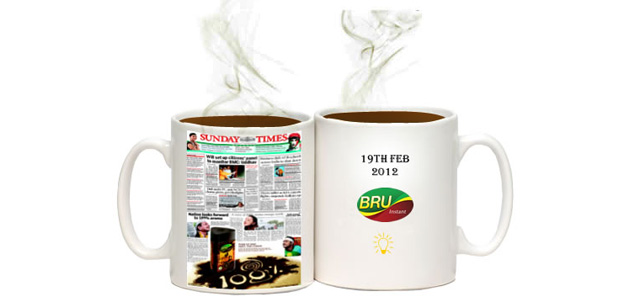
    The readers of The Sunday Times of India of February 19 woke up to a special surprise as they were served coffee with their newspapers. Well, not literally. The Mumbai, New Delhi and Bengaluru editions had a unique dimension – they broke the olfactory barrier. Each copy filled the air with the rich aroma of coffee, spreading the message for Hindustan Unilever’s flagship coffee product, Bru Gold. Veteran mediaperson Bharat Kapadia’s firm, ideas@bharatkapadia.com, unveiled its first big idea for its clients Hindustan Unilever and The Times of India group.


    “The objective was to drive home the richness of fine coffee and I knew that we could conquer this final frontier in a newspaper,” Mr Kapadia said. “The aroma of food products can create a sense of craving and can be very effective way to lead the reader to consume it.”


    In a world where it’s critical to stand out in a crowd, an idea when executed effectively can be a winner and this can be a unique consumer experience with every new fragrance. Mr Kapadia should know. Having spearheaded several ideas with the publications he has led over the years, ideas@bharatkapadia.com is a specialized ideas consulting firm in media and marketing. The fragrant newspaper concept has been tried out earlier editorially by Dainik Bhaskar and possibly some others too, but it’s the first time by a national advertiser across multiple editions.


    What experts feel on innovation

    The Times of India has been in the forefront with innovations. It’s been said and discussed in various forums that the only way the print industry can maintain its vitality is by constantly innovating and thereby evolving. That innovation is a driving factor for success is a no-brainer, yet is our print industry doing enough to innovate and create more value for the advertisers? Earlier, MxM India got in touch with leading advertising practitioners to know more about current trends and innovations that are happening in the industry.
     

    Pratap Bose

    When asked if the print industry is innovating enough of late, Pratap Bose, COO, Mudra Group said, “When it comes to print, there is very little innovation that you see. Whatever innovation you see, once it is done it is repeated time and time over again. Various forms of jackets – half, straight, up, down … Nothing fresh is coming out in print these days. The one category that continues to be beaten down is print. Barring one or two innovations from The Times of India group, which are of course very good, there is not much in terms of innovations that is happening.”


    When asked to compare print with other media, Mr Bose said, “Well, I consider all media as media, whether it is above the line or below the line. But essentially what you are seeing in the innovation space is largely happening in digital, out of home and promotions. To an extent video as well, if you want to include mainline media. Cinema is again, very few… So really, good innovation is not happening on either print or TV.”


    An issue of deliberation also is that whatever little innovation that we see in the market, is it happening in all print forms, across all linguistic barriers alike? Are print innovations happening in both English and language publications alike, or is the innovation limited to top English publications… only those who get top-end advertising moolah?


    Answering the question, Nandini Dias, COO, Lodestar UM said, “Print innovations often needs the publishing house to be able to carry out the difference. The leading publishing houses like the Bennett Coleman or HT Media manage to pull off innovations easily. For example the Cannes Gold that we won for Garnier this year was aided by The Times of India. The Times of India managed to print the day’s issue on recycled paper; for people who understand printing, they will appreciate the sheer thickness of the paper, the kind of paper needed the production team to alter their normal process , experiment and get it right before the 100% recycled paper issue got printed. So innovation happens with publications with a modern sophisticated printing and production unit. It has nothing to do with the language of the publication.”


    Divya Radhakrishnan

    Divya Radhakrishnan, Manging director – Helios Media Pvt Ltd, said, “There are lots of innovations happening in vernacular press as well. In fact groups like Dainik Jagran, Dainik Bhaskar have pioneered many an innovative concepts. The extent of innovation blends into ground activation and other media owned by the same group. A good example of that is Jagran activations.


    But while we talk about all the advertising riches innovation can drive, we cannot help but talk about the content aspect too. Often, innovations in print are condoned because they hamper its readability. Some innovations distracts an diverts the attention of a reader, thereby hampering with the content. However, Ms Dias said that it is not always so. Such a case only happens when an innovation makes reading content difficult. “For example the half gate fold is often disliked by a lot of readers as it makes holding the paper difficult or sometimes fonts in a colour, which make reading tough. Other than that innovations are done to enhance the product values and to bring it alive to the readers.”


    Yet, innovation remains a key factor for the print players for sustenance in the long run. Moreover, the ability to carry off good and meaningful innovation certainly brings more to the table and helps grab the advertisers’ attention.”


    Ms Radhakrishnan said, “Innovations for the sake of innovation is a no-go. The key objective for the innovation is to stand out of clutter and deliver the message appropriately. Given the time-spent on print media being on the decline, it’s very important that the message is delivered in a single-shot and therefore needs to be placed innovatively to grab reader attention. Another often repeated mistake is repeating the same idea often which by definition kills the concept of innovation. For example, jackets.”

     

    Nandini Dias

    Speaking on how important it is for print publications to innovate to be successful, Ms Dias said “It’s important to be able to carry out innovative options. As advertisers often come up with solutions which do not conform, publications which can help communicate their ‘hat ke’ thoughts will benefit.”


    As Steve Jobs once said, “Innovation distinguishes between a leader and a follower.” For print players, it is imperative to constantly dream up winning ideas. So, we are likely to see more ‘hat ke’ and out-of-the-box innovations like the one created for Hindustan Unilever.