Tag: MxMIndia Annual

  • What Ticks for Indian Consumers/ Women – Dhunji Wadia

    Continuing with our extracts from the second edition of the MxMIndia Annual, we present contributions by Dhunji Wadia


    Inspirational advertising versus aspirational advertising


    By Dhunji Wadia


    What brands think of consumers will determine what consumers think of the brand. Advertising is mostly inspired from consumer observations and insights and often ends up inspiring consumers. Hence, there is a constant process of evolution. Today, the rate of evolution is at its fastest yet. And brands are changing rules faster than anyone has done before.


    Take the case of Dove’s Campaign for Real Beauty, which broke away from the typical airbrushed, size-zero stereotypes that have been featured in personal product advertising for decades. The aim of the campaign was to celebrate the natural physical variation embodied by all women and inspire them to have the confidence to be comfortable with themselves. The campaign’s mission: “to create a world where beauty is a source of confidence and not anxiety”.


    They have gone a step further with the Dove Real Beauty Sketches campaign that illustrates women’s self-esteem and the difference between their self-perception of their looks compared to others perception. There’s an aspirational quality attached to this brand’s point of view. Which, at the same time, is a source of inspiration too. The recent Bournvita ad – ‘Tayyari Jeet Ki’ brings a fresh perspective to the mundane health drink category.


    The mother’s role is not only to nurture, but also help unlock the child’s potential. She plays the role of an equal partner in the child’s journey. Even after getting celebrities on board, the mantra holds true. Plain endorsements are a thing of the past. In the Titan Raga campaign, when Katrina hangs out with her mom as her trip is cancelled, there is a whole lot of inspiration through a fresh perspective. Hema, Rekha, Jaya & Sushma – the Nirma Women, who pushed out a helpless ambulance out of dirt without any hesitation, have paved the way for a whole new era of Indian advertising for women.


    Many brands have aspirational value. But when you touch the hearts of your consumers through inspiration, that’s when they will share the ad with their friends, they would like to discuss the idea, debate over it and become unconscious evangelists for your brand. There is no competition here. It’s no longer about Inspirational vs Aspirational advertising. And brands that are constantly moving towards an amalgamation of ‘Inspiration’ and ‘Aspiration’ are poised to be the most successful ones. They will catch your attention, amaze you, make you wonder, bring a smile to your face and go a long way towards creating strong bonding with them.


    Tomorrow: Thursday, November 13: —


  • What Ticks for Indian Consumers/ Women – Preeti Vyas and Tushar Vyas and Harish Nair

    Continuing with our extracts from the second edition of the MxMIndia Annual, we present contributions by Preeti Vyas and Tushar Vyas and Harish Nair


    Role of Design in establishing a brand that targets women consumers


    By Preeti Vyas


    Design allows you the framework to assess a context, recognize need gaps and devise possible solutions that will work to address them. So design empathises and attempts to understand the end user and build ideas and products that will resonate with them. While creating products and marketing them to women has been a long flourishing industry it is recently that it has become more sensitive and attuned to the sensibilities and demands of women especially to the socio-cultural context of Indian women.


    Indian women have long been more driven by the well-being of their family with less focus on themselves. But there is a shift in focus now and an assertion of their own identity and well being. This means that products designed for them need to highlight these changing perceptions and outlook. A case in point is Women’s Horlicks that created a new category of MFD earlier targeted only at kids. This product addresses the needs of a modern Indian woman who has a more demanding life and therefore needs better nutrition to deal with it.


    ‘The next wave will be of women setting and influencing trends’


    By Tushar Vyas and Harish Nair


    Recently, we were doing a consumer interaction exercise to understand media habits. We met Sujata, a housewife in Mumbai who religiously watches her favourite television serial- without missing a single episode. She was preparing for an out-of-town visit to her in-laws. She knew she would have to miss a few episodes. This however, did not disappoint her, as she knew she could catch the same episodes on YouTube. Digging deeper we found that every afternoon, when her kids are at school, she logs in to Facebook.


    Facebook and WhatsApp have become her life management tools besides social networking – she keeps track of her kids’ homework on groups and shares tips with other moms. We couldn’t help but notice that some of the homework sheets sharing were also in form of click and share using mobile phone on WhatsApp! Google Search and Wikipedia are her first port of call if she needs to prepare any school project for her kids. Sujata represents the 60 million women who now make up 40 per cent of India’s online population.


    The product, its packaging etc are all designed to relate to the sensibilities of this new age woman. Horlicks is seen as a brand empathetic to the new age Indian woman. Gillette a very male brand realized that Indian women are as hard pressed for time and more open to solutions that give them quicker personal grooming options. They launched the women’s razor that is designed to suit the ergonomic and aesthetic sensibilities of a woman and help her accept a category earlier synonymous with men alone.


    The design and solution has helped Gillette open up a new target segment and marketing opportunity. Newer products are being designed almost every day to make life easier for an Indian woman. Whether it is the Roti-Matic which doles out rotis almost instantly without any time and effort or the Scooty that endeavours to give her the independence she deserves or apps that ensure her safety. Design then enables one to address the gaps and create solutions and establish brands that would make for a happier and more confident Indian woman.


    74 per cent of these women are below 35 years of age and three out of four women online come from affluent backgrounds (SEC AB). Women today use digital media and devices to fulfill three core desires: i) To organize their life better be it taking care of her family’s needs or seeking opportunities to improve herself or her lifestyle. Apparels, Food/ nutrition needs of family, baby care, hair care and skincare feature prominently in her searches online. Five million estimated women shop / transact online annually. Online shopping is highest for baby care in India.


    One in four female internet users responsible for buying baby care products make their purchases online. This is higher than in household products where one in six buy online, and around one in ten in all other CPG categories. ii) To connect better with friends and family. Women spend more time on calls (33 percent more) and instant messaging apps ( four times more) than men. Women drive social gaming on Facebook. iii) For entertainment – 40 per cent of YouTube users are women. Music, TV shows, beauty and fashion are the entertainment content most viewed by her.


    And women users and usage (of digital media) is only growing higher by the day. Until now the story has been about women catching up with men, whether it’s in the use of Internet or mobile or any new technology. But the next wave will be of women setting and influencing trends-be it casual gaming, mobile content snacking and more.


    – Tushar Vyas is Managing Partner at Group M while Harish Nair is National Director – Digital at Group M.


    Tomorrow: Wednesday, November 12:  : Women – Dhunji Wadia


  • What Ticks for Indian Consumers/ Women – Neville Taraporewalla and Sanjay Thapar

    Continuing with our extracts from the second edition of the MxMIndia Annual, we present contributions by Neville Taraporewalla and Sanjay Thapar


    Coming-of-age of the online Indian woman


    By Neville Taraporewalla


    Women have become very active online. They have definitely been empowered. And in my view an evolution is taking place. A recent research report done by comScore in India actually found that apart from threequarters of the online population being under 35, women between the ages 35-44 have become power user’s accessing the internet online through multiple devices – be it the desktop, laptop, tablet or mobile leading to be the heaviest users.


    When it came to women, it was always believed to be 18-24 college-going girls or young professionals who were the ones surfing the web. However, we are now seeing a very different demographic accessing the internet. It has expanded quite a bit. In earlier days, we never found any women above the age of 34-35 who were deep internet users. Today, that is not the case. Look at the number of women accessing content related to luxury, lifestyle etc.


    They are on the web not only for information, but also for research and convenience. The mobile device is giving them the ability to do a lot of things too. 39 per cent of India’s online population is estimated to be women users. I won’t be surprised if there is data indicating that many more women in rural and semi-urban areas too are getting online and the mobile device is enabling them. Having said that, women transacting and making online payments, micro or otherwise, are largely a metro phenomenon as of now.


    Targeting Indian women: Are we doing more of the same thing?


    By Sanjay Thapar


    I often wonder why a group of people is still called ‘target audience’ in marketing. Is it to perpetuate the legacy illusion that marketers are more powerful than the people they speak to? Honestly, I think it is terminology more suited to a military operation than a conversation we need to have today with people who have a (business) relationship with us. On the other hand, having conversations is difficult. It requires give and take.


    It needs us to step down from our self-appointed pedestal and work together with the people we once merely ‘targeted’. That is the mistake we continue to make when we as advertisers speak to women today. Not accepting the fact that these women are no longer bound or obliged to merely listen to what we have to say, that they have the option and the power today to shun marketer-speak completely. But look hard at an ad break and you see how newer stories are peeping out from the clutter of the old stereotypes.


    The Bournvita mother leads by example while the McCain mom still struggles to provide excitement at the dinner table. Scooty Pep empowers girls to break gender norms while Fair & Lovely still believes that dark skin is the reason for rejection. So while some marketers do more of the same, others are taking bold steps towards defining a new way to start a conversation with women based on a real understanding of what is changing in their lives. A particularly good example is the Dove real beauty campaign.


    For instance, are women booking movie tickets online? Yes, of course they are. We see that all the time. Are they buying on large online ecommerce sites? Yes, they are an increasing breed. Earlier, if we saw the sample of people buying from large e-commerce websites – maybe it was 90 per cent males and 10 per cent females, but today those percentages have changed, and I wouldn’t be surprised if 40 per cent of registered user base on e-commerce websites is women.


    Earlier online was looked at very suspiciously – today if you are a responsible and trustworthy brand, people are willing to tell you who they are, as long as you can assure them their details are safe. When it comes to handheld devices, there definitely are more top-end devices in the hands of women today, and I definitely see it further increasing.


    There are more and more devices which are getting pervasive. The question is what are they doing with those devices – whether they are transacting or not? There are known devils like Facebook and LinkedIn in the urban areas. But there definitely is much more.


    It draws from the conversations women are having behind closed doors. And the campaign no longer just communicates a one-sided message – it actually sparks off many conversations related to beauty and real women. There is a growing realisation that these women are not passive recipients of brand communications anymore. More than ever they are becoming cynical about advertising. They are just not interested in listening to advertisers. They want to be heard and have a conversation with their brands.


    And, that really was our inspiration and reason for starting ‘The Mom Project’ at Bates CHI&Partners India. We believe listening is the key to shaping interesting conversations. The Mom Project is primarily a formalised listening post created by us. It is then followed by an analysis of what we hear to help us better understand what the Indian mother is all about. That understanding drives our quest to create interesting conversations that our clients’ brands want to have with these women.


    While digital as a medium is inherently more suited to allow such dialogue, the challenge, I believe, is to use traditional media to spark conversations. And the ones who do this first will be the leaders of tomorrow.


    (The views expressed are the author’s view and in no way does that mean that the organisation subscribes or endorses the same.)


    Tomorrow: Tuesday, November 11:  Women – Preeti Vyas and Tushar Vyas and Harish Nair


  • What Ticks for Indian Consumers/ Teens – Balu V

    Continuing with our extracts from the second edition of the MxMIndia Annual, we present a contribution by Balu V.


    Are we witnessing an era of the “new, redefined teens”?


    By Balu V


    There used to be a period in the mid eighties and nineties in a media brief where most brands used to define the TG as “women 25-34 etc.” Available consumer researches also were pointing more towards this group. The housewives at that time were big decisionmakers in brand purchase decisions across households. Thus most of the communications, content wise also, as you may recall, were focusing on this opportunity group. All of a sudden we witnessed a new emerging group running in the front. Yes the teens! This group has become the darling of marketers and the group is now surrounded by targeted brand communications.


    While we all acknowledge the fact that this group has grown in size across many markets and they contribute a major proportion of the overall population, it is worthwhile to explore if there exists any further rationale on why this group has taken centrestage. The answer is partly yes and partly no. It’s a well known fact that compared to their predecessors, this group has become more affluent and now takes individual decisions in brand purchase not only for own self but also for the household. This group has become a big influencer in the household purchases, thanks to the exposure to technology.


    It has also been an accepted fact that this group is a major catalyst for exposing the household members to new technology. Increasing exposure to the new environment is one of the major drivers that’s a cause for the emergence of this “new and redefined” group. Naturally, this leads to greater knowledge of the brands, more matured gauging on the need and benefit and seeking for more and more credible benefits of brands whether it’s fashion-based or mobile phones. Thus, an assessment and understanding of this group’s purchasing behavior will be of utmost interest to marketing practitioners.


    It is widely known that this group interacts with technology more than any other demographic group; key implication thus is the power of peer influence. Research carried out worldwide has shown that teens text more than they talk. According to eMarketer analyst Tobi Elkin, who authored the report Teen girls always on a social shopping mission, “Peer influence is the key driver in teen girl shopping behavior”. Although more than 4 million US teen girls purchased items online last year, shopping in the bricks & mortar context is still a major element of teen consumer behavior, as Elkin writes in her report: “Teen girls are intrepid social shoppers who eagerly embrace digital and mobile tools.


    They enjoy hunting for clothes and accessories online and offline. Most thrilling, however, is the experience of shopping and buying in physical stores with close friends by their side…While they are priceconscious and driven by a great deal, teen girls weigh these factors against the all-important consideration of whether peers will approve of their purchases.” This trend though seen and researched for the US market, can safely assume similar significance in India as well. Thus opinion seeking contributes a major element in the purchase process for the “new, redefined teens”.


    This leads to two major implications for a marketing practitioner:

    1. The social and collaborative nature of digital media becomes the determining factor in the decision making process and thus “zero moment of truth” becomes a very important factor (Lecinsky 2011 “Winning the zero moments of truth”). In the early years, as in accepted purchase path process, stimulus or trigger would lead to consideration then search then purchase followed by experience. The zero moment of truth starts after stimulus in this new age, especially for this “new, redefined group”. Mass media plays a major contributor in creating stimulus or trigger, and once stimulus is created sharing of experiences from the peers takes the lead. This phase, called as zero moment of truth is the most crucial phase that is succeeded by consider and purchase (first moment of truth). Connecting with teens at this stage is a major challenge for the new age marketer.


    2. The second implication which is the most crucial is the measurement of cross interaction between these connect points and its impact on the brand purchase. Traditional connect points not only induces stimulus directly but also through digital in an indirect manner. For eg. TV could influence search clicks or online video or website visit which could add as a catalyst for purchase or could influence positive opinions before purchase. Thus capturing the right data and measurement of cross media impact is crucial for any marketer who targets a product to this group.


    As mentioned earlier, this group may be partially “new, redefined” because the final decision on the brand purchase remains similar to the same groups of pre-digital era. The need benefits evaluation. That is the common line that travels across time period!.


    Tomorrow: Monday, November 10:  Women – Neville Taraporewalla and Sanjay Thapar

  • What Ticks for Indian Consumers/ Women – Prathap Suthan and Gautam Talwar/ Kavita Kailas

    Continuing with our extracts from the second edition of the MxMIndia Annual, we present contributions by Prathap Suthan and Gautam Talwar and Kavita Kailas.


    Do we or don’t we need a list of do’s and don’ts?


    By Prathap Suthan


    At first it struck me as embarrassing that I have to write this. I mean just how silly are we? Are we so bad as an industry that we need people to actually sit down and write this? Are we so bad and so out of whack that we need to course correct, and we need to sanitize our heads, and flush vermin from our minds? Are we getting it all wrong, are we irritating and insulting women consumers day in and day out, and is the nation up in arms against the lot of us? Of course not. As an industry, barring a few exceptions, I think most of us are sensible and sensitive to everything this country is all about.


    Including safe guarding dignity, driving respect and taking advertising to half a billion female consumers. Most of the people in advertising instinctively know that we need to get the balance between entertainment and communication right. Provocative, yet tempered to our diverse cultural reality. After all, the work that we do are the ambassadors for brands and companies and services. We cannot afford to be irresponsible. Our business is linked to our ability to coerce with grace. We are trained to be correct by instinct and experience. We don’t have a choice not to. We too have bills to pay. Besides, our work gets whetted internally.


    Considering that in many agencies, women create advertising for women. And even if they don’t create all the communication, they do act as filters within the agency. Our women are competent to understand themselves, both as creatives and consumers. Or fight against what they think is wrong communication, both as strategists and consumers. I would actually say that some of the better minds in advertising and marketing belong to women. The checks don’t end there. Let’s not forget that there are enough women in the brand teams of the clients who spend the money that makes advertising visible.


    They are possibly tougher than any other safety net one can think of. Only if their compasses permit, does a script become a film. Forget about telecasts. Then there are the women in film-making, research, media, and even mothers, sisters, daughters, and wives who sort of approve or disapprove the creative work before it actually breaks in public space. Somewhere in all that, flaws get picked up, corrections are made, and every rough edge is smoothened. It’s almost impossible to do a rogue commercial aimed at female consumers.


    Evolution of the Indian woman in the last decade

     

    By Gautam Talwar / Kavita Kailas


    The representation of the Indian woman in the media has undergone three major thematic evolutions over the years. And in a sense, all three of these themes closely relate to each other for their changing influences. First, the judgment on the woman’s physical appearance has distinctly shifted.


    When only a few decades ago, women who showed skin on television or exposed her mid-riff were seen as loose and lascivious, today the same archetype is perceived as edgy, progressive, aspirational, powerful, and modern. Consequently, the “good-girl” archetype is now dead.


    Being sexy and edgy are positive and desirable brand cues instead of the homely girl. Today, we showcase the girl who rides her own bike with her hair open, and we downplay the girl with the plaited, oily hair.


    So, what used to be considered aspirational as far as a woman’s physical representation is concerned has switched sides: the cues are the same, but the evaluation has changed. Another shift has occurred in the dynamics of power in representing women in the media. Earlier, a powerful woman was typically represented as the highly sexualised vamp character.


    The positive representations preferred to showcase women in meek, humble, and gentle avatars. Typically, this was also accompanied by a desexualisation and hyper-emotionalisation of the female character. Now, we are beginning to see positive representations of women who wield power not just sexually: we see the headstrong mother of the Bournvita campaign who does not let her son beat her in a race.


    We have the “Tiger-moms”who want the best for their children and family. The mother-wife figure has become far more dominant and assertive, and we see that in the Tanishq campaigns, Jabong Online Shopping ads, and more. Despite these two major shifts, the focus on a woman’s body has not waned.


    So instead of pointing the needle of blame at advertising, maybe it’s a good idea to look around. Because advertising is not the only segment in the overall communication and creative industry. We are not the only influence medium. Look at the gigantic Hindi and vernacular cinema. I am not sure those movies have plots, scripts and gyrations that will pass muster at the prim ladies club. What about the lyrics of our music industry? Most of which aren’t just simple double entendre. They have meanings that will covertly and overtly make birds giggle and bees blush.And I have seen SEC A++ families and corporate India wiggle and jiggle to these lusty lyrics at parties, weddings and even at office gettogethers. What about those maudlin serials on television? Plus the raunchier variety of Big Boss and what else. Just what kind of thinking drives and mass-produces these to our people across the country? If you are looking for breaches in our system, these are those uglies that bash women down, pin them down into roles, cramp them into definitions, reduce them down to objects, talk down to them, and treat them without grace and equality. Advertising at best is just a fleeting 30 seconder. Or a small print ad.


    Are they so powerful to destroy our society and disrespect women for all time? I have a feeling that we take ourselves too seriously, and self flagellate for things that we aren’t responsible for. We are just the barnacles. We aren’t the whale. Most of us, men and women in our business, work and think right. We already know our do’s and don’ts.


    We still require women to pay lip-service to the preordained framework of beauty. What has changed is the metrics of this beauty: earlier it used to be the fair and voluptuous damsel; today it is the fair, tall, and thin model. And perhaps this final aspect of focusing on the woman’s body may never change – regardless of the fact that the highest number of graduates from B-schools in India are women according to a study done by India Today; regardless of the fact that industry stalwarts like Narayan Murthy and Tarun Das prefer women employees far more than male employees; or even regardless of the fact that the recent Kangana Ranaut interview on Front Row showcased a modern woman who was far more perceptive, sensitive, and intelligent than was initially perceived.It is still the woman’s body-and our judgments about it-that captures our collective attention as a national pass-time. Overcoming this frontier might perhaps be the most formidable challenge we may encounter as professionals in the business of advertising and media communication. – Gautam Talwar is Chief Strategy Officer at Rediffusion-Y&R and Kavita Kailas is Head, Strategic Planning, Rediffusion-Y&R.


    Tomorrow: Friday, November 7:  Teens – Balu V


  • What Ticks for Indian Consumers/ Men – Kevin Vaz and Saurabh Yagnik

    Continuing with our extracts from the second edition of the MxMIndia Annual, we present contributions by Kevin Vaz and Saurabh Yagnik.


    Provide your TG the special interest content they yearn for


    By Kevin Vaz


    It has become increasingly important for networks to come up with offerings exclusively meant for a certain target audience. That’s been a trend for the past few years now and what we’re seeing today is the industry taking rapid strides towards that direction. The 15+ male audience, the core TG for Star Network’s English cluster is extremely passionate about movies and English entertainment besides other interests such as sports and news.


    We have made significant investments in strengthening our offering for this consumer segment. We launched Star Movies Action this year replacing Fox Action Movies with the thought process that there is a great demand for action movies in India. And we’re really passionate about the growth happening in the English movies genre. India is a country where action movies do exceedingly well at the box office. Sample this: out of 100 top-rated movies, 83 are action movies.


    This statistic clearly indicates that there is a big market for action movies in India. Our attempt is to bring world-class content – the best in Hollywood. We have a library of more than 300 exclusive movies. How do I see the consumer segment evolve in the next five to six years? I believe we will see a significant increase in the viewership of HD channels. In fact, already, we’re seeing a lot of traction on Star Movies HD. Yes, there are other channels in the English movies space targeting the same consumer group, but the trick lies in differentiating the content offering.


    Differentiation and innovation is key


    By Saurabh Yagnik


    In my opinion, a viewer is neutral to genres and consumes content that addresses his need state. In the English movie space, nearly threefourth of the viewership is driven by males and nearly three-fifth of it is driven by the age-group 16-29 years. By nature, the audience set we deal with is and likes to be spoilt for choice – his options are television, malls, multiplexes, hangouts, coffee shops etc. A viewer would feel “claustrophobic” in case they were told that there is only so much that you can get.


    Choices of content consumption for males and particularly young males are driven by elements like talkability, recency, topical themes, current affairs and what appears to be cool. Coupled with it is the inherent need for speed, thrill and adrenaline rush. All the genres in some form or the other serve this need, but in my view genres like movies, sports and news tend to cater to this need more than the others. As a trend we have also seen there is an overlap between various genres as well.


    There is a sprinkling of movies and of Bollywood/ Hollywood in sports and also in news. Equally some movies are themed around sports and sports stars which are extremely popular. Such blend increases talkability and interest in the content. While dealing with creating loyalty the trick is giving more rather than restricting choice. The inherent desire is to experiment before settling for anything specific. Also, for the younger male, the concept of “badge value” and a “cool hangout” are important to make anything a destination of choice.


    Apart from English movies and entertainment, Indian men also consume a lot of crime and infotainment content. Star World offers content that is liked by both men and women and it caters to a wider audience as compared to FX which caters to a slightly evolved audience as far as English content is concerned.


    All of Star Network’s English channels – Star Movies, Star Movies Action, Star Movies HD, Star World, FX, Fox Crime, Fox Traveller and National Geographic – all have a clear differentiation while catering to the same SEC A 15+ male and female viewers. I believe that the industry has already moved ahead in creating special interest content and will continue to move in the same direction for many years to come.


    It is accordingly, our constant endeavour to be a companion of relevance to the viewer. Equally important is differentiation and innovation. This is exactly what we considered while planning our new positioning. When we did a scan of the category and looked at each of the channels within the category, we noted that the whole category was more or less focussing on establishing the credentials around Hollywood. That did not really differentiate one channel from the other. This was also reflected in the fact that during our viewer studies we found that there was only around a 10 percent correct association of a title or property to a channel.


    This gave birth to our new positioning of Stay Amazed which explores what “Hollywood” viewers like and our endeavour now is to provide entertainment which makes our viewers feel “Wow”, “Cool” and provides “Entertainment with a Twist”. Since talkability is important, we have focused on conversations around social media in a strong way and believe that an active and differentiated social media strategy helps build a channel as a destination of choice. The challenge therefore is in being a part of a viewer’s ecosystem rather than target to make him a part of your system. This we believe is the only way to break clutter and have a lasting engagement with our viewers.


    Tomorrow: Thursday, November 6:  Women – Prathap Suthan and Gautam Talwar/ Kavita Kailas


  • What Ticks for Indian Consumers/ Teens – Ashwani Singla and Aditya Swamy

    Continuing with our extracts from the second edition of the MxMIndia Annual, we present contributions by Ashwani Singla and Aditya Swamy.


    Look at the world through our eyes to get the picture


    By Ashwani Singla


    Information and education through entertainment is the way teenagers learn. The ‘Network of friends’ is their support system, whether online or in the real world. Borders are only for politicians as teens live in a borderless world. Home is a sanctuary to rest and recuperate and parents are ATMs. Teens are adept at multi-tasking, easily able to process multiple streams of information. They can do homework whilst watching their favourite TV programme or research for a paper whilst chatting with their friends online.


    The mobile phone is but an extension of the hand. I could go on. Teenagers today are also perhaps a bigger influence on family’s purchase decisions. The famous “pester power” of a teenage consumer is more than his or her purchasing power, which in any case isn’t insignificant any longer and before you think this is it. Brand loyalty is an archaic concept. Here and now works. Brands are bought and discarded as if they were a seasonal fashion statement. Bottom-line. Ignore them at your own peril.


    So where do you begin? This mind boggling complexity has left many a communicator bewildered about the choices they need to make to be able to grab their attention enough to engage them in a dialogue. Let me attempt and try to do the impossible – establish a brand in the mind of a teenager. I believe that in order to capture the mind and heart of a teenager, the brand needs to become a crucial link in their identity and must inculcate a sense of empowerment and achievement amongst their network.


    This means not only do we need to grab their attention but also create a presence across their ecosphere of influence. So how do PR professionals do that? The answer lies in using what I call – The science of persuasion. PR practitioners need to ‘get under the skin’ of the teens. They need to generate ‘Eureka moments’. PR has for too long focussed on just promoting and publicising but has played little or no role in understanding how the teens act or behave in relation to the category and the brand.


    The open letter generation


    By Aditya Swamy


    Keep Calm and Carry On – exactly captures the sentiment of the generation. This is the most practical, optimistic and a happy generation; and Millennials rarely waste time crying on their imperfections. About one-third of them agree that life has become too busy, competitive and difficult to cope; yet, 94 per cent declare they are shiny happy people. At an age where they are barely eligible to vote, they do have strong philosophies of life and are mighty vocal about the same too.


    MTV Roadies, the biggest property in the genre, is not just a show. Roadie is an attitude that has come to signify the surviving and winning skills. The series is the most watched show in the genre on television and also the most followed / viewed show on web; and garners more than 100mn views in one season. Millennials are not a homogeneous bunch of people. They live in one world of many worlds. It is aggregation of many sub-cultures that are united together by their overlapping interests.


    Their attention spans are miniscule and they’re awed by very little. Marketing to these youngsters need one to start thinking like one. It is about starting interesting conversations, and keeping it a two-way street. This generation is anything but linear. Take a minute to think about how does a youngster today introduce himself or herself ? Sample the twitter handles and descriptions or Facebook covers and display pictures or tumblr profiles. Their intro lines don’t always have their names and coordinates.


    Rather, they are a play of words that captures their theories of life. Step into a college and you will bump into a bunch of youngsters – they all look beautiful. Looking at the group in a college cafe or going through one’s playlist on iPod, one cannot decode their socio-economic class. What strings them together are their interests in music, sports, movies, humor etc. These interests fuel conversations. Today conversations are more meaningful than lectures, therefore, monologues are lost. Millennials love to share their thoughts, and ‘memes’ are the new ammunition.


    The impact of brand on their self-esteem, perceived benefits, enhanced utility in their lives etc. These insights will provide a clue about the storyline that would be most compelling; the storytelling format that would be most effective and the advocates who would be most persuasive. Most importantly, these insights will help you understand the best way to engage. I could say use Facebook, Twitter or Myspace. But that is like suggesting that one size fits all strategy works for this group in entirety. Rather, it is absolutely the opposite.


    Different stroke for different folks is the key here. PR practitioners need to look at the best ways to deliver their story, which not only makes it relevant and compelling but also makes it most believable. But before I am pronounced guilty of being ignorant, here is how I manage to win the hearts and minds of the teens:


    The ABC of Teen PR:

    1. A for Authenticity. The brand has to deliver real benefits or utility. Performance pays. So understand your product well before you communicate.

    2. B for Believability. Talk only what you can walk. Puff does not work. Show & tell works better with teens. Comparisons are effective.

    3. C for Credibility. If you don’t have advocates, you have lost the battle before it has begun. Work hard to get the “tribal leaders”.


    Last, but not the least, when you are in the 13-18 year age bracket, 23-25 years looks like old age. So don’t look at them with your lenses. Put on the ones which make you look at their world through their eyes.

    Happy hunting.


    Memes are ready to share idea / symbol that is ubiquitously understood by everyone in their circle, is easy to personalize and share and yet strictly young. The fact that an internet meme is not easily decoded by parents makes it a potent tool for expression by the Millennials. Simply having a celebrity tell you what soap to buy isn’t going to cut it anymore. Only 10 per cent of youth actually look up to a public figure as an icon. Youth don’t want to be talked down upon, rather they love a dialogue.


    In fact, they crave for constant dialogue. On an average, 85 per cent of them connect to social media thrice a day. They not only surf for new happenings, they also share their POV with their social circle. Hence, there is a continuous need for fodder for their conversations with their circle. And, that’s the opportunity today for brands. A property like Coke Studio@MTV creates conversations around the fusion music that lets one discover new sounds, new artistes, new music… It continues to be one of the most buzzing topics on social media.


    The first ever MTV Bloc Party presented an immersive on-ground experience of seamless partying across multiple hubs like jiving to music by the beach, relaxing by the beer garden with live bands and interacting with their favourite artistes etc. Everyone who partied went back with a bagful of memories and stories. MTV Nano Drive, the social road trip, allows the audiences to interact with the contestants and help them complete their tasks within the cities. In sum, this is the open letter generation.


    They love dialogues and conversations about the good and also the bad. 57per cent use social media to complain about brands that do not meet their expectations. Therefore, the challenge for the brand is to always toe the line; else face the music from the audience. On a brighter side, this is also a rare opportunity for brands to dig into consumer feedback, and a genuine one at that. So, listen in to consumer conversations to course correct campaigns and initiatives. Keep Calm and Carry On.


    Tomorrow: Wednesday, November 5:  Men – Kevin Vaz and Saurabh Yagnik


  • What Ticks for Indian Consumers/ Women – Karthik Srinivasan and Suman Srivastava

    Continuing with our extracts from the second edition of the MxMIndia Annual, we present contributions by Karthik Srinivasan and Suman Srivastava.


    Look at women as an evolved audience segment


    By Karthik Srinivasan


    Google, earlier in 2013, said that there are 60 million women in India who are online. Even with a conservative assumption of 40 per cent of that number as working women who have access to one or more internet-enabled device, it gives us 24 million. Latest numbers from Facebook are on similar lines too – about 20 million female Facebook users in India.


    If 20-30 million was the addressable target audience, how is India doing, talking to and engaging this fairly sizeable segment via digital channels and social media? The first consideration would be the growing power and influence of this segment. National Sample Survey Organization (NSSO), India’s official agency for gathering key statistics, released its last numbers in 2010, where it mentioned that India has 112 million female workers (out of 586 million women, according to the last census).


    So, the potential of this segment growing in number is obvious, and immense. The second consideration would be around how women, not just working women, have been addressed in marketing communications in general, in India. A large portion of the communication still seems to be hovering around women as a gateway to the family. If you see product categories such as toilet cleaners and dish washing bars\liquids from the perspective of a working woman who is as busy professionally as the man, she is less likely to be bothered by such trivial tasks.


    What a decade for women


    By Suman Srivastava


    The media is full of stories about rape and violence against women. There are imbecilic statements by some politicians about how the only way to avoid crimes against them is for women to return to the medieval era. In this context, I would like to use this piece to highlight the spectacular achievements of women in India over the last decade or so.


    The big narrative about women is that they no longer define themselves with reference to men. No longer are they merely wives, mothers, sisters and daughters. Many have reached the top in their respective professions on their own merit. If you work in banking or finance, chances are high that the CEO of your company is a woman. Naina Lal Kidwai at HSBC, Chanda Kochhar at ICICI Bank, Shikha Sharma at Axis Bank are the best known. Less known perhaps, are Roopa Kudva of Crisil, Aisha De Sequeira of Morgan Stanley and Chitra Ramakrishna of the National Stock Exchange.


    While the rise of women in finance has been talked about, the rise of women in technology firms has not been noticed as much. Chances are you have heard of Kiran Mazumdar Shaw, Chairman and MD, Biocon. You may not, however, have heard as much about Vanitha Narayanan the MD of IBM India, or Kumud Srinivasan the President of Intel India and Aruna Jayanthi, CEO, Capgemini India. The list isn’t over yet. Add Kirthiga Reddy, Head, Facebook India and Neelam Dhawan, MD, Hewlett Packard India.


    That brings marketers an opportunity to see this from a fresh new light and appeal differently to working women. So, instead of a dish-wash bar that is supposed to care for the hands of women in general, things would change to a working women caring for her domestic help and hence opting for the better, safer dish wash bar! Digital and social media communication enable a bigger, better canvas for one-to-many and many-to-many communication, but they need to stay on course with brands’ overall messaging. The fact that this ‘many’ now includes a sizeable, growing and highly vocal working women segment is a tremendous opportunity to appeal to their specific sensibilities and win them over.


    The challenge is, of course, to let go of older attitudes and prejudices against women in general, and working women in specific, and start looking at them as an evolved audience segment, with a fresh outlook towards life, family, men and work, driven by economic empowerment. It’s almost like discovering a new planet. No… not Venus. This is a different planet!


    Turn to sports and again you find that women have been doing really well. At the London Olympics, two of our six medals were won by women. Saina Nehwal and Mary Kom became household names if they weren’t already that. A surprising area where women have stood up to be counted is in the village panchayat. Chhavi Ragout made news because she has an MBA, wears jeans and is the sarpanch of a village. But she is not the only one. Several states have reserved between one-third and one-half of all sarpanch positions for women.At the other end of the spectrum are, of course, women Chief Ministers. I can’t possibly write a piece on women and not talk about Mamta Banerjee, Mayawati, Jayalalitha and Sheila Dixit.


    So what do you make of Indian women then? Yes, there are ultra regressive diktats being issued by khap panchayats, some religious leaders and politicians. And this is violence and discrimination against women. But on the other hand, we are fortunate that we have some spectacular successes too. Maybe the best way to reduce the negatives is to celebrate the positives. Indian women deserve more than just three cheers.


    – The author is Founder & Innovation Artist at Marketing Unplugged, a firm that helps firms create marketing innovations. Contact him via his website: www.MarketingUnplugged.in.


    Tomorrow: Tuesday, November 4:  Teens – Ashwani Singla and Aditya Swamy

  • What Ticks for Indian Consumers/ Men – Ajay Trigunayat and Sanjay Tripathy

    Continuing with our extracts from the second edition of the MxMIndia Annual, we present contributions by Ajay Trigunayat and Sanjay Tripathy


    Technology to drive popularity for the genre

    By Ajay Trigunayat


    In the coming seven years, we foresee a tectonic evolution in technology and the way consumers will consume the genre.


    Consumer evolution

    As we see it, in the next seven years India will see the emergence of a large consumer base that’ll be consuming content in English. Even reach of the English Movie Channel category which is about 70 million/ week currently will more than double to approximately 200 million+ viewers/week. While currently the appeal for the genre is more prevalent in the eight prominent metros, this will shift to higher consumption in the 1 million+ and All India markets.


    Also, consumers will be more quality conscious and technology enabled. The consumer market which is currently dominated by CTVs, Plasma TVs & LCDs will move to LEDs, projection screens and flexible screens. Screens will also get larger and will be the key driver to improve viewing experience.


    ‘Need to understand the TG first to be able to market effectively’

    By Sanjay Tripathy


    It is not entirely accurate to say that men have not evolved. Even though it is still a metro phenomenon, gender conventions are slowly blurring. Men are formulating a nuanced idea of what it means to be a man. The “manly man” has also been portrayed with a wink these days (e.g. recent Mahindra Verito TVC) and men are putting their own masculine stamp on child care, housework and even skincare thus changing trends.


    To state a recent example, consider the Tanishq advertisement that has broken the stereotype by celebrating the idea of remarriage and portraying the acceptance of a woman with a grown-up daughter by the man. While some men are welcoming the new options that a less prescribed model of masculinity opens up, for others, there is probably no choice. With changing socioeconomic status of households wherein the family is nuclear and both husband and wife earn the livelihood, it becomes imperative that the responsibilities be fulfilled interchangeably.


    Technological evolution

    While the current TV landscape is predominantly SD, it is expected to be dominated by HD technology that’ll witness multi-fold penetration in the country in the future. Also, by 2020, the country will also see the advent of Ultra HD & 4K TV services which shall redefine viewing experience (Note: the television sets are already available)


    With advanced technology and increasing bandwidth, storage and home video options will cease to exist. There will be an explosion of VOD services i.e. SVoD, AVoD and NVoD. Viewers will have more choices and also the ability to exercise their choices. They will be able to stream and watch content on the move.


    By 2020, although television shall remain the biggest reach platform, digital will converge into mobile platforms to facilitate brands to engage and interact directly/more personally with audiences.


    With greater influence from western world, people now prefer smaller families and lesser dependence on extended family members. Such a change in equation is reflected in advertisements and television programming. Research shows that man has changed with the changing familial and social structure. In addition to his role as the provider, there are now additional expectations from him on responsibilities considered earlier as the woman’s domain (e.g. child care, household responsibilities etc).


    If we look at men in various town classes, they do differ in terms of aspirations, behaviour, motivations and notions of masculinity. In some ways, we marketers understand the metro male completely, because we are them and we live amongst them and we interact with them on a daily basis. But that does not reflect the entire universe of population.


    The male population in non-metros has the money and often the exposure to global brands almost comparable to a metro male. Today, it is important to understand them first to be able to market effectively. Men across geographies cannot be reached through similar marketing strategies. One size does not fit all. Marketing activities need to factor this in.


    Tomorrow: Monday, November 3:  Women – Karthik Srinivasan and Suman Srivastava


  • What Ticks for Indian Consumers/ Teens – Kartik Sharma and Venke Sharma

    Continuing with our extracts from the second edition of the MxMIndia Annual, we present contributions by Kartik Sharma and Venke Sharma.


    Living life online


    By Kartik Sharma


    “If you’re not online, you are completely out of the loop – you don’t have a life, you don’t really exist,” this is what my 15-yearold niece told me when I enquired about her being online all the time! For teens, it seems as if online is the new real world. Teens spend an average of 85 hours per week online and more than one-third of that time is devoted to social networking*. The time spent in a week by teens on social media is almost 10 times more than that on TV**!


    Marketers are programmed to be present where their target group spends most of their time and social networking sites represent a huge component in the battle to win teenage eyeballs. The speed of information exchange, the feeling of community and the viral aspect of widgets, quizzes, contests and videos perfectly position these media to be seen by teens and share within their social spheres.


    Smartphones to woo marketers in the next five years


    By Venke Sharma


    80 per cent of social media in India is consumed from mobile phones. Secondly, there is a very high use of What’sapp and other messengers. I believe a large part of content consumption will shift to mobile especially when there is faster speeds and much better mobile internet experiences. Feature phones still form a large segment in India and it is the feature phones where the discovery of Internet happens.


    Many people in India are starting to discover internet through a feature phone and entry point of internet will be via platforms such as Facebook and Youtube. Another segment is smart-phone users and the mid segment which is in transition from feature phones to smart phones, and light internet user to a heavy internet user – where users will use their mobile phones to tweet and explore other social media platforms.


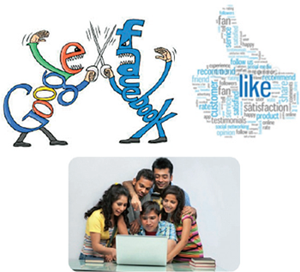
    Facebook, is only second to Google by total visitors and reach, making it the second most visited website in India. However, the average time spent per visit on Facebook (17 min) is more than 5 times than that on Google (3.8 min)*! Marketers have welcomed social media for its ability to see dynamic, real-time results captured via metrics like ‘likes’ and ‘fan count’.


    However, in the past two years, social media has moved beyond these metrics. This has also been validated by Maxus’ proprietary study, which was conducted to understand the value of a fan on Facebook. In this study, we had studied 13 brands catering to youth in the 18-35 years bracket and found that WOM plays a very important role for brands to build a strong relationship with the fans. We have also found that fans of a page, make for more loyal consumers than non-fans and they keep coming back to know more about the brand’s product offerings and other schemes.


    Hence, it is evident that social media continues to be an important and effective medium in building the brand-fan relationship story.


    William Wordsworth, in the early 19th century predicted that “The Child is the Father of Man”. This adage holds true today in the 21st century especially against the backdrop of social media.


    * Source: Comscore, Sept’13 TG: MF 15-34

    |** Source: IRS Q4’12 TG: MF 15-34. Maxus Proprietary Research.


    Consumption of video is likely to increase and it comes with huge opportunities for broadcasters and stakeholders of the entertainment business. I also see time spent on TV going down as consumption of video content on mobile rises. That however, is not a threat to TV as a medium, but certainly the TV viewing time will go down. From a channel point of view providing content on multiple screens is going to very important as many people will use mobile devices to participate in social conversations, surf internet, download data, live streaming etc.


    Over the next five to six years, I see consumers from tier 2 and tier 3 cities switching from feature phones to smart-phones – and from light internet mobile users to heavy internet mobile users. That is going to be a paradigm shift and a huge opportunity for marketers.


    Tomorrow: Friday, October 31: Men – Ajay Trigunayat and Sanjay Tripathy

  • What Ticks for Indian Consumers/ Women – Jasmin Sohrabji and K V Sridhar

    Continuing with our extracts from the second edition of the MxMIndia Annual, we present contributions by Jasmin Sohrabji and K V Sridhar.


    Are marketers targeting today’s woman right?


    By Jasmin Sohrabji


    Yes they are! Women as a marketer’s target group appear deceptively easy to reach. A lot of TV GRPs, and a bit of multi-media was considered a fairly acceptable template for a long time. Today, a lot more insight and instinct goes into understanding how best to target her; and the answer is not to take away from TV but to make the medium work harder, better and more engagingly for our most targeted, sort after consumer.


    Previously a lot of our TV discussions stayed around how much prime, non-prime for more effective use of communication funds. Today, it’s more about content and integration rather than time slots. It’s more about in the show than on the show. One of the key changes we have seen over the years is how we define our women consumers. Earlier, the definitions were very broad based (women, 20-44 years ABC) and that in itself was deceptively comforting.


    Telling a new story about the Indian woman


    By KV Sridhar


    A few days ago, twitter was abuzz with people exchanging, not NaMo quips, but an ad film. An ad-film that became the trending topic because it not just warmed the hearts of the people who watched it, but also created excitement born of possibilities and hope. The film produced by leading jewelry brand – Tanishq, broke two stereotypes that advertising often paints Indian women with – that of the fair bride and the first marriage. The wedding jewelry film instead told a riveting story of a dusky young mother and her little daughter as they cross the delicate threshold of a new life through the young mother’s marriage.


    You thought you had covered all bases, and reached all your potential women consumers, but in fact you had possibly done very little justice to any specific consumer within this broad statistic. We were unable to call out any relevant, sensitive changes in media trends because of a much clubbed audience. Today, the definitions we operate on are more focused, narrowing both the age and SEC bands and allowing for subtle shifts in media consumption trends to be captured and built into the media plan.


    But the biggest change of all is today we no longer put the cart before the horse. We are no longer given a fixed set of creative assets to plan around. So while TV continues to be the mainstay media of choice for this consumer, the starting point is no longer a TV+ recommendation, but a communication plan that’s built from base zero and then embraces mediums in size and number relevant to the task and the target. The annual plan discussions are more about what all rather than what else!.


    At a time when the idea of the ‘Indian woman’ is changing at a fast pace and new imaginations are being embraced in its very definition, it is important to understand the new sensibilities of the ‘Indian woman’ and imperative that these sensibilities be reflected in the work we put out. We have started seeing insightful work that portrays women in fresh, positive ways gain the confidence of consumers, especially female consumers. The Girl Child film for ‘Kaun Banega Crorepati’ was one of the few messages that touched upon the dignity required to treat our girl children with.


    Even when not addressing social issues and stereotypes directly, advertising needs to reflect the values of the modern Indian women. Brands like Whisper and Hero Pleasure have taken new and interesting dimensions to values of freedom and independence for young girls, underlining their determination to achieve things on their own terms. These brands have found creative ways of celebrating womanhood.


    Even categories such as banking and financial services which are often alien by virtue of their information-laden messages have managed to strike a chord with women consumers through their portrayals of sensitive spouses and fathers, setting an example of respect and empathy even in simple, everyday, domestic situations. Brands like Idea have found interesting ways of showcasing equality in the daily grind that the husband and wife realize by exchanging their phones. Brands like Bournvita have ushered in new portrayals of parenting and motherhood as well.


    However, in this process of change, some things still call to be approached with caution. Indian women might have private admissions about a lot of things but can be uncomfortable when a public form is given to it. The furor over certain female-hygiene products is a case in point. Another thing to note is that while harmless ‘masti’ is always welcome, brands stand the risk of looking down on women when the message is exaggerated.


    A lot of deodorant ads fall prey to this. Nonetheless, the more we push our imagination, the more we will find real, relatable stories to tell; stories that capture the true spirit of Indian women and communicate it with creative expressions that are mindful of respect and dignity.


    Tomorrow: Thursday, October 30: Teens – Kartik Sharma and Venke Sharma

  • What Ticks for Indian Consumers/ Men – Satbir Singh and Monica Tata

    Continuing with our extracts from the second edition of the MxMIndia Annual, we present contributions by Satbir Singh and Monica Tata.


    Advertisers need to pay heed to the changing man


    By Satbir Singh


    While women and children are major influencers in the buying decision in many categories, most advertising is still aimed at men. Leave alone traditional men-oriented categories like automobiles, newer ones like skin whitening or lightening facewashes and the much abused deodorants are all over various media.


    The laziest thought that many marketers and their agencies still work on when they’re targeting men is it’ll get you attention from the opposite sex. Cars have used it. Bikes do it. Deos are the most in-yourface with it. Suitings & shirtings have kept it at their core. However, society is changing. There’s a lot more equality between the sexes today (though we still have miles to go).


    Multiple content consumption platforms to drive growth by 2020


    By Monica Tata


    By 2020, I see technology playing a huge role in the way consumers will consume content. Consumers will switch to HD television and technology enabled platforms. And that combined with the growth of ad-free channels, viewing experience for consumers will improve by leaps and bounds. I’m a true believer in specialised content and its growth in India as digitisation has opened up subscription revenues.


    Advertising has always constituted a humungous share in revenue, but we’re slowly and gradually seeing distribution revenue for broadcasters in India increase. By 2020, I see a huge growth in subscription revenue and a lot of this growth will come from ad-free pay channels.


    Men are no longer shy to come across as thoughtful and caring. They are delighted to be in the kitchen. With the kids. Men are socially and environmentally more aware and conscious. The need to do good is at the forefront. Political correctness is yet another facet that can be observed around men nowadays. Taking up causes aggressively is taking up a lot more of men’s time.


    Men are fitter and trimmer than ever before. They have started taking care with their appearance. They are more experimental. They are no longer afraid to wear red trousers. Or yellow ones. If we look around us, we’ll see men are mostly changing for the better. Advertisers need to wake up to this.


    Consumers will be more than willing to pay a premium to view content of their choice. In the case of English movies, the core TG – 16+ male audience – they are a loyal set of viewers who would stick to a channel brand provided there is quality content to be had on a daily basis.


    I also see a lot of content consumption on different devices such as mobile phones and tablets. That, I think is going to be a challenge for broadcasters; to launch content on multiple platforms and therefore reaching out to a much wider audience. Consumers today, irrespective of their location-whether at home, office or on the move-are consuming content from websites and social platforms such as Facebook and YouTube. Net-net, by 2020, I see consumers evolving in terms of consuming content from different platforms enabled by technology, and not just TV. 


    Tomorrow: Wednesday, October 29: Women – Jasmin Sohrabji and K V Sridhar