
Nail paint is a cosmetic product used to enhance and beautify fingernails and toenails. It comes in a wide range of colors, from classic reds and pinks to bold shades like blues, greens, and metallics. Nail paint is applied using a small brush attached to the cap of the bottle, allowing for precise application. It not only adds color but also provides a glossy or matte finish to the nails, giving them a polished look. Many formulas also contain strengthening agents to help protect and reinforce nails. Nail paint can be used to express personal style, match outfits, or add a touch of elegance for special occasions. Additionally, with the popularity of nail art, nail paint can serve as a base for creating intricate designs and patterns. Regular application and removal using acetone or nail polish remover help maintain the health of the nails.ss
Tag: MxM3
-
Matthew Pittman, a professor of advertising and PR, believes that the X rebrand took Twitter one more step toward being good for hardly anything Why Dunkin’ and Lego rebrands succeeded – but X missed the mark

The X logo atop the company’s headquarters. From a tweet posted by CEO Linda Yaccarino By Matthew Pittman
Twitter has swapped the fluffy bird that used to symbolise the social media platform for a spindly black X. Ditching the company’s well-known logo and changing its name to a letter often associated with danger, death and the unknown is only the latest user-aggravating step CEO Elon Musk has taken since he bought Twitter in October 2022 for US$44 billion.
But it’s the most visually jarring one.
The reaction has mainly been a mix of ambivalence, ridicule and scorn. For the most part, longtime Twitter users are unhappy at what they perceived as another unnecessary change that’s eroding their enthusiasm for the social media platform. It’s hard to find anybody praising the change so far, except perhaps some of Elon Musk’s most devoted fans. Twitter co-founder Jack Dorsey signaled that he was finding the uproar overblown.
I’m paying close attention to this corporate pivot because I’m a scholar of design who researches social media and brand campaigns. Logos and brand names change all the time and rarely cause this much commotion. But because these changes go deeper than most, I believe the risks of damage to the company are greater.
X’s clumsy design
X might strike you as a weird brand name, and the change may seem to have happened out of the blue, but Musk has long been smitten with the letter.
In 2000, the founders of PayPal ousted him as CEO for trying to change its name to “X,” his Tesla models are famously named S, 3, X and Y – which displayed together basically spell out the word “SEXY,” and one of his many children is named X on his birth certificate.
I would describe the new logo, submitted by a Twitter user, as a white-on-black, sans-serif X consisting of two strokes. It’s minimal and modern – and a stark departure from Twitter’s iconic blue-and-white bird. That shade of blue makes you feel calm and serene; black conveys sophistication and mystery.
And yet even people who know nothing about design are poking fun at the logo’s simplicity and unprofessional execution. To me, the logo looks suitable for a metaverse strip club or a dating app for robots.
Facebook’s Meta journey
Oddball branding is hardly unusual for a big tech company.
When Facebook rebranded itself as Meta in 2021, it was part of a comprehensive, strategic and long-term plan. The transformation signified the company’s aspiration to shift from a social media platform to an enterprise focused on the metaverse.
While the goal of a vibrant metaverse remains more theoretical than imminent, the rebranding still gave Meta some momentum as it now seeks to shift its focus to artificial intelligence.
Meta’s rebranding highlights the importance of staying relevant and embracing innovation. The company discerned the changing landscape and demonstrated a willingness to adapt in response to shifting consumer needs and preferences. When it realized the metaverse wasn’t materializing, the company focused elsewhere.
Perhaps that openness to trying new things explains why the rollout of Threads, Meta’s new competitor for the social media platform formerly known as Twitter, is apparently off to a strong start.
Our headquarters tonight pic.twitter.com/GO6yY8R7fO
— Elon Musk (@elonmusk) July 24, 2023
Tweet posted by Elon Musk. Also see: A pile of characters removed from a sign on the Twitter headquarters building seen in San Francisco on July 24, 2023. Photograph viewable at https://www.latimes.com/opinion/letters-to-the-editor/story/2023-07-30/twitter-x-elon-musk From dunking to Dunkin’ and rebuilding Lego’s brand
When Dunkin’ Donuts trimmed its name to Dunkin’ in 2018, the reception was mostly positive. Its customers seemed to get that the company wanted to move away from being closely associated with donuts – a high-calorie pastry with little nutritional value – and toward becoming a “beverage-led, on-the-go brand.”
That rebrand succeeded, and the company has also stuck with the slogan it adopted a dozen years earlier: “America runs on Dunkin’.”
Lego had another rebranding effort that business school students learn about as a model.
Lego was profitable, popular and beloved for the entire 20th century, but around 2003 its sales began to wane. Presumably, kids had too many other toys and digital devices to play with and simply didn’t have the time or patience to assemble small, colorful, plastic blocks anymore.
Undeterred, Lego conducted extensive market, ethnographic and psychological research to better understand how people in general, and children in particular, play with its wares. The company’s management realized that Lego products can be tied to just about anything.
Lego blocks are used both in original ways – kids make their own creations – and derivative ways, whether it’s recreating a pirate ship or a dinosaur seen in a beloved movie.
So the company began to partner with “Star Wars,” Nintendo, “Jurassic Park” and other brands to market special Lego sets. It also released a movie in 2014 that grossed nearly $500 million – boosting Lego sales and profits.

The Dunkin’ brand name and logo no longer includes the word ‘donuts.’
Gary Hershorn/Getty ImagesBP rebrand crashed and burned; American Airlines had low altitude
Many corporate rebrands either don’t work or don’t do much to help their companies.
In 2000, BP changed its branding from British Petroleum to Beyond Petroleum.
Despite efforts to reposition itself as an environmentally responsible company, its actions revealed a contradictory truth. While BP reportedly invested over $100 million in the rebranding effort, it continued to spend billions more on oil exploration than renewable energy initiatives. BP abandoned the campaign a few years after its massive 2010 oil spill in the Gulf of Mexico.
After merging with US Airways in 2013, American Airlines rebranded away from its iconic 1968 logo, which had blue and red letters and an eagle between them symbolizing American power and ingenuity, to a sleek red-and-blue stripe with an abstract eagle beak separating the company’s colors.
The company called the new logo a “flight symbol.” Some design experts dubbed it a travesty.
Despite the contention, the company retained the new look.
Ultimate fate of X
I doubt the X rebrand will succeed – and not just because I dislike the new name and logo.
There are some challenging legal issues with naming a major company a letter of the alphabet. The letter X’s use as a brand is already banned in certain countries because of its prevalence in pornography branding.
And the rollout has been messy on the company’s own website. Musk reportedly swiped the @x handle from its original user without offering any compensation.
What’s more, many users had already left the platform because of technical glitches and increased hate speech; the switch to X could make them less likely to come back and won’t make others more eager to stick around.
In Musk’s quest to create what he says will become an app that “does everything,” I believe that his X rebrand took Twitter one more step toward being good for hardly anything.

Matthew Pittman is Assistant Professor of Advertising and Public Relations, University of Tennessee. This article is republished from The Conversation under a Creative Commons licence. Read the original article. The views by the writer are personal.
-
Hello, X, whoever you are, and whatever you want to be. Prabhakar Mundkur on the microblogging platform's name change Why does Elon not like Larry?
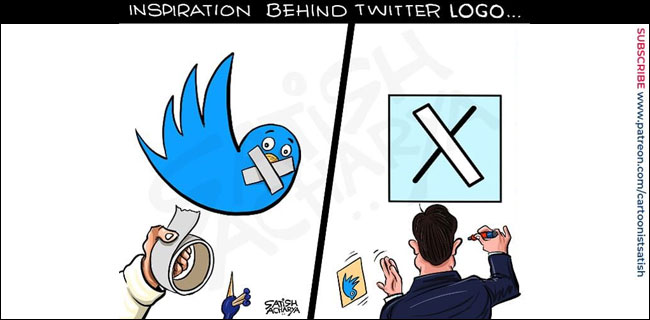
 By Prabhakar Mundkur
As you all perhaps know Twitter’s official mascot until a day ago, was a bird and the bird’s name is Larry. According to a tweet by co-founder Biz Stone, it is called Larry the Bird as a tribute to Larry Bird who played for the Boston Celtics.
 I was caught unawares when my friends on a WhatsApp group of intellectuals told me that the Twitter logo had changed into an X. What? Why?
I hastily opened my Twitter app only to see the familiar bird on a patch of blue as the opening screen.
Wait a minute. For some time, I couldn’t see the X. Then a friend said he had opened it on his computer. I quickly rushed to my laptop and open Twitter. It took me some time to see a weak little X tucked away in the corner of my screen. And the language was the same. It said tweet.
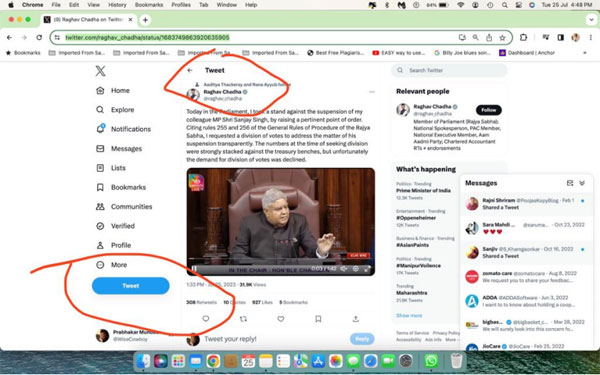
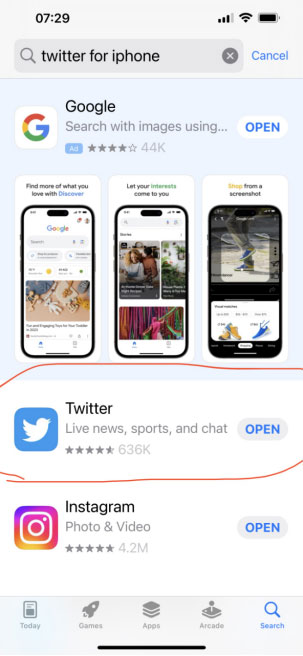 I then rushed to the App Store to check what the logo on the download would reveal. Once again, I was welcomed by Larry, and that told me that the new X branding was far from complete.
I had never thought about it before but the logic of the previous branding fell into place. Twitter because that is the short high-pitched sound that birds make. That is why you tweet. So what was the logic for renaming it X?
Elon Musk elaborated: “Twitter was acquired by X Corp both to ensure freedom of speech and as an accelerant for X, the everything app. This is not simply a company renaming itself, but doing the same thing.
The Twitter name made sense when it was just 140-character messages going back and forth – like birds tweeting – but now you can post almost anything, including several hours of video.
In the months to come, we will add comprehensive communications and the ability to conduct your entire financial world. The Twitter name does not make sense in that context, so we must bid adieu to the bird.”
Yes, so I got it. You have long videos instead of 140 words. But you tweeted on Twitter. The logic was solid and unquestionable. My question to Elon is what do you do on X? You still tweet as indeed the image above seems to suggest. Something wrong here. Why am I still tweeting on X?
Now coming to the logo which was the weakest part of my computer screen when I opened Twitter. For a moment, I thought some highfalutin design company had probably charged Elon a few million dollars for a new logo and made a few quick bucks.
But here is the ultimate disappointment. It is simply the letter X from the Special Alphabets 4 font which you can buy on the internet for $29.99. Now that is cheapest logo I have ever come across for a major corporation.
Now I have no pretensions to being an expert typographer but after having spent more than 45 years in advertising I do think I can tell a bad logo from a good one.
But enough said. Farewell, Larry. Hello, X, whoever you are and whatever you want to be. Please introduce yourself!
-
An interview with veteran mediaperson and author of the recently released Alphabetica – A Satire on Majoritarianism MxM Live with Kaushik Roy/Roy Phoenix on ‘Alphabetica’
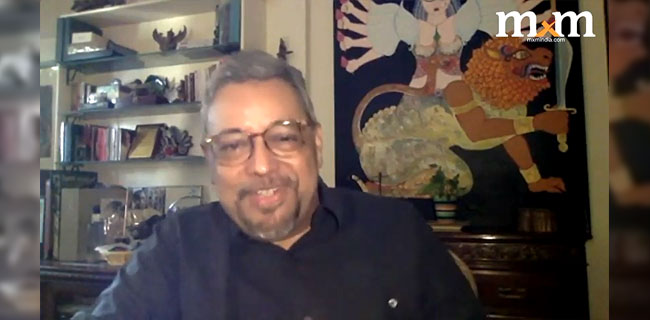
By Our Staff
Veteran mediaperson Kaushik Roy needs no introduction in the marketing services domain. But the media professional was not content with resting on his past laurels. Last month, he launched his debut novel ‘Alphabetica’ with a subtext saying ‘A Satire On Majoritarianism’ written with the pseudonym of Roy Phoenix.
In an extended interview with MxMIndia founder and editor-in-chief Pradyuman Maheshwari, Roy talks about this book, why he wrote under a pseudonym and what’s coming next. As a bonus, watch and hear both Roy and Maheshwari read passages from the book.
Watch. Like. Enjoy
-
It’s time for the media to go beyond inspiration porn and focus on consistent hard-hitting coverage of issues facing the disabled population, writes Shruti Pushkarna Shruti Pushkarna: Disability Inclusion: How far are we from a Sugamya and Saksham Bharat?
 By Shruti Pushkarna
In his first term, Prime Minister Narendra Modi was applauded for path-breaking campaigns like Swachh Bharat, Jan Dhan Yojana, Sugamya Bharat, Ujjwala Yojana and so on. The promise of ‘inclusion’ for larger sections of the Indian population gave the country hope for a better tomorrow, or ‘Acchhe Din’.
Having been sidelined and neglected for decades, the disabled community felt vindicated with the announcement of the Accessible India movement in 2015. Finally, the lack of ‘access’ was acknowledged at a national level. In a move to dignify their existence, PM Modi also coined a new term, ‘divyangjan’ or divine being replacing the demeaning usage of ‘viklang’ or handicapped.
Furthermore, the passage of the Rights of Persons with Disabilities (RPWD) Act 2016 was celebrated as a landmark moment. Repealing the 1995 Act, the new legislation included 21 types of disabilities, with a view to empower and enable as opposed to a dependence on mere handouts.
Often persons with disabilities face entry-level barriers in education and employment. The reasons could vary, discrimination, poor financial condition, ignorance or inaccessibility. And that adversely impacts their social and financial standing, mis-shaping the general societal perception.
The RPWD Act 2016 introduced new sections, providing rights and entitlements to ensure barrier free access to the physical infrastructure as well as to information and communication technologies (ICT). Four per cent reservation in government jobs, equal opportunity policy for private establishments in addition to incentives for recruiting at least five per cent disabled employees, and extending the right to free education to every disabled child between the age group of 6 and 18 years, are some of the pertinent steps to level out the playing field.
With all these initiatives and asseverations, one would assume all is hunky-dory. Except it’s not.
The leadership seems to have mastered the art of utopian announcements. Spinning yarns ridden with lopsided statistics, they have created a false picture of progress to sway voters. The ground reality is not as idyllic as the written word. Red tapism, absence of coordination between departments and ministries as well as Central and State governments, creates roadblocks in implementation.
Unique Disability ID (UDID) is a case in point. The UDID portal, swavlambancard.gov.in was launched in 2016 with the intent of creating a national database of persons with disabilities (PwDs) and also to ensure easy access to schemes and benefits. As opposed to a state issued Disability Certificate, UDID is valid pan-India, which enables PwDs to avail government provisions without producing multiple documents.
But the rollout has been shoddy. As of March 2021, 54.84 lakh UDIDs have been issued against nearly 1.66 crore Disability Certificates. Across states, disabled folk face challenges in online application, medical verification from district hospitals, tracking the issuance status, editing wrongly registered details on printed IDs et cetera. Even after completing all the steps in registration, thousands of PwDs haven’t received their cards. See tweet below.
1) Applied in 2016 till 2021 waiting (19150000016100029048)
2) A Municipality/SUB DIVISION (HMC/SADAR )missing from WEB Page Application Form Howrah Dist ,WEST BENGAL #UDID@Drvirendrakum13@socialpwds @RamdasAthawale @kataria4ambala @MSJE_AIC@MSJEGOI#DigitalIindia pic.twitter.com/30w4lSbhFK— Mangal Hazra (@mangalhazra3) July 22, 2021
A tweet stating UDID applied in 2016 has still not been received
From June 1, 2021, the Centre notified for all disability certificates to be issued online. “The Department of Empowerment of Persons with Disabilities (DEPwD), Government of India has issued Gazette notification SO 1736(E) dated 05.05.2021 making it mandatory for all States/UTs to grant certificate of disability through online mode only using UDID portal w.e.f. 01.06.2021.”
The notification conveniently puts the onus on the States and local hospitals at a time when they are preoccupied with administering vaccines and managing Covid-19. How does the Centre plan to achieve the desired digitisation when the online process so far has been moving slower than molasses?
Just last week, the Ministry of Social Justice and Empowerment issued a notification exempting all posts under the Indian Police Service and Indian Railway Protection Force from the provision of four per cent reserved quota for persons with benchmark disabilities. This goes against Section 34 of RPWD Act 2016 which states that “the appropriate Government, in consultation with the Chief Commissioner or the State Commissioner, as the case may be, may, having regard to the type of work carried out in any Government establishment, by notification and subject to such conditions, if any, as may be specified in such notifications exempt any Government establishment from the provisions of this section.”
In this case, only the posts for combatant roles should be exempt from reservation. Interestingly, a separate notification issued on the same day by the Ministry distinguishes between combatant and non-combatant roles, exempting all combat posts in the Border Security Force, the Central Reserve Police Force, the Central Industrial Security Force, the Indo-Tibetan Border Police, the Sashastra Seema Bal and the Assam Rifles.
It’s important to note that all reserved posts are based on the jobs identified for PwDs by a specially appointed committee. There are several skilled and unskilled roles under Group A, B, C and D categories, where disabled people can be hired as clerks, technical specialists, engineers, delivery assistants, cleaners, telephone operators, designers etc.
On January 4, 2021 the Department of Empowerment of Persons with Disabilities notified 3566 posts in Central Government establishments as suitable for persons with benchmark disabilities, adding 593 new posts to the previous list issued in 2013. The latest detailed list can be seen here: http://disabilityaffairs.gov.in/content/upload/uploadfiles/files/224370.pdf
There are many more examples that point to a lackadaisical approach of the government when it comes to integrating persons with disabilities into the mainstream. While progress has been made on several counts, we need stricter enforcement and execution of policies. Empty sloganeering won’t suffice.
It’s also time for the media to go beyond inspiration porn and focus on consistent hard-hitting coverage of issues facing the disabled population.
Shruti Pushkarna heads operations of the New Delhi-based Score Foundation where she works as Director-Programmes & Communications. She is a former journalist (part of the founding team of MxMIndia) who has moved full-time to the social sector. Shruti writes for MxMIndia every other Thursday. Her views here are personal. You can tweet your comments and suggestions to @shrutipushkarna
-
MxMIndia is now a member of Digipub India and has submitted its ownership details to the government as required Have a Grievance Against MxMIndia? Here’s What You Can Do

By Team MxMIndia
At MxMIndia, we take our journalism very seriously. We are journalists, we are editorially-driven and uphold all that’s commonly perceived as journalistic ethics.
Right from the day we launched, September 9, 2011, we have been governed by a clear Code of Ethics and all our staff are signatories to it. We have a clearly laid out Terms & Conditions and Privacy Policy. In the Privacy Policy, we have clearly given the connect to a Grievance Officer. So, if anyone has had a problem with our content, there is a clear line for lodging a complaint.
We wrote about this a few weeks back, but we are repeating this to drive home the message. At MxM, given that we carry a fair amount of commentary, and are often even critical of the powerful and the powers that be (including those from/at private and social establishments). It’s only fair, hence, that those who are aggrieved have a formal recourse. Rather than threaten to stop advertising or curtail access which some entities may threaten to do (or even do), we’ve encouraged people to write to us. And we’ve haven’t ever, shied from apologising if we’ve erred. We use the word ‘Apologise’ or ‘Sorry’ and not an impersonal ‘regret’.
MxMIndia is now a member of Digipub India, a representative body of digital publishers in the country (https://www.digipubindia.in/). As members, we have also said we will honour the Self-Regulatory Body that has been set up by the organisation. MxMIndia also submitted its ownership details to the Ministry of Information and Broadcasting as desired of all digital news publishers.
Digipub India has set up an internal committee to provide our members with an industry-wide level of self-regulation. The committee is constituted of individuals with an unimpeachable public service record and accomplishments. They are:
1. Former Supreme Court judge Justice Madan Lokur
2. Mr Jawhar Sircar, Retired Indian Civil Servant
3. Ms. Swarna Rajagopalan, Founder and Director, Prajnya Trust
4. Mr Bezwada Wilson, Activist and National Convenor, Safai Karmachari Andolan
If a complainant is dissatisfied with our (as in MxMIndia’s) grievance redressal procedure (write to editor(at)mxmindia.com), please reach out to Digipub’s grievance officer at the following address: selfregulatorybody(at)digipubindia.in.
We assure our readers, constituents and the ecosystem in general that we will honour the advice/decision of the Digipub Self-Regulatory Body.
-
Should have excellent, near-native English, and must be good at subbing. Some familiarity with video production would be ideal MxM is looking for an Asst Producer (Video)-cum-Copy Editor (Text)
By Our Staff
MxM is looking for an Asst Producer (Video)-cum-Copy Editor (Text).
Should have excellent, near-native English, and must be good at subbing. Some familiarity with video production would be ideal.
Location not critical since it’s going to be work-from-home. Experience: 0 to 2 years. Only those with an excellent academic/co-curricular record at Class 10 and 12 need apply.
Salary commensurate with experience.
Write to pradyumanm@mxmindia.com with cv and work samples.
-
If all members of the marketing team have taken their jabs, we’ll give a 50% discount on ads. If 3 of 6 have taken, it’s 25%. And so on… MxM Offer: 50% discount on ad hoc ads if marketing team is fully vaccinated

By Your Team @ MxM
Vaccination is key to curb the spread of Covid-19 as also reduce the risks that a virus attack could have on one. However, there are also many who are hesitant about taking a jab, and, sadly, there also exist several anti-vaxxers.
In an effort to encourage and incentivise vaccination in the A&M and M&E sectors, MxMIndia will offer a special rate for advertising (on MxM) in the form of ad hoc mailers and site captures from June 11 to July 10, 2021.
Here’s how: Just make a self-declaration of how many members of your marketing team have taken at least one jab. We don’t need proof… we trust you.
If the team size is 8, and all 8 have taken at least one jab, we will offer a 50% discount on all ad hoc activity – mailers, site captures and banner ads. By ad hoc we mean advertising that is outside of annual deals or longish campaigns. If 90% of the staff have taken at least one jab, we’ll offer a 45% discount. And so on. If the team size is two, and only one colleague has taken a shot, we will offer a 25% cut.
Is this a gimmick? It may seem like one, but it isn’t. We have been thinking about it for a while, and firmly believe that the solution to the current problem of the Covid-19 spread is masking, distancing, hygiene and vaccination. This is just a move to incentivise the vaccination process in organisations in a sector we are associated with.
Over the years, MxMIndia has partnered the industry in various social causes. Whether it’s the flash floods in Kerala or free advertising to a television show that’s helped in the cause of cancer care. That’s how we are. That’s what we believe in. Business and revenues are important, but they aren’t our end-all.
The impact of the Covid-19 pandemic has been huge. Let’s all work together to ensure the world we live in is safer and better.
If you or your organisation wish to use this opportunity, please feel free to write directly to Pradyuman Maheshwari at pradyumanm [at] mxmindia.com, Whatsapp him or call (98338 76278). Or please get someone in your team to do so. Also, please forward this message to all. Also, get other media platforms – including our rivals to do the same. We aren’t doing this to earn brownie points. We sincerely believe that every eligible Indian must be vaccinated.
-
We are building a system that truly represents who we are, writes Shashidhar Nanjundaiah The Hyperlocal Exposure of Covid Truths

By Shashidhar Nanjundaiah
 A sensational headline from The Guardian that’s doing the rounds these days reads, “The system has collapsed: India’s descent into Covid hell”. To this dramatic text, a friend and a media lecturer from Patna, Rajeev Sharan, remarked that the famed UK daily’s headline is just being charitable. “Actually, the system has not collapsed. It just stands exposed. This is the system here.”
“Meanwhile, people are asking where their vaccine dose is,” the story by BBC’s India correspondent Yogita Limaye concluded. After presenting the ugly political bickering around vaccines in India, that was the bottom line-their immediate, proximate reality.
People in a crisis mostly care about the truth that they need-blood, oxygen, vaccines. People whose relatives are dying in hospitals often blame the system for their fate. “The doctors are helpful, but government is not helping.” Blame goes onto a distant, unreachable entity that we call the system. Yet it is the local, a-systematic entity with tremendous reach and is yet very local that often cuts through the red tape and helps.
It is fair to assume that many of the people whose relatives are dying are surely those who are also intemperate in their hypernationalism and protecting national image, which, hitherto, was more important than reality. Yet, the same technology-enabled social system comes to their rescue when the need is immediate and critical.
As a system, the social media has proved that is both a boon and a curse in these trying times of Covid 2.0. On the one hand, it is replete with nationalistic “triumphalism” and booster doses for Modi’s image. Much has been documented and argued-including by this author-about the perils of such ongoing government-induced, often unscientific euphoria that has caught the fancy of politicians and the social media distributors of their messages.
So it is evident that a system of fake news has arisen right before our eyes. To that extent, sections of our media that do question the system-however raucously and irritatingly-drill down the bottom line, that people are at the bottom of it all. They remind us that the system is not “the other”-we are the system. Yet by being selective in accountability-seeking, they are exposing the media’s own system.
Yet, on the other side of that disturbing new social system is a much more heartening alternative of how the social media is doing what our media has largely failed to do: help people. This kind of crisis is where the word “social” in the term social media is validated. Geographically apart strangers are helping one another, appealing for blood donation or oxygen.
Although its meaning is obvious and un-tricky, hyperlocal has taken on a new meaning. This new definition is about not the reach but the origin. It means hyperlocal is not about geographic proximity, but about the dissemination of a reality from a locality. An important book, self-explanatorily titled Hyperlocal Journalism: The Decline of Local Newspapers and the Rise of Online Community News by David Harte, Rachel Howells and Andy Williams (2019), albeit largely in a west European context, includes a pertinent discussion around “excessively local”-so local that local, crowdsourced information is too culturally specific for its mass distribution to bear the right connotations.
One argument can be that such news is too mundane, too ordinary. But like all news, it is at times of crisis that its true relevance and value kick in. The hyperlocal nature of social media lends that personal touch to a global technology, and in a sense, it defies what system is. Even the most local of the so-called mainstream media must resort to anecdotal evidence or broad generalisations. It is only the sum of all anecdotes that can make the reality emerge as it stands, devoid of headlines and bottom lines.
It should be evident, therefore, that hyperlocal news is both informational and cultural. It is informational when it is immediate and proximate, and a cultural informant when it is not. Last Saturday, the first weekend of a curfew in the Garden City, The News Minute published pretty pictures of a few leafy streets to support the headline “Roads deserted, shops shut during Bengaluru weekend lockdown”.
Let’s think about the political, social and cultural undertones in that news item. What this headline will not tell us it is showing only a part of the reality. It would be fallacious for the reader to assume that all roads are deserted, all shops shut. (Clearly, they were not.) The headline is important for a variety of reasons, after all-they tie together an un-complex form of truth, providing a conveniently one-sided evidence for newspapers and portals to evidence a strict weekend curfew, individuals point out that traffic is almost normal in their neighbourhood. Additionally, to someone who is geographically removed, it connotes-falsely-that the city has been totally compliant and disciplined.
That is why it is the social media that can provide the actual truth-whether it is in the form of exposing the underbelly of our society or our minds, whether it is depressing for many of us to know how much hatred there is, or whether it is delightful to know how much compassion there is. Where there is no hatred or compassion, there is pretence of either—which is also a reality. It is what people want to convey about themselves. Like its mainstream counterpart, this crowdsourced messaging is best at, and worst at ‘news you can use’. It could lend itself to use or misuse, but hyperlocal is the most organic counter to hypernational.
As the founder of Being Responsible, the author, Shashidhar Nanjundaiah, is attempting to build awareness via Responsible Media Literacy. Prof Nanjundaiah has led media institutes to positions of repute and leadership. You can reach him at shashi.nanjundaiah@hotmail.com. His views here are personal.
-
We were the first Indian A&M website to publish a code. And all our employees are signatories to the same The MxMIndia Code of Ethics

Every six-odd months, we publish our Code of Ethics. For more than ever before, the Indian media needs to adopt one and practise it.
We are now part of the Digital Publishers Association of India and will follow the self-regulatory procedures set by it. Our editor is also a member of the Editors Guild of India and the Press Club, Mumbai. More than ever before, it’s important the media acts responsibly as must people around it. In the next month-odd, we will publish the process of the self-regulatory body set up by DigiPubIndia.
MxMIndia adopted a Code of Ethics even before it was launched. Although it’s on the site, since it could have become a blindspot, we publish it as our Big Story once or twice a year. This is the link to the Code: http://www.mxmindia.com/code-of-ethics/
Read on…
The MxMIndia Code of Ethics
This code of ethics is not meant to be a treatise in ethics. We believe all MxMers are mature professionals, of sound character and have values we agree with.
However, since a Code of Ethics is not really followed in organisations that some of our employees may have worked with in the past, we have a formulated an easy-to-follow set of Do’s and Don’ts that each and every employee has agreed to follow.
Also, since there’s a general belief that many media companies (business-to-business and mainstream) follow unethical practices, it’s hence critical to put the record straight on why MxMIndia isn’t like the ‘many’ others.
1. While the objective of MxMIndia is to be a profitable enterprise, our revenues will not come from compromising editorial standards. Excellence is what we are setting out to achieve, Ethically and with Integrity.
2. We will not be influenced in any way by advertisers – past, present or future, and will write or comment on an individual, service or organisation regardless of whether or not it advertises with MxMIndia.
3. We will not sell our editorial content. Content includes text, photographs, videos or any visuals.
4. Accuracy in presenting facts is of utmost importance and facts must be correctly presented.
5. We will not present any bias in our news sections. If, however, MxM India does undertake a campaign, it will clearly state its editorial policy
6. If there’s any advertisement that could be confused with editorial content in appearance, it will be clearly tagged as an Advertisement and be displayed in a style that is different from normal editorial content.
7. Our reports and features will always attribute sources to people. In case, the source does not want to be named for fear of loss of employment or due to some sensitivity, every attempt must be made to look for an alternate source who could be named. If that fails, every attempt should be made to make the reader rest assured that our source is authentic and this may be done by describing who the source is.
8. We have a no tolerance policy towards plagiarism. Employees may be given a warning if found plagiarising, but in most cases, the services of any employee found plagiarising – regardless of her/his seniority or utility to the organisation – would be terminated within 24 hours of the Editor-in-Chief conducting his/her investigation on the act of plagiarism.
9. If any attempt is made to influence us by way of a threat to withdraw advertisements, we reserve the right to expose such individuals and/or their organisations.
10. We will not publish photographs off the internet. If a picture is be taken from the internet, it will be done only after written permission of the source. Else, we will own the rights for the picture which may be procured by buying rights for appropriate usage. Ditto for text. If we do carry syndicated content, the source needs to be clearly be stated at the end of the article.
11. Our journalists will take the permission of the interviewee to record her/his comments, especially when the meeting is not face-to-face.
12. Unless approved by the Editor, we do not part with the transcript of any interview. A journalist may however play back a few quotes attributed to an individual.
13. We will allow individuals or organisations adequate time to revert with their response to a question. In most case the adequate time would mean four to six hours. If it’s a non-critical story, then we would recommend holding the story for at least (and at most) a day.
14. We will not accept any gifts that attempt to influence us. These should be returned immediately. Gifts in the form of chocolates, mithai, flowers or basic promotional material that is of reasonable value (of up to Rs 750-1000) is fine. Mementos or promotional material of nominal value may be accepted. No gifts must be solicited. If there’s a doubt, please consult the Editor-in-Chief/CEO. If an organisation is found to influence an MxMIndia journalist, under extreme cases, MxMIndia may even blacklist the organisation and/or its products and services.
15. We will not solicit any outstation trips. If however there is an invitation for a junket, we will accept it only if the Editor believes there is a news value in the event. In such a case, MxMIndia will mention that the journalist concerned has visited an outstation venue at the invitation of the company which must be named. For local travel, all our employees are defrayed expenses towards local travel, and hence we discourage taxi pick-ups or drops, as is the norm in some sections of the media.
16. We will not solicit any invitations for a meal or a drink. We discourage MxMIndia employees to drink beyond their limits at events, dinners, press conferences etc where they represent the Company. We will also not solicit free books, software, movie tickets etc.
17. MxMIndia employees are discouraged from moonlighting. If, however, employees do receive requests to write an occasion article for a non-competing publication, the employee could do it after seeking permission via email.
18 .Unlike some media houses, we are happy to see our employees – regardless of their seniority levels – to be interviewed and featured in other media. However, prior permission is desired for every appearance on television. Employees must ensure that their work at MxMIndia doesn’t suffer due to their appearances on TV, radio etc. While tweeting, participation in social networks like Facebook and Linked In are encouraged, every attempt must be taken to ensure that the values and interests of the organisation are not compromised.
19. We will ensure that our ethical standards are followed in all that we do – events, conferences and awards. We will ensure our integrity is not compromised.
20. We discourage the use of pirated products and services for official use. We advise our employees to only use legally procured software. Employees using their personal computer equipment for work are encouraged to switch to legal software.
21. MxMIndia has a no tolerance policy on sexual harassment.
22. Our employees are not allowed to deal in stocks related to the media and entertainment sector. If they hold shares before joining the organisation, they must disclose their holdings in writing to their immediate boss. They could, however, invest in mutual funds related to the M&E sector.
23. While this Code is only applicable towards conduct as an employee, we advise all MxMers to ensure that they are ambassadors of MxMIndia and all that it stands for even outside of work hours.
24. Over the last few years, there have been question marks raised about the ethical standards adopted by journalists and media organisations. While a lot of it may be untrue, we believe that journalists and others working in various media organisations are also responsible for this perception. At MxMIndia, our attempt will be to reverse this.
25. This Code is applicable for all employees of MxMIndia. Associates, retainers, columnists, regular contributors are also required to adhere to the above Code.
We encourage all our constituents and advertisers to read the above document and cooperate with us and enable us to abide by it. If you wish to report a dishonest act, write directly to pradyumanm [at] mxmindia.com.
-
Starting today, all MxM news stories will be brief and to-the-point MxM reports go Short & Sweet
By Our Staff
We understand people don’t have much time. The extended lockdown and WFH culture has ensured that.
In order that we respect your time, we are making that extra effort to cut the flab in press release-based reports and give you what we think is relevant.
This will ensure better readability although the reports won’t have the very many nice things that PR folk may have written.
Also, all reports that are press release-based will be clearly tagged ‘Press Release-based’ and not put as ‘By Our Staff’. These clearly mean that MxM India staff hasn’t verified the contents of the report or spoken with any of the people mentioned in the report.
Hope you appreciate the change.
Cheers!
-
It’s time we acknowledged that the differences we see in people and situations, first emanate in our minds, writes Shruti Pushkarna Shruti Pushkarna | Lessons from 2020: Time to think mainstream solutions for all
 By Shruti Pushkarna
2020 is finally coming to an end. We all agree on what a waste this year was, considering how our plans were reversed, lives disrupted and holidays canceled. As for work, we found new ways of functioning and remaining productive amidst a global pandemic. Truth is we survived this terrible year and the next one is just round the corner.
Typically, in December, people think of resolutions, goals, budgets, but our lives are still shrouded in uncertainty. When will the vaccine be rolled out? Will it be effective? How long before we build herd immunity so that we can go back to normalcy just like in the pre-Covid days?
No easy answers there. How about ending 2020 by acknowledging things that SARS COV-2 helped us discover, as individuals and as a society?
The most important thing I have learnt especially while working with persons with disabilities is, the key to surviving (and thriving) is ‘acceptance’. When Covid struck, people were frustrated. The government called for a nationwide lockdown leaving us with no choice but to accept our situation. When we accept, we stop fighting with the problem and start channelizing our energy into finding possible solutions.
Operating from home is a case in point. In the absence of physical spaces to work, study, exercise, hang out or play, we found alternatives within our residential confines. We modified our living situations to make room for daily routines that were conducted outside earlier.
Acceptance leads to possibilities. Yet another learning.
There are always alternatives, a different line of thinking and a new way of processing limitations. The disabled world knows it well. For persons with disabilities, the only real barrier is a negative attitude. Responses like ‘no, can’t do’, ‘not possible’, ‘not equipped’, ‘can’t happen’, exclude them from majority of mainstream activities.
The past year may have helped the ableist society realise some such truths. Thanks to Covid, now we know that possibilities are only limited by our (collective) imagination. When able bodied people like you and me were denied access to our regular environment, we created a close replica in the form of a virtual universe.
Barrier-free access is something persons with disabilities across the world have been fighting for, over decades. Attending school or college, getting a job in an office, watching a movie, reading a book, traveling, dining, sightseeing, even accessing social media or other digital services, poses serious challenges to the disabled. But we have never thought of mainstream solutions to these problems because their impairment has been grounds for an almost legit exclusion.
We are all intrinsically selfish, is also a lesson learnt, though this one’s hardly exclusive to 2020.
If the society accepts differences in abilities rather than typecasting people as ‘incapable’ or labeling them as ‘invalid’, we can start building an inclusive environment for all. Innovation in technology and increased internet penetration makes it easier to allow access to a larger, heterogeneous group.
Let me state some obvious examples from the current scenario. Disabled students are attending online classes with the help of smartphones and computers along with able-bodied peers. Similarly, jobs are being carried out remotely, irrespective of physical impairments. OTT platforms have a wider share of the content viewing pie and their audience includes persons with different types of disabilities. Banking and other financial transactions are taking place online, albeit certain access issues. And the list goes on.
When Covid-19 rendered us helpless despite all our defence mechanisms, we didn’t give up. We simply started safeguarding afresh. Among those who have survived the virus, some have experienced temporary disabilities, and there are others who have developed chronic illnesses due to partial respiratory or renal failure. But we are not blaming their karma for the medical outcome, are we?
Why can’t we see the disabled people without the stigmatised lens too? If there is hope for a better tomorrow, then why shouldn’t similar optimism be extended to someone with a hearing, speech, visual or locomotor impairment?
It’s time we acknowledged that the differences we see in people and situations, first emanate in our minds. What we actually choose to see outside is a mere reflection of that mindset.
Here is an idea to carry forward to 2021. Let’s never forget what a person is capable of, given appropriate environment and aids. Let’s stop walling off people with problems presumably different from our own.
Shruti Pushkarna heads operations of the New Delhi-based Score Foundation where she works as Director-Programmes & Communications. She is a former journalist (part of the founding team of MxMIndia) who has moved full-time to the social sector. Shruti writes for MxMIndia every other Thursday. Her views here are personal. She can be reached via Twitter at @shrutipushkarna