
By Our Staff
India’s online video market has seen explosive growth both in terms of users and usage. The video user base has scaled to more than 350 million people growing over 24% over 2018-20, twice as fast as markets such as China and Indonesia. Despite this rapid boom, there exists massive headroom for growth – online video user penetration in India is nearly 60% of Internet users, compared with more than 90% in China, notes a report from Bain & Co. The report covers both the Short Form Video as well as the Long Form Video (including OTT / Streaming) market, and provides in-depth insight into the users, platforms and creators of online videos.
Online video consumption has exploded over the last few years, with a surge in both users and usage bolstered by prolonged stay-at-home periods, especially during the pandemic. India’s online video user base has scaled to more than 350 million people, growing 24% over 2018 to 2020, nearly twice as fast as markets such as China and Indonesia.
Usage per active user has also grown dramatically-the daily time spent per active user on online videos has simultaneously grown by 60% to 70% over 2018-20. Majority of time spent on smartphones is on entertainment, primarily watching videos. These are among the findings of a report titled “Online Videos in India- The Long and Short of It”, released by Bain & Company.
Said Arpan Sheth, partner and global leader of Bain & Company’s Vector Solutions Group: “India has a large digital community, with about 640 million Internet users and 550 million smartphone users which is rapidly growing and spending more time online. Smartphone users spend about 4.8 hours on their devices daily, of which a staggering one hour on average is spent consuming videos. Despite this rapid boom, there exists massive headroom for growth—online video user penetration in India is nearly 60% of Internet users, compared with more than 90% in China.”
Digital video entertainment consists of short-form videos (SFV) which are between 15 seconds and two minutes, and long-form videos (LFV), which are more than 2 minutes long. Within SFV and LFV segments, content can be further segregated based on who is creating it (user generated vs. professional) and how it is delivered (pre-recorded vs. livestreaming). The lines across these segments are increasingly blurring, as platforms expand their offerings to capture a greater share of consumer time in catering to broader consumer needs and occasions to enhance stickiness. For example, Instagram now has Reels, IGTV, and IG Live.
YouTube has recently introduced YouTube Shorts in India. In India, the SFV market has taken off over the past two years, growing 3.5 times in user base and 12 times in total time spent by all users on SFV platforms. More than 200 million Indians watched SFVs at least once in 2020, with daily active users spending up to 45 minutes a day on these platforms. However, India’s short video user base has historically been largely men from Tier 2 and smaller towns, but this is evolving quickly, with the medium gaining traction in metros and amongst women. China paved the path for the SFV-market globally, over the past decade. India lags China by three to four years in terms of user penetration as well as usage.
However, rapidly growing access with cheap and ubiquitous data, easy-to-use platforms, and a high proportion of vernacular content will aid short video scale-up in India. By 2025, three in four Internet users, or 600 million to 650 million Indians, will consume short-form videos, with active users spending upto 55 to 60 minutes per day.
Added Shyam Unnikrishnan, partner and a leader in Bain & Company’s Consumer Products, Retail, Strategy and Digital practices in India: “The SFV ecosystem which essentially comprises of users, creators and advertisers are key to driving economics for the platform. Brands are increasingly using short video platforms to reach their target customers. New monetisation models, such as video commerce, livestreaming, and in-app purchases, will become increasingly commonplace in the coming years. Players need to invest in developing an advanced, tech-enabled platform to link users, creators, and advertisers and deliver a seamless experience to all.”
TikTok became the first scale SFV platform in India, with more than 200 million users and 20 million content creators posting at least one video a month. This robust base of creators is key to attracting users. India has more than 50 million users who have created and posted at least one short video. Content creators are active on multiple platforms and are increasingly monetising their follower base through brand collaborations and commerce. All this is giving rise to a robust creator economy—an enabling ecosystem of players helping creators with content creation, monetisation, financing, and business management.
The Indian SFV market is now occupied by a mix of specialist SFV apps (e.g., Moj, Josh, MX TakaTak, Roposo, Zili) and global social media/video giants (e.g., Instagram Reels, Facebook Reels, YouTube Shorts). Amongst the specialist short video platforms, five platforms-the previously mentioned Moj, MX TakaTak, Josh, Roposo, and Zili-have more than a 100 million downloads each.
The market, while at scale, is still nascent. Major players are only a little more than a year old. The market could evolve to follow one of the divergent paths of the two mature SFV markets: China and the US. The China short video market is led by specialist platforms, while in the US, social-media-led platforms (led by Instagram Reels) and specialist short video platforms (led by TikTok) co-exist.
Said Sriwatsan Krishnan, partner and a leader in Bain & Company’s Private Equity and Alternative Investor practice in India: “Market leaders will have to focus on three areas to develop a large, engaged community of users and creators. First and foremost, they will have to make substantial investments in technology to deliver a hyper-personalised experience to users, optimise user interface (through faster app and video load time, etc.), and expand access via vernacular interfaces. Winners will simultaneously focus on creator enablement and lock-in on one side, and creation of scalable monetisation engines on the other. Successful players will need access to large amounts of capital to achieve these goals and deliver on their potential.”
India’s short-form video (SFV) market offers tremendous potential. Successful players will focus on three areas including tech-enabled hyperpersonalisation, creator enablement and lock-in, and monetisation as they onboard the next wave of users and drive engagement which will require access to large amounts of capital.
According to Bain & Company, the five major trends that will shape the future of the SFV market in India are;
Content curation and social-led engagement: Leading players will invest in a robust recommendation algorithm and a superior user interface and user experience to deliver a winning experience.
Monetisation: Digital advertising will be the first frontier, but platforms will increasingly experiment with alternate commerce and micro-transactions. – Innovations to onboard the next wave of users: SFV platforms are already available in more than 15 languages in India, but a continued explosion of vernacular options is evident.
Emergence of a robust creator ecosystem: A robust creator economy will emerge. This enabling ecosystem will help creators with content creation tools, training, brand affiliations, financing, and business management.
– Niche platforms within larger SFV ecosystems: Platform players will emerge, housing a suite of apps which cater to distinct user and content niches. Long-form videos(LFVs) on the other hand, have substantial scale—viewed by 350 million to 400 million users, almost twice as penetrated as SFV. The format has seen substantial growth, with users and usage increasing nearly 1.5 times from 2018 to 2020. Active users today spend more than 2.5 hours per day on long-form content. Covid-19 lockdowns and stay-at-home advisories during the pandemic further propelled these numbers. LFV is poised to grow to 600 million to 650 million users in India by 2025. This growth will be driven by a steady increase in the Internet user base; access to cheaper, faster data; the introduction of more affordable plans, including the advent of freemium models; and a proliferation of content. A strong push on regional and vernacular content will accelerate this even further-85% of content viewed is non-English, and 30% is in languages other than English or Hindi. The LFV market is significantly more mature and crowded than the SFV market. More than 50 LFV platforms (also referred to as ‘over-the-top’ [OTT] platforms) exist in India.
This crowded landscape includes four broad archetypes of players vying for consumer time including global giants (YouTube, Netflix, Amazon Prime Video, Disney+ Hotstar), platforms by television broadcasters (SonyLIV, ZEE5), specialist Indian platforms (MX Player, Eros Now), and aggregators (JioTV). Content drives differentiation, and it is possible for multiple platforms to co-exist in steady state, as seen in developed markets. Players have opted for different monetisation models that reflect the platform’s core consumer in the income pyramid such as subscription video on demand (SVOD), freemium, ads video on demand (AVOD), and transactional video on demand (TVOD).
Six trends will shape the LFV space going forward:-
• Content explosion: Platforms will look to build deeper libraries with increasing original and regional content.
• Value chain integration: Backward integration by over-the-top (OTT) platforms into content production and forward integration by production houses may become more commonplace
• Hyper-personalisation: Content curation will become even more sophisticated. Approximately 70% of YouTube watch time globally is already driven by recommendations.
• Increased monetisation: Platforms will amplify focus on monetisation as the industry matures.
• Gamification/social engagement: Players will explore social-led engagement to keep users hooked.
• Content moderation: Platforms will look to invest in content protection tools to prevent piracy and moderate content to comply with regulations.

 The Indian government’s ban on TikTok in June 2020 along with 50+ other Chinese apps was a blessing in disguise for the homegrown user generated short video apps. TikTok, introduced in India in September 2016, opened up a new category of users in digital media consumption and had almost 90% share of the total time spent by Indian netizens on creation and consumption of short video contents.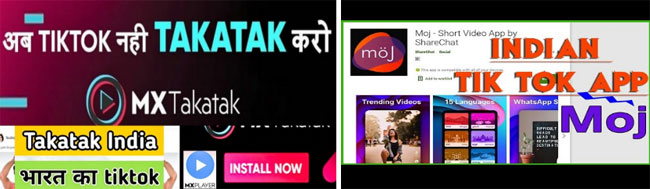
 India’s short-form video (SFV) market is set for an exponential growth over the next few years to 500-600 million by 2025. RedSeer has further predicted that short-form content would be overtaking the over-the-top (OTT) or streaming video content users by middle of this decade. The entertaining content supported by influencers has made short-form video the fastest-growing content category in Indian digital space. The marketing and advertising strategies of the major platforms have also changed as shown in the more recent advertisements of MX TakaTak featuring Virat Kohli and Chingari featuring Salman Khan.