Tag: Mumbai Mirror

  • Never make a film to win at Cannes, because then you’ll never do: Abhinay Deo

    By Meghna Sharma


    The final day at Cannes Lion 2012 turned out excellent for Taproot’s campaign for Mumbai Mirror – I am Mumbai. The advertisement was shortlisted in Film and Film Craft categories and went on to bag India ‘s first ever Gold in the Film Craft category.


    The campaign was entered in the Film Craft category by Mumbai-based Ramesh Deo Productions. The film was directed by Abhinay Deo whose work has been shortlisted at Cannes Lion before too. MxMIndia spoke to the winning director to know what it takes to make an award-winning campaign.


    It is India’s first ever win in the category, were you expecting a Gold?

    Honestly speaking I wasn’t. It’s my job to make a good film and keep entering them at such prestigious award functions. The rest depends purely on the quality of the work!


    What goes into directing an award-winning film?

    There is no thumb rule for it. All I can say is that one has to be honest to the craft. Never make a film to win an award be it cannes or any other, because then you surely won’t. (Laughs)


    The cast had never faced the camera before, so was it difficult to film it?

    When you have a cast which has never faced the camera before, it can either be extremely difficult or easy. It all depends on how you break the ice with them because they are bound to have apprehensions and fears about the whole thing. Sometimes such a cast can do wonders and have a film which even a seasoned actor couldn’t have been able to do better. I was sure that I wasn’t going to film the campaign with trained actors or celebrities.


    What was the thought process behind shooting the ad in black & white?

    Over the years, the city has lost its character. Today, everything is muddled-up; so, to show consistency, we decided to shoot it in black & white. Also, it was a polarised concept and I believe colour would have softened it. It was meant to be a hard-hitting one and B&W helped us achieve that.


    How important is an idea to direct for a concept like ‘I am Mumbai’?

    Both are important for a concept to work. The idea won’t work without good direction and vice-versa.  Without each other, it will just flop.


    How involved was Taproot in the ad?

    It was Aggi’s idea all along. Only after the idea was conceptualised, did I take over. And while shooting, it was my baby alone. It is great that Aggi and I know, and are able to understand, each other well, which helped both of us. We were able to execute each other’s ideas and thoughts well.


    Some of the reports that are coming out on Cannes Lions attribute the agency for the award. Do you think in advertising, perception-wise, it’s the agency which gets all the credit and not the film company and director?

    The campaign won the award for Film Craft category, so I think the award should be attributed to the craft.


    As a director, do you have any preferred agencies you work with?

    I have worked with most of them and have loved the experience. And I would continue to work with all of them. There are no preferences when it comes to work!


    Meanwhile, how’s the work on ’24’ going? When do we see the first season? Since TV is said to take so much of one’s time, does it allow you time for ad films?

    The series is in the scripting phase and, hopefully, will soon move to the execution stage. And when the shooting begins, I will give it all the time needed. In the past too, when I was making my two feature films, I didn’t make any advertisements. So, if needed I won’t be taking up advertisements till the series is over. Dedication and honesty towards work are important for me.


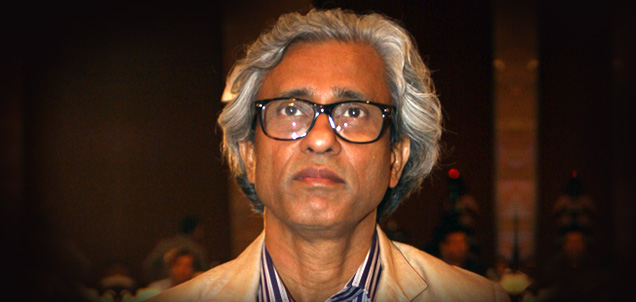
    Photograph of Abhinay Deo: Fotocorp


  • 5 more shortlists give India some hope for an average finish


    By A Correspondent


    The current metals tally (wins) for India stands at 12 but the contingent is still trying its best to up the ante and get the number to a respectable position. With six more shortlists being announced from India on day 5, it looks like India would have to settle for its 2010 score of 17 metals, or less. But luckily, it would not be as bad as 2007 where it managed only 12 metals against its name.


    The big news for the day came from Taproot India as its works received three shortlists against its name with the best being an Integrated shortlist for ‘A day in the Life of India.’ There is high probability that the entry will strike a metal this year.


    In the Film Craft Lions category, India received two shortlists including BBH India’s entry for its client Google Chrome under the category of Art Direction. The second entry to be nominated was Ramesh Deo Productions’s entry for its client The Times of India titled ‘I am Mumbai’. The entry has been nominated under the category of Direction.


    Making its first appearance, the Branded Content & Entertainment Lions was the other category to have announced its shortlists. The category had received a total of 18 entries from India. Of the lot, just a single entry by Bacardi India for its work around ‘The Dewarists’ has been shortlisted. A total of 800 entries from 52 countries have been submitted into the Branded Content & Entertainment Lions category in its launch year.


    In the Film Lions category, of the 56 entries that were sent from India – last year it was 61 – only one entry has been shortlisted. Taproot’s ‘I am Mumbai’ campaign for Bennett, Coleman & Co is the only Indian entry that has found favour with the judges so far. A total of 257 entries have made it to the final shortlist of the Film Lions category this year out of the 3,475 entries that were sent.


  • Mediaah! Morparia moves from Mid-Day to Mirror, Weekend tweets, The Monday Psssst!

    By Pradyuman Maheshwari


    Big Switch! Morparia takes his toon from Mid-Day to Mumbai Mirror

    In Mumbai’s media circles, this is a piece of news that’s going to generate much sound and angst. Hemant Morparia, one of India’s foremost editorial cartoonists, has moved from Mid-Day to Mumbai Mirror. There was a time when he could have been called a part-time cartoonist, but since around a decade, he appears to be doing two full-time jobs. The first as a radiologist and sonologist at the Breach Candy Hospital and the second as an editorial cartoonist. Now with Mumbai Mirror, Time Out and a few other publications.


    Sound and angst because Mumbai Mirror isn’t an afternoon paper like Mid-Day, but they are kind-of in the same space. So the switch will hurt Mid-Day much. And angst, because it’s sad to see Mid-Day lose Morparia just around the time when it was getting its act together.


    In a sense, the Mirror switch is a kind-of homecoming. He started out in the Times building in the late 1980s with The Evening News of India and then the Illustrated Weekly before doing daily toons for Bombay Times for nine years. And then in 2003, he shifted to Mid-Day. Another nine years later, he’s moved to Mumbai Mirror.


    I posed a few questions to Morparia on the move.


    1. So, why the switch from Mid-Day to Mumbai Mirror?

    > Some change of scene is always good, specially after nine years. It gives you a new audience and new space and new feedback. It helps to re-evaulate your own style and content. I was perfectly happy with Mid-Day, very pleasant people to work with and no problems with them at all. Happy memories with them. Sachin Kalbag is a friend and am saddened to leave.


    2. One of my peeves with Mid-Day was that your toon was all over the paper. How much is a fixed slot necessary for a pocket cartoon? Like Laxman had in ToI for years?

    > Ya, a fixed slot is a great attraction for a daily cartoonist, I would say a must. See, a daily cartoon is, or could become, a habit. If all over the place, it does not easily do so.


    3. Will we continue to see your toons in Time-Out and elsewhere?

    > Yes, I have only given the daily cartoon slot to the Mirror.


    4. So what’s more fun at this stage of your career: doing sonos and xrays, or tooning?

    > Well as I respond to you, I’m at the hospital, having just made a rare diagnosis on an emergency basis at 9pm on a Sunday. I did a sonography on a lady in pain, who just lost her father, two days ago. The diagnosis will be the key to whether she needs surgery or not. With this diagnosis, a surgery has been averted. That does give one satisfaction, undoubtedly. But it’s of a different type from the creative satisfaction that a making a cartoon gives. Creative satisfaction satisfies me first. And that is fun. Medicine and radiology are not fun, but are skills that can be learnt and honed. Being in two professions as different as these give one a sense of balance, proportion and some real-life perspective.


    5. Do you find the role of the cartoonist diminishing in the newspaper? There are more illustrations than cartoons offering commentary?

    > I think the reverse is true. Since we famously have a young population and young people enjoy humour, laughs, irreverence, visual stimulation and rebellion, then how can cartoons have a poor future? See how standup comedy has taken off in the country.


    6. How would you see cartooning shaping itself in the time of tablets and smartphones?

    > I don’t know. Probably an avenue for many cartoonists who don’t have the space provided by big publishers to access audiences directly and worldwide.


    Hmmm. Good to see Morparia welcoming newbies (and possible competition) to the business. Given the nine-year itch, guess the next change will be in 2021. 🙂


    Tweets of the weekend

    Until we find a permanent home for this and given that tweets from people across our business are perhaps the best way to keep tabs on what’s happening, here’s a sample of some gems that I picked over the weekend:


    Mahesh Murthy (@maheshmurthy): The most amazing discovery at @TimesNow #Foodie Awards? Arnab standing silently on the sidelines 🙂


    Satbir Singh (@thesatbir): In Goa, time passes so slowly you can almost hear it go hic hoc, hic hoc.


    Shishir Joshi (@joshishishir): What do you do whn a boss asks young reporter to pose as visiting actors fan since the office is falling short of crazy lovers of the star?


    Prabhu Chawla (@PrabhuChawla): Norway, gujrat porn gate, Coalgate makes it clear: Media just hypes a story and forgets a story behind such stories?


    Lynn de Souza (@lynndesouza): If you want something said, ask a man. If you want something done, ask a woman. From Lokmat Women Summit at Pune this morning.


    Anant Rangaswami (@AnantRangaswami): Just to make you feel better on a Saturday morning. Petrol now costs 1.40 GB Pounds/litre in London….


    The Monday Psssst!

    Is there more freedom to journalists in newspapers or on news television? Well, the likelihood of stories getting killed before they are carried is huger in the papers given the lead time.


    Recently, a commentator in a much-read daily found that his/her column was not carried because it was negative on a key political leader. It may have been for the first time in many years, but the fact that a column was dropped from the commentator who is a reasonably sound name in the media was shocking. And by a newspaper which prides on its ethical way of doing things.


    So why am I not taking names? Well, I’m sworn to secrecy. The column in question has appeared elsewhere, and all will soon be forgotten.


  • IRS 2011Q4: Not much change in rankings but dailies witness significant growth

    By A Correspondent


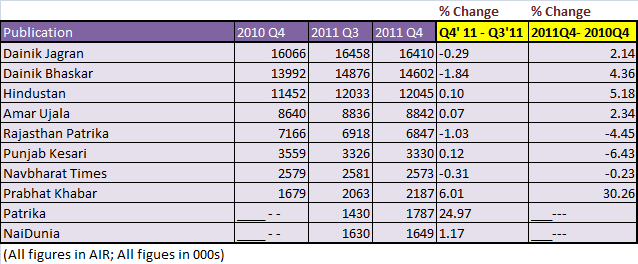
    Top 10 Hindi Dailies:

    IRS Q4, 2010 v/s IRS Q4, 2011

    There is not much of a difference in the rankings of the Top 10 Hindi Dailies. Dainik Jagran, Dainik Bhaskar,Hindustan, Amar Ujala and Rajasthan Patrika continue as the Top 5 Hindi Dailies. When compared to IRS 2010 Q4, IRS 2011 Q4 reveals the Top 4 Hindi Dailies, namely Dainik Jagran, Dainik Bhaskar,Hindustanand Amar Ujala have further strengthened their readership.


    A look at percentage change from Q4, 2010 to Q4, 2011 finds that Dainik Jagran has witnessed a growth of 2.14 per cent, Dainik Bhaskar grew by 4.36 per cent,Hindustanby 5.18 per cent while Amar Ujala grew by 2.34 per cent. The only Hindi daily to have witnessed double digit growth is Prabhat Khabar with a whopping 30.26 per cent growth in Q4, 2011 as against Q4, 2010. A total of five Hindi dailies have witnessed growth Quarter on Quarter.


    Q3, 2011 Vs Q4, 2011

    But the results for IRS Q4, 2011 Vs Q3, 2011 have a slightly different story to tell. The top two most read Hindi dailies – Dainik Jagran and Dainik Bhaskar – have witnessed a decline in Average Issue Readership (AIR), the decline is however marginal. Besides Dainik Jagran and Dainik Bhaskar, the Hindi dailies to have recorded growth in Q4, 2011 v/s Q3, 2011 are Hindustan, Amar Ujala, Punjab Kesari and Prabhat Khabar.


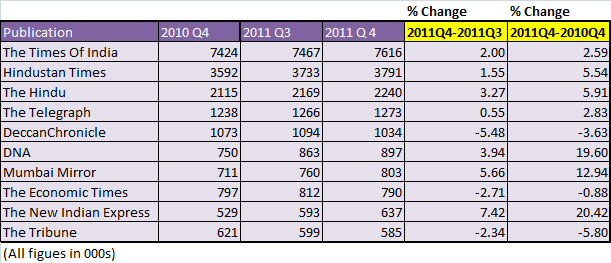
    Top 10 English Dailies:

    IRS Q4, 2010 Vs IRS Q4, 2011:

    The English dailies have performed exceedingly well in Q4, 2011. Seven out of the Top 10 English dailies have registered growth in their AIR. While DNA, Mumbai Mirror and The New Indian Express have registered growth in double digits, the top four English Dailies: The Times of India, Hindustan Times, The Hindu and The Telegraph have also witnessed growth quarter on quarter.


    IRS Q4, 2011 Vs Q3, 2011:

    The results for Q4, 2011 in comparison to the previous quarter also highlight the growth for most of the top Ten English dailies.


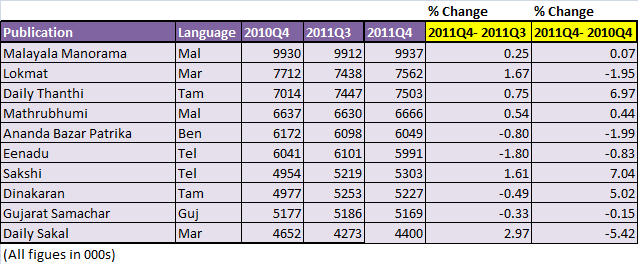
    Top 10 Language Dailies:

    IRS Q4, 2010 Vs IRS Q4, 2011:

    The Q4, 2011 results as compared to the Q4, 2010 results have shown mixed reactions for Language dailies as only five publications witnessed growth since Q4, 2010 to Q4, 2011. Malayala Manorama continues to be the number one publication among the Language Dailies. According to IRS Q4, 2011 v/s Q4, 2010 findings, the Malayalam daily grew 0.07 per cent.


    Ranked second is Marathi daily, Lokmat which saw a decline of 1.95 per cent. The other Language dailies to have registered growth in their AIR are Daily Thanthi, Mathrubhumi, Sakshi and Dinakaran.


    Unlike the top two dailies, Daily Thanthi, ranked as third Language daily, grew by 6.97 per cent in IRS Q4, 2011 when compared to IRS Q4, 2010.


    It has been observed that the Malayalam dailies – Malayala Manorama and Mathrubhumi and the Tamil dailies – Daily Thanthi and Dinakaran have recorded growth in their AIR. Malayalam, Marathi, Tamil, Telugu, Gujarati and Bengali are some of the popular language dailies to have found a place in the Top 10 Language dailies.


    IRS Q4, 2011 v/s Q3, 2011:

    The top four Language dailies: Malayala Manorama, Lokmat, Daily Thanthi and Mathrubhumi have registered growth in their AIR numbers in IRS Q4, 2011 v/s IRS Q3, 2011. Besides the top four language dailies, Sakshi, the Telugu daily and Daily Sakal, the Marathi daily have also witnessed growth in their readership numbers.


    AIR or Average Issue Readership is defined as the readers of an average issue of a publication i.e. the estimated number of those who have read or looked at any issue of the publication within a specified time interval, which is equal to the periodicity of the publication (excluding the day of the interview). This is the preferred currency of media agencies across the country though often publications quote Total Readership (TR) when their AIR numbers are not impressive. MxMIndia only uses AIR in its IRS reportage.

  • I don’t read rival newspapers: Bhaskar Das


    By Anil Thakraney


    I have met Bhaskar Das on and off. (I once even secretly freelanced for him in my advertising days.) During my stint with Mumbai Mirror, I got to know him a little better. He has always come across as a cool, calculating and sharp business manager… but someone who’s smart enough not to build his own image over that of his company. In a long conversation inside his plush corner office (previously occupied by Pradeep Guha), Bennett Coleman’s president answers searching questions on his long career with the Times, the group’s ideologies and sometimes controversial practices.


    The one new thing I discovered about Bhaskar during this discussion is that he’s a deeply spiritual person, and often, as he himself said to me, uses learnings from The Gita to ‘sanitise’ his various marketing strategies. Wonder what Lord Krishna would have to say on Media Net.


    But I must say the man who heads the nation’s largest newspaper house retained his composure even when facing tough queries. Spirituality at work, I suppose.


    Boss, when do you retire? You are 58.

    See, retirement has two different connotations. For me, it’s ‘Retyrement’. Like re-treading tyres. And that means adding new capabilities. Coming specifically to Bennett, I have a flexible retirement plan. As per the company’s desire, I should stay as long as I am mentally, physically and intellectually fit. But I must add that I live by the day. So I am only bothered about the now.


    You’ve been with the company for 32 years. Never got bored of the same place?

    Boredom only happens when you don’t love your job. I have continuously rediscovered and redefined my space, so the journey has always been very exploratory. I don’t know whether the excitement would have been there if I had worked in a bank or in some other financial company. Newspaper is a 360 day product. Because of my personal liking for content, I have always been involved in it in some form or the other. Honestly, for me, 32 years feels like 32 days.


    The flip side is some people would say Bhaskar is risk averse.

    It’s not the question of being risk averse. By that logic if you continue in a marriage you are risk averse! I don’t believe in changing jobs for the heck of it. People use it as a spring board for becoming financially more solvent, and that has never occurred to me. For me, a job is a gateway to learning and it’s not for pay slips. Also, even if I have worked in the same company, I have done multiple roles in multiple markets. Our shareholders have always been great teachers. So, I have updated myself continuously, and I can challenge anyone in terms of my cognitive bandwidth on various industries.


    Your biggest achievement in all these years?

    I am proud of having been a part of the company when it re-invented itself. The process started post-1985, when our Vice Chairman took over the reigns of the company and subsequently the Managing Director. And finally, in the last six years, I have been able to drive the ambitions of the company to such great lengths, that today the company is the biggest media house in terms of both, turnover and profitability.


    Bhaskar, the real challenge lies in turning around failed, small brands. Anyone can build on success.

    That’s the classical model. For me, taking a giant brand and making it bigger and taking it to a different level also requires equal guts. And even for a loss making brand, we have done that. Mumbai Mirror, when we started, was making losses.


    Today it is a Rs200 crore brand. This has become possible over a period of six years. And I have to add that I have taken many risks, in terms of launching new brands and making them successful. A number of big groups have also folded up, they screwed up. Success is its biggest enemy. When you are No 1, there’s only place for one person. To stay there requires more energy than reaching there.


    How many years do you give newspapers to survive in India?

    I am very optimistic about news per se. Today, we are leveraging the core and also investing in the embryonic and the emerging media, in terms of a news channel, websites, and so on. We are seeing ourselves as a complementary option as opposed to a substitutive option. Point is, TOI of 1830 and TOI of 1990 and TOI of 2020 will be a very different paper. We are constantly re-inventing to develop the complementary utility of the brand. We have become very futuristic, we are creating more and more niches. As for the newspaper itself, it is a matter of conjecture. I think in the Indian context, there’s a peculiarity, which is that English language is a big deal. Let me explain. To think of India as one nation is a mistake. There is a developing India, there is a developed India and there is an under-developed India. The developed India’s behaviour is more or less like the West, so there might be some erosion of the newspaper in this segment as they shift to Iphones and Ipads. But for the other two Indias, newspapers will continue to prosper for some time. For them, English is a gateway to career and growth.


    Coming back to your question, I am not an astrologer, but I do agree with the gentleman who said that in 2040, the last copy of a newspaper will get printed.

    Having said that, I do not suffer from format myopia, because that would kill a corporation. I think of news as a genre, not as a format.


    There’s been some buzz of an IPO from your group. True?

    This can always be on the agenda of any corporation, including ours. But as of now, nothing has been decided. I am not saying it will never happen, but not in the near future.


    Do you admit that competition has been good for the TOI as a newspaper? Pre HT and DNA, the TOI in Mumbai had lost its edit focus. Now, the news coverage is remarkably superior.

    I have always believed competition is good. Obviously, one has to respond, not react. If, while responding, the quality of the product improves, then that’s damn good. But it’s a part of the re-invention process. In Calcutta, we are the dominant force now. Or for that matter in Bangalore and Delhi, where we became the competition. But not all market leaders have responded positively. We are a dynamic group; it’s in our genetic core to re-invent.


    What are the innovations Bhaskar Das has masterminded in the last five years?

    I have not, it’s all a team effort. ‘I’ as a word does not exist in my dictionary. In our group we all work as a team. No individual is bigger than the team.


    Private treaties, for which your group has been both, admired and dissed… it hasn’t eventually paid off, right?

    It’s thriving; it’s a part of our deep strategy. We didn’t want to make money on these.


    Whoa, the whole idea is to do a space and equity barter for revenue. And to encash on the acquired equity.

    If we wanted to encash on the equity we would have gone to the stock market. Our strategic intent has not been understood, and we want it to remain not understood. It’s a demand-side innovation, and nothing else. Private treaties are now called Brand Capital out here, we have re-invented it and it’s doing extremely well.


    Is Pradeep Guha your mentor?

    I have had many mentors in my life, and he is one of them. He has been a great teacher for me.


    Some years ago, in this very room, Guha said to me that for the group, the target audience is the advertiser. Do you agree with this ideology?

    This kind of question cannot be answered with ‘one size fits all’ sort of a thing.

    We have two customers: Readers and advertisers. Agreed, that our business model is so skewed that we are dependent on advertisers, but we have never forgotten that the reader is the franchise that leads to advertising revenue. The point is to get ad relevant audience… which means people who are culturally and financially solvent enough to engage with the advertisers. But for getting that also you need interesting content. So it’s both, Lakshmi and Saraswati.


    In 2004, you were about to buy Mid Day. What went wrong?

    Nothing went wrong. We wanted to buy and even Mid Day wanted to sell, but in any such deal both the partners have to have a buy-in on terms and conditions. That didn’t happen.


    Regret losing out on Mid Day?

    Now that Mirror has come, Mid Day is not required.


    It’s generally believed Reponse calls all the shots in your group. True?

    There’s no truth in this. I worked in Response for 30 years, and I have never seen any semblance of power. Only thing is, because of the business model, which is that advertising gives us 90 percent of our revenues, it’s perceived to be the most powerful. Every division plays its part. We have no say in the content. If that had been the case, the TOI wouldn’t face the maximum ban from clients (amongst newspapers). We have the Chinese wall, though we do Brand Capital. The editorial is completely independent.


    Cross your heart and tell me. You have never gone to one of your editors to ask him or her to plug an advertiser?

    I have never done it.


    That’s very hard to believe.

    Trust me. I cross my heart. When clients approach us, we ask them to approach the editorial director. Because it will never work if it goes through us.


    Funny that happens in a media company that runs Media Net.

    That’s because people haven’t understood Media Net. Others do it secretly, we are very clear we do it only for the entertainment publications, and with clearly defined protocols. Others do it as legitimate coverage.


    Truth is, Media Net sowed the seeds of paid journalism in this country.

    I don’t think so. There have been enough examples in the past, where, for financial and public issue ads, journalists always got a bad name. I would say it is much more transparent and protocolised out here.


    Are you proud of MediaNet?

    (Slight hesitation.) See, it’s not the question of being proud of it. Life is not black and white. It’s a part of the strategic process we have done. I feel what used to happen previously was more unethical, where, if you knew a journalist, you could get a plug. And we have openly announced these are promotional supplements.


    You’ve kept a very low profile. Looks like you don’t want to repeat Guha’s mistake.

    (Smiles widely) No individual can be like another person. I can’t be what I am not. I don’t think Mr Guha was high-profile; the job is such that you get noticed. Now, maybe there’s nothing noticeable in me! I always say that ultimately it’s the corporation that gives you the halo. And I have no personal halo.


    I think you have decided to be clever about it.

    That’s your conclusion. I did exactly what I believed in. That my work is to serve the company, which I do.


    An Indian editor you admire. Someone not from your group.

    Unfortunately, I can’t comment because I have not worked with them. Also, I don’t read competitive products.


    You don’t read rival newspapers?

    I don’t.


    Don’t you want to know what the competition is doing?

    For that my MIS reports are there. My brand team is keeping an eye on the competition, I don’t have to do it. I don’t have the time to read everything, it’s better to read a few publications in-depth.


    Vir Sanghvi said to me that even if it was the last job in the world, he would still not work at the TOI.

    It’s a democratic country, we respect individual opinion. These things don’t affect me at all. I am a spiritual person.


    When did you become spiritual?

    I have always been spiritual, it’s a journey. We are all expressions of god. And so you must love everyone and not be judgmental of others. When you are spiritual, you love everyone.


    I think the Jain family’s spiritual beliefs have rubbed off on you.

    It would have happened anyway, even if I had worked in any other corporation.


    Photograph: Fotocorp

     

  • Debrief: Mumbai Mirror TVC connects with Mumbaikars

    By Anil Thakraney


    Mumbai Mirror has positioned itself as the voice of the city. And the new TVC uses a simple but powerful creative device to communicate the positioning: a hand held microphone.


    In the ad, angry Mumbaikars express their respective grievances on the streets using this device. An author protests about his books being burnt. A mom complains about adulterated milk. Another dude stops a neta motorcade to vent his anger against the ugly political hoardings and banners that keep sprouting up. Quite obviously, the microphone represents the newspaper.


    I like this approach, and in particular, the use of a microphone. The device can become a powerful visual metaphor for the brand in the long term. The idea rides the public anger on the streets of Mumbai, and the script does not shy away from taking up provocative issues. Also, the stories are real, these have been published in the newspaper, so empathy and credibility would be strong. The people featured are aam aadmis and aurats of the city, and that’s the way it should be for a mass brand.


    All in all, a commendable effort. Should strike a chord with frustrated Mumbaikars.


    Rating: (On a scale of 1 to 5): 4. Powerful and very relevant advertising.

  • Hard Knocks: Did the flash mob benefit MM?

    By Anil Thakraney


    Good event idea from Mumbai Mirror, they organized a flash mob dance at Churchgate station with Tamil star Dhanush in tow. Not a very original idea, you have to say, because the event simply married the two viral sensations of the year… the Kolaveri video and the CST flash mob dance. Still, an event worth organizing for a city tabloid. Especially because of its appeal to young Mumbaikars.


    The question bothering me is the question that I am sure is bothering all brand managers: How did Mumbai Mirror as a brand gain from this event? Okay, they ran a cover story on it, but that edition will be tomorrow’s fish paper (as it happens to all akbaars), so where does it go from here? Even if the event goes viral, which is what the brand manager of the newspaper might be hoping for, how does it build the Mirror’s own brand image? What return on investment did they get on the venture?


    [youtube width=”400″ height=”200″]http://www.youtube.com/watch?v=nABTOlE8avE[/youtube]

    Here’s a link to the video and you would notice someone else has hi-jacked the party, and after many views I could not spot the Mumbai Mirror branding anywhere. In fact, I spotted translites of other brands in the background, those already present at the Churchgate station. The least the Mirror team ought to have done was to flood the station with their creatives on the big day.


    I don’t know the answers, quite frankly. What I do know is that riding the net viral bandwagon is a great idea for brand marketing. At a relatively low cost, it can get you instant access to millions of consumers. But how does one ensure the brand remains the parent of the videos? That it gets paid back for its investment? I really think these answers need to be found before brand managers start salivating over this fantastic new medium.


    ———————————————————————————–


    PS: Haha. Deadly press release from Droga5,New York. Wonder if the local media fell for it. In India, I am quite certain, something like this would have been promptly published.

    Link: http://www.droga5.com/pressrelease/

  • Taproot India gives voice to the Mumbaikars

    By A Correspondent


    TaprootIndiahas come out with its campaign for Mumbai Mirror. The newspaper had first come out with a campaign in the year 2005 during its launch. This is the paper’s first campaign after that initial launch campaign.


    The focus of the campaign is to showcase the newspaper as the voice of the Mumbaikars and brings to its readers umpteen, untold stories.


    Talking about the campaign, Rahul Kansal, Chief Marketing Officer, Bennett Coleman & Company Ltd, said: “Mumbai Mirror is a strong newspaper that looks out for its readers. In a city where the ordinary guy can feel rather helpless as he is always at the receiving end of an insensitive system, the paper empowers the reader and gives him a voice.”


    The campaign which is out in print, television, cinema, digital and outdoor takes four real stories from Mumbai: burning of Rohinton Mistry’s book, the milk adulteration scam, the case of remand home for children and political posters and then creates fictionalized accounts of how these affected the Mumbaikars.


    The objective of the campaign is to underline the fact that every citizen, rich or poor, oppressed or cheated has a voice that reaches the city every morning.


    Mumbai Mirror has been bringing to the forefront its readers’ unheard voices through a relentless series of exposes.


    Talking about what it is with TOI that has made Agnello Dias and his team come up with the countless powerful campaigns, he said: “Its trust that TOI has in us and I am scared to let them down.”


    Commenting on the campaign, Mr Dias said: “Mumbai has many faces. Some that evoke, others provoke. But if we were to look every one of them in the eye, we will find that all of them are the face of Mumbai. Many stories make this city and some need to be told.”


    [youtube width=”400″ height=”200″]http://www.youtube.com/watch?v=rVb01vfbVEw[/youtube]

    Credits:

    Agency: TaprootIndia

    Client: Bennet & Coleman

    Brand Team: Rahul Kansal/Priya Gupta

    Creative Directors: Santosh Padhi/Agnello Dias

    Media Agency: Lodestar UM

    Copy: Agnello Dias

    Account Management: Mandar Sawant

    Production House: RDP

    Director: Abhinay Deo

    Music: Ram Sampath

    Executive Producer: Apurba Sengupta


    Mumbai Mirror – I am Mumbai