Tag: Mohit Joshi

  • Love makes for good business


    By Meghna Sharma


    If a price can be put on love, it is put in February. From hoardings on the urban landscape to the countless offers on products and services, everyone is looking to cash in on Valentine’s Day.

     

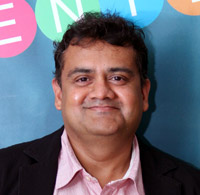
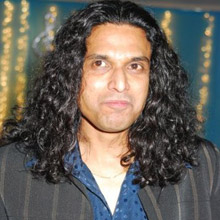
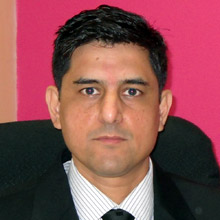
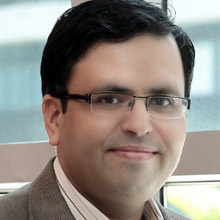
    Mohit Joshi

    “Valentine’s Day has become an important youth touchpoint over the years. It is almost like a ‘festival of youth’. This is why relevant brands cash on this unique opportunity through various consumer-connect programmes,” says Mohit Joshi, managing director, Havas Media India.


    For a brand which caters to various age groups and especially youth, which is usually scattered in their choice and opinion, the day acts as a perfect solution to catch their attention through the message of love.


    “The concept of Valentine’s Day mostly revolves around the idea of gifting, and hence we see many consumers opting for gift vouchers for their loved ones. It’s still not as big as New Year’s Day, wedding season, Diwali, etc, but we see a lot of traction towards our ‘beauty-oriented’ services. The demand for such services is much higher in this season and we see a surge of almost 15 percent especially when we run attractive promotions,” says Chhavi Sharma, marketing Manager, Kaya Ltd.


    Online shopping websites which cater mostly to youngsters are also reaching out to their TA with attractive offers. A spokesperson for Myntra.com says, “Festive seasons such as Diwali and Christmas have a mass appeal across all age groups, but Valentine’s Day is especially popular with the youth who constitute a large part of Myntra.com’s TG. This Valentine’s Day, Myntra.com is not only looking at giving shoppers great deals but is also trying to engage with them as a brand. With the Love Connection contest, the brand is engaging with its audience in a two-way conversation and giving them a chance to win prizes.”


    TimesMobileLtd. (TML) has launched a greetings and gifting mobile app, GreetZAP. The app introduces the concept of voice cards, which enables users to record a message and send it to their loved ones through physical Voice Cards, which are home delivered. Speaking about this new initiative, Ajay Vaishnavi, Director – Telecom, TML, said, “With Voice Cards, we have brought a new way to express feelings which today’s youth, who are very connected and tech-savvy, will love to use. With the GreetZAP app, they can do a lot more than sending plain text messages while greeting their near and dear ones.”


    However, many brands feel that age has nothing to do with it and are leaving no stone unturned to reach out to various age groups, as the Idea Valentine’s Day ad shows. SBI Life has launched a marketing campaign riding on the Valentine’s Day mood through their latest ad – Valentine Gift at 60 – across national and regional channels.


    Chandramohan Mehra, VP and Head – Brand and Cross Sell, SBI Life Insurance, says “High on emotional engagement, the campaign reinforces our promise of enabling customers to ‘Celebrate Life’. The idea is to trigger the thought of planning for post-retirement needs. Consistently, we continue to anchor our brand communication on positive emotions, to drive across the point that customers need to plan today so that they can continue to live life to the fullest.”


    Not only brands, but media too isn’t shying away from making the most of the opportunity. This Valentine’s Day, 92.7 BIG FM has announced the launch of a special campaign to rekindle romance among married couples. The campaign, named ‘Phir Pyaar Ho Gaya’, celebrates the season of love dedicated to married couples.

     

    Nikhil Gandhi

    “Given its place in the lives of our viewers, the day is an important one for us at Bindass since we are a 360-degree youth entertainment brand,” says Nikhil Gandhi, executive director, youth channels, media networks, DisneyUTV. The channel has partnered with Close-Up for their ‘Bindass Come Fall In Love’ initiative to give 10 couples a chance to go skydiving with their partners at Amby Valley.


    Arunabh Das

    Notwithstanding all the hype, the general feeling is that though the day has come up tremendously and is an interesting advertising opportunity for many, it’s still a small event. “If we compare the event with others like Diwali, it has a long way to go. Newspapers do get advertisements related to the day, but since not major economic activities take place around it, brands don’t take it that seriously,” says Arunabh Das Sharma, president, BCCL.



    Neel Kamal Sharma

    “Diwali and New Year have much more mass appeal and a larger opportunity for business as compared to Valentine’s Day which is still limited. So, by figuring out the relevance of these days for a product/ service, we work out suitable customized communication which will be more effective,” adds Neel Kamal Sharma, COO – Buying, Madison Group.




  • The Half-Year That Was-III

    By Team MxM


    Presenting the concluding part of our feature asking some business leaders to review how the January to June 2012 period was for the industry as a whole and/or their specific sectors and organizations.


    Read the earlier parts at: Part 1 Part 2


    Mohit Joshi

    Mohit Joshi, MD, MPG

    There has been a marginal growth (under 5 per cent) in adex in Jan-June 2012, as when compared to the same period in 2011. Some sectors that have been slightly depressed are auto and cellular phone service while sectors that have gone up are education/ institutes, jewellery and insurance.


    Jaideep Shergill, CEO, Hanmer MSL

    Jaideep Shergill

    I would say the PR space is growing but it has not been a year where there have been some big pitches that one would expect. That was what 2010-11 was all about. Although there has been some business, it has been more of an organic one. One of the factors that led to the sluggish growth is the economic scenario which has been going through a hard phase recently. But I would want to think of it as otherwise – when there is a general lack of trust in the market, I think that is where PR has a larger role to play. But that is not what usually happens. For our group too, it has been a good year but it could have been better.

    As the market conditions get more complicated, clients are looking at other streams to expand their business. And that’s where social media is playing a huge role. Our social media unit itself has been seeing some tremendous traction and we have hired more people in the unit. So the medium will continue to see some good growth. But the other thing about social media is that it is evolving continuously – what was happening a year ago and what is happening now is completely different. The medium has been evolving at a good pace.


    Pankaj Raj

    Pankaj Raj, Director, Search Value Consultants Pvt Ltd

    I would summarize hiring as still being slow and sluggish in this space. There are 2-3 observations that I would like to bring across. The first is that most organisations today are in ‘sensible hiring’ mode. This is really about replacement, immediate benefit kind of hiring. The second trend that I am seeing is that there is a huge sense on cost consciousness, whose effects are seen in the hiring space as well. The third trend that I am seeing is that increments haven’t been really good. So there is a level of concern amongst employees in the M&E sector. But having said that, some organisations are still hiring and not in standstill mode.


    As for the next six months, it’s a function of revenues – on how the September quarter turns out for the advertisers. Also, the December quarter is a peak season from an advertiser point of view; a lot of advertisers are active during this period. But to predict growth for the March quarter next year is a bit difficult. We will have to wait and watch how the growth pans out till then.


    Abha Kapoor

    Abha Kapoor, Executive Director, K&J Consultants

    The Media and Entertainment sector is not an island. This space is as affected as any other by the global and national environment. What’s going on in the rest of the world, and in our own country – the economic indices, inflation, governance or the lack of it, have a universal effect on all sectors, not just Media. So if the indices and sentiment are looking southward, then we are as affected by it as any other sector. You have to consider the macro perspective as also the ones specific to us to probably understand the lull in the hiring market.


    There is likely to be a spike from September-October onwards, during the festival period. That’s when you see brands spending more. Therefore, there is likely to be a more optimistic/feel good factor and an expansion (need-based) in hiring. But it is not likely to be at the rate and scale that we have seen in the past.


    In our case at K&J – we are used to working on three start-ups simultaneously like television, radio and digital – which used to be the case a couple of years ago, but no more! So the pace has definitely slowed down. Digital is the new kid on the block, so there is a lot of activity happening in that vertical.


    K Jayaraman

    K Jayaraman, MD and CEO of Hathway Cable and Datacom Limited

    The industry is been focused on digitization, as its on the anvil and the Indian broadcasting space is in the process of witnessing the dawn of a new digital era with its implementation proposed by the Government of India. With this, the government has paved the way for transition to a Digital Addressable Cable TV system (DAS).


    For the average Indian family, the TV is the primary source of news, entertainment and education. The liberalization of the Indian economy starting 1991 has led to what it termed as an explosion of channels catering to different genres. Today we have more than 550 channels broadcasting leaving out the count of local channels specific to regions.


    As per The Cable Television Networks (Regulation) Amendment Bill, 2011, the cable TV industry is required to migrate all subscribers from analog signals to digital. The overall objective of the industry has been to expose every television viewer to an experience which will invariably give consumers the opportunity to resolve some of the issues they have faced with analog cable systems.


    At Hathway our aim has always been to providing consumers with enhanced viewing experience.


    Sanjay Dua

    Sanjay Dua, CEO, Network18 News Media

    This year has been a mixed bag for the industry quite frankly. On the advertising front, the decline in economic sentiment has created a challenging environment, especially for some genres. So, while growth continues to exist, its pace has been muted and variable. However, given the positive move towards digitization, a possible revival in outlook and the impetus of festival spending, the second half holds a lot more promise for broadcasters. We are cautiously optimistic about the scenario going forward.


    Rahul Razdan

    Rahul Razdan, President – ibibo Games & Mobile

    The gaming industry in India witnessed a concerted shift towards mobile gaming on the iOS and Android platforms. Games are now ubiquitous across platforms.


    Games exploiting the touch and tilt features of smartphones were very well received. Our game – Can You Draw, which we’d made for our web platform two years back – became one of the top games on the Android platform within weeks of being launched there.


    While the first phase of web social games plateaued out, live multiplayer games maintained their growth and continue to be the top games on our platform.


    Dr. Subho Ray

    Dr Subho Ray, President – Internet & Mobile Association of India (IAMAI)

    I would say that the year began with a bang. Between January and April there were serious hopes that that this would be a bumper year for the industry. However, in the last two months, there have been some caution and apprehension. The very positive performance was the result of key factors like secular growth of traffic both in urban and rural areas, investments coming in on time and some friendly regulatory announcements like removal of service tax on digital advertisement. The more recent sentiment of caution is led by primarily European crisis. However, so far it is only a caution and alert stage.


    Jogi George

    Jogi George, CEO, Percept Sport & Entertainment

    To be frank, the first half wasn’t as it was expected to be. There was business, but it was more about collections. Also, for our company, some of the major projects have been moved to the second half. Hopefully, this trend won’t continue and things will improve once the rupee stabilizes. As for the overall industry, it’s not that people aren’t  ready to spend, but they have become more cautious and selective as some of the sectors are experiencing a gloomy outlook. Hence, there is a wait and watch attitude.


    Hemal Thakkar

    Hemal Thakkar, producer, Playtime Creation

    It’s been a mixed year so far, a major setback was Imagine shutting down and a big welcome was Life Ok. Lot of new format shows have been launched this year – the biggest being Satyamev Jayate. Inflation has put lot of pressure on the industry, and with rising cost of programmes, we have to put together a skilled team to manage our shows within budgets. In future, rising expenses are going to be major burden for the industry. Playtime Creations has had good start with Ruk Jana Nahi and as a company, we feel that this show has given us the opportunity to experiment with new content. There are couple of other projects in the pipeline which we are excited about. The best aspect of our industry is it keeps us on our toes and so we expand rediscover and reinvent and keep breathing.


  • Anita Nayyar quits Havas, to join BCCL as Head of Customer Strategy

    By A Correspondent


    Havas Media CEO – South Asia Anita Nayyar is moving on and is joining Bennett Coleman and Company Ltd (BCCL) as Head of Customer Strategy.


    A Havas Media spokesperson has confirmed the development. While a hunt is on for Ms Nayyar’s replacement, Mr Mohit Joshi, until now Managing Partner of MPG India, has now been elevated to Managing Director.


    “It is a challenging role and I will be able to utilise all the learnings of 28 years from the agency side,” Ms Nayyar told MxMIndia indicating that she will continue to be based in Delhi.


    Ms Nayyar has been with Havas since 2007 and prior to this was Executive Director at Starcom and Vice President at Mudra Communications.


    Said Mr Vishnu Mohan, CEO, Havas Media APAC, “After five years, Anita leaves behind an organization seven times stronger with several specialist brands that today are over 40% of group’s portfolio and a strong talent force that are leaders in their own right. We thank her for her stewardship and wish her every success in this new stint on the other side after 28 years in the agency business. We are at present in the process of identifying a suitable leader for this role and should make an announcement to that effect shortly.”


  • FM radio: Waiting in the wings for how long?


    By Ritu Midha


    Television and print continue to be the mainstay of any media plan. The buzz around launch of new channels and publications (largely newspapers) is difficult to ignore. Digital media, too, has become a medium of ‘now’. Meanwhile, radio continues to struggle, with cost to operate being quite high while profitability is still an issue. Is it time, then, to ring the alarm bells? Is radio getting lost even before it has acquired a national footprint?


    Prashant Panday

    Radio: Today

    Prashant Panday, CEO, ENIL, emphasises: “There is no evidence of that yet, though if Phase III expansion gets delayed, this is bound to happen. The Indian media scenario has new brand launches happening all the time. Newspaper reports say that since August this year, the Ministry of I&B has given permission for 745 new TV channels – about half of which are news channels. Likewise, if you look at newspapers, there are editions opening across the country almost every month. It’s the same with outdoor sites and internet portals. In a scenario like this, if there is no addition in the number of radio channels, then the sector will get affected. That is one reason we are waiting for the 800 odd new radio licenses to be issued under Phase III. At present though, radio continues to grow, and its share continues to be just under 5 percent of total advertising spends.”


    Media planning and buying fraternity, in turn believes that radio as a medium is gaining popularity, and that is largely because of its content which touches a cord with the local consumers. Mohit Joshi, Managing Partner, MPG India, explains, “While there is not as much buzz about radio, I don’t think it is losing out. It has developed a unique role in the communication mix, which straddles ATL and BTL. Advertising support on the medium has been growing at 11 percent over the years.”


    Ashit Kukian

    Increase in FDI Limits: Low impact

    Media owners are of the view that increase in FDI in radio would not really impact the sector, unlike retail where the proposal for FDI in multi-brand retail has raised a storm. The common belief is that not many foreign players would be interested in the medium because of low profitability.


    Mr Panday says, “Remember, FDI only enters sectors where there is profitability and where the regulatory regime is favourable and stable. Today, most radio broadcasters are barely hitting EBITDA break-evens. This, after half the license period of ten years, is already over. I personally feel that the higher FDI/FII limit will help increase trading in listed radio stocks like ENIL and RBN, but apart from that, the impact might not be that high.


    Ashit Kukian, COO and President, Radio City, agrees, “The increase in FDI in radio sector from 20 to 26 percent is not really going to make any dramatic impact on the industry.”


    Vinish Joshi

    Slowdown: Whither goes Radio?

    While FM in India continues to struggle, impact of the slowdown, interestingly, on radio, as per the expert opinions might be the least, courtesy its local content. As per Mr Panday, with a slowdown in ad spends, the overall ad industry is unlikely to grow at more than 5-8 percent. His belief is that radio may grow slightly higher at 10-12 percent. “Almost all sectors are seeing a slowdown. We attributed the slowdown in the 1st quarter to the higher spends in the preceding 4th quarter on account of the cricket. However, the 2nd quarter also has been weak,” he says.


    Vinish Joshi, GM, Mediacom, too believes that radio might see a higher percentage growth than other media – largely due to its reach and content. He says, “Increasingly FM-enabled mobile phones are driving radio growth in India and phase III is expected to extend radio’s reach to 294 towns and 839 stations. If any medium stands to gain from this slowdown, it is radio, as during the periods of slowdown, marketing activities get more focused. The concern remains on accountability, as marketing will also be more accountable during this period and comprehensive measurement tool for Radio industry will be critical.”


     Mohit Joshi

    Measurement currency: A catch-22

    Indeed, the tighter times lead to a lot more stress on RoI, and measurement currency becomes very important. The radio players feel that there is need for a more robust radio measurement system. Mr Panday says: “The present system is a diary system which has many flaws. What we need is an electronic measurement system which accurately captures listenership. We also need more sample sizes to better capture the heterogeneous habits of our cities.”


    This sentiment of the media players is shared by media planning and buying fraternity. While, they agree that attempts being made to capture a larger listener base are commendable, they believe that it needs to broaden further.


    Mohit Joshi says, “Effort is already on for increasing the coverage of the network of the current Radio Measurement systems. Today, when we have radio stations across most of the key cities, the coverage also needs to mirror that growth. The better the data, the easier it would be to establish the role of Radio.”


    It would be interesting to find out how much is the fraternity ready to invest in improving the measurement system and currency. It is a known fact that research and measurement is cost-intensive. With RoI being an issue, most of them might find it difficult to make a major investment in anything.


    FM stations: Same, same – no different

    Radio, at the moment is suffering from me-too syndrome – which to a large extent can be attributed to investment constraints. There is definitely a need for differentiation – enter localised communication.


    Mr Kukian says, “Radio as a medium has the ability to create customized communication for pocketed audiences and impact millions of Indians due to its wide coverage and personal connect. This coupled with the medium’s innovation quotient gives it one up over other media in terms of fulfilling advertisers’ requirements.”


    Vinish Joshi shares a similar opinion, but he qualifies, “Inserting rapid-fire weather forecasts and traffic reports is just providing minimum local content. Local radio, by my definition, is the real interaction of radio personalities, announcers, the people on the air, with listeners both on and off the air. As long as radio maintains its local presence, something that other syndicated forms cannot provide, there will always be a need for its services.”


    Unfortunately local content on radio, largely restricted to traffic reports and contests, seems to be similar on all the stations. The reason for this, yet again, is operating costs and limited number of stations. The game might change once there are more radio stations post Phase III.


    Mr Panday states, “Very little content differentiation will happen unless more frequencies are released. Let’s take an example. Suppose only 10 TV channels were allowed by law. Which channels would exist then? My guess is that the 4-5 GECs would still exist, there would be 1-2 news channels and 2-3 other channels. The reason for so much content differentiation in TV is that there are so many channels. The second reason is that broadcasters are allowed to own and broadcast several channels, so that the cost of operating smaller format channels is reduced.”


    He continues, “In radio however, we suffer from restrictions on both the above mentioned requirements. There are only 7-8 channels in the major markets and broadcasters are allowed to operate only one channel per market. The Phase-III regulations are going to relax the second condition, but till the number of channels increases significantly, we cannot expect much content differentiation. And if the auctions happen the way they are planned – e-auctions for one frequency in Delhi and two in Mumbai – then the license fees will shoot up and niche formats will become unviable. The government needs to release more spectrum BEFORE auctions are conducted. We have even given them a formula to do this – just reduce the “separation” between two adjoining radio channels from the 800 kHz at present to 400 kHz.”


    If the separation between two adjoining channels is helved, the number of channels would double – broadcasters will be able to compete better with TV and print, the government will get more license fees through auctions. And it just might help in increasing FDI investments in the sector by raising the bar and the competition.