Tag: Mindshare

  • PayUMoney appoints Leo Burnett as creative agency; Mindshare to handle media duties

    By A Correspondent


    Online payment solutions company PayUMoney is set to launch its first multi-media advertising campaign to raise awareness about its consumer offering. This will be a nationwide campaign that will run across months and target online buyers. PayUMoney has appointed Leo Burnett to handle its creative duties. The agency will be looking at the whole creative process and will be the agency on record for the Gurgaon-based company.


    The agency won the account following a multi-agency pitch that went on for around three months. The pitch process also included the evaluation of a few media buying agencies and Mindshare netted the media planning and buying mandate.


    Varun Jha, Marketing Director at PayU India said, “Leo Burnett’s thought processes on contemporizing the brand thought, creative connect, out-of-the-box thinking and passion made them an obvious choice.We are confident that the team at Leo Burnett understands the unique nature of PayUMoney’s business model and will be able to execute a communication strategy that will enable us to grow in the exciting segment of online payments. We are excited to share our passion with Leo Burnett team to take PayUMoney to the next level.”


    Samir Gangahar, Executive Director, Leo Burnett commented, “PayUMoney is transforming the way Indians make online payments. We are happy to associate with them at such an early stage in their journey and help them in making PayUMoney synonymous with a simple payment solution for every need.”


    Ravi Rao, Leader South Asia at Mindshare said “Online Payment is on the cusp of a major revolution and we are proud & excited to partner with PayuMoney, the leader in this space. We see great opportunity to engage with this evolving consumer and bring about behavioral change.”


    PayUMoney is accepted as a payment option on more than 62,000 websites. It offers unique prepositions like buyer protection and reward points to users who pay through PayUMoney.


  • Mindshare, Google team up and launch ‘Search As Signal’

    By A Correspondent


    Mindshare has announced a new product, Search As SignalTM (SAS), to inform media decision-making for Mindshare clients.


    Search As Signal has access to aggregated, indexed search trends that can be filtered by country to give marketers information on whether they are trending up or down relative to their norm or the category norm. With proprietary category definitions crowdsourced, analyzed, and defined by Mindshare and Google, SAS looks at brand and category activity outside the brand-messaging vacuum. The SAS alert system gives Mindshare clients an early indicator if a category or brand is accelerating, giving teams real-time insights to turn into media actions that influence content, keyword search and paid media decisions.


    SAS, unique to the marketplace, lets Mindshare clients access customized, fliterable, aggregated and anonymized search trends relevant to their brands and categories (on an non-exclusive basis). Thus Mindshare clients can understand where a brand sits in the larger cultural environment of search activity. The initiative combines Google’s global reach and Mindshare’s global network to bring unprecedented insight and data to Multinational clients.


    “Leading agencies, like Mindshare, are helping to offer their clients’ a holistic view of how their campaigns are performing across channels as search activity is a strong signal,” said Anya Paul, Global Agency Business Leader, Google.


    “We’re happy to work with them to make insights available through THE LOOP and Search As Signal to enable their clients to make smarter investment decisions.”


  • Mindshare inks strategic partnership with Footmarks

    By A Correspondent


    Mindshare announced a strategic partnership with Footmarks to bring its beacon-powered mobile experiences and analytics to the Asia-Pacific region. The alliance will be managed out of Mindshare Singapore’s “Discovery” unit as it continues to bring innovative connected experiences to its growing list of clients.


    Footmarks is the leading enterprise awareness platform provider focused on delivering creative and respectful experiences that drive deep brand and customer value. Powered by Bluetooth Smart, Footmarks’ SmartConnect™ platform is an experience-based analytics solution delivering meaningful and personalized value through secure end-to-end beacon technology.


    The partnership will empower MindShare Singapore clients to deliver all new value-added content and personalized experiences throughout malls, retail stores, and venues across the region.


    Christopher Smith, Head of Mindshare Discovery, commented: “There is a growing demand from brands and consumers alike to create deeper, more personal engagement in retail, and we strongly believe beacons are becoming a vital link in delivering against that demand.  Beacons have all sorts of application opportunities for our clients across a wide range of sectors, so we are excited to explore the possibilities and help our clients continue to innovate and create deeper engagement with their customers.”


    Todd Paris, President of Footmarks, commented, “Having worked in advertising throughout Asia for many years, I know MindShare and the Asia Pacific Region are always at the leading edge of market and media innovation.  I’m excited to see the partnership kick off and look forward to the brand and client impact we will have in the coming month and years.”


  • Product fails when commercial imperatives get in way of editorial integrity: Proctor


    By Pradyuman Maheshwari


    Dominic Proctor took on the role of President of GroupM Global in January 2012. Prior to that, he spent a decade-and-a-half years as CEO of Mindshare Worldwide, the GroupM agency he had founded in 1997. With billings of over a 100 billion dollars that constitutes around 30 percent of all global media, GroupM is the holding company for all of WPP’s media agencies – notably Mindshare, Maxus, MEC and MediaCom amongst others.

    Excerpts from an interview with Dominic Proctor while he was in Mumbai around a fortnight back.


    This is your third visit this year. What brings the GroupM CEO to India so often?

    I think it’s rather patronizing to speak about India as a market for the future. It’s a massive market now, and for us it’s a very significant part of our global company. It’s obviously going to get bigger and better as the economy and the population develops but we come to the present as well as the future.


    You’ve been coming here for over a decade-and-a-half. What do you see as the significant difference between then and now?

    Much more open-minded. I think those days were characterized by fairly closed minds in the marketing services industry. The status quo was everybody’s friend and therefore it took longer than most countries to get business going here. The thing about a closed economy or a closed mind is that you don’t get the fresh oxygen of ideas as in other markets.


    The disadvantages of a closed economy is there isn’t much business, but when you have an open environment, the competition also gets stiffer, right?

    That’s capitalism… that’s cool, that’s fine.


    How do you see the digital business in India vis-à-vis the rest of the world?

    The rise of digital platforms has been of fundamental importance to media and marketing and our business in India. It may have started rather slowly, but the important thing is it’s changing in the same way as the global, digital economy is. Each country starts in a different place and has a different speed. The direction is more or less the same.


    But the spends here are not as much as in the rest of the world.

    That’s exactly my point. They will catch up.


    Is it because the best creative brains don’t work for digital here? They work for television commercials instead?

    That’s not the reason at all. The reason for varying speed is the differential uptake of digital media by consumers. In the end, rupees follow the eyeballs.


    Could the spend be getting distracted by the many offerings in digital- search, social media, conventional banner ads etc?

    It’s a sign of growing up. It’s a sign of a platform maturing and moving in different directions to its usual requirements.


    If you were to self-assess, what would be your own assessment of GroupM in digital given that Unilever, one of your biggest clients, is not with you?

    I’d give ourselves a 7 on 10 and wouldn’t give anybody else much more than that, because I think there’s a lot of headroom to grow. Some of our direct competitors have been rather quick to assume the way of solving the problem is primarily through acquisitions. We’ve made some acquisitions and we’ll make some more. Acquisitions alone aren’t the main driver. The main driver is the fact that the whole world is becoming digital and therefore our business needs to become digital.


    In digital, both media and creative agencies have turned full-service. Would you hence say your competition is not necessarily media agencies like yourselves but also an Ogilvy, JWT, Leo Burnett…

    I think it goes way beyond that. Our competition for client attention, demand and revenue is not just from other agencies and other types but also from consultants, specialists and clients themselves who do things inhouse. Our competitive set is very broad indeed. That’s a sign of our business growing up and fighting on a lot of fronts. That’s good.


    Is there a need to reinvent yourselves given the way businesses are growing? Is there any one thing you’d like to do in terms of reinventing?

    We reinvent ourselves constantly. The most challenging thing in reinventing is of course training and development of talent. I’m very happy to say that our talent retention record in India is very good compared to other markets.


    Are you able to attract the top talent given the very high remuneration levels at B-Schools? Especially since your clients have them…

    That’s a challenge for us. I’ve been on platforms talking about the fact that we need to continue to move up hierarchy of partners to clients, because we need to earn the revenue that will pay for the A-list talent. There’s no doubt that other competitors for talent, example, Google, can have deeper pockets than us. I think people join us not just for that reason. A lot of them join us for varied life and varied training. It’s the environment. This year, we won the Porter prize for best places to work. To me that’s just as important, if not more, than our ability to pay a few more dollars to a few more people. People come here not just for that. They come here for the working environment, training, grounding in business. It’s really important to not forget that when you’re working in a media agency, you have the privilege of looking at a lot of different clients across a lot of different marketing platforms in media. That gives you tremendously good grounding for a business career.


    What happens is people use your organisation as a jumping board to move elsewhere

    That’s fine. I don’t mind that. That’s why I’m pleased our people aren’t jumping ship.


    Talking of higher remuneration, if a GroupM can’t achieve that, who can? You are a market leader, and have a longstanding relationship with clients.

    We can and we do. Our income rate and clients are increasing. We’re of increasing value to our clients. The more value we are to clients, the more revenue we can make, the more we can attract talent. It’s a virtuous circle.


    GroupM today is a lot more than just a media agency in India and the rest of the world. How much of your focus is on businesses such as Dialogue Factory and your association with sporting events and other BTL activity?

    A lot of it. One thing common to all countries is that the bedrock of our business is media planning and buying. It’s always been clear to me that unless we can get that fundamental activity right and be efficient and effective for our clients, then we have no ability and no permission to expand our service offering. We absolutely have the ambition to broaden what we do in our agencies. Sports marketing, digital consultancy, data analysis, we could go on. It’s becoming more and more broad because the clients demand is for agencies to have more and more specialist insight into the opportunities, to make sure that the specialist insights are integrated.


    In the current scenario where digital has overtaken print media spends, what is your view of the future for spends in print versus the rest?

    If your print business stays fresh, relevant and interesting, that’s where the eyeballs will go. The challenge simply isn’t just to abandon all traditional media platforms and just follow the digital dollar, the strength of a print brand, the attractiveness of its editorial, the freshness of its presentation are critical. If you lose those things, you lose your audience not just from print, but digital as well. Your brand suffers.


    One of the peeves of print publishers is that the advertisers forever want innovations. Like in the papers you have these jackets, one or two or more pages of advertising over the front page, taking away the interest of the reader?

    It does if it’s boring and it irritates people. So, the balance between the editorial and marketing judgment has to be more even. You just look at any country in the world,  where commercial imperatives get in the way of editorial integrity, the product fails. Media entities are brands. If you mess around too much with the brand, it becomes confusing to the consumer.


    Over the last couple of years, GroupM in India has seen a fair amount of changes. One is the embracing of digital has leapfrogged. We’ve had the Y-Co, a kind-of youth ‘Shadow Board’. How many processes of GroupM India have you followed elsewhere in the world?

    Y-Co is an Indian idea born here. I was at the launch myself, a year ago, and it has now been taken up in other markets. So, India is both an exporter and importer of ideas. Y-Co is an Indian export idea, made in India. Your current Prime Minister has been talking about Brand India. It’s also an importer of ideas. So, a lot of the initiatives happening here were born elsewhere. It’s an import-export business.


    Anything you’d like to see here in GroupM in future?

    We encourage our teams to continue to be open-minded. We encourage them to be more focused around the digital developments. As brand or market leaders in India, we’d want to be at the forefront of these and rather than wait for a market to form and join in, we’d like to form a market.


    Over the last year, India has seen a lot happening in the field of audience and viewership measurements. We are all set to get a new measurement regime in television and we have had an uproar over a print survey. Since you are a key stakeholder in the business, how do you advise your clients when questions are raised about the veracity of data?

    We have specialists who are able to give very special advice in very important areas. Measurement is a very important part of what we do. Return on investment is a very acute measure of our performance and return can be linked to the performance of leadership or viewership. of course, it’s fundamentally important to get it right. To me, it’s symptomatic of change. As media landscapes change, the way we measure them changes too. We intend on being a very important part of stewarding that change so that it’s fair and accurate. If it isn’t, we’re going to be rejected.


    A variant of this interview first appeared in ‘dna of brands’ as part of the dna issue dated October 6, 2014

     

  • Mindshare gets Helen Tan-Bhasin to lead Unilever account

    By A Correspondent


    Helen Tan
    Sudipto Roy

    Mindshare has announced the appointment of Helen Tan-Bhasin as the Account Lead for Team Unilever for APAC, Africa & Turkey.


    Ms Tan-Bhasin joins Mindshare from StarcomMediavest Group where she worked for 13 years across the Manila and Singapore offices.


    Said Sudipto Roy, Chief Client Officer, APAC, on the appointment: “Helen joins the Mindshare family at a truly exciting time, when products are being transformed, data consolidated and technology capability is at the forefront. It is opportune for her to bring her experience to us as we script roadmaps for the next two years. Helen represents a rare combination of intimate FMCG marketing knowledge, key market exposure in addition toexperience at the forefront of cutting edge work with marketing organizations similar to Unilever. We look forward to her leadership.’


    Ms Tan-Bhasin will report directly to Mr Roy, leading a regional team based out of Singapore to support the markets.


  • Mindshare partners Crayon Data to build on adaptive strengths

    By A Correspondent


    In what is being billed as a landmark move, Mindshare has entered into an exclusive partnership with Big Data firm Crayon Data to power its planning, insights and consultancy offering.


    Combining Mindshare’s proprietary data and research with Crayon Data’s data collection and analytical capability, means even greater adaptive solutions for marketers, providing an ability to not only identify different consumer profiles and segments, but to also target and track those profiles across a complex range of media channels, including social media and video.


    For Mindshare, this partnership continues their focus on developing leadership in Adaptive Marketing, a shift that is impacting how the agency thinks about services, products and ways of working.


    Said Sudipto Roy, Chief Client Officer APAC and Chairman of Mindshare’s Products, Partnerships & Services: “One of today’s key business challenges is the complexity surrounding the collection of data making traditional database processing and management tools ineffective in helping clients make optimal decisions about their customers’ needs. It’s a fundamental requirement of business success. Without the ability to support customer needs, organizations fail.”


    Suresh Shankar, Founding Director at Crayon Data, added: “Media, analytics and behaviour is all going digital, and choices are proliferating in every aspect of our life from media to daily decisions. The partnership seeks to marry Mindshare’s media data sets and expertise, and its innovations like Loop Room, with Crayon’s choice engines, algorithms, and Taste/Interest graphs. This partnership forms part of a big transformation and caters to our mission of turning the misery of choosing into the magic of choice.”


  • Mindshare creates Youtube ad for Instant Chocolate Horlicks

    By a correspondent


    Mindshare has created a unique innovation with GSK’s Chocolate flavor Horlicks.


    The campaign was conceived as part of the integrated Audio-visual strategy for Chocolate Horlicks. Instead of going the conventional way of replicating the TVC on web, Mindshare has used the 5 second skip button of YouTube to highlight the brand proposition – Chocolate Horlicks mixes instantly in milk – and hence decided to add a 5-sec tag that preceded the original TVC. The tag reads – ‘Instant Chocolate Horlicks -mixes in milk even before you skip this ad.’


    Ravi Rao

    Commenting on the same, Ravi Rao, Leader- South Asia, Mindshare said, “We have been working with GSK Consumer Healthcare Division for a while now and understand their need for innovative and unique strategies and campaigns especially in the digital space. Instead of replicating the TVC online, we wanted to leverage the potential of the medium by making it inextricably linked with the message.”


    Jayant Singh, EVP Marketing, GSK Consumer Healthcare said, “Horlicks is a brand that that perfectly balances a rich heritage with constant innovation, to ensure we make our consumers do more, feel better and live longer. We are very happy to be the first brand in country to create this innovation in partnership with Mindshare.”


  • Mindshare bags media mandate of Adlabs Imagica

    By A Correspondent


    Adlabs Imagica has handed over its media mandate to GroupM’s flagship agency Mindshare.


    The WPP agency will be responsible for the media planning and buying for India’s first and only international standard theme park that was launched early last year.


    Ravi Rao

    Ravi Rao, Leader- South Asia, Mindshare said, “We are very excited to work with Adlabs Imagica which is truly one of a kind. The theme park comes at an opportune time to meet the growing demand for new and exceptional family entertainment avenues. We look forward to helping help them grow the brand further with the use of new and innovative media strategy.”


    Kapil Bagla, CEO, Adlabs Entertainment Ltd. said, “Mindshare topped our list when it came to choosing a media partner. We are confident theywill help us help extend the brand and engage wider audiences.”


  • What’s New on Google Adwords


    By Eldad Sotnick-Yogev


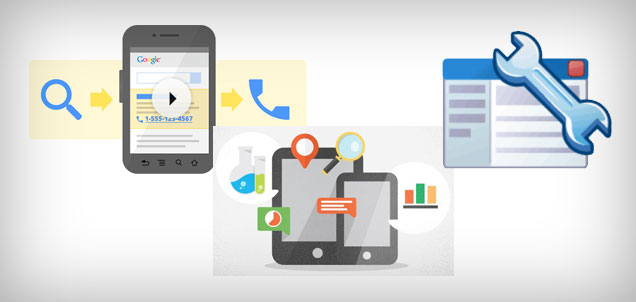
    Google has announced changes within Adwords that fall into three areas: Innovative Ads, Insightful Reporting and new Power Tools. These changes may not be revolutionary per se, but rather continue the evolutionary path we are seeing as digital platforms look to better connect with consumers at any place, any time and any device.


    Overall the changes look very promising and we are excited to see how Google keeps advancing from last year’s Enhanced Campaigns that pushed location, device and time bidding. By giving advertisers more tools, reports and capabilities it continues to lead the search advertising space and the multiple ways it can be used to connect with consumers.


    DETAILS

    INNOVATIVE ADS

    Innovative Ads focus on the fact that apps are more prominent than ever and that consumers see them as a source of solutions. The new ad features allow Google advertisers to better target and connect to these opportunities. For example, a calorie counting app/website could be shown to running app users through the new in-app install ads feature. This could be joined to another new feature – app keyword suggestions – which helps uncover key app-oriented search queries to add to your inventory.


    INSIGHTFUL REPORTING

    Insightful Reporting concentrates on offline measurement and the need to better link up with digital marketing; thus, the introduction of the estimated total conversions tool. The goal here is to give hyper-local information for advertisers looking to capture “offline” sales/conversions. This feature will allow better measurement, but doesn’t look like true attribution on first view.


    POWER TOOLS

    Power Tools give Google advertisers more benefit from the Adwords interface with bulk actions being simplified. At the same time, Automated Bidding to meet set specific goals (ROAS, CPA, Clicks) is going to be provided, enabling you to bid to maximise revenue or conversions. So, in theory an Auto OEM can target car configurations, while a retailer can go for sales. This will most likely make working within the interface the preferred method and could spell the end for Adwords Editor. These tools (and features) also will push Kenshoo, Marin and Adobe to advance what their 3rd party platforms offer at enterprise SEM management level.


    IMPLICATIONS

    The most impressive feature we saw was the Draft/Experiments part of the new Power Tools, which allow you to set up an experiment that will calculate and show you the impact of your changes – without actually implementing them. This means a more accurate method of forecasting will be made available in Adwords and it sounds like if the results fit your goals, it will be easy to make the theoretical a reality in a few clicks. This tool could really assist conversations for your ‘what if?’ scenarios, as well as being tangible proof of what budget and bid changes can look like.


    Another Power Tool that will have both clients and Search teams excited is a new way to quickly use pivot table functionality within the interface and jointly build informative charts. This “multi-dimensional analysis tool” is sure to become an addition that many will like.


    Finally, Innovative Ads strong focus on Apps proves that Google knows users are increasingly using mobile and that apps rule in this space. This looks to have more promise than just Admob and helps those still thinking about an App see the need to get involved. Just like mobile optimized websites, Google is pushing businesses to jump in.


    Excerpted with permission from the Mindshare APAC’s Original Thinker Series.


  • Why machines (& the good old Optimiser) will never get the media planner out of a job

    By Shephali Bhatt


    It’s the year 2020 and the machines have taken over. What we are talking about is a possibility a lot more realistic than paranoiac visions of The Matrix, Terminator or Blade Runner. Optimiser has completely replaced the at-ease-with digits management graduate known as the media planner.


    For the uninitiated, Optimiser is a tool media agencies use to formulate plans that reap their brands maximum reach at the lowest cost. With a young legion of planners admitting that the software sometimes ends up doing 80%- 90% of their work, a machine taking over the entire role of a media planner may not be too far-fetched . But does this qualify as crystal ball gazing or stoking an unnecessary panic?


    Ravi Rao

    Flashback to the late 80s and 90s, where intense print plans were created by plotting 100 publications on Yaxis and data from readership surveys like NRS and IRS on the X-axis. “It would take us more than five hours to manually calculate the reach of a print plan using the least cost solution based on Kwerel’s Formula ,” Ravi Rao, leader – South Asia at Mindshare recounts. Now, the planner feeds in the desired GRPs and the client’s budget.


    And then sits by as the optimiser dishes out a media plan with numbers on reach and frequency, in one-tenth the time Mr Rao and his compatriots would take. It calls to mind Arthur C Clarke’s observation about how any sufficiently advanced technology is indistinguishable from magic. And it’d be true to a large extent.


    But it only ends up giving a planner more room to concentrate on strategising for the brand instead of being saddled with a mechanical chore. It really is just a tool that throws numbers at you when you give it some yourself, remarks Anagha Ingle, a two-year-young media planner on Unilever brands at Fulcrum, Mindshare.


    Mostly, these numbers are used to support the decisions a planner takes, keeping in mind a dozen other factors. For instance, does the brand need to sustain a campaign or wind up with short bursts over a few weeks? Will there be repeated messaging? How heavily will the insertions be placed across channels? Which genre of channels/print titles and in which language? All questions that only a media planner has answers to, not the machine.


    These are just some of the basic questions that every media planner ought to get out of the way before approving or ignoring the plan presented by the holy Optimiser. However strong a backbone it might have, the tool has limitations that continue to give the human planner an advantage . Even if the numbers desired are the same, an Optimiser won’t make complete sense for two different campaigns, meant to target different audiences.


    A large part of the decision making is influenced by the marketing environment, brand requirements and the competitor’s actions. Our poor Optimiser is incapable of factoring all of this in. Deepak Ahuja, vice president at ZenithOptimedia cites an example to strengthen this point: “If I were to launch a brand like Micromax, my objective will be to spread quick awareness of the brand to its target audience. So, I’ll target channels specialising in movies, music and sport.”


    The hiccup is that this tool will never show English movie channels as a viable option because to the machine, the GRP numbers aren’t satisfactory. If only an Optimiser could weigh in on the qualitative aspect of numbers. Similarly, if one was to follow the software’s advice to the tee, no one would’ve invested in spots around reality shows like Kaun Banega Crorepati because of high cost, Shekhar Banerjee, SVP and head, Madison Pinnacle points out. (If you’ve been keeping score, the humans appear to be winning.)


    If it were up to the Optimiser, cricket would never have been advertisers’ favourite sport, given its high incremental cost. Humans, on the other hand, are capable of taking decisions that may not always be efficient but prove effective in meeting a brand’s objective.


    That explains the BMW and Rado ads on English channels in spite of marginal ratings, and the absence of ads for deodorants from religious channels despite high viewership ratings. With TAM and IRS coming in for more than their fair share of critiques, data has been reduced to a mere stick for a blind man, says Karthi Marshan, head – marketing at Kotak Mahindra Group.


    It can’t tell you with certainty what’s coming up. Hence, a client needs his media planner’s gut, instinct and experience, Mr Marshan adds. The human contribution to the media planning role is only going to increase with umpteen media vehicles available for a brand to ride on.


    Anupriya Acharya

    In such a scenario, superior understanding of content would be required to ensure contextual landing of brand in a particular medium, says Anupriya Acharya, group CEO of ZenithOptimedia. Another trick of the trade that one can’t expect an Optimiser to pull off.


    Which is why the likes of Mr Rao and Ms Acharya are hell-bent on hiring more planners, from backgrounds as diverse as engineering and economics. For a tool can only answer the ‘where’ of a media plan. The ‘what’ , ‘why’ and ‘how’ will always require human intervention. Or at least until someone builds a machine that answers these questions better.


    Source:The Economic Times

    Copyright © 2014, Bennett, Coleman & Co. Ltd. All Rights Reserved

    Licensed to republish


  • Leveraging films by top guns on MTV


    By A Correspondent


    In a seemingly volatile broadcast scenario in India, it is a given that only ideas that are fresh and out-of-the-box manage to make a mark while the others face the possibility of being rejected. In a synergy that probably plans to change the way the genre has been approached until now, leading youth channel MTV has joined hands with FMCG major Hindustan Unilever to launch MTV Films.


    The idea germinated out of a casual conversation that MTV and HUL’s media buying and planning agency Mindshare had sometime last year. Convincing HUL was easy for Mindshare, and since then it’s getting all parts of the act together.


    The initiative would see six young and well-known directors known for their cutting edge film making styles making original movies just for television. Eminent movie directors including Anurag Basu, Abhinay Deo, Shoojit Sircar, Rohan Sippy, Nikhil Advani and Anurag Kashyap have been assigned the task of bringing the idea alive on television.


    What would make this initiative unique is that MTV Films would be a mixed bag of six movies based on brand philosophies of different HUL products that will be showcased every month.


    An initiative to provide film buffs a unique movie viewing experience in the comfort of their homes, MTV Films offers a mix of all the ingredients that connect with the youth instantly. These 60-minute movies are inspired by HUL’s brands like Sunsilk, Ponds, Tresemme, Close Up, Lakme and depict today’s generation’s perspective on love, friendship, family, responsibilities in a light hearted fashion.


    Speaking about this initiative, Aditya Swamy, EVP and Business Head of MTV said, “It’s been a treat to watch six very special people look at youth through such different lenses. This project has redefined the rules of television and branded content in so many ways. Everyone around the table today has dared to take risks and it’s that spirit that has made this an exciting journey for all of us. With a new film being released every month, MTV Films can become a very strong franchise.”


    Hemant Bakshi, Executive Director, Home & Personal Care, HUL, said, “HUL firmly believes in pioneering and creating newer ways of engaging consumers by leveraging popular culture. With the launch of MTV Movies, we will re-define the way in which brands tell their stories to consumers. This initiative will focus on communicating brand purpose and we are confident that it will resonate with our audience and build brand love.”


    The initiative will see Bollywood, television and the corporate world collaborate to give consumers content they can best relate to. While MTV India is seen as the channel that has its check on the pulse of today’s youth, the film-makers roped in for this initiative have already made waves with their art and have an increasingly large fan base in the younger generation. Their unique approach and cutting edge portrayal of different themes has made a lasting impact on many. It is befitting then, that Hindustan Unilever – known for their innovative touch in every initiative – imbibes these themes in their brand philosophy and make MTV Films the perfect platform to reinforce their connect with the youth of today.


    ‘For HUL, the films are beyond passive integration… more of active integration’
     

    Aditya Swamy
    Ravi Rao

    Q&A with Aditya Swamy, EVP and Business Head, MTV and Ravi Rao, Leader, Mindshare South Asia


    And we thought MTV was a music channel… has the basic positioning changed by this move of getting into movies?

    Aditya Swamy: MTV is about entertainment and if you see there is a strong music element to all of the stuff that we create. So there’s this film that we showcased at the preview where a bunch of girls coming together to run a radio station…similarly there is a strong musical element in all the films.


    But the core premise of the channel initially was just around music…

    Aditya Swamy: My sense is that the audience is changing. Twenty years ago when we were asked what music you listened there were a few names that came top of mind. But the times have changed today where the youth have a plethora of options to choose from. Right from the brands they wear or endorse they are getting defined by a lot of other factors. So as the audience is moving forward the only way to stay relevant is to move with them. Like I say, music is synonymous with creativity and creativity will always be the sole of MTV. That’s where we take this from; it’s storytelling.


    Would you elaborate on the cost aspect of the deal with HUL?

    Aditya Swamy: I wouldn’t be able to talk about the costs and budgets but I would say the challenge is going to be for partners to have deals that bring in good ROI for everyone concerned. If you see the films, they are not cheap or made on handheld camera they are films made by some big directors and have the latest technology to its credit. Moreover the audiences want a quality product and the directors are creating films which are mega in approach. I think the objective will be that when a viewer sees this he would not feel that these are films made specifically for television; the content rests seamlessly across different platforms and this platform happens to be the TV platform.


    Was it tough to get the creative folk to weave in brands in the stories?

    Aditya Swamy: For me the real cool thing has been getting these six directors together but the common thing that ties all of them together is that they are going to jump into a space that they haven’t done before. According to me, what excites creative people is taking up new challenges. Earlier they used to tell stories in two-and-half hours now they have to say it in 60 minutes. So it’s challenges such as these that excite these people. They’ve always been leading the charge that let’s do something beyond advertising. This idea was something that everybody quickly latched onto immediately.


    How involved or over-involved were brands with the project?

    Aditya Swamy: If you see the film it’s a new era in branded content. We’ve not needlessly pushed brands; it’s about the brand philosophy coming to life. Once they were onboard the philosophy then they would like to run.


    Ravi Rao: I’d like to add here by saying that when you do a product integration exercise, the emphasis is how do I ensure that it is not just passive integration but more of an active integration. In these films what we did was give a positioning line for a brand and told them to interpret the way they want. If you see the banners that we have got it has been completely imagined by the directors themselves.


    At Mindshare, you’ve handled spends across various platforms. How different was this exercise for you?

    Ravi Rao: Whether we like it or not, content has been an important storyline for a long time. It’s just that the canvas is the same but we have made it bigger with high production values and great directors onboard. Also, for example when you say a shampoo can clean your hair, there are a whole lot of other attributes that can come aboard because it’s to do with the person and his/her choice of using the shampoo. It was a good opportunity to go beyond the 30- or 50-seconder where you can tell a story in a much more fluent way. To that extent it is going away from mainstream and making it even more interesting.


    Would you be engaging in a high decibel cross-platform promotion for this initiative?

    Ravi Rao: I think you should wait and see because some of the promotional ideas that we have got on this is very unique. It won’t be like what you see the other movies doing. It will be different. Also, while television as a medium will be huge, we would be exploiting the digital platform too. If the word-of-mouth happens you will see audiences coming back towards it. The first movie is just the trigger; you will have to wait to see how fine the others shape up as well.


    For the last six years, Mindshare has been trying to do the content space differently. The team has done a fantastic job this time too. Here it is about how you generate impact; what is the right story that we need to do and what is the media that will be apt for the initiative. It is also about being flexible and doing things in a unique way.


    An FMCG company like HUL is known to be very tough on deliverables…

    Ravi Rao: They still are but they have been fair. It is also about their philosophies; on the one end, they are talking about getting great effectiveness but they also lay great emphasis on innovation. We have pushed our idea limits to see what more can we do. If the idea is strong enough for a brand to capitalise it works brilliantly and HUL gives a canvas to do it our way.


  • Maxus elevates Sanchayeeta Verma to Managing Partner


    Sanchayeeta Verma
    Sanchayeeta Verma

    By A Correspondent 

    Media services major Maxus announced the elevation of Sanchayeeta Verma as Managing Partner, Maxus South India & South Asia.

    Ms Verma, who was has been with GroupM for over 10 years, moved from Mindshare to Maxus in 2009  as head of the Bangalore office. Over the years she has managed the agency’s Bangalore operations and also established the Kerala set-up.

    Speaking on her appointment, Kartik Sharma, Managing Director, Maxus South Asia said, “Sanchayeeta is one of our star Maxusites.  A team player to the core, her sharp strategic thinking and keen sense of innovation keeps her and her team at the cutting edge of media investments and planning. We wish her all the best for her future endeavors at Maxus.”

    Upon her appointment, Ms Verma said, “The future of media is about choreographing convergence between traditional, digital and experiential media, content & data being the epicenter of it all. Maxus is best poised to lean into change towards this exciting new future and I look forward to it!”